
BONUS – Download a Free Copy of this Blog in PDF Format HERE
I was at the annual Sport for Life Annual summit this past week, both as a presenter and attendee and had the opportunity to interact with several hundred attendees from 14 countries including Egypt, Caribbean, USA, Canada and others.
I also had the opportunity to sit in on several great presentations including the introduction of Canadian Tire’s expanded program thru Jumpstart, a $50 Million incremental funding to provide inclusive opportunities for youth with disabilities. The first of many projects already committed to was a playground that has been completed as a result of funding from Jumpstart in my home province, in Nanaimo.
My return flight to Vancouver ironically I sat beside one of the summits Emcee, Olympian and Olympic Badminton coach and we talked about all the various sports initiatives in Canada and worldwide.
At the World LTAD symposium, he made a presentation about the development of LTAD in India and shared some of the pictures of their playgrounds and they literally had no equipment, used water bottle to draw lines and improvised so they could be active which is one of the biggest challenges facing the countries 1.3B people. He and the other Global leaders in attendance shared as a result of India’s development system for their athletes, they have been challenged to win medals at the worlds most prestigious event, the Olympics, winning only 2 in Rio and a total of 28 in the 24 games they have participated in since 1900.
In the last couple of years, however, they have invested significantly in developing various Physical Literacy programs in various states across India so they build from the ground up as a feeder system for their top level programs.
More to follow on both fronts in the weeks to come as I digest all of the notes and screen shots that I took at the various presentations, but on the weekend I had the opportunity to watch NHL Allstar game where they shared insight on the great Willie O’Ree, the first ever black man to play in the NHL as a member of the Boston Bruins who was acknowledged at a recent Bruins game to celebrate the 60 year anniversary.
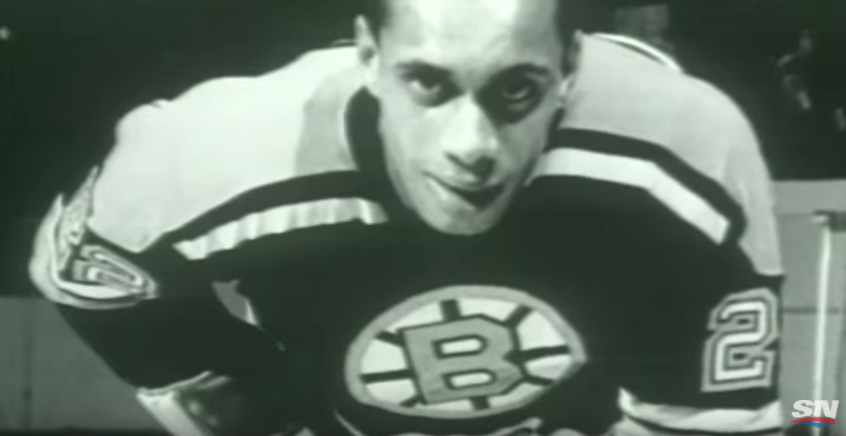
Below is the video clip when the Boston Bruins shared his story prior to game with their long term rival Montreal Canadiens
“If you think you can, you can. If you think you can’t, you’re right”. Willie O’Ree
Willie is also the long term chair for the NHL’s diversity program, which is now promoting the importance of inclusion for all to play the game of hockey.
#Hockeyisforeveryone
The initiative was one of declarations of principals launched by all the hockey federations world wide, and even received praise from current Pope Francis.

Below are some of the other great pioneers who were the first to break the colour barrier in other professional sports.
Harry Lew was the first professional African-American born player to sign a professional contract, in new England in 1902 approximately 40 years before the NBA was formed. He played professionally for over 20 years and then became a general manager.
He set the way for the Boston Celtics to the be the first team to draft a black player, Chuck Cooper, in the second round, Earl Lloyd in the ninth and Harold Hunter in the 11th round of the first draft in 1950.
Had the path not been set by Harry and the first 6 in the NBA in 1950, perhaps we would not have seen the likes of Michael, Kobe and Steph?
Jackie Robinson (#42)
Jackie broke the colour barrier in Major League Baseball when he started at first base for the then then Brooklyn Dodgers (later to be the LA Dodgers) in April 15th, 1947.
When he was signed, the Dodgers were heralded for ending racial segregation in professional baseball that relegated players to the Negro leagues since the 1880’s.
In 1997, the MLB “universally” retired his infamous 42 jersey number and in April 2004 started their inaugural Jackie Robinson Day where every player on every team wears 42 in tribute of his contributions to permit all those to follow after him.
Kenny Washington
Kenny Washington is the Jackie Robinson of the NFL, in the early inception before the merger in the 60’s, there was an unwritten understanding that would not allow African Americans into the league. Ironically, Kenny also was a multi-sport athlete and while at UCLA his team mate on the football and baseball teams was none other than Jackie Robinson.
Although his coach felt he was a better baseball player, he pursued playing football professionally for many years and FINALLY was offered an NFL contract years after he graduated from UCLA when he was 28 in 1946.
Like Jackie, he had to endure the name-calling, dirty plays thru his entire career but unlike the MLB and now the NHL, his contributions for overcoming the racial barrier are not widely known.
As now the NHL, NBA, FIFA (Below) and MLB have recognized those that were instrumental in breaking the colour barrier in their sports, Perhaps it’s time for the NFL to do the same?

European Football – Arthur Wharton – Born in 1884 and first ever black man to play professional European football in the early 1990’s.
Arthur was the first to receive a contract to play European Football, rugby union, cricket and the first to run the 100 yards in 10 seconds. His position, goal, and was infamous for challenging shooters either by hovering at one end of the goal or hanging from the top post to make saves due to his outstanding athleticism.
He now has a commemorative statue in his honour in front of the FA’s offices
All these great men had to deal with a lot of adversity to permit all those that followed to be included in their respective sports.
Although we have made significant inroads globally to ensure that youth sports are inclusive for all, we still have a lot of work to do.
Another area that we need to address, is creating the environment of inclusion for indigenous peoples, I had the opportunity to hear insight from several at the summit of the various challenges we still have as a of today to ensure indigenous people have the same opportunities as others to play at the highest level of their respective sports.
One that I heard speak at a conference Fall 2017 I was also presenting at was Waneek Horn-Miller, Mohawk member of Kanawake. She shared how she aspired to participate in the Olympics and how her mother ensure that she and her sisters had every opportunity to pursue their dreams. She started swimming at the age of 7 and went on to lead Canada’s female water polo team to Gold in the Pan am games in 1999, co-captain of the 2000 Olympic team (finished 5th) and bronze in the 2001 FINA World Championships.
She was a member of the national program for 9 years but was dismissed and Waneek subsequently filed a racism claim that the coaches, players were insensitive towards her aboriginal culture and thru arbitration all parties were required to undergo Aboriginal sensitivity training.
Not only was Waneek a pioneer thru sport, she personally had to overcome extreme adversity at 14 years of age at the Oka camp where her proud people protested development plans for a golf course and condominiums on their ancestral land and on the 78th day she was stabbed by a soldier’s bayonet as she was carrying her younger sister beyond the fencing that surrounded the camp.

As a result of the protest the federal government agreed to purchase the pines to ensure no development would take place.
We all could learn from the likes of Willie O’Ree, Waneek and all the pioneers who had to overcome various forms of adversity to set the building blocks for others to play professional sports or representing their countries in the Olympics.
They all deserve our thanks, not only for the impact they had in their respective sports, but in their contributions to making the world better overall.
Let’s all work together to bring the game back to the kids …. where it belongs.