Kudos to Great Sports Parents

Posted Posted in Coach, Early Sport Specialization, Parents, Uncategorized

Having lost my father at a very young age, and being fortunate to have such an amazing mother who raised me and my brother as a single parent, as well as all the amazing coaches and teachers who took me under their wing who were parents themselves, is one of the driving reasons why I have worked tirelessly in recent years to support all those parents in the youth sports space.

As I have traveled across Canada doing workshops, talks over the years, and over the last 12 month virtually, by far the #1 question I get asked is “how do I deal with parents” and the first thing that I have shared is they need to revisit “dealing with” and in lieu engage parents as integral part of your team.  Regardless of what level you are coaching, whether it be recreational sports for kids U13 or competitive levels U18 and everything in between, if coaching youth sports the athletes you coach will parents or guardians.

The sooner that you recognize that they can help you taking on volunteer roles like manager, treasurer, fundraising coordinators, assistant coaches and so on vs. alienating them, the sooner that you will be able to lead your teams to have amazing seasons in lieu of ones that are cluttered with issues that coaches come to me over and over again.

Due to the evolution of the internet and social media over the last couple of decades literally daily there are posts highlighting parents who are screaming at kids during various sports events, criticizing officials, players and even coaches but they represent only a small % of youth sports parents, the majority that I have hand the privilege to interact with in my 20+ years of coaching have been amazingly supportive who truly love their kids and LOVE to watch them play.

My mother was one of those parents, she was at the majority of the games that I am my brother played in the various sports the played and then did the same for our kids as the proud grandmother (Nanny) and after each time she came to see them in sports, drama, band or any other activities they pursued would come to them as she did for me an my brother and say just how much she loved to watch us play.

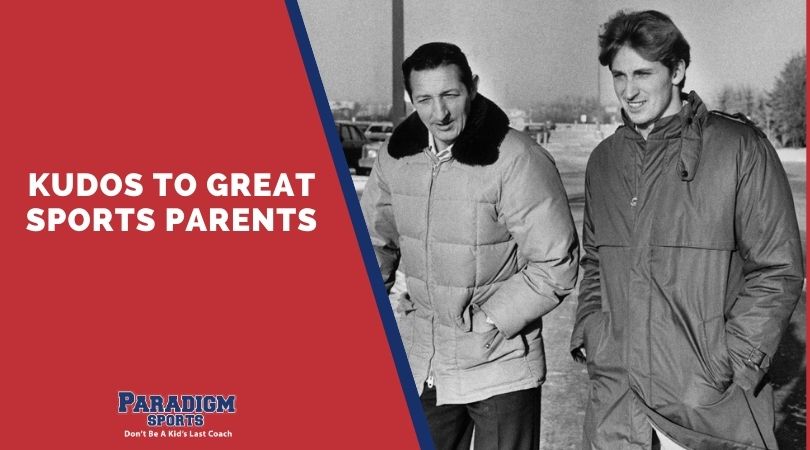
With the recent passing of the greatest Hockey Dad of all time, Walter Gretzky, my thoughts and prayers for the family in this difficult time, as it brought back a flood of memories for me, both of my mother who I sadly lost in 2013 to he long fight with cancer, but the passing of my father tragically when I was 8 Years old 1/2 way through the baseball season that he had committed to coach me for the first time.


Although I shared with my mother and Nanny during the days that followed that I was going to quit baseball as a result, they said I had to finish the season as that is what my father would have wanted.  Fortunately I did and learned one of the many life lessons I did from sport about the importance of commitment.

I share this with you because I also made a commitment before I had kids to ensure that I supported them to the best of my ability, which included thousands of hours coaching them and their team mates (my extended adopted family) on various teams and sports over the years.

One of the hardest conversations that I ever had was when my son shared with me that he was going to quit hockey when he was 15, 2 years beyond the global trend where kids are quitting by the age of 13, but for all of the reasons that I have shared in talks where I learned that I neglected to ask him at the beginning of every season if he wanted to keep playing hockey, in lieu assumed much like had since he was 5 years old and started playing organized hockey.

The reasons that he shared he was quitting had to do a lot with the winning at all costs coach that he had the prior season who thought nothing of running short benches including the game that was the straw that broke the camel’s back for me when he sat my son and two team mates for better part of last game in a tournament but he had dedicated to his Nanny (my mother) prior to the game who he lost just a month prior and was there for her last breath by her bedside.

He also shared that he was not having fun anymore, that he wanted to explore other sports and activities like band, drama, robotics and list goes on.

It was an eye opener for me which is why I encourage every youth sports parent to ensure that you support them try as many sports as possible as you never know what they will fall in love with.

Like me, he tried volleyball and Rugby that school year (Grade 10) and fell in love with Rugby and played until he graduated high school and aspired to play club rugby after he graduated from college but then COVID hit so will have to wait until next year to do so.

Although he took the season off as a first year U18, he did ask if could play again the following year and he tried out and made the AAA team even though he missed a full year of “development” (in the minor hockey system as people have been sharing with me over the years too many kids are playing too many games and not practicing enough)

In essence, he got his love for the game back as he had a break, a break that I should have clued into he needed as his parent, but like many parents, I “assumed” that he wanted to keep playing year after year, so from that point going forward I asked both him and my daughter if they wanted to keep playing or try other sports.

I can’t emphasize enough for you to do so with your kids, and also the importance of recognizing that their journey will be over before you know it.

Now that both my kids have aged out of youth sports, although the craziness of driving the to all their practices, games, and other activities were insane at times (especially when they overlapped and had to decide how to juggle), the one thing that my son and I did after he took that season off was read “Bobby’s Orr’s – My Story”

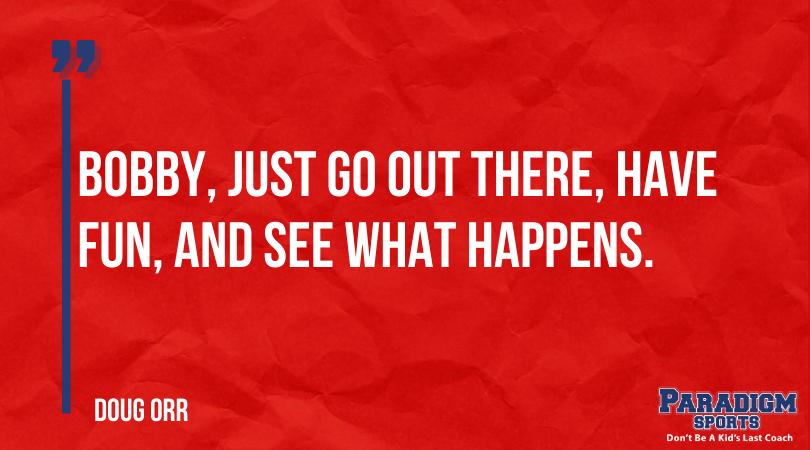
One of the biggest takeaways in thet book he and my son had was the fact that Bobby’s Dad, Doug, unlike Wayne’s Dad Walter, never coached Bobby.  What he did do, however, like all the other amazing youth sports parents that rarely get acknowledge for being so supportive like all those we call the silent majority (over 90% of sports parents are supportive, positive) vs. the vocal minority (the 5-10% of parents who are the ones screaming at kids, officials, coaches) in the stands.

Doug would be that parent like many that drove Bobby to all of his practices, games and share with him the following quote below;


When my son did return back to junior camps, his junior spring hockey team, and other teams when I was dropping him off for practices, games or other activities I would ask him … Hey Bud .. .what are you going to do today?

His answer every time was …

Dad, I am just going to go out there, have fun, and see what happens with a HUGE smile on his face.

He would still be playing adult recreational hockey this season had we not been dealing with COVID, but for me, and for every parent, coach I interact with, our greatest reward is to ensure that our kids or players love the game more at the end of the season and play well into their adulthood with those same huge smiles so we can continue to Love Watching Them Play.

PS Tagline - Dont be a kids last coach


This is the Future – 2020

Posted Posted in Athlete, Coach, Parents, Uncategorized


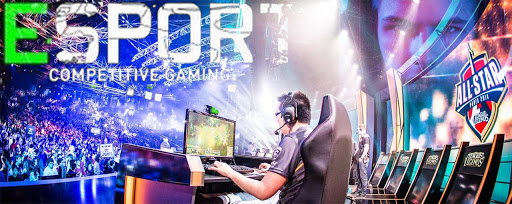
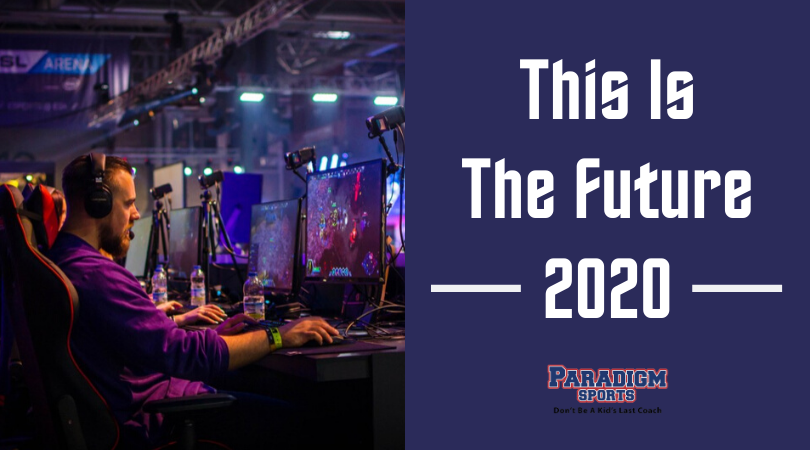
About a year and half ago I shared the growth of eSports in This is the Future and this week saw an article in the financial post where the owners of the Canucks Sports and Entertainment, The Aquilini’s, have invested in numerous eSports leagues and teams starting back in August 2018 to build the biggest e-Sports gaming network in North America less that 2 years later.

In 2018 the industry projections of e-Sports were projected to exceed $1 Billion, and now is over $1.5 Billion, a further 50% growth in just over a year with no signs of slowing down, similar to the 400% growth rate of the youth sports sector since 2010 in Canada.

Here are the numbers shared in recent article in the Financial Post;

  • Dota2 Event hosted in Rogers Arena August 2018 had $25 Million in prize money, $11 Million going to the winning team
  • eSports events hosted across the world in the very same arenas that professional sports teams play in (NHL, NBA) are selling out faster than the top musical acts are
  • Ticket prices average $40 for fans of the eSports “athletes” to attend the live events, generating over $600,000 in ticket revenue alone per event
  • According to MarketingHub, a market research firm, 800K people had heard of the growing niche industry in 2015, by 2019 the awareness had grown to 1.57B
  • Revenue has been increasing by more than 30% per annum, in 2016 was $493 M USD, $906 M in 2018 and is projected to exceed $1.6 B USD in 2021
  • eSports is inclusive, regardless of your sex, orientation, nationality etc. if you can play you can play online against any gamers across the globe

What the Aquilinis realized in 2018 like many others in the top 5 professional sports space is eSports is no longer a niche phenomenon but it is growing exponentially and as a means to further grow revenue streams and tap into a new and evolving fan base is to invest in the eSports industry.

Other prominent owners in professional sports have done the same

Jerry Jones – the owner of the Dallas Cowboys, one of the top professional sports franchises in the world, has purchased an esports team, including the purchase of a house in the Dallas area for them to live, eat and to hone their craft who is coached by one of my colleagues, James Leath, founder of Unleash the Athlete.  For insight listen to the podcast of the week HERE when I talked to him.

Prominent athletes and celebs are also investing millions into esports


  • Michael Jordan, arguably one of, if not, the Greatest Basketball Player of all time, invested $26 Million in eSports organization Team Liquid


  • Canadian Rapper Drake who was shown supporting the Toronto Raptors as they made their amazing run to the NBA championship last year has invested in esports organization 100 thieves with teams that compete in games like Call of Duty and Team of Legends


  • Steph Curry and teammate Andre Iquodala invested $37 Million in eSports organization TSM whose teams compete in games League of Legends and Fortnite


  • Hall of Fame Quarterback and now NFL commentator Steve Young also tagged into the investment made by Steph and Andre and part of the funding will be to build a 15-20,000 square foot eSports facility in Los Angeles


  • Rapper Sean “Diddy” Combs along with a group of investors provided just over $30 Million in funding to PlayVS eSports League Based in Los Angeles that allows high school students to represents their schools in eSports competitions and can qualify for the growing number of collegiate scholarships for competitive gamers.


  • Former Golden State Warriors Team Mate Kevin Durant invested $38 Million in Vision ESports and esports investment fund and management company


Professional Sports Leagues have also jumped onto the bandwagon starting in 2017


Since this interview in 2017;


  • NBA formed a joint venture with Take 2 Interactive to form NBA2K League whose inaugural seasons was in 2018 with 21 teams who are owned by NBA Teams and has partnered with the likes of Champion, AT&T, Snickers as key sponsors


  • NHL franchises are also forming leagues, starting with Monumental Sports & Entertainment (MSE) the parent company of the Washington Capitals working closely with EA Sports.


  • Maple Leaf Sports and Entertainment (owners of the Toronto Maple Leafs) also is hosting one on one as well as eSports tournaments based on the same EA Sports iconic video game and several other NHL teams are tipping their toe in the water investing in various eSports tournaments, leagues and teams.


  • Major League Baseball (MLB), Major League Soccer (MLS) and even the largest professional sports in the world, the NFL with over $13 Billion in annual revenues, is jumping on the esports bandwagon starting with the Minnesota owners investing in Activision Blizzard.


It also has gotten the attention of what used to be a focus on amateur sports, the International Olympic Committee, who has shifted their mindset over the years to permit professional athletes from the MLB, FIFA, MLS, NBA, NHL to participate in winter and summer games.

They also entered into discussions with INTEL last summer to continue on the momentum of pre-Olympic showcase event before the Pyeongchang Winter Games for eSports to be an Olympic event in Paris Summer 2024 Olympics.

If you have been coaching youth sports, a former youth or even professional athlete you’re probably shaking your head why the Olympics would even consider why playing video games could even be considered as sport? Some would argue Poker, bowling, darts are games also but do get considerable coverage on ESPN and other sports networks when major sports like NFL,  NHL, NBA, MLB seasons are over.

Here is some insight in terms of the neuroscience what is needed to be a gamer at a high level;


That the video game industry, thanks to PlayStation and Microsoft 360 as well as PC games is now over a $138 Billion USD industry worldwide, has now gotten the attention of celebrities, professional athletes, teams and the Top 5 Professional sports to create a spin-off industry to generate even further revenues via competitive events for one vs. one and team play.

Youth Sports has also grown exponentially in Canada and the US in terms of revenues since 2010 as more and more families go all in supporting their kids chasing the dream of full-ride scholarships or playing professionally, based on the growth of eSports suspect will see that spin-off as well.

Sadly, as more and more specialize earlier and earlier, more and more are quitting because what started out as a fun activity became work as many games are sharing when they retire from competitive game play.

Like overuse injuries in young youth sports athletes as a result of the early specialization phenomenon, a recent science daily article share insight how esport athletes who participated in a study are also at risk for various physical, psychological disorders;

  • 56% reported eye fatigue
  • 42% report neck and back pain
  • 36% wrist pain
  • 32% hand pain
  • Yet only 2% sought medical treatment
  • 40% get no physical activity per day, and average video game playing time is 10-12 hours/day


Although video games have evolved into the competitive eSports industry, youth sports are showing similar trends in terms of physical and physiological health issues including

  • 400% increase in ACL tears
  • Over 60% of current Tommy John Surgeries on 15-18 year old arms
  • Over 200% increase in concussions
  • Increase in mental health issues due to pressure to perform, meet parental expectations for return in investment

Both Multi-Billion Industries are suffering from CHRONIC overuse injuries being sustained by KIDS?

Maybe it’s just me, but Houston, we have a problem … a very big problem as these trends will merely lead to a major impact on the medical system in future that is already pushing its limits due to funding challenges to hire nurses, doctors and other support staff.

More than ever, we have to work together to bring the game back to the kids so kids can play for the sake of playing again, not chasing the almighty dollar at a lifestyle pace that is not sustainable long term.


Why we host online events

Posted Posted in Athlete, Coach, Organization Executive, Parents, Uncategorized

It’s hard to believe but I am really excited to announce that we will be hosting our 4th Online event this fall to follow the prior 3 where I have had the opportunity to talk with some of the world’s top experts in youth sports.

Mark your Calendars for our next event – Monday, Nov. 18th to Sunday, Nov. 24th, 2019

Although I have now coached for over 25 years, every person that I have had the opportunity to talk to has shared tons of tips and tricks to help me become better, and I am looking forward to learning from the next group of guest speakers that have accepted our invitation to share their words of wisdom.

If you have not signed up for one of our prior events I encourage you to consider doing so as the one thing that I came to realize in my coaching journey to date is there is so much more to coaching than writing up drills on a whiteboard.

Below is the blog that I wrote prior to our summer 2019 event that highlights why you should consider signing up for our fall 2019 online event.

Based on feedback we received from coaches that signed up for the summer and past events we have made the following tweaks for the upcoming event;

The video interviews that we will share when the event goes live Nov. 18, 2019 will be edited down to 15-20 minutes highlighting the deep dive portion of our conversations focusing on the guest speakers area of expertise, books they wrote, work they are doing to attract/retain and grow their memberships, creating cultures of excellence within their teams or organizations and many other tips to help you become better as a coach.

Our goal is to have 15 guest speakers (5 confirmed thus far) and like past events, we will have a replay of all the speakers from the prior event (total 30).

The best part, we will run it for FREE for the week we go live with cost-effective options for you to have on-demand access after the fact.

If you are currently coaching at the grassroots level of youth sports and just getting started or have coached for 2 decades and are at the high-performance level or anything in between I can’t say enough how much you will benefit from watching any of the interviews so you can add to your tool baskets.

For more insight on the 5 W’s + How, check out below.

Click HERE to go to our event page that we will be updating regularly with new speakers as they are added

As Online events (AKA Virtual Events, Digital Summits) are still a new platform with the evolution of the digital era and we have had people ask us questions the last two events I felt best this week to share insight in terms of the 5 W’s  + H for more insight in terms of our online event so you or your colleagues can consider signing up.


The online event consists of a series of interviews with guest speakers that are similar to podcasts, but in lieu of audio only, are recorded in both audio and video so that you can see both the host and guest speakers, majority of which will do so in their offices, homes but some in hotel rooms, on decks, at their cabins, wherever they have access to the internet.

Why do we prefer to share video and audio?

When I talked to John Kessel and Gordon Bloom, they provided me with a virtual tour of their offices by turning or walking with their laptops, both of which highlighted momentos they had from Coach John Wooden that you would not “see” on a podcast.

HOW COOL is that?

The analogy I have shared with speakers who ask for clarification is to think of it as a video podcast where 20+ speakers are released at once vs. audio-only podcasts one per week.

In the case of our online events we hosted last year, we have had various sports and free play leaders from across the globe who are asked a series of general questions then provide insight in terms of their specific work or fields of interest.

All of our mutual goals is to stop talking about the issues revolving around youth sports and focus on those that activate and provide opportunities for kids to have a quality sport experience and opportunities to PLAY For the Love of The Game.

All are asked for top book recommendations for coaches, parents as well as resources, podcasts, social media references and so forth.

The Best Part?

The week we host the online events they are FREE

This summer you will have access to 30 speakers, over 30 hours of digital content for FREE.

If you traveled to a conference where many of our guest speakers speak at, to see perhaps 3-5 keynote speakers your out of pocket expenses would be over $2000.

Even if you sign up to watch ONE speaker to gain more insight, I can tell you first hand it will be well worth it, as each one has shared nuggets that I have added to my tool basket and have now coached for over 25 years.

As coaches are in essence teachers and vice versa, the very reason why we host the online events is to provide grassroots coaches, many of which are volunteers, the simplest and most cost-effective way to add to their tool baskets as coaches.

When I have interacted with coaches across Canada, many have shared with me that they either don’t have the time or they can’t budget to attend live conferences or summits that are hosted by their national, provincial sports organizations.

Two of the largest conferences that are held in Canada hosted by Sport for Life and the Coaches Association of Canada are held in various cities across the country that not only have registration fees of several hundred dollars, but if the conference is not being hosted in your home town, airfare, hotels, meals, rental cars can lead to out of pocket expenses in excess of $2000.

I can relate all too well to how those costs can add up and be too much to bear.

The other excuse that I hear from coaches, as recently as this week when I attended the Cost of Winning screening hosted by my alma mater, UBC Kinesiology, is coaching in itself is a huge time investment to not only plan practices, coach at games but all the planning and other activities needed to be a coach.

This is where I argue all the time with that excuse, in order for you to become the best coach you can be, you have to invest in your own learning by continuing to learn.  Teachers are required to do ongoing professional development each month every year they teach and coaches should be no different, your purpose is to develop youth into adults.

How will do so to the best of your ability if you don’t continue to hone your craft as youth sports leaders?

Per the late Clare Drake, Canada’s GOAT

If you’re done learning, you’re done.

Clare was infamous for being invited to speak at numerous conferences well after he retired and after he spoke would go down in the seats with fellow coaches and start writing pages of notes.

When prompted why he did so as he was no longer coaching or teaching at the U of A

He would reply, like John Wooden who did the same, “Because I may learn something”

The event is virtual, they are accessible from any digital device that you are able to stream from the internet so you can do so when it is convenient for you to do so.  We then share out the audio-only portion via podcast after the fact.

Per one of our upcoming Summer event contributors, John Kessel, when I asked him how coaches can shave 5 years off their learning curves, he said listen to podcasts and I was humbled when he said that ours was one that was “Rock Solid”

Online events traditionally run over the course of one week, starting with a few speakers on the first day then others are added each day thereafter and the links to access arrive in your inbox daily until the event is over.

As we now have people following us from various parts of the globe (truly humbled and appreciate you doing so), we will have the speakers go live at 12 AM PST each day so should be in your inbox when you log on in the AM so can watch at your leisure.

Our Fall 2019 Online Event will run live Monday Nov. 18th to Sunday Nov. 24th, 2019

We plan to release 3 speakers per day over the course of the week across a range of topics and then another 15 will be made available from past events over the weekend

30 Speakers – 4 Countries – 3 Continents – Multiple Topics and Sports 


This is the best part, many of the speakers that we have reached out to are highly sought after keynote speakers who have spoken at conferences and events all over the WORLD and share their insight for youth sports leaders to become the best they can be.

Speakers that have confirmed thus far for Fall 2019 Event are:

Trevor Ragen, Founder of Train Ugly

JP Nerbun, Founder of Thrive on Challenge

Guy Faulker, Producer of Running Free Documentary, UBC School of Kinesiology Professor

Many others to follow, keep checking our event page for updates

Some of the speakers from our summer 2019 event we will reshare are;

John Kessel (Director of Development for USA Volleyball)

Brian Barlow (Founder of Offside Facebook Page and StopRefAbuse.com)

Topher Scott (Founder of The Hockey Think Tank)

Dr. Peter Gray (Professor at Boston U, Ted Speaker on the decline of free play)

Dr. Mariana Brussoni (Professor at UBC, Investigator at Children’s Hospital Research Institute)

Dr. Nick Holt (Associate Dean and Professor, School of Kinesiology, University of Alberta)

John Engh – (COO & Executive Director, National Alliance for Youth Sports)

Luke Earl and fellow co-founders of Top Sports

More to follow plus bonus replays from our winter and summer 2018 events for a total of 30 guest speakers from Canada, USA, UK and Australia

Each one of our speakers shares insight to help youth sports leaders learn how to shave years off their learning curves, learn the characteristics of great coaches, what they can do so kids love the game more at the end of the season than the beginning of a season and other valuable insight.

Click on our online event image below to go to our event page for more info and to sign up FOR FREE

It’s that easy.

As we get closer to the online event latter you will receive more information and on Monday July 15th we will release a link to access 3 speakers right into your inbox, 3 more each day for the remainder of the week then 15 more speakers Saturday morning (Total 30 Speakers).

If you are a grassroots coach just getting started in the recreation stream, coaching in the competitive stream or even high-performance levels, a youth sports parent, board member, official or an athlete I can say with absolute confidence you will learn tips, tricks, and golden nuggets to add to your tool baskets so you can become the best you can be and help others do the same.

Let’s all work together to bring the game back to the kids ….where it belongs

Youth Sports Organizations that are bucking the trends

Posted 1 CommentPosted in Athlete, Coach, Early Sport Specialization, Organization Executive, Uncategorized

Many sports organizations are still suffering high rates of attrition where 70% of kids are quitting youth sports by the age of 13 due to the myriad of reasons that we have shared in blogs, presentations, social media and daily interactions with exec, coaches, parents, officials, and players themselves.

It is due largely in part to the professionalism of youth sports and focus on winning at all costs which it turn has led to parental behavior, coach criticism or running short benches, the commitment (time, financial and travel), ride home (and to), harassment and not being safe for kids to fail.

Translation – Kids are quitting in droves because youth sports are no longer fun for them to PLAY.

Last week we posted “Why kids play Video Games” as they are one of the key competitors vying for kids time today where kids are running to screens spending on average 7.5 hours a day so have replaced their former active playing time with inactive screen time.

It seems like literally every day that I open a paper, scroll thru various social media feeds or we follow that there are so many negative posts it is really hard to be positive (Half Full) vs. negative (half empty) outlook.

This only leads to complaining more about the issues in lieu of being part of the solution and doing something about it.

We have been extremely fortunate as an organization to partner with some amazing counterparts across the world who are advocating for the much needed change we need in youth sports and what gets lost in all the negativity we see daily are some of the AMAZING people and organizations that are bucking the trends and reversing their attrition rates by creating an amazing customer and quality sports experience.

This is our focus when working with organizations, to develop programs so they can attract, retain and ultimately grow their memberships.

This week we wanted to share some of those that we feel deserve Kudos for moving the needle in the right direction.

Others we are working with or come access will share in our posts, social media and digital mediums (podcasts, videos) as they deserve to be highlighted for one, but they also provide examples that if all stakeholders within organizations buy-in to the main reason we all are involved in youth sports is to focus on providing the best experience possible so the kids LOVE the game more at the end of a season than they did at the beginning.

These are three of the ones we have had an opportunity to connect with various coaches, parents, board members who have shared how they are moving the needle in the right direction.


I could not write anything about sports organizations that are setting the bar for long term athletic development and reversing their attrition rates if did not reference the one that has been the reference by many in the sports space for several years now.

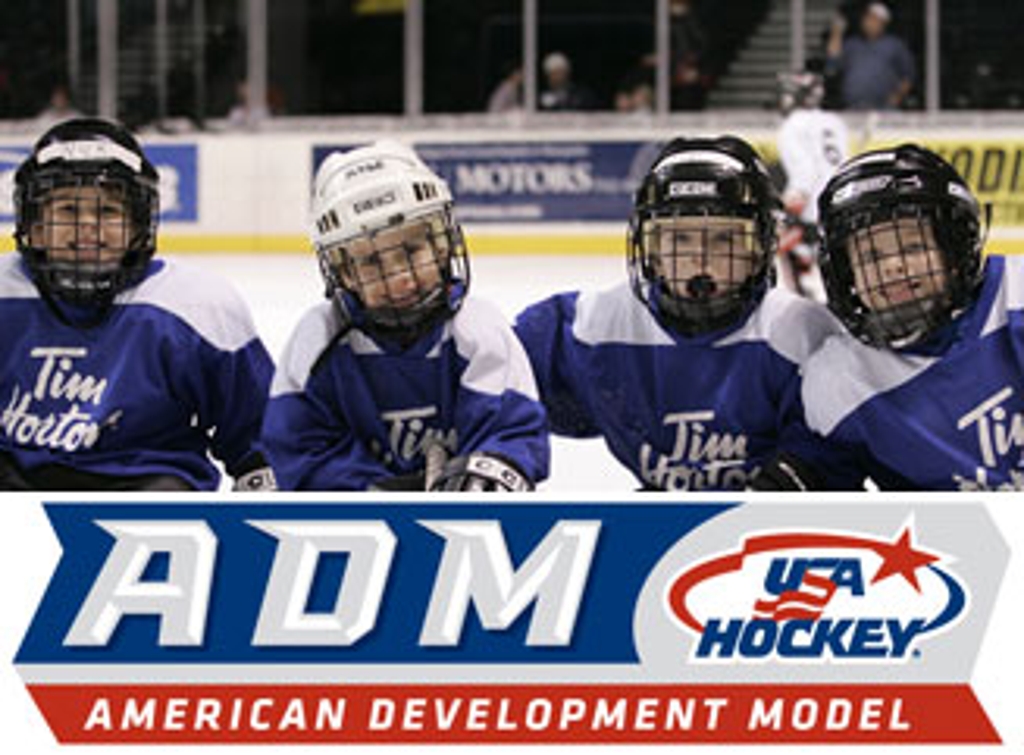
In the fall I had the great pleasure to talk to Bob Mancini, Regional ADM Manager for USA Hockey and he shared with me insight on the roll-out of their ADM model which has been a 20-year work in progress.

From 2002-2012 they worked on creating the framework for the model along with representatives of their state, regional and city hockey organizations.

This included evaluation of various LTAD models adapted by other countries that was created by Sport for Life in Canada in the 1990’s and tweaked the American Development Model (ADM) to work best for their membership to include;

  1. Age Appropriate Training
  2. Quality Age Appropriate Coaching Development
  3. Small Area Games
  4. Cross-Ice Hockey
  5. Smaller equipment, nets, adaptable pads, lighter pucks
  6. Mobile Ap for practice planning
  7. Resources for practice planning by age groups and positions
  8. Promoting Multi-Sport Participation
  9. Equal Playing Time for all players U12

In 2009 USA Hockey rolled out the ADM model and although it was seen with original resistance similar to when Hockey Canada Mandated Cross-Ice Hockey, delaying body checking until Bantam in the competitive stream, removing from all recreational levels, according to Bob when I talked to him he shared that after a few years and doing the Analytics showing the benefits they got buy-in from the entire membership.

One of the hats that I wear for BC Hockey is Regional Evaluation Lead and I am responsible for getting coaches in parts of the lower mainland of Vancouver as well as all of Washington State evaluated running practices to complete their Dev 1 Certification requirements for coaches in the competitive stream.  I also interact with many of them in clinics and when they are prompted about long term player development, physical literacy, fundamental movement skills many of their hands go up as they are about 5 years ahead of when Hockey Canada rolled out their Long Term Player Development model.

Like many other sports worldwide, USA Hockey was experiencing high rates of attrition during the roll-out of ADM, losing 60% of players by peewee (by age of 12)

Three things that they did to reverse the trends

  1. Continued to focus on ADM and age-appropriate coaching development
  2. Focused on FUN
  3. Eliminated their National U12 Championships

It was #3 that Bob shared had the biggest impact as organizations that vied to get teams in their national championships could back off from the former winning at all costs focus (one of reasons why kids quit) and focus on long term development and loving the game.

Their attrition rate reduced to only 8% as a result, retaining 92% of their players at the peewee age group.

For more insight on the USA Hockey ADM Model and other resources, here is a link to their website  www.admkids.com


Another sports organization, TopSports based in Toronto, Ontario, that I had an opportunity to talk to one of the founders, Luke Earl, as he and a few colleagues came together to found a sports organization as were unhappy with current offerings for their young kids.

Luke and all of the other team members are former multi-sports athletes themselves, some playing professionally after their collegiate playing days for tops schools like Yale, Harvard, Ryerson, Loyola and Brock Universities.

They also are going to be one of the first early adopters of the Personal Sport record for all of their programs so they can provide both qualitative AND quantitative measurements to their athletes and their families.


What gets measures – Matters.

What are they doing differently?

#1 Focusing on multi-sport participation – kids play hockey in the winter and hang up their skates at the end of the winter season – No Spring Hockey – No Summer Hockey – No Spring or Summer Development.

In lieu -Playing Lacrosse in the Spring and are working on a Soccer and Baseball arm as well to give kids an opportunity to play other sport

#2 Focusing on LTAD (Long Term Athletic Development)

#3 Having NCCP Certified Coaches for all sports (vs. many private non-sanctions sports organizations where they bring in former players to “coach”, many of which with no or limited coaching experience and no certification

#4 Fees that are 1/3 or less that of other similar sports organizations

#5 Focus on FUN, Life Skills and love for the game

For more information on their organization check out their website www.topsports.ca


I came across representatives of More Sports, a community multiple sport model based in Vancouver, BC in various hubs of Vancouver while I was attending UBC’s Career Fair as potential employer (we sponsor co-op students who do all the AMAZING work behind the scenes so you can read these blogs, listen to podcasts and watch videos, digital events etc.)

They shared with me that they were founded to provide neighborhood-based sports programs for children and leadership courses for their young leaders.  It started when a father took his kids to a local park in east Vancouver in 1998 and was told they could not play on a soccer field without a permit.

They only way they could play soccer would be signing up for the local club with reg fees (at the time of $125) which was more than the family could afford.

Fast forward 20 years later, More Sports has supported thousands of kids playing multiple sports for fees as low as $40 for 12-week programs, and if kids can’t afford that, are subsidized by organizations like Jumpstart and the United Way.

The kids range in ages from 6 to 12 years of age and have an opportunity to sample several different sports including soccer, basketball, spikeball, volleyball, floor hockey, badminton, flag football,  and are looking at including ice hockey to the mix contingent on partnering with groups that can help subsidize.

The other benefit is that all of the “coaches” are not much older than the kids, they are High school age between 12-18 years old, who lead the kids in multiple sports activities and are provided with a youth leadership program who then will give back to the community.

In this day and age of play to play, travel teams leading to even further disparity of the haves vs. the have nots having the opportunity to participate in sports, it truly was refreshing to see a community-based sports organization that was providing great experiences to all those involved.

I hope to have the opportunity to visit their programs and share more insight in the future.

For more information, check out their website wwww.moresports.org

These are just 3 great examples of organizations that are bucking the trends from a national governing body to two community-based organizations who are providing quality sports experiences and unlike many other sports organizations the,y not only are attracting but retaining and GROWING year after year.

The needle can move if all stakeholders buy-in to move it.

Let’s all work together to bring the game back to the kids … where it belongs.


Don`t be a kids last coach


I am proud to be Canadian.

Posted Leave a commentPosted in Athlete, Coach, Organization Executive, Uncategorized

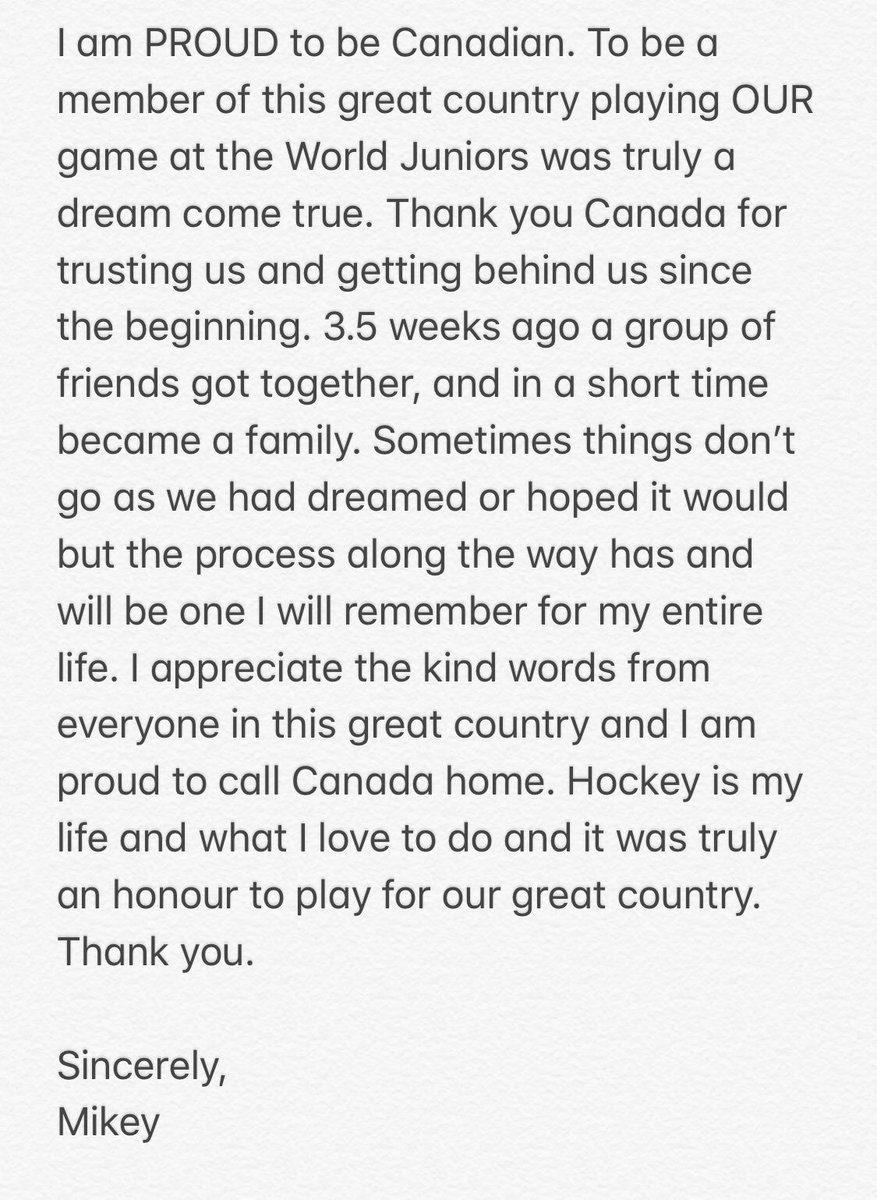
As today marks the official full week return to work, school after the holiday break I would be remiss in not talking about this year’s World Junior Tournament that was hosted in my hometown, Vancouver, BC and across the Pond (ferry ride) in Victoria. Like Mikey Dipietro who tweeted after Team Canada’s tough loss to Finland, I too am proud to be Canadian (albeit equally as proud of my Irish heritage) and like it was during the Winter Olympics in 2010, it was amazing to have the opportunity to see some amazing hockey being played by the future prospects of the NHL.

Although Vancouver has hosted the World Juniors in 2006 this was the first time that I was able to get tickets to see live games, starting with the cheap man’s version of pre-competition games where I got to see Jack and Quinn Hughes for the first time live and said to myself Vancouver Canucks FINALLY have a power play D-Man, prospect Quinn Hughes did not disappoint, and whoever wins the draft lottery this coming draft, which also is being hosted in Vancouver, will get another “pretty good player” as his younger brother Jack is pegged to be the #1 overall pick.

I was then offered free tickets to see Czech Republic vs. Swiss, Canada vs. Swiss and thanks to my wife’s cousin having purchased 4 corporate seats and two sons getting hit with the same flu that I was recovering from, the opportunity to see the Gold Game USA vs. Finland.

I also watched a few games on the tube as I do every year including the New Year’s Eve game Canada vs. Russia and the semi-final match vs. Finland.

Some of my key takeaways as a result of seeing both live and TV versions of this year’s World Juniors;

My whole life has revolved around Hockey and many other sports and nothing makes me prouder than when Canada wins gold in an international tournament like the World Juniors but as Hockey is now a global game, as this year’s world juniors and those over the last 10 years have shown, anyone can win on any given day (as not only Canada found out but so did Sweden who was 48-0 in round robin play and lost to Swiss in semi-final game).

Although Team Canada dominated Denmark (14-0), strong game vs. the Czech’s (5-1) they won by only one goal against the Swiss that I saw first hand, then lost to Russia by one goal, then lost to Finland also by one goal that knocked them out of the tournament.

Soon after the Finland game, team captain Max Comtois was berated on social media with various comments from “fans” who critiqued him for missing the penalty shot that would have tied the game BUT what none of these naysayers knew is Max played thru a separated shoulder he sustained in the tournament that will mean he will miss minimum 2 weeks from his Junior team Drummondville.

This when Telus shared their #endbullying commercial with Jordan Eberle for the second year in a row how over 1 Million kids are cyberbullied yearly?

As my Nanny (grandmother) told me all the time, if you don’t anything good to say, say nothing and ALWAYS treat others as you expect to be treated.

The lack of respect in hockey and other sports is one of my biggest pet peeves today and we must bring respect back into the game to eliminate harassment of ANY KIND.

TOUGH PUCK LUCK – What about the tough puck luck in the Finland semi-final?

With 46 seconds left to play and Canada up 1-0 (always scary in any game to not have an insurance goal) and Finland scores a pinball-type goal that would be worthy of the McDonalds commercials several years back with Michael Jordan and Larry Bird. Off the net, a shin pad, stick, then backhand off Dipietro to find the top shelf only for Mikey to look at his teammate in utter disbelief?

What about the wide open net that Noah Dobson missed because his %(^()$*^% composite stick broke in OT that lead to an odd-man rush by Finland that leads to the game-winning goal? If Gordie How could score as many goals as he did with a wooden stick, flat blade and have a wrist shot over 70 MPH, there is something to be said about being old school, I still don’t believe in composite sticks as they lead to too many missed scoring opportunities when they break like this time.

At the end of the day as the final game I witnessed proved, Finland was the better team in the tournament but had Canada gotten some better puck luck perhaps they would have least made it to the medal round.

Mike Dipietro, goalie for Team Canada who suffered that tough puck luck showed the epitome of class and the importance of losing with dignity when he shared his tweet;


One of the best moments in the world Juniors was when the fans chanted DI-PI-ETRO and he mother broke into tears, too often we forget about the support that all these players get from their families and friends.

What Team Canada’s early exit showed is that Canada still has their work to do to repeat and setting our high expectations what they did 5 years in row 1993-1997 and then again 2005-2009 winning gold so it has set our expectations high every year Canada suits up for the World Juniors.

Since 2010, however, Canada won gold in 2015 (Connor McDavid one of the co-captains) and 2018 and the only returning player from LY was the very same Max Comtois, team captain, who was a victim of the ridiculous and cowardly social media rants for not scoring on the penalty shot (with a separated shoulder).

We have our work to do in Canada to reach that same level and a few other countries have shown they have moved in the right direction to give Canada a run for the money at their own game.


They too suffered some bad puck luck, having the first goal they scored called back as one of their players was in the crease violating a IIHF rule?  We were seated right behind the Finnish net at the time and the US player was mauled by the two Finnish D-Men leaving the other US player to jump on the loose puck and bury it in the net.

Had that goal counted, perhaps it would have been the US anthem played at the end of the game as all games had been won by teams that scored the first goal in the games.

It did not help that USA could not score on any of their 5 power plays although there were flashes of brilliance and posts hits on some shots, the puck did not cross the line when it needed to.

USA Hockey has been setting the bar for LTAD for years now, with their adaption called the American Development Model (ADM) which includes several years head start for cross ice hockey for the younger players, small area games for all age groups, smaller nets, lighter pucks, coaching certification relative to age groups to adhere to the levels.

Ken Martel, Technical Director, ADM for USA Hockey and many of his regional managers including Bob Mancini whom I had the opportunity to talk to for our winter summit which we will be replaying latter part of January, have done an amazing job with Team USA

Click on Video below for more insight;


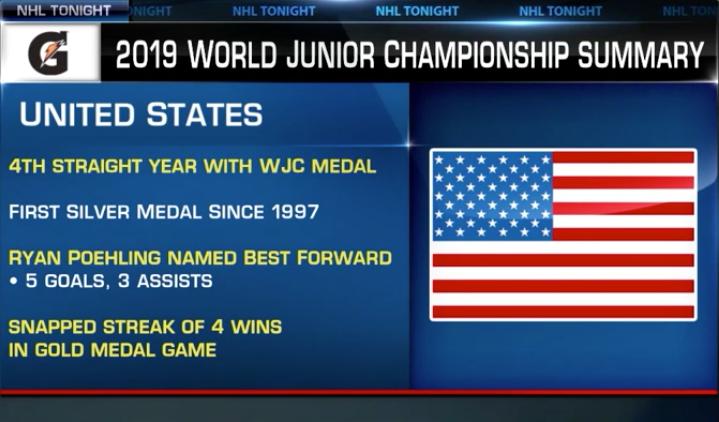
2019 is the 4th consecutive year that the USA has medaled in the tournament, Ryan Poehling is named the top forward, the Hughes Brothers and many other prospects including Keith Primeaus son (goalie) will potentially have long NHL careers.

This is not just a result of the ADM model, but is also due their National Team Development Program starting with 16 and 17 year olds (the time when kids should look at specializing NOT before) and some other pretty good players have come out of the program including; Austin Matthews, Jake Eichel, Matthew and Brady Tkachuk and many others.

TEAM FINLAND


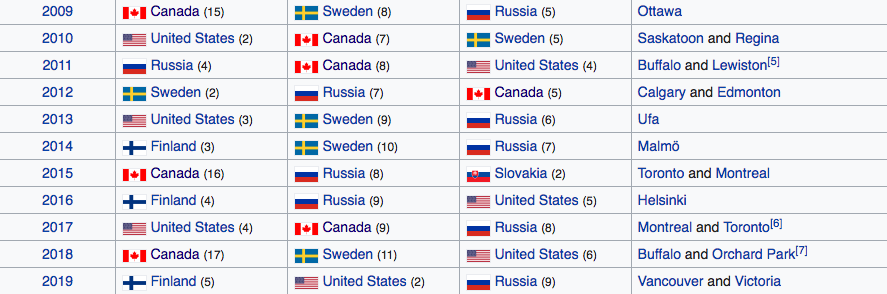
I have no idea why everyone had Finland a dark horse in the tournament, as Finland has now won 3 GOLD medals since 2014, all three of those same Major Junior Tournament years Canada did NOT MEDAL. (First Column = Gold, Second = Silver, Third = Bronze Medal)


This reflects Finland’s commitment also to LTAD, focusing on practice to game ratios much higher than Canada 3,4 or 5:1 relative to the stages that kids are at and like Sweden, and they have been focusing on the importance of coaching the person as we shared about Erkka Usterland who lead Finland to Olympic Silver in 2006.

They have been setting the bar for a good athlete focused coaching for years, and the results are showing on the worlds stage.

The gold game that I had the privilege to watch on Saturday night was the top two teams in world juniors since 2010 and although Canada is the all-time leader since the world juniors started decades back (17 Gold Medals, 10 of which due to 5 consecutive golds in the 90’s and early 2000’s pre 2010), if we don’t change our system NOW, we will continue to fall short at the Juniors and other international events.

Recommendations for change to our grass roots programs leading to high performance

  1. We need to focus on development, not competiton.

The easy fix in the rep stream – replace on of the game slots (currently in western Canada rep teams play 2 games, 2 practices and a dryland) with a practice slot and VOILA, we have a 3:1 Practice to game ratio and kids will develop vs. overly compete

DON’T sign up for Spring hockey unless it truly is a Spring Development, once, twice a week max working on skills, small area games, cross ice etc. but no games or tournaments as players develop in practices NOT games.

Play other sports in the Spring and Summer, Hockey is already the longest season of any sports and kids need to take a break from the ice so they can develop other motor skills that will translate to Hockey (i.e. Sidney Crosby batting pucks out of the air)

2.We need to have our best coaches in the trenches, grass roots when kids are developing their core motor skills between the ages of 9-12 to learn LTAD, Fundamental Movement Skills, Physical Literacy. I have had over 3000 coaches in clinics alone and when I ask the question how many coaches are familiar with these concepts, only a few hands go up so we have so much work to do to get our coaches on board.

  1. We need those coaches to recognize there is so much more to coaching that writing up drills on a white board and focus on the person, not the outcome as well as the importance for life-long learning.  The NCCP program ran by Coaching Association of Canada in conjunction with Hockey Canada is now requiring coaches to get a minimum number of professional development (PD) credits but it has been a long time coming


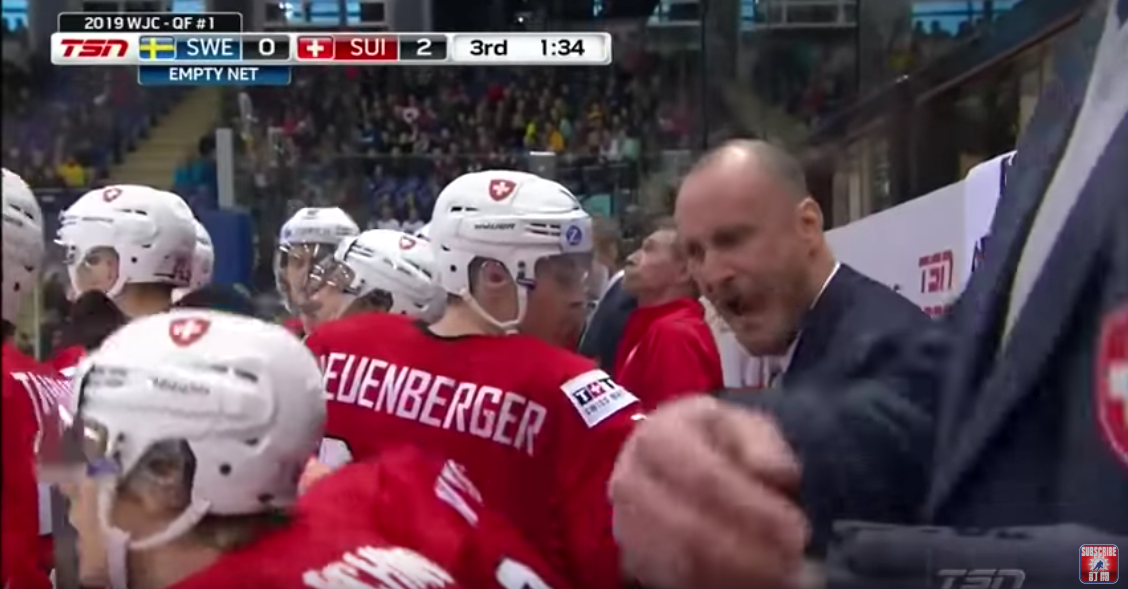
  1. We need to eliminate old school coaching practices at all levels that for some reason people did not think there was anything wrong with it when Swiss Coach berades players on their team for making mistakes as he did in the game vs. Sweden.


Swiss Head Coach Christian Wohlwend screaming at Sandro Schmid for mistake made touching puck causing it to go offside in last 2 minutes of game vs. Sweden.

Had Swiss lost the game, I suspect this video clip would have gone viral calling for him to be fired, but because they won and qualified to be in the final 4 (losing to Russia in the Bronze game) commentators merely shared that he was hot under the collar and smoke coming out his ears?

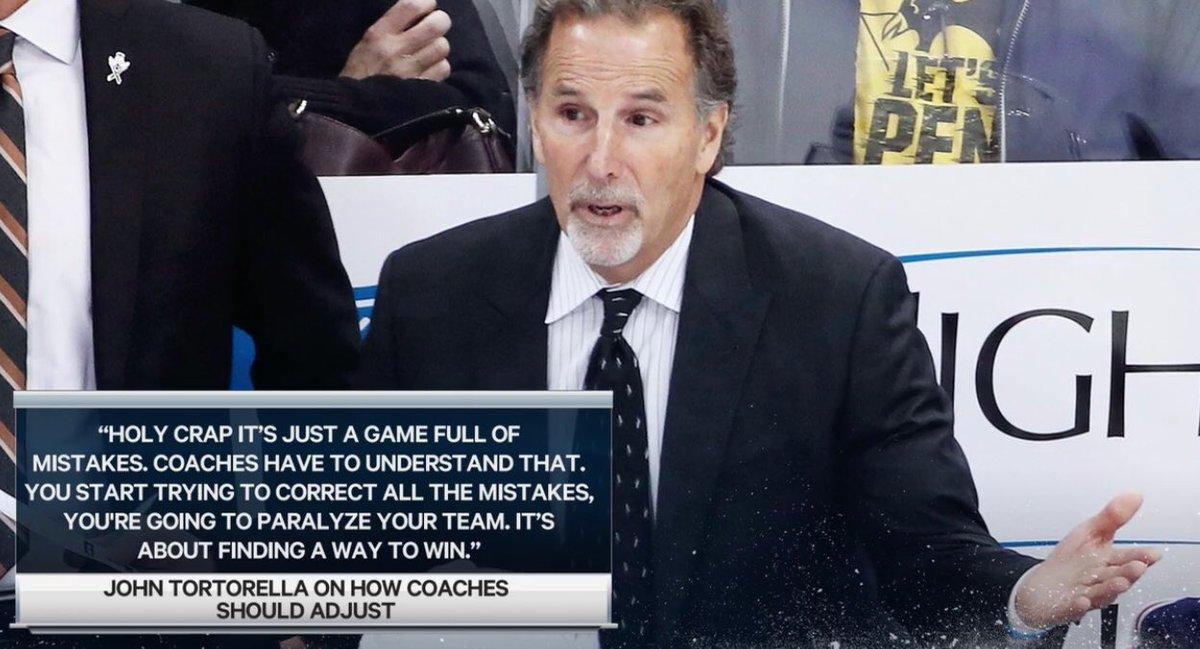
Ironically, one of those former old School Coaches, John Tortorella, who was infamous for his player rants on the bench and was advised by Columbus if he was going to continue coaching he would have to become more athlete focused recently shared this quote we posted to twitter;


Swiss Coach may have accomplished the win by putting fear into his players or as some of the players stated was being honest with them but using a totally different approach merely by pulling the player aside and showing him on a whiteboard what he should have done in lieu, as the old cliché goes, you get much father with honey than you do with vinegar.

The only way that any of this will happen, however, is if Parents who are paying the bills are educated why other nations have caught up to us in terms of their programs and coaching development and how they will continue to excel if we don’t change our culture and systems NOW.

Like Mike Dipietro, I also am proud to be Canadian, but we can no longer do the same things over and over again and expect different results (Einsteins definition of Insanity). We need to implement a significant PARADIGM shift in our development model so we don’t fall further behind other nations as we have this past decade.

Otherwise the worst 4 words anyone can say will be posted in one of our blogs years from now ….


I TOLD YOU SO.


Don`t be a kids last coach