Coaching Skills in Sport and Skills in Life

Posted 1 CommentPosted in Uncategorized


BONUS – Download a Free Copy of this Blog in PDF Format HERE 

I have been asked to speak at the wrap up event for UBC’s Kinesiology Mentorship program which I am involved with so have been brainstorming some examples to share in my talk. Thinking back, I have had so many great mentors since my childhood, coaches on many of my teams, teachers in school and post secondary education as well as managers I have worked with in business.

Like many of us, however, I have also had my fair share of those that were “not so great.”

Although there are many examples I could share, I thought I would be remiss if I did not talk about the one that had the greatest impact on me as both a coach but also as a parent.

His first name was also the same as mine but with two N’s, Glenn Zwyck.  Ironically he was related to my English teacher in High School and he was the most tenured coach in our local softball association, has also coached hockey for many years, both minor and adult, and was inducted as builder of Canadian Adult Recreational Hockey Association in BC as well as numerous coach of the year awards in hockey and softball.

Sadly, Glenn passed away in 2012, and was one of the reasons why my daughter quit softball as he was a second father to her and many of the other girls that he coached.

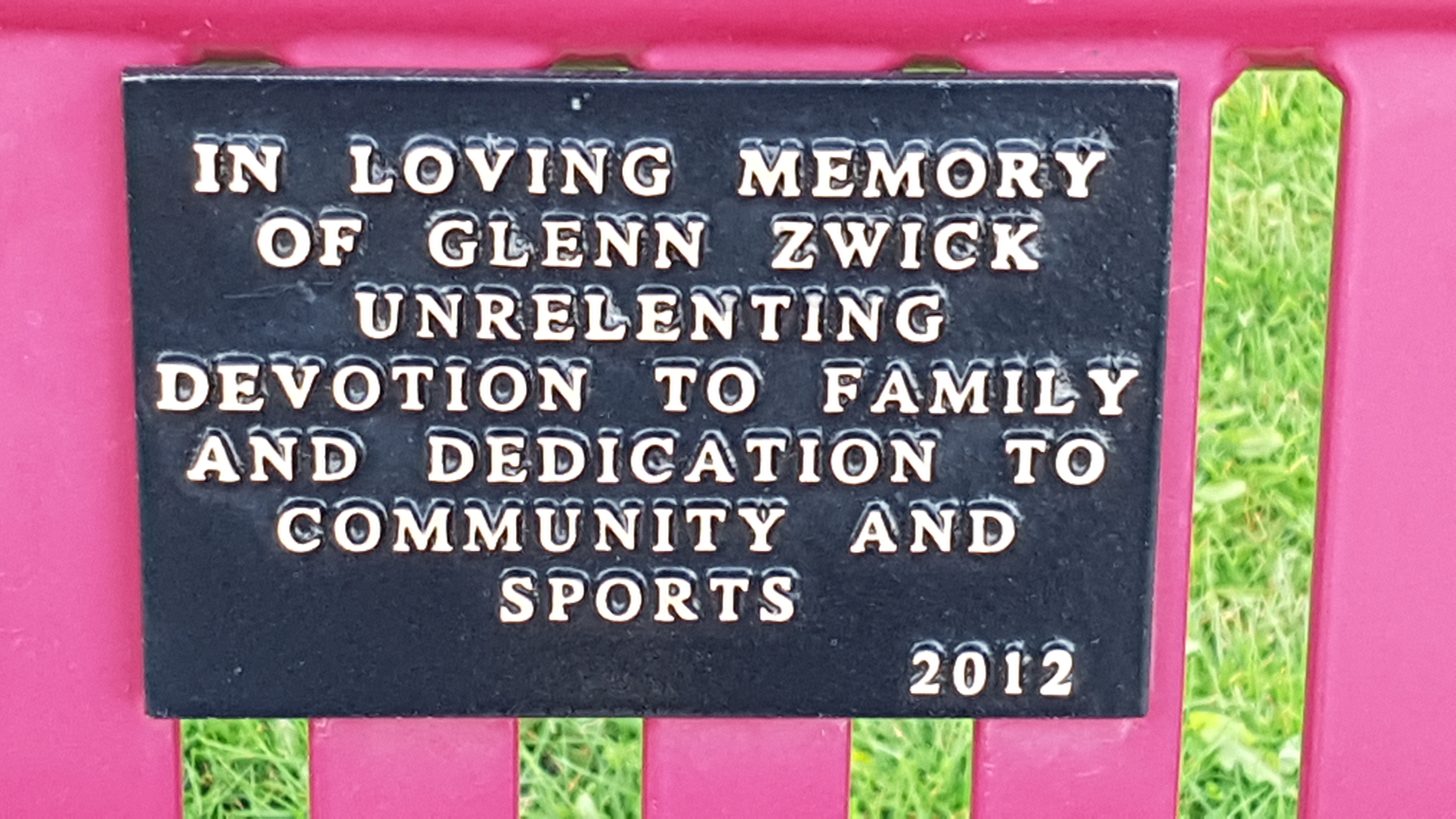
Below is a bench that we all kicked in to dedicate in his memory at our local park, and since he passed, I have sat on the same bench over the years when I needed some insight knowing that he would have extended it selflessly as he had for the many years before he lost his battle to illness.



One of my favorite memories of my daughter’s softball “career” was when Glenn would go out to the pitching mound during games to have one of his many talks with her to “calm her down” (like me, she has a wee bit of an Irish temper) when she struggled to find the strike zone.  Each time when he left to return to the mound, whatever he said turned that frown into the hugest smile.

He also was a pitcher and played at a really high level in men’s softball, as was he a former Junior Hockey player and coach before his kids were born.

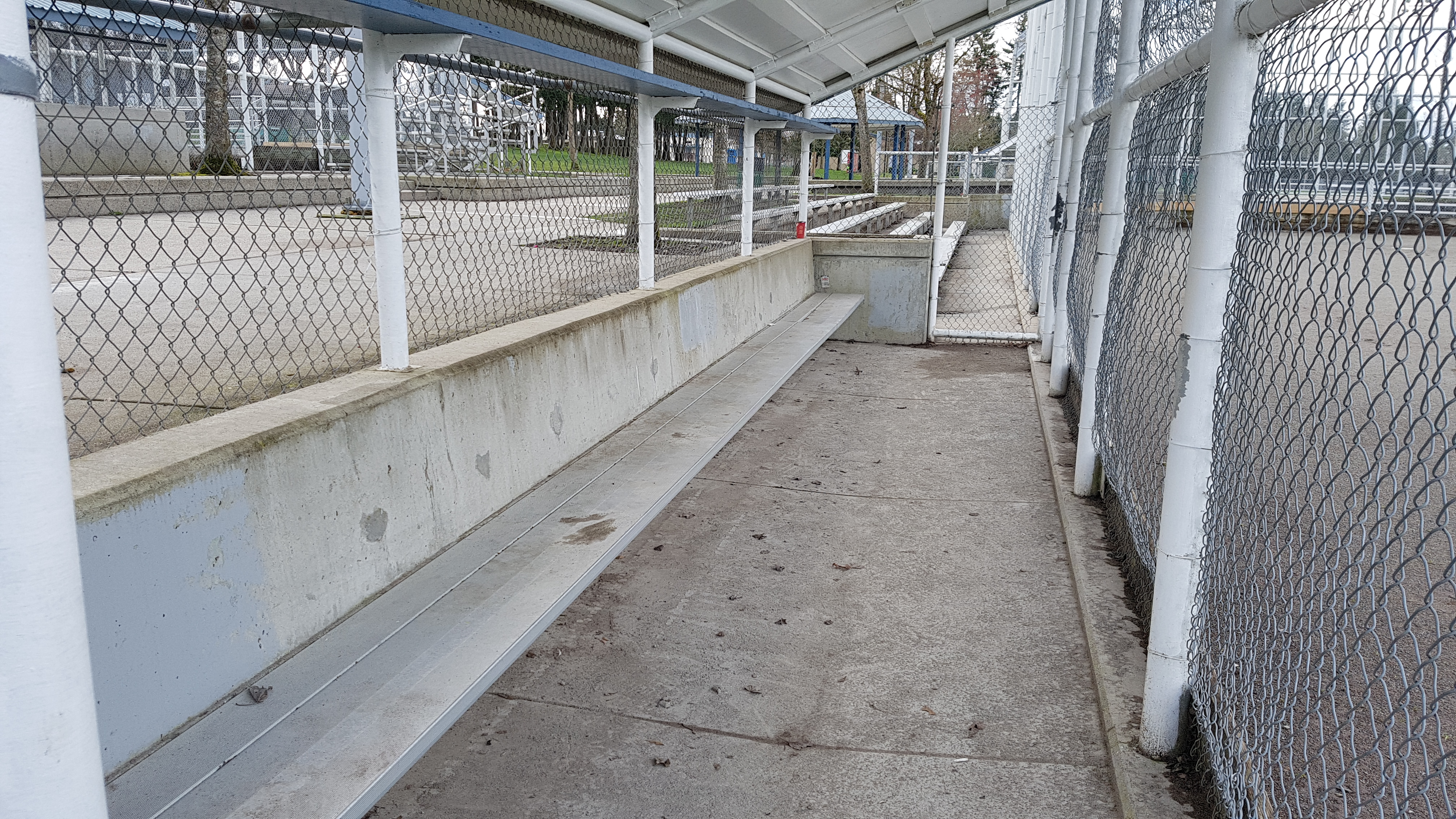
I can recall all too well many of the conversations that I would have with him sitting on the dugout before games or practices when the girls were warming up or afterward as they were collecting all their gear. We never talked tactics, strategies that seems to the be the focal point of coaches today, in lieu we talked about how valuable sports were to teach kids valuable life lessons including; work ethic, respect, integrity, punctuality, sportsmanship, winning with humility, losing with dignity, selflessness, teamwork, leadership and communication.
 

He was educated as a teacher but like me ( I pursued business in lieu for various reasons) opted not to go into teaching as his first love was hockey, worked as an operations manager for one of the oldest rinks in the lower mainland.

I also recall how frustrated he would get when our teams would qualify for the provincials (the equivalent of state championships in the USA) of which he lead us to 5 over the course of 7 years he coached my daughter and a core group of girls that he would draft year over year. Many times he would say that the all the girls thought it was more important to talk about boys, social media vs. getting or staying focused to compete in games.

 

My one regret as Glenn passed away are year after our last provincials is we were not able to win one “for the Gipper”, having won three provincials myself, I know how satisfying it was as a player to win one for our coaches, and my daughter feels the same way.

The reason I had the utmost respect for Glenn was his dedication not only to helping all the girls develop their core skills of softball but skills of life. After every game he would review what the girls learned and at the end of each season, he would provide humorous anecdotes of the contributions they made to the team, unlike many coaches today, he truly cared about each and every one of the girls as if they were his own daughter.

Over the years either sitting on the bench in the dugout or I would reach out to him for insight when I ran into things that I needed help on coaching hockey and his words of wisdom helped me become the coach that I am today.  I also believe all his words of wisdom also made me a better parent and running my own business.

I remember a couple of key conversations we had over the years, one was when I was coaching Atom (9-10 years old) and I was getting a lot of pressure from parents to focus on team tactics in practices (breakout drills, power play, penalty kill) which I had been doing merely as chalk talks before games.  The reason I resisted working on tactics and strategies in practices is every one of my players needed to work on their core skills to execute.

About a month into league play I called him to get some insight and he shared “I really don’t understand why parents put pressure on coaches to focus on strategies if they knew so much, why are they not coaching?  He further went on to say I needed to have a meeting with the parents to relay why I was doing what I was doing, and the importance of letting the coaches coach.”

It was really early on in my coaching career so I did a lot of research into long-term development, core skills to support my reasoning and had a meeting and all the parents buy in.

This was my first of many meetings to follow where I learned the fine art of engaging, not dealing with, parents.

Another time a couple of years later, I was the division head coach of 4 teams and we had a coach that was spending 75% of his practices doing breakouts which I suspect was due to parental pressure so again I reached out to Glenn and he said “the coach and the parents don’t get it … Hockey is a really simple game, the team that has the puck more will probably win.  The reason they are getting stuck in their zone is the other teams can skate, pass faster so tell the coach to focus on skills vs. systems.”

I shared that with the other coach, he changed his focus to core skills, and after about a month in lieu of being stuck in their own zone, the reverse happened, they were putting pressure on the other teams.

Many more examples I could share and one thing that saddened me most when he passed away, not only had I lost my mentor, my daughter had lost both a father figure and a GREAT Coach.

She hung up her cleats that year, sharing that she was quitting due to the drama of the new coaches were not like us and were focused mainly on winning and it those that did sign up shared with her they did not have fun, the remainder quit the end of that year.

Just a few nights back I was helping her print some images for a project while I was reviewing our facebook page and shared with her we were getting people following us from many parts of the world, to which she said “it’s because you are doing great work”  My reply was humbly “Thank you.”

She further went on to say how much she loved playing softball for Glenn, me and other coaches as we focused on the girls having fun while learning so many skills as well as valuable life lessons.  Like me, Glenn did have a temper at times would get frustrated when the girls would goof off, not focus or appear disinterested in the games.  What I learned was this was one of the core differences coaching girls vs. boys, they at times would get distracted focusing on the social aspect but will leave that for another post.

Not only was Glenn on of my mentors, he also mentored my daughter and all those girls for many years and the last thing she said to me was “Dad, even when I went back to play for the adult fastpitch team, or co-ed slo-pitch teams, it was not the same.”

I ashed .. Why?

“Because you and Glenn are not coaching anymore most quit and there really isn’t anyone playing softball anymore.”
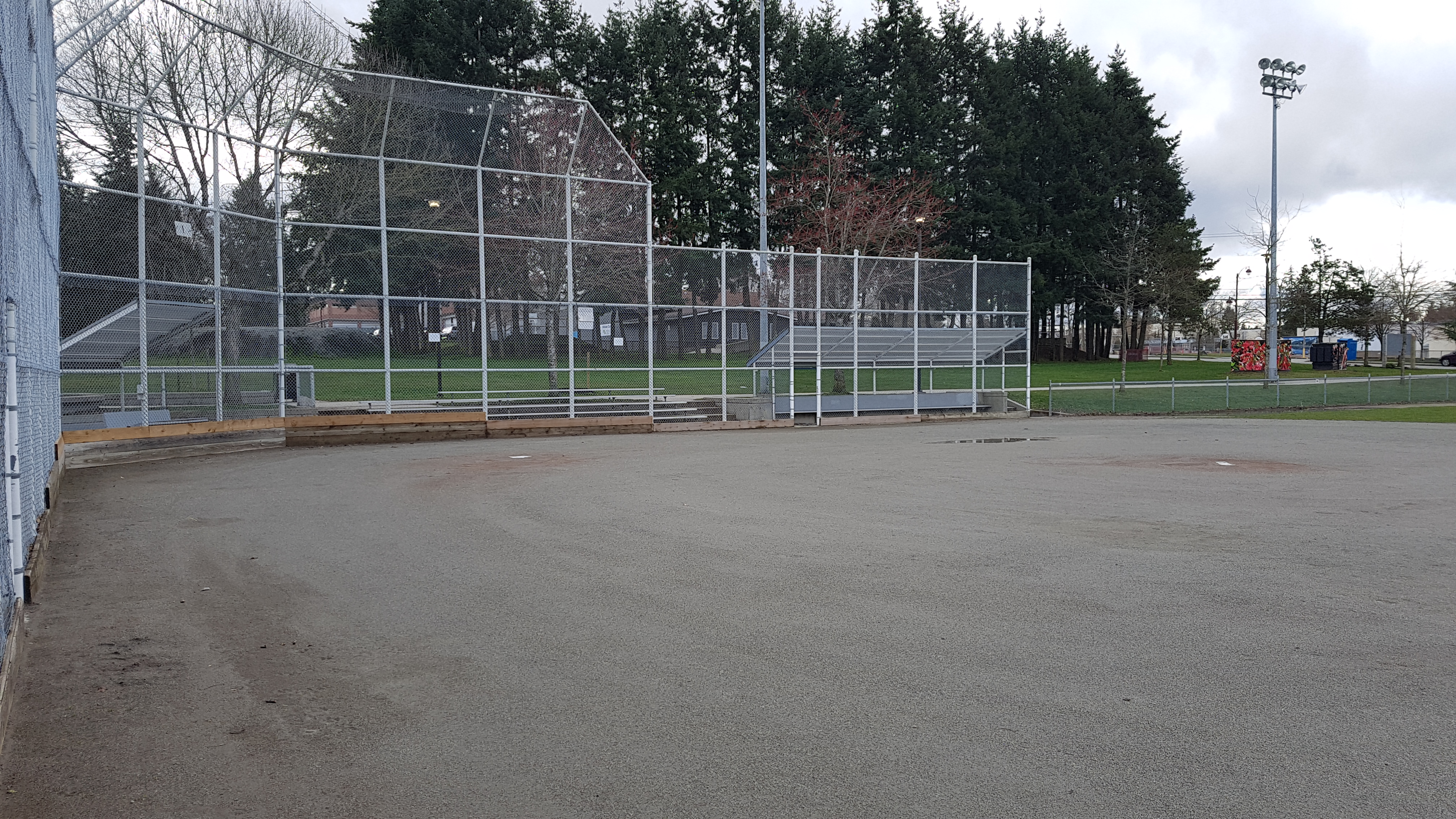
Picture of one of the fields our teams played on for years that is empty many times when I drive by

Sadly, it is not that far from the truth, the numbers of girls registered playing softball in our home association since she hung up her cleats just 6 years ago has dropped over 50%!!  Similar trends are also happening on our boys baseball teams which I played in my youth, then my son on the very same fields including winning the “championship” during family days.

The reason that so many associations are suffering declining enrolment are vast, but one of my core beliefs is many don’t understand the reasons why kids play, why they are quitting or the importance of having great coaches that instil the love of the game so kids come back each year.

This was mine, Glenn’s and other coaches of our girl’s teams main focus each year, we all believed that kids should love the game more at the end of a season than they did at the beginning so they return year after year and play well into their adulthood.

I truly can’t say how important it is for coaches to seek out mentors, many of which will do so unselfishly to give back.

During a recent Skype call I had with an organization looking for insight how to change their culture and coach development, parent education, the head coach of the organization shared how he reached out to the long-term coach of their community Junior A team to see if he would provide mentorship to their competitive coaches.

He agreed to do so with no hesitation as will many tenured coaches to help those that are getting started out.

Some coaches feel it is a sign of weakness when they reach out to others for help or feedback which could be no further from the truth. By ensuring you have a mentor to turn to, whenever you run into a situation you have not come across, chances are they have and can help you thru it.  In particular when it comes to the “other” aspects of coaching, connecting with your players, developing confidence and character as well as tips how to engage parents, respecting officials, dealing with harassment or working with board members.

Just as my long-term mentor Glenn did, he showed me that how important it was to develop relationships with players, parents, officials and all others involved in the organizations and as a result, we won many games, tournaments and qualified for provincials several times as a byproduct of focusing on the process and developing strong relationships.

I sadly miss our conversations but as I share with every coach as I travel the country, remember our role as coaches is not to make a living, but rather to make a difference developing youth into adults.
 

Please ensure the legacy that you leave behind is like Glenn’s and is a positive one so you are not a kid’s last coach.

Let’s all work together to bring the game back to the kids … where it belongs.


Coaching to Overcome Trauma and Improve Character

Posted Leave a commentPosted in Uncategorized

BONUS – Download a Free Copy of this Blog in PDF Format HERE 

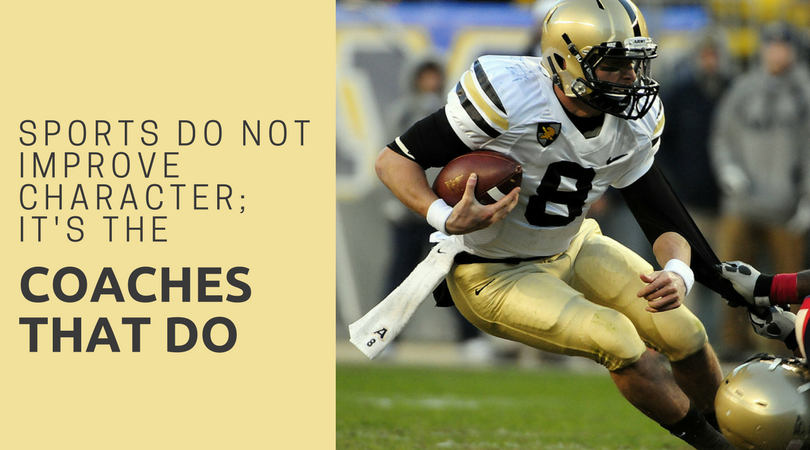
One of my favorite quotes from John Wooden, the greatest coach of all time, is “Sport do not build character. They reveal it.”

When we talk about the various benefits of sport and all the life lessons that players derive from it,  based on my experience playing and then coaching multiple sports for over 4 decades, it is not sport itself that develops character, it is the coaches in sport that does.

Here are a few examples how great coaches that worked with disadvantaged youth using sport as the medium to build character and teach many other valuable life lessons.


Madison Consolidated High School – Patric Morrison

This week I was forwarded an article about a high school football program in Madison, Indiana, a small town of 12,000 and how a former player, Patric Morrison, came back to their high school to coach their football program. Sadly, the town was suffering with rates of drug addiction to the point it had been deemed a national emergency and they also were suffering 2x higher rate of suicide than other counties in the state, and just over 3x higher than the national average in the USA

Suicides, Drug Addiction and High School Football

The later struck a personal note for me as I shared in a prior post, Make it Safe 2018, that a former player I had coached in Rugby committed suicide two years later and two others that my kids knew also took their lives.  As far as I am concerned, one is too many and we must keep talking to create the awareness to remove the stigma for mental illness.

Sport for me, was the same outlet as I was growing up, having bright red hair and freckles from my Irish heritage made me stand out like a sore thumb growing up in various suburbs of Montreal during the peak years of the Quebec Separatism movement. Then, to get away from same, my parents accepted a government contracts to work in a small community on Baffin Island in the Northwest territories where it went from bad to worse.

Although we (Irish descent) were not deemed a “visible” minority, it could have not been farther form the truth, we were just a handful of young families in the community that was 95% Eskimo.  The verbal abuse I took from kids and their parents there was even worse than it had been in Quebec, and continued even when we moved back years later.  The one constant that helped me thru all that bullying and teasing in my childhood where I did not experience it though was in the various sports that I played, thanks to the great coaches that I had that would not condone bullying or any other forms of harassment.

Patric Morrison is one of those great coaches.

His motivation for returning to coach the high school football team?

Because his younger brother had become one of the drug addiction statistics in the very small town, was arrested and sent to jail for 9 years for heroin use/distribution.  Patric shares “Because of him, I’ve gained 60, 70 younger brothers, and I want to keep (them) from doing the things he did.”

He walks the fine line from trying to develop his team to ensure that he does not lose players to drugs, suicide so has adapted strategies that does not scare the players away. Now frowned upon old school tactics like screaming at players for making mistakes, using words that may be demeaning, cursing and the like will merely push players away much like it has for those that are quitting before 13 that has been well documented via social and traditional media in recent years.

The football program has only had two winning seasons in the past 25 years if you measure it strictly by the scoreboard.

The reason it is way beyond that, the program teaches all those players how to be resilient and overcome adversity they face in their small town which provided one former player, Curry Morgan, the opportunity to go on to university under an academic scholarship.  At high school graduation, Patric collected money for his cap, gown and graduation ring.  Curry shared based on his circumstances losing his father by kindergarten, mother passing away before his senior year and brother falling victim to drug addiction that he would be treated differently by members of the team, but Patric ensured he treated no differently than of the other players he coached.

In lieu, as a result of the culture that he developed, when Curry’s team maters found out he did not have a place to live, his team mates offered him coaches to sleep on.

“(My) Sports (Coach, Patric Morrison,) is the reason why I am resilient”


Camp Kilpatrick Mustangs – Sean Porter


Sadly the Kilpatrick football program by founded by and coached by Sean Porter in Malibu in 1990, the program a juvenile corrections officer created to stop the vicious circle of going back to gang, drugs and criminal activity is in jeopardy.

His story was shared in the movie Gridiron gang, and his role was played by Dwayne Johnson, how he took the initiative to create the only juvenile detention facility to be permitted to have a team in the school/community system.

“They have trouble responding to authority, being a member of a team and accepting criticism … We do it my way, not your way, your way got you here.”

In addition to the football program, Kilpatrick also added basketball and soccer programs as well but all sports programs are now in limbo as the dated facility is being torn down and plans for the new facility do not include sports programs but many of the former players, camp residents are working on appeal to ensure sports programs continue in the new facility.


Richmond High School Basketball – Coach (Ken) Carter

Another example of a coach that transformed a high school basketball program, and many argue the school itself, was Ken Carter, who returned back to his former high school in 1997 to become the head coach for small honorarium only.

He did so, as he knew the benefits that basketball had done for him, having the opportunity to play collegiately and get a degree.

The true story came to the big screen several years later, in the movie called “Coach Carter” where Samuel Jackson plays the role of Ken Carter.

One of the first things he does each season is get all the players and parents to sign a contract that requires them to honour academic and behavioural standards, two of which were;

  1. Dress Appropriately including white shirt, sport jacket and a tie for games
  2. Maintain a minimum 3.0 GPA so they focus on their education

He also asked the school principal to share the report cards of all his players and when he found out that several were not meeting the GPA and even failing their courses, he shut down the basketball team until they received tutoring to get their grades back on track.

This was the end of their “winning” season, but it was more important for Ken that the players understood the importance of focusing on their education so they could go on to college than to take the easy route out and merely finish high school (if they even graduated)

During the movie based on the true story, Ken asks his players over and over again what is your deepest fear, each time the players would shake their heads “huhhh”?

This is not only my favorite part of the movie when one his players who struggled with drugs, violence associated with being a member of gangs provides the answer to the question;


The poem shared by the player, Our Deepest Fear, is one of my all-time favorites, written by Marianne Williamson


As a result of having all of his players and parents buy-in to his focus on education, all the players did commit to get their grades up and not only bucked the trends of not graduating from high school but several went on to college.

Prior to taking over the basketball program, 50% of the student athletes were not graduating and the overall student population at the school grades were dead last in the state of California.

There are so many other great examples out there of GREAT coaches who are doing great things, and focusing on developing character of their athletes and teaching life lessons that will transfer to their non-sport activities later in life.

The reason why each of these examples resonate with me is I was very, very fortunate to have great coaches and teachers do the same for me as a grew up playing the myriad for various organized sports, as well as teachers who did the same.

Many of the coaches who knew that I had lost my father at a young age who took me under their wing like Patric Morrisson for so many young men in high school to help them learn core life lessons to overcome the adversity in their small town.

Those that provided words of wisdom when I was going down the very same path due to many “friends” I had in junior high who were getting involved with drugs, criminal activities that the lessons I learned from those coaches steered me away from.  Had it not been for those coaches who did so, who knows where I would be today.

The great teachers that I had that did the same, including my French Teacher who in grade 12, my senior year of high school who pulled me out of class when I barked out I was not going to take another BLEEPING surprise quiz and challenged me and told me that I had so much potential, don’t waste it.

As a result of her guidance, one of my core codes of conduct is no swearing on my teams as she taught me how disrespectful it was.  She and my football coaches of many years are the reason why I became focused on my studies, applied for and was accepted to college, then to be the first in my large family of both sides (my mother had 8 siblings, my father had 4 so I had numerous cousins) to not only attend university, but to graduate.

This is why I strongly believe that it is not sport itself that develops character, it is the coaches in sport that does.

Kudo’s to Patric, Sean and Ken to making the commitment not only to teach the skills of the game, but the important skills of life to all those young boys over the years so they became great men.

Kudo’s to all those other great coaches and teachers, both men and women, who focus  beyond the wins and losses, but on developing youth into adults.

Sadly we see so much negativity shared on social and traditional media today of the behavior of the adults that are leading so many kids to leave the game they once loved before the key development years for the the skills of life, not just the skills of the game.

What we need to focus on is highlighting the great contributions of the men, women in their roles of coaches, teachers and mentors to guide youth in lieu of merely focusing on the ones that push them away.

The later only represent a very small %, I believe the majority of coaches, teachers our there truly have the best of intentions to do the same, but have gotten caught up in the mayhem in part, and merely needed to be reminded we ALL are in it for one thing, the kids.

Let’s all work together to bring the game back to the kids … where it belongs.

 

Don`t be a kids last coach


Coaching Your Team to Grow, Tackle Challenges, and Deliver

Posted 2 CommentsPosted in Uncategorized


BONUS – Download a Free Copy of this Blog in PDF Format HERE 

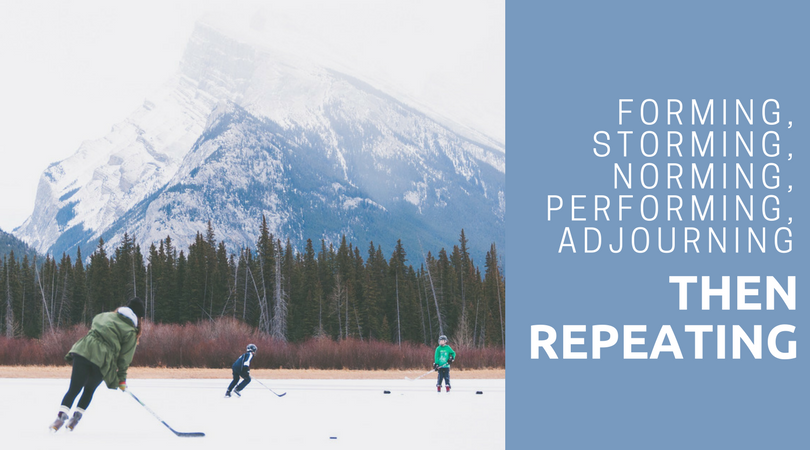
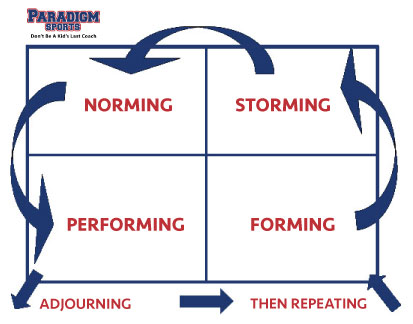
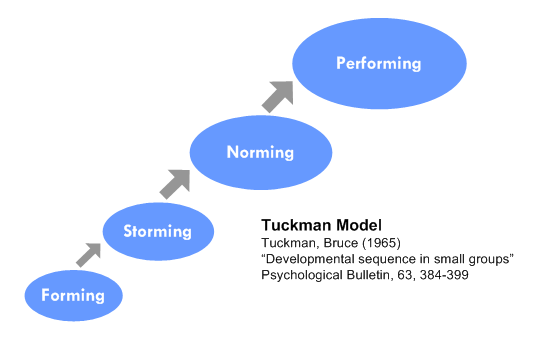
As coaches in team sports, every year we go thru the Tuckman’s (1965) Development Model of small groups Forming – Storming – Norming – Performing – Adjourning then repeating it all over again each season thereafter.


This is the beginning of your season, whether it be recreation level (AKA house) or competitive, before teams are formed in each age group associations will go thru balancing or tryouts and even drafts (yes drafts even happen in youth sports).

I can remember one draft in particular in my second year coaching Atom Hockey (9-10 yrs. old), I stepped up to coach a recreation team even though my son made our Atom A1 team as a player whom I had coached two years back committed to return to play only if I was his head coach.  Two years prior, when we were going thru the forming stage of player evaluations for balancing our Hockey 4 teams on Labour Day weekend, I found out sadly that his father had passed away tragically in an boating accident.

His father had already committed to be our team HCSP and was always one we could depend on if anything needed to be done, including a humorous story about a bottle drive where many of the bags he staged in his truck fell out and he had to spend over an hour cleaning it up.

The reason I stepped up to coach his son was we made an agreement when he opted not to return to Hockey in his first year of Atom that he would come back the following year so he could deal with the loss of his father.

That draft, I tried to get one other player that he played with  on two prior teams I coached so he had a familiar face on the team (all the other players he knew were now playing rep) and all coaches were in agreement if I chose the weakest player and goalie in the evaluations to offset so all our teams were balance (the other was also ranked in the top 10).  Just before our turn came to pick him, another coach chose him in lieu going against our collective agreement, and I was beside myself, as was all the other coaches as he had already done the same to another coach who was trying to protect two siblings on the same team.

The director jumped up and told the coach “that was a prick move” but as I was a man of my word, I still chose the weakest goalie and player as I knew I could develop them over the course of a season.  This was yet another example early on in my coaching career of youth sports how some coaches just did not get it was about kids playing kids, in lieu adults competing with other adults thru kids, he thought it was more important to win games than for kids to have fun and have friends on their teams.

Our team ended up being the weakest of the 4 in our age group at our association by a long shot as a result.


The player that I protected was ranked #1 in the evaluations and was very frustrated in the first few weeks of the season that we had such a weak team.

At times, he would demonstrate poor sportsmanship in practices, even threw his stick when we were doing drills and his weaker team mates (a couple were only in their first year of hockey) could not receive his passes, keep up in drills and so forth.

As I had already gone thru a similar situation two years prior with my Novice Team, I broke the team into 3 skills groups so that all the players could develop with others of similar skills.

I also talked to the player and asked that he be patient, it would take a couple of months for the new players to catch up to the rest, and help out to demonstrate the drills and provide insight to the other players.

This role he took on with vigor, once I got him to buy-in that it would take time for us to develop as a team, he stopped being frustrated and started encouraging all the players in all the skill groups.

I also had a few parents come to me during that period concerned if things would get better as their kids had shared they were frustrated they were losing game after game which I shared the same, be patient, it will take some time for us but we will get there.


It took about 2 months for our team to come together as a team, and in November we went to a tournament about 90 minutes from our rink and the families decided we would make it a “travel tournament” and would stay in a motel in lieu of long to/from commutes over the course of the three days.

I ended up talking two players into alternating as goalies for the early part of the season while our other goalie in waiting was still learning how to skate (it was his first year of hockey but his father was a goalie and he aspired to also play goal as well).  Ironically the 2 players also had been identified by our coaching group of the 4 teams as 2 of the 4 problem child’s in our age group, one because he had demonstrated a temper towards coaches not only in hockey but baseball, lacrosse, the other merely because all felt he had ADD (I think today if a kid is just a little different everyone takes the easy out and says they have ADD).

Ironically, as I have on every team, I understood the importance of connecting with players so was not an issue for me to figure out their different personalities, the fact that they agreed to play goal to help the team out all the other coaches were like … how did Glen get them to volunteer to play goal?

In that tournament, they both alternated games and we won 1 of the 4 games (it was our first win of the season) and you think we had won the Olympics, that was when I thought to myself the season would not be that bad, there is nothing worse when you lose game after game as are in over your head in the wrong tier.


At that tournament, I implemented a couple of things to help keep our kid’s confidence going as I knew we would be in tough as all the players needed to work on their core skills.

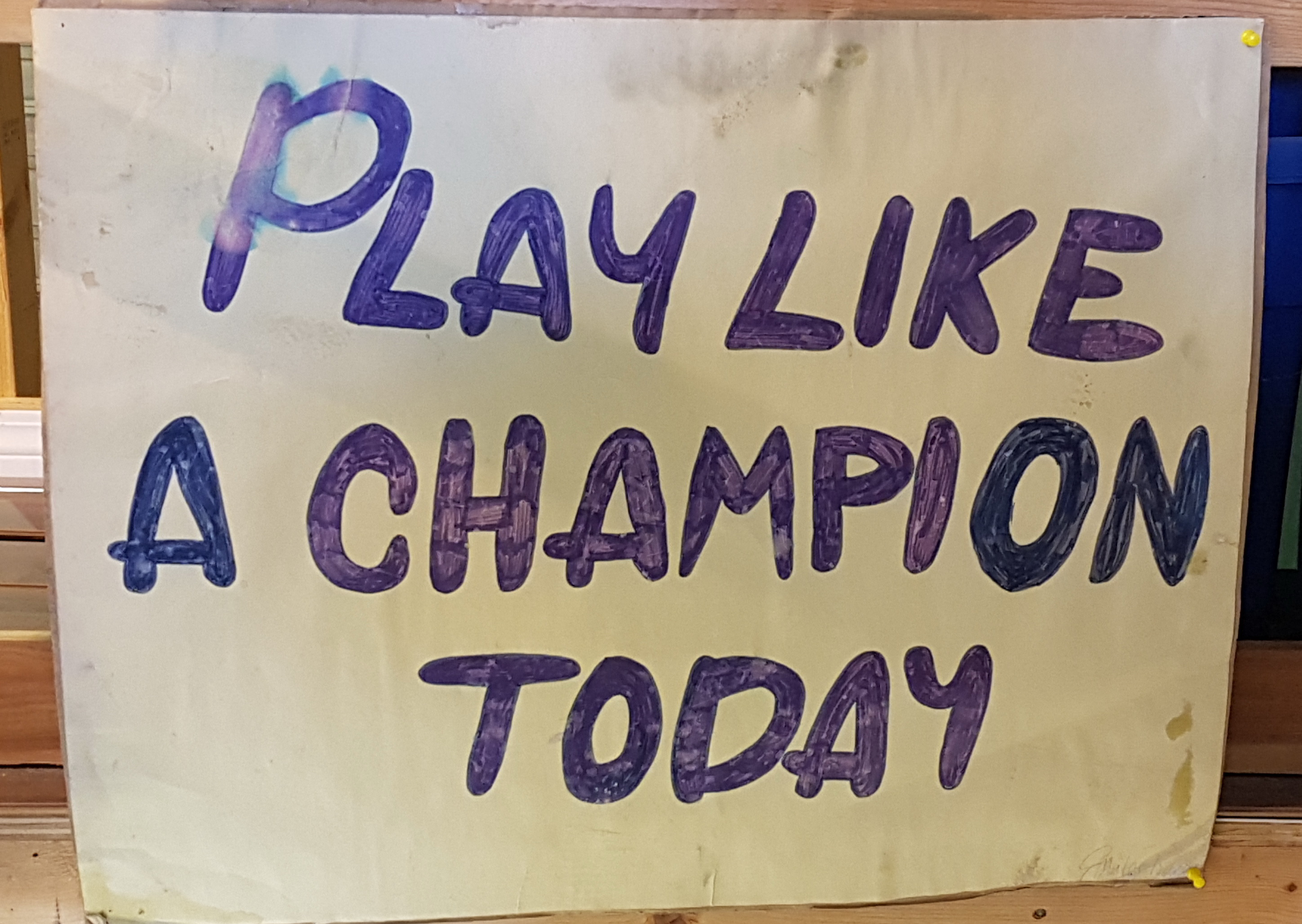
The first, as a longtime Norte Dame Football Fan, I had my daughter create a “Play Like a Champion Today” Sign and I brought it to the first game and all others going forward. Picture of the actual sign that is now at the bottom of my stairs in my office below (can tell it was hauled to and from the rink for better part of a season).


The first time I brought it, we talked about what the importance was to play to win, never playing not to lose and values that were associated with cultures of excellence.

We came up with a core list of values as a result that included Work Ethic – Sportsmanship – Fun – Team work – Selflessness – Gratitude – Never Giving Up (Resiliency) – Respect – Winning with Humility and Losing with Dignity – Win or lose as a team – Fearless – Competitiveness – Trust and Be a good team mate

We also went thru the game rituals like warm-ups, intermission and importance of shaking hands at the end of the games, regardless if we won or lost, we would do so with class.

The second was a tactic I did in that one game we won, when other teams took a penalty and we had a face-off in the offensive zone, I would pull our goalie so that we would be 6 on 4.  The tactic worked amazing well, more so as the other teams were so confused how to react and even when the next player on our team would be at the gate to be that 6th player (every player had the opportunity to contribute, kills me that coaches have power play or penalty kill units as early as Atom).

One game in early January, the other team started getting into penalty trouble in the second period, and I did not even have to prompt the goalies by that point, as soon as the other team had a penalty and they saw there was a faceoff in the offensive zone for our team they came to the bench (for which I affectionately nicknamed by one of my assistant coaches as Captain Hook).

We were down 5-1 when they took their first of 5 consecutive penalties and on 4 of the 5 we scored a goal to tie the game and almost winning with seconds to play when shot went off the post.

When we were shaking hands, the coach of the other team shared with me that he was really happy that the time ran out on the clock with a big sigh of relief.

Later in January we went to our second tournament, this one was in Seattle, 2 hours south of us in the USA, and we stayed in a Hotel and by that point our goalie in waiting was ready to play goal so he alternated with the other two goalies playing the third game and he stood on his head, he must have seen over 40 shots and we won by a score of 4-2.

In the dressing room after the game, the players all said, Coach, “Amen (his nickname) has to play goal for the next game and we can’t mess with the lines for the last game” (even 9-10 year old kids know when it works, don’t mess with it).  We won the 4th game as well, the first time all season we had won back to back, and it was our 4th win of the year.

For the last 10 games we went 6-4, and the games we lost were all one goal games.  The players that started the season as new hockey players, were now “seasoned veterans” and we continued to review values before every game/practice.

All and all, although we got off to a rough start, we came together as a team and the latter part of the season were competitive but after we got thru storming every practice and game, the kids and parents all had huge smiles on their faces regardless of the outcome of the games.


Although we struggled to win many games that season, and I had to implement some desperate measures to do so early in the season, it was probably the most enjoyable year I had as a coach to date.

All my parents were amazing, they even insisted to pay for hotel, meals when we went to the two tournaments (which I argued against but to no avail)

At the season wind up, I received one of the best coach’s gifts I ever received, one of the parents on the team was a videographer/photographer for one of the news stations and when his work did not conflict and was able to come to games he took pictures and put together a team album that the team handed to me at our windup.

There were 4 pictures of each player and each one had one of the values words with their signatures, although I had not shared what we did pre-games, the two parents that helped me as assistant coaches shared with the parents and asked them to relay what value the kids remembered most.

For the player that lost his dad two years prior, his value was “gratitude” and he signed “Thanks Coach” 

Every year thereafter as my son continued in the rep stream where I was coaching, I would go see him play in games and each time he would have a HUGE smile on his face.

He ended up playing all the way until he graduated in high school, 17 years old, now is an avid sponsored snowboarder in X Games competitions.

Ironically when I was searching for a video for this post, I came across one that used Remember the Titans plot as a perfect example of Forming – Storming – Norming – Performing and Adjouring.


Coaches – the sooner that you get thru the Storming period on your teams, the sooner you will get to the later stages of group development.

At the end of the season, when you see your players for the last time on that team, I suspect you will do so with emotion, until the next season when you start the process all over again.

Let’s all work together to bring the game back to the kids … where it belongs.
Don`t be a kids last coach


Why Do We Have So Many Levels of Competition in Youth Sports?

Posted Leave a commentPosted in Uncategorized

BONUS – Download a Free Copy of this Blog in PDF Format HERE 

Why do we have so many levels of competition in youth sports?

I have been slowly (emphasis on slowly) working on my e-book and was just putting the finishing touches to the chapter pertaining to what I have witnessed in terms of youth sports competition over the last 15 years.

When both my kids started (Fundamental stage 4-7 yrs old), like it is for every other kid, organized sports are a supervised version of free play, as coaches we merely try to teach some core fundamental movement skills, and encourage them to have fun so they hopefully come back the following season to continue building on their skills.

Where I saw the most significant change for both girls softball/fastpitch and Hockey was when my kids went from U9 age groups to U11.  As literally every province calls these age groups differently, felt best to focus on age groups specifically.

In Softball, as girls were a couple of years ahead of the maturity curve as the boys, the prepubescent girls starting to throw faster, run harder and hit father and develop many of the core skills that the boys I coached at same ages a few years later in baseball.

In hockey, boys were still acting like, well, boys.  Goofing off, not paying attention at times and really not being serious, especially when they were in practices.

What I did find was common between the two different sports, was how serious the parents took the games.  In Softball, some coaches and their parent groups we played against took games to a level if we were playing at Rigley Field the year the Chicago Cubs won the World Series.

In Hockey, while on the bench during games I would quite often sneak a peek of the parents (particularly those I had been warned about tended to act up) and how vocal they were, in many instances was positive, but almost the same amount was negative.

Why did their behaviour change so drastically from the first few years? Both hockey and softball U11 age groups became competitive with the introduction of banners or medals in tournaments. They had score and time keepers who tended the scoresheets, managers were responsible for inputting the data post games and in hockey not only could the managers and coaches access team records, so could parents.

I remember a parent coming to me when I was coaching Atom for the first year in hockey near the end of league play and he shared with me what we had to do in order to win a banner and how much help we would need from other teams.  It was like the end of a NFL football season when it came down to the wire and one team had to win, another had to lose or tie, and three others had to be spoilers and so on…..

His son was 9 years old!  Gone are the days where 9 year olds just went to the pond or an outdoor rink and played for hours on end.

I came to realize early on in coaching youth sports that it was nothing like it was when I played, even when I was playing competitive levels of hockey, football, baseball my mother NEVER talked to coaches, she merely sat in the stands, clapped, and cheered me or my brother as well as our teams on.  Sometimes she would even take it over the top and cheer on the other teams as well which I would have to reminder her that we were playing competitive level.

Her response was always something like  … “I cheer for the sport, the great plays and for you ALL to have fun when you play because that is all that is important.  Yes, it is nice to see you or Mike (my brother) win games, tournaments, but what makes me so happy is when I see you come off the field, rink with a big smile on your face.”

My mother truly was my biggest fan, as she was for my kids and each game she would share with us how much she loved watching us play.

Fast forward 25 years and my kids youth sport experience has been filled with winning at all costs focus, coaches running short benches, the adults (coaches, parents, at times board members) screaming at kids for making mistakes in games or practices and the huge push for the Holy Grail, the NCAA Scholarship or playing professionally.

I don’t recall rep or highly competitive teams existing until I was in high school, 13 years and up, prior to that we all just played sports, either for our communities, schools or good old free play (or in my case all 3). Depending on the sport, community teams or high school may be stronger.  I remember my high school football team was very weak, but our community team was the reverse, our core group played in two provincial championships, winning the first in the snow, and getting to the final in the second to lose to our arch rivals, the adjacent community football association to ours.

Now there are various levels of club, academy, A, AA, AAA, Silver, Gold, Varsity, Prep, Select, minor, major and even “Elite” references for kids teams starting as early as 6 years old? 

Parents, let me go on record, there is no such thing as an elite 6, 8, 10 or 12 year old, elite is when you represent your country at an international event like the Olympics, playing professionally, until then kids (incl. teens) are just an early bloomer, or  the leaders of the beehive (with all the others chasing them with the ball, puck).

I know I even got caught up in the insanity aspiring for my kids both to play at the highest level, but as a coach it blows my mind how many levels exist raising the bar for intense competition being introduced earlier and earlier.

When then, is it appropriate to introduce competition (keeping track of the score) in youth sports where we track the outcomes of the games? (for the parents, coach’s sakes, not the kids sakes)?

If you ask any kid what the score is in a game, they will tell you, they also keep track of assists, goals, know who the top players are and those that will be the last picked if they formed their own teams.

Why then do we make such a big deal of all the levels for YOUTH sports?

Because parents want to be able to brag that their 7 year old son Johnny is playing AAA Dominoes, or Suzy is the #1 ranked player U8 for Hopscotch in the state.  They also will share that it is costing thousands of dollars for them to do so.

Really?

This is what it is leading to, check out the trailer of “the Costs of Winning”, from our colleagues at Personal Sport Record, we need to figure out a better model to introduce progressive levels of competition vs. what has become winning at all costs so all kids have an opportunity to sample as many sports as possible until their early teens.


Otherwise, they will just become one of the 70% that will quit before they get to high school.

Let’s all work together to bring the game back to the kids … where it belongs.

 

PS Tagline - Dont be a kids last coach


What Makes Norway Winter Champions

Posted Leave a commentPosted in Uncategorized

BONUS – Download a Free Copy of this Blog in PDF Format HERE 

As I woke up today, I looked out the window to see almost a foot of cumulative snow that had fallen in the last 24 hours in Vancouver, literally creating a traffic deadlock thru the entire lower mainland as a result.

Good thing we bought those snow shovels in November in anticipation of another barrage of snow like we had last year, I know what I will be doing later today 😎

But I digress.

As a sports junkie, every two years I watch with amazement when all the world’s best athletes have an opportunity to compete at the Olympics and this year’s version is no different.

Each night our family, friends have watched various events including some of the new Olympic Medal events to include Snowboard High Air, New Alpine Team events and the mixed doubles in curling where Canada won gold.

We also watched both the men’s and female hockey teams as they chased back to back golds, but in the Gold Game Canada’s women’s team fell to their long-term rival USA in a shootout and the men’s team comprised of former NHL or wanna be NHL players as the NHL opted not to send their players to the games fall to Germany in the semi final game, to play for Bronze against the Chech Republic vs. yet another Canada-Russia game (albeit the OAR, not official Russian team due to doping ban for Russia as a whole).

In both games, Canada’s teams appeared nervous in the first periods and got into penalty trouble. I remember saying to myself in the women’s game when we were up 2-1 we needed to score an insurance goal early in the 3rd only to watch with amazement how one of the USA’s top players, Monique Lamoreux-Morando, was left alone at the blue line while Canada executed a line change and received a stretch pass to go in and score on a breakaway to tie the game leading to overtime and loss in the shootout.

Like the World Juniors when 19 year old captain threw his silver medal into the stands due to the disappointing loss in early January,  just over a month later Team Canada’s Joceylene Larocque let her emotions get the better of her and removed the silver medal from her neck soon after it was awarded to her for WINNING the silver medal (vs. losing the gold) that lead to the onslaught of comments by traditional and social media.

This is what makes Norway’s achievements at the 2018 Winter Olympics so extraordinary, they are concerned they are winning too much. Part of their culture includes no excessive celebrations, humility and the desire to promote many of the sports they excel in globally.

But how are they doing it?


These are the top 10 reasons why Norway has set the all-time record not only of this year’s games, but the cumulative total for a nation winning medals at the Winter Olympics.

1. They have developed a culture of love for sport

According to the president of Norway’s Olympic Committee, Tom Tvedlt, their vision is “sport for all..before you are 12 you should have fun with sport and the recipe works as 93% of Norway’s youth participate in their 11,000 local sports clubs.

2. They don’t compete in any sports until they are 13

In the USA they now have T-Ball National Championships (U6), the little league world Series (U13), the PGA has U6 World Championships, “Elite” 6 year olds protested Cross Ice Hockey in Ontario so they could play full ice, 9 year olds are being offered NCAA scholarships and the craziness association with early sport specialization and on and on.

No Tryouts – No Releases – All Kids that want to play GET TO PLAY for the love of the game – what a concept.

This week I received a call from a concerned parent in Ontario that his 11 year old son was going to quit Hockey because he was on a team that the coaches had PP/PK units, matched lines, ran short benches from the puck drop and he was only getting to play a few minutes a game as a result. Even after talking to coaches saying he was going to quit, it was on deaf ears, so he will finish the season potentially will quit the game he once loved due to being deprived the opportunity to contribute and PLAY.  Hence the reason for our tagline, “Don’t be a Kid’s Last Coach”

3. Their climate: They have a long winter providing the opportunity for their athletes to train longer than other nations

Here are some comparisons as of 2/24/18 (still a few days remaining with medal events) how Norway fairs vs. Canada (another nation with long winters) and our long term rival in international competition, USA;

Norway Popn (5.3M) – Total Athletes (109) – Total Medals (37)
Canada Popn (36M) – Total Athletes (226) – Total Medals (29)
USA Popn (323M) – Total Athletes (242) – Total Medals (23)

Total Athletes at the 2018 Winter Olympics from 92 Nations, just under 3000

4. Norway’s HUGE Olympic Budget from their small population (NOT)

A nation with just over 5M people is frugal, 13.7 M Pounds (approx. $24M CDN) in comparison to UK’s sport budget 10 x that (137.5 Pounds, approx. 240 M CDN). Britain’s Mixed Curlers received 5 Million but Norway’s teams had to sell their kits on E-Bay to fund raise for the games.  Canada’s Own the Podium budget is $64 Million, 2.5x more than that of Norway’s but unsure what % is allocated to summer vs. winter.

5. Norway SHARES how they do it at their Olympic Center to promote the development of sport

Yikes – sharing? Who else does that?

6. The believe in promoting the importance of developing friendships

When I have asked kids over the years why they play sports, two things come up every time, because its fun and they get to play with their friends.

According to Norway Chef De Mission (Olympic Director) Tore Overbo “We go abroad as a big team that wants to have fun, and we should be even better friends when we come back home than when we leave Norway.”

7. They don’t tell their athletes how much they weigh

High Performance athletes are infamous for eating disorders, something I was made aware of a few years back at a conference talking to a Sport Psychologist as it was their area of specialty.

8. Athletes that win medals do not receive bonuses or money from their respective federations.

What do they receive in lieu? All Norwegian athletes get treated to desert every time one of them win a medal.

9. No Jerks Allowed

Like the New Zealand All Blacks who believe better people make better all blacks, Norway wants high character athletes and have a strict “no idiots” rule according to Kjetil Jansrud, Norwegian Skier, “We believe there is no good explanation why you have to be a jerk to be a good athlete. We just won’t have that kind of thing on our team”

Gilbert Brule on Team Canada’s men’s team could learn from this after making a totally uncalled for and unnecessary open ice hit to German player David Wolf (although many contest he did ease up when Wolf ducked) leading to a 5 Minute major penalty and game misconduct in Team Canada’s game semi-final and 4-3 loss to Germany.

10. Team.

Because they are a small nation with limited resources, they have to keep it tight and real according to their alpine ski director Clause Ryste. They also believe in the importance of winning with humility and losing with dignity.


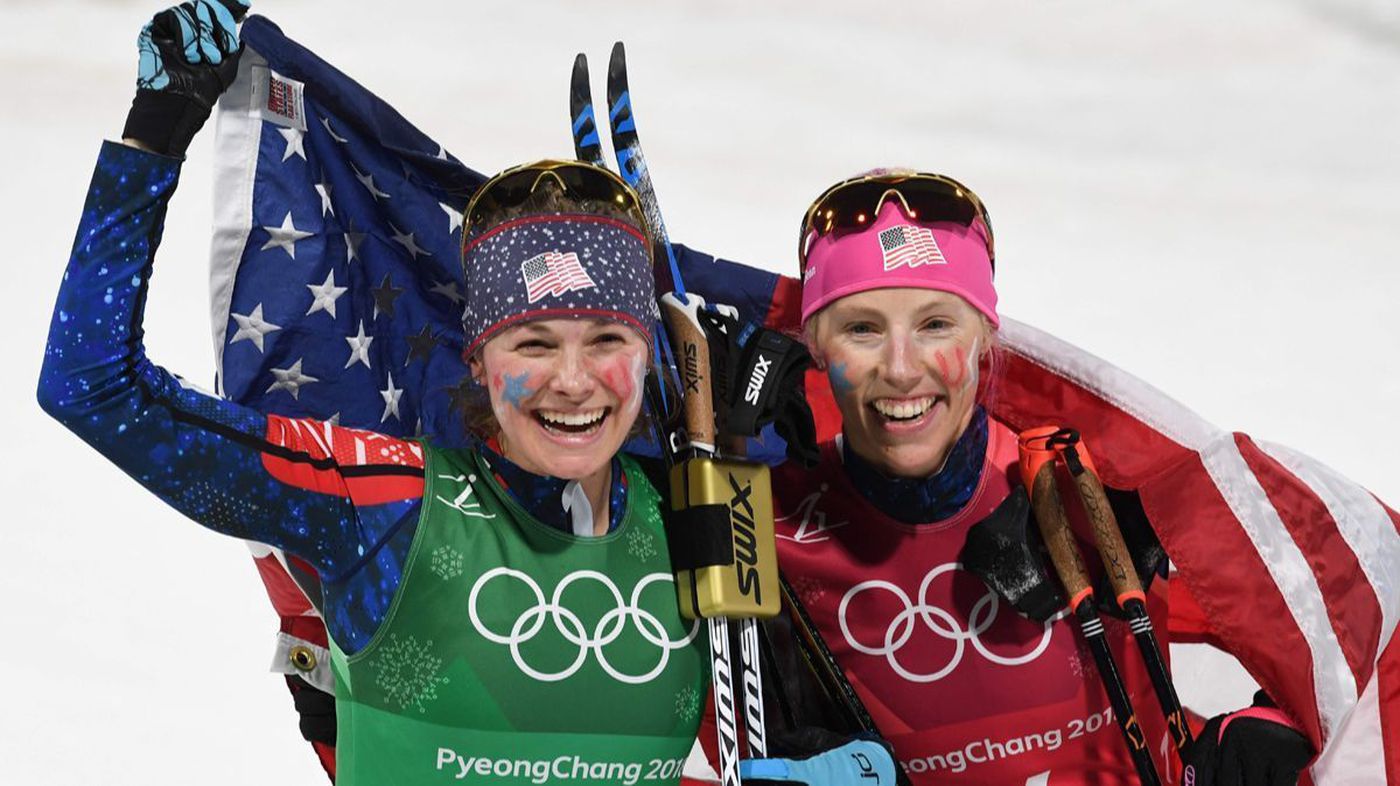
Perfect example was when Norway’s most decorated female athlete Marit Bjoergen and her team won bronze in the women’s sprint congratulating first ever winners Jessie Diggins and Kikkan Randall of the USA for their gold “I can say I’m very, very happy of Jessie and Kikkan today …I also think that’s very important for our sport.”

And then there was the protein, LOTS and LOTS of protein.

Due to a transposition error, Norway’s team food order for eggs was entered incorrectly and received 15,000 (should have been 1,500, one would think someone would have questioned it BEFORE they filled the order) eggs for their team chefs which like their knowledge at their Olympic Centre, they happily shared with the rest of the nation’s athletes and teams.

We could all learn from Norway, the fact that we have 70% of our kids quitting youth sports by the age of the 13 (which is a low % of total to begin with due to declining enrolment in all youth sports) vs. they have 93% of all their youth participating it itself is the reason.

They focus on fun, developing the love of sport, friendships and not competing until kids would enter train to train stage of LTAD shows just how their model can translate to success on the world’s top stage for sports vs. the current over competing too early leading to early attrition many other nations are experiencing.

Let’s all work together to bring the game back to the kids …. Where it belongs

PS Tagline - Dont be a kids last coach