What Else Discourages Amateur Officials?
What Else Discourages Amateur Officials?
The life of an amateur umpire explained by long-time official
Michael Yamaguchi
April 04, 2017
BONUS – Download a Free Copy of this Blog in PDF Format HERE
Over many years as a sports official for various leagues and in numerous provincial and national championships, I have been the recipient, have witnessed, or have heard of numerous cases of physical or verbal abuse towards youth sports officials. As mentioned in a previous blog post, the need for parent and coach education in regards to treatment of officials cannot be overemphasized.
However, it’s not just abuse from coaches or parents that’s driving officials out of officiating. While it is arguably the main cause, there are numerous other reasons that contribute to the high attrition rates. Specifically, I have noticed a few other causes:
- Lack of recognition
- Lack of a development system
- An official’s own fear of failure
Lack of Recognition
How often are officials noticed during games? Normally never, until a questionable call is made by an official. I rarely hear fans or coaches compliment an official on getting a call right. Yet, when a questionable call occurs against their team, they’re often the first ones to criticize them.
Even today, I appreciate positive feedback from coaches or parents. Although it may not seem like a lot, positive feedback is a big difference to many young officials, similar to athletes. A finding from the study “Understanding Factors Contributing to the Retention of Canadian Sport Officials” suggests that praise and recognition from respected individuals has a positive effect on recruiting and retaining officials.
Some may say that coaches or spectators may not be able to recognize quality officiating in terms of distance, angles, timing, etc. But there are a couple things that most people can recognize from officials without really paying attention to them – hustle and effort. On that note, senior officials will likely recognize traits of a good official. That leads me to my next point.
(Study – Livingston, L. A., and S. L. Forbes. “Factors Contributing to the Retention of Canadian Amateur Sport Officials: Motivations, Perceived Organizational Support, and Resilience.” International Journal of Sports Science & Coaching 11.3 (2016): 342-55. Web.)
Lack of a Development System
I began umpiring baseball in the fourth grade, and at the time, I wasn’t sure if I wanted to do it. My parents had encouraged me to try it, as they felt it would help me develop vital skills for the future. The only interest I had in umpiring was due to the fact I liked baseball at the time, and that I could maybe save up for a new bat.
At the start of my first game, I was nervous and absolutely terrified of everything: making mistakes, looking bad… you name it. Fortunately, I was paired with a more experienced umpire that supported me throughout the game. As the game went along, I received positive feedback and advice from my partner in-between innings and after the game. Afterwards, I sort of looked forward to umpiring my next game.
In my current role as head umpire for a minor baseball association, I reflect back on this experience many years ago when considering how I can help aid the development of our younger officials. Apart from the occasional “disagreement” every now and then, my first year officiating was a great experience, and I wish the same upon the novice officials. Globe and Mail Reporter Hayley Mick suggested that more associations do the same back in a 2009 article on young sports officials.
Mentoring is crucial to an official’s development. Why? Unlike athletes, many officials do not practice their craft during the season. Typically, clinics are held at the beginning of the season, and after that, officials are all on their own. Many will show up to a game and perform their duties, often without thought to their signals, footwork, or coverage responsibilities. Without due care, officials can develop bad habits, and performance will deteriorate over time. A mentoring system will help officials improve, and eventually, will open up more opportunities for higher level officials in the sport.
More importantly, however, it’s inevitable that conflicts will happen between coaches or players and officials. An experienced official on the field can help an overwhelmed younger official deal with these situations. In my younger years, this has happened on numerous occasions, and my more experienced partners were able to “take the heat” for me. Had it not been for these senior officials taking charge, I would have packed in officiating years ago.
Fear of failure
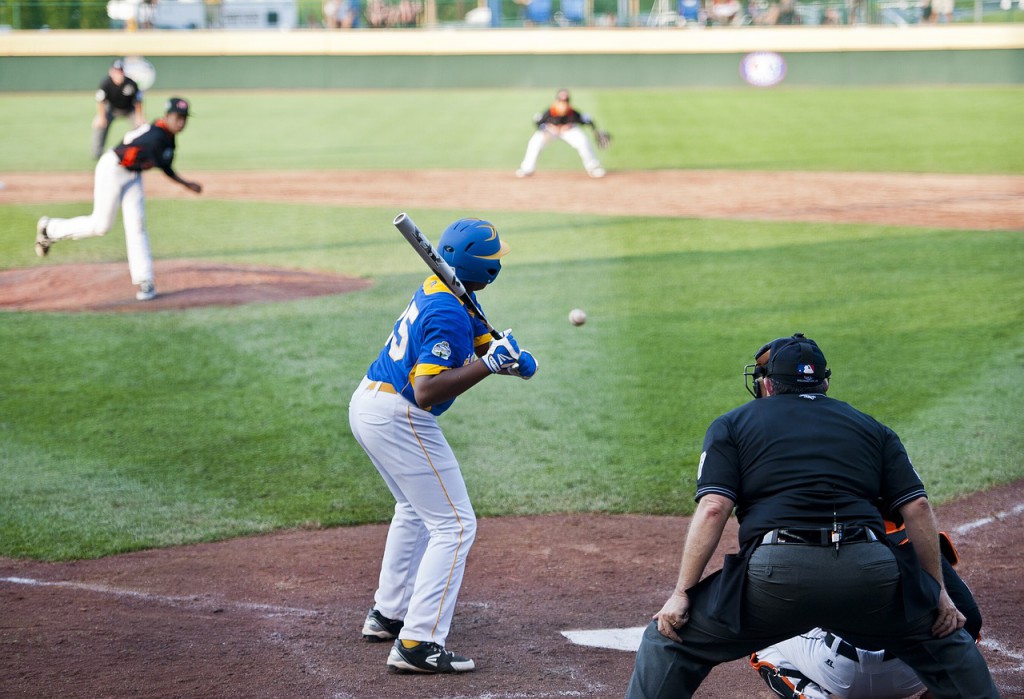
For Major League Umpires, 95% accuracy is the accepted standard for balls and strikes. In an average ballgame at that level, there’s roughly 300 pitches. An umpire at MLB level can be wrong on 15 pitches, and still perform at an acceptable level by Major League standards.
If an umpire that makes their living calling balls and strikes can make around 15 mistakes every game, it seems that the “acceptable standard” should be much lower for amateur umpires. We don’t have high tech “K-Zones” like they do on ESPN, but I’d imagine that somewhere between 85-90% accuracy would be reasonable for a top notch amateur umpire working a high school game… two to three times as many mistakes as the professional standard! Mistakes, and lots of them, are inevitable when officiating any sport… especially when officiating is a hobby or part-time job, not a living!
The pressure of being right 100% of the time tends to get the best of many officials, surprisingly even the more experienced officials. I can’t tell you how many former officials I have worked with over the years that have either dropped officiating or get frustrated due to the stress of being perfect. Also, I have met many who have expressed interest in officiating, but do not want the added stress of being “perfect.” The intrinsic pressure is enough, and the extrinsic pressure from coaches and parents doesn’t help at all. In fact, a study conducted by researchers at Middle Tennessee State University suggests that making a wrong call causes higher stress than receiving verbal abuse from coaches or spectators.
So, what can we do?
I encourage coaches and parents to personally compliment officials that hustle and put in effort during their team’s game. A simple “Thanks for working hard today, ref!” may not seem like a lot, but does mean something to a young official.
Associations should look to invest into some sort of development or mentoring system for their officials. Kudos to minor sports associations who currently offer some sort of system to their developing officials, but more can be done throughout.
There are many things that an association can do, including:
- Having senior officials attend games to give feedback, emphasizing positive feedback.
- Offering brief mid-season meetings or on-field clinics.
- Convincing and offering remuneration top-ups to senior officials to officiate some games at levels they don’t normally work to help guide younger officials.
Sure, paying extra for an official to work a lower level game or to observe officials from the bleachers may seem like an added expense for the association. However, over time, these initiatives will improve officiating, leading to more enjoyable experiences for officials and indirectly for players and coaches as well.
My last point on the fear of making mistakes is more of a message towards fellow officials –chances are we’re going to make many, many more mistakes than a professional official who makes many mistakes! Always remember to put things in perspective, and like athletes, learn from the mistakes. After all, officiating for most of us is just a fun hobby!