It is hard to believe we are now going into the middle of January 2020, a new year and new decade after so many amazing accomplishments in various late December rolling into January.
As a former competitive hockey, football player I look forward to watching both the world juniors and NCAA bowl games every year and this year had an opportunity to watch several with family in friends.
I also caught the occasional NHL or Sportsnet updates various sports and one common message kept coming up by commentators, how coaching styles we changing.
This soon after the NHL ran into challenges with various coaches being removed due to abusive coaching practices (either verbal or physical) but the upside is it leading the change of the guard where new school coaches are entering to transform how players are being coached.
Gone are the days where coaches can scream at players at the top of their lungs, use profanity, be physically abusive and so forth as once was commonplace in both Hockey and Football.
What was highlighted over and over again regardless of what game I would be watching from commentators was the shift taking place towards relationship-based, athlete-focused coaching that we have been highlighting for years.
In essence, this year’s NCAA College Football Bowl games (gone are the days where there were only held on New Years Day), the World Juniors and the backlash the NHL faced for several weeks as coaches were removed became the ideal testimonial focusing on what we do … working with coaches HOW to coach as there is so much more to coaching that writing up drills on a whiteboard.
Out top 3 picks from the holidays of coaches that are setting the bar for the change of the guard in coaching are:
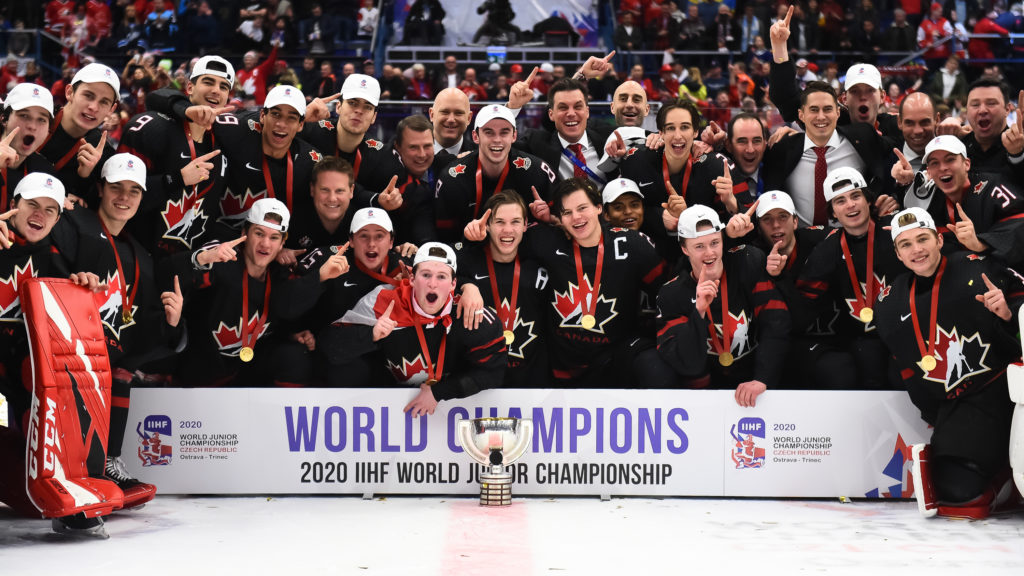
Number 1 – Dale Hunter – Head Coach of the Canadian World Junior Team
Under Dale’s leadership, Team Canada went on to win their 3rd gold medal in the last 6 years, their 18th since the World Juniors tournament was founded.
This after Canada did not medal LY as they lost to Finland twice, once in the round-robin, then in the quarter-finals last year which provided opportunities for many people that lived in Vancouver to see the Gold Game (yours truly being one of them) when Finland played USA in the final as people were literally giving away their gold game tickets as Canada was not in that game.
So why is Dale Hunter one of the GREAT coaches that stood out?
- He and his brother Marc, have been involved with the London Golden Knights Major Junior franchise as owners for the last 20 years, Dale also wearing Head Coach and President Hat, Marc the General Manager hat which he also held for this years Team Canada Team.
Under their leadership, they have built the London Knights into one of the top major junior franchises in Canada, winning 5 Memorial Cup Titles, numerous winning seasons, and are now one of the top franchises developing players to get to the next level (AHL and NHL). Dale has learned the importance of connection and developing relationships with all the young players he and his coaching staff have developed over the years as a result.
- When they were forming this year’s world junior team, 6 of their London Knights players made the team who took on whatever role that Dale assigned to them to help the team succeed.
- Although Dale played many years in the NHL and amassed the second-most penalty minutes EVER (3565, second only to Tiger Williams) and was infamous for his get in your face grind it out playing style, his coaching style has evolved to one that is calm and does not scream on the bench like some of his Major Junior and World Junior Counterparts.
At one point Ray Ferrero commented that coaches in the World Juniors must recognize they are coaching teenagers and if they get emotional, as will their players. As the NHL has recently found out, the verbal and at times physically abusive coaching styles used by some coaches no longer works, same should hold true all the way down to the grassroots level.
- He and the rest of the coaching and team Canada staff ensured that their team had a lot of depth so in the event when players went down to injuries, suspensions or penalties other players were able to fill in.
Prime Example, when Team Canada’s top D-Man Bowen Byram was unable to play due to flu bug, Jamie Drysdale, only the 6th 17-year-old D-man to ever suit up for Team Canada was able to fill in and play big minutes, including scoring a key goal in the semi-final game against their rival Finland to advance to the Gold Game.
Another was Tyler Hofer, who took over the reins in net after Nico Dawes started the first game and win against Team USA, then struggled in the second and worst loss ever for Team Canada and lead the team to the Gold Medal and was voted Goalie MVP for the tournament. Both he and Dawes were not even invited to Team Canada’s Summer Camp but were selected for the team later in the fall based on their play on their respective major junior teams.
- He had a hunch. Sometimes as coaches we have to go to our gut to insert a player, change lines, pairings or what have you and in the Gold Game Dale sent Akil Thomas out near the end of the game who had been on the 4th line and only played a handful of minutes when the game was tied who jumped on a loose puck and skated in on a breakaway to score the game-winning goal.
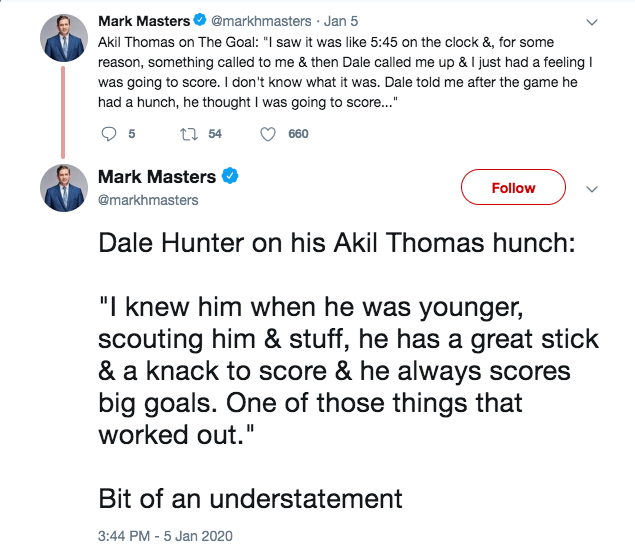
I said to myself after the gold game, perhaps there are directors and producers in Hollywood thinking this could be a great script for The Miracle 2.
Kudos to Dale, his fellow coaches, all the support staff and the players for an amazing run this world Juniors and also to the parents of all the players for raising such great young men who represented Canada so well.
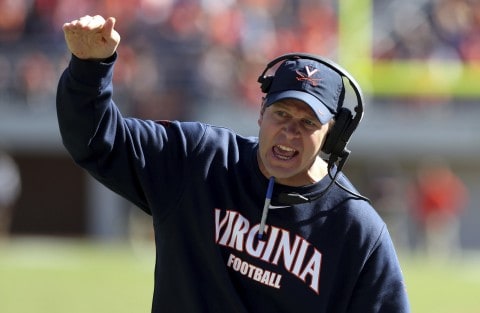
Source: Washington Post, Digital Edition
Number 2 – Bronco Mendenhall – Virginia Cavaliers Football
Many reading this in Canada will not know who Bronco is, but the job he did with Virginias Football program over the last few years has to be top 3.
In 2015 he left his former role as head coach at BYU where he had a winning record and lead his team to 11 bowl games (winning 6) to take on the head coaching job at Virginia, a team that had a losing record 8 of the last 10 seasons.
4 Years Later, he lead Virginia to BCS Ranking #24 to play against Florida Gators #9 in the Orange Bowl.
How did he do it?
- He reinforced the importance of believing again from day 1 when he met the players
- He researched and implemented best practices on human performance and human development
- Martial Arts T-Shirts – He created a rite of passage system for players to achieve certain numbers in workouts to receive matching t-shirts … starting at white (below average), followed by gray (average), Orange (decent), Blue (might be a stud) to Black (badass)
- Giving power to the players lead by team leaders – empowerment
- Football Second – He leads by example focusing on the importance of teaching life principles thru football
Fast forward to year 4 – The team has a quarterback, Bryce Perkins, that recovered from a broken neck, played a couple of years of junior college before he was recruited by Bronco as saw the potential in him to be the starting QB in Virginia
In the Orange Bowl, Perkins threw for over 300 yards and four TD’s against Florida who had not allowed either ALL season, one of which was a scramble play that he ran.
Although Virginia fell short to the Gators 36-28, Bronco called it a moral victory as the program had evolved to being one of the top in NCAA under his leadership in just a few years.
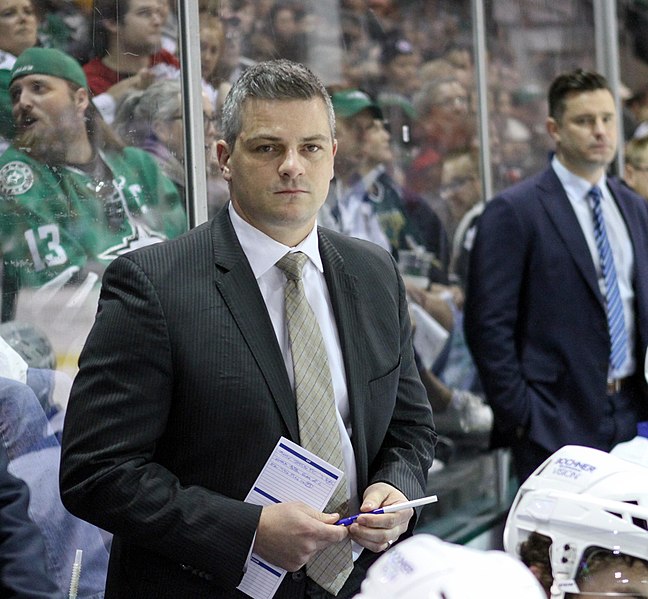
Number 3 – Sheldon Keefe – New Head Coach of the Toronto Maple Leafs
Nov. 20th The Maple Leafs fired the highest-paid coach in the NHL, Mike Babcock (AKA the 50 Million dollar man due to his contract) as a result of him losing the room and the team not performing, suffering 6 consecutive losses and a .500 team for the prior 12 months.
On paper, the Leafs have some of the top players in the NHL including John Tavares (1st overall pick in 2009 by the New York Islanders), Auston Matthews (1st overall pick in 2016), Mitch Marner, William Nylander among others who should not be fighting for a spot to make the playoffs but go deep.
Sheldon Keefe, who had been the head coach of the Toronto AHL affiliate team Marlies, was promoted to head coach and the team won 4 of their first 5 games, 15-4-1 to be the best start of any Toronto coach in the team’s history.
Fortunately thanks to my wife’s work in the transportation she was offered a pair of tickets in December when the Leafs were in town to play the Vancouver Canucks (where there were many more Leafs fans than Nucks) and although I am not a fan of the Leafs (am a Habs fan since birth), we had amazing seats just 10 rows up in the home team end so got to see all the players amazing skills up close.
How has Sheldon transformed the team?
- Playing players more than Babs did and also encouraging them to maintain puck possession and retreat back in their own zone to do so vs. dump and chase
- Playing music in practices (for many of the younger players this is something they truly enjoy)
- He changed up the defensive pairings encouraging 4th man to jump in to create more scoring opportunities
- He revamped both the power play and penalty kill units
- He focused on the importance of connecting with all of the players, recognizing the importance of developing relationships and had the first-hand experience in developing the prospects coming to the team during his tenure coaching the Marlies.
These are just some of examples of the new style of coaching evolving to focusing on the person, athlete-centric and relationship-based coaching that is becoming well documented of the three mentioned in this post as well as other great coaches like Pete Caroll, Sean McVay, John Wooden, Phil Jackson and many others that created cultures of excellence with their teams doing the same.
As I shared in prior post, The Times They Are a Changin’ ….. For the Better.