Posted Posted in Athlete, Coach, Officials, Organization Executive, Parents

One of the 5 takeaways I share in every talk, workshop or clinic is the importance for coaches to make the environment for their players safe, as the hockey world has recently coming to terms with the Kyle Beech tragedy and the dominoes that are falling, it is just another painful and emotional reminder why we need to make it safe from all forms of harassment that I wrote on in 2017.

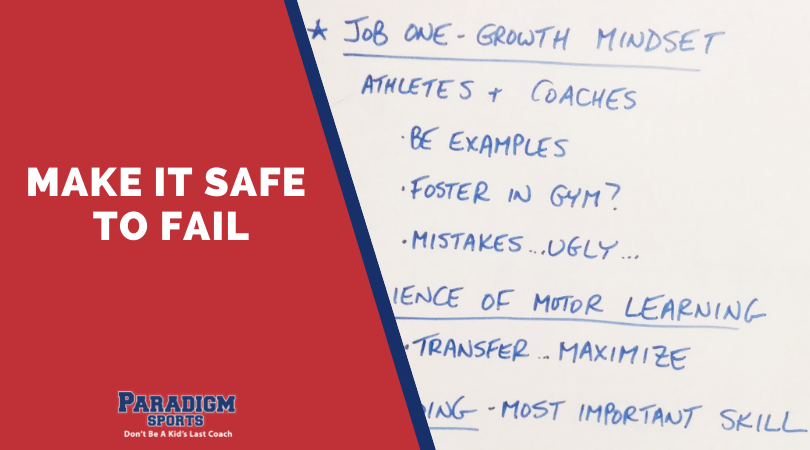
The other area that I have been advocating for years is the importance for coaches to make it safe to fail, unlike the coaches and parents that are highlighted time and time again in social media for their outbursts towards kids as players, officials, I have always been a believe thanks to the coaches that I had growing up to encourage to make mistakes in practices and even in games and have fun when they do so.

WHAT ?

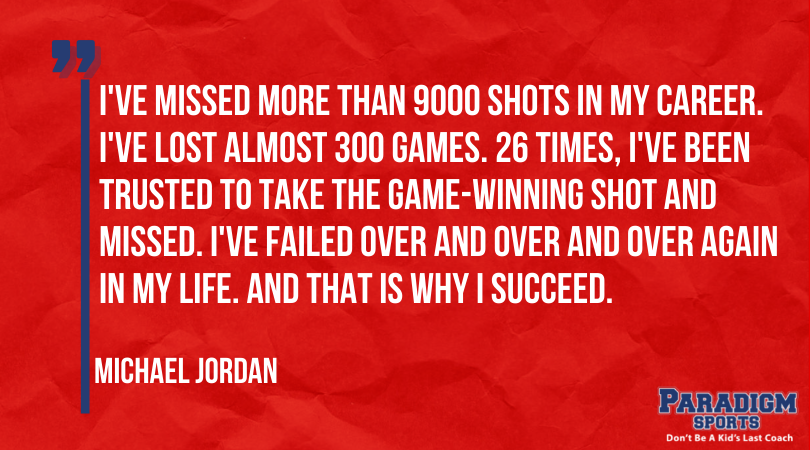
Recommend they make mistakes, the uglier the better … what if they coughed up the puck that lead to a goal, fumbled the ball that lead to a touchdown by opposing teams, missed that free throw or field goal that could have won the game and son on.

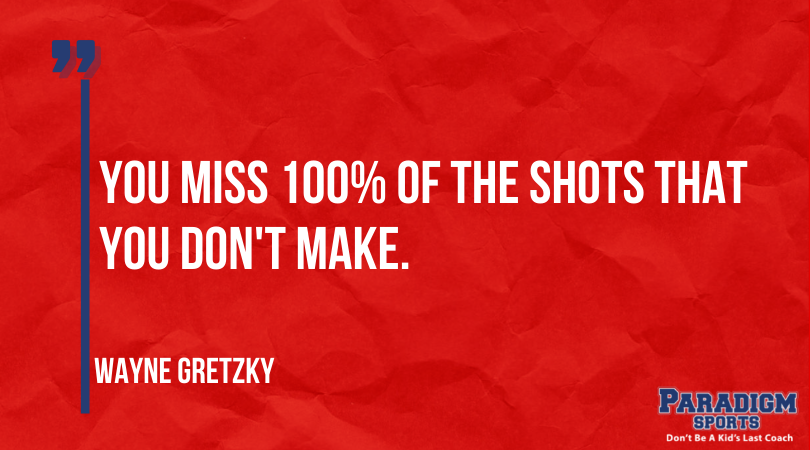
Hmmm … there have been just a few players that were pretty good that made a ton of mistakes, but had they not done so, never would have achieved their milestones and become some of the best ever to play their respective sports.
 

Reggie Jackson/Babe Ruth

Reggie Jackson holds the record to this day of the most strikeouts of any player in MLB history (2597) but was touted year over year in his Hall of Fame Career as Mr. October where his bat would hit many out of the park, much like Babe Ruth who did the same decades back.


Another recent example is Mason Crosby missing 3 field goals in regulation but made the 4th to win the game in overtime for the Cheeseheads (Green Bay Packers) against the Cincinatti Bengals (whose kicker also missed 2 field goal attempts in the same game)

This was a complete surprise for all those that watched as Mason had only missed 2 field goals in the last 2 seasons combined !

Why was he to make the 4th field goal?  Because he had the support of their teammates, coaches, managers who recognized that mistakes would happen and once they did, were history, was time to move on to the next play.  This is in a league that is focused on winning, the top sport in the world in terms of revenue with millions of dollars in player salaries, billions of dollars in TV and merchandising revenue NOT community youth sports.

Sadly in today’s era of youth sports where it has become adultified, where adults are competing with other adults thru their kids, gone are the days where kids play without fear of failure which was prevalent in free play (i.e. pond hockey, pickup basketball, sandlot baseball) where there were no adults present (no coaches, parents or officials), it has lead to increasing attrition rates as a result.

In lieu of focusing on the results, wins/losses, goals/assists, focus on the process of development, ensure that kids are having fun and winning will be the byproduct vs. the focus.

Growth Mindset

One of my top recommendations for books for coaches, parents and youth sports leaders I the book Mindset by Carol Dweck who shares the differences between the fixed and growth mindset.

Those with a fixed mindset believe that their skills are fixed due to DNA, they don’t believe in working to improve, and fear failure so would focus on simpler tasks.  Those with the growth mindset however, believe they are not that good YET, and will put in the effort to improve and recognize making mistakes is part of the process.

A perfect example of a coach that has incorporated the growth mindset with their team is Karch Karaly, voted best men’s volleyball player in sand and courts of all time, in 2012 he became the head coach of the US Women’s Volleyball team soon after he read Carol’s book and as I have shared in past their team white board encourages the players to make UGLY mistakes so they develop.
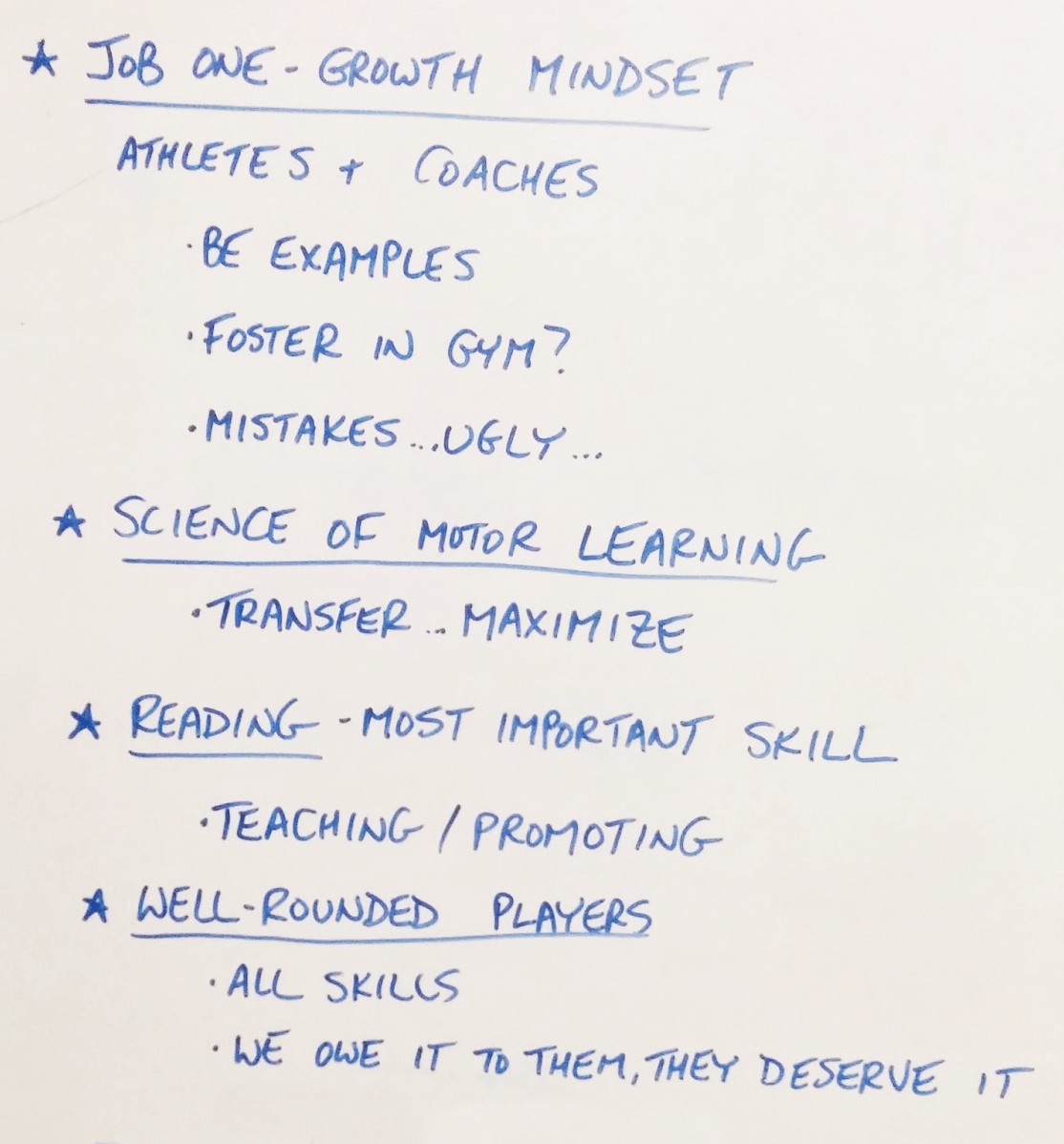
He has lead the team to their first gold medal at an international event in 2013, and medaled at the three Olympic games under his watch, including Gold at this years summer games in Korea.

In order for us to reverse the negative trends we have seen in youth sports for over a decade, we need to create an environment for not only for our players where it is safe for them to fail, but also for the young officials.

Sadly, we lose 50% of young officials in many sports (especially what I refer to as the money sports, Hockey, Baseball, Football, Basketball and Soccer) in their FIRST YEAR.

Why?

The #1 reason is due to the abuse they are taking from the adults in the stands or along the sidelines.

We subsequently lose 30% on average every year so we are literally are constantly recruiting and not allowing time to mentor and train these young officials so they can hone their craft which just creates this vicious circle.

To give you some numbers, in Canada, we have approximately 30,000 officials registered across Canada to ref minor hockey games, and every year we lose over 10,000!!!

This is not a recent trend, this has been the case since I started running Hockey Clinics over a decade ago.

It is the reason why Hockey Canada and USA Hockey came up with the campaign “Relax it’s just a game” in 2007 … 14 years ago


The focus was more on parents who are coaching or critiquing their kids, but I have also seen my share of coaches do the same towards players and officials.

Ironically, during a recent clinic that I was running, at the lunch break just before we all shut down out audio/video a coach shared with me and those that were still in the room (we have shifted to online virtual clinics in part due to COVID, in part due to efficiencies) and he shared that two parents were fighting in the stands at a U11 minor hockey game and the Police had been called in.

This was not a the zone or academy level where parental expectations are even higher (due largely due to the costs financially and time).

Time after time each time I run a clinic coaches share similar analogies how other coaches are running short benches to win games, parents are screaming from the stands or in parking lots,  the ride home (or to) games/practices.

The saddest analogy and driving reason for me to continue running clinics to shift the needle is when a coach stood up to introduce himself in a in person clinic and said the reason he started to coach is his 8 year old daughter shared with him why she wanted to quit Hockey at the end of the season.

He said, with emotion in voice and tears in his eyes which made the rest of us in the room do the same (including yours truly)….

“My daughter told me that she was going to quit because she was scared of making mistakes.”

Until we make youth sports safe to fail again like it was in prior generations, we will continue to experience high rates of attrition, so if you are an adult involved in youth sports (parent, coach, administrator) please provide the players under your watch that opportunity to do so.
PS Tagline - Dont be a kids last coach

The Reality of Youth Sports

Posted Posted in Coach, Organization Executive, Parents

It is about ½ way through this year’s hockey clinic season and like last year, I have been running virtual online clinics every weekend and will until the end of November.

Each clinic, there are another group of 40’sh coaches in the various levels of the Hockey Canada NCCP program that are starting their coaching journies and literally every clinic the same issue comes to light with the high expectations that parents have for their kids.

Ironically, before the clinic season wrapped up I made a road trip to the Kootenays where my in-laws have a mobile home we have visited for many years in the spring/summer for some R&R. We always take a day to walk “the town” and visit local used bookstores and every time we do so I find a book that I then read while there for a few days.

This past trip, I came across one of the best reads I have found to date that will be one of my top 10 book recommendations for coaches, players and athletes written by Gary Mack, former acclaimed Sport Psychologist in the USA that worked with hundreds of high-profile athletes and teams in a plethora of sports called “Mind Gym – An Athlete’s Guide to Inner Excellence”.

There are many great nuggets and quotes in his book that I will reference in future in terms of tips for coaches, parents and athletes.

The book was released in 2001, ironically the same year of one of the worst tragedies the world has ever faced, 911, but also the same year of the launch of the iPod and iTunes, as well as Microsoft’s first Xbox. Since that time iPod morphed into the Touch and then the “World’s first smartphone according to Apple iPhone (which is not the case, it was the Blackberry)” and the world as we know changed where now these smartphones can cost in excess of $2K. My son shared with me the other day that one of his good friends just both the new Xbox 5 for close to the same although the go to street price is supposed to be 499.99 due to bent up demand due to COVID impacting production

What I found fascinating about Gary’s book was the fact that one of the last chapters of the book “The Well-Played Game” he talks about the various issues revolving around youth sports that was pushing kids out of the game in his experience in the USA.

THIS WAS 20 YEARS AGO!!!

I started down this path initially to become a Hockey Canada NCCP instructor over a decade ago as I also saw many of the trends that are still commonplace today not only in the USA, but have become global issues

• Exceedingly high and unrealistic parent expectations for their kids to get a NCAA Div 1 Full Ride Scholarship

The Reality is international tuition for the schools that do offer athletic scholarships can be over $40K USD per year (approx. 55K CDN based on current exchange) and if athletes do get a scholarship, more often than not is a partial in the area of 8K so that still means parents will be out of pocket over 30K year or approx. 150K CDN over the course of 4 years.

As I have shared with every parent over the years, if this is what you are aspiring for, in lieu you should start a RESP when they are young and by the time they are old enough for university you would have saved enough

• Aspiring for their kids to play professionally in the money sports like NHL, NBA, NFL, MLB

The Reality – only .03% of kids will reach this level from minor sports and other than Tennis, Golf that have developed their female professional programs, female professional sports are really difficult to make a living at playing professionally, many have to have full time jobs and play the sports due to the disparity for men’s vs. women’s professional sports (which I wish the other pro sports would take the lead the WNBA has but that is another issue for a future post)

• Fast tracking their development by having them specialize in a sport year-round to chase the 10,000-hour rule that was made famous by Malcolm Gladwell in his book Outliers in 2008

This has been argued by yours truly and many others since is wrong, including two amazing well researched books written by David Epstein “The Sports Gene” (2013) and “Range” (2019) among many others in recent years. Below is an interview panel that Malcolm did with David highlighting key takeaways from his book Range, highlighting why being a generalist first, then specializing later is the better path

• The focus that parents, coaches and even athletes have at the recreational level (the majority) looking at the professional level focusing on winning at all costs when even those playing and coaching at that level focus on the process of development, loving the game, where winning is not the focus, it is the by product

The fact that Gary highlighted issues that are still relevant, in many cases, worse than they were 2 decades back sadly for me was painful reminder that we still have so much work ahead of us to bring the game back to the kids BUT fortunately I am seeing a positive shift in interactions with adults involved in youth sports in recent years than when I first started seeing these trends start coming to fruition en masse. Many recognize we need to make organized sports more positive, focus on fun, as well as the importance of unstructured free play but as the cliché goes, it takes a village for us to get there.

As I share with all the coaches that ask how they can deal with parents that have unrealistic expectations, the more education we can provide to all the adults that are involved in youth sports, the sooner we will continue to see the needle move back where kids play the games they love again without the pressures and fear of making mistakes or working the sport that is leading to such early attrition rates.

Although we have made headway, last year just before COVID, Project Play published data that 62% of kids in the USA are quitting organized sports by the age of 11, after only playing organized sports for 3 years.

This is a video that was produced called “Don’t Retire Kid”

We never will get back to the pre-internet era where kids played for hours on end without coaches, parents, officials like our past generation did, but we need to find the happy medium where kids do just that … PLAY without fear of making mistakes and ultimately come back year after year to various organized sports with big smiles on their faces.

Let’s all work together to bring the game back to the kids.

PS Tagline - Dont be a kids last coach

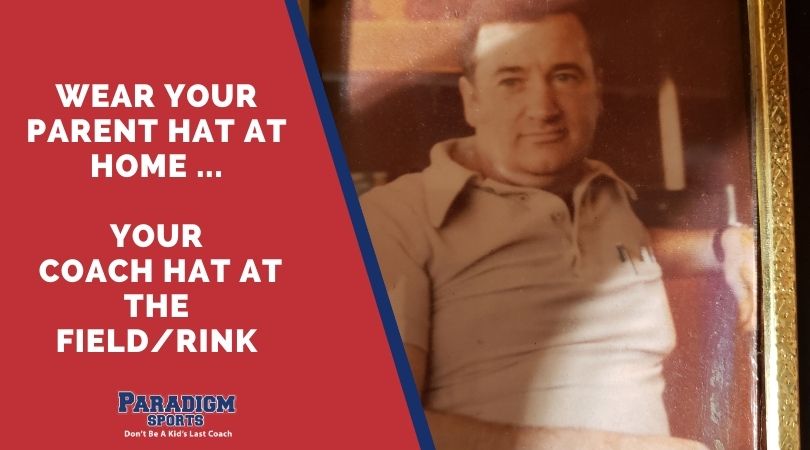
Wear your parent hat at home, coach hat at the rink/field.

Posted Posted in Coach, Organization Executive, Parents

Years back I started a tradition with my family as I was traveling extensively for my day job then and when traveling in lieu of buying various touristy items for my kids I opted to buying the latest movie that we would watch when I returned home.

Although my kids have now become adults, as they are still going to college/university, they still reside at home (much like every other 20 something in the lower mainland of Vancouver due to the high costs of housing) and last night we decided to watch “Antwone Fisher” based on a young man who lost his father when he was 2 months old and was given up for adoption by his mother and had an abusive foster family environment until he entered the Navy.

Due to various emotional issues, particularly anger the led to him getting into numerous fights, he was ordered to see the Navy Psychiatrist brilliantly portrayed by Denzel Washington who helped Antwone overcome the various emotional struggles he experienced from losing both his father, turned over to what was an abusive foster care environment by his birth mother and then he lost his best friend in his late teens.

You’re probably wondering why I am sharing this, but the reason I am doing so is that I can relate to Antwone’s journey on a few fronts which is why I get very emotional when I watch the movie.

#1 – Like Antwone, I lost my father when I was very young, at 8 years old and as a result of his work we had had moved 8 times already to be close to the buildings he managed (so can relate to all the military brats out there), but also how disappointed I was that he was unable to honour his promise to coach my baseball team as he died half way thru the season.

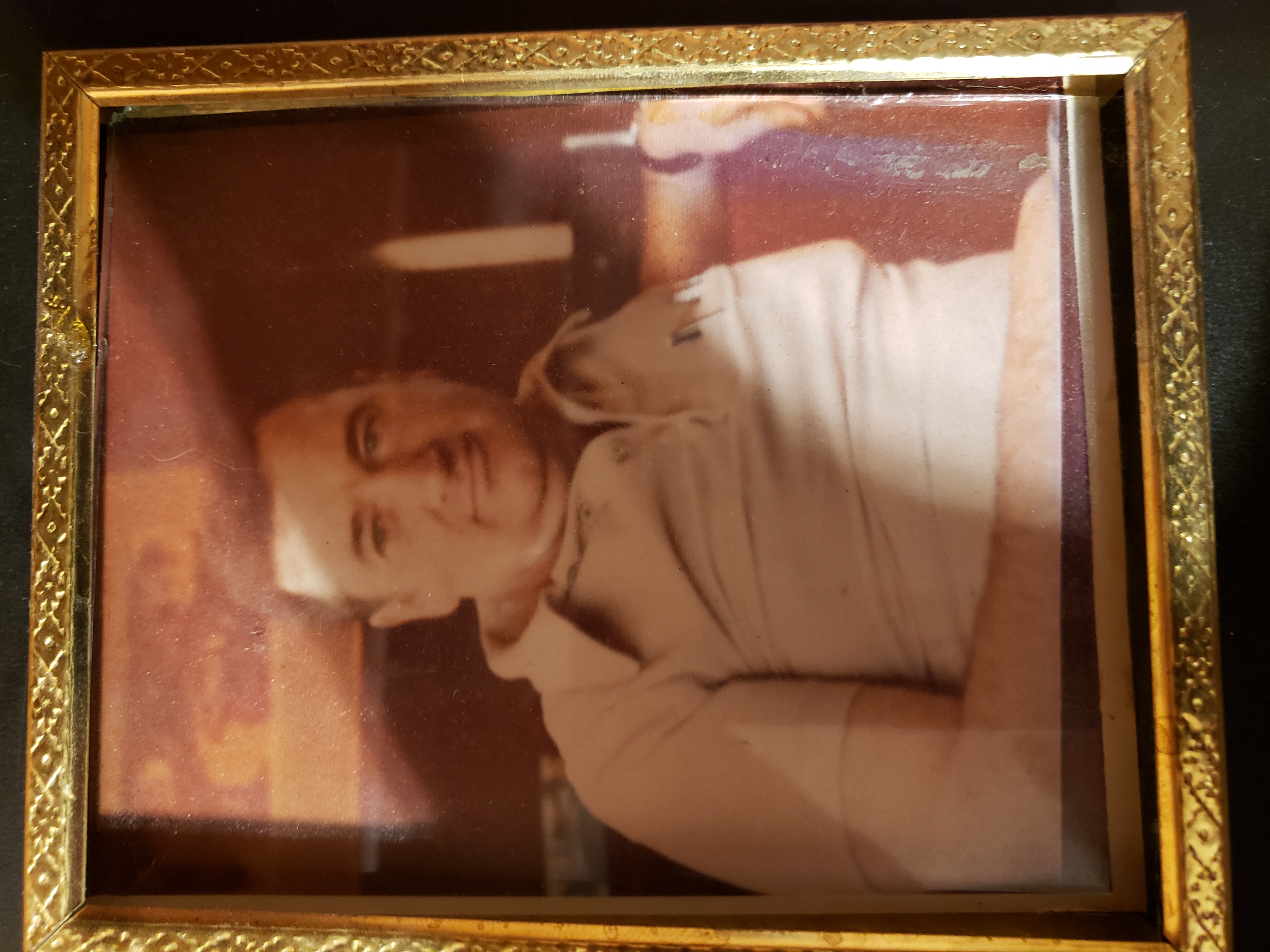
My favorite picture of my Dad that I actually took when we were on the train heading from Montreal to our new home in Vancouver when I was 7 years old

#2 – Like many youth without a father, I ended up hanging out with a group of misfits, my non-sport “friends” in my teen years but also continued to play various sports, in particular contact sports hockey, football and rugby as I too had issues with my temper from not having a Dad to turn to but the team mates in sports and coaches I had help me keep it in check, would say to me all the time to use my temper in a positive fashion by being tough to play against.

One of the main reasons that I am so passionate about sports and kids is all the amazing coaches that I had and team mates who helped steer me down the right path vs. “my friends” that went down the wrong path (many of which did not graduate high school, were imprisoned for various reasons so who knows where I would have ended up)

#3 – Although playing contact sports did keep my temper in check at times, one that I did not try and several said should have was boxing as I did in more than my fair share of bar brawls over the years into my mid  20’s until I lost my “first and last fight” (to that point I had lost a fight in any of the brawls I had been in) and was beaten up so bad that I made the original Rocky pic of Sly look like like he only had a couple of love taps that lead to me recovering from a concussion for several months and ended my collegiate rugby career and chance to represent Canada Nationally as I had been invited to attend the national camp later that year.

All of that is water under the bridge now, as I transitioned to working a day job to coach after I completed my post secondary education at night/weekends  and when I became a parent I made a promise to myself having lost my father so early that I would be there for my kids, be their coach like he couldn’t and support them to the best of my ability.

This Saturday I did a presentation of my core talk “Don’t be a Kid’s Last Coach” for Ontario Lacrosse virtual 4 day conference and shared a couple of tips for the coaches as majority of youth sports are parent coaches;

Tip #1 – When you are a parent coach, ensure you wear your parent hat at home/in the car and when get to the rink/field/court put your coach hat on and vice versa

When I shared that analogy to coincide with a video on the ride home that I have shared for a hockey clinic, one of the coaches came up to me during the break and was in tears and I asked him if he was ok and he said he never thought about it, but his 10 year old son shared with him that he was going to quit hockey as was not having fun that he was wearing his coach hat all the time.

He coached him at home, at the dinner, breakfast tables, in the car to and from the practices and games and shared with me that he will take my advice and only coach at the rink.

The clinic was in November, in March I received an email from the coach later that season sharing how appreciative he was of the advice and the relationship between him and his son was so much stronger and happier,  and his son was looking forward to playing soccer in the off season and told his dad thanks for being his coach and was looking forward to next season in hockey.

Tip #2 – Treat your son or daughter the same as all the other players and ensure they call you Coach when you have your coach hat on and Mom/Dad when you have your parent hat on.

Two things can happen when coaching your kids, you can either make them one of your favorites and give them more playing time, top lines, positions (which is the big reason why competitive hockey now has tried to go the non parent route but at huge cost for honorariums for coaches) OR you can be too hard on them.

The latter is one that I saw in my third year coaching minor hockey,, one of the coaches of the U8 team that shared ice with for practices would constantly scream at his son for making mistakes, although he was an early bloomer and one of the top players in our age group, I could tell every time his Dad did so he lost a little more of the joy he had for the game.  Although I would talk to his Dad numerous times when he beraded his son reminding him he was just a kid, game should be fun, treat him the same as others it went on deaf ears.

I heard the following year that his son had quit hockey and all other sports, his Dad also was not invited to come back to coach again as a result.

I know all too well how hard it can be as a parent coach to ensure you are not biased either way,  I also know how big of a time commitment it can be for all of us that juggle many things including work, perhaps other children, perhaps coaching multiple teams and sports as a result.

Although I know I made my mistakes as well, probably the greatest reward I received was when my son was 19 and was asked to play on a Junior Ball Hockey Team that several of his team mates and he had talked and asked if I would help coach the team as the head coach merely put up his hand as they were having a tough time finding coaches.

To which I humbly said, yes, I would be glad to help out and had a blast coaching my son and many of his friends who he grew up with playing a myriad of sports.

Sadly I don’t get to watch him or my daughter play youth sports any more, but I can look back with a big smile on my face how much I loved watching them and all their friends (part of my extended family) play the sports they loved and continue to be active in their adulthood.

At the end of the day, that is all we can ask for as parents and as coaches, if they play at a high level beyond their high school years that is just cherry on the cake.

PS Tagline - Dont be a kids last coach


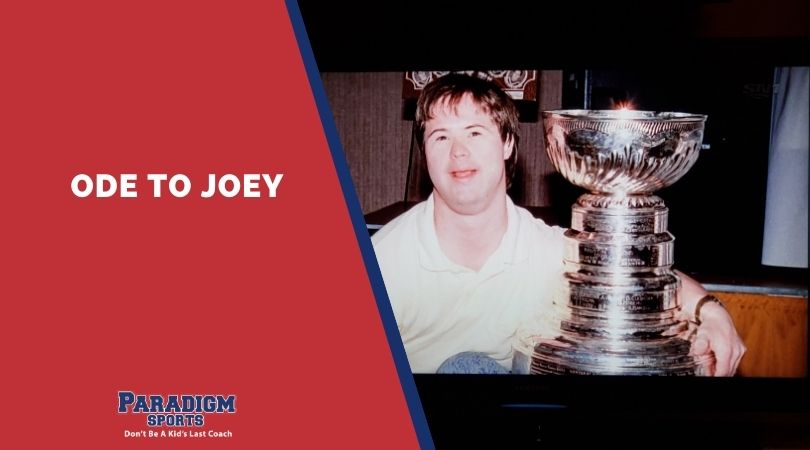
Ode to Joey

Posted Posted in Athlete, Coach, Organization Executive, Parents

As an avid hockey fan due to playing, coaching  and now coaching coaches for many years, one of the things I look forward to is the start of the season, starting with getting back to the ice for minor hockey and then when the NHL ramps up with exhibition games and the first Hockey Night in Canada on Saturday.

As I moved often growing up including a stint living in the Northwest Territories on Baffin Island, it was one of my vivid memories growing up watching games on Saturday’s on CBC with my family.

As a result of the COVID-19 pandemic going back to March 2020, however, the start dates for completion of last season when teams entered the Edmonton Bubble and Tampa won the cup in July, and uncertainty when the next season would start up until recently in January 2021, the passing of one of Canada’s true Icons was not shared until recently.

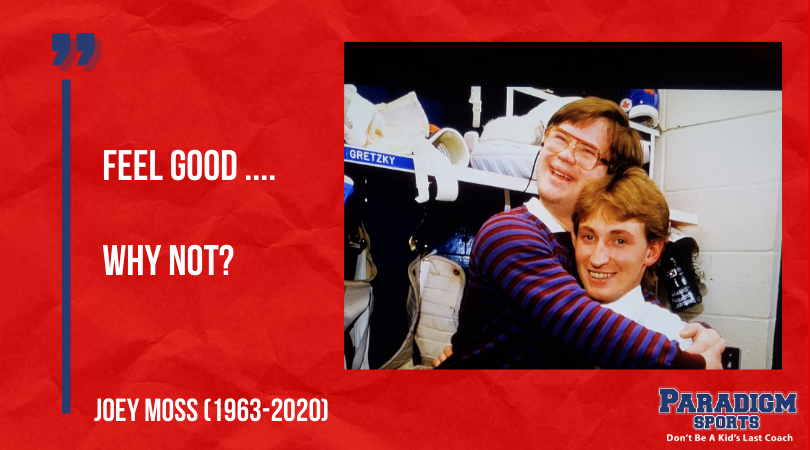
Before the start of the Vancouver Canucks Game vs. Edmonton Oilers, the oilers did an amazing tribute to two they lost during the break of past coach/general manager John Muckler (Jan 4, 2021) and their long term locker room assistant Joey Moss (Oct 26, 2020) who Wayne Gretzky helped get a job with the Oilers and became close friends.

As Wayne eloquently shared at the beginning of the documentary that was shared on Sportsnet the following day (Anything for Joey), he wanted to help Joey as he was an amazing young man who had down’s syndrome but as all of the players and those that evolved to executive ranks shared during the documentaries Joey was the one that taught them core values, not the other way around.

Joey started his role with the Oilers in their glory days, when they went on to win their 4 Stanley Cups and many of their players on those teams shared insight how much of an impact Joey made on them. Then players for subsequent teams also shared nuggets from the 90’s until his passing in Oct 2020.

In addition to Wayne Gretzky, Grant Fuhr, Keven Lowe, Pasani, Kelly Buckberger, Taylor Hall, Raffi Torres, Connor McDavid, Leon Drisital, Sam Gagner, Ryan Smith, Shane Corson and others shared how he made such a positive impact on them during their time playing for the Oilers.

Several of his siblings (he had 12 brothers/sisters) also shared stories about Joey.

Some of my big takeaways …

Always smiling – Love the Game – Loved to Hamm it up – Could give as much he took – Was an ambassador for Edmonton – Loved to Sing (AKA Belt) the Canadian Anthem (I looked forward to seeing Joey sing before Edmonton home games, much like Mark Donnelly for Canucks games) – Taught us patience – Made us better people – Kept Game in Perspective – Was there to cheer us up after a tough loss – Could count on him to get things done

The biggest one for me and sharing it as our quote of the week he would share with everyone around him especially when they were down, had a tough night, team had a tough loss


Having been one who has suffered a lot of adversity myself, I have always tried to have the half-full approach as things can only get better which is whey Joey’s favorite saying really resonates with me.

When Wayne asked Glen Sather if they could find work for Joey he said absolutely and he became their locker room attendant and then Wayne reached out to the Edmonton Eskimo’s Equipment manager where Joey was working a similar role and joined the Oilers in 1984-85 season (coincidentally during their legacy Stanley Cup run).

In the off season he worked in a similar capacity for the CFL Edmonton (Eskimos) Football Team

During his tenure with both organizations;

The Oilers won the Stanley Cup in 1984/1985/1987/1988 and 1990 and lost in 2006 although Joey delayed hernia surgery so he could be with the team during their amazing run in 06.

Wayne was traded to the LA Kings after their 88 Cup victory and the first time that he returned to Edmonton as a King  he went to see was Joey who told him “Sorry Wayne but I can’t talk to you”, but like Wayne, every other player that was traded when they returned Northlands, Rexall Place they too would go see Joey to give him a hug, share a few words and see his infectious smile.

He also worked in a similar role in the hockey off season for the Edmonton (Eskimos) CFL team where they went on to win their 6 of 14 Grey Cups in 1987, 1987. 1993, 2003, 2005 and 2015).

11 CUPS between the two organizations who had numerous hall of fame inductees and various other awards !!!

WHO else in professional sports can say they have been part of so many cup runs?  No one  …. and now due to free agency, salary caps and everything else now, getting to ONE cup final in itself is a big accomplishment, let alone winning the final game or legacies with multiple cups as the Oilers and Eskimos have done in Edmonton.

Joey also was acknowledged by the NHL in 2003 for his contributions with the Seventh Man Award (given to NHL members that make a difference behind the scenes) and inducted in the Alberta Sport Hall of Fame in 2015

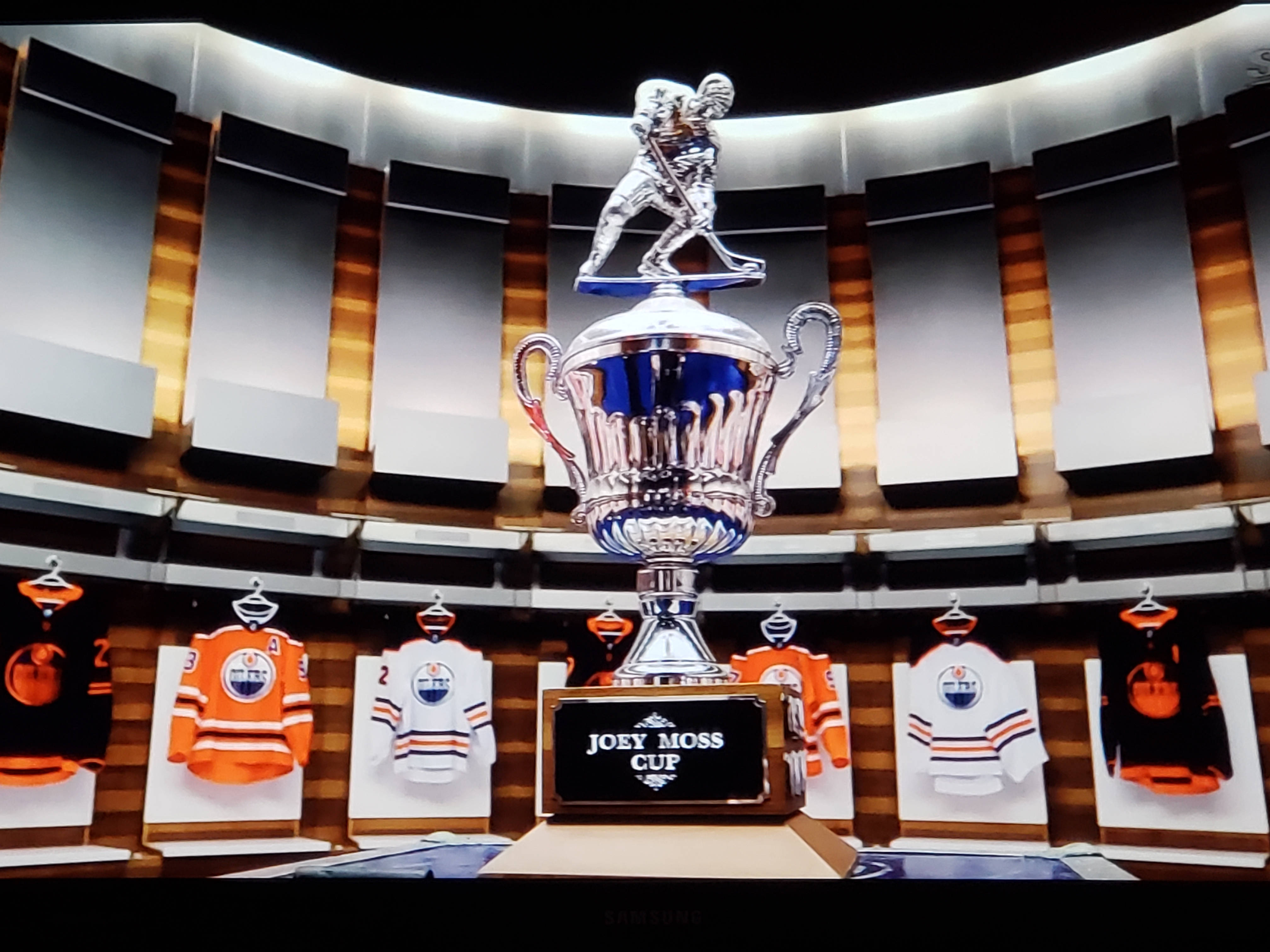
The Oilers also founded “The Joey Moss Cup” inner squad game trophy that award every year and many of former players shared they all wanted to win coveted cup for bragging rights.


Current Player Leon Drisital shared “He’s probably the biggest legend in this town” and in the video below Wayne shares he has more championships than Hugh Campbell (5 Grey Cups) due to his long tenure with both of Edmonton’s professional teams during their Stanley and Grey Cup Runs.

One would hope that the NHL consider Joey being considered for the Hockey Hall of Fame for his amazing contributions to the game, the impact he had on so many players, coaches and the fans.

According to Equipment Manager, training camp would not start until Joey was there, sadly the Oilers camp for this season started without him as will others in future BUT he will forever be with them and all of us in spirit, I suspect with a microphone belting out the Canadian Anthem ….

We could all learn to be better people from the legacy Joey left behind.

Kudos to the Oilers and then Sportsnet for their amazing tributes in his memory and when I or others get down around me as we continue to claw our way back from this crazy pandemic will share “Feel Good – Why not?”

Below is the interview that Wayne Gretzky had where he shares many of the amazing anecdotes about Joey a few days after he passed away in October.


Gone are the days of “Just getting your bell rung”

Posted Posted in Athlete, Coach, Early Sport Specialization, Organization Executive, Parents

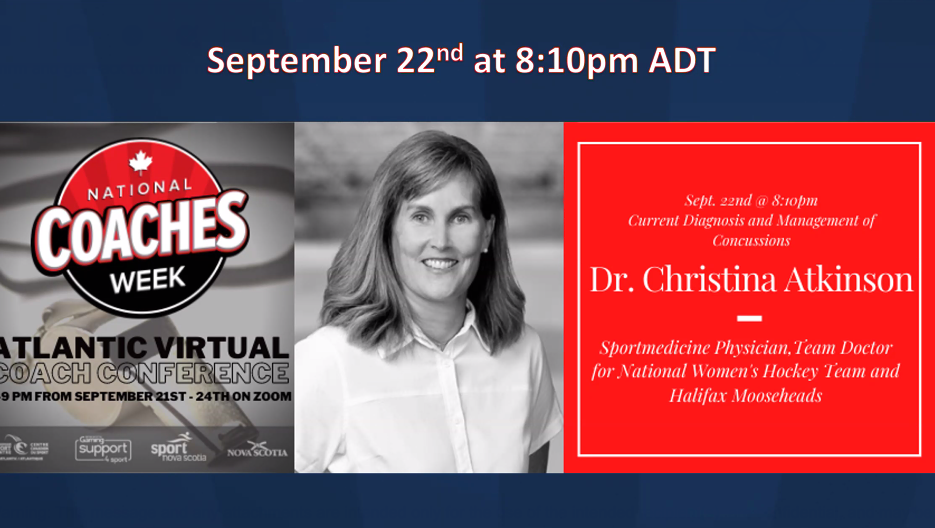
This past week was absolutely crazy for me in terms of various webinars and zoom meetings as it was National Coaches Week in Canada.  I took advantage of the various webinars, virtual conferences, summits during the day, and at night was participating in Zoom meetings to prep for online delivery of Hockey Canada NCCP clinics for BC Hockey due to COVID-19.

A couple of the sessions I did was attend a presentation on concussion management and the following day had a great chat with the director of an organization based in Florida who is providing Hyperbaric O2 Therapy to help people recover from brain trauma that I will expand on below.

Both of which really resonated with me personally as I probably suffered a few minor concussions during my playing days of tackle football when was hit helmet to helmet or tackled really hard.  I recall a few times over the years when that would happen and I would be sitting or lying on the field woozy from the impact and trainers would run on the field to help me.

The first thing that they did was pull smelling salts out of their first aid kits and swipe under my nose where I would become more coherent and then they would say “Hey Bud, you’re good, you just got your bell rung” then help me back to the sidelines.

Then the head coach would come to me and ask me how I was doing and like players were doing for many years until recently where mandatory medical or return to play protocols were implemented and my response would be “I’m Good Coach” (but was I??)

To which they would say … Good to hear, Get back out there.

Fast forward many years later while running clinics, workshops or presentations across Canada interacting with coaches and other youth sports stakeholders may feel that the increasing concussion rates are attributed to the fact there is so much awareness now than it was in my playing days.

To which I say … I am glad that is the case because not only did I “probably” have a few minor concussions playing contact sports (none were diagnosed), I did have 2 Grade 3 concussions (most severe), the second ended my competitive playing career in contact sports in my 20’s.

Ironically it, like the first, were not from sports, rather were are result of bar brawls, the second I can only share what people told me after the fact as I lost approximately 2 weeks of memory leading up the incident and vague tidbits the days that followed.

In sum, I was doing a pub crawl with my buds for a stag and the one that was getting married was hit over the head with a beer mug and knocked out to which I came to his aid and I in turn was hit over the head and knocked the ground.

I literally had the S..T kicked out of me by three young men and I was taken to hospital, was in and out of consciousness per the doctors when I finally game to a couple of days later with what felt like a knife digging into my head …

The days, weeks and months that followed were extremely tough on me as doctors said I had to limit any activity, keep the lights off, rest while I recovered from the migraines, headaches, dizziness, nausea and other symptoms as a result of the concussion.

The incident happened in July and I was returning back to my second year of college and had to reach out to my advisor and instructors to advise that I could not return until I had the green light, that did not happen until early November.

I missed two month of my third term (of 4) in a really intense program but my instructors and fellow classmates were amazing helping me return and get back up to speed.

I share this as I know what it is like to deal with a major concussion, it is tough not only physically, but mentally as you are unable to do things I just took for granted, running, biking, hiking, playing sports, swimming, skiing, golf and so on.

So when coaches say to me the only reason so many more concussions are being diagnosed is due to awareness now vs in past I reply … I would rather doctor’s, coaches err on the side of caution.

I also have had players on teams I coached suffer concussions, one of the ones to this day I regret agreeing to let him return to play as soon as he did (even though he had doctor’s approval) was one that sustained a bad concussion in a game, came back a month later and sustained another concussion.

I received a call from his father later that night saying the doctor had advised that his son not play the remainder of the season and that he no longer play rep/competitive hockey with body checking as a result.

Although everyone said it was not my fault, I still feel some of the blame as I could have pushed back to his parents more and said give it more time but they insisted he was good to go.

This is why I was excited when I attended the webinar and talked with Hilary Loftus this week in terms of advances that the medical profession has made in terms of concussion management and recovery


Tina did a great presentation highlighting what concussions were, the ways that the can now be diagnosed by coaches and trainers utilizing concussion recognition tools like the one below

There have also been changes in terms how concussions are managed when diagnosed

  1. Complete rest for 48-72 hours is no longer advised in lieu early return to light activity that does not increase symptoms
  2. Slowly return to play/learn or work in terms of a graduated approach

Yikes … I potentially could have saved myself of 2+ months being in a dark room and literally doing nothing during that time?

She also shared following stats

  • Most people recover quickly and fully
  • 85-90% within 3 weeks
  • Children take a little longer 4 weeks

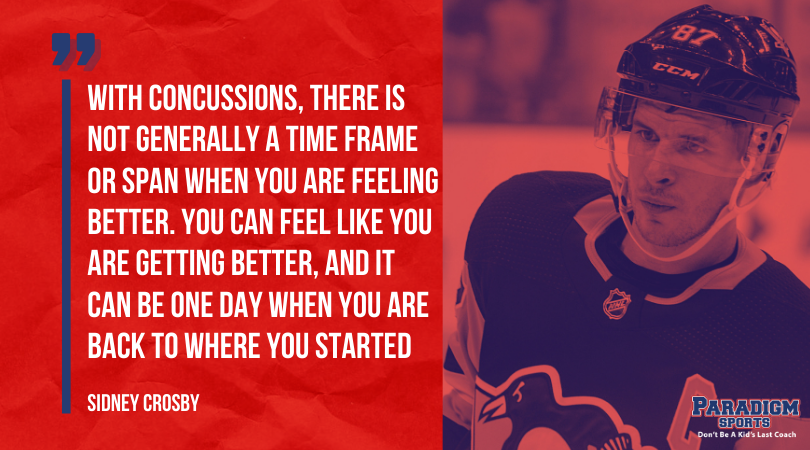
Only 10-15% may have persistent symptoms (months to years), which mine as well as Sidney Crosby’s example as well as many other professional athletes who took months to return or had to retire as a result of concussions (i.e. Eric Lindros, Paul Kariya)


The Key takeaways that Tina ended her presentation for Coaches


  • Know your athlete
  • Be Supportive
  • Community with the health care team managing the concussion if need quidance how to be supportive
  • Speak the same language as the health care team

The day following Tina’s webinar, I had an opportunity to chat with Hilary Loftus, the director for HOW (Helping Our Wounded) Foundation which was established initially to help US military and veterans recover from brain trauma and PTSD using Hyperbaric Oxygen Therapy (HBOT)

The sessions are either done in mono type chambers like the one above or they have larger ones that can accommodate groups of 4-8 or 12 at a time.

Pure O2 affects the body at a cellular level and by using pressured chambers it enhances and provides the tools for the body to naturally heal.  A session is 80 minutes and the technology has been around for decades used mainly in hospitals for severe injuries, burns etc but is now becoming more mainstream in conjunction with other injury therapy practices (i.e. physical, occupational therapy)

Hilary shared an amazing stat with me also, if athletes who are diagnosed with a concussion start HBOT sessions within a week of being diagnosed they only have to do 3 sessions to recover and return to normal activity.

All I could say to myself during our chat and prior conversation was “I wish this was around for me many years ago” but it is exciting to see the advances that we are seeing for concussion management both in terms of recovery but ultimately in terms of prevention as many sports have implemented training programs for coaches, players to reduce head contact and severity of concussions many suffered in past.

If you are a coach and suspect one of your players has had “their bell rung”, that should be a red flag for you to immediately pull them from the field, ice, court and reach out to their parents to get them checked out and follow return to play protocols accordingly.

As the cliché goes, it is better to be safe than to be sorry.


PS Tagline - Dont be a kids last coach