Posted Posted in Athlete, Coach, Officials, Organization Executive, Parents

One of the 5 takeaways I share in every talk, workshop or clinic is the importance for coaches to make the environment for their players safe, as the hockey world has recently coming to terms with the Kyle Beech tragedy and the dominoes that are falling, it is just another painful and emotional reminder why we need to make it safe from all forms of harassment that I wrote on in 2017.

The other area that I have been advocating for years is the importance for coaches to make it safe to fail, unlike the coaches and parents that are highlighted time and time again in social media for their outbursts towards kids as players, officials, I have always been a believe thanks to the coaches that I had growing up to encourage to make mistakes in practices and even in games and have fun when they do so.

WHAT ?

Recommend they make mistakes, the uglier the better … what if they coughed up the puck that lead to a goal, fumbled the ball that lead to a touchdown by opposing teams, missed that free throw or field goal that could have won the game and son on.

Hmmm … there have been just a few players that were pretty good that made a ton of mistakes, but had they not done so, never would have achieved their milestones and become some of the best ever to play their respective sports.
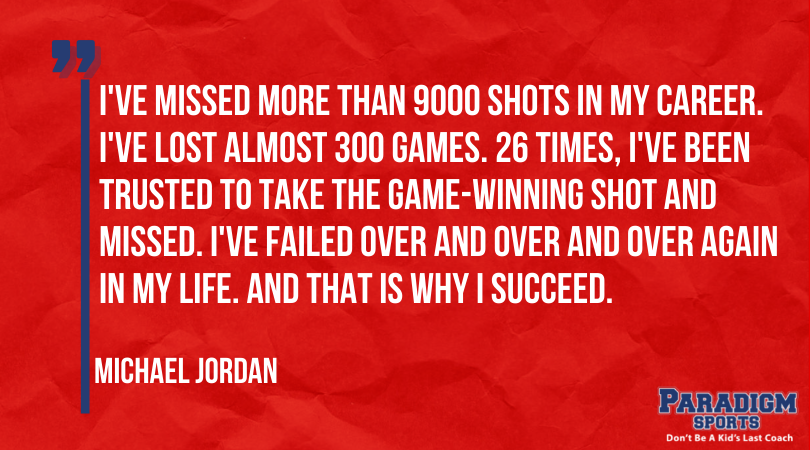
 

Reggie Jackson/Babe Ruth

Reggie Jackson holds the record to this day of the most strikeouts of any player in MLB history (2597) but was touted year over year in his Hall of Fame Career as Mr. October where his bat would hit many out of the park, much like Babe Ruth who did the same decades back.
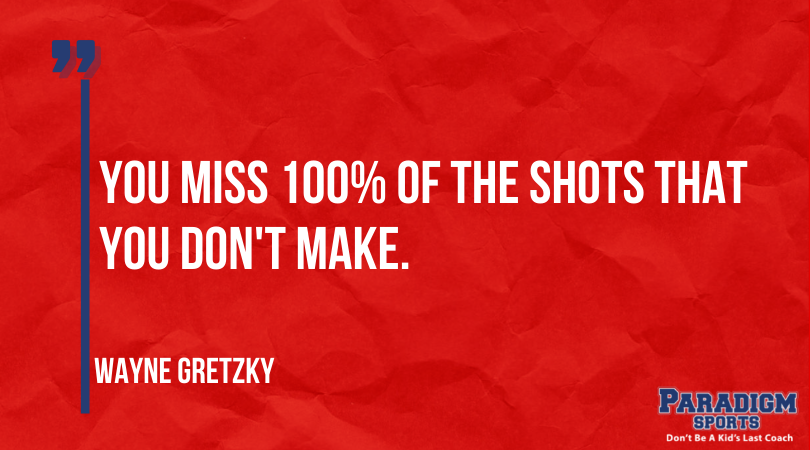


Another recent example is Mason Crosby missing 3 field goals in regulation but made the 4th to win the game in overtime for the Cheeseheads (Green Bay Packers) against the Cincinatti Bengals (whose kicker also missed 2 field goal attempts in the same game)

This was a complete surprise for all those that watched as Mason had only missed 2 field goals in the last 2 seasons combined !

Why was he to make the 4th field goal?  Because he had the support of their teammates, coaches, managers who recognized that mistakes would happen and once they did, were history, was time to move on to the next play.  This is in a league that is focused on winning, the top sport in the world in terms of revenue with millions of dollars in player salaries, billions of dollars in TV and merchandising revenue NOT community youth sports.

Sadly in today’s era of youth sports where it has become adultified, where adults are competing with other adults thru their kids, gone are the days where kids play without fear of failure which was prevalent in free play (i.e. pond hockey, pickup basketball, sandlot baseball) where there were no adults present (no coaches, parents or officials), it has lead to increasing attrition rates as a result.

In lieu of focusing on the results, wins/losses, goals/assists, focus on the process of development, ensure that kids are having fun and winning will be the byproduct vs. the focus.

Growth Mindset

One of my top recommendations for books for coaches, parents and youth sports leaders I the book Mindset by Carol Dweck who shares the differences between the fixed and growth mindset.

Those with a fixed mindset believe that their skills are fixed due to DNA, they don’t believe in working to improve, and fear failure so would focus on simpler tasks.  Those with the growth mindset however, believe they are not that good YET, and will put in the effort to improve and recognize making mistakes is part of the process.

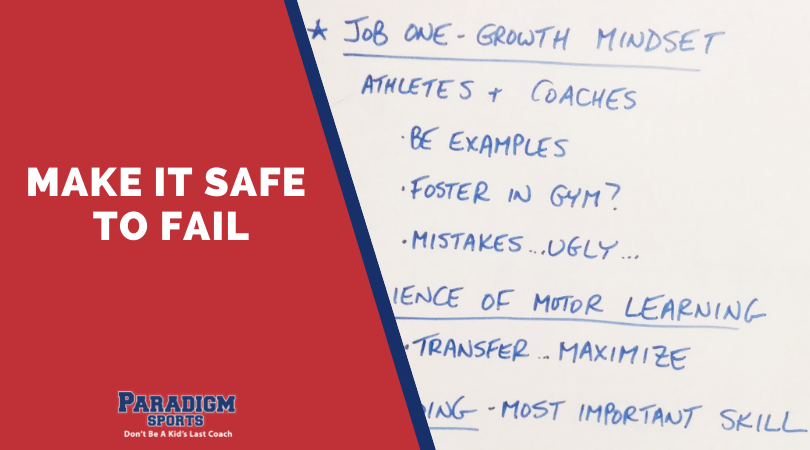
A perfect example of a coach that has incorporated the growth mindset with their team is Karch Karaly, voted best men’s volleyball player in sand and courts of all time, in 2012 he became the head coach of the US Women’s Volleyball team soon after he read Carol’s book and as I have shared in past their team white board encourages the players to make UGLY mistakes so they develop.
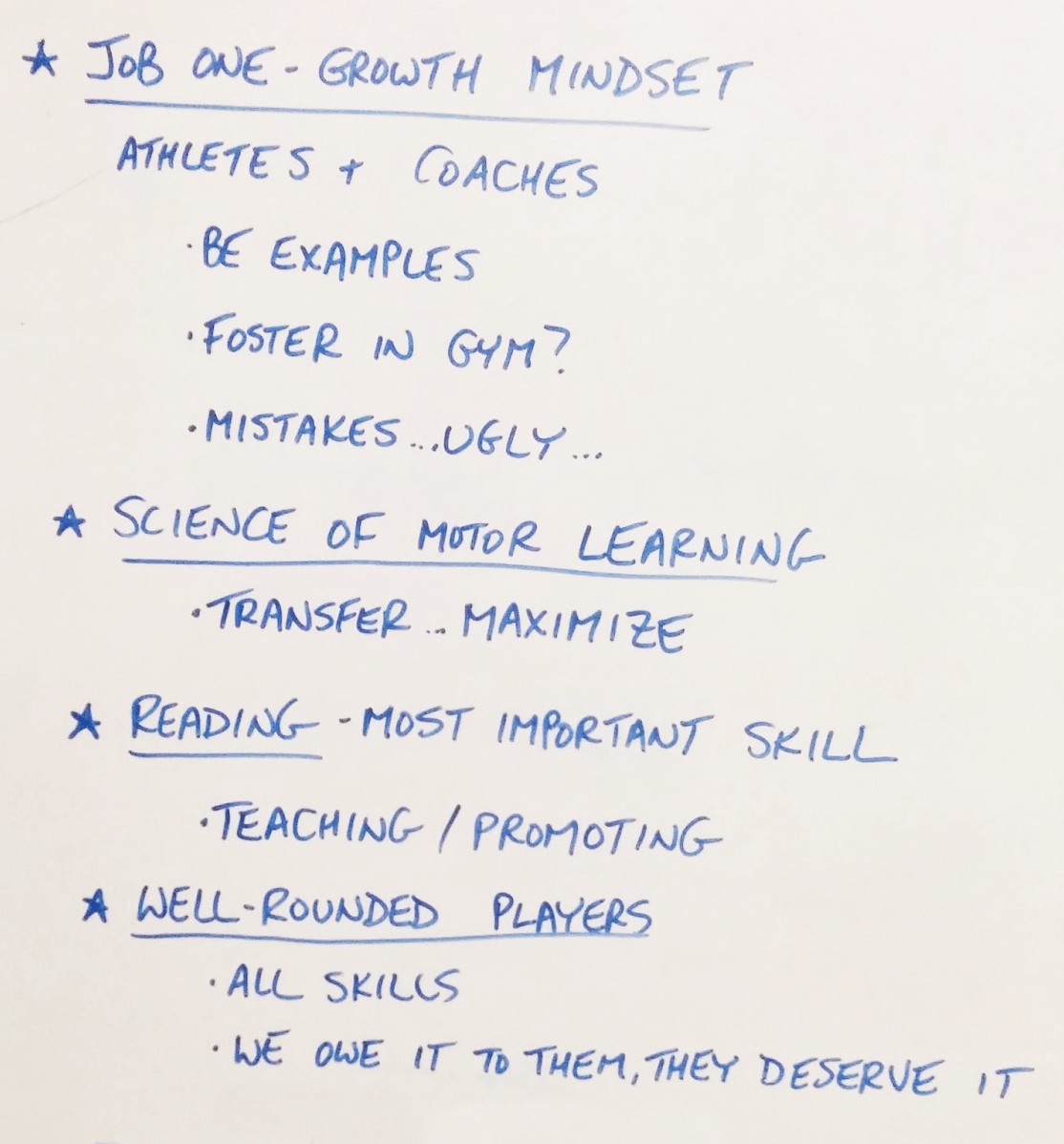
He has lead the team to their first gold medal at an international event in 2013, and medaled at the three Olympic games under his watch, including Gold at this years summer games in Korea.

In order for us to reverse the negative trends we have seen in youth sports for over a decade, we need to create an environment for not only for our players where it is safe for them to fail, but also for the young officials.

Sadly, we lose 50% of young officials in many sports (especially what I refer to as the money sports, Hockey, Baseball, Football, Basketball and Soccer) in their FIRST YEAR.

Why?

The #1 reason is due to the abuse they are taking from the adults in the stands or along the sidelines.

We subsequently lose 30% on average every year so we are literally are constantly recruiting and not allowing time to mentor and train these young officials so they can hone their craft which just creates this vicious circle.

To give you some numbers, in Canada, we have approximately 30,000 officials registered across Canada to ref minor hockey games, and every year we lose over 10,000!!!

This is not a recent trend, this has been the case since I started running Hockey Clinics over a decade ago.

It is the reason why Hockey Canada and USA Hockey came up with the campaign “Relax it’s just a game” in 2007 … 14 years ago


The focus was more on parents who are coaching or critiquing their kids, but I have also seen my share of coaches do the same towards players and officials.

Ironically, during a recent clinic that I was running, at the lunch break just before we all shut down out audio/video a coach shared with me and those that were still in the room (we have shifted to online virtual clinics in part due to COVID, in part due to efficiencies) and he shared that two parents were fighting in the stands at a U11 minor hockey game and the Police had been called in.

This was not a the zone or academy level where parental expectations are even higher (due largely due to the costs financially and time).

Time after time each time I run a clinic coaches share similar analogies how other coaches are running short benches to win games, parents are screaming from the stands or in parking lots,  the ride home (or to) games/practices.

The saddest analogy and driving reason for me to continue running clinics to shift the needle is when a coach stood up to introduce himself in a in person clinic and said the reason he started to coach is his 8 year old daughter shared with him why she wanted to quit Hockey at the end of the season.

He said, with emotion in voice and tears in his eyes which made the rest of us in the room do the same (including yours truly)….

“My daughter told me that she was going to quit because she was scared of making mistakes.”

Until we make youth sports safe to fail again like it was in prior generations, we will continue to experience high rates of attrition, so if you are an adult involved in youth sports (parent, coach, administrator) please provide the players under your watch that opportunity to do so.


PS Tagline - Dont be a kids last coach

There are NO shortcuts

Posted Posted in Athlete, Coach, Parents

I am currently in the process of onboarding a couple of interns for this coming summer who will be working on our various digital platforms, image creation, video and audio editing and back end support for summits, webinars and live streams.

We have now sponsored over 20 university co-op students over the last few years as we have built out our websites to provide content for all youth sports stakeholders and as we onboard new students each time, one of the key teaching points I share with them is the importance of having a strong work ethic and have used a myriad of sports analogies over the 4 months they work with us to ensure they finish the term strong.

This comes from the many years of playing various sports where coaches would remind me and all of my team mates of the importance of work ethic, something that has been lost in part in recent years where many parents, kids have fallen into the early sport specialization trap but not recognizing the importance of practicing the way they will actually play in games.

What separates those that reach the highest levels they aspire vs. those that do not having coached hundreds of different players in different sports and now having interacted with thousands of coaches that have shared similar stories of players they coaches, is the fact that the ones that excel are the ones that have superior work ethics to do vs. those that have a tendency to not run through the finish line.

There are so many analogies I can share as examples of those that reached the elite level, below are three that come top of mind;

Sidney Crosby

When Sid (The Kid which is no longer the case) was coming up the pipeline many felt that he was the next Wayne Gretzky, much like people feel now of Connor McDavid.  What has separated Sid from the rest of the pack and what has made him the player he has become is not the fact that he focused on hockey from a young age like many kids do today, is his commitment to practice like he is going to play every practice.

He even will ask his team mates not to pass “tape to tape” so that he can retrieve pucks that are too far away or caught up in his feet to kick to his blade and doing so at full speed.

He is so committed to working on his skills even now at the age of 31 years old, that the Pittsburgh Penguins, according to a story shared with one of my colleagues who interviewed Mike Johnston, former head coach, built as second practice rink adjacent to their initial rink so that he and other players would not have to wait for the Zamboni to clean the ice for 15 minutes.

Per his current head coach Mike Sullivan

“The quality that allows Crosby to remain atop the league, coaches and teammates say, is his unique work ethic, an ability to specify subtle areas for improvement and work with meticulous precision until they match the other elite elements of his game. … “He’s a generational talent,”


Micheal Jordan

Many know the story that he was released from the first high school team that he tried out for, was totally distraught, cried as a result for quite some time after the fact but he made a commitment to be the best he could be, and ultimately became arguably one of the best ever to play in the NBA by working tirelessly to do so.

The same work ethic transferred to when he decided to retire from basketball when he lost his Dad, to pursue a career in professional baseball and although never made it to the MLB White Sox, he honed his craft over a few years in the minors by working tirelessly every day with hitting and other specialty coaches to improve his batting %, stealing bases and so forth.


Walter Payton (AKA Sweetness)


Hi workout routines to this day are still used as examples for those in the NFL to mirror and what many don’t know is he mentored a former high school player to work out with him which he did for years.  In the short clip below he shares the 5 years that he did so with Walter where they became good friends as a result and talks about the infamous hill (AKA Hell) they trained on.


There are many other examples that I can cite of professional players whose work ethic got them there like Kobe Bryant (sadly who we lost way too early last year), Tom Brady, Muhammad Ali, Pelé, all of which continued to work on their craft while even when they reached the levels they did professionally.

This is the big takeaway that youth coaches must remind their players regardless of the level to ensure that they don’t cheat themselves, and at the same time their team mates, of the importance of working hard during every game, practice … to reach the highest level possible, there are no shortcuts.  Too often over the many years of coaching I would see kids that had great skills but when push came to shove they did not put in the extra effort to hone their craft and as a result they got passed by many of their less “skilled” counterparts.

Those that reach the tip of the pyramid don’t make shortcuts along the way, they recognize that it take YEARS to reach that the highest level they aspire to and continue to work on their crafts even when they do.


PS Tagline - Dont be a kids last coach


Why Mentoring is so rewarding

Posted Posted in Athlete, Coach

To say that the last few months have been a “wee bit” hectic for me would be a little bit of an understatement, but has all been positive as we continue to move the needle forward working with coaches, parents, officials and other youth sports stakeholders.

Just this week I had my wrap up call with my alum UBC’s School of Kinesiology mentorship program mentee, Wade, and was so proud how he not only met but exceeded his goals that we established at the beginning of the program going back to Oct. 2020.

Unlike many of the students who are enrolled in the Kin program who aspire to become physio, occupational or registered massage therapists, Wade aspires to get into teaching so can coach youth basketball to build on his experience coaching youth at the ages of 8-12.

Over the course of our monthly meetings to ensure we stayed on track for him to meet his goals to better understand the coaching “profession” (as many are volunteers) and build out his network, be better prepared for applying for positions I recommended many books, blogs, videos and he soaked up everything that I recommended like a sponge.

Although I was the one wearing the hat as mentor, much like it has been with fellow coaches, players, and other Kin students as well as co-op students who have worked with me over the years, I was reminded just how rewarding it was for me to also learn from him as well.

As I lost my father at a really young age, it was the coaches and teachers that I had growing up that made me who I am today which is why I believe so strongly in paying it forward to mentor, teach, provide guidance and also tough love when needed to help the next generation of coaches, teachers and numerous other professions develop in to amazing people.

It also reminded me had it not been for a few of those amazing teachers and coaches that I would not be where I am today, quite possibly if my path continued in my early teens with “friends” who were getting into drugs, criminal activities I would not have gone to UBC and be the first of my many cousins to graduate from University, start numerous business ventures, or coached numerous sports myself for over 20 years.

As I have shared in many talks and conversations over the years, probably the greatest anecdote I have received regarding our purpose as coaches (which can also be teachers, managers) is not to make a living…..

….our calling and true purpose is to make a difference developing youth into adults.

When we were wrapping up our final mentorship meeting, Wade shared with me how excited he was that he had exceeded 100 people in his Linked in network which was one of the goals we set (believe he had 27 people when we initially connected back in October) so was one of the many goals he accomplished we celebrated.

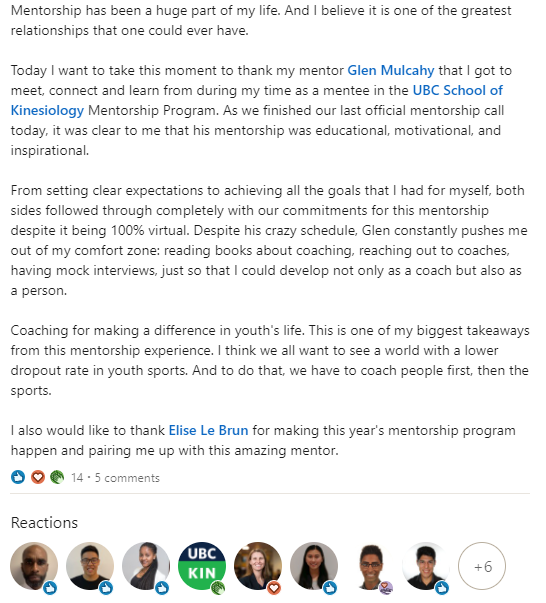
The following day I received a notification that Wade had posted in his Linked in account that I was tagged in so I opened it up and this is what he shared;


I must confess, I was a little weepy eyed when I read it because (a) how many people responded from his expanded network and (b) how much an impact that I had on a young man who I believe is going to be a GREAT Coach/Teacher in future and (c) how much I learned from him at the same time.

As coaches in youth sports, don’t ever underestimate the power that you have to be a positive role model for the kids you coach, although at times you may feel that coaching youth sports is a lot of work (which I know first hand how much work coaches do) and little or no financial compensation, the greatest reward you will receive is when they thank you for being such a positive influence.

Thank you Wade for the opportunity to provide you insight and to learn from you as well.

PS Tagline - Dont be a kids last coach


Ode to Joey

Posted Posted in Athlete, Coach, Organization Executive, Parents

As an avid hockey fan due to playing, coaching  and now coaching coaches for many years, one of the things I look forward to is the start of the season, starting with getting back to the ice for minor hockey and then when the NHL ramps up with exhibition games and the first Hockey Night in Canada on Saturday.

As I moved often growing up including a stint living in the Northwest Territories on Baffin Island, it was one of my vivid memories growing up watching games on Saturday’s on CBC with my family.

As a result of the COVID-19 pandemic going back to March 2020, however, the start dates for completion of last season when teams entered the Edmonton Bubble and Tampa won the cup in July, and uncertainty when the next season would start up until recently in January 2021, the passing of one of Canada’s true Icons was not shared until recently.

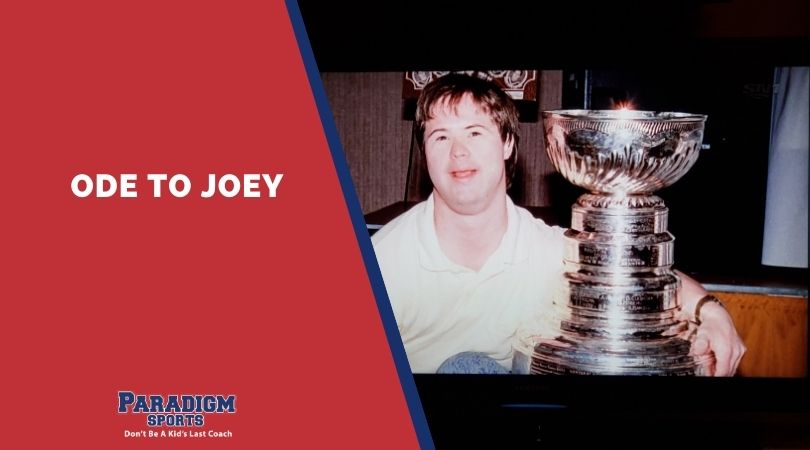
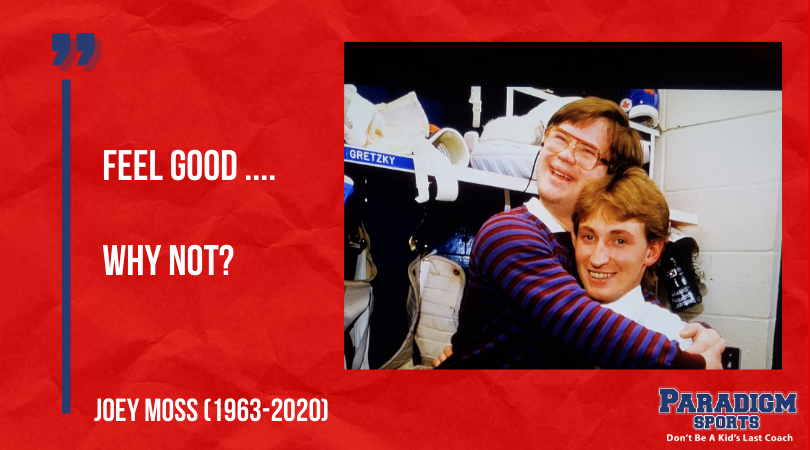
Before the start of the Vancouver Canucks Game vs. Edmonton Oilers, the oilers did an amazing tribute to two they lost during the break of past coach/general manager John Muckler (Jan 4, 2021) and their long term locker room assistant Joey Moss (Oct 26, 2020) who Wayne Gretzky helped get a job with the Oilers and became close friends.

As Wayne eloquently shared at the beginning of the documentary that was shared on Sportsnet the following day (Anything for Joey), he wanted to help Joey as he was an amazing young man who had down’s syndrome but as all of the players and those that evolved to executive ranks shared during the documentaries Joey was the one that taught them core values, not the other way around.

Joey started his role with the Oilers in their glory days, when they went on to win their 4 Stanley Cups and many of their players on those teams shared insight how much of an impact Joey made on them. Then players for subsequent teams also shared nuggets from the 90’s until his passing in Oct 2020.

In addition to Wayne Gretzky, Grant Fuhr, Keven Lowe, Pasani, Kelly Buckberger, Taylor Hall, Raffi Torres, Connor McDavid, Leon Drisital, Sam Gagner, Ryan Smith, Shane Corson and others shared how he made such a positive impact on them during their time playing for the Oilers.

Several of his siblings (he had 12 brothers/sisters) also shared stories about Joey.

Some of my big takeaways …

Always smiling – Love the Game – Loved to Hamm it up – Could give as much he took – Was an ambassador for Edmonton – Loved to Sing (AKA Belt) the Canadian Anthem (I looked forward to seeing Joey sing before Edmonton home games, much like Mark Donnelly for Canucks games) – Taught us patience – Made us better people – Kept Game in Perspective – Was there to cheer us up after a tough loss – Could count on him to get things done

The biggest one for me and sharing it as our quote of the week he would share with everyone around him especially when they were down, had a tough night, team had a tough loss


Having been one who has suffered a lot of adversity myself, I have always tried to have the half-full approach as things can only get better which is whey Joey’s favorite saying really resonates with me.

When Wayne asked Glen Sather if they could find work for Joey he said absolutely and he became their locker room attendant and then Wayne reached out to the Edmonton Eskimo’s Equipment manager where Joey was working a similar role and joined the Oilers in 1984-85 season (coincidentally during their legacy Stanley Cup run).

In the off season he worked in a similar capacity for the CFL Edmonton (Eskimos) Football Team

During his tenure with both organizations;

The Oilers won the Stanley Cup in 1984/1985/1987/1988 and 1990 and lost in 2006 although Joey delayed hernia surgery so he could be with the team during their amazing run in 06.

Wayne was traded to the LA Kings after their 88 Cup victory and the first time that he returned to Edmonton as a King  he went to see was Joey who told him “Sorry Wayne but I can’t talk to you”, but like Wayne, every other player that was traded when they returned Northlands, Rexall Place they too would go see Joey to give him a hug, share a few words and see his infectious smile.

He also worked in a similar role in the hockey off season for the Edmonton (Eskimos) CFL team where they went on to win their 6 of 14 Grey Cups in 1987, 1987. 1993, 2003, 2005 and 2015).

11 CUPS between the two organizations who had numerous hall of fame inductees and various other awards !!!

WHO else in professional sports can say they have been part of so many cup runs?  No one  …. and now due to free agency, salary caps and everything else now, getting to ONE cup final in itself is a big accomplishment, let alone winning the final game or legacies with multiple cups as the Oilers and Eskimos have done in Edmonton.

Joey also was acknowledged by the NHL in 2003 for his contributions with the Seventh Man Award (given to NHL members that make a difference behind the scenes) and inducted in the Alberta Sport Hall of Fame in 2015

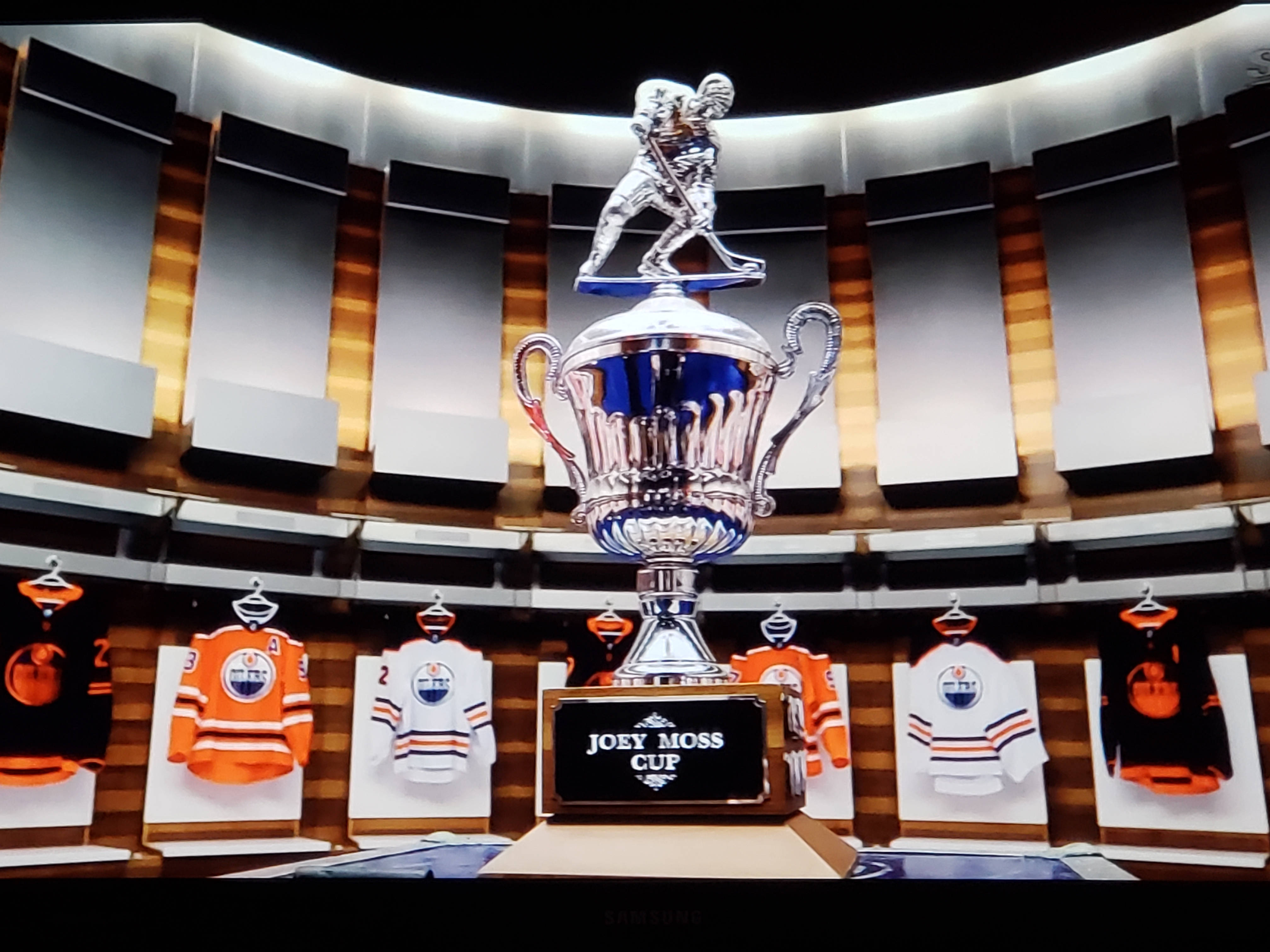
The Oilers also founded “The Joey Moss Cup” inner squad game trophy that award every year and many of former players shared they all wanted to win coveted cup for bragging rights.


Current Player Leon Drisital shared “He’s probably the biggest legend in this town” and in the video below Wayne shares he has more championships than Hugh Campbell (5 Grey Cups) due to his long tenure with both of Edmonton’s professional teams during their Stanley and Grey Cup Runs.

One would hope that the NHL consider Joey being considered for the Hockey Hall of Fame for his amazing contributions to the game, the impact he had on so many players, coaches and the fans.

According to Equipment Manager, training camp would not start until Joey was there, sadly the Oilers camp for this season started without him as will others in future BUT he will forever be with them and all of us in spirit, I suspect with a microphone belting out the Canadian Anthem ….

We could all learn to be better people from the legacy Joey left behind.

Kudos to the Oilers and then Sportsnet for their amazing tributes in his memory and when I or others get down around me as we continue to claw our way back from this crazy pandemic will share “Feel Good – Why not?”

Below is the interview that Wayne Gretzky had where he shares many of the amazing anecdotes about Joey a few days after he passed away in October.


Win with Humility, lose with dignity

Posted Posted in Athlete, Coach, Parents

Happy New Year Everyone, hard to believe that 2020 is now behind us and hopefully will see a better normal in 2021.

Like many, I shut down our office Dec 18th and returned back on Monday Jan 4th and as I reconnected with many of my Canadian counterparts in particular when I asked how their holiday break was the answers were literally all the same …”had a opportunity to spend quality time with immediate family due to limits on social gathering, got lots of rest, watched many of the World Junior Games, read some books”

Same for yours truly, this fall proved to be the business Oct-Mid December timeframe I have had in years a result of various summits, coach clinics, webinars I hosted and when Dec 18th rolled around was really looking forward to doing the same.

As I watched Team Canada on their run starting with their first warmup game on Dec 23rd and sadly lost their team captain, Kirby Dach early in the game to a broken wrist (I knew right away when I watched him head off the ice as have dealt with several players over the years that did the same) I thought to myself what a crappy way to start.

Hockey Canada CEO Tom Renney left the bubble to take Kirby to the hospital and was forced to quarantine in his room for another 5 days as a result but said when interviewed later in the tournament that it was the right thing to do, Kirby’s family could not be with him due to safety protocols and Kudos to Tom for doing so.


As the team entered the round robin and won games by significant margins (highest being against Germany 16-2) what impressed me the most is how they won the games with humility.

Unfortunately one of the tournament tie breakers is goals differential and when teams enter the cross over round goals for and against may impact their placement, but one of the rules that the IIHF implemented to limit blowouts was enforcing running time like they do in minor hockey tournaments.

When I watched the last game with my family much like many other Canadian families did on Tuesday I wore the same Hockey Canada Hoodie that I had since the first warm-up game and after the second goal was scored by Team USA early in the second period I went and got my Hockey Canada Hat and reversed as a rally cap as had done for years playing baseball/softball/slo-pitch but Spencer Knight and the rest of the USA team just did not give Canada much by keeping them outside the dots (limited high % scoring chances) other than a handful vs. what had been the case against other teams they faced.

When Bowen Byram, alternating Captain for the game required for IIHF rules (although Kirby remained captain on the team even though injured) was handing out medals to his teammates I could see the raw of emotion and disappointment that he had and brought back vivid memories for me for many of the teams I coached over the years when I was doing the same, handing out either the bronze or silver medals to my players after a tough loss.

What I would tell all of them before we hit the ice or the field for that last game of a tournament was three things much like coaches I had did growing up;

  1. You worked hard to get to this game and all anyone can ask of you is for you to leave everything you have on the ice or the field and when the game is over whatever the outcome you can hold your head high


  1. Make sure that you win with humility or lose with dignity, after the game no one should know whether you won or lost, there is nothing worse than when teams rub salt in a wound with excessive celebrations when they win or poor sportsmanship when they lose


AND


  1. Most importantly, go out there, don’t worry if you make a mistake as your team mates will have your back and you will have our support as coaches and have FUN, getting to the final game in tournaments does happen often, relish the moment.


These three messages were shared with me over and over as I played numerous competitive sports and helped me overcome the adversity of tough losses like Canada’s young men experienced this year as well as taught me the importance of humility when we did win gold medals, banners, tournaments etc.

It also served me well for post-game talks as a coach, whether we pulled off the win or had a tough loss, to share how proud I was and reinforce how proud the players parents were of their kids for their amazing runs whether it be at a tournament or the end of a season, provincials etc.

Probably the best post game talk I have ever seen is one I wish I had seen early on in my coaching career, when David Belisle talked to the little league world series team he coached after being knocked out of the tournament I have shared in talks for both parents and coaches.


Whatever sport you are coaching, whether it be individual or a team sport, please ensure that you teach your players the same valuable lessons, as it is our responsibility as coaches not to make a living, but rather make a difference by developing youth into adults.

Kudos to Team Canada for their amazing run this year dealing with all of the adversity from losing the team captain out of the gate, challenges of the bubble, quarantine, being apart from their families with no fans in the stands and making all of us in Canada proud.

I am already looking forward to watching the next world juniors which also will be held in Edmonton/Red Deer in December but this time the fans, including the amazing supportive parents, should be in the stands to cheer on their sons as they chase their dreams wearing their countries national jerseys.


Don`t be a kids last coach