
Early sport specialization does more harm than good

Posted 3 CommentsPosted in Uncategorized

BONUS – Download a Free Copy of this Blog in PDF Format HERE  


Many parents feel pressured to specialize their child in one sport early either because they are showing early promise or coaches are pushing extra weekly sessions and year-round training.

According to a survey done by TD Ameritrade as they were concerned that parents were not investing enough for their retirement, although the survey found that 47% of parents felt youth sports was too expensive, 67% aspired for their kids to get a NCAA full scholarship, 43% aspired for their kids to play professionally and 34% potentially would participate in the Olympics.

The reality – less than 1% reach these elite levels of sport.  Use Hockey as an example, over 1.5 Million youth play globally (just wait for China to ramp up and this will increase exponentially) and there are approx 700 player roster spots in the NHL (with the new Vegas Knights franchise) so only 0.3% of those playing will have a shot of playing in the NHL.

Unfortunately many of the coaches that are for early specialization are working for “development” organizations who are making the recommendations for the mere purpose of protecting their livelihood and don’t have the kids best interests at heart.  It has turned into a HUGE business model, and has lead to the professionalization of youth sports vs. when kids played for the love of the game itself.

Kids develop very differently and if you push a child to one specific sport keep the following information in mind.

Aspen Institute Project Play, along with USA Tennis and 50 partner National Sporting Organizations are promoting the benefits of Multiple Sport Participation as a result of declining sports participation the last five years.
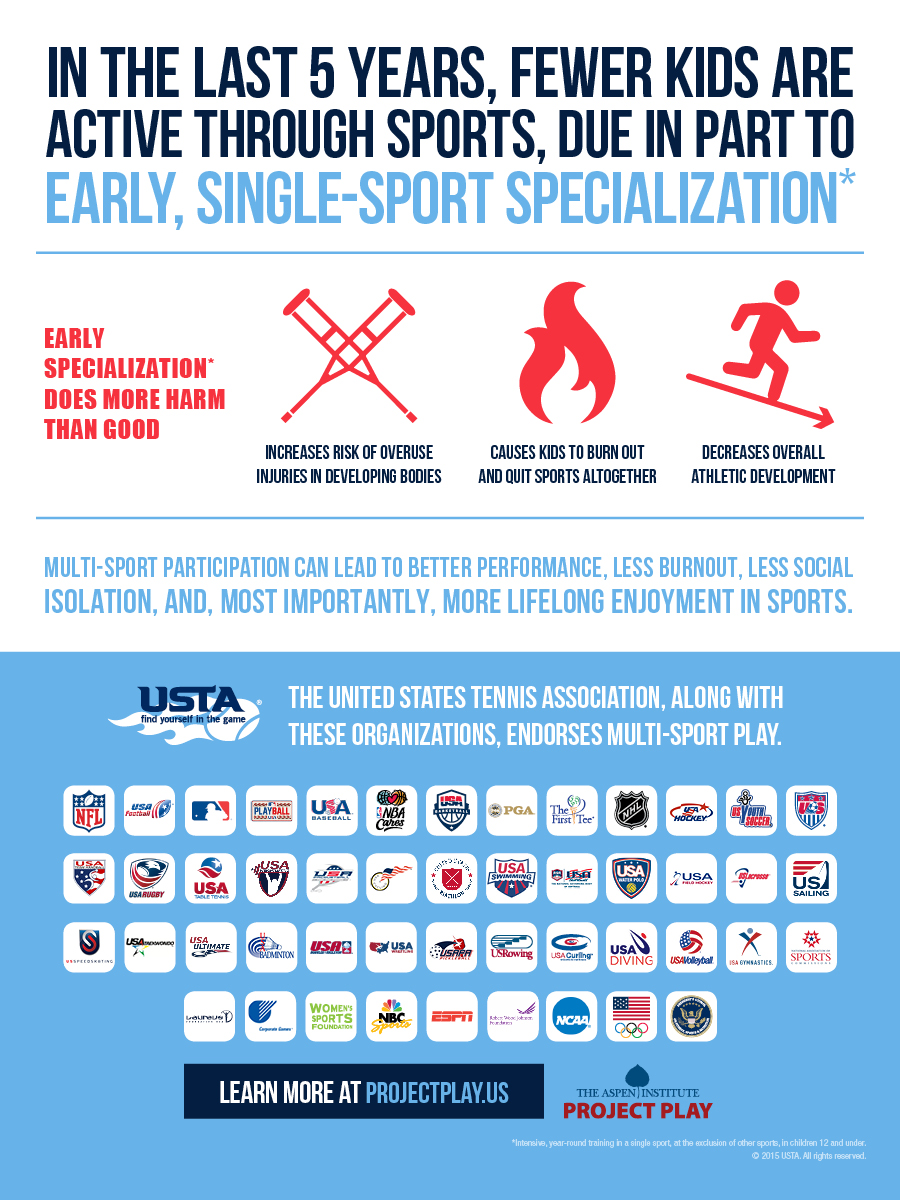


The three main issues kids should not specialize early in a sport are;

1.Increased risk of overuse injuries

ACL Surgeries have seen a 400% increase between the ages of 10-17 since 2002, the highest incidence is in female soccer.

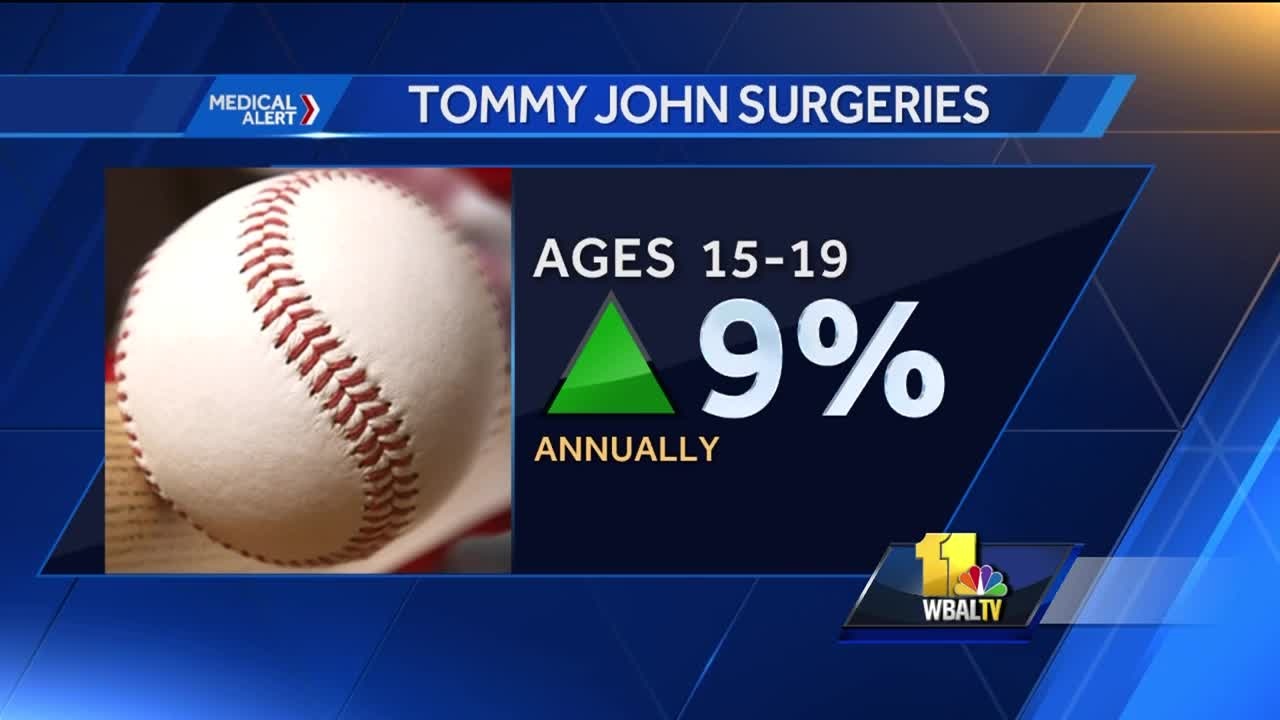
Now over 50% of the Tommy John Surgeries are pitchers from High School (15-19 Yrs. Old) , a 9% increase this past year ALONE. This a major surgery on the ulnar tendon that was originally for major league pitchers to extend their playing careers into their 30’s, not provide kids robotic arms in their late teens.  Research shows that once the surgery is done, it does not last.  Many pitchers will see a 3-5 MPH decrease in speed due to the surgery.


One example is Roberto Asuna, pitcher for the Toronto Blue Jays, who had  Tommy John Surgery at 18 years old and in one of the pennant race games last season literally pulled himself from the game as his elbow was too sore to continue.

Why do you think that concussions have escalated to the level they have in recent years ?  It is not just due to the contact kids are taking, it is the type of contact and lack of respect for their opposition and how early it is happening.

Refer to our prior post ” Are contact sports in jeopardy?” and watch the videos of young football players under 10 years old hitting at a level of collegiate players.

The level of contact at earlier age groups has lead to a 200% increase in concussions since 2010 between the middle school age group (9-12 years old) which was one of the driving reasons why USA Hockey and Hockey Canada opted to defer bodychecking until the Bantam Age Group (13-14 years old).

We are demanding too much from developing bodies.  These are major surgeries needing medical attention and are a direct result of kids playing one sport year-round with the same repetitive motor movements.

2.Burnout

70% of kids are quitting ALL organized sports by the age of 13 and replacing their former play time with screen time.  The game they once loved and showed early promise in, are being encouraged by parents and coaches to specialize in one sport as early as seven years old.  Over six years it is the equivalent of over 50-175 % more playing time of one sport compared to the multiple sport model

Kid should play sports seasonally.  Their bodies are less likely to be permanently damaged and their chances of staying active for life increases significantly.

Due to specialization, kids are playing less than 2 sports per year now vs. prior generation would play 3-4 sports plus a multitude of free play activities.  Do you remember when you grew up just playing for playing sake?  Going to a basketball court, playing street or pond hockey, running, biking, swimming at your local pool?  Gone are those days where kids play for hours on end because they loved doing so.

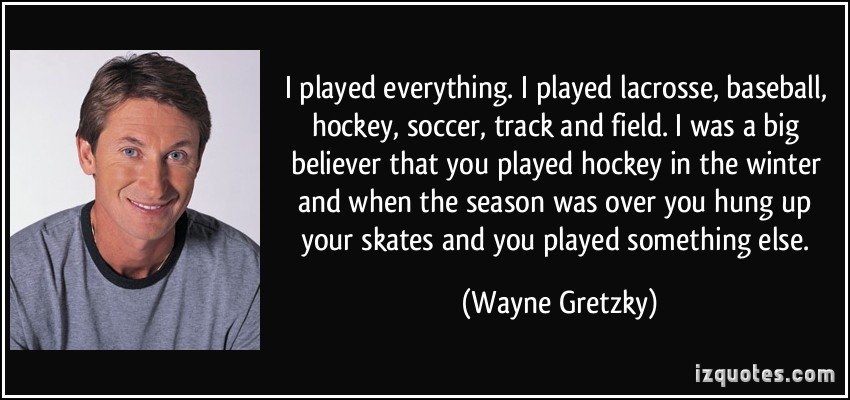
See quote below from the great one, like Wayne Gretzy when he grew up and I believe all would say he turned out to be “pretty good” although he only played hockey seasonally, not year round as many kids do today.
 

3. Decreases in Overall Athletic Development

The science behind Alberta Lacrosse’s Long-Term Athletic Development (LTAD) or Hockey Canada’s Long-Term Player Development (LTPD) models shows that kids are better off focusing on fundamental movement skills across a broad range of sports during their key development years.  Motor skill acquisition at 6-12 years old along with organized and unorganized free play through kids’ teens is the recommended method to introduce kids to a wide variety of activities.

They also cite the benefits of cross training from one sport to the other, for example benefits of playing soccer helping hockey players receive a puck on their skate and kicking to their stick.

For more insight on Physical Literacy  and LTAD, visit Sport for Life’s website www.sportforlife.ca

As coaches or parents of young athletes, ask yourself the following;

  1. Do you know what you want to do in life?
  2. Do you know what your true purpose is?

Whenever I ask those questions at any presentation I do very few hands go up as many do not know the answers until well into their adulthood.

THAN How can we recommend to a 7 year old kid to specialize in one sport for the rest of his or her life?

On the flip side, here is a short clip from John Smoltz’s MLB Hall of Fame induction speech where he touches on the perils of early specialization.


 Let’s work together to bring the game back to the kids.

 

Don`t be a kids last coach


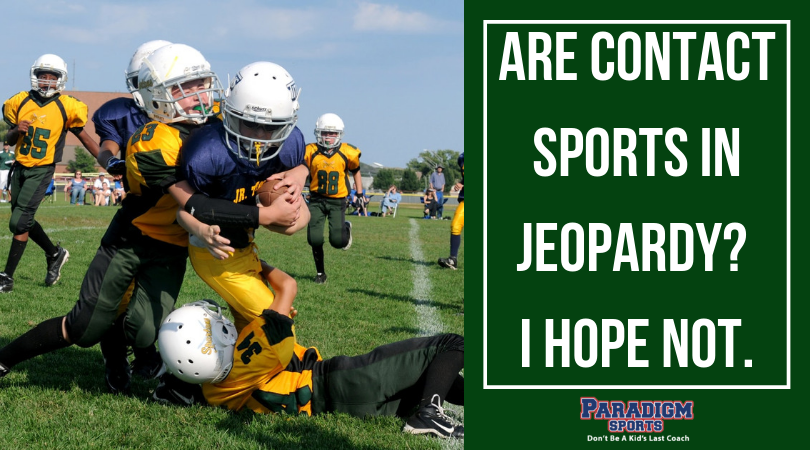
Are contact sports in jeopardy ? I hope not.

Posted Leave a commentPosted in Uncategorized
In the last couple of week’s I have read articles on the dangers of full contact sports and felt were worth sharing and commenting on.
 
One touching on recent data pertaining to CTE Findings by Boston University and supporting arguments that “Football is still worth risk.
 
Steve Simmons comments on how his two boys (who are now grown men) played several contact sports in their youth and neither suffered a concussion. They played many seasons of contact hockey and football, one even played university football.
 
Reason why I start this week’s post referencing his article is he puts forth the argument that tackling in football is still worth the risk and also believe it is but we MUST make changes immediately to how the game is being coached at the grass roots level.  First, we must eliminate the intentional head to head contact as players are using their helmets meant for their protection as weapons.  Second, we must limit full contact or tackling to later ages to allow for full development of brains to mirror what USA Hockey and Hockey Canada have done removing until Bantam and considering deferring until Midget to ensure players brains are fully developed.  Third, we must reinforce the importance of respecting our opponents and playing for the spirit of the game.
 
To review the article Steve is commenting on and short CNN Video click here
 
To support his argument, Steve shares his youth sports experience of various sports he played including baseball, hockey, football, lacrosse and basketball, all of which I played except lacrosse. My alternate was Rugby. He further shares how many life lessons he learned in football particularly including;
 
  •  Teamwork
 
  • Commitment to stay in school
 
  • Confidence
 
  • Friendships
 
  • Maturation
 
Two that I would add – Respect and Sportsmanship, two values that are missing in youth sports today that are leading to the increasing concussion and injury rates.
 
This list could be endless for me, youth sport teaches us much more than just the skills of the game, but valuable life lessons that we carry forward in non sport activities. That is the role of youth sport coaches, to make a difference by developing youth into adults.
 
For me, contact sports was my way of dealing with the challenges of losing my father when I was really young (he died tragically when I was 8 years old), a means to be aggressive, physical and keep my Irish temper in check. It also provided me surrogate fathers in a sense, as each sport the coaches would take me under their wing and would be not only teach me the skills of the game, but the skills of life. If it had not been all the GREAT coaches I had when I played all those sports, I would not be the man I am today.
 
Another contact sport that has received a lot of press in terms of head trauma’s and concussions is Hockey, recently the “Campaign to ban bodychecking in bantam hockey divides parents”
 
In 2013 Hockey Canada banned body checking until competitive hockey in Bantam, removing it from Peewee and all levels of non-competitive hockey. The reason? Studies found that the brains of peewee aged players (11-12 years old) were still developing and the research found it led to a threefold increase in body and head injuries.
 
I happened to be coaching the peewee age group at the time and witnessed first hand how body checking en masse was leading to concussions. I believe on of the biggest contributors to players getting a concussion was not body checking per se, it was what I call “The Chicken Wing”, players intentionally making head contact with their elbows or hitting players from behind.  Only a small % were due to clean bodychecking done correctly. The other, was players raising arms or sticks to protect themselves in self defence, like all other core skills of hockey, contact confidence takes years to develop.
 
I had the misfortune of watching numerous “chicken wings” by opposing teams on my players and one was such an outright intent to injure I can’t even speak of it at length. While coaching Bantam, I witnessed a 14 year old player elbow one of my players with such intensity it reminded me of the Todd Bertuzzi/Steve Moore Incident as he fell to the ice with opposing player on top of him. My player suffered a major concussion, then when followed return to play protocols suffered another due to a hit from behind.
 
One of the saddest things for me was when his parents sent an email to the team that he would not be returning to play as doctors advised him he could no longer play hockey.
 
He truly loved the game and was only 13!  Unlike 70% of kids today that are quitting youth sports for various reasons, he had to stop playing a game he truly loved because he hit in the head intentionally with an elbow. 
 
After the game as I was walking by the opposing player and his parents were joking with the coach that they would be saving money on travel for a few weeks as he received the maximum penalty possible, a 5 game suspension. It took EVERYTHING I had in me to keep walking, I could not believe a fell coach disrespected the game to that extent and condoned the incident.  In lieu, he should have had a serious conversation with the player and reached out to his association to enforce a longer suspension.  The whole point of having penalties in hockey is not to give the other team a man advantage, it is to deter the behaviour from happening.  
 
As far as I am concerned, both the player and coach should have been suspended for the season, perhaps more, then the message would have been sent.
 
This to me, is the #1 reason why concussions are now rampant in hockey, and you can defer body checking until Senior leagues (Over 30, Over 40) and even though brains are fully developed, players will still get concussed if players initiate contact to the head or hit the players from behind out of the danger zone.
 
Although many were against banning body checking when Hockey Canada did so in 2013, one of the professors that did the initial research to support bodychecking be pushed to Bantam age group confirmed it did have the desired impact
 
  • 64% decrease in concussions
 
  • 50% decrease in overall injuries
 
  • The overall number of concussions across Canada has dropped more than 4,800

See article here

Further research has shown that players brains are still developing beyond the Bantam age group (13-14 years old) so  is the reason for new campaign to defer body checking until Midget age groups but if we do so we are opening Pandora’s Box. Bodychecking, much like any other hockey core skill takes YEARS to development so in order to prepare players for older age groups we must look at a graduated system to prepare them. As the boys become closer to becoming young men, their testosterone levels increase as well as physical size. At some point we have to TEACH proper body checking techniques and the reason we have in hockey to begin with. It is not to separate the player’s head from their body, it is to separate the player from the puck. 
 
The same holds true for football, I played contact football for 9 years all the way to Junior (University age group) and although I got “my bell rung” at times I never was diagnosed with a concussion, nor did I get concussed in contact hockey, rugby, british bulldog (which has now been banned from school playgrounds) or the game we loved the most in high school “tackle basketball”. As far as my friends and I were concerned, it was not a “sport” unless it involved contact, body checking or tackling.   The difference for our age group vs. what I have seen the last 10 years is our coaches reinforced the importance of proper tackling techniques EVERY practice as well the importance of respecting our opponents in game play.
 
The difference in my generation vs. today’s generation and like the chicken wing in hockey, helmets today are not being used for protection as they are intended, in many instances they give players are false sense of security and many will lead with their helmet when tackling or going to be tackled.  
 
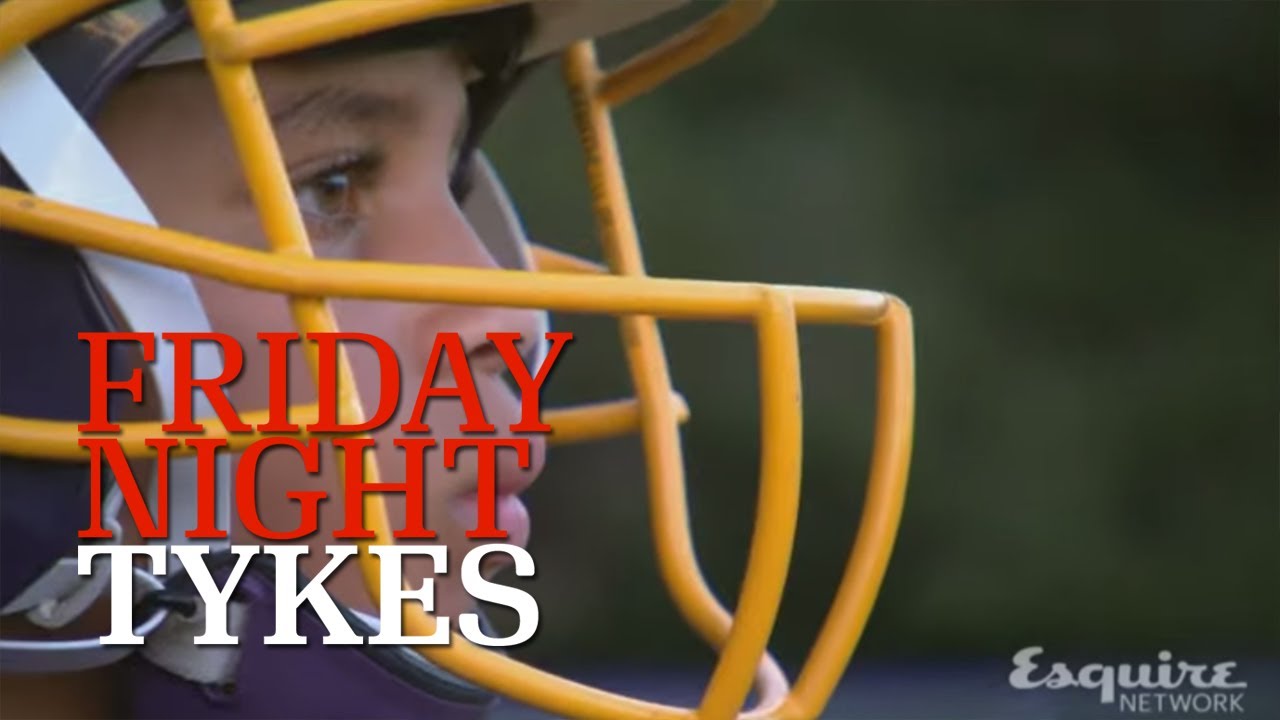
Here is a video about an elite 8-9 year old program in Texas, it is a series based on a REAL football program in Texas. Click on the link below for the original trailer for Esquire program Friday Night Tykes.
 
It is no wonder why CTE has been such an issue for the NFL as it all starts at the grassroots, if youth football coaches are not going to teach the safe and proper tackling techniques adhering to the LTAD model then it merely will continue to escalate.  
 
I have talked to several youth football coaches who are but we need ALL youth sport coaches of contact sports to do so, otherwise in addition to Hockey and American Football, other contact sports also may be in jeopardy.
 
So there is no disconnect, I am a big advocate for concussion  and CTE awareness. I am not saying that they are not serious issues, they are, and we should continue doing what is the best interests of kids to ensure they are SAFE.
 
Why am I so passionate about it? Because I suffered 3 major concussions, the third ended my competitive sports career for lack of better word in my 20’s. Ironically though, all 3 were not in a game or practice, one was a result of horsing around with one of my rugby team mates, the latter two were when I came to friends aids in bar brawls.
 
My last concussion I can only tell you what people told me as I have no recollection of the 2 weeks that lead up to the event. One of my friends was hit over the head by a beer mug, I jumped in to grab from his assailant and then one of his friends did the same to me. I was knocked down, and he and his two friends literally kicked and punched me to the point where I was so disfigured after the fact when I looked a pictures taken for police shots I did not even recognize myself.
 
I ended up in an ICU at nearby hospital and awoke groggily 2 days later and had NO IDEA where I was, how I got there and all I could remember is the migraine. Doctors told me that it would take time for me to recover, get lots of bed rest, limited reading, TV etc etc. I missed 2 months of my first college term as a result of the time it took to get back to being symptom free.
 
Needless to say, I can relate to the challenges Sid, Paul Kariya, Eric Lindros and numerous other players have had dealing with to recover from concussions
 
I believe that contact sports are getting a bad rap in a sense that it is the contact itself that is leading to CTE, Concussions. In lieu, many of injuries sustained is due to the the equipment meant to protect but used by players initiate contact leading to same … the hard plastic on elbow pads, the “concussion proof” helmets,  disregard using sticks to slash wrists, helmets or cross checking from behind.
 
Hockey (NHL) and Football (NFL) are getting a lot of press making it a hot topic for last few years but if tackling and contact was such an issue, why are we not looking at taking contact out of other sports ?
 
If contact alone was the driver for CTE, concussions and other injuries, Rugby should be the #1 sport for all but are not even in the top 5, according to Neurotracker, these are the number of high school concussions per 100,000 athletic exposures;
 
  • American Football – 70.4
 
  • Men’s Ice Hockey – 54
 
  • Men’s Lacrosse – 43.3
 
  • Women’s Soccer – 33
 
  • Women’s Lacrosse – 33
 
Honourable Mentions
 
  • Women’s field hockey – 23.5
 
  • Men’s Wrestling – 23
 
  • Women’s Basketball – 19.8
 
  • Men’s Soccer – 19.1
 
Hmmm .. Rugby still not in top 9.
 
Why ? Because it is a hooligan’s game played by gentlemen.
 
The only protective equipment are cleats, mouth guards and perhaps ear wraps (for forwards) and that’s it. Concussions are low or non-existent because players don’t have helmets, elbow pads, sticks that can make contact with players heads, wrists (slashing has become the norm, not the exception in hockey).
 
It is a sport that players still call the ref SIR and when you get older after you go to war with the other team, you socialize with them afterwards.
 
Here is another example of how 8 year olds are being taught to hit others recently posted in Instagram 
 
 
Helmet to Helmet contact starting at 7-8 years old? Coach makes no correction ?
Player attempting to tackle not protecting himself by getting down to drive shoulder into other players core, wrap arms which would avoid any head contact whatsoever.
 
Really?
 
If the NFL, NHL and others want to have players come up thru grass roots they MUST get on board with grass roots programs to bring back respect, proper checking, tackling techniques.
 
Eliminating body checking, tackling from contact sports is not the answer.
 
Reinforcing the importance of Respect, Sportsmanship and other core values is.
 
Let’s work together to bring the game back to the kids.
 PS Tagline - Dont be a kids last coach