
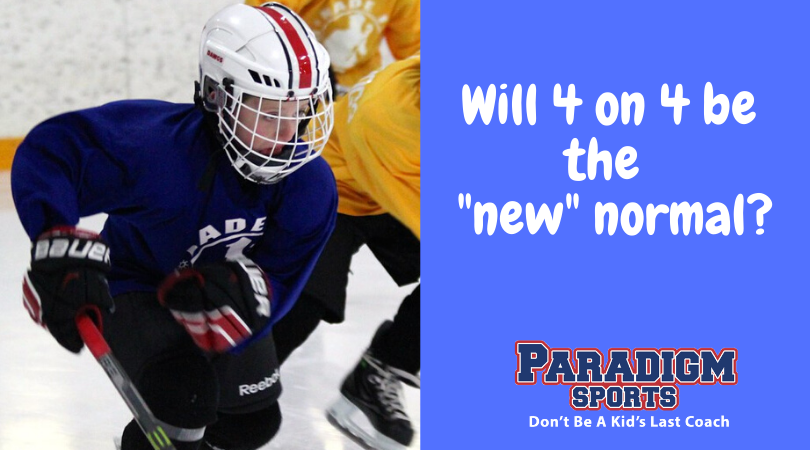
Will 4 on 4 be the “new” normal?
It is so exciting to see the globe enter different phases post COVID-19 quarantine period start put all sports on hold mid March as well as other sectors coming back.
I think one of the biggest milestones for yours truly was when I finally was able to get my hair cut again, normally I do so every month, and the last appointment I had pre Covid just before quarantine period was on March 9th so come June 19th when I got to see my “stylist” of 25+ years was just one of many examples how we are returning back.
I recently read another great article that JJ Adams wrote for the Vancouver Sun and Province newspapers “Rec hockey overhauled to keep it fun, less risky”
The online version of the same article in the Sun Newspaper (yes, there are still people that read the paper, yours truly is one as my first “job” was carrier for the Sun for 8 years) starts with the quote that I shared in our newsletter …..
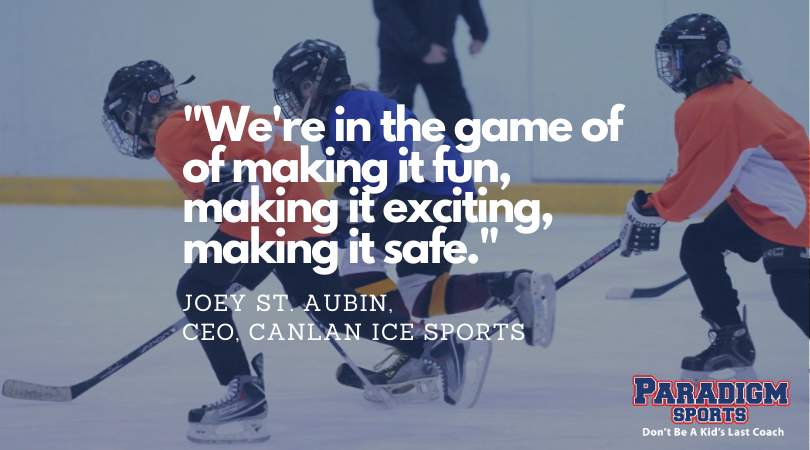
One of the main contributors to the article that JJ talked to was the CEO of Canlan Ice Sports, who run 3 multi sheet ice rinks in the Vancouver and 12 others in Canada and Illinois.
He shared how they have reinvented the format for both their adult and youth recreational leagues which I am very familiar with, having coached in all of the facilities for years and then when my son’s minor hockey “career” was over, in lieu of pursuing the junior hockey path he found very frustrating (as did I), he accepted an invitation to play for an adult team playing in ASHL tier 1 even though he was 18 at the time.
He was able to play 2 seasons with that team but like all others, his season ended March 13th, 2020 and I know he is itching to return to play once a week with his buds as his hockey bag still sits fully packed in our garage.
I shared the highlights of the article at one of our many home cooked dinners we have had the last few months and he shared one of his fondest memories playing hockey growing up we not the 5 on 5 recreational or competitive teams he played for, but was the spring 3 on 3 on smaller ice surfaces or 3 on 3 , 4 on 4 on full ice with modified rules.
For me as well, that was some of my fondest memories, going back to watching him play with the “big boys” when he was invited to play 3 on 3 with his counterparts who were all a year older for his first spring “season” of 12 games from end of March to mid June once a week.
We played in a faculty that had 3 smaller ice surfaces that became a go to for many associations in the winter for practices, small area games and then a natural fit for cross ice hockey (ice sheets are approx. 45% smaller than a full sheet)
3 on 3 had rules to keep the flow going of the game including floating blue line (once entered the offensive zone the red line then became the blue line to keep the puck moving), changing on the fly (vs .buzzers that were being used from H1-4 when we did play full ice) and no penalties, only penalty shots. No body checking for all age groups also.
Each year thereafter he would ask me to put a team together as he had so much fun so we did and many of the original players and goalies returned year after year as they had so much fun.
Even coaches had fun, as did parents who watched many of the games from the pub (many of which would sure one of their counterparts would be the DD)
When the boys got into their teens, one of the players grandparents was the head skills developer for one of the Canlan sheets near us and asked us if they boys would like to try full ice 4 on 4 or 3 on 3 which is what really kept the bug going for my son and all of his friends.
THEY Loved both options, and although scores were kept, it was literally watching pond hockey and although I was their coach, I encouraged them all the time to just go out there and have fun, they already had their winter seasons with plenty of competitive games and practices, this was just an opportunity to keep their skate legs going once a week in the offseason.
My daughter also played one season of “fun hockey” with one of her softball counterparts, even though she could barely skate at the time, so Canlan and the other private facilities do have several fun progams and youth and adults to consider (although I am not a fan of the competitive spring hockey model that has evolved as have have shared for years)
So when I saw how Canlan was improvising so kids and adults could return back to play I same some of the similar rules we had played with as well as new ones so they could ensure that those that returned back to play could do so safely.
Canlan, like many other multi-sheet corporations like Planet Ice are privately held and run, and their recreational leagues do not fall under the umbrella of Hockey Canada.
The upside for them (and for all the hockey keeners from youth to adults) is they can run programs year round but the cons are the coaches or officials do not have to be Hockey Canada certified, nor do they qualify for Hockey Canada’s insurance program which Tom Renney et al have announced the contagious disclaimer is going to remain unchanged until 2024 to permit local hockey associations to return to play in the fall.
Some of the things that Canlan is doing to permit their leagues to start up again when physical distancing permits
#1 – In lieu of 5 on 5 (with goalie), they will be 4 on 4 (with a goalie) for cohort groups of 10 per bench (8 skaters, one goalie, one coach)
This will permit more space between the players during game play and comply with current PHO cohort guidelines
#2 – NO penalties, in lieu penalty shots (think basketball free throw)
The difference with the way penalty shots will be done Post COVID-19 is those that are awarded the penalty shot in lieu of puck being placed on the centre ice face-off dot and player skating in on a breakaway, the puck will be place in between the hashmarks and players will have to shoot for there to try and score.
OK potentially for adults, teenage players who will have the physical strength to do so, not so much for players U12 but that will adhere to the LTAD models that are restricting competitive games
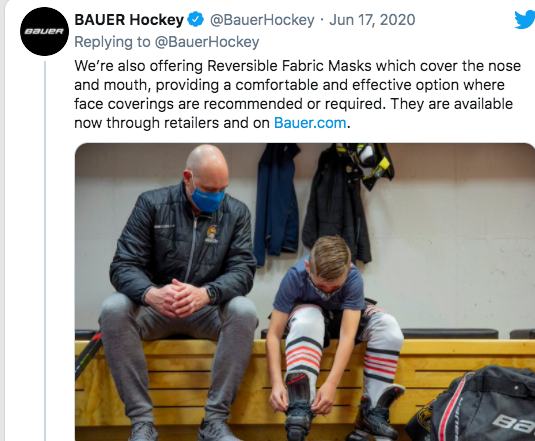
# 3 – Face masks – Canlan is also working with Bauer for various of masks that players can use while playing, as well as ones for coaches, administrators, on ice officials and even parents/fans
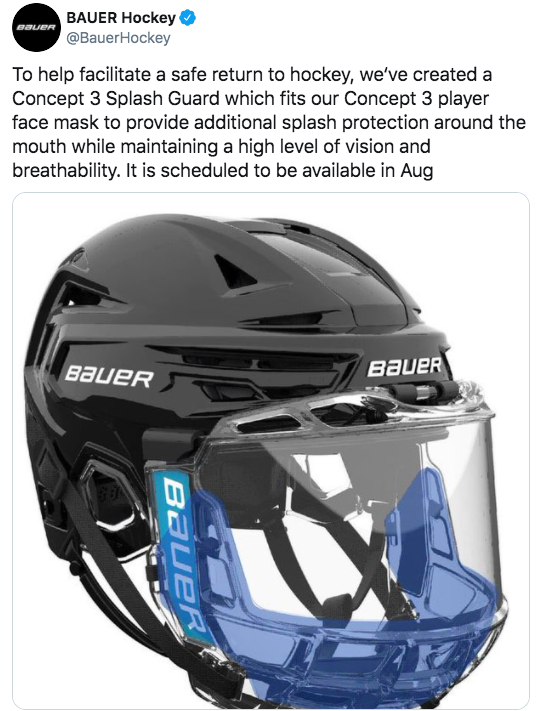
#4 – No Face-offs – Ensures Physical Distancing is adhered to with two 10 minute running time periods (vs. 3 15-20 minute stop time)
#5 – Refs will have electronic whistles (pushing a button vs. blowing thru)
#6 – Social Distancing Dots on the bench (for 4 additional players to sit and coach to stand)
#7 – Water Bottle Shield on the bench
** Pre-Covid, it was amazing how few players brought water bottles to practices when I was doing coach evaluations … I suspect that the awareness created with COVID that will no longer need a reminder
#8 – Pregame questionnaire and “zone control attendant” to ensure adhere to social distancing when come to the facility, will be escorted to their dressing rooms that has been marked to ensure players/goals get dressed 6’ or more apart
#9 – No Showers (yikes, that could lead to some stinky drives home)
#10 – No dilly dallying in the dressing rooms post game
Translation – NO BEER for the ASHL players and one of the best part of playing adult recreation team sports, the post-game rituals and conversations in the dressing room, dugout or benches so in lieu this means they will have to improvise, adapt and overcome (i.e. head to a pub or an empty parking lot and park all their cars and open bumpers, doors to permit social distancing and ensure can answer the first question everyone will have) …..
WHO HAS THE BEER (cooler, water etc)? (The Snack)
Before the last words everyone will say as they are closing their doors to head home
WHEN DO WE PLAY AGAIN?
Kudos to Canlan, Bauer and other organizations that are working on the ways so that can all return to play the games we love to play, coach, ref and watch as safely as possible.