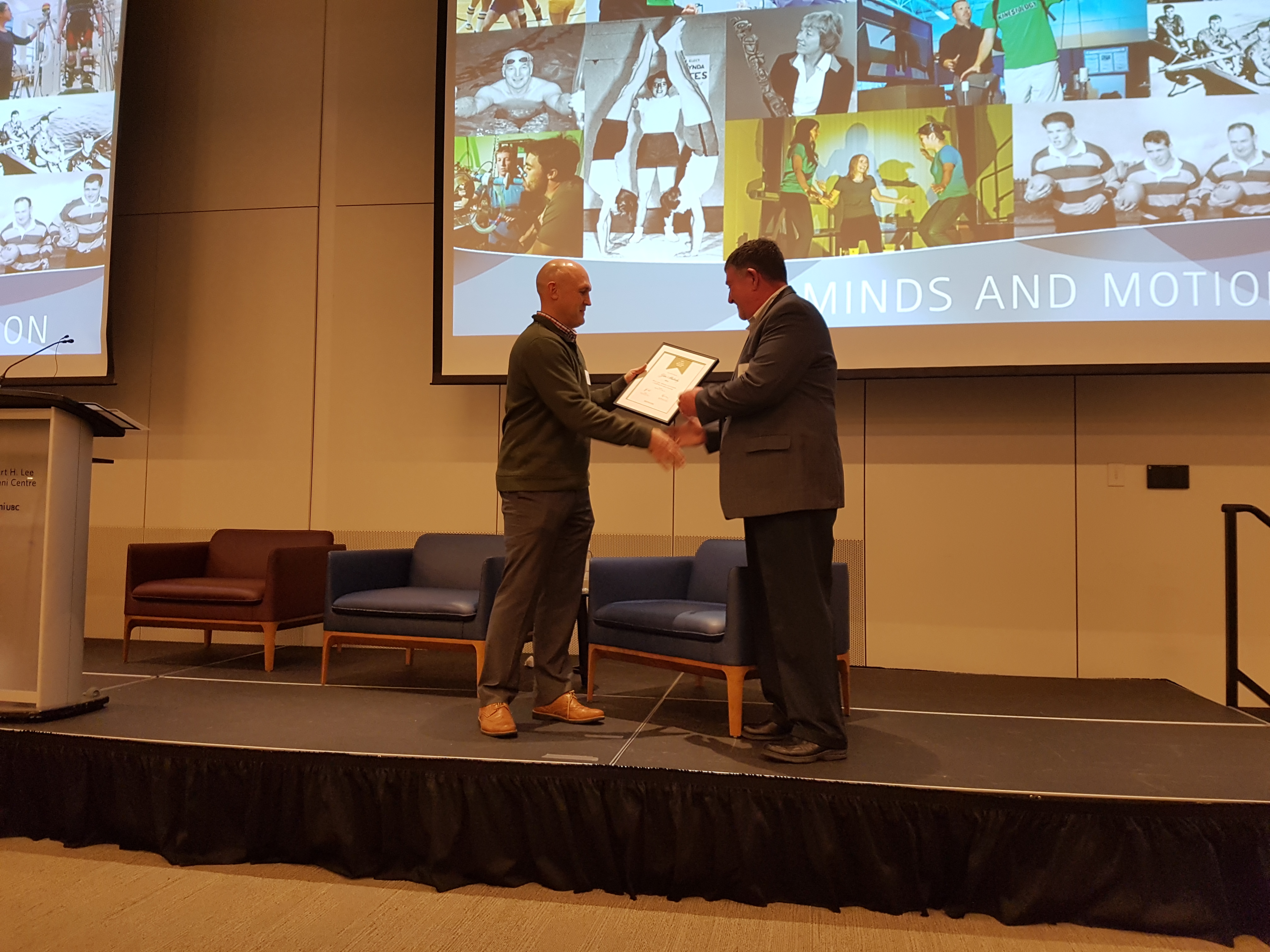
Last night I was recognized with an alumni builder award by the School of Kinesiology, at the University of British Columbia. It truly was a humbling experience to be acknowledged by what is now the top Kinesiology Program in Canada and top 5 Globally.
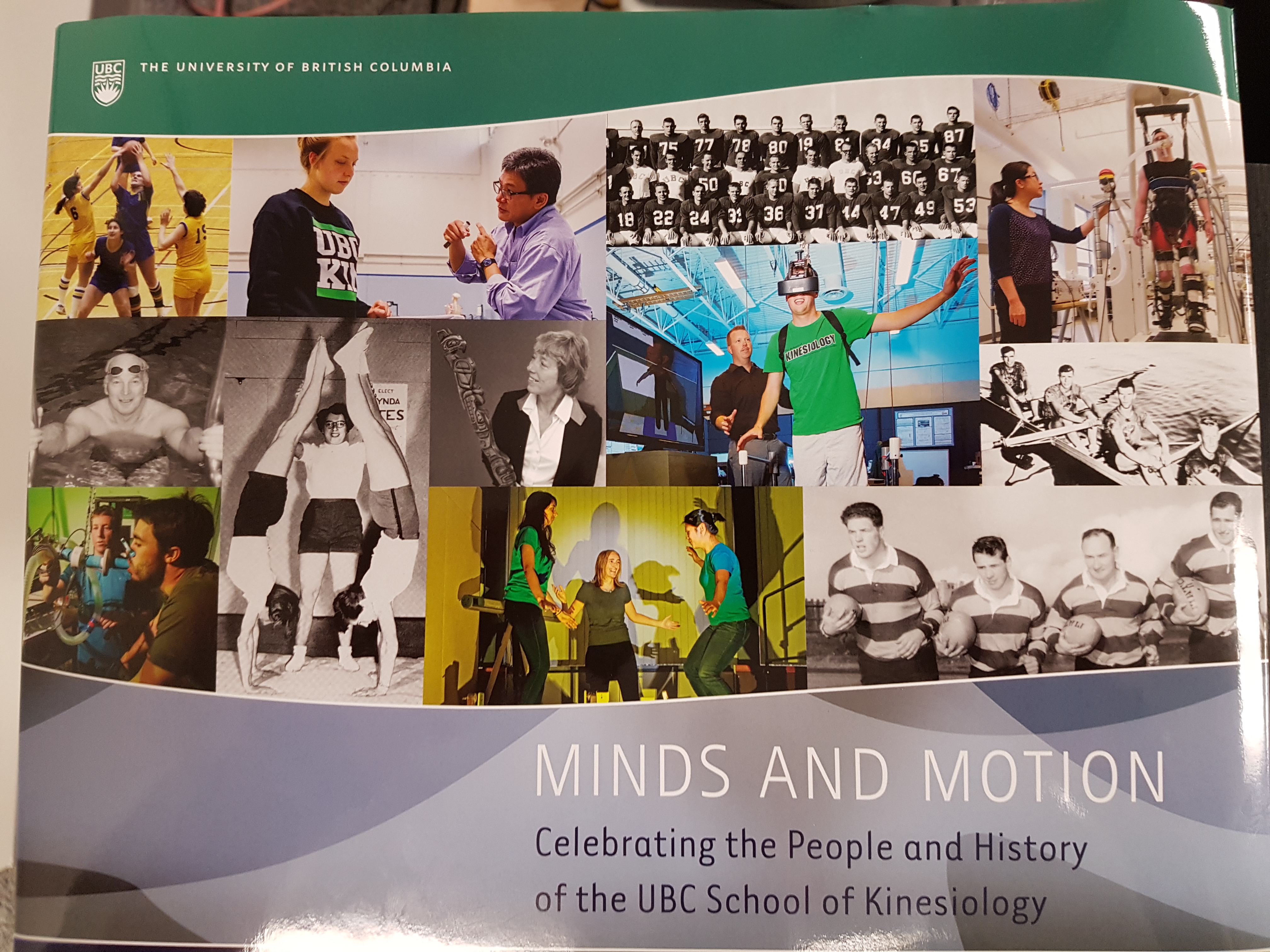
It coincided with the book launch for Minds in Motion,
authored by Don Wells whom stated that the book belonged to all of the former
graduates, alumni, and school, he merely did the research to share the history
of the evolution of the school from the days of Physical Education, to Human
Kinetics to the school of Kinesiology.
This after 7 years of research working on the book but like all other
selfless athletes, gave credit to all the team members that made the book
possible.
He shared the insight of all of the amazing alumni that had graduated from the school, including Rick Hansen, who had been motivated to do his man in motion global tour by retired KIN faculty member, Olympians, Coaches, Sports Leaders, and numerous doctorates and postgraduate alumni for their contributions to sports medicine.
I was asked to sit in a reserved seat at the front so I could quickly go up, say thanks and return to my seat to permit all of the other guests to speak about the rich history of the program that I graduated from many years back so they could stay on track for the full program.
Some interesting statistics were shared by the current director of the school of Kinesiology, Robert Bouschel when he took the stage that I thought would be of interest for all people that are in the youth sports space today;
The demand for entrance to the School of Kinesiology has lead to the GPA required to be 92%, on par with the schools of medicine and engineering. I shared with Robert after all the presentations if that was the case when I was applying I would not have been accepted as I was a jock first, student second. While at UBC I participated in the intramurals program, weight room, completed my bronze medallion and first two levels of the original NCCP program that has now evolved to a multi-sport focus.
I asked him if there had been any changes to the
projections by health authorities in Canada in the USA that today’s generation
of kids may die 5 years sooner than their parents, making it the first time in
history this may occur and he stated was still current even though many
organizations have evolved in recent years to buck those trends
The current health costs per person in Canada is approximately $4000.00 per person or just shy of $15 Billion dollars! The upside is my home province, BC has the lowest cost per person average due to the fact many adults are still active in skiing, golf, biking, hiking, walking and other team sports like slo-pitch, ice hockey, soccer.
As Type II diabetes has trickled down in the teen age group because of inactivity and kids spending 7.5 hours a day in front of screens, that cost per person for those with Type II diabetes increases a further 3800.00/Yr (or 7800.00 total)
The current rate of obesity for today’s Canadian youth is 1/3rd (33%) up over 20% since the 80’s where it was approx. 100%. He confirmed that if the current trends continue by 2040, 70% of Canadian youth will be fat or obese.
This would equate to a twofold or more impact on
health costs, pushing it to over $30 Billion
He also shared that there had been a recent study done shared by CBS news that middle age (50) people that that practiced 5 lifestyle habits could live a decade longer than those that did not, one being exercise 30 minutes a day which could just be a brisk walk.
In the room, there was alumni for various years, including one from the first ever graduating class of UBC’s school of PE in 1949! Another from 1950 and others from 60’s and beyond. I had the opportunity to hear them speak to others (the lineup was long with other alumni wishing to speak to them) and they were still sharp as a tack and enjoying life in their 90’s! (albeit they are not quite as mobile as they were when they attended the school decades back)
I also had the opportunity to talk to various other faculty members and one that was just getting started at the school when I was there, Dr. Ian Franks, was credited by the author of the book and Robert for his contributions to the evolution of the school and numerous studies he and other faculty members had done. His area of specialty, which was my major, is motor control and performance. His is one of the global leaders in the field, as are now many of the other faculty members where the school has qualified for over $5 Million in funding for research.
The very fact that I was in a room with so many PHD’s and
post graduate alumni and was receiving an award when I did not go beyond my
undergraduate degree was overwhelming.
The reason I was acknowledged was not my scientific research and publications many in the room or the school has now received global recognition for, but for my contributions to the mentorship program, career fair and expert panels the last few years to assist the next generation of leaders in the space.
This year I have been paired up with another mentee, who is a
UBC Gymnastics High School Competitive Coach.
We will meet in a couple of weeks to review his goals as he
will be graduating from his undergrad degree in May and is trying to figure out
his path to either pursue post graduate studies or work in coaching.
In his original reach out to me to setup our first meeting
he shared how excited he is to have me as a mentor and get to know my coaching
philosophy as well as the key things for a coach to keep their athletes
motivated to overcome challenges.
I will expand further when we meet in a couple of weeks, but
as I have learned asking thousands of coaches over the years what the top
characteristics are of great coaches, it is all about the connection, caring
and building relationships.
I recently shared this short video out on facebook why we
coach
https://www.youtube.com/watch?v=cgnAm6_DYmU
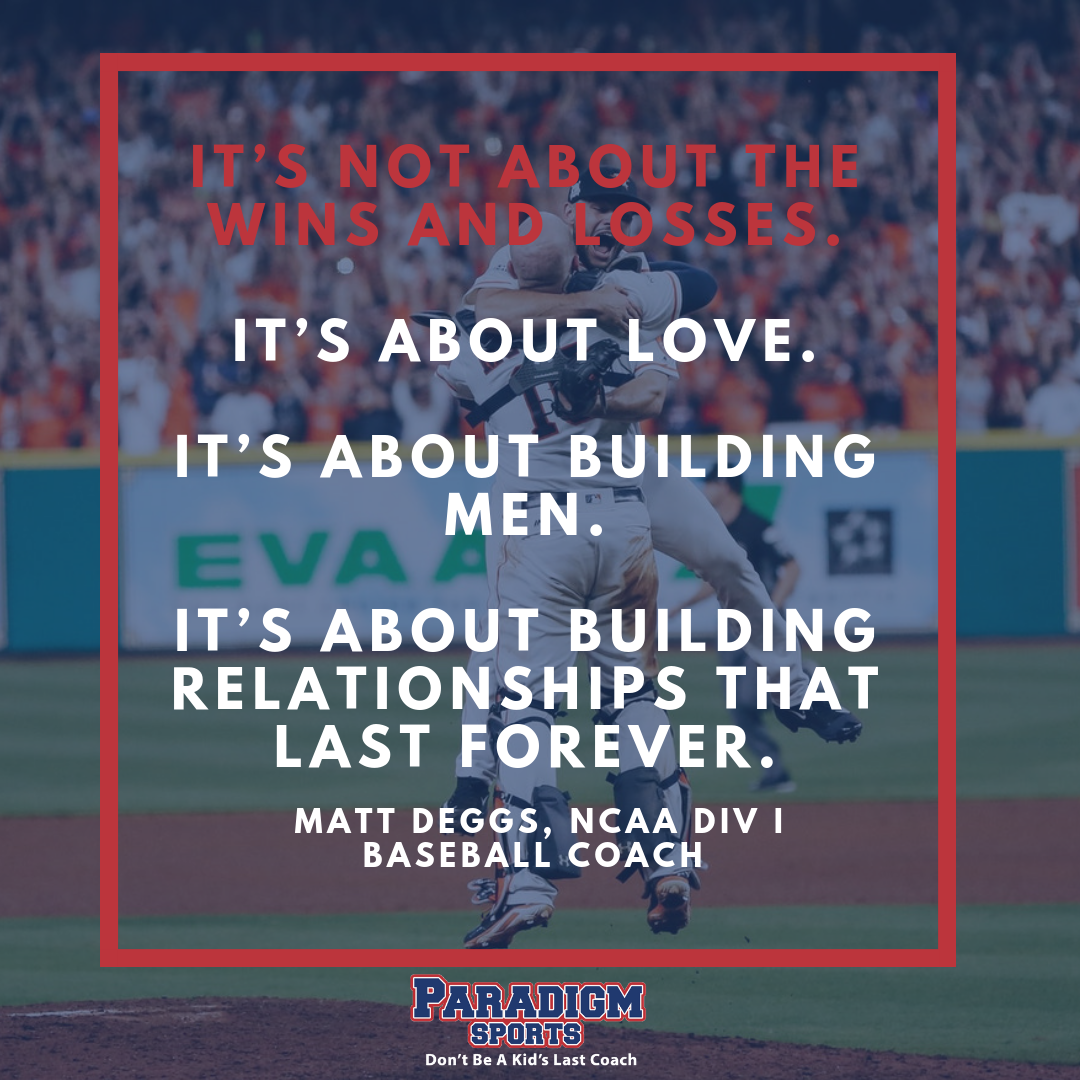
I thought Matt Deggs, Sam Houston State NCAA Div I baseball
coach nailed it when talking about his shift from transactional to a
transformational coach.
That’s why I coach.
That’s why I mentor.
That’s why we sponsor co-op students to get valuable work
experience as we continue to grow as an organization.
To build those relationships and develop youth into adults.
The sooner that youth sports coaches shift their current
mindset from focusing on winning at all costs to recognizing our calling is to
develop the person, the sooner we will reverse the negative attrition rates we
are experiencing where kids are quitting sports or not get involved at all
which is leading to their projected 5 year shorter life expectancy.
Our goal is to do what we can to give kids their 5 years back (and then some).
Let’s all work together to bring the game back to the kids …. where it belongs.