2017 State of Play in the USA and Canada

Posted Leave a commentPosted in Uncategorized

BONUS – Download a Free Copy of this Blog in PDF Format HERE 

I just received a copy of Aspen Institutes State of Play Report for 2017 and total Team Sport Participation Rates in the USA continue to decline, now 37% in 2017 so another 2% drop from 2016 and 13% decrease since 2011
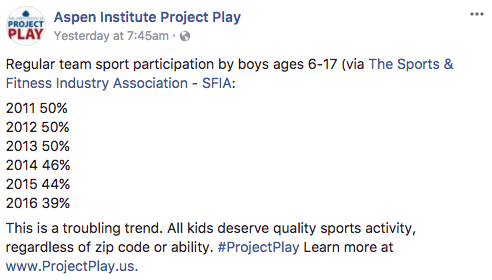
Core Participation in Select Sports

Majority of team sports saw decreases in participation year over year with the exception of a few identified in 6: Design for development below.  Similar trends also are happening in Canada with retention year over year continuing to be a challenge.

Youth Sports Participation by demographic

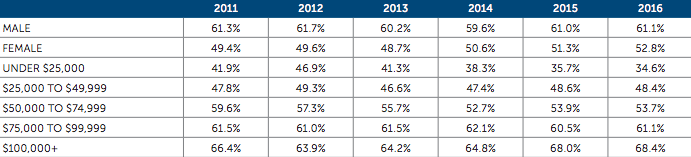
Below is a summary of children who played a team sport between the ages of 6 and 12 and highlights the glaring discrepancy of the haves (households with over 100K income) vs the have not (>25K in household income) there is a 33.8% difference in participation (34.6% vs. 68.4%).
Why?

Because of the emergence of travel ball, “elitist” programs vs. local sports programs making it harder for the have nots to participate in team sports

Coaching lacking certification
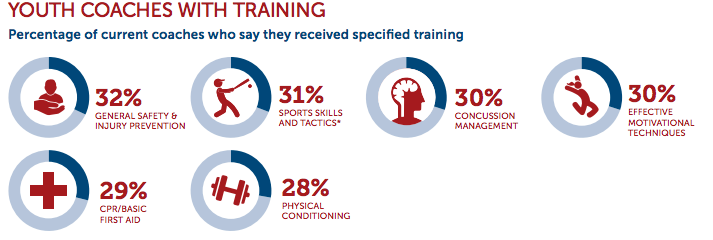
 

Approximately 1/3 of youth sports coaches have certification comparable to what many sports have in Canada,  in particular Hockey’s NCCP program and now Soccer and various others sports are starting to require their coaches to be certified in same criteria (safety, skills/tactics, CATT, coaching and conditioning/injury prevention).   I think Hockey Canada will continue setting the bar for certification as they have done so for decades, but it is good to see other sports in Canada following a similar model to ensure their coaches at all age groups are certified.

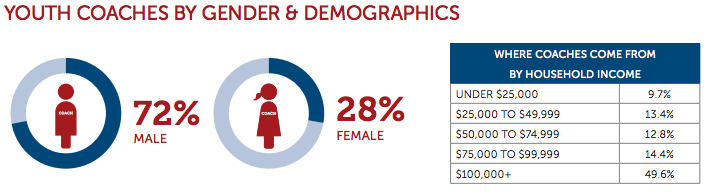
Yet another glaring discrepancy in terms of household income were where coaches come from, 65% are those whose household incomes are $75,000+
 

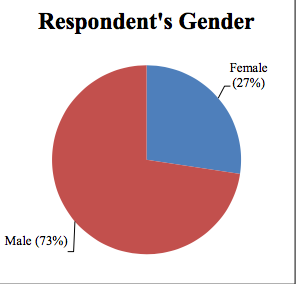
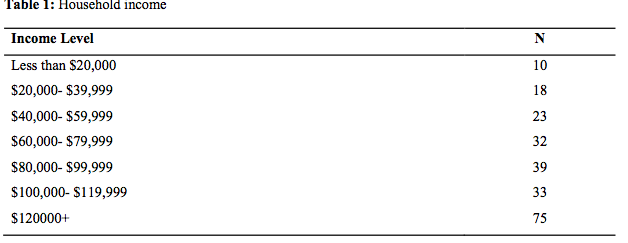
The Canadian statistics coincidentally are literally the same based on a recent study (Financial Commitments of Volunteer Coaches in the Province of New Brunswick) shared with me conducted by Dr. Jonathon Edwards at the University of New Brunswick and Dr. Cory Kulczycki at the University of Regina.
 .


73% of CDN youth sport coaches surveyed were male (vs. 72% in the USA) and 64% of the coaches had household incomes $80K + (vs. 65% over 75K in the USA).

There has been much talk in recent years how youth sports has become the pay to play model, and those that have can and will play youth sports and those that don’t won’t.  It also holds true for those that youth sports depend on, 2/3 of the volunteer coaches come from high income households and there is still a significant gender discrepancy where approx. ¾ of the youth sports coaches are male.
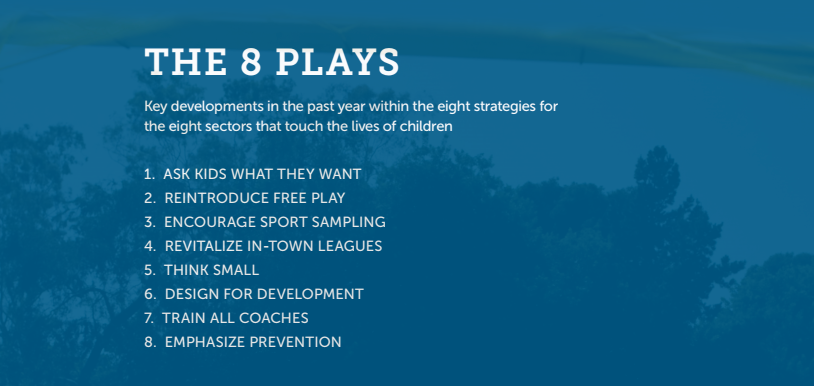
Project Play further highlights the 8 plays required to change the state of play in the USA and is also prevalent for youth sports in Canada;

1:Ask Kids what they want

It dumbfounds me each time I speak for a sports organization and talk to their executive members if they have done their due diligence to understand their “avatar”, their customer (the kid) and more often than not the answer is no.

Why do you think the Video Game industry has exploded over the last 20 years since Sony Introduced the playstation in 1994 and Microsoft introduced the Xbox in 2001?

Because they ask what kids want, every time they are developing a new game or next gen version they conduct the necessary market research to meet the needs of their customers.

It has now evolved into “a Sport”, egaming is the #1 “sport” that adolescents participate in today, because they have fun playing and also are free from criticism from adults that is impacting youth sports, no coaches, adults or officials.  If they “fail” all kids do is press the reset button and play again.

Social Media platforms like Instagram, Snap Chat and others that have been adopted by Gen Z (those born after 1996) have done the same.

2:Reintroduce Free Play

Remember when you grew up how much time you spent outside in unorganized activities?  Hours playing on the street, in a park, at a lake?

What was the one constant?

No coaches – Parents – Officials

It was kids playing kids (not adults competing with other adults thru kids), making our teams, making and enforcing our own rules, no fancy uniforms and only time we would hear from our parents was when they were calling us home for dinner.

We will never get back to the good old days, but we must figure out a way to bring back more free play,  like the recent example of loosely supervised baseball.

When one of the players was asked what he preferred and he stated “un”organized baseball.

When prompted by the journalist if he should tell his dad the boy said “Yeah” with a huge smile on his face.

3:Encourage Sport Sampling

One of the top 3 questions I get asked at every talk is how do we deal with early sport specialization?

Gone also are the days where kids would try many, many sports in their pre-adolescent years (6-12 years old) then play a few organized sports they liked most in their early adolescent years to then specialize in their late teens after they graduated from high school.

Now the trend is for kids to specialize in a early sport due to sport development private organizations identifying they have “real promise, are elite, are high level prospect” at 6!

There is no data I have come across that supports early talent identification will equate to getting a NCAA scholarship or playing professionally in any team sports, all are long term athletic development sports and requires years

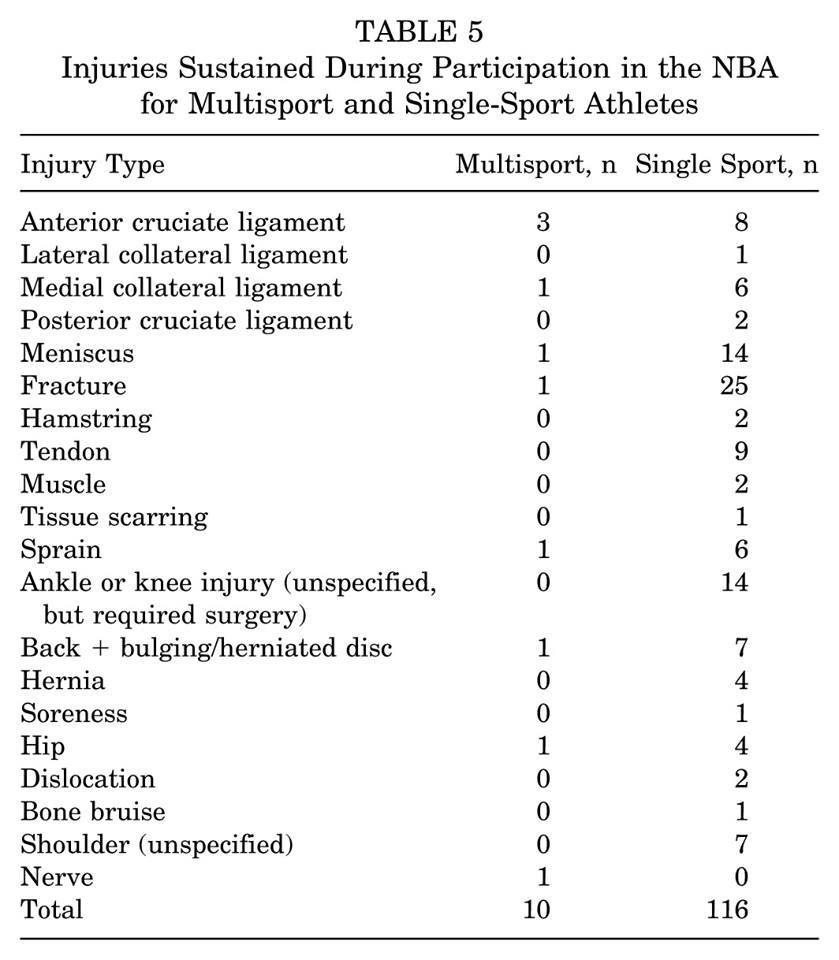
Below is a recent example from a study by Oakland’s USCF Benioffs’s Children’s Hospital of NBA basketball players, those that were multi-sport athletes had much lower injury rates (10X less) than their single sport (basketball only) in AND their playing careers were longer vs. those that only played basketball in high school.
The most recent endorsement for multi-sport participation came from MLB commissioner Rob Manifred in the Project Play 2017 Report and when sitting on a panel at the Fall Summit, along all global Hockey Organizations doing the same in the declaration of principles announced in Sept. 2017.

4:Rivitalize In-Town Leagues

This is probably my biggest frustration with minor hockey, particularly at the rep (competitive level), in the lower mainland of Vancouver there are 43 minor hockey associations, all of which have AAA, AA, A and Recreational level teams providing more than ample opportunity for teams to play similar tiered teams in tournaments, home and away ex games.

In lieu, more and more “paid” rep coaches are making travel tournaments mandatory requiring flights, hotels, rental cars, meals and so forth leading to family out of pocket costs exceeding $3,000 per tournament.

One player I had coached played on a spring hockey team when he was 12 years old and his Dad shared with me he kept track of all the travel receipts for the 5 tournaments they went to and it exceeded over $20,000 over the course of 12 weeks and did not even account for spring fees, uniforms!

When I grew up, majority of my organized games were within 30 minutes of our home field or rink, the rest was minutes (free play in parks, streets, courts where were developed our creativity and love for the game).

We need to scale back the travel and bring the game back to our communities so all kids have the opportunity to participate, not just the haves.

5:Think Small

This season Hockey Canada made cross ice hockey mandatory for the U7 age group (5-6 yr old players), then will make U9 (7-8 yr. old players) mandatory in 2019-20 season.

Why?

Because all the data shows in order to adhere to LTAD, kids should play on surfaces and with equipment that is age appropriate to increase puck touches, shots, passing, receiving, body contact etc.

6 year old kids playing full ice hockey is like an adult playing on a football field per the video below;

My analogy for Full ice hockey for players below 10 years old is the beehive, only the early bloomers will have the puck and the rest of the kids will chase them all over the ice like a bee hive.

Others sports have incorporated small area games, and playing surfaces including Soccer (smaller field and nets), football, softball/baseball (distance pitchers have to pitch), basketball (lower height for nets).

6: Design for Development

Tennis in the USA has seen the biggest participation increase amongst all youth sports, joining only gymnastics, flag football, ice hockey, lacrosse and wrestling as sports that are growing (albeit close to flat growth) whereas  Tackle Football, Baseball and Basketball have seen decreases over the same time period.

USA Tennis was the first to endorse multi-sport participation in the USA and has also been the front running in age appropriate development to include smaller player surfaces, lower nets, different sized racquets and even balls to help players develop confidence in key motor skill development years.

An argument for EQUAL playing time has also really come to light to increase player confidence and youth participation – FINALLY.  I have been arguing for fair ice policies in hockey for years and in the last couple of years now takes up the first two pages of google when 5 years ago one would be hard pressed to find associations, Regional or PSO’s to have fair ice policies.

Now other sports are doing the same, they are promoting safe to fail environments where it is ok for kids to make mistakes to ensure that ALL kids, not just the top players get playing time.

7: Train All Coaches

As the stats showed prior, only 1/3 of youth sport coaches in the USA are trained in all the core competencies of coaching.  This is an area that I know that Canada has worked on, all minor hockey coaches have to complete various levels of certification relative to the age group involved with, and more and more national sports are incorporating mandatory certification.

Soccer is one that is rolling out their coaching certification requirements for all levels in recent years, but in past only coaches above U13 required certification.  This was an area that Jason De Vos, technical director for Soccer Canada, identified must change in order to develop Canada’s players to follow their recently developed LTPD model.

8:Emphasize Prevention

In March of 2017, the US Centre for Safesport was launched with the authority to work with all National Sporting Bodies (NGB’s) to report ANY claims of abuse or harassment (includes bullying, harassment, hazing and physical, sexual and emotional abuse.

This has been a long time coming, and I suspect they will be looking at incorporating online education like Canada’s Respect Group established in 2004 has provided for coaches, parents to provide the necessary education so that we reduce and ultimately eliminate the various forms of harassment that still impact youth sports today.

If we follow the 8 recommendations from Project Play in both the USA and Canada I believe that we will see the much needed shift we need to see in youth sports.

Let’s work together to bring the game back to the kids … where it belongs.

 

Don`t be a kids last coach


What are the characteristics of great coaches?

Posted 1 CommentPosted in Uncategorized

BONUS – Download a Free Copy of this Blog in PDF Format HERE 


In every talk I do I ask coaches the following question:

What are the top 3 characteristics of the greatest coach/teacher/boss you ever had (or still may have)?

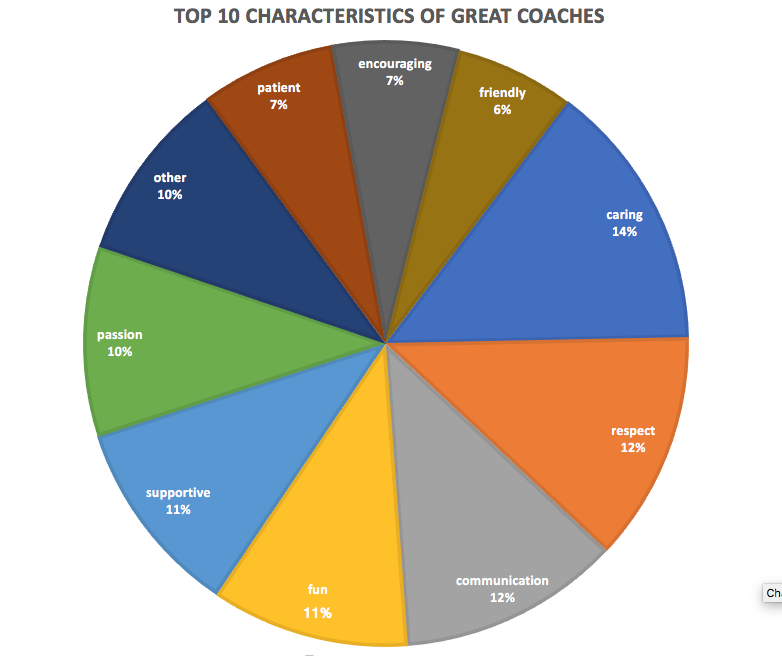
In hindsight, if I had kept track of the responses from every talk I would have had a 10 Year + Longitudinal study so this fall I started to keep track of the responses in an excel sheet. By no means is this a formal research study, and although the order may be different from 1-9, these are the top characteristics of great coaches from the next generation of coaches;

No matter what group answered this question, whether it be coaches just starting to coach 5-6 year olds in hockey or High performance coaches I have asked in conferences or everything in between the top characteristics of great coaches is they truly care about their players.

Not only do they care about helping them develop into the best athletes they can be, but the best people.

This is the #1 characteristic of John Wooden, Clare Drake, Phil Jackson in past and current coaches like Pete Carroll, Mike Kryzyzewski, not all the wins, national titles but the legacy developing youth into adults – that’s how coaches make a difference.

Coaches that care, not only teach the skills of the game, but the skills of life.

Many misinterpret that I am not competitive because my philosophy of coaching is “FUNdamentals, not winning, at all costs”. Like all the great coaches who worked on the process of developing all players on their teams that lead to results on the scoreboard, I know how important it is for players to have fun, even on the most competitive teams. I also am totally against Participation Trophies, check out prior blog on the subject HERE.

Mike Babcock, now the highest paid NHL coach with Stanley Cup, World Championship and Olympic Gold achievements on his resume is another one of those great coaches. When he became the coach of the Toronto Maple Leafs, he shared that his main role was to develop all the players into great young men. Prior to the 2010 Olympic Gold Medal game, when he was coaching some of the best players in the WORLD at the time, when asked by the media what he told the team before the game he said “I just told them to go out there and have fun.”

Many people think when kids they just want to have fun that it means goofing off, but kids actually don’t want their team mates to do so they want to play, the want to compete, they want play for the love of the game. That is what fun is.

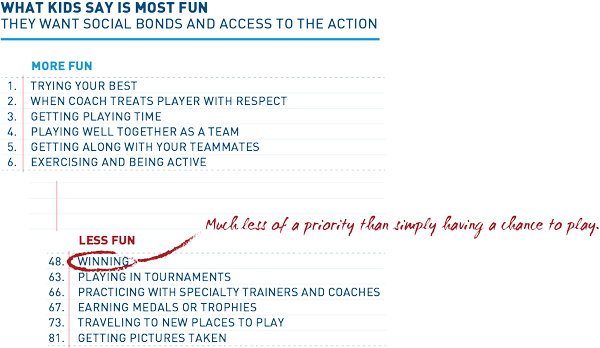
When Amanda Visek did her groundbreaking study and identified the 81 characteristics of what is fun in youth sports, the number 2 reason, second only to having the opportunity to try your best was when coaches treated players with respect

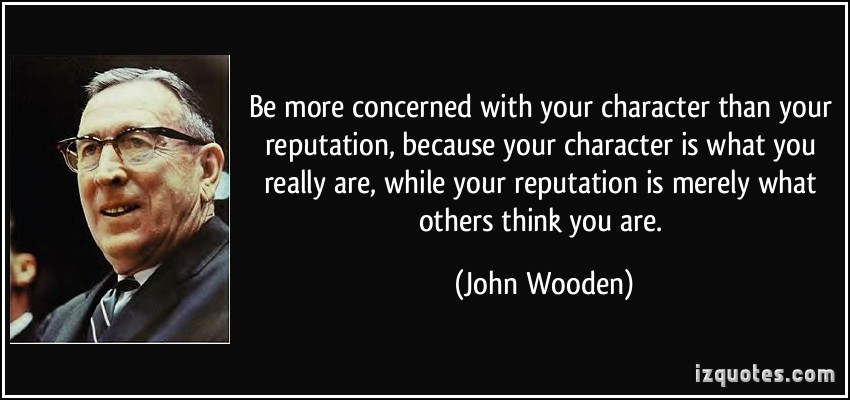
Although I would NEVER consider myself to be in the same company as John Wooden, his three rules are very similar to mine and his third was “Never criticize your team mates”, mine is Respect. Respect yourself, teammates, coaches, officials, other teams, parents, class mates, parents and so on.

I believe respect is a two-way street, if coaches respect their players then they players will in turn respect their coaches and vice versa.

Sadly, although there as many great coaches in youth sports who do respect their players, there are coaches that think nothing of screaming at a player, singling them out in front of the teams, criticizing their mistakes over and over again and other ways that are not only disrespectful but crossing the fine line from demanding (pushing players to be their best) to demeaning (belittling players).

 Notice where winning was in terms of fun, bottom ½ of the list, 47 other reasons why sports were fun. Others also in the bottom 1/3, playing in tournaments, practicing with speciality trainers, earning medals/trophies and traveling to other place to play.

Why then has youth sports evolved to a $15 Billion Industry in the USA?

Because adults either have not asked the kids or think they have the best interests of the kids at heart because they are “the adults.” If you thought the great recession in 2008-9 or the .com bust prior was bad … I can hardly wait for parents, coaches and players to realize the insanity has to end.

It is no wonder why 70% are quitting by the age of 13 of those that can afford youth sports to begin with as youth sport organizations have not identified with their customer and their true reasons for participating or recognizing that 33% in Canada can’t afford to play any youth sports and that number continues to rise due to “elitism” of youth sports.

In this day and age with today’s generation having an 8 second attention span, have grown up in the digital era it is refreshing to find out Generation Z prefers face to face communication over texting, so you have the players attention COMMUNICATE.

Ask them what they want – Ask them if they understand – Ask them what they learned after practice – Ask them if they had fun.

This is a skill that coaches not only need to connect with their players, but engage parents as today’s generation Z are very close to their parents.

Yes we have had to deal with helicopter/snowplow and lawnmower parents, but the best way I have found to engage parents is by communicating well and communicating often.

Don’t be the coach that a parent shared with me last year who walked into the team parent meeting at the beginning of the season and say;

I don’t deal with F**&^^T& Parents, deal with the manager if you have any issues.

PS – I can’t make this stuff up, there are coaches out there that refuse to deal with parents and think nothing of using inappropriate langue when/IF they do so

Like Caring, great coaches support their players to become the best they can be and achieve their goals. I will never forget when I got a call from a goalie who has been on many of my teams last year and he thanked me for helping him get to Junior Hockey.

I was very proud of him and many of the other players that have achieved that milestone that I had coached over the years.

Coaches can also fill the gap for kids like me who lost their father at a young age.

All of the coaches I had over the years were my second father in a sense, they took me under their wing and supported me in my goals each and every year.

Great teachers do the same, if it had not been for my Grade 12 French Teacher who took me aside one day and said “you can do better” after I acted up in class for the umpteenth time.

She was the one that motivated me to pursue post secondary education and as a result I was the first of all my cousins to graduate from University.

Passion does overlap with fun in part, so although as a % was 6th when reviewed this fall it is the second top characteristic that coaches have shared with me over the years.

Passionate coaches OOZE passion for the game, the tradition, the respect and as a result make their players love the game the same way.

Due to the current winning at all costs environment in youth sports that has evolved, I have seen passion by coaches, but moreso temper tantrums because games did not go their way.

Think back when you grew up, did you ever take a class in school and thought you would HATE it like calculus, accounting, history, literature? Then to you surprise you ending up loving the course – Why? Because your teacher was so passionate about the subject.

Same holds true for youth sports … if coaches are passionate about all aspects of the game they will instill that same passion in their players so they play For the Love of the Game.

An analogy that one my colleagues shared with me that I relay in talks is coaches must focus on P&R – that came from Terry Crisp, former NHL coach.

P = Patience
R = Repetitions

In order for players to develop, it make years for them to develop some of the core skills in the game and while doing so do numerous repetitions which requires a considerable amount of patience on the coaches part (as well as parents)

But when that light bulb goes on – Man is it worth it.

The biggest challenge that coaches face today is being patient to adhere to the LTAD/LTPD and other models and also getting parental support.

Too many parents are trying to fast track their kids development via early sport specialization and is the wrong pathway to follow “Early Sport Specialization does more harm than good”

We could have lumped this into supportive or caring, but encouragement also pertains to how coaches provide praise to their players.

Thanks to the great work by Carol Dweck and he ground breaking book “Growth Mindset”, many in the sport and even business spaces are recognizing there are two types of mindsets

The Fixed Mindset – those feel that effort is not important as their skills are part of their DNA and they are not that good

Or – they focus on proving their ability

The mistake coaches make all the time is telling kids how smart, how good they are and this becomes fixed

The Growth Mindset – those that welcome taking on tasks that become more challenging each time, belive they can continue to improve and believe the harder they work (effort) the better they will become.

Or – they focus on “im”proving their ability

Coaches that reinforce the growth mindset encourage effort and God Forbid to make mistakes, the uglier the better. Players develop confidence when doing so, more creativity and continue to improve vs. those with the fixed mindset

Other words that coaches have come up with that fall in this category – approachable, open, thinking back on all my coaches they were friendly.

They would have your back when you made a mistake vs. screaming at your for doing so.

They would welcome you into their “office” whenever you needed to speak to them

They would be your friend (or father/Mother) whenever you needed a friend.

Other – the list of other responses were endless but included characteristics like calm, challenging, committed, confident, consistent, disciplined, energetic, enthusiastic, fair, firm, forgiving, genuine, trustful, inspiring, integrity, invested, kind, listens, motivator, organized, personable, positive, role model, teacher and leader

I plan to revisit the results at the end of each year now that I have the template in place to share in future.

Remember …

Make it Fun – Make it Safe – Teach Skills – Care Passionately

AND

Don’t Be A Kid’s Last Coach

Why do Officials “Officiate”?

Posted 2 CommentsPosted in Uncategorized

BONUS – Download a Free Copy of this Blog in PDF Format HERE 

Why do Officials “Officiate”?

I recently came across the 2017 National Sports Officiating Study that surveyed over 17,000 officials in various sports in the USA.

Below is a summary of the results that youth sport coaches, parents and even players should be made aware of so that we can reduce the attrition rate we are seeing in youth sports today.

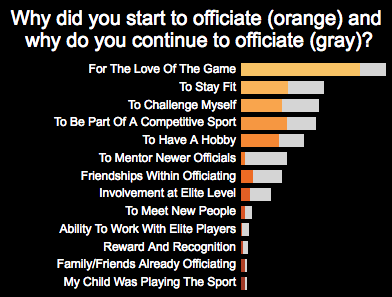
Why did you start to be an official?

The number 1 reason that officials started was “For the Love of the Game” which is the second reason why coaches put their hands up to coach (the first is due to the fact their son or daughter are playing the sport) that I shared Why Coaches Coach in previous blog post.

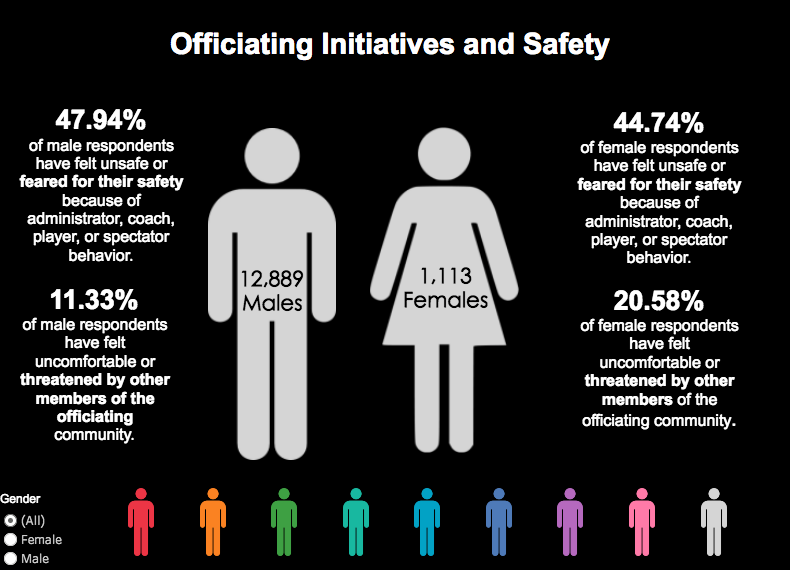
One of the biggest challenges that youth sports officials face today is the verbal abuse they are taking from others involved (coaches, parents, administrators and players) which is leading to many of them quitting only a few years after they started.  Officials Supervisors from Hockey, Soccer, Baseball, Lacrosse have all shared with me they lose on average 1/3 of their officials annually and up to 50% within their first 3 years.

Below are the results where over 45% of male and female officials have felt unsafe because of behaviour from others.  I have heard all forms of horror stories over the years from officials how they have been verbally abused during games, even after games as they were heading to the dressing room or leaving the facility heading to their vehicles.


This statistic truly does not surprise as a result, and shows how much work we still have to do to not only make it safe for players but also officials from the various forms of harassment impacting youth sports today.

Of the respondents, 70% were officials at the youth or high school level, less than 7% were professional.

Ask yourself – Why is ok to harass youth sport officials but not ok to harass professional officials? If people do so from the stands they are either ejected by the official or security.  What about the others, sports exec, coaches or players?  Would we condone the same behaviour in the workplace?  In University classrooms? In other public places like restaurants?

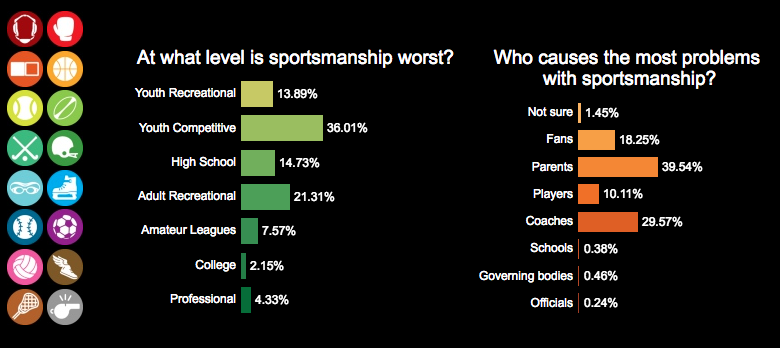
WHAT ABOUT SPORTSMANSHIP?

Top level sportsmanship was identified as the worst was at the youth competitive level (36.01%) and the worst culprits identified by officials are the parents, almost 40%, followed by coaches (just shy of 30%).


Although I have not come across a study that has identified what level is the majority of kids that are quitting youth sports by 13, based on all those I have interacted with over the years I would say it would be skewed by kids from youth competitive vs. recreational level.  Why ? Because even some coaches of U10 teams are taking competition way over the top to win at all costs.

Previously I shared insight, why kids quit lacrosse, from the retention report from Alberta Lacrosse who surveyed over 1000 families why their son or daughter quit and one of the top other reasons why they quit was due to poor sportsmanship.

Start of your officiating “Career”


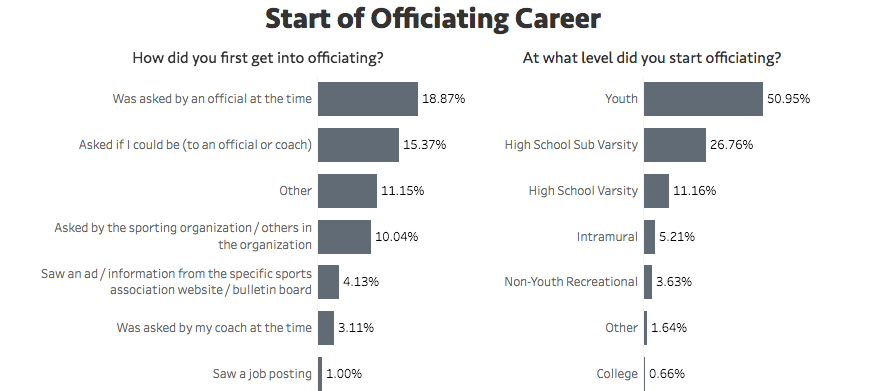
The number 1 reason why officials get started is they are asked by a fellow official to do so and over 50% start out as a youth sport official. I have known a number of officials over the years that developed in youth sports and some are now reffing or umping at junior, major junior or collegiate ranks and applauded them for sticking with it.


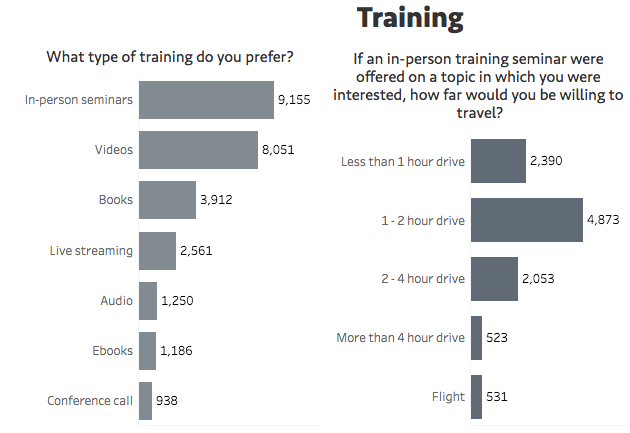
The number 1 method of training that officials prefer is face to face clinics (over 50% of the respondents) followed closely by video training (online). What I thought was interesting is almost half of those that responded would drive up to 2 hours to do a face to face clinic and a further 20% would be willing to drive up to 4 hours to do so.

Although the same study has not been done for youth sport coaches,  I would say the results would be the same, many prefer the in person workshops/clinic format over online due to fact they get an opportunity to interact and learn not only from the instructor but others in the clinic. They also may be forced to drive several hours to do so, partly as “live” clinics are not available in their area, but partly because they slept at the wheel so to speak and missed the opportunity for ones closer to them.

As we are heading down the final stretch of Hockey Canada Clinics for this season, it is amazing how many calls and emails I personally have received from coaches trying to get into clinics this past week that were full or even ones that have walked up hoping we can squeeze them in.

The reality is there is the resources are limited, number of facilitators, associations that can accommodate with ice slots, rooms and what have you in hockey and suspect the same holds true in other sports.  We also have had our challenges this year due the fact we have brought back the intro to coaching module for coaches of 5-8 year old players, but still coaches are being told they should take the “new” Coach to module (Ages 9+).  Anytime there are changes it usually takes a season to debug and will be clear for all involved next season but although live workshops is the preferred mode for training, more and more youth sports are developing online training to ensure their coaches complete the necessary training.

SHOW ME DA MONEY (Jerry McGuire)

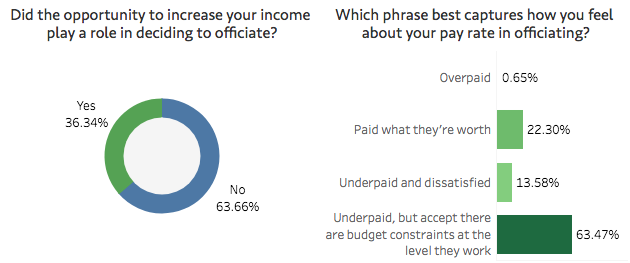
Approximately 2/3 of those that started as officials did NOT do so for the pay (per prior number reason they started was due to the love of the game) and almost the same % feel they are underpaid but understand budget constraints in their respective sports.

Translation – even with all the abuse they officials take, they do it because the love the game, they want to give the kids an opportunity to love it like they do.

ONLY 22% of officials felt they were paid what they are worth

COSTS OF OFFICIATING


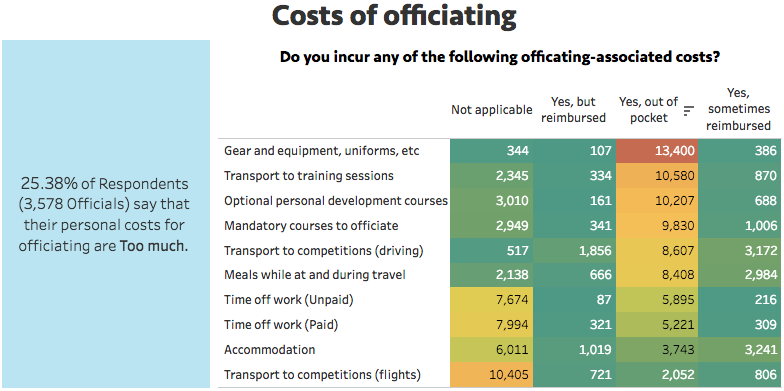
Like Youth Sport Coaches who incur out of pocket costs, officials also incur costs to do so which includes the opportunity loss taking time off their full time jobs.

Gear and equipment, transport, optional and mandatory development courses, meals, accommodations and even flights can come out of their own pockets with less than aa 1/3 getting reimbursement for same.

Approximately 30% of officials will spend over $1000 a year that is not reimbursed by their sports and over 50% reported their income was less than $5000 a year.

In sum, before you start yelling at an official at a game like Ray Winstone in below video ….

Think of the following before you do so;

  1. They are normally an age group above the team they are officiating and in most sports don’t start until they are 12..
  2. They start because they love the game, are asked by a fellow official to do so every sport needs new officials every year due to problems with retention
  3. They do get paid, but only a small honorarium and like youth sport coaches have to take clinics, professional development and may have to drive 4 hours to do so as well as buy equipment and incur other expenses to do so
  4. The costs they incur to do so may be 25% or more of what they receive in terms of fees per year and majority do not not make a living doing so (far from it as over 50% make less than $5K a year)
  5. Over 45% of them have felt unsafe due to the behavior of the adults (coaches, parents, admin) or players

AND

Even though they are doing so, 33% on average will quit being officials every year due to the abuse they take.

I suspect if they official was your son or daughter that was getting verbally abused by others the hairs on the back of your neck rise up as it happens.

Relax – It’ Just a GAME.  Youth sports need officials as much as coaches, administrators and we need to respect the fact they are learning just as everyone else is.

We also need to give them thanks, Kudo’s and praise (not constant criticism) for stepping up to be officials, without them, we could not have organized sports.

Let’s work together to bring the game back to the kids … where it belongs.
Don`t be a kids last coach


Why do you Coach?

Posted 2 CommentsPosted in Uncategorized

BONUS – Download a Free Copy of this Blog in PDF Format HERE  

Why do you Coach?

Every talk that I do with coaches I start with an exercise where I ask the coaches to answer the following questions.

  1. Your Name?
  2. Your Organization?
  3. Team/Level you are coaching?
  4. Why do you coach?

I do so for the following reasons’

  1. To Cater the materials and the presentation for the specific group I am presenting to (as they may be brand new to coaching, a few years, or tenured coaches;
  2. To reinforce the importance of becoming comfortable being a public speaker as it is one of our top fears and
  3. To have coaches start brainstorming their written philosophy as majority of coaches (even those with years of experience) don’t have a philosophy in writing so they not only talk the talk but be held accountable to walk the walk

Watch this video to see insight from Wayne Goldsmith, one of my counterparts across the globe based in Australia regarding the importance of understanding why you are coaching.

I took some time this past weekend reviewing the answers that I written down while each coach has shared why they are coaching and although this is not a formal study by any means, below is a summary of the reasons why coaches are coaching youth sports.

#1 – They are coaching because they have skin the game (their kids are playing the sport)

This is the top answer in clinics for the recreational level, particularly the younger age groups.

Coaches share that coaching their son or daughter is a means for them to be part of their youth sports experience, spend time with them and after all coaches introduce themselves and majority share this as their top reason I remind them that they have adopted 15 other kids (average size of a team in many sports other than football) that also have become “their kids.”.

Unfortunately, some parent coaches will take it to the extreme and they will either show favoritism towards their kids (assign them the top skilled position on the team, make them a captain, give them more minutes than they should, start them in every game etc. etc)

The other extreme is they may be extremely hard on them and scream at the top of their lungs each time they make a mistake in practices or games or when they leave the facility as they head to the car.

Neither of the two extremes is good for the family or their overall relationship and often the child will quit the sport after only a few years if the parent continues doing so.

One of the tips I share with all parent coaches is to reinforce the importance when they go to the facility for any team activities (practices, games, team meetings) that they put their coach hat on when the walk into the door and when they leave the facility they put their Mom or Dad hat on and refrain from any further coaching in the car, at home, at the dinner table and so forth.

This is a challenge for many parent coaches to do, understandably they want to help their son or daughter become the best they can be but some will live vicariously thru their kids and push them to the point they don’t love the game and don’t want to play anymore.

Just as I share with parents, parent coaches should merely just love watching their son or daughter play and support them along with all the other players on their teams.

#2 – To Give Back

Many coaches share the reason they are coaching is to give back to the game that they love to help develop that same passion in the players they coach.

Many will share they had GREAT coaches while they were playing who did the same for them and although they were no longer still playing competitively they want to stay in the game.

AKA – They Coach For the Love of the Game.

#3 – To ensure that kids don’t have a BAD Coach like they did (or their kids have had)

Just like coaches giving back due to the fact they had a great coach growing up (I had many), several will share they had one or more coaches that over their playing careers that were just BAD, screamers, critical, ran short benches, disrespected them, were poor planners, focused only on winning and so on and they wanted to ensure that kids did have the same experience they did.

Fortunately for me I did not have that experience, all my youth sport coaches were GREAT, but both my kids have had their share of coaches that spoiled their overall youth sports experience.

When they entered the competitive streams in their respective sports that is when the associations opted for non-parent head coaches whom had very little coaching experience and only coached for a short period of time.

This trend has really evolved in the lower mainland of Vancouver, BC in Hockey where associations are opting to recruit non-parent coaches in part to ensure a level playing field and non-bias of parent coaches towards their kids but also fair evaluations in tryouts so kids are placed on teams regardless if their parent was coaching the team or not.

Although in many instances this works out better for the kids, both my kids and many of their friends have had the misfortune of playing on competitive teams either with parent coaches who showed favoritism or were so focused on winning they would do the same as parent coaches and play their favorites much more than others.

#4 – Love being with kids

In one way or another coach’s share how much they enjoy helping kids become better in their sports, seeing their growth and development over the course of a season.  For those that had coached for many years, how they not only became better in their sports, but also how they developed as people.

The greatest coaches out there truly care about their players and I have seen this first hand now working with thousands of coaches over the years, sadly due to the shift in youth sports in recent years many of these great coaches are not given the kudo’s they deserve.

#5 – They want to teach kids the same life skills they learned from sport

Values like – Respect, Sportsmanship, Winning with Humility and losing with dignity

Life Skills like: Leadership, Communication, Work Ethic, Punctuality, Resiliency, Team Work, Selflessness, Gratitude, Getting up when they fall down

Many share how the same life skills helped them in non sport, work, school, college, relationships or when they in turn became a parent themselves.

#6 – To Be a Positive Role Model

Due to the fact that many high profile athletes are getting paid, millions upon millions of dollars, I have heard lot of coaches state they are not the same role models that we great up with

Gordie Howe – Bobby Orr – Jean Beliveau – Wayne Gretzky – Mario Lemieux  were just a few of the role models I aspired to be when I grew up, here is a great video how precious that role model relationship can be

#7 – To be away from other parents

This is one that I must confess is one of the reasons why I started coaching as I started to see the Vocal Minority acting up the stands and thought it would be best to be as far away from them so I stepped up to coach.  Even when I have gone to watch games that my kids were playing and I was not coaching I would sit as far as possible away from parents as I just love watching them play.

It was just the ones that were acting up, I also was not a big fan of hearing how parents would crtique their son or daughter, or team as a whole not only during games but also practices even though majority of them had NO coaching experience.

Don Lucia did a presentation for the University of Minnesota years ago and he starts it by saying he has the best job, he is coaching for an orphanage, no parents to deal with.  As many of the coaches I talk to are parents, I then share with them that parents in general have received a bad rap in recent years, there are only SOME of the parents that causing the challenges we face but I have been very fortunate to have great parents on all of my teams.

This I have attributed to the fact that I have put a lot of time into running parent meetings, communicating thru the season and engaging, not dealing with, parents.  As a youth sports coach, you will have parents on all of your teams and the sooner you engage them, the sooner you will reduce the number of issues may have and create a positive experience for all parties involved each season.

#8 – They want to help (re) build the game

Many recognize that youth sports in general is struggling from attrition for various reasons and put their hand up to help increase retention, create positive experiences like they had as kids in a sport so kids stay in the game beyond 13 where 70% are quitting..

Almost every youth sport is experiencing attrition, and if they are growing they are only doing so by single digit rates.  Hockey is growing due to all the initiatives to bring new players to the game (i.e. First Shift) and also the ongoing growth of female hockey that has seen double, if not triple digit growth in associations this past decade.

In a prior blog, Why kids Quit Lacrosse, I share results from Alberta Lacrosse Retention Report after they surveyed over 1000 families to find out why over 11,000 players had quit from 2014-2016.  Aside from criticism from adults, time/travel commitments, cost the top three other reasons were the fact they focusing on other sports (specialization starting at 7 years old), lack of fair play (coaches running short benches) and poor sportsmanship.

When I have talked to coaches and AD’s from other sports, they have shared players are quitting for many of the same reasons.

#9 – They are coaching to develop their leadership skills

Most coaches in the clinics I have ran are assistant coaches, many have shared they have had head coaches that merely ask them to setup drills, open gates but not really do any coaching.

This I don’t agree with, every coach should have the opportunity to “coach” and the role of a head coach is not only to develop their players, but also mentor and develop their coaches.

When I hear coaches share this reason, I do talk to them afterwards to recommend they sit down with their head coach to get more insight and responsibility so they can develop their coaching and leadership skills.

#10 – They are coaching because they want to help as specialty coaches for specific positions

Goaltenders are stepping up to work with goalies, former D are stepping up to coach defense and forwards with forwards.

Goalies in many sports often are used a shooting tutors, they don’t receive specific instruction from coaches to develop their craft.  Gone are the days where it is the least skilled player on the team that ends up filling the net, in hockey particularly, the goalie position has become so specialized that many young or less experienced coaches are not comfortable developing practice plans, drills to teach goalie specific skills.

I am sure if I kept going thru the shoe boxes of notes I have taken over the years would identify other reasons but what I remind all the coaches is the main reason we all coach is to help the kids become the best they can be.

Not just the best player, but also the best person.

Although most coaches will start out with the reasons above or other great reasons, unfortunately some will fall victim to what I call the “dark side”, in lieu of staying true to working with kids, they get caught up in the winning at costs mayhem that has impacted youth sports the last couple of decades.

Coaches – if that temptation arises remember back when you started out and the great reasons why you stepped up to coach and “use the force” to fight the dark side or listening to that devil on one shoulder vs the angel on the other.  There is a fine line between teaching kids to play to win while still focusing on the process vs. being an outcome focused coach only (ensuring you do everything you have to win games regardless of the cost).

Click HERE to watch the trailer of The Cost of Winning where some of the top coaches in sports share how the desire to win has become a losing battle.

What all coaches must remember is our purpose is to make a difference by developing youth into adults, only a very small % will play at a high level.

Let’s all work together to bring the game back to the kids … where it belongs.
PS Tagline - Dont be a kids last coach


It’s amazing what you can accomplish …

Posted 1 CommentPosted in Uncategorized


BONUS – Download a Free Copy of this Blog in PDF Format HERE  

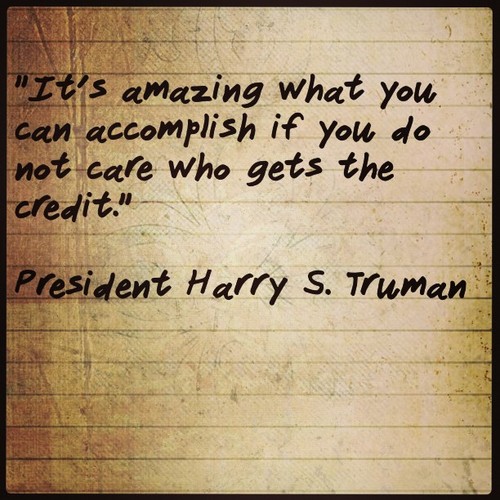
“It’s amazing what you can accomplish when no one cares who gets the credit.”

Made popular by Harry S. Truman  (US President 1945-1953 / John Wooden UCLA Basketball Coach)

As today whom I believe is the greatest Canadian Coach of all time, Clare Drake, is the day he will be elected into the Hockey Hall of Fame and I felt best to highlight his amazing legacy and why he is known as the coach’s coach.

The above quote he touches on in short video below when Clare was acknowledged by the University of Alberta where he coached the men’s hockey team for 28 years and early on in his career also coached the football team, the only coach ever to win national titles in both sports in the same season.


The actual quote was made popular by both Harry Truman and John Wooden, but the actual quote “There is no limit to what a man can do so long as he does not care a straw who gets credit for it” was made by Charles Edward Montague in 1922.


Regardless of the origin, the quote itself highlights the character of all those that made popular, all were selfless leaders and left positive legacies behind in terms of their leadership and contributions to sport and society and were selfless when they did so.

Below is a quote I came across from,  Mike Babcock, Two Time Olympic Gold and 2016 World Championship Coach when he put forth Clare’s name for initial consideration to be entered into the Hall 7 years ago…

“I’m a head coach today because of Clare Drake. … His inventiveness and analytical mind have contributed so much to to growth in the tactics and strategies of Canadian hockey, through the National Coaching Certification Program and his various international coaching responsibilities. But his personal integrity, wisdom and humility are what really made him so influential. I was fortunate enough to meet John Wooden when I coached in Anaheim, and I’ve had the great privilege to work with and learn from Scotty Bowman since I joined the Red Wings. Clare Drake is a leader and builder of the same stature as those two men, but because he worked outside the public eye for so much of his career, he never got the recognition they’ve enjoyed. It’s time to change that. Clare is 82 years old now, with a distinguished body of work that spans 60 years in the game. I urge you to elect him to the Hall and give him the acclaim he’s never sought, but so richly deserves.”
– Mike Babcock, Stanley Cup and Olympic Games champion coach

Like Mike (no pun intended), many other of Canada’s top coaches also felt the same including Ken Hitchcock, Barry Trotz, George Kingston, Dave King and Willie Desjardins who argued the game of hockey would not be what it is today had it not been for Clare’s vision and ideas as well as his willingness to share his ideas.

Here is a quote from Melony Davidson, Head coach of the Canadian Women’s Gold Medal Championship teams in 2006 and 2010

“His influence in the hockey world is wide spread and knows no boundaries. At a coaching course in Red Deer, Alberta in the mid-nineties, I remember sitting with fellow group leaders as Coach Drake was presenting and we were reviewing the list of delegates when we realized – of the forty-five or so coaches/group leaders (male and female) in the room we could only identify one that Coach Drake had not had an influence/guided either directly or indirectly as players and coaches.”

– Melody Davidson, Head Coach, Canadian Women’s Olympic champions, 2006 & 2010

In addition to his 28 years behind the bench for the Golden Bears at the U of A, Clare also coached Team Canada in the 1980 Olympics at Lake Placid (the year of the Miracle for USA), and brief stints coaching in the WHA and NHL.  Clare was also instrumental in developing Hockeys NCCP (National Coaching Certification Program) initial coaching manuals, introducing video analysis to collegiate Hockey (like Roger Nielsen did for the NHL) and many other innovations that are evident in the game today.

“Clare never screamed at his players or referees nor used profanity as a coach”, Howie Draper who played for Clare and now is head coach of Panda’s Female Hockey Team at the University of Alberta.

One of the main reasons that all felt he was such a great hockey coach, is he also played and then coached multiple sports.  Clare is the only coach ever to win National Titles in Hockey AND Football in the same year.

Clare was not afraid to share his ideas with anyone…”because he embraced lifelong learning and was going to figure out a better way to do it anyway.”  Mike Babcock

Here is a story that I have shared in numerous presentations how much similarity there was between John Wooden and Clare Drake, both well after they retired would attend coaching conferences and observers would comment how both would write pages of notes.  At one conference that John was asked to speak at and then sat down in the auditorium and when the next speaker came up pulled a notepad out of his briefcase. He was asked by the coach sitting next to him “Mr. Wooden, I am sorry but I don’t understand, you did your presentation, have been retired for many years so why are you taking notes?”

John turned to the other coach and whispered..

“Because son, I may learn something”

It is for that reason that John and Clare were amazing coaches, not for all their victories, national championships, but because they recognized in order to be the greatest coach and in turn assist their athletes become the greatest players and people they could be they could be they needed to keep learning.

When I was speaking at a conference a few weeks ago, a coach approached me that had had the opportunity to sit down with John Wooden for a 1 hour one on one session and he shared how insightful it was.  I suspect many Canadian coaches have benefited from the opportunity to have those same one on ones with Clare based on the Hockey who’s who list of just a handful referenced above.

They also believed in the importance not only of teaching the skills of the game, but also life skills like respect, sportsmanship and character. As one of Clare’s former players shared in the many news articles and videos applauding his introduction to the Hall “Clare not only taught us how important it was to work hard to win games, but the importance of working hard in the game of life.”


I know one thing, I have so much more learning to do and will be taking pages upon pages of notes for many years to come. I hope you do the same to be not only the best coach, but mentor and teach valuable life lessons like Clare, John and all the other great coaches out there to all your current and future athletes.

Let’s work together to bring the game back to the kids … where it belongs.

Don`t be a kids last coach