My morning routine starts with my coffee reading the business and sports section in the paper I once delivered many years back, The Vancouver Sun. Today I almost fell out of my chair as read an article titled “Blowout leads to calls to keep kids hockey fun”. It appalled me that there was a Novice (8 Yr. Old Kids) Hockey Game in Ontario where they shared that the (actual) final score was 41-0. (this was the real score that was shared out by the adults involved with the game, not the 6-0 that showed on the scoreboard to soften the blow for parents and players)
Yes, you read that right, 41 for the team from Kitchener, 0
for the team from Cambridge.
Really?
How many scoresheets did the scorekeeper need to use to keep track of the goals and knowing how focused we are on kids stats today, the first and second assists?
The article went on to cite sources from Minor Hockey Alliance of Ontario, the two teams in the game, as well as Hockey Alberta.
We (as in BC Hockey) and Hockey Alberta no longer keep score for games for Novice age group (something I thought we should have done when I coached that age group many years back) and Brad Lyon from Hockey Alberta stated “Young players should be learning skills like passing and being part of a team, not focusing on the score or who has how many goals.”
I could not agree more with Brad, and can’t for the life of
me believe that 8 year kids suffered a blowout to the extent one hears about in
football, rugby as points for tries or touchdowns can be 6 at a time not one. 41-0 would have been 7 touch downs and 6 PAT
(point after the fact) and a failed convert in football so in hockey terms – 7
goals NOT 41.
For the winning team in this novice hockey game to have scored 41 goals, it meant they spent the entire game in the opposition zone and the only player that would have benefitted potentially from touching the puck would have been the goalie who faced all those shots.
Chances are he or she was the one that was the most dejected, and after 10 goals went in and lost confidence no matter what positive praise or encouragement from their coaches to just have fun especially if coaches were rotating their players each week to have their turn to play goal.
The writer of the article shared by many newspapers nationally across Canada, Gemma Karstens-Smith, stated the game did not result in a barrage of phone calls after the fact as the coaches from parents “found a way to keep it fun for the young athletes.” The very reason why it did not result in numerous calls is the league adhered to a 6 goal differential on the actual scoreboard, not for the players benefit, moreso for the parents.
Really? What did the
coaches on the Cambridge team do, just keep telling their kids when they came
off the ice gassed from chasing the puck and never getting out of their zone to
keep their heads up, play thru it, remember to have fun?
I read another article that the coach of Cambridge believed this was a life lesson for his team, was important for them to play right to the end of the game, regardless of the outcome. He further shared he was against the Mercy Rule as a result. I agree in part, kids should learn how to handle adversity, get up when they fall down, but it is totally a different scenario when they are 18 then when they are 8. No score should be kept for U9 games, period, even if try to soften it with only posting 6 goals on the scoreboard and scrambling for additional scoresheets to keep track of all the others in this scenario.
Having talked to parents across Canada, many do not ruffle feathers early on (Novice age group) by making those phone calls, emails as they don’t want to jeopardize their kids chances of playing higher level down the road.
Ironically, due to parent expectations to play NCAA and get
scholarships or Pro, parents of this age group will start appealing releases
from AAA level to AA as they “are concerned that their kids won’t be scouted”
She further stated the winning team did implement things like 5 passes before shooting the puck only once the score started to balloon.
My question would be … when was that?
10-0, 15-0, 20-0?
I can only imagine how dejected those 8-year-old kids on the
other side of the score felt, frustrated, sad, and perhaps considered quitting.
Tony Martindale, Executive Director of the Minor Hockey Alliance of Ontario shared that “our biggest thing here is we don’t want to turn kids off hockey … we want hockey to be a lifelong adventure for the kids”
This game was an adventure for sure, one that probably left many who experienced it with a sour taste in their mouth, not just the players, but their parents.
He further stated they are considering a variety of measures to prevent similar situations happening in future including new rules of guidelines how teams are split up based on skill.
The guidline/rule that could have avoided this fiasco from the get go?
A Mercy rule which many argued should be in effect but he (Tony Martindale) stated on CTV news would not be looking at as kids could lose 20 minutes of ice time.
Watch the CTV News Video HERE
I don’t know about you, but having played and coached in games where we were getting blowed out OR we were dominating the other team no matter what we tried to slow it down, BOTH TEAMS want the game to be over sooner than later … keeping it going is merely adding salt to a wound that is deep when it 15-20 to 0.
One of the biggest challenges when scores are so lopsided is
ensuring that players one both teams win with humility and lose with
dignity. There is nothing worse when a
team is way up on another team and excessively celebrate goals or when players
demonstrate poor sportship when lose a game like throwing their sticks, using
foul language etc.
This blow-out game is the PARADIGM why Hockey Canada is
rolling out cross ice hockey, last season for Initiation (5-6) and next year for
Novice (7-8). Had they rolled out for both like BC Hockey did 2 years ago, this
blow-out would not have happened as there would not be score kept.
These are my recommendations how Minor Hockey Alliance of Ontario can salvage their Novice Hockey program this year to ensure no further blow-outs take place;
* Balancing: Go back to the skills inventory of all the players, evaluations you did of all players (assuming you so as all MHA’s do in BC). Immediately rebalance your teams. Ensure that every team has kids from the top ½, middle and lower level of the skills evaluations so all teams are balanced.
Then have tiering games to ensure that the
teams are in fact balanced and retier those teams (move up or down a tier) to
ensure the teams balanced with a +/- 5 goals differential so blow-outs like
this do not happen.
As kids when we played shinny, dropped all
our sticks in the middle or assigned captains to pick teams (nothing worse than
being that last kid picked by the captains), if one team was dominating we (yes
we as in kids) would rebalance the teams to ensure the games were competitive
not blowouts even though no scoreboard, we all knew which team won, who scored,
got assists.
Eliminate the scoreboard and scoresheets in Novice: The scoreboard in Novice, even Atom (Development age group) is more for the adults to have bragging rights, for teams to compete for banners than it is for the kids. All they want to do is play, have fun, and after the game ask what the snack is and when they go play again.
If kids can do it, then the adults
that run the league with all the policies, procedures, I came across when I
checked Alliance Hockey’s website should be able to do it vs. permitting a
super team to roll over others as happened in this blow-out.
If scores still going to be kept implemented until Hockey Canada or Hockey Ontario’s Applicable governing body mandate no scores be kept in Novice implement a MERCY RULE starting with running time, then if 15 goals call the game
To Ensure that kids (and parents) get their bang for buck (don’t end ice time early)
Have all the players drop their sticks in the middle and pull to each side to form teams to play good old pond hockey/shinny
The ref should only be there to ensure safety but not enforce off sides or other rules
The coaches should just open gates, not coach
The kids should just play
The parents should Just Love Watching Your Kid Play
I Guarantee that the kids will have more fun as a result and will ask to do so again, and again, and again.
Better yet, as cross ice hockey is going to be mandatory
next year for Novice
Split the two teams into A,B,C’s … coaches assign their top
5 players, next 5, and remaining into 3 mini teams.
Then the A’s play the A’s cross ice in one end, B’s play the B’s in middle, C’s play C’s in other end
Only 2 Goalies ?
No Problem, have them rotate from game to game, pull empty nets
so 4 on ice, turn them around so have to score off the boards and use gloves,
pylons, spare gloves to be the other nets
Then drop the puck in each end and just let the kids PLAY.
No line changes
No coaching
No Reffing
No Parents screaming coaching instructions of negative
criticism
Knowing all too well that we have our challenges bringing it back to the kids and both recommendations may get pushback here are other recommendations to ensure the practice of fair play in adhered to, one of the top 3 reasons that kids quit is due to no fair play policies.
Enforce the Gretzky Rule for all games – max number of goals a player can score is who then must pass to get assists.. Promotes selflessness and team play.
A player on my Novice Team I coached I enforced the Gretzky Goal for him even though our association policies only enforced for tournaments from day 1 of the season, parents loved the idea, as he could score at will, and the assists he got for first year team mates (one was a good friend of his) were his biggest celebrations and he even asked to keep the pucks.
His is playing Major Junior now so
turned out to be a “pretty good player” and when we run into each other he and
his parents thank me for helping him get to that level as selfishness is
frowned up by all high level coaches.
Make D play F, F play D, enforce 5 or more
passes before can shoot, confirm ask other coaches to change up their lines and
whatever else the can do to slow it down.
Change the goalies if one team is way outmatched, the one on the winning team goes to the other net and vice versa. This gives the one that is getting peppered a breather to watch the game from 200’ away and the other goalie an opportunity to get shots, make saves and be engaged.
Last thing any coach wants is a goalie’s confidence being destroyed by a blow-out, AKA when Jacques Martin when he left Patrick Roy in the net when his team was having a bad game in front of him and he was getting peppered and lost confidence in the game.
Pull the goalie on the winning team to give the
other team a change for a Hail Mary shot to get ONE goal, nothing worse than a
goose egg in a blow-out game
When I coached Novice we used to
play full ice (thankfully no longer the case) and changed on the fly (vs. 2 minute buzzer which
was also wrong as it was to ensure kids lined up properly for faceoffs) but games
had 5 goal differential on the scoreboard. Even in a blow-out game where the
game is 10-0 or higher, kids KNOW what the score is. I believe that rule was in
place more for parents than players to ensure they would not go nuts in the
stands.
Example was a tournament game when
we were in tough against a very strong team from Vancouver Island, were down
5-0 early in the first period and the tournament had a goals for and against
tiebreaker rule so teams total goals for may determine if they moved onto the
medal round or won the tournie.
As each goal the other team scored
went in the net, many of my players would say 6-0, 7-0 on the bench which I
continued to discourage them, focus on just playing the game, having fun but I
knew they would continue to keep track in their heads, and a few would ask me
how come the scoreboard still said 5-0 in the third when we were down by a ton
(I lost track when was 10-0 before the 1st period ended)
One thing that did happen for us
and not Cambridge, is we were able to score ONE goal, so the scoreboard went to
6-1 (at that point was 22-1 several of my players reminded me of) so we did
break the goose egg and both teams, parents, coaches celebrated like we won the
Stanley Cup when we did so.
The coaches of the other team were
really apologetic after the game, they wanted to back off but stated the
tiebreaker rule forced their hand and I understood but still felt they could
have backed up the peddle but it was what it was then.
I can only imagine what the parents of the Cambridge team were doing in the stands as the score continued to increase in their heads (as they only showed 6-0 on the scoreboard) …
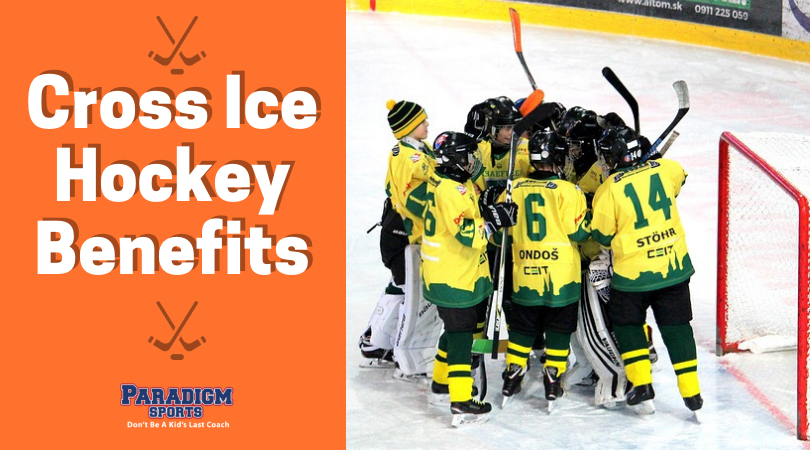
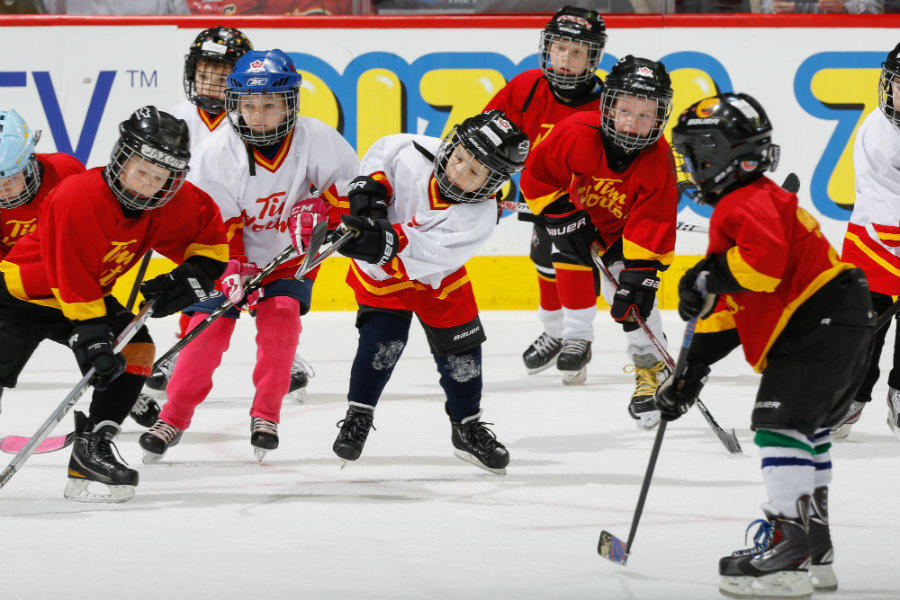
Better yet, do like BC, Alberta, Saskatchewan did before Hockey Canada made it mandatory for the 2019-20 season for Novice, roll out Cross Ice Hockey now, don’t keep track of score, have 2 or 3 mini games of 3 on three going at once, just drop the puck and roll kids in and out over the course of “game” and just let them play.
Below is a video that USA Hockey
shared out that highlights the benefits of cross ice hockey that they rolled
out 5 years ago nationally to adhere to their American Development Model.
https://www.youtube.com/watch?v=CB_Ygapyl7c&t=11s
As the analytics showed, as many parents still are pushing back to change who feel that cross-ice will not prepare their “elite” 6-7-8 year olds (there is no such thing as an elite minor hockey player, only when they play for their country in the Olympics are elite) for rep hockey in Atom and beyond, the more advanced players benefit MORE from cross-ice hockey due to the smaller playing surface.
As the parent shared, they don’t know if their kid is having
fun, but it is refreshing to know that cross ice permits them to touch the
puck, pass, shoot, battle much more than if was a full ice game.
In Cross Ice, if a goal is scored, just tell kids to pull the puck out of the net and play on, don’t waste time having them line up for a faceoff.
It helped Bobby Orr become a pretty good hockey player among many other NHL’ers who attribute pond hockey, shinny, stick and puck with 20 plus players on the ice with no scoreboard, or adults (no coaches, parents or refs, scorekeepers or timekeepers) present to become the players they become.
All Bobby’s Dad Doug would say to him before every ice time was “Just go out there, have fun and see what happens”
8 Year Old Kids don’t need scoreboards, they need to play for fun so they love the game more at the end of the season than they did at the beginning.
Let’s all work together to bring the
game back to the kids … where it belongs.
As we are only a few weeks away from kids, coaches and parents returning to ice rinks for the upcoming hockey season I thought it was a good time to discuss the benefits of Cross Ice Hockey.
In many of the clinics I have ran over the years I play clips from a video of Don Lucia when USA Hockey was introducing their ADM Model in 2007. He touches on several key points, one being his belief that tykes (5-7 years old in the USA) should be playing cross ice games, not full ice.
That was 10 Years ago, right when I was coaching very same age groups and thought the same, as he referenced it was like adults playing on a football field, there would not be much back checking. My analogy for full ice game play for Novice was Beehive, as the lesser skilled players would literally chase the stronger players all around the ice surface, many of which would not touch the puck at all during an entire game.
Below is a short clip that USA hockey did put together several years later showing what it is like for adults to play on a similar playing surface to a football field with nets that are approximately twice the size as traditional hockey nets.
USA Hockey mandated Cross Ice Hockey for their 5-8 year old age group in 2014, then for the 2016-17 season, BC Hockey mandated cross ice for the same age groups (Initiation 5-6, Novice 7-8). Saskatchewan Hockey implemented for initiation (5-6 yrs old) group only last season, and in March of this year Hockey Canada announced they will be mandating cross ice hockey nationally for the Initiation Age Groups. As far as I am concerned, it should have happened years ago and I applaud all of the governing bodies implementing to adhere to LTAD.
While I was running clinics last fall and interacted with coach coordinators, coaches and parents in those same age groups there were many that were for the implementation of cross ice, but also many against. Literally every clinic when I was going to or leaving benches I would walk past parents that were huddled up expressing concerns that cross ice would not prepare their son or daughter for Atom (9-10 yrs old). I also would hear concerns about it not preparing them for the rep level of Atom, which is supposed to be development age group but give players of higher skill to play with kids of similar skill.
What I found coaching both Atom Rec (House) teams and Atom Rep teams was the same, as soon as kids entered that age group it became competitive even though we should still be adhering to LTAD and learn to play at that age group.
Why ?
Because players do play full ice, they do keep track of scores, wins, losses so teams can win a league or playoff banner regardless if playing rec or rep streams.
That is also when the insanity starts to escalate in the stands.
For all those naysayer’s that I came across last season, I would pull out my smartphone and play the following USA analytics videos for parents to show them all the benefits of cross ice hockey;
According to the analytics, the benefits of small-surface play vs. traditional full size play are as follows:
2X the body contact battling for the puck
6X more shots per player
2X more puck touches per player
1.75 shots per minute on goalies vs. 0.45 on full ice
2X more pass attempts per player
5X more passes received per player
2X more changes of direction per player
Advanced playersbenefited even more
2X more puck touches
2X more shot attempts
2X more pass attempts
These are the reasons why USA Hockey, BC Hockey and now Hockey Canada are implementing cross ice for the youngest players, to give them the opportunity to touch the puck vs. what I referred to as bee hive hockey for the first few years.
For the skilled player it is not much fun and for the lesser skilled players it becomes very frustrating and many will give up on the game well before they should as they never touch the puck.
I also had coaches or hockey executive members complain about the following issues;
BC Hockey only gave them 2 months notice to implement, it was voted on at the annual AGM in June and all MHA’s in BC were expected to implement in Sept.
My reply, if we continue to delay, we will continue to fall behind other nations like USA and Europe.
The costs to purchase the boards used to split into two, or for the creative associations 3, sheets of ice to permit cross ice hockey was in the area of 30K and for many smaller associations would require they raise reg fees to absorb the expense.
My reply – it is a one time expense and the cost savings permitting 2-3 teams on one ice surface (with ice costing approx. 200-300.00 per hour depending on where located) should offset within one or two seasons (depending on how many H1-4 teams associations have).
The logistics of setting up for the younger age groups then taking down for the older age groups to permit full ice play would take up to 30 minutes and would affect the total ice time available for all hockey age groups, but also ringette, figure skating, public skating etc.
My Reply – I have known some AMAZING ice schedulers over the years who can make adjustments on the fly to accommodate and having multiple teams share once ice surface would permit potentially more ice slots for the older age groups.
Cross Ice Hockey for U9 age groups is a long time coming, and if you have followed the world juniors the last 2 decades if we do not go down the same path as other nations that are implementing cross ice play for the younger age groups we will continue to struggle at the international level.
The World Juniors has been a showcase for the worlds top U20 players, many of which have been drafted or draft eligible for the NHL.
In the 2000’s Canada dominated, winning 5 consecutive gold medals.
They then won Silver in 2010 and 2011, Bronze in 2012 and did not medal in 2013 or 2014. In 2015 thanks to an emerging “pretty good player” Connor McDavid and outstanding play by many of his team mates Canada did return to the podium for Gold only to not medal in 2016 and lose to the USA in 2017.
Brent Sutter, coach of the 2014 team that did not medal stated when interviewed after the tournament that he would like to see more skill and creativity and that is what they got beat by on some nights. This starts at the grass roots level when kids are in the early stages of LTAD, and he further comments on the fact that the current Canadian Youth Hockey Model puts too much emphasis on competitive play (games) vs. skill development in practices.
Although many parents aspired for the kids to play at the rep level where teams are assured to get 2 practices a week, as a result of our current system it still works out to a 1:1 practice to game ratio. I believe in atom and peewee ages groups which are the key development years of skill acquisition that we should revisit this model and rep teams should only play one game per week and replace the second game with a practice to ensure optimal skill development. This would change the practice to game ratio to 3:1. It would not require any additional ice to do so, merely converting one ice slot that is already assigned for those teams to a practice vs. a game slot. By doing so, I believe the skill and creativity level of Canadian born players would increase exponentially to ensure that we remain competitive at the international level.
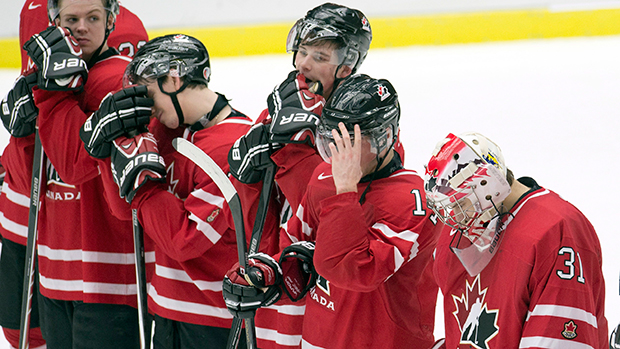
Hockey Canada 2014 World Junior Team after loss to Russia in the Bronze medal game
USA (3), Finland (2), Russia (1) and Sweden (1) have been the other countries to reach Gold since 2010, all of which have invested heavily in LTAD models.
Although Canada once was Canada’s #1 Youth Sport, it no longer is for a myriad for reasons, Soccer is now the #1 youth team sport by over 100,000 registrants. Jason De Vos, Director of Development and the rest of the Soccer Canada team also are looking at various means to improve skill development in the younger age groups.
Why ? Because Canada National Men’s Soccer (European Football) program is ranked 117th in the world.
In the keynote presentation he did for Ontario Soccer we shared in this weeks newsletter, he referenced the transformation that Iceland did with their National Football Program, in 2000 they were ranked 131st in the world but due to various initiatives they implemented (including focus on LTAD, skill development with the younger players) they not only qualified for Men’s Europ Cup in 2016 they WON against England !! Iceland is now ranked 23rd in world as a result and are 1/10th the size of Canada or 1/100th the size of USA in terms of population.
Another nation that has developed some pretty good NHL players is Sweden. They implemented Cross Ice Hockey years ago, and play until they are 10 (atom age group), and then full ice non-competitive games (no scores kept) until they reach the Bantam Age Group (13-14 years old). They also have a practice to game ratio of 5:1 as it is in practices (when planned well) that players develop.
Every single coach who played his youth hockey in Europe that I have interacted with over the last 10 years, including several who played professionally, state they don’t understand why there is such an emphasis on competitive games vs. skill development.
For me it started in my first year coaching minor hockey in 2004, H1, 5 year old kids and there were no games, just skill development ice slots but we did incorporate small area games in. Only a month into that season several parents asked me and fellow coaches “when are we going to play games”, to this day I still shake my head the question was posed, most of the kids could barely stand on their skates without falling down and parents wanted to see full ice games.
I look forward to seeing the impact cross ice hockey will have in the coming years, and other initiatives as they are rolled out to continue focusing on Hockey as a long term player development model.
Let’s work together to bring the game back to the kids.