Posted Posted in Athlete, Coach, Officials, Organization Executive, Parents

One of the 5 takeaways I share in every talk, workshop or clinic is the importance for coaches to make the environment for their players safe, as the hockey world has recently coming to terms with the Kyle Beech tragedy and the dominoes that are falling, it is just another painful and emotional reminder why we need to make it safe from all forms of harassment that I wrote on in 2017.

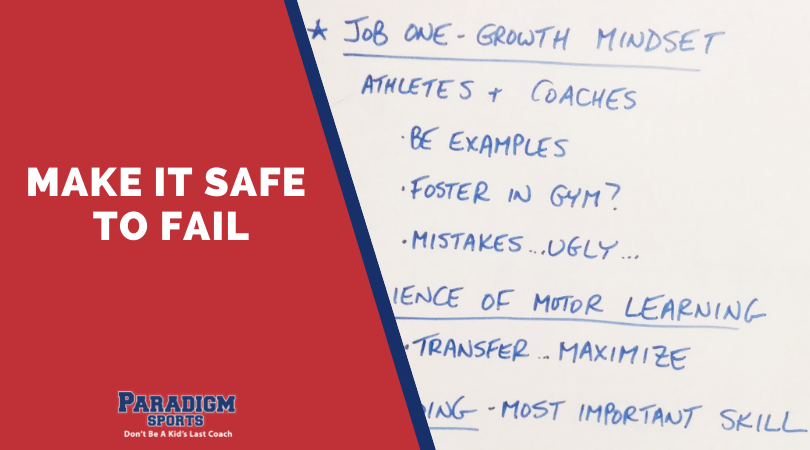
The other area that I have been advocating for years is the importance for coaches to make it safe to fail, unlike the coaches and parents that are highlighted time and time again in social media for their outbursts towards kids as players, officials, I have always been a believe thanks to the coaches that I had growing up to encourage to make mistakes in practices and even in games and have fun when they do so.

WHAT ?

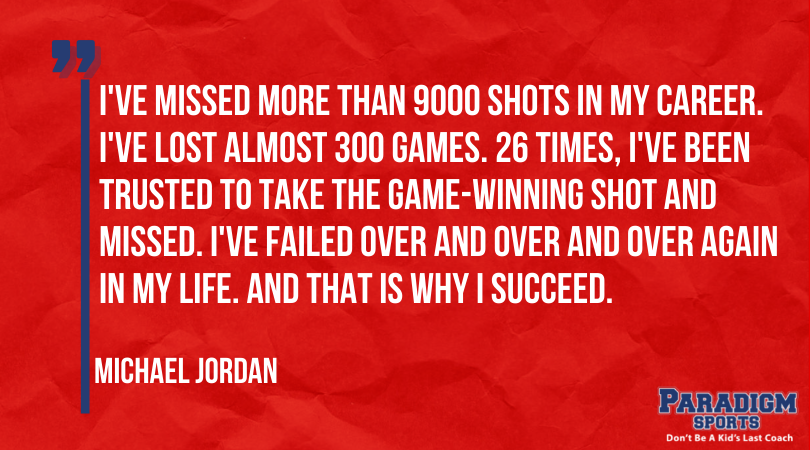
Recommend they make mistakes, the uglier the better … what if they coughed up the puck that lead to a goal, fumbled the ball that lead to a touchdown by opposing teams, missed that free throw or field goal that could have won the game and son on.

Hmmm … there have been just a few players that were pretty good that made a ton of mistakes, but had they not done so, never would have achieved their milestones and become some of the best ever to play their respective sports.
 

Reggie Jackson/Babe Ruth

Reggie Jackson holds the record to this day of the most strikeouts of any player in MLB history (2597) but was touted year over year in his Hall of Fame Career as Mr. October where his bat would hit many out of the park, much like Babe Ruth who did the same decades back.


Another recent example is Mason Crosby missing 3 field goals in regulation but made the 4th to win the game in overtime for the Cheeseheads (Green Bay Packers) against the Cincinatti Bengals (whose kicker also missed 2 field goal attempts in the same game)

This was a complete surprise for all those that watched as Mason had only missed 2 field goals in the last 2 seasons combined !

Why was he to make the 4th field goal?  Because he had the support of their teammates, coaches, managers who recognized that mistakes would happen and once they did, were history, was time to move on to the next play.  This is in a league that is focused on winning, the top sport in the world in terms of revenue with millions of dollars in player salaries, billions of dollars in TV and merchandising revenue NOT community youth sports.

Sadly in today’s era of youth sports where it has become adultified, where adults are competing with other adults thru their kids, gone are the days where kids play without fear of failure which was prevalent in free play (i.e. pond hockey, pickup basketball, sandlot baseball) where there were no adults present (no coaches, parents or officials), it has lead to increasing attrition rates as a result.

In lieu of focusing on the results, wins/losses, goals/assists, focus on the process of development, ensure that kids are having fun and winning will be the byproduct vs. the focus.

Growth Mindset

One of my top recommendations for books for coaches, parents and youth sports leaders I the book Mindset by Carol Dweck who shares the differences between the fixed and growth mindset.

Those with a fixed mindset believe that their skills are fixed due to DNA, they don’t believe in working to improve, and fear failure so would focus on simpler tasks.  Those with the growth mindset however, believe they are not that good YET, and will put in the effort to improve and recognize making mistakes is part of the process.

A perfect example of a coach that has incorporated the growth mindset with their team is Karch Karaly, voted best men’s volleyball player in sand and courts of all time, in 2012 he became the head coach of the US Women’s Volleyball team soon after he read Carol’s book and as I have shared in past their team white board encourages the players to make UGLY mistakes so they develop.
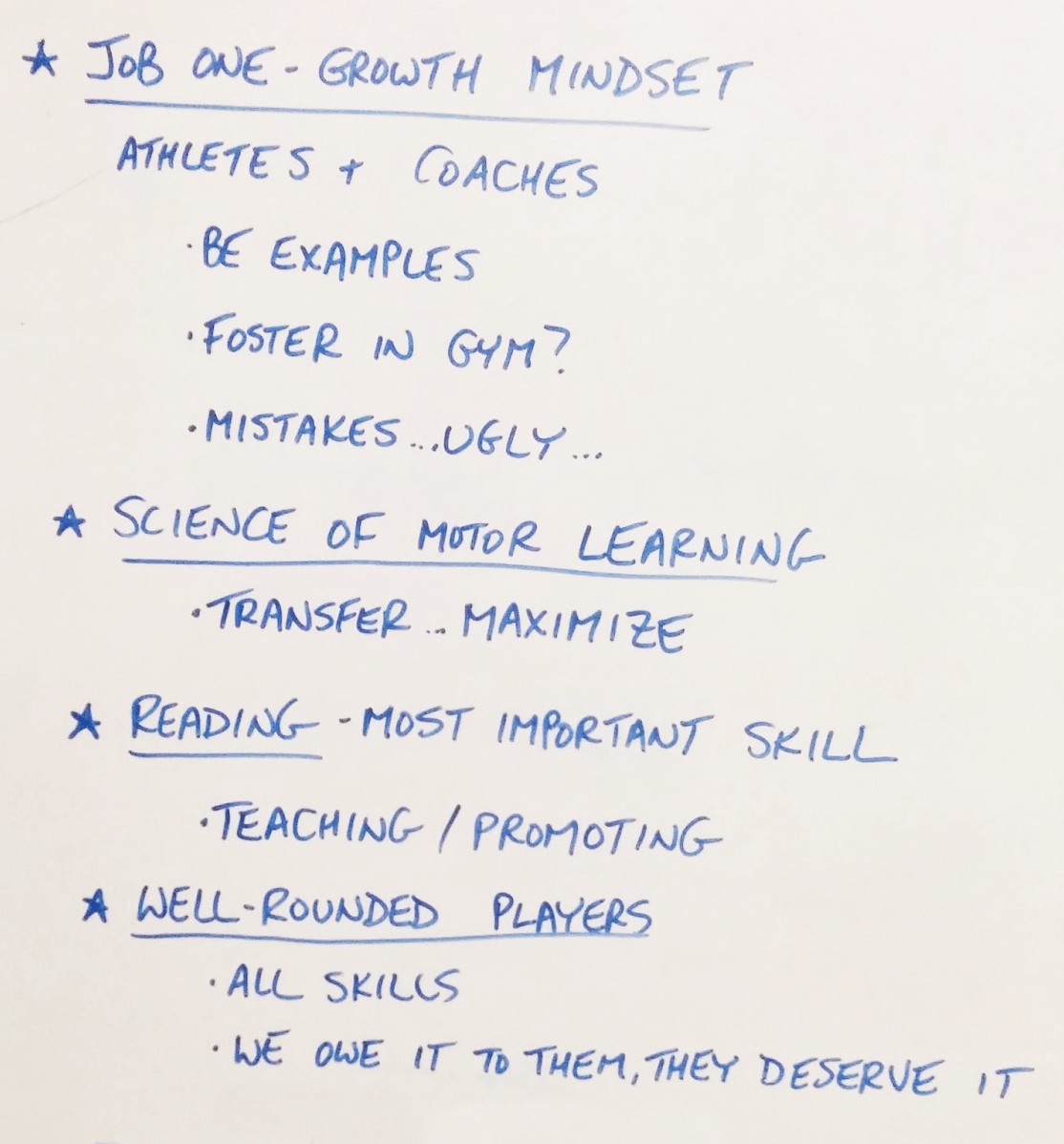
He has lead the team to their first gold medal at an international event in 2013, and medaled at the three Olympic games under his watch, including Gold at this years summer games in Korea.

In order for us to reverse the negative trends we have seen in youth sports for over a decade, we need to create an environment for not only for our players where it is safe for them to fail, but also for the young officials.

Sadly, we lose 50% of young officials in many sports (especially what I refer to as the money sports, Hockey, Baseball, Football, Basketball and Soccer) in their FIRST YEAR.

Why?

The #1 reason is due to the abuse they are taking from the adults in the stands or along the sidelines.

We subsequently lose 30% on average every year so we are literally are constantly recruiting and not allowing time to mentor and train these young officials so they can hone their craft which just creates this vicious circle.

To give you some numbers, in Canada, we have approximately 30,000 officials registered across Canada to ref minor hockey games, and every year we lose over 10,000!!!

This is not a recent trend, this has been the case since I started running Hockey Clinics over a decade ago.

It is the reason why Hockey Canada and USA Hockey came up with the campaign “Relax it’s just a game” in 2007 … 14 years ago


The focus was more on parents who are coaching or critiquing their kids, but I have also seen my share of coaches do the same towards players and officials.

Ironically, during a recent clinic that I was running, at the lunch break just before we all shut down out audio/video a coach shared with me and those that were still in the room (we have shifted to online virtual clinics in part due to COVID, in part due to efficiencies) and he shared that two parents were fighting in the stands at a U11 minor hockey game and the Police had been called in.

This was not a the zone or academy level where parental expectations are even higher (due largely due to the costs financially and time).

Time after time each time I run a clinic coaches share similar analogies how other coaches are running short benches to win games, parents are screaming from the stands or in parking lots,  the ride home (or to) games/practices.

The saddest analogy and driving reason for me to continue running clinics to shift the needle is when a coach stood up to introduce himself in a in person clinic and said the reason he started to coach is his 8 year old daughter shared with him why she wanted to quit Hockey at the end of the season.

He said, with emotion in voice and tears in his eyes which made the rest of us in the room do the same (including yours truly)….

“My daughter told me that she was going to quit because she was scared of making mistakes.”

Until we make youth sports safe to fail again like it was in prior generations, we will continue to experience high rates of attrition, so if you are an adult involved in youth sports (parent, coach, administrator) please provide the players under your watch that opportunity to do so.


PS Tagline - Dont be a kids last coach

There are NO shortcuts

Posted Posted in Athlete, Coach, Parents

I am currently in the process of onboarding a couple of interns for this coming summer who will be working on our various digital platforms, image creation, video and audio editing and back end support for summits, webinars and live streams.

We have now sponsored over 20 university co-op students over the last few years as we have built out our websites to provide content for all youth sports stakeholders and as we onboard new students each time, one of the key teaching points I share with them is the importance of having a strong work ethic and have used a myriad of sports analogies over the 4 months they work with us to ensure they finish the term strong.

This comes from the many years of playing various sports where coaches would remind me and all of my team mates of the importance of work ethic, something that has been lost in part in recent years where many parents, kids have fallen into the early sport specialization trap but not recognizing the importance of practicing the way they will actually play in games.

What separates those that reach the highest levels they aspire vs. those that do not having coached hundreds of different players in different sports and now having interacted with thousands of coaches that have shared similar stories of players they coaches, is the fact that the ones that excel are the ones that have superior work ethics to do vs. those that have a tendency to not run through the finish line.

There are so many analogies I can share as examples of those that reached the elite level, below are three that come top of mind;

Sidney Crosby

When Sid (The Kid which is no longer the case) was coming up the pipeline many felt that he was the next Wayne Gretzky, much like people feel now of Connor McDavid.  What has separated Sid from the rest of the pack and what has made him the player he has become is not the fact that he focused on hockey from a young age like many kids do today, is his commitment to practice like he is going to play every practice.

He even will ask his team mates not to pass “tape to tape” so that he can retrieve pucks that are too far away or caught up in his feet to kick to his blade and doing so at full speed.

He is so committed to working on his skills even now at the age of 31 years old, that the Pittsburgh Penguins, according to a story shared with one of my colleagues who interviewed Mike Johnston, former head coach, built as second practice rink adjacent to their initial rink so that he and other players would not have to wait for the Zamboni to clean the ice for 15 minutes.

Per his current head coach Mike Sullivan

“The quality that allows Crosby to remain atop the league, coaches and teammates say, is his unique work ethic, an ability to specify subtle areas for improvement and work with meticulous precision until they match the other elite elements of his game. … “He’s a generational talent,”


Micheal Jordan

Many know the story that he was released from the first high school team that he tried out for, was totally distraught, cried as a result for quite some time after the fact but he made a commitment to be the best he could be, and ultimately became arguably one of the best ever to play in the NBA by working tirelessly to do so.

The same work ethic transferred to when he decided to retire from basketball when he lost his Dad, to pursue a career in professional baseball and although never made it to the MLB White Sox, he honed his craft over a few years in the minors by working tirelessly every day with hitting and other specialty coaches to improve his batting %, stealing bases and so forth.


Walter Payton (AKA Sweetness)


Hi workout routines to this day are still used as examples for those in the NFL to mirror and what many don’t know is he mentored a former high school player to work out with him which he did for years.  In the short clip below he shares the 5 years that he did so with Walter where they became good friends as a result and talks about the infamous hill (AKA Hell) they trained on.


There are many other examples that I can cite of professional players whose work ethic got them there like Kobe Bryant (sadly who we lost way too early last year), Tom Brady, Muhammad Ali, Pelé, all of which continued to work on their craft while even when they reached the levels they did professionally.

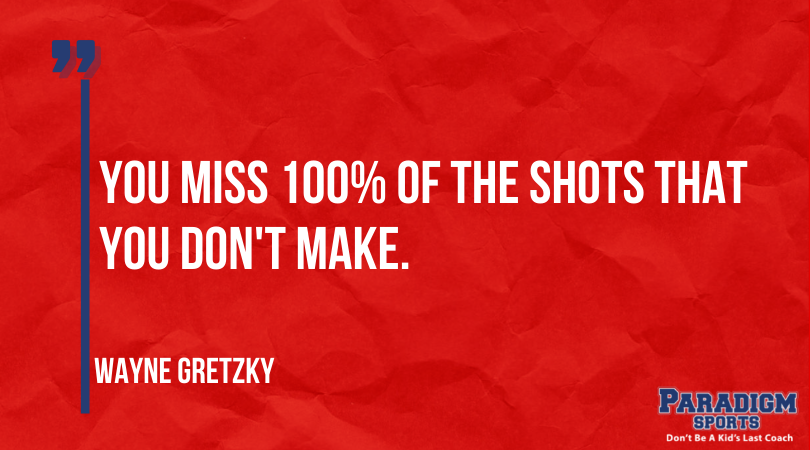
This is the big takeaway that youth coaches must remind their players regardless of the level to ensure that they don’t cheat themselves, and at the same time their team mates, of the importance of working hard during every game, practice … to reach the highest level possible, there are no shortcuts.  Too often over the many years of coaching I would see kids that had great skills but when push came to shove they did not put in the extra effort to hone their craft and as a result they got passed by many of their less “skilled” counterparts.

Those that reach the tip of the pyramid don’t make shortcuts along the way, they recognize that it take YEARS to reach that the highest level they aspire to and continue to work on their crafts even when they do.


PS Tagline - Dont be a kids last coach


Kids don’t need more structure, they need more free play

Posted Posted in Athlete, Coach, Organization Executive, Parents

Two years back I wrote about 5 different initiatives in the USA that were focusing on unstructured or free play “Bring Back More Free Play” and although I have seen a PARADIGM shift of sorts with some youth sports, others have gone the other extreme where the costs and time commitment are pushing so many kids out.

Compound that with the fact that less and less kids are playing outside without direct supervision like we did as kids and as Peter Gray shared in his great Ted Talk below the decline in free play has lead to an increase in mental health issues.

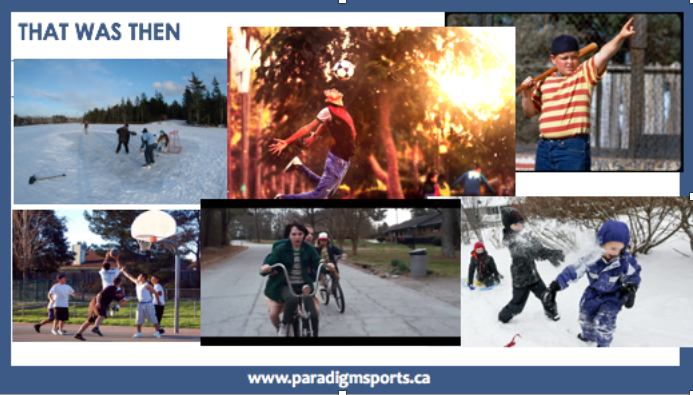
I think back to my childhood and have shared as the first slide of our core talk, Don’t be a Kid’s Last Coach, titled That was Then where I pulled some random pictures from the internet that reminded me of some of the vivid memories I had growing up.

Yes I played a lot of organized sports and I have great memories of my teammates, coaches, team dinners, pool parties and some of the milestones where we achieved our end of season goals, but a lot of my memories were from the free or unstructured play I had.

Below is a screenshot with images that I have shared in Don’t Be a Kid’s Last Coach that I titled That was Then;


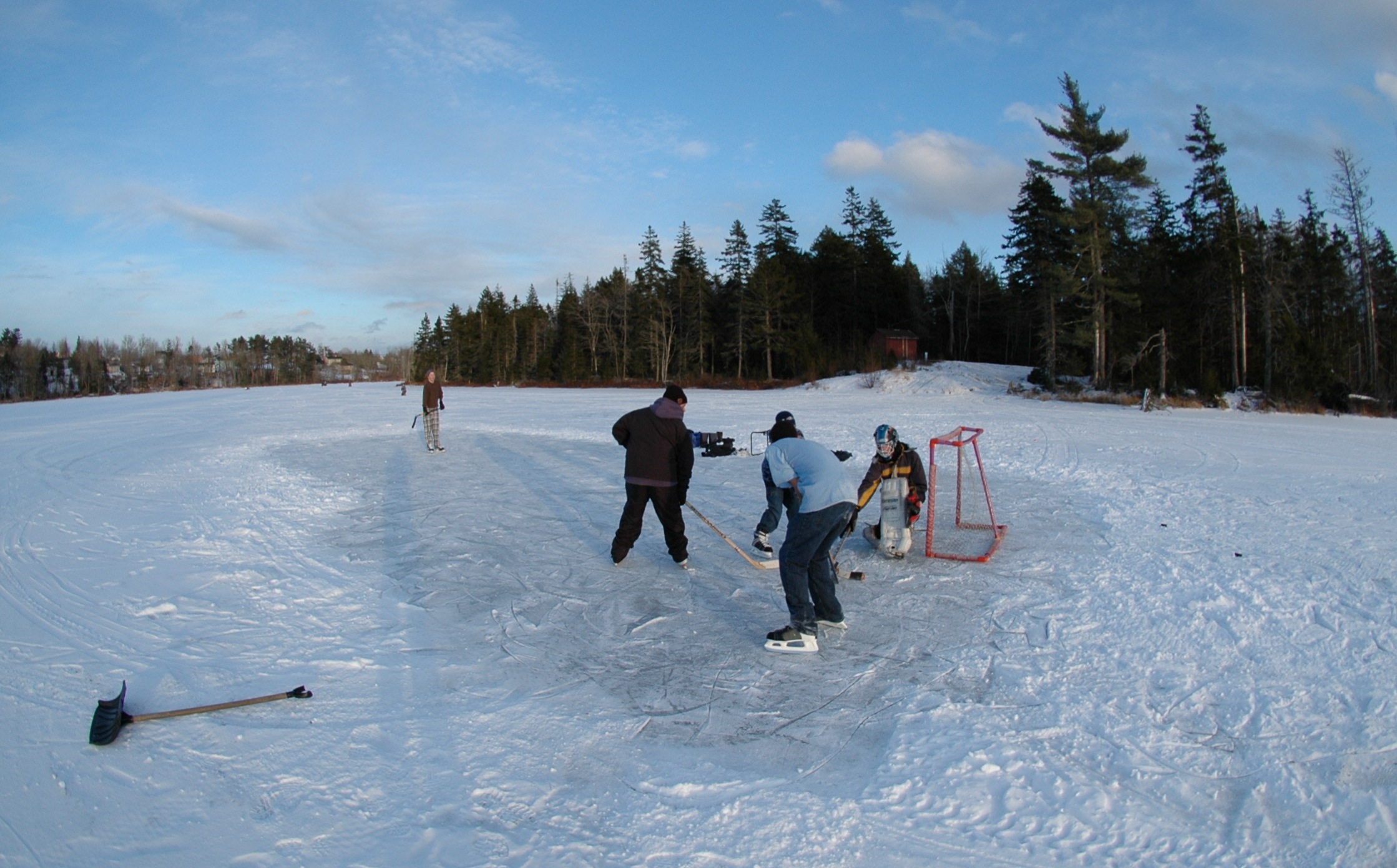
POND/OUTDOOR RINK

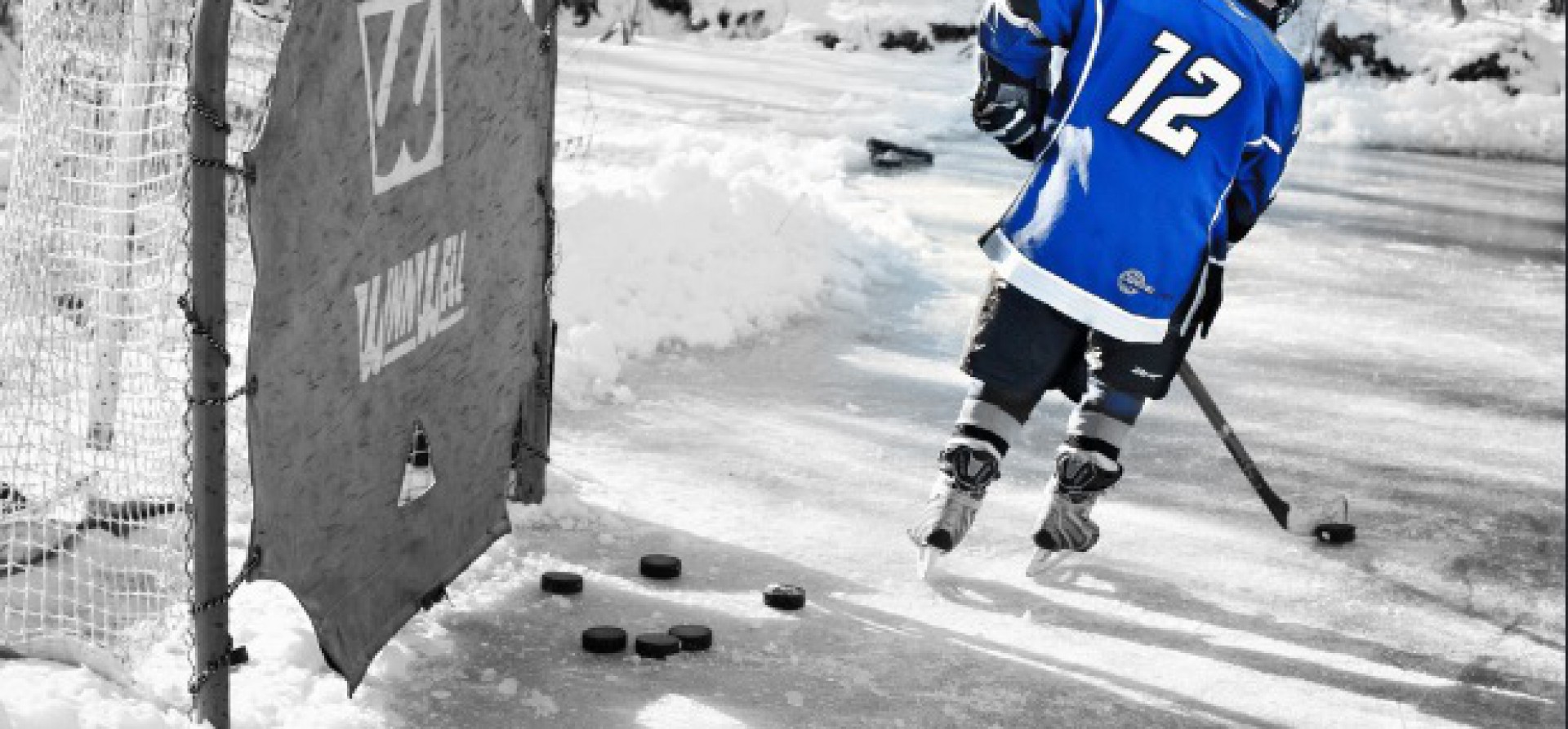
I would be totally remiss in starting a presentation about free play if I did not talk about all the time I spent on outdoor rinks and ponds as a kid growing up in Quebec.  I also had the opportunity to do so on the Rideau Canal and even the frozen tundra in the Northwest Territories when I lived on Baffin Island.  What I remember most and all those that I have asked if they ever played was (a) how long they PLAYED and (b) only stopped because they needed food, go to the bathroom or parents came to get them as it was time for dinner.

Bobby Orr (who was pretty good) attributes the main reason he became the player he became was all the repetitions he had playing on the pond in Parry Sound, and I remind coaches all the time to ensure they have 10 minutes (minimum) of stick and puck (unsupervised ice time) for their teams so it equates to a few days over the season.

His Dad would merely remind him every time he dropped him off, “Bobby, just go out there, have fun, and see what happens”


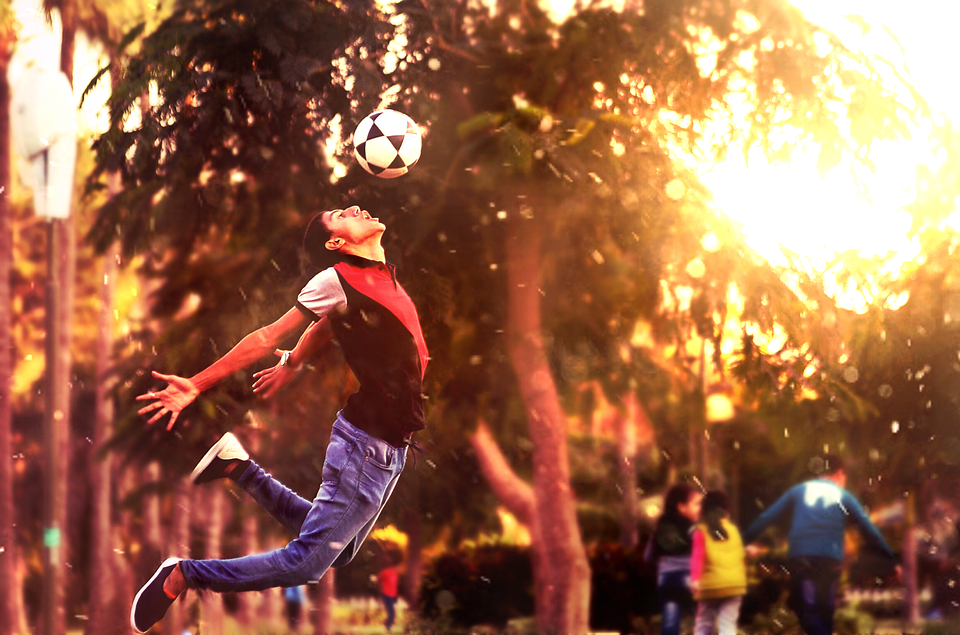
RECESS SOCCER

I only played one season or organized soccer when I was 12-13 years old and as I really did not know the rules my coach made me the goalie.  Having played hockey since I was 3, I must confess being a goalie in soccer was not something I aspired for, seeing only a few shots a game and for the rest of the game looking at the stars or day dreaming.

I opted to play football in lieu and became one of the organized sports I played until Junior

What I do recall about soccer is all the time we played pickup games at recess, lunch hour, after school like the picture above.  Many times were on gravel fields and once I moved to BC, many of which were in the rain.

I loved to be outside with my buds just playing for the sake of playing


SANDLOT (UNORGANIZED) BASEBALL

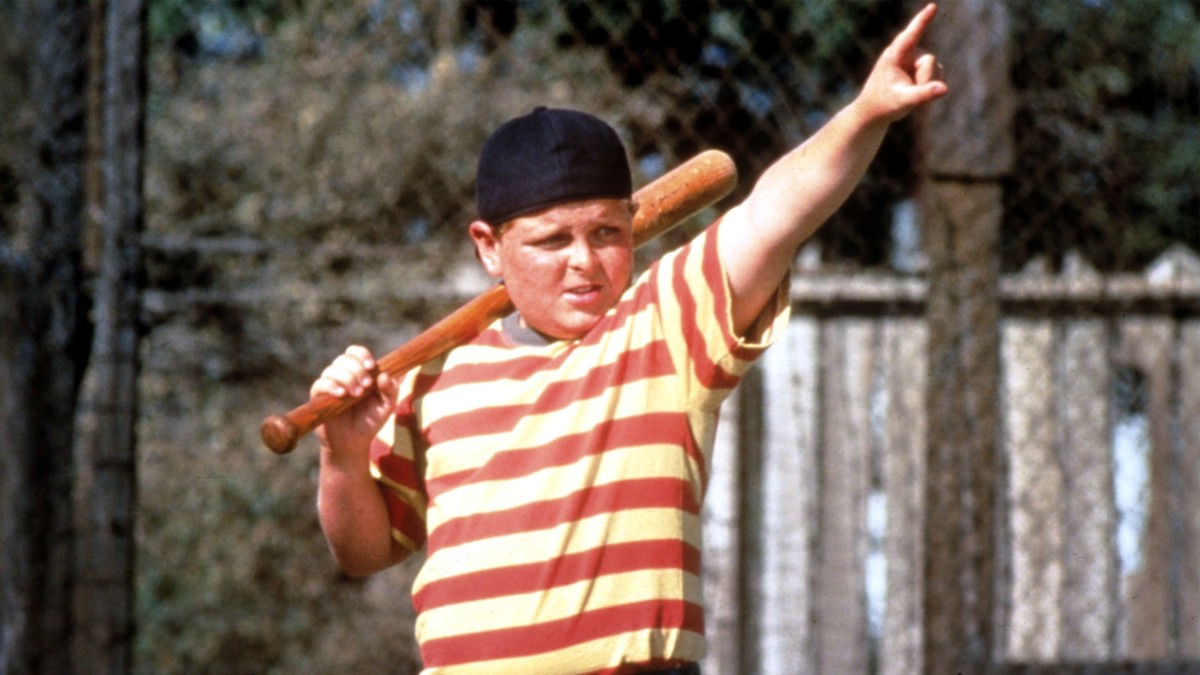
The picture is one of the characters from the Movie Sandlot, whom I refer to is the younger me, at one point my hair was that brighter orange (has darkened over the years) and playing pickup baseball, scub, was one of my favorite activities in spring, summer even when I was playing organized ball.

We would just grab our gloves, hats, a wooden bat, any balls we had and head to the field.  We would elect captains and we picked out teams and played for hours on end.


PICKUP BASKETBALL

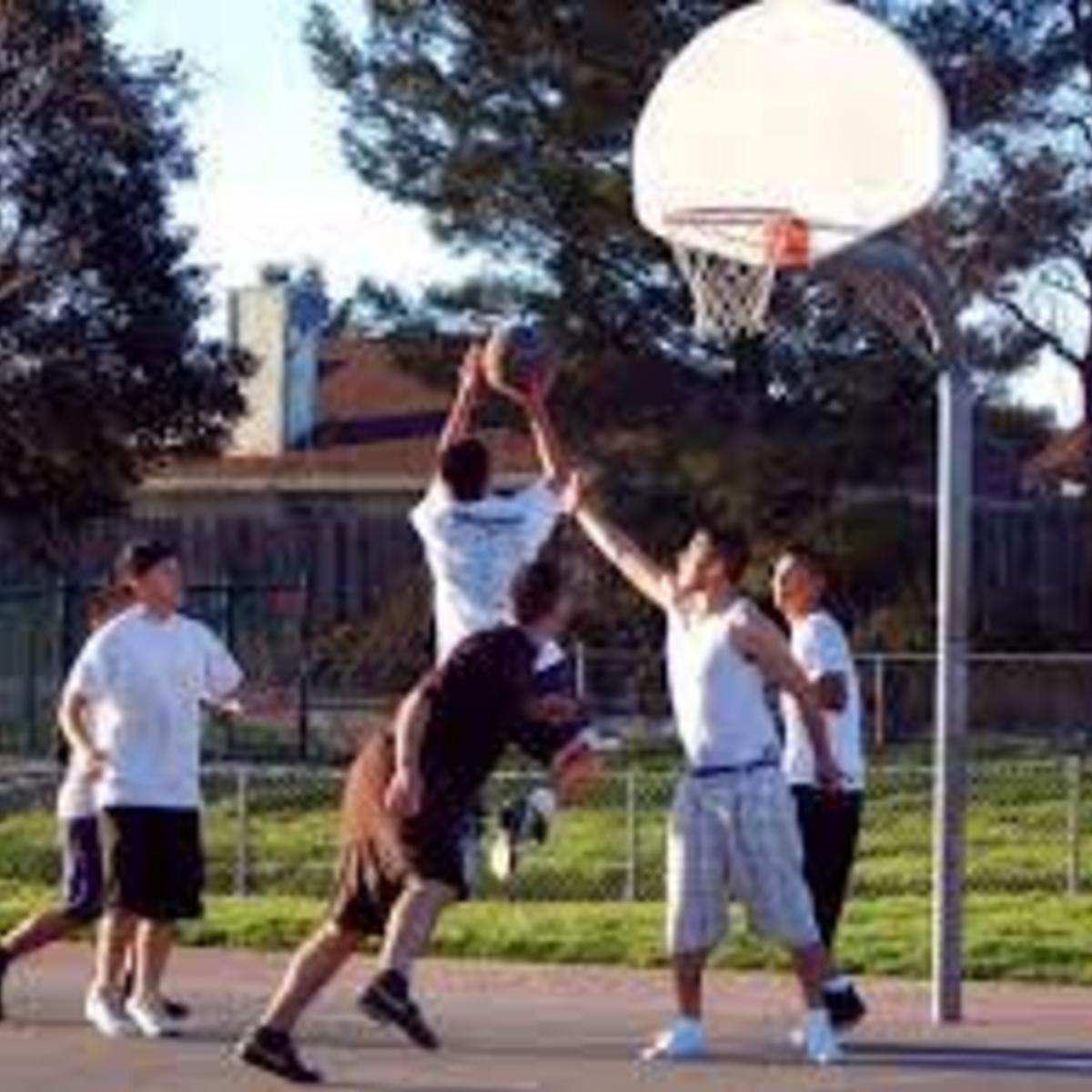
Another one of my favorites was playing pickup basketball outside at my schools or many of our houses (we moved every year until I was in grade 8) we had a basketball hoop either mounted on our house (leading to a few broken windows that ate up our allowance) or a wooden pole and went thru nets like many kids go thru candy.

The most fierce battles I ever had was the 1 on 1 battles driving the net with my friends or younger brother in our driveway where we all pretended to be Kareem Abdul Jabaar, Larry Bird or Michael Jordan.


Michael Jordan loved pickup basketball so much that he negotiated a For The Love Of The Game Clause in all of his contracts so he could play anywhere, anytime.

I did play a few years of high school basketball, and another favorite was when our gym teacher let our PE class play tackle basketball as most of us were playing hockey, football and rugby.  Yes there were some bruises, scrapes and other non-life threatening injuries that school insurance prohibits kids today to keep them in bubble wrap but where else would we have learned resiliency?


BIKE RIDES

I will never forget how my Dad taught me how to ride a bike, he got me training wheels and held my bike the first day and within a few days I had developed the confidence to break away from his firm hand on the handlebar.  My mother shared with me many years later as he passed away when I was 8 that after day one he raised the training wheels a bit, then another inch, then another so after day 1 I literally was on my own.

Although I loved to ride my bike from that time, it was a necessity as my father passed away a few years after he “helped me” learn how to ride the bike and my mother did not drive as a result of a couple of really bad accidents she had, one before she was married, the other when I was learning how to ride.  The second was so bad that she ended up in Montreal Neuro for over a year to recover from a broken neck and back so lived with my Nanny and my brother with our other grandparents as my fathers job was so demanding.

My Nanny had moved to Ottawa and had remarried to Papa John, and many times that year when the Rideau froze he would take me there so I could go for a skate, play stick and puck and have many vivid memories of those times.

Fast forward to when I got older it was the way I got to practices, games and earned money delivering papers after school for many years.

 Because my mother did not drive again until after my kids were born, I was saved from the infamous car ride (home as well as to the games) that many kids have shared is the worst thing about their youth sports experience also, and the only feedback she ever shared was how much she loved watching me play.


SNOWBALL FIGHTS

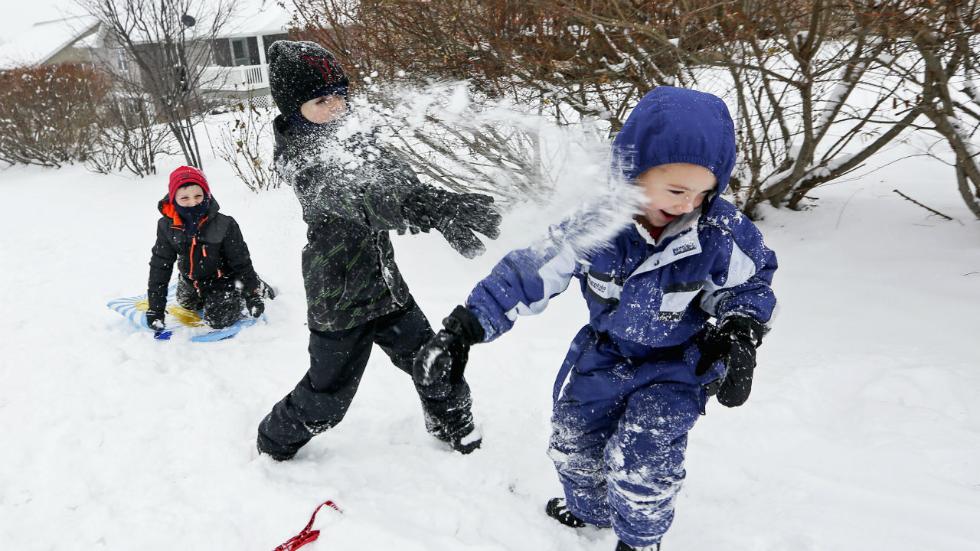
Like Pond Hockey, I also would be remissful not sharing the infamous snowball fights we had on a regular basis while in Quebec and took great pride in building our arsenal and HUGE forts for us to battle after school each day when the snow was perfect to make snowballs.

Sadly schools have now banned snowball fights as kids could get hurt … I don’t know, I took a few in the eye, forehead and am ok, like everything else, just because you MAY get hurt, does not mean you will.

It is also where I improved my throwing mechanics in the winter for baseball/softball in the spring, without which perhaps I would not have played at the competitive level for many years.

If you have read to this point there are probably many other images that you have of activities that you did as a kid as I did like British Bulldog, Beach Volleyball, Frisbee, playing catch, golf, tennis, racquetball, handball, stickball, street hockey, climbing trees, going to the school playground and so on.

I chose these particular pictures and ask the question in our talks “What is missing in the pictures?”

NO ADULTS  – NO PARENTS – NO COACHES – NO OFFICIALS – NO UNIFORMS

NO  $300.00 Composite Bats or Hockey Sticks, $1000.00 skates, 300.00 cleats, home and away helmets, gloves, pant shells, hoodies, nameplates etc.

We played for the love of the game.

We made our own teams, rebalanced as needed so no blow-outs occurred and we made our own rules and enforced them

We kept score merely for bragging rights, it was not about banners or trophies like it is today.

We had so much fun that we played for hours on end until it got dark.

In Spring, Summer and winter breaks ….Next Day  …. REPEAT and do it all over again or perhaps choose a different sport but sadly those days where kids played for the sake of playing have eroded.

Fast forward to this generation of kids and NBC shares how excited when they get to play “unorganized baseball” that even their own coach fessed up he had no idea how to do so?


Rule # 1 – Parents need to be quiet (if you ask any kid that is what they want when they play)

Rule #2 – Kids pick sides and EVERYONE Plays

Imagine – kids playing sports with no grown-ups involved screaming instructions from the stands, dugout or coaches that run short benches….

When asked after the game what he liked best, one of the players shared THIS (unorganized baseball).

Should we tell your Dad?

YEP.

Parents, Coaches. Executive members remember what it was like when you grew up and the fun you had when you just played for the sake of playing?

If we shifted the needle to promote unorganized games and focus on creativity, skill development, making friends, having fun to follow models like Norway and Sweden until the kids are in high school the current attrition rates where 70% quit by the age of 13 other nations are experiencing will reduce significantly GUARANTEED.

Kids don’t need more structure, they need more FREE PLAY.

Parents – Stop keeping up with the Jones with travel ball, Off-Season select teams, specialty trainers and encourage your kids to play For the Love of the Game again.

Let’s all work together to bring the game back to the kids …. Where it belongs.


BONUS – Download a FREE printable PDF version of this blog HERE