Figure it Out

Posted Posted in Athlete, Coach, COVID-19, Organization Executive, Parents

I have been sharing for years in lieu of being part of the problem, figure out a solution and ironically this past week I did 3 facebook live interviews with guest speakers who had their own spins on Figure it Out and another time was when I was a BC Hockey Summit where Corey McNabb, the director of player development for Hockey Canada also used the term when referencing the importance of not making drills too linear so that players had an opportunity to figure it out and be creative.

These were two of the three from this week talking about how they were returning back to play after the COVID-19 quarantine period that shut down sport mid March


Steve Boyle – Founder & CEO

When I connected with my good friend and colleague, Steve Boyle, the founder and CEO of 241 sports and he shared Figure it Out several times during our chat as he and his wife Kerry have now ran their second sport sampling camp in the Connecticut area coming out of the COVID-19 Pandemic quarantine period.

Their first camp held last week was what he referred to as the scrimmage, just over 40 campers, where they implemented many changes to their normal programming developed over the last 10 years of hosting camps across the USA to adapt to various return to play guidelines from health authorities, parks and recreation and other governing bodies.

Like we will be doing for our first sport sampling camp we will be running in partnership with 241 Sports at the end of July at Queens Park in New West, BC, they added the following safety protocols to mitigate as much risk of possible for any campers, staff and families to be infected by the COVID-19 virus to include;


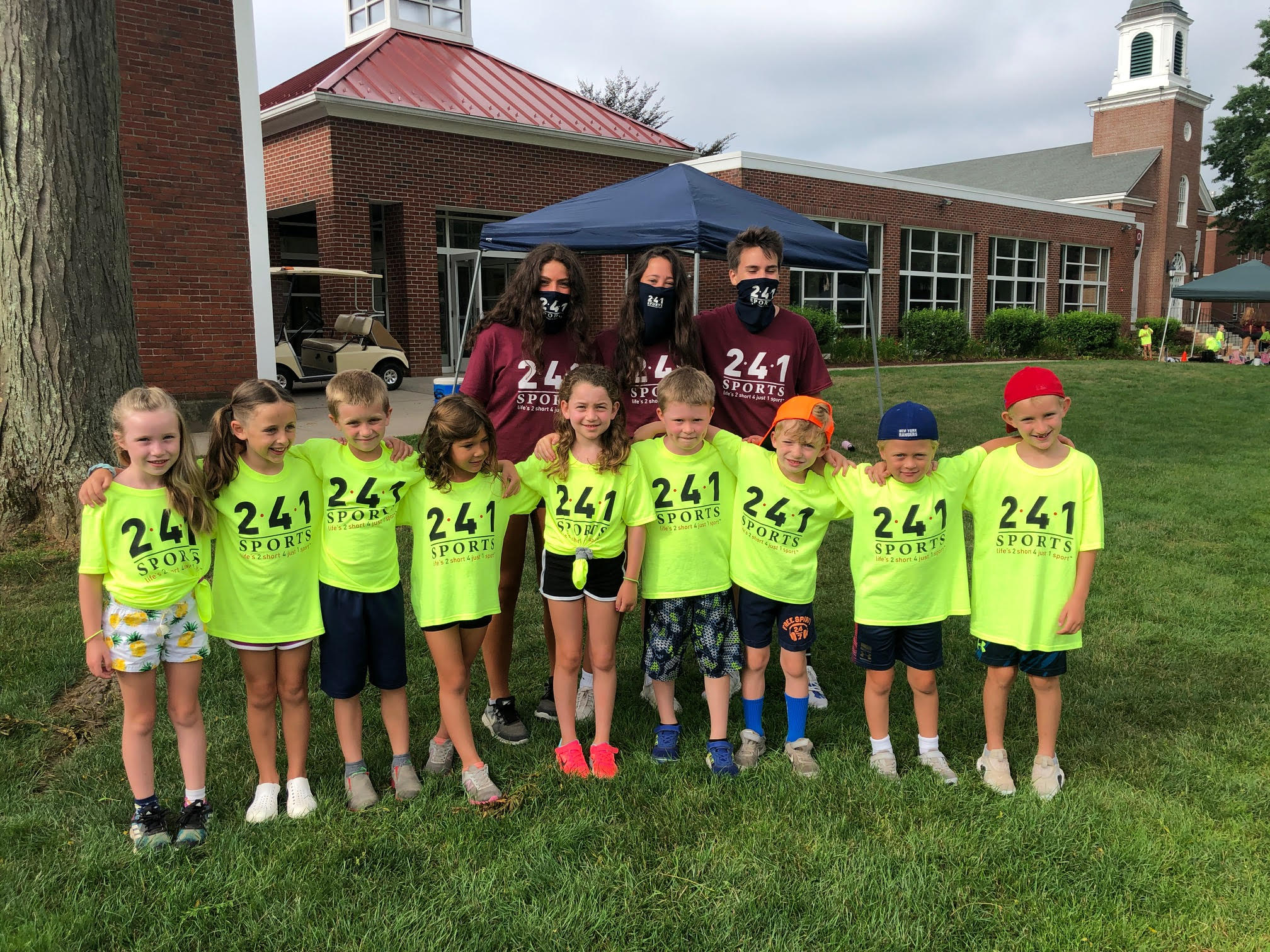
  • Cohort Groups of 10 – kids will be put into cohort groups of 10 for the entire week and will sample 8-10 different sports over the course of the week.  They will be assigned 2 junior coaches along with directors that will manage 2 cohort groups to provide the activities

An example of what that cohort group will look like at our camp is one of the groups from this weeks camp with over 162 campers at their flagship camp in Connecticut below


  • Leaders – will all have masks/bandana’s (like those in the pic) and be lifted when social distancing of less than 6’ is not possible, in particular if have to administer first aid
  • Lunches – will be ordered from a local sandwich shop for all campers and the sandwich shop will sort by campers order and put in their cohort bags for leaders to pick up when they are delivered. This will prevent any potential of virus contamination to other cohorts as well as challenges to keep the lunches cool during hot days (at this camp the temperature exceeded 100 degrees Fahrenheit (30 degrees C)
  • Sports/Sampling – to minimize the contact of equipment and time to sanitize, team sports like lacrosse, floorball will be run for one day only and all cohorts will get a chance to day, but universal activities like stickball, wiffleball, capture the flag, impromptu baseball with tennis raquet/wiffle ball and so on will be various activities kids will get to try over the course of the week

** This differs from prior 241 model where kids would choose 3 sports they would do over the week augmented with a day of universal sports so as a result of COVID-19 safety protocols, Steve and the rest of 241 team FIGURED it Out to provide even more fun and activities vs. cancelling programs as many other sports organizers have done

  • Arrival/Pickup – kids will be asked questions how they feel, temperature checks as required and so forth when arriving at the park, then will be brought to their cohort for 90 minutes of cohort play time before trying various sports activities each day
  • Parents are not permitted to exit their cars and masks will be worn by leaders when 6’ or less distancing
  • Prescreening of the campers before they get out of the cars (list of questions if feel sick etc))
  • Ensure they have their water name with name on it, own sunscreen, bug spray etc (no sharing will be permitted)

“Don’t change the rules in the middle of the game”

He also had to adapt to health authorities changing the rules in the middle of the game where they changed cohorts to 14 and temperature check requirements and one of the parents shared they signed their kids up based on what safety protocols would be enforced from the get go

He went back to original safety protocols and for each camp going forward whatever standards were in place from day 1 would stay in place and we plan to do the same, whatever the bar that is in place at the start of the camp in terms of safety protocols will remain the bar until the end of the week.

Numerous other examples were shared by Steve in our Facebook live we did can view HERE


Dave Newson, Executive Director Semiahmoo Minor Hockey

Another example of a sports organization that has figured it out came from my discussion with Dave Newson, the Executive Director with Semiahmoo Minor Hockey, who shared with me the weekly calls that he initiated with a couple of minor hockey associations which has now evolved to having representation from every minor hockey association in the lower mainland of Vancouver since April.

In a recent news article that he contributed to he was quoted saying ….

“In the past, we’d get together and we wouldn’t get very much done. People would be very territorial and worry about their own situation.”

— Dave Newson, Semiahmoo minor hockey

Although our Face book live had some challenges with wifi connectivity, Dave shared how all the minor hockey associations who traditionally kept things very close to their chest, as a result of COVID-19 and the impact how it will affect minor hockey association returning back to the ice in the fall, now they are working collaboratively along with PCAHA, BC Hockey and Hockey Canada so they can do so safely.


A few things that he shared will be part of the return to play protocols similar to other sports


  • Prescreening of players (all ages) will be required before kids are permitted to enter the ice rinks, this will be a series of digital questions each day


  • Revised Medical sheets with acknowledgement of COVID-19 risks required to be signed before kids return back to the ice


  • Social distancing will be required and smaller groups on the ice to start like has been done with various private skills developers since BC entered Phase III, the first minor hockey association to do so is South Delta and Semiahmoo and many others have plans for skills camps in August.

One of the biggest challenges will be facilities re-opening again, although the private facilities have already done so like Planet Ice, Canlan, Winter Clubs shared in prior posts, the municipally owned facilities may be slower to open due to budget issues, layoffs of staff during COVID-19 and so forth.

What I found of particular interest in our chat is their (Semiahmoo) and other minor hockey associations registrations are on track to be same as last season although initially the model will be different with various COVID-19 return to play guidelines until we get to phase IV with a vaccine or treatment for COVID-19.

That was exciting to hear, as I and many others I have talked to have feared due to economic challenges that people have faced due to layoffs, losing their jobs, businesses it potentially would have a negative impact on youth sports registrations in the fall.

These are just two of many examples how youth sports organizations are improvising, adapting, overcoming and Figuring it Out.

The upside, is they are doing so collectively and collaborating with “competitors or rivals” when they traditionally would not have in past.

Based on early indications from the private organizations who have been the first out of the gate, particularly Burnaby Winter Club who was the first to open their doors under rigid safety protocols May 5th, now 2 months later, there have been no positive COVID-19 cases reported which is exciting to hear as well.

The one constant that comes out of all the conversations I am having with various others is we still have a long ways to go, but if we follow the guidelines outlined from health authorities and governing bodies, as the examples above showed from 241 sports and initial hockey, returning and mitigating risks can happen if we work in collaboration to Figure it Out.


PS Tagline - Dont be a kids last coach


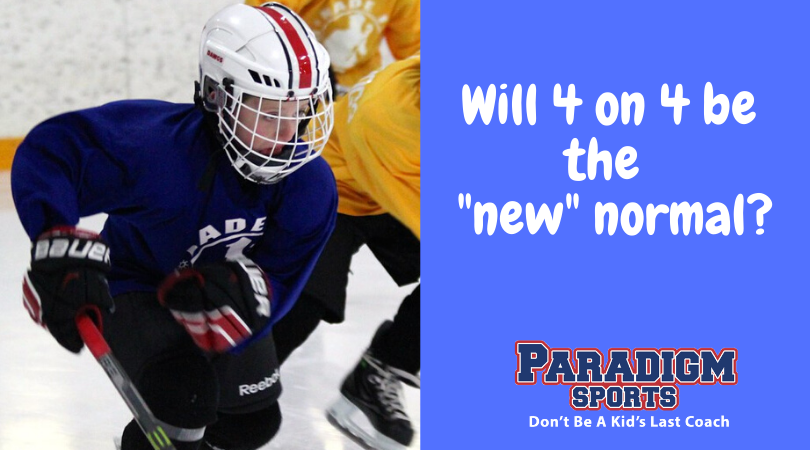
Will 4 on 4 be the “new” normal?

Posted Posted in Athlete, Coach, COVID-19, Parents

It is so exciting to see the globe enter different phases post COVID-19 quarantine period start put all sports on hold mid March as well as other sectors coming back.

I think one of the biggest milestones for yours truly was when I finally was able to get my hair cut again, normally I do so every month, and the last appointment I had pre Covid just before quarantine period was on March 9th so come June 19th when I got to see my “stylist” of 25+ years was just one of many examples how we are returning back.

I recently read another great article that JJ Adams wrote for the Vancouver Sun and Province newspapers “Rec hockey overhauled to keep it fun, less risky”

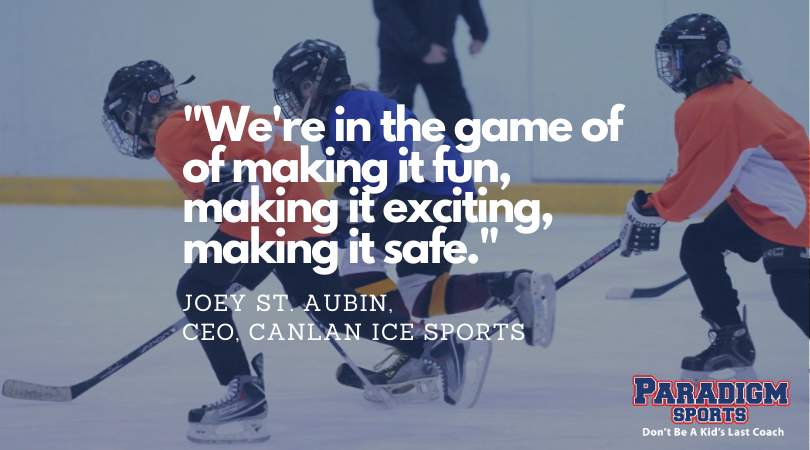
The online version of the same article in the Sun Newspaper (yes, there are still people that read the paper, yours truly is one as my first “job” was carrier for the Sun for 8 years) starts with the quote that I shared in our newsletter …..


One of the main contributors to the article that JJ talked to was the CEO of Canlan Ice Sports, who run 3 multi sheet ice rinks in the Vancouver and 12 others in Canada and Illinois.

He shared how they have reinvented the format for both their adult and youth recreational leagues which I am very familiar with, having coached in all of the facilities for years and then when my son’s minor hockey “career” was over, in lieu of pursuing the junior hockey path he found very frustrating (as did I), he accepted an invitation to play for an adult team playing in ASHL tier 1 even though he was 18 at the time.

He was able to play 2 seasons with that team but like all others, his season ended March 13th, 2020 and I know he is itching to return to play once a week with his buds as his hockey bag still sits fully packed in our garage.

I shared the highlights of the article at one of our many home cooked dinners we have had the last few months and he shared one of his fondest memories playing hockey growing up we not the 5 on 5 recreational or competitive teams he played for, but was the spring 3 on 3 on smaller ice surfaces or 3 on 3 , 4 on 4 on full ice with modified rules.

For me as well, that was some of my fondest memories, going back to watching him play with the “big boys” when he was invited to play 3 on 3 with his counterparts who were all a year older for his first spring “season” of 12 games from end of March to mid June once a week.

We played in a faculty that had 3 smaller ice surfaces that became a go to for many associations in the winter for practices, small area games and then a natural fit for cross ice hockey (ice sheets are approx. 45% smaller than a full sheet)

3 on 3 had rules to keep the flow going of the game including floating blue line (once entered the offensive zone the red line then became the blue line to keep the puck moving), changing on the fly (vs .buzzers that were being used from H1-4 when we did play full ice) and no penalties, only penalty shots.  No body checking for all age groups also.

Each year thereafter he would ask me to put a team together as he had so much fun so we did and many of the original players and goalies returned year after year as they had so much fun.

Even coaches had fun, as did parents who watched many of the games from the pub (many of which would sure one of their counterparts would be the DD)

When the boys got into their teens, one of the players grandparents was the head skills developer for one of the Canlan sheets near us and asked us if they boys would like to try full ice 4 on 4 or 3 on 3 which is what really kept the bug going for my son and all of his friends.

THEY Loved both options, and although scores were kept, it was literally watching pond hockey and although I was their coach, I encouraged them all the time to just go out there and have fun, they already had their winter seasons with plenty of competitive games and practices, this was just an opportunity to keep their skate legs going once a week in the offseason.

My daughter also played one season of “fun hockey” with one of her softball counterparts, even though she could barely skate at the time, so Canlan and the other private facilities do have several fun progams and youth and adults to consider (although I am not a fan of the competitive spring hockey model that has evolved as have have shared for years)

So when I saw how Canlan was improvising so kids and adults could return back to play I same some of the similar rules we had played with as well as new ones so they could ensure that those that returned back to play could do so safely.

Canlan, like many other multi-sheet corporations like Planet Ice are privately held and run, and their recreational leagues do not fall under the umbrella of Hockey Canada.

The upside for them (and for all the hockey keeners from youth to adults) is they can run programs year round but the cons are the coaches or officials do not have to be Hockey Canada certified, nor do they qualify for Hockey Canada’s insurance program which Tom Renney et al have announced the contagious disclaimer is going to remain unchanged until 2024 to permit local hockey associations to return to play in the fall.


Some of the things that Canlan is doing to permit their leagues to start up again when physical distancing permits

#1 – In lieu of 5 on 5 (with goalie), they will be 4 on 4 (with a goalie) for cohort groups of 10 per bench (8 skaters, one goalie, one coach)

This will permit more space between the players during game play and comply with current PHO cohort guidelines

#2 – NO penalties, in lieu penalty shots (think basketball free throw)

The difference with the way penalty shots will be done Post COVID-19 is those that are awarded the penalty shot in lieu of puck being placed on the centre ice face-off dot and player skating in on a breakaway, the puck will be place in between the hashmarks and players will have to shoot for there to try and score.

OK potentially for adults, teenage players who will have the physical strength to do so, not so much for players U12 but that will adhere to the LTAD models that are restricting competitive games

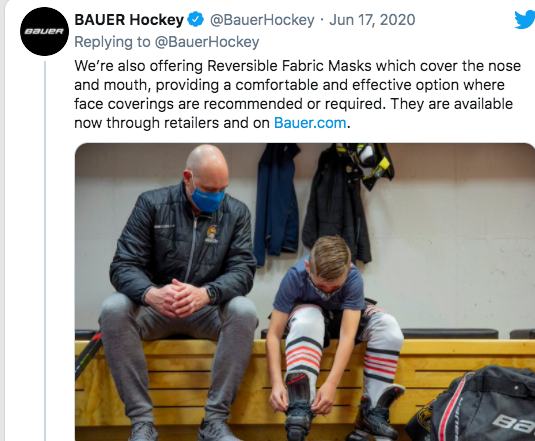
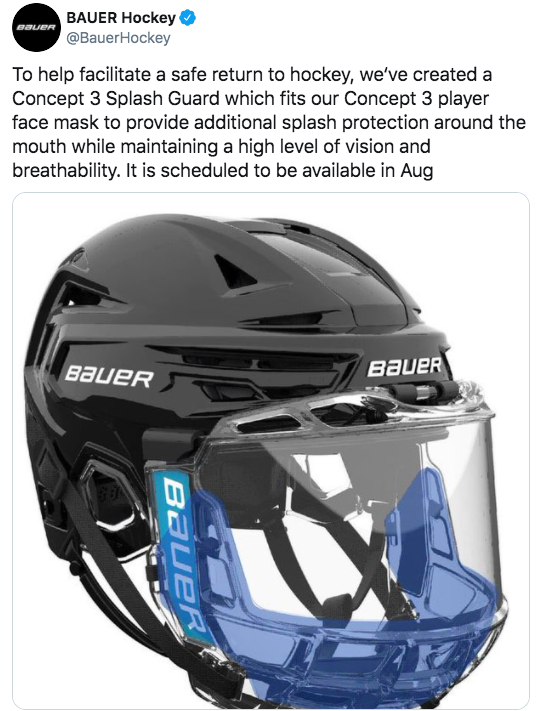
# 3 – Face masks – Canlan is also working with Bauer for various of masks that players can use while playing, as well as ones for coaches, administrators, on ice officials and even parents/fans


#4 – No Face-offs – Ensures Physical Distancing is adhered to with two 10 minute running time periods (vs. 3 15-20 minute stop time)

#5 – Refs will have electronic whistles (pushing a button vs. blowing thru)

#6 – Social Distancing Dots on the bench (for 4 additional players to sit and coach to stand)

#7 – Water Bottle Shield on the bench

** Pre-Covid, it was amazing how few players brought water bottles to practices when I was doing coach evaluations … I suspect that the awareness created with COVID that will no longer need a reminder

#8 – Pregame questionnaire and “zone control attendant” to ensure adhere to social distancing when come to the facility, will be escorted to their dressing rooms that has been marked to ensure players/goals get dressed 6’ or more apart

#9 – No Showers (yikes, that could lead to some stinky drives home)

#10 – No dilly dallying in the dressing rooms post game

Translation – NO BEER for the ASHL players and one of the best part of playing adult recreation team sports, the post-game rituals and conversations in the dressing room, dugout or benches so in lieu this means they will have to improvise, adapt and overcome (i.e. head to a pub or an empty parking lot and park all their cars and open bumpers, doors to permit social distancing and ensure can answer the first question everyone will have) …..

WHO HAS THE BEER (cooler, water etc)? (The Snack)

Before the last words everyone will say as they are closing their doors to head home

WHEN DO WE PLAY AGAIN?

Kudos to Canlan, Bauer and other organizations that are working on the ways so that can all return to play the games we love to play, coach, ref and watch as safely as possible.


If you pick them, PLAY them

Posted Posted in Athlete, Coach, Organization Executive, Parents

Earlier this week I received a message thru our Facebook page then exchanged a few emails with a parent who reached out as they were concerned that his sons U13 competitive stream (rep) coaches were running short bench game after game including having specialty teams like a power play, penalty kill.

It was not the first reach out I have received nor do I suspect it would be the last but the parent shared with me that he came across the blog that I had written about my son whose coach used the very same short bench tactic time after time, but for me really became personal when he did so a month after my mother passed away and he shared my son had dedicated the game in her memory

The wave of emotions that I experienced then is not as high now as I have really tried to focus on the half-full approach working with coaches and parents in recent years to highlight the good work that is being done by many youth sports organizations to bring the game back to the kids.

I have always been a believer in all the sports I coached to give every player an opportunity to contribute to the outcome, and even went to the extent to ensure that every player had opportunities to play positions that everyone wanted to, in baseball to play pitcher, shortstop or catcher, in hockey all positions including goalie until U13 (even then had to have players suit up when both our goalies got injured).

The reason?


In this day and age where more and more kids are pulling out of youth sports as Project Play highlighted last year where 62% “retire” by the age of 11 after an average 3 year “career,” one would think that youth sports organizations would be doing EVERYTHING possible to reverse these trends and not turning a blind eye to coaches that are missing what youth sports should be, a safe environment to develop not only the skills of the game but skills of life.

What life lesson does a 11-year-old kid learn when he does not get the opportunity to play when it is their time to go out?

Having talked to many kids that were victims of short benches going back to 7-8 years of age, all told me the reason they quit is the coach only played their favorites.

Here’s my take on the coaches that do so.

If you pick them, PLAY them.

The worst culprits in the youth sports space that run short benches to win games at all costs are the ones in the competitive stream or rep level, but even when I have had recreation stream coaches in clinics or workshops they have shared with me they have seen more than their fair share of coaches that run short benches to win games, some as early as the beginning of the game, many in the latter stages of a game when it is close.

In many sports, particularly the recreation level, youth sports organizations do have what is called fair play, equal play policies where coaches must play all players as equally as possible.

But entice those coaches with a tournament trophy, banner for league or playoffs, or just a feather in the cap as their team won against a rival association then it is like offering a bonus to a car sales rep for selling 20 cars in a month … it becomes the end all and be all, do whatever it takes even if you have to take shortcuts to do so.

The big issue I have when coaches do so is they picked the players for their teams either thru the tryout process (which painfully starts earlier and earlier every year) or a draft (usually started U9 age groups in many sports).

This means that they chose the players for their teams yet they think nothing of sitting a player and playing their favorites game after game in lieu of focusing on developing every player on their team so the team as a whole collectively gets better?

They also will have those very same favorite players on specialty teams which further deprives players of playing time and the opportunity to contribute to game outcomes.

Over the last few years, I have highlighted some examples of nations or sports organizations whose participation rates are not declining like many of those are in USA and Canada but are GROWING.

Perhaps youth sports orgs and their coaches (which I recognize many are volunteers) could learn something from those as they also have had many players reach high levels as a result of their development models.


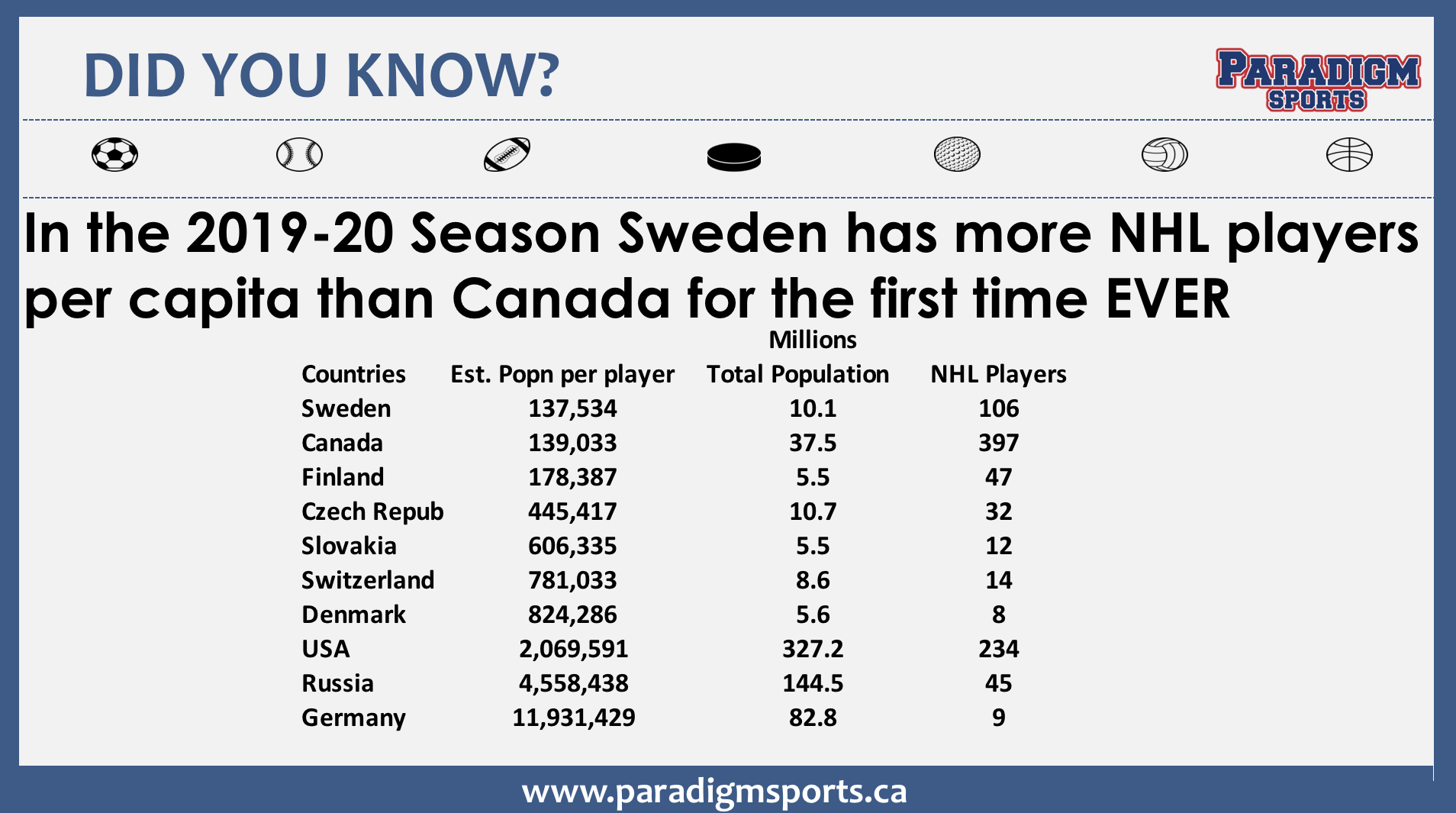
SWEDEN


Hmmm .. maybe Sweden is on to something in terms of the player development model?

What makes the Swedish hockey model different?

#1 – All of their ice rinks are community-owned, unlike Canada and the USA where private multi-sheet facilities are almost on every street corner like a Tim Hortons is in Canada or Dunkin Donuts in the USA. Because they are community rinks and Sweden recognizing the importance of multi-sport participation they melt their ice on April 1st every year.

This means NO SPRING HOCKEY.

A phenomenon that has exploded in Canada in the USA that both Hockey Canada and USA Hockey are not sanctioning as they don’t want kids to play hockey year-round.

#2 – Because of the Spring Hockey model, the youth sports coaches that coach in winter as volunteers may aspire to get a paid position coaching in the spring which means they have to win as many games as possible to apply for those spring hockey coaching gigs.

#3 – Unlike Canada and the USA, Sweden does not COMPETE until the kids are U15 age (13-14), there are no scoresheets, scorekeepers, standings or individual stats being kept

Why?

Because Sweden’s model emphasizes the importance of focusing on the core skills of hockey during the key motor skill acquisition years.

#4 – Practice to Game ratio is minimum 3:1 also, as Sweden recognizes that players develop in practices, not games and in some instances with the explosion of spring and travel teams, kids as young as 6 years old may play over 80 games in one year, equivalent to the NHL?

In terms of the practice to game ratio in Canada, this could be fixed very easily as most rep teams get 2 practices, 2 games a week, convert one of the game slots to a practice slot and alternate home and away weeks with other teams in your tier.

Voila – 3:1 Practice to game ratio.

Based on the fact that parents pushed back because their 6 year old super elite prospects would not be able to play full ice hockey when Hockey Canada rolled out cross-ice hockey a few years back (proven to optimal development) I suspect although a simple fix, the push back will be even worse.

The fixation with playing competitive games in Canada is too much, too early and we could learn from Sweden as well as another country that is setting the bar, Norway


NORWAY

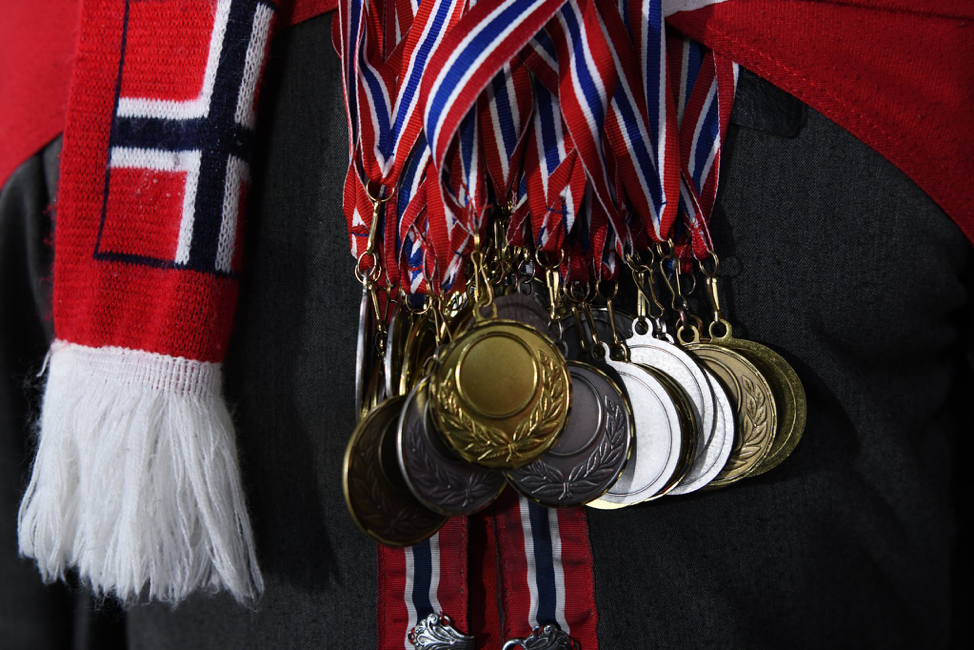
Another country who has set the bar for reaching the highest level of competition is Norway, who won 39 Medals in the 2018 Winter Olympics made them the all-time winningest country since the inception of the Winter Games.

Like Sweden, they don’t promote competition in youth sports until the kids become teenagers (13) and focus on multi-sport athleticism so kids become the best athletes they can become.

They both focus on the importance of playing with their friends, playing for their communities (vs. travel teams) and having FUN.

As a result, both nation’s youth sports participation rates are over 90% vs. those in Canada and the USA seeing the attrition rates we are seeing.

They also DON’T have the issues attracting and retaining officials like we do where our rates are as high as 50% of young officials quit in their first year, 30% every year thereafter due to the abuse they are taking from those winning at all coaches and over the top parents.

Coaches, if you pick them, play them.  Focus on developing all players and winning will be the byproduct in lieu of the focus.

AND

If you do so, they will love the game more at the end of the season than the beginning and come back with big smiles on their faces next season in lieu of many of the players quitting a game they once loved.

Don’t be one of “those” coaches that thinks nothing of sitting a 10 year old kid to win a game when every player on your team should be given the opportunity to contribute to the outcome, win or loss.

In doing so, their confidence will remain intact and like all the players I coached their only questions after the game will be ….

  1. What’s the Snack Coach?
  2. When do we Play again?

If you are still playing a sport in your adulthood as still love the game as you did as a youth player ….

The first question you ask when you get in the dressing room?

Who has, how much is the beer?  THE SNACK

When do we play again?

Take the high road and if you pick them, PLAY them so they keep playing well into their adulthood.


PS Tagline - Dont be a kids last coach


Why All Hockey Coaches Should Wear Helmets

Posted Posted in Athlete, Coach, Organization Executive, Parents

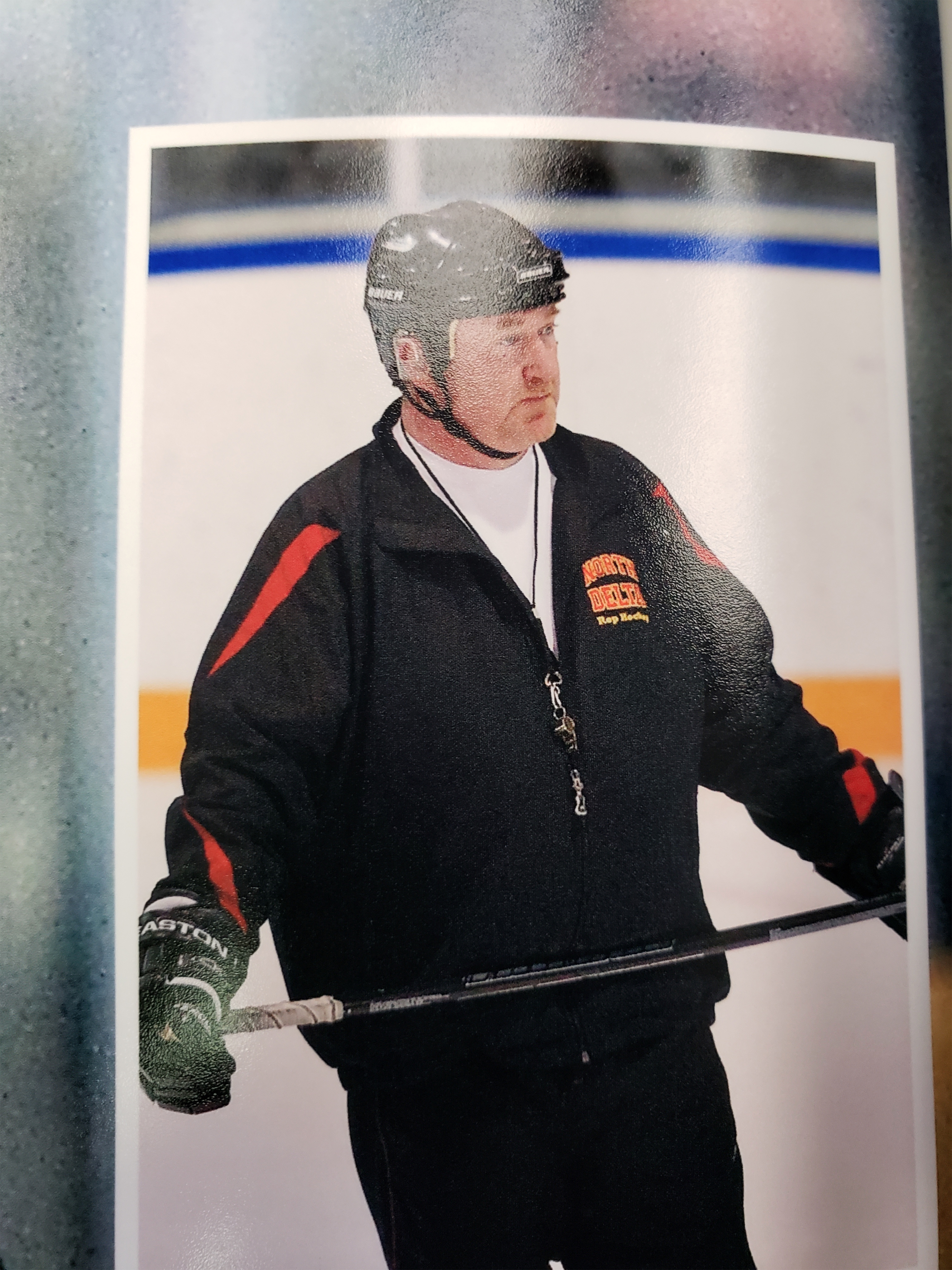
Picture of an image in the photo album I received after coaching peewee AAA

Having suffered a few major concussions myself I can relate all too well of the aftermath and challenges for recovery.

My last concussion had nothing to do with playing sports, however, it was when I was on a friends stag and while at one of the many bars we visited that evening that I share via those that told me after the fact as I have no recollection of the events I received a serious beating by three men when I jumped to the aid of my buddy who had been hitten over the head with a beer mug and knocked out.

The only recollection I have of the event was when I awoke in ICU of the hospital I had been taken to a couple of days later and had NO idea where I was, how I had gotten there, and recall vividly that I had the worst headache EVER.

At my side was my then-girlfriend, now my wife of 25 years who wept when I woke up saying she was so happy I was OK to which I said to her, OK?  My head is exploding, I’m hungry and I want to get out of here.

Thanks to my mother being in a couple of major car accidents when I was young, the second leading to her being hospitalized for over a year while she recovered from a broken neck and back I have always had an aversion of being in hospitals, particularly ICU.

My girlfriend drove me home and took several pictures of my beaten face and bruising on my back and arms for evidence for the criminal prosecution which I buried away long ago (back in the day when digital was not commonplace as it is today) but another recollection I recall is how I did not recognize myself as my face was so bruised from the punches and kicks to the face I had taken.

I share this with you as I wanted you to know that I can relate the challenges that athletes face today when they are dealing with a major concussions, it took me over 3 months before I was symptom free from my last one (diagnosed) but as a result of this being my third, and the highest severity, concussion the specialist that I was dealing with said I would have to stop playing any form of contact sports which meant my club rugby and adult recreational hockey days were over.

Having been an athlete for the better part of my life to that point, most of which playing competitively in various organized contact sports it is the reason why I then shifted to playing slo-pitch (although as years evolved and I took the mound as a pitcher dodging the dingers was no the smartest idea) and coaching.

Looking back at dealing with the fog, headaches, balance issues, nausea and even bouts with depression and frustration I can say first hand that dealing with a major concussion is not pleasant, particularly when you are very active.  The other part to this day that I have deal with is the complete loss of memory not only of the event itself but approximately 2 weeks prior to when I was concussed.  Many of my friends at the time were members of the Vancouver Police Department, Paramedics, Fire Department who all helped me fill in the blanks as several were at the scene and argued that the criminal proceedings would be a slam dunk (which only one of the three was prosecuted due to “technical issues” but that is another story in itself)

As a result of my recovery forcing me to have bed rest, dark room for a few months, I also missed two months of my third term at BCIT of my diploma in Marketing Management that followed my degree in Physical Education in UBC as my career aspirations were to get into the business side of sports.

That never came to fruition until many years later when I recognized we are in the business of developing youth into adults, and I have now coached boys, girls, young men and women for over 25 years of coaching and as a result of this and other experiences I dealt with growing up taught me the importance of resilience and how to overcome adversity, one of the core life lessons one can learn thru sports.


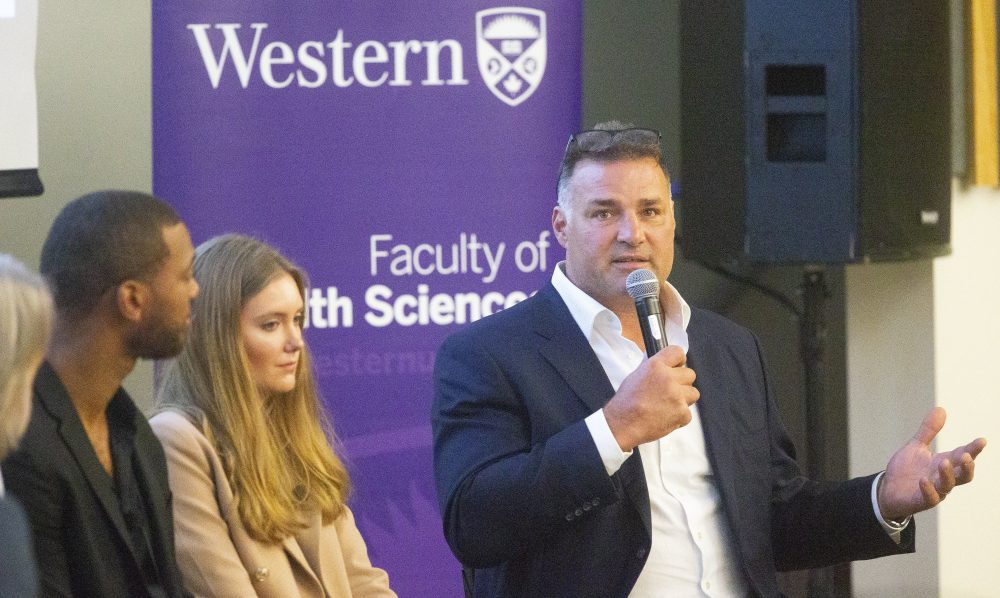
Source: Mike Hensen/The London Free Press/Postmedia Network

I write about the impacts of concussions this week as recently read another article that Eric Lindros contributed to coincide with recent symposium regarding concussions and applaud him for becoming a passionate advocate for concussion awareness due to being forced to retire from the game, like his brother who did so much earlier in his career, as a result of concussions he sustained.

I don’t think anyone that has followed hockey can forget when Scott Stevens hit Eric in the playoffs where he blatantly hit him directly in the head at full speed leading to one of his many concussions.  Stevens was infamous for those types of hits (another was the infamous blindside hit to Paul Kariya) but fortunately, the NHL has taken steps to eliminate them from the game and concussion protocols subject to evaluations if suspected to ensure a concussed player like Paul does not return to play in the same game.

Here as some of the numbers pertaining concussions in general, however, not specifically impacting the game of hockey that was highlighted in the recent article;

  • One in five of us have a lifetime risk of concussion
  • Half happen to youth under 19
  • 60% during sport and recreational activities
  • One in 10 youth suffers concussion requiring medical attention
  • 30% of those visits are recurring
  • Majority return to play within a month but 30% have longer-term symptoms

As I went thru each one of the points above, I check all the boxes but am happy to say have been symptom-free since I shifted to coaching many years back.

One of the kids that I coached in hockey the following year met many of the above also he was unable to return as he fell out of hammock in the summer and hit his head so hard on a rock he had to take a year off from all forms of contact so it does not have to be contact in hockey, or other contact sports like football, rugby, concussions can happen no differently than other injuries.

Fast forward from the day I woke up in the ICU, when I first started coaching Minor Hockey I did not wear a helmet, rather a baseball cap as did almost every other coach at the time as we naively thought we did not have to and did so for several years until Hockey Canada made wearing helmets mandatory for coaches.

This change went into effect in the 2008-9 season, after a coach in Alberta died after falling on the ice and other a coma with a head injury.  At the time, like there is with any changes for safety reasons there was a lot of push back from coaches.  The rule now applies to all winter minor hockey coaches of sanctioned leagues, Junior B, A, and university coaches.

Ironically, the very year that the helmet rule was implemented, I was coaching a couple of teams, helping my sons Atom A1 (AAA) team and also coaching an Atom rec team to honour my agreement with a player that returned to play I would coach his team after taking a year off after his father passed away.

During one of our early 6 AM practices for the Atom Recreation team, I was talking to my assistant coach explaining the drill set up as the kids were doing stick and puck before I knew it I was lying horizontal on the ice after player skated into me.  Per my AC, he had caught an edge and slid into the back of my knew and I fell backwards and had hit my head on the ice.  I did blackout for what felt like a few seconds perhaps more and then all the players and my AC came over and said COACH are you OK?

Thankfully I was able to get up and finish the practice (albeit felt a little woozy having my bell rung) and was reminded why coaches should be wearing helmets for their safety just as much as players wear for theirs.

It is that last point that I wanted to address in this week’s post, last week I was asked to present for the Pacific Coach Amateur Hockey Associations Coach Coordinator annual meeting on the changes to this year’s evaluation process of competitive coaches and the risk manager reminded all the coach coordinators that any outside skills providers they have on the ice MUST wear helmets.  Many of which that also run skills sessions in Spring Hockey do not wear helmets when doing so but if they do so when on the ice for sanctioned minor hockey ice sessions the insurance could be voided.

I get the fact that wearing a baseball hat is more comfortable than wearing a helmet, and many skills providers are very adept skaters, but as a result of a helmet saving me from yet another head trauma, worse yet potential death, I can’t for the life of me understand how one wouldn’t.

To date, the helmet rule does not apply to spring coaches, independent skills providers that are not certified by Hockey Canada or NHL/AHL and other pro league coaches which has me shaking my head in disbelief how their insurance costs are not thru the roof as a result.

Kudos to Hockey Canada, PSO’s and RSO’s like PCAHA for mandating minor hockey coaches to wear helmets for their safety just as the players have to wear them for theirs.

I only hope that spring hockey programs, NHL and affiliate professional team (i.e. AHL) coaches would follow-suit and not wait for a coach to be seriously injured or die as a result of not wearing a helmet during practices.

That’s just my two cents.

Don`t be a kids last coach


BONUS – Download a FREE printable PDF version of this blog HERE


When is the culture of youth sports going to change for the better?

Posted 1 CommentPosted in Athlete, Coach, Organization Executive, Parents


In the last few weeks, there has been a lot of press that has had me shaking my head in utter disbelief regarding the current culture of youth sports. The very fact that harassment has come to light to this extent makes me ask the question over and over again, when will the culture of youth sports change for the better?

What should be a positive, amazing experience for today’s youth to not only learn the skills of the game, but the skills of life as it was when I grew up, has evolved to a culture of winning at all costs, a multi-billion industry where only the haves can afford to pay to play and yet no accountability for protection of the very same youth to have a safe to fail experience or safe from any forms of all harassment.

The first part of this post will highlight the issues regarding current youth sports culture, the second 1/2 will provide recommendations on what we can do to change the culture for the better.

THE ISSUES

A few of the incidents that made the headlines since the fall include;

St. Michaels College Sex assault scandal

Cost of Coaching Abuse – The Province

Hockey Players part of alleged bullying, assault at North Shore Winter Club

13 Year Old Pens resignation Letter from Abbotsford Hockey Team, alleging bullying

The latter three happened in Minor Hockey Associations in the lower mainland of Vancouver so it was very close to home and had my head spinning as a result.

This is my take on the ones that happened in the lower mainland;

  1. COACHING ABUSE:

Coaches are required to take a number of courses to ensure that they DO NO HARM, no different than that of teachers, social workers or other adults that work with those in the vulnerable sector.  Most organizations now require all those that would be interacting with kids to do criminal record checks (CRC), respect in sport (for coaches or parents), concussion awareness, NCCP clinics that include making ethical decisions for the competitive stream.

Although I believe that CRC’s are needed and have had no issues when requested to do, there are few issues with them we still need to work out;

  1. Only if the coach had actually been prosecuted of assault will it show up even if there were legal proceedings pending (takes years for cases to get thru the system).
  2. It can be a lengthy process and many organizations have trouble enforcing as a result.
  3. I have also heard several coaches (which includes myself) asking for better ways to manage if you are involved in various roles with the vulnerable sector to do ONE CRC per year, one year I had to do four with overlapping sports and charities I was involved with.

Even with all of the certification requirements including CRC’s now mandatory for all hockey associations, the very fact that a young man could not cope with the abuse from a coach he had sustained while playing hockey that led to mental health issues, alcohol/drug abuse, dropping out of school when he had been a straight-A student and attempted suicide made me cringe.  In lieu of developing life skills that include resiliency, this coach crossed the line with abusive old school coaching tactics and pushed this player beyond the tipping point regardless if he and the minor hockey association he still coaches for argued there was no cause and effect.  Even the players Dad admitted regrets he should have done something at the time when his son was being berated over and over again by the coach.

What really was a tipping point for me is that the model for competitive hockey in the lower mainland had shifted in recent years, and many (not all) of the larger organizations are offering stipends from 1.5K to 10K to “recruit” non-parent head “quality” head coaches for their competitive rep teams.  In this instance, the coach in question would have been one of those “paid” (aka professional) quality coaches, many of which are very young, inexperienced who were motivated to coach by the honorariums offered.

It takes YEARS of development and lifetime learning to become a great coach, plus it has increased team budgets so parents are on the hook for same, adding to the costs to the most expensive team sport in Canada for what should be a cost-effective option for players to play at a high level vs. the major midget/academy model that has evolved the last 10 years.

Had I been a parent of player on that team, or that of the player in question, as coaches are now paid by parents on the team (not by the associations directly), I would have been calling for the coaches immediate termination for the way he was treating players as the coach is under contract to DO NO HARM.

  1.  NEVER CRITICIZE YOUR TEAMMATES (RESPECT)

The fact that players in three of the above incidents are harassed their very own teammates in my day was totally unacceptable and is the way I have coached every team as a result.  John Wooden, arguably the greatest coach of all time, had 3 rules, one Never criticizing your teammates – translation, respect your teammates, coaches, officials, other teams, classmates, teachers, parents, elders etc.

This is a direct reflection of the lack of respect now prevalent in youth sports in its current culture that some coaches are not enforcing the value of respect on their teams, worse yet the organizations or sports as a whole they are involved with.

Kudos to the young man of the Abbotsford Minor Hockey Team for taking the brave stance by standing up against the current culture and resigning from his team due to the harassment he received from a few of his teammates. This should have lead to an apology from the association, coaches but over a week later after it was released the association has merely issued a statement that they take harassment seriously and no communication to the parent or player.

  1. DO NO HARM – 2 DEEP RULE

Since the article was posted in the Province outlining the abuse players took at North Shore Winter Club, the head coach has received praise for stepping down due to the decision of the executive after review reinstating the offenders on his team in lieu of suspensions he and his assistant (now head coach) for the remainder of the season, there was a MAJOR error in omission in the article.

For as long as I can remember there has been a 2 Deep Rule in Hockey, evolving as a result of Graham James abuse of Sheldon Kennedy and Theo Fleury and other major junior players under his watch.

The rule means that there must be 2 adults in the dressing room at all times to ensure players are safe, there was no mention if the head and assistant coaches or any other adults were present in the dressing room when the incident occurred.  This has been one of the main issues that I have seen with the “paid” non-parent competitive stream model, as they have no kids to bring to or after games, many will arrive well after the requested time to arrive at practices or games and leave soon after their post-game or practice debriefs leaving the dressing rooms abandoned

Had they enforced the 2 Deep rule, this NEVER would have happened in the first place.

In recent 3 part series released by CBC on sexual abuse that has taken place in youth sports, , the sport with the highest number of charges and convictions, twice that of the second amateur sport with high enrollment in Canada, Soccer (now the #1 youth sport in terms of registrants), was Hockey (approximately 50K less registrants than Soccer).
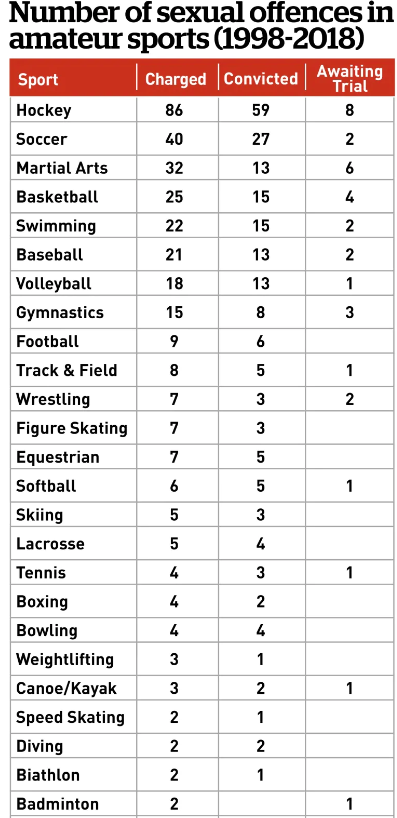
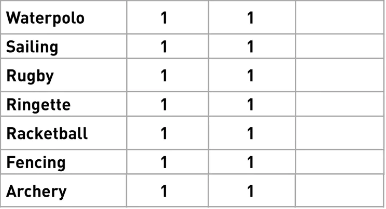


Ironically, my favorite sport as both a player and coach, Rugby, has had only one charge and conviction of sexual assault the last 20 years which one of the writers of the series attributed to the number of charges and convictions were proportional to the level of enrollment in particular sports.

Having played and coached many sports, I would argue the contrary, it is due to the current culture of many sports, the one with the highest number of charges in convictions is Hockey, which is now the second largest team sport in Canada in terms of registrations (Soccer is number 1 by approx 50,000 registrants).  The sport that I loved the most as a player and coach was Rugby, where officials are still called sir and although it is a hooligans game, it is played by gentlemen (and now ladies thanks to growth of female teams)  whose registrations have grown significantly due to success of our 7’s teams but only have one charge and conviction the last 20 years.

I naively thought when Graham James incident came to the forefront it would have credited the awareness and shift in culture necessary to ensure did not happen again but sadly the last decade has seen other incidents across the globe come to light including;

2012 – Penn State Football – Jerry Sandusky

2016 – English Football – 839 alleged victims of 294 suspects

2017 – USA Gymnastics – over 350 girls abused by Larry Nasar

2018 – Canadian Gymnastics – Dave Brubaker

2018 – USA Swimming – Sean Hutchinson Cover Up

2018 – Canadian Alpine Skiing – Bertrand Charest

2019 – South Korea skating

2019 – Multiple Canadian Sports since 1998 – over 600 victims and 222 convictions

In the CBC 3 part series, Sandra Kirby, former Olympic Rower, and Professor Emerita at the University of Winnipeg was cited as sexual abuse is an underreported crime (as is many other forms of harassment), “this is just the tip of the iceberg” there could be thousands of cases where no one has come forward.

As far as I am concerned, ONE is too many, the current culture of youth sports MUST change for the better to ensure that no other child is a victim of any form of harassment.

  1. CURRENT SYSTEM: INTERNAL REPORTING AND REVIEWS

The very fact that abuse of any kind continues to run rampant across all sports is due to the fact that the majority of sports organizations have internal reporting mechanisms that lack anonymity for the victims of harassment and internal review boards more often than not will try to save face (cover it up) vs. doing the right thing (being accountable and owning up for the incident and implementing the necessary steps to ensure it never happens again). Perfect example, USA Gymnastics, even after the scandal came to light, the leadership group was still trying to cover up evidence and as a result the US Olympic Committee is in the process of removing their sanctions as a National Governing body.

The reviews at local organizations (if they take place) are done by board members (the majority of which have kids in the same organization) that are untrained volunteers with limited expertise (if ANY) in the subject matter.

  1. NO BOARD/COACH/PARENT OR PLAYER EDUCATION REGARDING SEXUAL ABUSE

 There is currently not a universal system in place to educate the stakeholders on how to identify and prevent sexual abuse so that we can protect children BEFORE it happens.

Board members are left on their own accord to implement policies, procedures and continue building on so that all stakeholders understand the process.


SO … HOW DO WE ENSURE THAT WE DO CHANGE YOUTH SPORTS FOR THE BETTER?


  1. FINALLY – AN ACKNOWLEDGEMENT WE HAVE A PROBLEM WITH THE CULTURE OF AMATEUR SPORTS

Thanks to recent press bringing the issue of harassment to light on so many fronts and mediums (print, digital, radio, TV and podcasts) and subsequent response by the highest levels involved in sports acknowledging WE do have a problem, we can now check this box off (although I and many of my colleagues in the space have been saying the same for YEARS) and the time for much-needed activation of systematic change of the current culture is the next step.
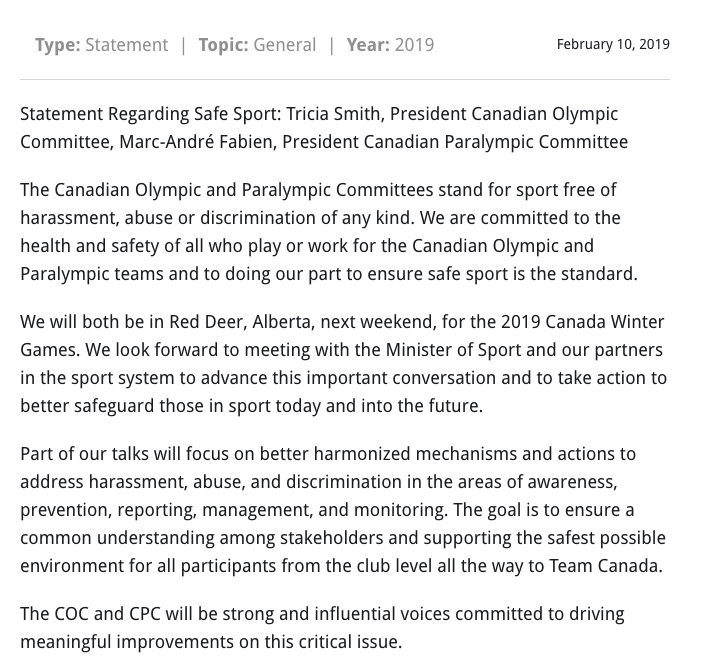
Joint Statement issued by the COC/CPC in response to the CBC 3 Part Series on Sexual Abuse in Amateur Sports

  1. IMPROVE COACHING EDUCATION/ENFORCE THE 2 DEEP RULE:

One of the biggest challenges I run up against is organizations feel that the initial certification coaches get is sufficient, which may varies by sport, some have extensive certification, others have none or very little.  Every sanctioned National Sport should ensure their Provincial, regional and local organizations comply with the minimum coaching education requirements including ongoing professional development.

Had the 2 Deep Rule (2 adults in the dressing room or areas where players are in contact with coaches) been enforced leading to suspensions/termination of coaches if did not adhere to many of these kids would not have become victims.

Almost every board member I have talked to in recent years is they are getting push back from coaches due to the up-front time commitment to become certified, if it only requires a CRC and respect in sport as the bare minimum, being out of pocket for fees until they complete all the requirements, and push back against any other courses once they complete their initial certification.  Many coaches are stating if they have to do any more they will quit as “they have all the certification they required”, they don’t have the time” or “I have been coaching for years” excuses.

Translation – the coaches got in it for the wrong reasons. Whatever has been asked of me by organizations if I had not done so already, I took the time and spent my own dime to do the education and certification without hesitation as it was all about the kids.

Initial certification and ongoing professional development is a requirement for teachers, social workers, physicians who interact with the vulnerable sector so the same should hold true for coaches, even volunteers.  A perfect example is volunteer firemen, who do regular training to stay current as it is required, not optional.

  1. IMPROVE BOARD/EXECUTIVE MEMBER EDUCATION AND POLICY STATEMENTS:

Just as coaches need to take certification, courses, clinics, so should new board members in key roles like President, VP, Risk Managers for local organizations.  More often than not, they put their hand up, get voted in as they either have no others vying for the same role OR they have support from membership aspiring for their political agenda’s.

In a study conducted with sports stakeholders across Canada where 27 sports were represented, administrators acknowledge they lacked the specialized resources in this area and was even greater in local clubs than in national federations. None of those surveyed stated they had received training on sexual abuse in particular. There is a need for training, information dissemination, awareness-raising, and clear rules and procedures.

Full accountability and transparency via policy statements and discipline for offenses should not be a wish, but an expectation from all key stakeholders of the membership to be met.

The time has come for no more cover-ups, not turn a blind eye, sweep under the rug, put up our hands in the air as don’t know how to deal with and so on.  Per Albert Einstein, if we keep doing the same things over and over again and expecting different results is insanity.

  1. INDEPENDENT REPORTING/REVIEW BY 3rd PARTY ORGANIZATIONS

We need to ensure that all members in sports organizations have a safe reporting and review mechanism independent from that of sports organization from the grassroots all the way to national level to ensure that issues do not get covered up to the point where hundreds, potentially thousands of youth athletes become victims as have in past.

According to the Canadian Minister of Sport and Science, Kirsty Duncan, this is her top priority, “I have one goal, it’s close the gap, and do the hard systemic change and this right going forward, to do everything we can to protect our athletes and our kids.”

Kirsty acknowledged in the same press release that the federal government is working on a third party that would be independent of the sports organizations to ensure reporting and discipline mechanisms are put in place.  She subsequently shared this tweet a few days later while meeting members of various sports bodies at the 2019 Winter Canada Games.
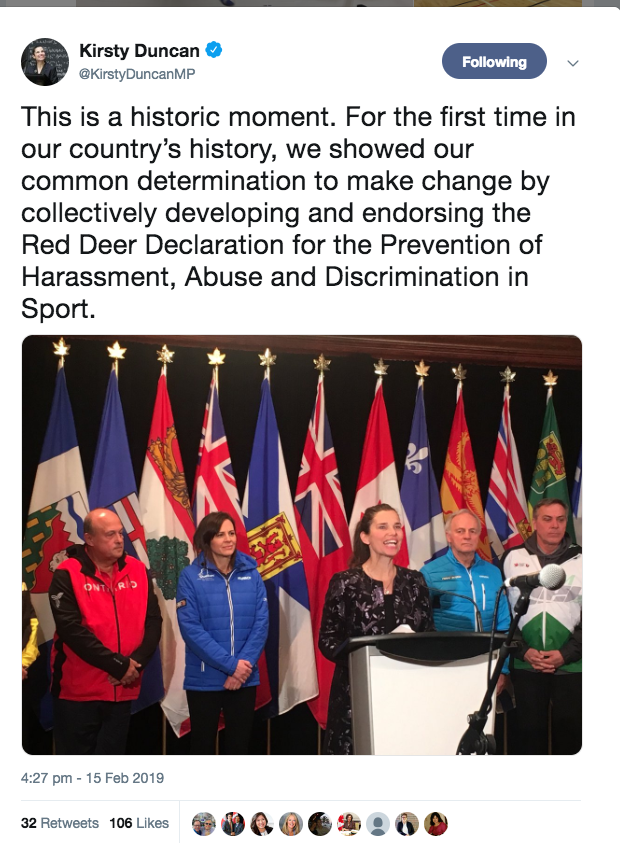
Now that the need for a change in current culture has not only been acknowledged, but those at the highest levels governing sport collaborating to develop the Red Deer Declaration to prevent harassment and discrimination of any kind will no longer be condoned in sport.  The much needed PARADIGM Shift is FINALLY on the horizon.

  1. PARENT AND PLAYER EDUCATION:

We need to educate parents and players on the various forms of harassment that can take place in youth sports, prevention is 99% of the cure, let’s not wait until more kids are abused.

Majority of parents that I have talked to regarding harassment issues that impact their own or kids on their kids teams either were unaware it was, in fact, a form of harassment in the first place (either denial or ignorance), they remain silent due to fear of being ostracized by other parents, coaches or the organization OR fear that their child’s chances to continue playing on top level teams will be jeopardized (due to perceived meal ticket their kids will get a scholarship or play professionally).

Although there are education programs for kids in schools regarding various forms of harassment and how kids can safely report or ask questions, there currently is no mandate for youth athletes to learn what are the various forms of abuse in a safe way (i.e. going to someone to ask questions, advice without potential repercussions) and better yet, how to prevent it.

The buck stops here, in order for the much-needed change to the culture of youth sports, we all have to accept ownership to collaborate to make the changes necessary.

This is the responsibility that we all have in youth sports, whether it be adult leadership at the National, Provincial, local association or respective coaches, official, board member or parents is to develop youth into adults.

Per Kristy Duncan when she responded to the CBC 3 part series regarding sexual abuse in amateur sports in the last 20 years;

“One athlete, one child is too many”. 

I could not agree more.

It is our responsibility as adults to provide kids with a safe environment for them to develop, without fear of verbal, physical or sexual abuse.

Let’s all work together to bring the game back to the kids … where it belongs.