If you pick them, PLAY them

Posted Posted in Athlete, Coach, Organization Executive, Parents

Earlier this week I received a message thru our Facebook page then exchanged a few emails with a parent who reached out as they were concerned that his sons U13 competitive stream (rep) coaches were running short bench game after game including having specialty teams like a power play, penalty kill.

It was not the first reach out I have received nor do I suspect it would be the last but the parent shared with me that he came across the blog that I had written about my son whose coach used the very same short bench tactic time after time, but for me really became personal when he did so a month after my mother passed away and he shared my son had dedicated the game in her memory

The wave of emotions that I experienced then is not as high now as I have really tried to focus on the half-full approach working with coaches and parents in recent years to highlight the good work that is being done by many youth sports organizations to bring the game back to the kids.

I have always been a believer in all the sports I coached to give every player an opportunity to contribute to the outcome, and even went to the extent to ensure that every player had opportunities to play positions that everyone wanted to, in baseball to play pitcher, shortstop or catcher, in hockey all positions including goalie until U13 (even then had to have players suit up when both our goalies got injured).

The reason?



In this day and age where more and more kids are pulling out of youth sports as Project Play highlighted last year where 62% “retire” by the age of 11 after an average 3 year “career,” one would think that youth sports organizations would be doing EVERYTHING possible to reverse these trends and not turning a blind eye to coaches that are missing what youth sports should be, a safe environment to develop not only the skills of the game but skills of life.

What life lesson does a 11-year-old kid learn when he does not get the opportunity to play when it is their time to go out?

Having talked to many kids that were victims of short benches going back to 7-8 years of age, all told me the reason they quit is the coach only played their favorites.

Here’s my take on the coaches that do so.

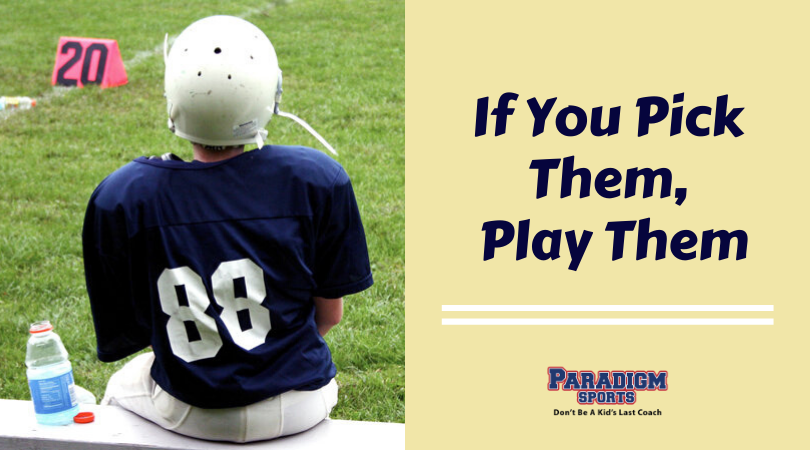
If you pick them, PLAY them.

The worst culprits in the youth sports space that run short benches to win games at all costs are the ones in the competitive stream or rep level, but even when I have had recreation stream coaches in clinics or workshops they have shared with me they have seen more than their fair share of coaches that run short benches to win games, some as early as the beginning of the game, many in the latter stages of a game when it is close.

In many sports, particularly the recreation level, youth sports organizations do have what is called fair play, equal play policies where coaches must play all players as equally as possible.

But entice those coaches with a tournament trophy, banner for league or playoffs, or just a feather in the cap as their team won against a rival association then it is like offering a bonus to a car sales rep for selling 20 cars in a month … it becomes the end all and be all, do whatever it takes even if you have to take shortcuts to do so.

The big issue I have when coaches do so is they picked the players for their teams either thru the tryout process (which painfully starts earlier and earlier every year) or a draft (usually started U9 age groups in many sports).

This means that they chose the players for their teams yet they think nothing of sitting a player and playing their favorites game after game in lieu of focusing on developing every player on their team so the team as a whole collectively gets better?

They also will have those very same favorite players on specialty teams which further deprives players of playing time and the opportunity to contribute to game outcomes.

Over the last few years, I have highlighted some examples of nations or sports organizations whose participation rates are not declining like many of those are in USA and Canada but are GROWING.

Perhaps youth sports orgs and their coaches (which I recognize many are volunteers) could learn something from those as they also have had many players reach high levels as a result of their development models.


SWEDEN
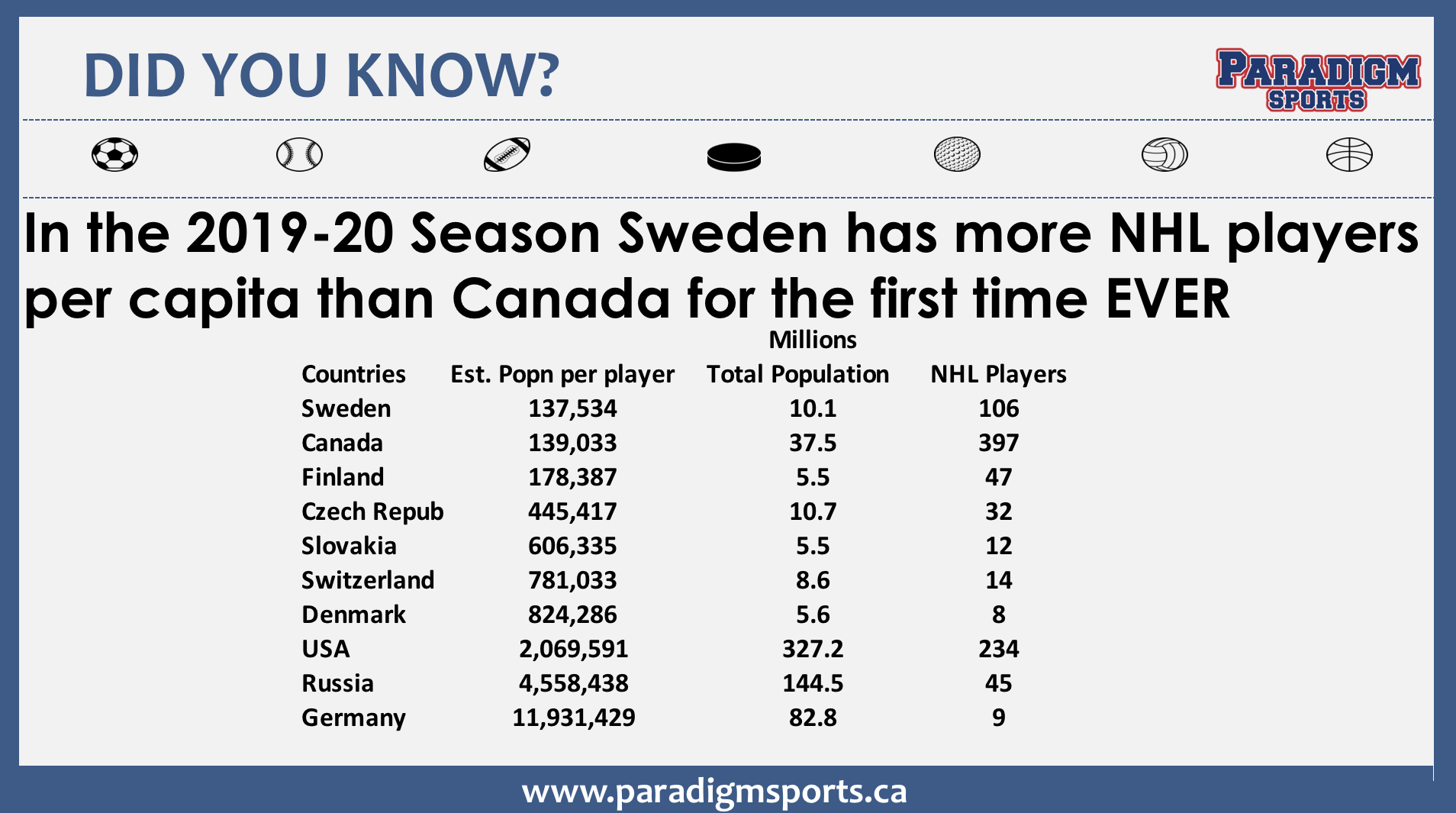
 

Hmmm .. maybe Sweden is on to something in terms of the player development model?

What makes the Swedish hockey model different?

#1 – All of their ice rinks are community-owned, unlike Canada and the USA where private multi-sheet facilities are almost on every street corner like a Tim Hortons is in Canada or Dunkin Donuts in the USA. Because they are community rinks and Sweden recognizing the importance of multi-sport participation they melt their ice on April 1st every year.

This means NO SPRING HOCKEY.

A phenomenon that has exploded in Canada in the USA that both Hockey Canada and USA Hockey are not sanctioning as they don’t want kids to play hockey year-round.

#2 – Because of the Spring Hockey model, the youth sports coaches that coach in winter as volunteers may aspire to get a paid position coaching in the spring which means they have to win as many games as possible to apply for those spring hockey coaching gigs.

#3 – Unlike Canada and the USA, Sweden does not COMPETE until the kids are U15 age (13-14), there are no scoresheets, scorekeepers, standings or individual stats being kept

Why?

Because Sweden’s model emphasizes the importance of focusing on the core skills of hockey during the key motor skill acquisition years.

#4 – Practice to Game ratio is minimum 3:1 also, as Sweden recognizes that players develop in practices, not games and in some instances with the explosion of spring and travel teams, kids as young as 6 years old may play over 80 games in one year, equivalent to the NHL?

In terms of the practice to game ratio in Canada, this could be fixed very easily as most rep teams get 2 practices, 2 games a week, convert one of the game slots to a practice slot and alternate home and away weeks with other teams in your tier.

Voila – 3:1 Practice to game ratio.

Based on the fact that parents pushed back because their 6 year old super elite prospects would not be able to play full ice hockey when Hockey Canada rolled out cross-ice hockey a few years back (proven to optimal development) I suspect although a simple fix, the push back will be even worse.

The fixation with playing competitive games in Canada is too much, too early and we could learn from Sweden as well as another country that is setting the bar, Norway


NORWAY

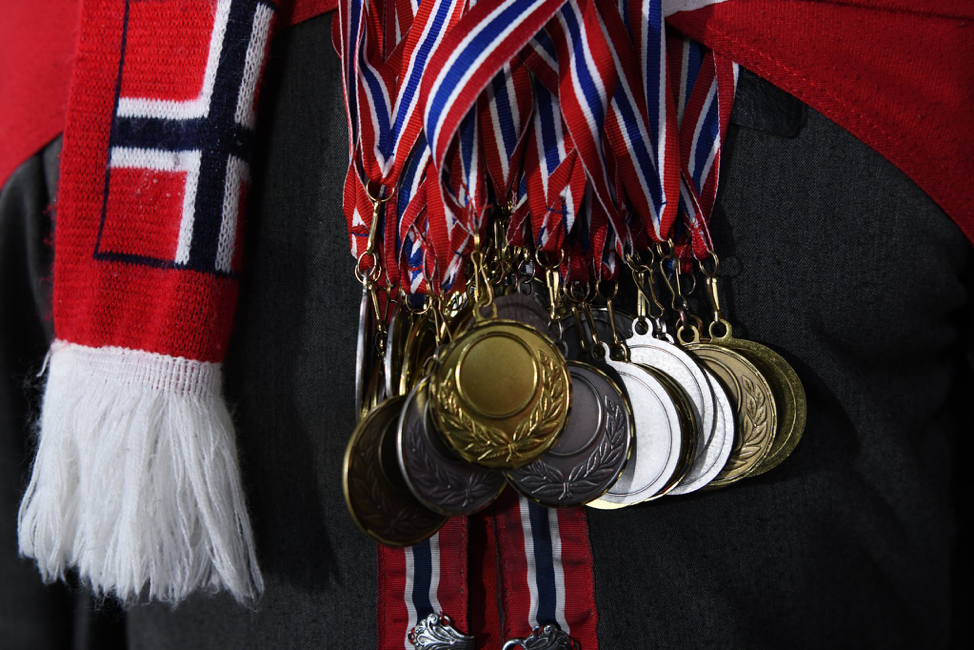
Another country who has set the bar for reaching the highest level of competition is Norway, who won 39 Medals in the 2018 Winter Olympics made them the all-time winningest country since the inception of the Winter Games.

Like Sweden, they don’t promote competition in youth sports until the kids become teenagers (13) and focus on multi-sport athleticism so kids become the best athletes they can become.

They both focus on the importance of playing with their friends, playing for their communities (vs. travel teams) and having FUN.

As a result, both nation’s youth sports participation rates are over 90% vs. those in Canada and the USA seeing the attrition rates we are seeing.

They also DON’T have the issues attracting and retaining officials like we do where our rates are as high as 50% of young officials quit in their first year, 30% every year thereafter due to the abuse they are taking from those winning at all coaches and over the top parents.

Coaches, if you pick them, play them.  Focus on developing all players and winning will be the byproduct in lieu of the focus.

AND

If you do so, they will love the game more at the end of the season than the beginning and come back with big smiles on their faces next season in lieu of many of the players quitting a game they once loved.

Don’t be one of “those” coaches that thinks nothing of sitting a 10 year old kid to win a game when every player on your team should be given the opportunity to contribute to the outcome, win or loss.

In doing so, their confidence will remain intact and like all the players I coached their only questions after the game will be ….

  1. What’s the Snack Coach?
  2. When do we Play again?

If you are still playing a sport in your adulthood as still love the game as you did as a youth player ….

The first question you ask when you get in the dressing room?

Who has, how much is the beer?  THE SNACK

When do we play again?

Take the high road and if you pick them, PLAY them so they keep playing well into their adulthood.

 

PS Tagline - Dont be a kids last coach


Why running short benches is NOT a good thing

Posted Leave a commentPosted in Athlete, Coach, Organization Executive, Parents

BONUS – Download a Free Copy of this Blog in PDF Format HERE

Last night I had dinner with my wife’s siblings as my sister in law was in town for a conference.

During dinner, my sister in law shared with me that my 12-year-old nephew had quit Hockey.

WHAT?  My nephew quit a sport he once loved and when I asked her why her response was “he quit because a lot of teammates were not getting play when it was their turn as the coach was focusing on winning games”

He was playing peewee recreational team and was one of the stronger players because two years ago when he aspired to play rep (competitive level) they were advised by several parents that the only way he would make one of the rep teams (the association had 3 rep teams for peewee age group at the time) is if they signed a contract that was the only sport he was going to play.

Again, WHAT?

He opted to keep playing rec (house) so could continue to play soccer, ski, and other activities.

My head was spinning,

  1. He was playing rec (house) and coaches are not permitted to run short benches.
  2. He would have to sign a contract to play only hockey when he loved many other sports?

She further shared that parents they have talked to in the community have said their kids also quit hockey for the same reasons and the associations overall membership has dropped by a few hundred kids the last few years as a result.

This is a MINOR hockey association who have recreational coaches focusing on winning at all costs and not promoting multi-sport participation which are two of the major issues that is leading to kids quitting.

This just a couple of days after I shared an article on our social media pages called “Why ‘Shortening the Bench’ in competitive youth sports” can be a good thing written by Jamie Strashin for CBC Sports.


Soon after I posted, I received comments from parents in Canada and Australia who shared the same belief as I, that it was so short-sighted, although kids may win a game, perhaps get more games as a result, kids just want to play and in the instance of my nephew he quit because he did not think it fair for his teammates to sit on the bench when it was their turn to play.

Why did they sit?  Not because they were tired or were being disciplined, but an adult pulled them back to one their “more skilled” teammates out in their place.

I have been against short benches since I started coaching youth sports and still am, regardless if it is competitive or recreational levels.  The very fact that my nephew quit because his teammates were being deprived of ice time shows that he GETS IT even at 12 years old and I will applaud him for doing so when I see him next.

Ironically when I was up in Whitehorse running clinics this past season, I had one of the coaches come to me and expressed the very same concerns, her son was one of the top players on his atom “development” team and was getting much more ice time than his teammates, at times he was being told by coaches to stay out for 2-3-4 minutes at time.

Like the 10 year old player reference in the CBC article, her son was also 10, but in lieu of being held back for another player to take his turn, in his case stay out for shifts much longer than should have had.

Just two more examples of the adultification of youth sports.

Here is my take on running short benches;

#1 – Coaches choose the players for their teams, whether it be competitive or recreation

If you PICK THEM – you play them.

The coach that was quoted in the CBC article, whom is a non-parent coach, “I chose them to be on the team because I thought they were good enough.  If they aren’t in a position to succeed, it’s my fault”

I could not agree more, it the coaches responsibility to develop ALL players on the team and they focus on doing so early in the season, as the season evolves and all players improve, collectively the team improves and ‘Voila’ Winning is a byproduct not the focus.

#2 – I believe that coaches that run short benches either (a) don’t have the training needed to develop the skills of all players or (b) think that winning at all costs is more important than giving all players an opportunity to contribute in all situations

90% of kids would rather play on a losing team than sit on the bench for a winning team

#3 – All parents pay the same fees, so all players PLAY. There are already lawsuits in the USA coming forth from parents due to the thousands of dollars they are paying for their kids to play to be reimbursed for their prorated fees and have others pay more for their kids that PLAY more.

#4 – Having surveyed hundreds of kids on my teams over the years what is not fun about youth sports, one of the top 3 answers I have received is “when coaches play their favorites” especially when it comes to crunch time in close games where associations have implemented fair ice policies to permit coaches to use their discretion to win games. Again, kids just want to have their opportunities to contribute to the outcomes of the games just like all their other teammates.

‘YOU WIN OR LOSE AS A TEAM’

There are so many examples I can cite, not just from Hockey, but others sports now as we continue to partner with various sports groups but the one that comes to mind for me over and over was a player whom I invited to play with our 3 on 3 hockey teams who was a great kid with great parents.

In our last season when all the boys were aging out of minor hockey (17 years old), we opted to play both small ice and full ice 3 on 3 and in our first couple of games of each, he would go out for a few shifts and I noticed he was gasping for air.

In the second game I walked up to him and said T, you ok?

To which he said with a big smile on his face, yep, just need to get back into game shape.

I then asked … “but you played on the Midget A2 this year (where they would have had 2 practices, 2 games, a dryland per week) so don’t understand why not in game shape”?

He replied “because I quit with 10 games left in the season because I was only getting a handful of shifts per game.  The coaches was playing his favorites most of the games including power play, penalty kill, pissed me off as I just wanted to play so I quit”.

“My dad complained to the executive but they did not do anything, argued that it was rep hockey and only house had fair ice policies (where coaches are not permitted to run short benches).”

I shook my head in disbelief, just as I do every time I think of it.

#5 – In this particular article, 10-year-old players were the focus, which it he Atom age group, and regardless if they are playing recreationally or rep it is still a development age group

All kids, regardless of level, are to play and if a coach in BC had ran short bench in Atom he would have been suspended for doing so.

The main reason why coaches should not run short benches is the message you send to the kids, their parents …. Sorry kid, you are just not good enough be out there in key situations or give us a chance to score.

I believe this is one of the contributors why parents act up in the stands, if they come to game after game as I have and many other parents I know and watch their son or daughter sit on a bench when it is their turn to play knowing we all paid the same for them to do so, is no wonder why parents get emotional, angry as is evident daily in print, TV and social media.

Don’t get me started on the coaches that think they get a get out of jail free card for peewee and above, they should still be rolling all their lines all the way through minor hockey, when they are no longer playing to play, then they can earn their ice time (i.e. Major Junior and above)

The ONLY exception where you would tell kids to sit on the bench depriving them of playing time (or any minor sport for that reason) is if you have to discipline your players.

As the same coach in the article referenced, if they are not listening, screwing around may have to sit them a few shifts.

Other reasons, if they take a bad penalty or don’t get a penalty called on them for things like slashing, cross checking, knee on knees, head contact, hitting from behind, poor sportsmanship, using foul language, criticizing their team mates or not respecting their coaches, fellow or opposing players/coaches or officials including the scorekeeper/time keeper.

The very reason why short benches have become so common and we are turning a blind eye towards same is the shift in youth sports to win at all costs in lieu of just letting kids play kids for the love of the game.

Look at the past decade when teams go deep into the Stanley Cup Playoffs, when players or coaches are interviewed after games, including when they put the hardest trophy in sport to win above their head they say “all 4 lines contributed, we had a lot of confidence and we HAD FUN.

Hmmm .. aren’t these the best players in the WORLD?  Making Millions of Dollars a year even in the salary cap era?

Here is a great presentation from one of our For the Love of the Game Virtual Event guest speakers, VJ Stanley, that he did for a USA Hockey Level 4 coaches (equivalent to HP 1 level Coaches in Canada) and early in his presentation shares insight why coaches should PLAY all their kids in minor in hockey. About 7 minutes in to the presentation shows a vide when he talked to Ryan Callaha when he was captain of the New York Rangers.


Any coach can run short benches and play their “favorites” to win games.

GREAT coaches develop all their players and provide them the opportunity to contribute to the outcome of games and in doing so build their confidence and competence and winning becomes a byproduct as a result.


Don`t be a kids last coach