

BONUS – Download a Free Copy of this Blog in PDF Format HERE
As the Hockey Clinic season has started I have reinforced the importance with new coaches the importance in developing creativity with their young athletes.
Below is a poster board of the 10 ways to develop creative youth players that we have posted to Facebook with examples outlining each.
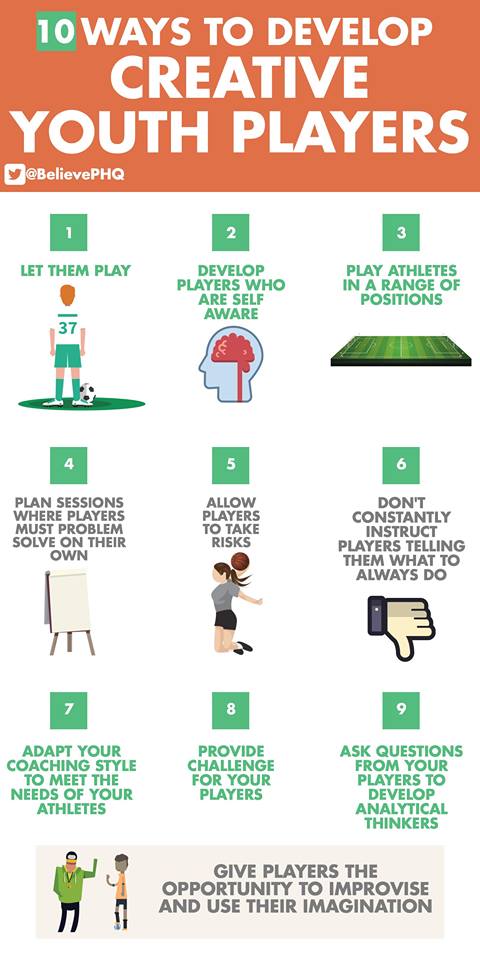
Our thoughts on the top 10 ways;
One of the biggest issues facing youth sports today is the focus on winning at all costs where “some” youth coaches will play their favorites or shorten their benches in games to win games, tournaments and banners. One of the top 5 reasons identified by Amanda Visek in her groundbreaking study why kids play sports is when they get an opportunity to play. 90% of kids would rather play on a losing team in all situations than sit on a bench for a winning team.

In Hockey, much like many other sports, we need to teach players positional awareness so they know where to be without the puck as players will only have the puck for a very small portion of the game. For Peewee Recreational players, the average puck time is only 8 seconds in an average 50 minute game.

Players should not be pigeon holed in a specific position until they opt to specialize in their latter teens if they follow the LTPD model (don’t get me started on early specialization). In a recent clinic where we have a bantam A1 team come out for the coaches to run thru drills, one of the players had converted from being a A1 goalie to a player and was one of the top skaters on the ice. I have even been told that some MHA’s will only permit players to try out for defence or forward and that is the position they are to play all season long.
What happens if your team suffers injuries, a flu breakout then?
Coaches should be developing players by giving them the opportunity to play all positions in game play until their late teens or even later.
Would Dustin Byfuglien or Brent Burns have been able to make the transition from D-F and vice versa when in the NHL if they had played one position only in their youth?
In lieu of planning out every single drill in a practice to limit players having the opportunity to be creative in game play scenarios, ensure that you incorporate small area games with limited instruction to permit players to work on their skills. This will permit them to be creative in 1 on 1 battles, 2 on 1 and so forth that they could then transfer to game play.

This is probably one of top challenges for youth sport coaches today, it is important that you create a safe to fail environment not only in practices and encourage players to make mistakes, the uglier the better, but also have their backs in games so they don’t play in fear.
When I have talked to WHL coaches and scouts over the years, they have identified many of the deficiencies of Bantam Draft players that affects their draft position or being drafted at all including;
- Lack of creativity
- Not being able to shoot or receive a pass on a backhand
- Not making backhand passes
- Lack of checking skills
- Not “competing” for pucks along the boards or in front of the net
These are all areas that coaches should be working on developing not just in practices, but also in game play in lieu of screaming at a player when they try to do so and worse yet is not executed perfectly and leads to a turnover and a scoring opportunity by the opposing teams.
Was the first goal that Free Agent Louie Erickson scored a highlight reel on TSN ? Yes, but not because he went in on a breakaway but he tried to pass the puck back on a delayed penalty and it ended up going the length of the ice and into the Canucks net.
When Brent Sutter was interviewed after the 2014 World Juniors and Team Canada did not medal, he stated one of the reasons was that we lacked skill and creativity vs. other nations. This is due largely in part to the fact that minor hockey coaches are spending too much time telling players what to do, vs. encouraging them to try the skills that they worked on in practices.
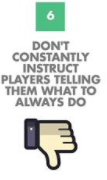
We also need to give players the opportunity to play without coaching whatsoever, Bobby Orr attributes he development and creativity to all the repetitions he had playing on the pond in Parry Sound. When a goal was scored, all the players would do is pull the puck out of the net and start again. There were not coaches, parents of officials telling the players what to do.
We will never get back to that time due to the digital era we now live in, but we must find a happy medium where players are safe to fail and have the freedom to try different things in practices and games so it will make them more creative when they get to higher levels of play.

The perfect example of this transformation is John Tortorella, who for many years was known for his tirades screaming at players and officials and not connecting to his players. Last season, he was hired to coach the Columbus Blue Jackets much to many experts surprise due to the poor outing the World Championship Team had he coached in Fall 2016 but the management of Columbus told him he would need to change and adapt in order for his contract to be renewed.
He did so and guided Columbus to a record winning streak and into the playoffs and was acknowledged as Coach of the Year in the NHL receiving the Jack Adams award.

The best coaches that I ever had in my youth challenged me every practice to become the best player I could be, and they did so without being demeaning. That is the fine line we all have to walk, but in order to get the best out of our players individually and teams collectively is to push our players to become better each and every practice.
Reinforcing the importance of effort, praising when they make mistakes so they get up and try again. As I have told every player over the years, if you aren’t pushing yourself, you are never going to get better.
If we continue to let them do it the same way over and over again and expect different results, that is insanity – Albert Einstein

In every practice and games I ask players what do they need to do, or we as a team need to do to improve? Then I wait for the answers.
I have done this with Novice all the way to Midget and all age groups in between in both the competitive (rep) and recreational (rec) streams.
What I have also learned is the importance of P&R (Patience and repetitions from Terry Crisp), as yout sport coaches we have to be patient first and foremost and we have to provide opportunities for players to work on their skills thru numerous repetitions, adding to the difficulty (progression) thru the season.
The funniest anecdote I have shared in many clinics is a player that I had on my Bantam A2 team, at intermission breaks I would ask the players what we needed to do in the next period and he was infamous for one word answers like
Pass
Shoot
Score
His nickname became “Cone head” from the movie miracle for Herb Brooks Line “Cone Heads” when they came into his office and said coach we pass, we shoot and we score.

This is probably the biggest challenges for coaches, many want to develop set systems, tactics and strategies and many will scream at their players if they deviate from in game play.
I will never forget talking to a defencemen on a Bantam A1 team who shared the analogy with me that the coach only had one set play for power play where the team would cycle the puck to set up the weak side D to come in the back door and shoot on goal. The problem was every team clued into the set play at the first powerplay each game and would position a player in the gap to prevent that setup pass or prevent the defensemen from shooting. He (13 years old at the time) stated as he was not given any options, would try to slap the shot thru that player but would have to shoot wide as did not want to hurt him.
I heard similar stories from many other players over the years as coaches were not giving them the opportunity to “adapt, overcome and improvise” in game play.
Coaches, practices you can control, but games you can not as there are too many variables (other teams, coaches, the officiating) so it this last point is the key takeaway, you MUST support your players to improvise in all game situations, if you have a set play, provide players option B, C, D etc. so they can still follow in part but use their imagination in doing so.
Let’s work together to bring the game back to the kids.

One thought on “How to develop creative players”