Posted Posted in Athlete, Coach, Officials, Organization Executive, Parents

One of the 5 takeaways I share in every talk, workshop or clinic is the importance for coaches to make the environment for their players safe, as the hockey world has recently coming to terms with the Kyle Beech tragedy and the dominoes that are falling, it is just another painful and emotional reminder why we need to make it safe from all forms of harassment that I wrote on in 2017.

The other area that I have been advocating for years is the importance for coaches to make it safe to fail, unlike the coaches and parents that are highlighted time and time again in social media for their outbursts towards kids as players, officials, I have always been a believe thanks to the coaches that I had growing up to encourage to make mistakes in practices and even in games and have fun when they do so.

WHAT ?

Recommend they make mistakes, the uglier the better … what if they coughed up the puck that lead to a goal, fumbled the ball that lead to a touchdown by opposing teams, missed that free throw or field goal that could have won the game and son on.

Hmmm … there have been just a few players that were pretty good that made a ton of mistakes, but had they not done so, never would have achieved their milestones and become some of the best ever to play their respective sports.
 

Reggie Jackson/Babe Ruth

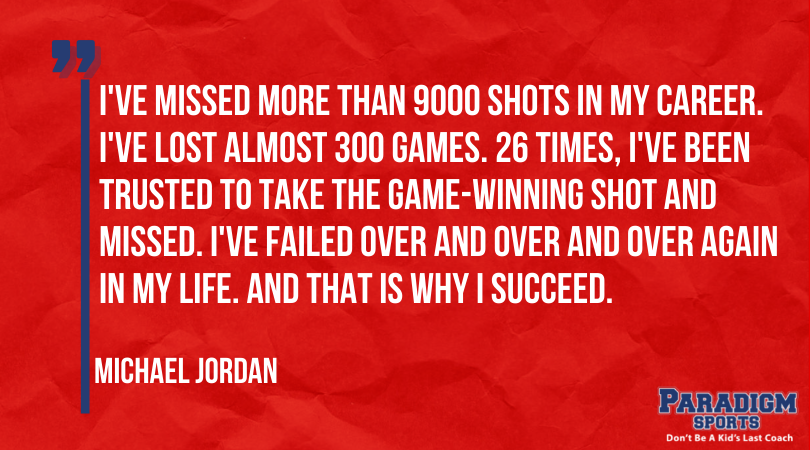
Reggie Jackson holds the record to this day of the most strikeouts of any player in MLB history (2597) but was touted year over year in his Hall of Fame Career as Mr. October where his bat would hit many out of the park, much like Babe Ruth who did the same decades back.
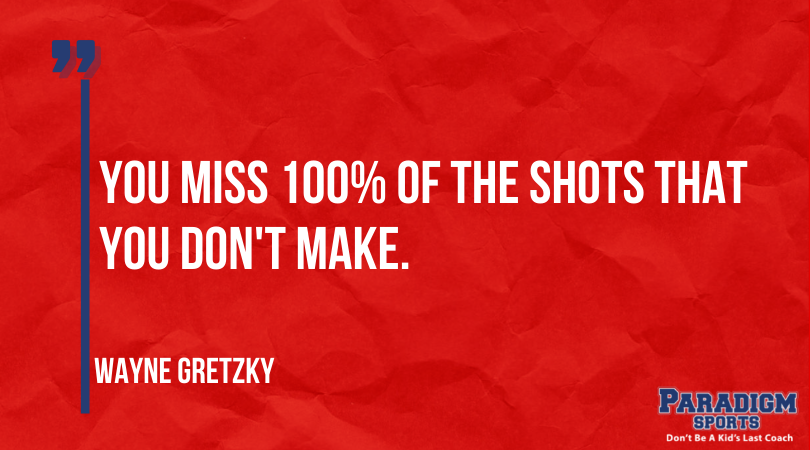


Another recent example is Mason Crosby missing 3 field goals in regulation but made the 4th to win the game in overtime for the Cheeseheads (Green Bay Packers) against the Cincinatti Bengals (whose kicker also missed 2 field goal attempts in the same game)

This was a complete surprise for all those that watched as Mason had only missed 2 field goals in the last 2 seasons combined !

Why was he to make the 4th field goal?  Because he had the support of their teammates, coaches, managers who recognized that mistakes would happen and once they did, were history, was time to move on to the next play.  This is in a league that is focused on winning, the top sport in the world in terms of revenue with millions of dollars in player salaries, billions of dollars in TV and merchandising revenue NOT community youth sports.

Sadly in today’s era of youth sports where it has become adultified, where adults are competing with other adults thru their kids, gone are the days where kids play without fear of failure which was prevalent in free play (i.e. pond hockey, pickup basketball, sandlot baseball) where there were no adults present (no coaches, parents or officials), it has lead to increasing attrition rates as a result.

In lieu of focusing on the results, wins/losses, goals/assists, focus on the process of development, ensure that kids are having fun and winning will be the byproduct vs. the focus.

Growth Mindset

One of my top recommendations for books for coaches, parents and youth sports leaders I the book Mindset by Carol Dweck who shares the differences between the fixed and growth mindset.

Those with a fixed mindset believe that their skills are fixed due to DNA, they don’t believe in working to improve, and fear failure so would focus on simpler tasks.  Those with the growth mindset however, believe they are not that good YET, and will put in the effort to improve and recognize making mistakes is part of the process.

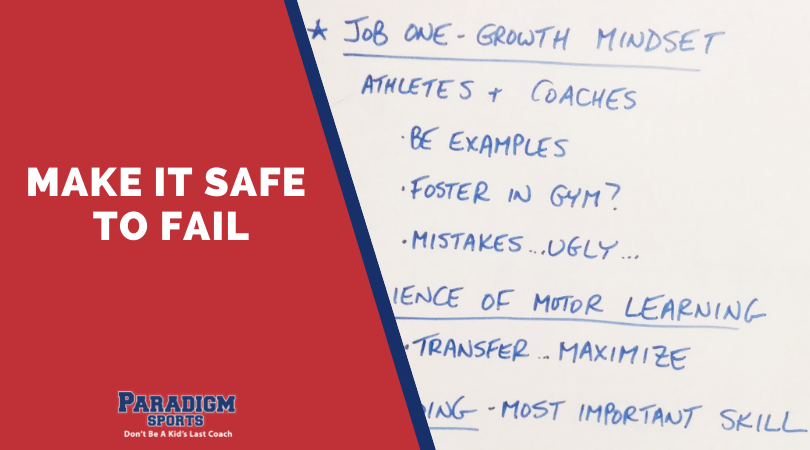
A perfect example of a coach that has incorporated the growth mindset with their team is Karch Karaly, voted best men’s volleyball player in sand and courts of all time, in 2012 he became the head coach of the US Women’s Volleyball team soon after he read Carol’s book and as I have shared in past their team white board encourages the players to make UGLY mistakes so they develop.
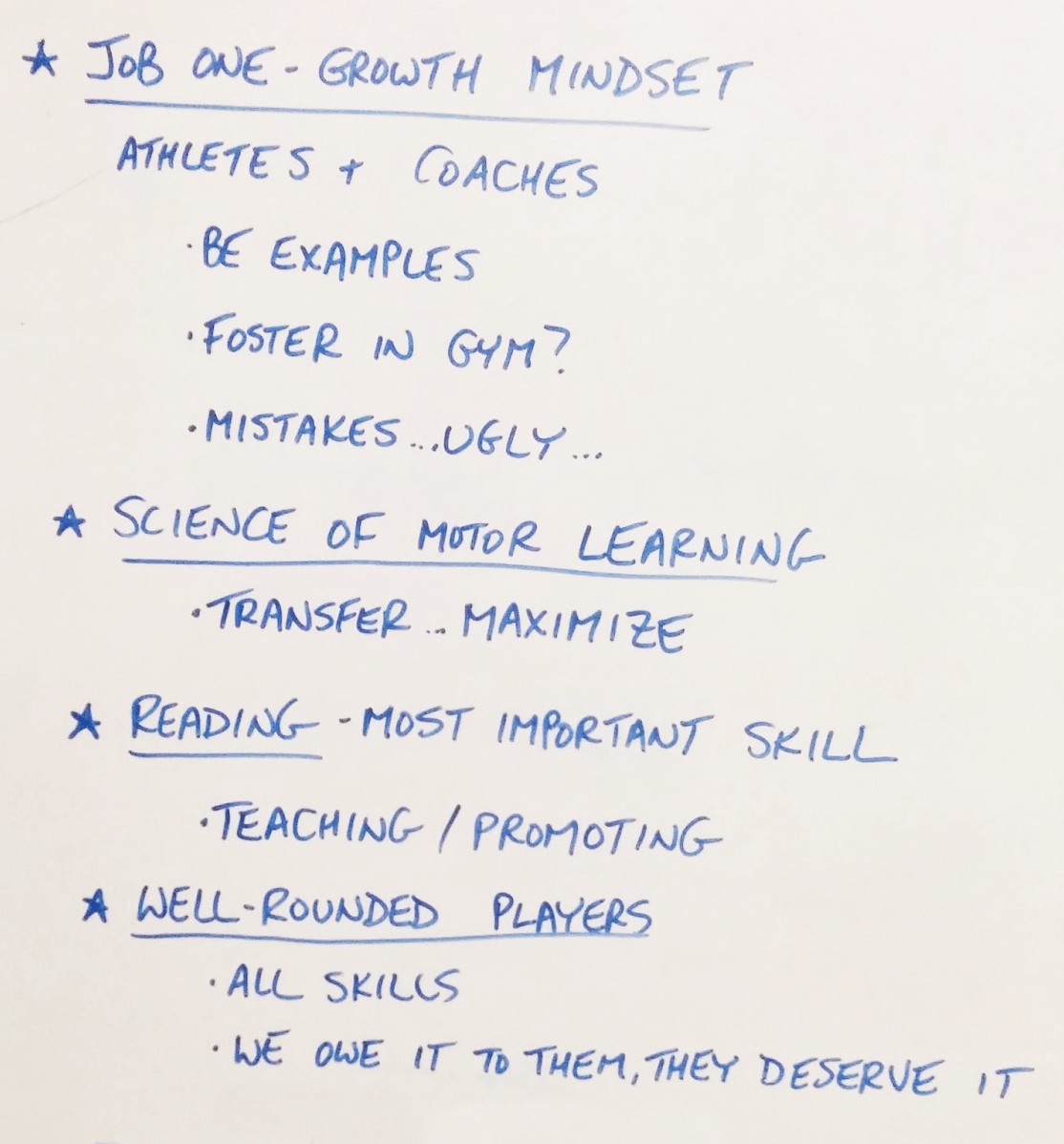
He has lead the team to their first gold medal at an international event in 2013, and medaled at the three Olympic games under his watch, including Gold at this years summer games in Korea.

In order for us to reverse the negative trends we have seen in youth sports for over a decade, we need to create an environment for not only for our players where it is safe for them to fail, but also for the young officials.

Sadly, we lose 50% of young officials in many sports (especially what I refer to as the money sports, Hockey, Baseball, Football, Basketball and Soccer) in their FIRST YEAR.

Why?

The #1 reason is due to the abuse they are taking from the adults in the stands or along the sidelines.

We subsequently lose 30% on average every year so we are literally are constantly recruiting and not allowing time to mentor and train these young officials so they can hone their craft which just creates this vicious circle.

To give you some numbers, in Canada, we have approximately 30,000 officials registered across Canada to ref minor hockey games, and every year we lose over 10,000!!!

This is not a recent trend, this has been the case since I started running Hockey Clinics over a decade ago.

It is the reason why Hockey Canada and USA Hockey came up with the campaign “Relax it’s just a game” in 2007 … 14 years ago


The focus was more on parents who are coaching or critiquing their kids, but I have also seen my share of coaches do the same towards players and officials.

Ironically, during a recent clinic that I was running, at the lunch break just before we all shut down out audio/video a coach shared with me and those that were still in the room (we have shifted to online virtual clinics in part due to COVID, in part due to efficiencies) and he shared that two parents were fighting in the stands at a U11 minor hockey game and the Police had been called in.

This was not a the zone or academy level where parental expectations are even higher (due largely due to the costs financially and time).

Time after time each time I run a clinic coaches share similar analogies how other coaches are running short benches to win games, parents are screaming from the stands or in parking lots,  the ride home (or to) games/practices.

The saddest analogy and driving reason for me to continue running clinics to shift the needle is when a coach stood up to introduce himself in a in person clinic and said the reason he started to coach is his 8 year old daughter shared with him why she wanted to quit Hockey at the end of the season.

He said, with emotion in voice and tears in his eyes which made the rest of us in the room do the same (including yours truly)….

“My daughter told me that she was going to quit because she was scared of making mistakes.”

Until we make youth sports safe to fail again like it was in prior generations, we will continue to experience high rates of attrition, so if you are an adult involved in youth sports (parent, coach, administrator) please provide the players under your watch that opportunity to do so.


PS Tagline - Dont be a kids last coach

play fast blog thumbnail

Play Fast

Posted Leave a commentPosted in Uncategorized

There has been a myriad of coverage from traditional and social media in recent weeks as the Las Vegas Golden Knights have continued their amazing journey from forming stage as an expansion team in the NHL to make it to the Stanley Cup Final in their inaugural season.

Many of the top minds in hockey and in sport are shaking their heads in disbelief and if they accomplish the unthinkable, many Las Vegas Bookies who accepted bets before the season started with odds of 300:1 will be paying out BIG time to those that rolled the dice as their pick to win it all this year.

They have dominated the first 3 teams en route to the final winning 12 games, losing only 3, and many of those wins were by high margins.

As hockey has been one of the many sports I played, have coached, and for almost a decade have mentored coaches in the sport, I too must confess watching this play out since the summer of 2017 has been surreal.

Initially, when Gary Bettman announced that Las Vegas was awarded the next expansion franchise I should my head in disbelief.  Why would they put another franchise in the southern US sunbelt city when Phoenix (home of Austin Matthews) has struggled to attract fans, developing a season ticket base and losing money year over year.  I shared with many of my hockey counterparts that Vegas could not sustain an NHL team, and not only would they have difficulty filling the stands, they would not be competitive for years IF they managed to sustain the losses.

Fast forward 9 months later and they amassed 109 points as one of the top teams in the NHL in league play, have had an extended layoff after they defeated the Jets, the top team in the West this season, and will face Ovie and the Caps in the final.  Hollywood could not have written this script and I suspect like the story about Herb Brooks who tool his group of college players in 1980 to defeat the Russian Red Army, if Gerard Gallant does the same with his team of players who were not protected to win it all, there will be screenplay written and Hollywood production soon after.

The irony to all of this is that everyone is trying to figure out what the secret sauce has been, how have they done it, how did they get to the final in their first year?

This is how … they developed a culture of excellence starting off with great leadership, George McPhee, General Manager, who ironically will be facing his former team in the very same Stanley Cup Final.

They hired an amazing group of coaches, lead by Gerard Gallant, head coach.

They also have incorporated a motto, PLAY FAST.

Below is a TV screenshot I took when I was watching one of the Knights games vs. the Jets and commentators showed this sign in the Golden Knights Dressing Room (hence the low resolution)


Who would have thought that an NHL franchise would use the word “Play” in their motto?  This is their mantra, their core belief and everything revolves around the importance of playing a game that all the players love and as a result of the expansion draft where NHL teams could not protect all of their players, all of the players on the knights were ones that their former teams did not feel would be top players short or long term on their teams.

Play Fast for those not familar with Hockey term time and space, means that the Knights focus on taking away the other teams time (pressuring them to make mistakes) and space (not giving them room to make plays, taking away passing lanes, fighting hard for the puck along the boards).

The list of accolades that players have achieved under the direction of Gerard have been well documented, Will Karlson, scoring 43 goals this season vs. 6 last year, and 9 the prior season under John Tortorella who was the NHL Coach of the year 2 seasons back.  His other first-line teammates, Jonathan Marchessault and Reilly Smith also unprotected by their former clubs to have career years.

Marc Andre Fleury, who backstopped the Penguins to Stanley Cup wins in 2009 and due to injury sustained early in 2016 then backup Matt Murray took his spot literally, he was no longer the starting goalie and left unprotected during the expansion draft although he played many games for the Penguins during their back to back Stanley Cup runs in 2016 and 2017.

Other reasons why the Knights have accomplished what they have in their inaugural season;

  1. Focus on Fun (the number one reason why kids and even those getting paid millions of dollars to PLAY a game)
  2. Supporting them if they make mistakes to learn from it and not putting intense pressure so it develops their confidence


Have Fun?  Really? Isn’t the NHL like any other professional sport a multi-billion dollar business?

Shouldn’t all the employees be under the gun if they make mistakes?

This is the biggest reason why I believe the Knights have accomplished what they have.

Gerard Gallant and the rest of the Knights Coaching Staff have developed a culture where it is safe for the players to fail (if they make mistakes they won’t be screamed at or benched), which in turn has developed their confidence leading to every player and Fleury having breakout seasons.

The other reason why the Knights are where they are at, when they were choosing players for their team, the not only looked for players with the core skills they would looking for but as, if not, more importantly, they looked for players that would accept their roles on their team and had great character.  Another “pretty good” organization known for doing so, the New Zealand All Blacks who believe that “Better People Make Better All Blacks”.

Those that did so, have flourished.

Those that did not, did not.

Jason Garrison is one of those that did not, he did not buy into the culture the Knights developed, did not PLAY FAST and as a result was back and forth between the big club and their minor club and big unknown is if he will be picked up by another team when he becomes a UFA in July.

The Knights have had numerous injuries to their goalies, at one point they had more goalies on injured reserve then they actually had signed to contracts.

Each one that filled the net, played with confidence because their coaches did not put intense pressure on them.

The other thing that Gerard has done that I give him huge kudos for is recognizing the importance of rolling all of your lines to be successful in today’s NHL.

This is one of my biggest pet peeve when I see minor hockey coaches running short benches to win games, tournaments etc.  This does not develop the confidence that ALL your players need to perform at the highest level they can in regular season or have long playoff runs.  It puts too much pressure on the top lines to perform each night and it also leads to injuries, fatigue as was the case a few years back when John Tortorella rode his top lines when coaching the Vancouver Canucks only for them to sustain many injuries and have their worst years EVER.

All youth sports organizations and coaches could learn from what the Knights did to get to the final

  1. Develop a Culture of Excellence
  2. Focus on the Process
  3. Encourage players to make mistakes (growth mindset)
  4. Develop Confidence

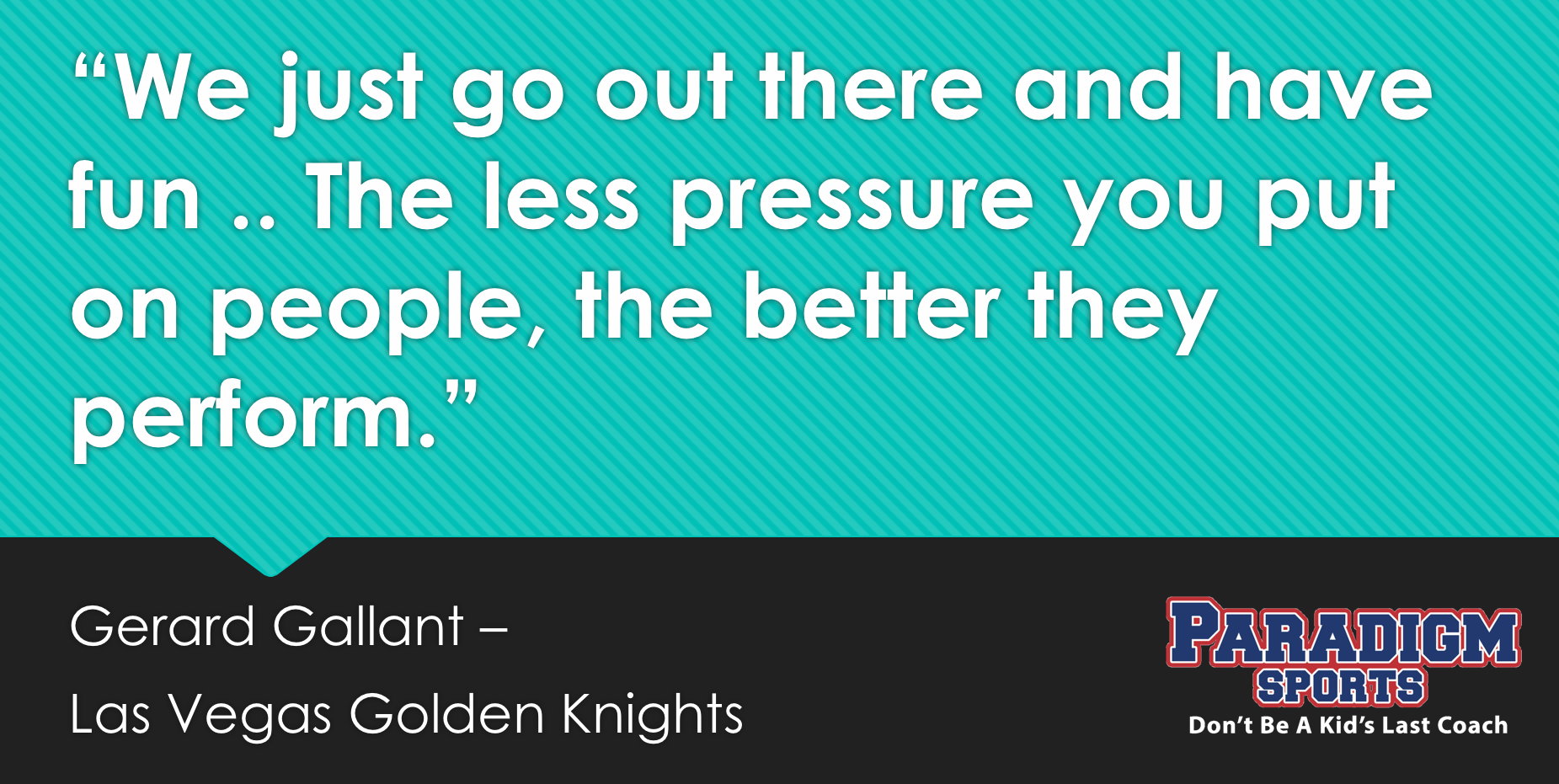
AND similar to Gerard sharing “we just go out there and have fun” another great quote I have shared with my son for years now after reading in Bobby Orrs Book My Story what his dad told him before every ice time

“Just Go Out there, have fun, and see what happens.” – Doug Orr

I for one will be anxious to do just that, to see what happens when the Knights face the Capitals in the Final, and suspect all those bookies that took that longshot bet last summer will be doing the same.

Let’s all work together to bring the game back to the kids … where it belongs

Don`t be a kids last coach


How to develop creative players

Posted 1 CommentPosted in Uncategorized

BONUS – Download a Free Copy of this Blog in PDF Format HERE  

As the Hockey Clinic season has started I have reinforced the importance with new coaches the importance in developing creativity with their young athletes.

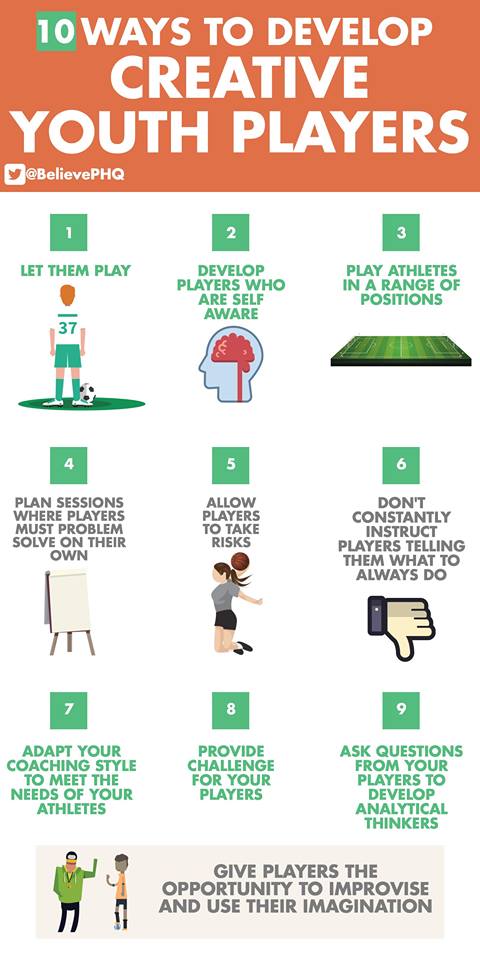
Below is a poster board of the 10 ways to develop creative youth players that we have posted to Facebook with examples outlining each.

Our thoughts on the top 10 ways;


One of the biggest issues facing youth sports today is the focus on winning at all costs where “some” youth coaches will play their favorites or shorten their benches in games to win games, tournaments and banners.  One of the top 5 reasons identified by Amanda Visek in her groundbreaking study why kids play sports is when they get an opportunity to play.  90% of kids would rather play on a losing team in all situations than sit on a bench for a winning team.

In Hockey, much like many other sports, we need to teach players positional awareness so they know where to be without the puck as players will only have the puck for a very small portion of the game. For Peewee Recreational players, the average puck time is only 8 seconds in an average 50 minute game.

Players should not be pigeon holed in a specific position until they opt to specialize in their latter teens if they follow the LTPD model (don’t get me started on early specialization). In a recent clinic where we have a bantam A1 team come out for the coaches to run thru drills, one of the players had converted from being a A1 goalie to a player and was one of the top skaters on the ice. I have even been told that some MHA’s will only permit players to try out for defence or forward and that is the position they are to play all season long.

What happens if your team suffers injuries, a flu breakout then?

Coaches should be developing players by giving them the opportunity to play all positions in game play until their late teens or even later.

Would Dustin Byfuglien or Brent Burns have been able to make the transition from D-F and vice versa when in the NHL if they had played one position only in their youth?


In lieu of planning out every single drill in a practice to limit players having the opportunity to be creative in game play scenarios, ensure that you incorporate small area games with limited instruction to permit players to work on their skills. This will permit them to be creative in 1 on 1 battles, 2 on 1 and so forth that they could then transfer to game play.

This is probably one of top challenges for youth sport coaches today, it is important that you create a safe to fail environment not only in practices and encourage players to make mistakes, the uglier the better, but also have their backs in games so they don’t play in fear.

When I have talked to WHL coaches and scouts over the years, they have identified many of the deficiencies of Bantam Draft players that affects their draft position or being drafted at all including;

  1. Lack of creativity
  2. Not being able to shoot or receive a pass on a backhand
  3. Not making backhand passes
  4. Lack of checking skills
  5. Not “competing” for pucks along the boards or in front of the net

These are all areas that coaches should be working on developing not just in practices, but also in game play in lieu of screaming at a player when they try to do so and worse yet is not executed perfectly and leads to a turnover and a scoring opportunity by the opposing teams.

Was the first goal that Free Agent Louie Erickson scored a highlight reel on TSN ? Yes, but not because he went in on a breakaway but he tried to pass the puck back on a delayed penalty and it ended up going the length of the ice and into the Canucks net.

When Brent Sutter was interviewed after the 2014 World Juniors and Team Canada did not medal, he stated one of the reasons was that we lacked skill and creativity vs. other nations.  This is due largely in part to the fact that minor hockey coaches are spending too much time telling players what to do, vs. encouraging them to try the skills that they worked on in practices.

We also need to give players the opportunity to play without coaching whatsoever, Bobby Orr attributes he development and creativity to all the repetitions he had playing on the pond in Parry Sound.  When a goal was scored, all the players would do is pull the puck out of the net and start again.  There were not coaches, parents of officials telling the players what to do.

We will never get back to that time due to the digital era we now live in, but we must find a happy medium where players are safe to fail and have the freedom to try different things in practices and games so it will make them more creative when they get to higher levels of play.

The perfect example of this transformation is John Tortorella, who for many years was known for his tirades screaming at players and officials and not connecting to his players.  Last season, he was hired to coach the Columbus Blue Jackets much to many experts surprise due to the poor outing the World Championship Team had he coached in Fall 2016 but the management of Columbus told him he would need to change and adapt in order for his contract to be renewed.

He did so and guided Columbus to a record winning streak and into the playoffs and was acknowledged as Coach of the Year in the NHL receiving the Jack Adams award.

The best coaches that I ever had in my youth challenged me every practice to become the best player I could be, and they did so without being demeaning. That is the fine line we all have to walk, but in order to get the best out of our players individually and teams collectively is to push our players to become better each and every practice.

Reinforcing the importance of effort, praising when they make mistakes so they get up and try again.  As I have told every player over the years, if you aren’t pushing yourself, you are never going to get better.

If we continue to let them do it the same way over and over again and expect different results, that is insanity – Albert Einstein

In every practice and games I ask players what do they need to do, or we as a team need to do to improve?  Then I wait for the answers.

I have done this with Novice all the way to Midget and all age groups in between in both the competitive (rep) and recreational (rec) streams.

What I have also learned is the importance of P&R (Patience and repetitions from Terry Crisp), as yout sport coaches we have to be patient first and foremost and we have to provide opportunities for players to work on their skills thru numerous repetitions, adding to the difficulty (progression) thru the season.

The funniest anecdote I have shared in many clinics is a player that I had on my Bantam A2 team, at intermission breaks I would ask the players what we needed to do in the next period and he was infamous for one word answers like

Pass

Shoot

Score

His nickname became “Cone head” from the movie miracle for Herb Brooks Line “Cone Heads” when they came into his office and said coach we pass, we shoot and we score.

This is probably the biggest challenges for coaches, many want to develop set systems, tactics and strategies and many will scream at their players if they deviate from in game play.

I will never forget talking to a defencemen on a Bantam A1 team who shared the analogy with me that the coach only had one set play for power play where the team would cycle the puck to set up the weak side D to come in the back door and shoot on goal.  The problem was every team clued into the set play at the first powerplay each game and would position a player in the gap to prevent that setup pass or prevent the defensemen from shooting.  He (13 years old at the time) stated as he was not given any options, would try to slap the shot thru that player but would have to shoot wide as did not want to hurt him.

I heard similar stories from many other players over the years as coaches were not giving them the opportunity to “adapt, overcome and improvise” in game play.

Coaches, practices you can control, but games you can not as there are too many variables (other teams, coaches, the officiating) so it this last point is the key takeaway, you MUST support your players to improvise in all game situations, if you have a set play, provide players option B, C, D etc. so they can still follow in part but use their imagination in doing so.

Let’s work together to bring the game back to the kids.


PS Tagline - Dont be a kids last coach