My morning routine starts with my coffee reading the business and sports section in the paper I once delivered many years back, The Vancouver Sun. Today I almost fell out of my chair as read an article titled “Blowout leads to calls to keep kids hockey fun”. It appalled me that there was a Novice (8 Yr. Old Kids) Hockey Game in Ontario where they shared that the (actual) final score was 41-0. (this was the real score that was shared out by the adults involved with the game, not the 6-0 that showed on the scoreboard to soften the blow for parents and players)
Yes, you read that right, 41 for the team from Kitchener, 0
for the team from Cambridge.
Really?
How many scoresheets did the scorekeeper need to use to keep track of the goals and knowing how focused we are on kids stats today, the first and second assists?
The article went on to cite sources from Minor Hockey Alliance of Ontario, the two teams in the game, as well as Hockey Alberta.
We (as in BC Hockey) and Hockey Alberta no longer keep score for games for Novice age group (something I thought we should have done when I coached that age group many years back) and Brad Lyon from Hockey Alberta stated “Young players should be learning skills like passing and being part of a team, not focusing on the score or who has how many goals.”
I could not agree more with Brad, and can’t for the life of
me believe that 8 year kids suffered a blowout to the extent one hears about in
football, rugby as points for tries or touchdowns can be 6 at a time not one. 41-0 would have been 7 touch downs and 6 PAT
(point after the fact) and a failed convert in football so in hockey terms – 7
goals NOT 41.
For the winning team in this novice hockey game to have scored 41 goals, it meant they spent the entire game in the opposition zone and the only player that would have benefitted potentially from touching the puck would have been the goalie who faced all those shots.
Chances are he or she was the one that was the most dejected, and after 10 goals went in and lost confidence no matter what positive praise or encouragement from their coaches to just have fun especially if coaches were rotating their players each week to have their turn to play goal.
The writer of the article shared by many newspapers nationally across Canada, Gemma Karstens-Smith, stated the game did not result in a barrage of phone calls after the fact as the coaches from parents “found a way to keep it fun for the young athletes.” The very reason why it did not result in numerous calls is the league adhered to a 6 goal differential on the actual scoreboard, not for the players benefit, moreso for the parents.
Really? What did the
coaches on the Cambridge team do, just keep telling their kids when they came
off the ice gassed from chasing the puck and never getting out of their zone to
keep their heads up, play thru it, remember to have fun?
I read another article that the coach of Cambridge believed this was a life lesson for his team, was important for them to play right to the end of the game, regardless of the outcome. He further shared he was against the Mercy Rule as a result. I agree in part, kids should learn how to handle adversity, get up when they fall down, but it is totally a different scenario when they are 18 then when they are 8. No score should be kept for U9 games, period, even if try to soften it with only posting 6 goals on the scoreboard and scrambling for additional scoresheets to keep track of all the others in this scenario.
Having talked to parents across Canada, many do not ruffle feathers early on (Novice age group) by making those phone calls, emails as they don’t want to jeopardize their kids chances of playing higher level down the road.
Ironically, due to parent expectations to play NCAA and get
scholarships or Pro, parents of this age group will start appealing releases
from AAA level to AA as they “are concerned that their kids won’t be scouted”
She further stated the winning team did implement things like 5 passes before shooting the puck only once the score started to balloon.
My question would be … when was that?
10-0, 15-0, 20-0?
I can only imagine how dejected those 8-year-old kids on the
other side of the score felt, frustrated, sad, and perhaps considered quitting.
Tony Martindale, Executive Director of the Minor Hockey Alliance of Ontario shared that “our biggest thing here is we don’t want to turn kids off hockey … we want hockey to be a lifelong adventure for the kids”
This game was an adventure for sure, one that probably left many who experienced it with a sour taste in their mouth, not just the players, but their parents.
He further stated they are considering a variety of measures to prevent similar situations happening in future including new rules of guidelines how teams are split up based on skill.
The guidline/rule that could have avoided this fiasco from the get go?
A Mercy rule which many argued should be in effect but he (Tony Martindale) stated on CTV news would not be looking at as kids could lose 20 minutes of ice time.
Watch the CTV News Video HERE
I don’t know about you, but having played and coached in games where we were getting blowed out OR we were dominating the other team no matter what we tried to slow it down, BOTH TEAMS want the game to be over sooner than later … keeping it going is merely adding salt to a wound that is deep when it 15-20 to 0.
One of the biggest challenges when scores are so lopsided is
ensuring that players one both teams win with humility and lose with
dignity. There is nothing worse when a
team is way up on another team and excessively celebrate goals or when players
demonstrate poor sportship when lose a game like throwing their sticks, using
foul language etc.
This blow-out game is the PARADIGM why Hockey Canada is
rolling out cross ice hockey, last season for Initiation (5-6) and next year for
Novice (7-8). Had they rolled out for both like BC Hockey did 2 years ago, this
blow-out would not have happened as there would not be score kept.
These are my recommendations how Minor Hockey Alliance of Ontario can salvage their Novice Hockey program this year to ensure no further blow-outs take place;
* Balancing: Go back to the skills inventory of all the players, evaluations you did of all players (assuming you so as all MHA’s do in BC). Immediately rebalance your teams. Ensure that every team has kids from the top ½, middle and lower level of the skills evaluations so all teams are balanced.
Then have tiering games to ensure that the
teams are in fact balanced and retier those teams (move up or down a tier) to
ensure the teams balanced with a +/- 5 goals differential so blow-outs like
this do not happen.
As kids when we played shinny, dropped all
our sticks in the middle or assigned captains to pick teams (nothing worse than
being that last kid picked by the captains), if one team was dominating we (yes
we as in kids) would rebalance the teams to ensure the games were competitive
not blowouts even though no scoreboard, we all knew which team won, who scored,
got assists.
Eliminate the scoreboard and scoresheets in Novice: The scoreboard in Novice, even Atom (Development age group) is more for the adults to have bragging rights, for teams to compete for banners than it is for the kids. All they want to do is play, have fun, and after the game ask what the snack is and when they go play again.
If kids can do it, then the adults
that run the league with all the policies, procedures, I came across when I
checked Alliance Hockey’s website should be able to do it vs. permitting a
super team to roll over others as happened in this blow-out.
If scores still going to be kept implemented until Hockey Canada or Hockey Ontario’s Applicable governing body mandate no scores be kept in Novice implement a MERCY RULE starting with running time, then if 15 goals call the game
To Ensure that kids (and parents) get their bang for buck (don’t end ice time early)
Have all the players drop their sticks in the middle and pull to each side to form teams to play good old pond hockey/shinny
The ref should only be there to ensure safety but not enforce off sides or other rules
The coaches should just open gates, not coach
The kids should just play
The parents should Just Love Watching Your Kid Play
I Guarantee that the kids will have more fun as a result and will ask to do so again, and again, and again.
Better yet, as cross ice hockey is going to be mandatory
next year for Novice
Split the two teams into A,B,C’s … coaches assign their top
5 players, next 5, and remaining into 3 mini teams.
Then the A’s play the A’s cross ice in one end, B’s play the B’s in middle, C’s play C’s in other end
Only 2 Goalies ?
No Problem, have them rotate from game to game, pull empty nets
so 4 on ice, turn them around so have to score off the boards and use gloves,
pylons, spare gloves to be the other nets
Then drop the puck in each end and just let the kids PLAY.
No line changes
No coaching
No Reffing
No Parents screaming coaching instructions of negative
criticism
Knowing all too well that we have our challenges bringing it back to the kids and both recommendations may get pushback here are other recommendations to ensure the practice of fair play in adhered to, one of the top 3 reasons that kids quit is due to no fair play policies.
Enforce the Gretzky Rule for all games – max number of goals a player can score is who then must pass to get assists.. Promotes selflessness and team play.
A player on my Novice Team I coached I enforced the Gretzky Goal for him even though our association policies only enforced for tournaments from day 1 of the season, parents loved the idea, as he could score at will, and the assists he got for first year team mates (one was a good friend of his) were his biggest celebrations and he even asked to keep the pucks.
His is playing Major Junior now so
turned out to be a “pretty good player” and when we run into each other he and
his parents thank me for helping him get to that level as selfishness is
frowned up by all high level coaches.
Make D play F, F play D, enforce 5 or more
passes before can shoot, confirm ask other coaches to change up their lines and
whatever else the can do to slow it down.
Change the goalies if one team is way outmatched, the one on the winning team goes to the other net and vice versa. This gives the one that is getting peppered a breather to watch the game from 200’ away and the other goalie an opportunity to get shots, make saves and be engaged.
Last thing any coach wants is a goalie’s confidence being destroyed by a blow-out, AKA when Jacques Martin when he left Patrick Roy in the net when his team was having a bad game in front of him and he was getting peppered and lost confidence in the game.
Pull the goalie on the winning team to give the
other team a change for a Hail Mary shot to get ONE goal, nothing worse than a
goose egg in a blow-out game
When I coached Novice we used to
play full ice (thankfully no longer the case) and changed on the fly (vs. 2 minute buzzer which
was also wrong as it was to ensure kids lined up properly for faceoffs) but games
had 5 goal differential on the scoreboard. Even in a blow-out game where the
game is 10-0 or higher, kids KNOW what the score is. I believe that rule was in
place more for parents than players to ensure they would not go nuts in the
stands.
Example was a tournament game when
we were in tough against a very strong team from Vancouver Island, were down
5-0 early in the first period and the tournament had a goals for and against
tiebreaker rule so teams total goals for may determine if they moved onto the
medal round or won the tournie.
As each goal the other team scored
went in the net, many of my players would say 6-0, 7-0 on the bench which I
continued to discourage them, focus on just playing the game, having fun but I
knew they would continue to keep track in their heads, and a few would ask me
how come the scoreboard still said 5-0 in the third when we were down by a ton
(I lost track when was 10-0 before the 1st period ended)
One thing that did happen for us
and not Cambridge, is we were able to score ONE goal, so the scoreboard went to
6-1 (at that point was 22-1 several of my players reminded me of) so we did
break the goose egg and both teams, parents, coaches celebrated like we won the
Stanley Cup when we did so.
The coaches of the other team were
really apologetic after the game, they wanted to back off but stated the
tiebreaker rule forced their hand and I understood but still felt they could
have backed up the peddle but it was what it was then.
I can only imagine what the parents of the Cambridge team were doing in the stands as the score continued to increase in their heads (as they only showed 6-0 on the scoreboard) …
Better yet, do like BC, Alberta, Saskatchewan did before Hockey Canada made it mandatory for the 2019-20 season for Novice, roll out Cross Ice Hockey now, don’t keep track of score, have 2 or 3 mini games of 3 on three going at once, just drop the puck and roll kids in and out over the course of “game” and just let them play.
Below is a video that USA Hockey
shared out that highlights the benefits of cross ice hockey that they rolled
out 5 years ago nationally to adhere to their American Development Model.
https://www.youtube.com/watch?v=CB_Ygapyl7c&t=11s
As the analytics showed, as many parents still are pushing back to change who feel that cross-ice will not prepare their “elite” 6-7-8 year olds (there is no such thing as an elite minor hockey player, only when they play for their country in the Olympics are elite) for rep hockey in Atom and beyond, the more advanced players benefit MORE from cross-ice hockey due to the smaller playing surface.
As the parent shared, they don’t know if their kid is having
fun, but it is refreshing to know that cross ice permits them to touch the
puck, pass, shoot, battle much more than if was a full ice game.
In Cross Ice, if a goal is scored, just tell kids to pull the puck out of the net and play on, don’t waste time having them line up for a faceoff.
It helped Bobby Orr become a pretty good hockey player among many other NHL’ers who attribute pond hockey, shinny, stick and puck with 20 plus players on the ice with no scoreboard, or adults (no coaches, parents or refs, scorekeepers or timekeepers) present to become the players they become.
All Bobby’s Dad Doug would say to him before every ice time was “Just go out there, have fun and see what happens”
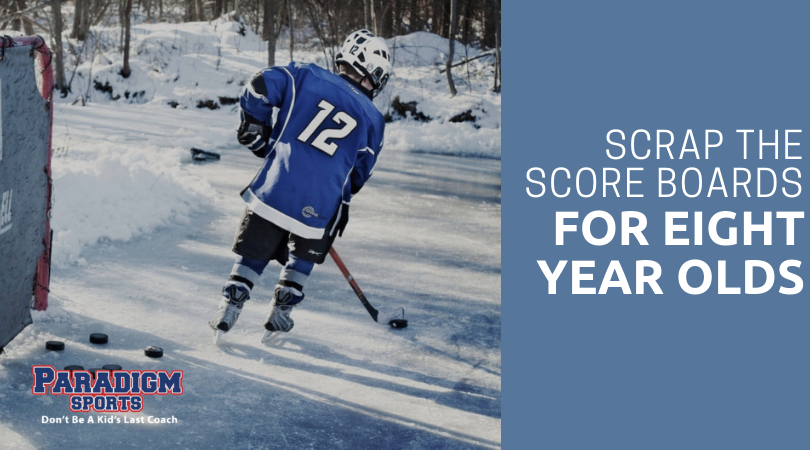
8 Year Old Kids don’t need scoreboards, they need to play for fun so they love the game more at the end of the season than they did at the beginning.
Let’s all work together to bring the
game back to the kids … where it belongs.
This past weekend was another marathon of back to back
hockey clinics where I had the opportunity to share nuggets and learn from over
70 coaches Saturday and Sunday. Thanks to our new landlord offering up their
season tickets to the BC Lions, after the Saturday clinic, I headed downtown to
see the last home game that Wally Buono would coach as has opted to retired at
67 years of age and 40 years as player, coach and executive member in the CFL.
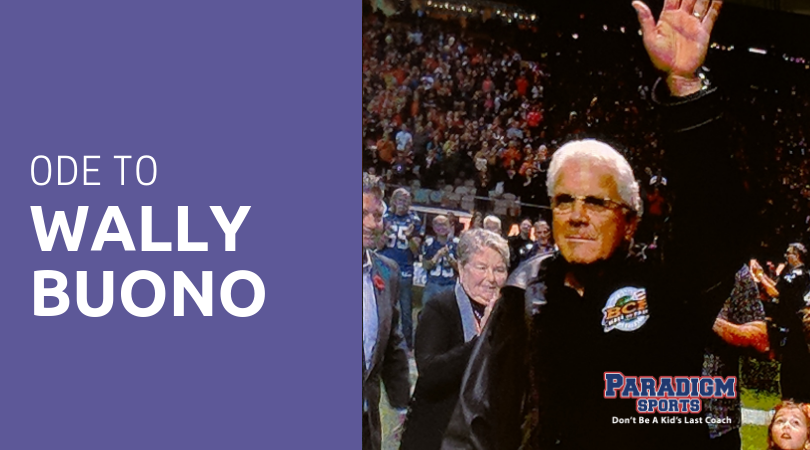
For me, it was a return back to the Dome for only a handful of times since the $400 Million rennovation to host the 2010 Olympics opening and closing ceremonies and past life working in security for BC Place for over 15 years. During that tenure, I had the opportunity to see and interact with many of the coaches, players, executive and owners and none were the epitome of class like Wally Buono. It also was a reminder for me how things have changed in sports, when I worked at the stadium back in the “glory days” of the CFL many of the games had over 55,000 fans come out, for Wally’s last game just over 24,000 came out much like many other CFL teams like the Montreal Alouettes who play out of McGill vs. the albatross Big O.
Wally set the bar high, after 22 years is retiring as the coach with the most wins as a Head Coach in CFL history as of today, has won 263 games as CFL coach (still has playoffs remaining to finish his last season), surpassing the legendary Don Matthews. While at the helm of the Calgary Stampeders, he guided the team to 6 Grey Cup Championship games, winning in 1992, 1998 and 2001 before he accepted the invitation from Bob Ackles to become the head coach of the BC Lions in 2003.
As head coach of the Lions, he guided the team to two more Grey
Cup titles in 2006 and 2011, after the second he opted to step down from of
head coach to become president and GM until he returned to coach the team for one
more and will be his last season in 2018.
Having played football as one of my many sports, I was looking forward to see how the Lions paid tribute to all that he accomplished.
Thanks to numerous events happening in the city and
challenges finding a parking spot, we were late arriving and missed the ring of
honour pre-game where many of the former lions from the last 5 decades
including slotback Jason Clermont who only in his second year when Wally became
coach in ’03.
In today’s Vancouver Sun he shared about Wally;
“It was more as a man..he’s honest, he’s forthright and he’s caring. Sometimes he’s going to say things you don’t want to hear, but after they’re said, and after you give it some time, you understand he’s right and it came from a place of love.”
The #1 characteristic of great coaches is that they care,
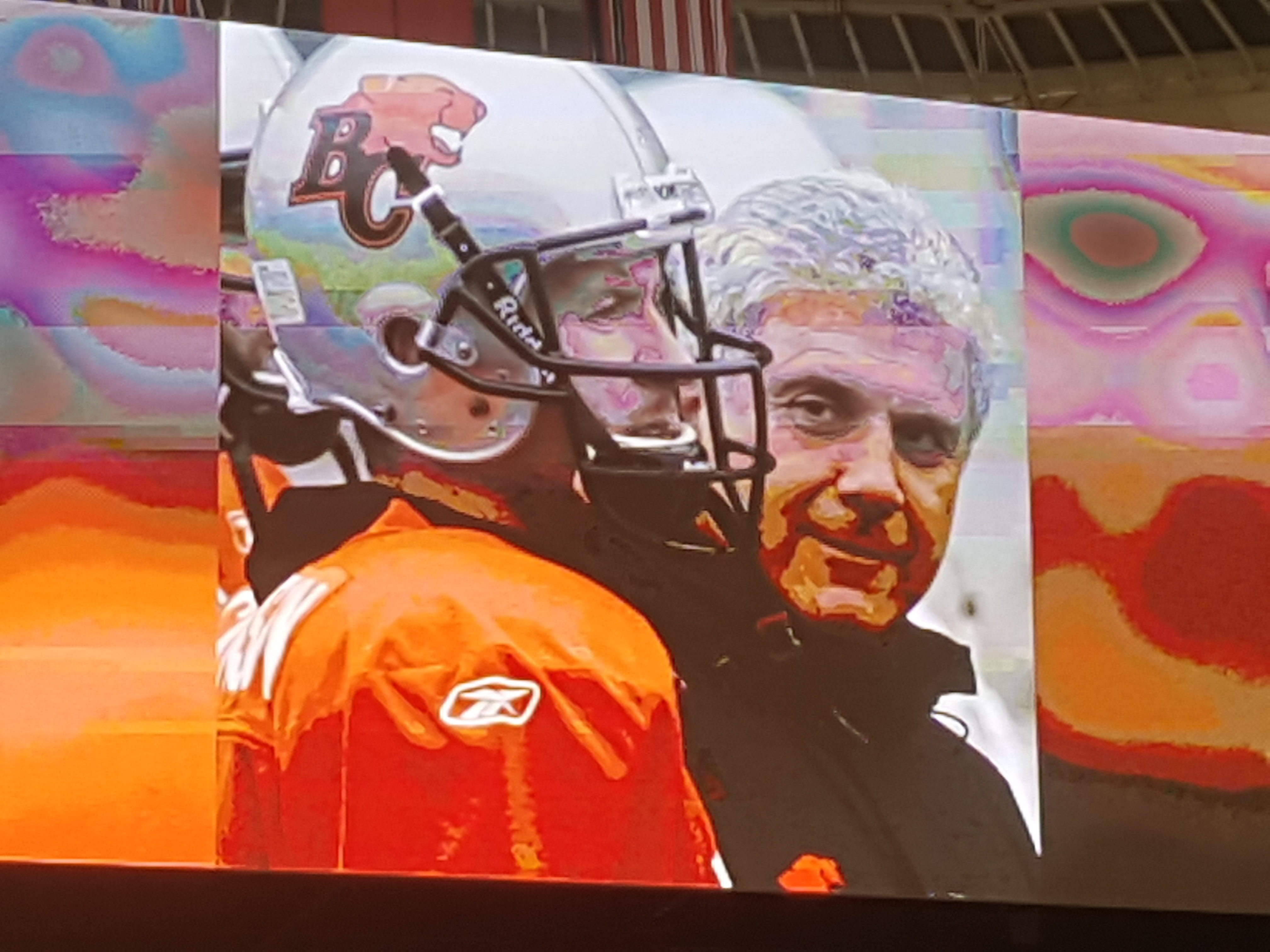
and as the testimonials were shared on the big screen from former players,
coaches and executives, even those that were not familiar with the impact that
Wally had on the game soon became to realize why he is one of the greatest
coaches and people that ever in the CFL, not because of the wins, but because
he truly cared about his players and growing the game.
Scott Ackles, son of late great Bob Ackles, who recruited
Wally away from the Calgary Stampeders, shared in the video testimonial that
his father felt that Wally was the best person that he had ever known in the
game of football. That’s saying
something, as Bob worked as an executive in the CFL, NFL (6 years with the
Dallas Cowboys) and was instrumental in the development of the now defunct XFL
and member of the Canadian Football Hall of Fame.
Cameron Wake, who started his professional playing career
with the Lions and coached by Wally for 2 seasons before he is now one the top
pass rushers in the NFL shared that the mentorship he received from Wally was
instrumental in helping him reach his goals.
Dave Dickenson, now head coach of the Calgary Stampeders,
shared the same as he was mentored into one of the top quarterbacks in the CFL
by Wally, as was Doug Flutie, Heisman
Trophy winner and one infamous for the “Hail Mary” when was the quarterback of
Boston College played for Wally in Calgary and BC until he returned to the NFL.
Marv Levy, now 93 years old, who coached Wally during his days as a player for the Montreal Allouettes where he won 2 other Grey Cups , linebacker and punter, who then went on to coach the Buffalo Bills to 3 Superbowl Championship games, shared when interviewed by Ed Willes (Vancouver Sun) their recruiting practices both in Montreal and Buffalo “is we’d only bring players with high character. Wally Buono and his teammates exemplified that. Would have I dreamed he’d have the career he had. No. But I saw the qualities would make him a great head coach.”
Although the players all shared in pre-game interviews they
aspired to go get the W for Wally, in his last home game as a coach, the team
struggled against Wally’s first team as head coach, the Calgary Stampeders and
lost 25-9. It was not until late in the
first half when the Lions got a Safety (2 points) and Wally had to make the
call to change quarterbacks in the second half where Jennings lead the Lions to
a touchdown but was too much too late, Calgary had the Lion’s and many other
western teams numbers to finish 1st place in the west.
John Hufnagel, now General Manager with Calgary, who has
worked in executive and coaching roles in the CFL after he finished his great playing
career also shared on the big screen how much Wally meant to him helping him
become not just a great player, but great person.
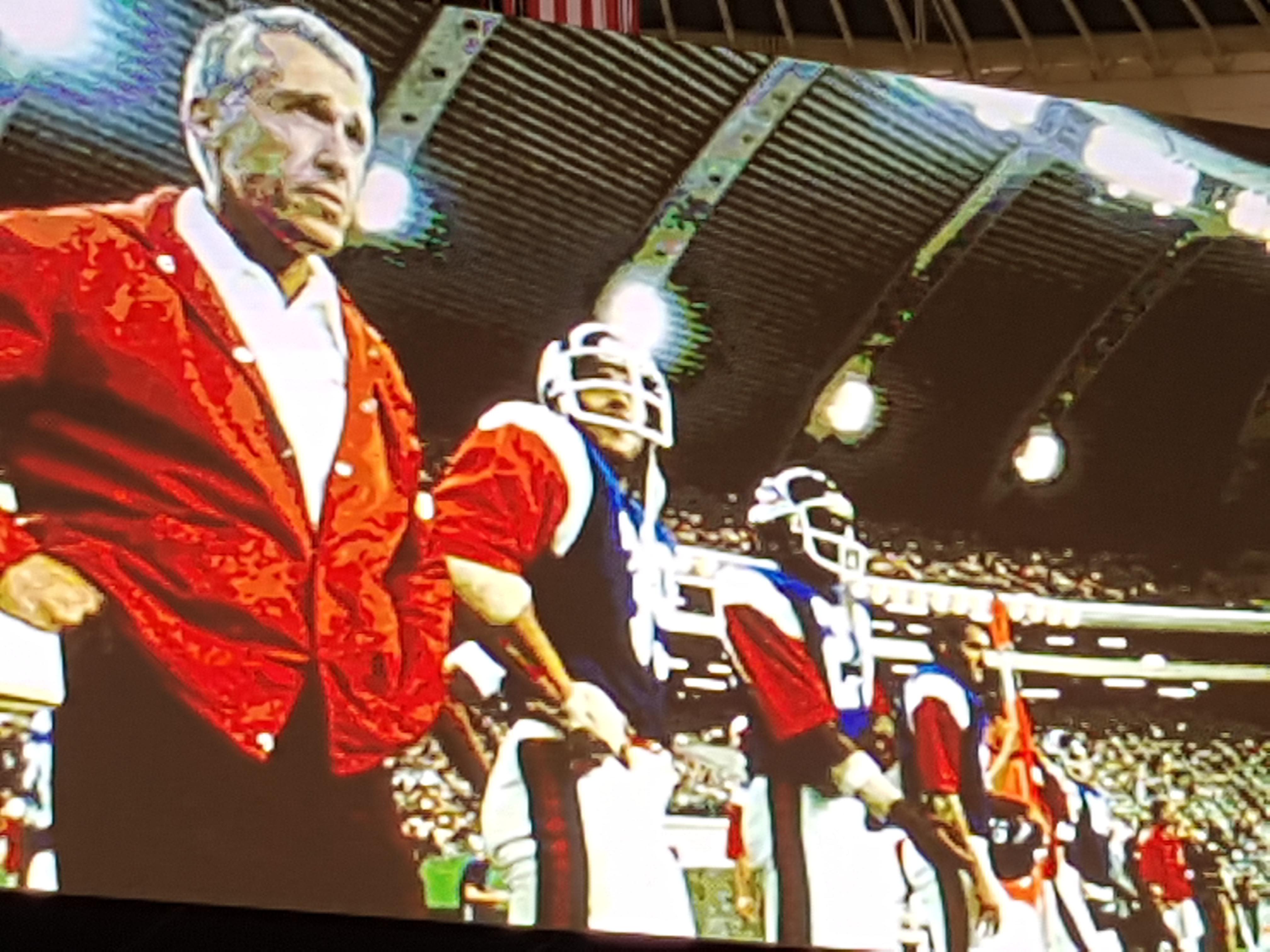
When the half time ceremony was held, Wally ran onto the
field to receive the Bob Ackles award and jacket for being the winningest coach
in CFL history and the first to greet him while he ran on the field was his
grandchildren.
Then there was the testimonial from his family, his wife Cindy, Daughter, and all the grandkids how proud they were of Wally and having been a coach myself and the unselfish hours required to do so away from your family can relate all too well as one of the driving reasons for him to retire is so he can spend time with family and all of his grandkids.
Although I have never coached professionally like Wally, nor
do most of the grass roots coaches that permit kids to play the respective
games they love across Canada and the world, one of the last takeaways I share
with those coaches is to say Thank you at the end of every clinic or talk I do.
Thank you for taking time away from your immediate families
to be there for your extended families (fellow coaches, players and executive
members). I know it is a big commitment and at times may seem to be a thankless
job with the exception of the starbucks or Tim Hortons gift card you may
receive at the end of the season.
Thank you for putting your hand up to be a kids coach and if
have not figured out already you have adopted many others in addition to your
own as a parent coach.
Thank you for your unselfish time you commit to the game, to
keep it in perspective and remember it is just that.
When that player comes to you at the end of a season to
shake your hand or many years down the road to say thank you Coach… invite you
to their high school graduation, wedding or other milestone, that is when you
realize it.
It’s just a Game.
Someone will win, someone will lose.
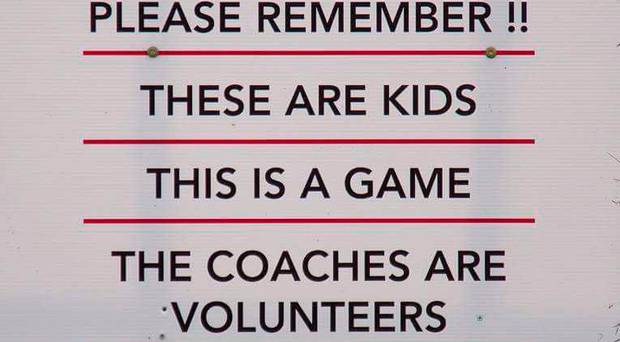
At the end of the day, it is a game but thanks to all the
craziness we see on the sidelines at many youth sports today has forced youth
sports organizers to post signs at the facilities like this one;
Please recognize that the coaches that have put their hand
up as volunteers and for many that share with me was because of their kids, but
soon realize they adopted many others, but because they wanted to give back, develop
skills of the game, skills of life and help them become better people.
If they win a few or over 250 games over the course of their
“career” like Wally did, that is just icing on the cake.
When kids are asked why they play, they say fun. When Amanda Visek asked them what is fun, #1 Is when they get to try their best and #2 is when coaches treated their players with respect. This what Wally did during his tenure as a coach, think of all the players that developed under his watch, what a legacy that is.
Coaches, remember our purpose or calling as coaches is to develop youth into adults.
Don’t be a Kid’s Last Coach.
Please ensure that your legacy is a positive one like
Wally’s, the late great John Wooden, Clare Drake all those other amazing
coaches that truly cared about their players.
Let’s all work together so that we can bring the game back
to the kids (including Wallys’ Grandkids) … where it belongs.
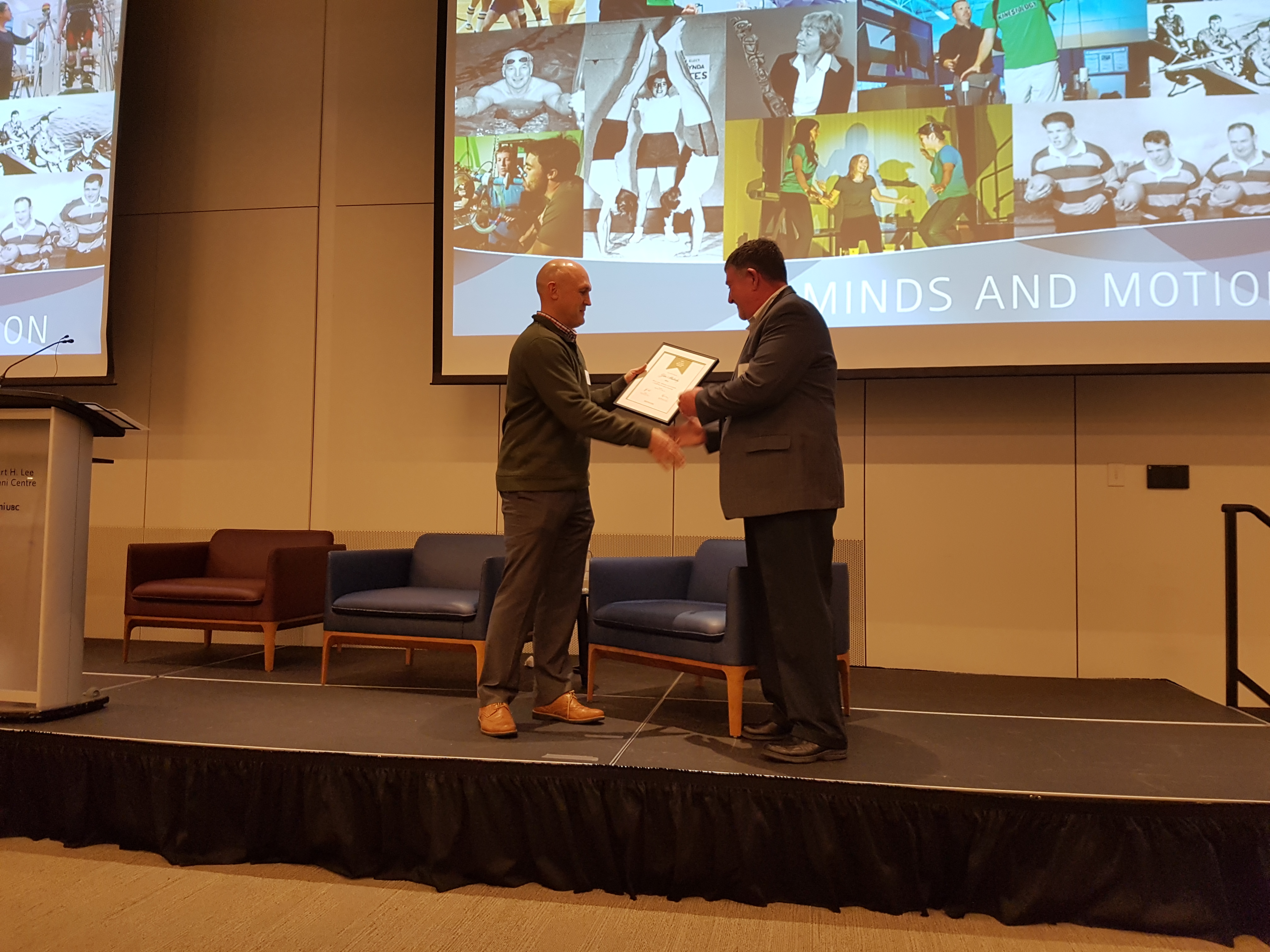
Last night I was recognized with an alumni builder award by the School of Kinesiology, at the University of British Columbia. It truly was a humbling experience to be acknowledged by what is now the top Kinesiology Program in Canada and top 5 Globally.
It coincided with the book launch for Minds in Motion,
authored by Don Wells whom stated that the book belonged to all of the former
graduates, alumni, and school, he merely did the research to share the history
of the evolution of the school from the days of Physical Education, to Human
Kinetics to the school of Kinesiology.
This after 7 years of research working on the book but like all other
selfless athletes, gave credit to all the team members that made the book
possible.
He shared the insight of all of the amazing alumni that had graduated from the school, including Rick Hansen, who had been motivated to do his man in motion global tour by retired KIN faculty member, Olympians, Coaches, Sports Leaders, and numerous doctorates and postgraduate alumni for their contributions to sports medicine.
I was asked to sit in a reserved seat at the front so I could quickly go up, say thanks and return to my seat to permit all of the other guests to speak about the rich history of the program that I graduated from many years back so they could stay on track for the full program.
Some interesting statistics were shared by the current director of the school of Kinesiology, Robert Bouschel when he took the stage that I thought would be of interest for all people that are in the youth sports space today;
The demand for entrance to the School of Kinesiology has lead to the GPA required to be 92%, on par with the schools of medicine and engineering. I shared with Robert after all the presentations if that was the case when I was applying I would not have been accepted as I was a jock first, student second. While at UBC I participated in the intramurals program, weight room, completed my bronze medallion and first two levels of the original NCCP program that has now evolved to a multi-sport focus.
I asked him if there had been any changes to the
projections by health authorities in Canada in the USA that today’s generation
of kids may die 5 years sooner than their parents, making it the first time in
history this may occur and he stated was still current even though many
organizations have evolved in recent years to buck those trends
The current health costs per person in Canada is approximately $4000.00 per person or just shy of $15 Billion dollars! The upside is my home province, BC has the lowest cost per person average due to the fact many adults are still active in skiing, golf, biking, hiking, walking and other team sports like slo-pitch, ice hockey, soccer.
As Type II diabetes has trickled down in the teen age group because of inactivity and kids spending 7.5 hours a day in front of screens, that cost per person for those with Type II diabetes increases a further 3800.00/Yr (or 7800.00 total)
The current rate of obesity for today’s Canadian youth is 1/3rd (33%) up over 20% since the 80’s where it was approx. 100%. He confirmed that if the current trends continue by 2040, 70% of Canadian youth will be fat or obese.
This would equate to a twofold or more impact on
health costs, pushing it to over $30 Billion
He also shared that there had been a recent study done shared by CBS news that middle age (50) people that that practiced 5 lifestyle habits could live a decade longer than those that did not, one being exercise 30 minutes a day which could just be a brisk walk.
In the room, there was alumni for various years, including one from the first ever graduating class of UBC’s school of PE in 1949! Another from 1950 and others from 60’s and beyond. I had the opportunity to hear them speak to others (the lineup was long with other alumni wishing to speak to them) and they were still sharp as a tack and enjoying life in their 90’s! (albeit they are not quite as mobile as they were when they attended the school decades back)
I also had the opportunity to talk to various other faculty members and one that was just getting started at the school when I was there, Dr. Ian Franks, was credited by the author of the book and Robert for his contributions to the evolution of the school and numerous studies he and other faculty members had done. His area of specialty, which was my major, is motor control and performance. His is one of the global leaders in the field, as are now many of the other faculty members where the school has qualified for over $5 Million in funding for research.
The very fact that I was in a room with so many PHD’s and
post graduate alumni and was receiving an award when I did not go beyond my
undergraduate degree was overwhelming.
The reason I was acknowledged was not my scientific research and publications many in the room or the school has now received global recognition for, but for my contributions to the mentorship program, career fair and expert panels the last few years to assist the next generation of leaders in the space.
This year I have been paired up with another mentee, who is a
UBC Gymnastics High School Competitive Coach.
We will meet in a couple of weeks to review his goals as he
will be graduating from his undergrad degree in May and is trying to figure out
his path to either pursue post graduate studies or work in coaching.
In his original reach out to me to setup our first meeting
he shared how excited he is to have me as a mentor and get to know my coaching
philosophy as well as the key things for a coach to keep their athletes
motivated to overcome challenges.
I will expand further when we meet in a couple of weeks, but
as I have learned asking thousands of coaches over the years what the top
characteristics are of great coaches, it is all about the connection, caring
and building relationships.
I recently shared this short video out on facebook why we
coach
https://www.youtube.com/watch?v=cgnAm6_DYmU
I thought Matt Deggs, Sam Houston State NCAA Div I baseball
coach nailed it when talking about his shift from transactional to a
transformational coach.
That’s why I coach.
That’s why I mentor.
That’s why we sponsor co-op students to get valuable work
experience as we continue to grow as an organization.
To build those relationships and develop youth into adults.
The sooner that youth sports coaches shift their current
mindset from focusing on winning at all costs to recognizing our calling is to
develop the person, the sooner we will reverse the negative attrition rates we
are experiencing where kids are quitting sports or not get involved at all
which is leading to their projected 5 year shorter life expectancy.
Our goal is to do what we can to give kids their 5 years back (and then some).
Let’s all work together to bring the game back to the kids …. where it belongs.
It has been a hectic couple of weeks for me as the fall
season ramps up for clinics and conferences wearing my various hats in the youth
sports space.
It started with two presentations I did for Nanaimo Minor Hockey on behalf of Changing the Game Project where they invited several other sports groups in their community to attend including Lacrosse, Baseball, Senior High School and faculty members and students in the Kinesiology program at Vancouver Island University. I received word while I was en route for talks in Kamloops that they wish to have me back to work further with their kids, parents, coaches and exec members early in 2019 to build on the momentum to bring the game back to the kids.
The second event I was presenting on behalf of PARADIGM
Sports for Softball’s BC Development conference where I delivered the opening
keynote, follow-up presentation and participated on their panel to end the
first day along with two other amazing speakers who were at the
conference. The focus of the panel was
recruitment and retention so they could continue to reverse the negative trends
of attrition they saw happening a few years back which included sharing insight
on LTAD/Multi-Sport Participation.
The weekend ended with my other hat as Hockey Canada NCCP facilitator for BC Hockey where I ran a Coach 2 Clinic for Abbotsford Minor Hockey Association for 18 coaches starting what I always aspire will be long coaching journies.
One of the exercises that I do in clinics is asking the coaches to share why they coach and what they would like to get out of the clinic and one of the coaches shared that he got into coaching as he had retired from professional hockey that included playing for a few teams in the NHL and then playing pro in Germany until his hometown had a spot open up for their fire department that he had applied for so could move on to the next chapter of his life raising a young family.
He stated that he was still able to compete at the highest level but he had “lost the love for the game” and when his hometown fire department came calling he felt it was time for him to hang up his skates.
After a couple of years got the itch to still be involved in the game so put his name forward to help coach an atom team (9-10 years old) and as he was leaving when the clinic wrapped up I said it won’t be long before that love and passion he once had comes back working with kids.
He responded by saying, he was having a blast and it was
coming back slowly but surely.
In all three events I asked the coaches, executive members
how many were familiar with LTAD (or variations thereof I will explain below)
and although almost every NSO (National Sport Organization) in Canada has
adapted their versions and some have revamped in recent years only a few hands
went up.
I then asked if they were familiar with Physical literacy or
Fundamental Movement Skills (FMS) and even less hands went up.
Houston … we have a problem.
Although LTAD (or variations) have been around for decades,
and developed by our very own Sport for Life in Canada, we still face our
challenges for our grassroots coaches to have heard of LTAD, let alone
implement it in their coaching and development programs.
Why?
Because in Canada we have so many sports groups, NSO’s
(National Sports Organizations), Provincial Governing Bodies (i.e. Via Sport,
Alberta Sport Connection), PSO’s (Provincial Sports Organizations), RSO’s (Regional
Sports Organizations) and lastly LSO’s (local sports organizations)
Compound that with the explosion of private programs thanks
to the early sport specializations including academies, travel teams, or “elite”
leagues for 8 year olds, many of which are unsanctioned where the coaches do
not require to become certified under the NCCP program.
The end result, each one of these groups have their own
executive members, board members, policies, procedures, bylaws and initiatives
each year that is leading to it taking years for it to disseminate to the very
people that need it the most … the grassroots coaches. Many of which are parents that have been
recruited to step up to help and before they know are told they have become the
head coach of a team even though they merely raised their hand to help on ice
or in practices.
This puts these parent volunteers in situations where they
may or may not be comfortable with.
A similar analogy would be if you were a high school student
and applied to work as a cook at a fast food restaurant and the following day
you were told that you were going to be the manager.
Just like the players need time to develop all their core skills,
so do coaches, and we truly need to look at our current system to ensure that
these new coaches have ALL the tools they need before they are thrown to the
wolves so to speak as head coaches.
One being to ensure they know what LTAD is and why we should
be adhering to so kids develop over time, participate in as many physical activities
or sports as possible to avoid burnout, overuse injuries and love the game more
at the end of a season than the beginning.
It’s one thing for a former professional hockey player to
lose the love of the game in his 30’s after playing for decades, it’s another
thing altogether when kids start hanging up their skates at 10-11-12 years old
because their coaches did not follow LTAD and started introducing systems,
tactics, way before they should.
In sum, LTAD outlines the various stages that coaches should
be focusing on that is age appropriate.
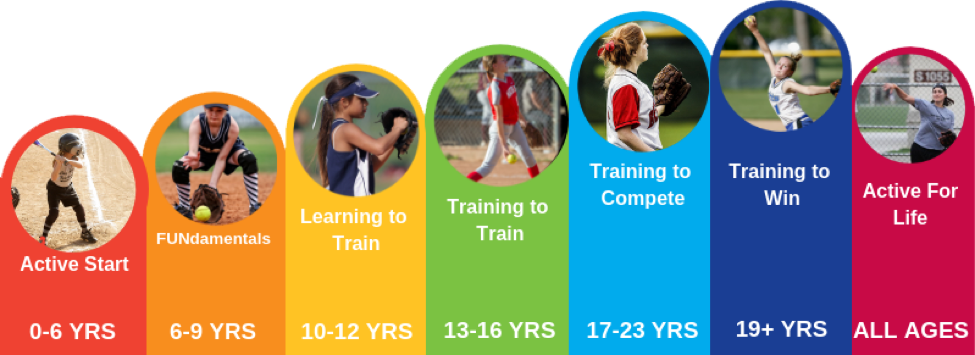
Below is a modified image for the Softball BC presentation that outlines the stages of LTAD, but like Hockey Canada, Softball Canada has opted to call theirs LTPD = Long Term Player Development (same guts but tweaks relative to their sport)
Stage 1 – Active Start – 0-6 Years Old
This is when kids should be exposed to as many activities as possible that involves running, falling, getting up, throwing, catching, swimming, biking, skiing, snowboarding, one handed strike (i.e. tennis), two handed strike (softball) and list goes on. That way kids develop Physical Literacy, they develop the confidence and initial competence in a number of core motor skills so they are ultimately active for life
Stage 2 – FUNdamentals – 6 – 9 Years old
This is when kids should sample as many sports as possible
to build on those core motor skills, softball in spring, soccer in fall,
skiing/snowboarding in the winter, playing in the playgrounds year round etc
etc. This not only includes organized sports, but free play, unstructured with
adult supervision (yes you heard me right, let kids play with a coach, parent,
ref present so they make their own teams, form their own rules and more often
than not will play for HOURS)
Nothing frustrates me more when I see kids at this age group
already starting to specialize in ONE sport, they should play EVERYTHING until
they find ones they enjoy most
Learning to Train 10-12
Kids should continue to play 2-3 organized sports (ultimately
not concurrently unless sports orgs provide schedules to permit). Also encourage them to participate in free, unstructured
play like pickup basketball, soccer, street hockey, playing catch, Frisbee etc.
to become the best athletes, not sport specific players.
I know that many parents that have their kids playing “elite”
level at 6-7 years old are going to counter me on this, but I don’t believe
that kids should even play competitively until they finish this level of LTAD,
I believe every NSO should be looking at not tracking outcomes of games
(scores, goals, assists) until kids enter high school.
This is also the critical years for motor skill development, so coaches should be focusing on skills stations, free play, creativity that relates to individual tactics NOT jumping to team tactics and strategies as kids can execute until they have the technical skills to do so.
WHY?
If it worked for Norway, who won 39 medals this past winter
Olympic Games and are the all record hold for most medals since the inception
of the winter games, who does not permit their kids to compete until 13 and are
one of the only nations that are not experiencing the attrition rates many
other countries are where kids quit by that age.
Train to Train – 13-16 Years
This is when coaches should introduce team tactics and
systems but continue to focus on core skill development. Too often I see coaches implementing
specialty units like power play, penalty kill and depriving 2/3 of the kids on
teams from the opportunity to do in games and it can start as early as Stage 2 –
Fundamentals.
What happens?
Parents complain about playing time, kids are deprived their
opportunity to contribute and it leads them to quitting.
Training to Compete – 17-23 Years Old
IF kids followed the right pathway and did not specialize
prior, this is when they should consider focusing on the sport they love the
most BUT I still encourage kids to continue playing complementary sports so 2
per year
Training to Win – 19+ Years Old
Then once they graduate from high school … pick the one they
love most and focus on competing at the highest the level they aspire for.
Active for Life
The GOAL – that all kids are active for life, less than 1%
will go on to play professionally or collegiately, if they love being active
will ski/snowboard, play adult rec hockey, slo-pitch (or fastball), golf,
tennis, biking, running and so on.
The other reason why our youth sports coaches are not
adhering to LTAD is the pressure they face to win so start implementing
tactics, strategies in the earlier stages that should be focused primarily on
core motor skill development.
Everyone then get frustrated watching kids play in games
that they can’t execute systems that they don’t have the skills for, coaches
are still learning also as our parents, exec members.
We could all learn from the likes of Norway, just let the
kids be kids, Play, Have Fun and not worry about outcomes until they reach
their latter teens.
We have our work to do to ensure that our youth sports
coaches are armed with all the tools they need to follow LTAD, and it all
starts with the grassroots coaches and parents.
Just let kids be kids, encourage them to sample as many sports as possible, and then encourage them to pursue the one they LOVE the most in their late teens.
Let’s all work together to bring the game back to the kids …
where it belongs.
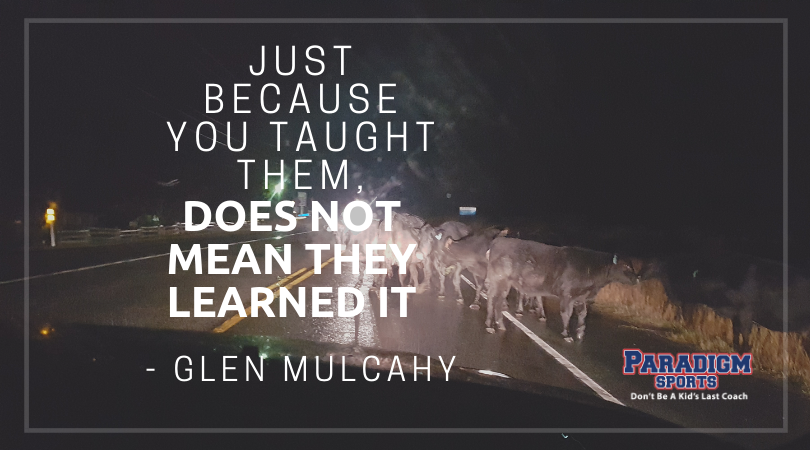
Just because you taught it, does not mean they learned it as
I have shared with coaches over the years. Don’t ASSUME when you write up a
drill on a white board that every player will understand and be able to execute
the drill.
Too often I see young coaches that I am evaluating, mentoring or when I a field, court at a rink and I see them bring the kids to a white board, write up a drill, send them off and shortly thereafter they are calling the kids back to re-explain (or worse yet screaming at them for making mistakes, not executing).
Kids, like adults, learn several ways and it is important that you recognize the different ways and cover them whenever talking to your players in practices of chalk talks (now LED TV talks) before games.
Some of the kids on your teams will have strong IQ’s for the sport and will get it merely by merely seeing the X’s and O’s on a white board and these are usually the kids at the front of the line in drills, usually top 1/3 in terms of skill level on your teams.
Some will understand what your taught them by
seeing the X’s and O’s and hearing the instructions from you (provided that you
are speaking clearly, see all of their eyes and they are following one of my
cardinal rules … when the coaches speak, ZIP THE LIP).
TIP – your problem child’s are usually the ones you can not see, stand or kneel, even lie down behind you, they are the ones you should always have front and centre in your sight light to ensure they stay out of trouble
Another group of kids need to see the drill
written, hear it explained and see a demonstration of what to do. These are the kids that usually line up in
the middle of the line as they like to see the demonstration but also see the
first few players go in front of them so they can follow their lead.
TIP – don’t always let these kids go to the middle of the line, encourage them to start a drill at times and encourage them it is OK to make mistakes so they are safe to fail, something you should be encouraging for all of your players. One of the reasons why kids quit sports is due to coaches screaming at them during drills as they did not run it the way the coaches wrote it up (more often than not they did not communicate it well so that kids would run it correctly)
Then there are what coaches refer to as drill
killers I counter back that these are the kids that need to see the drill
written up, explained, demonstrated and watch majority of their team mates do
the drill before they understand what is expected of them. Often, it is not the kids that kill the
drill, it is the coaches from the get go as they did not go thru all the steps
to cover all the ways kids learn.
They are the players on your team
that go to the back of the line by default, and some may have forms of learning
disabilities (we are in a world where every kid has ADHD and docs think nothing
of writing up scipts for meds when a generation back these very same kids were
just HYPER). More often than not,
though, they usually go to the back of the line because they lack even more
confidence than those that go to the middle.
These may be kids that are just
starting out in a sport and are intimidated by their more skilled and
experienced counterparts but they also are ones that may have had coaches scare
them to the point they lack the confidence they once had.
TIPS – try to keep the number of drills you have to a minimum and merely add progressions to them as you run again in practices (I normally have 20-25 drills that I run each season but build on them by adding progressions each time).
Name a drill after each player on the team (the drills they do get and enjoy) and then change on the fly during a practice (i.e. start without pucks then add pucks). NEVER introduce a new drill at the end of practice, it should be done right after warm-up when kids are fresh, as they tire during practice, they deprive their brains of O2 and will be harder to grasp new concepts especially if you have early morning practices before school or late practices on school nights for older age groups.
Many years back when I was in college taking a sales course,
I learned a valuable tip from the tenured instructor, he said in every class to
100+ students, make sure you clarify, clarify, clarify.
If you work on connecting with your players early in the
season and figure out what they need in terms of learning, the big key is to
clarify with them to ensure that they actually do get it.
Ask them to repeat back to your what you instructed them to
do.
Do so by looking at their eyes, ALL of their eyes, if you
can’t see their eyes they can’t hear you nor can your read it they understood
you.
You also can figure out as I so affectionally refer to is “deer
in headlights”, if one or more of your players look at you with glazy eyes then
ask them to come see you before they head off to do the drill.
Don’t let them the head off if you see what I saw recently, many deer along the road on the way home but for the first time EVER … COWS IN HEADLIGHTS.
When we were approaching them we thought, BEAR … nope …
little closer … MOOSE … nope
A small herd of Angus Cows broke thru a gate and were
crossing the road on a major highway, had we hit one or more, I suspect I would
not be writing this post today.
Thanks to someone who had stopped behind us and could tell by how confident she was approaching the Cows directly in front of us must have worked on a farm, she slowly guided the “herd” from blocking both sides of the highway to head back to their pasture and improvised closing the gate that had been broken.
Take the extra time they need to clarify what you want them
to do, do so with a positive voice and even tell them “It’s OK if you make a
mistake, I want you to make UGLY mistakes”
How many coaches have you ever heard say that?
Take the time to get know all your kids early in the season,
what makes them tick, how they learn, what they need in terms of explanations
and be positive and encourage every single one to take the lead to build all
their confidence and as the season evolves all their skills will improve and
collectively as a team you will see the results on the scoreboard.
Let’s all work together to bring the game back to the kids …
where it belongs.