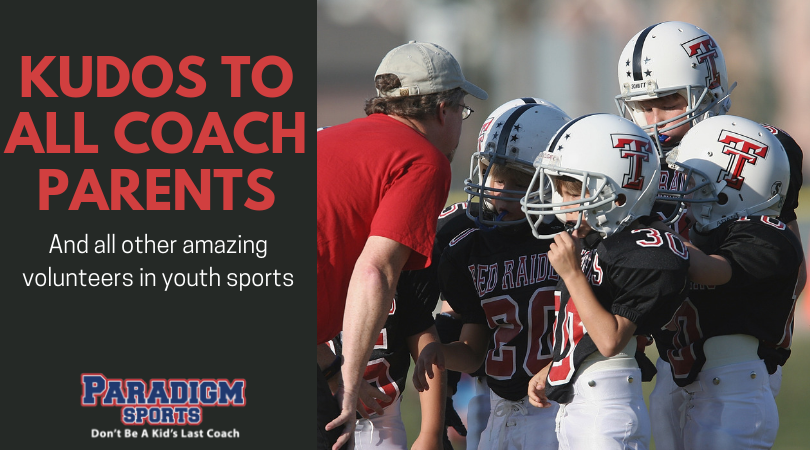
Kudos to all Coach Parents

Posted Leave a commentPosted in Athlete, Coach, Early Sport Specialization, Organization Executive, Parents

And all other amazing volunteers in youth sports

BONUS – Download a Free Copy of this Blog in PDF Format HERE


In celebration of National Volunteer Week, I wanted to take this opportunity to provide Kudos to all the AMAZING people that I who have volunteered their time unselfishly so kids can play organized youth sports.

Although the model in the competitive stream has been evolving more to non-parent paid coaches who many feel are “more qualified” I beg to differ, there are many coach parents out there with decades of coaching experience that are AMAZING coaches whom those non-parents could learn from.

A couple of weeks ago I did a talk for North Shore Fastpitch and will be doing two talks for Langley Fastball next Monday and reminded me of my tenure coaching softball with the most dedicated volunteer EVER, Glenn Zwick, whom I highlighted in “Coaching Skills in Sport and Skills in Life

Glenn was the head coach of my daughter’s softball teams all but one year that she played softball, the one year she played rep and had such a sour experience that she opted to return back to C ball.

Ironically she, like I, learned more about Softball and life under Glenn’s leadership than either of us working with other coaches or sports leaders.

The focus of that article was the importance of mentorship and how many people do so unselfishly.

What I want to highlight this go around are all the other volunteers that permit kids to play youth sports, to begin with.

Although much research coming forward is showing the optimal pathway for kids to develop their sports skills is to augment organized sports with unstructured free play, if people did not step up in various capacities in youth sports, kids would not be able to play they love (and hopefully love for years to come)

Kudos to all those that put their hand up to help coach various youth sports, in my case I coached softball, baseball, hockey, rugby and ball hockey after coaching adult co-ed slo-pitch which is hard to believe has been over 25 years of coaching and I still love it as much now as I did when I started.  The difference now is I am coaching coaches, supporting parents, volunteer board members, officials to attract, retain and grow their memberships and in doing so have the opportunity to reach so many more kids than just coaching one team at a time.

The majority of those that step up to coach share when prompted why they do so is due to the fact that they have skin in the game, their son or daughter are playing.

Probably the saddest example that a parent coach shared with me last year was the reason that he stepped up to coach hockey is his 9-year-old daughter told him after her first year of Atom Hockey that she was going to quit because she was scared of making mistakes and gave examples why.

Why?

Because the coach she had that season did not realize the impact of his words on his players and the importance of making it safe for them to fail.  He would single kids out for making mistakes in games, practices, at times with language not appropriate for any age group.

When the parent shared the story, literally everyone in the room, the majority of which were middle aged parents themselves (both Dads and Moms) eyes weeped up and even when I think about it now mine do as well.

Even though I believe her coach had the best of intentions when he started as all do, because of the current winning at all costs focus in many sports and most of the coaching certification provided to coaches relates to tactics, skill analysis, systems, rules, practice and game management they don’t develop their soft skills, how to coach, which is the basis of all of our modules.  They don’t know the best practices of coaching like growth mindset, the importance of connecting with their players and the emotional intelligence that the greatest coaches of all time developed after decades of coaching.

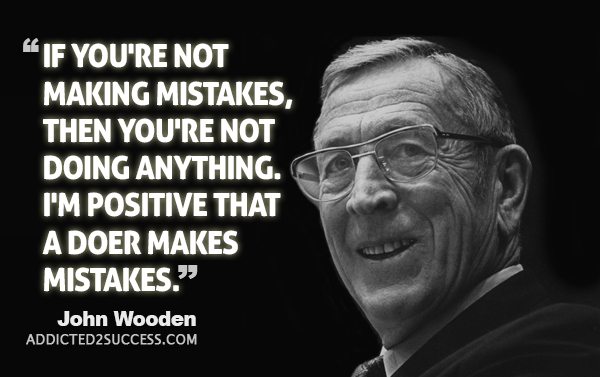
The greatest coach of all time, John Wooden, took 16 years to hone his craft before he won his first of many national championships as he knew the importance of being a great teacher of the game. He also believed in the importance of providing an environment for his players that was safe to fail.
 

Coaching girls who are playing on boys teams vs. all girls teams, coaches must adapt their coaching styles as there are differences when coaching girls vs. boys.

Coaches also must learn how to connect with their players, how to engage parents on their teams, how to make it safe (to fail and all forms of harassment), how to coach today’s generation Z, characteristics of great leaders, how to communicate effectively and so forth.

What I can say as I have traveled the country and interacted with thousands of coaches and all other volunteers that we rely on for kids to be able to play youth sports, I believe that there many more coach parents out there that are doing an AMAZING job as they truly are in it not just for their kids, but as I share with every coach when they say they are coaching because of their kids, “You have figured out that you adopted 10+ other kids also?”

To which they all say, yes, and they love being with all the kids and seeing not only develop their athletic skills, but as people.

Below is a great video which is a great perfect example why Kudos should be relayed to all of the coaches that Dwayne Wade had in his youth that not only guided him to become the future hall of famer he will be, but an amazing person.

Get your Kleenex out for this one.

I also want to take this opportunity to thank all of my amazing volunteer coaches who took me under their wing after my father passed away when I was 8 years old.

My father was a really good athlete, he played junior football and baseball to semi-pro until his 20’s and both I and my brother inherited his athletic genes.  In my youth, I played EVERYTHING, a lot of unstructured free play, but also a number of organized sports and had the opportunity to play on provincial winning teams in Hockey, Football and Rugby lead by GREAT Coaches.

Why were they great?

They pushed me to become the best I could be.

They taught me so many life lessons that I wish I had learned from my Dad, values like winning with humility, losing with dignity, respect, sportsmanship, selflessness, team work and important life skills like resiliency, leadership, communication, accountability, punctuality, commitment.

Another challenge that I had growing up is the fact my father had to live close to government buildings that he managed as a stationary engineer so every year from K to High School we moved so I was in a different school, different sports program which made it very difficult to develop friendships but the one constant for me was playing sports and I had so many amazing coaches that truly cared about me and were very passionate about the sports I played.

Those stops included many suburbs in Montreal,  Ottawa, Baffin Island (Northwest Territories), Vancouver, back to Montreal, Toronto then finally back to Vancouver and have resided there since.

There were in a sense, the very model for why I mentor coaches, students and even employees now and do so to give back as those coaches did for me.

It is one of the driving reasons why I wanted my kids to grow up in the same place and go to same schools year after year and also why every time they asked me to coach I did so with no hesitation.

When I entered High School we finally stopped moving year after year, my mother continued to support me and my brother to play 3 organized sports per year and went thru a real tough few years as became bitter having not had a father but when I look back at it, I had MANY fathers.

This is why I focus on mentoring grass roots coaches, the mothers and fathers who put their hands up every year to coach kids For the Love of the Game, to Give back/pay it forward and all the other reasons I shared in “Why do you Coach

One of the tips that I share in talks is the importance for coach parents to wear their coach hat at the rink, court, field and their kids call them coach and when they leave (to/from) that they put their Mom or Dad hat on and vice versa.

Don’t coach your kids at home, the dinner table or in the car otherwise they may become one of the 70% of kids that are quitting youth sports before high school.

A Dad came to me when I was doing a clinic last year after I shared that anecdote and he said to me with tears in his eyes “my son told me he wanted to quit hockey because was not having fun and I did not even think I was over coaching him”

It’s a fine line for coach parents but without the 10’s of thousands that put their hand up across Canada, undergo all the certification that is being asked of them and now ongoing professional development credits, please ensure that your son or daughter treat them with respect, thank them for everything they do and if you are a parent and not coaching do the same.

Being a coach requires hundreds of hours of time to plan practices, manage games and all the stuff that goes on behind the scenes with managers, board members, officials to ensure that kids have an opportunity to play a game they love.

Thanks Coach for everything that you do.

Even though at times it may seem like a thankless gig, when one of your players comes to thank you at the end of the season or better yet shows up on your doorstep to say hi or as they even get older to go for a bevie, reach out to thank you for everything that you did, it is all worthwhile.

Thanks also to all the other amazing volunteers that keep the cogwheels of youth sports turning, board members, scorekeepers, timekeepers, managers, trainers, risk managers and all others that make it possible for kids to play youth sports.

Coaches, please ensure that you keep the game in perspective and remember the initial reasons that you started coaching, to begin with:

  • Make it Fun
  • Make it Safe
  • Teach Skills
  • Care Passionately

And most importantly …..

Don’t be a Kid’s Last Coach

Please ensure that the legacy that you leave behind is like Glenn’s and all the coaches that I had in my youth and it is a positive one and you are not a kid’s last coach.

Lets all work together to bring the game back to the kids … where it belongs.



Why the 10,000 Hour Rule is a Fallacy

Posted Leave a commentPosted in Athlete, Coach, Early Sport Specialization, Organization Executive, Parents


It has been over 10 years now since Malcolm Gladwell wrote his national best seller Outliers where he shared Anders Erickson research on a group of concert violinists that practiced  10,000 hours to perfect their craft.

Since that point Malcolm has been challenged by researchers, coaches, and experts in the space including David Epstein who debunked the 10,000 rule in his book The Sports Gene.


Not that I would EVER put myself in the same space as authors of best sellers, but from the time I read Outliers years back I too questioned Malcolm’s argument as have coached for many years and have never believed in the cliché that practice makes perfect nor in the benefits of starting to practice at such an early age and work one sport that is driving early sports specialization.

In lieu … Practice Makes Permanent

If you practice 10,000 hours wrong … you have a real serious bad habit.

Every kid I have coached at the beginning of the season I would tell them .. I would rather you do it slow and RIGHT than fast and WRONG.  Too many kids want to rush thru drills so they can get to the end of the practice that coaches will have “fun time” but the entire practice should be fun and if you disguise your drills and they are fun, kids won’t rush thru, cheat the drill and do them right so they do develop correctly in lieu of building bad habits that can’t be reversed later.

Here are the reasons why I have argued that the 10,000 hour rule is a fallacy to reach the highest levels of athletics, earn an NCAA Sports Scholarship or playing professionally (where less that 1% will reach those levels)


#1 –  Practice Must be Deliberate AND Unstructured


As Malcolm is more of a historian, than a researcher whose very livelihood revolves around publishing journal articles and books with their scientific data and longitudinal studies, one who was the first to challenge him was the very person whom he did not consult with when he was writing his best seller Outliers, Anders Erickson.

Anders did share in a research study many years back when he looked at concert violinist and the amount of practice that they had to do in order to reach that level on average it took over 10,000 hours of working on their craft.

It was not just the fact that they sat down and practiced daily to accumulate those hours, it was due to how deliberate the practice was, which included working with some of the top music teachers who provided practice plans, feedback and error correction.

As David did with the Sports Gene, he released his counter to Malcolm’s Outliers with his book Peak where he shares insight on the research done on deliberate practice.

What further research has shown is practice must have purpose but the best way to audment the skills is to allow for unstructured free play, where athletest can develop anticipatory skills and adapt.  The best analogy is Wayne Gretzky who many argue was the greatest player ever not because of his skill set but he anticipated where the puck was going to be.  This is why I have an issue with the term “read and react”, meaning read the play, react to the play BUT due to the speed of hockey and many other sports today you don’t have time to react.  In lieu, I have always told my players to read and ACT.  Yes, that means at times they may be caught offside, may make mistakes, but in order to play at the highest level, you must be able to make decisions on the fly.  This is why every practice must include unstructure free play time where coaches don’t coach, just allow the players to PLAY and develop creativity, reading the game and making decisions without criticism.

#2 – Practice must have key teaching and execution points

Having evaluated many team sports coaches over the years, one of the key shortfalls of their practices is they run drill after drill but the majority of grass roots coaches working with kids in their key development years of motor skill acquisition do not focus on key teaching points for every one of those drills.

This can also go hand in hand with the error correction that must be relayed to players when they are running thru the drill by the coach that is assigned to do so.  As more and more sports are implementing their versions of LTAD, many practices including skills stations where players move from one station to the other and more often than not a coach will merely setup the drill for the players to run thru but not share what they are looking for in terms of the skill mechanics nor correct errors.

This is due largely in part to the head coach not communicating with the assistant coaches what the key teaching points are and the importance of stopping the drill to correct errors when they happen.

The feedback must be relayed soon after the skill was done, both positive praise for real effort (great job) and if error correction needed (johnny, in order to accelerate thru the turn you must lead with your inside skate, outside edge so can cross over with your outside skate with speed).

As many coaches neglect to do in practices, they try to correct mistakes in games (both strategic and skills) but games should be the time for the kids to PLAY to develop confidence and try the skills they worked on in games in a safe to fail environment.

#3 – Praise Effort to reinforce the Growth Mindset

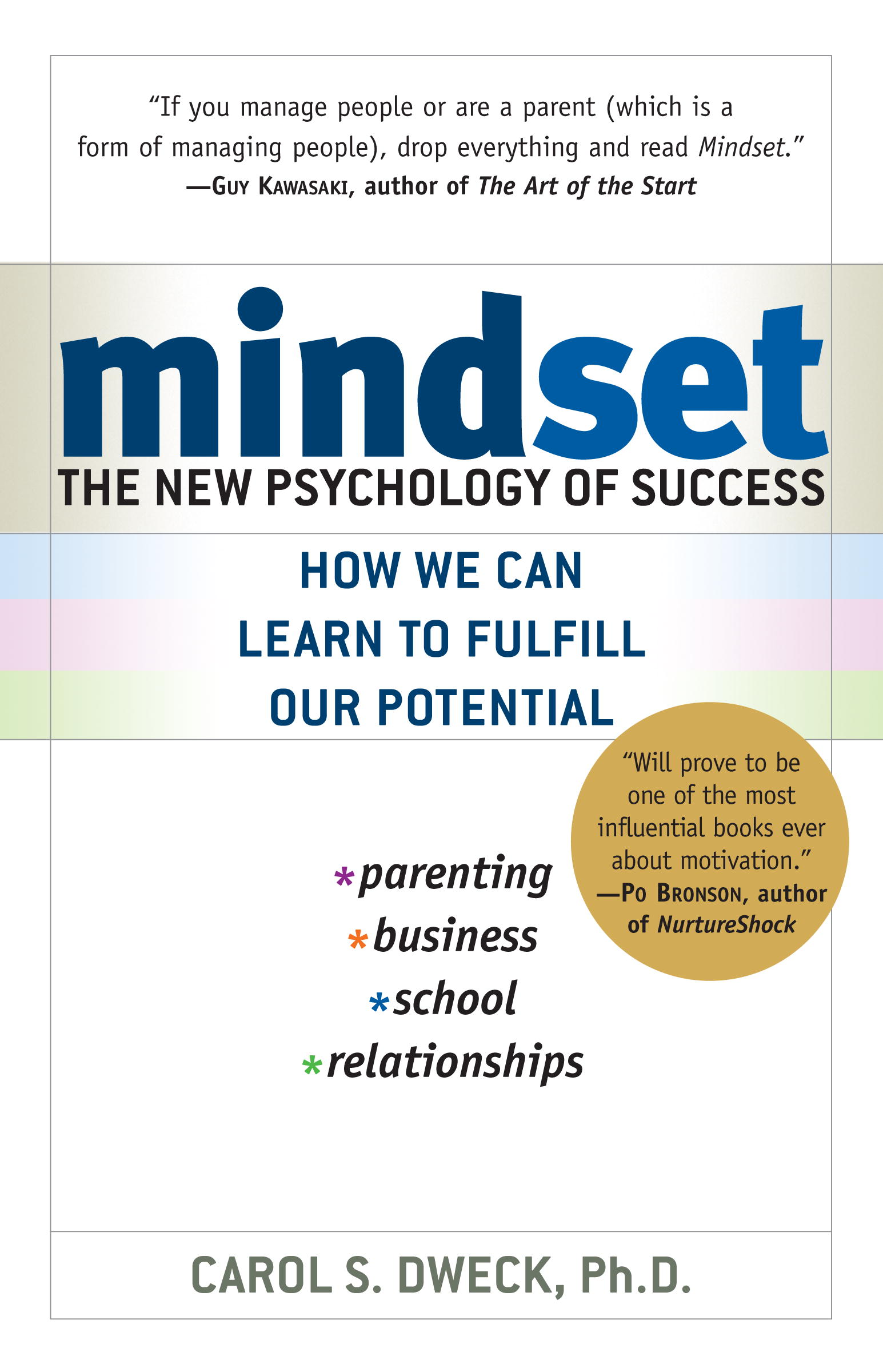
As the entire sports world has learned thru the work of Carol Dweck, feedback relayed to athletes in those drills must focus on the growth mindset and encourage kids to try harder variations of the drill even it if means they will make mistakes.


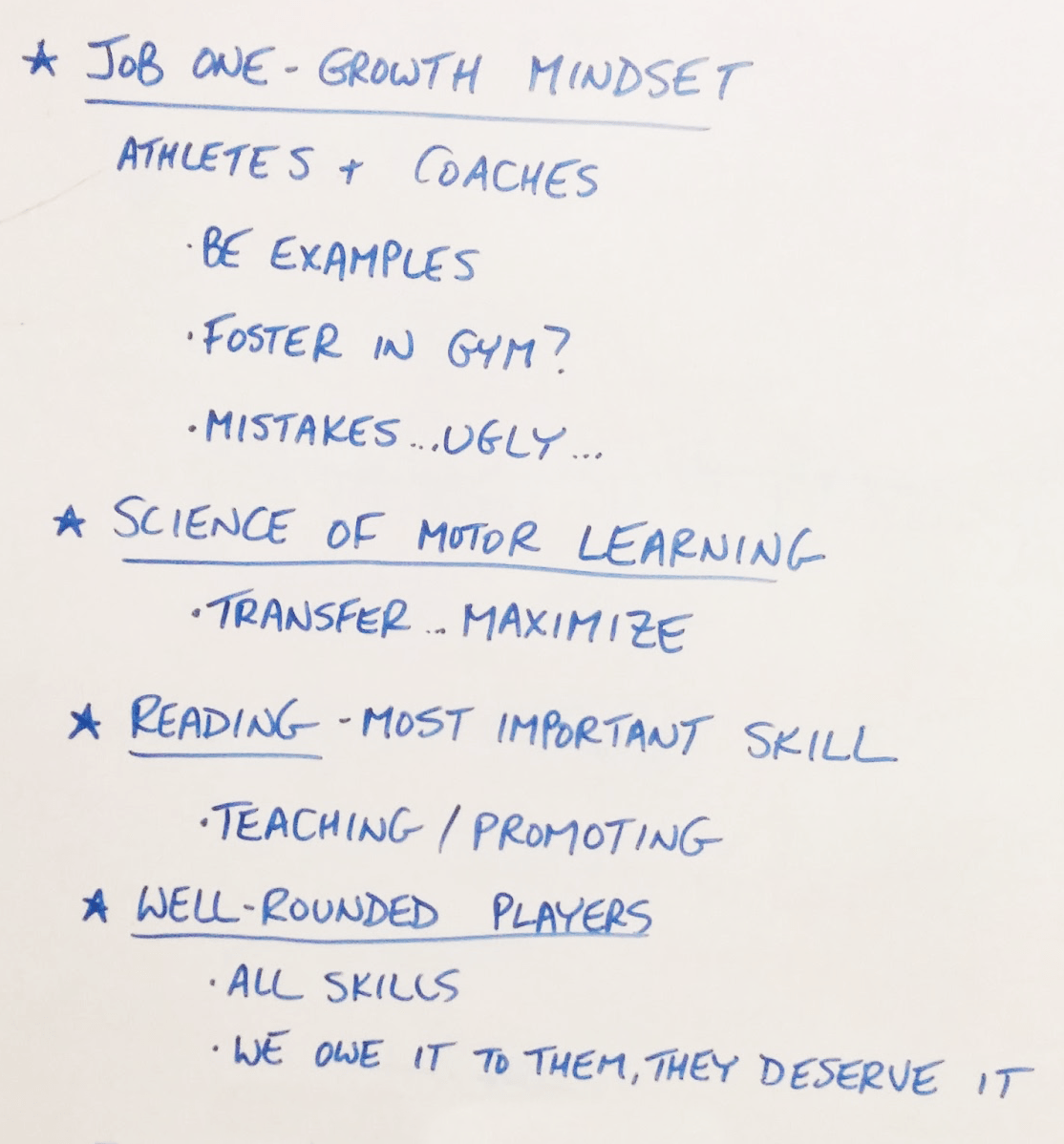
Yes … mistakes … the uglier the better which Karch Kiraly made infamous on his whiteboard for the US National Women’s Volleyball team that he guided to their first EVER international championship and a bronze medal in the 2016 Summer Olympics after reading and implementing the growth mindset with the team.


The only way that kids will develop their skills and creativity is if their practice environment mirrors more what it was like for Gen X whose sports development relayed more on unstructured free play and the opportunity to take risks and learn from them with no adults telling them what to do, how to do it, and criticizing their mistakes.

This criticism is also coming from parents either at home or the ride to/from the facility and even their team mates if coaches do not have a code of conduct to respect their teammates or the late great John Wooden 3rd rule “Never criticize your teammates”

#4 – The Research

One of the top 10 MUST Read books that we recommend to everyone is David Epstein’s book “The Sports Gene” that debunked the 10,000 hour rule and also highlights the benefits of multi-sport participation vs. the pitfalls of early sports specialization with data.  Another that I know will be a top recommendation will be his upcoming book Range highlighting how generalization, not specialization, is the optimal pathway to become the best athlete a person can be.


In 2014 a study was done at Princeton University by Brooke Macnamara that looked at the amount of deliberate practice accumulated over time only had a limited impact in high performance or skill acquisition across various domains including music, games, sports, professions, and education.

The highest impact was found on strategic games like Scrabble and Chess, where chances of becoming a grandmaster have a direct correlation on the amount of practice one gets before a certain age and study showed 18% was attributed to deliberate practice.

The second was Music – Violin, and piano @ 21%

The third was Sports – where deliberate practice accounted for 18% of what was required to reach the highest level.

Why?

Because you can practice perfectly until you are blue in face for YEARS but in addition to practice … DNA plays a role … I have seen it firsthand as a parent, both my kids (who have now aged out of youth sports) inherited my wife’s gene for size (she is 5’1  and I am 6’2”) and although both appeared to inherit my multi-sport athletic gene, were unable to advance to higher levels (junior, collegiate) as were told over and over again they were too small.

Kids also need to have the right eating, sleeping habits to provide the nutrition balance for carbs vs. proteins and associated vitamins, rest and recovery to avoid injuries.  Many kids today are also addicted to screens, as I shared in a prior post, Why Kids Play Video Games, eSports has evolved to a Billion Dollar industry thanks to games becoming more and more addictive in their nature.

As a result of specialization accelerating travel ball and chasing AAA teams that travel across the country or to other countries where kids play multiple “prospect” tournaments annually they also need parents that either (a) have the financial resources to support the costs or (b) are going deeper and deeper into debt trying to keep up with the jones to do so.

Kids also need to have GREAT coaches, parents, teachers to help them get the great grades (if aspire for NCAA must also do well in school to be a student-athlete) as well as support from others in their network (neighbors, friends other family members)

It takes a village to raise a child.

 #5 – Because Malcolm Gladwell acknowledged the very rule he is infamous for was false.

It takes courage to own up to when one made a mistake and I applaud Malcolm (fellow Canadian) for doing so, at the time he wrote the book he based his analysis on what was available at the time, but since that point there has been so much evidence brought forth, not just yours truly opinion well before Outliers became a National Best Seller.

In an interview he recently had with David Epstein for MIT’s Sports Analytics conference, he shares how he and David became friends due to the fact David challenged the rule 5 years ago with his research and expertise in terms of the optimal pathway to reach the top level in sport was developing physical literacy by sampling as many sports and physical activities as possible.

Below is the entire interview he did with David, go to 54 minute mark to hear when he admits the 10,000 hour rule was false when it comes to early specialization.

If you have gotten this point in the blog hopefully, like Malcolm, your opinion has swayed and if you truly aspire for your players, son or daughter to become the best they can be, in lieu of having them work a sport by specializing as early as 7 years old, support them to sample as many sports and other activities (drama, art, science, theatre, music, languages) as possible and have a normal childhood so they can find what they truly will be passionate in doing later in life.

Ask yourself – what is your calling?

Do you know? If so when did you figure it out? Your 20’s – 30’s – 40’s later or still figuring it out?

How then as an adult can we be vulnerable to other adults who are “recommending” to us as coaches or parents for our son or daughter to have them specialize at an early age which will potentially deprive them of finding their true calling later in life.

Too many kids are quitting youth sports before high school or were deselected that potentially could have been late bloomers or played other sports early on only to find the one they became passionate about later on and the list is endless of athletes I could share that did reach NCAA or professional level as they did not burn out, developed all core motor skills or suffered potential career-ending injuries way too early.

Our calling as youth sports coaches is not to make a living (especially as majority are volunteers), or huge profits those that are advocating early sport specialization, but to make a difference by developing youth into adults.

Let’s all work together to bring the game back to the kids …. where it belongs


Don`t be a kids last coach


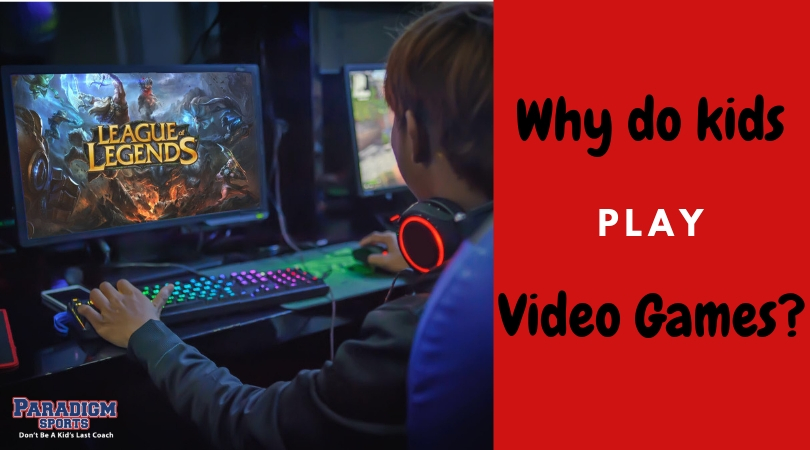
Why do kids play Video Games?

Posted 3 CommentsPosted in Athlete, Coach, Early Sport Specialization, Organization Executive, Parents

Earlier this week I received a call from a writer for CBC who wanted to get insight from my interaction with coaches across Canada regarding the impact of Fortnite and other video games on the grassroots level of youth sports.

The subject comes up literally every time I do a presentation or connect with coaches on a call, as it is one of the many screens that kids have turned to in the digital era replacing their former active play time with inactive screen time.

The main reason why it is not only impacting grassroots but all the way up to the professional level is the fact that many athletes are playing video games for hours on end into the early morning hours, in particular when traveling to road games, leading to sleep deprivation which is impacting their performance during “real” games of the sports they play.

Why do Kids Play Video Games?

#1 – Fun

No different that youth sports, kids play video games because they’re fun.  It’s not Rocket Science and the video game developers invest Millions of dollars into R&D to develop games so they are fun, whether it be for PC, Mac, Video Game Consoles, Tablets or Smart Phones.

#2 – Social 

Also one of driving reasons why kids play Youth Sports, they play video games with their friends or meet new friends either in their communities by going to houses or as many games can be played online, they meet friends from all over the globe.

#3 – Safe

Two reasons why video games are safe;

a. They are safe to fail

There are no adults present like they are in the professionalized youth sports era today, no parents or coaches telling them what to do, no officials enforcing the rules and if they don’t like the preset rules of the games they change them and can play levels that they are comfortable playing.

If you die or the game is over … all kids do is press the reset button and PLAY AGAIN.

It would be a great way to test Carol Dweck’s research in terms of growth mindset, I suspect kids with a fixed mindset always play at a lower level so they can get the desired result vs. those with a growth mindset would also want to play at a higher level to push themselves to get better.

b. They are safe from all forms of harassment

When is the last time you saw a social media post or a news article in print or on TV that gamers have been victims of bullying, cyberbullying, sexual harassment or abuse, hazing?

Compare that to youth sports, it seems like every day I open the paper, check news feeds or social media that I come across yet another article where players, officials and even coaches are victims of one form of abuse.

As ESports continues to evolve and competitions ramp up I suspect this may creep into their sector as it has in youth sports, but the very nature of esports is inclusive, regardless of your nationality, economic status, sexual orientation as long as you can play, you PLAY without the fear of being harassed by adults (coaches, parents) or even teammates.

#4 – Addictive Nature

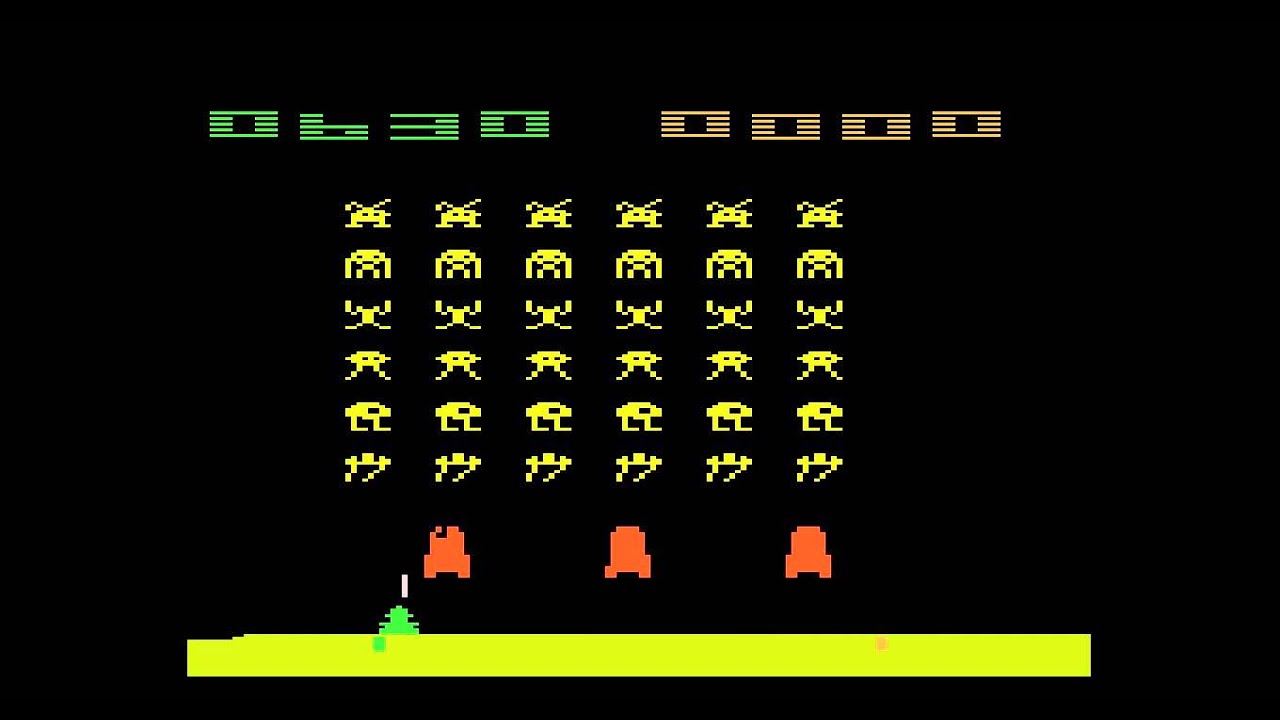
Video games since the onset have been addictive forms of entertainment, how many of you remember some of the original games

Fast forward to ones developed for Smart Phones?


The developers would not be doing their jobs if they did not make the games addictive so that (a) you purchased the games and (b) kept buying the newest versions of same.

Think of the various EA Sports top-selling games, every year they add to the games so you ante up 50-100.00 to purchase the newest version like Madden, Fifa, NHL and various others.

I would even argue they lead to the very same release of the neurotransmitter Dopamine that Simon Sinek touched on in his infamous rant about the Millenials in the Workplace we shared in our prior post This is the Future.  Fortnite, in particular, has kids and even adults playing for hours one end into the wee hours of the morning.

Youth sports also can be addictive, if kids play for the love of the game, they will play for HOURS just like we did as kids.

#5 – Competitive

Many kids will say they play because they love to compete with their friends, which is no different than pick-up games when we grew up, there was nothing better than a close game of shinny, basketball, football, British Bulldog or what have you to get the adrenalin juices flowing.

The difference between kids playing video games and organized youth sports today vs. when I grew up, is the adults have turned youth sports into winning at all costs environment in lieu of playing for the love of the game, the spirit of competition, playing with your friends and FUN.

Youth Sports Organizations could learn “just a wee bit” for the Video Games Business Model and if did so could reverse the negative trends that youth sports are seeing today where 70% of kids are quitting youth sports by the age of 13.

How can Youth Sports Attract, Retain and Grow their membership?

#1 Focus on FUN at all costs, not winning at all costs.

As I have shared for many years with parents, coaches and board members;


Kids play sports is that they are fun, they quit when they’re not.

IT’S NOT ROCKET SCIENCE.

# 2 – Recognize the importance of kids playing with their friends

In the most recent survey we shared “Why Kids Play Soccer“, over 2300 kids stated the #2 reason why they played soccer was to play with their friends or meet new ones.

# 3 – Make it Safe to Fail and from all forms of harassment

In the last few weeks there have been so many articles or videos shared in social media or on TV regarding various forms of abuse that kids have bee victims and the level of abuse that officials are seeing is leading to many states in the USA declaring official attrition is a state of emergency as it will jeopardize number of games and programs they can support.

Why is this happening? Because parents think youth sports is a meal ticket to save the costs for a university education via a full ride scholarship or even better, their kids will get a professional contract to play sports.

The reality is less than 1% of kids will play collegiately with a scholarship, most of which are partials and less than 0.1% will play professionally.

In the last few weeks Kirsty Duncan, minister of Sport for Canada, has started the ball rolling to create a harmonized code of conduct with the Coaching Association of Canada as well as recently announced that there will be a 3rd party independent reporting organization and toll-free support line for any athletes that have been victims of any form of harassment.

The big unknown is how long this will take to be in place AND if the much needed cultural shift that needs to happen in youth sports will follow.

# 4 – Promote the benefits of Free PLAY.

Gone are the days where kids will play outside for hours on end as Generation X did (those born before 1984) BUT we must find a happy medium where kids have the opportunity to develop the very same addiction we had for being active and being outside so we don’t lose another generation like Simon Sinek eluded how we let the Milennials down.

There was nothing better for me and all the global experts that I have had the opportunity to talk to than going outside and playing pickup games, climbing trees, swinging into lakes, racing our bikes and so on without any adult supervision (no coaches, parents, officials)

A great example is an initiative that a coach started in Oklahama called “Unorganized Baseball” highlighted in the video below;

What does the kid say … playing baseball with my friends, I like this more

Should I tell your dad you said that?

YES.

Why?

Because the rules of unorganized baseball are there are NO RULES other than parents need to be quiet, coaches can’t coach, the kids pick sides and form their own teams, they make their own rules and enforce them.  No GROWN-UPS involved.

Hmmmm .. sounds like the good old days doesn’t it?

Kids just want to play … play with their friends in their local communities, not travel and have to play sports year round (early specialization), travel, aren’t concerned about trophies or medals (participation trophies) and have FUN.

THIS IS WHY VIDEO GAMES ARE THRIVING.

# 5 – Provide a quality sports experience

The focus of youth sports should not be winning at all costs, the focus should be a positive experience where kids learn not only the skills of the game, but the skills of life.

I know there is a lot of work being done at the academia level and sports organizations to define what is quality sport, and the best one I have come across to date is one drafted by Sport Canada;

Quality sport is led by Qualified Coaches, is delivered in a Safe and Ethical manner, is administered by Sport organizations who are aiming to achieve Organizational Excellence, is Inclusive and Accessible and is Developmentally Appropriate.

Hmmm … Qualified Coaches, Safe and Ethical, Organizational Excellence, Inclusive and Accessible and Developmentally Appropriate?

If youth sports organizations would follow suit and check all the boxes, in lieu of suffering the rates they have been experiencing the last 2 decades, they could buck the trends and attract, retain and GROW their memberships. One of the biggest shortfalls in youth sports is there is no measurement to ensure that kids DEVELOP, merely rely on outcoms (game scores, goals and assists) but ask any kid what quality sport is and they are tested beginning, mid and end of season to show how much they IMPROVED, not how many wins the team got.

Ironically, as I was putting the finishing touches to this post I read in one of our online local papers that a new esports tournament stadium is going to open in Richmond (lower mainland of Vancouver) BC as one of the principals stated “We know there is a community of gamers here in the Greater Vancouver area…we’ve done our market research, so we are pretty confident,” he said.

Rendering what the new stadium will look like


Hmmm … Market Research?  What a concept.

The very reason why Video Games and eSports have evolved into multi-billion industries is that they do their research, focus groups, surveys, testing so they can develop games with all the features that their customers want and focus on continuous improvement so they not only attract, but they retain and grow their customer base year after year.

Video Games now are a $180 Billion Industry Worldwide so they know a “wee bit” about attracting, retaining and growing their membership year over year.

Youth sports have to stop running their models as not for profits and understand that they are in the business of developing youth into adults.

Let’s all work together to bring the game back to the kids …. where it belongs.

Don`t be a kids last coach


Why Youth Sports need to walk the walk, NOT talk the talk

Posted Leave a commentPosted in Athlete, Coach, Early Sport Specialization, Organization Executive, Parents

In the last few weeks, there have been so many examples of scandals that have to the forefront revolving around youth/collegiate sports it has led to me shaking my head in disbelief.

As I came across each article, video, a podcast I kept saying to myself, am I missing something, how can all these organizations think they would never be called out in today’s age of social media?

How can all those involved in leadership roles with sports organizations, universities think nothing about talking the talk, but are not walking the walk?

They thought nothing of sweeping issues under the rug in lieu of owning up to them and doing the right thing showing honesty and integrity were core values they not just wrote down in policies, best practices, KPI’s, mission statement but they adhered to them EVEN WHEN NO ONE WAS LOOKING, the true test of integrity.

As I was raised by my single parent mother and her mother with Scottish and Irish Heritage, the one thing that I learned from both was the importance of integrity, regardless if someone was watching, always do the right thing even when it may mean you have to deal with repercussions.

Perfect example, while still in Montreal was playing pickup baseball in the street and I got a hold of a pitch and broke a neighbors window.  I immediately went to them and apologized and offered to pay for the damages out of my allowance.  Some of my buddies said to me, what are you doing, run, decades later suspect they may not appreciate the value of integrity.

It is one of the very reasons why I love the game of golf, you play the ball where it is played, and the greatest amateur of all time, Bobby Jones, lost out on the 1925 US Open Major Championship as he called a penalty on himself as the ball moved when was lined up his club although no one else saw it.

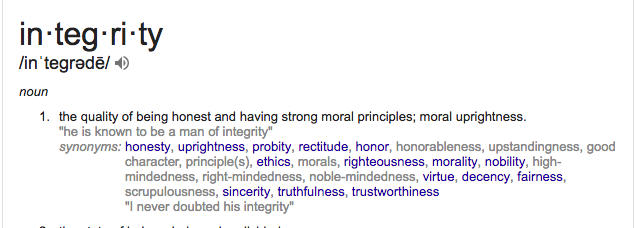
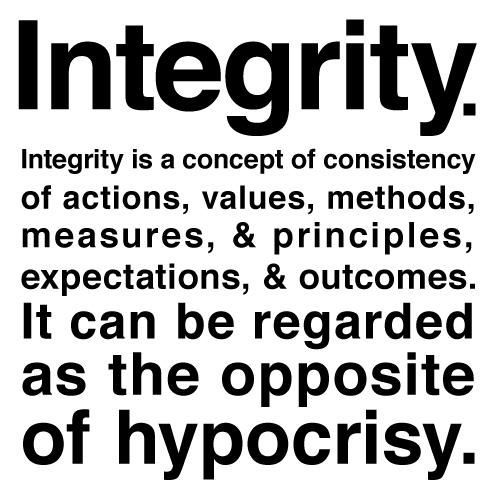
Below is the dictionary definition of Integrity:


Perhaps I am old school, but I still (naively) believe in the concept of a man’s word meaning just that, a man’s word.  Shaking a hand with someone and honouring that commitment.

Early on in my youth coaching tenure I had a 7 year old player tell me that “you did not honour your promise” when we ran out of time during a practice and not have a game to end it and to this day I tell all coaches, if you say something, you better deliver or the trust you have worked on developing with your players will be lost for the remainder of the season and then some.

Unfortunately, I wonder why every day why so many people today think nothing of not adhering to the very same values.

Some of the examples that come to the top of my mind why youth sports need to walk the walk, NOT just talk the talk:

#1 – Operation Varsity Blues:

A number of NCAA DIV I and Ivy league schools have had criminal charges filed by the FBI brought forth for bribes to coaches, administrators for acceptance into their programs from $200,000 to over $6.5 Million Dollars (USD) !  Check out this article for 30 Fast Facts about the college admission scandal

#2 – Sexual Abuse/Harassment:

All of the sexual abuse and harassment scandals that have come to light the last couple of years, in particular, USA Gymnastics who continued to try and hide evidence well after the allegations had come forward leading to the USOC to initiate removing their sanctions as a national governing body.

As a result of the CBC three-part series where 222 coaches were convicted of abusing over 600 victims, Kirsty Duncan, Federal Minister of Sport, the COC/CPC and others committed to not just talking the talk, but walking the walk by coming up with a harmonized code of conduct for all sports organizations that WILL hold them accountable to ensure that no other kids are victims of a system that requires a drastic shift in culture.

Hopefully, this leads to further action in terms of implementing a third party reporting and review organization that is totally impartial so athletes have can report instances of abuse without fear as was tabled by all those present I talked to at one of the Safe Sport Summits held in Vancouver earlier this week.


#3 – Minor Hockey Organizations Harassment

All the recent harassment and abuse allegations brought forth in recent news that they did their own internal investigations and either extended short suspensions or nothing at all as a result of their internal investigation.  Do they then wonder why they have seen such a huge decrease in their membership or just write it off as a bad year (after year, after year)?

#4 – Junior Hockey Clubs – Spring Camp Invites

One of my favorite examples of complete disregard for integrity and transparency.

Junior Hockey Clubs that are infamous for hosting Spring/Summer prospect camps, inviting 60 players, up to 30 goalies (yes one camp one my former goalies went to had 34 goalies vying for 2 spots) which many argue is a cash grab, not a real opportunity for the players invited to earn a spot on those teams.

As my son has been invited to so many camps over the years we both lost track, even now, after he aged out of Junior level I still get the odd invite as we ended up on “a List” of prospect players going back to when he played Bantam A1 at 14 years old.

Ironically even after he quit hockey we still receive invites and the reason why I recommend to any parents that go thru the same is to be selective which camps you go to and ideally confirm that someone at the team saw your child at a game, tournament before you accept the invitation so it is fact legitimate vs. mass mail out to fill the camps.

There is nothing more humorous then getting an email saying “Dear Prospect” from a Junior Team in Ontario or Eastern USA that is “guaranteeing a spot on the team” sight unseen.

There is also nothing more frustrating as a parent when you are sitting beside the coaches and scouting staff when they are supposed to be evaluating ALL the players in the first game at the camp and they are sitting in a bar, drinking, ordering meals, joking and then talking about their roster where they only have 2 spots to fill (of the 60 players invited to the camp)

Translation:  Junior teams lack integrity and merely host the camps to start building their bank account as camps can equate to approx. 15K of revenue of which only 1/3 goes to ice and practice jerseys players/goalies receive for attending.

#5 – Private Non-Sanctioned Sports Organizations

All the private sports organizations that are “selling” early sports specialization to vulnerable parents “guaranteeing” if they spend thousands of dollars for the son or daughter to specialize as early as 6-7 years old they will get an NCAA full ride scholarship or play professionally.

A perfect example is one of many private non-sanctioned hockey organizations that are popping up all over Canada that are recruiting 6-8-year-olds.

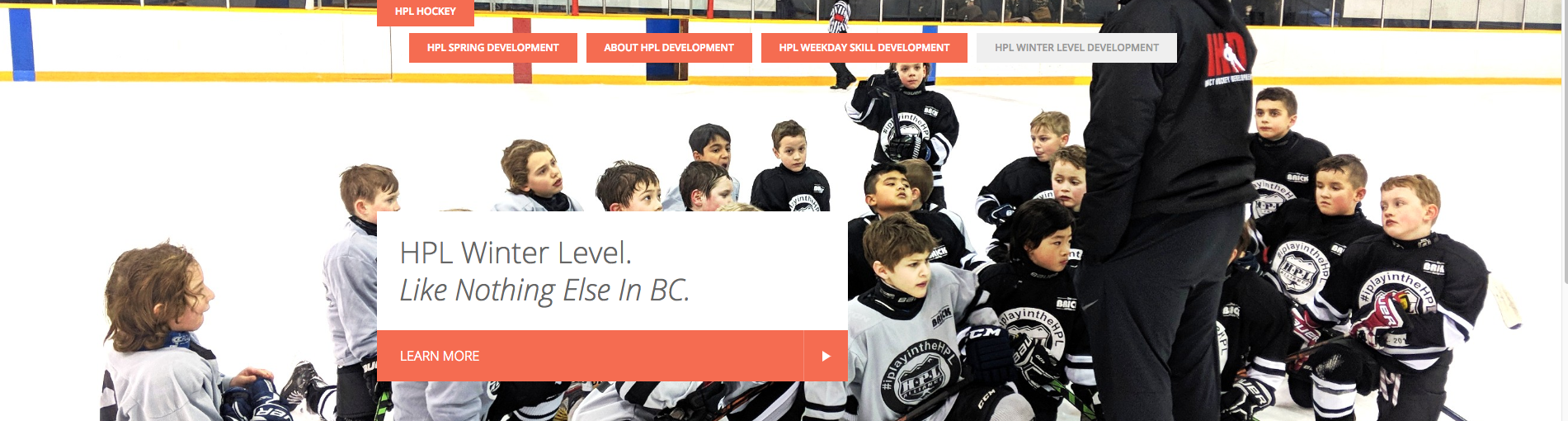
Below is screenshot from the most recent one that I was made aware of that started up in the Lower Mainland of Vancouver, HPL Hockey (for High-performance league) who are recruiting 6-8-year-old kids to participate in winter ice, games to prep them for spring hockey.

The very fact that all these kids had their picture taken on the ice WITHOUT helmets and suspect the non-certified coach also (if pic showed) goes against the Hockey Canada Safety requirements so that in itself should be a major red flag for parents.

Did every one of those parents sign a waiver so their kids could be pictured for the ENTIRE WORLD to see online?

When all the science/data shows that early specialization is NOT the right path to become the best athlete you can be, in lieu long term athletic development as it takes YEARS, every time I see another one of these pop up I shake my head.

It’s a SCAM, they are just in it for the money not having the best interests of the kids at heart and suspect majority in this picture will quit hockey by 13 as a result of “working” hockey vs. “playing” hockey seasonally.  If you truly believe the fact they are doing so for the kids, then I have some great swampland in Florida would be interested in talking to you about to give you a GREAT Deal.

There are so many other examples I can cite, but as I share with all stakeholders I work with, if sports organizations do not have integrity and honesty as the basis for their core values and not only talk the talk (policies, procedures, mission statements) but WALK THE WALK (full transparency, accountability, enforcement, discipline) their memberships will just continue to decline as a result.


Coaches at all sports organizations, the very catalysts for the change that we need to bring the game back to the kids also must follow suit, I can’t tell you how many parents or fellow coaches have shared with me that the coach stated in his initial parent/team meeting that they were going to focus on player development, be positive, fun and the first opportunity they have to show their true colours run short benches to win games at all costs, scream at kids or officials for making mistakes and so on.

Both Board members and coaches of sports organizations need to adhere to core values of integrity and honesty and be transparent and accountable not just talking the talk, but WALK THE WALK.

Let’s all work together to bring the game back to the kids … where it belongs.

 

PS Tagline - Dont be a kids last coach


Why running short benches is NOT a good thing

Posted Leave a commentPosted in Athlete, Coach, Organization Executive, Parents

BONUS – Download a Free Copy of this Blog in PDF Format HERE

Last night I had dinner with my wife’s siblings as my sister in law was in town for a conference.

During dinner, my sister in law shared with me that my 12-year-old nephew had quit Hockey.

WHAT?  My nephew quit a sport he once loved and when I asked her why her response was “he quit because a lot of teammates were not getting play when it was their turn as the coach was focusing on winning games”

He was playing peewee recreational team and was one of the stronger players because two years ago when he aspired to play rep (competitive level) they were advised by several parents that the only way he would make one of the rep teams (the association had 3 rep teams for peewee age group at the time) is if they signed a contract that was the only sport he was going to play.

Again, WHAT?

He opted to keep playing rec (house) so could continue to play soccer, ski, and other activities.

My head was spinning,

  1. He was playing rec (house) and coaches are not permitted to run short benches.
  2. He would have to sign a contract to play only hockey when he loved many other sports?

She further shared that parents they have talked to in the community have said their kids also quit hockey for the same reasons and the associations overall membership has dropped by a few hundred kids the last few years as a result.

This is a MINOR hockey association who have recreational coaches focusing on winning at all costs and not promoting multi-sport participation which are two of the major issues that is leading to kids quitting.

This just a couple of days after I shared an article on our social media pages called “Why ‘Shortening the Bench’ in competitive youth sports” can be a good thing written by Jamie Strashin for CBC Sports.


Soon after I posted, I received comments from parents in Canada and Australia who shared the same belief as I, that it was so short-sighted, although kids may win a game, perhaps get more games as a result, kids just want to play and in the instance of my nephew he quit because he did not think it fair for his teammates to sit on the bench when it was their turn to play.

Why did they sit?  Not because they were tired or were being disciplined, but an adult pulled them back to one their “more skilled” teammates out in their place.

I have been against short benches since I started coaching youth sports and still am, regardless if it is competitive or recreational levels.  The very fact that my nephew quit because his teammates were being deprived of ice time shows that he GETS IT even at 12 years old and I will applaud him for doing so when I see him next.

Ironically when I was up in Whitehorse running clinics this past season, I had one of the coaches come to me and expressed the very same concerns, her son was one of the top players on his atom “development” team and was getting much more ice time than his teammates, at times he was being told by coaches to stay out for 2-3-4 minutes at time.

Like the 10 year old player reference in the CBC article, her son was also 10, but in lieu of being held back for another player to take his turn, in his case stay out for shifts much longer than should have had.

Just two more examples of the adultification of youth sports.

Here is my take on running short benches;

#1 – Coaches choose the players for their teams, whether it be competitive or recreation

If you PICK THEM – you play them.

The coach that was quoted in the CBC article, whom is a non-parent coach, “I chose them to be on the team because I thought they were good enough.  If they aren’t in a position to succeed, it’s my fault”

I could not agree more, it the coaches responsibility to develop ALL players on the team and they focus on doing so early in the season, as the season evolves and all players improve, collectively the team improves and ‘Voila’ Winning is a byproduct not the focus.

#2 – I believe that coaches that run short benches either (a) don’t have the training needed to develop the skills of all players or (b) think that winning at all costs is more important than giving all players an opportunity to contribute in all situations

90% of kids would rather play on a losing team than sit on the bench for a winning team

#3 – All parents pay the same fees, so all players PLAY. There are already lawsuits in the USA coming forth from parents due to the thousands of dollars they are paying for their kids to play to be reimbursed for their prorated fees and have others pay more for their kids that PLAY more.

#4 – Having surveyed hundreds of kids on my teams over the years what is not fun about youth sports, one of the top 3 answers I have received is “when coaches play their favorites” especially when it comes to crunch time in close games where associations have implemented fair ice policies to permit coaches to use their discretion to win games. Again, kids just want to have their opportunities to contribute to the outcomes of the games just like all their other teammates.

‘YOU WIN OR LOSE AS A TEAM’

There are so many examples I can cite, not just from Hockey, but others sports now as we continue to partner with various sports groups but the one that comes to mind for me over and over was a player whom I invited to play with our 3 on 3 hockey teams who was a great kid with great parents.

In our last season when all the boys were aging out of minor hockey (17 years old), we opted to play both small ice and full ice 3 on 3 and in our first couple of games of each, he would go out for a few shifts and I noticed he was gasping for air.

In the second game I walked up to him and said T, you ok?

To which he said with a big smile on his face, yep, just need to get back into game shape.

I then asked … “but you played on the Midget A2 this year (where they would have had 2 practices, 2 games, a dryland per week) so don’t understand why not in game shape”?

He replied “because I quit with 10 games left in the season because I was only getting a handful of shifts per game.  The coaches was playing his favorites most of the games including power play, penalty kill, pissed me off as I just wanted to play so I quit”.

“My dad complained to the executive but they did not do anything, argued that it was rep hockey and only house had fair ice policies (where coaches are not permitted to run short benches).”

I shook my head in disbelief, just as I do every time I think of it.

#5 – In this particular article, 10-year-old players were the focus, which it he Atom age group, and regardless if they are playing recreationally or rep it is still a development age group

All kids, regardless of level, are to play and if a coach in BC had ran short bench in Atom he would have been suspended for doing so.

The main reason why coaches should not run short benches is the message you send to the kids, their parents …. Sorry kid, you are just not good enough be out there in key situations or give us a chance to score.

I believe this is one of the contributors why parents act up in the stands, if they come to game after game as I have and many other parents I know and watch their son or daughter sit on a bench when it is their turn to play knowing we all paid the same for them to do so, is no wonder why parents get emotional, angry as is evident daily in print, TV and social media.

Don’t get me started on the coaches that think they get a get out of jail free card for peewee and above, they should still be rolling all their lines all the way through minor hockey, when they are no longer playing to play, then they can earn their ice time (i.e. Major Junior and above)

The ONLY exception where you would tell kids to sit on the bench depriving them of playing time (or any minor sport for that reason) is if you have to discipline your players.

As the same coach in the article referenced, if they are not listening, screwing around may have to sit them a few shifts.

Other reasons, if they take a bad penalty or don’t get a penalty called on them for things like slashing, cross checking, knee on knees, head contact, hitting from behind, poor sportsmanship, using foul language, criticizing their team mates or not respecting their coaches, fellow or opposing players/coaches or officials including the scorekeeper/time keeper.

The very reason why short benches have become so common and we are turning a blind eye towards same is the shift in youth sports to win at all costs in lieu of just letting kids play kids for the love of the game.

Look at the past decade when teams go deep into the Stanley Cup Playoffs, when players or coaches are interviewed after games, including when they put the hardest trophy in sport to win above their head they say “all 4 lines contributed, we had a lot of confidence and we HAD FUN.

Hmmm .. aren’t these the best players in the WORLD?  Making Millions of Dollars a year even in the salary cap era?

Here is a great presentation from one of our For the Love of the Game Virtual Event guest speakers, VJ Stanley, that he did for a USA Hockey Level 4 coaches (equivalent to HP 1 level Coaches in Canada) and early in his presentation shares insight why coaches should PLAY all their kids in minor in hockey. About 7 minutes in to the presentation shows a vide when he talked to Ryan Callaha when he was captain of the New York Rangers.


Any coach can run short benches and play their “favorites” to win games.

GREAT coaches develop all their players and provide them the opportunity to contribute to the outcome of games and in doing so build their confidence and competence and winning becomes a byproduct as a result.


Don`t be a kids last coach