Ode to Joey

Posted Posted in Athlete, Coach, Organization Executive, Parents

As an avid hockey fan due to playing, coaching  and now coaching coaches for many years, one of the things I look forward to is the start of the season, starting with getting back to the ice for minor hockey and then when the NHL ramps up with exhibition games and the first Hockey Night in Canada on Saturday.

As I moved often growing up including a stint living in the Northwest Territories on Baffin Island, it was one of my vivid memories growing up watching games on Saturday’s on CBC with my family.

As a result of the COVID-19 pandemic going back to March 2020, however, the start dates for completion of last season when teams entered the Edmonton Bubble and Tampa won the cup in July, and uncertainty when the next season would start up until recently in January 2021, the passing of one of Canada’s true Icons was not shared until recently.

Before the start of the Vancouver Canucks Game vs. Edmonton Oilers, the oilers did an amazing tribute to two they lost during the break of past coach/general manager John Muckler (Jan 4, 2021) and their long term locker room assistant Joey Moss (Oct 26, 2020) who Wayne Gretzky helped get a job with the Oilers and became close friends.

As Wayne eloquently shared at the beginning of the documentary that was shared on Sportsnet the following day (Anything for Joey), he wanted to help Joey as he was an amazing young man who had down’s syndrome but as all of the players and those that evolved to executive ranks shared during the documentaries Joey was the one that taught them core values, not the other way around.

Joey started his role with the Oilers in their glory days, when they went on to win their 4 Stanley Cups and many of their players on those teams shared insight how much of an impact Joey made on them. Then players for subsequent teams also shared nuggets from the 90’s until his passing in Oct 2020.

In addition to Wayne Gretzky, Grant Fuhr, Keven Lowe, Pasani, Kelly Buckberger, Taylor Hall, Raffi Torres, Connor McDavid, Leon Drisital, Sam Gagner, Ryan Smith, Shane Corson and others shared how he made such a positive impact on them during their time playing for the Oilers.

Several of his siblings (he had 12 brothers/sisters) also shared stories about Joey.

Some of my big takeaways …

Always smiling – Love the Game – Loved to Hamm it up – Could give as much he took – Was an ambassador for Edmonton – Loved to Sing (AKA Belt) the Canadian Anthem (I looked forward to seeing Joey sing before Edmonton home games, much like Mark Donnelly for Canucks games) – Taught us patience – Made us better people – Kept Game in Perspective – Was there to cheer us up after a tough loss – Could count on him to get things done

The biggest one for me and sharing it as our quote of the week he would share with everyone around him especially when they were down, had a tough night, team had a tough loss
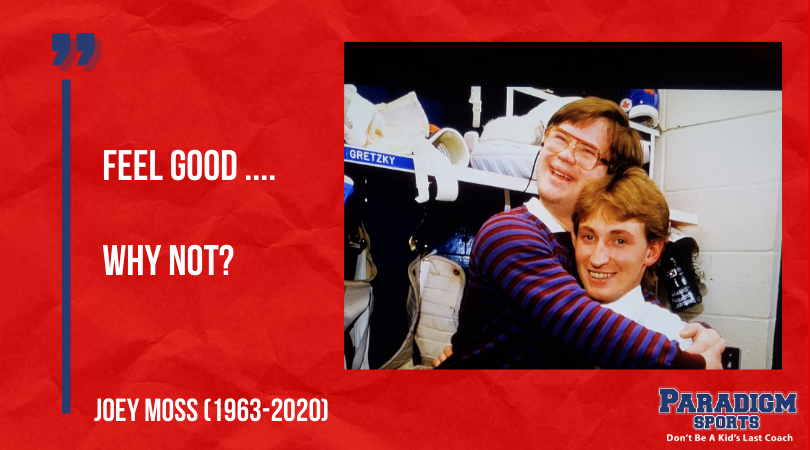


Having been one who has suffered a lot of adversity myself, I have always tried to have the half-full approach as things can only get better which is whey Joey’s favorite saying really resonates with me.

When Wayne asked Glen Sather if they could find work for Joey he said absolutely and he became their locker room attendant and then Wayne reached out to the Edmonton Eskimo’s Equipment manager where Joey was working a similar role and joined the Oilers in 1984-85 season (coincidentally during their legacy Stanley Cup run).

In the off season he worked in a similar capacity for the CFL Edmonton (Eskimos) Football Team

During his tenure with both organizations;

The Oilers won the Stanley Cup in 1984/1985/1987/1988 and 1990 and lost in 2006 although Joey delayed hernia surgery so he could be with the team during their amazing run in 06.

Wayne was traded to the LA Kings after their 88 Cup victory and the first time that he returned to Edmonton as a King  he went to see was Joey who told him “Sorry Wayne but I can’t talk to you”, but like Wayne, every other player that was traded when they returned Northlands, Rexall Place they too would go see Joey to give him a hug, share a few words and see his infectious smile.

He also worked in a similar role in the hockey off season for the Edmonton (Eskimos) CFL team where they went on to win their 6 of 14 Grey Cups in 1987, 1987. 1993, 2003, 2005 and 2015).

11 CUPS between the two organizations who had numerous hall of fame inductees and various other awards !!!

WHO else in professional sports can say they have been part of so many cup runs?  No one  …. and now due to free agency, salary caps and everything else now, getting to ONE cup final in itself is a big accomplishment, let alone winning the final game or legacies with multiple cups as the Oilers and Eskimos have done in Edmonton.

Joey also was acknowledged by the NHL in 2003 for his contributions with the Seventh Man Award (given to NHL members that make a difference behind the scenes) and inducted in the Alberta Sport Hall of Fame in 2015

The Oilers also founded “The Joey Moss Cup” inner squad game trophy that award every year and many of former players shared they all wanted to win coveted cup for bragging rights.
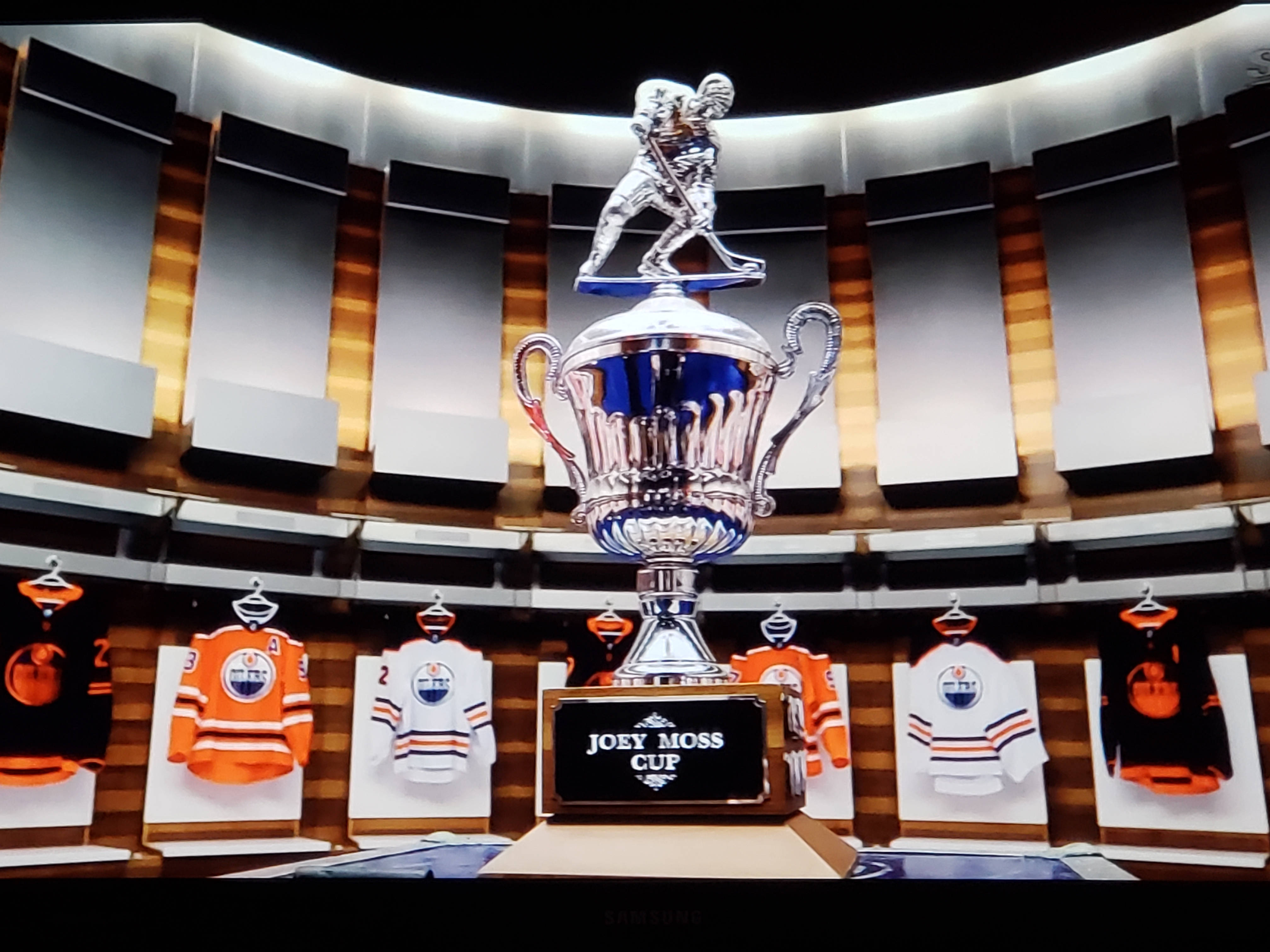
 

Current Player Leon Drisital shared “He’s probably the biggest legend in this town” and in the video below Wayne shares he has more championships than Hugh Campbell (5 Grey Cups) due to his long tenure with both of Edmonton’s professional teams during their Stanley and Grey Cup Runs.

One would hope that the NHL consider Joey being considered for the Hockey Hall of Fame for his amazing contributions to the game, the impact he had on so many players, coaches and the fans.

According to Equipment Manager, training camp would not start until Joey was there, sadly the Oilers camp for this season started without him as will others in future BUT he will forever be with them and all of us in spirit, I suspect with a microphone belting out the Canadian Anthem ….

We could all learn to be better people from the legacy Joey left behind.

Kudos to the Oilers and then Sportsnet for their amazing tributes in his memory and when I or others get down around me as we continue to claw our way back from this crazy pandemic will share “Feel Good – Why not?”

Below is the interview that Wayne Gretzky had where he shares many of the amazing anecdotes about Joey a few days after he passed away in October.
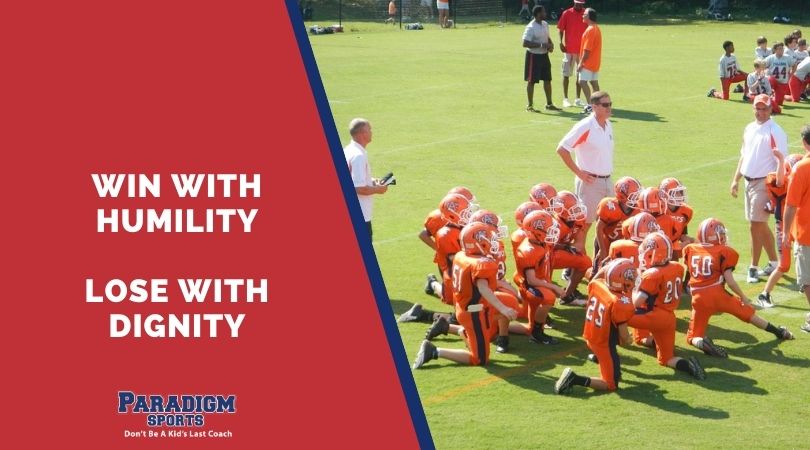


Win with Humility, lose with dignity

Posted Posted in Athlete, Coach, Parents

Happy New Year Everyone, hard to believe that 2020 is now behind us and hopefully will see a better normal in 2021.

Like many, I shut down our office Dec 18th and returned back on Monday Jan 4th and as I reconnected with many of my Canadian counterparts in particular when I asked how their holiday break was the answers were literally all the same …”had a opportunity to spend quality time with immediate family due to limits on social gathering, got lots of rest, watched many of the World Junior Games, read some books”

Same for yours truly, this fall proved to be the business Oct-Mid December timeframe I have had in years a result of various summits, coach clinics, webinars I hosted and when Dec 18th rolled around was really looking forward to doing the same.

As I watched Team Canada on their run starting with their first warmup game on Dec 23rd and sadly lost their team captain, Kirby Dach early in the game to a broken wrist (I knew right away when I watched him head off the ice as have dealt with several players over the years that did the same) I thought to myself what a crappy way to start.

Hockey Canada CEO Tom Renney left the bubble to take Kirby to the hospital and was forced to quarantine in his room for another 5 days as a result but said when interviewed later in the tournament that it was the right thing to do, Kirby’s family could not be with him due to safety protocols and Kudos to Tom for doing so.


As the team entered the round robin and won games by significant margins (highest being against Germany 16-2) what impressed me the most is how they won the games with humility.

Unfortunately one of the tournament tie breakers is goals differential and when teams enter the cross over round goals for and against may impact their placement, but one of the rules that the IIHF implemented to limit blowouts was enforcing running time like they do in minor hockey tournaments.

When I watched the last game with my family much like many other Canadian families did on Tuesday I wore the same Hockey Canada Hoodie that I had since the first warm-up game and after the second goal was scored by Team USA early in the second period I went and got my Hockey Canada Hat and reversed as a rally cap as had done for years playing baseball/softball/slo-pitch but Spencer Knight and the rest of the USA team just did not give Canada much by keeping them outside the dots (limited high % scoring chances) other than a handful vs. what had been the case against other teams they faced.

When Bowen Byram, alternating Captain for the game required for IIHF rules (although Kirby remained captain on the team even though injured) was handing out medals to his teammates I could see the raw of emotion and disappointment that he had and brought back vivid memories for me for many of the teams I coached over the years when I was doing the same, handing out either the bronze or silver medals to my players after a tough loss.

What I would tell all of them before we hit the ice or the field for that last game of a tournament was three things much like coaches I had did growing up;

  1. You worked hard to get to this game and all anyone can ask of you is for you to leave everything you have on the ice or the field and when the game is over whatever the outcome you can hold your head high


  1. Make sure that you win with humility or lose with dignity, after the game no one should know whether you won or lost, there is nothing worse than when teams rub salt in a wound with excessive celebrations when they win or poor sportsmanship when they lose


AND


  1. Most importantly, go out there, don’t worry if you make a mistake as your team mates will have your back and you will have our support as coaches and have FUN, getting to the final game in tournaments does happen often, relish the moment.


These three messages were shared with me over and over as I played numerous competitive sports and helped me overcome the adversity of tough losses like Canada’s young men experienced this year as well as taught me the importance of humility when we did win gold medals, banners, tournaments etc.

It also served me well for post-game talks as a coach, whether we pulled off the win or had a tough loss, to share how proud I was and reinforce how proud the players parents were of their kids for their amazing runs whether it be at a tournament or the end of a season, provincials etc.

Probably the best post game talk I have ever seen is one I wish I had seen early on in my coaching career, when David Belisle talked to the little league world series team he coached after being knocked out of the tournament I have shared in talks for both parents and coaches.


Whatever sport you are coaching, whether it be individual or a team sport, please ensure that you teach your players the same valuable lessons, as it is our responsibility as coaches not to make a living, but rather make a difference by developing youth into adults.

Kudos to Team Canada for their amazing run this year dealing with all of the adversity from losing the team captain out of the gate, challenges of the bubble, quarantine, being apart from their families with no fans in the stands and making all of us in Canada proud.

I am already looking forward to watching the next world juniors which also will be held in Edmonton/Red Deer in December but this time the fans, including the amazing supportive parents, should be in the stands to cheer on their sons as they chase their dreams wearing their countries national jerseys.


Don`t be a kids last coach

The Life Lessons I learned through Sports – Part I

Posted Posted in Athlete, Coach, Parents

This coming week I will be doing a talk on how sport teaches life lessons.

The majority of kids who play sports when I grew up played multiple sports and many went on to play beyond high school, but unlike the craziness we have seen in the adultification and professionalization of youth sports I am many of my colleagues have highlighted in recent years, we continue to play sports because we loved the game, had met and met great friends, wanted to continue being active and so on.

The first slide that I will be sharing for the talk this week revolves around the various life lessons that I learned both as a player and now as a coach for decades and thought I would share the #1 life lesson I learned early on…Commitment … and will share others in a subsequent post.

Commitment: As a Player

Probably the greatest life lesson I learned from sports was the importance of commitment which was a result of losing my father when I was 8 years old to a tragic accident mid way thru the baseball season that he had stepped up to coach my team.  My father had played baseball all the way up to AA level and I remember how excited I was when he said he was going to coach my team.

Due to the nature of his job, this was the first, and sadly the last time he was able to do so which is one of the driving reasons why I committed to coach as a many of my kids teams as possible, but one of the things he use to share with me over and over again was the importance of honouring your commitment.

When he died it was half way thru our baseball season and at the service I remember telling my mother and Nanny (grandmother) that I was going to quit baseball because I lost Dad and could not finish the season as a result.

To which both said, No, your Dad would not want you to and you will finish the season.

I was able to as one of the assistant coaches took over as the head coach of the team and remember how he pulled me aside when came back for the first practice after my Dad died and he spent what seemed like an eternity with me in the dugout talking to me about how he would do what he could to help me, offered to be a sounding board whenever I wanted to talk and even offered to drive me with his son and wife to all practices and games as my Mother did not drive.

As a result of the support that he provided me I finished the season and continued to play many more years, including the competitive level and then played and then played both hardball and Competitive Slo-pitch as an adult for many years.


Commitment: As a Coach

Fast Forward to when I was coaching a minor hockey team of the same age (they would now be U9, then was Major Novice) and my life came around full circle.

Just as the season was starting up, one of my players lost his dad in a very similar tragedy as I did and I am unsure who was more messed up, he and his family or I.  It brought back a flood of memories when I was the same age as well as all the emotions I dealt with over they years and thanks to great coaches they kept me on track to stay the course or I could have gone in a completely different direction.

For the better part of the season I would call his mother, go visit him at home, chat with him when he did come to practices and games (I told him to take whatever time he needed when he was dealing with emotions) but much like I did finishing my baseball season, I made sure that he finished the hockey season including an end of season tournament where one of my favorite memories was him playing game boy on a bench with a huge smile on his face with my son beside him eating a hotdog and another player.

That summer he reached out to me with his Mom and said he needed to take the year off, he missed his Dad so much and the rink just brought to many memories.

I made a deal with him he could take the year off provided that he made a commitment to return the following season as that is what his father would aspire for him to do and he agreed.

I went to his house several times that season and even took him to a Canucks game thank to comp tickets I received from the association, and when registration time period came up in May/June the following year I went to see him and his Mother and he agreed to sign up for the following year.

The only stipulation?

That I had to be his coach.

I said to him … without hesitation although I did not know at the time what I had in fact committed to.

Later that summer my son tried out for and made the AAA team which I was asked to co-coach but I still honoured my promise to coach 80CC (my nickname for the player as he also loved Motor bikes) and reached out to the division manager that I would protect him in the draft as we were able do for our sons.

He said – no brainer, great that you are doing what you’re a doing but are you sure you can handle two teams?

Fortunately at the time I had a lot of flexibility as was self-employed and told him yes and was able to make it work even though there were weeks where I was on the ice 6 times or more plus I was also in the early years of facilitating Hockey Canada NCCP clinics for BC Hockey.

Several times that year the parents on the AAA team would applaud me for stepping up to coach him as well as the rest of the kids and we brought my team on the ice a few times to scrimmage and even affiliated him to come to practices when he was up to it.

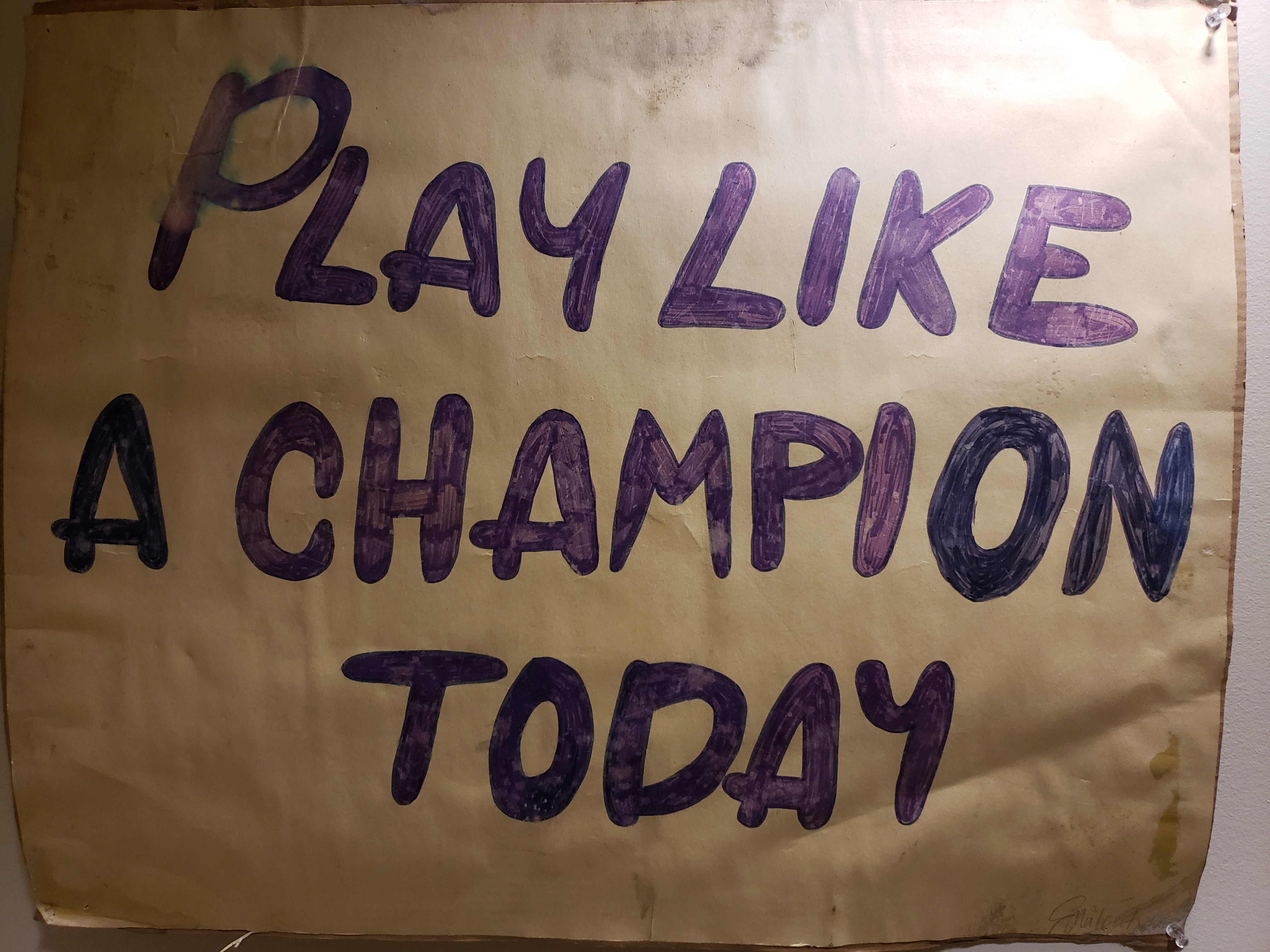
On our other team I asked my daughter to create the sign “Play Like a Champion Today” (which is now at the top of the stairs in my office) that I would bring to every game and before the game in lieu of talking about systems, tactics we would talk about core values like sportsmanship, communication, selflessness and many other life lessons that I wanted to instill in the players as my coaches had done for me.

He made it to literally every practice, game and tournaments we entered that season and at the end he walked up to me and extended his small 10 year old hand and said “Thanks Coach”

There are some memories that you have as a coach, and that was one of them, to be able to help a kid who lost his father much like I had reminded me that everything happens for a reason, and it also reminded me of the biggest life lesson I could have learned, the importance of commitment.

Although my son and my paths went in the AAA path, 80CC continued to play every year at the recreational level and was one of the top players and could have played competitively but opted not so he could snowboard, bike, water ski and various other activities.

His mother would share with me over the years had it not been for my commitment to him to ensure he stayed on track, she really was not sure where he would have ended up.

The same held true for me, had it not been for the great coaches and teachers I had growing up, who knows where I would have ended up.

Fortunately for me, the importance of commitment and numerous other life lessons I learned helped steer me down the right path which is all I have aspired for all the players I coached and now remind coaches to do the same.

Remember, your calling as a coach is not to make a living, it is to make a difference developing youth into adults.

Please ensure that your legacy is a positive one and you are not a kids last coach

Gone are the days of “Just getting your bell rung”

Posted Posted in Athlete, Coach, Early Sport Specialization, Organization Executive, Parents

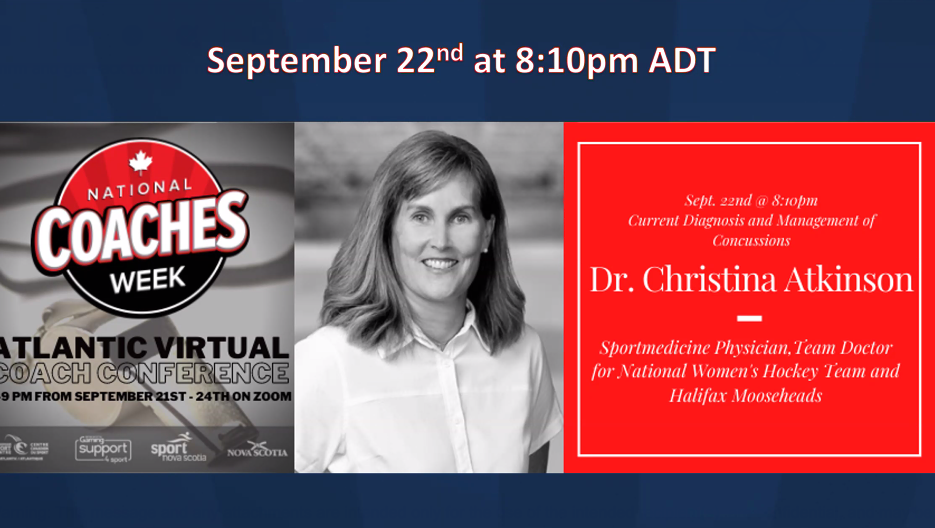
This past week was absolutely crazy for me in terms of various webinars and zoom meetings as it was National Coaches Week in Canada.  I took advantage of the various webinars, virtual conferences, summits during the day, and at night was participating in Zoom meetings to prep for online delivery of Hockey Canada NCCP clinics for BC Hockey due to COVID-19.

A couple of the sessions I did was attend a presentation on concussion management and the following day had a great chat with the director of an organization based in Florida who is providing Hyperbaric O2 Therapy to help people recover from brain trauma that I will expand on below.

Both of which really resonated with me personally as I probably suffered a few minor concussions during my playing days of tackle football when was hit helmet to helmet or tackled really hard.  I recall a few times over the years when that would happen and I would be sitting or lying on the field woozy from the impact and trainers would run on the field to help me.

The first thing that they did was pull smelling salts out of their first aid kits and swipe under my nose where I would become more coherent and then they would say “Hey Bud, you’re good, you just got your bell rung” then help me back to the sidelines.

Then the head coach would come to me and ask me how I was doing and like players were doing for many years until recently where mandatory medical or return to play protocols were implemented and my response would be “I’m Good Coach” (but was I??)

To which they would say … Good to hear, Get back out there.

Fast forward many years later while running clinics, workshops or presentations across Canada interacting with coaches and other youth sports stakeholders may feel that the increasing concussion rates are attributed to the fact there is so much awareness now than it was in my playing days.

To which I say … I am glad that is the case because not only did I “probably” have a few minor concussions playing contact sports (none were diagnosed), I did have 2 Grade 3 concussions (most severe), the second ended my competitive playing career in contact sports in my 20’s.

Ironically it, like the first, were not from sports, rather were are result of bar brawls, the second I can only share what people told me after the fact as I lost approximately 2 weeks of memory leading up the incident and vague tidbits the days that followed.

In sum, I was doing a pub crawl with my buds for a stag and the one that was getting married was hit over the head with a beer mug and knocked out to which I came to his aid and I in turn was hit over the head and knocked the ground.

I literally had the S..T kicked out of me by three young men and I was taken to hospital, was in and out of consciousness per the doctors when I finally game to a couple of days later with what felt like a knife digging into my head …

The days, weeks and months that followed were extremely tough on me as doctors said I had to limit any activity, keep the lights off, rest while I recovered from the migraines, headaches, dizziness, nausea and other symptoms as a result of the concussion.

The incident happened in July and I was returning back to my second year of college and had to reach out to my advisor and instructors to advise that I could not return until I had the green light, that did not happen until early November.

I missed two month of my third term (of 4) in a really intense program but my instructors and fellow classmates were amazing helping me return and get back up to speed.

I share this as I know what it is like to deal with a major concussion, it is tough not only physically, but mentally as you are unable to do things I just took for granted, running, biking, hiking, playing sports, swimming, skiing, golf and so on.

So when coaches say to me the only reason so many more concussions are being diagnosed is due to awareness now vs in past I reply … I would rather doctor’s, coaches err on the side of caution.

I also have had players on teams I coached suffer concussions, one of the ones to this day I regret agreeing to let him return to play as soon as he did (even though he had doctor’s approval) was one that sustained a bad concussion in a game, came back a month later and sustained another concussion.

I received a call from his father later that night saying the doctor had advised that his son not play the remainder of the season and that he no longer play rep/competitive hockey with body checking as a result.

Although everyone said it was not my fault, I still feel some of the blame as I could have pushed back to his parents more and said give it more time but they insisted he was good to go.

This is why I was excited when I attended the webinar and talked with Hilary Loftus this week in terms of advances that the medical profession has made in terms of concussion management and recovery


Tina did a great presentation highlighting what concussions were, the ways that the can now be diagnosed by coaches and trainers utilizing concussion recognition tools like the one below

There have also been changes in terms how concussions are managed when diagnosed

  1. Complete rest for 48-72 hours is no longer advised in lieu early return to light activity that does not increase symptoms
  2. Slowly return to play/learn or work in terms of a graduated approach

Yikes … I potentially could have saved myself of 2+ months being in a dark room and literally doing nothing during that time?

She also shared following stats

  • Most people recover quickly and fully
  • 85-90% within 3 weeks
  • Children take a little longer 4 weeks

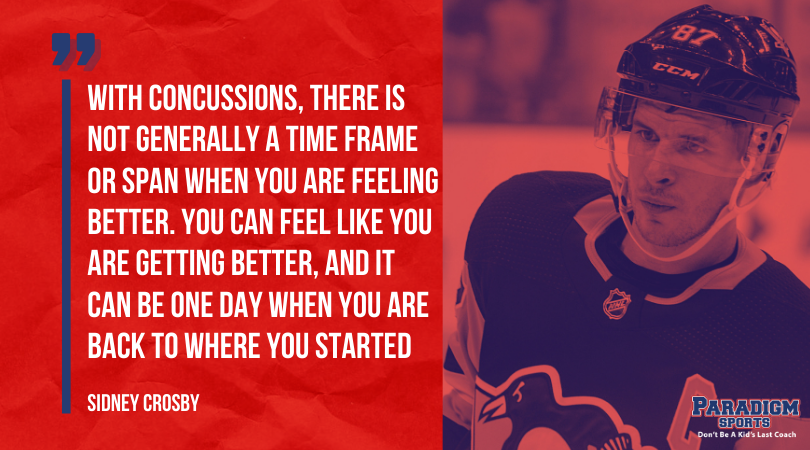
Only 10-15% may have persistent symptoms (months to years), which mine as well as Sidney Crosby’s example as well as many other professional athletes who took months to return or had to retire as a result of concussions (i.e. Eric Lindros, Paul Kariya)


The Key takeaways that Tina ended her presentation for Coaches


  • Know your athlete
  • Be Supportive
  • Community with the health care team managing the concussion if need quidance how to be supportive
  • Speak the same language as the health care team

The day following Tina’s webinar, I had an opportunity to chat with Hilary Loftus, the director for HOW (Helping Our Wounded) Foundation which was established initially to help US military and veterans recover from brain trauma and PTSD using Hyperbaric Oxygen Therapy (HBOT)

The sessions are either done in mono type chambers like the one above or they have larger ones that can accommodate groups of 4-8 or 12 at a time.

Pure O2 affects the body at a cellular level and by using pressured chambers it enhances and provides the tools for the body to naturally heal.  A session is 80 minutes and the technology has been around for decades used mainly in hospitals for severe injuries, burns etc but is now becoming more mainstream in conjunction with other injury therapy practices (i.e. physical, occupational therapy)

Hilary shared an amazing stat with me also, if athletes who are diagnosed with a concussion start HBOT sessions within a week of being diagnosed they only have to do 3 sessions to recover and return to normal activity.

All I could say to myself during our chat and prior conversation was “I wish this was around for me many years ago” but it is exciting to see the advances that we are seeing for concussion management both in terms of recovery but ultimately in terms of prevention as many sports have implemented training programs for coaches, players to reduce head contact and severity of concussions many suffered in past.

If you are a coach and suspect one of your players has had “their bell rung”, that should be a red flag for you to immediately pull them from the field, ice, court and reach out to their parents to get them checked out and follow return to play protocols accordingly.

As the cliché goes, it is better to be safe than to be sorry.


PS Tagline - Dont be a kids last coach


Why the stars are aligning for Dallas

Posted Posted in Athlete, Coach, Early Sport Specialization, Organization Executive, Parents

I never thought in my lifetime that I would be having discussions with people regarding the NHL playoffs in September when all prior years they were finished by May/June timeframe.

Nature of the beast as they say during the COVID-19 era that the NHL and all other professional sports are dealing with to complete or start their seasons with various protocols to ensure the safety for all parties concerned.

Although I am a long time Habs Fan having grown up in Montreal, and was disappointed when they and then the Vancouver Canucks were knocked out of this years Bubble Playoffs, I am happy to see that Rick Bowness and the Dallas Stars will be heading to the final for the first time in 20 years.

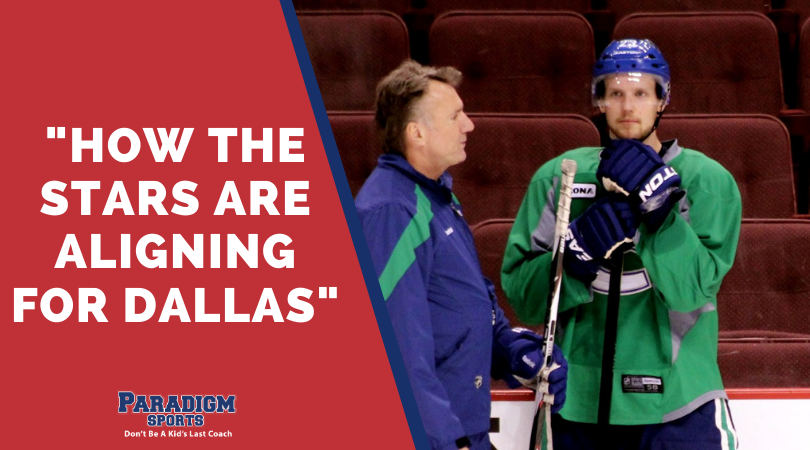
Two reasons why I feel that the “stars” have aligned for them to get there this year, the amazing coaching job that “interim” coach Rick Bowness has done since he took over the reigns after former head coach XXXXX was fired mid season and the later is the leadership from team captain, Jamie Benn, whom I have highlighted in numerous talks and interviews when I been asked to share insight on the benefits of multi-sport participation.

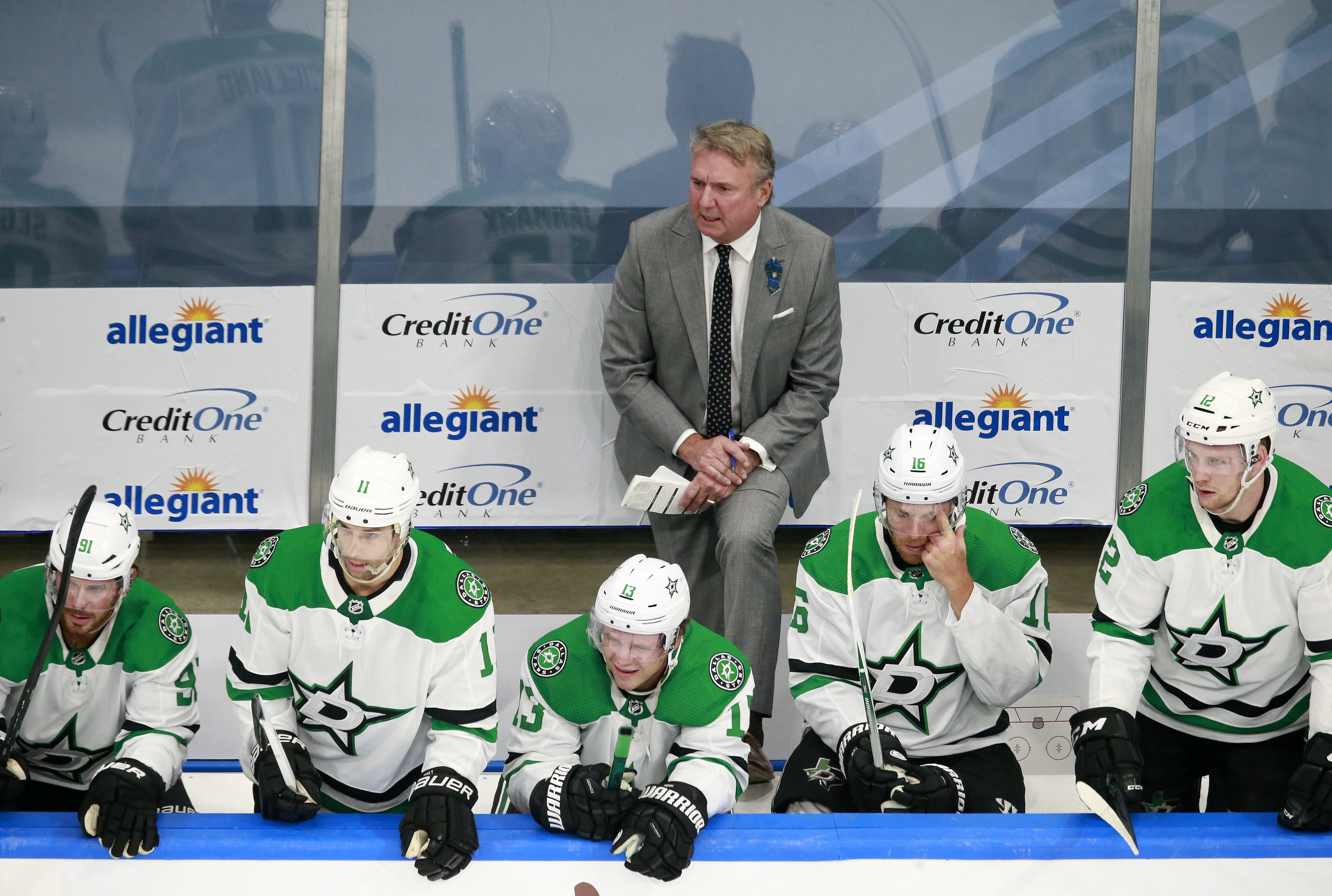
RICK BOWNESS – AKA BONES

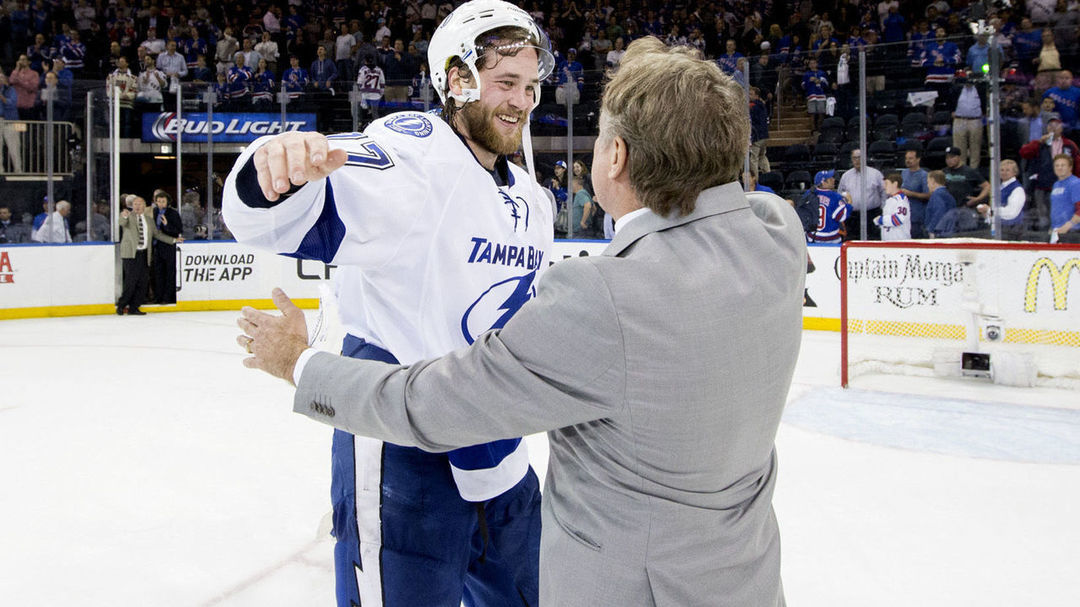
(Photo by Jeff Vinnick/Getty Images)

Rick Bowness played in the NHL for a number of teams like many other NHL coaches after he played Major Junior and in the NHL.  He has been a head coach for a number of NHL teams but this is the first time in his career that he has lead a team to the Stanley Cup Final

His coaching career ironically started out in 1982-83 as a player coach (AKA Reggie Dunlop for the Chiefs in Slapshot) for the first Winnipeg Jets minor league affiliate Sherbrooke Jets.

Much like the infamous “Chiefs” in Slapshot, the team really struggled under his watch so he retired as coach and player at the end that season and a year later was recruited by Winnipeg Jets Head coach in 1984 to join his coaching staff as an assistant.

He has gone on to coach a number of teams in the NHL since, many as the head coach and several years as associate or assistant coach, including the Vancouver Canucks where he was Alain Vignault’s right hand man when they had their amazing run in 2011.

He moved on from the Vancouver Canucks in 2013 and was with Tampa when they advanced to the final in 2015 but lost to Vancouver’s long time nemesis, Chicago Blackhawks.

Rick has now been in the NHL as a player and now a coach for 45 years and many are pulling for him to win his first Stanley Cup.

Why are so many pulling for him?

#1. He is a player’s coach – loved by all of his players who will do everything they can to win for him

#2. He truly cares about his players as people, not just as hockey players.

The list of players under his watch for decades have all shared in interviews time and time again how he connects with them as individuals, is approachable and takes the extra time to help them not only become better players, but better people.

“He Cares about his players. You can just see it in his actions. He will never chastise them, he will never embarrass them in front of his peers or in front of other people, if there is a tough conversation to have he does it behind closed doors.”  George Gwozdecky (Tampa Assistant Head coach with Rick 2013-2015)

#3. He has a high level of emotional and social intelligence.

Although this past Hockey Season the NHL saw several coaches fired from their roles due to what many feel are no longer (nor were they ever) appropriate coaching styles, Rick has always set the bar as the players coach

“He’s a coach you just want to do everything for, lay your body on the line for”

Jamie Benn

#4 – He has coached more games than any other coach EVER in the NHL, now over 2,500 games leaving Scotty Bowman’s record of 2,164 3 years ago and he is still going

#5 – He has adapted to being either a head or an assistant coach depending on the team needs, many of his head coaching stints he took over mid season when the head coaches were let go much like this season with the Stars.

#6 – Cody Hodgson played under Rick and Alain while in Vancouver and shared that “you get some coaches that are very talented but not necessarily good people (as the firings in recent year showed).  But Rick ‘s a great coach and a great person …. and will be able to stick around as long as he wants to”

#7 – He is very humble.  Whenever people try to give him credit for his leadership, he defers to the players, much like he did when was interviewed after they advanced the final.

#8 – He’s a great coach.


Ironically he played as a forward, but has spent much of his coaching career working with defence and is acclaimed for helping develop many D-Men over his career, most recently was helping Victor Hedman become one of, if not the best, d-men in the NHL currently.

#9 – He is transformational and focuses on connecting with his players vs. many coaches still focusing on the X’s and O’s.  Per former player he coached, Brad Barry who is now coach of University of North Dakota X’s and O’s are one thing, but if you don’t have the communication skills or the ability to connect, then I don’t think the X’s and O’s matter anymore.”

#10 – He loves the game as much now as he did when he was a kid.

In every talk I do with coaches I end with key takeaways and one is the measurement of a great coach is one that creates a culture on their teams where kids love the game more at the end of the season then they did at the beginning and come back the following year with big smiles on their faces.

JAMIE BENN – AKA Chubbs

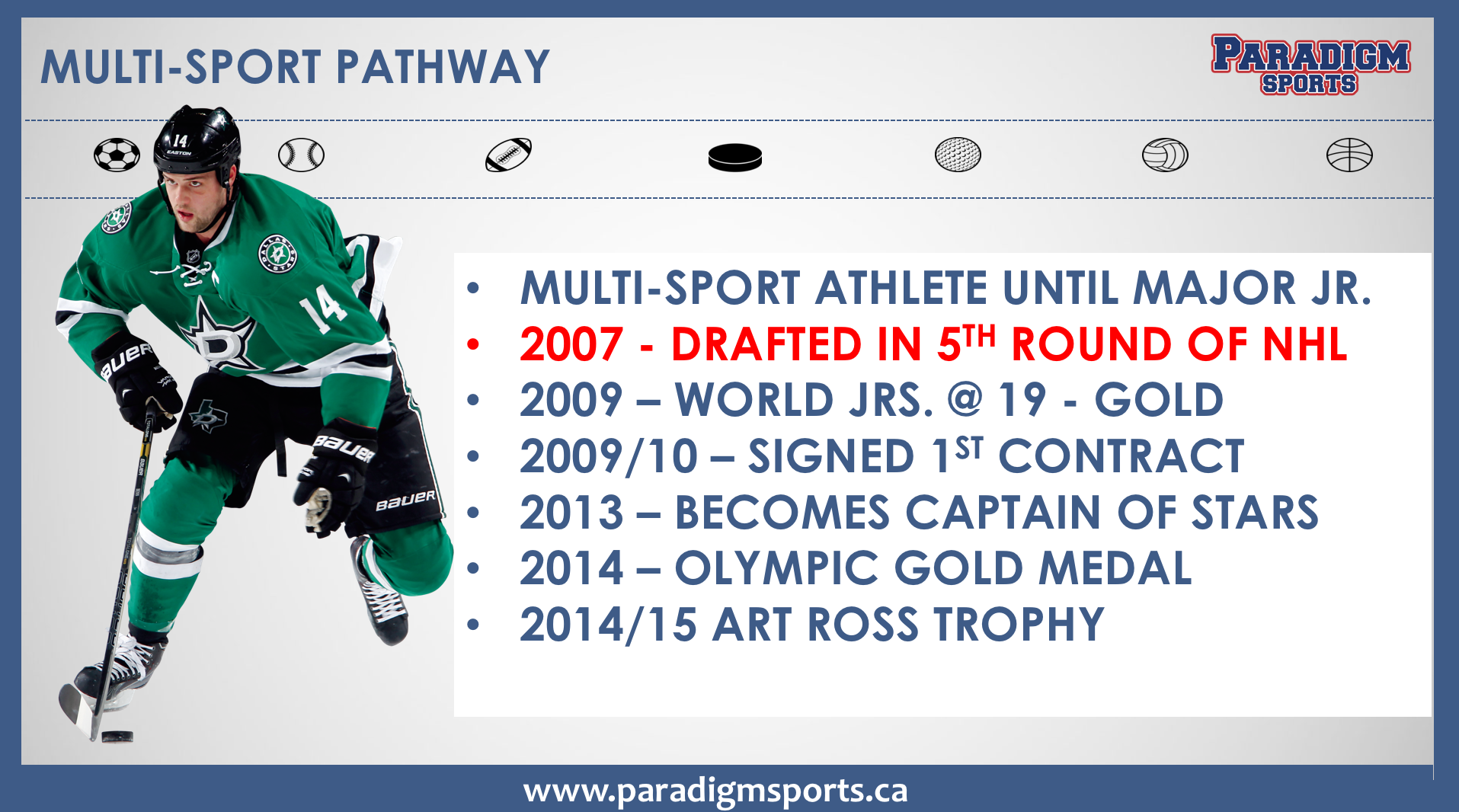
Below is a slide from one of my core talks LTPD vs. Early Sport Specialization where I talk about Jamie Benn’s path to the NHL.


Jamie and his brother Jordie grew up on Vancouver Island and played a number of sports growing up, both played hockey in the winter and baseball in the spring as well as tried several other sports until they both found the one they loved the most – Hockey.

Note on the slide some of Jamie’s accolades – Gold in the World Juniors, Gold in the Olympics, Art Ross Trophy and now he is going to the Stanley Cup Final.

Did you know that he did not decide to focus on hockey until he was 19?

This is why Hockey Canada did not even identify him for any of the U16, U18 or U20 Junior Camps until he was 19 as his path was junior B, then Junior A, then WHL and was drafted in the 5th round to then become the captain of the stars in 2013 when he was 24 years old.

His path the NHL, much like the majority of players, was playing multiple sports until his later teens. When I interviewed Ken Martel for one of our summits last year, he shared with me that over 90% of NHL players were multi-sport athletes until at least 14.

“Just a game boys, there’s always next time” Tyler Sequin

Now at 31 he is considered the old guard with the NHL youth movement, but as much as I would love to see a Canadian team be in and ultimately win the final since the Habs won their last one (and last one for a Canadian team) in 1993 27 years ago, I will be pulling for the stars to align for Rick, Jamie to hoist their first and ultimately drink from the Stanley Cup.