Why do Officials “Officiate” (2020)

Posted Posted in COVID-19, Officials

Why Officials Officiate – (2020)

A few years back I shared data in original post Why do Officials “Officiate” from what was the largest survey at the time of officials, one done by the national association of sports officials (NASA) where they received responses from 17,487 officials across the USA.

Fast forward to May 2020, I connected with Brenda Hilton, the founder of Officially Human whom I interviewed for our upcoming Youth Sports Virtual Summit along with several others and she shared with me that they had done a followup survey in partnership with IUPUI Sports Information Institute, School of Health and Human Sciences in Illinois.

The survey was done in the Fall of 2019 and just shy of 19,000 officials responded from 15 states in the USA and they prepared an infographic in PDF format that you can download HERE.

Below are highlights from the survey where I have compared results below each image from the one done in 2017
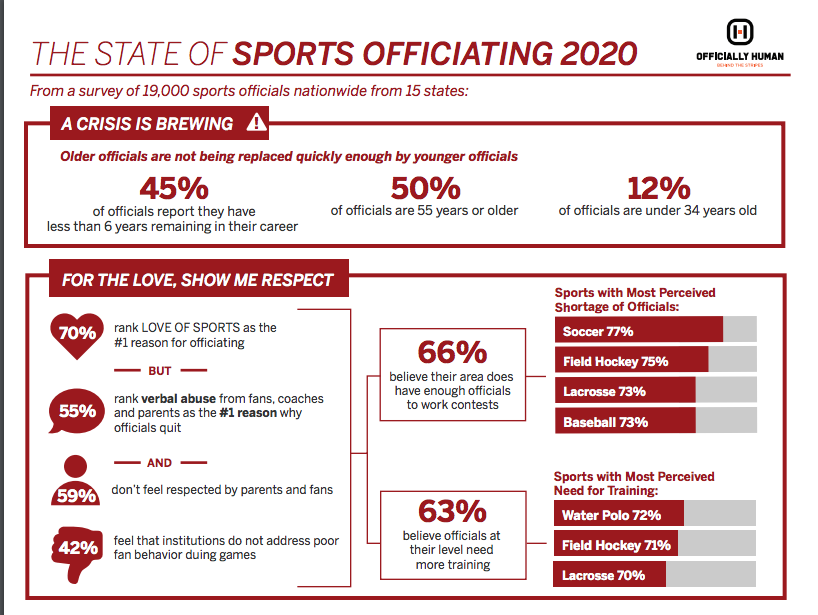
 

One of the issues in recent years that was identified by the NASO survey and also in recent SII survey is that officials involved in sports are getting older and as a result of COVID-19 there may be a real as youth sports start to ramp up again where many may be leery of returning due to safety concerns, in lieu of verbal abuse, however, from exposure to COVID-19 virus until a vaccine is developed in 2021

The #1 reason they become officials is the same, For The Love of The Game, as is the number 1 reason for quitting, verbal abuse, and almost 60% don’t feel respected by parents and fans.

The sports that have the largest % of shortages are Soccer, Field Hockey, Lacrosse, and Baseball.
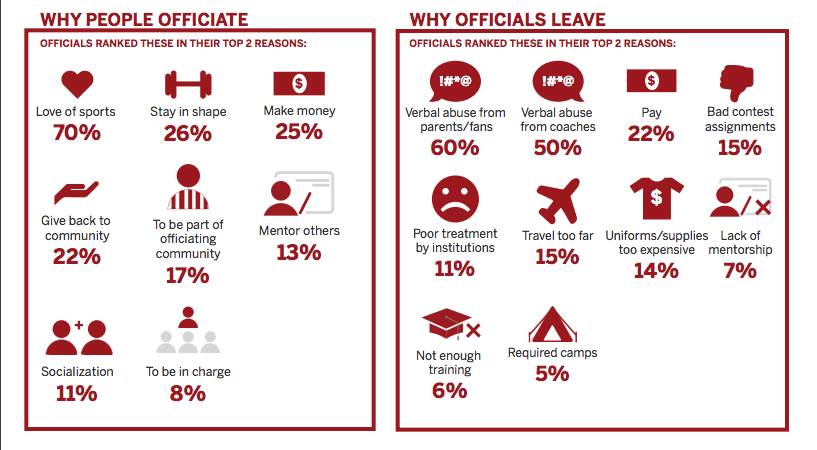
Officials also do so to stay in shape and make money (the majority of which is a small honorarium but some do make a living as officials at the higher levels)

The Second reason that officials quit is the verbal abuse from coaches, it is not just the parents and fans in the stands and sidelines that can be abusive, I have seen more than my fair share of coaches screaming at refs because they felt they missed or made a bad call which is something I remind all of during workshops and clinics.
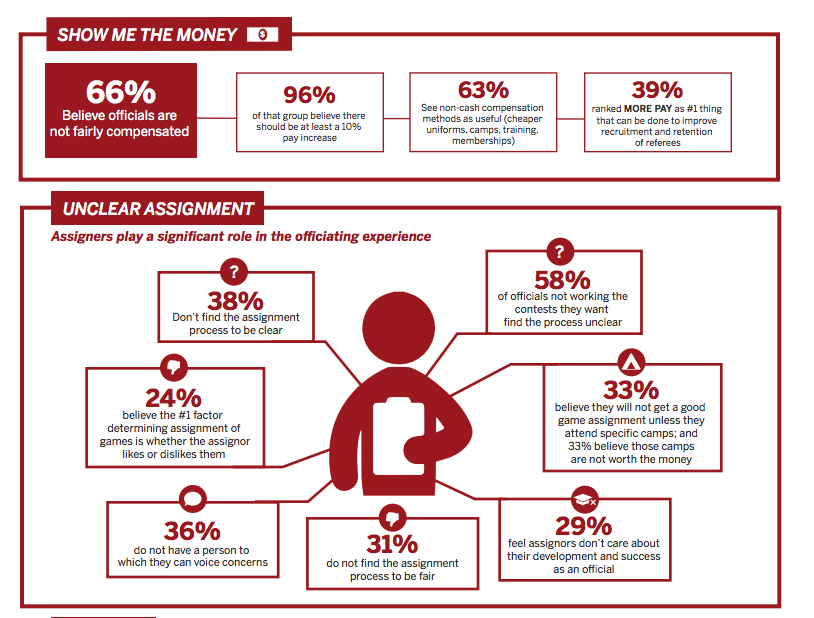


Almost all of those that responded (96%) felt that they should see an increase in pay of at least 10%!

58% of the officials stated they are getting to work the games they want to find the process of how they are assigned to games unclear, and 1/3 stated the reason they don’t get assigned the games they want is they have to attend camps to do so but are not worth the financial outlay to attend.

Key takeaways for organizations that are looking at attracting, retaining, and growing their number of officials as youth sports slowly return back to play post-COVID-19:

#1 – Parent and Coach Education reinforcing the importance of respecting the officials including codes of conduct for appropriate behavior and positive messaging in all common areas

#2 – Reduce costs for camps/clinics so officials see the value to them

In the 2017 NASO study, much of what officials earn in their seasons is taken up in terms their out of pocket costs for necessary equipment, potentially travel expenses, meals while at tournaments, attending clinics, camps etc.

#3 – Develop Rules Education programs for coaches, parents and fans so they are aware of the respective playing “rules of the game”.

#4 – Raise their pay by 10% (or more)

Minimum wage continues to increase year over year, in my home province has increased 25% the last 3 years so youth sport organizations need to recognize that their staff including paid officials should be compensated relative to costs of living

#5 – Implement mentoring programs for youth officials to be paired with tenured officials before they age out.  As the stats showed over half of the officials are over 55 years of age and the level of experience of 45% of officials is less than 6 years!!

This is largely due to the fact that rates of attrition that many sports groups face is as high as 50% of their first year officials and 30% each year thereafter

#6 – Make if Fun for ALL stakeholders, much like players, coaches, officials will only return each year if they enjoy the experience and will quit when it no longer is.

#7 – Implement policies to address poor fan or coach behavior during games so that they are removed from the facilities vs. putting the onus on the officials to say “you’re outta here” only.  Many will be reluctant, as well as unqualified to do so, in their first few years to tell parents to leave so they will need support from other adults

I worked for BC Place Stadium in Security for years, and when fans became unruly, it was really simple .. we escorted them out of the facility.  Why we have condoned inappropriate behavior in youth sports for years now makes no sense, kids quit, officials quit, coaches quit as a result.

#8 – Reward positive behavior by fans, coaches who demonstrate good sportsmanship in the stands towards officials, the game, players etc.

It could be as simple as coaches sharing with other coaches that their parent groups were awesome, please share our thanks to them for making this such a great experience and game to play.

As the cliche goes, you get much farther with honey than vinegar

#9 – Those that are in sports with shortages, start recruiting, training, mentorships programs NOW before games and tournaments are permitted in phase III/IV Post COVID-19.

#10 – Appreciate that the #1 reason why officials officiate is For The Love of The Game and focus on making the game GREAT for all stakeholders.  This not only will help retain officials but players, coaches, board members, and all others in your organizations so you can GROW your memberships … something that is going to be a challenge as sports return back to play.

Don`t be a kids last coach


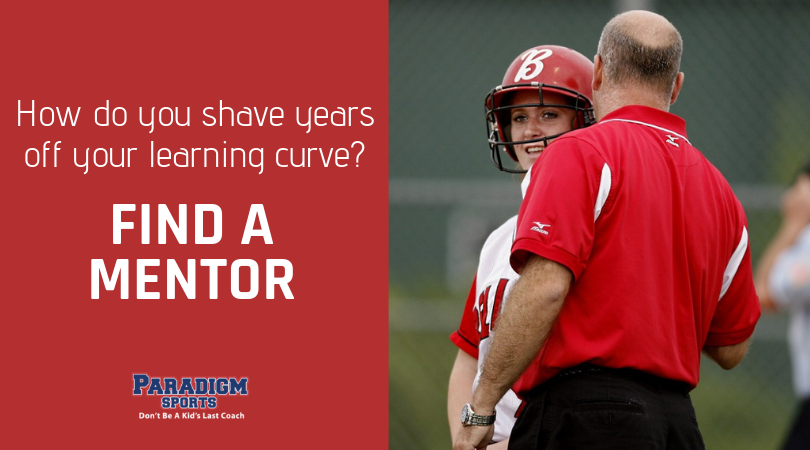
How do you shave years off your learning curve? Find a mentor.

Posted Posted in Athlete, Coach, Organization Executive, Parents


As we head into the upcoming fall season for many sports, I wanted to reinforce the importance for coaches to recognize the importance of lifelong learning.

Mentorship has always been something that I have believed in since I started coaching, initially as the mentee seeking the mentor, then as the years evolved it was I that was asked to provide insight to fellow or younger coaches as the mentor.

Last spring, I wrote about the importance of mentoring in “Coaching Skills in Sport and Skills in Life” that thinking back I should have titled the post “Ode to Glenn Zwick” as it was a tribute to the coach who acted as my mentor for many years who had probably forgotten more about hockey and softball than I will ever know.

Since that point I have had the opportunity to interact with some of the worlds top experts in sport across the globe while hosting our online events hosted thru our digital arm “For the Love of the Game” and one of the questions that I ask all guests is what coaches can do to shave 5 years off their learning curves.

To which many of the top experts I talked to shared what I truly believe in as well …

 Find a Mentor.”

One of which who shared that with me was John Kessel, Director of Sport Development for USA Volleyball, who has been coaching now for over 5 decades and has worked with thousands of players and coaches.

Had it not for Glenn’s mentorship when I first started coaching softball and hockey and then evolving into other sports, I can say I would have made many more mistakes (even though still had a fair share) and I also would not have recognized the importance of lifelong learning.

When I first graduated from my many years of university and college that last thing that I wanted to do was EVER read a book, particularly a textbook, or sit in on a clinic, course, conference or what have you.

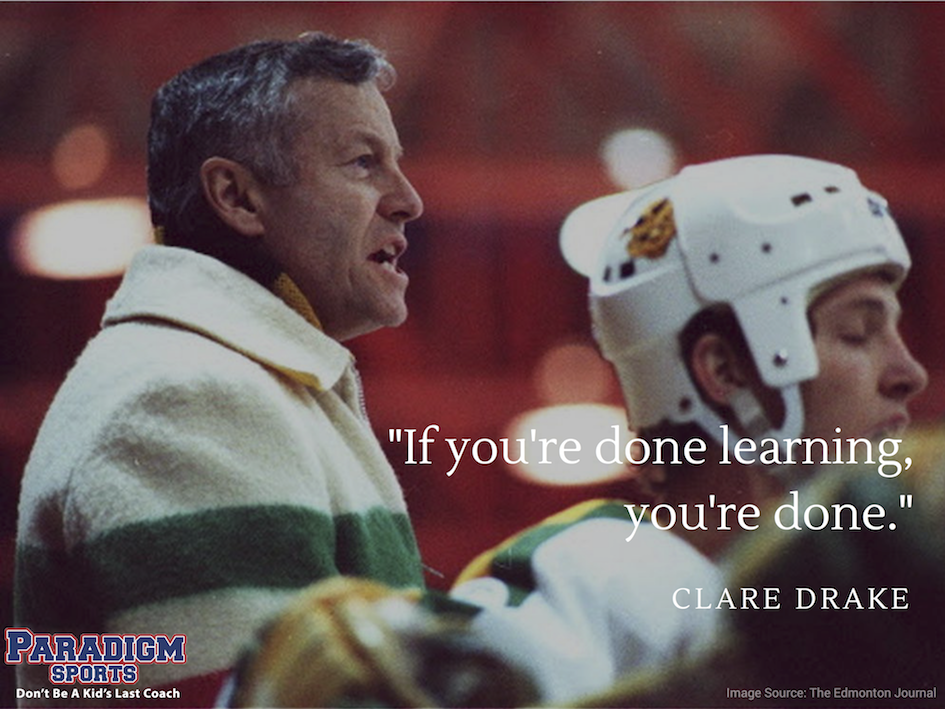
Then I came across this quote by Clare Drake years after I graduated…..

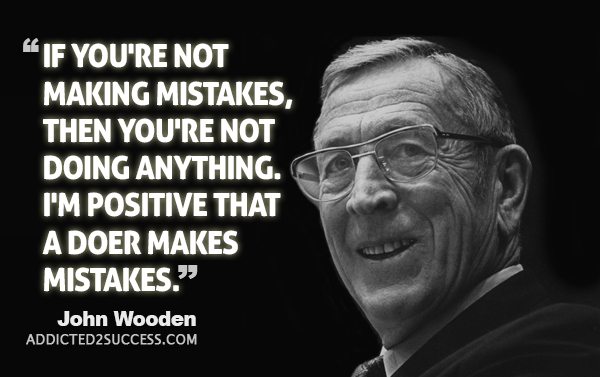
Clare (Canada’s John Wooden) was infamous for speaking at conferences well after they retired and after they did so would go sit with the attendees and take pages of notes.

When prompted why they did so their answers would be … because I may learn something.

Great coaches recognize the importance of lifelong learning.

Having coached now for over 25 years, I can honestly say any time I have the opportunity to either facilitate a clinic or course, deliver a keynote or be one of the attendees I jump at the opportunity.

Why?

Because now I can hardly wait to learn more, add to my toolbox so I can help others do the same.

Every time I run a clinic or workshop it is not only an opportunity for me to present the course materials but to have the opportunity to share insight and also learn from all those in the room.

I also have had the true privilege to mentor the next generation of leaders from my Alma Mater, UBC Kinesiology, as a Mentor but also for various co-op students that have worked with us over the years who have been instrumental in our growth as an organization.

A year ago I highlighted many of those other co-op students who contributed in prior post à bientôt which I shared with the two students as they finished their summer co-op term last week and today our 16th co-op student started.

I am not a fan of saying goodbye, rather the French saying I learned long ago (at one point I was pretty good in French but as they say, if you don’t use it, you lose it) as I have had the opportunity to connect with many of our former co-op students over the years.

One reached out to me a few weeks back and said “let’s go for a beer” which was pretty cool and he shared all the different projects was working on and how happy he was to see our growth since he did the second pass of our PARADIGM Sports Website now 2 years back (hard to believe how fast time has flown).

I have also had students provide testimonials, even recommendations for co-op supervisor awards and the biggest honour I received to date was when I was nominated for an alumni builder award by my Alma Mater, UBC School of Kinesiology, for mentoring, participating in expert panels and career fair.


I truly value mentoring and now jump at the opportunity whenever I get a chance to do so, as without someone to mentor you, how are you going to become better as a coach to help your players do the same?

In the last couple of weeks, I was asked to present at the PCAHA (Pacific Coast Amateur Hockey Association) Coach Coordinator meetings regarding the changes that BC Hockey has made to the practice evaluation process for competitive coaches.

Our goal is to have every coach that attends a clinic complete their certification for all clinic requirements in one season, and the practice evaluation is the opportunity of coach coordinators, technical or athletic directors are various minor hockey associations to provide insight during a practice evaluation.

The whole intent of the practice evaluations is for coaches to be mentored from tenured coaches and receive feedback on what they are doing well as well as what areas they could work on.

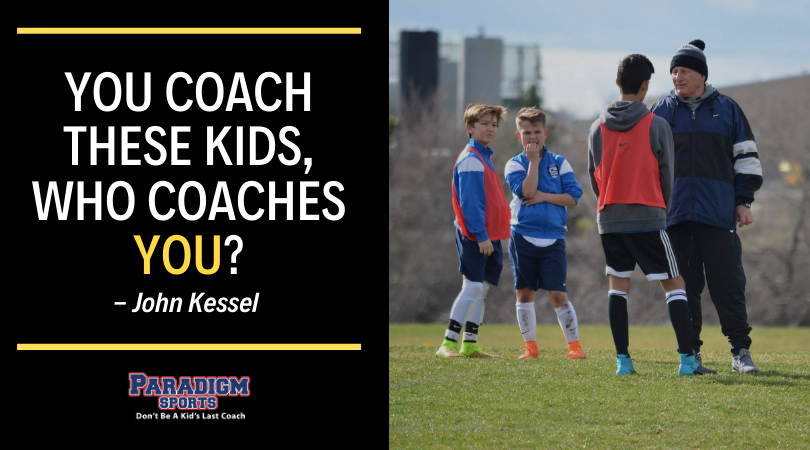
So as John Kessel (Kess) shared when I talked to him this summer, you coach these kids, who coaches you?

Another reason why you want to seek out a mentor is so you have someone to reach out to when you run into situations or issues unsure how to deal with to get advice, many times early on in my youth coaching days I made phones calls to or picked Glenn’s brain on the bench when girls were warming up about various challenges I was having.

In many instances he would merely state ”I really wish the adults would recognize it should be just about the kids and not focus on the results (wins, banners), at the end of the day we should help the kids become great people”

Fast Forward many years after he passed away, I now have been able to share many words of wisdom with coaches across Canada and like all of those that shared with me #1 tip I would share for you is to find a mentor.

Reach out to your coach coordinator for recommendations or go to an older teams practice to see how they run it, ask the coach if has time to share some words of wisdom over a coffee and you would be amazed how many are more than happy to do so.

Why?

Because for the most part (except the vocal minority that the tournaments and banners are the drivers), we are all in it for one reason, the Kids.

If we can help a younger coach hone his or her craft, it is our way of paying it forward so they can help their players do the same.

I also would recommend that you reach out to coaches in other sports, not just the one you are coaching for insight as never know what tips you will get.

Lastly, remember that whatever clinic you took for your coaching level is just the start of your journey, continue to read, attend conferences (our online event is a great way to learn from global experts 8-)), listen to podcasts, read books etc. so you can become the best coach you can be.

Why should you do so?

Because our purpose is not to make a living.

In lieu, our calling or rai·son d’ê·tre (reason for being) is to make a difference by developing youth into adults.

Please ensure that your legacy is a positive one and you are not a kid’s last coach.

Per Kess, I would be remiss in not sharing out his touching acceptance speech when he was inducted into the American Volleyball Coaches Association Hall of Fame where he thanks many of past and current mentors as well as his challenge to all coaches to “Never Be a Child’s Last Coach

We concur.

(In our chat he and I had a good laugh how much our philosophies were similar as I have shared “Don’t be a Kid’s Last Coach for years)

Let’s all work together to bring the game back to the kids … where it belongs.

BONUS – Download a FREE printable PDF version of this blog HERE


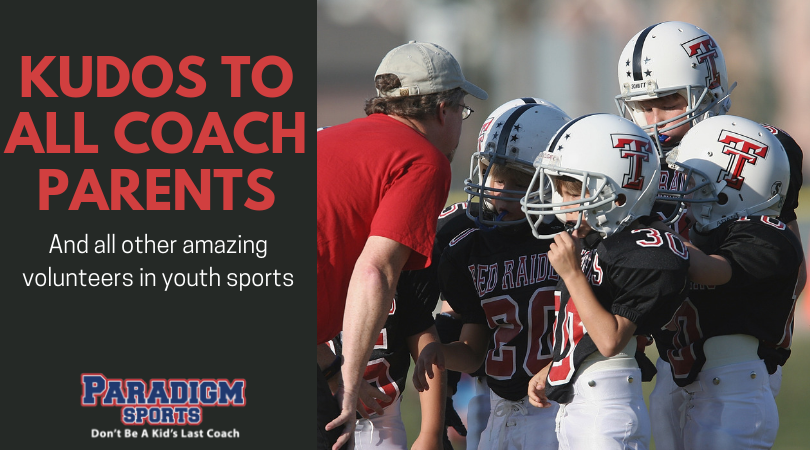
Kudos to all Coach Parents

Posted Leave a commentPosted in Athlete, Coach, Early Sport Specialization, Organization Executive, Parents

And all other amazing volunteers in youth sports

BONUS – Download a Free Copy of this Blog in PDF Format HERE


In celebration of National Volunteer Week, I wanted to take this opportunity to provide Kudos to all the AMAZING people that I who have volunteered their time unselfishly so kids can play organized youth sports.

Although the model in the competitive stream has been evolving more to non-parent paid coaches who many feel are “more qualified” I beg to differ, there are many coach parents out there with decades of coaching experience that are AMAZING coaches whom those non-parents could learn from.

A couple of weeks ago I did a talk for North Shore Fastpitch and will be doing two talks for Langley Fastball next Monday and reminded me of my tenure coaching softball with the most dedicated volunteer EVER, Glenn Zwick, whom I highlighted in “Coaching Skills in Sport and Skills in Life

Glenn was the head coach of my daughter’s softball teams all but one year that she played softball, the one year she played rep and had such a sour experience that she opted to return back to C ball.

Ironically she, like I, learned more about Softball and life under Glenn’s leadership than either of us working with other coaches or sports leaders.

The focus of that article was the importance of mentorship and how many people do so unselfishly.

What I want to highlight this go around are all the other volunteers that permit kids to play youth sports, to begin with.

Although much research coming forward is showing the optimal pathway for kids to develop their sports skills is to augment organized sports with unstructured free play, if people did not step up in various capacities in youth sports, kids would not be able to play they love (and hopefully love for years to come)

Kudos to all those that put their hand up to help coach various youth sports, in my case I coached softball, baseball, hockey, rugby and ball hockey after coaching adult co-ed slo-pitch which is hard to believe has been over 25 years of coaching and I still love it as much now as I did when I started.  The difference now is I am coaching coaches, supporting parents, volunteer board members, officials to attract, retain and grow their memberships and in doing so have the opportunity to reach so many more kids than just coaching one team at a time.

The majority of those that step up to coach share when prompted why they do so is due to the fact that they have skin in the game, their son or daughter are playing.

Probably the saddest example that a parent coach shared with me last year was the reason that he stepped up to coach hockey is his 9-year-old daughter told him after her first year of Atom Hockey that she was going to quit because she was scared of making mistakes and gave examples why.

Why?

Because the coach she had that season did not realize the impact of his words on his players and the importance of making it safe for them to fail.  He would single kids out for making mistakes in games, practices, at times with language not appropriate for any age group.

When the parent shared the story, literally everyone in the room, the majority of which were middle aged parents themselves (both Dads and Moms) eyes weeped up and even when I think about it now mine do as well.

Even though I believe her coach had the best of intentions when he started as all do, because of the current winning at all costs focus in many sports and most of the coaching certification provided to coaches relates to tactics, skill analysis, systems, rules, practice and game management they don’t develop their soft skills, how to coach, which is the basis of all of our modules.  They don’t know the best practices of coaching like growth mindset, the importance of connecting with their players and the emotional intelligence that the greatest coaches of all time developed after decades of coaching.

The greatest coach of all time, John Wooden, took 16 years to hone his craft before he won his first of many national championships as he knew the importance of being a great teacher of the game. He also believed in the importance of providing an environment for his players that was safe to fail.


Coaching girls who are playing on boys teams vs. all girls teams, coaches must adapt their coaching styles as there are differences when coaching girls vs. boys.

Coaches also must learn how to connect with their players, how to engage parents on their teams, how to make it safe (to fail and all forms of harassment), how to coach today’s generation Z, characteristics of great leaders, how to communicate effectively and so forth.

What I can say as I have traveled the country and interacted with thousands of coaches and all other volunteers that we rely on for kids to be able to play youth sports, I believe that there many more coach parents out there that are doing an AMAZING job as they truly are in it not just for their kids, but as I share with every coach when they say they are coaching because of their kids, “You have figured out that you adopted 10+ other kids also?”

To which they all say, yes, and they love being with all the kids and seeing not only develop their athletic skills, but as people.

Below is a great video which is a great perfect example why Kudos should be relayed to all of the coaches that Dwayne Wade had in his youth that not only guided him to become the future hall of famer he will be, but an amazing person.

Get your Kleenex out for this one.

I also want to take this opportunity to thank all of my amazing volunteer coaches who took me under their wing after my father passed away when I was 8 years old.

My father was a really good athlete, he played junior football and baseball to semi-pro until his 20’s and both I and my brother inherited his athletic genes.  In my youth, I played EVERYTHING, a lot of unstructured free play, but also a number of organized sports and had the opportunity to play on provincial winning teams in Hockey, Football and Rugby lead by GREAT Coaches.

Why were they great?

They pushed me to become the best I could be.

They taught me so many life lessons that I wish I had learned from my Dad, values like winning with humility, losing with dignity, respect, sportsmanship, selflessness, team work and important life skills like resiliency, leadership, communication, accountability, punctuality, commitment.

Another challenge that I had growing up is the fact my father had to live close to government buildings that he managed as a stationary engineer so every year from K to High School we moved so I was in a different school, different sports program which made it very difficult to develop friendships but the one constant for me was playing sports and I had so many amazing coaches that truly cared about me and were very passionate about the sports I played.

Those stops included many suburbs in Montreal,  Ottawa, Baffin Island (Northwest Territories), Vancouver, back to Montreal, Toronto then finally back to Vancouver and have resided there since.

There were in a sense, the very model for why I mentor coaches, students and even employees now and do so to give back as those coaches did for me.

It is one of the driving reasons why I wanted my kids to grow up in the same place and go to same schools year after year and also why every time they asked me to coach I did so with no hesitation.

When I entered High School we finally stopped moving year after year, my mother continued to support me and my brother to play 3 organized sports per year and went thru a real tough few years as became bitter having not had a father but when I look back at it, I had MANY fathers.

This is why I focus on mentoring grass roots coaches, the mothers and fathers who put their hands up every year to coach kids For the Love of the Game, to Give back/pay it forward and all the other reasons I shared in “Why do you Coach

One of the tips that I share in talks is the importance for coach parents to wear their coach hat at the rink, court, field and their kids call them coach and when they leave (to/from) that they put their Mom or Dad hat on and vice versa.

Don’t coach your kids at home, the dinner table or in the car otherwise they may become one of the 70% of kids that are quitting youth sports before high school.

A Dad came to me when I was doing a clinic last year after I shared that anecdote and he said to me with tears in his eyes “my son told me he wanted to quit hockey because was not having fun and I did not even think I was over coaching him”

It’s a fine line for coach parents but without the 10’s of thousands that put their hand up across Canada, undergo all the certification that is being asked of them and now ongoing professional development credits, please ensure that your son or daughter treat them with respect, thank them for everything they do and if you are a parent and not coaching do the same.

Being a coach requires hundreds of hours of time to plan practices, manage games and all the stuff that goes on behind the scenes with managers, board members, officials to ensure that kids have an opportunity to play a game they love.

Thanks Coach for everything that you do.

Even though at times it may seem like a thankless gig, when one of your players comes to thank you at the end of the season or better yet shows up on your doorstep to say hi or as they even get older to go for a bevie, reach out to thank you for everything that you did, it is all worthwhile.

Thanks also to all the other amazing volunteers that keep the cogwheels of youth sports turning, board members, scorekeepers, timekeepers, managers, trainers, risk managers and all others that make it possible for kids to play youth sports.

Coaches, please ensure that you keep the game in perspective and remember the initial reasons that you started coaching, to begin with:

  • Make it Fun
  • Make it Safe
  • Teach Skills
  • Care Passionately

And most importantly …..

Don’t be a Kid’s Last Coach

Please ensure that the legacy that you leave behind is like Glenn’s and all the coaches that I had in my youth and it is a positive one and you are not a kid’s last coach.

Lets all work together to bring the game back to the kids … where it belongs.


Why Officials Quit (2019)

Posted Leave a commentPosted in Athlete, Coach, Organization Executive, Parents

A couple of years back I posted Why Officials Quit and have continued to do a lot of research on the subject due to the fact that every sport organization that I work with is not only having challenges with player attrition, they also are losing officials to the point where many say they have to scale back on number of teams or games as a result, and in some states in the USA they have declared many of their sports programs are in jeopardy due to lack of officials.

This weekend I will be doing a talk on that very subject for Softball BC, titled “How to attract, retain and increase the number of officials in your organization”

It is based in part on the post I followed up with last year called “Why do Officials Officiate” but for purposes of this post wanted to share why we are losing so many officials year after year.

Top Reasons why officials are quitting are;

  1. It is not safe to fail:

Having talked to many officials and those responsible in various sports organizations, the trends are consistent, as I shared prior Hockey Canada loses 30% of their officials every year, as does every sport that I have talked to as we started to partner with various other sports organizations.

Why?  Because the officials who take a lot of pride in not make mistakes, are quitting because of the abuse that they are taking from adults (parents, coaches or fans) when they do make a mistake OR when they believe they made a mistake.

This is one of the videos I came across that shows very clearly that the umpire made the right call, but received 17 different abusive phrases from parents who were seated in the visitor section (along the 1st base line) who did not have the same perspective as the umpire.

He clearly made the right call as did have the right perspective, but all the parents on the visiting team thought nothing of screaming out their perspective which was wrong.


  1. Poor Sportsmanship: 

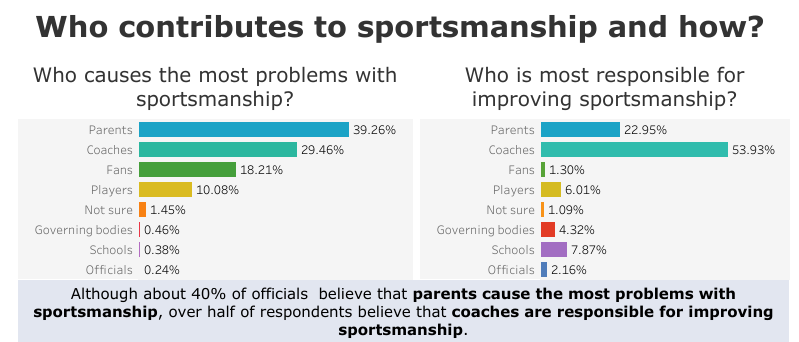
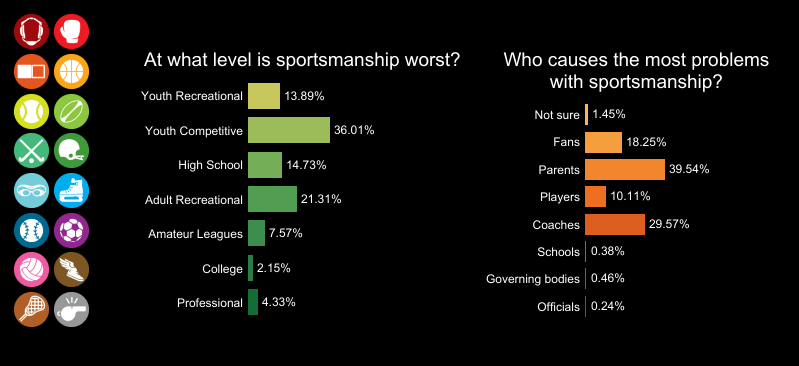
Above are the results for the largest study I have come across where over 17,000 officials replied to a survey from multiple sports done in 2017.  Almost 40% stated it was the parents that were causing the problems, followed by almost 30% of coaches, combining for approx. 70%.

Poor Sportsmanship was also one of the top 3 reasons that were the reasons why 11,000 players quit playing lacrosse in the retention report Alberta Lacrosse shared with me.

No matter what organization that I reach out to potentially partner with across Canada regardless of the hat I am wearing, even though 70% of the issues leading to officials quitting which goes hand in hand with the players is poor sportsmanship, when I ask what they are doing to curve the problem, they say they don’t have budgets for coach or parental education.


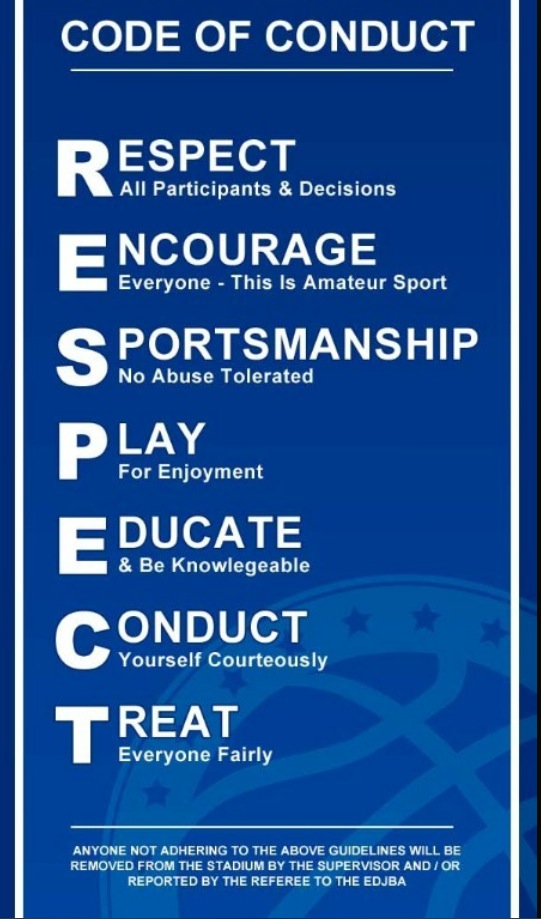
Translation: They keep doing the same thing over and over again expecting different results (Insanity), posting signs at rinks or fields like the ones above, making it mandatory for parents and coaches to take respect in sport online course for approximately 3 hours but don’t rigidly enforce policies for a zero tolerance for ANY forms of harassment.


When asked at what level is sportsmanship the worst, 36% of the officials stated it was the youth competitive level, followed by 21.3% adult recreational level.

These results did not surprise me at all.

Youth Competitive due to high expectations from parents due for a return on investment for the tens of thousands of dollars they invest in their child’s completive youth sports experience to get an NCAA scholarship or play professionally is what is translating to the vocal minority of parents screaming and umpires when they perceive they made a bad call.

Parents – the majority of these officials are just a level above your son or daughter, and many officials start at the age of 12 years old, and within 3 years associations are starting all over again to recruit officials as most have quit.

The second highest level, adult recreational, having played adult rec hockey, as well as slo-pitch for many years, I saw it firsthand how many who were playing adult rec thought they were living the dream playing professionally and took it a wee bit too far and would go at refs or umpires like they lost a Stanley Cup or World Series Game.

Every time I would approach them and say, relax, it’s just a game (yet another PSA campaign by Hockey Canada in 2004 when things really started to ramp up in terms of parental behavior in the stands).

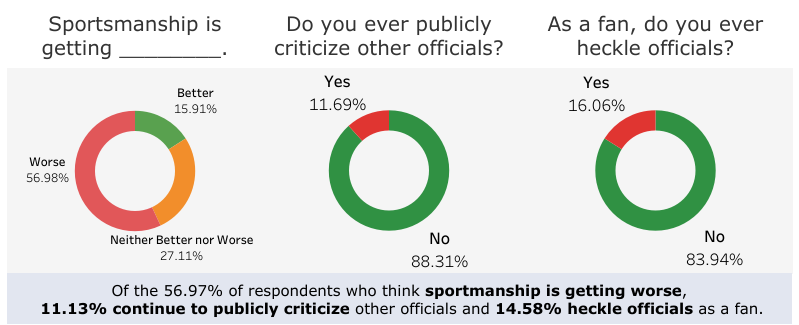
When officials were then asked if Sportsmanship is getting _______, almost 57% said it was getting worse, 27% neither better or worse but thankfully the remainder, close to 16%, stated that sportsmanship was getting better.

This I believe is due to all the organizations and awareness campaigns that have come to fruition in the last decade (including our own) to combat the impact of poor sportsmanship that is impacting the quality of the youth sports experience for kids.

What I was truly surprised with, however, was the fact that some officials responded (11.69%) publicly criticized other officials and when a fan at games, just over 16% confess they heckle their own fraternity.  If truly are going to change the way officials are treated, they must adhere to the very same Respect rule I have for all my teams and NEVER criticize your teammates.


  1. Fear for their Safety

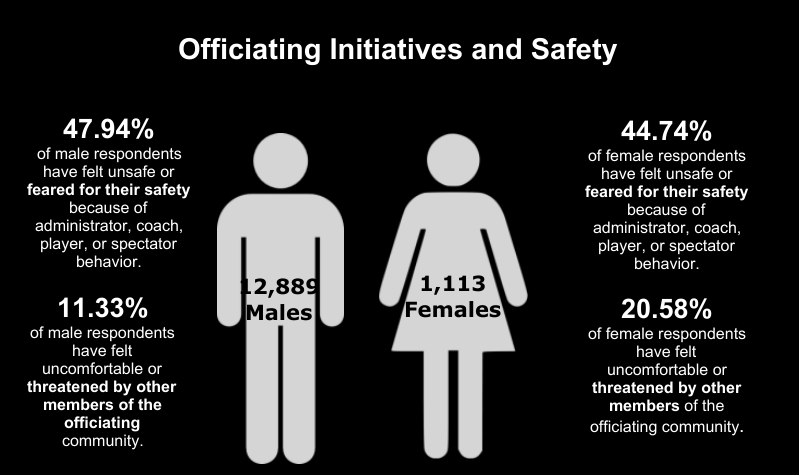
I shared this in the prior post that Almost 48% of the male respondents, and 45% of the female respondents shared they feared for their safety because of administrator, coach, player of spectator behavior?

What I did not highlight is just over 11% of male and 20% of female official felt uncomfortable or threatened by members of their very own officiating community.

Really?

What happened to all being it in together as a team?  Again, officials have to respect all others and avoid threats towards others in their community if we are going to reverse their fear for their own safety.

How then do organizations reverse these trends by ensuring that officials have a safe to fail environment, take pride in becoming the best they can be, are not in fear, that sportsmanship includes respecting ALL calls made by officials?

Organizations have to stop putting up signs, sending out public service announcements and as a means “to deal with parents”.  Most people don’t read signs anyway (thanks to my past experience working in the hospitality industry) and the time for PSA’s/Whitepapers is OVER.  It has come time to activate strategies so that sports organizations are accountable for everyone’s safety and creating a quality sporting experience.

In lieu, invest in parent education and teaching their coaches how to engage parents in lieu.

The vast majority of parents are AMAZING people who are doing everything they can to support their kids navigate what has become professional youth sports in lieu of kids playing kids like it was when I grew up.

They also have to recognize that officials are key stakeholders to ensure that today’s youth have a positive sporting experience, without them, kids will merely be having practices.

I worked at BC Place Stadium in security for many years and worked many BC Lions games as well as concerts and if fans became unruly (more often than not due to drinking too much) it was really simple, they were removed from the facility.

If they got into a fist of cuffs with fellow fans, we escorted them to the Police Wagon where they were brought to the station and potentially charged.

If we did so at professional sports events, why then do we not do it at youth sports events?

In lieu of having security surveying the stands, coaches and parents should be doing the same just as they did a generation removed.  If someone was acting up, a coach, parent or board member would approach them and eject them from the facility.

If a parent, coach or fan becomes unruly, too emotional, abusive, they should be removed so they can calm down and not permitted to return no differently when coaches are ejected.  The vocal minority of parents that do so be held accountable to the point where future incidents are treated with longer suspensions and using the same 3 strike rule, if a repeat offender;

Sorry we will miss you.

Meaning, we will not permit you to be a member of our organization.  Just like playing youth sports is a privilege (now more than ever due to pay to play model), so is that of being a member of the organization as parent, official, board member.

As far as I am concerned, no one, whether it be player, coach, official or board member should be in fear or a victim of verbal, worse yet potentially physical abusive threats and we need to bring the game back to the kids.

It’s time to stop doing the same things over and over again and expecting different results (Insanity)

Just like we should see the smiles on players when they are at games, the same should hold true for officials of any sport, they too should have a quality sport experience, otherwise the trends where 30% quit every year will just get worse.


Let’s all work together to bring the game back to the kids … where it belongs.


Don`t be a kids last coach