What US Lacrosse is doing to promote Multi-Sport Participation

Posted Posted in Athlete, Coach, Early Sport Specialization, Organization Executive, Parents

I recently sat in on the first webinar hosted by Project Play which highlighted three different US National Sports Bodies (NGB’s) that were promoting multi-sport participation, one of which is one of the few youth sports in the US that is growing year after year, US Lacrosse.

The insight was shared on the webinar by Erin Smith, currently the Managing Director of Education and Training for US Lacrosse and has worn many other hats over with US LAX the last 15 years.

Why is US Lacrosse one of the organizations that are bucking the trends?

Unlike many of the youth sports organization in Canada, US and globally, they continue to see increases in their membership year after year, now have over 430,000 members and continue to grow.

As a national sports organization in the US, they are still in their infancy, 9 former regional orgs merged together in 1998 to become the national sports body for the US.

In 2015-16, largely due to the great work that USA Hockey has done in terms of developing the American Development Model, US Lacrosse created their first version of their Athlete Development Model with 6 core values.
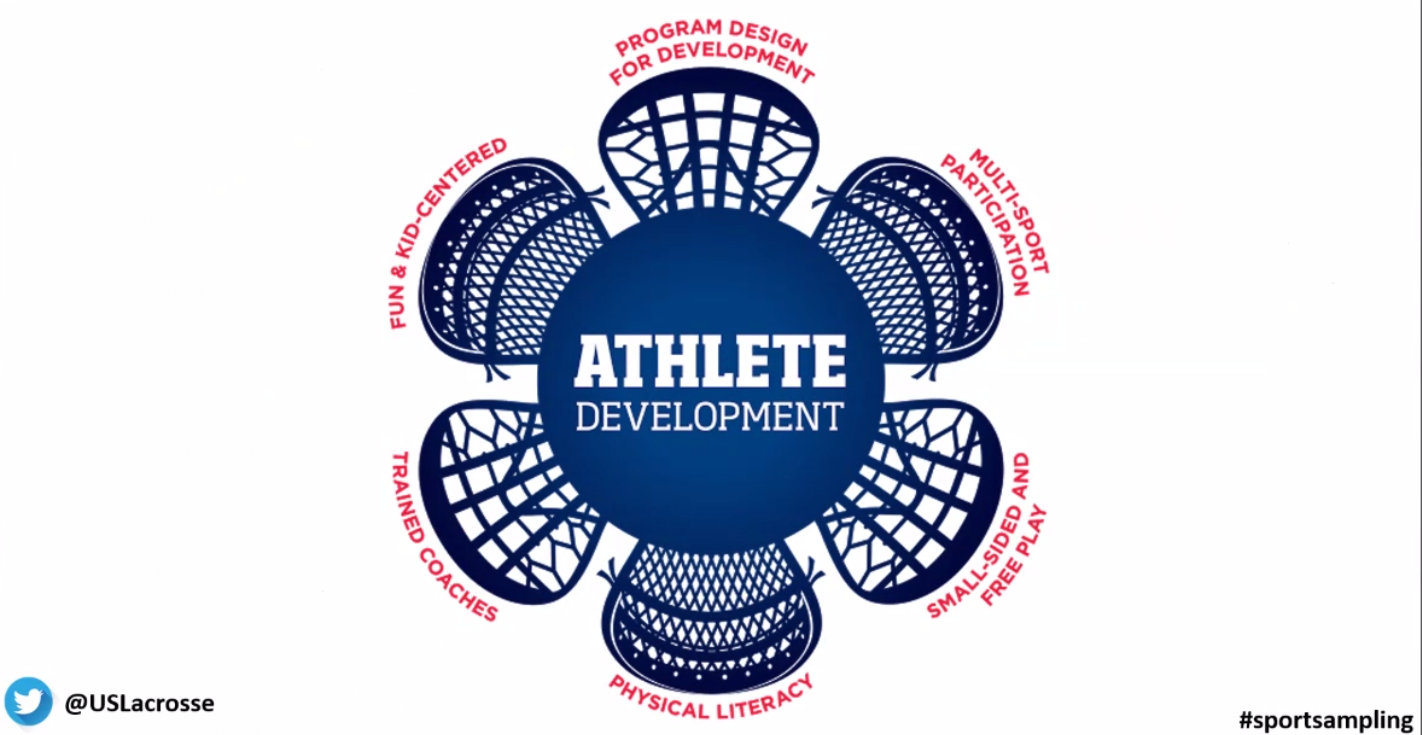
#1 – Fun and Kid Centred

HMMMM … perhaps the sports organizations that continue to experience negative comps year after year could learn something by focusing on similar core values?

As I have shared for years, kids play sports because they are fun and quit when they are not, it’s NOT rocket science and I was so happy to see that a NGB has Fun and focusing on the kids (the end users/consumers) and believe many other orgs that are suffering high rates of attrition should do the same.

#2 – Program Design for Development

Development as in skills vs. winning at all costs?

It is great to see a NGB understand that the purpose of Youth sports organizations is developing youth into adults.

#3 – Multi-Sport Participation

Promoting Multisport participation, as the President of Greater Edmonton Lacrosse shared with me last year, Lacrosse is a great complementary sport and requires so many technical skills that will transfer to other sports.  Perhaps that is one of the reasons why Wayne Gretzky, John Tavares, Steve Stamkos and other NHL’ers were or are pretty good?

#4 – Small Sided and Free Play

Many national sports organizations in Canada and the USA who have incorporated LTAD models have incorporated small sided games that are age appropriate, examples being USA and Hockey Canada’s cross-ice hockey for ages 5-8 years old, soccer small area games with 3, 7 players, tennis, volleyball, basketball lowering the nets etc.

What really excited me about US Lacrosse was they also are focusing on the importance of Free Play that many researchers have identified in recent years is a critical to ensure optimal skill development, decision making, handling adversity and overall fundamental skill development.

#5 – Physical Literacy

Still one of the biggest challenges that many face in the grassroots segments is having coaches understand the importance of developing all fundamental movement skills so kids are not only proficient in their respective sports (thanks largely to the pitfalls of early sport specialization) so kids are confident, competent and ultimately active for life.

#6 – Trained Coaches

In terms of trained coaches, although the course content has been revamped to educate coaches on areas like multi-sport participation it was only done last year and only 5+ Years will you see the cause and effect of updated coaching modules.  I suspect in a few years you will see the changes that US LAX is aspiring for and will receive a higher grade accordingly down the road.

How do I know this?

After running Hockey Canada Clinics as one of my hats for over a decade, each time that Hockey Canada revamps the clinic materials, it takes a few years for the materials in new modules to get to the coaches that have already taken a clinic IF it gets to them.

This is why I am a big advocate for the NCCP program requiring ongoing Professional Development Credits to ensure that coaches learn the latest and greatest to be the best they can be.

The three core areas of the Project Play checklist that US Lacrosse is focusing on to promote multi-sport participation in particular are;
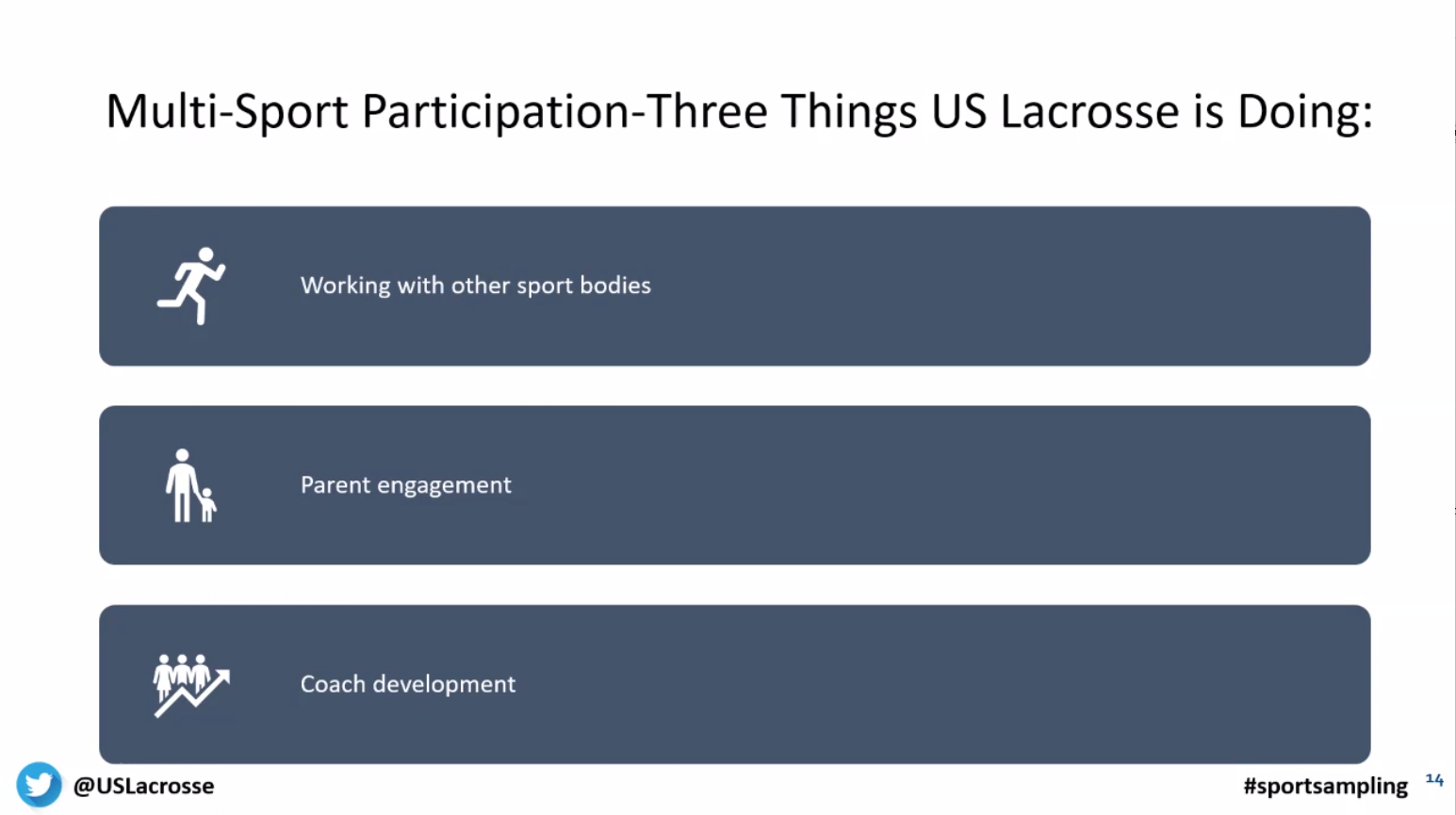
 

#1 – Working with Other Sports Organizations

Collaborating in lieu of competing for the same player so they can play multiple sports?

KUDOS to US Lacrosse for doing so.

Here is insight from Dave Newson, the executive director at Semiahmoo Minor hockey organization who spoke with us for our winter 2018 virtual event how they were collaborated with their fellow soccer association to permit scheduling so kids could play both soccer and hockey

After they did so, many other local sports organizations started to do the same, the dominoes they are falling as kids want to PLAY more than one sport.

#2 Focused on Engaging parents

In addition to providing resources to coaches to share with parents in their parent meetings, they are promoting multi-sport participation on social media and video below using the analogy of eating pizza every day would be like playing one sport every day, not good for the kid’s development overall.

INSERT QUOTE OF THE WEEK HERE

Play More (sports) to play better (as an overall athlete)

#3 – Focused on improving their coaching development

Like US Hockey, US Lacrosse now has 4 coaching levels that ties in their athlete development model, starting at the grassroots level up to the high-performance level.

Last year they redid all of their coaching courses and the Level one course now highlights the benefits of multi-sport participation so the grassroots coaches (many of which are moms or dads that get recruited to coach because their kids are playing) get educated on the benefits right from the get-go.

The added benefit, as many are parents themselves, they can share with the parents on their teams as well as others they know so the word of mouth will spread.

Probably one of the biggest issues that I have come across when I have interacted with coaches in Canada that are just getting started regardless of the sport is there lack of knowledge or even awareness of their respective sports long term athletic development models or fundamental movement skills required to be proficient at ANY sport, let alone the ones they are now coaching.

Things like balance, agility, running, falling, getting up, throwing, catching, one handed and two handed hitting, running which are all fundamental movement skills that every kid should have but thanks to PE programs being cut so much at the school levels, too much structure taking away free play, too many kids can’t perform the basic skills as our past generation did.

KUDOS to US Lacrosse for recognizing the importance of not only talking the talk (via core values, public service messages (PSA’s), Whitepapers (PDF’s) and education but WALKING THE WALK.

Let’s all work together to bring the game back to the kids … where it belongs
PS Tagline - Dont be a kids last coach

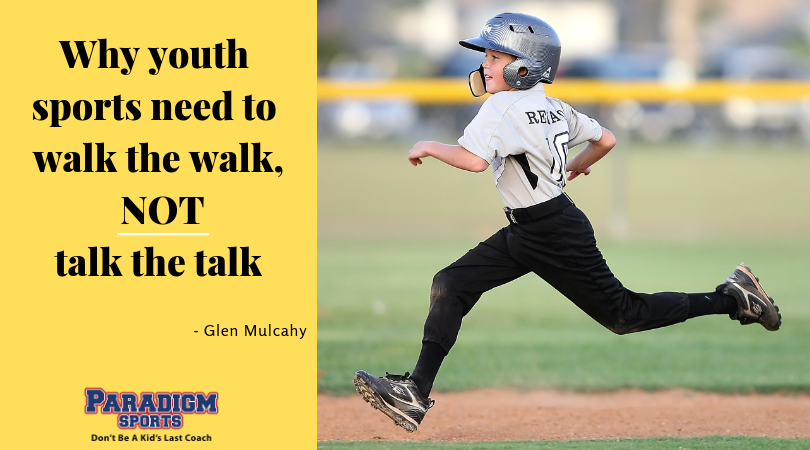
Why Youth Sports need to walk the walk, NOT talk the talk

Posted Leave a commentPosted in Athlete, Coach, Early Sport Specialization, Organization Executive, Parents

In the last few weeks, there have been so many examples of scandals that have to the forefront revolving around youth/collegiate sports it has led to me shaking my head in disbelief.

As I came across each article, video, a podcast I kept saying to myself, am I missing something, how can all these organizations think they would never be called out in today’s age of social media?

How can all those involved in leadership roles with sports organizations, universities think nothing about talking the talk, but are not walking the walk?

They thought nothing of sweeping issues under the rug in lieu of owning up to them and doing the right thing showing honesty and integrity were core values they not just wrote down in policies, best practices, KPI’s, mission statement but they adhered to them EVEN WHEN NO ONE WAS LOOKING, the true test of integrity.

As I was raised by my single parent mother and her mother with Scottish and Irish Heritage, the one thing that I learned from both was the importance of integrity, regardless if someone was watching, always do the right thing even when it may mean you have to deal with repercussions.

Perfect example, while still in Montreal was playing pickup baseball in the street and I got a hold of a pitch and broke a neighbors window.  I immediately went to them and apologized and offered to pay for the damages out of my allowance.  Some of my buddies said to me, what are you doing, run, decades later suspect they may not appreciate the value of integrity.

It is one of the very reasons why I love the game of golf, you play the ball where it is played, and the greatest amateur of all time, Bobby Jones, lost out on the 1925 US Open Major Championship as he called a penalty on himself as the ball moved when was lined up his club although no one else saw it.

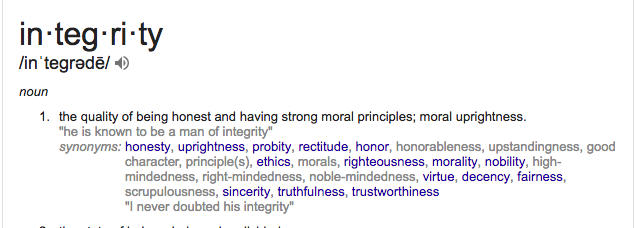
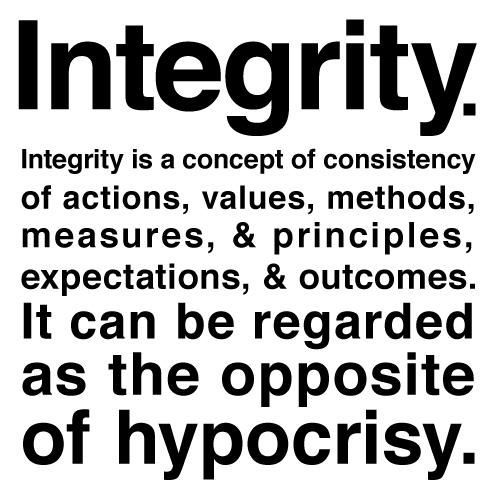
Below is the dictionary definition of Integrity:


Perhaps I am old school, but I still (naively) believe in the concept of a man’s word meaning just that, a man’s word.  Shaking a hand with someone and honouring that commitment.

Early on in my youth coaching tenure I had a 7 year old player tell me that “you did not honour your promise” when we ran out of time during a practice and not have a game to end it and to this day I tell all coaches, if you say something, you better deliver or the trust you have worked on developing with your players will be lost for the remainder of the season and then some.

Unfortunately, I wonder why every day why so many people today think nothing of not adhering to the very same values.

Some of the examples that come to the top of my mind why youth sports need to walk the walk, NOT just talk the talk:

#1 – Operation Varsity Blues:

A number of NCAA DIV I and Ivy league schools have had criminal charges filed by the FBI brought forth for bribes to coaches, administrators for acceptance into their programs from $200,000 to over $6.5 Million Dollars (USD) !  Check out this article for 30 Fast Facts about the college admission scandal

#2 – Sexual Abuse/Harassment:

All of the sexual abuse and harassment scandals that have come to light the last couple of years, in particular, USA Gymnastics who continued to try and hide evidence well after the allegations had come forward leading to the USOC to initiate removing their sanctions as a national governing body.

As a result of the CBC three-part series where 222 coaches were convicted of abusing over 600 victims, Kirsty Duncan, Federal Minister of Sport, the COC/CPC and others committed to not just talking the talk, but walking the walk by coming up with a harmonized code of conduct for all sports organizations that WILL hold them accountable to ensure that no other kids are victims of a system that requires a drastic shift in culture.

Hopefully, this leads to further action in terms of implementing a third party reporting and review organization that is totally impartial so athletes have can report instances of abuse without fear as was tabled by all those present I talked to at one of the Safe Sport Summits held in Vancouver earlier this week.


#3 – Minor Hockey Organizations Harassment

All the recent harassment and abuse allegations brought forth in recent news that they did their own internal investigations and either extended short suspensions or nothing at all as a result of their internal investigation.  Do they then wonder why they have seen such a huge decrease in their membership or just write it off as a bad year (after year, after year)?

#4 – Junior Hockey Clubs – Spring Camp Invites

One of my favorite examples of complete disregard for integrity and transparency.

Junior Hockey Clubs that are infamous for hosting Spring/Summer prospect camps, inviting 60 players, up to 30 goalies (yes one camp one my former goalies went to had 34 goalies vying for 2 spots) which many argue is a cash grab, not a real opportunity for the players invited to earn a spot on those teams.

As my son has been invited to so many camps over the years we both lost track, even now, after he aged out of Junior level I still get the odd invite as we ended up on “a List” of prospect players going back to when he played Bantam A1 at 14 years old.

Ironically even after he quit hockey we still receive invites and the reason why I recommend to any parents that go thru the same is to be selective which camps you go to and ideally confirm that someone at the team saw your child at a game, tournament before you accept the invitation so it is fact legitimate vs. mass mail out to fill the camps.

There is nothing more humorous then getting an email saying “Dear Prospect” from a Junior Team in Ontario or Eastern USA that is “guaranteeing a spot on the team” sight unseen.

There is also nothing more frustrating as a parent when you are sitting beside the coaches and scouting staff when they are supposed to be evaluating ALL the players in the first game at the camp and they are sitting in a bar, drinking, ordering meals, joking and then talking about their roster where they only have 2 spots to fill (of the 60 players invited to the camp)

Translation:  Junior teams lack integrity and merely host the camps to start building their bank account as camps can equate to approx. 15K of revenue of which only 1/3 goes to ice and practice jerseys players/goalies receive for attending.

#5 – Private Non-Sanctioned Sports Organizations

All the private sports organizations that are “selling” early sports specialization to vulnerable parents “guaranteeing” if they spend thousands of dollars for the son or daughter to specialize as early as 6-7 years old they will get an NCAA full ride scholarship or play professionally.

A perfect example is one of many private non-sanctioned hockey organizations that are popping up all over Canada that are recruiting 6-8-year-olds.

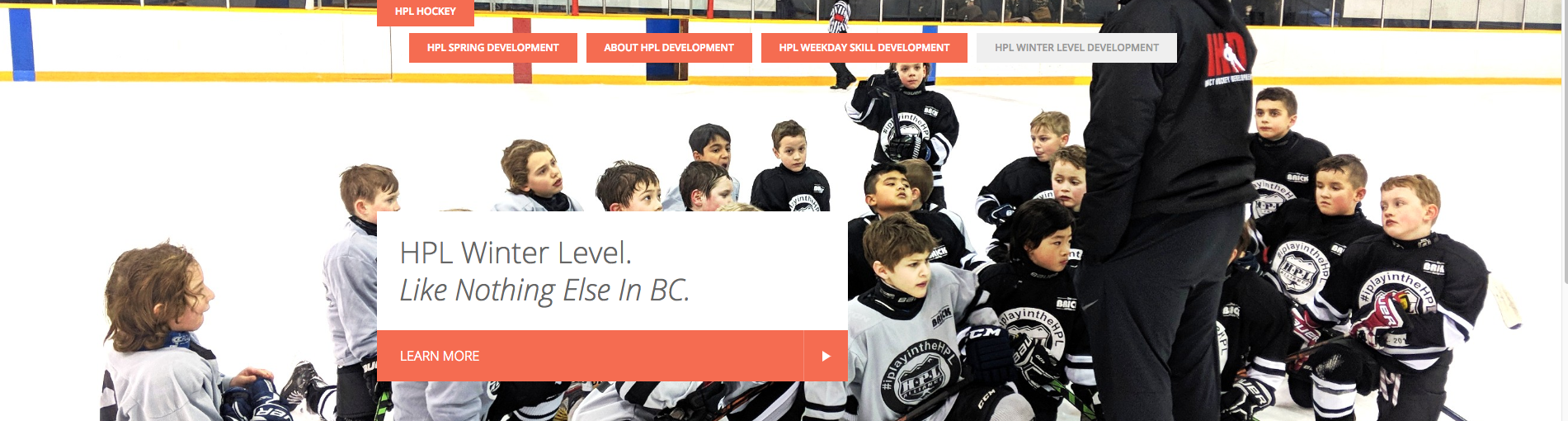
Below is screenshot from the most recent one that I was made aware of that started up in the Lower Mainland of Vancouver, HPL Hockey (for High-performance league) who are recruiting 6-8-year-old kids to participate in winter ice, games to prep them for spring hockey.

The very fact that all these kids had their picture taken on the ice WITHOUT helmets and suspect the non-certified coach also (if pic showed) goes against the Hockey Canada Safety requirements so that in itself should be a major red flag for parents.

Did every one of those parents sign a waiver so their kids could be pictured for the ENTIRE WORLD to see online?

When all the science/data shows that early specialization is NOT the right path to become the best athlete you can be, in lieu long term athletic development as it takes YEARS, every time I see another one of these pop up I shake my head.

It’s a SCAM, they are just in it for the money not having the best interests of the kids at heart and suspect majority in this picture will quit hockey by 13 as a result of “working” hockey vs. “playing” hockey seasonally.  If you truly believe the fact they are doing so for the kids, then I have some great swampland in Florida would be interested in talking to you about to give you a GREAT Deal.

There are so many other examples I can cite, but as I share with all stakeholders I work with, if sports organizations do not have integrity and honesty as the basis for their core values and not only talk the talk (policies, procedures, mission statements) but WALK THE WALK (full transparency, accountability, enforcement, discipline) their memberships will just continue to decline as a result.


Coaches at all sports organizations, the very catalysts for the change that we need to bring the game back to the kids also must follow suit, I can’t tell you how many parents or fellow coaches have shared with me that the coach stated in his initial parent/team meeting that they were going to focus on player development, be positive, fun and the first opportunity they have to show their true colours run short benches to win games at all costs, scream at kids or officials for making mistakes and so on.

Both Board members and coaches of sports organizations need to adhere to core values of integrity and honesty and be transparent and accountable not just talking the talk, but WALK THE WALK.

Let’s all work together to bring the game back to the kids … where it belongs.


PS Tagline - Dont be a kids last coach