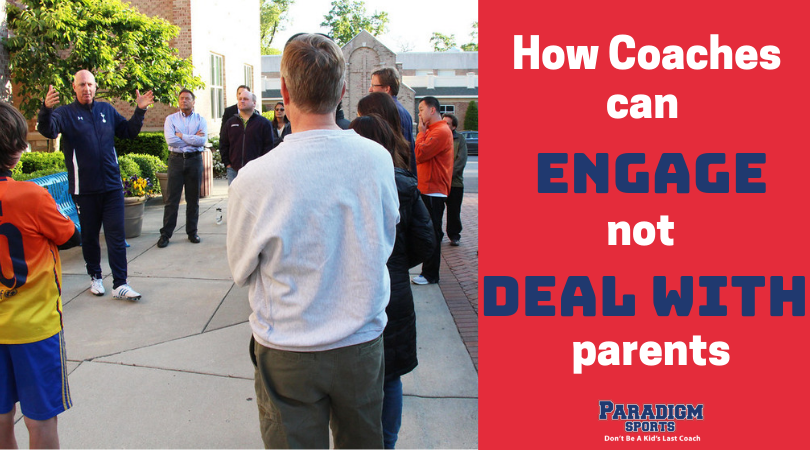
How to engage, not deal with, Parents

Posted Posted in Athlete, Coach, Organization Executive, Parents

As we are about a month away now from fall seasons of various seasons starting to ramp up in hockey, ringette, basketball, soccer, volleyball, and other fall sports I thought this would be a good time to share some insight on the importance of engaging parents so that you can ultimately avoid some of the parental issues that coaches run into.

For many years I have shared out a video from Don Lucia for hockey clinics, his keynote address at the University of Minnesota to coincide with USA Hockey’s roll-out of their ADM (American Development Model) and he stars the keynote by saying;


“People think that I have the best job in the world (Head Coach of University of Minnesota Men’s Division I Hockey Team) but I would say that the best job would be the head coach in an orphanage ….. NO parents to deal with” Don Lucia

I immediately share with all the coaches that I will provide insight over the course of the one or two-day clinic how they can avoid dealing with, rather engage parents, to set themselves up for a great season.

This week I received an email from a coach mentor asking me for some insight how coaches can deal with various forms of conflict on their teams including how to deal with team conflicts, when team parents divide into to which I replied back it all comes down to how the coaches start the season and subsequent meetings as every team will go thru forming – storming – norming – performing stages that we shared in prior post “Coaching your team to grow, tackle challenges and deliver

Probably the #1 question I have had from coaches over the years is “how do I deal with parents” which then leads into a conversation where I reinforce the importance of engaging and supporting parents vs. dealing with them when they have issues.

As the old cliché goes, prevention is 99% of the cure, and one of the things that I learned very early coaching youth sports teams of both girls and boys was the importance of being proactive, vs. reactive, with my parent group and recognizing they were part of the team.

As the years have evolved, the dynamics of “parents” has changed also with single parents, divorced/separated, guardians or parents that are members of the LGBTQ community so has required adaptation as gone are the days where Dad is the breadwinner and Mom stays at home to raise the kids and take care of the house due to raising costs of mortgages and overall cost of living.

We also are now starting to work with several organizations who have identified the importance of parental support/education in part to address the issues that now seems commonplace with parents acting up in the stands/sidelines of games screaming or even getting into physical altercations with officials, coaches and players.

So how can you ENGAGE and support your parent group?


#1 – Start off by working on your seasonal plan well before the season starts to include;

  1. Practice Themes by month
  2. Game Schedules home and away
  3. Tournaments (ensure for out of town parents vote on)
  4. Timing and agenda’s for meet the coaches, parent-only meeting, player meeting(s), parent and player meetings, finance meetings and any others that will provide insight in terms of the ship going in the RIGHT direction

One of the main points to cover in all meetings is the reasons why kids PLAY, to begin with, which could even include sharing surveys of players which I have done for years, ask all your players as teams are formed the following;


  1. Why do you play X (whatever sport you are coaching)
  2. What is fun about it (#1 reason is fun)
  3. What is not fun about it?
  4. What support would you like from us (Coaches) and your parents?

BEST way – do this as an exercise in your player/parent meeting and ask parents similar questions then review to ensure that parents expectations align with the players (more often than not their expectations are results orientated (win the championship) and players are process orientated (make friends, get better at my skills)

Other items to consider for seasonal planning:

  1. Development focus and contracts with any third party development organizations (i.e. for dryland, skills coaches to come to practices, strength and conditioning, sport psychologists, nutritionists) contingent on the level that you are coaching.
  2. Baseline, Mid and End of Season Testing of players to PROVE that they have developed over the course of the season
  3. Individual and Team Goal Setting
  4. Identification of Team Values and Culture
  5. Communication preferences (i.e. Team Snap for the calendar, updates), email for meetings, face to face for issues (no email/text as they can be taking out of context and go viral)
  6. Budget flow (initial and subsequent cheques needed to cover team expenses)
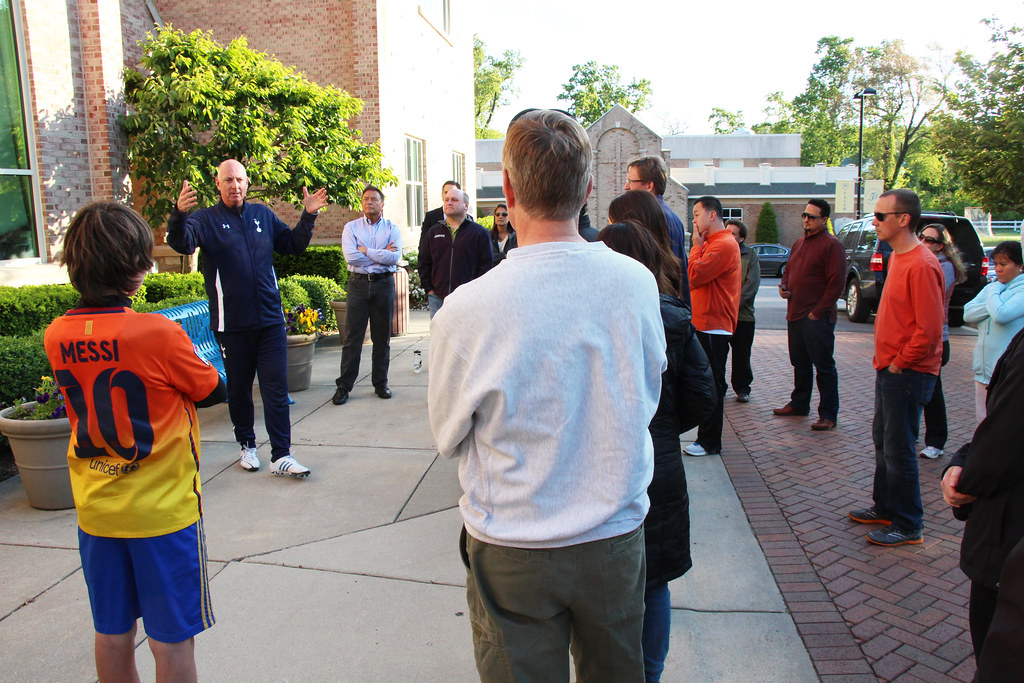
 

#2 – The Meetings

A. Parents/Players meet the coaches – this is the opportunity for parents and players to meet coaches of teams BEFORE the season starts so the coaches can share their backgrounds, why they coach, their philosophies and executive summary of their seasonal plan

B. Parent Meeting once teams are formed – this is when coaches would do a deep dive into their philosophy, why they coach, backgrounds, goals for the team and players for the season and also touch on things like finance (budget), recruiting volunteers (manager, treasurer, safety people, assistant coaches, tournament coordinator, team parent, den dads/moms, snack coordinator, jersey keepers etc). This is also the time when coaches share their expectations for parental behavior in the stands/sidelines at games, practices or any other team function.

C. Team Meeting(s) – I traditionally have 3 early in the season (a) meet the coaches to share same info shared to parents, (b) ask players to come up with core values for THEIR team (coaches are merely the facilitators) and (c) Reviewing discipline for various forms of harassment (zero tolerance for any form)

D. Player/Parent Meeting – Review codes of conduct and all sign off on so can hold them accountable, review team goals, reinforce the importance for parents to understand reasons why their kids are playing and their goals

E. Coach Meeting(s) – One of the biggest challenges that newer head coaches have is they fall short in terms of recognizing that their assistant coaches also can provide valuable insight in terms of the team, practice playing, seasonal planning and also should be assigned specific responsibilities (head coach – big picture, assistants to work with goalies, defense and offense)

Communication – Coaches should share insight every week about team progress, scheduling, goals for practices, tips for parents and players, resources so all are on board. As the cliché goes, it takes a village to raise a child and is important that everyone is on board so that the ship moves in the right direction


#3 – Make it Fun

Depending on the sport, the season can be 3 months to as long as 8 so a few times per season I encourage coaches to have practices and event team events including parents so that they can develop chemistry.

Early season tournaments are a good means to do this, other activities may include things like non-related pickup sports activities like renting a gym and playing other sports where parents have opportunities to participate OR go to a theme park, play mini-golf, movies, the beach, biking and so forth.

One of the activities that I did with my Novice Hockey Team we named “Game On” and our kids would go to one of the parent’s houses on Sundays that we did not have games (our practices were during the week) and the players would play street hockey.

It started out pretty formally, parents would drop off their players for an hour only like it was a practice or game, but as the weeks, months evolved in the season the boys would ask can we PLAY longer, and Sunday happened to be NFL games parents would go inside to watch a game while the players played then parents were invited to join for GAME ON at times.

Playing street hockey as a parent with 8-year-old kids was so much fun for me and all the other parents.

In essence, whatever you can do to develop relationships not just with your players, but your parent group will set you up for a great season.

Let’s all work together to bring the game back to the kids … where it belongs

 

Don`t be a kids last coach


 BONUS – Download a free printable PDF of this blog HERE


Copyright 2019

PARADIGM Sports
Back to the Drawing Board

Posted Leave a commentPosted in Athlete, Coach, Organization Executive, Parents


I must confess, I, like many of those I have talked to since Sunday, are still recovering from this year’s SuperBowl, not from the bevies, but from the fact that one of the top offensive teams the past two seasons only touchdown they scored was when their plane landed in Atlanta.

Many I talked to felt it was the worst Super Bowl they had seen as a result, which they shared and agree with in part but felt it was not …

… because the Patriots, under Bill Belichick and the ageless wonder Tom Brady, winning their 6th Super Bowl together in 9 tries since they became the tandem that turned the Patriots into one of the all-time dynasties in the NFL

… because CBS, Tony Romo, and Jim Vance were chosen to be the commentators for the game vs. Fox,  Joe Buck, and Troy Aikman as had been the case for many years prior

… because the Halftime Show was “Just OK” from one of the top pop bands in music today, Maroon 5, which one of the only highlights was the drones with balloons forming the shape of words Love and One, but two different rap artists intertwined where one had to have several profanities omitted in the live broadcast. Even Adam Levine tried to play the part of Rap artist with the heavy chains around his neck, and showing off all of his tats when he removed his shirt (What was up with that?)

… because it was shared after the fact that Maroon 5 was a last minute replacement for other musical acts turned the offer to do so from the NFL, Rhianna and Carbi B, due to the ongoing controversy pertaining to Colin Kaepernick’s kneeling at the anthem to protest inequality in the USA towards black and other minority groups and resulting lawsuit filed by Kaepernick for exclusion since he last played in 2017.

… because Jim and Tony joked at one point that one of the plays of the game that people will be talking about was not one of what should have been numerous TD’s, field goals with two of the NFL’s top offences matching up in the NFL but instead a 65 yard punt of the multiple the Rams Kicker was forced to make as their offense was shut down by the Patriots Defence.

… because the perceived underdog according to Tom Brady and company was in fact the Patriots and relished the role even though the Vegas bets were heavily in their favour.

… because we finally were able to see all of the infamous Super Bowl Commercials live in Canada during the game vs. being replaced with Canadian Content but none I felt were on par with past ones that people talked about for days, weeks after the game.

… because after 3 quarters of play, the score was 3-3, the equivalent of what happened last night as does in many NFL games and the winner of the 4th quarter or OT (if it had gone there) would win the game.

Like many others, the 4th quarter Tom Brady did what he has done for years, took control and threw short passes to MVP winner Edelman, the long bomb to Gronk to set up the game-winning touchdown.

… because my son, who is not a fan of football, actually sat and watched the game from start to finish with me for the first time EVER and it left him with such a sour taste in his mouth he probably will never watching another Super Bowl (although a D-Man in Hockey, does not appreciate that defense wins championships in Football).

… because the announcement of the NFL player who received the most prestigious award amongst players, the Walter Payton Award, for their contributions not only to the game but their community involvement away from the game that was awarded to Philadelphia Eagles player Chris Long did not permit him to say a few words to the crowd humbling accepting for the amazing work he does off the field.

This not only included Founding Waterboys to provide safe drinking water for kids in Tanzania 4 years ago and donating his salary for an entire season to funding scholarships and literacy programs, the epitome of giving back.

Below is induction for the award and his full acceptance speech.


I suspect his Dad, NFL Hall of famer and now Fox commentator Howie Long, was a very proud Daddy for all the great work Chris is doing off the field.

It was because of the news articles and interviews up to and after the game focused on how Tom Brady and company were the underdogs and how much adversity they had over come this season to get to the game, how much it meant to Tom Brady more than the past 5 and so on.

In lieu of it being touted as underdogs (one could argue Rams were due to how Vegas laid down the bets) for me it was a battle of the old guard (Belichick and Brady) vs. the new guard (McVay and Goff) and it truly was disappointing to me that Sean and company could pull it off with the offense they built to get the needle to swing in their favour

For me, the Superbowl happened early in the season, when the Chiefs and league MVP Patrick Mahomes dueled it out with the Rams (what I was hoping to be the Super Bowl Match-up) for the total opposite, 54 (Rams) to 51 (Chiefs) where it truly showed the offensive upside of both teams and lack of defense.

This was the epitome of the amazing transformation that Sean McVay had done since he became the youngest NFL head coach of all time at 31 years of age.

In just the two years under his watch, he has taken the Rams with much of the same nucleus of players who were coached by long term Jeff Fischer in 2016-17, from 4-12 record to reach the playoffs in the first time with a record of 11-5 in 2017-18 losing to Matt Ryan and the Falcons in the Wild Card Round, to 13-3 and getting a bye then wins against the Cowboys and Saints to reach the Superbowl this year.

As a result of making the playoffs last year with the Rams, Sean McVay was awarded the coach of the year award in just his FIRST year as a head coach in the NFL.

How then, has he transformed the Rams?

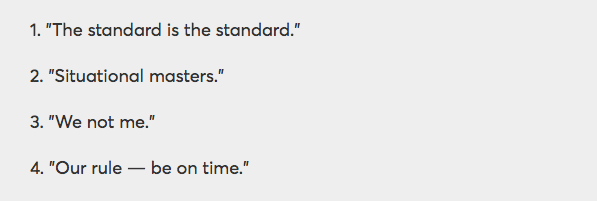
Be developing a culture of excellence with what has become known as the 4 McVayism’s that are now posted in the  Rams Dressing Room.


In essence, his key standards/rules like John Wooden and other great coaches have implemented with their teams to develop their own cultures of excellence.

What do they mean?

  1. The Standard is the Standard = the players set the bar for themselves and there are no excuses, the accept ownership for how they perform on the field.

      2. Situational masters – meaning the players capitalize on the opportunities as they present themselves in games, whether it be creating turnovers or fighting for that extra inch to get that first down

     3. We not me – equates to the there is no I in team, under Sean McVay, it is all about the team, not the achievements of individual players. The same analogy holds true when you play for the crest in front of your jersey, not the name on the back.

  1. Our Rule – be on time – this is very similar to one of John Wooden’s top 3 rules, his first of three, was be on time. He, like Sean, and many other coaches that have developed cultures of excellence on their teams believe in the importance of starting practices on time, ending on time, being on time for any team events so that they can accomplish everything set out in practice and game plans.  I learned the expression for a coach years back that I share with all of my colleagues, staff all the time – If you are not early, you are late.

Another thing that Sean has done has incorporated in the team is shared ownership, in lieu of old school coaches at times being dictators (AKA my way or the highway), he believes in an open door policy and communication and input from all players on the team how they (as a team) can become better so everyone shares in the success or in this case the misfortune of losing and having to got back to the drawing board.

Although the current rendition of the Rams struggled in the Super Bowl 53, under Sean McVay I don’t suspect they will be back, I KNOW they will be back, possibly as early as next season as Sean has now gone back to the drawing board to make the necessary adjustments not just during half time but throughout games as those in the Old Guard have shown can do time after time.

I suspect he and his coaching staff are already started to brainstorm how they can continue to improve their culture of excellence and build on the 4 McVayisms in the dressing room.

As the old cliché goes, 3 times a charm, in year 3 under the leadership of Sean McVay I am picking the Rams to not just make it to the Super Bowl, but be holding that trophy at the end of the game and hope like many others, that there truly will be a change of the guard in the AFC for someone other than the Patriots for them to face, the Kansas City Chiefs.

Don`t be a kids last coach


Don't just talk the talk, but walk the walk blog thumbnail

Don’t just Talk the Talk, Walk the Walk

Posted Leave a commentPosted in Athlete, Coach, Organization Executive, Parents
As we are heading into a new fall season for various fall sports, ice hockey, soccer, volleyball, basketball and others, coaches will be meeting with parents, players and various other team meetings as they start their seasons. I am putting the finishing touches on two presentations I will be doing on Wednesday on behalf of Changing the Game Project for Nanaimo Minor Hockey and plan to share insight with coaches how they can engage, not deal with, parents and players on their teams. Reason? Because over the years running clinics, doing workshops, breakout sessions and keynote presentations, the #1 question that coaches ask me during or post talks is “Can you provide me some advice how to deal with problem parents and parents?” The first thing I say to them is that you need to shift your focus from dealing with, to engaging. These are a few tips on how you can do so as you start your upcoming seasons:

Run an effective parent meeting

If you have not done so already, regardless of what level you are coaching from Novice to Midget, recreation or competitive, if you want to avoid potential issues you may run into during the season, starting with a well planned parent meeting will address many of those potential issues up front.
  1. Be prepared to answer the first question that parents have, “Why should my child play for you?”  AKA – What is your coaching philosophy?
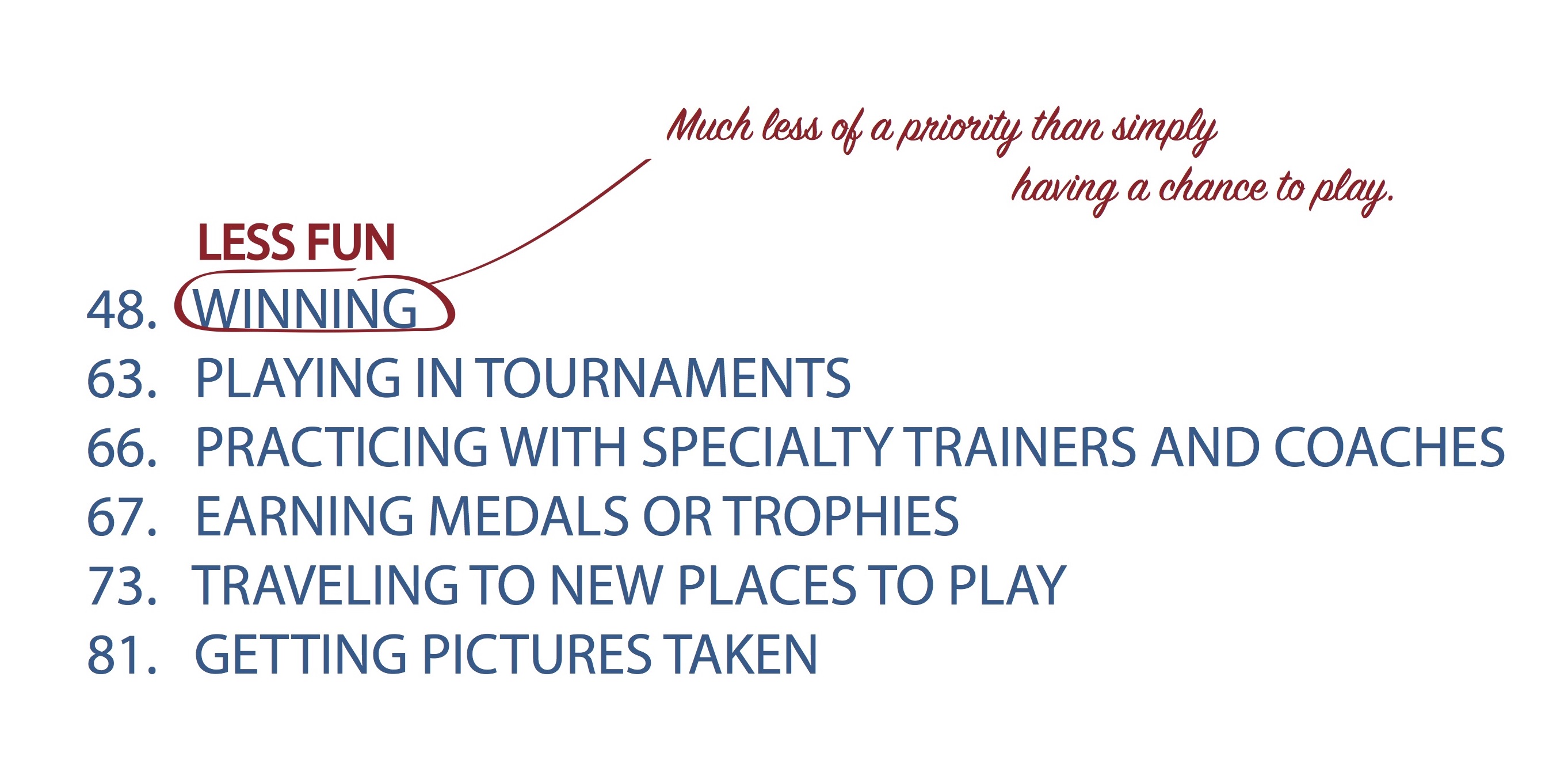
Many coaches that are just getting starting in their journeys as coaches don’t have a written philosophy, which outlines their core values and expectations for their teams. My written philosophy used to be several paragraphs but as I continued to gain experience, learn more as a coach, I tweaked it to a simple phrase; FUNdamentals, not winning, at all costs. If you have followed various contributions that I have made to various media, a key takeaway that I share with coaches and parents is the importance of making it fun. Many people say if you just want to have fun then play recreational sports as the expectation of competitive sports is to win. Yes, kids like to win, but the current win at all costs environment in sports is due to the adults focusing on the bottom 1/3 of what is fun in sports as Amanda Visek research findings found when she asked kid why they played sports.
In all the years that I asked kids why they played none said winning and although it was identified in Amanda’s study, was bottom 1/2.  Others in the bottom 1/3 were all adult driven as well (tournaments, specialty trainers for specialization, trophies (AKA participation trophies), travel and getting pictures taken (the thing I hated the most as a kid but did so to make my grandparents happy). Having played numerous competitive sports in my youth, including captaining provincial winning teams in 3 different sports (hockey, football and rugby), I can tell you first hand if the coaches focused on fun even when competing at the highest level, winning is the byproduct. Just ask any professional athlete or Olympian if you don’t believe me why they play as I have found out in my interaction with many high level athletes over the years.  Although seems like a distant memory, remember last Stanley Cup when the Golden Knights made it to the final in their inaugural season … how many of them stated in post game interviews they were have a ton of fun and keeping it light….
  • Have a detailed agenda for your meeting and be proactive by sharing the agenda in advance via email to all the parents

Key points to cover

  • Introductions of all the coaching team (each to share their philosophies, background and team goals for season)
  • Finance (Budget)
  • Season Plan (time for practices, games, development focus)
  • Volunteers (treasurer, manager, other coaches, trainer, fundraiser, tournament coordinator, snack coordinator)
  • Discipline / Zero Tolerance for any form of harassment
  • Expectations (Don’t just talk the Talk, but Walk the Walk)
It is this area where coaches set themselves for failure in the season, whenever I did not coach my kids on teams and I was just a dad, in addition to the coaches philosophies, they were the top things I wanted to know as do all parents.
Ensure that all members of the coaching staff have the opportunity to introduce themselves, don’t assume that parents know who they are or what their philosophies are (they should be aligned with yours) If you say something in your meeting, ensure that you follow thru and “walk the walk” to ensure that you maintain trust with parents. Doing so will prevent them questioning you why you did things in practices, will alleviate issues like playing time, disciplining players for inappropriate behavior, violation of team standards, as well as one of the most sensitive issues, the $$$$. All youth sports have become very costly, hockey being the most expensive, and for every line item on your budget ensure that you justify the expense.
  • Communicate regularly and consistently
Discuss how you (as in the head coach) and your assistants will communicate with the team, deal with any issues that arise and ensure that you enforce the 24 hour rule to ensure emotions are in check. My rule of thumb – NO EMAIL/TEXTS for issues, setup a meeting with the parents as emails can be taken out of context and can go viral Face to face communication is best or a phone call if setting up a meeting is not doable short term. It is more personal and will nip majority of issues in the bud but my experience if you run an effective parent and follow-up meeting early in the season majority of potential issues you will run into will be avoided I also recommend that you share resources to parents on consistent basis including websites, blogs, videos that reinforce the key agenda items and your philosophy. On our website home page we have a list of our various allies who share insight for coaches, parents, sport executive members as well as regular posts to various social media sites.
  • Team meetings – something I encourage you to do in the first team meeting is asking your players the following;
  1. Why are you playing X (the sport you are coaching)
  2. What is fun about it (as that will the answer from 95% of the players)
  3. What is not fun about it (this will help you ID red flags like the ride home, criticism, abuse, coaches playing favorites)
  4. What are the top 3 qualities that you would like to see from your team mates
This will help you define the team core values as every team you coach will have different players, coaches
  • Then meet with each player individually and go over their goals for the season, ones they believe the team should have
  • Lastly – have a follow-up meeting with the players AND parents to review their goals as well as education regarding the various forms of harassment that will not be tolerated including bullying, cyberbullying, hazing and ANY forms of abuse.
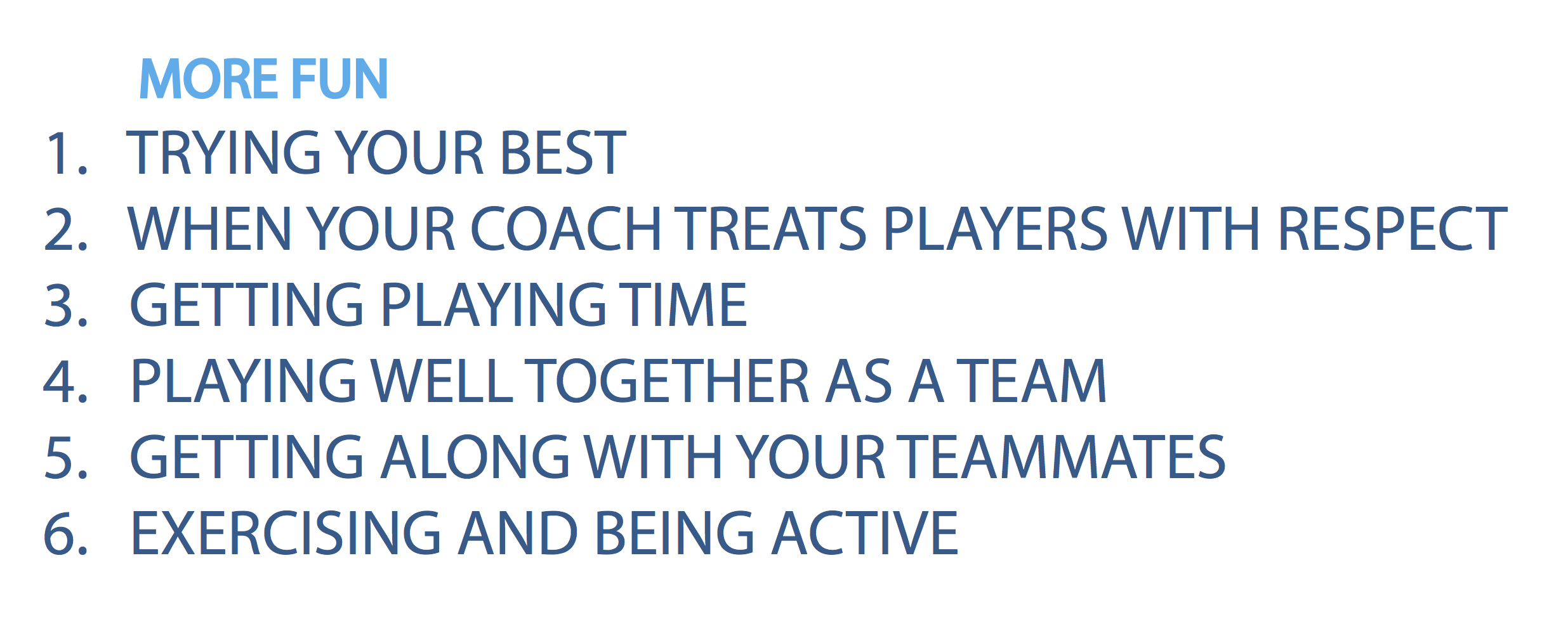
Other meetings in the season can be team building activities for both players and parents, finance updates, fundraising, tournament votes, planning. In sum, the more you talk the talk, walk the walk and communicate with your players, parents reduces ambiguity and will create an environment of trust. Too often, when I am asked to speak at events and I talk to executive members about their pain points that they would like me to address it comes down to issues they have with parents, players or the coaches themselves. Much of it is merely due to (a) lack of experience and (b) lack of clear, consistent and FAIR communication. Don’t be that coach that says one thing at the beginning the season and then reveal your true colours by screaming at kids, ignoring or avoiding parents, abusing officials, mandating expenses that were not approved or various other concerns that parents and exec members share with me. In lieu of focusing on the bottom 1/3 of what kids identified in Amanda’s research, focus on the top 6
  1. Give kids an opportunity “to try their best”
  2. Treat all your kids with respect
  3. Give them ALL playing playing time (exception being discipline)
  4. Provide them the opportunity to play well as a team by running efficient practices and praising effort (growth mindset) for making mistakes with positive error correction
  5. Ensure that you have team building activities early in the season and zero tolerance for all forms of harassment so all the players get along with each other (and ensure none are singled out by players or coaches)
  6. Ensure that a minimum 75% are active during all practices (avoid lines) and encourage all players to work on skills and be active 60+ minutes a day to ensure their conditioning levels are up for your season
If you do so, I can guarantee that you will have a tough season, but if you keep it in perspective and remember that it is all about the kids, keep it fun, make it safe, teach skills (of the game and life) and most importantly care passionately (the #1 characteristics of great coaches) you will not be a kid’s last coach. In lieu, they will love the game more at the end of the season than they did at the beginning. Let’s all work together to bring the game back to the kids … where it belongs.
Don`t be a kids last coach