
Why Officials Quit (2019)

Posted Leave a commentPosted in Athlete, Coach, Organization Executive, Parents

A couple of years back I posted Why Officials Quit and have continued to do a lot of research on the subject due to the fact that every sport organization that I work with is not only having challenges with player attrition, they also are losing officials to the point where many say they have to scale back on number of teams or games as a result, and in some states in the USA they have declared many of their sports programs are in jeopardy due to lack of officials.

This weekend I will be doing a talk on that very subject for Softball BC, titled “How to attract, retain and increase the number of officials in your organization”

It is based in part on the post I followed up with last year called “Why do Officials Officiate” but for purposes of this post wanted to share why we are losing so many officials year after year.

Top Reasons why officials are quitting are;

  1. It is not safe to fail:

Having talked to many officials and those responsible in various sports organizations, the trends are consistent, as I shared prior Hockey Canada loses 30% of their officials every year, as does every sport that I have talked to as we started to partner with various other sports organizations.

Why?  Because the officials who take a lot of pride in not make mistakes, are quitting because of the abuse that they are taking from adults (parents, coaches or fans) when they do make a mistake OR when they believe they made a mistake.

This is one of the videos I came across that shows very clearly that the umpire made the right call, but received 17 different abusive phrases from parents who were seated in the visitor section (along the 1st base line) who did not have the same perspective as the umpire.

He clearly made the right call as did have the right perspective, but all the parents on the visiting team thought nothing of screaming out their perspective which was wrong.


  1. Poor Sportsmanship: 

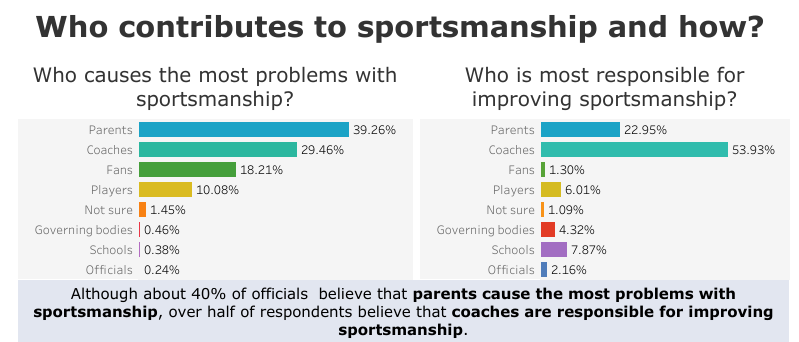
Above are the results for the largest study I have come across where over 17,000 officials replied to a survey from multiple sports done in 2017.  Almost 40% stated it was the parents that were causing the problems, followed by almost 30% of coaches, combining for approx. 70%.

Poor Sportsmanship was also one of the top 3 reasons that were the reasons why 11,000 players quit playing lacrosse in the retention report Alberta Lacrosse shared with me.

No matter what organization that I reach out to potentially partner with across Canada regardless of the hat I am wearing, even though 70% of the issues leading to officials quitting which goes hand in hand with the players is poor sportsmanship, when I ask what they are doing to curve the problem, they say they don’t have budgets for coach or parental education.
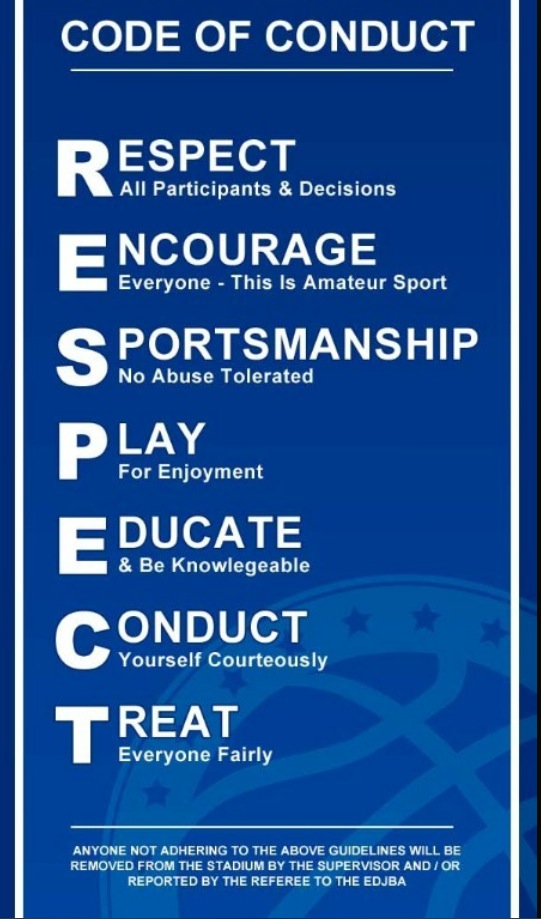
 

Translation: They keep doing the same thing over and over again expecting different results (Insanity), posting signs at rinks or fields like the ones above, making it mandatory for parents and coaches to take respect in sport online course for approximately 3 hours but don’t rigidly enforce policies for a zero tolerance for ANY forms of harassment.
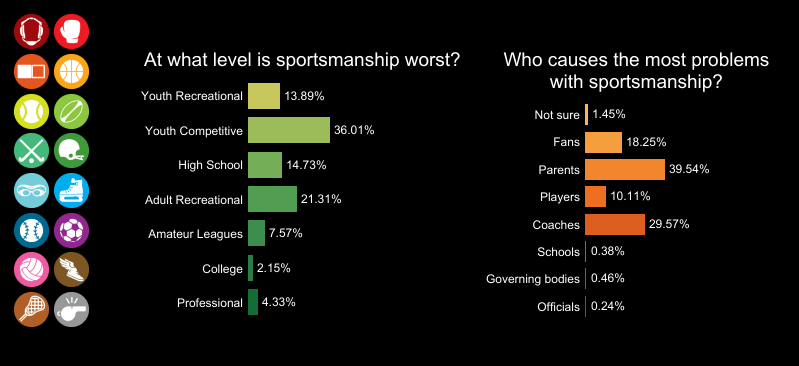
 

When asked at what level is sportsmanship the worst, 36% of the officials stated it was the youth competitive level, followed by 21.3% adult recreational level.

These results did not surprise me at all.

Youth Competitive due to high expectations from parents due for a return on investment for the tens of thousands of dollars they invest in their child’s completive youth sports experience to get an NCAA scholarship or play professionally is what is translating to the vocal minority of parents screaming and umpires when they perceive they made a bad call.

Parents – the majority of these officials are just a level above your son or daughter, and many officials start at the age of 12 years old, and within 3 years associations are starting all over again to recruit officials as most have quit.

The second highest level, adult recreational, having played adult rec hockey, as well as slo-pitch for many years, I saw it firsthand how many who were playing adult rec thought they were living the dream playing professionally and took it a wee bit too far and would go at refs or umpires like they lost a Stanley Cup or World Series Game.

Every time I would approach them and say, relax, it’s just a game (yet another PSA campaign by Hockey Canada in 2004 when things really started to ramp up in terms of parental behavior in the stands).
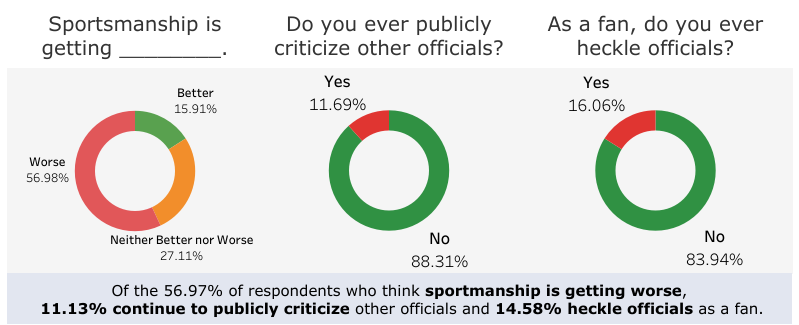
When officials were then asked if Sportsmanship is getting _______, almost 57% said it was getting worse, 27% neither better or worse but thankfully the remainder, close to 16%, stated that sportsmanship was getting better.

This I believe is due to all the organizations and awareness campaigns that have come to fruition in the last decade (including our own) to combat the impact of poor sportsmanship that is impacting the quality of the youth sports experience for kids.

What I was truly surprised with, however, was the fact that some officials responded (11.69%) publicly criticized other officials and when a fan at games, just over 16% confess they heckle their own fraternity.  If truly are going to change the way officials are treated, they must adhere to the very same Respect rule I have for all my teams and NEVER criticize your teammates.
 

  1. Fear for their Safety

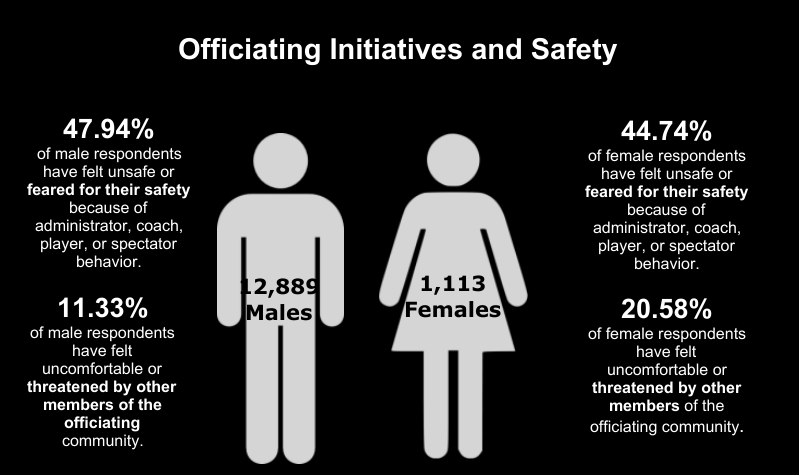
I shared this in the prior post that Almost 48% of the male respondents, and 45% of the female respondents shared they feared for their safety because of administrator, coach, player of spectator behavior?

What I did not highlight is just over 11% of male and 20% of female official felt uncomfortable or threatened by members of their very own officiating community.

Really?

What happened to all being it in together as a team?  Again, officials have to respect all others and avoid threats towards others in their community if we are going to reverse their fear for their own safety.

How then do organizations reverse these trends by ensuring that officials have a safe to fail environment, take pride in becoming the best they can be, are not in fear, that sportsmanship includes respecting ALL calls made by officials?

Organizations have to stop putting up signs, sending out public service announcements and as a means “to deal with parents”.  Most people don’t read signs anyway (thanks to my past experience working in the hospitality industry) and the time for PSA’s/Whitepapers is OVER.  It has come time to activate strategies so that sports organizations are accountable for everyone’s safety and creating a quality sporting experience.

In lieu, invest in parent education and teaching their coaches how to engage parents in lieu.

The vast majority of parents are AMAZING people who are doing everything they can to support their kids navigate what has become professional youth sports in lieu of kids playing kids like it was when I grew up.

They also have to recognize that officials are key stakeholders to ensure that today’s youth have a positive sporting experience, without them, kids will merely be having practices.

I worked at BC Place Stadium in security for many years and worked many BC Lions games as well as concerts and if fans became unruly (more often than not due to drinking too much) it was really simple, they were removed from the facility.

If they got into a fist of cuffs with fellow fans, we escorted them to the Police Wagon where they were brought to the station and potentially charged.

If we did so at professional sports events, why then do we not do it at youth sports events?

In lieu of having security surveying the stands, coaches and parents should be doing the same just as they did a generation removed.  If someone was acting up, a coach, parent or board member would approach them and eject them from the facility.

If a parent, coach or fan becomes unruly, too emotional, abusive, they should be removed so they can calm down and not permitted to return no differently when coaches are ejected.  The vocal minority of parents that do so be held accountable to the point where future incidents are treated with longer suspensions and using the same 3 strike rule, if a repeat offender;

Sorry we will miss you.

Meaning, we will not permit you to be a member of our organization.  Just like playing youth sports is a privilege (now more than ever due to pay to play model), so is that of being a member of the organization as parent, official, board member.

As far as I am concerned, no one, whether it be player, coach, official or board member should be in fear or a victim of verbal, worse yet potentially physical abusive threats and we need to bring the game back to the kids.

It’s time to stop doing the same things over and over again and expecting different results (Insanity)

Just like we should see the smiles on players when they are at games, the same should hold true for officials of any sport, they too should have a quality sport experience, otherwise the trends where 30% quit every year will just get worse.
 

Let’s all work together to bring the game back to the kids … where it belongs.

 

Don`t be a kids last coach

9 Lessons (I Wish) I learned from my father

Posted Leave a commentPosted in Athlete, Coach, Organization Executive

One of my favorite parts of the holiday season is taking downtime to catch up on reading books that have piled up in my office based on recommendations from various people I have talked to.

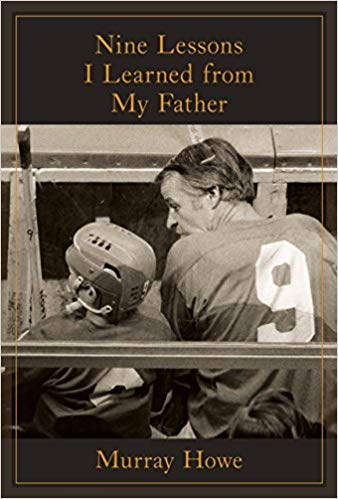
One of the books I recently finished, however, was one that was not recommended to me but was given to me by my son, “Nine Lessons I Learned From My Father, brilliantly written by Dr. Murray Howe, the youngest son of the late great Mr. Hockey, Gordie Howe.  The book is an accumulation of the various anecdotes that he wrote down for the eulogy that he was asked to do for his father’s service when he passed away.

Sadly as I lost my father at a young age, I did not learn many of the life lessons from him that I aspire that my son and daughter to learn from me, but as the old cliché goes, everything happens for a reason. Some of which I learned from my mother, grandparents, uncles and many others I learned from all the amazing coaches that I had along the way of my youth sports journey playing multiple sports.

Below are the nine lessons with quotes of Mr. Hockey that he cited in the book;

  1. Live Honorably

“People depend on you to do the right thing”


  All of my coaches talk me this valuable lesson, particularly the importance of walking the talk vs. those that talk the talk.  Probably the biggest issues I come across with “some” youth sports coaches today is they say all the right things in the parent meetings like they plan to develop all players, teach valuable life lessons, ensure all the kids have fun and so forth only to show their true colours in games and practices screaming at kids who make mistakes.

As a result they lose parents and players trust early in the season and more often than not the players don’t return the following season as they did not have the positive experience that youth sports should provide

  1. Live Generously

“What good is money except to do something good for someone”

 One of the co-coaches that I coached with on my daughters softball team for many years, Patchie as he was affectionately called by all of us, thought nothing of buying all the girls helmets, bats, snacks and more than one round of bevies when the adults would get together.


Several of the coaches I had over the years did the same, they thought nothing of spending their own money for equipment, meals, gas, hotels and all the other costs to be a coach so they could develop us into adults.

The trend today in the competitive stream in minor hockey is most associations in the lower mainland have gone to paid non-parent coaches to promote impartial player selection and eliminate other politics associated with rep hockey.  The coaches are paid from team budgets, so are “professional coaches /employees” of those very same parents that expect quality coaching, and the honorariums these coaches are receiving can be as high as $10,000 per season.

I don’t agree with the model, as it is putting a lot of pressure on these coaches (many of which are just getting started out after they finished their junior hockey careers) to win at all costs, and many of the players are quitting as a result way before their “hockey careers” are over.

  1. Play Hard, but Have Fun

“If it’s not fun, do something else.”

Hmmmm … Mr. Hockey who played professional hockey for over 3 decades believed in FUN?  One of the quotes I came across that Murray shared in the book was “you can’t score from the bench” when Gordie was at the end of his career and the coaches were opting to go with the younger players and he sat on the bench.  Murray also did the same even though he did play one season with Wayne Gretzky in Junior when Wayne was 15 but had the misfortune of sitting on the bench in Junior and like his Dad, opted to hang up his skates from competitive hockey as a result.

The only reason that a kid should be sitting on a bench in minor hockey is for discipline, kids deserve to PLAY the game so they can contribute to the outcome.

  1. Patience, Patience, Patience


“Take your time and do it right”


Every talk do I tell the coaches the importance of error correction during practices and don’t let the players cheat the drills by rushing thru them.  I would rather they do it SLOW and right, that fast and wrong.  The latter just leads to players developing bad habits that coaches at the older age groups get frustrated having to correct.

Another analogy I share is from Terry Crisp, who coached in the NHL and international level for many years, he believed in P & R – Patience and repetitions.  Hockey, like majority of sports other than gymnastics, is a long term development sport where coaches should be adhering to LTAD/LTPD or ADM (depending on the sport) and ensure that coaching skills relative to the age group.

Too many coaches just starting out implement team tactics, strategies way too early, then scream at their players because they make mistakes in practices and games.  The reason they are making mistakes is they don’t have the SKILL to do the strategies and when they are screamed at too much, the become scared to a point where many kids quit as a result.

  1. Live Selflessly

“If you want a good workout, grab the shovel over there”

Gordie was infamous for shoveling not only his driveway, but his neighbors, as well as one that did not believe in celebrating his own goals but that of the players that he setup to score.

Selfish players hurt team chemistry to a point where you may never get out of the storm period (forming, storming, norming and performing) so it is essential that you have ALL players buy-in to team and remind them that the play for the crest on the front of the jersey, not the nameplate on the back.

  1. Be Humble

“Don’t read your own press clippings. You’ll start to believe them.”

One of the greatest lessons I learned from my Peewee Hockey Coach who lead our team to win the Ontario Provincials and as a result we were invited to the Quebec Peewee Tournament well before it became the international event it is today.

He always said before games, Boys … today we will win with humility or lose with dignity.  No one should know if you won or lost when you leave the dressing room.

I have had the misfortune coaching against many teams in various sports where the coaches would have benefited from learning that core value as they not only permitted, but promoted excessive celebrations by their players when they were way up on us or their players were demonstrating poor sportsmanship when scored upon or they would lose it on their players.

This has been one of the biggest contributors when I have talked to players why they have quit the sports they once loved.

One of my favorite videos how much a fan idolized Gordie Howe is the one below …


  1. Be Tough

“There’s no such thing as cold weather. Only cold clothing.”

The numerous anecdotes that Murray shared about Gordies grit which goes back to his childhood as he was bullied due to having a learning disability and struggled reading and writing until it was identified and became proficient later on.

This is what lead him to pursue hockey as it was his outlet, much like it was for me when I was growing up.  Although my mother did an amazing job raising me and my brother, as a result of have strawberry red hair and living in various suburbs of the separatism era of Quebec, the Northwest Territories as a token child of white man’s burden and even when we moved to BC the first and second times, I was a victim of bullying as well.

Like Gordie, sports for me was the outlet to deal with the bullying I experienced, and I channeled my focus, frustration on the field but in a clean way thanks to the encouragement that I received from all the amazing coaches I had.

  1. Stay Positive

“I never keep track of my shots that miss.”

 Having played many organized sports with so many coaches, the one constant with all of them was reinforcing the importance to stay positive and it is not over until it is over.  Even in games were way down in, they would remind us of the valuable lessons we learned after the fact like being resilient, sportsmanship, respect, losing with dignity, resiliency, getting up when were down.


  1. Friends and Family Are Like Gold – Treasure Them

“Never forget where you came from, or who got your there”


 The World Juniors is a perfect example of the importance of remembering how players got there, I had the opportunity to see Team Canada play in a game and MacKenzie Entwistle’s Mother was sitting right beside us.  She watched the game very quietly, cheered when Canada made great plays but jumped literally to the roof when MacKenzie scored his 2nd of now three goals thus far in the tournament (tonight is the final round robin game against Russia).

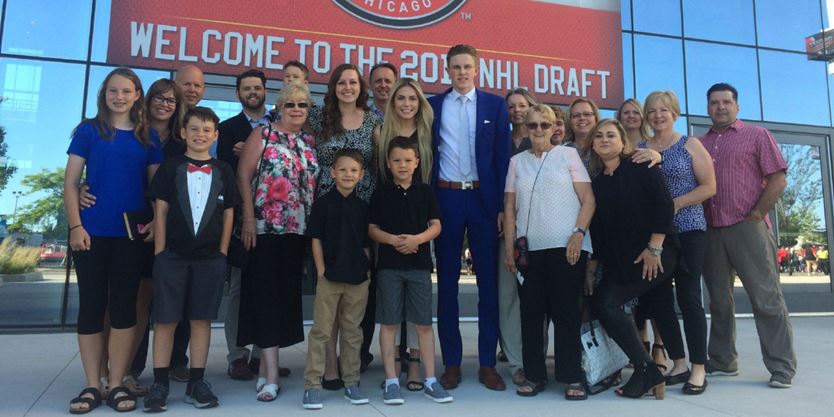
He started out this years tournament as the teams 13th forward but has now been dubbed the teams Swiss Army knife for his contributions and would never have reached that level if it had not been for the support from his parents and family, many of which were there to support him when he was drafted to the NHL.


JPEG Pro


I tell players on all my teams, and ask coaches to do the same, to remind them that their biggest fans are their parents and family always comes first. Although “some parents (AKA the vocal minority) take their support too far by putting pressure on their kids, coaches, the silent majority of parents are amazing as their kids “biggest fans”

Don`t be a kids last coach


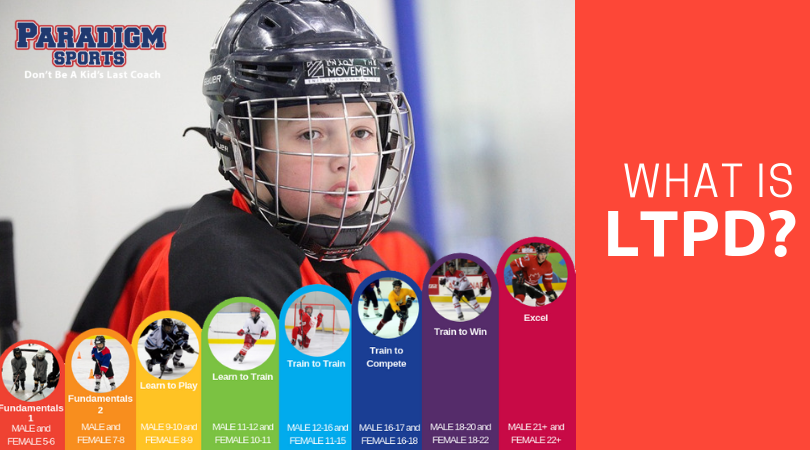
What is LTPD?

Posted Leave a commentPosted in Athlete, Coach, Organization Executive, Parents

Long Term Player Development.

I just came back from Whitehorse, Yukon to run three Hockey Canada NCCP Clinics for BC Hockey who also is the Provincial Governing Body for the Yukon Territory. This is now the second time in as many years that I have had the opportunity to work with passionate coaches is a small town where hockey is one of the main sports, the first time was when I was asked to run clinics for another small group of passionate coaches in Fort Nelson, BC. Both trips I had the opportunity to fly via Air North, a small airline whose lanes take passengers to various stops in the Yukon, mainly from BC and Alberta, but as far from Ottawa, Ontario.  My favorite part of the trip, the warm chocolate chip cookie with Milk, one of Air Norths claims to fame. Over the last 10 years I have had the opportunity to interact and learn from thousands of coaches across Canada, and anytime I get asked to work with coaches in smaller towns I jump at the opportunity. Why? Because they are very passionate about sport, over the course of this past weekend, the coaches shared with me how their kids are bucking the trends where kids today spend on average of 7.5 hours a day on screens. In Whitehorse many of the kids play hockey and swim thanks to the legacy left behind at the Canada Games in 2007 for an amazing facility with 2 rinks, pool, gym and even a physical literacy education area. They also ski thanks to very affordable passes at their local hill of $200.00 for a season for kids up to 18 yrs. old, cross country ski, ice fishing, play soccer in spring (vs. fall in BC due to climate) and many will play indoor soccer in fall, basketball, volleyball and numerous other activities. We could all learn a little from the parents in those small towns who are encouraging their kids to participate in as many activities as possible until their latter teens when they choose a sport they are the most passionate about. We shared a quote on this weeks newsletter that I came across last week by Muffet McGraw, Head coach of the Women’s Basketball Team who has over 800 wins at the University of Notre Dame whose 2018 team is ranked Number 1 in the NCAA and reigning NCAA champions last year.
She and other high level coaches were interviewed in yet another article talking about the perils of early sport specialization where she also shared;

“Do I think we’re specializing at too young an age? Absolutely. I hate it. You don’t have to pick one sport when you are 10 or 12 years of age”

Sadly as I have shared in numerous articles, many parents are feeling the pressure to sign their kids up in one sport year round as early as 6-7-8 years of age which is due largely to the fact they are not aware of the benefits of multi-sport participation and the initiatives from all the NSO’s (National Sporting Organizations) in Canada, USA and many other countries worldwide for long term development to become the best athlete, not hockey player you can be (or any other sport) Hockey Canada is one of the NSO’s that have rolled out their version of LTAD developed many years back by Sport for Life, theirs as well as some other NSO’s like Soccer Canada, Softball Canada have called it LTPD. LTPD = Long Term Player Development. This past weekend, just as I have in any presentation or clinic I have ran going back many years, when I asked the question “What is LTPD?”, only a few hands go up. The ones whose hands go up have been coaching other sports but none of the first time coaches (many of which are parents) who are just starting out are aware of LTPD or the various versions. I then ask what about Physical Literacy or Fundamental Movement Skills? Same thing, only a few hands go up, in this instance however, many hands when up in the Coach 1 age groups (5-6) because Whitehorse has a Sport for Life Physical Literacy Centre and education thru their elementary school.

Houston we have a problem.

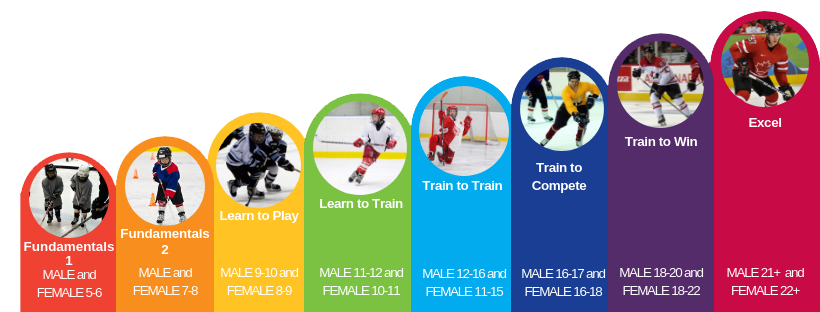
One of the issues that has been identified by every NSO that I have spoken for is that our best coaches are coaching at the highest levels in their respective sports, Provincial, National Teams but for our youth to develop the core skills needed to reach that level we should have our best coaches working with the kids in the earlier age groups to develop those core motor skills. For purposes of this post, for those unfamiliar with what is LTPD, I asked of my co-op students to tweak the Hockey Canada LTPD image that outlines all the stages and applicable age groups so it was easier to read in presentations.
The Sport for Life LTAD model starts with Active Start, 0-6 years of age, where kids should develop physical literacy and learn various fundamental movement skills like falling, getting up, jumping, skipping, balance, agility, throwing, catching, one and two-handed strikes, biking, swimming and on and on. Sadly, thanks to early sport specialization many kids cannot do these core motor skills.

Fundamentals 1

Initiation Boys and Girls – 5-6 Yrs Old

Hockey Canada’s first stage for the initiation age group, boys and girls 5-6 years of age. In this weekend’s clinic, we asked for kids to come out from 7-9 for the coaches to run thru drills and one of the younger brothers who was just starting came out and was priceless. He could stand and skate forwards largely with help of his stick as a crutch, and went thru the various stations with all his older counterparts with a HUGE smile on his face. This age group should be all about core skills, mainly balance and agility, falling, getting up, learning basic V-Stop, holding stick, hockey stance (for balance).  Ideally, they should do all drills starting with no stick so they learn to skate without the crutch many rely on NOT playing full ice games as I have learned is happening in BC, Ontario with leagues that have 6-year-old kids playing as many as 70 full ice games a year. This is totally contrary to the Cross-Ice model that Hockey Canada rolled out with resistance from these very same leagues last year for the Initiation Age group.

Fundamentals 2

Novice: Boys and Girls – 7-8 Yrs. Old

The second stage for the Novice age group (boys and girls 7-8 years of age), that is going to be cross Ice Nationally next season as Hockey Canada opted to roll out in stages vs. some provinces like BC who opted to roll out for Initiation and Novice. The focus in this age group should continue to be core skills of hockey, balance, agility, skating, passing, shooting. NOT playing full ice games where the score board shows a score of 6-0 but the actual score as reported by various news outlets across Canada in a Novice age group was 41-0
Novice Hockey Game of the Week 41 - 0. Really?

Learn to Play

Atom – Boys 9-10, Girls 8-9 Yrs. Old

This is the first stage that girls age groups differ from boys because they mature sooner than boys in terms of their physical and mental growth For me, this is the age group I enjoyed the most as they truly learn to play, they make the transition to full ice hockey now (vs. at 7 years old when I coached and was a beehive of the weaker kids chasing the early bloomers and never touching the puck) It is also the first year that Rep Hockey is introduced, but still emphasis on development, no power play, penalty kill units or any other systems.  Merely core skills and individual tactics. Unfortunately, as I have seen all too often, once the word rep or in other areas of BC “development” gets association with a team vs. recreation, many coaches jump the gun and start introducing systems, strategies when should continue working on core skills

Learn to Train – Peewee

Boys 11-12, Girls 10-11

This is the stage that coaches are required to take their Development 1 coaching certification as the rep stream is now deemed “competitive” and is a 2-day clinic, followed by a post task, MED online, practice evaluation and same CATT, RIS that all coaches have to take regardless of the age group or stage in LTPD. Only a small % of time should be on group tactics, systems and strategies still focusing on core skills (80%) but like I see in Atom, once the word competitive gets added, “some” coaches take it to the extreme. This is also the age group where spring programs really ramp up competition by going to travel tournaments all over North America, even some going to Europe that takes the current 1:1 practice to game ratio to even lower.

Kids develop in practices, not games.

In BC, the current rep model is 2 games, 2 practices and a dryland a week. I always tell coaches to get their dryland to run pre-post one of their practices to limit the time commitment to allow kids to do other sports and activities. Easy fix to increase our practice to game ratio to 3:1 (Europe is 5:1) to focus on development not competition to a practice slot. VOILA – 3:1 practice to game ratio. Better Yet – Eliminate the Scoreboard and score sheets so sports are fun, the #1 reason why kids play per all the research and studies done, including my informal surveys of all the teams I coached in multiple sports. Per Amanda Visek great research, the top 3 reasons why sports are fun are 1 – Trying my best (skills), 2. When a coach treats me with respect and 3. Playing time. Way too many Peewee coaches, regardless if it is rep or rec (AKA house) run short benches, have power play and penalty kill units that deprive all the kids the opportunity play and contribute to the outcome of games. Why? Because the parents want to see more games so their kids can be scouted to be drafted and make the NHL or get a NCAA scholarship. REALITY CHECK – 0.03% of kids that play hockey “may” it to the NHL and less than 1% of kids will play in the NCAA with only partial scholarships (approx. $8K is the average vs. $30-40K for tuition, room and board, insurance etc still leaving parents on the hook for $80K or more) It is no wonder why 70% of kids quit hockey by the age of 13 as a result.

Train to Train

Bantam Boys – 13-14, Girls 12-13 yrs. old

Coaches should continue to focus on skills, individual tactics and this is the age group that I believe we turn the scoreboard on, keep track of the results, not before. Yes – No scoreboards or scoresheets until Bantam. Norway, Sweden who have both implemented LTAD for many years do the same, kids do not compete until they are 13, until then, they play for the LOVE OF THE GAME, developing friendships, developing various skills across a myriad of sports. Some pretty good hockey players have come from Sweden no?  One being the current Calder Trophy Candidate for the Vancouver Canucks, Elias Petterson. Norway knows a little about reaching the podium also, 39 medals in this year’s Winter Olympic Games. Train to Compete Midget – Boys 16-17, Girls 16-18 This is where group tactics, positions, tactics in competitive situations but also focus on conditioning, strength and power.  Coaches should still continue to work on skill development (60-70%)

Train to Win

Male – 18-20, Female – 18-22 INTERNATIONAL

Notice how LTPD does not reference the word winning until kids are this age?  These are the players have bee identified by Hockey Canada to represent their provinces or the country but even when I have talked to these coaches they still continue to work on skill development. Brent Sutter, after they World Junior team he coached in 2014 that did not win a medal, shared that the reason we did not do so was we lacked skill, creativity that other nations had due to our system being too structured.  This is a result of our focus on competition too early and not emphasizing the importance of free play, small area games and skill development. As we shared in a prior newsletter from one of the top 10 winningest coaches in NCAA Div 1 Men’s Hockey History;
We have our work to do to ensure that the coaches who are starting out working with the 5-year-olds understand the principals of all the stages of LTPD, Physical Literacy and Fundamental Skills. We also have our work to do to ensure that parents understand the stages, the benefits and not pressuring coaches to focus on competition vs. practices where kids truly develop. Remember, Hockey, like many other sports except gymnastics, are long term development sports and it takes YEARS for kids to develop. Think Tortoise and the Hare. Not Mario Andretti racing to the finish line. The kids that rush via early specialization and competing too much, too early will suffer overuse injuries, burnout and not develop core motor skills as athletes. Even if they are early bloomers, more often than not they either quit before high school due to much focus on competition or get caught by their late bloomer counterparts. Also, per Wayne Goldsmith who we talked to in our summer summit, there is no such thing as a elite 8 year old … it is not part of my vocabulary, please get it out of yours.
https://www.youtube.com/watch?v=N6m81hkbb5M&list=PL96mRbwr3oRrFFjol99WtPNmntaeaWcYE
Let’s all work together to bring the game back to the kids … where it belongs.
Don`t be a kids last coach