How Moresports promotes a love for the game
Posted Posted in Athlete, Coach, Organization Executive, Parents


I was invited by the coordinator of Moresports, Cynthia Lee, to come out to see their annual Soccer Jam event they host and must confess, many youth sports organizations across Canada, if not the globe could learn from their model to provide quality sports programming.

As I shared in a blog I did a few weeks back, How More Sports is creating more sport opportunities for kids, they are a community-based organization in Vancouver, BC, established in 1998 to provide opportunities for kids to play sports that could not afford to be in organized leagues.

Since that time, they have grown with multiple hubs in Eastern Vancouver, one in Coquitlam and have approximately 4000 kids participate in their programs annually.

The best part, if kids can’t afford the fees, they provide subsidies so kids can play, their goal is to never turn a kid away regardless of their socio-economic status.

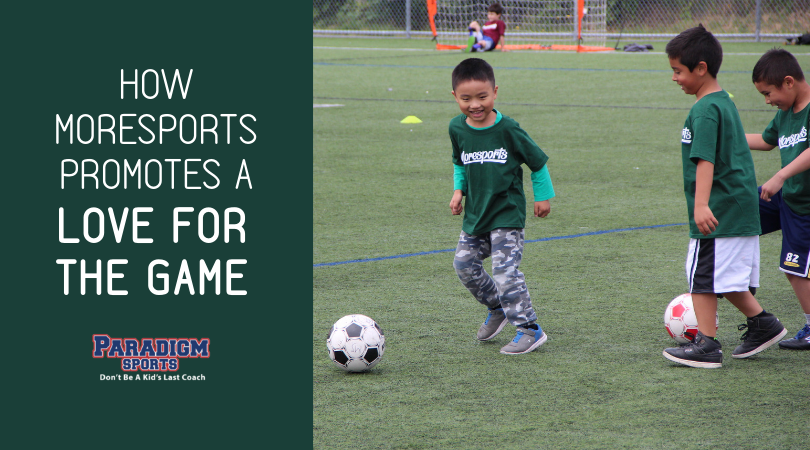
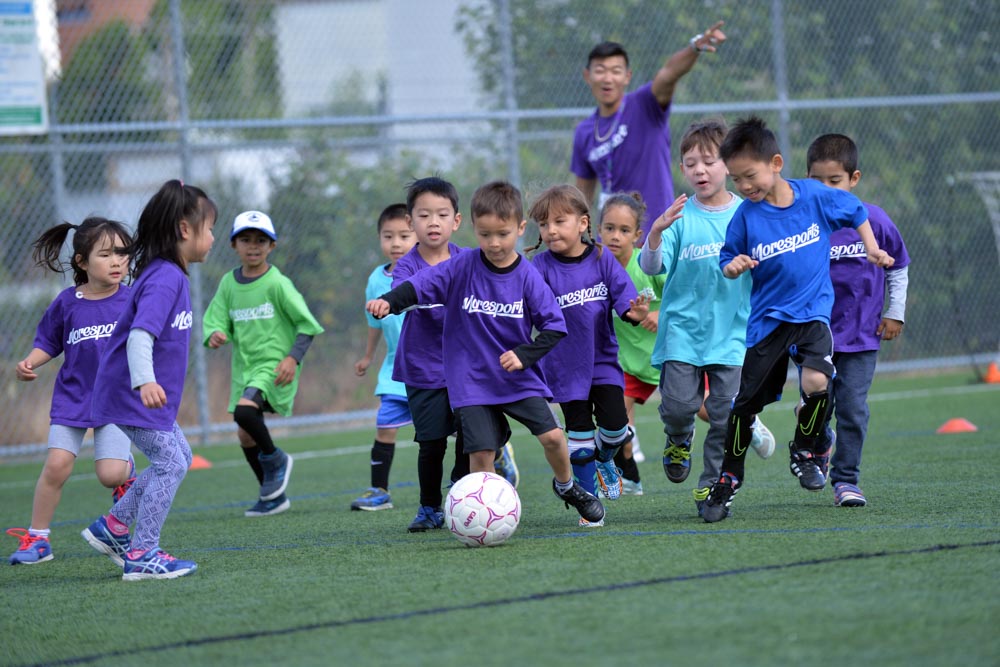
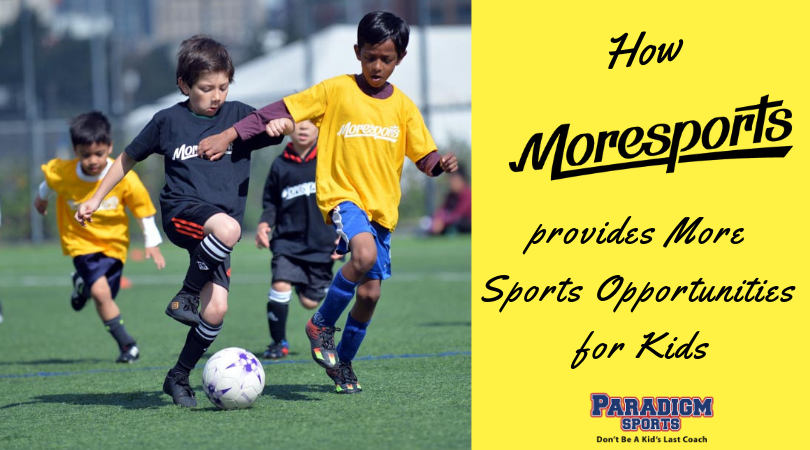
Like when I went to see one of their basketball programs in one of the hub schools last month, today I saw many kids with HUGE smiles on their faces as they played soccer but it was what I did not see that truly inspired me how we can bring the game back to the kids.
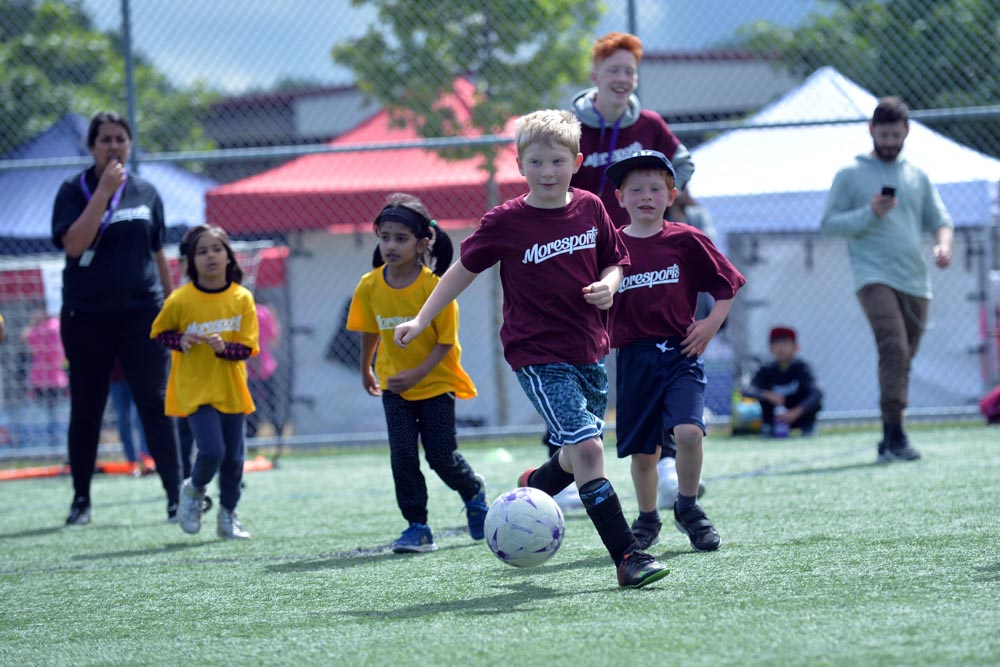


The only uniforms that the kids wore were donated Moresports t-shirts with no numbers or name bars (common in youth sports for “scouts” to ID “prospects”) in various colours.

There were no officials to enforce rules as we see in many organized sports today, as early as 6 years old when kids play “elite” level sports (which is the dirtiest word in sport today, there is no such thing as an elite 6-8-10 year old kid, they are just early bloomers)

The parents either sat quietly on blankets, bleachers or stood along the sidelines and some took pictures, most just watched in silence or cheered when the occasional goal, great save or shot was made by any, not just their own, kids on the “teams”.

There was not a vocal minority who were screaming instructions at their kids, criticizing their mistakes as is all too commonplace today in organized youth sports that is leading to so many kids quitting before high school.

Some are those are the ones that sit at the end of the field or in parking lots having tailgate parties (as is often the case at “prospect” tournaments) who become vocal as they had one too many wobbly pops.

Other than the K1 group (who had the most participants), there were no subs and when there was, the leaders ensure that every kid rotated in and out evenly but most games had 6-7 players a side.

There was No Scoreboard, No Scorekeepers, No Timekeepers.

There was no tournament board keeping track of wins and losses that coaches will check as the tournaments evolve to figure out their standings, when they will play after round robin and if they anticipate tiebreakers, goals +/for etc.

There were no trophies or participation medals or ribbons.

There was no apparel tables to resell branded merchandise for the “prospect” tournament or silent auctions, door prize raffles or volunteers selling 50/50 tickets to raise money for the tournament hosts.

Kids just played For The Love of the Game.

There were almost an equal ratio of girls to boys playing on the co-ed teams all the way to G7 (11 years old)

There were leaders (much higher % are female as they want to give back to the program than male coaches in youth sports) for each “team” who are former campers that have been identified as potential leaders in the community and receive training which includes High 5, Fundamental Movement Skills and majority are under 18 years of age.

Most only gave the teams pep talks for warm-ups, then during the games would just ensure that the game continued by getting the balls when kicked out of the mini-fields.  Some “coached” by saying … keep it going, great shot, great save it was ALL POSITIVE.

The coordinator, Cynthia Lee, was one of those herself, then a leader, and now the full-time coordinator who organizes this event.

This was the third year that the event was hosted at Trillium park, ironically one sky train stop or short drive away from Rogers Arena and BC Place Stadium where our professional soccer, football, and hockey teams play that most, if not all, of the kids playing today sadly will never have the opportunity to see due to the ongoing rising costs of tickets.

Trillium Park consists of two all-weather soccer fields, which Moresports converted by using cones and age-appropriate nets into 16 mini-fields, the epitome of small area games at its finest.

 

The schedule for the day is below
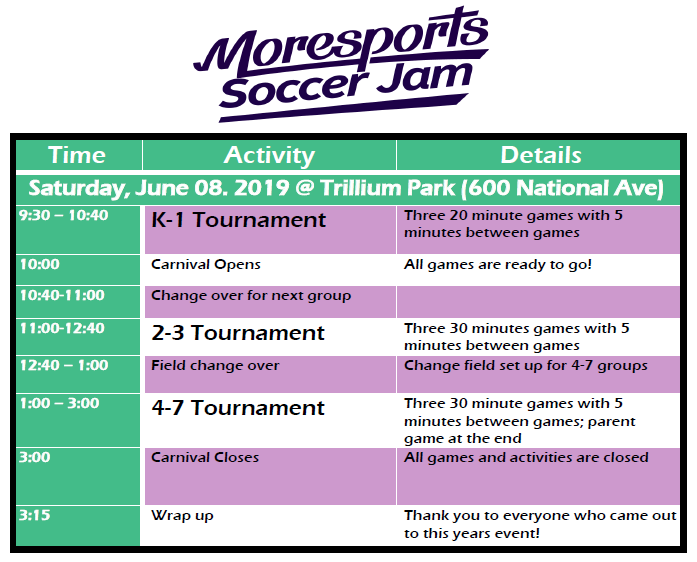
K1 (5-6 year old kids, their largest age group) started the day by playing 3 20 minutes games with 5 minute breaks and 2 minute hydration breaks.

When the ball would go out of play, the kids or leaders would retrieve and they would throw it in and GAME ON.

2-3 (7-8 year olds) and 4-7 (9-11 year olds) would play 3 x 30 minute games also with 5 minute changeovers and water breaks.

Approximately 1000 kids participate in the annual event.

Think about this.

60 – 90 minutes of activity, small area games, age-appropriate nets, balls to follow Soccer Canada’s new LTPD model, trained leaders and coaches providing limited feedback that is positive (to let the kids PLAY) and in lieu of multiple trips back and forth, you get to play all your games back to back.

Similar to the good old days where you went to a park and played for HOURS vs. structured games and tournaments that are all too commonplace today.

They also had a carnival with bouncy castles and various other activities and food trucks for kids to fuel up more after they devoured their snack bags they all received that included a voucher for those from economically challenged families for kid favs, grilled cheese, fish and chips (my lunch for the day) and Triple O’s burgers.

Why this truly was unique compared to any other jamboree that I attended as coach, parent or player is it also included tents from all of the community sponsors that permit Moresports to provide their amazing programs

United Way – Vancouver Parks and Rec – Vancouver School Board – Canucks Autism Network

This provided them the opportunity to engage with parents and vice versa.

As I was leaving the Vancouver Police showed up with their (motor) bikes, one of their dogs squads, their horses. Vancouver Fire Department had come in past years so they also could engage with the community that at times sees them as the bad guys (as many of these kids are in really tough neighborhoods who see more than the fair share of police and social workers).

One of the VPD’s staff sergeants volunteers as a leader for the event also.

As I was driving back home my head was spinning, why is this not THE MODEL for communities across Canada to promote quality sport and kids being active as it is only currently being run in Vancouver.  It was the epitome of organized Free Play.

I also thought, organized youth sports could also learn as unlike the vast amount of organizations that I have talked to, Moresports is growing by adding more hubs and the executive director, Bill Woodley, hinted that they are having dialogue with other provinces how they can provide the same model but only if they identify they NEED it which many have come calling.

The challenge he said, is they will have to remove all the barriers and promote collaboration as Vancouver has done with parks and rec, school boards and other community organizations.

Proof that if all stakeholders buy-in to a common vision that it CAN BE DONE.

When we all work together, the best part of it all, Kids PLAY, Have Fun and love the game more at the end than when they started.

Kudos to all the team members, the hundreds of volunteers, leaders, coaches of Moresports to show us that it can be done if we remember what it is really about, the KIDS.


Bonus – Download a Free Copy of this blog in printable flipbook format HERE


How Moresports provides more sport opportunities for Kids

Posted Posted in Athlete, Coach, Organization Executive, Parents

This past weekend I had the opportunity to visit with Cynthia Lee, Coordinator, and Yosephine Yao, Hub Leader, and see the amazing program that they do with Moresports, a community-based multi-sport program that has been under the radar screen mainly in East Vancouver since 1998.  Previously I shared insight on their program in “Youth Sports Organization that are Bucking the trends” after I initially connected with Yosephine at UBC’s career fair we were exhibiting at.

The program was started because a father took his kid to a local soccer field and was refused access as was not part of the local soccer association and was advised would need to sign up his son to play on the field as they were allocated by the city.  The registration fees for their family were too much (and that was well before the era of early sport specialization and the professionalism of youth sports and he decided to do something about it so could offer cost affecting community programming to kids in the area.

Since then, Moresports has blossomed into a program with 11 hubs that permit kids to participate in multi-sport programming weekly in fall, winter and spring (unable to run programs in Summer due largely to schools they run many of their programs close for the summer) but in the course of the few hours I was with Cynthia and Josephine I learned just how an organization could, in fact, provide programs for kids, especially those that are economically challenged, to be involved in various sports.

Below is a compare/contrast table that I put together after my visit that I will expand on below;

Moresports Other Sports Groups average
 

Coach Ratio Male:Female


20-25% Female, 75-80% Male  

75-80% Male, 20-25% Female

Format Community Not-For-Profit Not-For-Profit or Private
Facilities Parks Boards and schools Parks Boards, Schools plus private facilities
Equipment Moresports pays for and provides focus on ball sports (limited equipment) Orgs plus individuals pay for (i.e. 300.00 bats, sticks)
Score/Timekeepers None – non-competitive Yes – starting at 8 yrs old
Age Groups K – Grade 8 (5-12 yrs. Old) K – Grade 12 (5 – 18 yrs. Old)
Location(s) 11 Hubs – Vancouver ONLY Various across the country
Registrants Yearly 400 per hub, 4-5,000 annual registrations (no one turned away)

** Annual Soccer Jamboree

Varies, from 200- 1000+ but many sports suffering attrition rates
Fees 40.00/8 sessions (5.00 session)

Waived if can’t afford

Varies (seasonal fees + equip)

Camps 20.00 Session Average

Funding Provincial/Municipal/Charity Provincial/Municipal/BC Lottery/Bingo
Coaching Certification High Five + NCCP (new) Subsidized RIS / CRC / NCCP / Private
Officials None (non-competitive) Starting Age 8 (house or competitive levels)
Staffing Coordinator, Hub Leaders, leaders, and coaches Board members, coaches, officials, rec centre staff
Economic Status 80% Economically Challenged 20% Economically Challenged
Programs Run Fall/Winter/Spring – No Summer Year Round (with early sport specialization)
Sports Offered Soccer/Basketball/Dodgeball/Spikeball

Looking at Floor Hockey and others

Various – Single Sport orgs or multi-Sport Camps
Schools require custodians No – Leaders have keys to access Yes – Required
Parent Participation Yes – First 15 minutes Free Play No except Coach Parents
Community Leader training Yes – Junior and Youth No – only coach training
Established 1998 Various
Player attrition an issue No – continue to grow yearly Yes – 70% quit by 13
Coach Attrition No – ongoing leadership ID and training starting at 12 yrs old Yes – Volunteer Pool getting smaller and harder to recruit
Official Attrition Not applicable (no officials needed) Yes – 30% per year quit
Parent Behavior an issue No – they get to participate then watch quietly Yes – Vocal Minority (5-10%) spoil experience for others
Uniforms Jamboree only – t-shirts sponsored Yes (in fees)
Coaches Paid Lead Coaches honorariums, leaders volunteer to gain experience Head Coaches in many sports, plus TD’s + $50K per year

This is the epitome of social inclusion and social innovation IN ACTION, if more sports organizations recognized the importance of collaborating with all the stakeholders the issues, as Moresports is doing, they would be able to improve their programs to provide a quality sports experience.

The first thing that jumped out to me is the vast majority of coaches and leaders involved in the program are female, approximately 80%, most of which were former “campers” that participated in the various programs when they themselves were kids going back to as early as Kindergarten.  A TOTAL polar opposite from the various team sports that I have worked with across the country where even with all the initiatives in recent years and government funding to promote gender equality we still have so much work to do to get more female coaches, officials and board members.

Like many other sports organizations, Moresports buys the necessary equipment needed for their programs and then the hub leaders store on site for use during the weekly or weekend sessions.  As sports equipment has escalated in many sports, they focus on those that require minimal equipment, Soccer, Basketball, Dodgeball are core, with some hubs running baseball, spikeball and aspirations for floor hockey.

Unlike all team sports, Moresports does not have tiering for recreational or competitive levels, every kid that aspires to play, get an opportunity to do just that PLAY.

Uniforms are limited to t-shirts that are funded by the local Kidsports chapter in Vancouver, mainly for their one large event they host years, the soccer jamboree, where all hubs come to one facility to play games for a weekend.  Compare that to hockey where they have 85.00 home and away jerseys, even alternate travel, and practice jerseys, pant shells and so forth.

Another area where they differ from traditional team sports is the coaching certification that they do is high five, required for recreational leaders and incremental leadership training that is fully subsidized for the leaders, coaches as many of which could not afford if required to pay for out of pocket.

Hmmmm .. what a concept, provide FREE coach and leadership training so leaders are not out of pocket.  Many of the team sports do reimburse coaches for their NCCP and other training they are required to do, but not until well into or end of the season once they have completed their coaching certification requirements.  This has been one of the deal breakers for coaches that I have talked to who can be on the hook for hundreds of dollars until they recoup later in the season.

The best part that Cynthia and Josephine shared with me, is they have approximately 4000 kids participating in their programs annually and if they could scale up could accommodate more (scaling is contingent on funding and development of leaders/coaches).

Because their programs are non-competitive (no scorekeeping, scoresheets, rankings, banners) vs. organized sports, they don’t require officials but as fees are so nominal, even if they did have organized games based on the parents sitting quietly on a stage watching their kids play for an hour with HUGE smiles on their faces I suspect that official attrition would be WAY below what the average 30% is annually for organized team sports.

Many organizations that I have talked to have shared their pain points of recruiting coaches, due in part to out of pocket costs, due in part to time commitment, but also due in part to many don’t step up to coach as they don’t want to “deal with parents”

The other difference to Moresports vs. organized sports is they identify, recruit potential leaders who are participants in their programs starting as early as grade 7, then provide those that are selected free leadership training starting with the junior youth (ages 10-12) then youth leadership training (12-17).  Many of which become coaches themselves both for Moresports but then for other summer recreation programs to give back in their respective communities.

Hmmmm … what a concept, provide a fun environment to play various sports in then ID potential future leaders for the same program and beyond so in lieu of relying on the “help, we need coaches and taking any that put their hands up approach organized sports do” to identification, recruitment and training approach.

All of the hours that the volunteer leaders contribute is also tracked for their community volunteer requirements and other leadership opportunities.

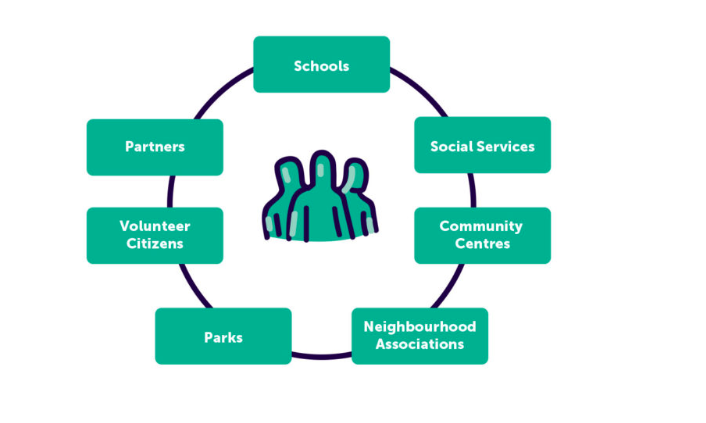
All of the great programming that Moresports is providing would not be without their core and community partners


My overall observation was one that remembered all too well growing up as kid myself, all the kids that came to the K1 or 2-5 groups I had the opportunity to observe showed up with big smiles on their faces, smiled throughout and as they were leaving.

Why?

Because they had FUN.

All the volunteer leaders, head coach and Cynthia/Josephine did the same.

When I asked how they ID potential leaders or coaches they shared with me that they did not need to have the high level skill or playing experience in sports, the only requirement is that they had a true passion and cared for kids.

Hmmm … another refreshing epiphany moment when I heard that.

The #1 characteristic of the greatest coaches of all time is they truly cared about their players as people first.

I think all organized sports programs that are experiencing the challenges of high rates of attrition of players, officials and even coaches could learn from the great work and model of Moresports.

Make it Fun – Make it Safe – Teach Skills – Care passionately

And by doing so are not a kid’s last coach

Almost all of the kids that become participants come back for each session and for years.

Many of which as they have developed a passion for being active then move on to organized sports when they enter high school, the coach of the Saturday Session was one of those. She started in Grade 2 as a grassroots “camper”, then became a leader, coach and has lead many of the boys to provincials in high school.

For more information, visit their website www.moresports.org

I was invited to come out to their big event in June and looking forward to seeing many more kids smiles playing for the sake of playing, like our generation did and somehow we must find that happy medium and work together to bring the game back to the kids.

Don`t be a kids last coach

BONUS – Download your free printable flipbook/ebook copy of this blog HERE