If you pick them, PLAY them

Posted Posted in Athlete, Coach, Organization Executive, Parents

Earlier this week I received a message thru our Facebook page then exchanged a few emails with a parent who reached out as they were concerned that his sons U13 competitive stream (rep) coaches were running short bench game after game including having specialty teams like a power play, penalty kill.

It was not the first reach out I have received nor do I suspect it would be the last but the parent shared with me that he came across the blog that I had written about my son whose coach used the very same short bench tactic time after time, but for me really became personal when he did so a month after my mother passed away and he shared my son had dedicated the game in her memory

The wave of emotions that I experienced then is not as high now as I have really tried to focus on the half-full approach working with coaches and parents in recent years to highlight the good work that is being done by many youth sports organizations to bring the game back to the kids.

I have always been a believer in all the sports I coached to give every player an opportunity to contribute to the outcome, and even went to the extent to ensure that every player had opportunities to play positions that everyone wanted to, in baseball to play pitcher, shortstop or catcher, in hockey all positions including goalie until U13 (even then had to have players suit up when both our goalies got injured).

The reason?
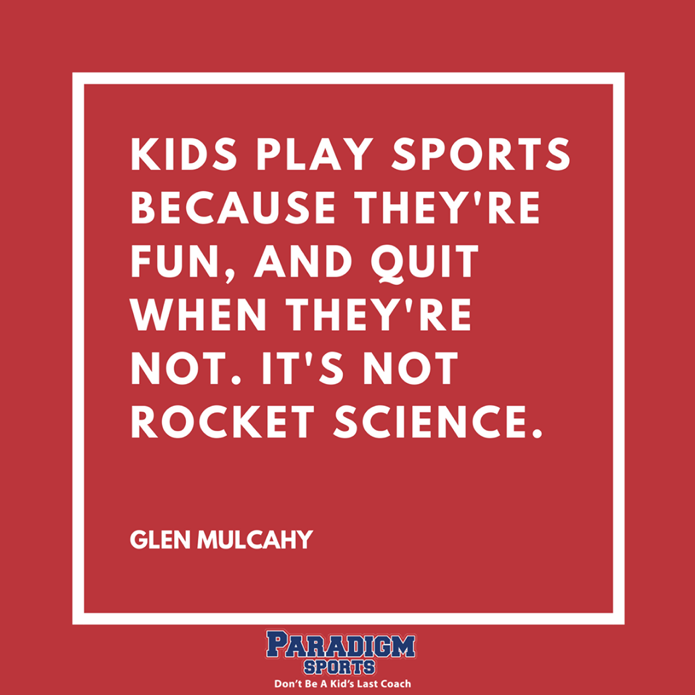


In this day and age where more and more kids are pulling out of youth sports as Project Play highlighted last year where 62% “retire” by the age of 11 after an average 3 year “career,” one would think that youth sports organizations would be doing EVERYTHING possible to reverse these trends and not turning a blind eye to coaches that are missing what youth sports should be, a safe environment to develop not only the skills of the game but skills of life.

What life lesson does a 11-year-old kid learn when he does not get the opportunity to play when it is their time to go out?

Having talked to many kids that were victims of short benches going back to 7-8 years of age, all told me the reason they quit is the coach only played their favorites.

Here’s my take on the coaches that do so.

If you pick them, PLAY them.

The worst culprits in the youth sports space that run short benches to win games at all costs are the ones in the competitive stream or rep level, but even when I have had recreation stream coaches in clinics or workshops they have shared with me they have seen more than their fair share of coaches that run short benches to win games, some as early as the beginning of the game, many in the latter stages of a game when it is close.

In many sports, particularly the recreation level, youth sports organizations do have what is called fair play, equal play policies where coaches must play all players as equally as possible.

But entice those coaches with a tournament trophy, banner for league or playoffs, or just a feather in the cap as their team won against a rival association then it is like offering a bonus to a car sales rep for selling 20 cars in a month … it becomes the end all and be all, do whatever it takes even if you have to take shortcuts to do so.

The big issue I have when coaches do so is they picked the players for their teams either thru the tryout process (which painfully starts earlier and earlier every year) or a draft (usually started U9 age groups in many sports).

This means that they chose the players for their teams yet they think nothing of sitting a player and playing their favorites game after game in lieu of focusing on developing every player on their team so the team as a whole collectively gets better?

They also will have those very same favorite players on specialty teams which further deprives players of playing time and the opportunity to contribute to game outcomes.

Over the last few years, I have highlighted some examples of nations or sports organizations whose participation rates are not declining like many of those are in USA and Canada but are GROWING.

Perhaps youth sports orgs and their coaches (which I recognize many are volunteers) could learn something from those as they also have had many players reach high levels as a result of their development models.


SWEDEN
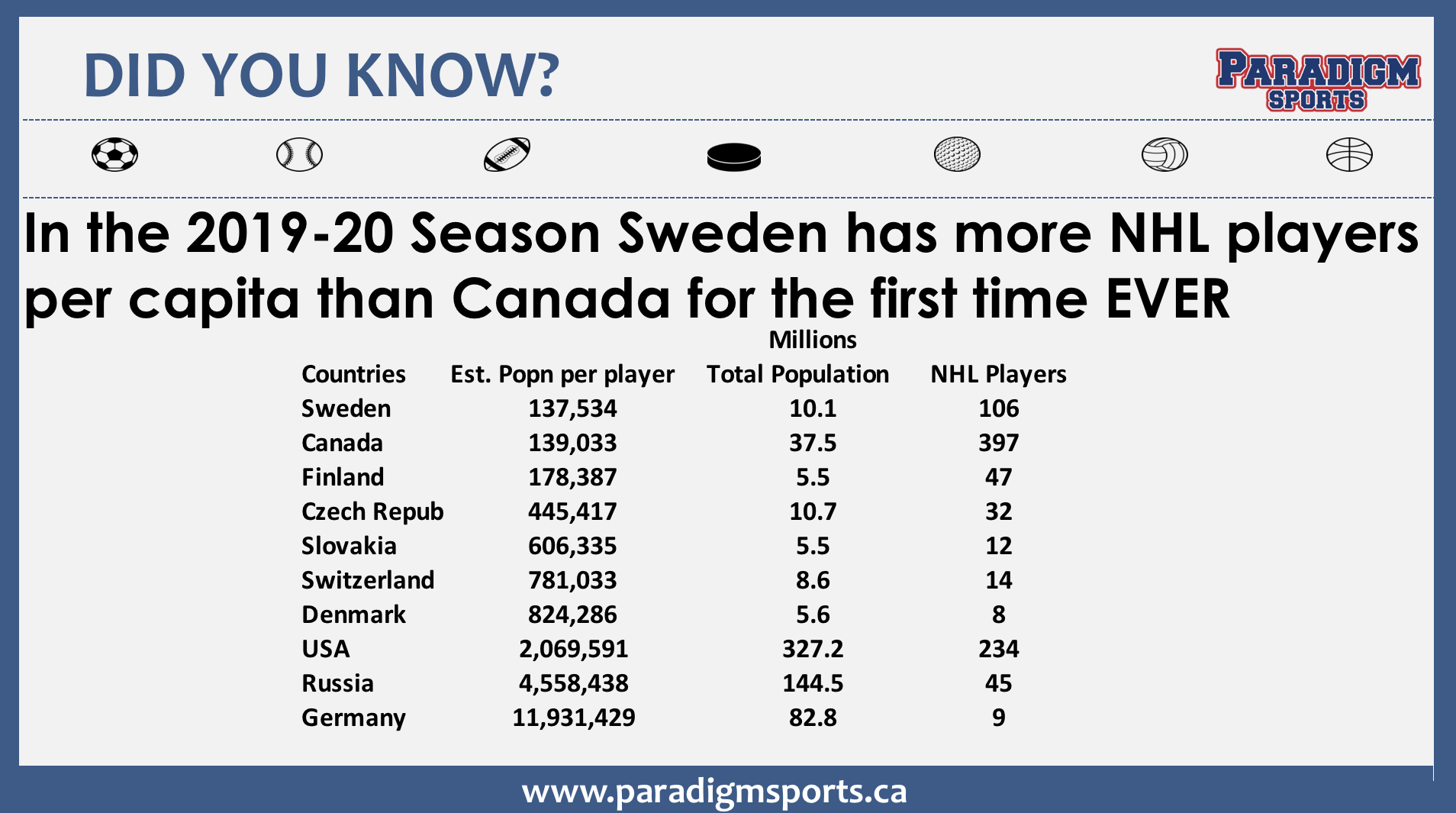
 

Hmmm .. maybe Sweden is on to something in terms of the player development model?

What makes the Swedish hockey model different?

#1 – All of their ice rinks are community-owned, unlike Canada and the USA where private multi-sheet facilities are almost on every street corner like a Tim Hortons is in Canada or Dunkin Donuts in the USA. Because they are community rinks and Sweden recognizing the importance of multi-sport participation they melt their ice on April 1st every year.

This means NO SPRING HOCKEY.

A phenomenon that has exploded in Canada in the USA that both Hockey Canada and USA Hockey are not sanctioning as they don’t want kids to play hockey year-round.

#2 – Because of the Spring Hockey model, the youth sports coaches that coach in winter as volunteers may aspire to get a paid position coaching in the spring which means they have to win as many games as possible to apply for those spring hockey coaching gigs.

#3 – Unlike Canada and the USA, Sweden does not COMPETE until the kids are U15 age (13-14), there are no scoresheets, scorekeepers, standings or individual stats being kept

Why?

Because Sweden’s model emphasizes the importance of focusing on the core skills of hockey during the key motor skill acquisition years.

#4 – Practice to Game ratio is minimum 3:1 also, as Sweden recognizes that players develop in practices, not games and in some instances with the explosion of spring and travel teams, kids as young as 6 years old may play over 80 games in one year, equivalent to the NHL?

In terms of the practice to game ratio in Canada, this could be fixed very easily as most rep teams get 2 practices, 2 games a week, convert one of the game slots to a practice slot and alternate home and away weeks with other teams in your tier.

Voila – 3:1 Practice to game ratio.

Based on the fact that parents pushed back because their 6 year old super elite prospects would not be able to play full ice hockey when Hockey Canada rolled out cross-ice hockey a few years back (proven to optimal development) I suspect although a simple fix, the push back will be even worse.

The fixation with playing competitive games in Canada is too much, too early and we could learn from Sweden as well as another country that is setting the bar, Norway


NORWAY

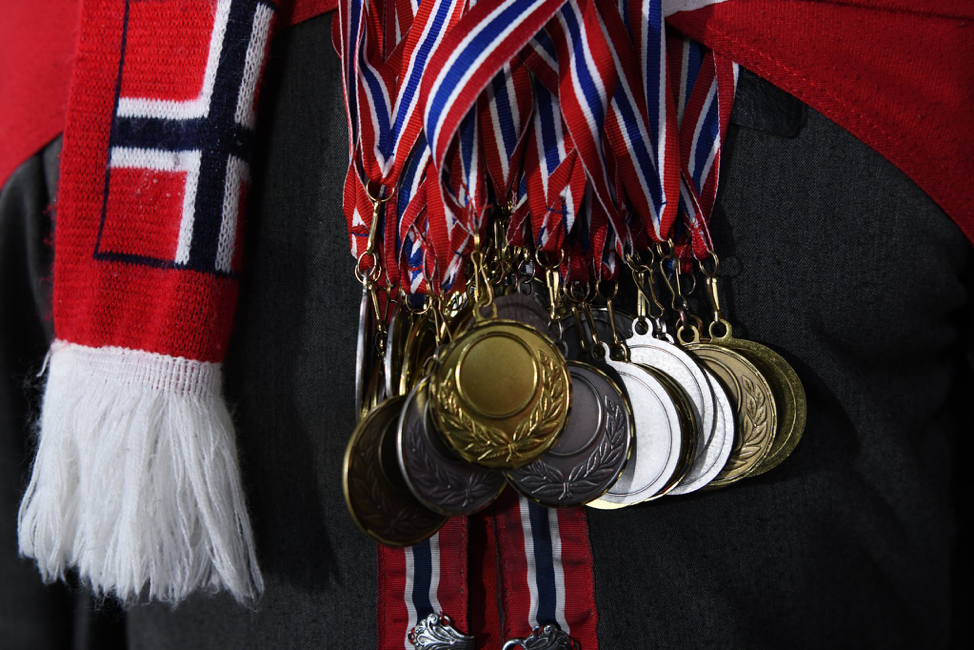
Another country who has set the bar for reaching the highest level of competition is Norway, who won 39 Medals in the 2018 Winter Olympics made them the all-time winningest country since the inception of the Winter Games.

Like Sweden, they don’t promote competition in youth sports until the kids become teenagers (13) and focus on multi-sport athleticism so kids become the best athletes they can become.

They both focus on the importance of playing with their friends, playing for their communities (vs. travel teams) and having FUN.

As a result, both nation’s youth sports participation rates are over 90% vs. those in Canada and the USA seeing the attrition rates we are seeing.

They also DON’T have the issues attracting and retaining officials like we do where our rates are as high as 50% of young officials quit in their first year, 30% every year thereafter due to the abuse they are taking from those winning at all coaches and over the top parents.

Coaches, if you pick them, play them.  Focus on developing all players and winning will be the byproduct in lieu of the focus.

AND

If you do so, they will love the game more at the end of the season than the beginning and come back with big smiles on their faces next season in lieu of many of the players quitting a game they once loved.

Don’t be one of “those” coaches that thinks nothing of sitting a 10 year old kid to win a game when every player on your team should be given the opportunity to contribute to the outcome, win or loss.

In doing so, their confidence will remain intact and like all the players I coached their only questions after the game will be ….

  1. What’s the Snack Coach?
  2. When do we Play again?

If you are still playing a sport in your adulthood as still love the game as you did as a youth player ….

The first question you ask when you get in the dressing room?

Who has, how much is the beer?  THE SNACK

When do we play again?

Take the high road and if you pick them, PLAY them so they keep playing well into their adulthood.
 

PS Tagline - Dont be a kids last coach


This is the Future – 2020

Posted Posted in Athlete, Coach, Parents, Uncategorized


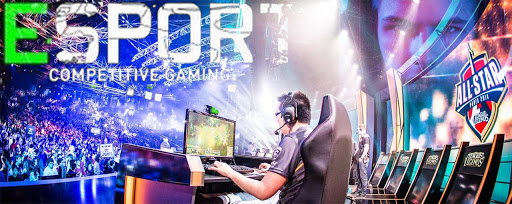
About a year and half ago I shared the growth of eSports in This is the Future and this week saw an article in the financial post where the owners of the Canucks Sports and Entertainment, The Aquilini’s, have invested in numerous eSports leagues and teams starting back in August 2018 to build the biggest e-Sports gaming network in North America less that 2 years later.

In 2018 the industry projections of e-Sports were projected to exceed $1 Billion, and now is over $1.5 Billion, a further 50% growth in just over a year with no signs of slowing down, similar to the 400% growth rate of the youth sports sector since 2010 in Canada.

Here are the numbers shared in recent article in the Financial Post;

  • Dota2 Event hosted in Rogers Arena August 2018 had $25 Million in prize money, $11 Million going to the winning team
  • eSports events hosted across the world in the very same arenas that professional sports teams play in (NHL, NBA) are selling out faster than the top musical acts are
  • Ticket prices average $40 for fans of the eSports “athletes” to attend the live events, generating over $600,000 in ticket revenue alone per event
  • According to MarketingHub, a market research firm, 800K people had heard of the growing niche industry in 2015, by 2019 the awareness had grown to 1.57B
  • Revenue has been increasing by more than 30% per annum, in 2016 was $493 M USD, $906 M in 2018 and is projected to exceed $1.6 B USD in 2021
  • eSports is inclusive, regardless of your sex, orientation, nationality etc. if you can play you can play online against any gamers across the globe

What the Aquilinis realized in 2018 like many others in the top 5 professional sports space is eSports is no longer a niche phenomenon but it is growing exponentially and as a means to further grow revenue streams and tap into a new and evolving fan base is to invest in the eSports industry.

Other prominent owners in professional sports have done the same

Jerry Jones – the owner of the Dallas Cowboys, one of the top professional sports franchises in the world, has purchased an esports team, including the purchase of a house in the Dallas area for them to live, eat and to hone their craft who is coached by one of my colleagues, James Leath, founder of Unleash the Athlete.  For insight listen to the podcast of the week HERE when I talked to him.

Prominent athletes and celebs are also investing millions into esports


  • Michael Jordan, arguably one of, if not, the Greatest Basketball Player of all time, invested $26 Million in eSports organization Team Liquid


  • Canadian Rapper Drake who was shown supporting the Toronto Raptors as they made their amazing run to the NBA championship last year has invested in esports organization 100 thieves with teams that compete in games like Call of Duty and Team of Legends


  • Steph Curry and teammate Andre Iquodala invested $37 Million in eSports organization TSM whose teams compete in games League of Legends and Fortnite


  • Hall of Fame Quarterback and now NFL commentator Steve Young also tagged into the investment made by Steph and Andre and part of the funding will be to build a 15-20,000 square foot eSports facility in Los Angeles


  • Rapper Sean “Diddy” Combs along with a group of investors provided just over $30 Million in funding to PlayVS eSports League Based in Los Angeles that allows high school students to represents their schools in eSports competitions and can qualify for the growing number of collegiate scholarships for competitive gamers.


  • Former Golden State Warriors Team Mate Kevin Durant invested $38 Million in Vision ESports and esports investment fund and management company


Professional Sports Leagues have also jumped onto the bandwagon starting in 2017


Since this interview in 2017;


  • NBA formed a joint venture with Take 2 Interactive to form NBA2K League whose inaugural seasons was in 2018 with 21 teams who are owned by NBA Teams and has partnered with the likes of Champion, AT&T, Snickers as key sponsors


  • NHL franchises are also forming leagues, starting with Monumental Sports & Entertainment (MSE) the parent company of the Washington Capitals working closely with EA Sports.


  • Maple Leaf Sports and Entertainment (owners of the Toronto Maple Leafs) also is hosting one on one as well as eSports tournaments based on the same EA Sports iconic video game and several other NHL teams are tipping their toe in the water investing in various eSports tournaments, leagues and teams.


  • Major League Baseball (MLB), Major League Soccer (MLS) and even the largest professional sports in the world, the NFL with over $13 Billion in annual revenues, is jumping on the esports bandwagon starting with the Minnesota owners investing in Activision Blizzard.


It also has gotten the attention of what used to be a focus on amateur sports, the International Olympic Committee, who has shifted their mindset over the years to permit professional athletes from the MLB, FIFA, MLS, NBA, NHL to participate in winter and summer games.

They also entered into discussions with INTEL last summer to continue on the momentum of pre-Olympic showcase event before the Pyeongchang Winter Games for eSports to be an Olympic event in Paris Summer 2024 Olympics.

If you have been coaching youth sports, a former youth or even professional athlete you’re probably shaking your head why the Olympics would even consider why playing video games could even be considered as sport? Some would argue Poker, bowling, darts are games also but do get considerable coverage on ESPN and other sports networks when major sports like NFL,  NHL, NBA, MLB seasons are over.

Here is some insight in terms of the neuroscience what is needed to be a gamer at a high level;


That the video game industry, thanks to PlayStation and Microsoft 360 as well as PC games is now over a $138 Billion USD industry worldwide, has now gotten the attention of celebrities, professional athletes, teams and the Top 5 Professional sports to create a spin-off industry to generate even further revenues via competitive events for one vs. one and team play.

Youth Sports has also grown exponentially in Canada and the US in terms of revenues since 2010 as more and more families go all in supporting their kids chasing the dream of full-ride scholarships or playing professionally, based on the growth of eSports suspect will see that spin-off as well.

Sadly, as more and more specialize earlier and earlier, more and more are quitting because what started out as a fun activity became work as many games are sharing when they retire from competitive game play.

Like overuse injuries in young youth sports athletes as a result of the early specialization phenomenon, a recent science daily article share insight how esport athletes who participated in a study are also at risk for various physical, psychological disorders;

  • 56% reported eye fatigue
  • 42% report neck and back pain
  • 36% wrist pain
  • 32% hand pain
  • Yet only 2% sought medical treatment
  • 40% get no physical activity per day, and average video game playing time is 10-12 hours/day


Although video games have evolved into the competitive eSports industry, youth sports are showing similar trends in terms of physical and physiological health issues including

  • 400% increase in ACL tears
  • Over 60% of current Tommy John Surgeries on 15-18 year old arms
  • Over 200% increase in concussions
  • Increase in mental health issues due to pressure to perform, meet parental expectations for return in investment

Both Multi-Billion Industries are suffering from CHRONIC overuse injuries being sustained by KIDS?

Maybe it’s just me, but Houston, we have a problem … a very big problem as these trends will merely lead to a major impact on the medical system in future that is already pushing its limits due to funding challenges to hire nurses, doctors and other support staff.

More than ever, we have to work together to bring the game back to the kids so kids can play for the sake of playing again, not chasing the almighty dollar at a lifestyle pace that is not sustainable long term.


How do you shave years off your learning curve? Find a mentor.

Posted Posted in Athlete, Coach, Organization Executive, Parents


As we head into the upcoming fall season for many sports, I wanted to reinforce the importance for coaches to recognize the importance of lifelong learning.

Mentorship has always been something that I have believed in since I started coaching, initially as the mentee seeking the mentor, then as the years evolved it was I that was asked to provide insight to fellow or younger coaches as the mentor.

Last spring, I wrote about the importance of mentoring in “Coaching Skills in Sport and Skills in Life” that thinking back I should have titled the post “Ode to Glenn Zwick” as it was a tribute to the coach who acted as my mentor for many years who had probably forgotten more about hockey and softball than I will ever know.

Since that point I have had the opportunity to interact with some of the worlds top experts in sport across the globe while hosting our online events hosted thru our digital arm “For the Love of the Game” and one of the questions that I ask all guests is what coaches can do to shave 5 years off their learning curves.

To which many of the top experts I talked to shared what I truly believe in as well …

 Find a Mentor.”

One of which who shared that with me was John Kessel, Director of Sport Development for USA Volleyball, who has been coaching now for over 5 decades and has worked with thousands of players and coaches.

Had it not for Glenn’s mentorship when I first started coaching softball and hockey and then evolving into other sports, I can say I would have made many more mistakes (even though still had a fair share) and I also would not have recognized the importance of lifelong learning.

When I first graduated from my many years of university and college that last thing that I wanted to do was EVER read a book, particularly a textbook, or sit in on a clinic, course, conference or what have you.

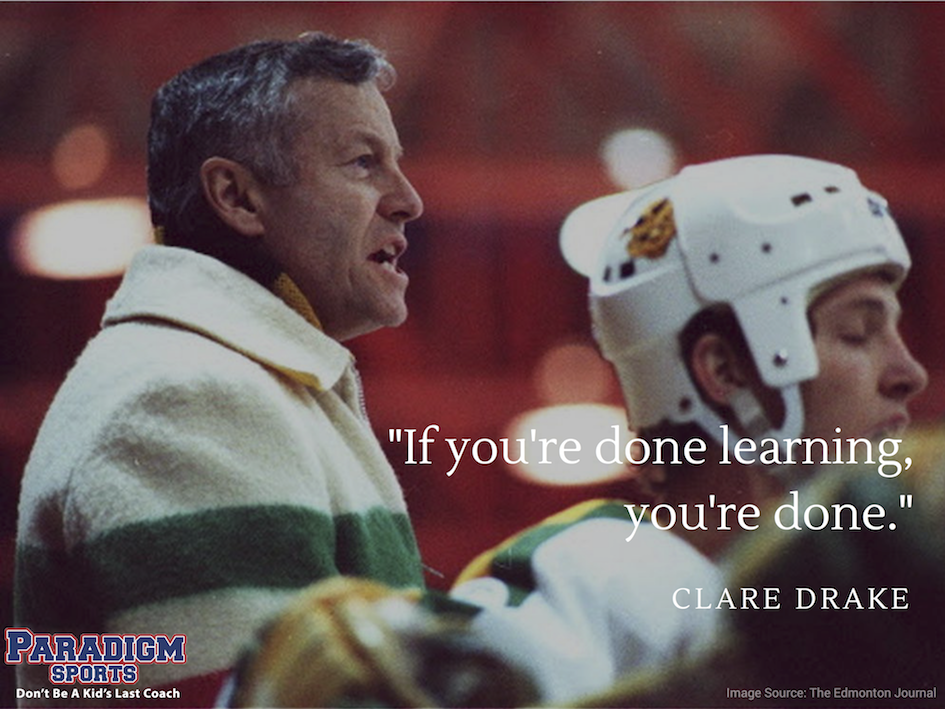
Then I came across this quote by Clare Drake years after I graduated…..

Clare (Canada’s John Wooden) was infamous for speaking at conferences well after they retired and after they did so would go sit with the attendees and take pages of notes.

When prompted why they did so their answers would be … because I may learn something.

Great coaches recognize the importance of lifelong learning.

Having coached now for over 25 years, I can honestly say any time I have the opportunity to either facilitate a clinic or course, deliver a keynote or be one of the attendees I jump at the opportunity.

Why?

Because now I can hardly wait to learn more, add to my toolbox so I can help others do the same.

Every time I run a clinic or workshop it is not only an opportunity for me to present the course materials but to have the opportunity to share insight and also learn from all those in the room.

I also have had the true privilege to mentor the next generation of leaders from my Alma Mater, UBC Kinesiology, as a Mentor but also for various co-op students that have worked with us over the years who have been instrumental in our growth as an organization.

A year ago I highlighted many of those other co-op students who contributed in prior post à bientôt which I shared with the two students as they finished their summer co-op term last week and today our 16th co-op student started.

I am not a fan of saying goodbye, rather the French saying I learned long ago (at one point I was pretty good in French but as they say, if you don’t use it, you lose it) as I have had the opportunity to connect with many of our former co-op students over the years.

One reached out to me a few weeks back and said “let’s go for a beer” which was pretty cool and he shared all the different projects was working on and how happy he was to see our growth since he did the second pass of our PARADIGM Sports Website now 2 years back (hard to believe how fast time has flown).

I have also had students provide testimonials, even recommendations for co-op supervisor awards and the biggest honour I received to date was when I was nominated for an alumni builder award by my Alma Mater, UBC School of Kinesiology, for mentoring, participating in expert panels and career fair.


I truly value mentoring and now jump at the opportunity whenever I get a chance to do so, as without someone to mentor you, how are you going to become better as a coach to help your players do the same?

In the last couple of weeks, I was asked to present at the PCAHA (Pacific Coast Amateur Hockey Association) Coach Coordinator meetings regarding the changes that BC Hockey has made to the practice evaluation process for competitive coaches.

Our goal is to have every coach that attends a clinic complete their certification for all clinic requirements in one season, and the practice evaluation is the opportunity of coach coordinators, technical or athletic directors are various minor hockey associations to provide insight during a practice evaluation.

The whole intent of the practice evaluations is for coaches to be mentored from tenured coaches and receive feedback on what they are doing well as well as what areas they could work on.

So as John Kessel (Kess) shared when I talked to him this summer, you coach these kids, who coaches you?

Another reason why you want to seek out a mentor is so you have someone to reach out to when you run into situations or issues unsure how to deal with to get advice, many times early on in my youth coaching days I made phones calls to or picked Glenn’s brain on the bench when girls were warming up about various challenges I was having.

In many instances he would merely state ”I really wish the adults would recognize it should be just about the kids and not focus on the results (wins, banners), at the end of the day we should help the kids become great people”

Fast Forward many years after he passed away, I now have been able to share many words of wisdom with coaches across Canada and like all of those that shared with me #1 tip I would share for you is to find a mentor.

Reach out to your coach coordinator for recommendations or go to an older teams practice to see how they run it, ask the coach if has time to share some words of wisdom over a coffee and you would be amazed how many are more than happy to do so.

Why?

Because for the most part (except the vocal minority that the tournaments and banners are the drivers), we are all in it for one reason, the Kids.

If we can help a younger coach hone his or her craft, it is our way of paying it forward so they can help their players do the same.

I also would recommend that you reach out to coaches in other sports, not just the one you are coaching for insight as never know what tips you will get.

Lastly, remember that whatever clinic you took for your coaching level is just the start of your journey, continue to read, attend conferences (our online event is a great way to learn from global experts 8-)), listen to podcasts, read books etc. so you can become the best coach you can be.

Why should you do so?

Because our purpose is not to make a living.

In lieu, our calling or rai·son d’ê·tre (reason for being) is to make a difference by developing youth into adults.

Please ensure that your legacy is a positive one and you are not a kid’s last coach.

Per Kess, I would be remiss in not sharing out his touching acceptance speech when he was inducted into the American Volleyball Coaches Association Hall of Fame where he thanks many of past and current mentors as well as his challenge to all coaches to “Never Be a Child’s Last Coach

We concur.

(In our chat he and I had a good laugh how much our philosophies were similar as I have shared “Don’t be a Kid’s Last Coach for years)

Let’s all work together to bring the game back to the kids … where it belongs.

BONUS – Download a FREE printable PDF version of this blog HERE


Olympic blog thumbnail

A Healthy Mind in a Healthy Body

Posted Leave a commentPosted in Athlete, Coach, Organization Executive, Parents

I would be remiss in not starting today’s post with “Vive le France” for the great run to win this year’s World Cup with a combined score against Croatia for most goals in a World Cup Final (4-2) since 1966.

The final game was filled with what one would expect in the final game which included France’s young 19 year teen phenom Kylian Mbappe scoring, the first time that a teen did so since Pele in 1958.

The buzz amongst all the people I talked to over the weeks leading to the final, have you seen the young player on France ?? He runs faster dribbling the ball then most players do without?

Being that Pele was arguably the greatest footballer EVER (who can ever forget goals he scored flipping upside down backwards) Kylian is the up and coming global superstar and suspect France will be a top seed 4 years from now in the next world Cup as a result.

One thing that both Pele and Kylian and all the other amazing players in this and every World Cup is they LOVE to play the game, the spirit of the competition, no different than every 2 years when we witness in the awe the world’s greatest athletes in the Olympic Games (vs. previously when summer and winter games were hosted in the same year).

It reminded me of the Ancient Olympic Motto “ Mens sana in copore sana” = A healthy mind in a healthy body as the world’s best footballers or athletes would not have reached that level if their minds were in harmony with their bodies and vice versa.

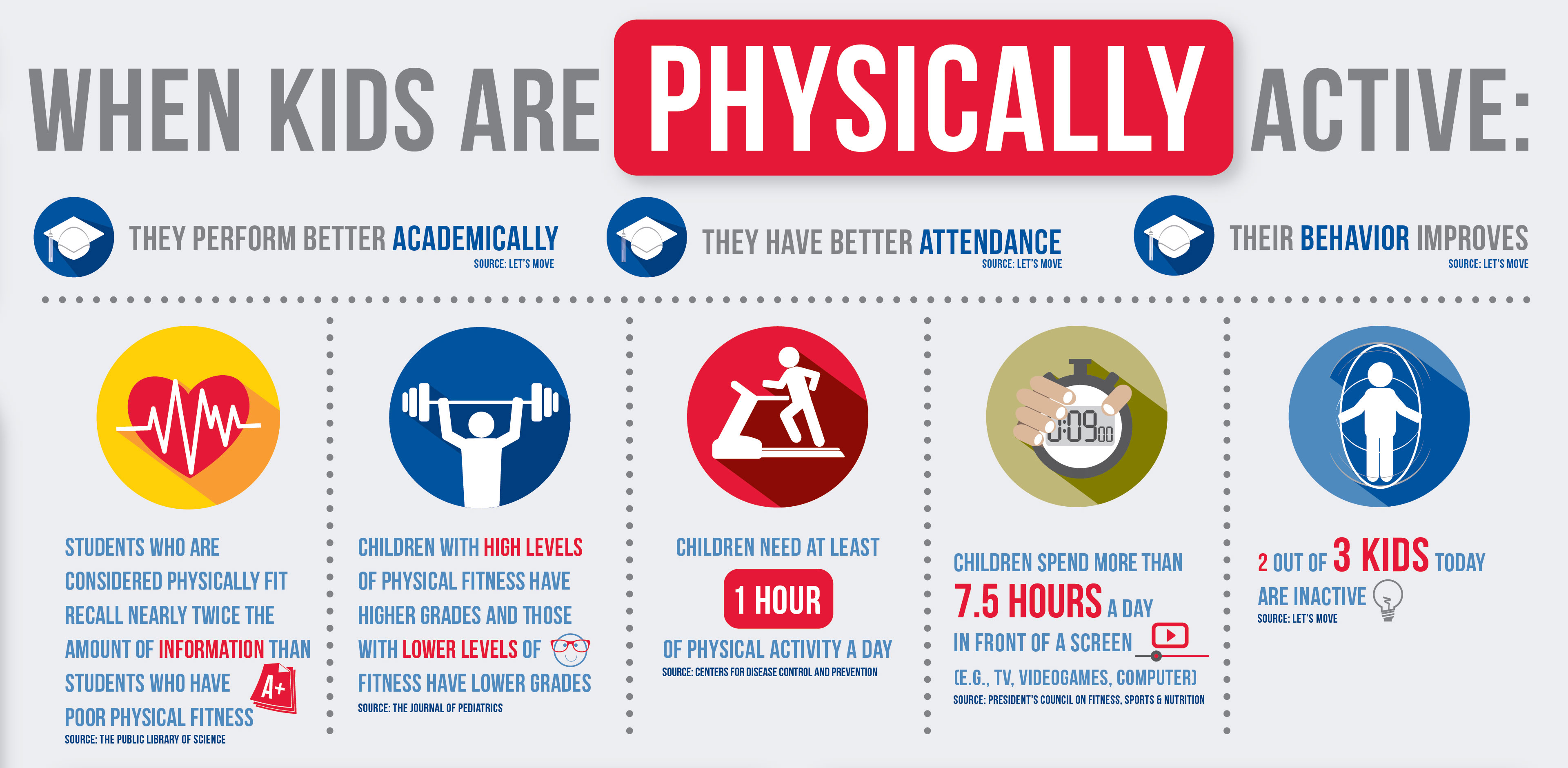
This is the very reason why I have shared my concerns regarding the amount of screen time that kids today have, on average 7.5 hours a day getting their dopamine fixes vs. the same rushes of adrenalin being active playing with their friends in the spirit of competition, regardless if organized or free play activities.

One of the things I started enforcing my teams well before it became common practice thanks to awareness campaigns by the Respect Group and others was a ban for all electronics in the dressing rooms, playing fields or team activities.

The first few times I have done so with team’s kids have looked at me like “are you freaking kidding me” This smartphone, iPod or tablet is my fifth appendage and I am not parting with it.

The reason I did so was two-fold;

  1. As smartphones, even iPods, evolved and added video and camera capability that could be easily uploaded to social media platforms, I did not want any players to be victims of harassment. See below for one of the extreme examples of how a coaches rant was shared on social media that lead to his immediate dismissal


  1. Although every player would argue they brought so could listen to music pre-game, practice, more often than not I saw they snap-chatting, texting, posting to Instagram or other social media platforms to the infamous dopamine fix (AKA Simon Sinek infamous rant on the Millenials)


As a compromise, when Bluetooth started evolving we would assign a coach with a blue tooth enabled device to put together the team’s playlist (one rule no swearing) and they would position the speaker in the dressing room so were within 33 feet for music to play.  Players of the game also would be given choice of the song before we headed out of the dressing room following game also.

I know many will feel that I am old school as a result, but I don’t even take my phone into the dressing room, field of play (or whatever playing surface), I leave it in my car.  One of my biggest pet peeves is when I have seen coaches answer calls, text or email on their smartphones during games.

Why?

Because, I, like the very same players I coach, aspire for practices and games to be electronics free to bring that same love of the game back like all those players in the World Cup showed or any other high level competition like the Olympics.  To experience the game the way it is meant to be, without the distractions of electronics.  When coaches are texting, answering calls in my eyes it is disrespectful to the game and the players they are coaching, no different than I am speaking at an event and people do the same.

This is why I can say with confidence that the needle is shifting, parents are recognizing they we did in part let the prior Gen Z (Millenials) down in part and more and more parents I talk to are enforcing electronics rules like;

No electronics at the dinner table (this has been a firm rule in our household since the digital era started)

For every hour of screen time, you must have 60 minutes of non-screen time and a minimum of 60 minutes of physical activity/day.  Incremental activity may include playing a musical instrument, reading, art, drama, preparing for a speech, meditation, hanging out with a friend or friends and the only electronics devices are music while you talk face to face.

Or better yet – play board games … yes, board games.

My wife went to friends on the weekend and they sat outside on her friend’s deck playing a version of reverse gin rummy for 2 hours and shared how much fun it was, how many of you remember playing board games?  One of my favorites is RISK, nothing better than a multi-day Risk marathon to rule the world (no I am not competitive at all).

As the cliché goes going back to the Ancient Olympics, Mens sana in corpore sano

Translation: A healthy mind in a healthy body

In the most recent Participaction report for 2018, yet again we received failing or near-failing grades for physical activity standards being met by Canadian Kids under the age of 18, only 35% of kids between the ages of 5-17 are getting 60 minutes a day.                Grade  D

Other areas that we received D’s;  Active Play, Leisure, Active Transportation, Sedentary behaviors.  One of the biggest challenges we face today thanks to “the white van” is kids not getting their 2000 steps to and from school.

Where we have seen improvements (albeit slight) is an increase in organized sport participation and increase in physical education active minutes per week.

This means the needle is moving, but must continue to move in the right direction so the health issues that have come to light since the onset of the digital era are reversed.

Another interesting spin to this year’s Participaction Report has they highlighted the correlation between physical activity and the positive impact it will have on brain health.

This after over 40 years of promoting the benefits of physical activity for all the physical health benefits (agility, strength, cardio, physiological) but now has highlighted research how being active leads to brain health.

This coincides with the growing body of research that links physical activity with academic achievements as well as improved behavior, reduced truancy.

Being physically active improves blood flow, O2 capacity, agility, cardio that leads to faster decision making, short and long term memory, improved attention span and a myriad of other benefits for the brain so kids that are active will perform better in school and will also attend school vs. their less active counterparts.

The other HUGE benefit?  Being active improves your mental health, improves your concentration, enhances your creativity and also studies show will reduce your cognitive decline.

Although it has taken centuries to come up with the scientific data to support the Ancient Olympic Motto, the proof is in the pudding, being active leads to Mens sana in corpore sana.

Everything in life is good in moderation, but please implement rules on your teams and at home to limit kids screen time so they can develop both a healthy mind and body.

Let’s all work together to bring the game back to the kids … where it belongs.

Don`t be a kids last coach