
The Silver Lining For Youth Sports

Posted Posted in Athlete, Coach, Early Sport Specialization, Organization Executive, Parents

As we have now had over a month’s break from all sports, the sector that we work with directly is one that I hope is taking the much-needed breather to reflect and regroup for what youth sports can be again vs. what it had become.

For years we have been advocating to bring the game back to the kids against early sport specialization, adultification, professionalization, pay to play, travel ball, empowering the silent majority and other hot topics in youth sports that lead it to a $9 Billion industry in Canada, the highest cost per capita in the globe.

Much of which we had planned to share insight on during workshops, conferences as we headed into the Spring sports seasons with various sports organizations we had partnered with so they could provide resources to all their stakeholders but are in limbo.

Ironically it seems like this hiatus, or what I am referring to as the Global Sports Timeout, will have the desired effect all of us in the space that are advocating to bring the game back to the kids will do just that.

For years I have been sharing why kids play sports in our core talk for coaches “Don’t be a Kid’s Last Coach” which I share personal anecdotes from coaching as well as the research done over the years.

The thing that amazes me each time I have done the talk and start out with the question “Why do kids play Sports” literally everyone knows the #1 answer – FUN but rarely will confirm that they have actually asked the kids on their teams or their own kids the same question and why it is just that, FUN.
During this Global Timeout, I encourage you to take the time to ask your kids the following questions:


  1. What do you miss most about your sport(s)?
  2. What do you love the most?
  3. Dislike the Most?
  4. Are there any others that you would like to try?
  5. What can I do to support you?


I suspect you will hear similar answers to when I posed the questions to a number of kids on teams I coached the top answers will be for the first two questions:

Being with my friends – playing when it’s my turn to play – pool parties/team dinners and the Snacks

Dislike the most?

When Coaches Play their favorites (run short benches), you/they scream at us for making mistakes and the Ride (to/from home), traveling to new places, working with a specialty trainer/coach, not being able to hang out with my friends

Any others you would like to try ?

I suspect will be anything from other team sports to individual sports to other activities like dance, drama, art, music, robotics, reading books or just going outside to horse around with their buds

What can I do to support you?

Be quiet or cheer for us in a positive way

NOT Screaming at us, officials or focusing on Winning at all costs

I suspect the majority of kids won’t say I want to go this prospect/showcase tournament in Yukatuk because there may be a scout there that will be recruiting for a NCAA Div 1 school full-ride scholarship or potential draft many years down the road when they are 9 years old (trust me, if they are to be found, they will be)

They probably will say please don’t coach me in the car to and from games, practices or criticize me or the refs for making mistakes we are just kids

NOT

I want to go to more off-season camps, more skills coaches, more tournaments, more practices, more, more more ….

Fast forward to now when none of that is available … what are they doing at home?

Are they now trying other activities or other sports did not have to time to do so?

Are you now spending quality family time including family home cooked meals each night vs. grabbing something on the run to a practice, game?

Are you connecting with your kids more than you ever have?

Are they saying Mom/Dad … watch this when they try a new skill/activity they had not in past?

Are they happy they are learning different skills than just the ones they learned playing one sport?

I suspect the answer is yes.

That is why you need to look at the Silver Lining right now, have those conversations while you are not running off your feet and spending quality time with your family.
 

As more times passes in the coming weeks and months, take the time to recharge, reflect, regroup and refocus for what your family priorities should be in what will be a revamped youth sports landscape.

One that I aspire will be more like what it should be vs. what it had become.

One that will focus on quality coaching development beyond X’s/O’s, Wins/Losses but on the importance of connection, caring and development of the person.

One where parents will recognize the value of seeking out resources, attending seminars, reading books/blogs for insight from industry experts regarding the science/data of the best path for your kids vs. private organizations selling a dream

One that will be affordable, in lieu of thousands of dollars with mandatory travel, just a few hundred dollars participating in community or school programs or better yet FREE, free unstructured play opportunities so all families can afford as the recessionary impact we will be dealing with will be long term. Many families have had parents lost jobs or unable to keep their small businesses going and will be looking for more affordable programming for youth sports orgs, parks and rec and schools.

One that will be all inclusive for all, regardless of socio-economic status,  gender or ethnicity.

One that will have fair play policies where all kids get to play and contribute to the outcome.

One that is safe to fail for coaches, players and the officials who are all learning and should not be scared of making a mistake as they may be screamed at for doing so.

One where the adults recognize that youth sports is just that, youth sports.  Kids playing kids for the love of the game, to have fun, to play with their friends, to be active and learn new skills of the game and of life.

One where it brings communities together because that is something we all will need when health authorities raise quarantine restrictions so we can rebuild.

One that will be reminiscent of what kids are doing today, free play without fear of making mistakes in their driveways, front and back yards or other public areas that permit physical distancing.

One where we value sportsmanship, winning with humility and losing with dignity.

One where the value of respect is not just a word on a sign but a core value of all stakeholders involved with youth sports.

And most importantly, One where parents just Love Watching Their Kids PLAY.
How Moresports promotes a love for the game

Posted Posted in Athlete, Coach, Organization Executive, Parents


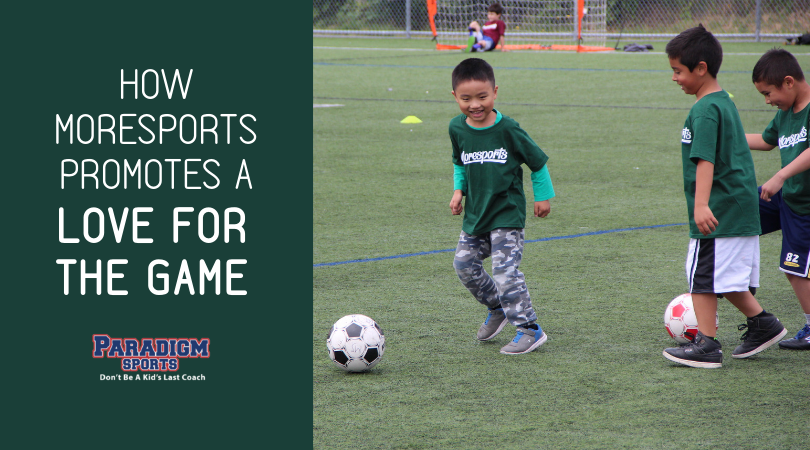
I was invited by the coordinator of Moresports, Cynthia Lee, to come out to see their annual Soccer Jam event they host and must confess, many youth sports organizations across Canada, if not the globe could learn from their model to provide quality sports programming.

As I shared in a blog I did a few weeks back, How More Sports is creating more sport opportunities for kids, they are a community-based organization in Vancouver, BC, established in 1998 to provide opportunities for kids to play sports that could not afford to be in organized leagues.

Since that time, they have grown with multiple hubs in Eastern Vancouver, one in Coquitlam and have approximately 4000 kids participate in their programs annually.

The best part, if kids can’t afford the fees, they provide subsidies so kids can play, their goal is to never turn a kid away regardless of their socio-economic status.

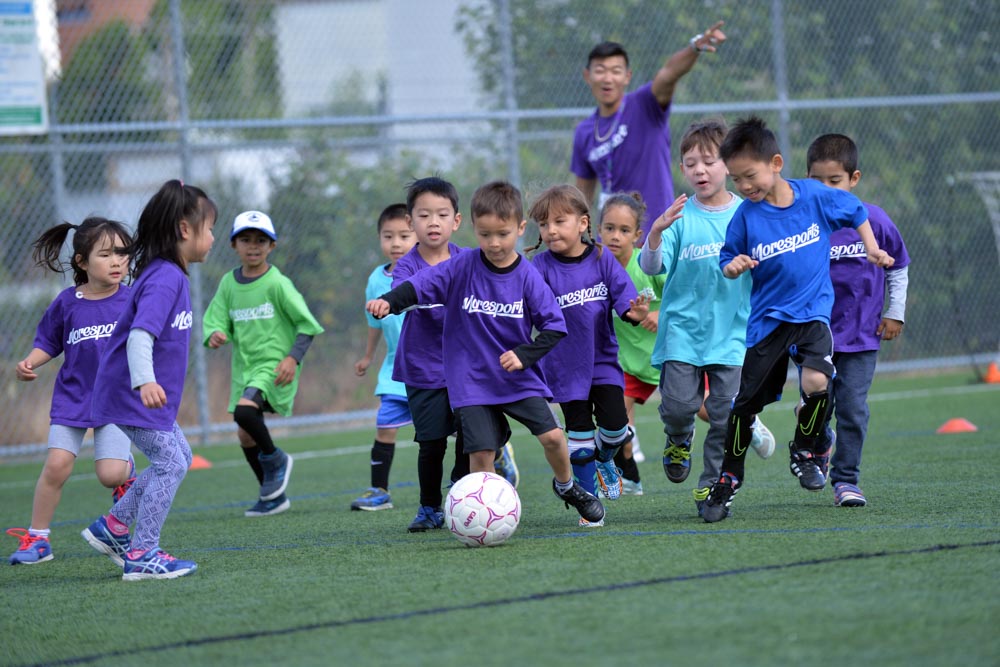
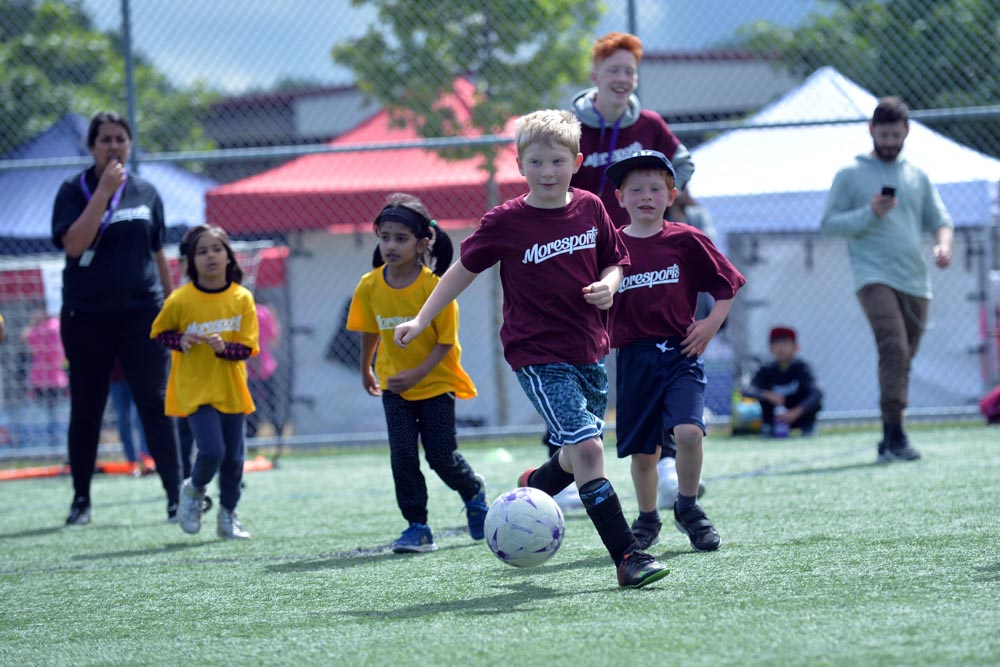
Like when I went to see one of their basketball programs in one of the hub schools last month, today I saw many kids with HUGE smiles on their faces as they played soccer but it was what I did not see that truly inspired me how we can bring the game back to the kids.


The only uniforms that the kids wore were donated Moresports t-shirts with no numbers or name bars (common in youth sports for “scouts” to ID “prospects”) in various colours.

There were no officials to enforce rules as we see in many organized sports today, as early as 6 years old when kids play “elite” level sports (which is the dirtiest word in sport today, there is no such thing as an elite 6-8-10 year old kid, they are just early bloomers)

The parents either sat quietly on blankets, bleachers or stood along the sidelines and some took pictures, most just watched in silence or cheered when the occasional goal, great save or shot was made by any, not just their own, kids on the “teams”.

There was not a vocal minority who were screaming instructions at their kids, criticizing their mistakes as is all too commonplace today in organized youth sports that is leading to so many kids quitting before high school.

Some are those are the ones that sit at the end of the field or in parking lots having tailgate parties (as is often the case at “prospect” tournaments) who become vocal as they had one too many wobbly pops.

Other than the K1 group (who had the most participants), there were no subs and when there was, the leaders ensure that every kid rotated in and out evenly but most games had 6-7 players a side.

There was No Scoreboard, No Scorekeepers, No Timekeepers.

There was no tournament board keeping track of wins and losses that coaches will check as the tournaments evolve to figure out their standings, when they will play after round robin and if they anticipate tiebreakers, goals +/for etc.

There were no trophies or participation medals or ribbons.

There was no apparel tables to resell branded merchandise for the “prospect” tournament or silent auctions, door prize raffles or volunteers selling 50/50 tickets to raise money for the tournament hosts.

Kids just played For The Love of the Game.

There were almost an equal ratio of girls to boys playing on the co-ed teams all the way to G7 (11 years old)

There were leaders (much higher % are female as they want to give back to the program than male coaches in youth sports) for each “team” who are former campers that have been identified as potential leaders in the community and receive training which includes High 5, Fundamental Movement Skills and majority are under 18 years of age.

Most only gave the teams pep talks for warm-ups, then during the games would just ensure that the game continued by getting the balls when kicked out of the mini-fields.  Some “coached” by saying … keep it going, great shot, great save it was ALL POSITIVE.

The coordinator, Cynthia Lee, was one of those herself, then a leader, and now the full-time coordinator who organizes this event.

This was the third year that the event was hosted at Trillium park, ironically one sky train stop or short drive away from Rogers Arena and BC Place Stadium where our professional soccer, football, and hockey teams play that most, if not all, of the kids playing today sadly will never have the opportunity to see due to the ongoing rising costs of tickets.

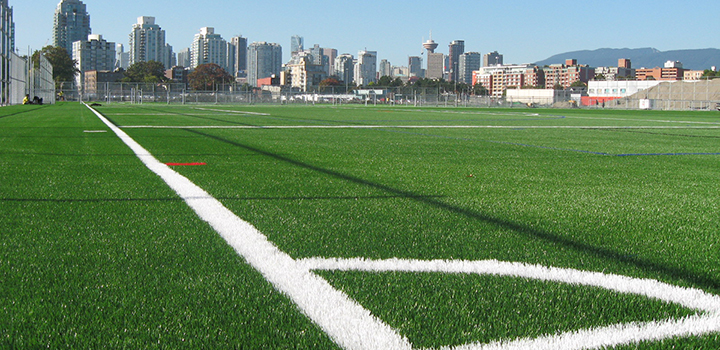
Trillium Park consists of two all-weather soccer fields, which Moresports converted by using cones and age-appropriate nets into 16 mini-fields, the epitome of small area games at its finest.


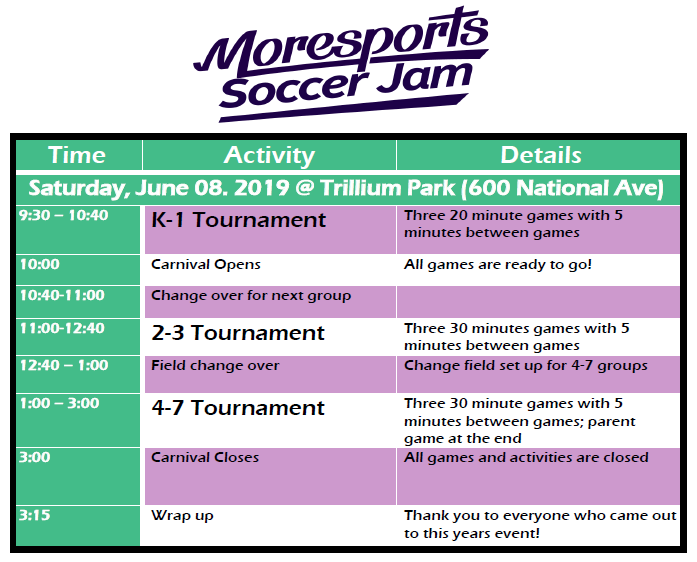
The schedule for the day is below

K1 (5-6 year old kids, their largest age group) started the day by playing 3 20 minutes games with 5 minute breaks and 2 minute hydration breaks.

When the ball would go out of play, the kids or leaders would retrieve and they would throw it in and GAME ON.

2-3 (7-8 year olds) and 4-7 (9-11 year olds) would play 3 x 30 minute games also with 5 minute changeovers and water breaks.

Approximately 1000 kids participate in the annual event.

Think about this.

60 – 90 minutes of activity, small area games, age-appropriate nets, balls to follow Soccer Canada’s new LTPD model, trained leaders and coaches providing limited feedback that is positive (to let the kids PLAY) and in lieu of multiple trips back and forth, you get to play all your games back to back.

Similar to the good old days where you went to a park and played for HOURS vs. structured games and tournaments that are all too commonplace today.

They also had a carnival with bouncy castles and various other activities and food trucks for kids to fuel up more after they devoured their snack bags they all received that included a voucher for those from economically challenged families for kid favs, grilled cheese, fish and chips (my lunch for the day) and Triple O’s burgers.

Why this truly was unique compared to any other jamboree that I attended as coach, parent or player is it also included tents from all of the community sponsors that permit Moresports to provide their amazing programs

United Way – Vancouver Parks and Rec – Vancouver School Board – Canucks Autism Network

This provided them the opportunity to engage with parents and vice versa.

As I was leaving the Vancouver Police showed up with their (motor) bikes, one of their dogs squads, their horses. Vancouver Fire Department had come in past years so they also could engage with the community that at times sees them as the bad guys (as many of these kids are in really tough neighborhoods who see more than the fair share of police and social workers).

One of the VPD’s staff sergeants volunteers as a leader for the event also.

As I was driving back home my head was spinning, why is this not THE MODEL for communities across Canada to promote quality sport and kids being active as it is only currently being run in Vancouver.  It was the epitome of organized Free Play.

I also thought, organized youth sports could also learn as unlike the vast amount of organizations that I have talked to, Moresports is growing by adding more hubs and the executive director, Bill Woodley, hinted that they are having dialogue with other provinces how they can provide the same model but only if they identify they NEED it which many have come calling.

The challenge he said, is they will have to remove all the barriers and promote collaboration as Vancouver has done with parks and rec, school boards and other community organizations.

Proof that if all stakeholders buy-in to a common vision that it CAN BE DONE.

When we all work together, the best part of it all, Kids PLAY, Have Fun and love the game more at the end than when they started.

Kudos to all the team members, the hundreds of volunteers, leaders, coaches of Moresports to show us that it can be done if we remember what it is really about, the KIDS.


Bonus – Download a Free Copy of this blog in printable flipbook format HERE


What is LTAD blog thumbnail

What is LTAD?

Posted Leave a commentPosted in Athlete, Coach, Organization Executive, Parents
It has been a hectic couple of weeks for me as the fall season ramps up for clinics and conferences wearing my various hats in the youth sports space. It started with two presentations I did for Nanaimo Minor Hockey on behalf of Changing the Game Project where they invited several other sports groups in their community to attend including Lacrosse, Baseball, Senior High School and faculty members and students in the Kinesiology program at Vancouver Island University.  I received word while I was en route for talks in Kamloops that they wish to have me back to work further with their kids, parents, coaches and exec members early in 2019 to build on the momentum to bring the game back to the kids. The second event I was presenting on behalf of PARADIGM Sports for Softball’s BC Development conference where I delivered the opening keynote, follow-up presentation and participated on their panel to end the first day along with two other amazing speakers who were at the conference.  The focus of the panel was recruitment and retention so they could continue to reverse the negative trends of attrition they saw happening a few years back which included sharing insight on LTAD/Multi-Sport Participation.
The weekend ended with my other hat as Hockey Canada NCCP facilitator for BC Hockey where I ran a Coach 2 Clinic for Abbotsford Minor Hockey Association for 18 coaches starting what I always aspire will be long coaching journies. One of the exercises that I do in clinics is asking the coaches to share why they coach and what they would like to get out of the clinic and one of the coaches shared that he got into coaching as he had retired from professional hockey that included playing for a few teams in the NHL and then playing pro in Germany until his hometown had a spot open up for their fire department that he had applied for so could move on to the next chapter of his life raising a young family.

He stated that he was still able to compete at the highest level but he had “lost the love for the game” and when his hometown  fire department came calling he felt it was time for him to hang up his skates.

After a couple of years got the itch to still be involved in the game so put his name forward to help coach an atom team (9-10 years old) and as he was leaving when the clinic wrapped up I said it won’t be long before that love and passion he once had comes back working with kids. He responded by saying, he was having a blast and it was coming back slowly but surely. In all three events I asked the coaches, executive members how many were familiar with LTAD (or variations thereof I will explain below) and although almost every NSO (National Sport Organization) in Canada has adapted their versions and some have revamped in recent years only a few hands went up. I then asked if they were familiar with Physical literacy or Fundamental Movement Skills (FMS) and even less hands went up.

Houston … we have a problem.

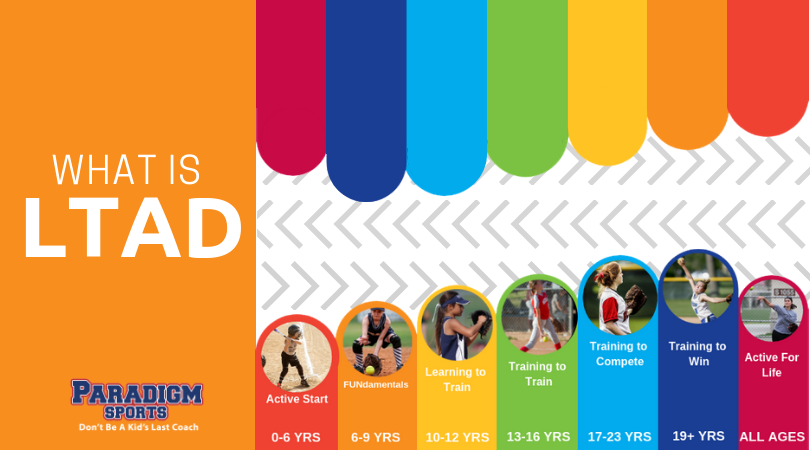
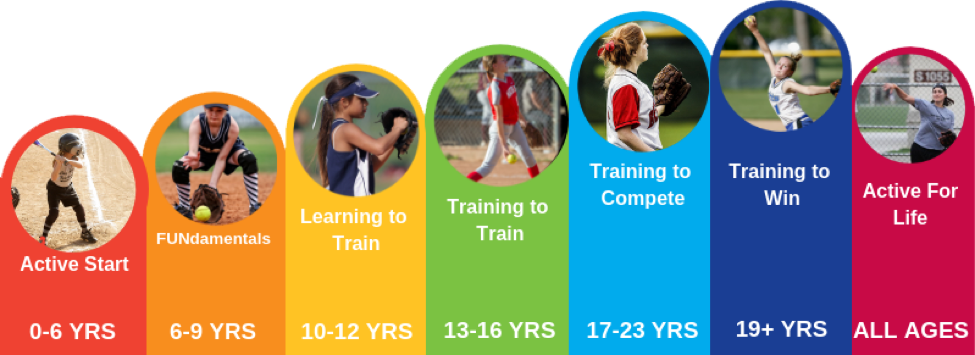
Although LTAD (or variations) have been around for decades, and developed by our very own Sport for Life in Canada, we still face our challenges for our grassroots coaches to have heard of LTAD, let alone implement it in their coaching and development programs. Why? Because in Canada we have so many sports groups, NSO’s (National Sports Organizations), Provincial Governing Bodies (i.e. Via Sport, Alberta Sport Connection), PSO’s (Provincial Sports Organizations), RSO’s (Regional Sports Organizations) and lastly LSO’s (local sports organizations) Compound that with the explosion of private programs thanks to the early sport specializations including academies, travel teams, or “elite” leagues for 8 year olds, many of which are unsanctioned where the coaches do not require to become certified under the NCCP program. The end result, each one of these groups have their own executive members, board members, policies, procedures, bylaws and initiatives each year that is leading to it taking years for it to disseminate to the very people that need it the most … the grassroots coaches.  Many of which are parents that have been recruited to step up to help and before they know are told they have become the head coach of a team even though they merely raised their hand to help on ice or in practices. This puts these parent volunteers in situations where they may or may not be comfortable with. A similar analogy would be if you were a high school student and applied to work as a cook at a fast food restaurant and the following day you were told that you were going to be the manager. Just like the players need time to develop all their core skills, so do coaches, and we truly need to look at our current system to ensure that these new coaches have ALL the tools they need before they are thrown to the wolves so to speak as head coaches. One being to ensure they know what LTAD is and why we should be adhering to so kids develop over time, participate in as many physical activities or sports as possible to avoid burnout, overuse injuries and love the game more at the end of a season than the beginning. It’s one thing for a former professional hockey player to lose the love of the game in his 30’s after playing for decades, it’s another thing altogether when kids start hanging up their skates at 10-11-12 years old because their coaches did not follow LTAD and started introducing systems, tactics, way before they should. In sum, LTAD outlines the various stages that coaches should be focusing on that is age appropriate. Below is a modified image for the Softball BC presentation that outlines the stages of LTAD, but like Hockey Canada, Softball Canada has opted to call theirs LTPD = Long Term Player Development (same guts but tweaks relative to their sport)

Stage 1 – Active Start – 0-6 Years Old

This is when kids should be exposed to as many activities as possible that involves running, falling, getting up, throwing, catching, swimming, biking, skiing, snowboarding, one handed strike (i.e. tennis), two handed strike (softball) and list goes on.  That way kids develop Physical Literacy, they develop the confidence and initial competence in a number of core motor skills so they are ultimately active for life Stage 2 – FUNdamentals – 6 – 9 Years old This is when kids should sample as many sports as possible to build on those core motor skills, softball in spring, soccer in fall, skiing/snowboarding in the winter, playing in the playgrounds year round etc etc. This not only includes organized sports, but free play, unstructured with adult supervision (yes you heard me right, let kids play with a coach, parent, ref present so they make their own teams, form their own rules and more often than not will play for HOURS) Nothing frustrates me more when I see kids at this age group already starting to specialize in ONE sport, they should play EVERYTHING until they find ones they enjoy most Learning to Train 10-12 Kids should continue to play 2-3 organized sports (ultimately not concurrently unless sports orgs provide schedules to permit).  Also encourage them to participate in free, unstructured play like pickup basketball, soccer, street hockey, playing catch, Frisbee etc. to become the best athletes, not sport specific players. I know that many parents that have their kids playing “elite” level at 6-7 years old are going to counter me on this, but I don’t believe that kids should even play competitively until they finish this level of LTAD, I believe every NSO should be looking at not tracking outcomes of games (scores, goals, assists) until kids enter high school. This is also the critical years for motor skill development, so coaches should be focusing on skills stations, free play, creativity that relates to individual tactics NOT jumping to team tactics and strategies as kids can execute until they have the technical skills to do so. WHY? If it worked for Norway, who won 39 medals this past winter Olympic Games and are the all record hold for most medals since the inception of the winter games, who does not permit their kids to compete until 13 and are one of the only nations that are not experiencing the attrition rates many other countries are where kids quit by that age. Train to Train – 13-16 Years This is when coaches should introduce team tactics and systems but continue to focus on core skill development.  Too often I see coaches implementing specialty units like power play, penalty kill and depriving 2/3 of the kids on teams from the opportunity to do in games and it can start as early as Stage 2 – Fundamentals. What happens? Parents complain about playing time, kids are deprived their opportunity to contribute and it leads them to quitting. Training to Compete – 17-23 Years Old IF kids followed the right pathway and did not specialize prior, this is when they should consider focusing on the sport they love the most BUT I still encourage kids to continue playing complementary sports so 2 per year Training to Win – 19+ Years Old Then once they graduate from high school … pick the one they love most and focus on competing at the highest the level they aspire for. Active for Life The GOAL – that all kids are active for life, less than 1% will go on to play professionally or collegiately, if they love being active will ski/snowboard, play adult rec hockey, slo-pitch (or fastball), golf, tennis, biking, running and so on. The other reason why our youth sports coaches are not adhering to LTAD is the pressure they face to win so start implementing tactics, strategies in the earlier stages that should be focused primarily on core motor skill development. Everyone then get frustrated watching kids play in games that they can’t execute systems that they don’t have the skills for, coaches are still learning also as our parents, exec members. We could all learn from the likes of Norway, just let the kids be kids, Play, Have Fun and not worry about outcomes until they reach their latter teens. We have our work to do to ensure that our youth sports coaches are armed with all the tools they need to follow LTAD, and it all starts with the grassroots coaches and parents. Just let kids be kids, encourage them to sample as many sports as possible, and then encourage them to pursue the one they LOVE the most in their late teens. Let’s all work together to bring the game back to the kids … where it belongs.
Don`t be a kids last coach