Win with Humility, lose with dignity

Posted Posted in Athlete, Coach, Parents

Happy New Year Everyone, hard to believe that 2020 is now behind us and hopefully will see a better normal in 2021.

Like many, I shut down our office Dec 18th and returned back on Monday Jan 4th and as I reconnected with many of my Canadian counterparts in particular when I asked how their holiday break was the answers were literally all the same …”had a opportunity to spend quality time with immediate family due to limits on social gathering, got lots of rest, watched many of the World Junior Games, read some books”

Same for yours truly, this fall proved to be the business Oct-Mid December timeframe I have had in years a result of various summits, coach clinics, webinars I hosted and when Dec 18th rolled around was really looking forward to doing the same.

As I watched Team Canada on their run starting with their first warmup game on Dec 23rd and sadly lost their team captain, Kirby Dach early in the game to a broken wrist (I knew right away when I watched him head off the ice as have dealt with several players over the years that did the same) I thought to myself what a crappy way to start.

Hockey Canada CEO Tom Renney left the bubble to take Kirby to the hospital and was forced to quarantine in his room for another 5 days as a result but said when interviewed later in the tournament that it was the right thing to do, Kirby’s family could not be with him due to safety protocols and Kudos to Tom for doing so.


As the team entered the round robin and won games by significant margins (highest being against Germany 16-2) what impressed me the most is how they won the games with humility.

Unfortunately one of the tournament tie breakers is goals differential and when teams enter the cross over round goals for and against may impact their placement, but one of the rules that the IIHF implemented to limit blowouts was enforcing running time like they do in minor hockey tournaments.

When I watched the last game with my family much like many other Canadian families did on Tuesday I wore the same Hockey Canada Hoodie that I had since the first warm-up game and after the second goal was scored by Team USA early in the second period I went and got my Hockey Canada Hat and reversed as a rally cap as had done for years playing baseball/softball/slo-pitch but Spencer Knight and the rest of the USA team just did not give Canada much by keeping them outside the dots (limited high % scoring chances) other than a handful vs. what had been the case against other teams they faced.

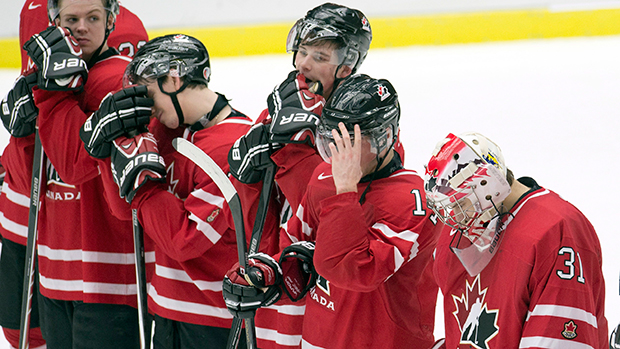
When Bowen Byram, alternating Captain for the game required for IIHF rules (although Kirby remained captain on the team even though injured) was handing out medals to his teammates I could see the raw of emotion and disappointment that he had and brought back vivid memories for me for many of the teams I coached over the years when I was doing the same, handing out either the bronze or silver medals to my players after a tough loss.

What I would tell all of them before we hit the ice or the field for that last game of a tournament was three things much like coaches I had did growing up;

  1. You worked hard to get to this game and all anyone can ask of you is for you to leave everything you have on the ice or the field and when the game is over whatever the outcome you can hold your head high


  1. Make sure that you win with humility or lose with dignity, after the game no one should know whether you won or lost, there is nothing worse than when teams rub salt in a wound with excessive celebrations when they win or poor sportsmanship when they lose


AND


  1. Most importantly, go out there, don’t worry if you make a mistake as your team mates will have your back and you will have our support as coaches and have FUN, getting to the final game in tournaments does happen often, relish the moment.


These three messages were shared with me over and over as I played numerous competitive sports and helped me overcome the adversity of tough losses like Canada’s young men experienced this year as well as taught me the importance of humility when we did win gold medals, banners, tournaments etc.

It also served me well for post-game talks as a coach, whether we pulled off the win or had a tough loss, to share how proud I was and reinforce how proud the players parents were of their kids for their amazing runs whether it be at a tournament or the end of a season, provincials etc.

Probably the best post game talk I have ever seen is one I wish I had seen early on in my coaching career, when David Belisle talked to the little league world series team he coached after being knocked out of the tournament I have shared in talks for both parents and coaches.


Whatever sport you are coaching, whether it be individual or a team sport, please ensure that you teach your players the same valuable lessons, as it is our responsibility as coaches not to make a living, but rather make a difference by developing youth into adults.

Kudos to Team Canada for their amazing run this year dealing with all of the adversity from losing the team captain out of the gate, challenges of the bubble, quarantine, being apart from their families with no fans in the stands and making all of us in Canada proud.

I am already looking forward to watching the next world juniors which also will be held in Edmonton/Red Deer in December but this time the fans, including the amazing supportive parents, should be in the stands to cheer on their sons as they chase their dreams wearing their countries national jerseys.


Don`t be a kids last coach

I am proud to be Canadian.

Posted Leave a commentPosted in Athlete, Coach, Organization Executive, Uncategorized

As today marks the official full week return to work, school after the holiday break I would be remiss in not talking about this year’s World Junior Tournament that was hosted in my hometown, Vancouver, BC and across the Pond (ferry ride) in Victoria. Like Mikey Dipietro who tweeted after Team Canada’s tough loss to Finland, I too am proud to be Canadian (albeit equally as proud of my Irish heritage) and like it was during the Winter Olympics in 2010, it was amazing to have the opportunity to see some amazing hockey being played by the future prospects of the NHL.

Although Vancouver has hosted the World Juniors in 2006 this was the first time that I was able to get tickets to see live games, starting with the cheap man’s version of pre-competition games where I got to see Jack and Quinn Hughes for the first time live and said to myself Vancouver Canucks FINALLY have a power play D-Man, prospect Quinn Hughes did not disappoint, and whoever wins the draft lottery this coming draft, which also is being hosted in Vancouver, will get another “pretty good player” as his younger brother Jack is pegged to be the #1 overall pick.

I was then offered free tickets to see Czech Republic vs. Swiss, Canada vs. Swiss and thanks to my wife’s cousin having purchased 4 corporate seats and two sons getting hit with the same flu that I was recovering from, the opportunity to see the Gold Game USA vs. Finland.

I also watched a few games on the tube as I do every year including the New Year’s Eve game Canada vs. Russia and the semi-final match vs. Finland.

Some of my key takeaways as a result of seeing both live and TV versions of this year’s World Juniors;

My whole life has revolved around Hockey and many other sports and nothing makes me prouder than when Canada wins gold in an international tournament like the World Juniors but as Hockey is now a global game, as this year’s world juniors and those over the last 10 years have shown, anyone can win on any given day (as not only Canada found out but so did Sweden who was 48-0 in round robin play and lost to Swiss in semi-final game).

Although Team Canada dominated Denmark (14-0), strong game vs. the Czech’s (5-1) they won by only one goal against the Swiss that I saw first hand, then lost to Russia by one goal, then lost to Finland also by one goal that knocked them out of the tournament.

Soon after the Finland game, team captain Max Comtois was berated on social media with various comments from “fans” who critiqued him for missing the penalty shot that would have tied the game BUT what none of these naysayers knew is Max played thru a separated shoulder he sustained in the tournament that will mean he will miss minimum 2 weeks from his Junior team Drummondville.

This when Telus shared their #endbullying commercial with Jordan Eberle for the second year in a row how over 1 Million kids are cyberbullied yearly?

As my Nanny (grandmother) told me all the time, if you don’t anything good to say, say nothing and ALWAYS treat others as you expect to be treated.

The lack of respect in hockey and other sports is one of my biggest pet peeves today and we must bring respect back into the game to eliminate harassment of ANY KIND.

TOUGH PUCK LUCK – What about the tough puck luck in the Finland semi-final?

With 46 seconds left to play and Canada up 1-0 (always scary in any game to not have an insurance goal) and Finland scores a pinball-type goal that would be worthy of the McDonalds commercials several years back with Michael Jordan and Larry Bird. Off the net, a shin pad, stick, then backhand off Dipietro to find the top shelf only for Mikey to look at his teammate in utter disbelief?

What about the wide open net that Noah Dobson missed because his %(^()$*^% composite stick broke in OT that lead to an odd-man rush by Finland that leads to the game-winning goal? If Gordie How could score as many goals as he did with a wooden stick, flat blade and have a wrist shot over 70 MPH, there is something to be said about being old school, I still don’t believe in composite sticks as they lead to too many missed scoring opportunities when they break like this time.

At the end of the day as the final game I witnessed proved, Finland was the better team in the tournament but had Canada gotten some better puck luck perhaps they would have least made it to the medal round.

Mike Dipietro, goalie for Team Canada who suffered that tough puck luck showed the epitome of class and the importance of losing with dignity when he shared his tweet;
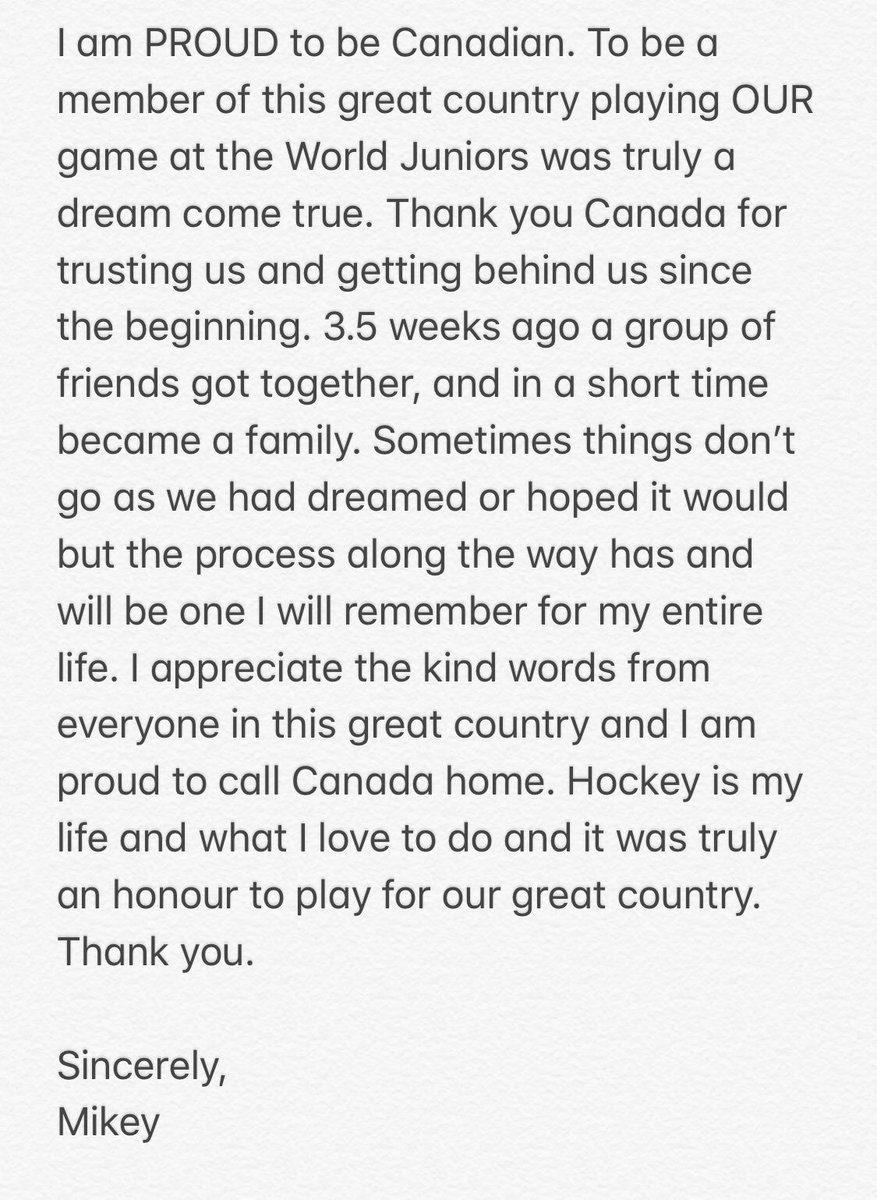



One of the best moments in the world Juniors was when the fans chanted DI-PI-ETRO and he mother broke into tears, too often we forget about the support that all these players get from their families and friends.

What Team Canada’s early exit showed is that Canada still has their work to do to repeat and setting our high expectations what they did 5 years in row 1993-1997 and then again 2005-2009 winning gold so it has set our expectations high every year Canada suits up for the World Juniors.

Since 2010, however, Canada won gold in 2015 (Connor McDavid one of the co-captains) and 2018 and the only returning player from LY was the very same Max Comtois, team captain, who was a victim of the ridiculous and cowardly social media rants for not scoring on the penalty shot (with a separated shoulder).

We have our work to do in Canada to reach that same level and a few other countries have shown they have moved in the right direction to give Canada a run for the money at their own game.



They too suffered some bad puck luck, having the first goal they scored called back as one of their players was in the crease violating a IIHF rule?  We were seated right behind the Finnish net at the time and the US player was mauled by the two Finnish D-Men leaving the other US player to jump on the loose puck and bury it in the net.

Had that goal counted, perhaps it would have been the US anthem played at the end of the game as all games had been won by teams that scored the first goal in the games.

It did not help that USA could not score on any of their 5 power plays although there were flashes of brilliance and posts hits on some shots, the puck did not cross the line when it needed to.

USA Hockey has been setting the bar for LTAD for years now, with their adaption called the American Development Model (ADM) which includes several years head start for cross ice hockey for the younger players, small area games for all age groups, smaller nets, lighter pucks, coaching certification relative to age groups to adhere to the levels.

Ken Martel, Technical Director, ADM for USA Hockey and many of his regional managers including Bob Mancini whom I had the opportunity to talk to for our winter summit which we will be replaying latter part of January, have done an amazing job with Team USA

Click on Video below for more insight;
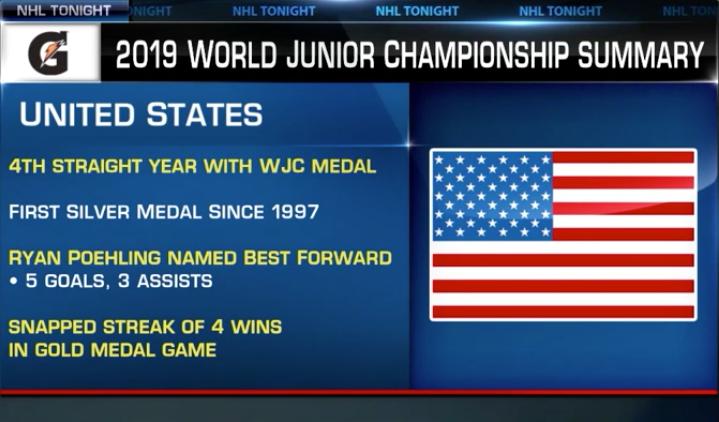


2019 is the 4th consecutive year that the USA has medaled in the tournament, Ryan Poehling is named the top forward, the Hughes Brothers and many other prospects including Keith Primeaus son (goalie) will potentially have long NHL careers.

This is not just a result of the ADM model, but is also due their National Team Development Program starting with 16 and 17 year olds (the time when kids should look at specializing NOT before) and some other pretty good players have come out of the program including; Austin Matthews, Jake Eichel, Matthew and Brady Tkachuk and many others.

TEAM FINLAND

 

I have no idea why everyone had Finland a dark horse in the tournament, as Finland has now won 3 GOLD medals since 2014, all three of those same Major Junior Tournament years Canada did NOT MEDAL. (First Column = Gold, Second = Silver, Third = Bronze Medal)
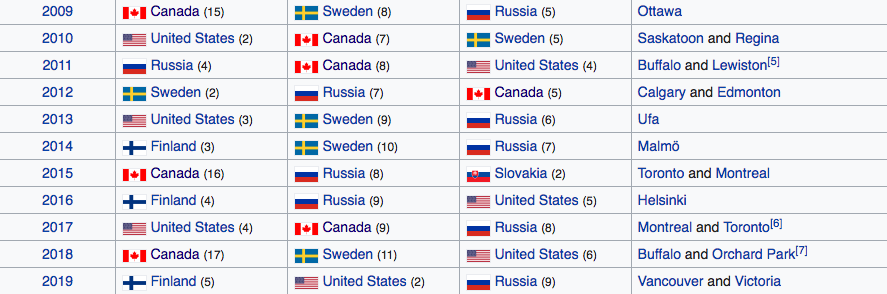
 

This reflects Finland’s commitment also to LTAD, focusing on practice to game ratios much higher than Canada 3,4 or 5:1 relative to the stages that kids are at and like Sweden, and they have been focusing on the importance of coaching the person as we shared about Erkka Usterland who lead Finland to Olympic Silver in 2006.

They have been setting the bar for a good athlete focused coaching for years, and the results are showing on the worlds stage.

The gold game that I had the privilege to watch on Saturday night was the top two teams in world juniors since 2010 and although Canada is the all-time leader since the world juniors started decades back (17 Gold Medals, 10 of which due to 5 consecutive golds in the 90’s and early 2000’s pre 2010), if we don’t change our system NOW, we will continue to fall short at the Juniors and other international events.

Recommendations for change to our grass roots programs leading to high performance

  1. We need to focus on development, not competiton.

The easy fix in the rep stream – replace on of the game slots (currently in western Canada rep teams play 2 games, 2 practices and a dryland) with a practice slot and VOILA, we have a 3:1 Practice to game ratio and kids will develop vs. overly compete

DON’T sign up for Spring hockey unless it truly is a Spring Development, once, twice a week max working on skills, small area games, cross ice etc. but no games or tournaments as players develop in practices NOT games.

Play other sports in the Spring and Summer, Hockey is already the longest season of any sports and kids need to take a break from the ice so they can develop other motor skills that will translate to Hockey (i.e. Sidney Crosby batting pucks out of the air)

2.We need to have our best coaches in the trenches, grass roots when kids are developing their core motor skills between the ages of 9-12 to learn LTAD, Fundamental Movement Skills, Physical Literacy. I have had over 3000 coaches in clinics alone and when I ask the question how many coaches are familiar with these concepts, only a few hands go up so we have so much work to do to get our coaches on board.

  1. We need those coaches to recognize there is so much more to coaching that writing up drills on a white board and focus on the person, not the outcome as well as the importance for life-long learning.  The NCCP program ran by Coaching Association of Canada in conjunction with Hockey Canada is now requiring coaches to get a minimum number of professional development (PD) credits but it has been a long time coming


  1. We need to eliminate old school coaching practices at all levels that for some reason people did not think there was anything wrong with it when Swiss Coach berades players on their team for making mistakes as he did in the game vs. Sweden.
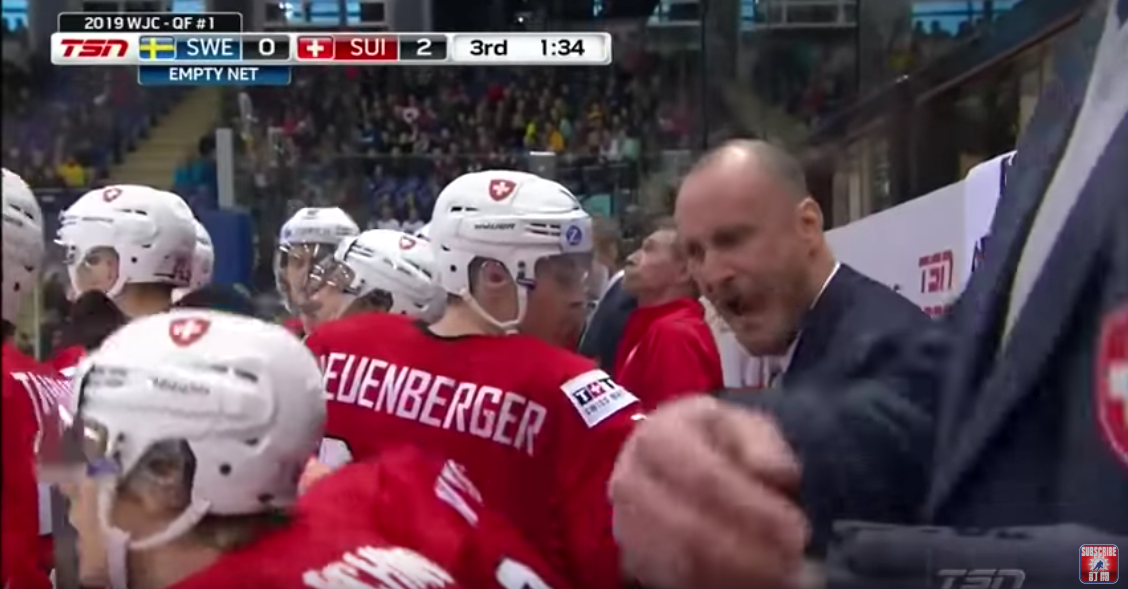
 

Swiss Head Coach Christian Wohlwend screaming at Sandro Schmid for mistake made touching puck causing it to go offside in last 2 minutes of game vs. Sweden.

Had Swiss lost the game, I suspect this video clip would have gone viral calling for him to be fired, but because they won and qualified to be in the final 4 (losing to Russia in the Bronze game) commentators merely shared that he was hot under the collar and smoke coming out his ears?

Ironically, one of those former old School Coaches, John Tortorella, who was infamous for his player rants on the bench and was advised by Columbus if he was going to continue coaching he would have to become more athlete focused recently shared this quote we posted to twitter;
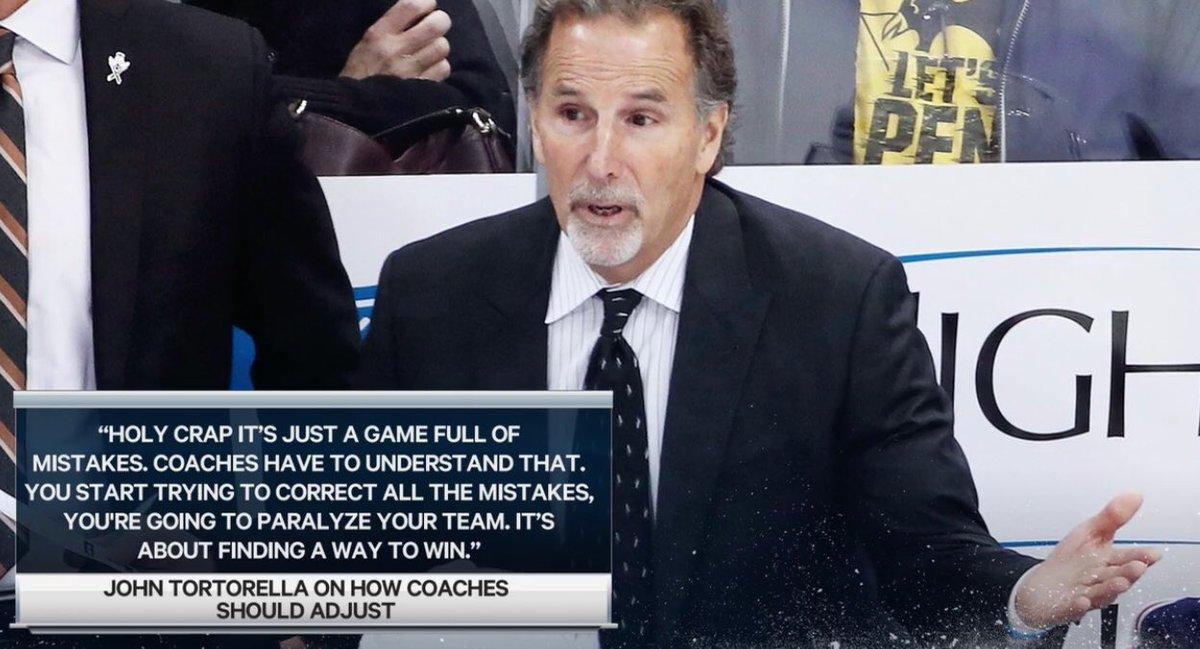
 

Swiss Coach may have accomplished the win by putting fear into his players or as some of the players stated was being honest with them but using a totally different approach merely by pulling the player aside and showing him on a whiteboard what he should have done in lieu, as the old cliché goes, you get much father with honey than you do with vinegar.

The only way that any of this will happen, however, is if Parents who are paying the bills are educated why other nations have caught up to us in terms of their programs and coaching development and how they will continue to excel if we don’t change our culture and systems NOW.

Like Mike Dipietro, I also am proud to be Canadian, but we can no longer do the same things over and over again and expect different results (Einsteins definition of Insanity). We need to implement a significant PARADIGM shift in our development model so we don’t fall further behind other nations as we have this past decade.

Otherwise the worst 4 words anyone can say will be posted in one of our blogs years from now ….


I TOLD YOU SO.

 

Don`t be a kids last coach


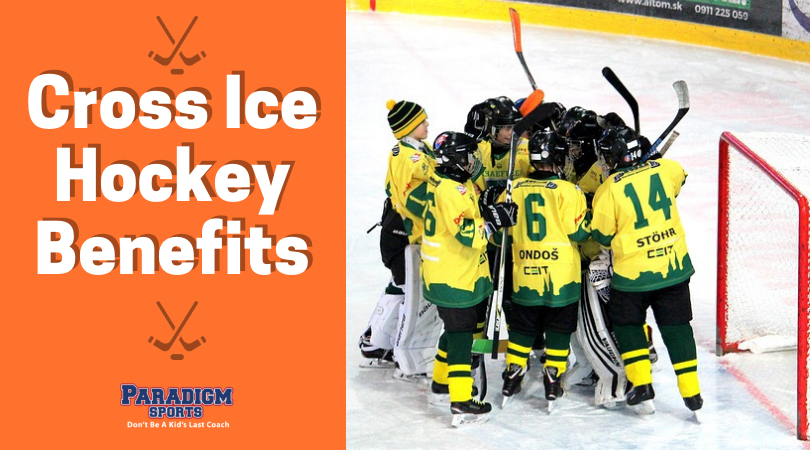
Cross Ice Hockey Benefits

Posted 59 CommentsPosted in Uncategorized


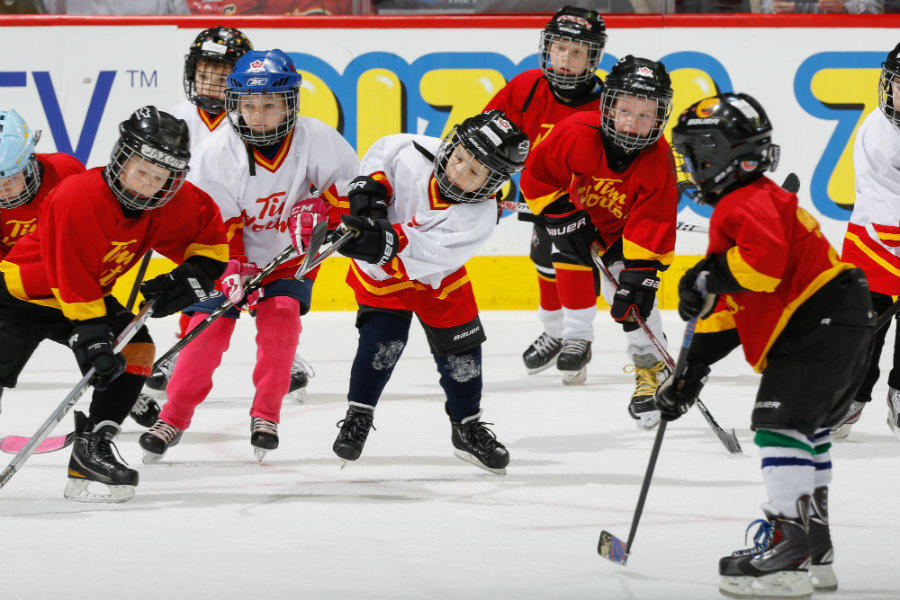
Source: Getty Images

BONUS – Download a Free Copy of this Blog in PDF Format HERE  

As we are only a few weeks away from kids, coaches and parents returning to ice rinks for the upcoming hockey season I thought it was a good time to discuss the benefits of Cross Ice Hockey.

In many of the clinics I have ran over the years I play clips from a video of Don Lucia when USA Hockey was introducing their ADM Model in 2007.  He touches on several key points, one being his belief that tykes (5-7 years old in the USA) should be playing cross ice games, not full ice.

That was 10 Years ago, right when I was coaching very same age groups and thought the same, as he referenced it was like adults playing on a football field, there would not be much back checking. My analogy for full ice game play for Novice was Beehive, as the lesser skilled players would literally chase the stronger players all around the ice surface, many of which would not touch the puck at all during an entire game.

Below is a short clip that USA hockey did put together several years later showing what it is like for adults to play on a similar playing surface to a football field with nets that are approximately twice the size as traditional hockey nets.


USA Hockey mandated Cross Ice Hockey for their 5-8 year old age group in 2014, then for the 2016-17 season, BC Hockey mandated cross ice for the same age groups (Initiation 5-6, Novice 7-8). Saskatchewan Hockey implemented for initiation (5-6 yrs old) group only last season, and in March of this year Hockey Canada announced they will be mandating cross ice hockey nationally for the Initiation Age Groups.  As far as I am concerned, it should have happened years ago and I applaud all of the governing bodies implementing to adhere to LTAD.

While I was running clinics last fall and interacted with coach coordinators, coaches and parents in those same age groups there were many that were for the implementation of cross ice, but also many against. Literally every clinic when I was going to or leaving benches I would walk past parents that were huddled up expressing concerns that cross ice would not prepare their son or daughter for Atom (9-10 yrs old).  I also would hear concerns about it not preparing them for the rep level of Atom, which is supposed to be development age group but give players of higher skill to play with kids of similar skill.

What I found coaching both Atom Rec (House) teams and Atom Rep teams was the same, as soon as kids entered that age group it became competitive even though we should still be adhering to LTAD and learn to play at that age group.

Why ?

Because players do play full ice, they do keep track of scores, wins, losses so teams can win a league or playoff banner regardless if playing rec or rep streams.

That is also when the insanity starts to escalate in the stands.

For all those naysayer’s that I came across last season, I would pull out my smartphone and play the following USA analytics videos for parents to show them all the benefits of cross ice hockey;

According to the analytics, the benefits of small-surface play vs. traditional full size play are as follows:

  1. 2X the body contact battling for the puck
  2. 6X more shots per player
  3. 2X more puck touches per player
  4. 1.75 shots per minute on goalies vs. 0.45 on full ice
  5. 2X more pass attempts per player
  6. 5X more passes received per player
  7. 2X more changes of direction per player

Advanced players benefited even more

  1. 2X more puck touches
  2. 2X more shot attempts
  3. 2X more pass attempts

These are the reasons why USA Hockey, BC Hockey and now Hockey Canada are implementing cross ice for the youngest players, to give them the opportunity to touch the puck vs. what I referred to as bee hive hockey for the first few years.

For the skilled player it is not much fun and for the lesser skilled players it becomes very frustrating and many will give up on the game well before they should as they never touch the puck.

I also had coaches or hockey executive members complain about the following issues;

  1. BC Hockey only gave them 2 months notice to implement, it was voted on at the annual AGM in June and all MHA’s in BC were expected to implement in Sept.

My reply, if we continue to delay, we will continue to fall behind other nations like USA and Europe.

  1. The costs to purchase the boards used to split into two, or for the creative associations 3, sheets of ice to permit cross ice hockey was in the area of 30K and for many smaller associations would require they raise reg fees to absorb the expense.

My reply – it is a one time expense and the cost savings permitting 2-3 teams on one ice surface (with ice costing approx. 200-300.00 per hour depending on where located) should offset within one or two seasons (depending on how many H1-4 teams associations have).

  1. The logistics of setting up for the younger age groups then taking down for the older age groups to permit full ice play would take up to 30 minutes and would affect the total ice time available for all hockey age groups, but also ringette, figure skating, public skating etc.

My Reply – I have known some AMAZING ice schedulers over the years who can make adjustments on the fly to accommodate and having multiple teams share once ice surface would permit potentially more ice slots for the older age groups.

Cross Ice Hockey for U9 age groups is a long time coming, and if you have followed the world juniors the last 2 decades if we do not go down the same path as other nations that are implementing cross ice play for the younger age groups we will continue to struggle at the international level.

The World Juniors has been a showcase for the worlds top U20 players, many of which have been drafted or draft eligible for the NHL.

In the 2000’s Canada dominated, winning 5 consecutive gold medals.

They then won Silver in 2010 and 2011, Bronze in 2012 and did not medal in 2013 or 2014.  In 2015 thanks to an emerging “pretty good player” Connor McDavid and outstanding play by many of his team mates Canada did return to the podium for Gold only to not medal in 2016 and lose to the USA in 2017.

Brent Sutter, coach of the 2014 team that did not medal stated when interviewed after the tournament that he would like to see more skill and creativity and that is what they got beat by on some nights. This starts at the grass roots level when kids are in the early stages of LTAD, and he further comments on the fact that the current Canadian Youth Hockey Model puts too much emphasis on competitive play (games) vs. skill development in practices.

Click here to read the full Globe and Mail article

Although many parents aspired for the kids to play at the rep level where teams are assured to get 2 practices a week, as a result of our current system it still works out to a 1:1 practice to game ratio.  I believe in atom and peewee ages groups which are the key development years of skill acquisition that we should revisit this model and rep teams should only play one game per week and replace the second game with a practice to ensure optimal skill development.  This would change the practice to game ratio to 3:1.  It would not require any additional ice to do so, merely converting one ice slot that is already assigned for those teams to a practice vs. a game slot.  By doing so, I believe the skill and creativity level of Canadian born players would increase exponentially to ensure that we remain competitive at the international level.


Hockey Canada 2014 World Junior Team after loss to Russia in the Bronze medal game

USA (3), Finland (2), Russia (1) and Sweden (1) have been the other countries to reach Gold since 2010, all of which have invested heavily in LTAD models.

Although Canada once was Canada’s #1 Youth Sport, it no longer is for a myriad for reasons, Soccer is now the #1 youth team sport by over 100,000 registrants.  Jason De Vos, Director of Development and the rest of the Soccer Canada team also are looking at various means to improve skill development in the younger age groups.

Why ? Because Canada National Men’s Soccer (European Football) program is ranked 117th in the world.

In the keynote presentation he did for Ontario Soccer we shared in this weeks newsletter, he referenced the transformation that Iceland did with their National Football Program, in 2000 they were ranked 131st in the world but due to various initiatives they implemented (including focus on LTAD, skill development with the younger players) they not only qualified for Men’s Europ Cup in 2016 they WON against England !!  Iceland is now ranked 23rd in world as a result and are 1/10th the size of Canada or 1/100th the size of USA in terms of population.

Another nation that has developed some pretty good NHL players is Sweden.  They implemented Cross Ice Hockey years ago, and play until they are 10 (atom age group), and then full ice non-competitive games (no scores kept) until they reach the Bantam Age Group (13-14 years old).  They also have a practice to game ratio of 5:1 as it is in practices (when planned well) that players develop.

Every single coach who played his youth hockey in Europe that I have interacted with over the last 10 years, including several who played professionally, state they don’t understand why there is such an emphasis on competitive games vs. skill development.

For me it started in my first year coaching minor hockey in 2004, H1, 5 year old kids and there were no games, just skill development ice slots but we did incorporate small area games in. Only a month into that season several parents asked me and fellow coaches “when are we going to play games”, to this day I still shake my head the question was posed, most of the kids could barely stand on their skates without falling down and parents wanted to see full ice games.

I look forward to seeing the impact cross ice hockey will have in the coming years, and other initiatives as they are rolled out to continue focusing on Hockey as a long term player development model.

Let’s work together to bring the game back to the kids.


PS Tagline - Dont be a kids last coach