
Why we host online events

Posted Posted in Athlete, Coach, Organization Executive, Parents, Uncategorized

It’s hard to believe but I am really excited to announce that we will be hosting our 4th Online event this fall to follow the prior 3 where I have had the opportunity to talk with some of the world’s top experts in youth sports.

Mark your Calendars for our next event – Monday, Nov. 18th to Sunday, Nov. 24th, 2019

Although I have now coached for over 25 years, every person that I have had the opportunity to talk to has shared tons of tips and tricks to help me become better, and I am looking forward to learning from the next group of guest speakers that have accepted our invitation to share their words of wisdom.

If you have not signed up for one of our prior events I encourage you to consider doing so as the one thing that I came to realize in my coaching journey to date is there is so much more to coaching than writing up drills on a whiteboard.

Below is the blog that I wrote prior to our summer 2019 event that highlights why you should consider signing up for our fall 2019 online event.

Based on feedback we received from coaches that signed up for the summer and past events we have made the following tweaks for the upcoming event;

The video interviews that we will share when the event goes live Nov. 18, 2019 will be edited down to 15-20 minutes highlighting the deep dive portion of our conversations focusing on the guest speakers area of expertise, books they wrote, work they are doing to attract/retain and grow their memberships, creating cultures of excellence within their teams or organizations and many other tips to help you become better as a coach.

Our goal is to have 15 guest speakers (5 confirmed thus far) and like past events, we will have a replay of all the speakers from the prior event (total 30).

The best part, we will run it for FREE for the week we go live with cost-effective options for you to have on-demand access after the fact.

If you are currently coaching at the grassroots level of youth sports and just getting started or have coached for 2 decades and are at the high-performance level or anything in between I can’t say enough how much you will benefit from watching any of the interviews so you can add to your tool baskets.

For more insight on the 5 W’s + How, check out below.

Click HERE to go to our event page that we will be updating regularly with new speakers as they are added

As Online events (AKA Virtual Events, Digital Summits) are still a new platform with the evolution of the digital era and we have had people ask us questions the last two events I felt best this week to share insight in terms of the 5 W’s  + H for more insight in terms of our online event so you or your colleagues can consider signing up.

 

The online event consists of a series of interviews with guest speakers that are similar to podcasts, but in lieu of audio only, are recorded in both audio and video so that you can see both the host and guest speakers, majority of which will do so in their offices, homes but some in hotel rooms, on decks, at their cabins, wherever they have access to the internet.

Why do we prefer to share video and audio?

When I talked to John Kessel and Gordon Bloom, they provided me with a virtual tour of their offices by turning or walking with their laptops, both of which highlighted momentos they had from Coach John Wooden that you would not “see” on a podcast.

HOW COOL is that?

The analogy I have shared with speakers who ask for clarification is to think of it as a video podcast where 20+ speakers are released at once vs. audio-only podcasts one per week.

In the case of our online events we hosted last year, we have had various sports and free play leaders from across the globe who are asked a series of general questions then provide insight in terms of their specific work or fields of interest.

All of our mutual goals is to stop talking about the issues revolving around youth sports and focus on those that activate and provide opportunities for kids to have a quality sport experience and opportunities to PLAY For the Love of The Game.

All are asked for top book recommendations for coaches, parents as well as resources, podcasts, social media references and so forth.

The Best Part?

The week we host the online events they are FREE

This summer you will have access to 30 speakers, over 30 hours of digital content for FREE.

If you traveled to a conference where many of our guest speakers speak at, to see perhaps 3-5 keynote speakers your out of pocket expenses would be over $2000.

Even if you sign up to watch ONE speaker to gain more insight, I can tell you first hand it will be well worth it, as each one has shared nuggets that I have added to my tool basket and have now coached for over 25 years.

As coaches are in essence teachers and vice versa, the very reason why we host the online events is to provide grassroots coaches, many of which are volunteers, the simplest and most cost-effective way to add to their tool baskets as coaches.

When I have interacted with coaches across Canada, many have shared with me that they either don’t have the time or they can’t budget to attend live conferences or summits that are hosted by their national, provincial sports organizations.

Two of the largest conferences that are held in Canada hosted by Sport for Life and the Coaches Association of Canada are held in various cities across the country that not only have registration fees of several hundred dollars, but if the conference is not being hosted in your home town, airfare, hotels, meals, rental cars can lead to out of pocket expenses in excess of $2000.

I can relate all too well to how those costs can add up and be too much to bear.

The other excuse that I hear from coaches, as recently as this week when I attended the Cost of Winning screening hosted by my alma mater, UBC Kinesiology, is coaching in itself is a huge time investment to not only plan practices, coach at games but all the planning and other activities needed to be a coach.

This is where I argue all the time with that excuse, in order for you to become the best coach you can be, you have to invest in your own learning by continuing to learn.  Teachers are required to do ongoing professional development each month every year they teach and coaches should be no different, your purpose is to develop youth into adults.

How will do so to the best of your ability if you don’t continue to hone your craft as youth sports leaders?

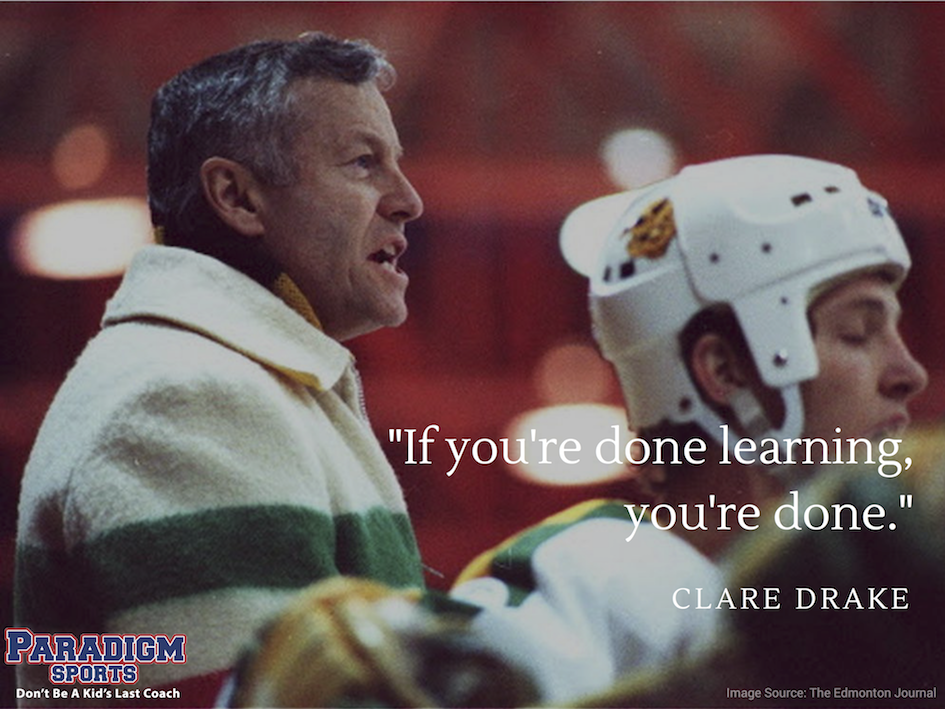
Per the late Clare Drake, Canada’s GOAT

If you’re done learning, you’re done.

Clare was infamous for being invited to speak at numerous conferences well after he retired and after he spoke would go down in the seats with fellow coaches and start writing pages of notes.

When prompted why he did so as he was no longer coaching or teaching at the U of A

He would reply, like John Wooden who did the same, “Because I may learn something”

The event is virtual, they are accessible from any digital device that you are able to stream from the internet so you can do so when it is convenient for you to do so.  We then share out the audio-only portion via podcast after the fact.

Per one of our upcoming Summer event contributors, John Kessel, when I asked him how coaches can shave 5 years off their learning curves, he said listen to podcasts and I was humbled when he said that ours was one that was “Rock Solid”

Online events traditionally run over the course of one week, starting with a few speakers on the first day then others are added each day thereafter and the links to access arrive in your inbox daily until the event is over.

As we now have people following us from various parts of the globe (truly humbled and appreciate you doing so), we will have the speakers go live at 12 AM PST each day so should be in your inbox when you log on in the AM so can watch at your leisure.

Our Fall 2019 Online Event will run live Monday Nov. 18th to Sunday Nov. 24th, 2019

We plan to release 3 speakers per day over the course of the week across a range of topics and then another 15 will be made available from past events over the weekend

30 Speakers – 4 Countries – 3 Continents – Multiple Topics and Sports 



This is the best part, many of the speakers that we have reached out to are highly sought after keynote speakers who have spoken at conferences and events all over the WORLD and share their insight for youth sports leaders to become the best they can be.

Speakers that have confirmed thus far for Fall 2019 Event are:

Trevor Ragen, Founder of Train Ugly

JP Nerbun, Founder of Thrive on Challenge

Guy Faulker, Producer of Running Free Documentary, UBC School of Kinesiology Professor

Many others to follow, keep checking our event page for updates

Some of the speakers from our summer 2019 event we will reshare are;

John Kessel (Director of Development for USA Volleyball)

Brian Barlow (Founder of Offside Facebook Page and StopRefAbuse.com)

Topher Scott (Founder of The Hockey Think Tank)

Dr. Peter Gray (Professor at Boston U, Ted Speaker on the decline of free play)

Dr. Mariana Brussoni (Professor at UBC, Investigator at Children’s Hospital Research Institute)

Dr. Nick Holt (Associate Dean and Professor, School of Kinesiology, University of Alberta)

John Engh – (COO & Executive Director, National Alliance for Youth Sports)

Luke Earl and fellow co-founders of Top Sports

More to follow plus bonus replays from our winter and summer 2018 events for a total of 30 guest speakers from Canada, USA, UK and Australia

Each one of our speakers shares insight to help youth sports leaders learn how to shave years off their learning curves, learn the characteristics of great coaches, what they can do so kids love the game more at the end of the season than the beginning of a season and other valuable insight.


Click on our online event image below to go to our event page for more info and to sign up FOR FREE

It’s that easy.

As we get closer to the online event latter you will receive more information and on Monday July 15th we will release a link to access 3 speakers right into your inbox, 3 more each day for the remainder of the week then 15 more speakers Saturday morning (Total 30 Speakers).

If you are a grassroots coach just getting started in the recreation stream, coaching in the competitive stream or even high-performance levels, a youth sports parent, board member, official or an athlete I can say with absolute confidence you will learn tips, tricks, and golden nuggets to add to your tool baskets so you can become the best you can be and help others do the same.

Let’s all work together to bring the game back to the kids ….where it belongs
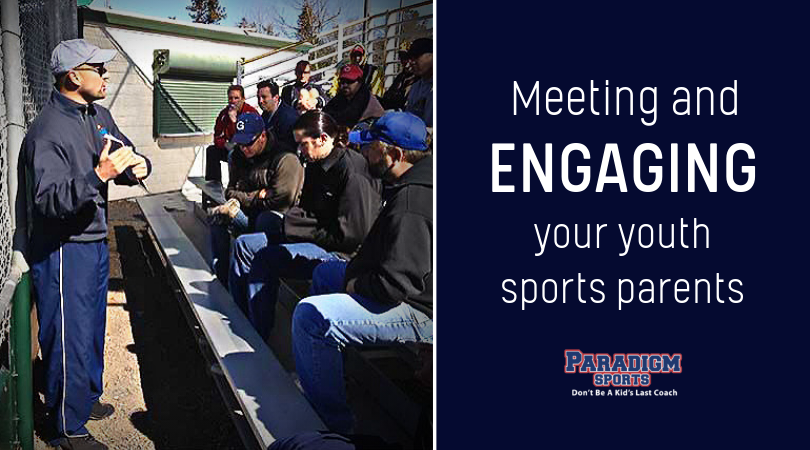
Meeting and Engaging your youth sports parents

Posted Posted in Athlete, Coach, Organization Executive, Parents

As I shared in last years post “How to engage, not deal with, Parents” the #1 question I still get asked all the time by coaches is for insight “how to deal with parents”.  I immediately counter by saying you should not deal with your parents, in lieu engage them as part of the team, when you are coaching any youth sports, the players on your team will have parents or guardians that merely want the best for their kids.

The sooner that you shift your mindset to engagement, support, collaboration vs. many coaches and organizations “Us vs. Them” approach, the sooner you will be steering your teams to have amazing seasons regardless of the outcome on the scoreboard.

As many sports have ramped up with their tryouts for competitive teams and evaluations for their recreation teams one of the best ways you can do so is starting your season once teams are formed with a really effective parent meeting.

The KEY is to have answers to the 5 W’s and H so you can share in that meeting, this will be the building blocks for credibility and trust so everyone has a great season;

Below is the agenda with some key pointers on how to do so;


“Well, who are you? (Who are you? Who, who, who, who)

I really want to know (Who are you? Who, who, who, who)

Tell me who are you? (Who are you? Who, who, who, who)

Because I really want to know (Who are you? Who, who, who)”

The first thing that you need to cover when you start your parent meeting is welcoming the parents to the meeting, thanking them for making the time and supporting their kids and introducing yourself and your team.

Think of it as sharing your linked in or CV in a face to face to face meeting

  • How many years have you coached?
  • What Age Groups? Level of Competition?
  • What is your certification in coaching?
  • What is your education?
  • What are you doing to continue to improve as a coach?
  • What playing experience do you have? (Just because you played to a high level does not mean you will be a great coach, i.e. Wayne Gretzky)
  • What’s your day Job (the majority of coaches are volunteers)

Don’t make the mistake that many younger coaches do and introduce yourself as the head coach ONLY, also have your assistant coaches introduce themselves and share their philosophies as well. My son was on a team where the assistant coaches were never introduced and it was half a season before he even knew their names !!  Needless to say they never really came together as a team due to what was an oversight by the young and inexperienced head coach.

Tip that I share with all coaches is to recruit a team manager in advance of the first parent meeting and discuss with them how the communication should flow, in many instances team managers can be the first go-to for general inquiries, advising if players will be late, are still following return to play protocols, are sick etc.



 

This permits the coaches to focus on coaching vs. handling the administrative tasks that a great manager will take care of on your behalf.

A great manager is worth their weight in gold (make sure you thank them all season long for their help and give them credit for same) and they should also have opportunity to introduce themselves and can prepare and handout all the paperwork in advance of the meeting (i.e. sending medical forms, codes of conduct, contact info out PRIOR to the meeting so parents come with)

The manager can also give all the parents the heads up prior to the parent meeting will be looking for the other crucial members of the “team” which are the volunteers to help out with;

  • Safety person/Trainer: the person that will be responsible for dealing with any injuries that players sustain, sickness, adherence to return to play protocols as well as checking equipment. All teams should have two, a primary and a backup to ensure that they always have one at all team activities.


  • Timekeeper/Scorekeeper: this could be a few parents for the season or rotation of all parents so everyone takes turns


  • Jersey Keepers: who wash the stinky jerseys after every game (usually one family for home, another for away jerseys)


  • Snack Coordinators: up to Peewee as most kids beyond that have their nutritional preferences pre-post game. This is a very important role for two reasons; (1) many kids have allergies so they can ensure that the snacks don’t have peanuts etc. and (2) it is one of the driving reasons why kids play “What’s the Snack”


  • Treasurer: who setups up and manages the team’s bank account (along with minimum one other with signing authority to ensure full transparency of team funds and accountability)


  • Tournament Coordinators: those will be involved with association hosted tournaments on the team’s behalf (i.e. arranging scorekeepers/team keepers, snacks in dressing rooms post/pre-game etc)


  • Team Parent: One that has the best job, organizing the team functions like lunches/dinners at tournaments, windup parties


  • Den Dads/Moms: If coaches are unable to make it to games/practices there should be a couple of parents that can monitor the dressing rooms (ensuring they have the organization certification like respect in sport or safety training to do so)


ALL Teams regardless of the sport should have 2 ADULTS in the dressing rooms until the last player leaves, kids should never be alone with an adult. Why?

Because we don’t need any more kids abused in youth sports, per CBC’s series of articles early 2019, in Canada 222 coaches were prosecuted for abusing over 600 athletes across various sports since 1989.


ONE IS TOO MANY.


  • Fundraising Coordinator(s): As Youth sports continue to escalate in costs, this has become another important role on teams, don’t assume that everyone on the team has the same financial situation, respect that the costs may be too much and figure out creative ways to raise funds to help reduce the team budget.


  • Stats: This is the role I usually recruit for parents that may be a little overzealous in the stands to keep them busy during games


Any travel tournaments should be voted on and anything is done to offset the costs for hotels, bus, meals etc. as they can cost families anywhere from $1500-3000.00 on average that is NOT in the team budget. This can take a team budget from 25K to actual out of pocket costs for all families if two travel tournaments to over $100K


My general rule of thumb is every family should volunteer in some capacity, if they have work commitments that prevent them from taking on one of above, then help the organization with various events like floats in parades, Terry Fox Runs, Equipment reshares/sales etc.

This is also the opportunity for you to share with parents how they can support their kids during the season to ensure they have the best experience.

Things like please let the coaches coach, avoid yelling instructions from the stands/sidelines or in the car, ensure they get proper sleep, play video games in moderation, avoid junk foods and sports drinks (the best is cold water until they are late teens), etc.

This is also the time that I make book recommendations, share video links and do so thru the season to ensure that the ship continues to move in the right direction.


In your introduction, also share Why you coach, which I suspect may be one the top 3 reasons that coaches coach based on surveys I have been done with coaches over the years or it can be something different altogether but parents will want to know you Why.

#1 – They have skin in the game – Their kid is playing

If this is the case, within 4 weeks of coaching if it is your first time as a head coach hopefully you clue into the fact that you have just adopted 10+ more kids as they become part of your family and to treat your son or daughter the same as the rest of the players and vice-versa.

#2 – For the Love of the Game

They coach because they love the game and they want kids to love it like they do.

Kids should love the game more at the end of the season than they did at the beginning if you do your job right.  If so, they will come back the following season with HUGE smiles on their faces.

Sadly, youth sports continue to face challenges to attract and retain their players recently has been shared by the Aspen Institute that 62% of kids in the USA are quitting youth sports by the age of 11 (yes by the age of 11, on average having a 3 year career in youth sports)

Canada’s attrition rates are as high YET, but having worked with many US companies in my past life I know that Canada follows their trends a few years after the fact.

Please ensure that kids on your team “don’t retire” as this campaign is highlighting


#3 – To Give Back/Pay Forward

Coaches put their hand up to do so as they want to give back to their associations or pay it forward so kids have a great experience (or ensure they don’t have a bad coach like they did)

Once you cover Why you coach, you also should take this time to share what your philosophy is of coaching and it amazes me as I have interacted with coaches from across Canada how few have a philosophy, and even if they do, how few have it in writing.

This should identified on your handouts that you provide to parents so they know right away what your philosophy is and should be no more than a few bullet points or sentences.

Philosophy goes hand in hand with why you coach and is tied in with your core values as to what you believe in.

  • Do you believe in fair play?
  • Do you believe in respect, honesty, integrity?
  • Winning with humility and losing with dignity?
  • Respect?
  • Making a difference by developing youth into adults?
  • Developing other life skills like work ethic, resiliency, communication, leadership?
  • What is your playing time policy?

By having it in writing, as much as it may put you on the hot seat, it will ensure not only that you talk the talk and walk the walk by holding you accountable just as you will do with your players.


What is your season plan?

When will the team practice, play games, do any office activities or development?

This addresses the question all parents have in terms of what will it cost in terms of time but it is also important that you address what it will cost in terms of $$$ in detail during a follow-up finance meeting

“Show me da money”

My advice is you touch on what the team budget will be in the initial parent meeting and they have a separate “Finance” meeting to go thru every line item with parents to ensure that they are onside.

As many organizations only require coaches to budget the registration fees for travel tournaments in their team budgets also, please respect the fact that every family has different financial circumstances.

Also, if you want to ENGAGE parents, refrain from using mandatory with exception what should be per organization and league policies (outlined in expectations below)


Where are the practices?

Provide maps with the locations for your regular practice slots as well as share where your homes and away games will potentially be (usually away games subject to the tier that your team is in after balancing rounds)

Also share where the tournaments may be that you are aspiring to enter the team into and any out of province or country must be voted on based on organization policies.


#1 Code of Conduct

Many national or Provincial Sports Organizations have parent, player, coach and officials contracts to outline the expectations to adhere to which are a good start but I encourage you to modify based on what your expectations are

Respect for all is one of my 3 rules which I spend time going thru and another is zero tolerance for any forms of harassment.

In order for your parents and players to understand the various forms of harassment, however, I suggest that you table that to another meeting where you review what they are (i.e. what is cyberbullying, sexual harassment, hazing) and then have all players/parents sign off they attended.


#2 Your expectations

When you want players to arrive for practices? When do you want them to be ready?

Keep into account the age group you are coaching, if they are “the little people” many will get dressed at home and arrive a few minutes before a practice but as they kids get older and to limit time explaining drills etc during the practice I ask all players to be fully dressed 10 minutes prior to practice

When do you want players to arrive for games?

Again, be realistic to the age group and level, a rule of thumb is 30-60 minutes prior to games so the players can do a warm-up and be ready 10 minutes prior to games for chalk talks.  Be respectful in your ask for the players and their families times, particularly if they are driving long distances and moreso recognizing the importance of recovery and rest for early morning games

Dress Code for games, practices, other team activities?

Expected Behavior at same?

#3 – Communication and dealing with disagreements

No matter how effective your initial and follow-up meetings will be with parents, players, it is important that you outline how the team will communicate in terms of scheduling, budgets and other asks.

Many sports teams are using Apps like Team Snap for team communication, others use social media but as this generation of kids are the first to grow up 100% in the digital era ensure that you use Aps that THEY use like Instagram, Texting and EVERYONE is on the distribution list to avoid any potential of cyberbullying

This is also where you should highlight your expectations for parental behavior, the most powerful words you can share with them is “Just Love Watching them Play” and also the basics in terms of not letting their emotions (lizard brain) get the better of them.

Parents and players will react as you react, so if you are calm and positive during games and practices they will follow suit, however, if you become emotional it will lead to a domino affect.


IF you have one of “those parents” who have the tendency to yell instructions or criticism towards players, coaches, officials the sooner that you have a face to face meeting with them to address the better.  If you still don’t work things out, then escalate to a board member as parents should be just that parents and watch and support all the kids on the team in lieu of acting up in the stands.

One of the things I share with parents if they feel their emotions getting out of whack (which is referred to as the lizard or chimp part of the brain that controls emotion, irrational behavior), to take a breath and say “serenity now” to calm down.  If they do act up I have personally escorted away from the game so they could calm down as many parents don’t know that the players will make fun of teammates in the dressing room when they do so.  In essence, they contribute to their kids becoming bullied and is against our code of conduct.

We all have to be reminded at times that it is just a game, played and in many instances officiated by kids, coached by volunteers.

MANDATORY – Although I truly avoid mandatory there are a few things that you need to mandate as a coach to adhere to association policies;

  1. NO EMAIL when it comes to issues/disagreements. They can be taken out of context and go viral where it could come back to bite all parties on the string.
  2. 24 Hour policy – If parents have an issue please ask them to wait 24 hours before reaching out to coaches or manager to ensure emotion does not come into play
  3. Zero Tolerance for any forms of harassment – The only way that we are going to eliminate harassment from youth sports if coaches become the advocate for same.
  4. 2 Deep Rule – ALWAYS 2 adults in the dressing room area to ensure the kids are safe, this could be


GOALS For the Season

This is when would touch on what your goals are for the team but ensure that they are realistic, and how you are going to achieve them, t amazing me how many coaches go into those meetings saying our goal is to win the provincials even though they have no development plan to do so.  As the cliché goes, if you fail to plan, you plan to fail.

I also encourage all coaches to do measurement (baseline, mid and end of season testing) with their teams as well as goal setting with their players so they can have end of season meetings with parents and players what they achieved individually in lieu of relying on outcomes (the standings and the scoreboard)

Below is a summary agenda as a template as well as other recommended meetings to continue to engage parents as well as your players

FIRST PARENT MEETING AGENDA – Max 60 Minutes


  • Welcome/Introductions
  • Why you Coach/Philosophy
  • Code of Conduct/Expectations
  • Season Plan
  • Tentative Budget (follow-up Finance Meeting in detail)
  • Communication/Dealing with a disagreement
  • Parents Help (Volunteers0
  • How Parents can Help their Child
  • Goals and Aspirations for the Season
  • THANK YOU


Other Meetings

Team Meetings – Players Only – Review much of what was covered in parent meeting (exclude budget)

Team and Parent Meeting – Code of Conduct, Various Forms of Harassment and goal setting

Ask parents what their expectations are and players what their goals are and have a group discussion to ensure that they are aligned

Team Meeting – Developing Values/Culture for the team (you are the facilitator, not the dictator)

Finance Meeting – review budget in detail, get all parents onside (mandatory that a parent/guardian for every player attend)

Parent Meeting – Pub Night, Dinner etc to get to know each other can be parent only or can be something like team (parents and players) bowling, laser tag parties

Team Storming Meetings – Address any discipline issues and what it will get to get thru the storming period so can get to norming and PERFORMING

Team Meeting – Bonding, Developing Chemistry/Trust doing a non-sport specific activity (i.e. if hockey team, rent a gym to play basketball, floorball, go-cart racing, trampoline park etc)

Parent Meeting – Mid Season, End of Season Recaps

Team/Parent – End of Season Windup

The KEY to engaging parents on your team is to be PROactive and positive in terms of your communication and never forget to mention how important it is for everyone, parents, players, coaches to HAVE FUN.

Too many kids are quitting a game they once loved due to various issues that affecting youth sports, and the goal should be for them to have active lifestyles and play well into their adulthood.

Let’s all work together to bring the game back to the kids … where it belongs.


BONUS – Download a FREE printable PDF version of this blog HERE


Don`t be a kids last coach

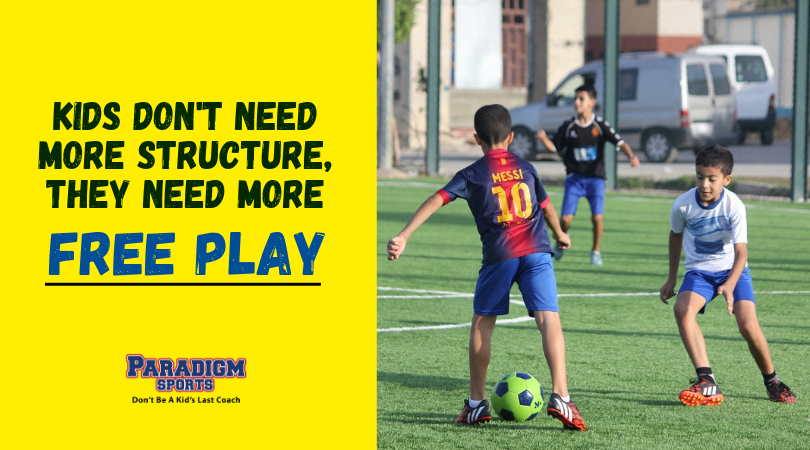
Kids don’t need more structure, they need more free play

Posted Posted in Athlete, Coach, Organization Executive, Parents

Two years back I wrote about 5 different initiatives in the USA that were focusing on unstructured or free play “Bring Back More Free Play” and although I have seen a PARADIGM shift of sorts with some youth sports, others have gone the other extreme where the costs and time commitment are pushing so many kids out.

Compound that with the fact that less and less kids are playing outside without direct supervision like we did as kids and as Peter Gray shared in his great Ted Talk below the decline in free play has lead to an increase in mental health issues.

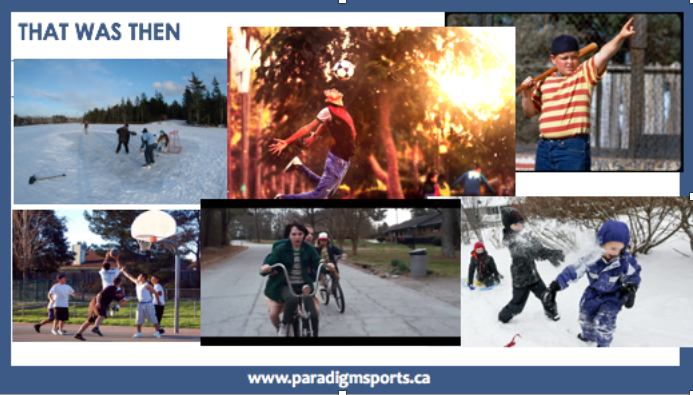
I think back to my childhood and have shared as the first slide of our core talk, Don’t be a Kid’s Last Coach, titled That was Then where I pulled some random pictures from the internet that reminded me of some of the vivid memories I had growing up.

Yes I played a lot of organized sports and I have great memories of my teammates, coaches, team dinners, pool parties and some of the milestones where we achieved our end of season goals, but a lot of my memories were from the free or unstructured play I had.

Below is a screenshot with images that I have shared in Don’t Be a Kid’s Last Coach that I titled That was Then;


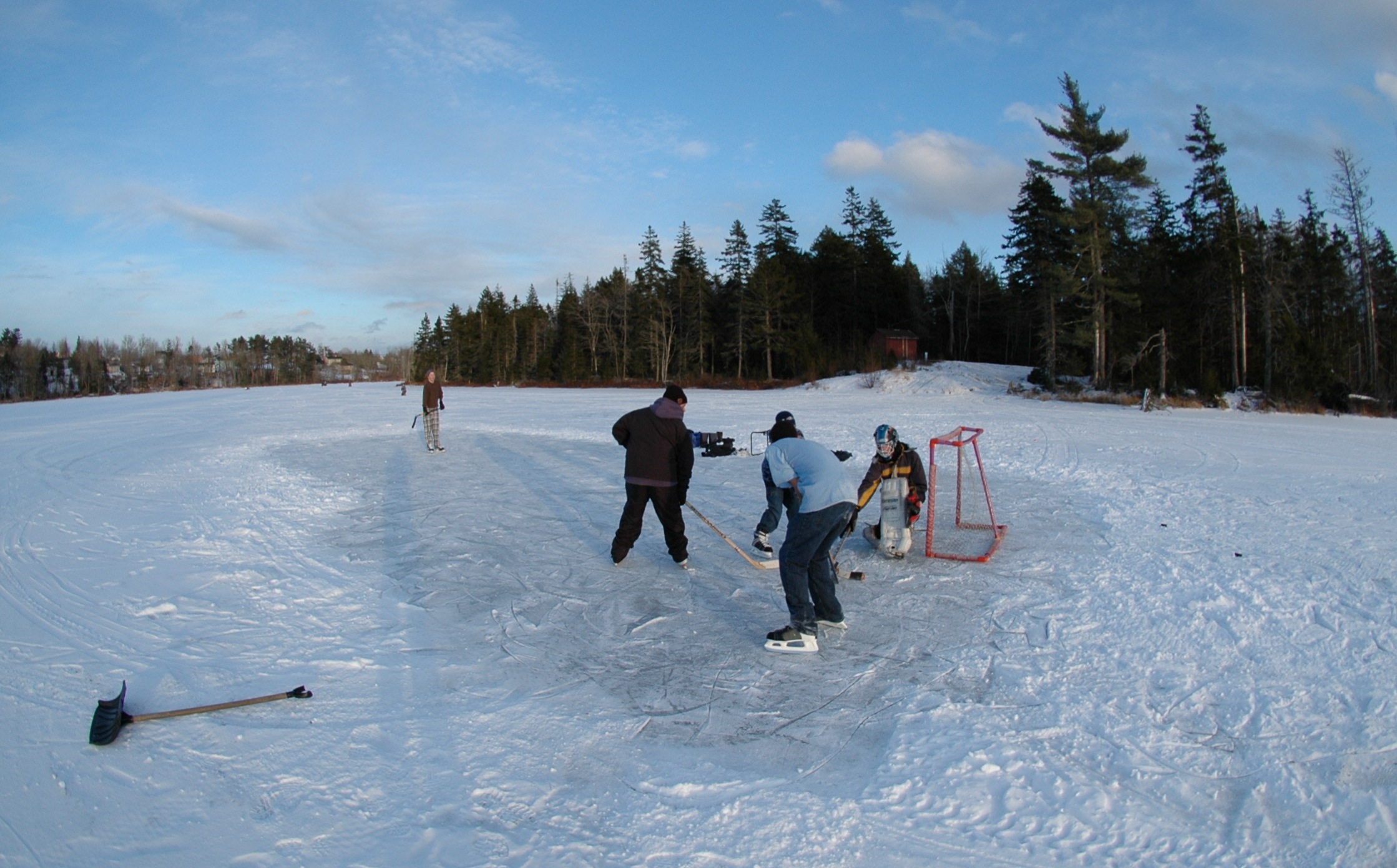
POND/OUTDOOR RINK

I would be totally remiss in starting a presentation about free play if I did not talk about all the time I spent on outdoor rinks and ponds as a kid growing up in Quebec.  I also had the opportunity to do so on the Rideau Canal and even the frozen tundra in the Northwest Territories when I lived on Baffin Island.  What I remember most and all those that I have asked if they ever played was (a) how long they PLAYED and (b) only stopped because they needed food, go to the bathroom or parents came to get them as it was time for dinner.

Bobby Orr (who was pretty good) attributes the main reason he became the player he became was all the repetitions he had playing on the pond in Parry Sound, and I remind coaches all the time to ensure they have 10 minutes (minimum) of stick and puck (unsupervised ice time) for their teams so it equates to a few days over the season.

His Dad would merely remind him every time he dropped him off, “Bobby, just go out there, have fun, and see what happens”


RECESS SOCCER

I only played one season or organized soccer when I was 12-13 years old and as I really did not know the rules my coach made me the goalie.  Having played hockey since I was 3, I must confess being a goalie in soccer was not something I aspired for, seeing only a few shots a game and for the rest of the game looking at the stars or day dreaming.

I opted to play football in lieu and became one of the organized sports I played until Junior

What I do recall about soccer is all the time we played pickup games at recess, lunch hour, after school like the picture above.  Many times were on gravel fields and once I moved to BC, many of which were in the rain.

I loved to be outside with my buds just playing for the sake of playing


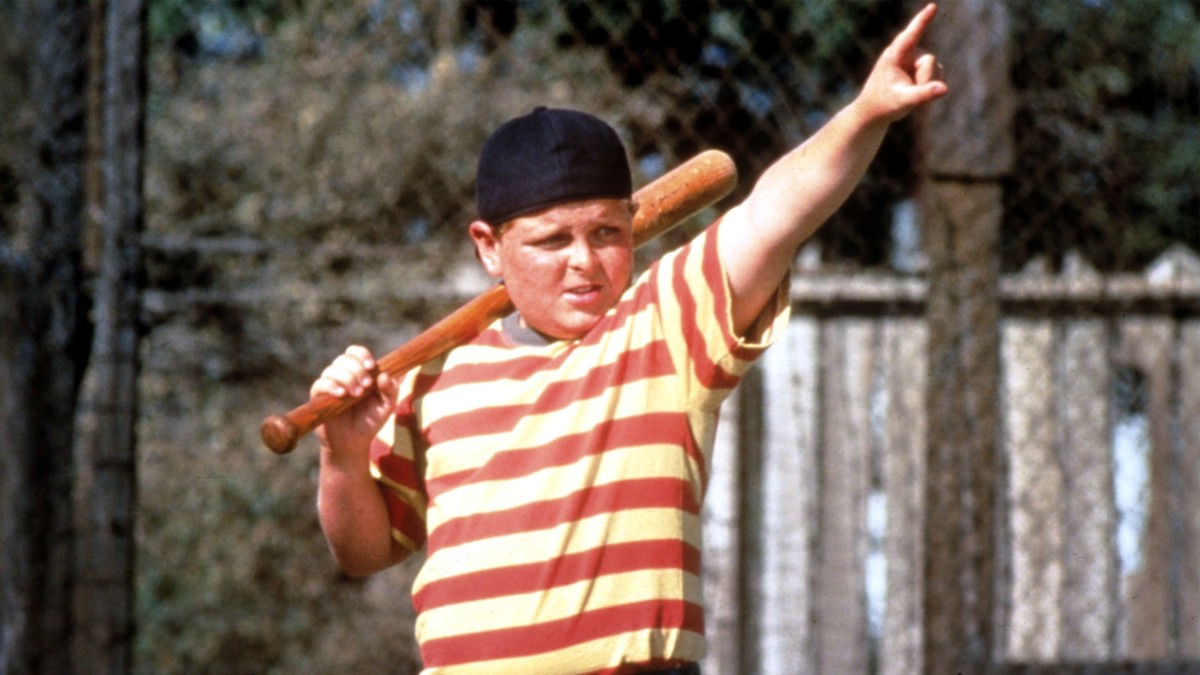
SANDLOT (UNORGANIZED) BASEBALL

The picture is one of the characters from the Movie Sandlot, whom I refer to is the younger me, at one point my hair was that brighter orange (has darkened over the years) and playing pickup baseball, scub, was one of my favorite activities in spring, summer even when I was playing organized ball.

We would just grab our gloves, hats, a wooden bat, any balls we had and head to the field.  We would elect captains and we picked out teams and played for hours on end.


PICKUP BASKETBALL

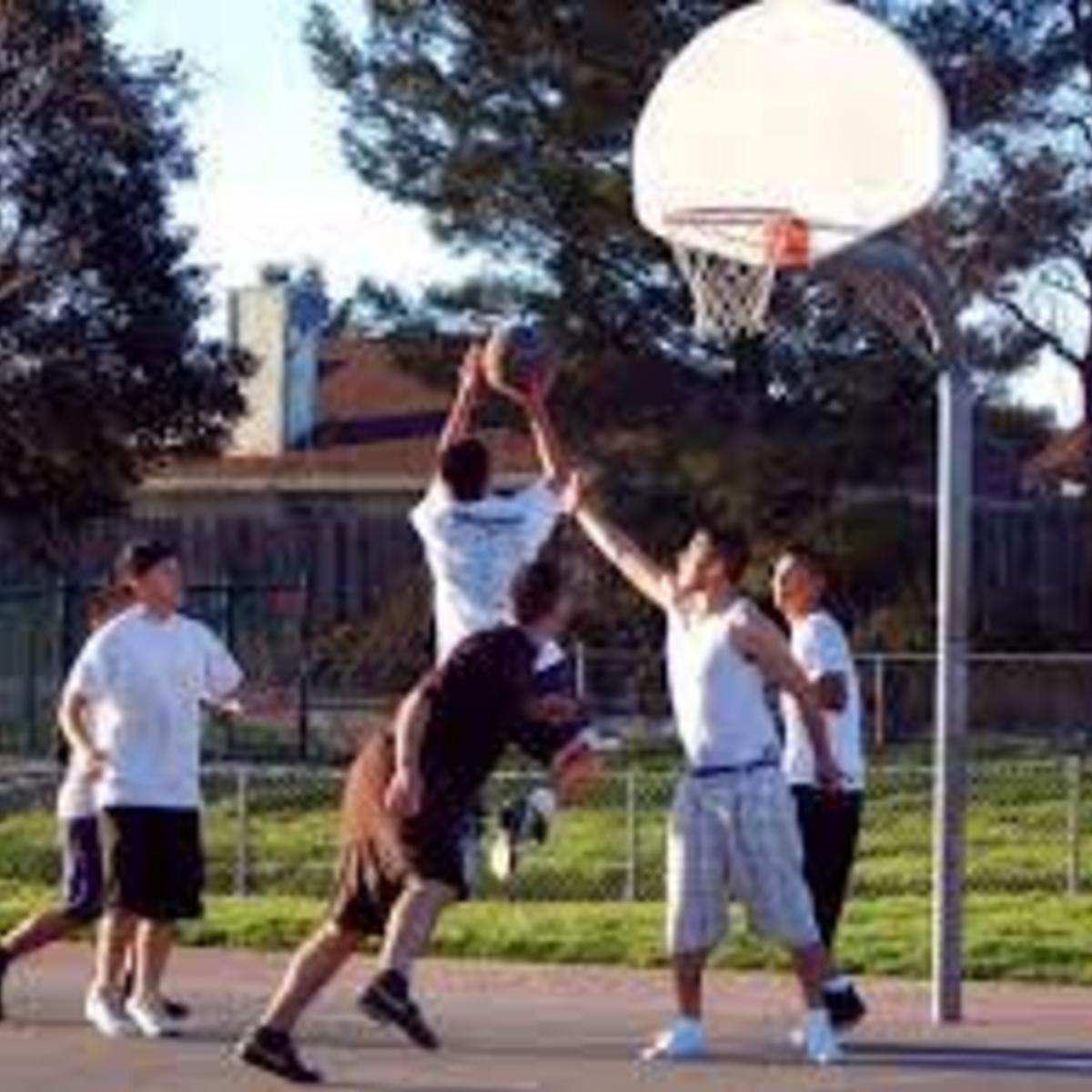
Another one of my favorites was playing pickup basketball outside at my schools or many of our houses (we moved every year until I was in grade 8) we had a basketball hoop either mounted on our house (leading to a few broken windows that ate up our allowance) or a wooden pole and went thru nets like many kids go thru candy.

The most fierce battles I ever had was the 1 on 1 battles driving the net with my friends or younger brother in our driveway where we all pretended to be Kareem Abdul Jabaar, Larry Bird or Michael Jordan.


Michael Jordan loved pickup basketball so much that he negotiated a For The Love Of The Game Clause in all of his contracts so he could play anywhere, anytime.

I did play a few years of high school basketball, and another favorite was when our gym teacher let our PE class play tackle basketball as most of us were playing hockey, football and rugby.  Yes there were some bruises, scrapes and other non-life threatening injuries that school insurance prohibits kids today to keep them in bubble wrap but where else would we have learned resiliency?


BIKE RIDES

I will never forget how my Dad taught me how to ride a bike, he got me training wheels and held my bike the first day and within a few days I had developed the confidence to break away from his firm hand on the handlebar.  My mother shared with me many years later as he passed away when I was 8 that after day one he raised the training wheels a bit, then another inch, then another so after day 1 I literally was on my own.

Although I loved to ride my bike from that time, it was a necessity as my father passed away a few years after he “helped me” learn how to ride the bike and my mother did not drive as a result of a couple of really bad accidents she had, one before she was married, the other when I was learning how to ride.  The second was so bad that she ended up in Montreal Neuro for over a year to recover from a broken neck and back so lived with my Nanny and my brother with our other grandparents as my fathers job was so demanding.

My Nanny had moved to Ottawa and had remarried to Papa John, and many times that year when the Rideau froze he would take me there so I could go for a skate, play stick and puck and have many vivid memories of those times.

Fast forward to when I got older it was the way I got to practices, games and earned money delivering papers after school for many years.

 Because my mother did not drive again until after my kids were born, I was saved from the infamous car ride (home as well as to the games) that many kids have shared is the worst thing about their youth sports experience also, and the only feedback she ever shared was how much she loved watching me play.


SNOWBALL FIGHTS

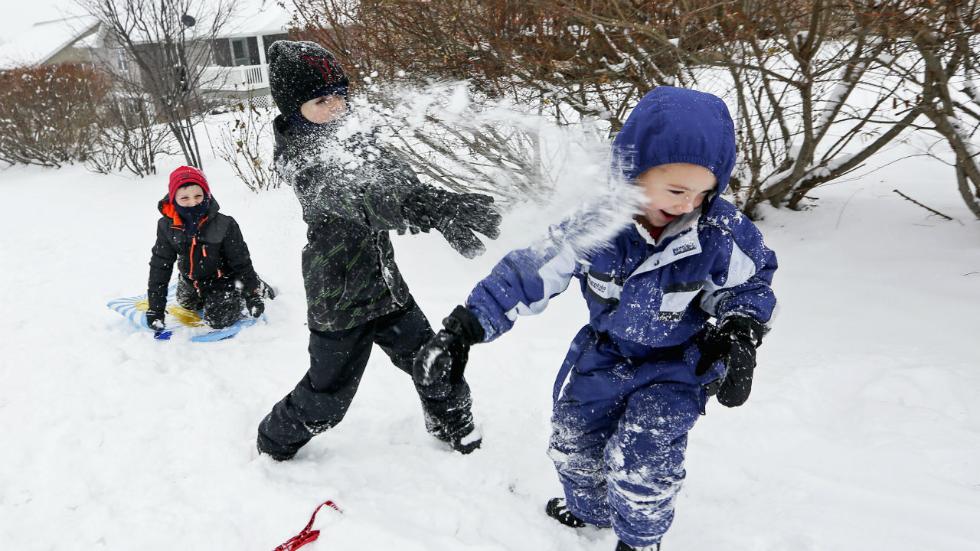
Like Pond Hockey, I also would be remissful not sharing the infamous snowball fights we had on a regular basis while in Quebec and took great pride in building our arsenal and HUGE forts for us to battle after school each day when the snow was perfect to make snowballs.

Sadly schools have now banned snowball fights as kids could get hurt … I don’t know, I took a few in the eye, forehead and am ok, like everything else, just because you MAY get hurt, does not mean you will.

It is also where I improved my throwing mechanics in the winter for baseball/softball in the spring, without which perhaps I would not have played at the competitive level for many years.

If you have read to this point there are probably many other images that you have of activities that you did as a kid as I did like British Bulldog, Beach Volleyball, Frisbee, playing catch, golf, tennis, racquetball, handball, stickball, street hockey, climbing trees, going to the school playground and so on.

I chose these particular pictures and ask the question in our talks “What is missing in the pictures?”

NO ADULTS  – NO PARENTS – NO COACHES – NO OFFICIALS – NO UNIFORMS

NO  $300.00 Composite Bats or Hockey Sticks, $1000.00 skates, 300.00 cleats, home and away helmets, gloves, pant shells, hoodies, nameplates etc.

We played for the love of the game.

We made our own teams, rebalanced as needed so no blow-outs occurred and we made our own rules and enforced them

We kept score merely for bragging rights, it was not about banners or trophies like it is today.

We had so much fun that we played for hours on end until it got dark.

In Spring, Summer and winter breaks ….Next Day  …. REPEAT and do it all over again or perhaps choose a different sport but sadly those days where kids played for the sake of playing have eroded.

Fast forward to this generation of kids and NBC shares how excited when they get to play “unorganized baseball” that even their own coach fessed up he had no idea how to do so?


Rule # 1 – Parents need to be quiet (if you ask any kid that is what they want when they play)

Rule #2 – Kids pick sides and EVERYONE Plays

Imagine – kids playing sports with no grown-ups involved screaming instructions from the stands, dugout or coaches that run short benches….

When asked after the game what he liked best, one of the players shared THIS (unorganized baseball).

Should we tell your Dad?

YEP.

Parents, Coaches. Executive members remember what it was like when you grew up and the fun you had when you just played for the sake of playing?

If we shifted the needle to promote unorganized games and focus on creativity, skill development, making friends, having fun to follow models like Norway and Sweden until the kids are in high school the current attrition rates where 70% quit by the age of 13 other nations are experiencing will reduce significantly GUARANTEED.

Kids don’t need more structure, they need more FREE PLAY.

Parents – Stop keeping up with the Jones with travel ball, Off-Season select teams, specialty trainers and encourage your kids to play For the Love of the Game again.

Let’s all work together to bring the game back to the kids …. Where it belongs.


BONUS – Download a FREE printable PDF version of this blog HERE

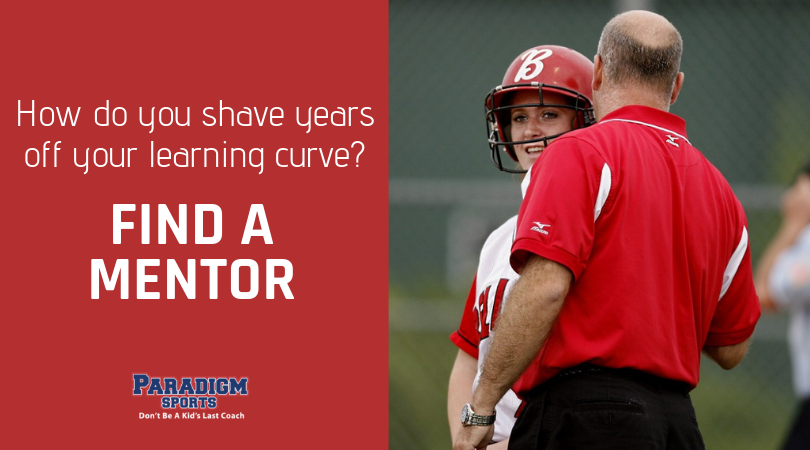
How do you shave years off your learning curve? Find a mentor.

Posted Posted in Athlete, Coach, Organization Executive, Parents


As we head into the upcoming fall season for many sports, I wanted to reinforce the importance for coaches to recognize the importance of lifelong learning.

Mentorship has always been something that I have believed in since I started coaching, initially as the mentee seeking the mentor, then as the years evolved it was I that was asked to provide insight to fellow or younger coaches as the mentor.

Last spring, I wrote about the importance of mentoring in “Coaching Skills in Sport and Skills in Life” that thinking back I should have titled the post “Ode to Glenn Zwick” as it was a tribute to the coach who acted as my mentor for many years who had probably forgotten more about hockey and softball than I will ever know.

Since that point I have had the opportunity to interact with some of the worlds top experts in sport across the globe while hosting our online events hosted thru our digital arm “For the Love of the Game” and one of the questions that I ask all guests is what coaches can do to shave 5 years off their learning curves.

To which many of the top experts I talked to shared what I truly believe in as well …

 Find a Mentor.”

One of which who shared that with me was John Kessel, Director of Sport Development for USA Volleyball, who has been coaching now for over 5 decades and has worked with thousands of players and coaches.

Had it not for Glenn’s mentorship when I first started coaching softball and hockey and then evolving into other sports, I can say I would have made many more mistakes (even though still had a fair share) and I also would not have recognized the importance of lifelong learning.

When I first graduated from my many years of university and college that last thing that I wanted to do was EVER read a book, particularly a textbook, or sit in on a clinic, course, conference or what have you.

Then I came across this quote by Clare Drake years after I graduated…..

Clare (Canada’s John Wooden) was infamous for speaking at conferences well after they retired and after they did so would go sit with the attendees and take pages of notes.

When prompted why they did so their answers would be … because I may learn something.

Great coaches recognize the importance of lifelong learning.

Having coached now for over 25 years, I can honestly say any time I have the opportunity to either facilitate a clinic or course, deliver a keynote or be one of the attendees I jump at the opportunity.

Why?

Because now I can hardly wait to learn more, add to my toolbox so I can help others do the same.

Every time I run a clinic or workshop it is not only an opportunity for me to present the course materials but to have the opportunity to share insight and also learn from all those in the room.

I also have had the true privilege to mentor the next generation of leaders from my Alma Mater, UBC Kinesiology, as a Mentor but also for various co-op students that have worked with us over the years who have been instrumental in our growth as an organization.

A year ago I highlighted many of those other co-op students who contributed in prior post à bientôt which I shared with the two students as they finished their summer co-op term last week and today our 16th co-op student started.

I am not a fan of saying goodbye, rather the French saying I learned long ago (at one point I was pretty good in French but as they say, if you don’t use it, you lose it) as I have had the opportunity to connect with many of our former co-op students over the years.

One reached out to me a few weeks back and said “let’s go for a beer” which was pretty cool and he shared all the different projects was working on and how happy he was to see our growth since he did the second pass of our PARADIGM Sports Website now 2 years back (hard to believe how fast time has flown).

I have also had students provide testimonials, even recommendations for co-op supervisor awards and the biggest honour I received to date was when I was nominated for an alumni builder award by my Alma Mater, UBC School of Kinesiology, for mentoring, participating in expert panels and career fair.


I truly value mentoring and now jump at the opportunity whenever I get a chance to do so, as without someone to mentor you, how are you going to become better as a coach to help your players do the same?

In the last couple of weeks, I was asked to present at the PCAHA (Pacific Coast Amateur Hockey Association) Coach Coordinator meetings regarding the changes that BC Hockey has made to the practice evaluation process for competitive coaches.

Our goal is to have every coach that attends a clinic complete their certification for all clinic requirements in one season, and the practice evaluation is the opportunity of coach coordinators, technical or athletic directors are various minor hockey associations to provide insight during a practice evaluation.

The whole intent of the practice evaluations is for coaches to be mentored from tenured coaches and receive feedback on what they are doing well as well as what areas they could work on.

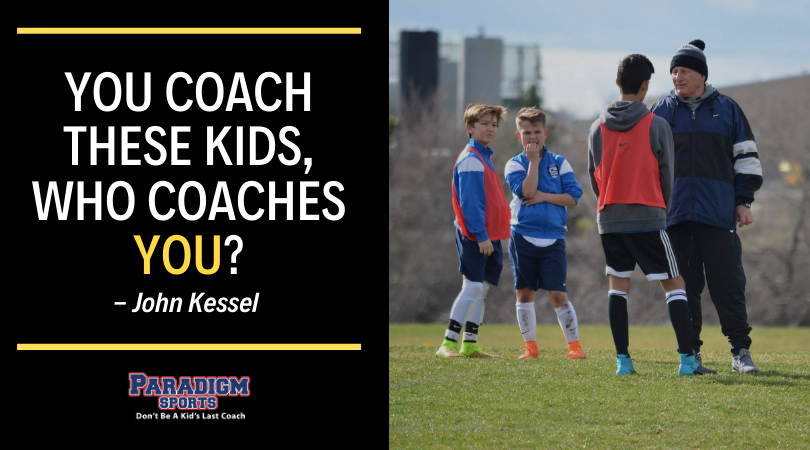
So as John Kessel (Kess) shared when I talked to him this summer, you coach these kids, who coaches you?

Another reason why you want to seek out a mentor is so you have someone to reach out to when you run into situations or issues unsure how to deal with to get advice, many times early on in my youth coaching days I made phones calls to or picked Glenn’s brain on the bench when girls were warming up about various challenges I was having.

In many instances he would merely state ”I really wish the adults would recognize it should be just about the kids and not focus on the results (wins, banners), at the end of the day we should help the kids become great people”

Fast Forward many years after he passed away, I now have been able to share many words of wisdom with coaches across Canada and like all of those that shared with me #1 tip I would share for you is to find a mentor.

Reach out to your coach coordinator for recommendations or go to an older teams practice to see how they run it, ask the coach if has time to share some words of wisdom over a coffee and you would be amazed how many are more than happy to do so.

Why?

Because for the most part (except the vocal minority that the tournaments and banners are the drivers), we are all in it for one reason, the Kids.

If we can help a younger coach hone his or her craft, it is our way of paying it forward so they can help their players do the same.

I also would recommend that you reach out to coaches in other sports, not just the one you are coaching for insight as never know what tips you will get.

Lastly, remember that whatever clinic you took for your coaching level is just the start of your journey, continue to read, attend conferences (our online event is a great way to learn from global experts 8-)), listen to podcasts, read books etc. so you can become the best coach you can be.

Why should you do so?

Because our purpose is not to make a living.

In lieu, our calling or rai·son d’ê·tre (reason for being) is to make a difference by developing youth into adults.

Please ensure that your legacy is a positive one and you are not a kid’s last coach.

Per Kess, I would be remiss in not sharing out his touching acceptance speech when he was inducted into the American Volleyball Coaches Association Hall of Fame where he thanks many of past and current mentors as well as his challenge to all coaches to “Never Be a Child’s Last Coach

We concur.

(In our chat he and I had a good laugh how much our philosophies were similar as I have shared “Don’t be a Kid’s Last Coach for years)

Let’s all work together to bring the game back to the kids … where it belongs.

BONUS – Download a FREE printable PDF version of this blog HERE


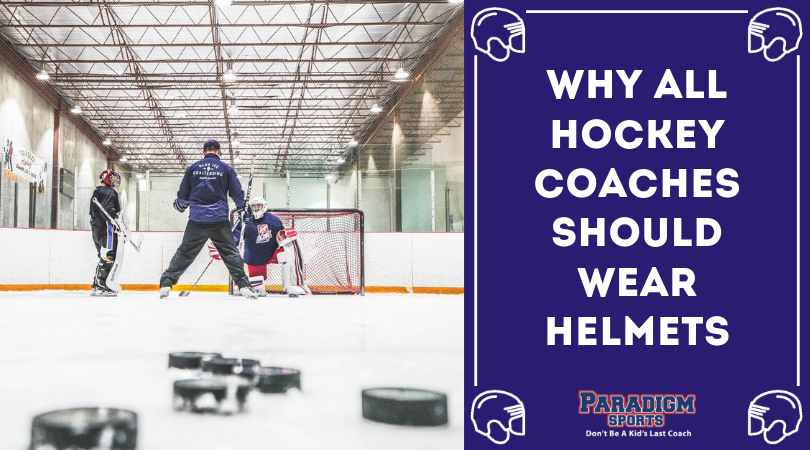
Why All Hockey Coaches Should Wear Helmets

Posted Posted in Athlete, Coach, Organization Executive, Parents

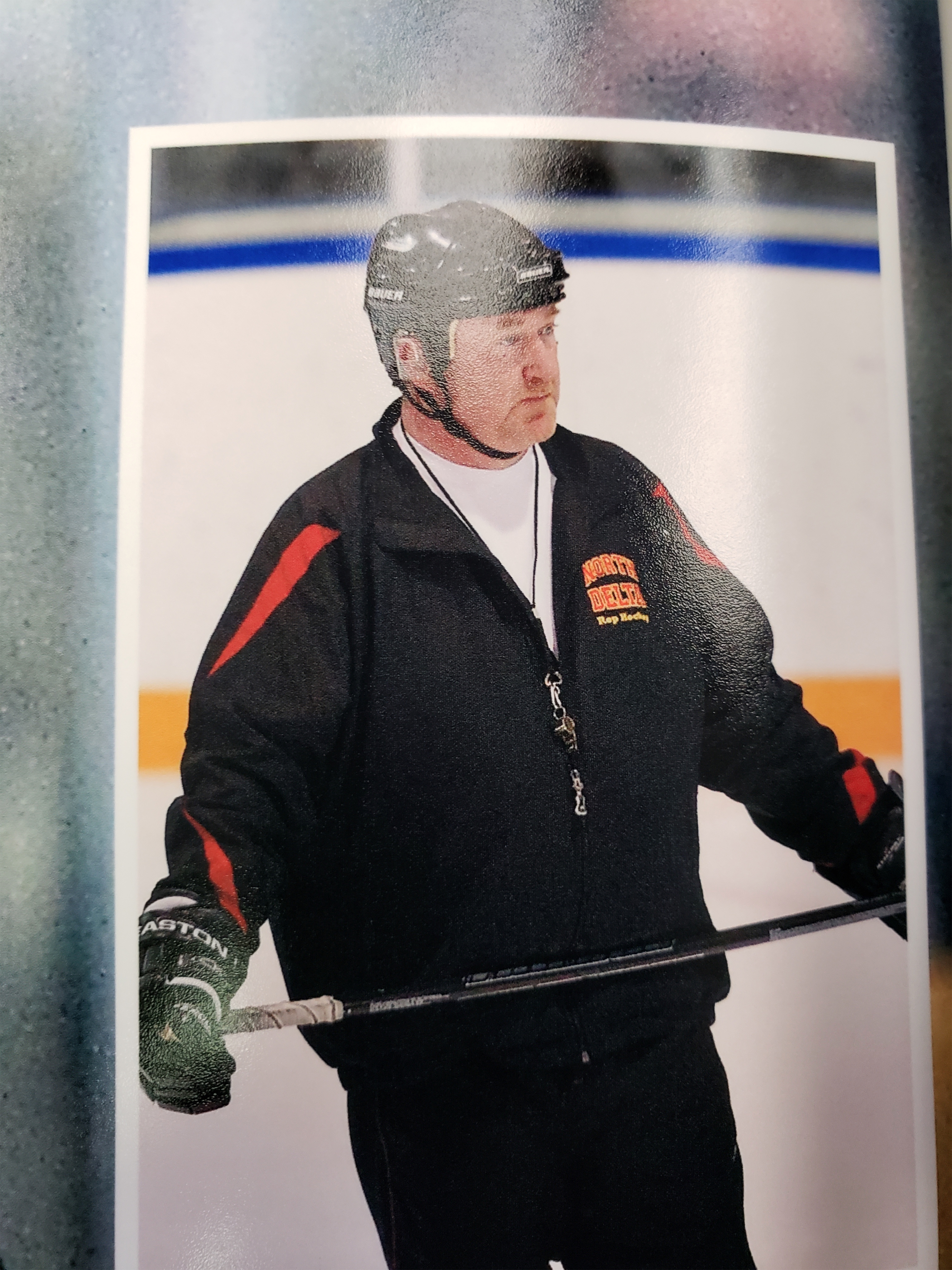
Picture of an image in the photo album I received after coaching peewee AAA

Having suffered a few major concussions myself I can relate all too well of the aftermath and challenges for recovery.

My last concussion had nothing to do with playing sports, however, it was when I was on a friends stag and while at one of the many bars we visited that evening that I share via those that told me after the fact as I have no recollection of the events I received a serious beating by three men when I jumped to the aid of my buddy who had been hitten over the head with a beer mug and knocked out.

The only recollection I have of the event was when I awoke in ICU of the hospital I had been taken to a couple of days later and had NO idea where I was, how I had gotten there, and recall vividly that I had the worst headache EVER.

At my side was my then-girlfriend, now my wife of 25 years who wept when I woke up saying she was so happy I was OK to which I said to her, OK?  My head is exploding, I’m hungry and I want to get out of here.

Thanks to my mother being in a couple of major car accidents when I was young, the second leading to her being hospitalized for over a year while she recovered from a broken neck and back I have always had an aversion of being in hospitals, particularly ICU.

My girlfriend drove me home and took several pictures of my beaten face and bruising on my back and arms for evidence for the criminal prosecution which I buried away long ago (back in the day when digital was not commonplace as it is today) but another recollection I recall is how I did not recognize myself as my face was so bruised from the punches and kicks to the face I had taken.

I share this with you as I wanted you to know that I can relate the challenges that athletes face today when they are dealing with a major concussions, it took me over 3 months before I was symptom free from my last one (diagnosed) but as a result of this being my third, and the highest severity, concussion the specialist that I was dealing with said I would have to stop playing any form of contact sports which meant my club rugby and adult recreational hockey days were over.

Having been an athlete for the better part of my life to that point, most of which playing competitively in various organized contact sports it is the reason why I then shifted to playing slo-pitch (although as years evolved and I took the mound as a pitcher dodging the dingers was no the smartest idea) and coaching.

Looking back at dealing with the fog, headaches, balance issues, nausea and even bouts with depression and frustration I can say first hand that dealing with a major concussion is not pleasant, particularly when you are very active.  The other part to this day that I have deal with is the complete loss of memory not only of the event itself but approximately 2 weeks prior to when I was concussed.  Many of my friends at the time were members of the Vancouver Police Department, Paramedics, Fire Department who all helped me fill in the blanks as several were at the scene and argued that the criminal proceedings would be a slam dunk (which only one of the three was prosecuted due to “technical issues” but that is another story in itself)

As a result of my recovery forcing me to have bed rest, dark room for a few months, I also missed two months of my third term at BCIT of my diploma in Marketing Management that followed my degree in Physical Education in UBC as my career aspirations were to get into the business side of sports.

That never came to fruition until many years later when I recognized we are in the business of developing youth into adults, and I have now coached boys, girls, young men and women for over 25 years of coaching and as a result of this and other experiences I dealt with growing up taught me the importance of resilience and how to overcome adversity, one of the core life lessons one can learn thru sports.


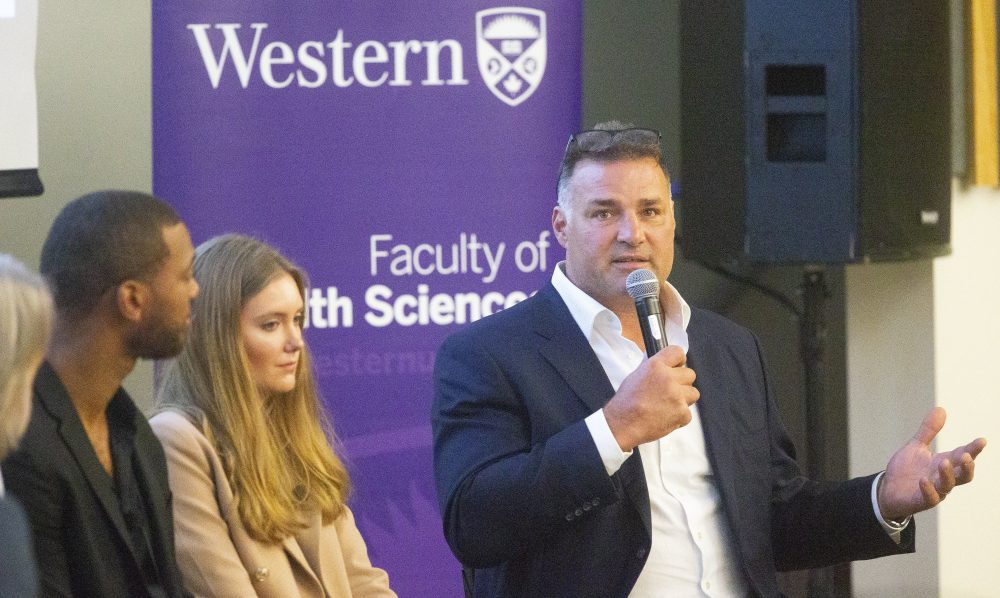
Source: Mike Hensen/The London Free Press/Postmedia Network

I write about the impacts of concussions this week as recently read another article that Eric Lindros contributed to coincide with recent symposium regarding concussions and applaud him for becoming a passionate advocate for concussion awareness due to being forced to retire from the game, like his brother who did so much earlier in his career, as a result of concussions he sustained.

I don’t think anyone that has followed hockey can forget when Scott Stevens hit Eric in the playoffs where he blatantly hit him directly in the head at full speed leading to one of his many concussions.  Stevens was infamous for those types of hits (another was the infamous blindside hit to Paul Kariya) but fortunately, the NHL has taken steps to eliminate them from the game and concussion protocols subject to evaluations if suspected to ensure a concussed player like Paul does not return to play in the same game.

Here as some of the numbers pertaining concussions in general, however, not specifically impacting the game of hockey that was highlighted in the recent article;

  • One in five of us have a lifetime risk of concussion
  • Half happen to youth under 19
  • 60% during sport and recreational activities
  • One in 10 youth suffers concussion requiring medical attention
  • 30% of those visits are recurring
  • Majority return to play within a month but 30% have longer-term symptoms

As I went thru each one of the points above, I check all the boxes but am happy to say have been symptom-free since I shifted to coaching many years back.

One of the kids that I coached in hockey the following year met many of the above also he was unable to return as he fell out of hammock in the summer and hit his head so hard on a rock he had to take a year off from all forms of contact so it does not have to be contact in hockey, or other contact sports like football, rugby, concussions can happen no differently than other injuries.

Fast forward from the day I woke up in the ICU, when I first started coaching Minor Hockey I did not wear a helmet, rather a baseball cap as did almost every other coach at the time as we naively thought we did not have to and did so for several years until Hockey Canada made wearing helmets mandatory for coaches.

This change went into effect in the 2008-9 season, after a coach in Alberta died after falling on the ice and other a coma with a head injury.  At the time, like there is with any changes for safety reasons there was a lot of push back from coaches.  The rule now applies to all winter minor hockey coaches of sanctioned leagues, Junior B, A, and university coaches.

Ironically, the very year that the helmet rule was implemented, I was coaching a couple of teams, helping my sons Atom A1 (AAA) team and also coaching an Atom rec team to honour my agreement with a player that returned to play I would coach his team after taking a year off after his father passed away.

During one of our early 6 AM practices for the Atom Recreation team, I was talking to my assistant coach explaining the drill set up as the kids were doing stick and puck before I knew it I was lying horizontal on the ice after player skated into me.  Per my AC, he had caught an edge and slid into the back of my knew and I fell backwards and had hit my head on the ice.  I did blackout for what felt like a few seconds perhaps more and then all the players and my AC came over and said COACH are you OK?

Thankfully I was able to get up and finish the practice (albeit felt a little woozy having my bell rung) and was reminded why coaches should be wearing helmets for their safety just as much as players wear for theirs.

It is that last point that I wanted to address in this week’s post, last week I was asked to present for the Pacific Coach Amateur Hockey Associations Coach Coordinator annual meeting on the changes to this year’s evaluation process of competitive coaches and the risk manager reminded all the coach coordinators that any outside skills providers they have on the ice MUST wear helmets.  Many of which that also run skills sessions in Spring Hockey do not wear helmets when doing so but if they do so when on the ice for sanctioned minor hockey ice sessions the insurance could be voided.

I get the fact that wearing a baseball hat is more comfortable than wearing a helmet, and many skills providers are very adept skaters, but as a result of a helmet saving me from yet another head trauma, worse yet potential death, I can’t for the life of me understand how one wouldn’t.

To date, the helmet rule does not apply to spring coaches, independent skills providers that are not certified by Hockey Canada or NHL/AHL and other pro league coaches which has me shaking my head in disbelief how their insurance costs are not thru the roof as a result.

Kudos to Hockey Canada, PSO’s and RSO’s like PCAHA for mandating minor hockey coaches to wear helmets for their safety just as the players have to wear them for theirs.

I only hope that spring hockey programs, NHL and affiliate professional team (i.e. AHL) coaches would follow-suit and not wait for a coach to be seriously injured or die as a result of not wearing a helmet during practices.

That’s just my two cents.

Don`t be a kids last coach


BONUS – Download a FREE printable PDF version of this blog HERE