Why All Hockey Coaches Should Wear Helmets
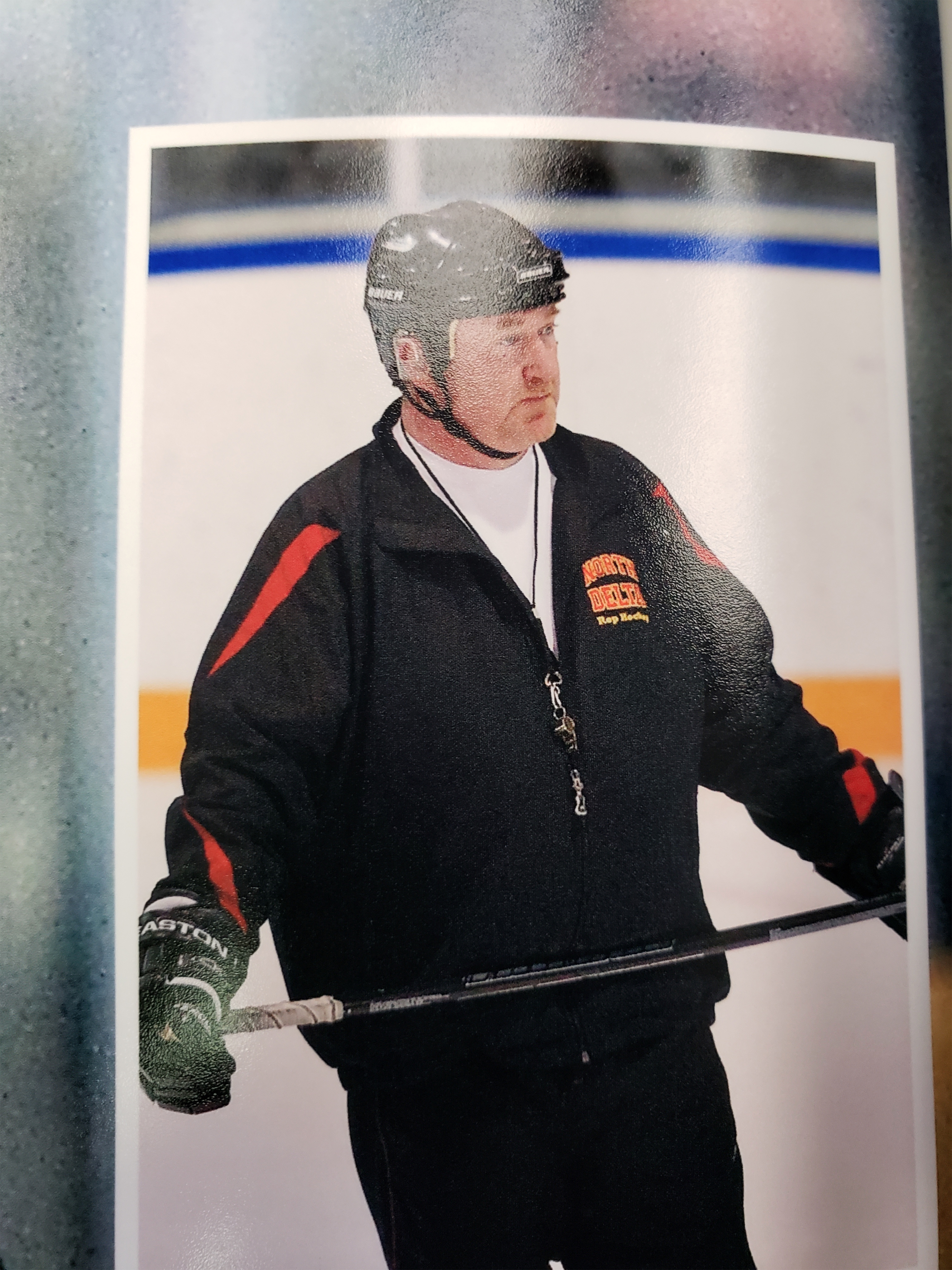
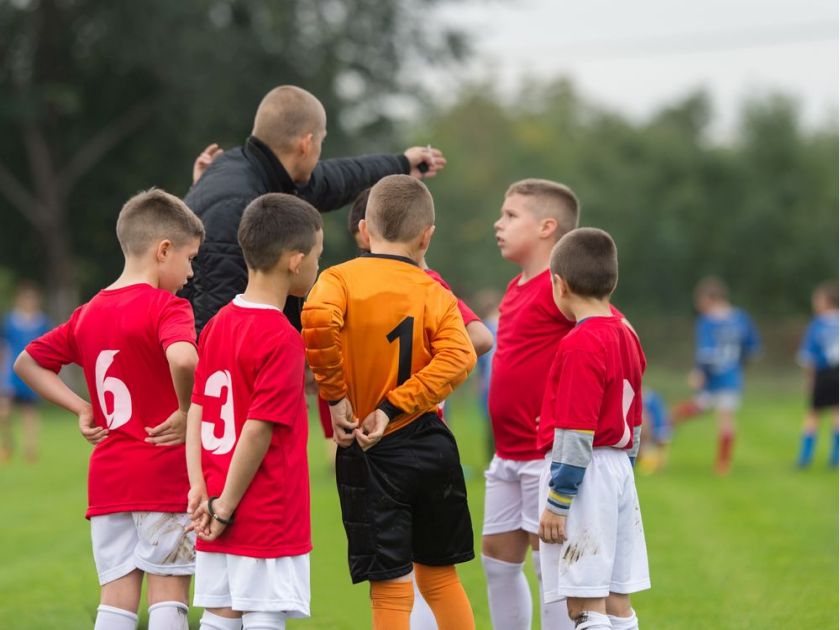
Picture of an image in the photo album I received after coaching peewee AAA
Having suffered a few major concussions myself I can relate all too well of the aftermath and challenges for recovery.
My last concussion had nothing to do with playing sports, however, it was when I was on a friends stag and while at one of the many bars we visited that evening that I share via those that told me after the fact as I have no recollection of the events I received a serious beating by three men when I jumped to the aid of my buddy who had been hitten over the head with a beer mug and knocked out.
The only recollection I have of the event was when I awoke in ICU of the hospital I had been taken to a couple of days later and had NO idea where I was, how I had gotten there, and recall vividly that I had the worst headache EVER.
At my side was my then-girlfriend, now my wife of 25 years who wept when I woke up saying she was so happy I was OK to which I said to her, OK? My head is exploding, I’m hungry and I want to get out of here.
Thanks to my mother being in a couple of major car accidents when I was young, the second leading to her being hospitalized for over a year while she recovered from a broken neck and back I have always had an aversion of being in hospitals, particularly ICU.
My girlfriend drove me home and took several pictures of my beaten face and bruising on my back and arms for evidence for the criminal prosecution which I buried away long ago (back in the day when digital was not commonplace as it is today) but another recollection I recall is how I did not recognize myself as my face was so bruised from the punches and kicks to the face I had taken.
I share this with you as I wanted you to know that I can relate the challenges that athletes face today when they are dealing with a major concussions, it took me over 3 months before I was symptom free from my last one (diagnosed) but as a result of this being my third, and the highest severity, concussion the specialist that I was dealing with said I would have to stop playing any form of contact sports which meant my club rugby and adult recreational hockey days were over.
Having been an athlete for the better part of my life to that point, most of which playing competitively in various organized contact sports it is the reason why I then shifted to playing slo-pitch (although as years evolved and I took the mound as a pitcher dodging the dingers was no the smartest idea) and coaching.
Looking back at dealing with the fog, headaches, balance issues, nausea and even bouts with depression and frustration I can say first hand that dealing with a major concussion is not pleasant, particularly when you are very active. The other part to this day that I have deal with is the complete loss of memory not only of the event itself but approximately 2 weeks prior to when I was concussed. Many of my friends at the time were members of the Vancouver Police Department, Paramedics, Fire Department who all helped me fill in the blanks as several were at the scene and argued that the criminal proceedings would be a slam dunk (which only one of the three was prosecuted due to “technical issues” but that is another story in itself)
As a result of my recovery forcing me to have bed rest, dark room for a few months, I also missed two months of my third term at BCIT of my diploma in Marketing Management that followed my degree in Physical Education in UBC as my career aspirations were to get into the business side of sports.
That never came to fruition until many years later when I recognized we are in the business of developing youth into adults, and I have now coached boys, girls, young men and women for over 25 years of coaching and as a result of this and other experiences I dealt with growing up taught me the importance of resilience and how to overcome adversity, one of the core life lessons one can learn thru sports.
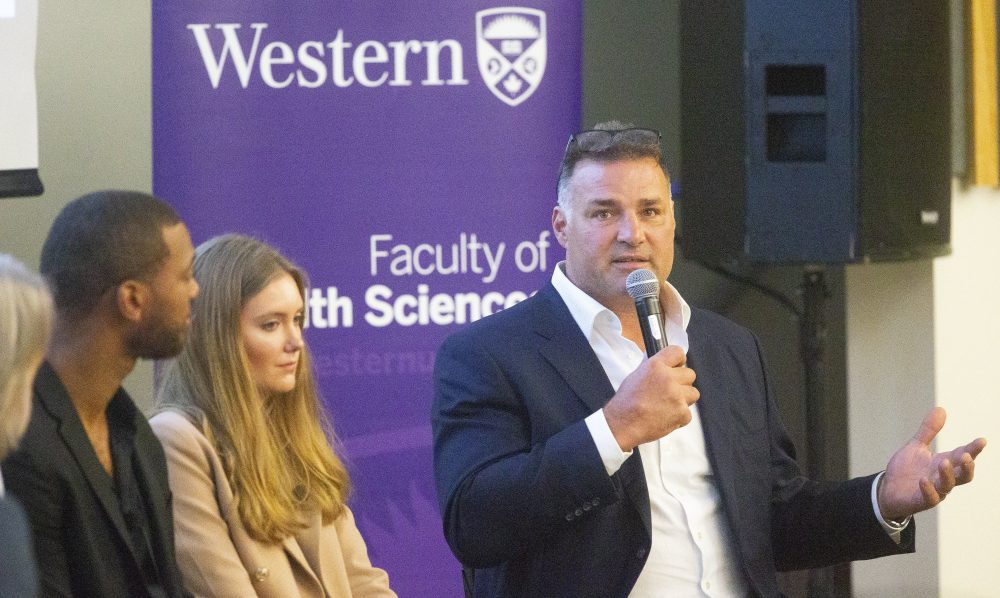
Source: Mike Hensen/The London Free Press/Postmedia Network
I write about the impacts of concussions this week as recently read another article that Eric Lindros contributed to coincide with recent symposium regarding concussions and applaud him for becoming a passionate advocate for concussion awareness due to being forced to retire from the game, like his brother who did so much earlier in his career, as a result of concussions he sustained.
I don’t think anyone that has followed hockey can forget when Scott Stevens hit Eric in the playoffs where he blatantly hit him directly in the head at full speed leading to one of his many concussions. Stevens was infamous for those types of hits (another was the infamous blindside hit to Paul Kariya) but fortunately, the NHL has taken steps to eliminate them from the game and concussion protocols subject to evaluations if suspected to ensure a concussed player like Paul does not return to play in the same game.
Here as some of the numbers pertaining concussions in general, however, not specifically impacting the game of hockey that was highlighted in the recent article;
- One in five of us have a lifetime risk of concussion
- Half happen to youth under 19
- 60% during sport and recreational activities
- One in 10 youth suffers concussion requiring medical attention
- 30% of those visits are recurring
- Majority return to play within a month but 30% have longer-term symptoms
As I went thru each one of the points above, I check all the boxes but am happy to say have been symptom-free since I shifted to coaching many years back.
One of the kids that I coached in hockey the following year met many of the above also he was unable to return as he fell out of hammock in the summer and hit his head so hard on a rock he had to take a year off from all forms of contact so it does not have to be contact in hockey, or other contact sports like football, rugby, concussions can happen no differently than other injuries.
Fast forward from the day I woke up in the ICU, when I first started coaching Minor Hockey I did not wear a helmet, rather a baseball cap as did almost every other coach at the time as we naively thought we did not have to and did so for several years until Hockey Canada made wearing helmets mandatory for coaches.
This change went into effect in the 2008-9 season, after a coach in Alberta died after falling on the ice and other a coma with a head injury. At the time, like there is with any changes for safety reasons there was a lot of push back from coaches. The rule now applies to all winter minor hockey coaches of sanctioned leagues, Junior B, A, and university coaches.
Ironically, the very year that the helmet rule was implemented, I was coaching a couple of teams, helping my sons Atom A1 (AAA) team and also coaching an Atom rec team to honour my agreement with a player that returned to play I would coach his team after taking a year off after his father passed away.
During one of our early 6 AM practices for the Atom Recreation team, I was talking to my assistant coach explaining the drill set up as the kids were doing stick and puck before I knew it I was lying horizontal on the ice after player skated into me. Per my AC, he had caught an edge and slid into the back of my knew and I fell backwards and had hit my head on the ice. I did blackout for what felt like a few seconds perhaps more and then all the players and my AC came over and said COACH are you OK?
Thankfully I was able to get up and finish the practice (albeit felt a little woozy having my bell rung) and was reminded why coaches should be wearing helmets for their safety just as much as players wear for theirs.
It is that last point that I wanted to address in this week’s post, last week I was asked to present for the Pacific Coach Amateur Hockey Associations Coach Coordinator annual meeting on the changes to this year’s evaluation process of competitive coaches and the risk manager reminded all the coach coordinators that any outside skills providers they have on the ice MUST wear helmets. Many of which that also run skills sessions in Spring Hockey do not wear helmets when doing so but if they do so when on the ice for sanctioned minor hockey ice sessions the insurance could be voided.
I get the fact that wearing a baseball hat is more comfortable than wearing a helmet, and many skills providers are very adept skaters, but as a result of a helmet saving me from yet another head trauma, worse yet potential death, I can’t for the life of me understand how one wouldn’t.
To date, the helmet rule does not apply to spring coaches, independent skills providers that are not certified by Hockey Canada or NHL/AHL and other pro league coaches which has me shaking my head in disbelief how their insurance costs are not thru the roof as a result.
Kudos to Hockey Canada, PSO’s and RSO’s like PCAHA for mandating minor hockey coaches to wear helmets for their safety just as the players have to wear them for theirs.
I only hope that spring hockey programs, NHL and affiliate professional team (i.e. AHL) coaches would follow-suit and not wait for a coach to be seriously injured or die as a result of not wearing a helmet during practices.
That’s just my two cents.
BONUS – Download a FREE printable PDF version of this blog HERE