Why running short benches is NOT a good thing
Posted Leave a commentPosted in Athlete, Coach, Organization Executive, Parents

BONUS – Download a Free Copy of this Blog in PDF Format HERE

Last night I had dinner with my wife’s siblings as my sister in law was in town for a conference.

During dinner, my sister in law shared with me that my 12-year-old nephew had quit Hockey.

WHAT?  My nephew quit a sport he once loved and when I asked her why her response was “he quit because a lot of teammates were not getting play when it was their turn as the coach was focusing on winning games”

He was playing peewee recreational team and was one of the stronger players because two years ago when he aspired to play rep (competitive level) they were advised by several parents that the only way he would make one of the rep teams (the association had 3 rep teams for peewee age group at the time) is if they signed a contract that was the only sport he was going to play.

Again, WHAT?

He opted to keep playing rec (house) so could continue to play soccer, ski, and other activities.

My head was spinning,

  1. He was playing rec (house) and coaches are not permitted to run short benches.
  2. He would have to sign a contract to play only hockey when he loved many other sports?

She further shared that parents they have talked to in the community have said their kids also quit hockey for the same reasons and the associations overall membership has dropped by a few hundred kids the last few years as a result.

This is a MINOR hockey association who have recreational coaches focusing on winning at all costs and not promoting multi-sport participation which are two of the major issues that is leading to kids quitting.

This just a couple of days after I shared an article on our social media pages called “Why ‘Shortening the Bench’ in competitive youth sports” can be a good thing written by Jamie Strashin for CBC Sports.
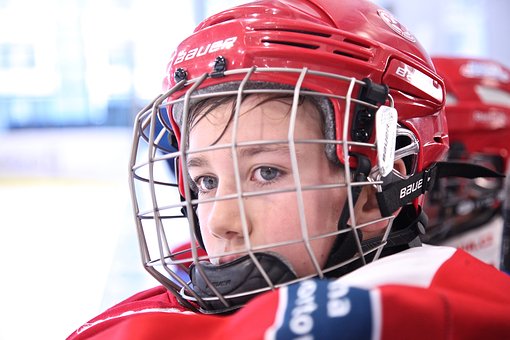
 

Soon after I posted, I received comments from parents in Canada and Australia who shared the same belief as I, that it was so short-sighted, although kids may win a game, perhaps get more games as a result, kids just want to play and in the instance of my nephew he quit because he did not think it fair for his teammates to sit on the bench when it was their turn to play.

Why did they sit?  Not because they were tired or were being disciplined, but an adult pulled them back to one their “more skilled” teammates out in their place.

I have been against short benches since I started coaching youth sports and still am, regardless if it is competitive or recreational levels.  The very fact that my nephew quit because his teammates were being deprived of ice time shows that he GETS IT even at 12 years old and I will applaud him for doing so when I see him next.

Ironically when I was up in Whitehorse running clinics this past season, I had one of the coaches come to me and expressed the very same concerns, her son was one of the top players on his atom “development” team and was getting much more ice time than his teammates, at times he was being told by coaches to stay out for 2-3-4 minutes at time.

Like the 10 year old player reference in the CBC article, her son was also 10, but in lieu of being held back for another player to take his turn, in his case stay out for shifts much longer than should have had.

Just two more examples of the adultification of youth sports.

Here is my take on running short benches;

#1 – Coaches choose the players for their teams, whether it be competitive or recreation

If you PICK THEM – you play them.

The coach that was quoted in the CBC article, whom is a non-parent coach, “I chose them to be on the team because I thought they were good enough.  If they aren’t in a position to succeed, it’s my fault”

I could not agree more, it the coaches responsibility to develop ALL players on the team and they focus on doing so early in the season, as the season evolves and all players improve, collectively the team improves and ‘Voila’ Winning is a byproduct not the focus.

#2 – I believe that coaches that run short benches either (a) don’t have the training needed to develop the skills of all players or (b) think that winning at all costs is more important than giving all players an opportunity to contribute in all situations

90% of kids would rather play on a losing team than sit on the bench for a winning team

#3 – All parents pay the same fees, so all players PLAY. There are already lawsuits in the USA coming forth from parents due to the thousands of dollars they are paying for their kids to play to be reimbursed for their prorated fees and have others pay more for their kids that PLAY more.

#4 – Having surveyed hundreds of kids on my teams over the years what is not fun about youth sports, one of the top 3 answers I have received is “when coaches play their favorites” especially when it comes to crunch time in close games where associations have implemented fair ice policies to permit coaches to use their discretion to win games. Again, kids just want to have their opportunities to contribute to the outcomes of the games just like all their other teammates.

‘YOU WIN OR LOSE AS A TEAM’

There are so many examples I can cite, not just from Hockey, but others sports now as we continue to partner with various sports groups but the one that comes to mind for me over and over was a player whom I invited to play with our 3 on 3 hockey teams who was a great kid with great parents.

In our last season when all the boys were aging out of minor hockey (17 years old), we opted to play both small ice and full ice 3 on 3 and in our first couple of games of each, he would go out for a few shifts and I noticed he was gasping for air.

In the second game I walked up to him and said T, you ok?

To which he said with a big smile on his face, yep, just need to get back into game shape.

I then asked … “but you played on the Midget A2 this year (where they would have had 2 practices, 2 games, a dryland per week) so don’t understand why not in game shape”?

He replied “because I quit with 10 games left in the season because I was only getting a handful of shifts per game.  The coaches was playing his favorites most of the games including power play, penalty kill, pissed me off as I just wanted to play so I quit”.

“My dad complained to the executive but they did not do anything, argued that it was rep hockey and only house had fair ice policies (where coaches are not permitted to run short benches).”

I shook my head in disbelief, just as I do every time I think of it.

#5 – In this particular article, 10-year-old players were the focus, which it he Atom age group, and regardless if they are playing recreationally or rep it is still a development age group

All kids, regardless of level, are to play and if a coach in BC had ran short bench in Atom he would have been suspended for doing so.

The main reason why coaches should not run short benches is the message you send to the kids, their parents …. Sorry kid, you are just not good enough be out there in key situations or give us a chance to score.

I believe this is one of the contributors why parents act up in the stands, if they come to game after game as I have and many other parents I know and watch their son or daughter sit on a bench when it is their turn to play knowing we all paid the same for them to do so, is no wonder why parents get emotional, angry as is evident daily in print, TV and social media.

Don’t get me started on the coaches that think they get a get out of jail free card for peewee and above, they should still be rolling all their lines all the way through minor hockey, when they are no longer playing to play, then they can earn their ice time (i.e. Major Junior and above)

The ONLY exception where you would tell kids to sit on the bench depriving them of playing time (or any minor sport for that reason) is if you have to discipline your players.

As the same coach in the article referenced, if they are not listening, screwing around may have to sit them a few shifts.

Other reasons, if they take a bad penalty or don’t get a penalty called on them for things like slashing, cross checking, knee on knees, head contact, hitting from behind, poor sportsmanship, using foul language, criticizing their team mates or not respecting their coaches, fellow or opposing players/coaches or officials including the scorekeeper/time keeper.

The very reason why short benches have become so common and we are turning a blind eye towards same is the shift in youth sports to win at all costs in lieu of just letting kids play kids for the love of the game.

Look at the past decade when teams go deep into the Stanley Cup Playoffs, when players or coaches are interviewed after games, including when they put the hardest trophy in sport to win above their head they say “all 4 lines contributed, we had a lot of confidence and we HAD FUN.

Hmmm .. aren’t these the best players in the WORLD?  Making Millions of Dollars a year even in the salary cap era?

Here is a great presentation from one of our For the Love of the Game Virtual Event guest speakers, VJ Stanley, that he did for a USA Hockey Level 4 coaches (equivalent to HP 1 level Coaches in Canada) and early in his presentation shares insight why coaches should PLAY all their kids in minor in hockey. About 7 minutes in to the presentation shows a vide when he talked to Ryan Callaha when he was captain of the New York Rangers.


Any coach can run short benches and play their “favorites” to win games.

GREAT coaches develop all their players and provide them the opportunity to contribute to the outcome of games and in doing so build their confidence and competence and winning becomes a byproduct as a result.

 

Don`t be a kids last coach


Why Kids (May) Quit Soccer

Posted Leave a commentPosted in Athlete, Coach, Early Sport Specialization, Organization Executive, Parents

Why Kids (May) Quit Soccer

Last post we shared the reasons why Kids play Soccer based on responses from the BC Soccer 2018 Retention Survey, in this post will highlight the responses to the two other areas BC Soccer was looking for insight from their players;

#1 – The Likelihood of playing Next Year (Why Kids (May) Quit Soccer)

And

# 2 – What was not so good about their program this year (what areas received fair or poor rankings but the players)


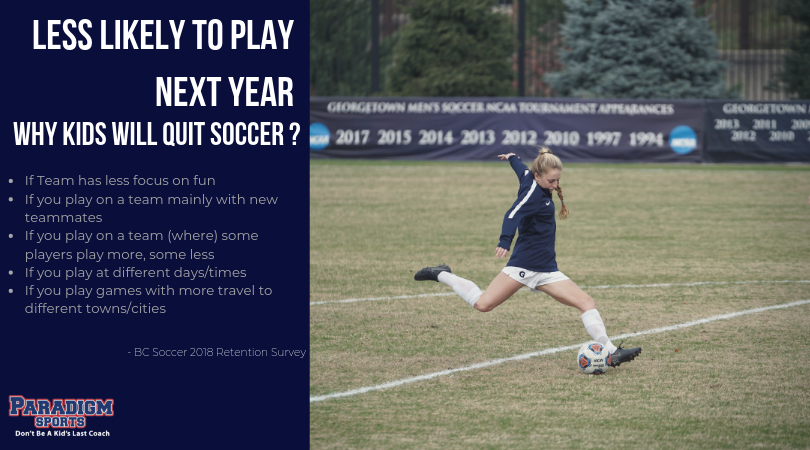
LESS LIKELY TO PLAY NEXT YEAR

When asked “Will you come back next season”.. the top 5 reasons kids would be less likely to do so (high probability they will NOT come back to play soccer) 


SURVEY SAYS…

#1 – If your team has less focus on fun

#2 reason they would return back if their team focused on fun, second only to focusing on skills.

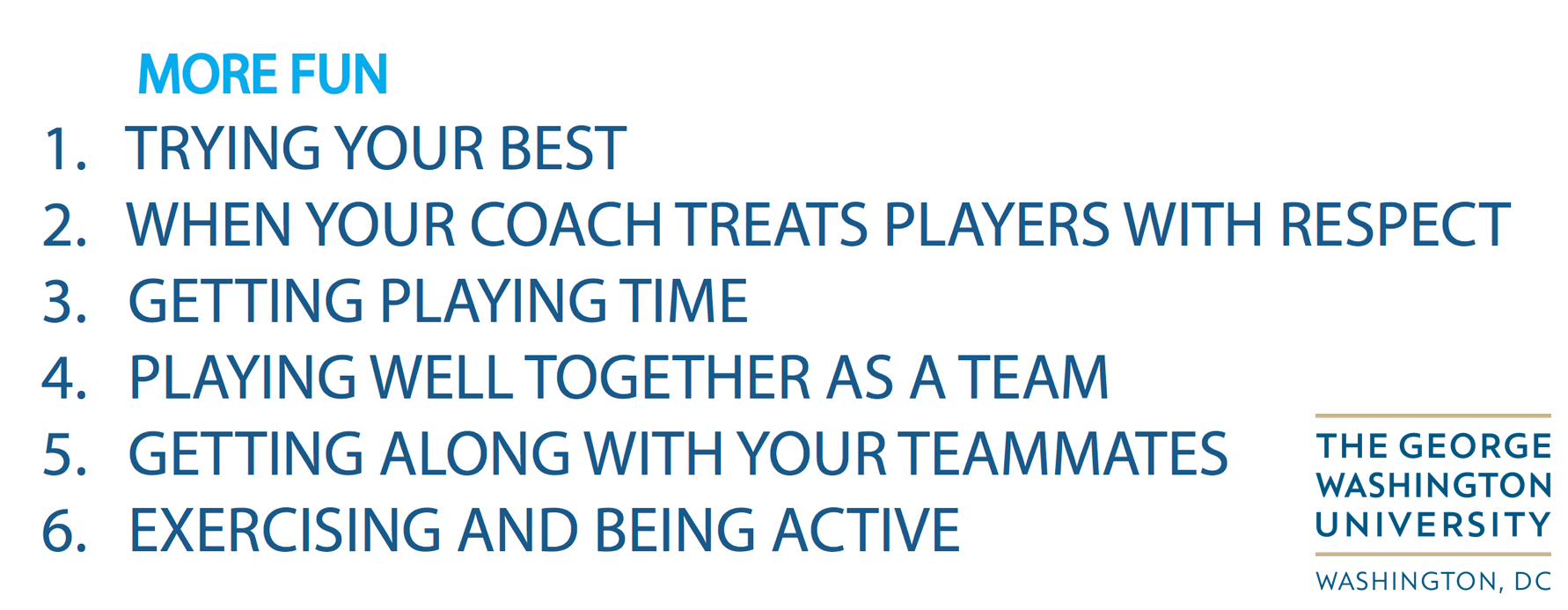
HMMMM … Similar to Amanda Viseks top reasons why sports were fun, #1 reason is when kids had the opportunity to try their best (focus on skills)

#2 – If you play on a team mostly with new teammates (not with their friends)

Two things that kids ask after games (sometimes during the games)

What is the snack? As Steve Simmons shared in an article he wrote many years back he continues to share every year Attention Coaches, parents: Minor Hockey is for the Children where he shares the anecdote of a novice player who stated:

“I Hope they don’t bring apple juice, I don’t like Apple Juice”

And the last question as they leave the field/rink/court…

When do we play again? (emphasis on PLAY not work as is now the case with early sport specialization)

If you loved sports as a kid and continue to play adult rec team sports ….

First question you ask after a game – Who has/how much is the beer? 

AKA – THE SNACK

Last question you ask after a game – When do we play again?

Hmmm … if we love sports in our youth, we love them as adults because they are fun, we get to play with our buddies and we play for the love of the game.

#3 – If you play on a team (where) some players play more, some (play) less.

Translation: Coaches running short benches where their weaker players sit on the bench so they can win at all costs.

90% of kids would rather play on a losing team, in ALL situations, than sit on a bench for a winning team.

As my son shared after he had the misfortune sitting on the bench with some of his teammates for the better part of a game as coach was infamous for playing his favorites and shared how he felt after the game,

“I am pissed because I was deprived of the opportunity to contribute to the outcome”.

He was only 14 at the time, and I will never forget it because it was a month after he lost his Nanny (my mother) to a 2 year battle with cancer prior to that tournament game that the coach shared with me prior to the game he dedicated the game to her in her memory.  Had she still be alive and attended that game, I can tell you she would have had some not so nice words to share with that same coach as she, like I, just loved watching my son and all of his teammate’s PLAY.

As far as I am concerned, the only reason why kids should be sitting on a bench is discipline (they took a bad penalty, acted inappropriately, hit an opposing player that could lead to injury etc.), other than that kids should PLAY.  Coaches that rely on short bench tactics to win games is a short-sighted tactic/strategy that more often than not will backfire. If you focus on the process of developing all players on your teams, care about them, believe in them, connect with them,  and develop their competence and character over time collectively as a team will improve and winning will be a byproduct NOT the focus.

There is a real simple fix to address this, incorporate fair play policies so coaches are only given a get out of jail free card for the last few minutes of a game only IF it is close and it should be the players that have BROUGHT IT that game (even if they are not the coaches “favorites” that get rewarded to be out there in latter part of the game.

This also will address the parental issues we see on social media every day, parents just want their kids to PLAY, coaches that run short benches as a far as I am concerned are a victim of their own demise.

#4 – If you play at different days/times

With every family in the lower mainland of Vancouver and many cities across Canada forced to have dual incomes now to pay mortgages and all other household expense PLUS rising costs for kids to play youth sports, scheduling consistency is critical for sports organizations so families know when/where they have to be over the course of the season, not just 4 weeks at a time.

#5 – If you play games with more travel to different towns/cities.

As soccer is now the #1 team sport in Canada, where provinces have organizations with thousands of players, why would kids even have to travel to begin with?  Community sport should be just that, community sport (the exception being smaller rural communities that do require travel to play)

The evolution of the travel teams and prospect tournaments that are driving the $17 Billion industry in the USA is based on the premise that scouts, coaches will be at these events to see “prospects” for NCAA scholarships or be drafted to Professional sports.

News flash – with the evolution of the digital era, almost any of these prospect tournaments have all of their games streamed, scouts don’t even have to leave their houses to see kids play against others on “elite” teams.  As every scout or high-level/collegiate/professional coach has shared with me, if they are good, they will be found regardless if they attend these prospect tournaments.

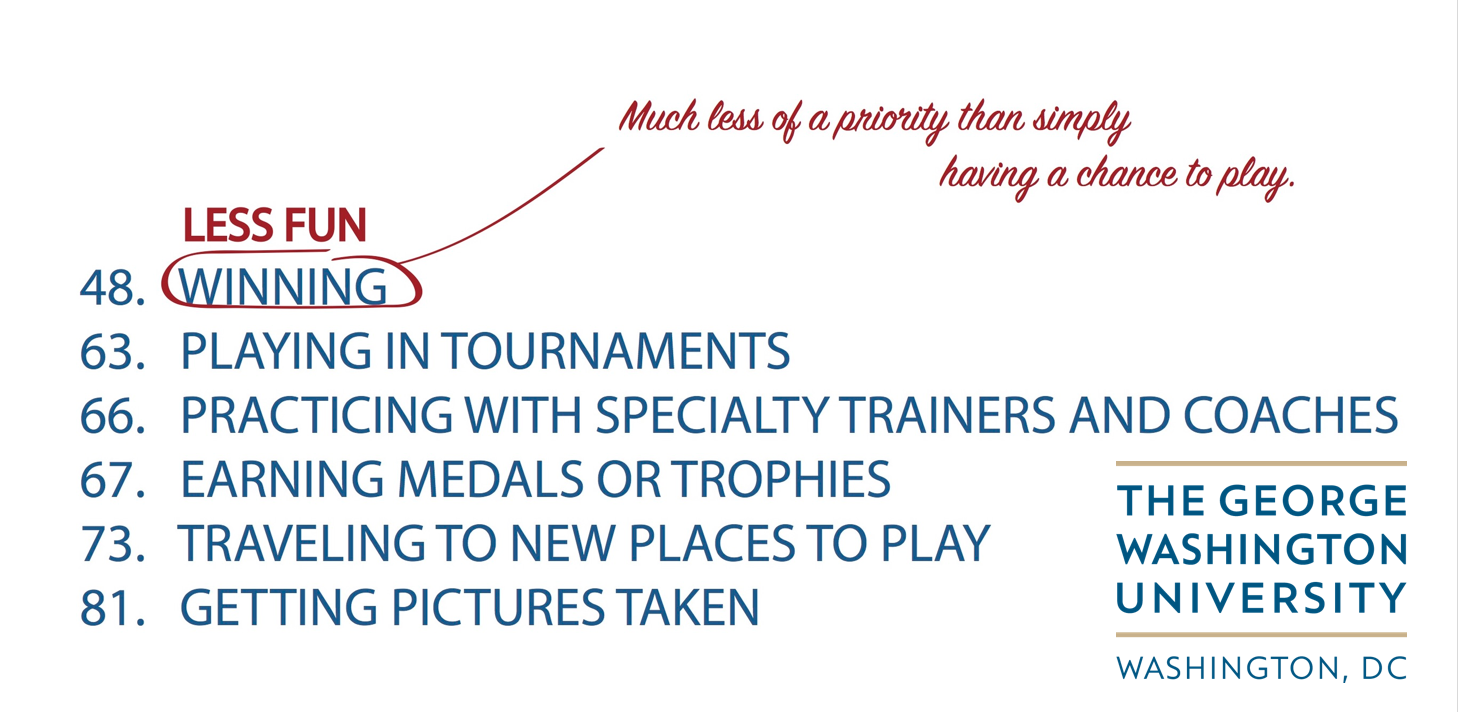
Note also in Amanda’s study, of 81 characteristics what is fun about youth sports, traveling to new places to play ranked right near the bottom of least fun reasons, 73rd out of 81.

It is not the kids that want to travel, it is the adultification of youth sports that has forced many families to spend their holiday time at ball fields, ice rinks, soccer pitches when they should be lying on a beach, taking a hike, swimming in a lake, going to amusement park of other TRUE forms of holidays.

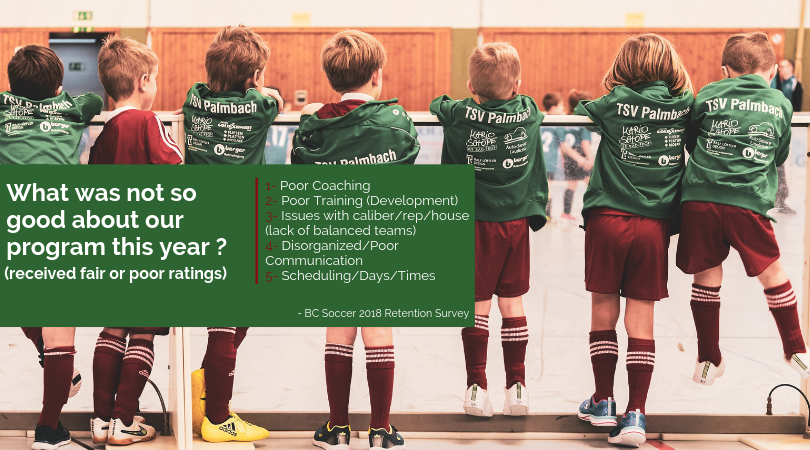
What was not so good about our program this year? (received fair or poor rankings)

SURVEY SAYS….

#1 – Poor Coaching

With the roll-out of NCCP program for all levels of coaching in soccer this will help address the what of coaching relative to the age groups to adhere to LTAD, small area games, age-appropriate drills, focusing on skill development vs. tactics and strategy and so forth.

It also will take several years to see the cause and effect as many other nations have experienced like Iceland who made the same commitment to coaching in 2000 and started to see the results once they qualified for the 2016 Euro Cup and 2018 World Cups of Soccer.

It also won’t address HOW to coach, How not be a kid’s last coach, coach beyond the game, how to connect with your players, how to engage parents, how to coach generation Z, LTAD vs. Early Sport Specialization, How to coach girls vs. boys, Grow your Mindset, Make it Safe to fail and from all levels of harassment, How to develop your philosophy and culture of excellent on teams etc.

Hmmm … this is why we have coaching modules to address all of the above, not WHAT to coach, but HOW to coach.

#2 – Poor Training

Goes hand in hand with #1, poor coaches are poor teachers and vice versa

This is not the fault of coaches that have the best of intentions to coach, is due to lack of experience and training at the grassroots level and like players, it takes YEARS to develop all the skills to become a great coach to teach the skills of the game, but also the skills of life.

#3 – Issues with caliber/rep/house/unequal skill on the teams

This comes down to player evaluations to form balanced teams, in lieu of subject measurement (which has led to a lot of politics associated with team selections), organizations should be using quantitative means to evaluate players and have baselines beginning of the season, mid and end of season skill evaluations to track development.

The only one that we recommend to all organizations is the personal sport record  as many sports orgs across the globe are looking at or have already adapted for quantitative measurement including Norway Sport Federation who know “just a tad about being successful at the international level being the all-time winningest country in the winter Olympics in terms of medals”, Sport New Zealand,  US Olympic Committee, BC Rugby, GTHL and many others.

Click on the logo to go the website for more information:


In lieu, the current model used by orgs is how many wins did the teams have?

How many banners did we win?  Who scored all the goals and assists?

Focusing on outcomes, not the process.

For more insight the impact of the shift to winning at all costs has had on youth sports, reach out to us to schedule a FREE screening of The Cost of Winning followed by a Q&A session where sports leaders from across the globe provide their insights on the state of play in youth sports and the importance of bringing the game back to the kids.

#4 Disorganized/Poor Communication

From a coaching standpoint, one of the biggest asks I get all the time is how do I “deal with parents” to which I respond you should engage parents, not deal with them.

Engagement includes ongoing communication starting with a culture of excellence, a well-run parent meeting, team meetings, mid and end of season meetings as well as regular communication to all stakeholders (players, parents, fellow coaches) to ensure the ship (team) moves in the right direction.

#5 – (Poor) Schedule/Days/Times

This should be a focus for all local sports organizations to ensure consistency.

I suspect, like Amanda Visek’s Study, many other sports organizations not only across Canada but globally will be referring to BC Soccer’s Retention Survey for their current and seasons to come IF they truly aspire to buck the trends and attract, retain and grow their membership.

Kudo’s to all the board members at BC Soccer for taking this on, and now that have the answers “out of the mouth of babes” and better understanding of the motivations for their key stakeholders (players and parents) so their regional and local organizations can implement the changes to also buck the trends seen across Canada with declining numbers.

One sports org that did so that has shown it is possible, is USA Hockey who is setting the bar for all other sports organizations globally for all the great work they are doing to grow the game.

Several years back they were losing 60% of their kids by peewee (11-12 yrs. old)

They did three things to reverse the trends


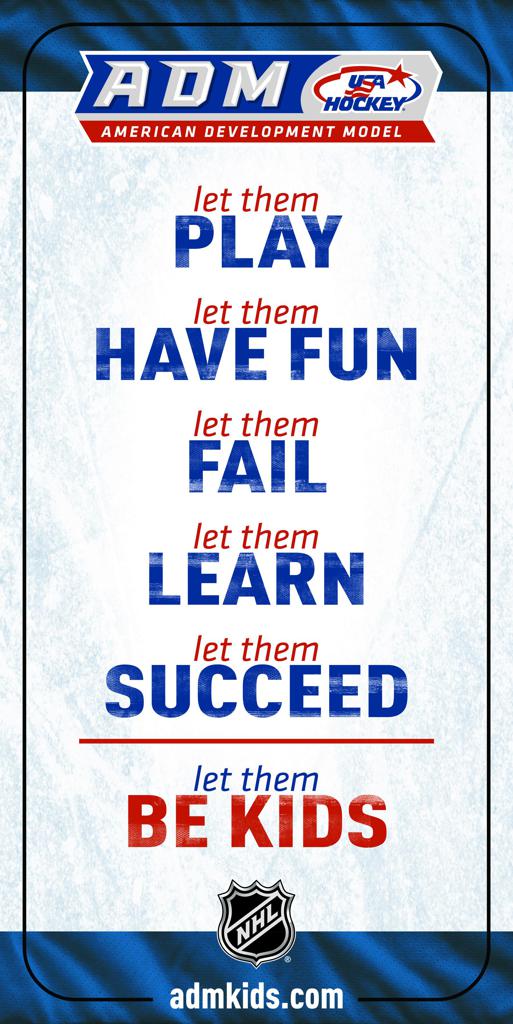
  1. Rolled out their version of LTAD, the American Development Model, ADM, that focused on age appropriate training and coaching certification
  2. Emphasized fun for all age groups (regardless if rec or competitive streams)
  3. Cancelled their U12 national Championship that put too much pressure on parents and players who aspired to play in that championship

The result?

In lieu of 60% attrition, they retained 92% of their kids, only a 8% decrease.

For the naysayers that say it can’t be done or those that keep doing the same things over and over again expecting different results (insanity)…..

….. It CAN be done, as USA Hockey showed it takes a village to raise a child and requires collaboration by all parties concerned to focus on the things that matter most to the kids, Fun, Friends, Quality Coaching and having the opportunity to PLAY and contribute For the Love of the Game.


Don`t be a kids last coach


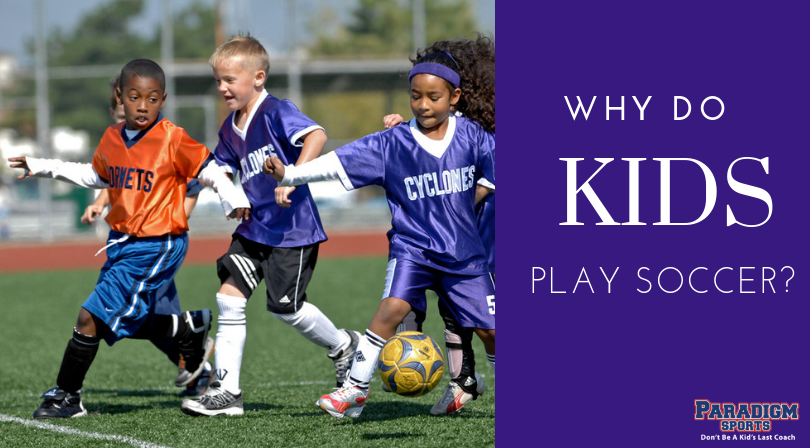
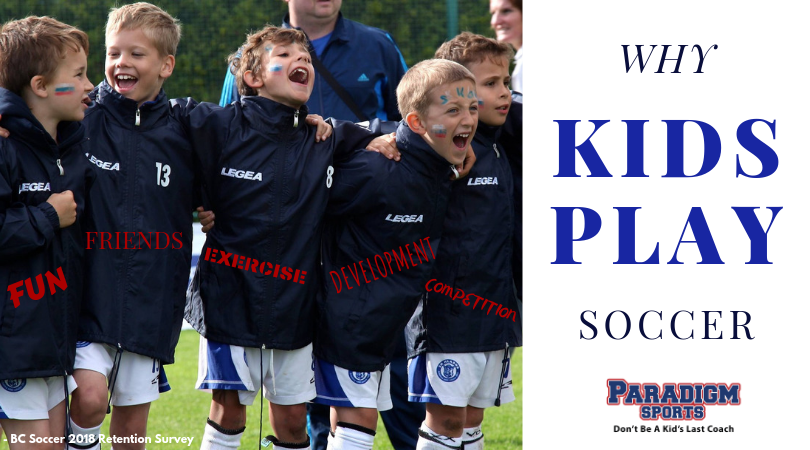
Why Do Kids Play Soccer?

Posted 1 CommentPosted in Athlete, Coach, Early Sport Specialization, Organization Executive, Parents

Did you know that Soccer Canada has seen their number of players between the ages of 6-17 yrs. old decline by almost 100,000 (yes 100,000) the last 10 years?

This reflects the trend in Youth sports where 70% of kids are quitting by the age of 13 and the 10 year decline led BC Soccer to conduct a player retention survey in 2018 to find out why kids play soccer, but why this was different than past surveys or research done it was  first time by ANY sport organization I am aware of that asked their clients (the players) not only why they play but why will they stop playing BEFORE they potentially do so and have them review their current program offerings.

Kudo’s to BC Soccer for doing so, in lieu of what majority of sports crossing their fingers that attrition rates they are experiencing are a short term “glitch” and not reaching out to their core stakeholders, or if they do, conduct exit interviews AFTER they quit, they took the proactive approach to reach out to their “clients” BEFORE they quit …. Prevention is 99% of the CURE.

This is also the first time I have seen any sports organization recognize that players are their CLIENTS, and as any business owner knows, it costs 10X more to attract new customers than it does to retain existing customers.

For me it really simple, ensure that kids love the sport more at the end of the season than they did at the beginning and focus on their core motivation for being involved to begin with and in lieu of negative trends we experience in youth sports the reverse will hold true, organizations will not only attract new players but they will GROW and buck the trends.

The survey was sent out to approximately 14,000 thousand players of which 2381 responded (rounded to 2400 for purposes of reference) in 2018 and this past week (Feb. 19th, 2019) BC Soccer shared the results which they forwarded to all their affiliated Soccer Provincial Sport Organizations (PSO’s) across Canada.

Here is the recap of the findings with our feedback;


SURVEY SAYS …..

  1. FUN*

*Enjoyment was the actual heading in the survey but the majority of responses included the word FUN

As I have been sharing for years, kids play sports because they’re fun, they quit when they’re not.  It’s NOT Rocket Science.

We shared this great video clip of 4-year-old hockey player that was mic’d up this week on all our social media pages (as did many others across the globe)… do you think he had fun?  Will he continue to have fun down the road?  Only if the association he plays for recognizes that fun is the #1 reason why kids play sports.

  1. Friends

Kids also play sports to be with their friends or meet new ones, most of my best friends came from the sports I played in my youth, including the MC and Best Man at my wedding.  Sadly I lost my best friend in 2013, but I still have many vivid memories of all the various sports we played, some organized (Football, Rugby) but moreso unorganized, skiing, golf, raquetball, tennis, biking, swimming, adult rec pickup hockey, street hockey, tackle football without pads, camping, fishing and so on.

  1. Exercise

Thankfully kids do want to get exercise and stay in shape in lieu of replacing their former active play time with inactive screen time so if the experience is a positive one, kids will PLAY sports.

  1. Skill Development

As Amanda Visek’s study highlighted when she surveyed soccer players at George Washington University and highlighted 81 characteristics why sports were fun, the #1 reason why they were is when kids had an opportunity to try their best (working on their skills)

  1. Competition

Although competition was one of the top 5 reasons kids played soccer that responded to this survey, Of the 119 (14% of 2381), Only 5% (17) stated winning or scoring. This would be comparable to #4 of the top 6 reasons why sports were fun in the GWU study, playing well as a team. Never in the 10+ years and 100’s of kids I asked why they played sports on teams I coached did I ever have a kid say winning. Kids LOVE to compete, but only when it is a positive experience and the most fun any kid has is when there are no adults there to spoil the experience.

Think back when you were a kid, what did you love most, organized sports with parents in the stands, coaches and officials or pickup games with your buddies with no adults present? How competitive were the latter?

This is no different than any of the other studies I have come across including Amanda’s where winning was not in the top 10 or in GWU’s survey, ranked 48th of 81 reasons why sports were fun.

Truthfully, the results of the retention survey don’t surprise me as I have surveyed hundreds of kids over the years on teams of various sports I coached and received similar answers.

Hopefully, all local soccer organizations not only in BC but across Canada will use the reasons why kids play to be the focus point when they are developing program offerings.

In our next post, I will share the results to the latter two queries that BC Soccer reached out to their clients (the players) for answers on so they could be proactive, not reactive.

This should not only assist all of their affiliate PSO’s and Soccer Canada address their declining numbers so they can attract, retain and ultimately GROW but also other sports organizations do the same; (1) Why Kids (May) Quit Soccer – The top 5 reasons kids would be less likely to come back next season and (2) Fair or Poor Rankings in terms of their program offering so the could address and do something about for future seasons.


Don`t be a kids last coach


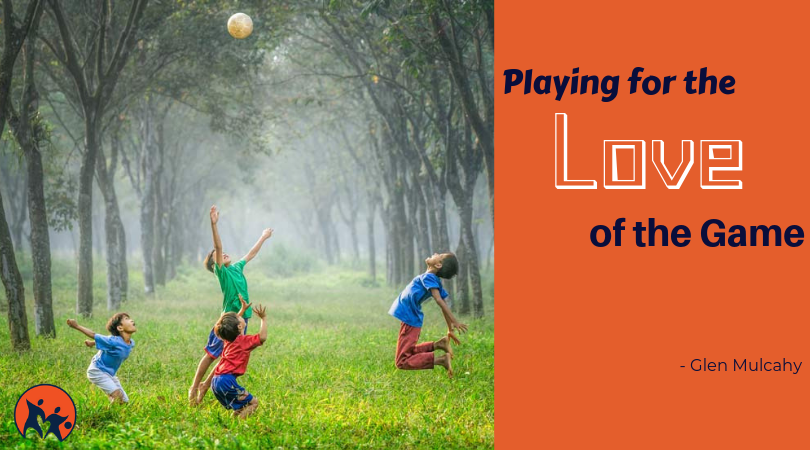
Playing For the Love of the Game

Posted Leave a commentPosted in Athlete, Coach, Organization Executive, Parents


This coming Monday I will be returning back to Nanaimo to speak on behalf of Changing the Game Project hosted by Nanaimo Minor Hockey who is working with various other sports groups to develop an amazing sports experience for the kids in their community.

As I was when I made the ferry trip in October, I am truly honored to be invited to share nuggets but also interact with so many amazing people who are passionate about quality sport.

I came across some great nuggets the last few weeks that I will be sharing in the presentation that thought would be great to share on this week’s newsletter as well.

Why do Kids play Sports?

Simple, they play because they’re fun, they quit when they’re not.  It’s NOT Rocket science.

This is the quote that I have shared for years and it really comes down to just that.   What our role as parents, coaches should be, however, is not just making sure that youth sports are fun, but they should also ensure that kids love the sports they are playing more at the end of a SEASON than they did at the beginning.

Due to the growth of early sports specialization, however, there are no more seasons to youth sports, and in lieu of PLAYING sports, kids WORK sports for over 10 months of the year

As Wade Gilbert, the Coaches Doc, shares in many of his talks … do kids ask you Mom, Dad can I WORK Hockey? WORK Soccer?  No, they ask you if they can PLAY baseball, PLAY football and so on.

The more I thought about the reason why kids played a sport for more than one season is this held true, I Loved the Sport more at the end of a season that I could hardly wait to return to play again.  This was because when the season ended in March, I hung up my skates to play baseball, golf, go to the beach, ride bikes, hike, swim, tennis and so many other activities so when the season started again in Sept I missed the rink, my buddies, coaches and was eager to start another season.

Thank you for being a sport that helps me with other sports.


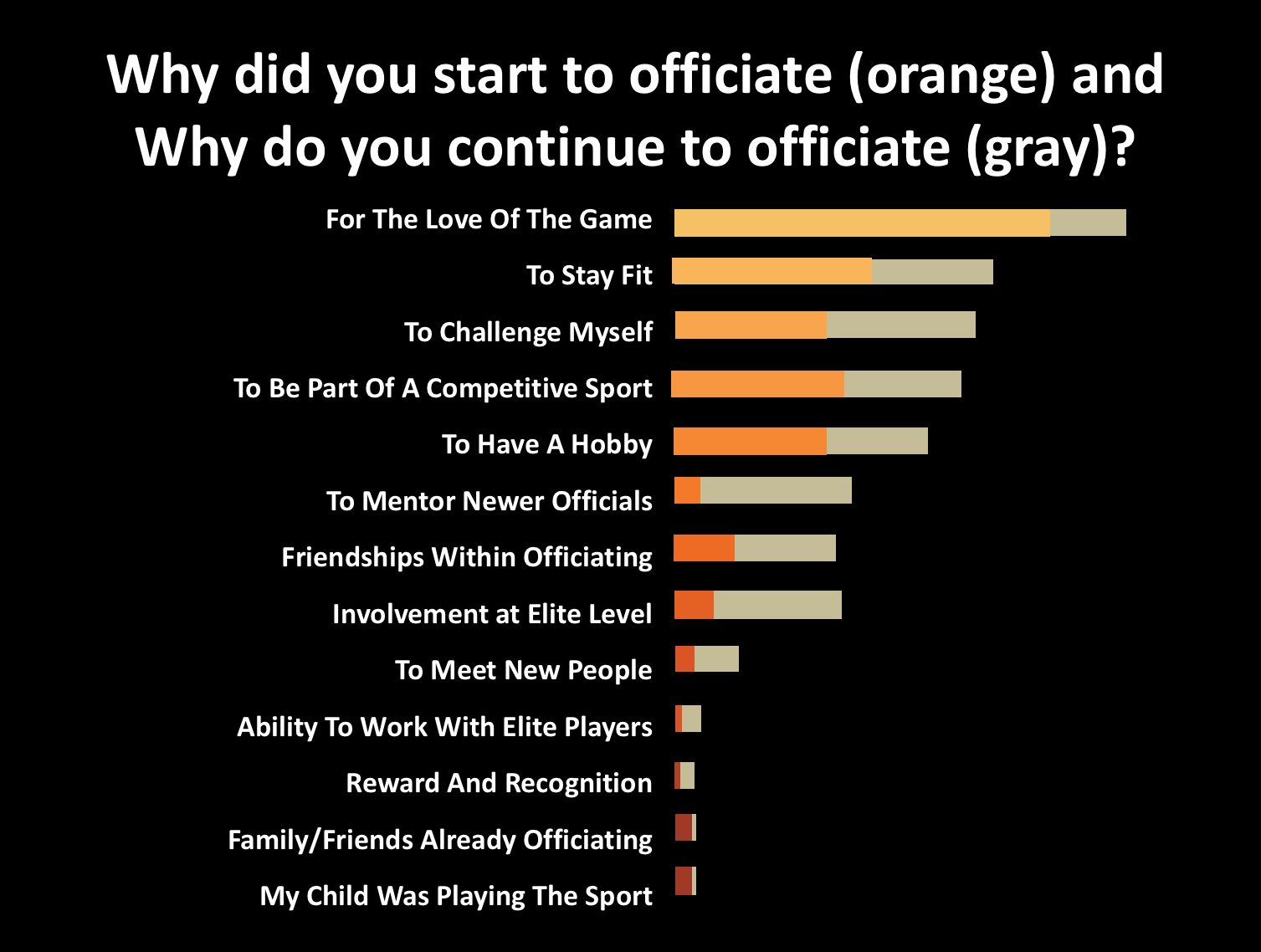
Why then do Officials (refs, umpires) start or continue to officiate?

According to the largest survey I have come across today over 17,000 officials were asked why and the #1 Answer was “For the Love of the Game”.

See below for the other top 10 reasons why they started and continue to be officials.


Other reasons included staying fit, challenge self, be part of the competitive sport, have a hobby and near the bottom was reward/recognition and lowest motivator was the fact that they had a child playing the sport.  This is probably due to the fact that a lot of officials start before they are parents, and ironically one of the motivators that organizations do is provide stipends for refs to do so so if get enough games, they can have a decent part-time income of the course of those seasons.

Why do Coaches Coach?

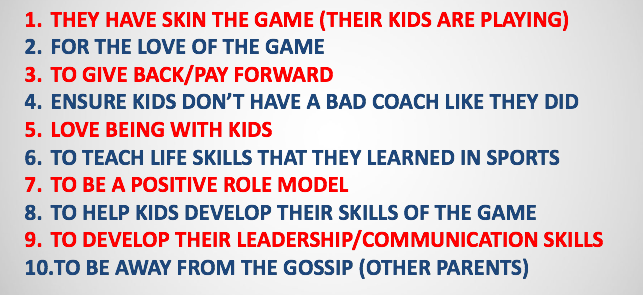
Ironically, when I have surveyed grassroots coaches over the years in clinics or talks and asked them why they coached, the #1 answer is because they had skin in the game, they stepped up to coach because their kids were playing and either asked them to coach OR a board member runs around the field, rinks at the beginning of the season asking for help.

I was one of those “suckers” initially putting my hand up to help on ice when board members came calling when my son was 5 starting hockey or my 7-year-old daughter in softball and 15 years and hundreds of kids later, I still put my hand up, now is to mentor the coaches of kids so they can help them become the best people they can become.

See below for the other reasons why Coaches Coach that I hear over and over again when I prompt coaches why they are coaching;

The second reason, whether they are a parent or not, is coaches step up to coach For the Love of the Game, they love the game and everything that it did for them, that they want to give back/pay it forward to help others reap the same benefits.

Many of which shared they are coaching so kids don’t have a BAD coach like they did when they grew up (which sadly there are still coaches even with all the certification coaches have today that coach the way they had been coached)

One reason that parents may not be aware of, coaches have also shared with me and I can relate, they are at the games anyway, drive to the practices and no point going home, so they put their hand up to help coach.  They also do so, as I did, to be away from the gossip that parents at times will share amongst themselves or worse yet those would be too vocal and scream coaching instructions at their kids or critique them/coaches or officials.

Another interesting stat came out of official vs. coach surveys, although officials receive fees and some coaches get honorariums for coaching now, neither officials or coaches stated when surveyed they started or continued to do so for the $$ in their top 10 reasons for doing so.

They do so not only because they love the game, and a few weeks into a season realize they also love being with kids as they have adopted large families when they start coaching.

Now let’s talk about why these three key stakeholders QUIT the Sports they once loved

Why do kids Quit Sports?

They not only quit because they are no longer fun, but they quit because the lost the passion, love for the game they once had and for various reasons lost their way in a sense.

More often than not, they no longer love for the game as they have been deprived of the opportunity to play in all key situations in games, have had adults screaming at them when made mistakes or have been on teams where harassment has taken place to some extent.

They quit because the games are no longer about what snacks they get after the games and being with their buds in the dressing room, hanging out in dugouts or sidelines it is about the results of the game that takes the focus due to winning at all costs.

They also quit because they can’t afford it any longer due to travel, equipment, spiraling fees and all the other costs now associated with youth sports unlike the “good old days” where you community sports were just that, played in the community or at high schools with low, no fees and even could use the same pair of cleats for 3 different sports as I did (baseball, rugby and football)

Why Do Officials Quit?

#1 Reason Poor Sportsmanship

As I shared in a prior post “Why do officials officiate” the #1 reason why officials quit is due to poor sportsmanship.

In the NASO study of over 17,000 officials, almost 40% of the respondents stated that parents caused the most problems with sportsmanship, followed by just shy of 30% of coaches.

When asked who is responsible for improving sportsmanship, over half stated coaches were.

Why?

Because they are the catalysts for change.

They interact with their players, assistant coaches, officials, board members and parents but also coaches and players of other teams, perhaps even their parent groups.

If coaches do not talk the talk but also walk the walk and demonstrate and expect good sportsmanship then whom is going to improve it?

They also quit because they are concerned about their safety, over 40% of male and female officials are due to administrator, parent, coach or player behavior

Even worse, they are intimidated by their fellow officials who will criticize them during games?

I just came across this extreme video where one parent kept telling the refs after a call he did not agree with “would see them after the game” (meaning we will duke it out in the parking lot – really?), but the entire group of parents and fans were ejected from a youth soccer game due to their behavior and threats towards young officials (about the same age of the players they were officiating)

This after each day I came across similar parental behavior, coach abuse towards players or officials, series of articles about sexual abuse, or various issues at minor hockey associations I shared in last week’s post “When will the culture of Youth Sports change for the better?”

Why do Coaches Quit?

Coaches, like players and officials, are either not putting their hand up, to begin with due to lack of willingness to “deal with” parents OR are quitting due to frustrations of the problems they had “dealt” with over their coaching careers.  This is why the most common ask I receive is “who do I deal with parents” to which I counter, it is not about dealing with parents, it is all about how you engage them as allies.

Over 80% of coaches surveyed by Syracuse.com stated that parent issues had gotten worse over their careers, the #1 problem they dealt with by over 80% of the respondents was parents complaining about their kids playing time.

IF a coach is playing everyone equally so they all have an opportunity to contribute to the outcome of the game in ALL situations this would be a non-issue (the exception being when kids need to be disciplined for behavioral issues).

I argue that coaches in a sense are a victim of their own demise, due to our winning at all costs culture, many coaches who may have had the best of intentions when they started coaching fall into the trap of running short benches starting from the beginning of the game and parents are merely venting their frustration as they ALL PAY THE SAME $ so expect all kids to PLAY THE SAME amount of time.

Again it comes down to pointing fingers at one of the key stakeholders that impacts what should be a quality and positive sports experience and the majority of the issues could be avoided from the GET GO.

In lieu, the officials blame the parents, the coaches blame the officials, players or parents, the parents blame the coaches, officials or board members blame the parents and goes round and round in circles like the merry go round at schools I loved when I was a kid (which kids can’t ride anymore as they may get hurt?)

When then are we going to stop pointing fingers at each other and understand the motivation for the players, officials, coaches to begin with?

They started because wanted to try a sport For the Love of the Game, they continue to do so for the same reason, and they quit because they lost that Love and passion they had to start with due the various issues that have taken the Play out of Play Ball.

In lieu of pointing fingers, what I suggest to all parties concerned is bury the axe, work on collaborating so it is a quality sports experience for ALL stakeholders so they all can do so For the Love of the Game.

Let’s all work together to bring the game back to the kids ….. where it belongs.


When is the culture of youth sports going to change for the better?

Posted 1 CommentPosted in Athlete, Coach, Organization Executive, Parents


In the last few weeks, there has been a lot of press that has had me shaking my head in utter disbelief regarding the current culture of youth sports. The very fact that harassment has come to light to this extent makes me ask the question over and over again, when will the culture of youth sports change for the better?

What should be a positive, amazing experience for today’s youth to not only learn the skills of the game, but the skills of life as it was when I grew up, has evolved to a culture of winning at all costs, a multi-billion industry where only the haves can afford to pay to play and yet no accountability for protection of the very same youth to have a safe to fail experience or safe from any forms of all harassment.

The first part of this post will highlight the issues regarding current youth sports culture, the second 1/2 will provide recommendations on what we can do to change the culture for the better.

THE ISSUES

A few of the incidents that made the headlines since the fall include;

St. Michaels College Sex assault scandal

Cost of Coaching Abuse – The Province

Hockey Players part of alleged bullying, assault at North Shore Winter Club

13 Year Old Pens resignation Letter from Abbotsford Hockey Team, alleging bullying

The latter three happened in Minor Hockey Associations in the lower mainland of Vancouver so it was very close to home and had my head spinning as a result.

This is my take on the ones that happened in the lower mainland;

  1. COACHING ABUSE:

Coaches are required to take a number of courses to ensure that they DO NO HARM, no different than that of teachers, social workers or other adults that work with those in the vulnerable sector.  Most organizations now require all those that would be interacting with kids to do criminal record checks (CRC), respect in sport (for coaches or parents), concussion awareness, NCCP clinics that include making ethical decisions for the competitive stream.

Although I believe that CRC’s are needed and have had no issues when requested to do, there are few issues with them we still need to work out;

  1. Only if the coach had actually been prosecuted of assault will it show up even if there were legal proceedings pending (takes years for cases to get thru the system).
  2. It can be a lengthy process and many organizations have trouble enforcing as a result.
  3. I have also heard several coaches (which includes myself) asking for better ways to manage if you are involved in various roles with the vulnerable sector to do ONE CRC per year, one year I had to do four with overlapping sports and charities I was involved with.

Even with all of the certification requirements including CRC’s now mandatory for all hockey associations, the very fact that a young man could not cope with the abuse from a coach he had sustained while playing hockey that led to mental health issues, alcohol/drug abuse, dropping out of school when he had been a straight-A student and attempted suicide made me cringe.  In lieu of developing life skills that include resiliency, this coach crossed the line with abusive old school coaching tactics and pushed this player beyond the tipping point regardless if he and the minor hockey association he still coaches for argued there was no cause and effect.  Even the players Dad admitted regrets he should have done something at the time when his son was being berated over and over again by the coach.

What really was a tipping point for me is that the model for competitive hockey in the lower mainland had shifted in recent years, and many (not all) of the larger organizations are offering stipends from 1.5K to 10K to “recruit” non-parent head “quality” head coaches for their competitive rep teams.  In this instance, the coach in question would have been one of those “paid” (aka professional) quality coaches, many of which are very young, inexperienced who were motivated to coach by the honorariums offered.

It takes YEARS of development and lifetime learning to become a great coach, plus it has increased team budgets so parents are on the hook for same, adding to the costs to the most expensive team sport in Canada for what should be a cost-effective option for players to play at a high level vs. the major midget/academy model that has evolved the last 10 years.

Had I been a parent of player on that team, or that of the player in question, as coaches are now paid by parents on the team (not by the associations directly), I would have been calling for the coaches immediate termination for the way he was treating players as the coach is under contract to DO NO HARM.

  1.  NEVER CRITICIZE YOUR TEAMMATES (RESPECT)

The fact that players in three of the above incidents are harassed their very own teammates in my day was totally unacceptable and is the way I have coached every team as a result.  John Wooden, arguably the greatest coach of all time, had 3 rules, one Never criticizing your teammates – translation, respect your teammates, coaches, officials, other teams, classmates, teachers, parents, elders etc.

This is a direct reflection of the lack of respect now prevalent in youth sports in its current culture that some coaches are not enforcing the value of respect on their teams, worse yet the organizations or sports as a whole they are involved with.

Kudos to the young man of the Abbotsford Minor Hockey Team for taking the brave stance by standing up against the current culture and resigning from his team due to the harassment he received from a few of his teammates. This should have lead to an apology from the association, coaches but over a week later after it was released the association has merely issued a statement that they take harassment seriously and no communication to the parent or player.

  1. DO NO HARM – 2 DEEP RULE

Since the article was posted in the Province outlining the abuse players took at North Shore Winter Club, the head coach has received praise for stepping down due to the decision of the executive after review reinstating the offenders on his team in lieu of suspensions he and his assistant (now head coach) for the remainder of the season, there was a MAJOR error in omission in the article.

For as long as I can remember there has been a 2 Deep Rule in Hockey, evolving as a result of Graham James abuse of Sheldon Kennedy and Theo Fleury and other major junior players under his watch.

The rule means that there must be 2 adults in the dressing room at all times to ensure players are safe, there was no mention if the head and assistant coaches or any other adults were present in the dressing room when the incident occurred.  This has been one of the main issues that I have seen with the “paid” non-parent competitive stream model, as they have no kids to bring to or after games, many will arrive well after the requested time to arrive at practices or games and leave soon after their post-game or practice debriefs leaving the dressing rooms abandoned

Had they enforced the 2 Deep rule, this NEVER would have happened in the first place.

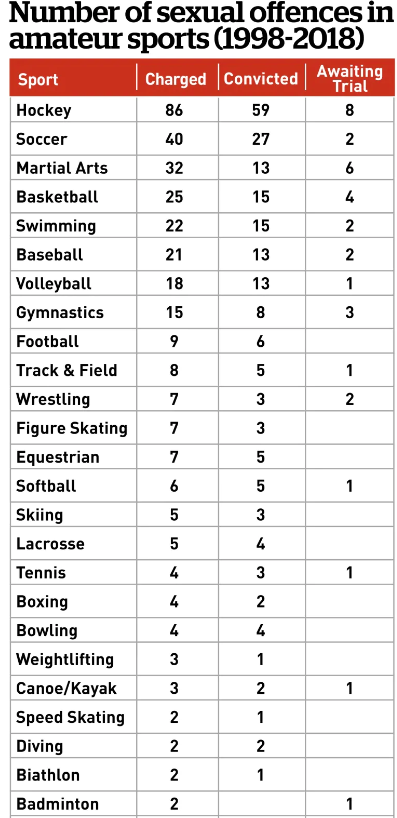
In recent 3 part series released by CBC on sexual abuse that has taken place in youth sports, , the sport with the highest number of charges and convictions, twice that of the second amateur sport with high enrollment in Canada, Soccer (now the #1 youth sport in terms of registrants), was Hockey (approximately 50K less registrants than Soccer).


Ironically, my favorite sport as both a player and coach, Rugby, has had only one charge and conviction of sexual assault the last 20 years which one of the writers of the series attributed to the number of charges and convictions were proportional to the level of enrollment in particular sports.

Having played and coached many sports, I would argue the contrary, it is due to the current culture of many sports, the one with the highest number of charges in convictions is Hockey, which is now the second largest team sport in Canada in terms of registrations (Soccer is number 1 by approx 50,000 registrants).  The sport that I loved the most as a player and coach was Rugby, where officials are still called sir and although it is a hooligans game, it is played by gentlemen (and now ladies thanks to growth of female teams)  whose registrations have grown significantly due to success of our 7’s teams but only have one charge and conviction the last 20 years.

I naively thought when Graham James incident came to the forefront it would have credited the awareness and shift in culture necessary to ensure did not happen again but sadly the last decade has seen other incidents across the globe come to light including;

2012 – Penn State Football – Jerry Sandusky

2016 – English Football – 839 alleged victims of 294 suspects

2017 – USA Gymnastics – over 350 girls abused by Larry Nasar

2018 – Canadian Gymnastics – Dave Brubaker

2018 – USA Swimming – Sean Hutchinson Cover Up

2018 – Canadian Alpine Skiing – Bertrand Charest

2019 – South Korea skating

2019 – Multiple Canadian Sports since 1998 – over 600 victims and 222 convictions

In the CBC 3 part series, Sandra Kirby, former Olympic Rower, and Professor Emerita at the University of Winnipeg was cited as sexual abuse is an underreported crime (as is many other forms of harassment), “this is just the tip of the iceberg” there could be thousands of cases where no one has come forward.

As far as I am concerned, ONE is too many, the current culture of youth sports MUST change for the better to ensure that no other child is a victim of any form of harassment.

  1. CURRENT SYSTEM: INTERNAL REPORTING AND REVIEWS

The very fact that abuse of any kind continues to run rampant across all sports is due to the fact that the majority of sports organizations have internal reporting mechanisms that lack anonymity for the victims of harassment and internal review boards more often than not will try to save face (cover it up) vs. doing the right thing (being accountable and owning up for the incident and implementing the necessary steps to ensure it never happens again). Perfect example, USA Gymnastics, even after the scandal came to light, the leadership group was still trying to cover up evidence and as a result the US Olympic Committee is in the process of removing their sanctions as a National Governing body.

The reviews at local organizations (if they take place) are done by board members (the majority of which have kids in the same organization) that are untrained volunteers with limited expertise (if ANY) in the subject matter.

  1. NO BOARD/COACH/PARENT OR PLAYER EDUCATION REGARDING SEXUAL ABUSE

 There is currently not a universal system in place to educate the stakeholders on how to identify and prevent sexual abuse so that we can protect children BEFORE it happens.

Board members are left on their own accord to implement policies, procedures and continue building on so that all stakeholders understand the process.


SO … HOW DO WE ENSURE THAT WE DO CHANGE YOUTH SPORTS FOR THE BETTER?


  1. FINALLY – AN ACKNOWLEDGEMENT WE HAVE A PROBLEM WITH THE CULTURE OF AMATEUR SPORTS

Thanks to recent press bringing the issue of harassment to light on so many fronts and mediums (print, digital, radio, TV and podcasts) and subsequent response by the highest levels involved in sports acknowledging WE do have a problem, we can now check this box off (although I and many of my colleagues in the space have been saying the same for YEARS) and the time for much-needed activation of systematic change of the current culture is the next step.

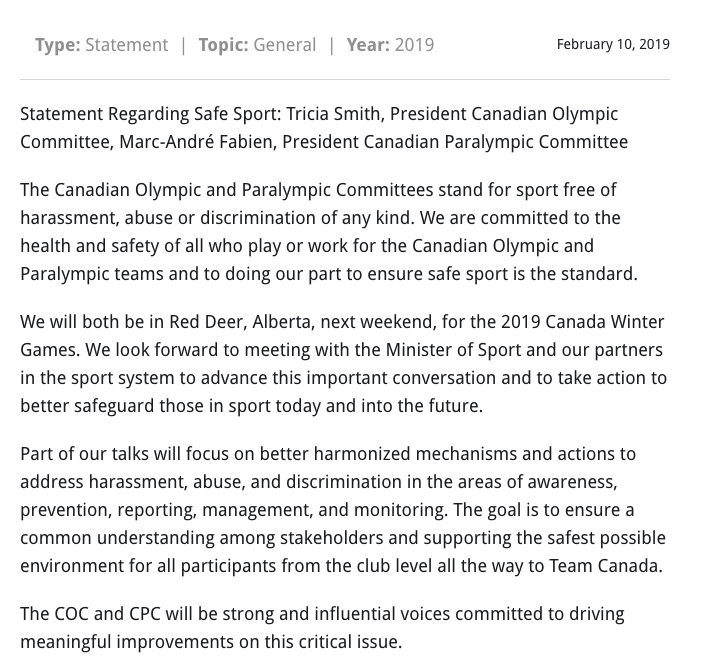
Joint Statement issued by the COC/CPC in response to the CBC 3 Part Series on Sexual Abuse in Amateur Sports

  1. IMPROVE COACHING EDUCATION/ENFORCE THE 2 DEEP RULE:

One of the biggest challenges I run up against is organizations feel that the initial certification coaches get is sufficient, which may varies by sport, some have extensive certification, others have none or very little.  Every sanctioned National Sport should ensure their Provincial, regional and local organizations comply with the minimum coaching education requirements including ongoing professional development.

Had the 2 Deep Rule (2 adults in the dressing room or areas where players are in contact with coaches) been enforced leading to suspensions/termination of coaches if did not adhere to many of these kids would not have become victims.

Almost every board member I have talked to in recent years is they are getting push back from coaches due to the up-front time commitment to become certified, if it only requires a CRC and respect in sport as the bare minimum, being out of pocket for fees until they complete all the requirements, and push back against any other courses once they complete their initial certification.  Many coaches are stating if they have to do any more they will quit as “they have all the certification they required”, they don’t have the time” or “I have been coaching for years” excuses.

Translation – the coaches got in it for the wrong reasons. Whatever has been asked of me by organizations if I had not done so already, I took the time and spent my own dime to do the education and certification without hesitation as it was all about the kids.

Initial certification and ongoing professional development is a requirement for teachers, social workers, physicians who interact with the vulnerable sector so the same should hold true for coaches, even volunteers.  A perfect example is volunteer firemen, who do regular training to stay current as it is required, not optional.

  1. IMPROVE BOARD/EXECUTIVE MEMBER EDUCATION AND POLICY STATEMENTS:

Just as coaches need to take certification, courses, clinics, so should new board members in key roles like President, VP, Risk Managers for local organizations.  More often than not, they put their hand up, get voted in as they either have no others vying for the same role OR they have support from membership aspiring for their political agenda’s.

In a study conducted with sports stakeholders across Canada where 27 sports were represented, administrators acknowledge they lacked the specialized resources in this area and was even greater in local clubs than in national federations. None of those surveyed stated they had received training on sexual abuse in particular. There is a need for training, information dissemination, awareness-raising, and clear rules and procedures.

Full accountability and transparency via policy statements and discipline for offenses should not be a wish, but an expectation from all key stakeholders of the membership to be met.

The time has come for no more cover-ups, not turn a blind eye, sweep under the rug, put up our hands in the air as don’t know how to deal with and so on.  Per Albert Einstein, if we keep doing the same things over and over again and expecting different results is insanity.

  1. INDEPENDENT REPORTING/REVIEW BY 3rd PARTY ORGANIZATIONS

We need to ensure that all members in sports organizations have a safe reporting and review mechanism independent from that of sports organization from the grassroots all the way to national level to ensure that issues do not get covered up to the point where hundreds, potentially thousands of youth athletes become victims as have in past.

According to the Canadian Minister of Sport and Science, Kirsty Duncan, this is her top priority, “I have one goal, it’s close the gap, and do the hard systemic change and this right going forward, to do everything we can to protect our athletes and our kids.”

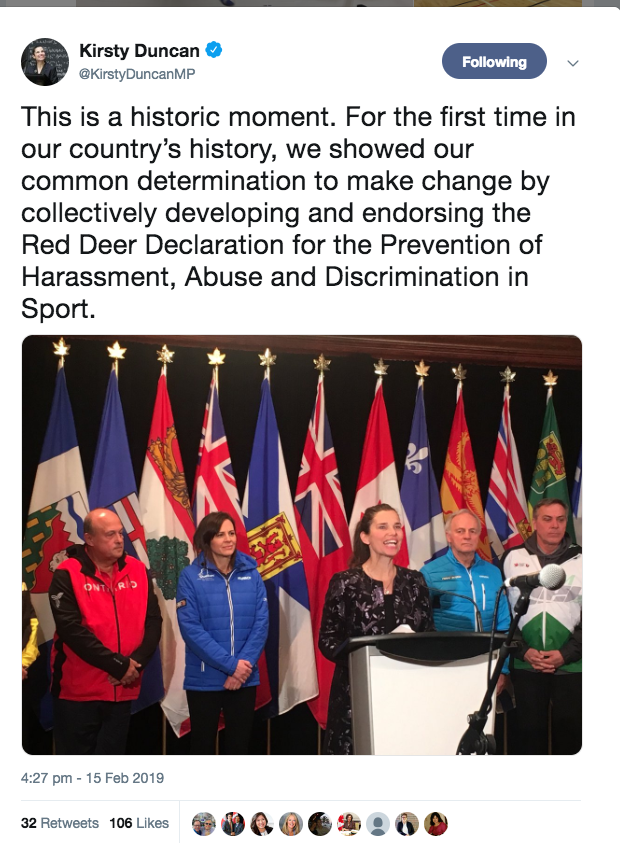
Kirsty acknowledged in the same press release that the federal government is working on a third party that would be independent of the sports organizations to ensure reporting and discipline mechanisms are put in place.  She subsequently shared this tweet a few days later while meeting members of various sports bodies at the 2019 Winter Canada Games.

Now that the need for a change in current culture has not only been acknowledged, but those at the highest levels governing sport collaborating to develop the Red Deer Declaration to prevent harassment and discrimination of any kind will no longer be condoned in sport.  The much needed PARADIGM Shift is FINALLY on the horizon.

  1. PARENT AND PLAYER EDUCATION:

We need to educate parents and players on the various forms of harassment that can take place in youth sports, prevention is 99% of the cure, let’s not wait until more kids are abused.

Majority of parents that I have talked to regarding harassment issues that impact their own or kids on their kids teams either were unaware it was, in fact, a form of harassment in the first place (either denial or ignorance), they remain silent due to fear of being ostracized by other parents, coaches or the organization OR fear that their child’s chances to continue playing on top level teams will be jeopardized (due to perceived meal ticket their kids will get a scholarship or play professionally).

Although there are education programs for kids in schools regarding various forms of harassment and how kids can safely report or ask questions, there currently is no mandate for youth athletes to learn what are the various forms of abuse in a safe way (i.e. going to someone to ask questions, advice without potential repercussions) and better yet, how to prevent it.

The buck stops here, in order for the much-needed change to the culture of youth sports, we all have to accept ownership to collaborate to make the changes necessary.

This is the responsibility that we all have in youth sports, whether it be adult leadership at the National, Provincial, local association or respective coaches, official, board member or parents is to develop youth into adults.

Per Kristy Duncan when she responded to the CBC 3 part series regarding sexual abuse in amateur sports in the last 20 years;

“One athlete, one child is too many”. 

I could not agree more.

It is our responsibility as adults to provide kids with a safe environment for them to develop, without fear of verbal, physical or sexual abuse.

Let’s all work together to bring the game back to the kids … where it belongs.