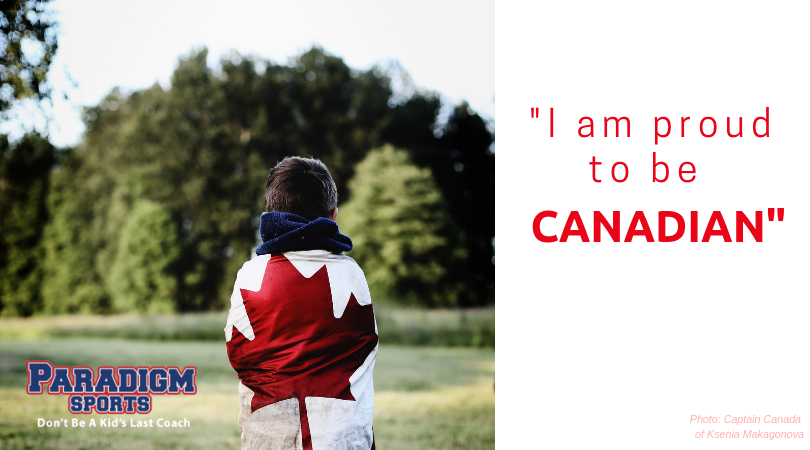
I am proud to be Canadian.

Posted Leave a commentPosted in Athlete, Coach, Organization Executive, Uncategorized

As today marks the official full week return to work, school after the holiday break I would be remiss in not talking about this year’s World Junior Tournament that was hosted in my hometown, Vancouver, BC and across the Pond (ferry ride) in Victoria. Like Mikey Dipietro who tweeted after Team Canada’s tough loss to Finland, I too am proud to be Canadian (albeit equally as proud of my Irish heritage) and like it was during the Winter Olympics in 2010, it was amazing to have the opportunity to see some amazing hockey being played by the future prospects of the NHL.

Although Vancouver has hosted the World Juniors in 2006 this was the first time that I was able to get tickets to see live games, starting with the cheap man’s version of pre-competition games where I got to see Jack and Quinn Hughes for the first time live and said to myself Vancouver Canucks FINALLY have a power play D-Man, prospect Quinn Hughes did not disappoint, and whoever wins the draft lottery this coming draft, which also is being hosted in Vancouver, will get another “pretty good player” as his younger brother Jack is pegged to be the #1 overall pick.

I was then offered free tickets to see Czech Republic vs. Swiss, Canada vs. Swiss and thanks to my wife’s cousin having purchased 4 corporate seats and two sons getting hit with the same flu that I was recovering from, the opportunity to see the Gold Game USA vs. Finland.

I also watched a few games on the tube as I do every year including the New Year’s Eve game Canada vs. Russia and the semi-final match vs. Finland.

Some of my key takeaways as a result of seeing both live and TV versions of this year’s World Juniors;

My whole life has revolved around Hockey and many other sports and nothing makes me prouder than when Canada wins gold in an international tournament like the World Juniors but as Hockey is now a global game, as this year’s world juniors and those over the last 10 years have shown, anyone can win on any given day (as not only Canada found out but so did Sweden who was 48-0 in round robin play and lost to Swiss in semi-final game).

Although Team Canada dominated Denmark (14-0), strong game vs. the Czech’s (5-1) they won by only one goal against the Swiss that I saw first hand, then lost to Russia by one goal, then lost to Finland also by one goal that knocked them out of the tournament.

Soon after the Finland game, team captain Max Comtois was berated on social media with various comments from “fans” who critiqued him for missing the penalty shot that would have tied the game BUT what none of these naysayers knew is Max played thru a separated shoulder he sustained in the tournament that will mean he will miss minimum 2 weeks from his Junior team Drummondville.

This when Telus shared their #endbullying commercial with Jordan Eberle for the second year in a row how over 1 Million kids are cyberbullied yearly?

As my Nanny (grandmother) told me all the time, if you don’t anything good to say, say nothing and ALWAYS treat others as you expect to be treated.

The lack of respect in hockey and other sports is one of my biggest pet peeves today and we must bring respect back into the game to eliminate harassment of ANY KIND.

TOUGH PUCK LUCK – What about the tough puck luck in the Finland semi-final?

With 46 seconds left to play and Canada up 1-0 (always scary in any game to not have an insurance goal) and Finland scores a pinball-type goal that would be worthy of the McDonalds commercials several years back with Michael Jordan and Larry Bird. Off the net, a shin pad, stick, then backhand off Dipietro to find the top shelf only for Mikey to look at his teammate in utter disbelief?

What about the wide open net that Noah Dobson missed because his %(^()$*^% composite stick broke in OT that lead to an odd-man rush by Finland that leads to the game-winning goal? If Gordie How could score as many goals as he did with a wooden stick, flat blade and have a wrist shot over 70 MPH, there is something to be said about being old school, I still don’t believe in composite sticks as they lead to too many missed scoring opportunities when they break like this time.

At the end of the day as the final game I witnessed proved, Finland was the better team in the tournament but had Canada gotten some better puck luck perhaps they would have least made it to the medal round.

Mike Dipietro, goalie for Team Canada who suffered that tough puck luck showed the epitome of class and the importance of losing with dignity when he shared his tweet;
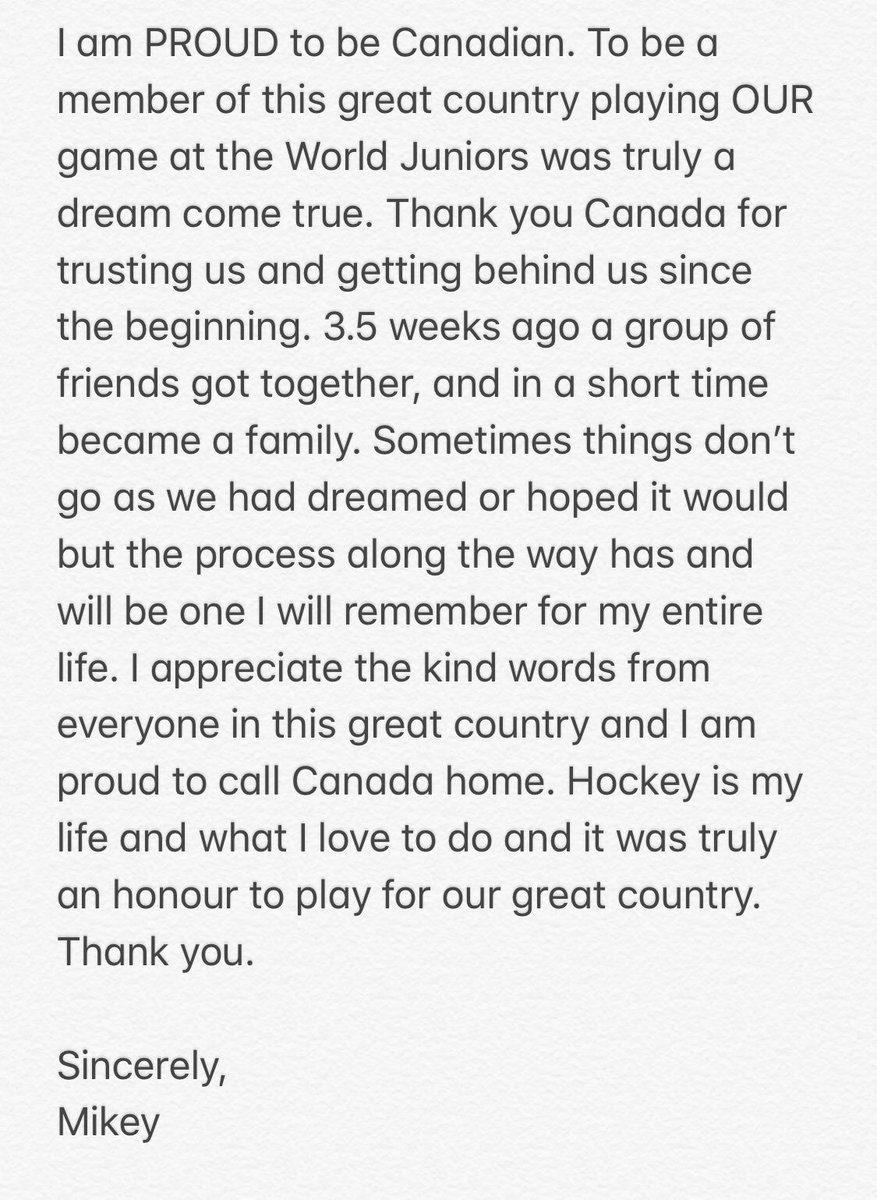



One of the best moments in the world Juniors was when the fans chanted DI-PI-ETRO and he mother broke into tears, too often we forget about the support that all these players get from their families and friends.

What Team Canada’s early exit showed is that Canada still has their work to do to repeat and setting our high expectations what they did 5 years in row 1993-1997 and then again 2005-2009 winning gold so it has set our expectations high every year Canada suits up for the World Juniors.

Since 2010, however, Canada won gold in 2015 (Connor McDavid one of the co-captains) and 2018 and the only returning player from LY was the very same Max Comtois, team captain, who was a victim of the ridiculous and cowardly social media rants for not scoring on the penalty shot (with a separated shoulder).

We have our work to do in Canada to reach that same level and a few other countries have shown they have moved in the right direction to give Canada a run for the money at their own game.


They too suffered some bad puck luck, having the first goal they scored called back as one of their players was in the crease violating a IIHF rule?  We were seated right behind the Finnish net at the time and the US player was mauled by the two Finnish D-Men leaving the other US player to jump on the loose puck and bury it in the net.

Had that goal counted, perhaps it would have been the US anthem played at the end of the game as all games had been won by teams that scored the first goal in the games.

It did not help that USA could not score on any of their 5 power plays although there were flashes of brilliance and posts hits on some shots, the puck did not cross the line when it needed to.

USA Hockey has been setting the bar for LTAD for years now, with their adaption called the American Development Model (ADM) which includes several years head start for cross ice hockey for the younger players, small area games for all age groups, smaller nets, lighter pucks, coaching certification relative to age groups to adhere to the levels.

Ken Martel, Technical Director, ADM for USA Hockey and many of his regional managers including Bob Mancini whom I had the opportunity to talk to for our winter summit which we will be replaying latter part of January, have done an amazing job with Team USA

Click on Video below for more insight;
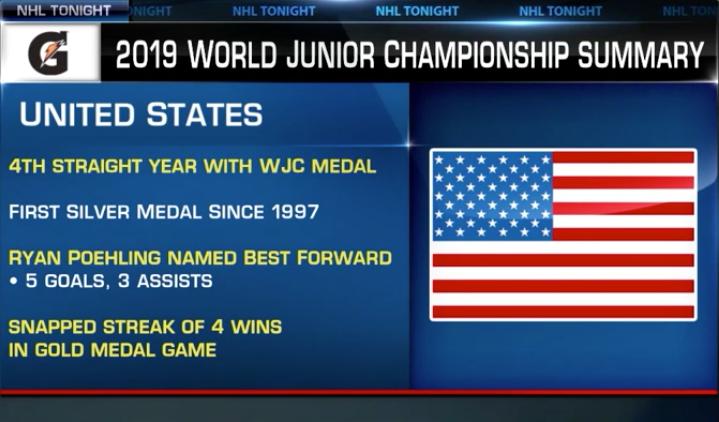


2019 is the 4th consecutive year that the USA has medaled in the tournament, Ryan Poehling is named the top forward, the Hughes Brothers and many other prospects including Keith Primeaus son (goalie) will potentially have long NHL careers.

This is not just a result of the ADM model, but is also due their National Team Development Program starting with 16 and 17 year olds (the time when kids should look at specializing NOT before) and some other pretty good players have come out of the program including; Austin Matthews, Jake Eichel, Matthew and Brady Tkachuk and many others.

TEAM FINLAND
 

I have no idea why everyone had Finland a dark horse in the tournament, as Finland has now won 3 GOLD medals since 2014, all three of those same Major Junior Tournament years Canada did NOT MEDAL. (First Column = Gold, Second = Silver, Third = Bronze Medal)
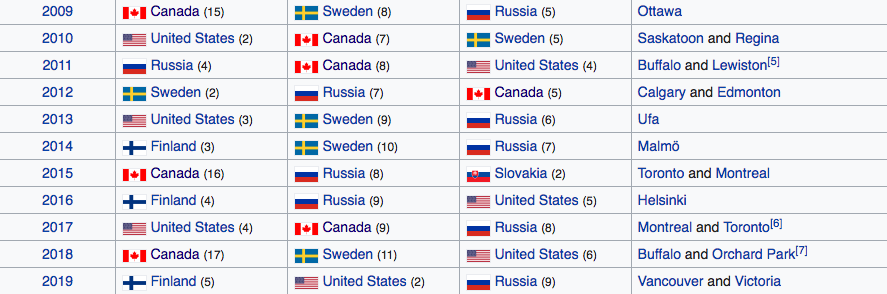
 

This reflects Finland’s commitment also to LTAD, focusing on practice to game ratios much higher than Canada 3,4 or 5:1 relative to the stages that kids are at and like Sweden, and they have been focusing on the importance of coaching the person as we shared about Erkka Usterland who lead Finland to Olympic Silver in 2006.

They have been setting the bar for a good athlete focused coaching for years, and the results are showing on the worlds stage.

The gold game that I had the privilege to watch on Saturday night was the top two teams in world juniors since 2010 and although Canada is the all-time leader since the world juniors started decades back (17 Gold Medals, 10 of which due to 5 consecutive golds in the 90’s and early 2000’s pre 2010), if we don’t change our system NOW, we will continue to fall short at the Juniors and other international events.

Recommendations for change to our grass roots programs leading to high performance

  1. We need to focus on development, not competiton.

The easy fix in the rep stream – replace on of the game slots (currently in western Canada rep teams play 2 games, 2 practices and a dryland) with a practice slot and VOILA, we have a 3:1 Practice to game ratio and kids will develop vs. overly compete

DON’T sign up for Spring hockey unless it truly is a Spring Development, once, twice a week max working on skills, small area games, cross ice etc. but no games or tournaments as players develop in practices NOT games.

Play other sports in the Spring and Summer, Hockey is already the longest season of any sports and kids need to take a break from the ice so they can develop other motor skills that will translate to Hockey (i.e. Sidney Crosby batting pucks out of the air)

2.We need to have our best coaches in the trenches, grass roots when kids are developing their core motor skills between the ages of 9-12 to learn LTAD, Fundamental Movement Skills, Physical Literacy. I have had over 3000 coaches in clinics alone and when I ask the question how many coaches are familiar with these concepts, only a few hands go up so we have so much work to do to get our coaches on board.

  1. We need those coaches to recognize there is so much more to coaching that writing up drills on a white board and focus on the person, not the outcome as well as the importance for life-long learning.  The NCCP program ran by Coaching Association of Canada in conjunction with Hockey Canada is now requiring coaches to get a minimum number of professional development (PD) credits but it has been a long time coming


  1. We need to eliminate old school coaching practices at all levels that for some reason people did not think there was anything wrong with it when Swiss Coach berades players on their team for making mistakes as he did in the game vs. Sweden.
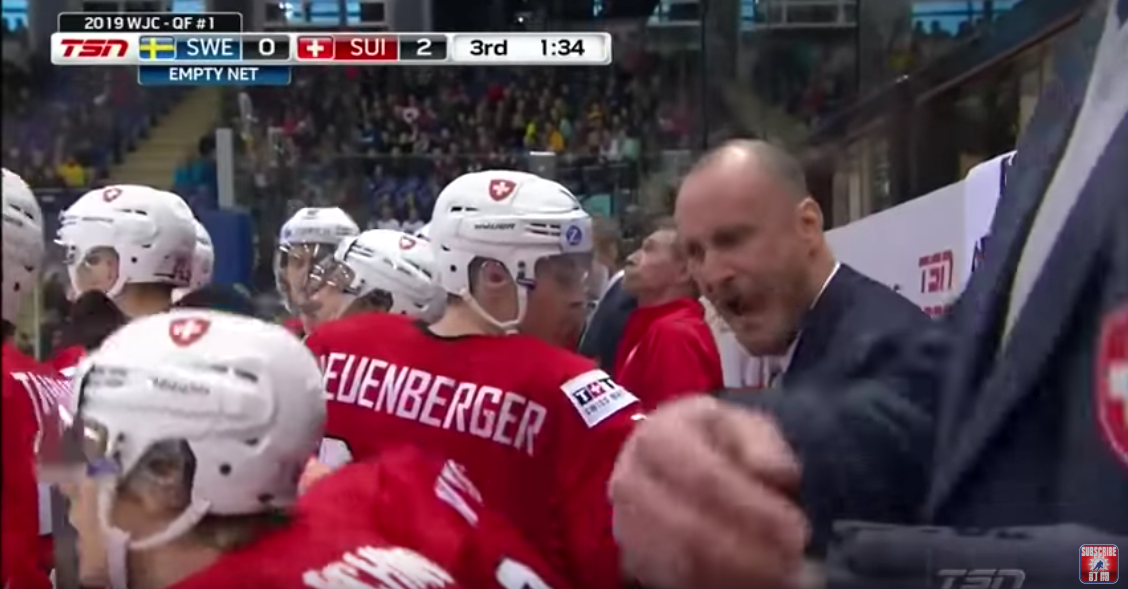
 

Swiss Head Coach Christian Wohlwend screaming at Sandro Schmid for mistake made touching puck causing it to go offside in last 2 minutes of game vs. Sweden.

Had Swiss lost the game, I suspect this video clip would have gone viral calling for him to be fired, but because they won and qualified to be in the final 4 (losing to Russia in the Bronze game) commentators merely shared that he was hot under the collar and smoke coming out his ears?

Ironically, one of those former old School Coaches, John Tortorella, who was infamous for his player rants on the bench and was advised by Columbus if he was going to continue coaching he would have to become more athlete focused recently shared this quote we posted to twitter;
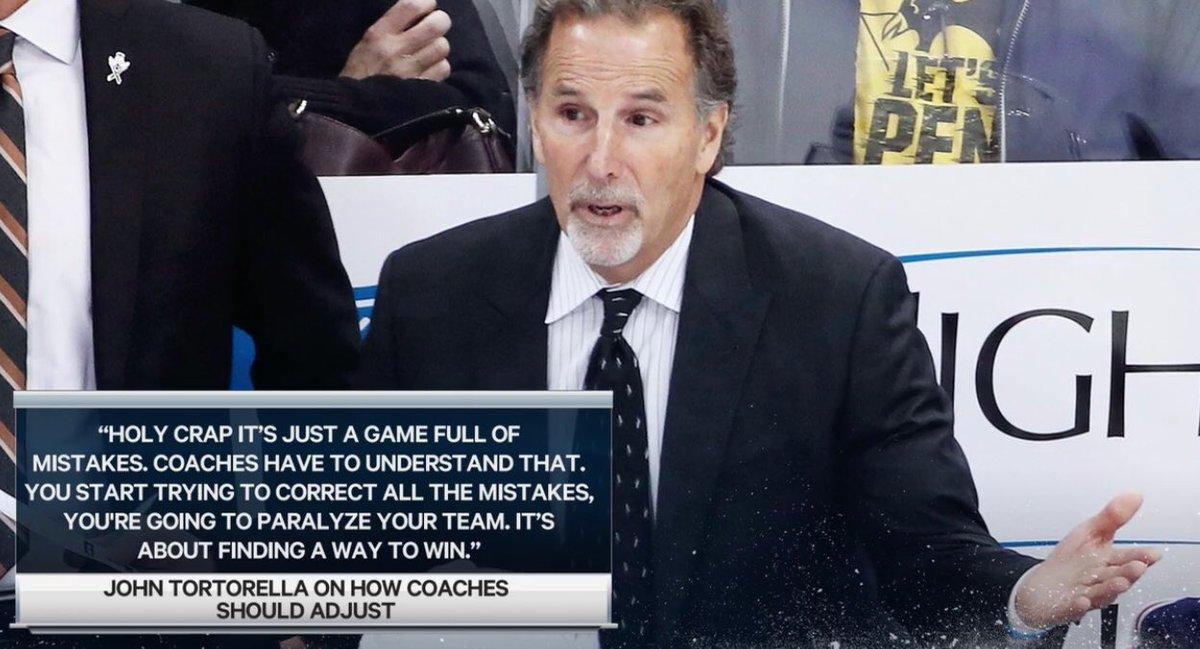
 

Swiss Coach may have accomplished the win by putting fear into his players or as some of the players stated was being honest with them but using a totally different approach merely by pulling the player aside and showing him on a whiteboard what he should have done in lieu, as the old cliché goes, you get much father with honey than you do with vinegar.

The only way that any of this will happen, however, is if Parents who are paying the bills are educated why other nations have caught up to us in terms of their programs and coaching development and how they will continue to excel if we don’t change our culture and systems NOW.

Like Mike Dipietro, I also am proud to be Canadian, but we can no longer do the same things over and over again and expect different results (Einsteins definition of Insanity). We need to implement a significant PARADIGM shift in our development model so we don’t fall further behind other nations as we have this past decade.

Otherwise the worst 4 words anyone can say will be posted in one of our blogs years from now ….


I TOLD YOU SO.

 

Don`t be a kids last coach


9 Lessons (I Wish) I learned from my father

Posted Leave a commentPosted in Athlete, Coach, Organization Executive

One of my favorite parts of the holiday season is taking downtime to catch up on reading books that have piled up in my office based on recommendations from various people I have talked to.

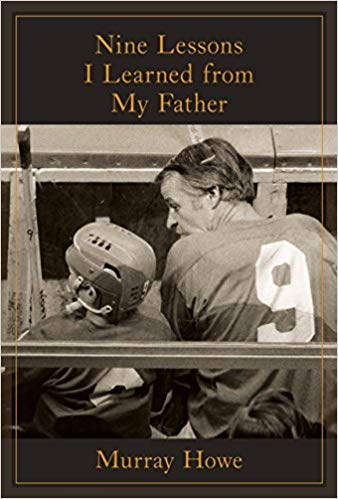
One of the books I recently finished, however, was one that was not recommended to me but was given to me by my son, “Nine Lessons I Learned From My Father, brilliantly written by Dr. Murray Howe, the youngest son of the late great Mr. Hockey, Gordie Howe.  The book is an accumulation of the various anecdotes that he wrote down for the eulogy that he was asked to do for his father’s service when he passed away.

Sadly as I lost my father at a young age, I did not learn many of the life lessons from him that I aspire that my son and daughter to learn from me, but as the old cliché goes, everything happens for a reason. Some of which I learned from my mother, grandparents, uncles and many others I learned from all the amazing coaches that I had along the way of my youth sports journey playing multiple sports.

Below are the nine lessons with quotes of Mr. Hockey that he cited in the book;

  1. Live Honorably

“People depend on you to do the right thing”


  All of my coaches talk me this valuable lesson, particularly the importance of walking the talk vs. those that talk the talk.  Probably the biggest issues I come across with “some” youth sports coaches today is they say all the right things in the parent meetings like they plan to develop all players, teach valuable life lessons, ensure all the kids have fun and so forth only to show their true colours in games and practices screaming at kids who make mistakes.

As a result they lose parents and players trust early in the season and more often than not the players don’t return the following season as they did not have the positive experience that youth sports should provide

  1. Live Generously

“What good is money except to do something good for someone”

 One of the co-coaches that I coached with on my daughters softball team for many years, Patchie as he was affectionately called by all of us, thought nothing of buying all the girls helmets, bats, snacks and more than one round of bevies when the adults would get together.


Several of the coaches I had over the years did the same, they thought nothing of spending their own money for equipment, meals, gas, hotels and all the other costs to be a coach so they could develop us into adults.

The trend today in the competitive stream in minor hockey is most associations in the lower mainland have gone to paid non-parent coaches to promote impartial player selection and eliminate other politics associated with rep hockey.  The coaches are paid from team budgets, so are “professional coaches /employees” of those very same parents that expect quality coaching, and the honorariums these coaches are receiving can be as high as $10,000 per season.

I don’t agree with the model, as it is putting a lot of pressure on these coaches (many of which are just getting started out after they finished their junior hockey careers) to win at all costs, and many of the players are quitting as a result way before their “hockey careers” are over.

  1. Play Hard, but Have Fun

“If it’s not fun, do something else.”

Hmmmm … Mr. Hockey who played professional hockey for over 3 decades believed in FUN?  One of the quotes I came across that Murray shared in the book was “you can’t score from the bench” when Gordie was at the end of his career and the coaches were opting to go with the younger players and he sat on the bench.  Murray also did the same even though he did play one season with Wayne Gretzky in Junior when Wayne was 15 but had the misfortune of sitting on the bench in Junior and like his Dad, opted to hang up his skates from competitive hockey as a result.

The only reason that a kid should be sitting on a bench in minor hockey is for discipline, kids deserve to PLAY the game so they can contribute to the outcome.

  1. Patience, Patience, Patience


“Take your time and do it right”


Every talk do I tell the coaches the importance of error correction during practices and don’t let the players cheat the drills by rushing thru them.  I would rather they do it SLOW and right, that fast and wrong.  The latter just leads to players developing bad habits that coaches at the older age groups get frustrated having to correct.

Another analogy I share is from Terry Crisp, who coached in the NHL and international level for many years, he believed in P & R – Patience and repetitions.  Hockey, like majority of sports other than gymnastics, is a long term development sport where coaches should be adhering to LTAD/LTPD or ADM (depending on the sport) and ensure that coaching skills relative to the age group.

Too many coaches just starting out implement team tactics, strategies way too early, then scream at their players because they make mistakes in practices and games.  The reason they are making mistakes is they don’t have the SKILL to do the strategies and when they are screamed at too much, the become scared to a point where many kids quit as a result.

  1. Live Selflessly

“If you want a good workout, grab the shovel over there”

Gordie was infamous for shoveling not only his driveway, but his neighbors, as well as one that did not believe in celebrating his own goals but that of the players that he setup to score.

Selfish players hurt team chemistry to a point where you may never get out of the storm period (forming, storming, norming and performing) so it is essential that you have ALL players buy-in to team and remind them that the play for the crest on the front of the jersey, not the nameplate on the back.

  1. Be Humble

“Don’t read your own press clippings. You’ll start to believe them.”

One of the greatest lessons I learned from my Peewee Hockey Coach who lead our team to win the Ontario Provincials and as a result we were invited to the Quebec Peewee Tournament well before it became the international event it is today.

He always said before games, Boys … today we will win with humility or lose with dignity.  No one should know if you won or lost when you leave the dressing room.

I have had the misfortune coaching against many teams in various sports where the coaches would have benefited from learning that core value as they not only permitted, but promoted excessive celebrations by their players when they were way up on us or their players were demonstrating poor sportsmanship when scored upon or they would lose it on their players.

This has been one of the biggest contributors when I have talked to players why they have quit the sports they once loved.

One of my favorite videos how much a fan idolized Gordie Howe is the one below …


  1. Be Tough

“There’s no such thing as cold weather. Only cold clothing.”

The numerous anecdotes that Murray shared about Gordies grit which goes back to his childhood as he was bullied due to having a learning disability and struggled reading and writing until it was identified and became proficient later on.

This is what lead him to pursue hockey as it was his outlet, much like it was for me when I was growing up.  Although my mother did an amazing job raising me and my brother, as a result of have strawberry red hair and living in various suburbs of the separatism era of Quebec, the Northwest Territories as a token child of white man’s burden and even when we moved to BC the first and second times, I was a victim of bullying as well.

Like Gordie, sports for me was the outlet to deal with the bullying I experienced, and I channeled my focus, frustration on the field but in a clean way thanks to the encouragement that I received from all the amazing coaches I had.

  1. Stay Positive

“I never keep track of my shots that miss.”

 Having played many organized sports with so many coaches, the one constant with all of them was reinforcing the importance to stay positive and it is not over until it is over.  Even in games were way down in, they would remind us of the valuable lessons we learned after the fact like being resilient, sportsmanship, respect, losing with dignity, resiliency, getting up when were down.


  1. Friends and Family Are Like Gold – Treasure Them

“Never forget where you came from, or who got your there”


 The World Juniors is a perfect example of the importance of remembering how players got there, I had the opportunity to see Team Canada play in a game and MacKenzie Entwistle’s Mother was sitting right beside us.  She watched the game very quietly, cheered when Canada made great plays but jumped literally to the roof when MacKenzie scored his 2nd of now three goals thus far in the tournament (tonight is the final round robin game against Russia).

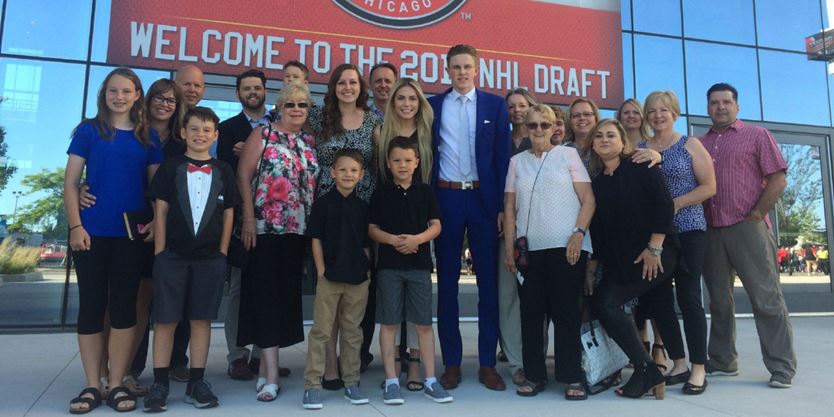
He started out this years tournament as the teams 13th forward but has now been dubbed the teams Swiss Army knife for his contributions and would never have reached that level if it had not been for the support from his parents and family, many of which were there to support him when he was drafted to the NHL.


JPEG Pro


I tell players on all my teams, and ask coaches to do the same, to remind them that their biggest fans are their parents and family always comes first. Although “some parents (AKA the vocal minority) take their support too far by putting pressure on their kids, coaches, the silent majority of parents are amazing as their kids “biggest fans”

Don`t be a kids last coach


What is Mindfulness ?

Posted 1 CommentPosted in Athlete, Coach, Organization Executive, Parents

We recently hosted our second digital summit thru our digital arm, For the Love of the Game, where I had the opportunity to talk with another amazing group of sports leaders who shared tips, tricks and nuggets to help coaches shave years off their learning curves.

Each guest speaker I talked to was absolutely amazing and if you did not have a chance to sign up for our summit you can sign up here for on-demand access to it (will be uploaded by the end of December 2018), our summer summit and all of our training modules for lump sum annual or monthly membership. We now have over 40 hours of digital content and will continue to build so you have access to insight from global leaders to help you become the best coach you can be.

The last speaker that reached out to us only a few days before the summit was going live was Dr. Amy Saltzman, Holistic Physician and Mindfulness coach for several decades based in Northern California.  Amy holds the record thus far of the fastest turnaround to doing the interview and the recording being edited and uploaded to our platform in less than 48 hours.

One thing that I found this winter summit that we will have to revisit for others going forward was the challenges to coordinate times, days with guest speakers as many have full plates in season, including yours truly and I was ecstatic was able to connect with Amy in time so she could share her amazing insight in our winter summit.

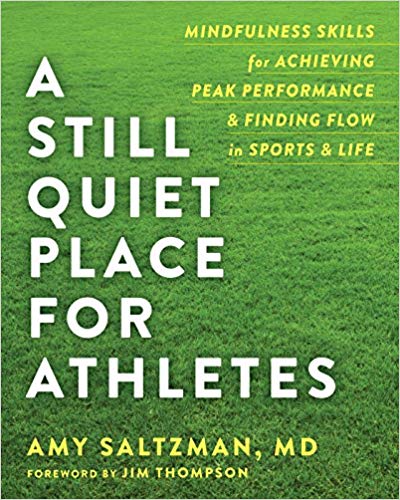
We talked about her most recent book I was able to read in that same 48 hour turn around time frame as she sent me the PDF version that I believe will be a go-to book for athletes and coaches, “ A still quiet place for athletes: Mindfulness skills for Achieving Peak Performance & Finding Flow in Sports and Life”.


One of the testimonials that Amy received was from one of her longtime mentors, Mindfulness coach George Mumford who was Phil Jacksons “secret weapon” when he coached the Bulls to 6 and Lakers to 5 NBA Championships.

Once I started to read the PDF version Amy sent me I could not stop turning the pages and I know it will be my go-to book going forward to help not only players but coaches and even parents understand the value of incorporating mindfulness so they can reach the highest level of performance possible.

For purposes of this post, I am going to share some of the great nuggets that Amy wrote in the last two chapters geared towards coaches and parents as many of the coaches that I interact with across the country wear both hats as parent volunteer coaches.

Amy shares in the video clip for this week’s newsletter her definition;

Mindfulness is paying attention here and now;

with kindness and curiosity,

so that we can choose our behavior

 Breaking it down;

  1. Paying attention here and now – not dwelling on the past or worrying about the future but what is happening in this

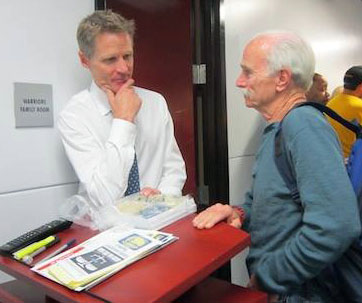
One of the examples she shares in the book is about Steph Currey, who is one of the top players in the NBA and coached by Steve Kerr whose core values for the Golden State Warriors is Mindfulness-Compassion-Competition and Joy.  Steve had the opportunity to play for Phil Jackson on those Championship Chicago Bulls Teams who received mindfulness training from George Mumford.

The Golden State Warriors version of George Mumford, is the great Dr. Jerry Lynch, long-term practitioner of mindfulness and one of the top sport psychologists in the USA who has also worked with over 30 National Championship NCAA teams.


Steph has bought in into mindfulness to the extent that he and his wife have tattoos on their arms of two arrows pointing to each other, the middle being THE MOMENT, not the past or the future. Before every game, he points to that tattoo and his wife does the same.

I don’t think anyone would argue with me when Steph is in the Zone (AKA flow state) and hitting all those 3 pointers from all over the court that he is “pretty good” staying in that moment vs. worrying about the past (missed a shot) or future (worrying about the score if team is down)

  1. “with kindness and curiosity” – in lieu of being hard on ourselves as we made a mistake or feel we screwed up or the vocal minority of coaches and parents screaming at us we did so, in order for teams to practice mindfulness they have to understand that mistakes are part of the process and if it happens continue to move forward.


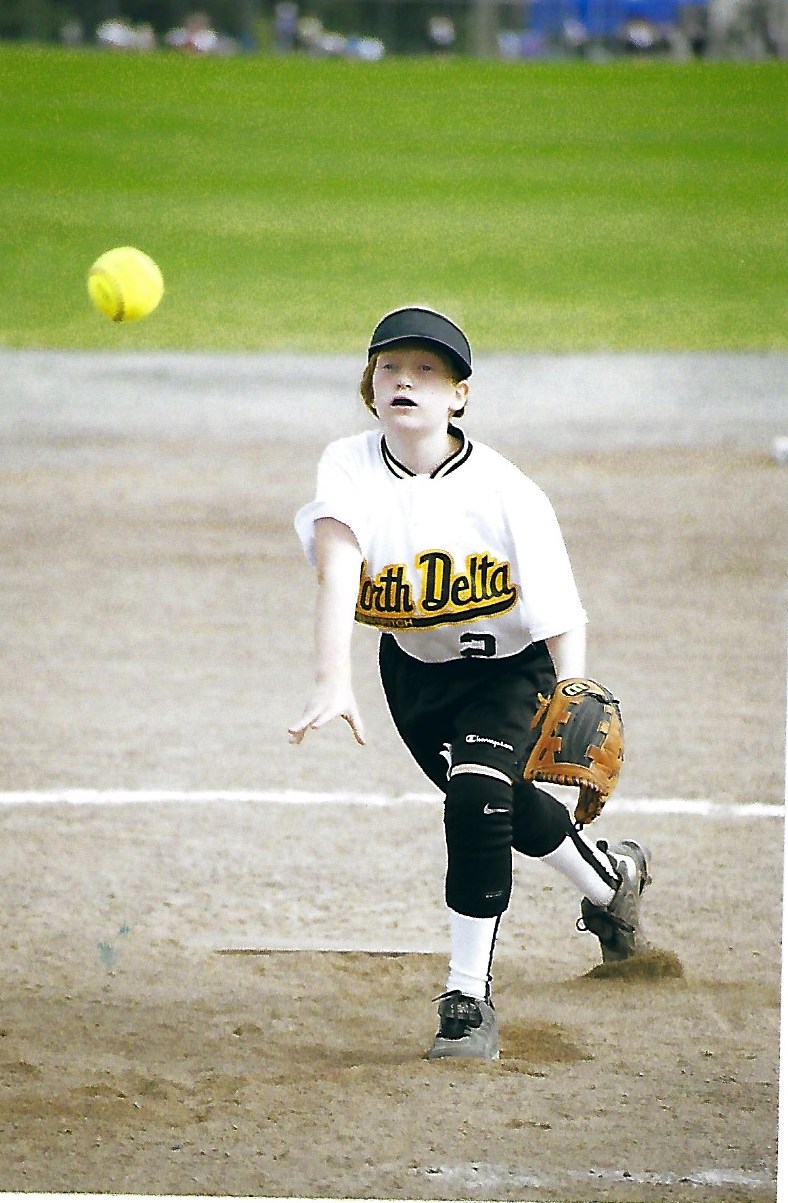
The analogy that I shared with Amy was my daughter who I coached in softball for many years and was a pitcher.  Above is one of my favorite pictures of her from when she was in one of the several provincials we went to. She loved inside pitches so could jam up batters and there were a couple of regular umpires in our association that would not call them strikes but give her outside pitches all day long.  When she would get frustrated, in lieu adapting and staying in the flow state and throwing pitches that would be called strikes, her face would get red, could tell she was mumbling words and trying to vent so I would call blue to be able to go talk to her.

In lieu, “focus on being in the present”, “you got this” or other positive words of encouragement and VOILA … she would be back in the zone and tweak her pitch to get inside the umps strike zone.

The same held true with numerous other players I coached over the years, in particular goalies in hockey. I would work with all of them early in the season to come up with their own pre-game routines so they were in the present when the game started vs. some would still be goofing off or not focused and early in the game would let in a goal that 90% of the time would made the save when in the zone.

I would call a timeout and call them to the bench, not to pull them as I see too many coaches do and put their “favorite” in, to bring them back into the present, remind them that the goal was history and there was nothing they could do but focus and be ready for the next shot.

Then I would send them back to the net with positive phrases like you got this, we got your back, just go out there and have fun or something as simple as a thumbs up and their smile would come to their face and be in that flow state needed.

As the cliché goes, you have to be nuts to be a goalie in the NHL facing 100 MPH slap shots, so of all the positions in sports, I believe hockey goalies need to focus on mindfulness, breathing techniques so they are in the zone when they need to be.  Not before, not after, but in the that moment when they are facing the shooter to make that save.

Amy then shares a great exercise for coaches to start working on developing their coaching philosophy, probably one of the biggest shortfalls I run into every I talk.  It is amazing how many coaches DON’T have a philosophy, and even when they do, they don’t have it in writing.

There are three things that every parent wants to know about coaches;

  1. Who are they, what is their background (how many years coached, what certifications do they have etc.)
  2. Why do they coach
  3. What is their philosophy

It amazes me in this era with all the parental behavior we see almost on a daily basis and coaches come to me all the time asking “how to deal with parents” they don’t recognize if they have the answers to the above and is in writing so they can be held accountable.

In lieu, they talk the talk, but don’t necessarily walk the walk and wonder why they lose the players and parents trust and they act up in the stands or sidelines.

This exercise alone is worth adding the book to your library.

Amy then touches on the importance of developing culture, core values, filling their emotional tanks so when have to use tough love they will do what coaches ask them without question and understanding the importance that your players are individuals with several exercises so that you can connect with your players.  Connection is one of the tips that every speaker that I talked to both in the summer and winter summit stated is one of the characteristics of great coaches and Amy lays out the framework in a very practical way how you can do so.

The last chapter focuses on tips for parents to help their kids develop mindfulness practices which I will defer to another post in future but it includes summaries that you can share with your parents in terms of the reality how many high school athletes in the US go on to NCAA level as well as player and parent goal setting so in lieu of putting pressure on their kids, they truly are supporting their kids to achieve their own goals, not those of their parents.

The best part of the book is that it is supported by online audio resources and PDF’s of the various exercises for the athlete, coaches and parents.

According to Amy, you can start incorporating mindfulness with players as early as 8-9 years old with the first part of the book, then as they get older evolve to the second stages explained in the second phase much like you would do adding progressions to your drills and practices.

I highly recommend that you add it your tool basket, if you truly aspire to guide your teams to the highest level of performance possible, you must focus on developing their minds to be in the optimal flow state at the time needed, not before or after but the NOW.

Thought the best way to finish this post is the quote that Amy shares at the beginning of the coaches chapter;

A common mistake among those who work in sports is spending a disproportional amount of time on x’s and o’s as compared to time spent learning about people.

—- Mike Krzyzekski, Duke University Men’s Basketball coach (5 National NCAA champions) and Team USA Men’s Basketball Coach leading the team to Olympic gold in 2008 and 2012

There is so much to coaching that writing up the X’s and O’s on a whiteboard, mindfulness training being one of them, the sooner you add to your tool basket, the sooner you as a coach and your athletes will reach higher level of performance.


Don`t be a kids last coach


The Top 10 Characteristics of great coaches

Posted Leave a commentPosted in Athlete, Coach, Organization Executive, Parents, Uncategorized
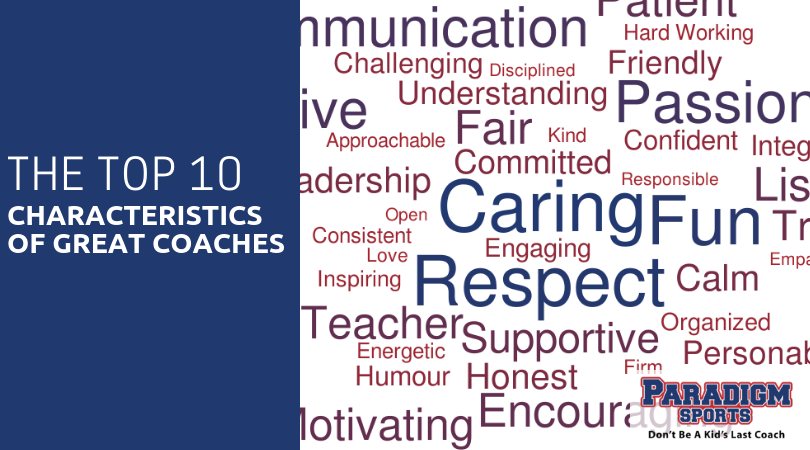
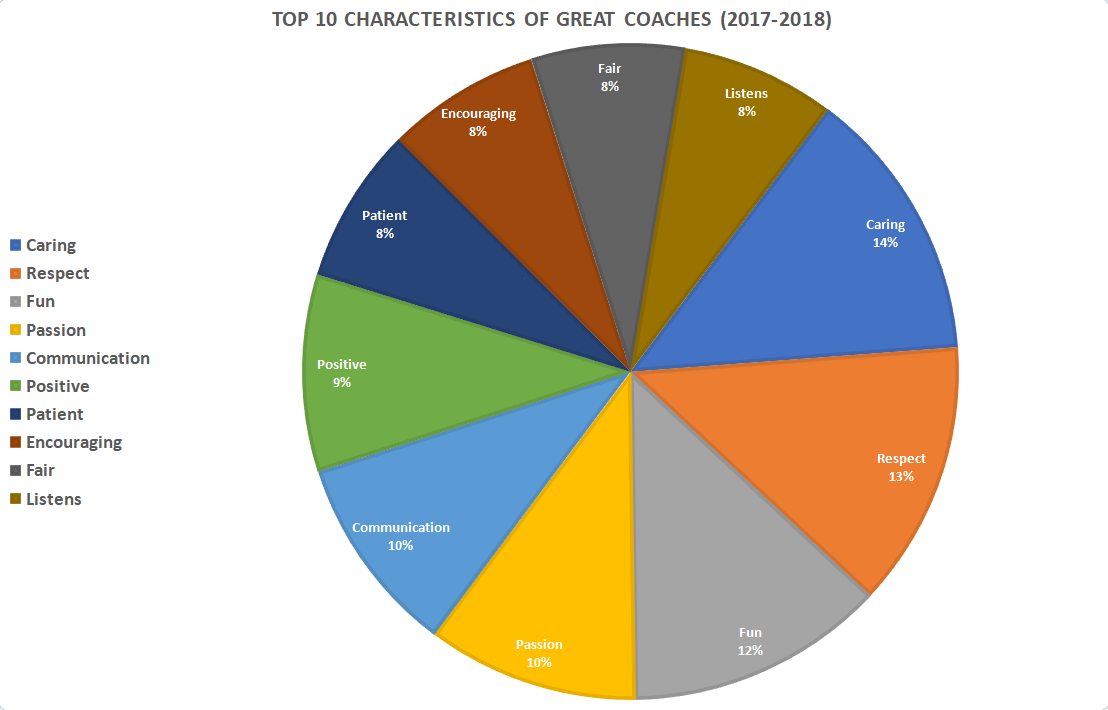
This is an update to last years post that I posted in December 2017 as I have continued to interact with coaches at conferences and clinics and ask them; What are the top 3 qualities of the greatest coach (or teacher, manager) you ever had? Last fall our co-op student created a tracking sheet to summarize all the characteristics that I had recorded by various means and now our “informal” database is just shy of 1000 coaches, board members and even parents. By no means is this a formal research study, but the below pie chart outlines the updated results for the top 10 characteristics;
Just as it was last year, and every time I do the exercise, the Number 1 characteristic was the coaches cared about their players. This also was one of the characteristics when I talked to the amazing guest speakers in our summer and winter digital summits we hosted thru our digital arm For the Love of the Game. Number 1 (always)
Not only do they care about helping them develop into the best athletes they can be, but the best people. This is what John Wooden, Clare Drake, Phil Jackson in past and current coaches like Pete Carroll, Mike Kryzyzewski, Sean McVay and others have demonstrated or shared with journalists what was really important to them as they guided their teams to achieve at the highest level. Coaches that care, not only teach the skills of the game, but the skills of life. Number 2  (moreso the reason kids play but coaches must foster an engaging environment for it to be fun)
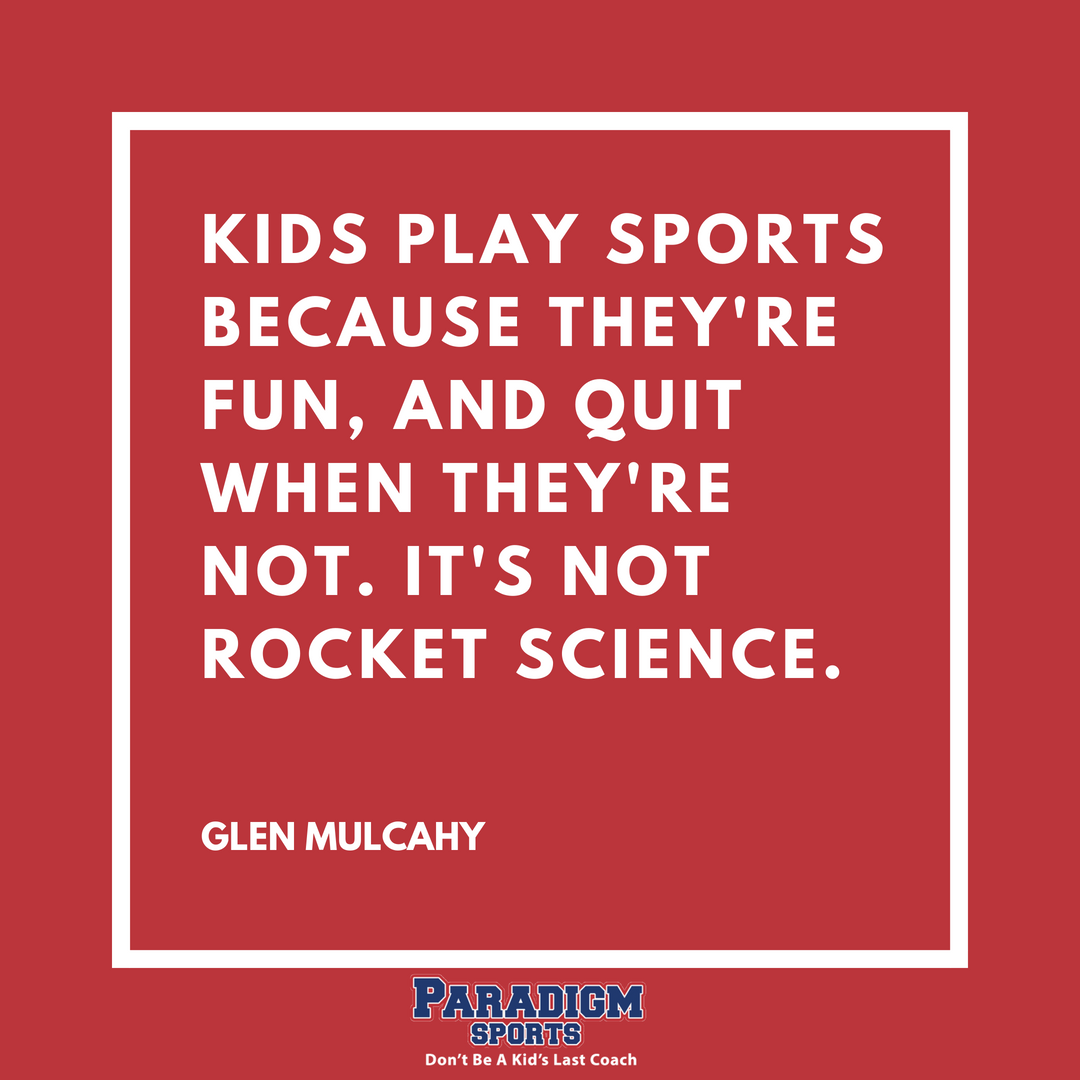
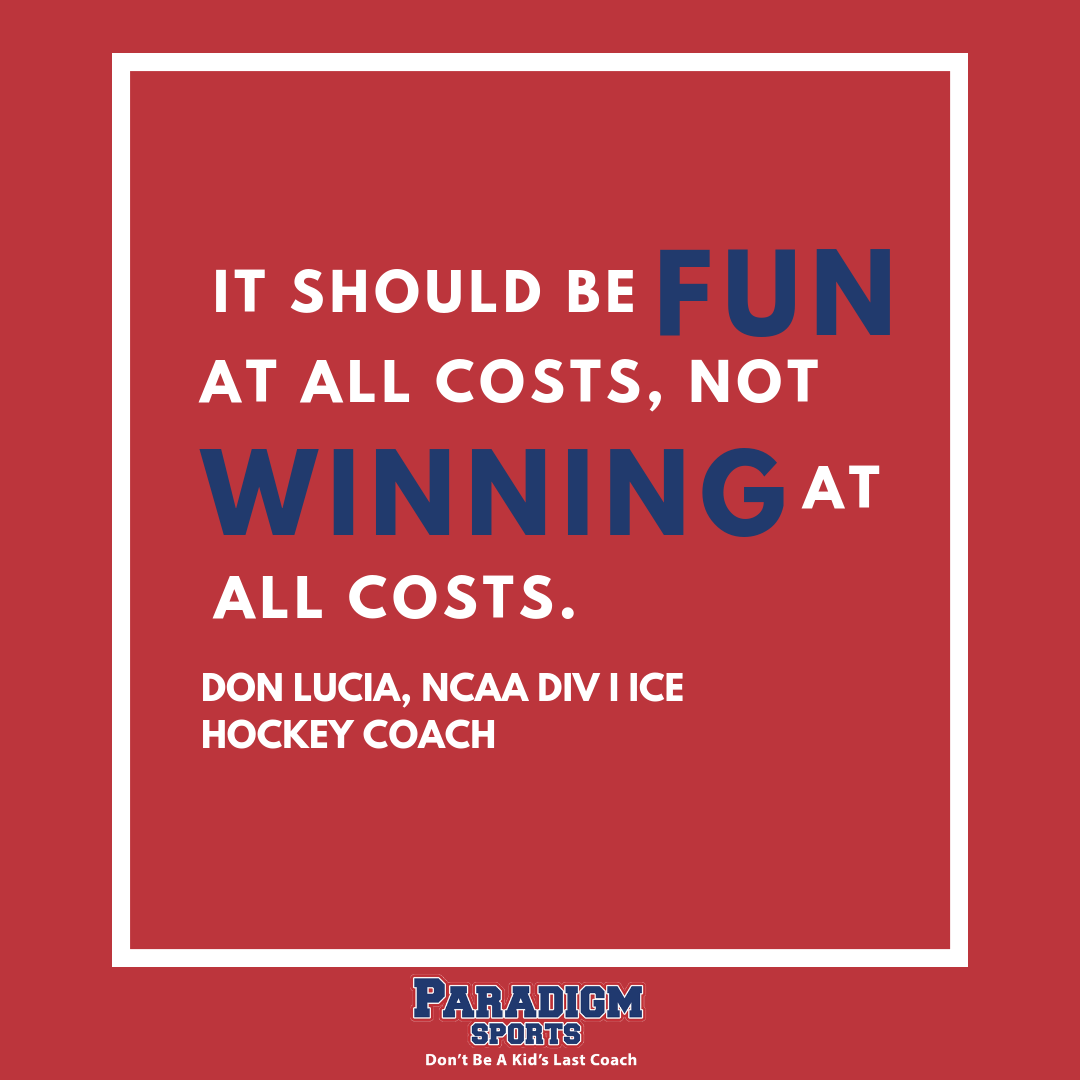
Another of the top characteristics was they coaches made the experience fun, both in games and practices as well as other team activity. Many misinterpret that I am not competitive because my philosophy of coaching is “FUNdamentals, not winning, at all costs”. Like all the great coaches who worked on the process of developing all players on their teams that lead to results on the scoreboard, I know how important it is for players to have fun, even on the most competitive teams. As I have been saying for years;
Mike Babcock, now the highest paid NHL coach with Stanley Cup, World Championship and Olympic Gold achievements on his resume is another one of those great coaches. When he became the coach of the Toronto Maple Leafs, he shared that his main role was to develop all the players into great young men. Prior to the 2010 Olympic Gold Medal game, when he was coaching some of the best players in the WORLD at the time, when asked by the media what he told the team before the game he said “I just told them to go out there and have fun.” Many people think when kids they just want to have fun that it means goofing off, but kids actually don’t want their team mates to do so they want to play, the want to compete, they want play for the love of the game. That is what fun is. Number 3:
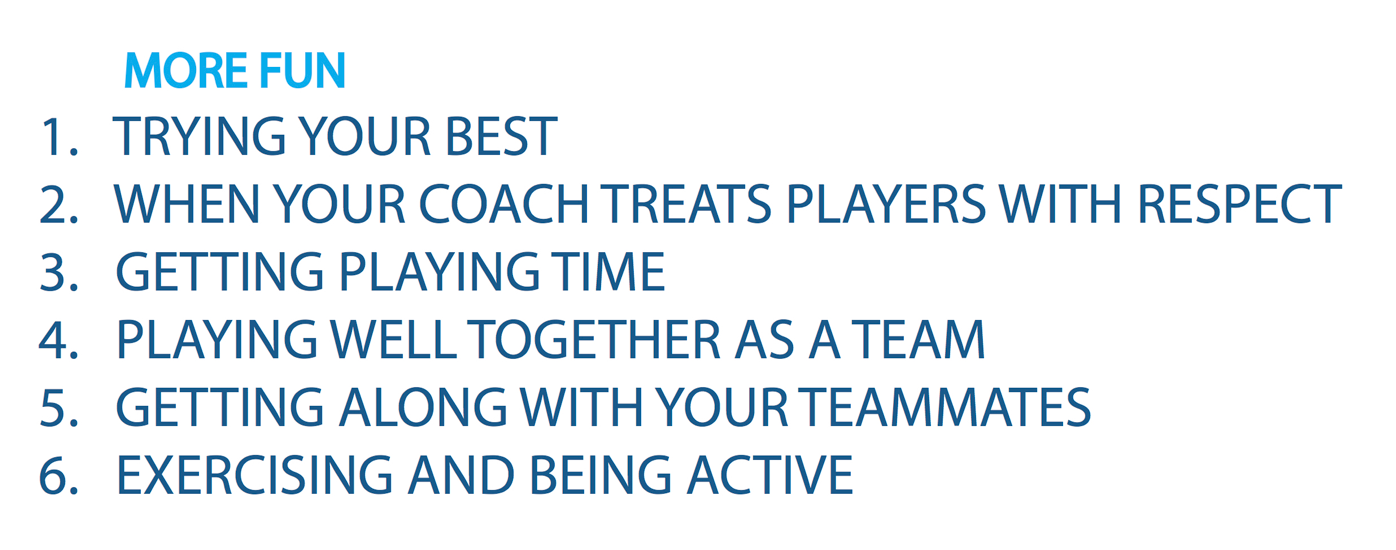
When Amanda Visek did her groundbreaking study and identified the 81 characteristics of what is fun in youth sports, the number 2 reason, second only to having the opportunity to try your best was when coaches treated players with respect
Although I would NEVER consider myself to be in the same company as John Wooden, his three rules are very similar to mine and his third was “Never criticize your teammates”, mine is Respect. Respect yourself, teammates, coaches, officials, other teams, parents, class mates, parents and so on. I believe respect is a two-way street, if coaches respect their players then they players will in turn respect their coaches and vice versa. Sadly, although the many coaches in youth sports do respect their players, there are coaches that think nothing of screaming at a player, singling them out in front of the teams, criticizing their mistakes over and over again and other ways that are not only disrespectful but crossing the fine line from demanding (pushing players to be their best) to demeaning (belittling players). It is no wonder why 70% are quitting by the age of 13 in majority of sports, but as I recently found out due to changes that USA hockey made to focus on fun, ensure the coaches respect their players and recognizing that it is all about the kids, they have moved the needle where they only lose 8% of their kids by the age 13. Number 4:
One of the key takeaways for every talk that I do for coaches is “Care Passionately“.  For me, caring and passion go hand in hand, when coaches are truly passionate for their sport, the kids will become passionate. When I think of the greatest coaches I had in many sports, same held true for me, they took on the role as father figure and truly cared about me become a better player, but also a well rounded person.  Many of which were so passionate about the game I could not follow suit which is one of the reasons why I played so many growing up. The remaining top 10 characteristics from our 2018 summary include great communicators, were positive, patient, encouraging, fair and listened. Coaches can also fill the gap for kids like me who lost their father at a young age to guide them, mentor them, and steer them out of trouble if they head down that path. Great teachers do the same, if it had not been for my Grade 12 French Teacher who took me aside one day and said “you can do better” after I acted up in class for the umpteenth time who knows where I would have ended up. She was the one that motivated me to pursue post-secondary education and as a result I was the first of all my cousins from both our extended Roman Catholic Families (over 30 first cousins) to graduate from University and one of my proudest moments as my Nanny (grandmother) was there to see me accept my degree. Think back when you grew up, did you ever take a class in school and thought you would HATE it like calculus, accounting, history, literature? Then to you surprise you ending up loving the course – Why? Because your teacher was so passionate about the subject. Same holds true for youth sports … if coaches are passionate about all aspects of the game they will instill that same passion in their players so they love the game more at the end of the season than they did at the beginning. Other – the list of other responses were endless but included characteristics like calm, challenging, committed, confident, consistent, disciplined, demanding (not demeaning), energetic, enthusiastic, fair, firm, forgiving, genuine, trustful, inspiring, integrity, invested, kind, listens, motivator, organized, personable, positive, role model, teacher and leader. In addition to care passionately and making it fun, please make it safe (to fail and for all forms of harassment), teach skills and lastly …..

Don’t be a Kid’s Last Coach

What is LTPD?

Posted Leave a commentPosted in Athlete, Coach, Organization Executive, Parents

Long Term Player Development.

I just came back from Whitehorse, Yukon to run three Hockey Canada NCCP Clinics for BC Hockey who also is the Provincial Governing Body for the Yukon Territory. This is now the second time in as many years that I have had the opportunity to work with passionate coaches is a small town where hockey is one of the main sports, the first time was when I was asked to run clinics for another small group of passionate coaches in Fort Nelson, BC. Both trips I had the opportunity to fly via Air North, a small airline whose lanes take passengers to various stops in the Yukon, mainly from BC and Alberta, but as far from Ottawa, Ontario.  My favorite part of the trip, the warm chocolate chip cookie with Milk, one of Air Norths claims to fame. Over the last 10 years I have had the opportunity to interact and learn from thousands of coaches across Canada, and anytime I get asked to work with coaches in smaller towns I jump at the opportunity. Why? Because they are very passionate about sport, over the course of this past weekend, the coaches shared with me how their kids are bucking the trends where kids today spend on average of 7.5 hours a day on screens. In Whitehorse many of the kids play hockey and swim thanks to the legacy left behind at the Canada Games in 2007 for an amazing facility with 2 rinks, pool, gym and even a physical literacy education area. They also ski thanks to very affordable passes at their local hill of $200.00 for a season for kids up to 18 yrs. old, cross country ski, ice fishing, play soccer in spring (vs. fall in BC due to climate) and many will play indoor soccer in fall, basketball, volleyball and numerous other activities. We could all learn a little from the parents in those small towns who are encouraging their kids to participate in as many activities as possible until their latter teens when they choose a sport they are the most passionate about. We shared a quote on this weeks newsletter that I came across last week by Muffet McGraw, Head coach of the Women’s Basketball Team who has over 800 wins at the University of Notre Dame whose 2018 team is ranked Number 1 in the NCAA and reigning NCAA champions last year.
She and other high level coaches were interviewed in yet another article talking about the perils of early sport specialization where she also shared;

“Do I think we’re specializing at too young an age? Absolutely. I hate it. You don’t have to pick one sport when you are 10 or 12 years of age”

Sadly as I have shared in numerous articles, many parents are feeling the pressure to sign their kids up in one sport year round as early as 6-7-8 years of age which is due largely to the fact they are not aware of the benefits of multi-sport participation and the initiatives from all the NSO’s (National Sporting Organizations) in Canada, USA and many other countries worldwide for long term development to become the best athlete, not hockey player you can be (or any other sport) Hockey Canada is one of the NSO’s that have rolled out their version of LTAD developed many years back by Sport for Life, theirs as well as some other NSO’s like Soccer Canada, Softball Canada have called it LTPD. LTPD = Long Term Player Development. This past weekend, just as I have in any presentation or clinic I have ran going back many years, when I asked the question “What is LTPD?”, only a few hands go up. The ones whose hands go up have been coaching other sports but none of the first time coaches (many of which are parents) who are just starting out are aware of LTPD or the various versions. I then ask what about Physical Literacy or Fundamental Movement Skills? Same thing, only a few hands go up, in this instance however, many hands when up in the Coach 1 age groups (5-6) because Whitehorse has a Sport for Life Physical Literacy Centre and education thru their elementary school.

Houston we have a problem.

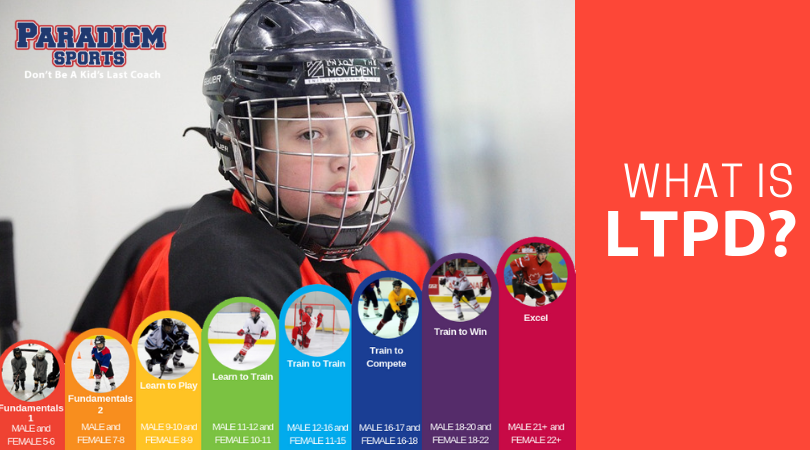
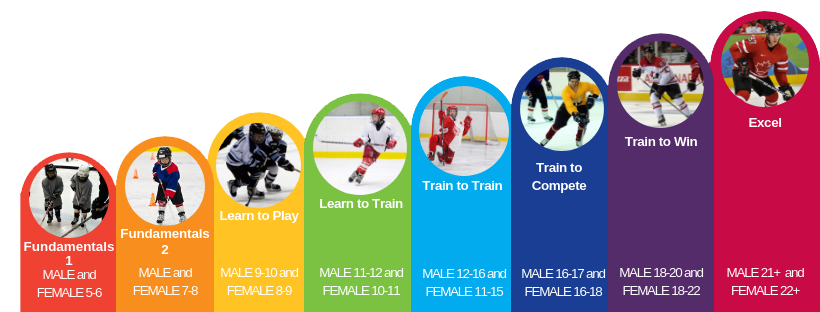
One of the issues that has been identified by every NSO that I have spoken for is that our best coaches are coaching at the highest levels in their respective sports, Provincial, National Teams but for our youth to develop the core skills needed to reach that level we should have our best coaches working with the kids in the earlier age groups to develop those core motor skills. For purposes of this post, for those unfamiliar with what is LTPD, I asked of my co-op students to tweak the Hockey Canada LTPD image that outlines all the stages and applicable age groups so it was easier to read in presentations.
The Sport for Life LTAD model starts with Active Start, 0-6 years of age, where kids should develop physical literacy and learn various fundamental movement skills like falling, getting up, jumping, skipping, balance, agility, throwing, catching, one and two-handed strikes, biking, swimming and on and on. Sadly, thanks to early sport specialization many kids cannot do these core motor skills.

Fundamentals 1

Initiation Boys and Girls – 5-6 Yrs Old

Hockey Canada’s first stage for the initiation age group, boys and girls 5-6 years of age. In this weekend’s clinic, we asked for kids to come out from 7-9 for the coaches to run thru drills and one of the younger brothers who was just starting came out and was priceless. He could stand and skate forwards largely with help of his stick as a crutch, and went thru the various stations with all his older counterparts with a HUGE smile on his face. This age group should be all about core skills, mainly balance and agility, falling, getting up, learning basic V-Stop, holding stick, hockey stance (for balance).  Ideally, they should do all drills starting with no stick so they learn to skate without the crutch many rely on NOT playing full ice games as I have learned is happening in BC, Ontario with leagues that have 6-year-old kids playing as many as 70 full ice games a year. This is totally contrary to the Cross-Ice model that Hockey Canada rolled out with resistance from these very same leagues last year for the Initiation Age group.

Fundamentals 2

Novice: Boys and Girls – 7-8 Yrs. Old

The second stage for the Novice age group (boys and girls 7-8 years of age), that is going to be cross Ice Nationally next season as Hockey Canada opted to roll out in stages vs. some provinces like BC who opted to roll out for Initiation and Novice. The focus in this age group should continue to be core skills of hockey, balance, agility, skating, passing, shooting. NOT playing full ice games where the score board shows a score of 6-0 but the actual score as reported by various news outlets across Canada in a Novice age group was 41-0
Novice Hockey Game of the Week 41 - 0. Really?

Learn to Play

Atom – Boys 9-10, Girls 8-9 Yrs. Old

This is the first stage that girls age groups differ from boys because they mature sooner than boys in terms of their physical and mental growth For me, this is the age group I enjoyed the most as they truly learn to play, they make the transition to full ice hockey now (vs. at 7 years old when I coached and was a beehive of the weaker kids chasing the early bloomers and never touching the puck) It is also the first year that Rep Hockey is introduced, but still emphasis on development, no power play, penalty kill units or any other systems.  Merely core skills and individual tactics. Unfortunately, as I have seen all too often, once the word rep or in other areas of BC “development” gets association with a team vs. recreation, many coaches jump the gun and start introducing systems, strategies when should continue working on core skills

Learn to Train – Peewee

Boys 11-12, Girls 10-11

This is the stage that coaches are required to take their Development 1 coaching certification as the rep stream is now deemed “competitive” and is a 2-day clinic, followed by a post task, MED online, practice evaluation and same CATT, RIS that all coaches have to take regardless of the age group or stage in LTPD. Only a small % of time should be on group tactics, systems and strategies still focusing on core skills (80%) but like I see in Atom, once the word competitive gets added, “some” coaches take it to the extreme. This is also the age group where spring programs really ramp up competition by going to travel tournaments all over North America, even some going to Europe that takes the current 1:1 practice to game ratio to even lower.

Kids develop in practices, not games.

In BC, the current rep model is 2 games, 2 practices and a dryland a week. I always tell coaches to get their dryland to run pre-post one of their practices to limit the time commitment to allow kids to do other sports and activities. Easy fix to increase our practice to game ratio to 3:1 (Europe is 5:1) to focus on development not competition to a practice slot. VOILA – 3:1 practice to game ratio. Better Yet – Eliminate the Scoreboard and score sheets so sports are fun, the #1 reason why kids play per all the research and studies done, including my informal surveys of all the teams I coached in multiple sports. Per Amanda Visek great research, the top 3 reasons why sports are fun are 1 – Trying my best (skills), 2. When a coach treats me with respect and 3. Playing time. Way too many Peewee coaches, regardless if it is rep or rec (AKA house) run short benches, have power play and penalty kill units that deprive all the kids the opportunity play and contribute to the outcome of games. Why? Because the parents want to see more games so their kids can be scouted to be drafted and make the NHL or get a NCAA scholarship. REALITY CHECK – 0.03% of kids that play hockey “may” it to the NHL and less than 1% of kids will play in the NCAA with only partial scholarships (approx. $8K is the average vs. $30-40K for tuition, room and board, insurance etc still leaving parents on the hook for $80K or more) It is no wonder why 70% of kids quit hockey by the age of 13 as a result.

Train to Train

Bantam Boys – 13-14, Girls 12-13 yrs. old

Coaches should continue to focus on skills, individual tactics and this is the age group that I believe we turn the scoreboard on, keep track of the results, not before. Yes – No scoreboards or scoresheets until Bantam. Norway, Sweden who have both implemented LTAD for many years do the same, kids do not compete until they are 13, until then, they play for the LOVE OF THE GAME, developing friendships, developing various skills across a myriad of sports. Some pretty good hockey players have come from Sweden no?  One being the current Calder Trophy Candidate for the Vancouver Canucks, Elias Petterson. Norway knows a little about reaching the podium also, 39 medals in this year’s Winter Olympic Games. Train to Compete Midget – Boys 16-17, Girls 16-18 This is where group tactics, positions, tactics in competitive situations but also focus on conditioning, strength and power.  Coaches should still continue to work on skill development (60-70%)

Train to Win

Male – 18-20, Female – 18-22 INTERNATIONAL

Notice how LTPD does not reference the word winning until kids are this age?  These are the players have bee identified by Hockey Canada to represent their provinces or the country but even when I have talked to these coaches they still continue to work on skill development. Brent Sutter, after they World Junior team he coached in 2014 that did not win a medal, shared that the reason we did not do so was we lacked skill, creativity that other nations had due to our system being too structured.  This is a result of our focus on competition too early and not emphasizing the importance of free play, small area games and skill development. As we shared in a prior newsletter from one of the top 10 winningest coaches in NCAA Div 1 Men’s Hockey History;
We have our work to do to ensure that the coaches who are starting out working with the 5-year-olds understand the principals of all the stages of LTPD, Physical Literacy and Fundamental Skills. We also have our work to do to ensure that parents understand the stages, the benefits and not pressuring coaches to focus on competition vs. practices where kids truly develop. Remember, Hockey, like many other sports except gymnastics, are long term development sports and it takes YEARS for kids to develop. Think Tortoise and the Hare. Not Mario Andretti racing to the finish line. The kids that rush via early specialization and competing too much, too early will suffer overuse injuries, burnout and not develop core motor skills as athletes. Even if they are early bloomers, more often than not they either quit before high school due to much focus on competition or get caught by their late bloomer counterparts. Also, per Wayne Goldsmith who we talked to in our summer summit, there is no such thing as a elite 8 year old … it is not part of my vocabulary, please get it out of yours.
https://www.youtube.com/watch?v=N6m81hkbb5M&list=PL96mRbwr3oRrFFjol99WtPNmntaeaWcYE
Let’s all work together to bring the game back to the kids … where it belongs.
Don`t be a kids last coach