

We recently hosted our second digital summit thru our digital arm, For the Love of the Game, where I had the opportunity to talk with another amazing group of sports leaders who shared tips, tricks and nuggets to help coaches shave years off their learning curves.
Each guest speaker I talked to was absolutely amazing and if you did not have a chance to sign up for our summit you can sign up here for on-demand access to it (will be uploaded by the end of December 2018), our summer summit and all of our training modules for lump sum annual or monthly membership. We now have over 40 hours of digital content and will continue to build so you have access to insight from global leaders to help you become the best coach you can be.
The last speaker that reached out to us only a few days before the summit was going live was Dr. Amy Saltzman, Holistic Physician and Mindfulness coach for several decades based in Northern California. Amy holds the record thus far of the fastest turnaround to doing the interview and the recording being edited and uploaded to our platform in less than 48 hours.
One thing that I found this winter summit that we will have to revisit for others going forward was the challenges to coordinate times, days with guest speakers as many have full plates in season, including yours truly and I was ecstatic was able to connect with Amy in time so she could share her amazing insight in our winter summit.
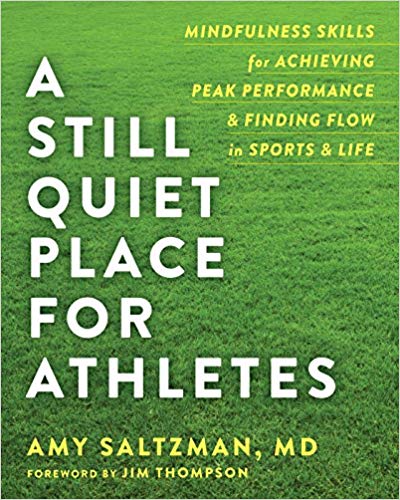
We talked about her most recent book I was able to read in that same 48 hour turn around time frame as she sent me the PDF version that I believe will be a go-to book for athletes and coaches, “ A still quiet place for athletes: Mindfulness skills for Achieving Peak Performance & Finding Flow in Sports and Life”.
One of the testimonials that Amy received was from one of her longtime mentors, Mindfulness coach George Mumford who was Phil Jacksons “secret weapon” when he coached the Bulls to 6 and Lakers to 5 NBA Championships.
Once I started to read the PDF version Amy sent me I could not stop turning the pages and I know it will be my go-to book going forward to help not only players but coaches and even parents understand the value of incorporating mindfulness so they can reach the highest level of performance possible.
For purposes of this post, I am going to share some of the great nuggets that Amy wrote in the last two chapters geared towards coaches and parents as many of the coaches that I interact with across the country wear both hats as parent volunteer coaches.
Amy shares in the video clip for this week’s newsletter her definition;
Mindfulness is paying attention here and now;
with kindness and curiosity,
so that we can choose our behavior
Breaking it down;
- Paying attention here and now – not dwelling on the past or worrying about the future but what is happening in this
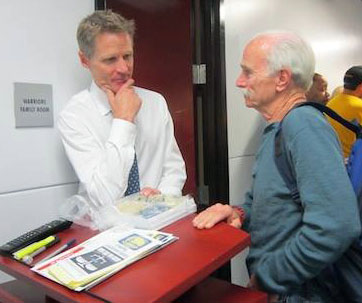
One of the examples she shares in the book is about Steph Currey, who is one of the top players in the NBA and coached by Steve Kerr whose core values for the Golden State Warriors is Mindfulness-Compassion-Competition and Joy. Steve had the opportunity to play for Phil Jackson on those Championship Chicago Bulls Teams who received mindfulness training from George Mumford.
The Golden State Warriors version of George Mumford, is the great Dr. Jerry Lynch, long-term practitioner of mindfulness and one of the top sport psychologists in the USA who has also worked with over 30 National Championship NCAA teams.
Steph has bought in into mindfulness to the extent that he and his wife have tattoos on their arms of two arrows pointing to each other, the middle being THE MOMENT, not the past or the future. Before every game, he points to that tattoo and his wife does the same.
I don’t think anyone would argue with me when Steph is in the Zone (AKA flow state) and hitting all those 3 pointers from all over the court that he is “pretty good” staying in that moment vs. worrying about the past (missed a shot) or future (worrying about the score if team is down)
- “with kindness and curiosity” – in lieu of being hard on ourselves as we made a mistake or feel we screwed up or the vocal minority of coaches and parents screaming at us we did so, in order for teams to practice mindfulness they have to understand that mistakes are part of the process and if it happens continue to move forward.
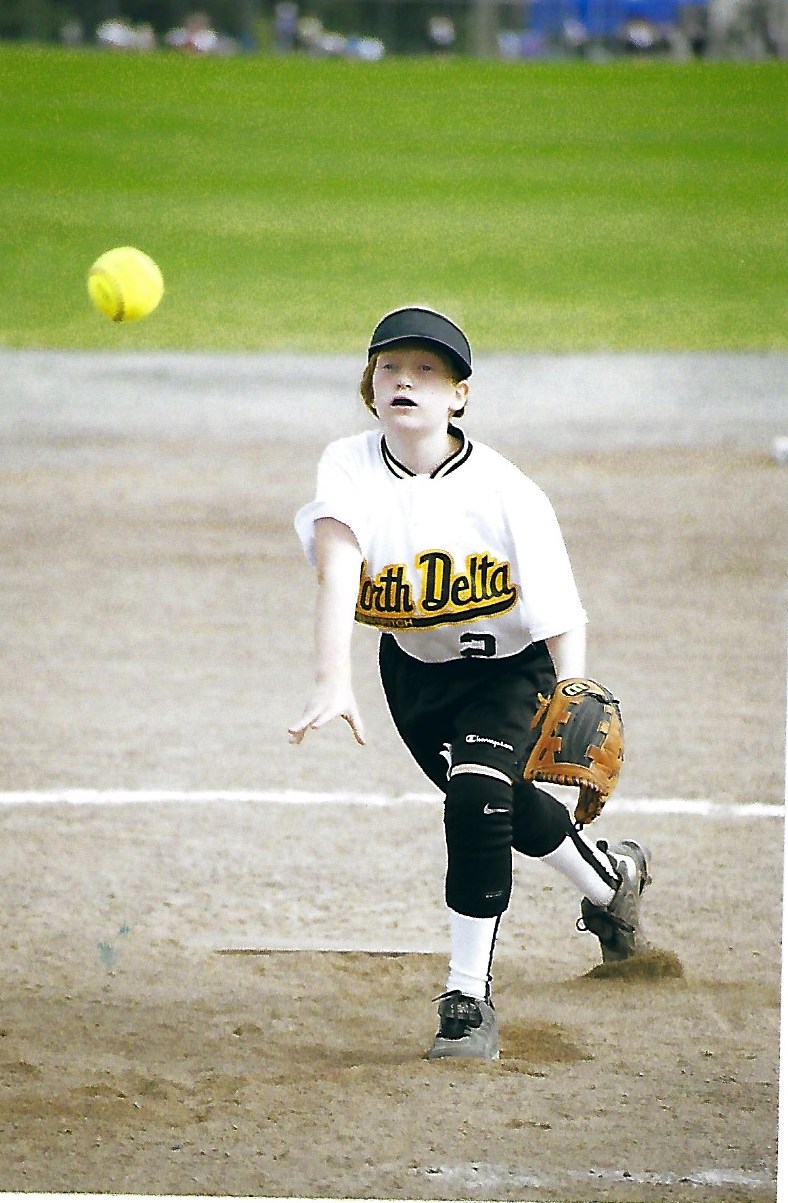
The analogy that I shared with Amy was my daughter who I coached in softball for many years and was a pitcher. Above is one of my favorite pictures of her from when she was in one of the several provincials we went to. She loved inside pitches so could jam up batters and there were a couple of regular umpires in our association that would not call them strikes but give her outside pitches all day long. When she would get frustrated, in lieu adapting and staying in the flow state and throwing pitches that would be called strikes, her face would get red, could tell she was mumbling words and trying to vent so I would call blue to be able to go talk to her.
In lieu, “focus on being in the present”, “you got this” or other positive words of encouragement and VOILA … she would be back in the zone and tweak her pitch to get inside the umps strike zone.
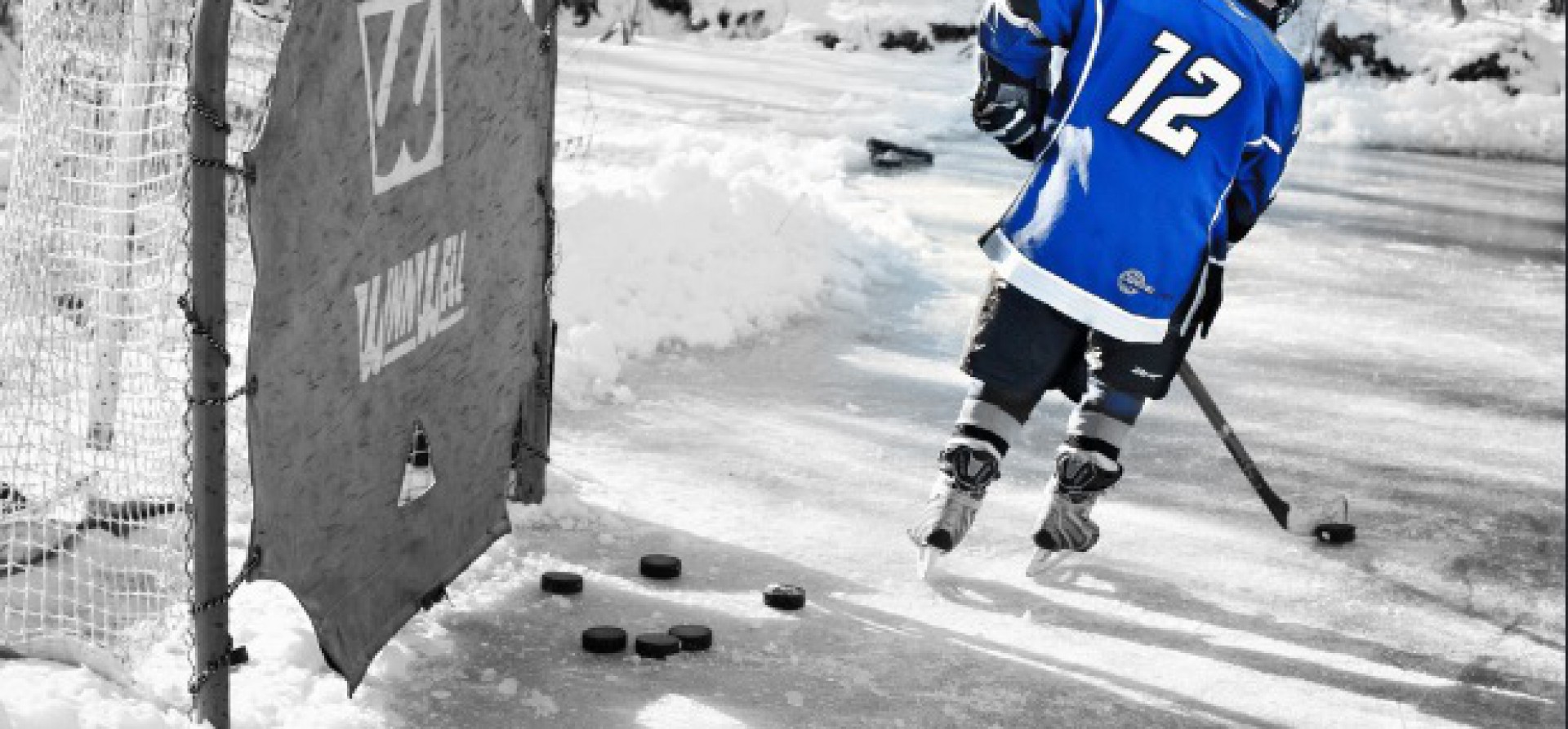
The same held true with numerous other players I coached over the years, in particular goalies in hockey. I would work with all of them early in the season to come up with their own pre-game routines so they were in the present when the game started vs. some would still be goofing off or not focused and early in the game would let in a goal that 90% of the time would made the save when in the zone.
I would call a timeout and call them to the bench, not to pull them as I see too many coaches do and put their “favorite” in, to bring them back into the present, remind them that the goal was history and there was nothing they could do but focus and be ready for the next shot.
Then I would send them back to the net with positive phrases like you got this, we got your back, just go out there and have fun or something as simple as a thumbs up and their smile would come to their face and be in that flow state needed.
As the cliché goes, you have to be nuts to be a goalie in the NHL facing 100 MPH slap shots, so of all the positions in sports, I believe hockey goalies need to focus on mindfulness, breathing techniques so they are in the zone when they need to be. Not before, not after, but in the that moment when they are facing the shooter to make that save.
Amy then shares a great exercise for coaches to start working on developing their coaching philosophy, probably one of the biggest shortfalls I run into every I talk. It is amazing how many coaches DON’T have a philosophy, and even when they do, they don’t have it in writing.
There are three things that every parent wants to know about coaches;
- Who are they, what is their background (how many years coached, what certifications do they have etc.)
- Why do they coach
- What is their philosophy
It amazes me in this era with all the parental behavior we see almost on a daily basis and coaches come to me all the time asking “how to deal with parents” they don’t recognize if they have the answers to the above and is in writing so they can be held accountable.
In lieu, they talk the talk, but don’t necessarily walk the walk and wonder why they lose the players and parents trust and they act up in the stands or sidelines.
This exercise alone is worth adding the book to your library.
Amy then touches on the importance of developing culture, core values, filling their emotional tanks so when have to use tough love they will do what coaches ask them without question and understanding the importance that your players are individuals with several exercises so that you can connect with your players. Connection is one of the tips that every speaker that I talked to both in the summer and winter summit stated is one of the characteristics of great coaches and Amy lays out the framework in a very practical way how you can do so.
The last chapter focuses on tips for parents to help their kids develop mindfulness practices which I will defer to another post in future but it includes summaries that you can share with your parents in terms of the reality how many high school athletes in the US go on to NCAA level as well as player and parent goal setting so in lieu of putting pressure on their kids, they truly are supporting their kids to achieve their own goals, not those of their parents.
The best part of the book is that it is supported by online audio resources and PDF’s of the various exercises for the athlete, coaches and parents.
According to Amy, you can start incorporating mindfulness with players as early as 8-9 years old with the first part of the book, then as they get older evolve to the second stages explained in the second phase much like you would do adding progressions to your drills and practices.
I highly recommend that you add it your tool basket, if you truly aspire to guide your teams to the highest level of performance possible, you must focus on developing their minds to be in the optimal flow state at the time needed, not before or after but the NOW.
Thought the best way to finish this post is the quote that Amy shares at the beginning of the coaches chapter;
A common mistake among those who work in sports is spending a disproportional amount of time on x’s and o’s as compared to time spent learning about people.
—- Mike Krzyzekski, Duke University Men’s Basketball coach (5 National NCAA champions) and Team USA Men’s Basketball Coach leading the team to Olympic gold in 2008 and 2012
There is so much to coaching that writing up the X’s and O’s on a whiteboard, mindfulness training being one of them, the sooner you add to your tool basket, the sooner you as a coach and your athletes will reach higher level of performance.

One thought on “What is Mindfulness ?”