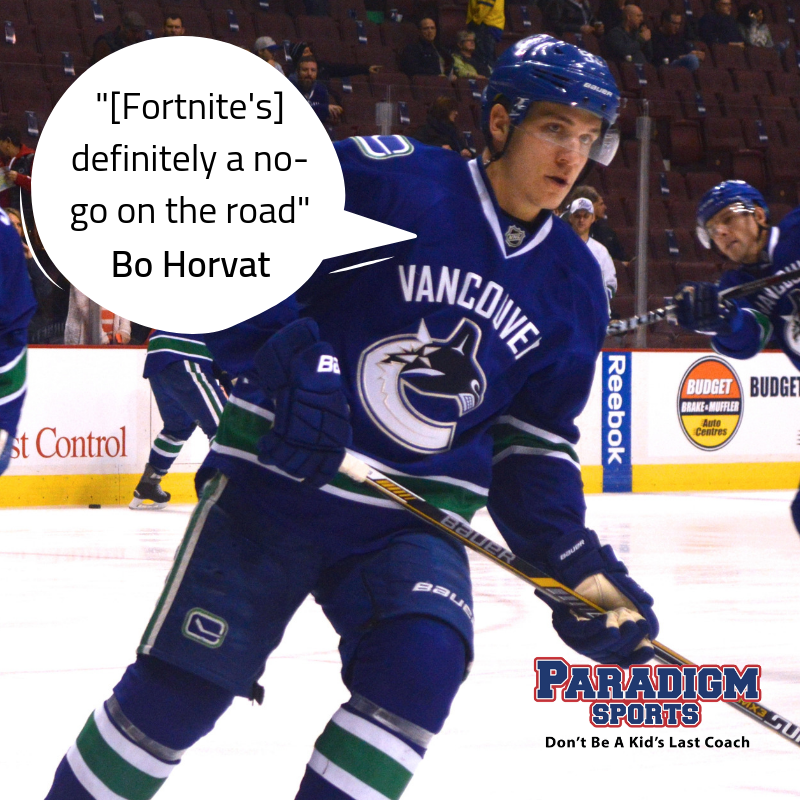
This morning I read that the Vancouver Canucks players have banned playing video games on road, in particular Fortnite, as they feel they need to develop team chemistry, something that head coach Travis Green stated they did so on their own accord, he himself is not banning video games being played.
In the summer prior the NHL draft, I recall reading another article how many teams are asking prospects in their preliminary interviews leading up to the draft if they played video games due to the addictive nature and could lead to sleep deprivation as they may be playing for hours at a time.
This shows that there truly is a youth movement, not just with the Vancouver Canucks who finally admitted they are going thru a rebuild and veterans were fighting for spots as Gagner and Archibald found out when put on waivers to make room for Goldobin and Leipsic.
I was not able to watch the first game last night but did catch some highlights on my way back from doing presentations for Nanaimo Minor Hockey that the Canucks overcame their offensive challenges they faced all of last year and many feared would continue into this year but won their first game 5-2 against their Alberta Rivals, Calgary Flames (albeit the 5th goal was an empty net). I know only one win, but a win all the same so perhaps the focus on developing team chemistry will lead to improvement in the standings this coming season, only the future will tell.
Two of the players that contributed to points in the first game were the young guns, Elias Petterson (19), the most highly touted draft pick of the Canucks since Pavel Bure, and the player they have paired him up with another first round pick in 2014 (by the Sharks) Nikolay Goldobin (soon to be 23) who both scored goals in the game. When I saw them paired on same line in exhibition play I suspected they would stick together on same line in regular season, they play very well together so perhaps this will be Nikolay’s breakout year.
When several of the players were asked in the article how they felt about video games being banned while they were on the road, they all stated it was no big deal, even Elias who admitted he did play video games when not involved in hockey activities. It would permit them to develop team chemistry by having team dinners and talking about other things other than hockey vs. ordering room service and playing the likes of Fortnite or other video games for hours on end.
The sad reality is it reinforces on of the key messages that I have been sharing in presentations that Esports and video gaming IS the future and many organizations are having to adapt and implement policies to ensure that their players don’t over indulge like the Canucks have done.
Below is an image that I have added to one of my slides for presentations that shows the future;
This particular picture was from an esports event in Japan, the venue seated approximately 25,000 people and it sold out in MINUTES.
E-Sports are changing the landscape of sport and these are just some of the examples why;
Jerry Jones, the owner of the Dallas Cowboys, has an esports team who all live in the same house in the outskirts of Dallas and one of their coaches is one of our good friends, James Leath, who shared insight on how fast esports has grown when we talked to him in our summer summit.
The COO of Maple Leaf Entertainment, Michael Friisdahl, was interviewed earlier this year and shared insight that he felt that egamers were athletes, although they sat in chairs, used their thumbs primarily for physical exercise, in order to be successful in any of the games they played they had to execute high level decisions faster than their competitors, similar to the most elite players in any sport. They also had a HUGE fan base and have to stay in shape to endure marathon matches of game play.
Hey, if darts and poker are considered “sports” and dominate TSN’s coverage in the off seasons in the summer, I suspect Esports will be next to fill that space.
One of the things about anyone that reaches the top of their game, whether it be Wayne Gretzky, Pele, Muhammed Ali or others is they are able to see the game in slow motion permitting them to do things that many struggle with as they can not handle the speed of the game.
This is the biggest challenge that all young prospects face when they enter in the NHL, especially those like Elias Petterson who played against adults but on Olympic size ice surfaces
allowing for more time and space than North American Sized Rinks.
The IOC and Paris Olympic Committees are considering testing esports in the upcoming summer games … yes, that’s right, esports (AKA video gamers) could potentially qualify to win and OLYMPIC MEDAL (OMG).
Even as I type those words, or say them in a presentation, I am dumbstruck.
I grew up in the days of Atari, Donkey Kong, Space Invaders, Asteroids, playing on 13” tube TVs so after about 30 minutes of play I pretty much had my fill until I went back outside to play
or off to various fields, courts, rinks for the various organized sports we played.
For me, it was a form of relaxation, just like it is for the next gen Canucks, which many of the current players who either talk about when they are interviewed pre drafts or the very
same Canucks like Brock Boeser who stated he and a few of his current Canuck Teammates do play Fortnite but no more than an hour at a time as a form of relaxation, much like he did when playing at University.
To give you an idea how fast esports has grown, projections for 2018 is it will exceed $1 Billion in gate revenue for events like the one pictured above, events are selling out in minutes, faster than any of the top music or traditional live sports events.
Think about that … egamers have more fans than the TOP artists in music, the top teams or individual athletes in the WORLD.
I never thought that would be
possible.
ESports has not been the only form of video games that has gone viral in recent years, think back two years ago when Pokemon Go took the world by storm, not only were kids playing, but adults, making it the most downloadable game of all time, exceeding over $2 Billion in sales to date. It is the “happy medium” for parents telling their kids to go out and play, yet for kids to still be looking at their screens and both adults and kids get their infamous Simon Sinek Dopamine fix from technology when doing so
The esports phenomena has not only tweaked the interest of Jerry Jones, but the NBA who are launching the 2K esports league next season.
Other owners, investors, and even the top 5 professional leagues themselves are looking at how esports can increase their revenues, I suspect that MLB to be the next to jump on the bandwagon due to decreasing revenues as a result of declining attendance.
The very fact that esports has evolved to the level it has in just a few years time is a mere reflection how BIG video games have evolved and why they contribute to the 7.5 hours a day that kids are spending in front of their screens.
Have you every asked why kids play video games to the extent they do?
Partly because they are so lifelike now than our past generation, but mainly because the kids (even if they are millionaire pro athletes) have full ownership of the experience.
There are no adults standing over them, or in youth sports in the stands or on the sidelines, telling them what to do, how to do it or criticizing them when they make mistakes. If they don’t like the rules of the game, like did when played pickup or board games, would change them to speed up, slow down or add more offense/defense (i.e. no offside rule))
Video games, like youth sports used to be, are safe to fail which is the key learning environment to develop creative players
And if you die in the latest craze Fortnite, League of Legends or going back to Halo when it set all the records for a video game release in 2010, all kids do is press the reset button and start over.
Unfortunately, in youth sports today there are “some coaches or parents” (the vocal minority) leading to the attrition rates where kids put up the white flag to go to screens in droves, tablets, smart phones, computer dual screens which has now lead to gaming chairs, keyboards, mice and a proliferation of other products.
For all parents out there, I suggest you follow the lead of the Vancouver Canucks players who self enforced themselves and have policies to not only restrict your kids video game time, but overall screen time so falls way below the current average of 7.5 hours a day.
One of the deals I had with both my kids (who have now aged out of youth sports but are still involved in various adult rec sports) was for every hour of screen time, they had to have an hour away from the various screens available to them today.
We also have a hard rule no electronics at the dinner table,
none in our bed rooms (the excepting being a bedside lamp so could read for one
hour to offset one hour of screen time)
Examples:
If you play Video Games for one Hour = Ride your bike one hour
If you watch Youtube for one hour = Go for a walk, run, to a field and throw ball, ultimate frisbee
If you watch Netlix for one hour ONLY (ONE EPISODE at a time no binging permitted) = Read a book, art, listen to music (sound mind and sound body)
If you do homework on your laptop or desktop for one hour = Go to the pool for swim, gym to play hoops, volleyball, badminton
As the cliché goes, everything is ok in moderation, but what has lead to the health issues of today’s generation is they are spending too much time in front of screens daily and not taking a break to for other physical and mental activities to promote sound mind and sound body.
Also, recognize the motivation WHY they play video games as long as they do and ensure that you support them to have the same ownership of their youth sports experience and in lieu of criticism in the car, on the sidelines ..
JUST LOVE WATCHING YOUR KIDS PLAY
Perhaps if we all do so, youth sports will become just that again in lieu of adults competing with other adults thru their kids.
As we are heading into a new fall season for various fall
sports, ice hockey, soccer, volleyball, basketball and others, coaches will be
meeting with parents, players and various other team meetings as they start
their seasons.
I am putting the finishing touches on two presentations I
will be doing on Wednesday on behalf of Changing the Game Project for Nanaimo
Minor Hockey and plan to share insight with coaches how they can engage, not
deal with, parents and players on their teams.
Reason?
Because over the years running clinics, doing workshops,
breakout sessions and keynote presentations, the #1 question that coaches ask
me during or post talks is “Can you provide me some advice how to deal with
problem parents and parents?”
The first thing I say to them is that you need to shift your
focus from dealing with, to engaging.
These are a few tips on how you can do so as you start your upcoming seasons:
Run an effective parent meeting
If you have not done so already, regardless of what level
you are coaching from Novice to Midget, recreation or competitive, if you want
to avoid potential issues you may run into during the season, starting with a
well planned parent meeting will address many of those potential issues up
front.
Be prepared to answer the first question that
parents have, “Why should my child play for you?” AKA – What is your coaching philosophy?
Many coaches that are just getting starting
in their journeys as coaches don’t have a written philosophy, which outlines
their core values and expectations for their teams.
My written philosophy used to be several
paragraphs but as I continued to gain experience, learn more as a coach, I
tweaked it to a simple phrase;
FUNdamentals, not winning, at all costs.
If you have followed various contributions that I have made to various media, a key takeaway that I share with coaches and parents is the importance of making it fun.
Many people say if you just want to have
fun then play recreational sports as the expectation of competitive sports is
to win.
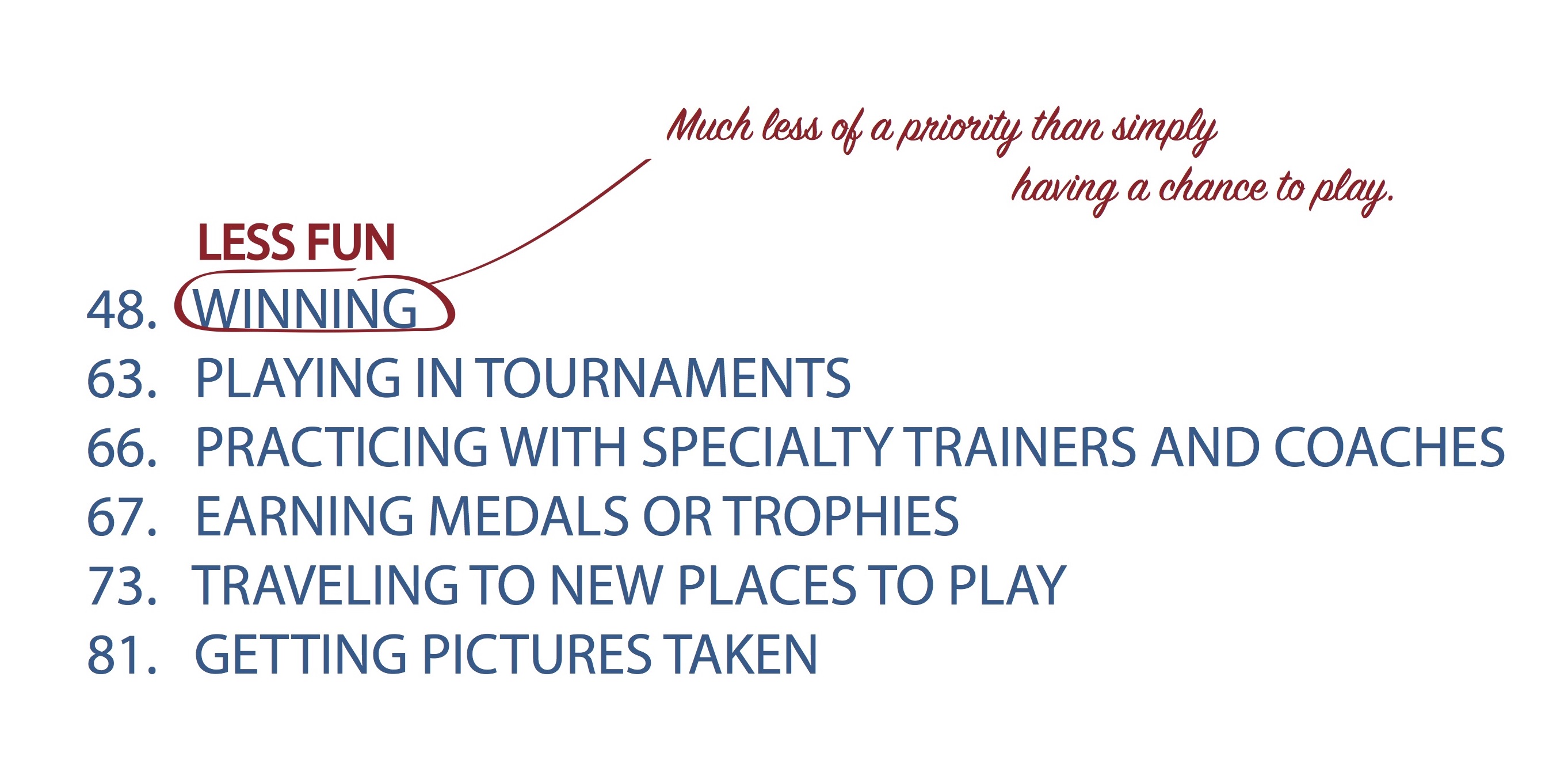
Yes, kids like to win, but the current win at all costs environment in sports is due to the adults focusing on the bottom 1/3 of what is fun in sports as Amanda Visek research findings found when she asked kid why they played sports.
In all the years that I asked kids why they played none said winning and although it was identified in Amanda’s study, was bottom 1/2. Others in the bottom 1/3 were all adult driven as well (tournaments, specialty trainers for specialization, trophies (AKA participation trophies), travel and getting pictures taken (the thing I hated the most as a kid but did so to make my grandparents happy).
Having played numerous competitive sports in my youth, including captaining provincial winning teams in 3 different sports (hockey, football and rugby), I can tell you first hand if the coaches focused on fun even when competing at the highest level, winning is the byproduct.
Just ask any professional athlete or Olympian if you don’t believe me why they play as I have found out in my interaction with many high level athletes over the years. Although seems like a distant memory, remember last Stanley Cup when the Golden Knights made it to the final in their inaugural season … how many of them stated in post game interviews they were have a ton of fun and keeping it light….
Have a detailed agenda foryour meeting and be proactive by sharing the agenda in advance via email to all the parents
Key points to cover
Introductions of all the coaching team (each to share their philosophies, background and team goals for season)
Finance (Budget)
Season Plan (time for practices, games, development focus)
Discipline / Zero Tolerance for any form of harassment
Expectations (Don’t just talk the Talk, but Walk the Walk)
It is this area where coaches set themselves for failure in
the season, whenever I did not coach my kids on teams and I was just a dad, in addition
to the coaches philosophies, they were the top things I wanted to know as do
all parents.
Ensure that all members of the coaching staff have the opportunity to introduce themselves, don’t assume that parents know who they are or what their philosophies are (they should be aligned with yours)
If you say something in your meeting, ensure that you follow
thru and “walk the walk” to ensure that you maintain trust with parents.
Doing so will prevent them questioning you why you did
things in practices, will alleviate issues like playing time, disciplining
players for inappropriate behavior, violation of team standards, as well as one
of the most sensitive issues, the $$$$.
All youth sports have become very costly, hockey being the most expensive,
and for every line item on your budget ensure that you justify the expense.
Communicate regularly and consistently
Discuss how you (as in the head coach) and your assistants
will communicate with the team, deal with any issues that arise and ensure that
you enforce the 24 hour rule to ensure emotions are in check.
My rule of thumb – NO EMAIL/TEXTS for issues, setup a
meeting with the parents as emails can be taken out of context and can go viral
Face to face communication is best or a phone call if
setting up a meeting is not doable short term.
It is more personal and will nip majority of issues in the bud but my
experience if you run an effective parent and follow-up meeting early in the
season majority of potential issues you will run into will be avoided
I also recommend that you share resources to parents on
consistent basis including websites, blogs, videos that reinforce the key
agenda items and your philosophy.
On our website home page we have a list of our various
allies who share insight for coaches, parents, sport executive members as well
as regular posts to various social media sites.
Team meetings – something I encourage you to do in the first team meeting is asking your players the following;
Why are you playing X (the sport you are
coaching)
What is fun about it (as that will the answer
from 95% of the players)
What is not fun about it (this will help you ID
red flags like the ride home, criticism, abuse, coaches playing favorites)
What are the top 3 qualities that you would like
to see from your team mates
This will help you define the team core values as every team
you coach will have different players, coaches
Then meet with each player individually and go
over their goals for the season, ones they believe the team should have
Lastly – have a follow-up meeting with the
players AND parents to review their goals as well as education regarding the
various forms of harassment that will not be tolerated including bullying,
cyberbullying, hazing and ANY forms of abuse.
Other meetings in the season can be team building activities
for both players and parents, finance updates, fundraising, tournament votes,
planning.
In sum, the more you talk the talk, walk the walk and
communicate with your players, parents reduces ambiguity and will create an
environment of trust.
Too often, when I am asked to speak at events and I talk to
executive members about their pain points that they would like me to address it
comes down to issues they have with parents, players or the coaches themselves.
Much of it is merely due to (a) lack of experience and (b)
lack of clear, consistent and FAIR communication.
Don’t be that coach that says one thing at the beginning the
season and then reveal your true colours by screaming at kids, ignoring or
avoiding parents, abusing officials, mandating expenses that were not approved
or various other concerns that parents and exec members share with me.
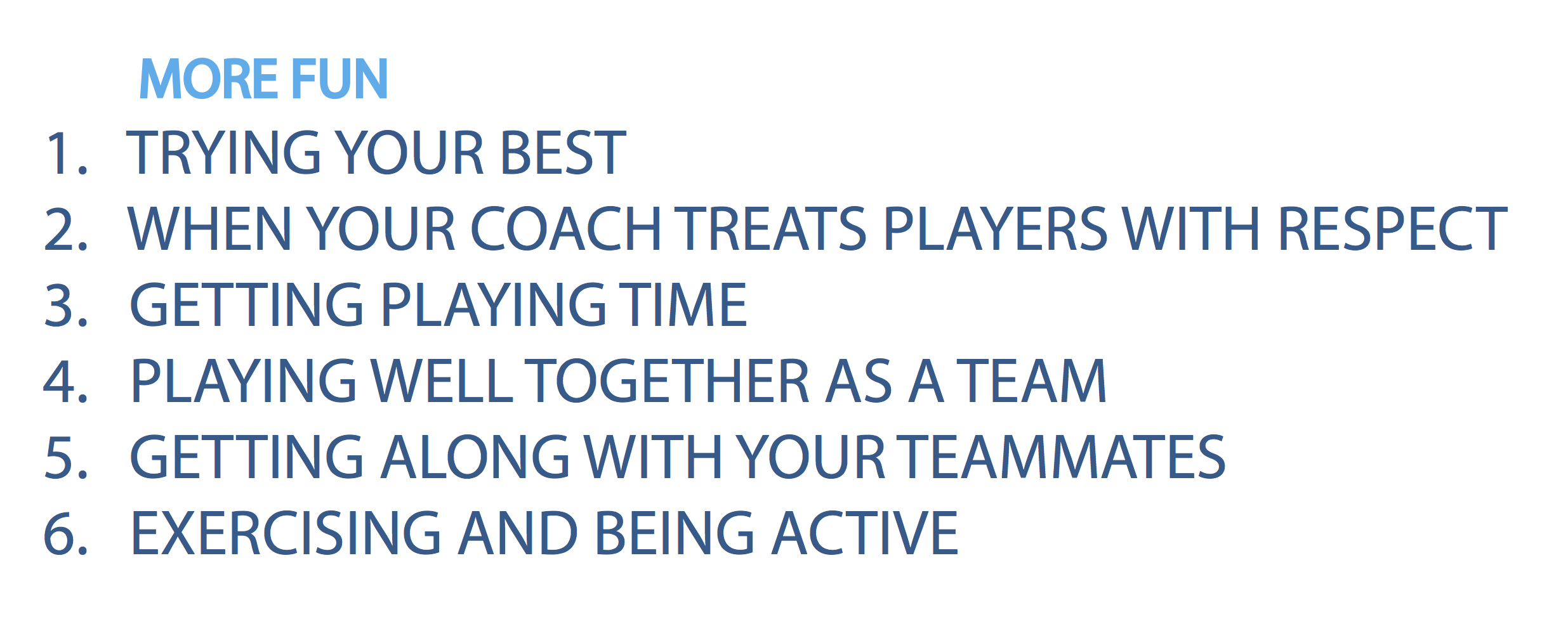
In lieu of focusing on the bottom 1/3 of what kids
identified in Amanda’s research, focus on the top 6
Give kids an opportunity “to try their best”
Treat all your kids with respect
Give them ALL playing playing time (exception being discipline)
Provide them the opportunity to play well as a team by running efficient practices and praising effort (growth mindset) for making mistakes with positive error correction
Ensure that you have team building activities early in the season and zero tolerance for all forms of harassment so all the players get along with each other (and ensure none are singled out by players or coaches)
Ensure that a minimum 75% are active during all practices (avoid lines) and encourage all players to work on skills and be active 60+ minutes a day to ensure their conditioning levels are up for your season
If you do so, I can guarantee that you will have a tough
season, but if you keep it in perspective and remember that it is all about the
kids, keep it fun, make it safe, teach skills (of the game and life) and most
importantly care passionately (the #1 characteristics of great coaches) you
will not be a kid’s last coach.
In lieu, they will love the game more at the end of the
season than they did at the beginning.
Let’s all work together to bring the game back to the kids …
where it belongs.
Reposted Nov 22, 2021
My wife forwarded me some links to videos for a meeting she was having with her national organization and one I thought was definitely worth highlighting in particular more than merely posting to FB/Twitter.
It was the Texas U 2014 Commencement address done by Admiral William H. McRaven, 36 Years as a Navy Seal, that has had close to 7 Million views on Youtube.
In his presentation, he shares 10 tidbits how we the graduating class of 2014 can change the world highlighting his experience as a Navy Seal and the training they have to go thru to become the top warriors in the World.
Their training lasts 6 months, including long tortuous runs in the soft sand, midnight swims, obstacle courses, unending calisthenics, days without sleep and always being cold, wet and miserable.
The training is intended to eliminate the weak of mind and body, but also to find those that can lead thru hardship and challenges.
Here are the 10 tips he shared;
Make your bed every morning (the little things matter)
Reinforcing the point that the little things matter, which every successful coach in the world emphasizes with their teams. Perfect example, John Wooden at
the beginning of every season would walk players thru how to tie their shoes, pull up their socks, wear their shorts, jerseys. All little things but like the Navy Seals, felt it was important so that the players could do the big things right.
Find someone to help you paddle
Every morning crews of 7 are required to paddle their boats, requiring equal effort, everyone must paddle for the boat to make it to its destination.
You can’t do it alone, takes friends, colleagues, goodwill of strangers.
One of mine and most coaches pet peeves is selfish players, probably the most infamous “rant” about how a player was not contributing a member of the team is former San Francisco 49’rs head coach Mike Singleterry’s “Can’t Do it” rant post game why he asked Vernon Davis to leave the game.
A year removed, Vernon and the 49’rs made it to the Superbowl under new Coach Jim Harbaugh and this is what Vernon shared about the lesson that he learned “Come on, you have all the tools in the world,”
Measure a person by the size of their heart (not their flippers)
He shares the analogy of the munchkin boat crew the smallest members of the aspiring seals, none over 5’ 5” but outpaddled, outran and outswam all the other boat crews even though they had the smallest flippers that all the much larger men would make fun of. It showed the importance of the willingness
to succeed.
Get over being a sugar cookie and keep moving forward
Several times a week the instructors would do uniform inspection and would find something wrong, when failed students had to run fully clothed into the surf zone, then roll in the sand which was dubbed sugar cookie. Many students did not understand the purpose that you were never going to have a
perfect uniform and they did not make it thru training.
Don’t be afraid of the circuses
Every day during training challenged with multiple physical events, every one had standards, if you failed to meet those standards, you were invited to the circus training of additional 2 hours of physical training.
No one wanted to be on the circus list, but ironically those that were on the list more often than not, developed resiliency, became stronger.
Sometimes you have to slide down the obstacles head first
He shares an analogy how a student decided to do down the slide for life (200’ rope between a 3 tiered and one tiered tower) on the obstacle course head first instead of upside down, dangerous move and instead of several minutes broke the longtime record that held before doing so.
Don’t back down from the sharks
Students have to do a series of long swims which includes an area of shark invested waters and encourage the students to summon up all your strength and punch them in the snout.
You must be your very best in the darkest moments
Another demanding task of seal training is a 2 mile underwater attack mission using nothing but a depth gauge and compass, during the swim there is some light but as approach the ship it blocks all ambient light and to be successful have to go to the centre keel that is pitch dark. This is the time where you must be calm, composed.
Start singing when you are up to your neck in mud
The 9th week of Seal Training is called Hell Week – 6 days of no sleep, constant physical and mental harassment and one special day at the mud flats, swampy patch where the mud engulfs you, nothing visible but their heads and instructors said could leave if 5 students quit even though had 8 hours left to go. Then one voice raised in song, sung with great enthusiasm, then one became two, two became three, and the singing persisted.
The singing raised the hope of all the students, the power of one person, King, Washington, Mandela has the ability to change the world by giving people hope.
Don’t EVER, EVER ring the bell
All you have to do to quit is ring the bell, never have to wake up at 5, no more cold swims, obstacle course, Physical Training or endure the hardships of training.
In order to get thru the demands of the Seal Training, it pushes every student to their absolute limits, physically, mentally and the vast majority that enter each training class do end up ringing that bell. In Williams class, it started with approximately 150 students and just in the first few weeks 2/3 of the students rang the bell where only 42 remained and completed the 6 months training to become the warriors they aspired to become.
The Navy Seals training program is the most challenging of any program in the world in terms of physical and mental preparation.
Of the 10 tips that William shared how the students of U of T in 2014 how they could change the world, the one that jumped out at me the most was #3, measure a person by the size of their heart (not their flippers) as a coach of many years, I always look for players that have character, heart, and commitment first and foremost regardless of their stature or current skill set.
Using the NHL as an example as we head into the 2018-19 season, each day I read the paper there has been highlight of various Vancouver Canucks prospects and emphasis on how all are bigger, faster, stronger than they were a year ago. The same holds true I suspect in every major paper in cities across Canada and the USA as teams go thru their respective training camps where many of the prospects are saying they are sore but they are only a few weeks long, followed by a series of exhibition games and daily practices vs. 6 months of Seal Training.
Rarely have I seen any references in all of the prospects in terms of the character, spirit, determination to not only get thru their rigors of training camps, ex games and to date no journalist has commented or the size of their heart.
Brendan Gallagher in his infamous spot – Source: The Score
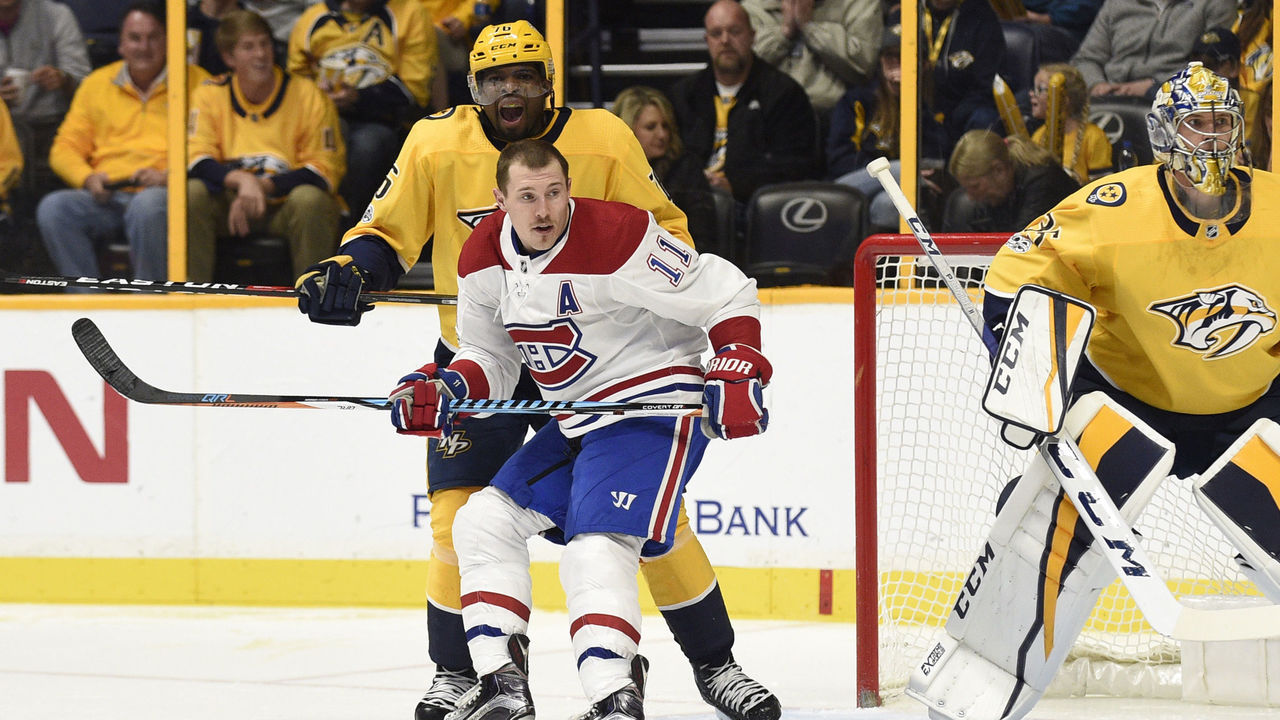
A perfect example is Brendan Gallagher, all 5’7” of him who every year and each level he moved up coaches I know from all the evaluations
and scouting have done would say “he is too small”
But like the “munchkin crew” of the Navy Seals training class, he has proved all the naysayers wrong as he is entering his 7th season for the Habs, one of the alternate captains on a long term 5.5M cap hit deal as they continue to go thru their rebuild (don’t even get me started about my thoughts on the Max Pacioretty trade)
Who would have thought a 5’7” forward would go the front of the net with reckless abandon as Brendan does game in a game out?
Apparently, the majority of the coaches, scouts, GM’s in the league had their doubts as Brendan was no selected until the 5th round, 147th overall.
RARELY does any player drafted that late every get to see action in the NHL, majority become journeymen AHL or other semi-pro players never to be heard of.
All of those that overlooked the likes of Brendan in the NHL, Bantam drafts or Minor Hockey Rep Tryouts could learn a little something from the Navy Seals … as I have said every year during evaluations, it is not the size of the player, it is the size of their heart that matters.
That is something we as coaches can’t teach, they either
have it or they don’t as Brendan and many other smaller stature players have
proved to all the naysayers.
Below is the video of the Admirals full Commencement Speech.
I never do back to back posts on same subjects, but this
time was hard not to.
The reason, after I wrote about the new coach Nathan Ostyrick (who ironically started his Junior A hockey playing career for the South Surrey Eagles in an arena not far from us that I coached numerous teams in over the years) and Humboldt Bronco’s rebuild last week, I watched their first regular season game at home as well as all the pregame tribute prior and post-game (thankfully there were no commercials due to TSN sponsoring).
Not only was it the first home game of the “new” Humboldt Bronco’s
whose roster only had 2 returning players in the game who were named alternate
captains of the team, Derek Patter who optimistically told the crowd before the
game they were going to get a win and Brayden Camrud. All of the players that were not lost in the
accident and able to come to the came were there for the pre and post game
tributes other than two still recovering from brain injuries, Layne Matechuk
and Morgan Gorbeil.
Three Key things that I wanted to share about the tribute as
they head into their rebuild.
Considering they are from a small town with just over 6000 residents, they put on one of the classiest tributes I have EVER seen. Starting with the pregame interviews with TSN including former NHL’er Chris Joseph whose son Evan was lost in the tragedy sharing his insight as the game was only a few days before what would have been Evan’s 21st birthday to Scott Thomas, father of another player who was lost in the crash, Evan and his eloquent thank you speech to the responders, organizations, communities, contributors to the gofundme campaign and across the world for their support.
The 29 Banners that were unveiled showing pictures and short descriptions of each member of the team, starting with the 16 that perished and the remaining 13 that survived (albeit still a couple dealing with serious brain injuries). As each banner was unveiled, I I got weepy eyed when I looked at the birth dates of the players in particular, many of which still had not reached their 19th birthday, the official year of becoming adults.
The Third were the tributes to their former coach Darcy Haugan who died tragically in the crash. One where Darcy was awarded the first ever new NHL Willie O’Ree Community Hero Award. It was established to coincide with the Declaration of Principles that the NHL and 16 other global hockey organizations introduced last hockey season that I shared last September 2017 “Thank you Hockey”.
Below is the video where Willie introduces Darcy’s wife,
Christina, who received the award on his behalf
https://www.youtube.com/watch?v=RihyVnHWhJo
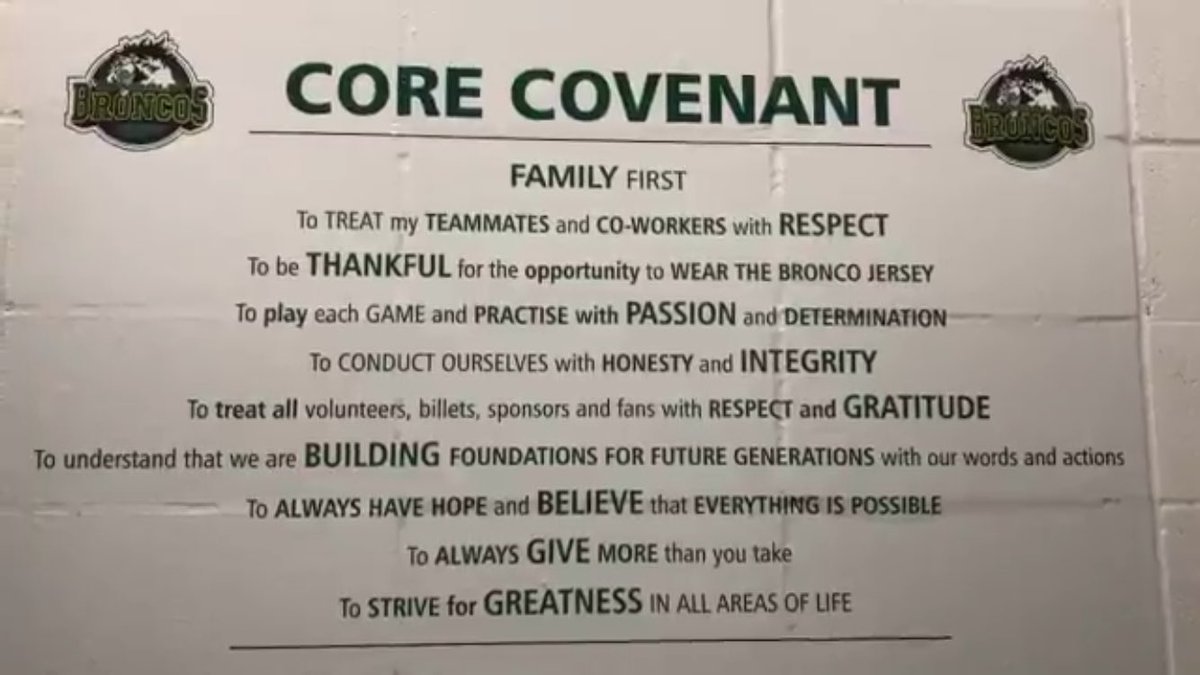
Christina also shares the Core Convenant of the Broncos team that he was so passionate of “as a tool of developing young lives.” It does not mention wins or losses as his purpose was to develop strong character and was one of core values in players he recruited.
As I learned several years back, our purpose as coaches is
not to make a living, but rather to make a difference developing youth into
adults and this is something that Darcy truly understood.
This is a picture of the Covenant that is in the players home dressing room.
Notice the words in CAPS ….
FAMILY – RESPECT – PASSION – INTEGRITY – GRATITUDE – BUILDING – BELIEVE – GIVE – GREATNESS
These are core values that every team and organization
should strive for.
His emphasis of one of the core values in the
core covenant BELIEVE, where he shared with them that “once they started
believing, they would turn around their season” and to reinforce believing in
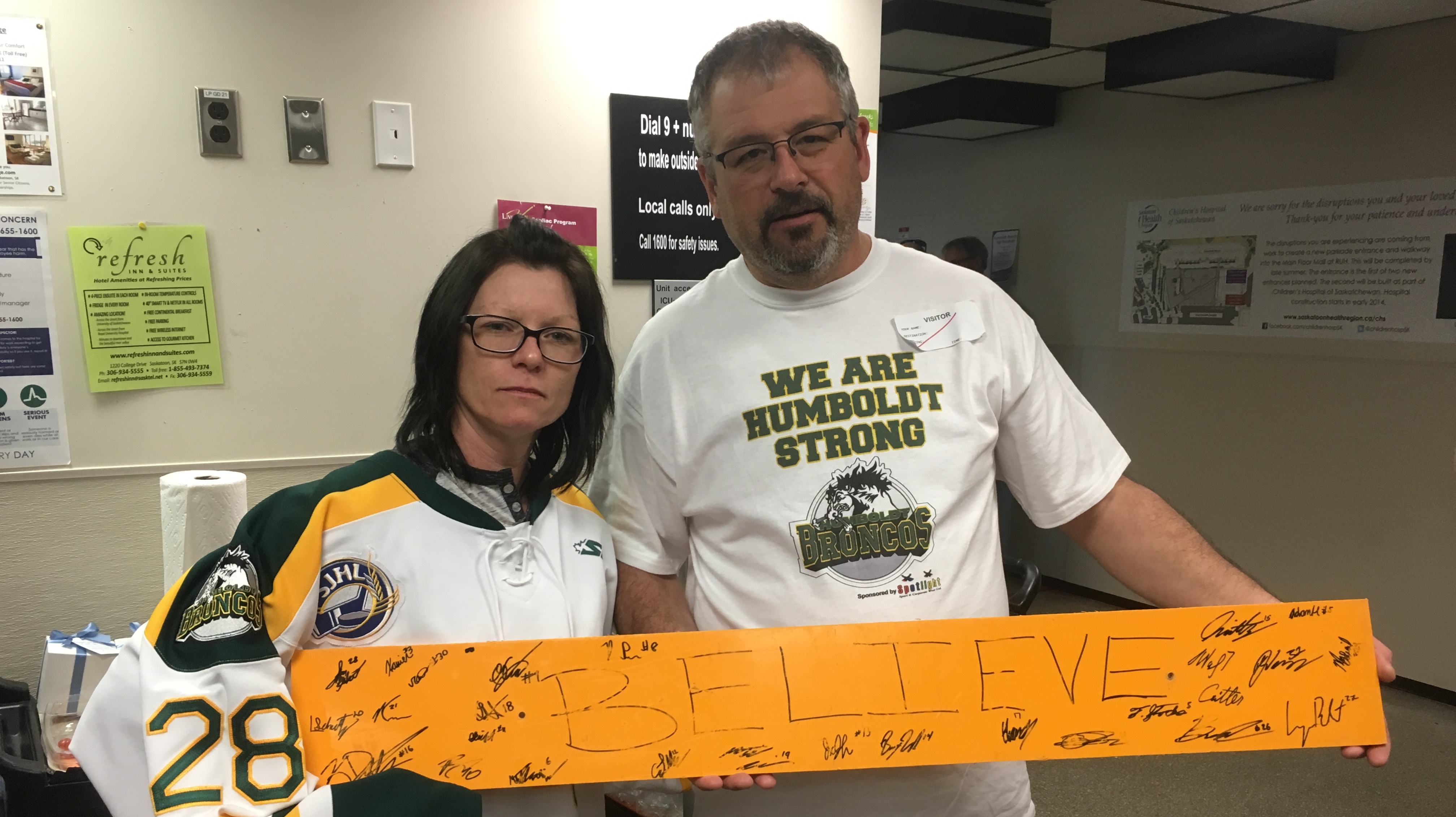
themselves, he found a broken yellow kickplate in their own home arena and
wrote the word “BELIEVE” across it. He
then asked all the players to sign-it, as well as coaching staff, trainers
which became their team mantra for complete buy-in.
Below is a picture of one of the two players parents that is still in the hospital dealing with brain injuries, Shelley and Kevin Matechuk, parents of Layne Matechuk, holding the kickplate.
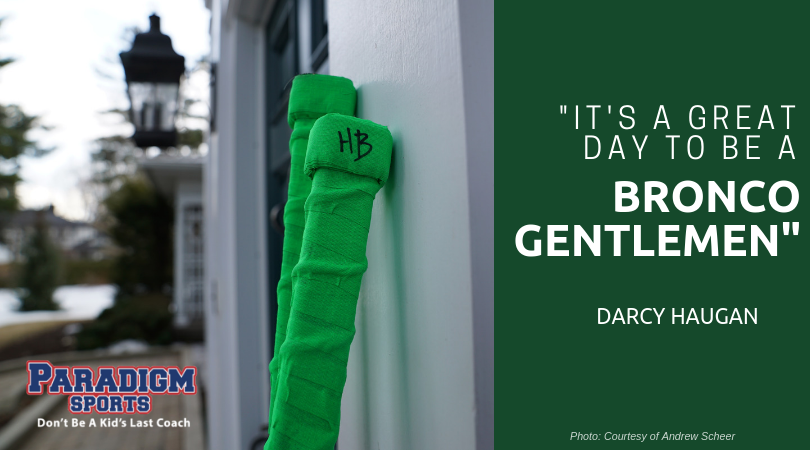
On several occasions during the tribute, analysts would talk about what he would share with the team on a regular basis “It’s a Great Day to be a Bronco Gentlemen” Unfortunately April 6th wasn’t, but Darcy always said family first, hockey second.
The last takeaway is the reference to Darcy shared by TSN but I am unsure of the source “The coach every player wanted and every coach wanted to be”
Without the support of all their families, both those of the ones that were victims of the tragedy and are no longer with us as well as the surviving players and the organization would not have started over as they did this Sept. 12, 2018. As they all found out, the hockey family is a global one that touched people from all sectors across the globe, not just those involved in hockey.
Darcy’s legacy is one that I suspect will pay forward thru
many of the players, members of the community and for aspiring or new coaches for
many years to come.
I believe his wife Christina said it best …. it must not stay in vegas (where the NHL awards ceremonies were held) …. the torch has been passed.
Earlier this year I wrote on Tuckman’s development model of small groups and I read a great article this weekend in the National Post talking about Humboldt’s Comeback and they continue going thru their grieving period with a new team and organization for this season.
Below is a video recap interviewing the new head coach Nathan Oystrick as he talks about the challenges he faces rebuilding the proud franchise after the tragic accident earlier this year that reached millions of people across the globe.
Nathan grew up in Saskatchewan, played junior hockey in Canada then was on a journeyman path playing college, then various professional stints in Europe and North America including 65 games in the NHL with the Atlanta Thrashers organization.
When management was queried what they were looking for in the new coach, they shared they wanted “someone that was going to care about their kids” which is the most important aspect of coaching.
At no point did they say they wanted a coach that ran certain power play systems, breakout and regroups or other tactics and systems that too many youth minor hockey coaches focus on.
In a whiteboard pregame talk in the video, Nathan tells the players to go out there and have fun and compete.
This coming Wednesday, Sept. 12th, the NEW Humbolt Bronco’s will be hitting the ice to play their first regular season game which will be broadcast live by both TSN and CTV Saskatchewan 5:30 PM, 6:30 PM Central Time, 8:30 PM EST.
The very fact that this game is going to happen in the first place just shows how resilient the members of the Humboldt community are they lost their head coach/general manager, assistant coach, radio analyst, driver, trainer and 11 players.
The remaining players on the bus were injured, some seriously, some were able to walk away with scrapes and bruises but the end result was Humbolt, Junior Hockey and Sports, in general, was tragically impacted that day, April 6th, 2018.
They have now completed the forming stage, the first stage of group development according to Tuckman’s work, the big unknown is how are they going to deal with the remaining stages?
The next stage, storming, I suspect will start this coming Wednesday when the team hits the ice, coaching staff, trainers and all the fans including families of those lost and injured in the crash, friends, colleagues, former players and numerous others. Although I suspect there will be a moment of silence, the world will be cheering for Humboldt as they continue to go thru their healing process.
Nathan gets teary-eyed in the interview when talking about what people are going to say, how are they going to react when the team takes the ice at home for their first regular season game?
I suspect there will be a lot of teary eyes in the stands and I for one plan to be streaming the game including pregame ceremonies to see how they go thru their storming stage so can get to some sense of normalcy (if there will be such a thing this season) so they can perform and compete as the season goes on.
I also believe I won’t be the only one that is watching Nathan and the team with great interest to see how they build on the proud legacy of #Humboldt Strong as the world found out not that long ago in April.
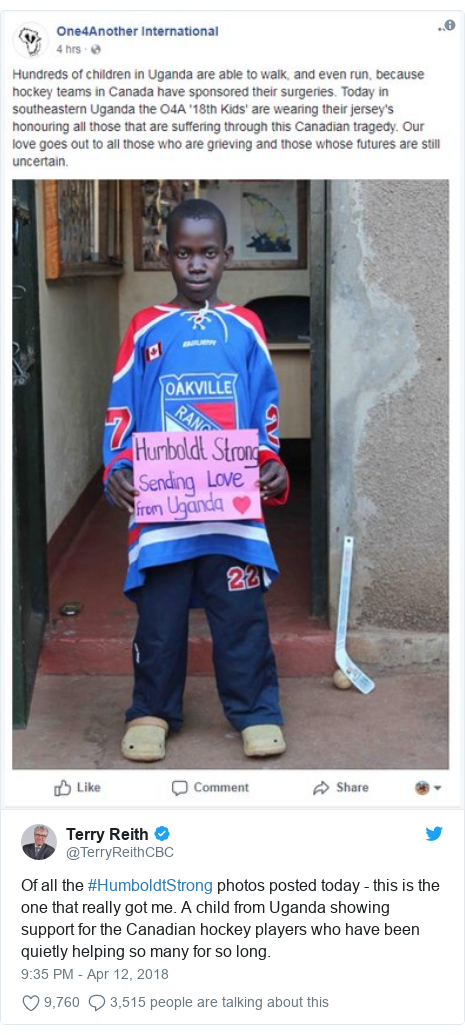
The gofund me campaign that reached over $1 Million dollars in what seemed like minutes and to date has raised over $15 Million, the press coverage they received including images from supporters worldwide including their pic that was tweeted (and subsequently retweeted by thousands) of the child from Uganda with stick by the door who received funding from Humboldt as one of their designated charities prior to the charity.
This is why Humboldt’s tragedy, their rebuild as an organization will be followed with great interest as they continue to go thru the group development stages.
I for one can hardly wait for them to get to the performing stage and be a contender and compete in playoffs as new head coach Nathan aspires them to.
Until then, we all must be patient and recognize that it may be a season or more before that happens.
Until then, I plan to just Love Watching them play, as I did all of the teams I have coached to date as recommend parents of young boys and girls do the same.