Olympic blog thumbnail

A Healthy Mind in a Healthy Body
Posted Leave a commentPosted in Athlete, Coach, Organization Executive, Parents

I would be remiss in not starting today’s post with “Vive le France” for the great run to win this year’s World Cup with a combined score against Croatia for most goals in a World Cup Final (4-2) since 1966.

The final game was filled with what one would expect in the final game which included France’s young 19 year teen phenom Kylian Mbappe scoring, the first time that a teen did so since Pele in 1958.

The buzz amongst all the people I talked to over the weeks leading to the final, have you seen the young player on France ?? He runs faster dribbling the ball then most players do without?

Being that Pele was arguably the greatest footballer EVER (who can ever forget goals he scored flipping upside down backwards) Kylian is the up and coming global superstar and suspect France will be a top seed 4 years from now in the next world Cup as a result.

One thing that both Pele and Kylian and all the other amazing players in this and every World Cup is they LOVE to play the game, the spirit of the competition, no different than every 2 years when we witness in the awe the world’s greatest athletes in the Olympic Games (vs. previously when summer and winter games were hosted in the same year).

It reminded me of the Ancient Olympic Motto “ Mens sana in copore sana” = A healthy mind in a healthy body as the world’s best footballers or athletes would not have reached that level if their minds were in harmony with their bodies and vice versa.

This is the very reason why I have shared my concerns regarding the amount of screen time that kids today have, on average 7.5 hours a day getting their dopamine fixes vs. the same rushes of adrenalin being active playing with their friends in the spirit of competition, regardless if organized or free play activities.

One of the things I started enforcing my teams well before it became common practice thanks to awareness campaigns by the Respect Group and others was a ban for all electronics in the dressing rooms, playing fields or team activities.

The first few times I have done so with team’s kids have looked at me like “are you freaking kidding me” This smartphone, iPod or tablet is my fifth appendage and I am not parting with it.

The reason I did so was two-fold;

  1. As smartphones, even iPods, evolved and added video and camera capability that could be easily uploaded to social media platforms, I did not want any players to be victims of harassment. See below for one of the extreme examples of how a coaches rant was shared on social media that lead to his immediate dismissal


  1. Although every player would argue they brought so could listen to music pre-game, practice, more often than not I saw they snap-chatting, texting, posting to Instagram or other social media platforms to the infamous dopamine fix (AKA Simon Sinek infamous rant on the Millenials)

 

As a compromise, when Bluetooth started evolving we would assign a coach with a blue tooth enabled device to put together the team’s playlist (one rule no swearing) and they would position the speaker in the dressing room so were within 33 feet for music to play.  Players of the game also would be given choice of the song before we headed out of the dressing room following game also.

I know many will feel that I am old school as a result, but I don’t even take my phone into the dressing room, field of play (or whatever playing surface), I leave it in my car.  One of my biggest pet peeves is when I have seen coaches answer calls, text or email on their smartphones during games.

Why?

Because, I, like the very same players I coach, aspire for practices and games to be electronics free to bring that same love of the game back like all those players in the World Cup showed or any other high level competition like the Olympics.  To experience the game the way it is meant to be, without the distractions of electronics.  When coaches are texting, answering calls in my eyes it is disrespectful to the game and the players they are coaching, no different than I am speaking at an event and people do the same.

This is why I can say with confidence that the needle is shifting, parents are recognizing they we did in part let the prior Gen Z (Millenials) down in part and more and more parents I talk to are enforcing electronics rules like;

No electronics at the dinner table (this has been a firm rule in our household since the digital era started)

For every hour of screen time, you must have 60 minutes of non-screen time and a minimum of 60 minutes of physical activity/day.  Incremental activity may include playing a musical instrument, reading, art, drama, preparing for a speech, meditation, hanging out with a friend or friends and the only electronics devices are music while you talk face to face.

Or better yet – play board games … yes, board games.

My wife went to friends on the weekend and they sat outside on her friend’s deck playing a version of reverse gin rummy for 2 hours and shared how much fun it was, how many of you remember playing board games?  One of my favorites is RISK, nothing better than a multi-day Risk marathon to rule the world (no I am not competitive at all).

As the cliché goes going back to the Ancient Olympics, Mens sana in corpore sano

Translation: A healthy mind in a healthy body

In the most recent Participaction report for 2018, yet again we received failing or near-failing grades for physical activity standards being met by Canadian Kids under the age of 18, only 35% of kids between the ages of 5-17 are getting 60 minutes a day.                Grade  D

Other areas that we received D’s;  Active Play, Leisure, Active Transportation, Sedentary behaviors.  One of the biggest challenges we face today thanks to “the white van” is kids not getting their 2000 steps to and from school.

Where we have seen improvements (albeit slight) is an increase in organized sport participation and increase in physical education active minutes per week.

This means the needle is moving, but must continue to move in the right direction so the health issues that have come to light since the onset of the digital era are reversed.

Another interesting spin to this year’s Participaction Report has they highlighted the correlation between physical activity and the positive impact it will have on brain health.

This after over 40 years of promoting the benefits of physical activity for all the physical health benefits (agility, strength, cardio, physiological) but now has highlighted research how being active leads to brain health.

This coincides with the growing body of research that links physical activity with academic achievements as well as improved behavior, reduced truancy.

Being physically active improves blood flow, O2 capacity, agility, cardio that leads to faster decision making, short and long term memory, improved attention span and a myriad of other benefits for the brain so kids that are active will perform better in school and will also attend school vs. their less active counterparts.

The other HUGE benefit?  Being active improves your mental health, improves your concentration, enhances your creativity and also studies show will reduce your cognitive decline.
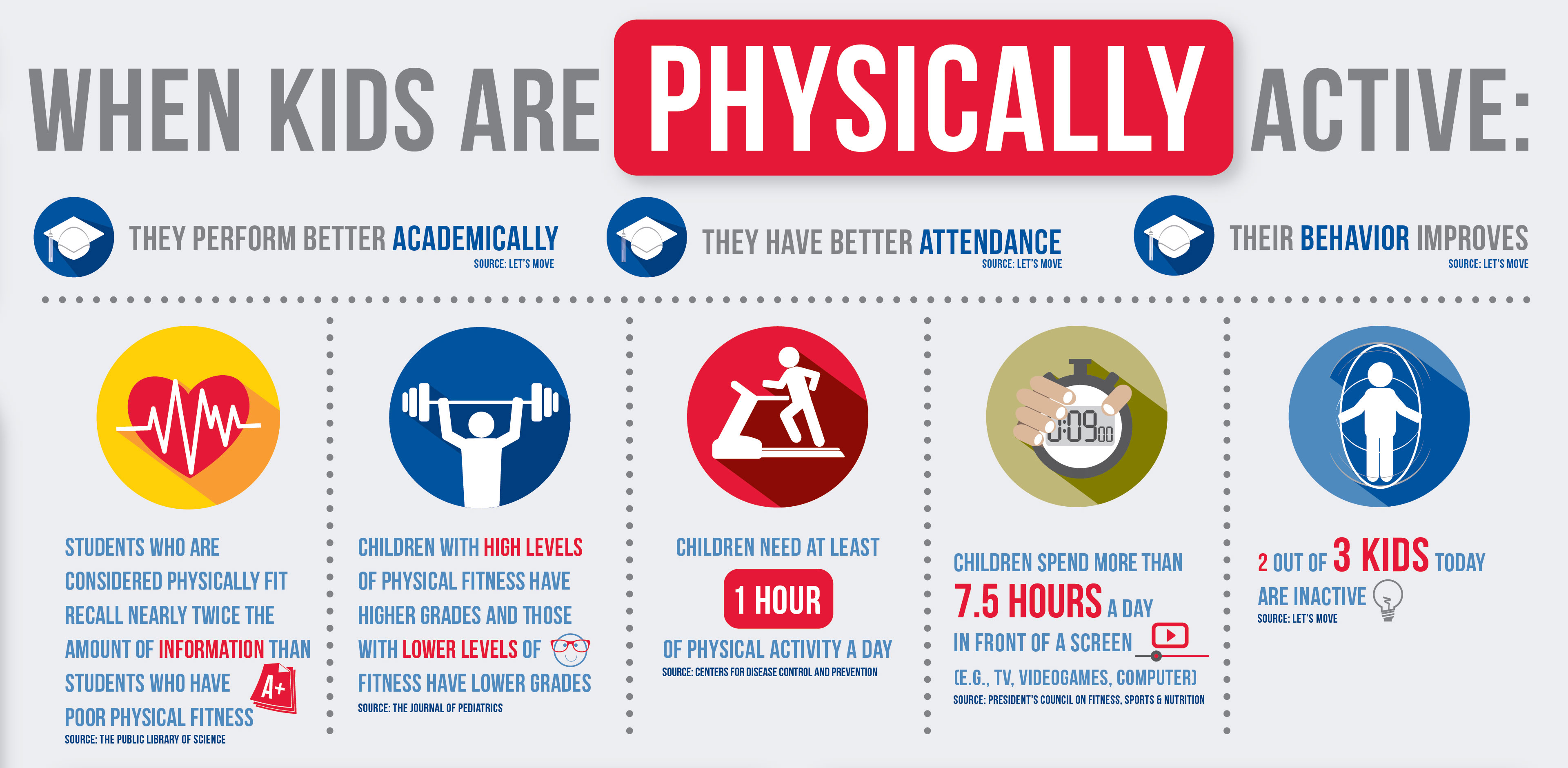
Although it has taken centuries to come up with the scientific data to support the Ancient Olympic Motto, the proof is in the pudding, being active leads to Mens sana in corpore sana.

Everything in life is good in moderation, but please implement rules on your teams and at home to limit kids screen time so they can develop both a healthy mind and body.

Let’s all work together to bring the game back to the kids … where it belongs.

Don`t be a kids last coach


What is a great coach?

What is a Great Coach?

Posted Leave a commentPosted in Athlete, Coach, Organization Executive, Parents, Uncategorized

This past weekend I was in Boulder, Colorado for the 3rd annual Way of Champions Transformational Coaching conference hosted by my good friend John O’Sullivan and my other Changing the Game Project colleagues, Dr. Jerry Lynch, James Leath and Reed Maltbie.

Just as it was two years ago during the inaugural conference (I was unable to attend last year), I came away with so many great takeaways and contacts with some amazing people that were aspiring to move the needle to bring the game back to the kids in youth sports.  Not sure what I am more in awe about, the information we shared or the people that I met over the course of the three days.

One of which was the founder of the Positive Coaching Alliance, Jim Thompson, others were TEAM USA or US Olympic committee members in swimming, lacrosse, AD’s (Athletic Directors) for schools ranging from 123 kids in Buffalo, Wyoming (where 90% of the kids play 3 sports a YEAR) to private school in Honolulu, Hawaii with over 4000 kids, Div I/II colleges and universities or coaches from youth all the way to Div I NCAA and everything in between.

I also connected with a Rugby Coach of Coaches in the UK, Coach developer for Football (AKA soccer) in Australia, National Cricket Coach in New Zealand and even a Coordinator of a conference in Bankok who is the AD for a private school in Moscow and female coach of a Men’s Div I NCAA Water Polo Team.

In all my interactions and I shared what we do in Canada, every single person said “you are doing great work, keep it up”

Reason?

Because as I found out from many of my interactions with those in the USA and many of the other countries I learned that the levels of coaching certification are few and far between.

One of the AD’s I talked to from a university in San Diego shared that there is NO mandatory coaching certification or ongoing professional development for University coaches.

I shook my head in disbelief, as I did when I interacted with all others that only had limited or no coaching certification programs for their respective sports in their respective countries.

Being that I have been a Hockey Canada NCCP Facilitator since 2009 and have now certified thousands of coaches in both the recreational and competitive streams I know that Canada is setting the bar for many other countries due to the great work by the Coaches Association of Canada (CAC) who have developed coaching certification programs for 65 national sports in Canada which includes both traditional team sports but evolving sports like mountain biking, rock climbing, ski cross and others.

In order for all coaches of sanctioned programs by the CAC* to maintain their certification, they must augment their original certification with other professional development by attending conferences, doing online courses, reading books and so forth.

* Many Canadian Private, Academy programs who are charging 10’s of thousands of dollars to parents ironically are not sanctioned by NSO’s so their coaches can “coach” with NO CERTIFICATION whatsoever even though they make “claims” that they will get your child Full Ride scholarships or playing professionally when less than 1% of kids reach that level.


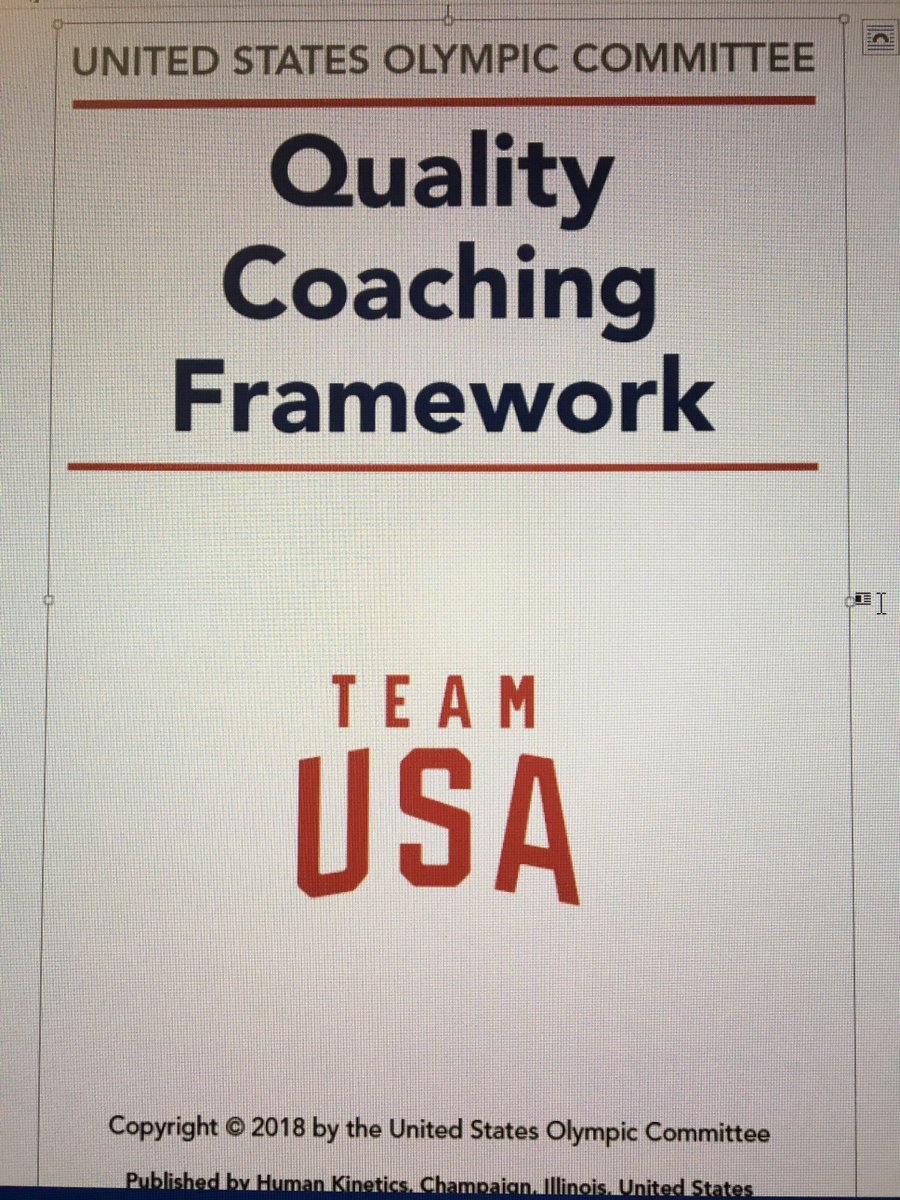
That is why I was so excited to have dialogue with a few committee members of TEAM USA that shared insight on the USOC Quality Coaching Framework that several of the NGB’s are looking at incorporating to establish national coaching standards for their respective sports.

The framework was developed by USOC coaching education director Chris Snyder and Dr. Wade Gilbert, author of Coaching Better Every Season AKA “The Coaches Doc”.

There are 6 segments to the framework;

Chapter One: Quality Coaching
Chapter Two: Essential Coaching Knowledge
Chapter Three: Athlete-Centered Outcomes
Chapter Four: Contextual Fit
Chapter Five: Evaluation and Recognition
Chapter Six: Coach Well-being

As the conference was wrapping up Sunday afternoon, one of the sponsors, Bill Kerig, founder of Great Coach Inc. reached out to many of us as we were leaving to get insight for his research and development his new ap similar to Linked in but specifically for sports coaches. He aspires for coaches to receive the credibility and professional respect they deserve, regardless if a volunteer at the grass roots level or those coaching national programs or everything in between.

He asked us all to share in one minute sound byte and answer …..

What is a great coach?

Talk about being put on the spot, end of the conference and anxious to head home with many great nuggets, having coached now for over 20 years and have been writing about, speaking, teaching other coaches for the last decade there is so much I could have shared.

Honestly, I am not sure what I was able to get in 1 minute, but thought about it on the flight home and lineup for Canada Customs, get my bag, park and ride shuttle to get my car how I would have answered if was given a “wee bit more time” to do so.

A Great Coach ….

… Is one that knows that …

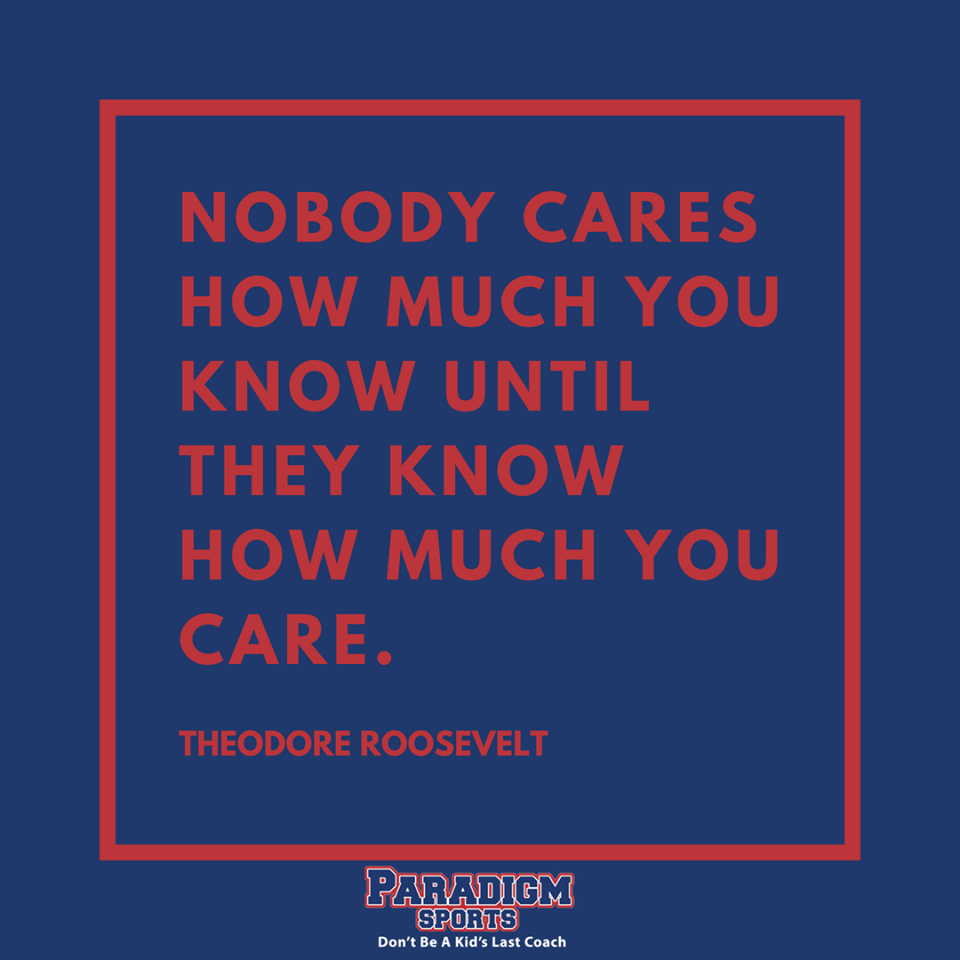
… Cares about their athletes more they do about themselves, they are humble, honest, fair, great communicators, motivators and leaders by providing a safe environment for their athletes, safe to fail and make mistakes, but also safe from all forms of harassment.

… Is demanding, not demeaning, to push their players to become not only the best athletes, but the best people they can be.

… Is truly grateful for the opportunity to coach and thanks their players for the opportunity to Coach them on a consistent basis.

… Teaches their athletes the skills of the game (the competence), and cares enough to teach them confidence so they aspire to come back every season to improve and teach character life lessons like respect, sportsmanship, humility, integrity, honesty, selflessness, work ethic, leadership, communication, punctuality, commitment and NEVER giving up.

… Demonstrates they not only care, but love their athletes and the game so they love the game more at the end of the season than they did at the beginning.

… Is a positive role model and not only talk the talk, but walk the walk

… Gets invited to weddings, lunch, dinners, baptisms of their players kids or other milestones of their alumni athletes years after the athlete hung up their skates, cleats.

… Is one that current or former players reach out to in times of hardship after they lost a family member closest to them, get into trouble with the law or just need a shoulder to lean on.

… Responds to texts, emails, phone calls, or even a knock on the door at all hours of the day in or off seasons.

… Gives credit to the players for a win and takes responsibility for the loss when they lose

… Is a new school positive facilitator (AKA empowerment) vs. being an old-school negative dictator (AKA my way or the highway).

… May be a parent coach that recognize they not only are coaching their son or daughter (their original reason for getting into coaching) but have adopted 10-20-30 others depending on the sport they coach and when in the car or at home wear their parent hat, when at the field/rink or other team activities wear their coach hat.

.. Knows the reason why we all play is it is fun and will quit when it no longer is

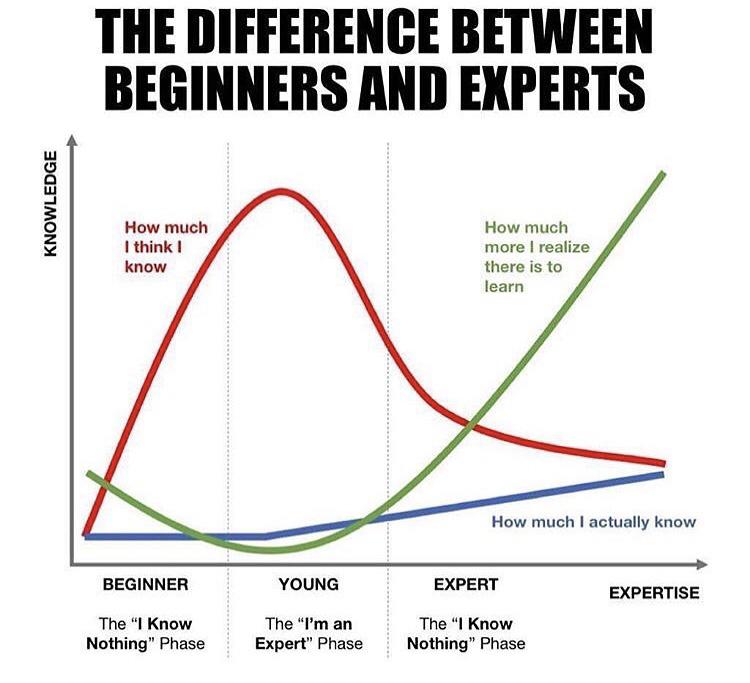
… Knows the difference between beginners and experts

They know how much more there is to learn.

As each of shared over the course of the weekend how little we knew and that to become the best coach we could be it required lifelong learning much like Clare Drake, John Wooden who were taking pages of notes at conferences well after they retired as they may learn something.

Even the one that knew the most, Dr. Jerry Lynch, who has over 50 years’ experience that includes 38 NCAA Div I National Championship Rings, author of 13 books and has worked with Steve Kerr and Golden Sport Warriors the last 4 years where they have gone to the NBA finals and one 3 of the 4 NBA Championship titles.

He was introduced on Friday night by Reed and he shared Jerry’s story from 2 years ago when he was reviewing his background on the first night that even after 50 years he was only ½ way there in terms of his quest for knowledge to share with fellow coaches.

1/2 WAY after 50 years … REALLY?

Jerry further shared with all of us in the inaugural WOC conference 2 years ago that he did not have a job.

He stated while seated on his infamous stool (that I want to recommend to John to get him one that swivels 360 degrees so he can see all the eyes of those seated around him in the circle) while we sat on the hardwood gym floor that when you had a job all you were doing was making a living.

In lieu, he shared that as coaches, we have a calling to make a difference.

Making a difference by developing youth into adults.

That is the business we are all in as coaches, AD’s, Directors, Board Members, Exec members all others adults involved with youth sports.

Coaches please ensure that the legacy that you leave behind is a positive one and Don’t Be A Kid’s Last Coach.

Let’s All work together to bring the game back to the kids … where it belongs.
 

The top characteristics of great coaches blog thumnail

What are the characteristics of great coaches?

Posted Leave a commentPosted in Athlete, Coach, Organization Executive, Parents, Uncategorized

In every talk I do I ask coaches the following question:

What are the top 3 qualities of the greatest coach (or teacher, manager) you ever had?

In hindsight, if I had kept track of the responses from every talk I would have had a 10 Year + Longitudinal study so this fall I started to keep track of the responses in an excel sheet. By no means is this a formal research study, and although the order may be different from 1-9, these are the top characteristics of great coaches from the next generation of coaches;

No matter what group answered this question, whether it be coaches just starting to coach 5-6 year olds in hockey or High performance coaches I have asked in conferences or everything in between the top characteristics of great coaches is they truly care about their players.

Not only do they care about helping them develop into the best athletes they can be, but the best people.

This is what John Wooden, Clare Drake, Phil Jackson in past and current coaches like Pete Carroll, Mike Kryzyzewski and other GREAT coaches, not all the wins, national titles but the legacy the left behind developing youth into adults – that’s how coaches make a difference.

Coaches that care, not only teach the skills of the game, but the skills of life.

Many misinterpret that I am not competitive because my philosophy of coaching is “FUNdamentals, not winning, at all costs”. Like all the great coaches who worked on the process of developing all players on their teams that lead to results on the scoreboard, I know how important it is for players to have fun, even on the most competitive teams. I also am totally against Participation Trophies, check out prior blog on the subject HERE.

Mike Babcock, now the highest paid NHL coach with Stanley Cup, World Championship and Olympic Gold achievements on his resume is another one of those great coaches. When he became the coach of the Toronto Maple Leafs, he shared that his main role was to develop all the players into great young men. Prior to the 2010 Olympic Gold Medal game, when he was coaching some of the best players in the WORLD at the time, when asked by the media what he told the team before the game he said “I just told them to go out there and have fun.”

Many people think when kids they just want to have fun that it means goofing off, but kids actually don’t want their team mates to do so they want to play, the want to compete, they want play for the love of the game. That is what fun is.

When Amanda Visek did her groundbreaking study and identified the 81 characteristics of what is fun in youth sports, the number 2 reason, second only to having the opportunity to try your best was when coaches treated players with respect

Although I would NEVER consider myself to be in the same company as John Wooden, his three rules are very similar to mine and his third was “Never criticize your team mates”, mine is Respect. Respect yourself, teammates, coaches, officials, other teams, parents, class mates, parents and so on.

I believe respect is a two-way street, if coaches respect their players then they players will in turn respect their coaches and vice versa.

Sadly, although there as many great coaches in youth sports do respect their players, there are coaches that think nothing of screaming at a player, singling them out in front of the teams, criticizing their mistakes over and over again and other ways that are not only disrespectful but crossing the fine line from demanding (pushing players to be their best) to demeaning (belittling players).

PS – notice where winning was in terms of fun, bottom ½ of the list, 47 other reasons why sports were fun. Others also in the bottom 1/3, playing in tournaments, practicing with speciality trainers, earning medals/trophies and traveling to other place to play.

Why then has youth sports evolved to a $15 Billion Industry in the USA?

Because adults either have not asked the kids or think they have the best interests of the kids at heart because they are “the adults.” If you thought the great recession was bad in 2007, or the .com bust prior was bad … I can hardly wait for parents, coaches and players to realize the insanity has to end.

It is no wonder why 70% are quitting by the age of 13 of those that can afford youth sports to begin with, 33% in Canada can’t afford to play any youth sports and that number continues to rise due to “travel teams”.

In this day and age with today’s generation having an 8 second attention span, have grown up in the digital era it is refreshing to find out Generation Z prefers face to face communication over texting, so you have the players attention COMMUNICATE.

Ask them what they want – Ask them if they understand – Ask them what they learned after practice – Ask them if they had fun.

This is a skill that coaches not only need to connect with their players, but engage parents as today’s generation Z are very close to their parents.

Yes we have had to deal with helicopter/snowplow and lawnmower parents, but the best way I have found to engage parents is by communicating well and communicating often.

Don’t be the coach that a parent shared with me last year who walked into the team parent meeting at the beginning of the season and say;

I don’t deal with F**&^^T& Parents, deal with the manager if you have any issues.

PS – I can’t make this stuff up, there are coaches out there that refuse to deal with parents and think nothing of using inappropriate langue when/IF they do so

Like Caring, great coaches support their players to become the best they can be and achieve their goals. I will never forget when I got a call from a goalie who has been on many of my teams last year and he thanked me for helping him get to Junior Hockey.

I was very proud of him and many of the other players that have achieved that milestone that I had coached over the years.

Coaches can also fill the gap for kids like me who lost their father at a young age.

All of the coaches I had over the years were my second father in a sense, they took me under their wing and supported me in my goals each and every year.

Great teachers do the same, if it had not been for my Grade 12 French Teacher who took me aside one day and said “you can do better” after I acted up in class for the umpteenth time.
She was the one that motivated me to pursue post secondary education and as a result I was the first of all my cousins to graduate from University.

Passion does overlap with fun in part, so although as a % was 6th when reviewed this fall it is the second top characteristic that coaches have shared with me over the years.

Passionate coaches OOZE passion for the game, the tradition, the respect and as a result make their players love the game the same way.

Due to the current winning at all costs environment in youth sports that has evolved, I have seen passion by coaches, but moreso temper tantrums because games did not go their way.

Think back when you grew up, did you ever take a class in school and thought you would HATE it like calculus, accounting, history, literature? Then to you surprise you ending up loving the course – Why? Because your teacher was so passionate about the subject.

Same holds true for youth sports … if coaches are passionate about all aspects of the game they will instill that same passion in their players so they play For the Love of the Game.

An analogy that one my colleagues shared with me that I relay in talks is coaches must focus on P&R – that came from Terry Crisp, former NHL coach.

P = Patience
R = Repetitions

In order for players to develop, it make years for them to develop some of the core skills in the game and while doing so do numerous repetitions which requires a considerable amount of patience on the coaches part (as well as parents)

But when that light bulb goes on – Man is it worth it.

The biggest challenge that coaches face today is being patient to adhere to the LTAD/LTPD and other models and also getting parental support.

Too many parents are trying to fast track their kids development via early sport specialization and is the wrong pathway to follow “Early Sport Specialization does more harm than good”

We could have lumped this into supportive or caring, but encouragement also pertains to how coaches provide praise to their players.

Thanks to the great work by Carol Dweck and he ground breaking book “Growth Mindset”, many in the sport and even business spaces are recognizing there are two types of mindsets

The Fixed Mindset – those feel that effort is not important as their skills are part of their DNA and they are not that good

Or – they focus on proving their ability

The mistake coaches make all the time is telling kids how smart, how good they are and this becomes fixed

The Growth Mindset – those that welcome taking on tasks that become more challenging each time, belive they can continue to improve and believe the harder they work (effort) the better they will become.

Or – they focus on “im”proving their ability

Coaches that reinforce the growth mindset encourage effort and God Forbid to make mistakes, the uglier the better. Players develop confidence when doing so, more creativity and continue to improve vs. those with the fixed mindset

Other words that coaches have come up with that fall in this category – approachable, open, thinking back on all my coaches they were friendly.

They would have your back when you made a mistake vs. screaming at your for doing so.

They would welcome you into their “office” whenever you needed to speak to them

They would be your friend (or father/Mother) whenever you needed a friend.

1. Other – the list of other responses were endless but included characteristics like calm, challenging, committed, confident, consistent, disciplined, energetic, enthusiastic, fair, firm, forgiving, genuine, trustful, inspiring, integrity, invested, kind, listens, motivator, organized, personable, positive, role model, teacher and leader

I plan to revisit the results at the end of each year now that I have the template in place to share in future but in the interim

Make it Fun – Make it Safe – Teach Skills – Care Passionately

AND

Don’t Be A Kid’s Last Coach

How clare drake's legacy lives on

How Clare Drake’s Legacy Lives On

Posted Leave a commentPosted in Athlete, Coach, Uncategorized

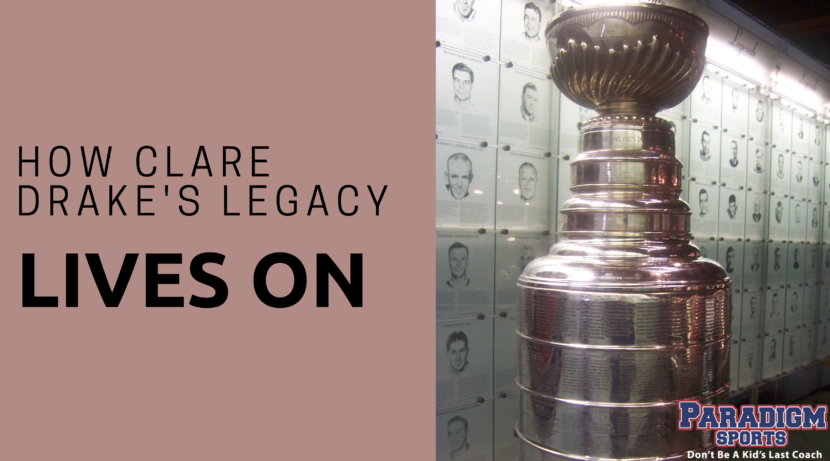
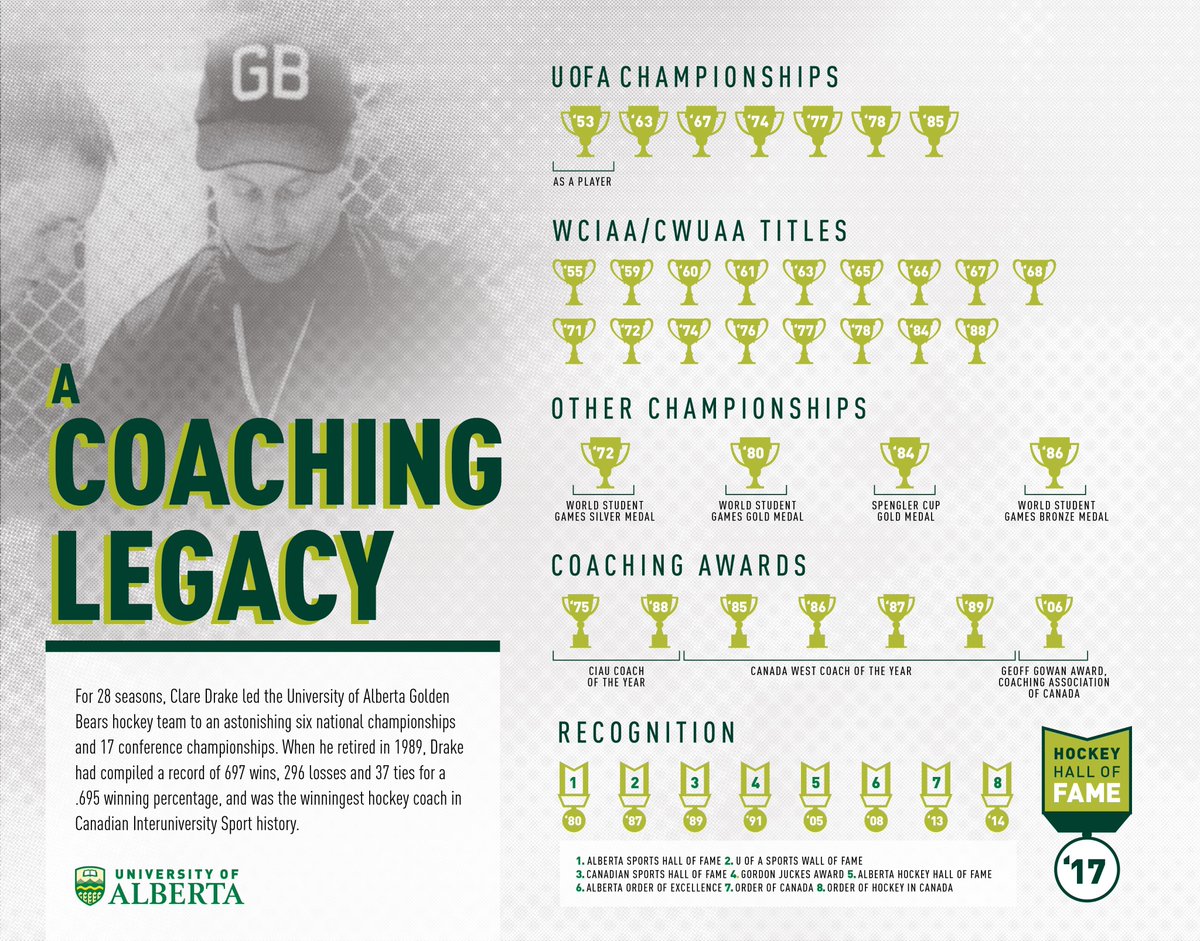
There are so many things that I could write about this week as two of the top 5 professional sports concluded their seasons but I would be remiss in not talking about the legacy of Clare Drake, former coach of the University of Alberta Golden Bears for 28 seasons and the impact he had on Washington Capitals Head Coach, Barry Trotz.

Check out prior post It’s amazing what you can accomplish for more insight on Clare

Barry was one of Canadian top coaches that pushed for Clare to be inducted in the hall of fame, along with the $50 Million Man, Mike Babcock, and Ken Hitchcock, who have cumulatively have amassed over 2200 NHL wins in their coaching careers.

Barry, however, just achieved the milestone that eluded the Caps since their francize inception over 40 years ago with only one trip to the Stanley Cup in 1998 losing out to the Detroit Red Wings coached by Scotty Bowman, whom Ken Dryden compared to Clare Drake “I can think of only one other Canadian hockey coach at a high level how had such a record of long term success – Scotty Bowman” in this Edmonton Journal Article.

Barry started out his coaching career in university at the university of Manitoba and would fear any time his teams would meet Clare’s University of Alberta Golden Bears.

“Clare was one of those iconic coaches when I was growing up that won at every level, but to me, he was a teacher of the game….If you were an opponent or you were a young kid, he was a guy that would try to teach and show he didn’t care if you were the opponent.” Trotz said in this oilers nation article.

Ken Hitchcock shared with the National Post “The last time we attended clinics ..together, he was still in the front of the front row taking notes at the age of 78.”. This is why Clare was called Canada’s John Wooden of Hockey, passionate about his craft and was still learning well after he retired.

After 3 years coaching in Manitoba, where he also served as a part-time scout for the very same Washington Capitals, he became the head coach of the Capitals minor league team, the Baltimore Skipjacks in 1992 then the franchise moved to Portland, Maine where he lead the team to two Calder Cup Finals, winning the cup in their inaugural season.

The Capitals ties continued, when former Caps GM David Poile was hired as GM for the Nashville Predators and he reached out to Barry to become the expansion franchise first head coach and struggled in their initial seasons as they built their team thru the draft with a very frugal budget for player salaries even before the salary cap to ensure that all teams are on a even playing field.

Unlike the Vegas Golden Knights, who benefitted from a restructured expansion draft format to choose unprotected players to be competitive out of the gate, where former Capitals GM George McPhee strategically put together a team that made it to the final in their first season only to fall short to the Caps coached by Trotz.

For 15 seasons, Barry coached the Predators, leading them to the playoffs almost every year, although they had one of the lowest budgets compared to all their affiliate NHL clubs.  He was credited by many in the NHL as doing the most with the least and then when the Caps came calling again, he became their head coach and lead the team to their first Stanley cup in their 40+ year history (est. 1974) and his first in his 19-year coaching career.

Although almost all the media attention is on how Ovie FINALLY won his Stanley cup after 13 seasons,  had 165 teammates over that time period, winning every other trophy possible like his counterpart Sidney and was able to get the monkey off his back and leading his Caps to knock their longtime rival, Pittsburgh, lead by Sid out of the playoffs for a potential three-peat.

Each of the subsequent series they came back from behind, also falling 2-0 to Columbus, then 1-0 to the Knights.

How did Barry help the Caps get the monkey not only off Ovie’s back but the franchise that he had been involved with on one way or another over going back to the beginning of his professional coaching career?

He did so by believing in his players.

Believing in the Great 8 (Ovechkin) – who not only scored from his wheelhouse on the power play but even strength, was physically dominant in every game, relentless on backchecks and even blocked shots.

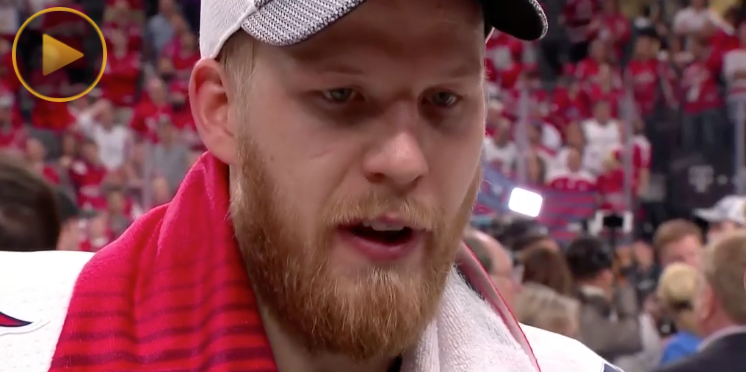
Believing in Lars Eller, who under Trotz’s leadership, flourished after he was traded from the Montreal Canadiens to the Caps.  Eller had his best season EVER since being drafted in the first round by St Louis and traded to Montreal, scoring 18 goals and 20 assists in the regular season but it was the playoffs where he truly excelled, scoring 7 goals, 11 assists, including the game-winning goal in game 5 to win the Stanley Cup, the first player from Denmark to do so.

When asked by the media about his contributions to the Stanley Cup Run, he stated “ he was feeling at home since the day he got there, organization and coaching staff believed in me”

NOTE: Click on volume icon to hear when video pops up

Believing in Devante Smith Kelly (yet another former HAB) who scored as many goals in the playoffs in 24 games, as he had in the regular season (75 games), 7, including the tying goal in game 5.

Believing in Evgeny Kutznetsov, Ovies Russian counterpart who EXPLODED under Trotz’s Watch, who many felt was a candidate for the Conn Smythe (MVP of the playoffs), with 32 points (12 goals and 20 assists).

Believing in Nicklas Backstrom, the player that Ovie handed the Cup to after he celebrated, who had been with Ovie all but one year when he went to the KHL, who contributed 23 points in the playoff run although he missed a few games due to a hand injury.

In the 3 years under Barry, Braden Holtby, starting goaltender, also backstopped the team to over 40 wins each season vs. two prior seasons of 23.

He also believed in all of his other players and demonstrated as many of the top experts, coaches, Olympians have shared with me that I have talked to for our inaugural For the Love of the Game Digital Summit what the characteristics of great coaches, one being coaches believing in their players.

Now the big question facing the Capitals is whether they will renew his contract that has expired, where he not only won the Stanley Cup but lead the team to the NHL’s best record in 2016 and 2017 seasons (Presidents Trophy winners).

General Manager, Brian MacLellan, has already stated publicly if Barry wants to continue in his role as head coach, he will be offered a contract (which all indications are will be a WEE bit of a raise on his current 1.5M/Yr salary).

Ironically, this is just a year after he stated he was doing a thorough evaluation of the team, including Barry’s future, after they lost in the second round of the playoffs for the third consecutive year last season (two of which after they won the Presidents Trophy).

If Brian, the owner Ted Leonsis, and the rest of the organization don’t sign Barry, he could potentially become the next highest paid free agent coach along with his other Clare Drake mentee and Stanley Cup winning coach, Mike Babcock.

This all took place in the same season after Clare was FINALLY inducted in the NHL hall of fame when he was 89 years old (suspect was still taking notes) and then a few months later sadly passed away.

Remember youth sports coaches, just as Clare, all the players and coaches that he taught the game to, our calling as coaches is to make a difference by developing youth into adults.

Please ensure your legacy is a positive one like Clares and you are not a Kids Last Coach.

Let’s all work together to bring the game back to the kids … where it belongs.
 

Don`t be a kids last coach


That was then, this is now

Posted Leave a commentPosted in Athlete, Coach, Organization Executive, Parents

This has been a week full of meetings with various colleagues and associates as we all were trying to get as much done before our May long weekend.

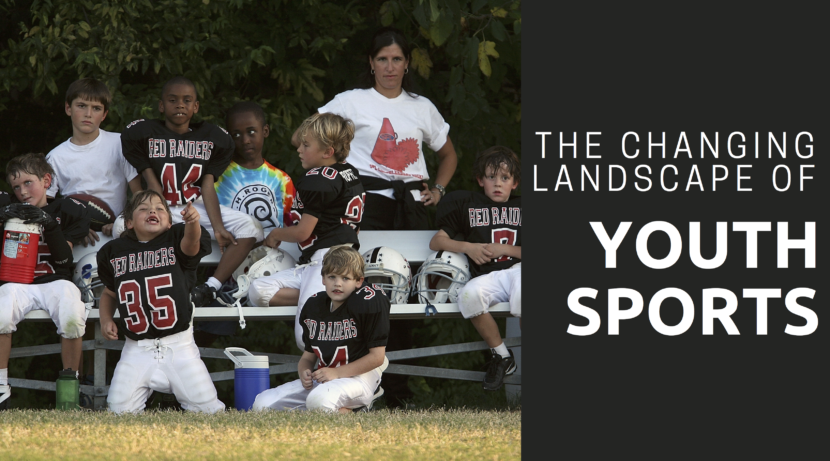
Yesterday, however, I received a call from one of Canada’s National Magazines (once the article goes to print will share out the digital edition) to ask for my insight on the changing landscape in youth sports, in particular, the professionalization and pitfalls of early sport specialization.

I thought initially we would be scheduling the interview for a later date but when the writer asked if I could do so in 20 minutes, I said sure, why wait until tomorrow if you can do it today.

We chatted about the various issues that revolve with early specialization including burnout, overuse injuries, lack of overall fundamental movement skill development as well as the costs, both financial and time when kids start specializing at such a young age.

Last week I wrote about the reality of one of the drivers for specialization, parents aspiring for their son or daughter to receive a NCAA scholarship to setup them up to potentially be drafted to their major professional team sports.

The Reality vs. the Dream of NCAA Scholarships and going to the Show.

I subsequently shared with the writer for the magazine article that the statistics of kids who play youth sports who go on to play at NCAA is approximately 2%, of those 1% will be drafted on average to major professional sports and only 0.04% will actually reach the level of PLAYING professionally at the highest level.

We also touched on the other area that I have identified is an issue with early specialization, the research shows that the key years for motor skill acquisition is between the ages of 6-12 years old which is why nations like Norway, Sweden, Iceland who have adapted Sport for Life’s LTAD model focus on core motor skill development, fundamental movement skills across a broad range of sports and activities during that time.

They also limit or do not permit competitive games until kids are 13 years old so they can learn those skills in a safe to fail environment without the pressure cooker that kids in North America face and other nations, that has lead to the winning at all costs environment in youth sports.

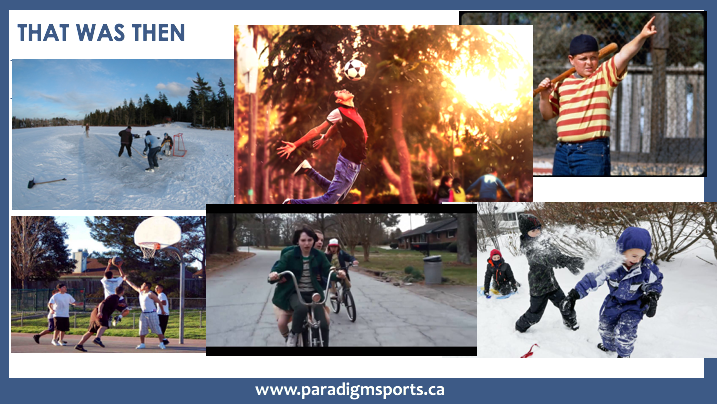
“That was then” is a slide that I created for talks that shows random pictures of kids participating in free play activities, the ones that I did where I learned the fundamental movement skills vs. the precursor to youth sports, the Physical Literacy Movement so that we reinforce the importance of kids developing confidence and motivation to be active, so they are ultimately active for life. (the top right picture is a mini me version of me from the great film Sandlot)


In lieu, should we not just be promoting and supporting kids to just go out and PLAY like our parents did?  Sadly, thanks to THIS IS NOW, kids are not motivated as we were to play outside, they are glued to screens over 7 hours a day in lieu.

One of the biggest changes to the youth sports landscape has been the evolution of the internet, the digital era, which like everything else new, is the direct cause and effect that has drastically changed the landscape of youth sports but EVERYTHING.

Now thanks to Google or youtube ANY coach can obtain ANY drill, ANY practice plan from ANYWHERE, there are thousands available on the internet.  This means that the tactics, strategies, skills, drills of sports are readily accessible so every coach can focus on the WHAT of coaching.

Gone are the days where coaches would even have to think of “stealing” a drill when they saw another coaches practice, they are readily available on the internet.

This is why so many coaches focus on the outcomes, by focusing on the what – skills, drills, practice plans then in turn focus on wins and losses so it becomes a vicious circle

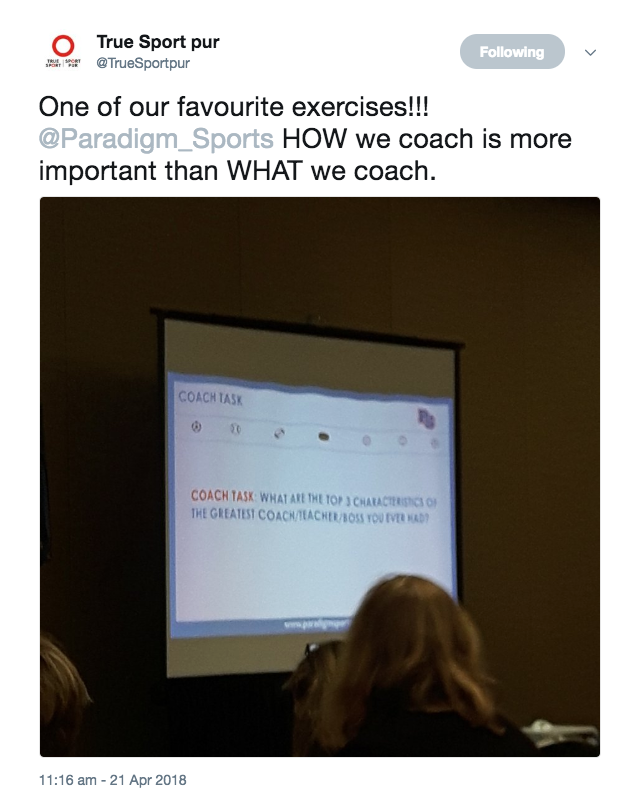
What is not readily available on line, or offered in courses, clinics, summits is HOW to coach.


It is the How, Not the What, that youth coaches need to focus on now more than ever if we are going to shift the needle to bring youth sports back to the kids.

  • Focusing on the process vs. the outcomes. Doing so, winning will be a byproduct in lieu of the focus.
  • Focusing on LTAD, Multi-Sport Participation vs. Early Sport Specialization
  • Focusing on zero tolerance for any form of harassment
  • Focusing on making youth sports fun again, so that 70% of kids don’t quit youth sports before they enter high school
  • Most importantly, coaches need to recognize the importance to care passionately, the #1 characteristic of great coaches is how much they care followed closely by how passionate they are about the sport. In lieu of just teaching the skills of the game (the what) focus on teaching the skills of life (the how).

It is our role as coaches to make a difference by developing youth into adults.

If we do so, we will move the needle so youth sports are just that, youth sports.

Let’s all work together to bring the game back to the kids … where it belongs

Don`t be a kids last coach