
No Participation Trophies. Period.
By Glen Mulcahy
BONUS – Download a Free Copy of this Blog in PDF Format HERE
This week I was made aware of Bryce Harper’s recent tweet “NO PARTICIPATION TROPHIES” and was asked to comment on.
His tweet and short video have gone viral, filling the entire first page of Google since it was posted this weekend.
.@Bharper3407 says NO PARTICIPATION TROPHIES! pic.twitter.com/GrGq7oPXJo
— Scott Abraham (@ScottABC7) 27 May 2017
This is now the third instance the last couple of years that a professional athlete has shared via social media that they are against participation trophies. James Harrison in 2015 and then DeAngelo Williams in 2016, the latter two of whom are not just professional athletes but also parents.
James Harrison’s instagram below received almost 20K likes and over 3000 comments.
See article and short video from ESPN talking about here
Last year, DeAngelo Williams also shared that he did not want his daughter to get participation ribbons and took them away from her. He told her she could keep them only if she finished 1st, second or third. She then finished 1st, 3rd and 3rd in her next three events.
See article and short video here
There seem to be only two trains of thought on the subject:
- Give everyone a participation trophy, medal or ribbon with the thought that it will provide the incentive for kids to become active with the ultimate goal that they will stay active. These efforts are due to the fact that kids today have replaced their former active play time with inactive screen time leading to all of the documented health issues (obesity, type II diabetes etc).
VS.
- Only if you win should you be rewarded, per Bryce’s “only if you finish first” in his short video tweet.
Although I do not believe in participation trophies, I have to disagree with Bryce that only first place matters. It is the spirit of the competition that does.
I do believe in healthy competition and that to receive an award, you must earn it. This is what James Harrison and DeAngelo Williams argued was the reason they returned or took away their kids trophies/awards.
Unfortunately competition in youth sports has evolved to a winning at all costs focus which has created a vicious circle for those aspiring to get kids into or stay in sport or physical activities.
I would like to propose a third train of thought for all to consider:
Let’s create the environment where kids play “FOR the love of the game” again.
As I learned in my psych classes at university, there are two primary types of motivators, intrinsic and extrinsic.
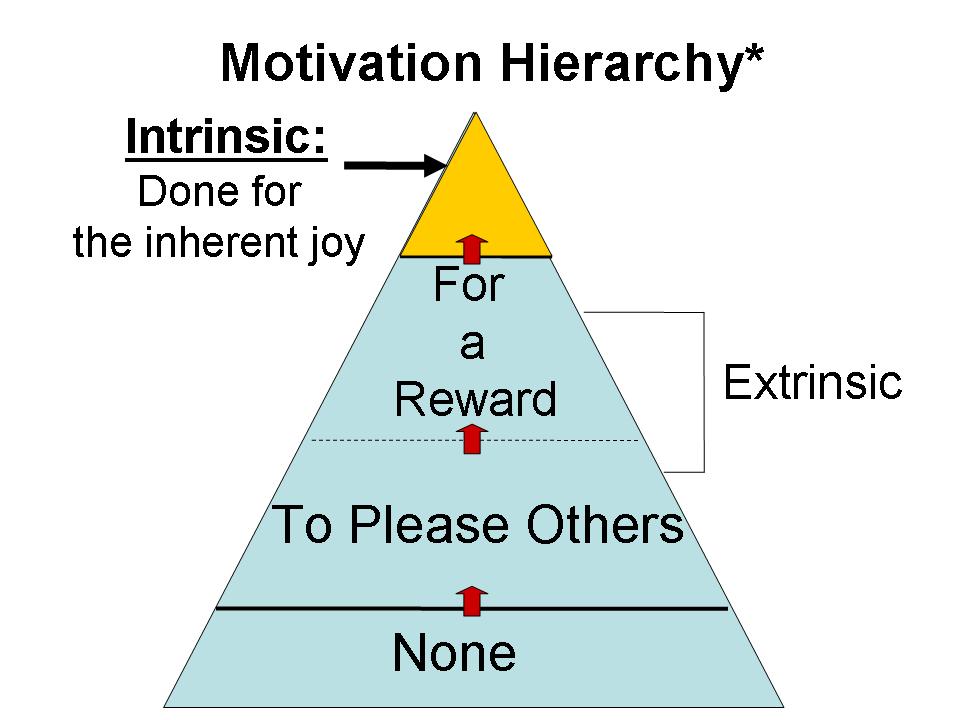
Extrinsic is pleasing others (in youth sports this would mean pleasing the adults; coaches and parents) and the infamous participation award. Both of these are short lived forms of motivation.
Why?
Because neither are internal. The fire in the belly / playing with heart / the inherent joy of the game as outlined in the pyramid.
In order for motivation to be long term, it must come from within; not from outside influences which are not long term fixes. Participation awards may motivate kids to be active in various activities in the short term, but since they are relatively meaningless these awards are quickly forgotten.
Recently my son asked me why he received a trophy for playing t-ball when he was 7, as it was not competitive and they did not “win” anything. I told him that he received that award because he participated and his response “that does not make any sense.” Translation – the trophy which was 5X bigger than the one I’d earned winning the provincials in football did not mean anything to him. Like many of his toys he was cleaning up (he is now 18), it went into the Toy Story Recycling Box with others that he no longer cherished.
My generation did not need participation awards of any kind because we loved the game. We loved trying different sports and activities and would do so for hours on end. When we competed, we did so with vigor, knowing that it would not only take skill, but effort, commitment, overcoming adversity and other intangibles to win.
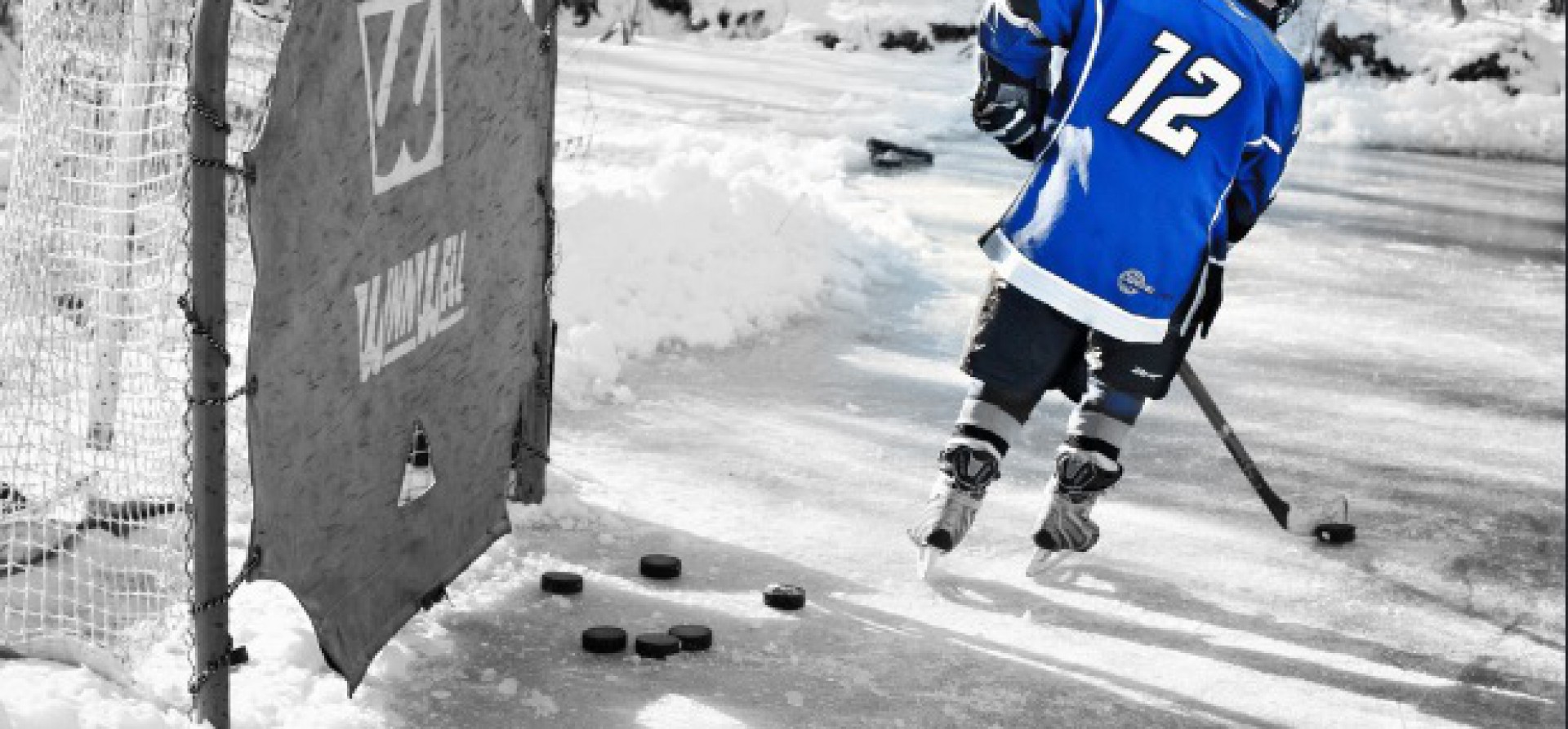
Bobby Orr did not become one of the greatest hockey players of all time because he received an award every time he went out on the pond and played for hours on end.
Michael Jordan did not become one of the greatest basketball players ever because he received a participation trophy when he tried out but did not make his high school basketball team.
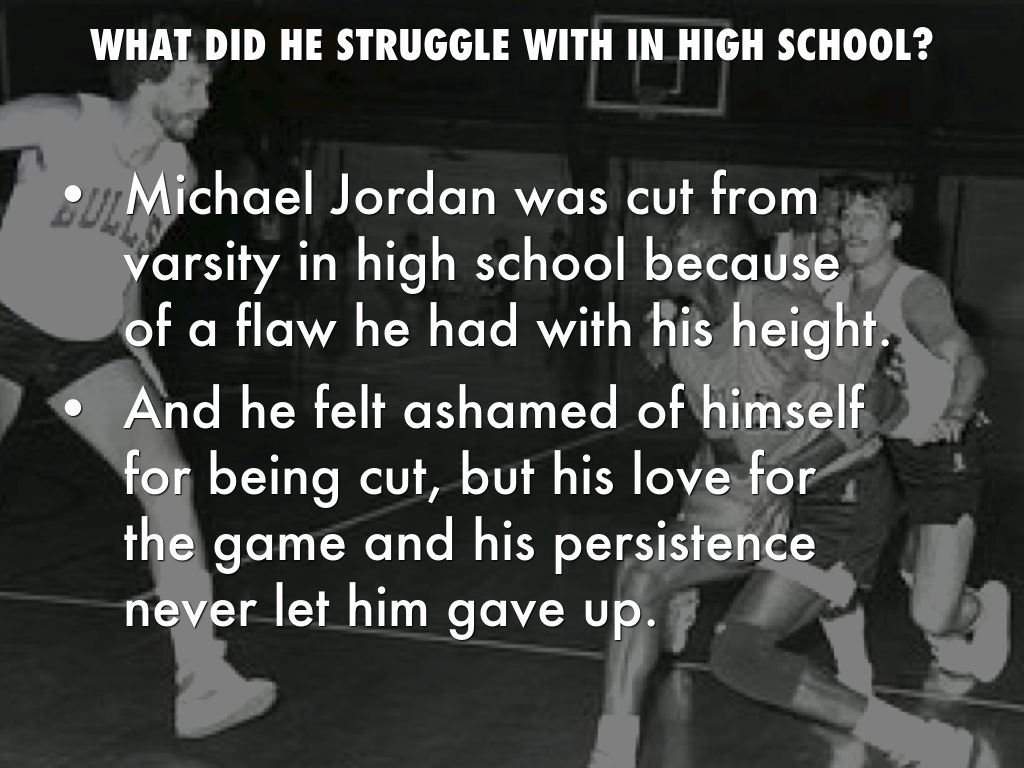
Both athletes loved their respective sports so much that they played for hours on end. Michael even had a ‘love of the game’ clause in his contract so he could play anywhere, anytime and still be insured for his multi-million dollar salary.
The reason that Bryce’s recent tweet has gone viral is because it touches on both issues that have evolved: participation trophies and the focus on winning at all costs.
Although I too don’t believe in participation trophies, I don’t believe that one must finish first in order win a trophy as Bryce states is his twitter video.
I do have the same belief as James Harrison that trophies and medals must be earned to mean anything.
I also believe that kids should aspire to finish in the top 3 in any competition like in the sports days that DeAngelo Williams’ daughter was participating in and receive a ribbon for the same.
I remember when I competed in sports days, as do both of my kids, how hard we tried to win one of those ribbons. When we did not one year, the following year we tried even harder.
This is the very reason why the Olympics, track meets and tournaments have a Gold, Silver and Bronze medal in the spirit of competition.
The kids want to play, and like to be first, but that is not the primary motivator. They should play like the great athletes before them Michael Jordan and Bobby Orr: For The Love Of The Game.
The main role of youth sports coaches is to instill that passion, the joy at the tip of the pyramid in kids so that they not only become active, but stay active well beyond the current trends where 70% of kids are quitting all organized sports by 13.
We can do so by praising effort, encouraging kids to make mistakes (yes mistakes, even in games so it is a safe to fail environment!) and providing necessary free play opportunities (without parents, coaches or refs) for them to develop their skills. It should not be what has evolved today in youth sports where the focus is merely on the results, the bragging rights for adults that youth sports teams won trophies or medals.
The following are three of the ways that I have encouraged players to participate. The reward they earned was a result of hard work, not merely showing up.
- Team Hardhat: This is awarded to the player as voted by his/her team mates for working hard in a practice or game, never giving up, blocking shots, unselfish play, getting up when they are knocked down, and never missing practices or games.
I introduced the team hard hat to teams as early as Atom (9-10 yrs old) and the player that was nominated had a big smile on their face, proudly wore the hard hat out of the dressing room and was still wearing it when they came back for the next game.
- Team Toolbox: This is something that I did with my Bantam Rep Team (13-14 yrs old) where the players would vote on same examples of effort and hard work as the hardhat and I also tied in that they would start the next game and be an alternate captain to develop leadership and communication skills.
The last player that received this award that season happened to be our most skilled, but also most selfish player, whom I told to keep the toolbox after the season as a reminder what it meant to be a true team player, a reminder to work hard and also be unselfish.
- Team Kudos: This was introduced by one of my players who had done so on a prior team where each player would turn to each side and give his team mates for a great thing they did in practices or games but my one rule was it could not be an outcome (goal or assist), it had to be what lead to that outcome. Things like great puck battles, blocking a shot, sportsmanship, respect, fearlessness, team play and so on.
There are many other examples of how you can award your players to reinforce positive behaviors so that they develop the true joy, passion and love for the game.
That is our role as youth sport coaches. If we do that one thing only, I suspect we will make a huge impact in reducing the number of kids that are dropping out.
If we continue to give participation trophies as an incentive, does that mean we are going to have to do so when these very kids enter the workplace? Post Secondary Education? Relationships?
I hope not.
Let’s work together to bring the game back to the kids … where it belongs.
-Glen

3 thoughts on “No Participation Trophies!”