Gone are the days of “Just getting your bell rung”

Posted Posted in Athlete, Coach, Early Sport Specialization, Organization Executive, Parents

This past week was absolutely crazy for me in terms of various webinars and zoom meetings as it was National Coaches Week in Canada.  I took advantage of the various webinars, virtual conferences, summits during the day, and at night was participating in Zoom meetings to prep for online delivery of Hockey Canada NCCP clinics for BC Hockey due to COVID-19.

A couple of the sessions I did was attend a presentation on concussion management and the following day had a great chat with the director of an organization based in Florida who is providing Hyperbaric O2 Therapy to help people recover from brain trauma that I will expand on below.

Both of which really resonated with me personally as I probably suffered a few minor concussions during my playing days of tackle football when was hit helmet to helmet or tackled really hard.  I recall a few times over the years when that would happen and I would be sitting or lying on the field woozy from the impact and trainers would run on the field to help me.

The first thing that they did was pull smelling salts out of their first aid kits and swipe under my nose where I would become more coherent and then they would say “Hey Bud, you’re good, you just got your bell rung” then help me back to the sidelines.

Then the head coach would come to me and ask me how I was doing and like players were doing for many years until recently where mandatory medical or return to play protocols were implemented and my response would be “I’m Good Coach” (but was I??)

To which they would say … Good to hear, Get back out there.

Fast forward many years later while running clinics, workshops or presentations across Canada interacting with coaches and other youth sports stakeholders may feel that the increasing concussion rates are attributed to the fact there is so much awareness now than it was in my playing days.

To which I say … I am glad that is the case because not only did I “probably” have a few minor concussions playing contact sports (none were diagnosed), I did have 2 Grade 3 concussions (most severe), the second ended my competitive playing career in contact sports in my 20’s.

Ironically it, like the first, were not from sports, rather were are result of bar brawls, the second I can only share what people told me after the fact as I lost approximately 2 weeks of memory leading up the incident and vague tidbits the days that followed.

In sum, I was doing a pub crawl with my buds for a stag and the one that was getting married was hit over the head with a beer mug and knocked out to which I came to his aid and I in turn was hit over the head and knocked the ground.

I literally had the S..T kicked out of me by three young men and I was taken to hospital, was in and out of consciousness per the doctors when I finally game to a couple of days later with what felt like a knife digging into my head …

The days, weeks and months that followed were extremely tough on me as doctors said I had to limit any activity, keep the lights off, rest while I recovered from the migraines, headaches, dizziness, nausea and other symptoms as a result of the concussion.

The incident happened in July and I was returning back to my second year of college and had to reach out to my advisor and instructors to advise that I could not return until I had the green light, that did not happen until early November.

I missed two month of my third term (of 4) in a really intense program but my instructors and fellow classmates were amazing helping me return and get back up to speed.

I share this as I know what it is like to deal with a major concussion, it is tough not only physically, but mentally as you are unable to do things I just took for granted, running, biking, hiking, playing sports, swimming, skiing, golf and so on.

So when coaches say to me the only reason so many more concussions are being diagnosed is due to awareness now vs in past I reply … I would rather doctor’s, coaches err on the side of caution.

I also have had players on teams I coached suffer concussions, one of the ones to this day I regret agreeing to let him return to play as soon as he did (even though he had doctor’s approval) was one that sustained a bad concussion in a game, came back a month later and sustained another concussion.

I received a call from his father later that night saying the doctor had advised that his son not play the remainder of the season and that he no longer play rep/competitive hockey with body checking as a result.

Although everyone said it was not my fault, I still feel some of the blame as I could have pushed back to his parents more and said give it more time but they insisted he was good to go.

This is why I was excited when I attended the webinar and talked with Hilary Loftus this week in terms of advances that the medical profession has made in terms of concussion management and recovery
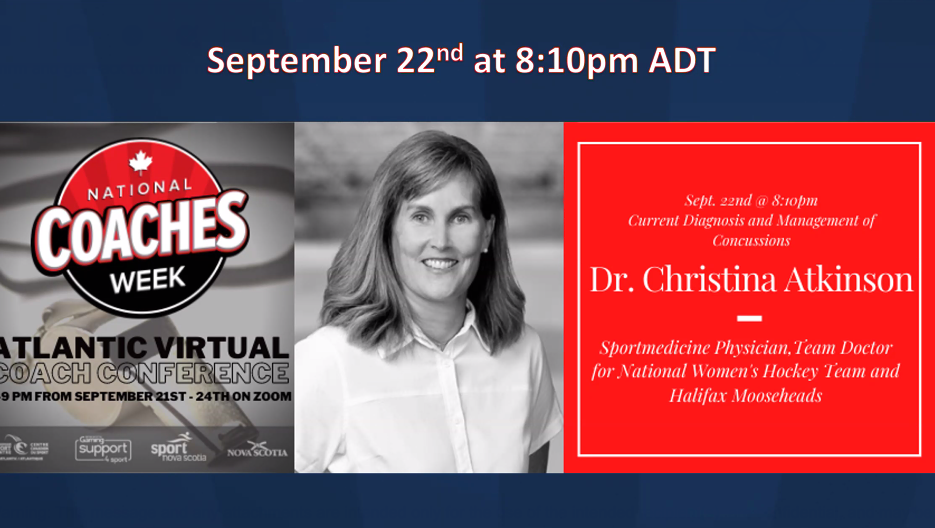


Tina did a great presentation highlighting what concussions were, the ways that the can now be diagnosed by coaches and trainers utilizing concussion recognition tools like the one below

There have also been changes in terms how concussions are managed when diagnosed

  1. Complete rest for 48-72 hours is no longer advised in lieu early return to light activity that does not increase symptoms
  2. Slowly return to play/learn or work in terms of a graduated approach

Yikes … I potentially could have saved myself of 2+ months being in a dark room and literally doing nothing during that time?

She also shared following stats

  • Most people recover quickly and fully
  • 85-90% within 3 weeks
  • Children take a little longer 4 weeks

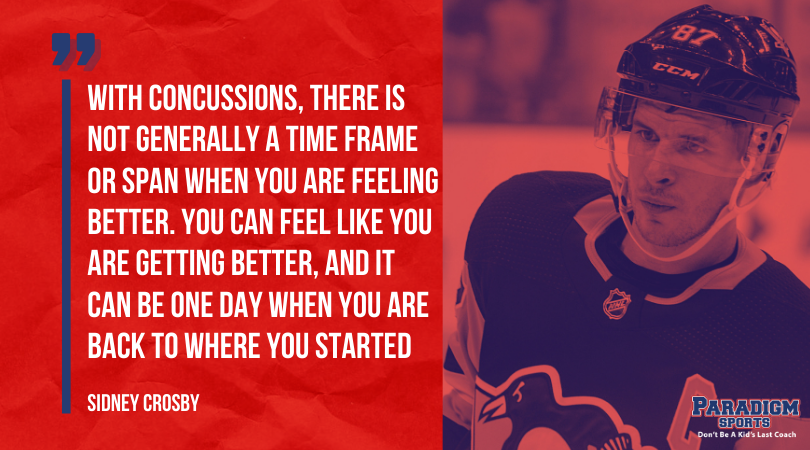
Only 10-15% may have persistent symptoms (months to years), which mine as well as Sidney Crosby’s example as well as many other professional athletes who took months to return or had to retire as a result of concussions (i.e. Eric Lindros, Paul Kariya)


The Key takeaways that Tina ended her presentation for Coaches


  • Know your athlete
  • Be Supportive
  • Community with the health care team managing the concussion if need quidance how to be supportive
  • Speak the same language as the health care team

The day following Tina’s webinar, I had an opportunity to chat with Hilary Loftus, the director for HOW (Helping Our Wounded) Foundation which was established initially to help US military and veterans recover from brain trauma and PTSD using Hyperbaric Oxygen Therapy (HBOT)

The sessions are either done in mono type chambers like the one above or they have larger ones that can accommodate groups of 4-8 or 12 at a time.

Pure O2 affects the body at a cellular level and by using pressured chambers it enhances and provides the tools for the body to naturally heal.  A session is 80 minutes and the technology has been around for decades used mainly in hospitals for severe injuries, burns etc but is now becoming more mainstream in conjunction with other injury therapy practices (i.e. physical, occupational therapy)

Hilary shared an amazing stat with me also, if athletes who are diagnosed with a concussion start HBOT sessions within a week of being diagnosed they only have to do 3 sessions to recover and return to normal activity.

All I could say to myself during our chat and prior conversation was “I wish this was around for me many years ago” but it is exciting to see the advances that we are seeing for concussion management both in terms of recovery but ultimately in terms of prevention as many sports have implemented training programs for coaches, players to reduce head contact and severity of concussions many suffered in past.

If you are a coach and suspect one of your players has had “their bell rung”, that should be a red flag for you to immediately pull them from the field, ice, court and reach out to their parents to get them checked out and follow return to play protocols accordingly.

As the cliché goes, it is better to be safe than to be sorry.
 

PS Tagline - Dont be a kids last coach


Why the stars are aligning for Dallas

Posted Posted in Athlete, Coach, Early Sport Specialization, Organization Executive, Parents

I never thought in my lifetime that I would be having discussions with people regarding the NHL playoffs in September when all prior years they were finished by May/June timeframe.

Nature of the beast as they say during the COVID-19 era that the NHL and all other professional sports are dealing with to complete or start their seasons with various protocols to ensure the safety for all parties concerned.

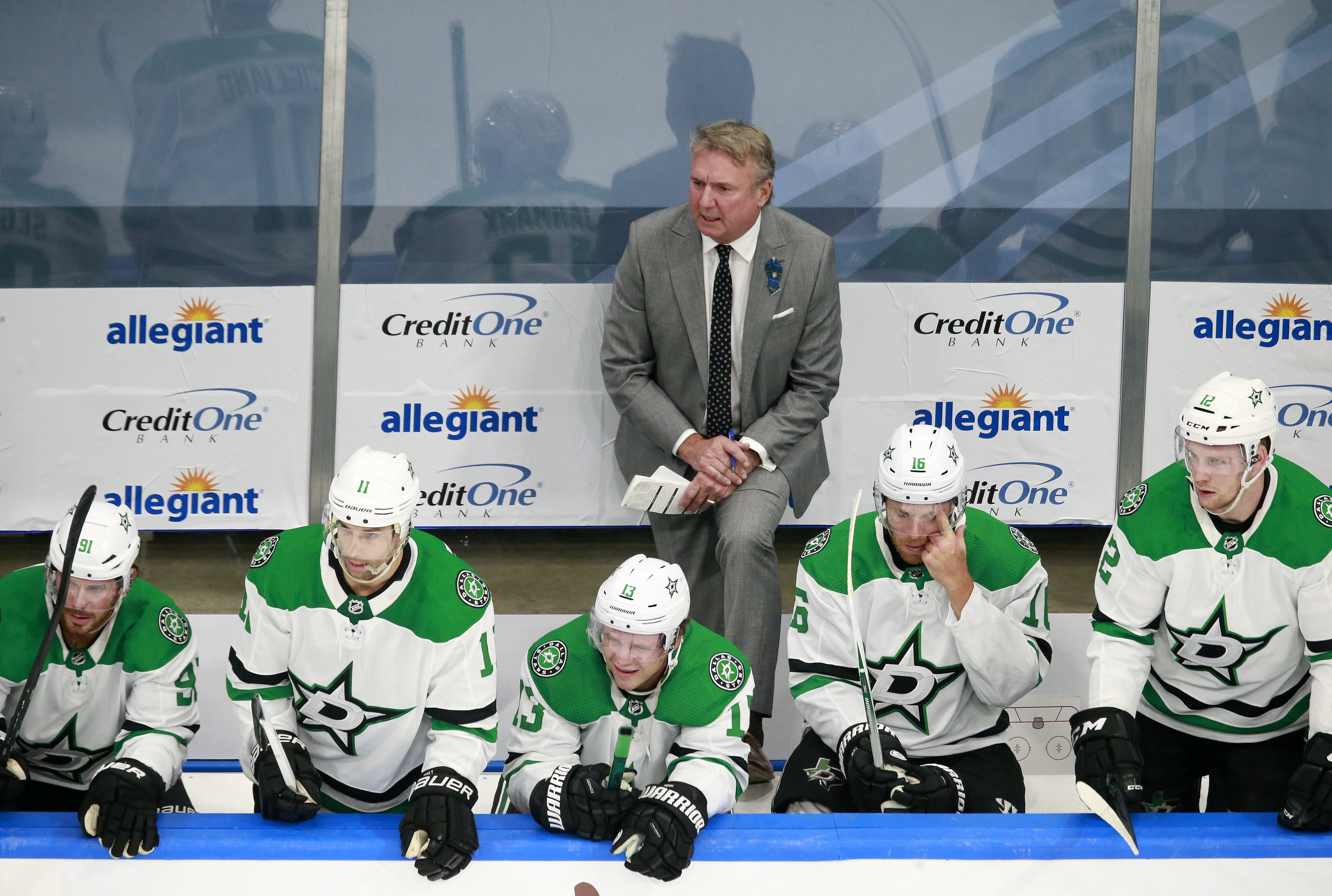
Although I am a long time Habs Fan having grown up in Montreal, and was disappointed when they and then the Vancouver Canucks were knocked out of this years Bubble Playoffs, I am happy to see that Rick Bowness and the Dallas Stars will be heading to the final for the first time in 20 years.

Two reasons why I feel that the “stars” have aligned for them to get there this year, the amazing coaching job that “interim” coach Rick Bowness has done since he took over the reigns after former head coach XXXXX was fired mid season and the later is the leadership from team captain, Jamie Benn, whom I have highlighted in numerous talks and interviews when I been asked to share insight on the benefits of multi-sport participation.

RICK BOWNESS – AKA BONES

(Photo by Jeff Vinnick/Getty Images)

Rick Bowness played in the NHL for a number of teams like many other NHL coaches after he played Major Junior and in the NHL.  He has been a head coach for a number of NHL teams but this is the first time in his career that he has lead a team to the Stanley Cup Final

His coaching career ironically started out in 1982-83 as a player coach (AKA Reggie Dunlop for the Chiefs in Slapshot) for the first Winnipeg Jets minor league affiliate Sherbrooke Jets.

Much like the infamous “Chiefs” in Slapshot, the team really struggled under his watch so he retired as coach and player at the end that season and a year later was recruited by Winnipeg Jets Head coach in 1984 to join his coaching staff as an assistant.

He has gone on to coach a number of teams in the NHL since, many as the head coach and several years as associate or assistant coach, including the Vancouver Canucks where he was Alain Vignault’s right hand man when they had their amazing run in 2011.

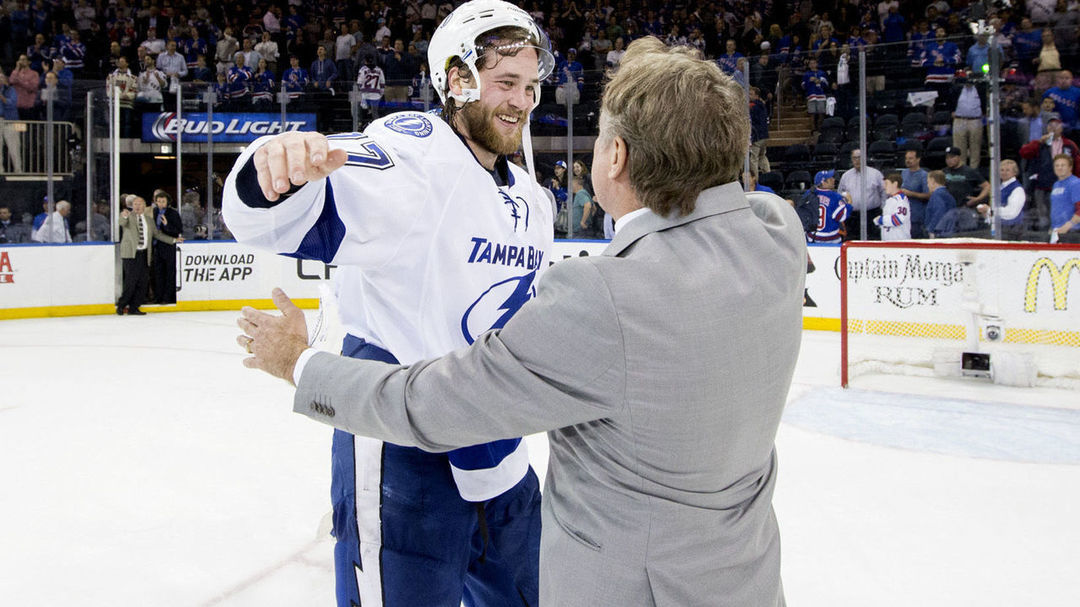
He moved on from the Vancouver Canucks in 2013 and was with Tampa when they advanced to the final in 2015 but lost to Vancouver’s long time nemesis, Chicago Blackhawks.

Rick has now been in the NHL as a player and now a coach for 45 years and many are pulling for him to win his first Stanley Cup.

Why are so many pulling for him?

#1. He is a player’s coach – loved by all of his players who will do everything they can to win for him

#2. He truly cares about his players as people, not just as hockey players.

The list of players under his watch for decades have all shared in interviews time and time again how he connects with them as individuals, is approachable and takes the extra time to help them not only become better players, but better people.

“He Cares about his players. You can just see it in his actions. He will never chastise them, he will never embarrass them in front of his peers or in front of other people, if there is a tough conversation to have he does it behind closed doors.”  George Gwozdecky (Tampa Assistant Head coach with Rick 2013-2015)

#3. He has a high level of emotional and social intelligence.

Although this past Hockey Season the NHL saw several coaches fired from their roles due to what many feel are no longer (nor were they ever) appropriate coaching styles, Rick has always set the bar as the players coach

“He’s a coach you just want to do everything for, lay your body on the line for”

Jamie Benn

#4 – He has coached more games than any other coach EVER in the NHL, now over 2,500 games leaving Scotty Bowman’s record of 2,164 3 years ago and he is still going

#5 – He has adapted to being either a head or an assistant coach depending on the team needs, many of his head coaching stints he took over mid season when the head coaches were let go much like this season with the Stars.

#6 – Cody Hodgson played under Rick and Alain while in Vancouver and shared that “you get some coaches that are very talented but not necessarily good people (as the firings in recent year showed).  But Rick ‘s a great coach and a great person …. and will be able to stick around as long as he wants to”

#7 – He is very humble.  Whenever people try to give him credit for his leadership, he defers to the players, much like he did when was interviewed after they advanced the final.

#8 – He’s a great coach.


Ironically he played as a forward, but has spent much of his coaching career working with defence and is acclaimed for helping develop many D-Men over his career, most recently was helping Victor Hedman become one of, if not the best, d-men in the NHL currently.

#9 – He is transformational and focuses on connecting with his players vs. many coaches still focusing on the X’s and O’s.  Per former player he coached, Brad Barry who is now coach of University of North Dakota X’s and O’s are one thing, but if you don’t have the communication skills or the ability to connect, then I don’t think the X’s and O’s matter anymore.”

#10 – He loves the game as much now as he did when he was a kid.

In every talk I do with coaches I end with key takeaways and one is the measurement of a great coach is one that creates a culture on their teams where kids love the game more at the end of the season then they did at the beginning and come back the following year with big smiles on their faces.

JAMIE BENN – AKA Chubbs

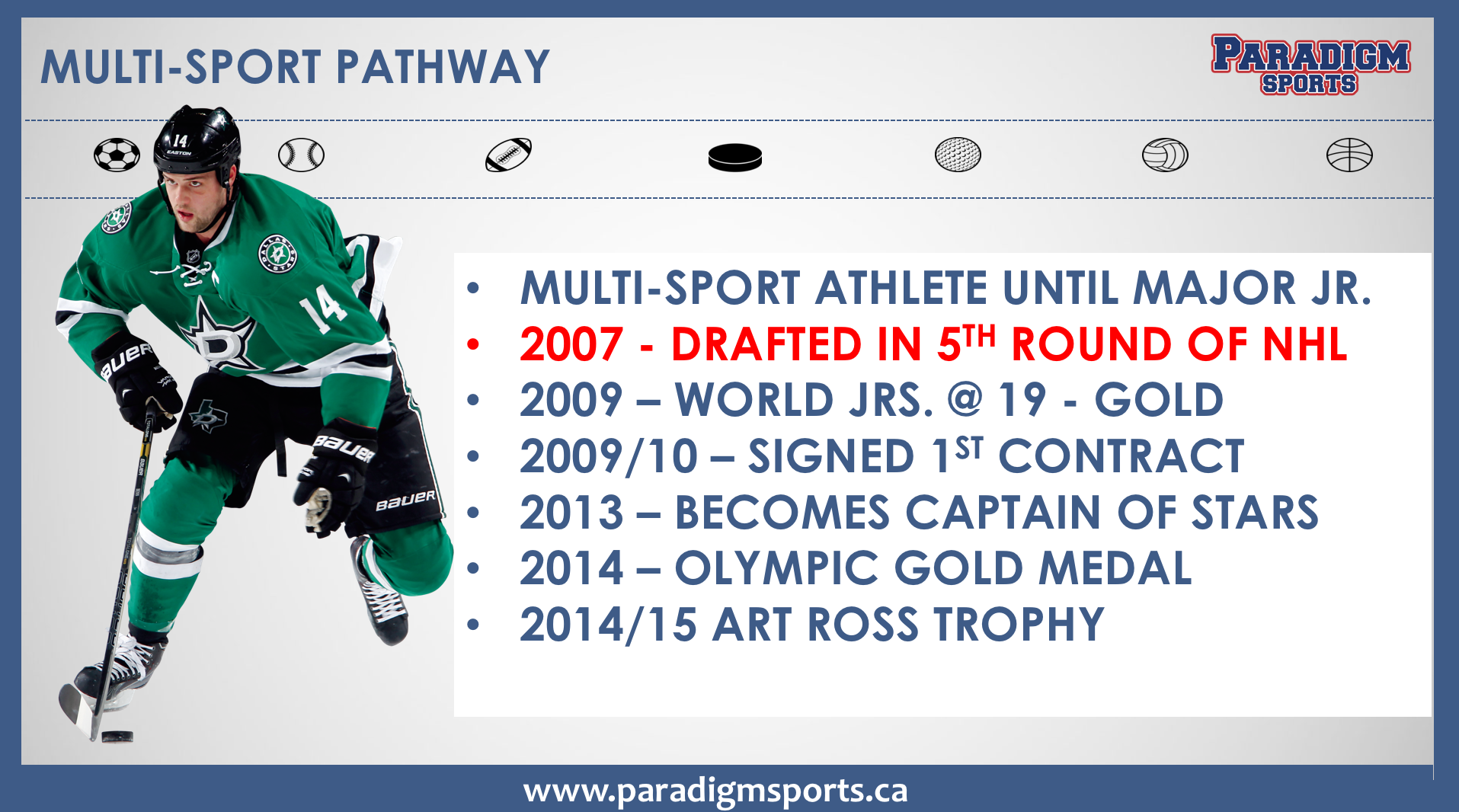
Below is a slide from one of my core talks LTPD vs. Early Sport Specialization where I talk about Jamie Benn’s path to the NHL.


Jamie and his brother Jordie grew up on Vancouver Island and played a number of sports growing up, both played hockey in the winter and baseball in the spring as well as tried several other sports until they both found the one they loved the most – Hockey.

Note on the slide some of Jamie’s accolades – Gold in the World Juniors, Gold in the Olympics, Art Ross Trophy and now he is going to the Stanley Cup Final.

Did you know that he did not decide to focus on hockey until he was 19?

This is why Hockey Canada did not even identify him for any of the U16, U18 or U20 Junior Camps until he was 19 as his path was junior B, then Junior A, then WHL and was drafted in the 5th round to then become the captain of the stars in 2013 when he was 24 years old.

His path the NHL, much like the majority of players, was playing multiple sports until his later teens. When I interviewed Ken Martel for one of our summits last year, he shared with me that over 90% of NHL players were multi-sport athletes until at least 14.

“Just a game boys, there’s always next time” Tyler Sequin

Now at 31 he is considered the old guard with the NHL youth movement, but as much as I would love to see a Canadian team be in and ultimately win the final since the Habs won their last one (and last one for a Canadian team) in 1993 27 years ago, I will be pulling for the stars to align for Rick, Jamie to hoist their first and ultimately drink from the Stanley Cup.


Why Barry Trotz is a Great Coach

Posted Posted in Athlete, Coach

As a result of COVID-19, many of the professional sports schedules have been delayed since the global shutdown mid March 2020 with the exception of the NFL who started their season as they planned, albeit with no exhibition games that many have argued were not meaningful other than to generate gate revenue as starters would not play until the game before the season started.

Although some of the professional sports have had challenges finishing or starting seasons, once the NHL figured out the bubble format and the cities to host them in, since the beginning of the NHL qualifying round and subsequent Stanley Cup Playoffs there have been no positive COVID-19 cases reported so they have set the bar for others as we continue to deal with the pandemic.

One of the annual events that was impacted as a result of no large gatherings (although you would not know it with certain NFL cities have fans in the stands, others not), was the annual NHL awards ceremony, where Barry Trotz, Bruce Cassidy and John Tortorella would have been seated in the auditorium waiting for their names to be called out to receive the Jack Adams Award for the best coach.

John and Barry have both been recipients of the award two times so was their third nomination, and this was Bruce’s first year which he nominated and also the recipient of the coach of the year award for the great job he has done with the Boston Bruins.

Although I feel Bruce deserved the award, it was Barry that I wanted to highlight this week due to the fact that he not only was nominated a third time, but had he been the recipient, it would have been his third, a feat only done by one other coach in the history of the NHL.

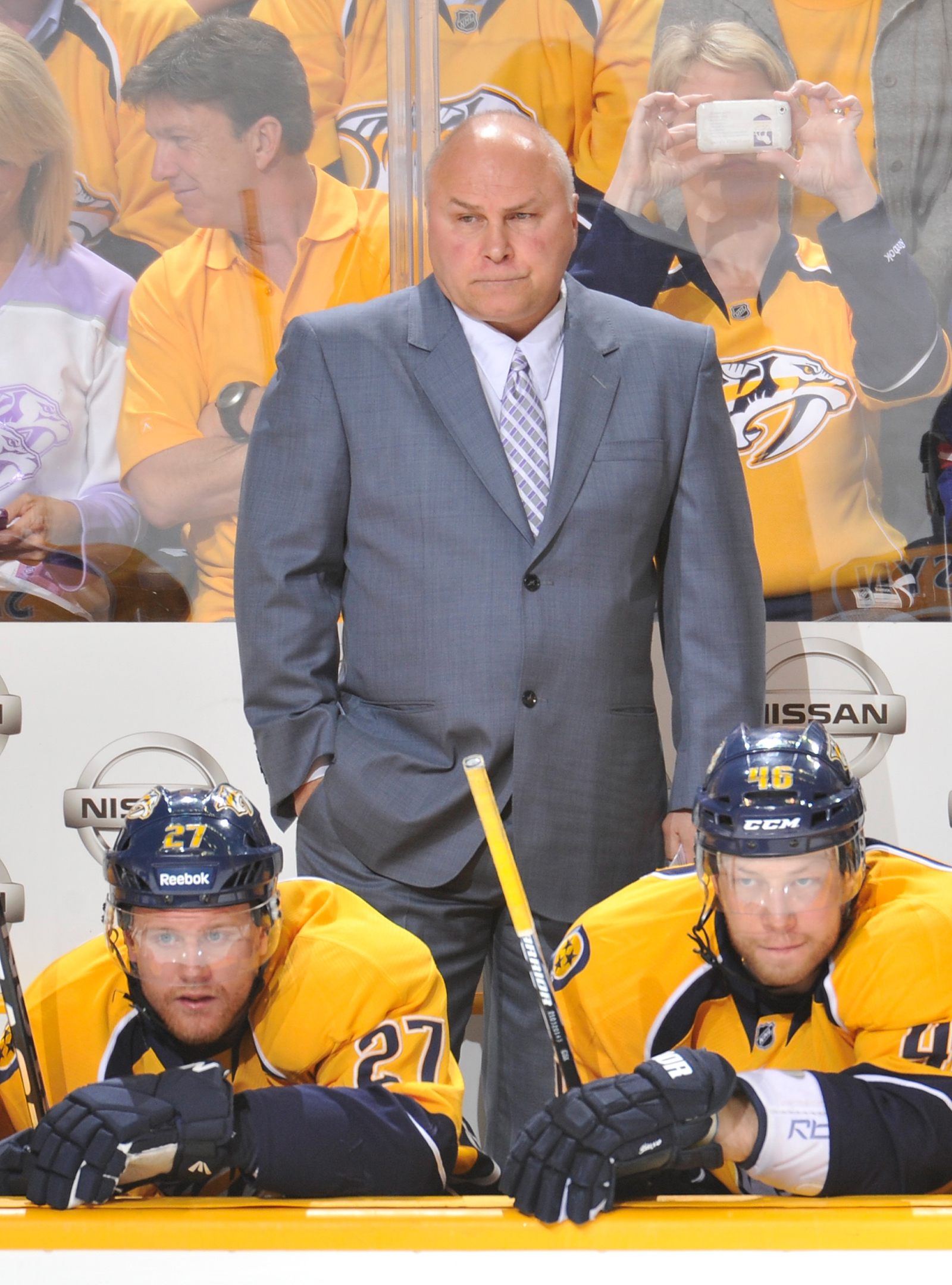
NASHVILLE, TN – APRIL 20: Barry Trotz head coach of the Nashville Predators watches the action against the Detroit Red Wings in Game Five of the Western Conference Quarterfinals during the 2012 NHL Stanley Cup Playoffs at the Bridgestone Arena on April 20, 2012 in Nashville, Tennessee. (Photo by John Russell/NHLI via Getty Images)


The Early Years – AHL and Nashville Predators

Barry’s initial coaching experience that lead him to the NHL was coaching the Baltimore Skipjacks and Portland Pirates of the AHL, and in 1994 he lead Portland to the AHL championship title where he received he first coach of the year award, the Louis A.R. Pieri Memorial Award, the AHL equivalent of the Jack Adams trophy Barry has now won in the NHL

After a few more years in the NHL, when the expansion Nashville Predators were looking for their first head coach, GM David Poile decided to bring Barry along to be their first head coach in 1997 before their first NHL season in 1998-1999

He went on to coach the predators for 15 seasons, the longest tenure for any coach of an expansion franchise and their most successful season was in 2006-7 where they accumulated 110 points, second in the western conference and third overall.

During many of those seasons, the payroll that Nashville allocated for player salaries was significantly lower than all other franchises, yet year after year Barry and his coaching staff were able to lead their teams to the playoffs.

Many would say that Barry was able to get the very most out of his players in order to do so.


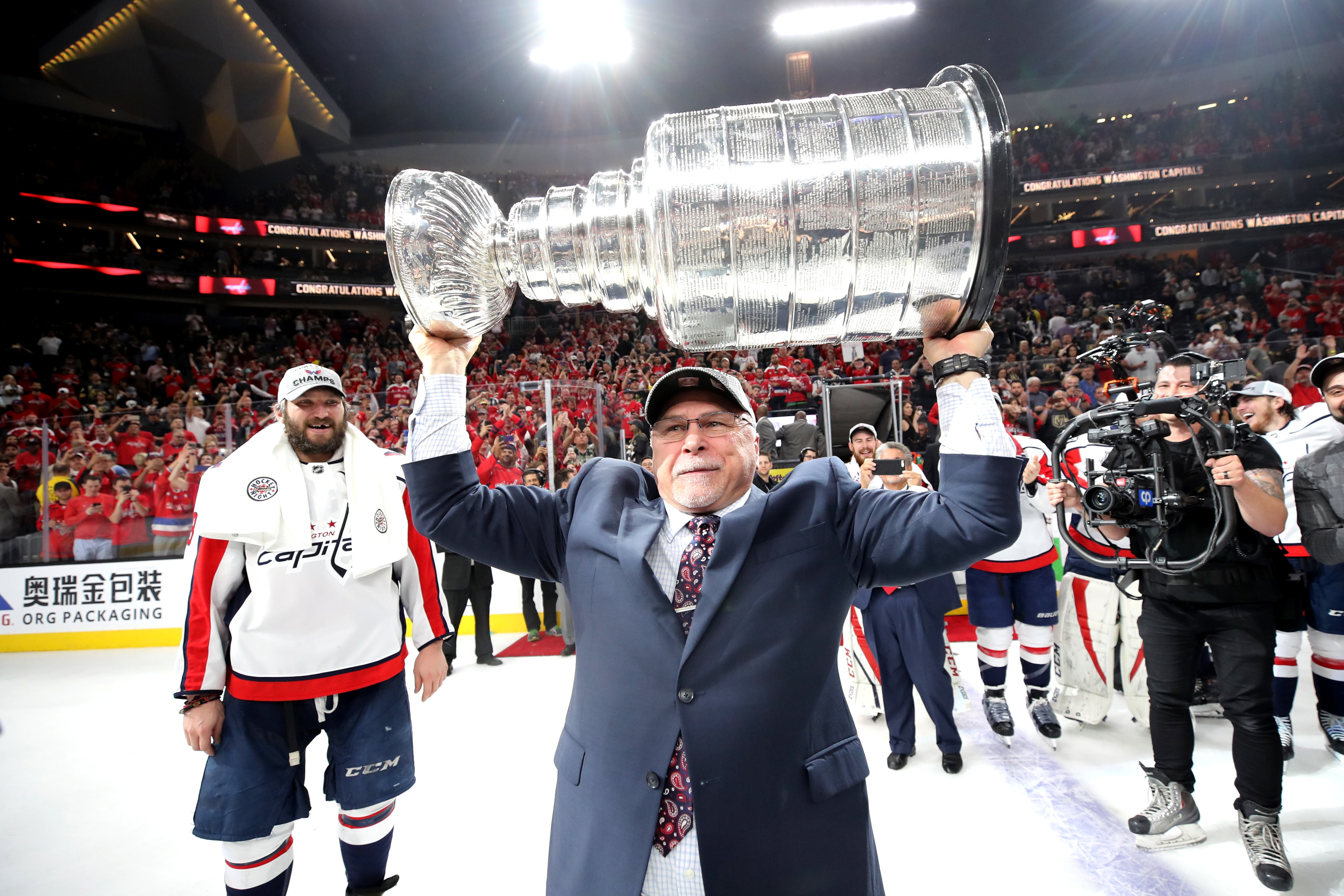
LAS VEGAS, NV – JUNE 07: Head coach Barry Trotz of the Washington Capitals hoists the Stanley Cup after his team defeated the Vegas Golden Knights 4-3 in Game Five of the 2018 NHL Stanley Cup Final at T-Mobile Arena on June 7, 2018 in Las Vegas, Nevada. (Photo by Bruce Bennett/Getty Images)

Washington Capitals

In 2014 Barry was replaced by Peter Laviolette and soon after the Washington Capitals came knocking, who had offered Barry his first opportunity to coach their minor league affiliates in the AHL.

He was offered a 4 year contract, and in his 4th year he lead the Capitals to their first ever Stanley Cup, and also his first Stanley cup after coaching in the NHL for 19 seasons.

Sadly, the Capitals did not opt to extend his contract so Barry resigned and within a few weeks was recruited by the New York Islanders GM Lou Lamarello, former GM for the New Jersey Devils.


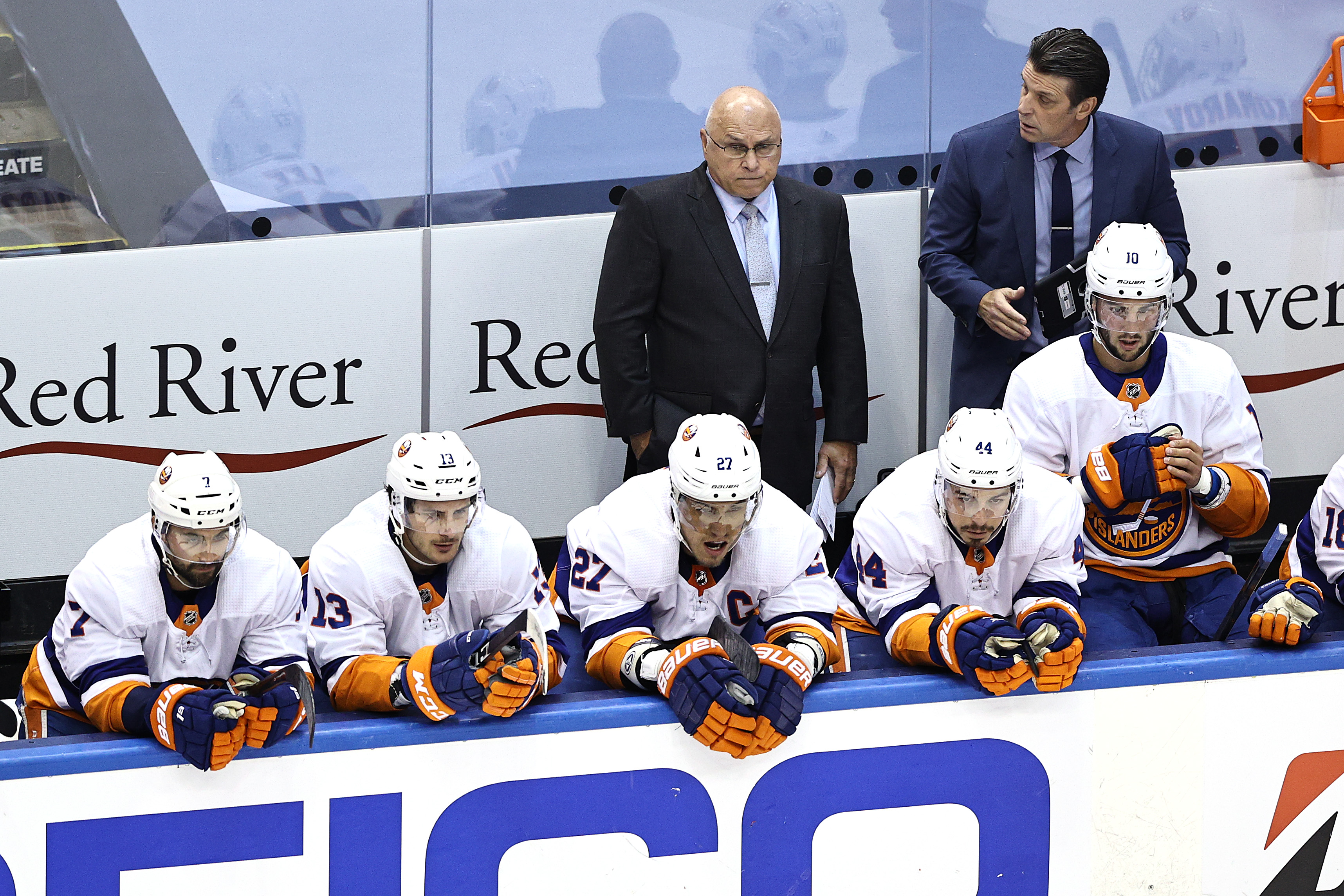
TORONTO, ONTARIO – AUGUST 14: Head coach Barry Trotz of the New York Islanders looks on against the Washington Capitals during the first period in Game Two of the Eastern Conference First Round during the 2020 NHL Stanley Cup Playoffs at Scotiabank Arena on August 14, 2020 in Toronto, Ontario. (Photo by Elsa/Getty Images)


New York Islanders

Barry became the head coach in 2018 and in his first season as head coach swept the Pittsburgh Penguins in 4 games, then lost to Carolina in the second round but was nominated and received his second Jack Adams award.

During the COVID-19 season, he has now lead the Islanders to the eastern conference final, and as the day of this being written are down 2-0 to the Tampa Bay Lightling, although had a much better game in game two than the first and I suspect will come out flying in game 3.

So how has Barry accomplished so much, when many say, with so little (the early years with Nashville, the egos on the capitals,  and the young up and coming roster of the Islanders?

#1 – He truly cares about his players. 

In all of the surveys I have done over the years, the #1 characteristic shared by coaches is the greatest coaches they had cared about them as people first, athletes second.

#2 – His Philosophy

In the video that we shared in our newsletter, Barry shares he core values;

When I stand behind my team it means something.

It means having respect, integrity….

It means responsibility.

Coaching is about caring about people.


Like many high level coaches, Barry is very knowledgeable about the systems, tactics (X’s and O’s) but what separates the good coaches to the great coaches is having core values that recognize the importance of coaching and caring about the person which I have shared with all coaches for years.

#3 –  He makes the players believe

Like he did with Nashville leading them to the playoffs for numerous years, he lead the Washington Capitals to their first ever Stanley Cup after many coaches before him with their high payroll star lineup had not often been knocked out in the first round.

Now with the New York Islanders, a young team that many felt would be bottom dwellers after losing their best player, John Tavares, to free agency before his first season, he lead them to the playoffs with a mix of young up and coming players and veterans and has gone even deeper this year.

Based on how he has guided his teams over the years, developed his players into such great people, and is passionate about his core values, I believe that Barry may just get the nomination a third time and potentially win his third Jack Adams as a result which has only been done by one prior coach, Pat Burns, who won the award coaching three different teams.

I imagine that he, like all the others in the bubble since the qualifying round started, is looking forward to when his family can join him so he can give them all a hug, including Nolan who was there by his side during the Capitals great Stanley Cup run just a few years back.

PS Tagline - Dont be a kids last coach


How BC is returning to Sport – Phase III

Posted Posted in Athlete, Coach, COVID-19, Officials, Organization Executive, Parents

Since we entered the COVID-19 Era, I have had a number of conversations with various youth sports groups regarding the confusion regarding all of the return to play protocols as various provinces go thru their various stages of returning to play.

Our home province, British Columbia, has recently announced that we are now in Phase III thanks to the amazing work that our PHO and Dr. Bonnie Henry have done since COVID-19 lead to shutting down Sports and numerous other sectors.

Although I am excited that we will see sports ramping up this fall, based on recent conversations since I have had with a few user groups I felt best to share what the phase means in terms of returning back to Sport as some are inferring that it literally is GAME ON, meaning, we are good to return back to pre-COVID era and we are still a ways from that being the case.

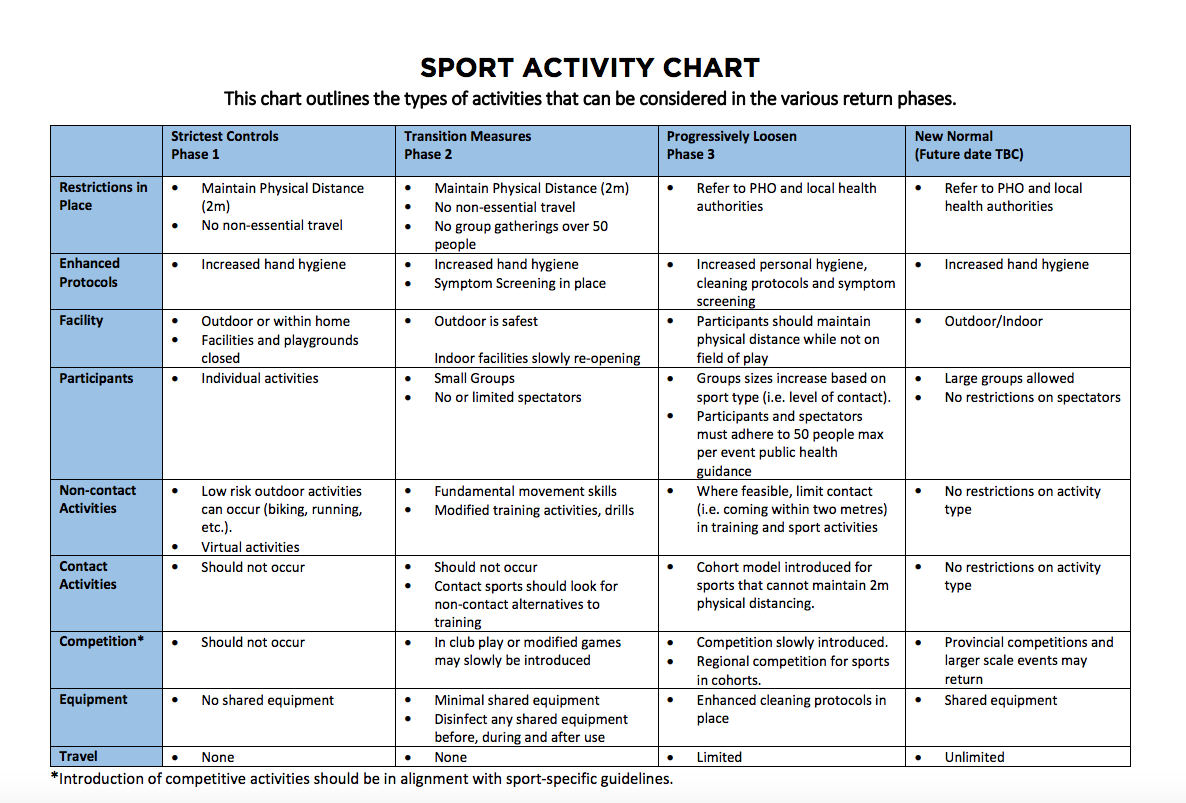
Below is a summary of all phases of the proposed return to sport plan as a summary for user groups to reference;

What has not changed from prior phases is;


  1. Personal Hygiene – washing hands regularly and using disinfectant
  2. Social Distancing required in common areas like benches, dugouts, dressing rooms, lobbies and entrances (masks in those areas is also recommended)
  3. Maximum gatherings of 50 to include spectators
  4. Symptom Screening before every activity
  5. Contact/Participant tracking

What has been eased up in terms of restrictions;

  1. Cohort groups identified by risk of sports can be anywhere from 10-100
  2. Contact within those cohort groups is now permitted
  3. Competition or games can now be played (adhering to revised protocols)
  4. High Performance training with limited travel

In terms of the actual sizes of cohort groups, as this will vary across a myriad of over 70 sports in BC alone, confirm with your PSO and refer to updated return to play quidelines, a recent example included Basketball BC’s HERE


  1. Lowest risk of Contact – i.e. Archery, Tennis, skiing, golf – Up to 100
  2. Higher risk of contact – Baseball, Cricket, Soccer – Up to 50
  3. Frequent/Sustained Contact Sports – Football, Rugby, Hockey – Up to 50
  4. Combative Sports – Martial Arts, Boxing – Max 10 per cohort

NOTE: Cohort groups includes spectators which are immediate family members only to be considered part of the cohort. Coaches and officials can be counted outside the total cohort number IF they are able to maintain physical distancing at all times.

To determine where your sport falls in terms of the size of cohort groups permitted, reach out to your PSO/RSO for confirmation as it is not a one size fits all approach, each sport will have different guidelines based on their evolving return to play plan and facilities being used.

A couple of examples that I can share with you how user groups implemented to limit COVID-19 exposure and reduce risk to participants (players, coaches and others)

My niece recently flew to Montreal for her first year to play for McGill’s Women’s Varsity Hockey Team.  She will be staying in dorm rooms in a converted hotel that McGill purchased and renovated for dorm housing with her own bathroom and common areas for kitchen for cohorts to use only.  Similar to the NHL bubble, they will not interact with others out of their cohorts

Her season will start with skills development sessions only, and will find out this week as Quebec enters into their next phase and she shared the original plan for competitive games is for McGill to play Concordia and Ottawa’s USports teams to be within a short travel distance but no travel will be permitted to USA or other provinces until a later date.

Although she will be able to be part of the team for various activities, all of her courses, like all the other students will be done online until further notice, like most other universities at least for this fall.

The second would be easing of instructions for minor hockey associations, the first of which that re-opened its doors with strict COVID-19 protocols was Burnaby Winter Club BWC) in May which we shared Returning Back to Play – Phase II where they took the biggest risk as the first out of the gate but to date no positive COVID-19 cases have been reported months later.

Now all other minor hockey associations in the lower mainland are slowly but surely returning back to the ice with various camps, skills sessions with limited number of skaters and coaches on the ice and aspire to return back to 5 on 5 hockey this coming season.

Ironically in July I had a coach who attended many of the workshops that I ran last year for one of those associations reached out to me if I felt it would be safe for him and his son to return to play and I shared all the work that was being done to ensure that it would be safe, but it would be different at least in the immediate short term.

When ViaSport and our provincial health authority announced that we would be entering phase III, I was excited but at the same time a little weary due to the fact that I have also connected with colleagues in the US, Europe and Australia who have shared how far out they are from returning to sport.

One recent example was a conversation that I had with one of our speakers for our Summer Summit, Rosemary Morris, the first female official of men’s elite basketball in Australia and she stated that they were in full lock-down due to the explosion of COVID-19 cases in recent weeks.

This included;

  • Curfew where all residents had to be in their homes from 8PM to 7AM the following day
  • Only 1 hour of outside time for physical activity, exercises
  • No retail shopping except essential services (grocery, pharmacy and of course alcohol)
  • Full cancellation of all sports programming until further notice
  • Police and Militia enforcement to ensure people follow the lock-down requirements

This right around the time when the Big 10, Pac12, CFL and various other professional, collegiate, school and youth sports cancelled all fall sports programming in Canada, US and abroad to curve the spread of COVID-19.

This is not to say that I am beyond excited that kids in BC, in particular the Vancouver area where I reside, will have the opportunity to return back to playing the sports they love, being with the coaches, team mates and working up a sweat with huge smiles on their faces while they do so.

I just want to make sure that we don’t go to the other extreme as we have seen in many US states who recognized the importance of kids playing youth sports but did not do so in phases adhering to various return to play protocols.

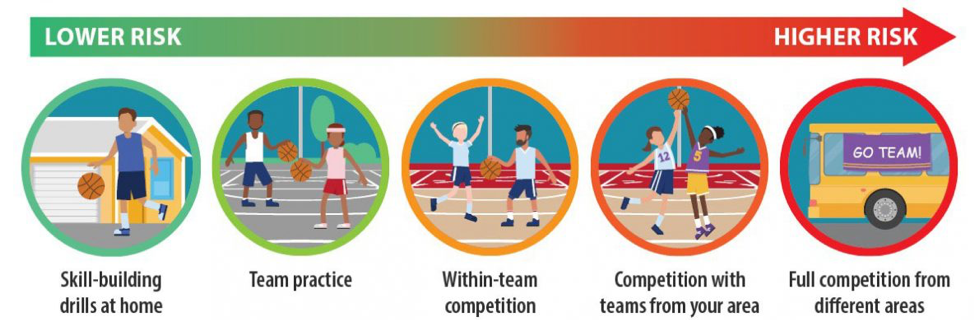
Recently the CDC, like ViaSport has identified various groupings of sport based on risk assessments per the image below


Phase III does permit cohort groups of competition within teams in your area but does not permit tournament play requiring travel to other areas.


Masks, sanitizer, and ultimately participating outdoors are the main recommendations to flatten the curve of COVID-19


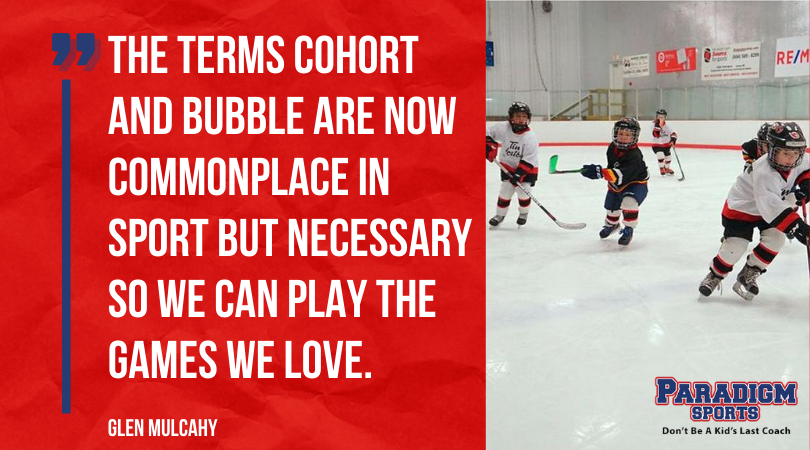
Sadly COVID-19 has forced our hand to go down the path of implementing cohorts or bubble environments to limit the interaction and potentially the spread of COVID-19 but as the NHL has shown, if bubble is maintained, it does permit sports to be played.

According to ViaSport, the term cohort is “a group of participants who primarily interact with each other within the sport environment over an extended period of time.”

Similar to the Bubble concept that has been implemented by professional sports like the NHL, NBA once kids are identified for their cohorts they are not permitted to interact with ones that are in other cohort groups and same holds true for coaches, officials if they become members of a cohort (exception being if they can maintain physical distancing then could coach other sports with other cohorts)

Sadly COVID-19 has forced our hand to go down the path of implementing cohorts or bubble environments to limit the interaction and potentially the spread of COVID-19 but as the NHL has shown, if bubble is maintained, it does permit sports to be played.

However, as the MLB who has not implemented a bubble model like the NHL/NBA/MLS have has shown, the chances of transmission of COVID-19 is much higher even though baseball is one of the sports identified by youth sports groups as being lower risk as by its natures participants are much farther apart then other team sports.

It also does not help when they had a couple of pitchers on one team that went partying in Chicago increasing their exposure, their team mates and potentially others teams they are playing against … but I digress.

The end result is for the foreseeable future, the cohort and or bubble model is necessary for us until such time that there is a vaccine or other treatment protocols for COVID-19 but by doing so, it will permit kids to play what they love, coaches do what they love to do and all other stakeholders return back to the fields, courts, fields and other playing surfaces so we can “Play for the love of the game”

In addition to the new Phase III guidelines, please ensure that you continue to follow health authority, organization and league safety protocols until such time that we do enter phase IV when large gatherings can take place as they had pre-Covid.

PS Tagline - Dont be a kids last coach


How Sports are changing the world

Posted Posted in Athlete, Coach, Organization Executive, Parents

I would be remiss not touching on what is the hottest topic in the world of sports, the recent postponements of league and playoff games by Professional sports in response to the tragic shooting of Jacob Blake in Kinora, Wisconsin.

Yet another tragic moment where a white officer uses excessive force towards a black man, this time Jacob Blake being shot 7 times in the back when he was entering back into his SUV where his kids sat in the back.

Although it appeared Jacob had no weapon, the police now allege that he had a knife and put one of the officers in a headlock before he let go and went to enter his vehicle.

What they can’t dispute it the officer shot Jacob 7 times in the back in lieu of other means to subdue, contain him with his partner before using deadly force.

In lieu of potential criminal charges being brought forth for the very least assault with a deadly weapon (as Jacob is still fighting for his life in ICU and was handcuffed to his bed until recently when I am writing this) using deadly force to this extent he and fellow officers involved in the incident are put on “administrative leave” pending investigation of the incident?

Really?

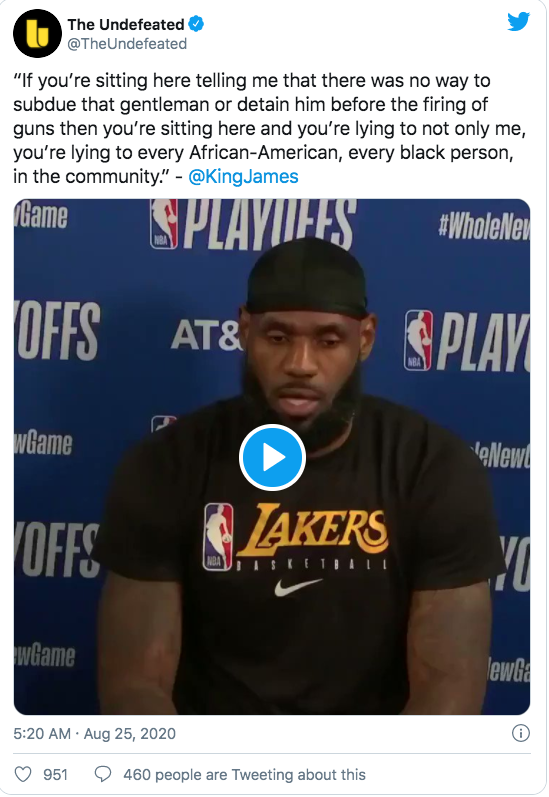
What is the justification for lack of justice that has been called out now by many professional athletes starting with Lebron James, identified by commentator on ESPN as being of the top 5 most influential athletes in the globe when he shared this tweet


Having worked in security for BC Place Stadium for many years and been trained in use of “reasonable force” to deal with unruly fans and having worked with many police constables and sergeants as a result, I agree 100% with Lebron’s statement, pulling a gun is the LAST resort and first shot would be to subdue someone (i.e. shooting in the leg) or to be used in self defence for their lives (i.e. when gun pointed at them).  There is no way the officer in question can make either of those claims based on video footage.

Much like when I watched the video of George Floyd  when I watched the Jacob Blakes video where the officer pulling the trigger 7 times I was again sick to my stomach.

In lest we forget why the movement why BLACK LIVES MATTER has led to so many protests as a result, the issue of racism including white police brutality towards black people or other members of colour has been going on for decades which is what lead to the recent postponements of COVID-19 delayed league and playoff games.

The first by the Milwaukee Bucks who as a team took the stance they would not play and then the Orlando Magic and then the NBA postponed games on a Wednesday, much like they were the first league to shut down their season due to COVID-19 also on a Wed (Mar 11) and the NHL on the Thursday (March 12)

Fast forward 5 months, the NBA shuts down first, MLB and MLS canceled games but the NHL played on even though discussions started on Wednesday by a number of players to do the same?

Unlike COVID-19 league response to shut down the season, this time it was the players that pressuring the league and owners to do so as they had reached out to members of the newly formed Hockey Diversity Alliance (HAD) co-founded by Evander Kane and Akim Aliu that now includes many other minority members in the NHL.  The dialogue continued Thursday morning after the Vancouver Canucks had a team meeting and Bo Horvat and Tanner Pearson then reached out to Ryan Reeves who were scheduled to play that evening.

In ESPN article, Bo shared “We talked about it in the room this morning. We realize the impact it’s having on the world and in the sports community, seeing what was going on in basketball and the MLB. We wanted to go over and talk to Ryan and Vegas. We just all thought it was the best course of action,” Canucks center Bo Horvat said. “We have to come together. This stuff can’t stand. We need to educate ourselves and understand what’s going on in the world. There needs to be change. Us, being all together here as one, shows strength in the hockey community and in the world.”


As a result of pressure from the NHLPA and negative press they were receiving, the NHL then postponed games Thurs and Friday to protest Jacob Blakes shooting and will return to play Saturday


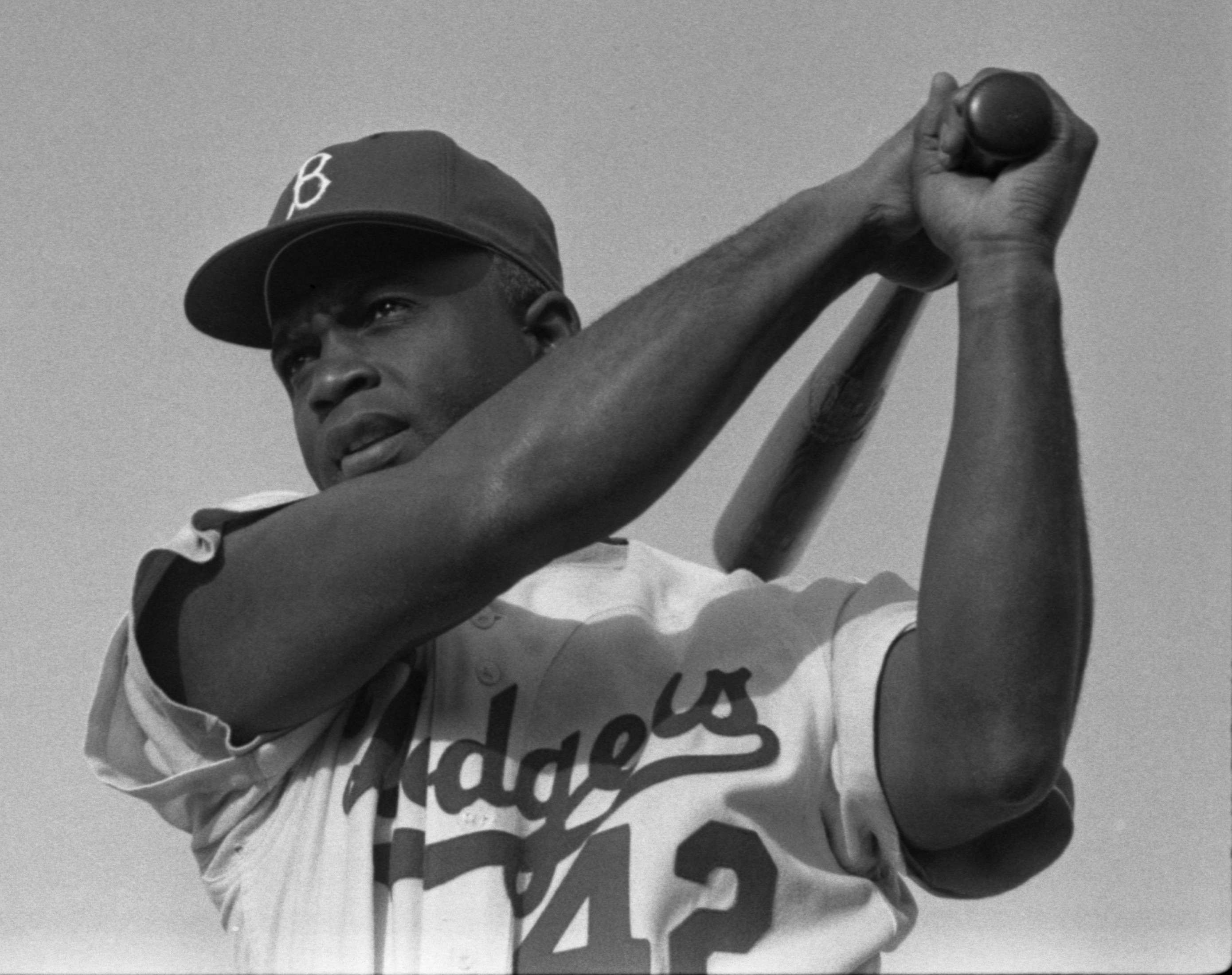
Ironically all of these events transpired the week that the MLB was to celebrate Jackie Robinson Day, on Friday Aught 28th, 7 decades after he broke the colour barrier for Major League Baseball.

Traditionally the MLB celebrates Jackie Robinson Day on April 15th, where all players wear 42 on all teams in recognition of his contributions to the game (which has been retired permanently for the league), but MLB was shut down to COVID-19 they opted for Aug 28th this year in lieu

This was to recognize the day that Jackie, his wife Rachel and children participated in the March of Washington in 1963, where Martin Luther King delivered his infamous “I have a dream speech”

Jackie was rookie of the year, MVP numerous times and helped the Brooklyn (now LA) Dodgers win the World Series in 1955.

This was no easy task for Jackie as the racial challenges he broke the colour line by himself and faced numerous racial challenges well before the civil rights movement, Martin Luther King and very March of Washington he participated in well after he retired and was nominated in the MLB Hall of fame in 1962.

He continued to be an advocate for the civil rights movement after he retired until he sadly passed away as a result of a heart attack in 1972 when he was 53 years old.

I have watched many sports movies over the years but one of my all time fav’s as a result of my Papa Johns (my step grandfather) love for the game of baseball was 42, the story of Jackie Robinson as I wanted to learn more of his favorite players.  He would share with me all the time that he was his favorite as he changed the game of baseball, as well as sports for the better and how disappointed he was he died so soon.

It was because of her love for the game of baseball, that it became one of the many sports that I played and became a fan of the Montreal Expo’s growing up in Montreal.  The recent postponement of NHL/NBA games reminded me of the lockout season where the Expo’s were the front runner to win the World Series in 1994.

It is also why this is one of my favorite clips from the movie and why all players wear 42 on April 15th every year since 2004.


Fast forward and many other sports and political leaders have come forth to open the colour barrier and reduce racism in sport and the world to include;

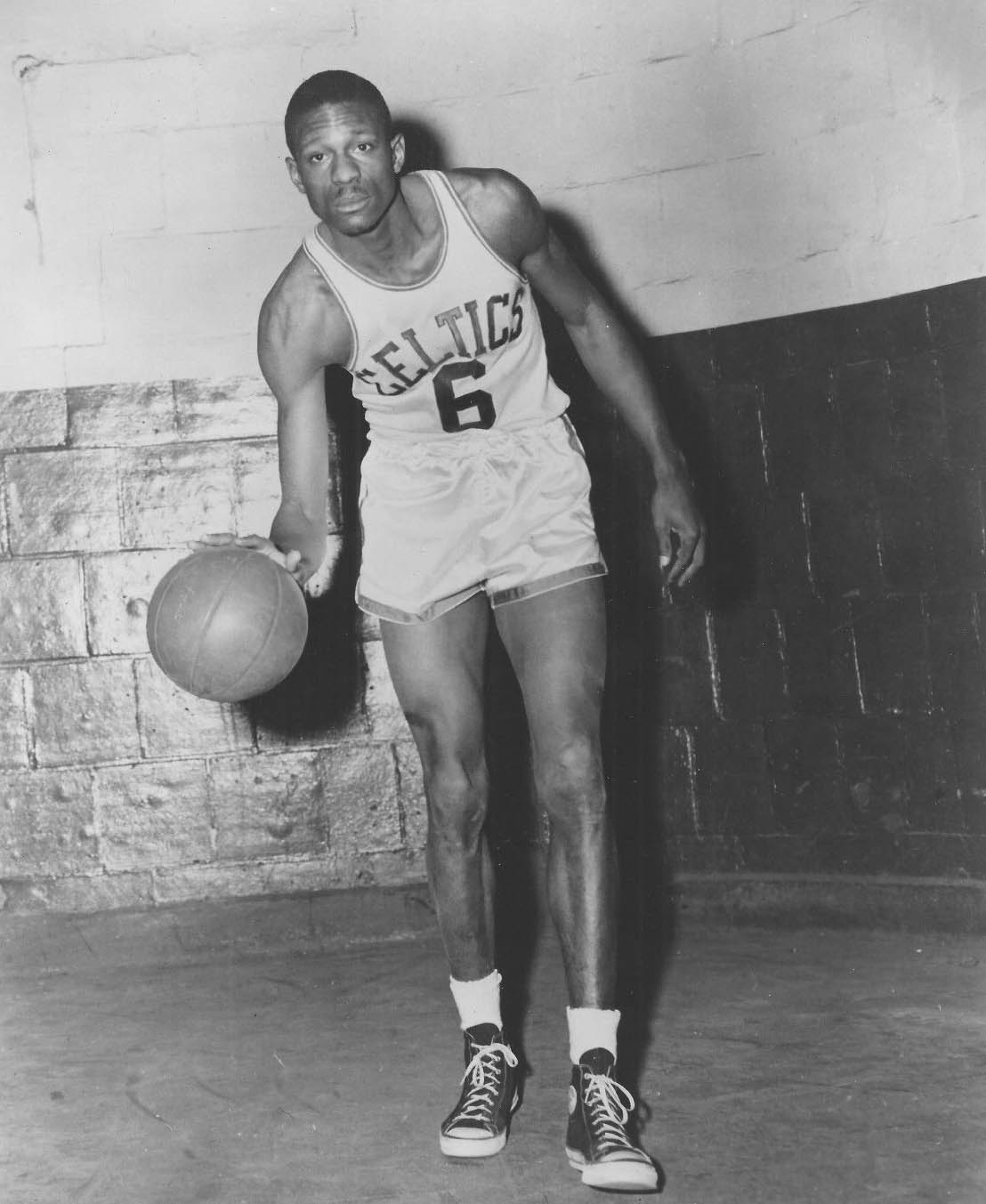
Bill Russell 60’s


As a member of the Boston Celtics in 1961 he lead other black players on his and opposing team St. Louis Hawks to protest racist behavior in Lexington, Ky although the game was played by white team mates.

He shared when interviewed afterwards “I am coming to the realization that we are accepted as entertainers, but we are not accepted as people in some places”


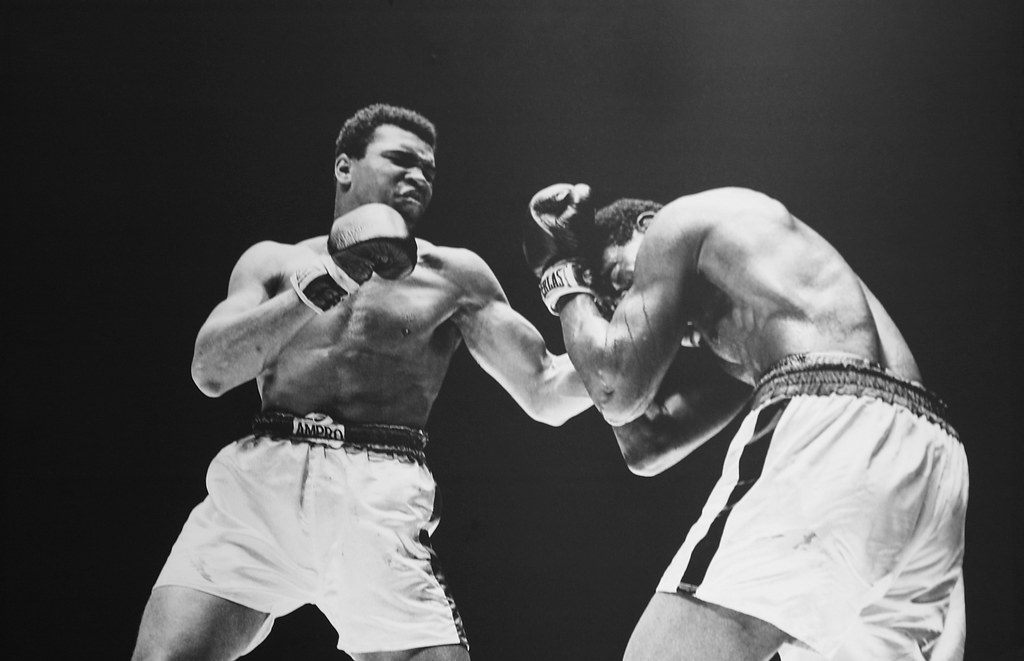
Muhammed Ali 60-70’s


Arguably the GOAT of boxing, and one I am the biggest fan of what he did not only for the sport, but also his fight against racial injustice throughout and after his career. One of the driving reasons he opted out of the army to go to Vietnam was due to the racial injustice in the USA he felt needed to fight more.

One of his most infamous quotes

“Why are all the angels white? Why ain’t there no black angels?”

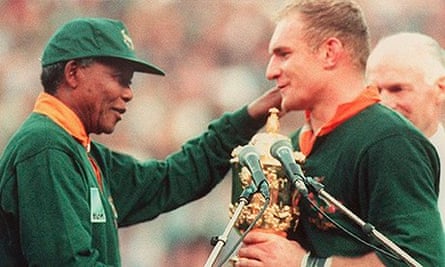
Nelson Mandela 90’s

I could not write any post about racial inequality, injustice, or brutality without referencing I believe was one of the greatest leaders of our time, Nelson Mandela.

20 Years ago in the first every Laureus Global Sports awards he shared his infamous speech “Sport has the power to change the world” when he was asked to introduce the first ever recipient of the lifetime achievement Award Pele in 2000.

This after Nelson was president of South Africa where he was instrumental for ending apartheid after serving 27 years in prison of a life sentence but then pardoned in 1990 for conspiring to overthrow the state. During his first year as President one of the tactics he did to unify the country post-apartheid and integrate white and black constituents was provided advice and guidance to captain of their World Cup Rugby Team that South Africa was hosting they went on to win in 1995.

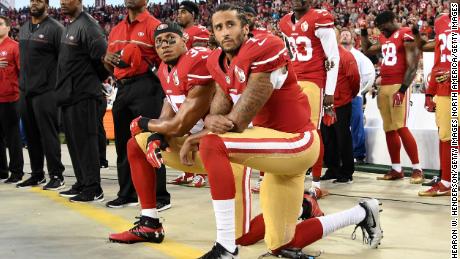
Colin Kaepernick

In 2012 he took over as starting QB for the San Fransico 49’ers and lead them to their first superbowl since 1994 and in a preseason game in 2016, he took a knee during the anthem as a protest against racial injustice, police brutality and systematic oppression.

The protests continued in 2017 until Donald Trump told NFL owners they should “fire” players that protest against the anthem (arguing it was disrespecting all the current and veterans of the military and the American Flag which never was the reason for him or others that followed suit taking the knee)

Colin became a free agent and was not signed by another team, and filed a collusion lawsuit against the NFL as no teams would hire him and in 2019 received a confidential settlement so withdrew his grievance.

In the fall of 2018, although still waiting settlement from the NFL, Nike produced this commercial narrated by Colin


After Nike released their commercial, they received praise, the value of their stock and sales increased and received numerous positive comments on all their social media platforms for supporting Colin and his stance against racism and police brutality.

Yes, there were still those on the other side arguing that he was disrespectful, and although he lost his career in the NFL, he did not give up on what he truly believed much like all the other examples above starting with most recent postponed NBA/NHL and other sports games to protest racism, tragic brutality and injustice.

This is why Nelson was so correct when he shared that Sport has the power to change the world and we WILL see a change for the better as a result. In order for it truly to change, everyone involved in sport, whether it be professional, collegiate, school or community sports need to continue the conversation so the momentum is not lost.

Black Lives Matter.

#theconversation