Ode to the Sedins

Posted Posted in Athlete, Coach, Early Sport Specialization, Organization Executive, Parents

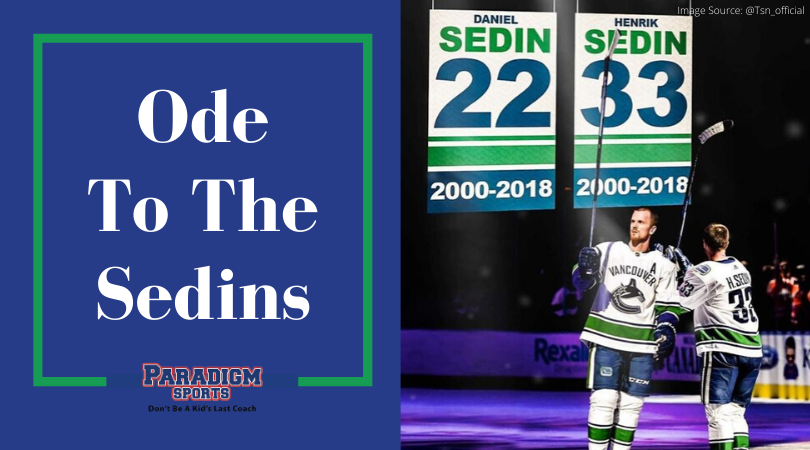
I would like to give Kudo’s to the Vancouver Canucks Organization for the amazing events they hosted this past week to celebrate the amazing careers that Henrik (Hank) and Daniel (Danny) Sedin had playing for the Canucks for their entire careers (a true rarity in this day and age of free agency, salary caps).

I was fortunate, as were many other residents of Vancouver, to see two boys drafted by Brian Burke #2 and #3 in the 1999 draft (coincidentally the birth year of my son) and watch them grow into men over the course of 18 amazing years.

#1 Their work ethic was off the charts and not just amazing hockey players, but ATHLETES. 

Even though they may not have been the greatest skaters early or later in their careers, they worked on becoming better every practice and off seasons for their entire career.  This not only included working on skating but all other core hockey skills AND balance, agility, strength, aerobic capacity.

This could be part of the reason why; check out this short video highlighting the differences of the Swedish Hockey Development Model vs. other nations and they now have the highest per capita number of players in the NHL as a result.

#2 They were extremely humble during their careers and still are

For them it was all about the team, including when their contracts came up for renewal, they accepted contracts lower than market value so they could help the team succeed which included the amazing run to the Stanley Cup in 2011 (the Canucks third since entered the league but still looking to win their last game).

#3 Founding the Sedin Family Foundation

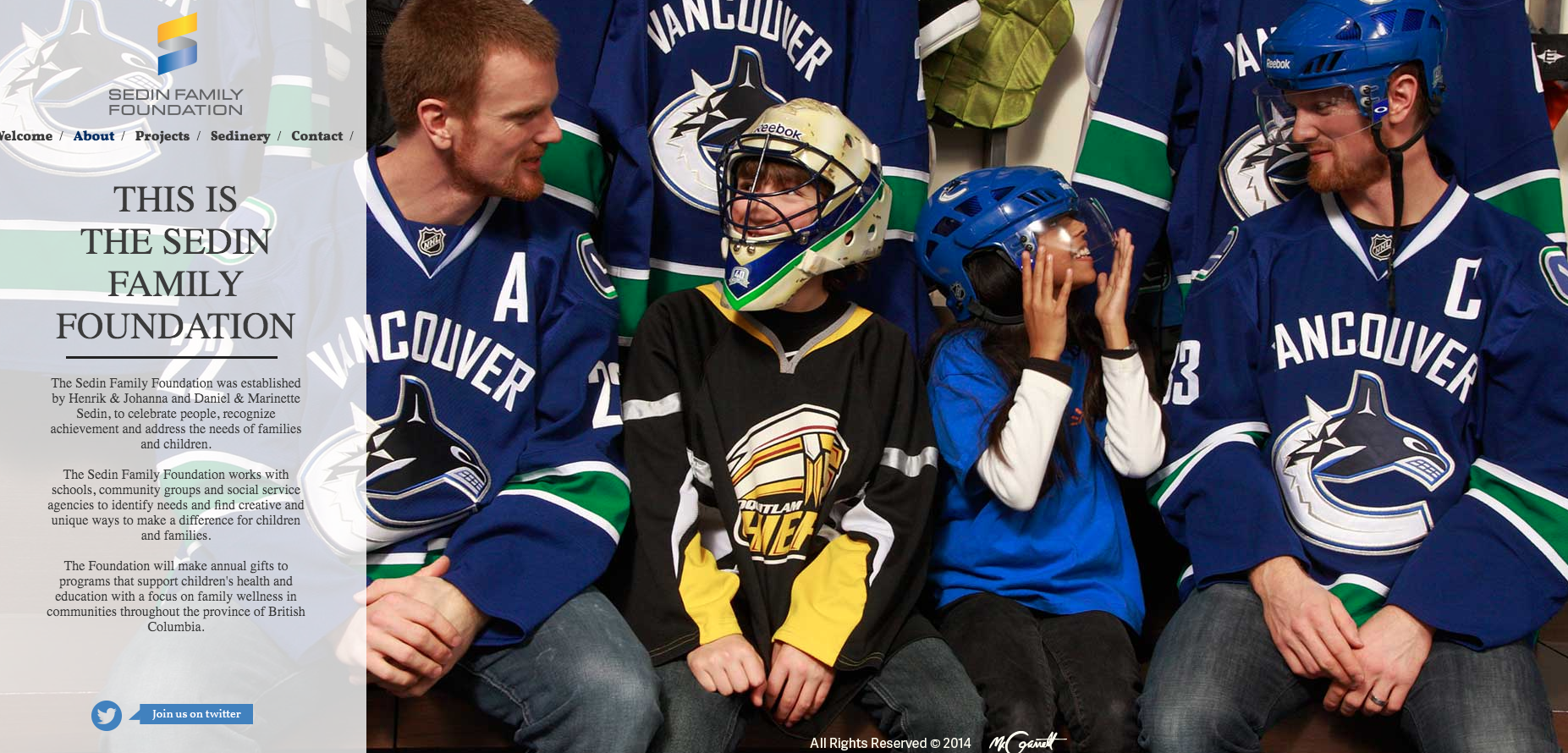
Founded by both Hank and Danny and their wives to celebrate people, recognize achievements and address the needs of family and children and all the philanthropic fundraising to do so.
 

#4 They are the second-highest brother scoring duo in the NHL of ALL TIME
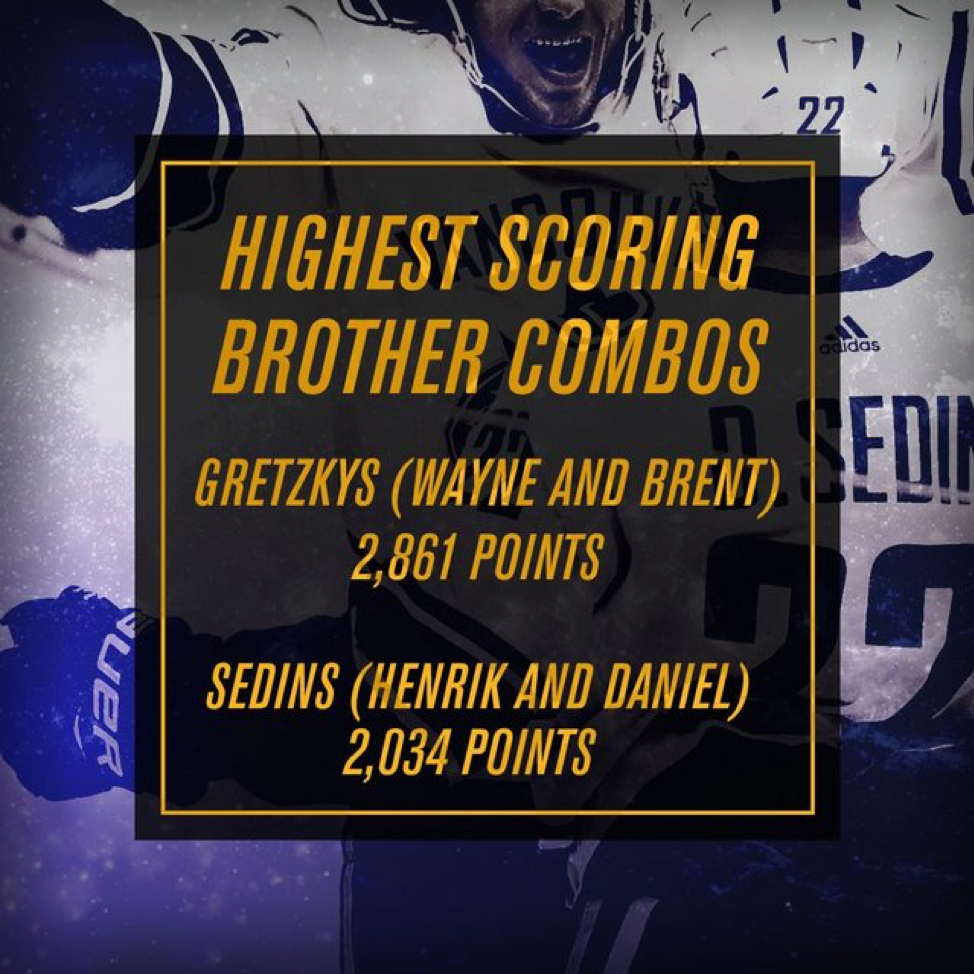
** Based on the fact that the Canucks has one of the Hughes Brothers, Quinn, and his brother Jack (Devils) now in the league both drafted in the first round, perhaps they will be the next duo to chase the Sedins record?

#5 – For all those naysayers that thought they were too soft;

Hank held the ironman streak for consecutive games 679 games! Over 10 Years including several playoff deep playoff runs including 2011 Stanley Cup run.

It ended only because of a vicious cross-check in the back of the ribs although he tried to play in two subsequent games and assistant coach Mike Sullivan shared when could not suit up the following game ending his ironman streak;

“The fact he’s been able to play that many games consecutively is just a testament to his determination and how tough he is,” Sullivan said. “Him and [twin brother] Daniel both play in the hard areas of the rink on a consistent basis because they have the puck so much.”

Danny also was durable as Hank but his longest time out of the lineup was recovering from concussion when he was knocked out (literally) by a vicious hit by Duncan Keith

I have called this type of hit the infamous chicken wing, where players raise their elbows up to a players head and knock them out, a type of hit that has now been deemed intent to injure and players have received multi-game suspensions as a result as the NHL continues to focus on protecting the players from what could be career-ending injuries

Ironically when the Canucks played the Black hawks who Keith has been with since the beginning of his career, every time he touched the puck he was booed for that hit in 2012… deservedly so.

#6 – How they evolved as leaders for the next generation of young prospects

Bo Horvat was named the team captain after one season of having alternate captains only in part to respect Hanks legacy as long time captain who took over the reins from fellow swede from same home town Markus Naslund who jersey number also has been retired and hangs high in Rogers arena adjacent to the Sedins and other Vancouver great players, Trevor Linden, Pavel Bure and Stan Smyl.

When Bo was chosen as captain, Hank handed him his jersey in a public ceremony pre-game but this was after the players had been told by Hank who the next captain was going to be in the team dressing room a few days prior to the game.

# 7 – How good they are as people

In addition to their foundation, all of the community work they did and still continue to do including supporting Canuck Place Hospice I must confess I teared up as I sadly had to move my mother from hospital to hospice as she was losing her fight to cancer.  It’s one thing for a son or daughter to lose their parent, its another thing altogether for a parent to lose their son or daughter to Cancer.

As I shared several years back, in 2013 I lost both my best friend AND my mother.

When I was at my best friend’s house for days after he passed and helped the family plan his service, all we kept saying is NO parent should bury their child.

I remember how much his parents cried that week and probably still do although they are too proud to admit it.

The work that Hank and Danny as well as all other members of the Canucks organization to support Canuck Place to help families was (and still) is amazing


# 8 – They were top in fitness testing on the team their entire career (although Kevin Bieksa’s roast claimed Hank would come to training camp every year overweight)

As a result of their work ethic, in all the fitness tests the team did every year, both Hank and Danny were #1 and 2 (with a competitive fire to be #1) which set the bar for all of their teammates to follow.


#9 – They were grateful

After their jerseys were retired, they took out a full-page ad in the Vancouver Sun and Province to thank the fans for their support over their 18-year career in Vancouver
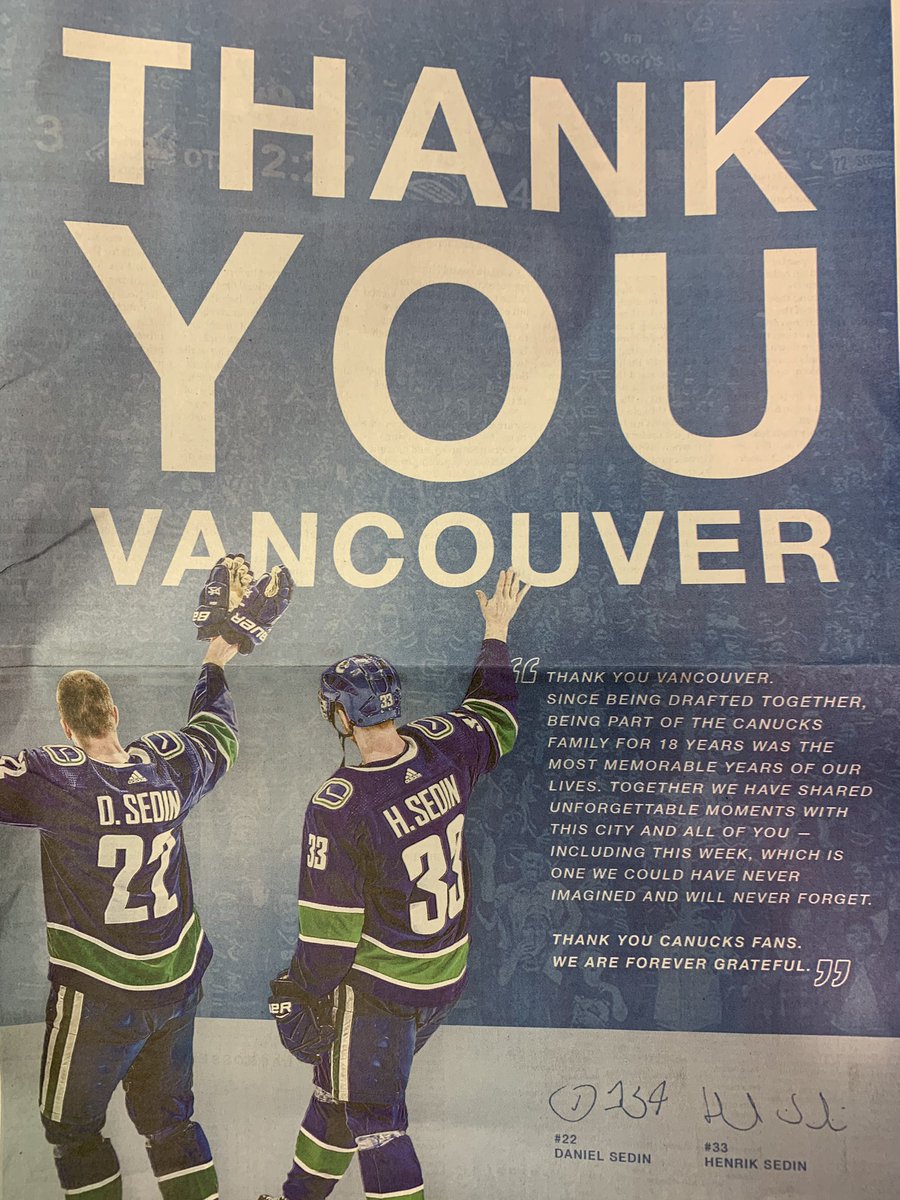
 

In all the years that I have followed various professional sports in the Vancouver area, I think the only other professional athlete that took out a full-page ad was one of their teammates, Roberto Luongo after he was traded back to the Florida Panthers after 10 amazing seasons for the Canucks.

I only hope that the Canucks organization show the same class they showed this season in tributes to the Sedins (retiring their jerseys) and Alex Burrows (Ring of Honour) and do the same for Roberto, the way they handled the goalie controversy with emerging Corey Sneider to become the starting goaltender over Roberto only to trade him for Bo Horvat left everyone’s head spinning, including Roberto who was then back to the starter and eventually traded to Florida to make room for current starter Jacob Markstrom to take the reins.

Roberto deserved better, like the Sedins, was one of Vancouver’s top players for a decade and also a great person.

#10 – The fact they continue to call Vancouver their home

Although some professional athletes return back to their birth cities, countries, they continue to reside in Vancouver and are raising their kids and still supporting current players, coaches, and other Canucks Organization members when asked.

I will never forget watching them play live or on TV over the years and just shaking my head in awe of their raw skill and their compete level.

Their short 3-5 foot passes while cycling, behind the back passes, innovators of the slap pass now common in the league or what wowed me the most were the full cross-ice saucer passes on their forehand as well as backhand literally dropping on their brother’s sticks was amazing to see.

Off-Ice, aside from all the great community work they did, I thought this (and still is) one of the funnier things they did, when they appeared in an NHL commercial to help promote the league after the lock-out season to regain their fan base.

Over and over again this past week former teammates, coaches, general managers, and sports journalists shared the top character traits of the Sedins were (and still are):

Goodness – Decency – Selfishness – Humility – Work Ethic – Leadership 

As coaches, please ensure that you focus on reinforcing these character traits with all of your players in lieu of just focusing on the outcome of a game as has become commonplace today with the focus of winning at all costs.

Our calling as coaches is not to make a living.

Our calling is to make a difference by developing youth into adults.

Kudos to the Sedins for their amazing career, becoming not only great players, but great adults before our eyes for 18 amazing seasons.

Kudos also to their original grassroots coaches that helped develop them into the adults they became to set the bar for so many kids as role models.


 

PS Tagline - Dont be a kids last coach


The Costs of Going ALL IN

Posted Posted in Athlete, Coach, Early Sport Specialization, Organization Executive, Parents

The Costs of Going ALL IN


This week we came across an article and W5 Episode that aired last spring highlighting two families where they have gone all in to support their kids in chasing their dreams of playing NCAA on full-ride scholarships, national teams or professionally.

In the first of three-part series, they focused mainly on young hockey players and ended with an interview with the chief executive officer of a marketing research company based in the US that focused on the costs of youth sport participation not only in the US but internationally.

Their findings had my head spinning and although I have always encouraged players to chase their dream whatever they aspire to (regardless if it is sport, music, drama, academics) but what this 3 part series showed is a reflection how so many families are chasing the dream it has lead to youth sports exploding into multi-billion dollar industries primarily in Canada and the USA with no signs that it will slow down anytime soon.

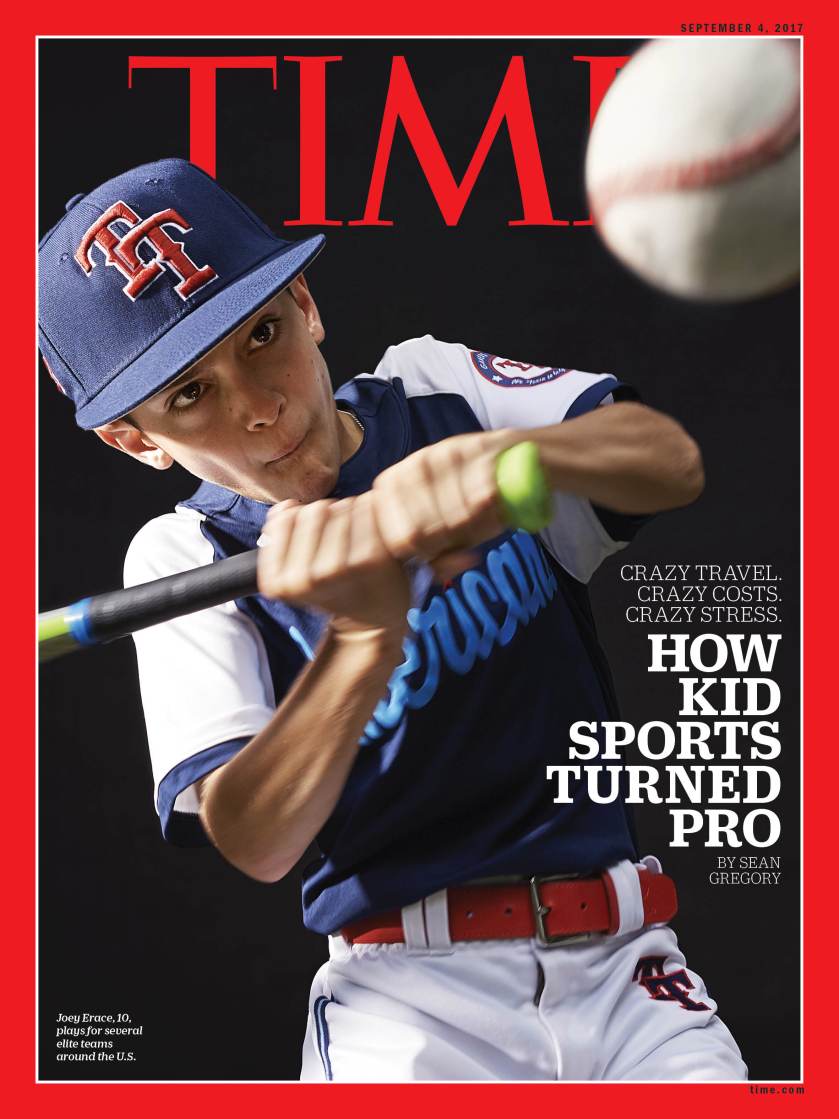
A couple of years back Time Magazine’s front page highlighted that the US Youth Sports industry had then exceeded $15 Billion USD (approx. $20B CDN based on current foreign exchange).  The highlight of the article was a young baseball phenom appropriate nicknamed Joey Baseball

The article and spin-off videos highlighted how Joey Erace, then 10 years old, and his family were chasing the dream for him to play MLB.  He was playing on multiple travel teams, getting private one on one instruction for pitching ($100/hr), one on one fielding sessions ($100.00/Hr), had his own home batting cage, was getting sponsorship offers, over 24K followers on Instagram and even being asked for autographs from fellow aspiring young kids who were following him.

His life had evolved to baseball, baseball, baseball.

All this at 10 Yrs. Old?

Fast forward to 2019 and the US Youth Sports Industry had grown to over $17 Billion as a result of more and more players and their parents continuing to chase the dream to reach those lofty goals of representing their countries on national teams, getting NCAA scholarships, what is now multi-million salaries in various professional sports and possibly the Olympics.

Coming back to the W5 episodes shared last Spring, the marketing research firm WinterGreen whose chief executive Susan Eustis was interviewed at the tail end of episode one shared that the Canadian Youth Sports Industry in 2010 was $1.2 Billion, had grown to 5.2 Billion mid-way point of the 2000’s but in 2017 had climbed to $7.6B and last reported number for 2018 was a staggering ….


$8.7 BILLION DOLLARS!!! 

THAT’S OVER A 400% INCREASE SINCE 2010


Based on the current exchange this is approx. $6.5 B USD.

Compare that to the USA with 9X the population of Canada (327 M vs. 37M) whose last reported number is $17 Billion USD

As a result, Canada’s youth sport participation costs are the HIGHEST cost per capita than any other country in the world.

Highlighted in the episodes were two youth sports players and their families who were all in as either a hockey or soccer family;

Ethan Mcfarland – 14 years old at the time the episodes aired who aspires to get a full-ride Michigan State Scholarship to play NCAA Div 1 hockey and be drafted and play in the NHL.

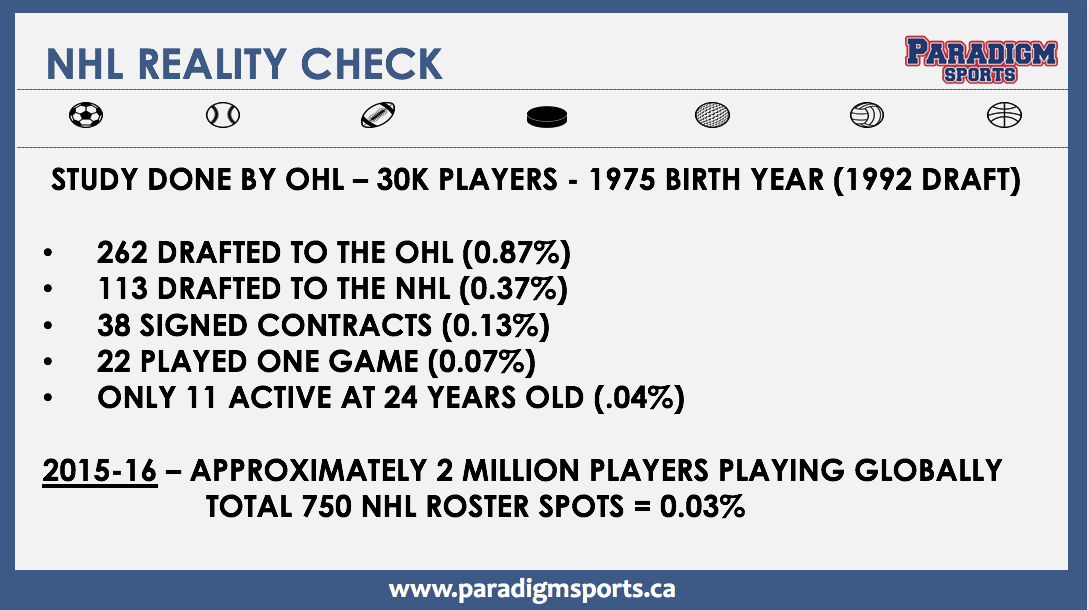
No different than many kids have growing up in prior generations, playing shinny with their buds on frozen lakes, outdoor ice rinks, stick and puck for hours on end BUT the sad reality is 0.3% of those will reach that level as I have shared out in talks across Canada.


The cost for him to reach that goal is he has abandoned what all the powers that be and sports medicine research has shown is multi-sport participation so he becomes the best athlete he can be.

He also has a modified school course load geared specifically for “elite” athletes as a hybrid to homeschooling so he can make it to all of his shooting, skating, puck control sessions both on and off-ice in addition to sessions with Psychologists, nutritionists, custom skate, stick equipment manufacturers

All the while his parents seem to be nonchalant about the fact to support doing all of this is costing them tens of thousands of dollars a year much like thousands of other kids across Canada that are doing the same to chase the dream.

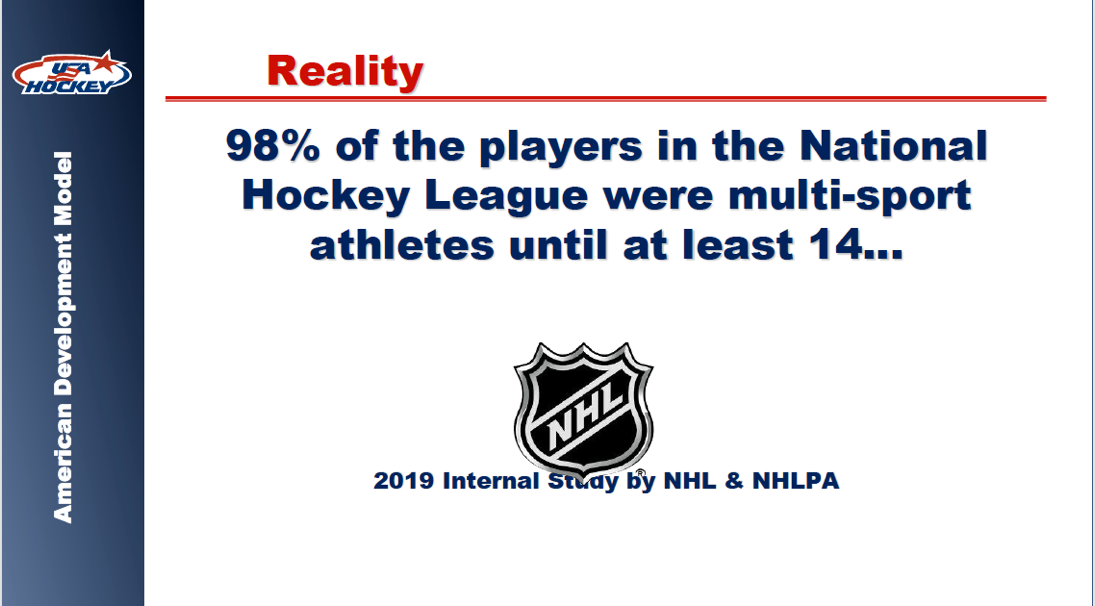
Probably one of the best data sets that I can provide to hockey parents to reinforce the importance for their kids to avoid this excessive time and financial commitment to focus on hockey, hockey, hockey is the NHL players association was surveyed last year and as Ken Martel (technical director for USA Hockey) shared with me and has now shared with other sports orgs, below is a slide from presentation he did for New Zealand Hockey (yes they play hockey in New Zealand)


Another statistic – Since 2010, there has been a 63% decrease in full-ride scholarships offered to Canadian born players to play in the NCAA which is a direct correlation with the ADM model in the USA, more and more US-born players are being recruited for those scholarships vs. past years seeking Canadian born players.

The other family highlighted was the Nicolazzo family whose three children, Xavier (7 at the time), sister Kiarra (10), and older brother Romero (13).  Their Dad Frank coaches both boys teams.

Year-Round Soccer, Soccer, Soccer, every day all year long including indoor session when Canada’s winter kicks in including playing on numerous travel teams costing tens of thousands of dollars every year.

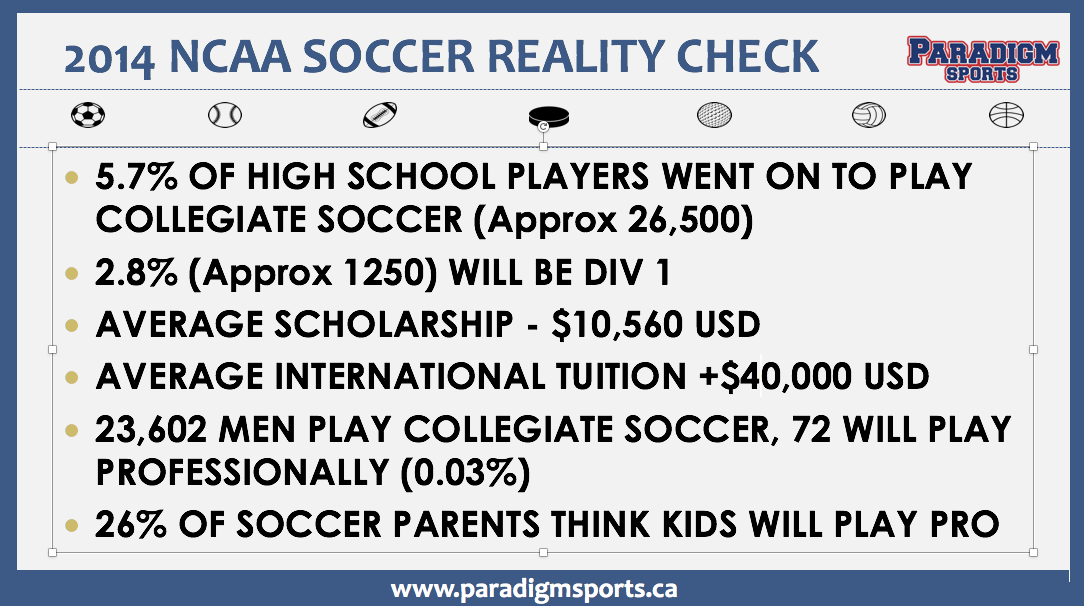
REALITY CHECK – a colleague of mine shared me the soccer statistics which I reciprocated with hockey a few years back regarding NCAA/Professional path of US Soccer Players


As admirable as it is for all three of their children to chase the dream, like Hockey, the reality that they will reach that level is a longshot at best and depends on so many factors for all the stars to align.

The sad reality for both families and their kids who are rolling the dice and going all-in with one sport year-round as early as 7 years old is there is a very strong possibility that one or all of the issues below may happen;

  1. Kids are suffering pressure as early as 9-10 years old W5 highlighted in their episode.

Shouldn’t 9 -10-year-olds be playing a game for the sake of it, not feeling the pressure to reach a lofty goal 10 years or more down the road?


  1. All the research and data shows that these young players may quit (62% in the US are quitting by age 11, 70% by age 13 with similar trends in Canada and many other nations) due to pressure, burnout, not having fun as a result of focusing on winning at all costs chasing the dream because they are not having fun


  1. They may suffer a season-ending, worse yet a potentially career-ending injury like multiple concussions, tears of ulnar, medial, anterior cruciate ligaments


  1. May suffer depression, anxiety IF they make it to the NCAA, pro-level as they were deprived of a normal childhood which has been identified by many NCAA athletic directors is a major issue of new players coming into their programs now vs. a decade ago


  1. Worse case –  may consider, or actually do commit suicide as there has been a 56% increase in the suicide rate the last 10 years from 10-24 years of age. If you don’t think this is a reality, I personally know of 3 kids who committed suicide, the third happened to be the brother of one and cousin of two other players I coached so really hit me hard.  This stat was shared by Corey Hirsch, advocate for mental health and the Hockey Talks program the day that Tyler Motte shared he is dealing with depression and anxiety issues with amazing support by the Vancouver Canucks.  Why?  Because 7 years ago Rick Rypien committed suicide as a result of similar mental health issues stemming from the pressure to perform.

All of the above aside, many of the single-sport players I have interacted with as they got to older levels (15+) stopped smiling, stopped laughing, appeared methodical, robotic when they came to training sessions, games, other activities.

Why?

Because they lost that original love for the game they had which many parents argue with me is the reason when they support their kids to play year long, pay for all kinds of development the grind of playing one sport all year long starting as early as many kids do today became a job.

When they originally started down the path did they ask if they could WORK hockey, soccer etc?

No – they asked if they could PLAY hockey, soccer etc.

Last but not least, in the event that you have not been following business news of late, many countries are looming towards another recessionary period so the tens of thousands of dollars that parents are spending each year, much of which via credit facilities including second mortgages, credit cards, lines of credit will put the entire family in harm’s way if one of the dual incomes is lost to downsizing.

Is it really worth taking that risk going all in with one sport?

In lieu of looking at youth sports as a return on investment, we should be looking at all the other benefits it provides, developing character, valuable life lessons, healthy (both physical and mental) lifestyles, friendships, social skills being part of teams, being well rounded and becoming the best ATHLETE they can be.

If at the end of the day they are one of the select few to reach the level of NCAA, National or professional level then that is just icing on the cake.

Let’s all work together to bring the game back to the kids ….. where it belongs.


How to Coach the Alpha’s

Posted Posted in Athlete, Coach, Early Sport Specialization, Organization Executive, Parents


We previously posted “How to Coach Generation Z” based on our experience coaching kids born as of 1995 to 2009 (post-Millenials Gen Y born as of 1984) and gone are the days where a generation was 30+ years, now they are 15 due largely to the exponential growth of the Digital Era.

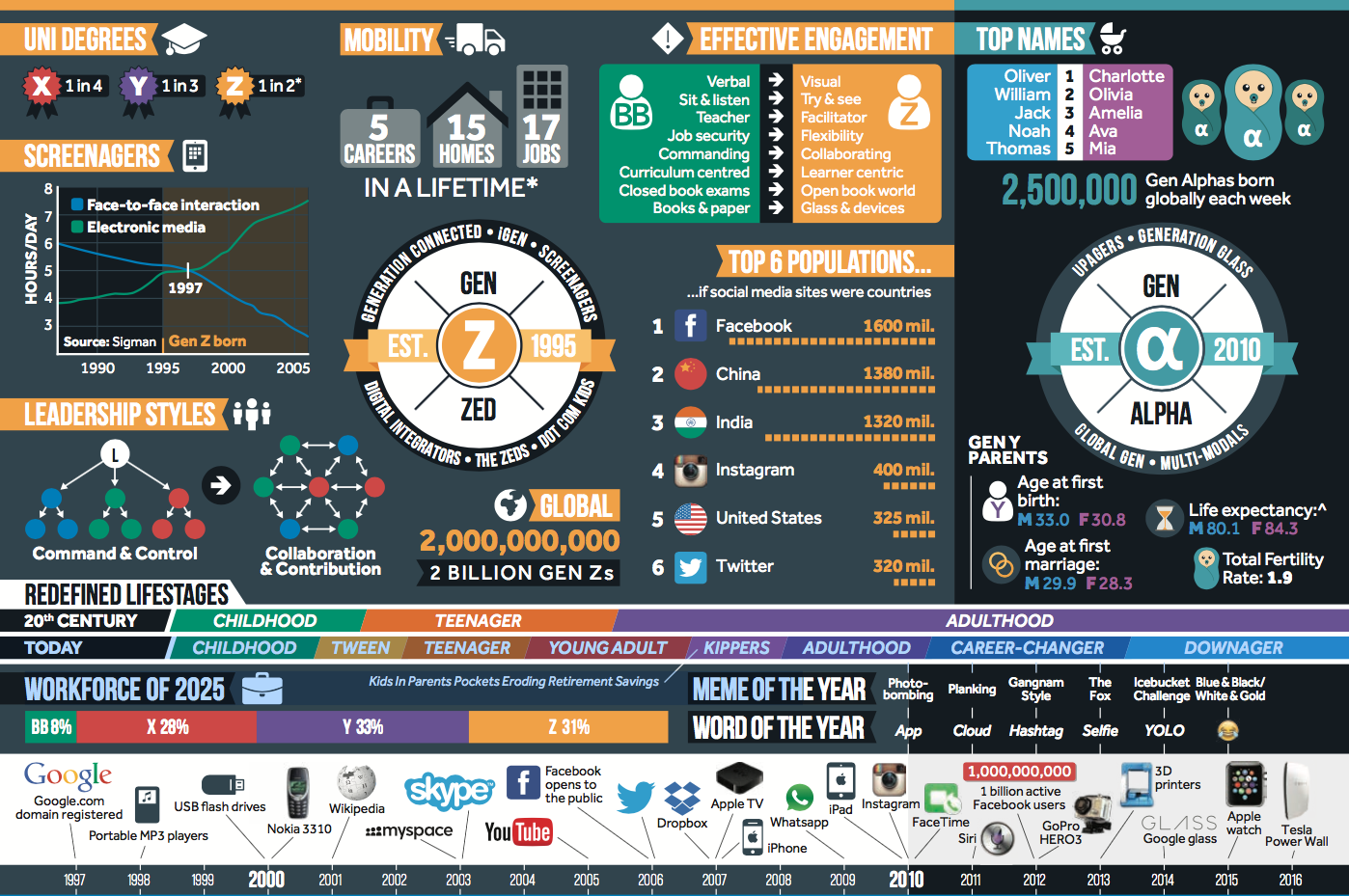
Below is a great infographic produced by McGrindle in Australia that compares Gen Z to the next Gen Alpha’s (will next gen be the Bumble B’s?)

As I highlighted about Gen Z, some of their key differences from the Millenials is they grew up completely in the digital era starting with the introduction of Google in 1997 and the Alpha’s generation born entirely in the 21st century with life expectancy in the 22nd century.

So Who are the Alpha’s ?

The year of Gen A, are ones born as of 2010 to 2025, which coincidentally was year that the iPad (and other tablets since) were introduced and became babysitters of the iGeneration, like Baby Boomers kids who watched Disney VHS Tapes (anyone remember a VHS player?).

It is also the year that Instagram was introduced, Gen Z and now Gen Alpha’s preferred medium for social media networking vs Millenial and Baby Boomers Facebook preference so if you are coaching and using social media for team updates, time to come up to speed with Instagram.

Parents of Gen A are the infamous Millenials that Simon Sinek and many others including yours truly feel we as adults let down that led to their “sense of entitlement”, participation trophies, and dopamine fixation with screens (smartphones, tablets, video games, computer screens)

Having grown up on iPads, accessing Google and Youtube with vigor, they have the ability to absorb information at record paces even beyond their Gen Z counterparts.

What they are lacking, however, due to increase screen time and parents reliance on same (even when they are at dinner by themselves I see couples pulling out their phones only to “chat” with their online counterparts than the very person they are sitting across or beside) are basic social skills prior generations had.

As they spend much more time one on one playing games on their phones, tablets as their “babysitters” vs. stay at home Moms to feed the neighborhood kids after playing outside for hours on end (can’t afford to do so) or being at daycare with others they also have been deprived of unsupervised Free Play.

Unsupervised activity outside where they previously developed the core motor skills we all took for granted, running, biking, swimming, throwing, catching, falling, getting up, jumping, climbing and so on.  It amazes me how often I talk to coaches of the Gen A’s from 5-9 years of age who share how few of them can do all the basic motor skills, but worse yet, how they struggle to overcome adversity, lack problem solving, creativity and ability to make decisions with direct instruction.

Why?

Because they have not played for the sake of playing, all of their activities are structured and their former active play time we had as kids has been replaced by inactive screen time on average 7.5 hours a day.

Here are some things that you need to know about the Alpha’s so that you can connect with and coach/teach them better:

#1 – They are the most diverse cultural generation EVER in North America

As of 2010 census bureau and Stats Can surveys, as a result of aging populations, the growth to both USA and Canada has been via immigration from across the world.  This in itself is leading to challenges with verbal communication if the alpha’s are still speaking their native language at home and English is a second language so more than evet coaches and teachers must rely on non-verbal communication (which represents over 80% regardless of the words coming out of your mouths)

#2 – They are even more digitally literate then they Gen Z predecessors

“Generation Alpha is part of an unintentional global experiment where screens are placed in front of them from the youngest age as pacifiers, entertainers and educational aids.”

Mark McCrindle – Australian Futurist

In my day, pacifiers were call “susses” and they were only given to kids who were going thru really bad teething and a trick used by many parents was to dip the suss in whiskey to ease the pain for babies and permit them and their parents to sleep.

In the case of Gen Z, as a baby boomer parents of two Gen Z “kids”, my wife and I avoided giving either of my susses as I knew how dependent some kids would be on them and remember seeing some kids with them a 5-7 years of age when I started coaching hockey and softball. I also avoided giving both any electronic devices until they were teens, including their first cell phones at 15 years of age and even now we do not permit any electronics at the dinner table for face to face conversations as well as curfews for use and total time.

Did we face scrutiny from other parents as a result?

Yes.

Do you know who also raised their kids tech-free?

The two whose livelihoods and companies they created dominated the digital era, Bill Gates (Microsoft) and Steve Jobs (Apple)

Hmmm ….. both when interviewed stated they limited to ensure that their kids used technology in moderation so perhaps the Millenial parents now could do the same?

#3 – Their parents will be the oldest and most educated of ANY generation

On average mothers will become mothers for their first in their early 30’s (vs. late 20’s for the Baby Boomers) and first-time fathers a few years older into their mid 30’s

What this means for coaches, many of which will be parents starting out coaching their 5-9-year-old kids in various organized sports that have been adapted for age-appropriate programming is coaches will need to understand the importance of engaging parents more than ever.  The parents will also EXPECT the reasoning for seasonal planning to be supported by the science, not old school coaching practices this is the way we have always done it.

They also will seek measurement tools to prove that their kids have DEVELOPED, not rely strictly on results on the scoreboard to ensure that your seasonal planning incorporated baseline, mid and end of season testing.

This includes communicating what is Physical Literacy, Fundamental Movement Skills, the various stages of the development pathways so the Millennial parents understand the reasons for the madness so to speak why we no longer play full ice or full field games, incorporate small area games and skills stations in practices and competition is pushed to later age groups.

This is why coaches and board members of all sports must implement parental support and engagement vs. the current us vs. them or dealing with parents.

#4 – The Alpha’s are the age group that literally coincide with the introduction of LTAD models by the majority of National Sports or National Governing Bodies as of 2010

These have been identified by various LTAD adaptations (as Sport for Life has recently released v. 3.0 and NGB’s have their own variations like Hockey Canada’s LTPD, USA Hockey and many other US NGB’s AGM) as Active Start (0-4 yrs old) and Fundamentals (5-8 yrs. old). The emphasis for these age groups is focusing on Physical literacy and Fundamental Movement skills.

Although LTAD models have been around now for a couple of decades, for whatever reason there are various versions LTAD, LTPD, LTAD, ADM and updates with the latest version now being introduced by Sport for Life called “Long Term Developing in Sport and Physical Activity 3.0” The reason they omitted athlete for v. 3.0 is they did not want it to be a reference only for athletes, but to promote physical literacy for all people to be active for life BUT there are still sports orgs and grassroots coaching catching up to the concept of 1.0.  If Nike changed their swoosh every few years do you think they would have the same powerful brand and consistent messaging they do today?  Just my two bits.

#5 – Like their Gen Z counterparts, they have the attention of a flea (less than 8 seconds which is the attention of a goldfish)

What this means – Cut to the Chase QUICKLY, avoid board time at all costs with Initiation (5-6), and Novice (8-9 yr) age groups, keep your instructions simple and better yet DON’T coach, let them figure it out by providing general guidance for disguised drills

Many national sports orgs now have “an APP for that”, video, audio, drills you can share via email, text or show directly on phones, tablets or better yet, dongle right to TV’s.  Embrace the technology that the Alpha’s know very well to help you coach and connect with them.

Below are just a few examples how National Sports Organizations have adapted their coaching certification programs to guide coaches how to coach of Generation Alpha to coincide with their version of LTAD programs they have recently or are going thru revisions on since 2010:

Baseball Canada Rally Cap Program – Initiation to Baseball (first phase of LTPD)

The main reason kids were quitting T-Ball or early years of baseball (which I did coach) was the kids did not have fun, largely in part to the lack of movement or engagement, standing in lines to take their turn to hit in practices, also due to fact the kids did not have the core skills needed to throw, catch, run, slide, hit.

The focus of the program is to help kids understand the fundamentals of the game while having FUN vs. the old t-Ball program.  Check out the great video Baseball Canada made of a Rally Cap Session in one my many stops growing up a kid in the outskirts of Montreal, Lasalle.


  • 5 More touches
  • 15X more hits
  • 5 More Steps
  • More Dynamic
  • More Movement
  • More engagement
  • 3X more positions played

The Best Part – Kids want to come back after each session as they had FUN.

USA Hockey – ADM Model and Hockey Canada LTPD (Long Term Player Development)

Both now have incorporated that we highlighted in Cross Ice Hockey Benefits (smaller area of ice surface leading to similar results as the Rally Cap program for more puck touches, contact confidence, shots, passes, saves etc.)

Next Season, both USA Hockey and Hockey Canada will be rolling out revamped development programs for the Atom age groups (9-10 years old) which coincidentally coincides with the first Gen Alpha’s entering those pathways who were born in 2010.

Both National Organizations have introduced Digital APPs to help coaches to better connect with the iGeneration of kids they are now coaching also

Soccer Canada LTPD

Soccer Canada now has mandatory age-appropriate coaching certification for all age groups, including the Alpha’s with their first two of four community stream clinics (rec level) and incremental licensing for competitive levels

  • Active Start – U4-U6
  • Fundamentals – U6-9 (boys), U6-8 (girls)
  • Learn to Train – U9-12 (boys) and U8-11 (girls)
  • Soccer For Life – 13+

As John Herdman, Head Coach of Canada’s Men’s National Soccer Team, shares in the LTPD Grassroots highlight video by Canada Soccer, the principals are there, that 5 to 12, is to FALL IN LOVE WITH THE GAME.

Many other sports organizations are implementing similar models so they can ensure that their coaches have the tools to coach the next generation of Alpha’s so they have fun and love the game more at the end of the season than they did at the beginning.

PS Tagline - Dont be a kids last coach

 BONUS – Download a FREE printable PDF of this blog HERE

When the NHL dream comes to fruition

Posted Posted in Athlete, Coach, Early Sport Specialization, Organization Executive, Parents

BONUS – Download this Blog in PDF Format HERE

Having been a fan of the NHL since I literally came out of the womb, and for the First 3rd of my life growing up in various suburbs of Montreal, QC and every other city thereafter having a hockey rink it became a dream of mine like any other kid growing up to be like my idol and play in the NHL.

We dreamt of scoring that game-winning goal in double OT to hoist the Cup or making the save to keep the game or series alive, making that blocked shot to prevent the game winning goal, making that pass to set it up, making that big hit to get momentum and the list goes on.

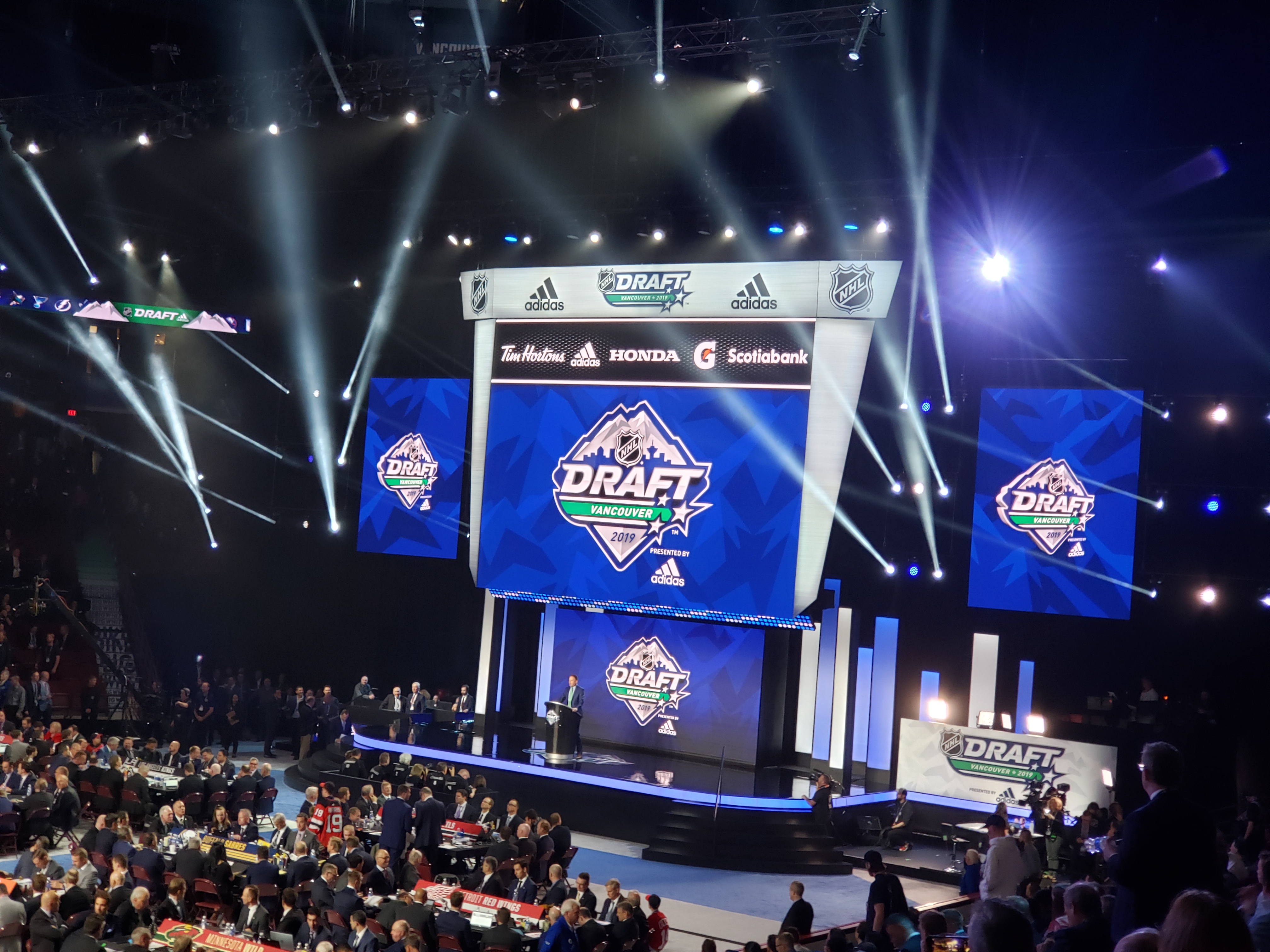
Most of those dreams as was shared in the recent NHL draft that I was fortunate to receive a last minute ticket to attend for the first time, when player videos were played on Rogers Arena big screen of the time the kids being drafted in the first round spent on their backyard rinks, outdoor rinks, ponds or mini- stick competitions in their basements as I did as a kid.

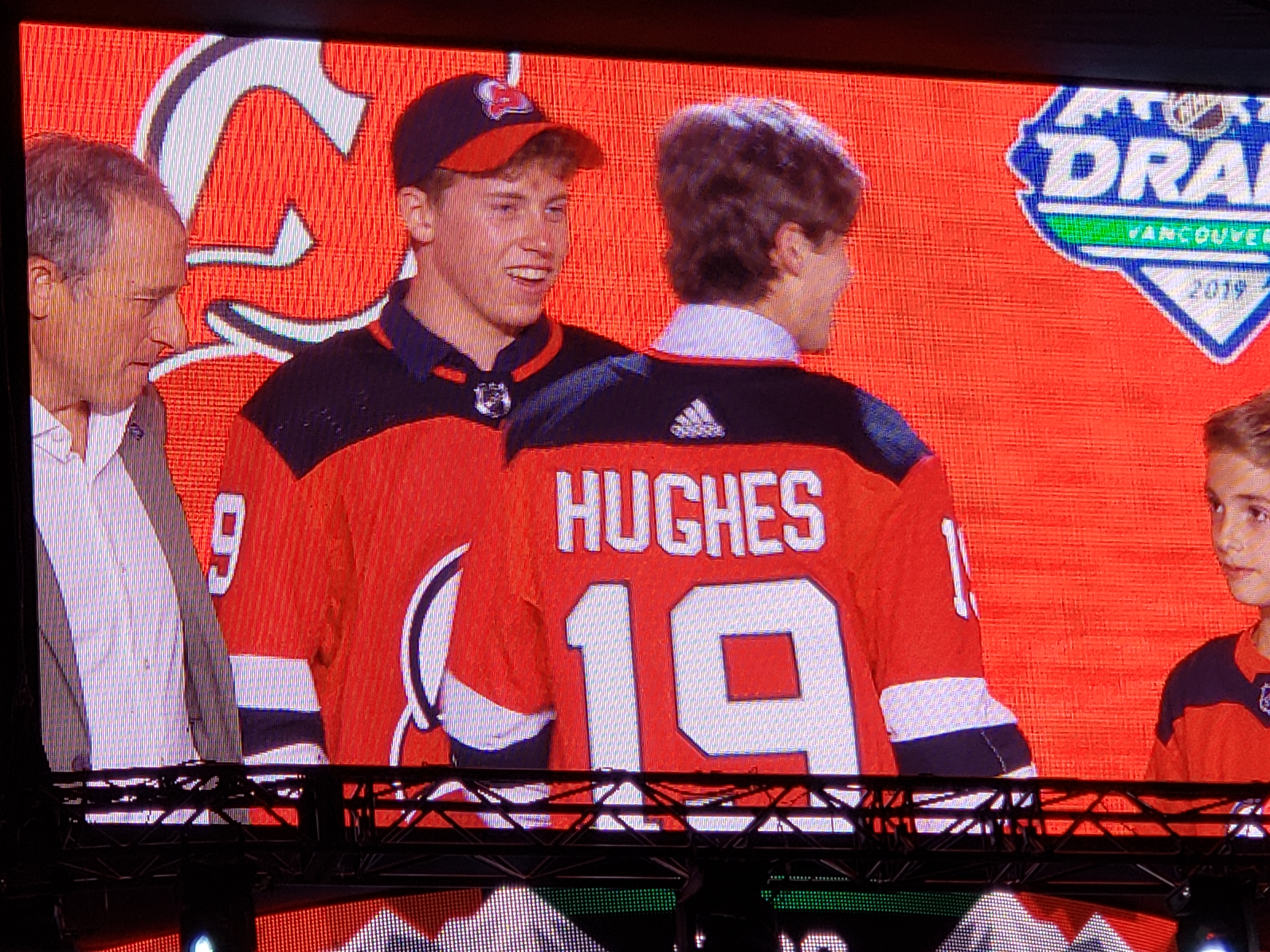
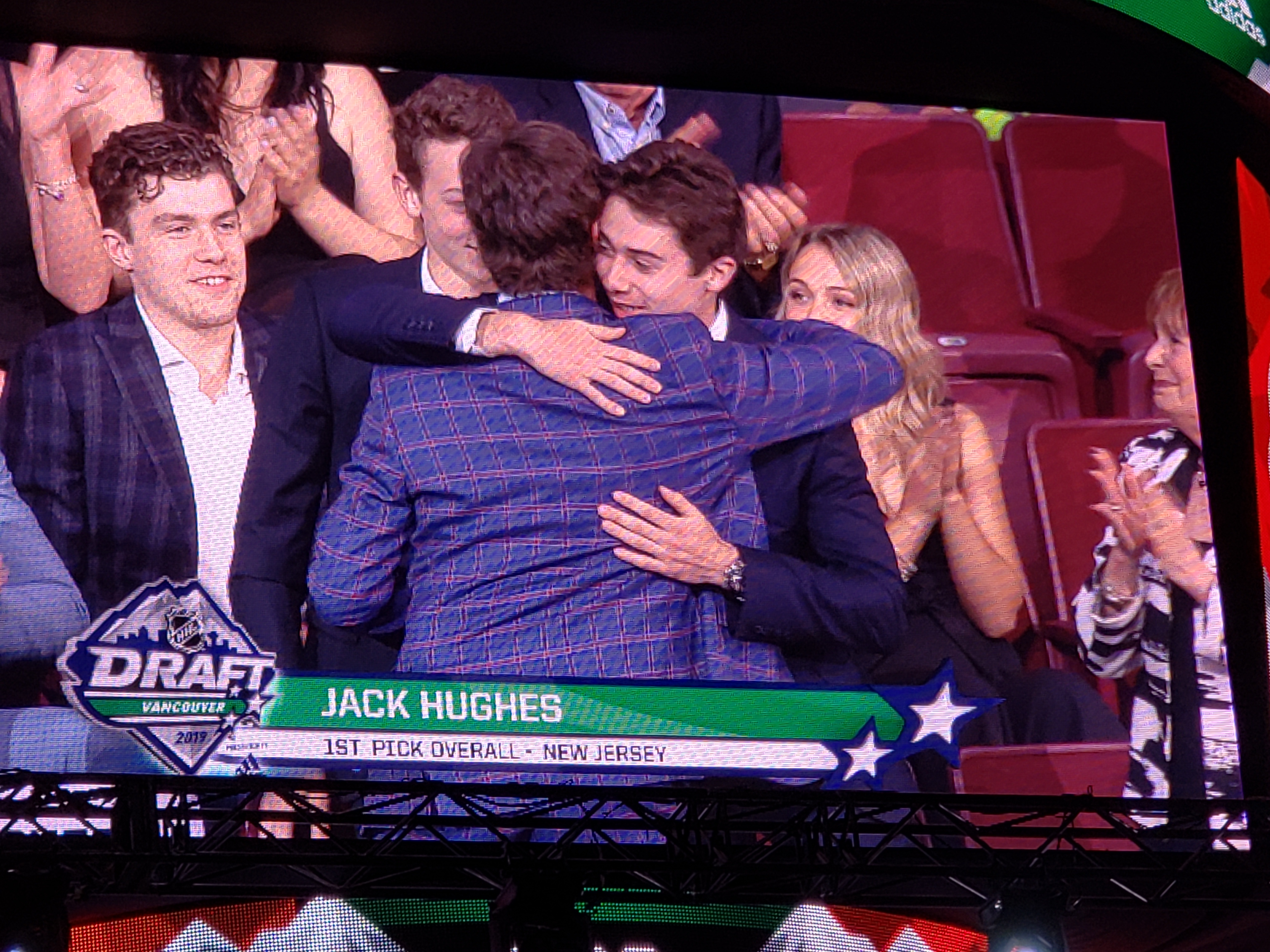
In the case of this year’s NHL draft, another of the Hughes brothers was drafted in the first round to follow his older brother Quinn who was selected as the 7th overall pick in the first round by our home city Vancouver Canucks.

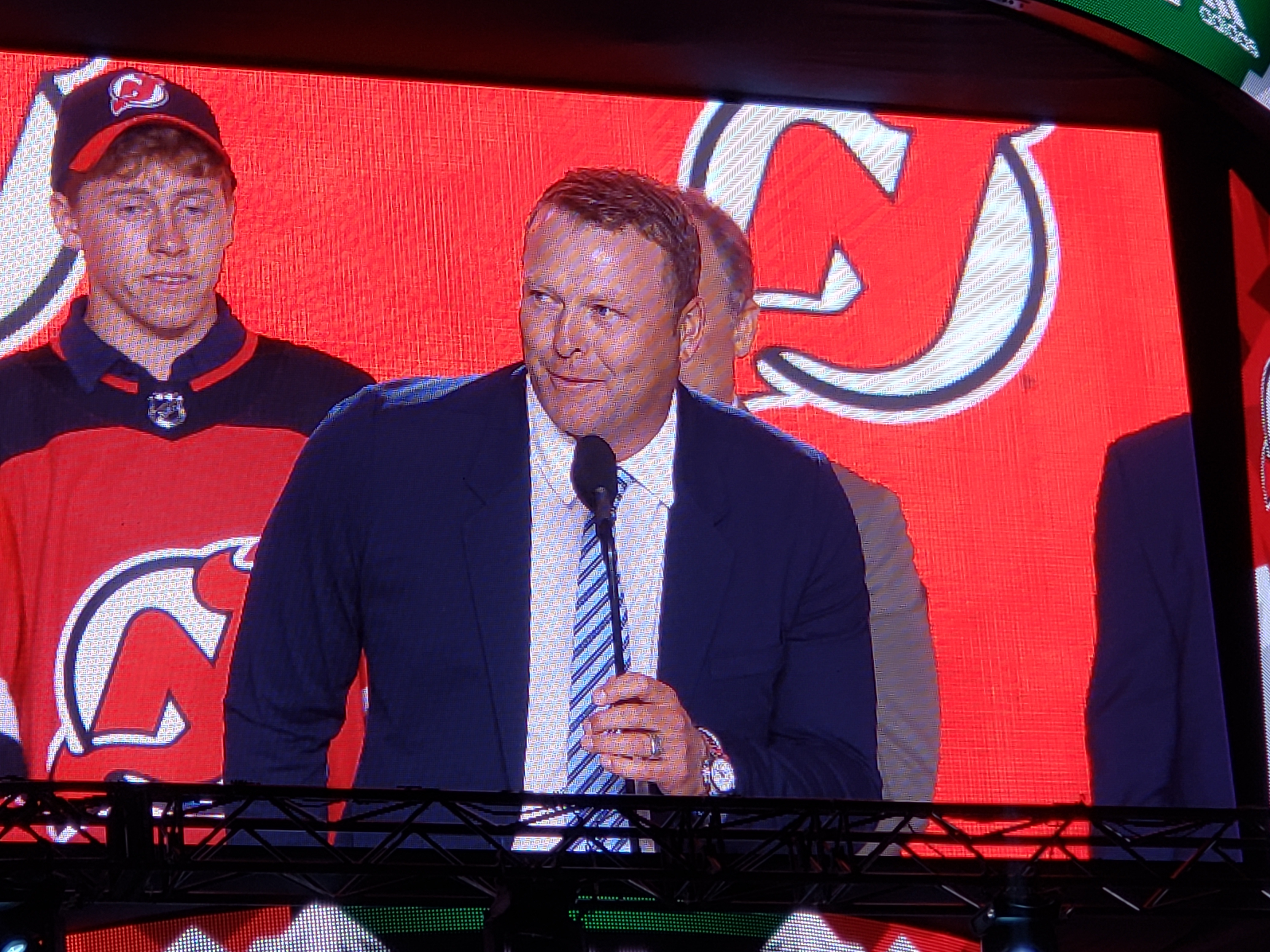
This time, it was Jack, who was pegged for most of this season to be picked 1st overall and the New Jersey Devils, announced by one of the greatest goalies of all time and hall of famer Martin Brodeur.


Back to back years where brothers and parents hugged in the stands where all the players sat with their families waiting for their names to be called by one of the 31 teams with all of their senior management, coaches and other personnel amassed on the floor of Rogers Arena


Although two of the three Hughes brothers drafted in to the NHL thus far (the next projected to come to the NHL is Luke), participated in the US NTDP, until that point they experienced playing on outdoor rinks (the epitome of free play) and their organized minor hockey in Toronto, Canada as their dad worked with the Leaf’s and other Hockey organizations.

The very same coaches that I have worked with facilitating Hockey Canada NCCP Clinics for BC Hockey but their Ontario counterparts are the ones that were instrumental in developing Quinn’s and Jacks passion for the game and initial development of their core skills.

Like the other Canadian players who were drafted, Quinn and Jack had very similar experience playing mini stick, on outdoor rinks or ponds, minor hockey in the GTHL then their junior path was US NTDP vs. Junior A or Major Junior

Listen to the podcast below to get more insight from the US NTDP U18 head coach who shares insight on the various players before they were selected in this year’s draft (including Montreal’s pick Cole Caulfield who they stole at 15)


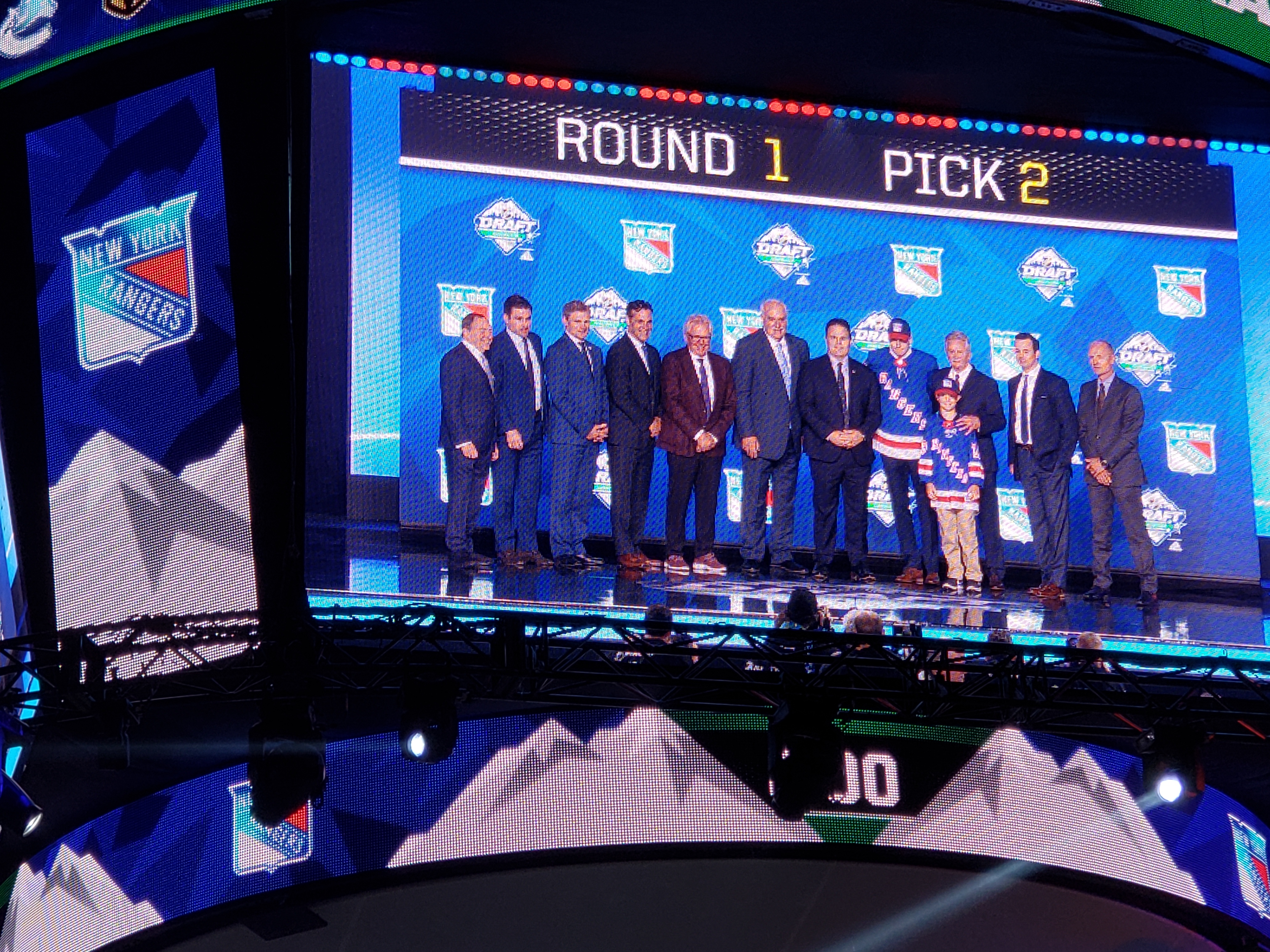
The second pick by the New York Rangers, as suspected, was for Kappo Kakko, the Finnish phenom who played on the Finnish U18, World Junior and World Championship Gold Medal teams this past season.


Similar to 2016 when Auston Matthews (USA) was the #1 pick by Toronto, then Patrick Laine (Finland) the 2nd overall pick by the New York Rangers so game on, as both teams are in the same division, we will see these two young players playing each other for years to come.

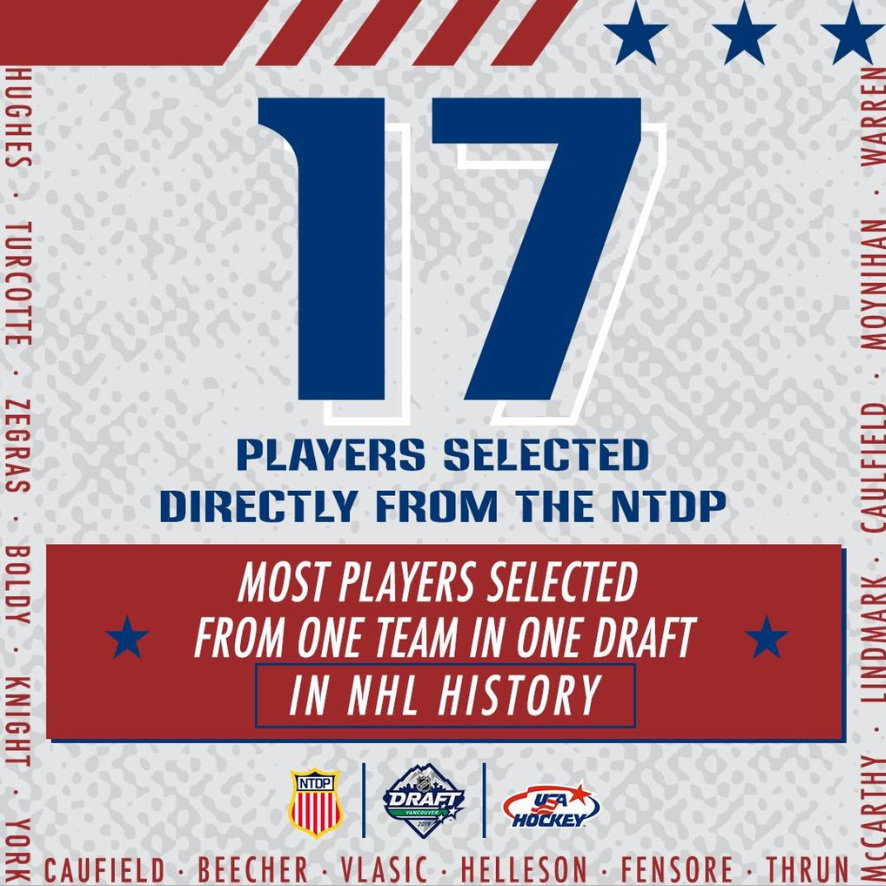
What was different about this draft, however, was the number of other US born players that were selected in the first round, 8 from National Development Team (7 in the first 15 picks), three others were born in the USA that was also chosen the first round, 5 others in additional rounds for a total of 13 (62% of the players from the NTDP U18 team)

Compare that to Canadian players, #3 – Kirby Dach – WHL, #4 – Bowen Byram (WHL) and 11 others for a total of 13

Others chosen not from the NTDP or Canadian (the exception being Thomas Harly with dual citizenship

1 other from the USA – USHL

1 – Dual Citizenship (Canada/USA)

2 more from Finland

4 from Sweden

1 from Russia – think back in the 60-70-80’s when the Red Army Dominated Internationally

1 from Germany

When I talked to Ken Martel for our online summer event, he shared that this year’s U18 US NDTP was a special group of players and they did anticipate several to be drafted in the first round, I think he and rest of USA hockey staff are sitting back and doing the same thing I did…. especially once all rounds completed, 17 were drafted.

WOW with a sense of pride like many of the parents who did the same when their son’s names were called.


So what makes the US National Team Development Program unique and lead to so many players being drafted in the first round from ONE team?

#1 – With the exception of Jack who played all his minor hockey in Canada, this year’s group are all players that went thru the US American Development Model (ADM) which adheres to age-appropriate training, small area games, and cross-ice hockey for the earlier age groups (from 5-8 years of age), endorsing multi-sport participation and FUN.

The ADM was implemented by USA Hockey in 2009 when all of the players from this year’s draft class would have been 7 years old.

#2 – Coaching certification – they all benefited from coaching certification programs in either Canada or the USA.

All of Quinn’s and Jacks Minor Hockey Coaches would have been certified thru the NCCP Hockey Canada program and all the other US players benefited from one of the top coaching certification programs in the USA to coincide with the roll-out of their ADM model in 2009.  The majority of other sports in the USA have less developed or no coaching certification programs at all as they don’t have a centralized coaching certification program as we do in Canada.

#3 – Unlike all the Canadian and International players that come to Canada to play in major junior or Junior leagues playing on multiple teams, the U18 and U16 US NDTP are national teams that train and play in all tournaments and stay together as a group annually so they develop chemistry, competitive spirit vs. Canada’s “all-star” teams that are formed a few weeks prior to participating in international events.

Did Quinn and Jack get the best of both worlds then?  Playing minor hockey in Canada than being selected to the US National Development program where they moved to Plymouth, billeted, went to school and trained with their teams?

The closest equivalent in Canada would be the explosion of academies where kids play on U15, U16 or U18 teams, go to schools together, the billet in same neighborhoods etc.

In BC/Alberta alone, there are 14 academies as members of the CSSHL (Canadian School Sport Hockey League) now with bantam prep, bantam varsity, U16, U18 boys and now girls teams with an annual bill to parents anywhere from $15-40K


A few other things jumped out for me when I was watching the draft in person that you don’t get a true feel for when watching on TV;

# 1 – When each player was interviewed and aired on the big screen to fill the 3 minute time limit that teams have to make their pick, literally EVERY player said that the experience was surreal, it had not sunk in yet, that their dream of playing in the NHL was getting closer and many shared that they wanted to make an impact and help their teams.

Translation – they are Gen Z, and regardless if it is sport, business, school, having mentored many students over the years who work with us as interns, literally every one answers the question, where do you see yourself in 5 Years?

Answer – I want to make a difference and contribute.


#2 – In those interviews, they also would thank their parents, friends, coaches and others who helped them get to this special moment that showed how much it takes a village to raise a child.

At about the ½ way point of the draft (after the Habs picked), I went to get a snack and while walking in the concourse came across a group of those from the village, several Alex Newhook’s (Colorado) friends who flew in from his home town in St. Johns Newfoundland, wearing his various jerseys were screaming at the top of their lungs in celebration.

Another was a group of Moncton WHL Wildcats teammates sitting adjacent to us who also traveled across the country from Moncton, Nova Scotia who jumped from their seats when their fellow teammate Jakob Pelletiers named was called and drafted to Calgary.

Many of the other players shared how many friends and family were there and what the whole experience reminded me of was high school graduation, as each player went up to receive his jersey ( graduation certificate), family and friends sitting in the stands would celebrate.

It was similar to when I attended both of my kids (now adults) high school and university graduation ceremonies and all I could think about was how proud I was of both of them, similar to that of all the parents would be of these potential prospect NHL players.

For a fleeting moment I thought to myself it would have been great to have been one of those parents to have seen all of my sons hard work pay off over the years to be drafted to either the WHL or the NHL, but then I reminded myself he learned a ton, had fun (for the most part) and he is now playing adult rec (AKA beer league) and loving the game more than he did in the crazy days (when winning at costs prevailed for all kids to contribute but that is another story in itself).

The other thing I thought about was all those players I coached (hundreds over the years), only a handful have gone on to play junior, one is finishing his tenure playing major junior whom I thought potentially would be drafted to the NHL and would have been great to see him go up on that stage with others but it was a reality check just how hard it is to make it just to the NHL draft, let alone play.

Then as the draft finished up we walked to a local restaurant to have dinner and truly appreciated the moment when Alex Newhook and his family and friends walked up the restaurant we were at on the outside deck, we all stood up to give him a standing ovation and then quieted down when he approached the hostess and asked if it would be possible to get a table.

Two of the tables on the deck as did we stood up (we were heading out) offered ours so a teenager could celebrate such a special moment with his family as I did with my kids when they hit such special milestones.

I then headed to my car, my cohort headed to his hotel as was attending day 2 of the draft the next day.

Although such a small % of kids that play hockey will reach this milestone, and even if drafted, may or may not even play or have long careers in the NHL my friend shared with the reason why he loves going to the drafts is that is the time we as coaches can see when kids realize their dreams they had as toddlers, as Jack Hughes did and all those other first overall picks before him.

I am looking forward to seeing how the careers of this year’s draft class evolves.

I can then look back when they make team rosters and do all the others things that we dreamed about as kids and say to myself like all the other members of their villages and say to myself, WOW I was there when they got drafted and saw their dream come to fruition.

Don`t be a kids last coach

Bonus – Download this blog in PDF Format HERE


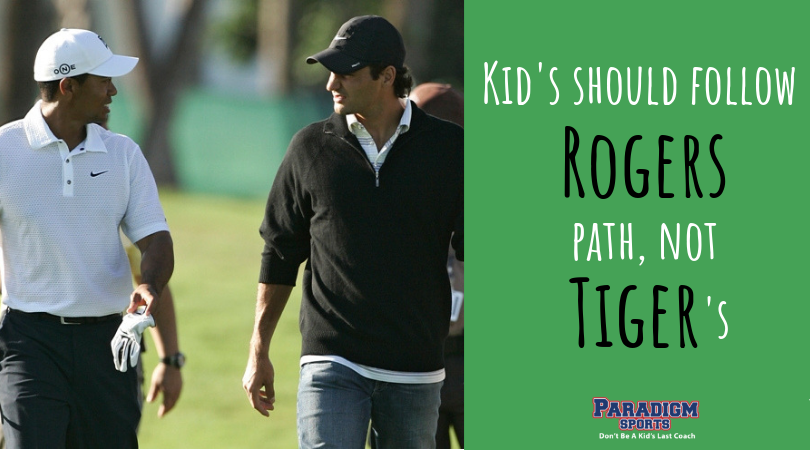
Kids should follow Rogers Path, not Tigers

Posted Posted in Athlete, Coach, Early Sport Specialization, Organization Executive, Parents

One of the questions that I ask speakers for our Love What You Play online events is if they have any books to recommend for coaches to read to help them become better coaches.

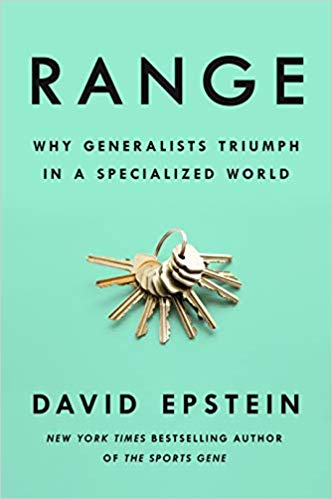
For the last 4 weeks I have been talking to another group of amazing speakers and many of which have shared that a MUST read for every coach and even parents, or anyone involved in youth sports segment is David Epstein’s second book, “Range: Why generalists triumph in a specialized world”, following up from his other must read “The Sports Gene”

In my interview with John Kessel, Director of Sport Development for USA Volleyball, who has been coaching for over 50 years, the last 3 decades coaching coaches, when I asked him for book recommendations he pulled many from his vast library and the last was Range that he waived in the air like a giddy kid and I countered “You got it (the Book Range) before me!!” (mine was en route).

I was originally made aware of his new book when David debated with Malcolm Gladwell regarding his 10,000 rule that has been a reference point since he wrote Outliers in 2008 where he admitted to David that he was wrong.

During the interview, David shares insight on his new book prior to its release in May and some of the anecdotes to further support his argument put forth initially in the sports gene that early sport specialization (10,000 hours) is the wrong path to follow (thanks largely to the research that David has done to prove otherwise).

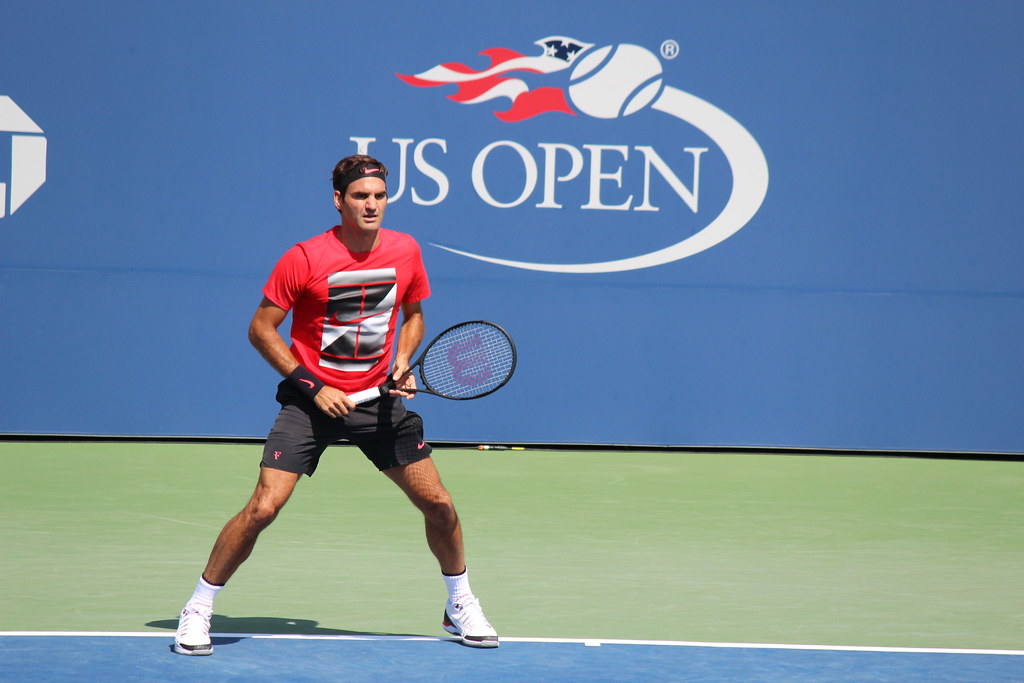
Initially, he was going to title the book Roger vs. Tiger and the first chapter of the book focus on the paths that Roger Federer and Tiger Woods took to reach the highest levels in their sports (Roger in Tennis, Tiger in Golf) but as he was doing his research in other sectors found many other examples why being a generalist was a better pathway to go.

There are so many other great nuggets in Range that I thought would be a great reference point for this weeks post, here are just a handful to entice you to order the book on Amazon and read to add to your toolbasket;

#1 Roger vs. Tiger


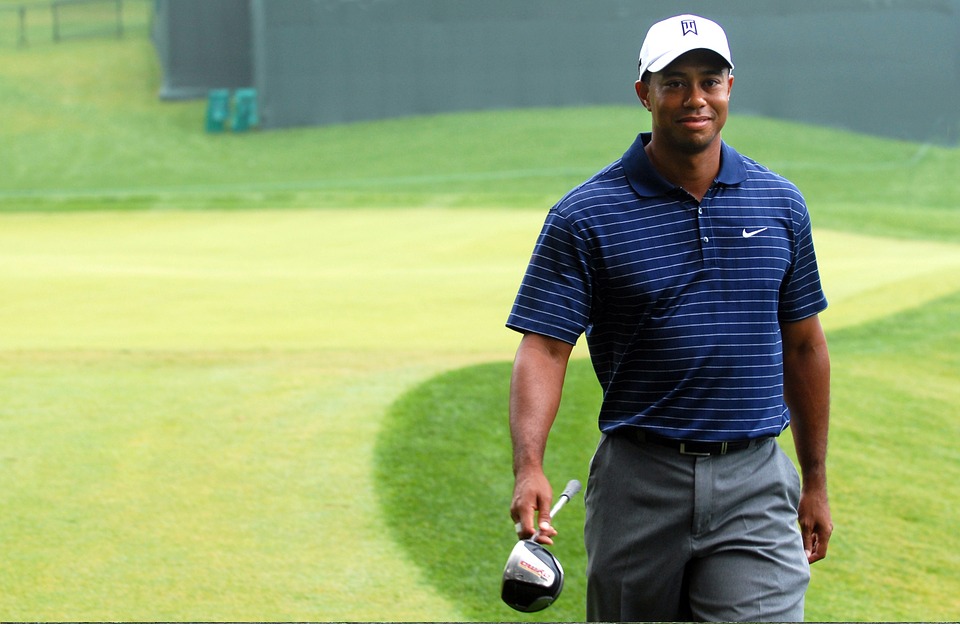
The story of Tiger Woods path to becoming one of the greatest golfers of all time has become one of the driving reasons why so many kids start to specialize in sports early, going back to when he was on the Bob Hope Show at 2 putting, his smooth swing at 5, starting to win tournaments soon after, the US Amateur and hit the tour with vigor after being a standout at Stanford for their golf team.

His father, Earl, identified early on that Tiger had potential as he himself was a high-level athlete himself, played collegiate baseball as the only black player in the conference but also a member of Army’s elite Green Berets and felt from his early childhood that Tiger “was the chosen one”.

I will never forget watching Tiger play in his first major tournament, the 1997 Masters championship with such a powerful swing and distance on his drives he shattered the record with -19 (a record to this day), winning by 12 strokes over the rest of the field. Although Augusta’s design had not been tweaked since Bobby Jones designed, the Masters’ organizers added distance to as many holes as they could to “Tiger Proof” the course.

Tiger went on to win 15 majors and 67 PGA events (81 total), now second to overall to Sam Snead but it has not been without adversity.

Early in his 30’s, as a result of playing golf as his one and only sport since a young boy, his body fought back, where he suffered multiple back, knee, Achilles injuries multiple surgeries and extensive rehab, the last being the back fusion surgery that he had merely to be pain free not thinking that he would ever return to competitive golf.

But his come back is probably going to be one of the best examples in history of sport how one can overcome adversity against all odds and in the last FedEx Cup of 2018 thousands of people followed him on the fairway as he won his first event in many years, then this Spring winning his 15th major, the 2019 Masters.

I have shared in past posts his journey and challenges, and although Tiger has accomplished so much, it cost him a marriage due to personal challenges he had, 10+ years of chronic pain where he reached the point where he opted for the fusion surgery merely so he could WALK again pain-free.


David then goes on to share the generalist path that Roger Federer took, the one that all the science supports, the multi-sport path.

Rogers mother was a tennis coach but opted not to coach him and with her husband supported him to sample as many sports as possible growing up.  He played squash with his father, tried skiing, wrestling, swimming, skateboarding and played basketball, handball, tennis, table tennis, badminton, and soccer.

Roger did not lean towards tennis as his preferred sport until his late teens and when he decided to do so, and instructors saw he had potential to be really good and wanted him to move up to compete with older players but he refused, as he wanted to stay with his friends (one of the top reasons why kids play sports0

Like Tiger, who was ranked #1 on many occasions over his career, Roger also has been ranked #1 but much later in his career, in his mid-thirties was ranked #1 in the world.

To date, Roger has over 100 wins, including a record 20 grand slam singles titles and in 2019 at the age of 37 years old, he is currently ranked #3 in the world, but many feel he could reach that top plateau again.

Two different paths to greatness, but here are some of the other great nuggets why being a generalist until much later is the optimal path.

#2 Learning: Fast vs. Slow – Academics

In this chapter, one example why it is better for students to space out their learning of subject matter like the traditional model where teachers would focus on a subject for a week at time them move on vs. staggered approach over the course of the school year.

He cites an example where students learning Spanish would be tested the same day vs. tested a month later. EIGHT years later with no studying in between, the latter group retained 280 % more.

The motor skill equivalent is akin to teaching a kid to walk too early, they are going to learn to walk at some point and there is no evidence that rushing it will matter.

“Learning deeply means learning slowly.”


#3 The trouble with too much grit

David shares an anecdote by telling the story of a gifted artist by laying the groundwork first where I kept thinking to myself, who is talking about?

One that grew up in the Netherlands who tried freehand sketch as a boy he destroyed it and refused to try again but in lieu spent hours wandering outside looking at things, tried art school when he was 13 away from home and left at 15, then worked for an art dealership, pursued religious studies, worked in a bookstore, became a teacher but never succeeded.

In his late 20’s he came around full circle and tried watercolors under the guidance of his former boss of the art dealership which was short lived as his mentor stated he started too late.

In his early 30’s he tried oil and canvas and was responsible for launching a new era of art where he did the majority of his paintings in the last two years of his life.

If you are an art expert, you probably figured it out at the Netherlands, and as my daughter graduated from Emily Carr, one of the top Art schools in North America and I shared the story after the fact she nailed it right away.

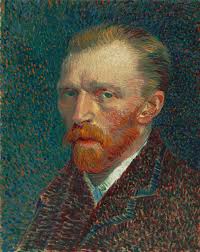
The artist – Vincent Van Gogh, one of the most famous and influential figures in Western Art.

His entire life consisted for trial and error, had he not done so, had he not had the determination to pursue the various acumens’ he did, the world would have been deprived of one of the greatest artists of all time.

There are numerous other examples that I could cite from the rest of the amazing chapters but will leave you with a couple of takeaways;

#1 – One of the answers I get from parents all the time why they opted to support their kids to specialize early is “They love the sport”

My counter:  Do you kids love Chocolate Cake?

Their answer: What did doesn’t?

Me: Would you let them eat the ENTIRE chocolate cake in one sitting?

Them: No.

Me: I rest my case.

#2 – The other is like Tigers Dad, based on advice they have from the “private skills developers” how identified their son has “special” skills (when they are just an early bloomer) and recommend they specialize in one sport as they may be “the next chosen one” and go on to get an NCAA scholarship and play professionally (0.03% do)

My counter: If a teacher told you that your child showed proficiency in one subject in school, say math, would you pull them out of school to focus on that subject only?

Their Answer: No

Me: Why?

Them: Because we want them to become well rounded, be strong in all subject areas, math, science, language, art etc. so they do well on the SAT and get accepted to university.

Me: I rest my case.

Regardless if your child loves or shows proficiency early on and are leading the beehive early (early bloomers) in a sport the various examples from Sports, Art, Music, Science, Business sectors in David’s Book should guide you in helping your child find their optimal path.

Just make sure that you support them to try as many different sports and other activities including free play early so they can choose their path later that they aspire to otherwise they may never find and pursue their true love vs. potentially being deprived of it if they specialized in one sport too early.

Let’s all work together to bring the game back to the kids … where it belongs.

PS Tagline - Dont be a kids last coach


Bonus – Download a Free Printable PDF Copy of this blog HERE