
Respect has to be a core value

Posted Posted in Athlete, Coach, Early Sport Specialization, Organization Executive, Parents


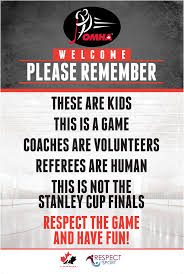
For years I have been advocating for the importance of bringing back respect to youth sports and although I have seen a shift, and many organizations have done public service announcements, campaigns or signage when I come across various posts in social media or in print it just leaves my head spinning how much more work we have to do.

This past week we attended ViaSport’s International Women’s day event as we believe strongly in the importance of growing all levels of female participation of athletes, coaches, officials, board members, and various other leadership roles.
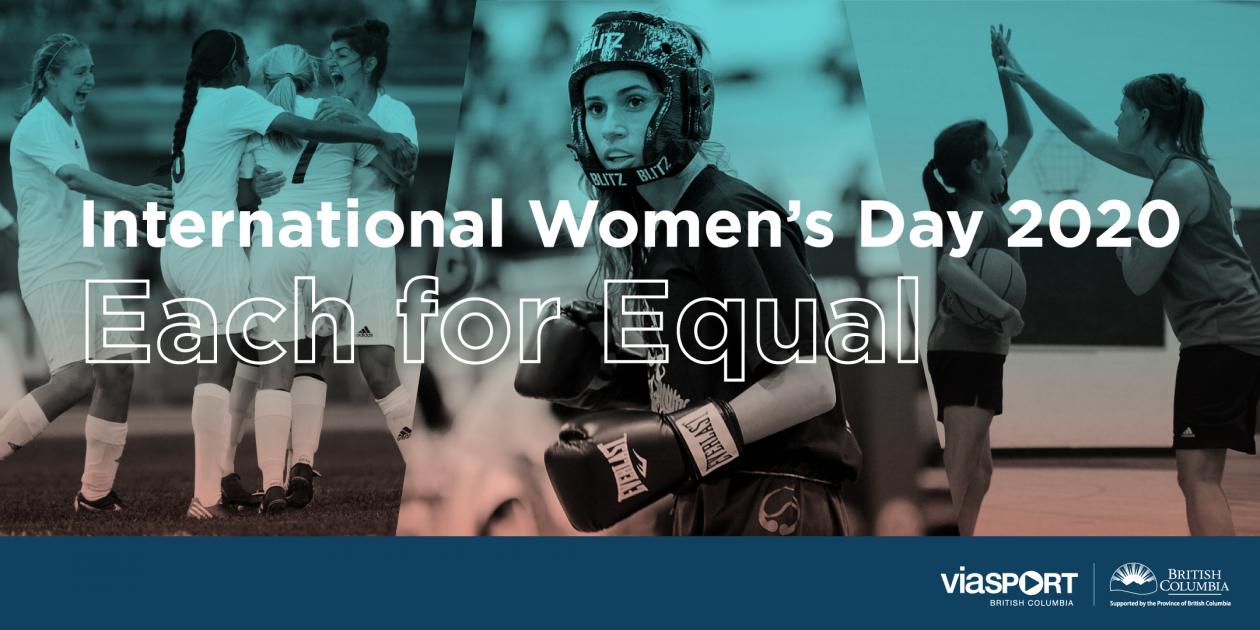
 

There were approximately 100 attendees for the event from various sports organizations in BC, which did include a small representation of he/him/his (including yours truly) and had a series of speakers reviewing the challenges to increase female and women’s (she/her/hers) participation within their various organizations.

In the afternoon, we went thru a Gender-Based Analysis Plus Workshop ran by Dr. Melanie Stewart from BC’s Provincial Gender Equity Office where she started off by highlighting some of the gender inequalities that still exist but the statistics that jumped out at me the most were gender-based Violence

  • In 2016/17 – 55% of sexual assault victims were females under 25 that were reported
  • More alarming, only 5% of sexual assaults are reported to police, and only 11% of those will lead to a conviction.

The reason these numbers jumped out at me to the extent they did was the fact that literally a year ago around the same time I attended another event sponsored by Via Sport, the BC Safe Sport Summit in response to the series of articles LY that Jamie Strashin and Lori Ward wrote for CBC that highlighted 222 coaches in Canada had been prosecuted sexually assaulting over 600 athletes from their late teens until mid ’20s.

If the 5% rule of thumb that are reported to police is, in fact, accurate, that means there could be over 10,000 athletes that were sexually assaulted the last 20 years in Canada!

As far as I am concerned, ONE is too many, we still have work to do to ensure sport is safe from all forms of harassment.

This just a week after I read an article highlighting the harassment towards a high school hockey player in Philadelphia, Alyssa Wruble, where a fan-created a sign challenging for her to declare her gender and number of the students from opposition school she was playing against chanting “she’s a dude”

In the morning address to all the attendees Mitzi Dean, the BC Parliamentary Secretary for Gender Equality shared a story about her 7-year-old daughter who played on a mixed hockey team with boys almost quit the game because the boys told her frequently that she did not belong on the team.

REALLY?  Both examples were just a painful reminder that we still have so much work to do to change the culture in youth sports for the better and I believe one of the reasons is due to the lack of respect we have, yes we talk about it, but do we truly walk the walk?

The very definition of respect is:

re·spect

/rəˈspekt/

noun

#1- a feeling of deep admiration for someone or something elicited by their abilities, qualities, or achievements.

“the director had a lot of respect for Douglas as an actor”

#2 due regard for the feelings, wishes, rights, or traditions of others.

“young people’s lack of respect for their parents”

verb

  1. admire (someone or something) deeply, as a result of their abilities, qualities, or achievements.

“she was respected by everyone she worked with”

With inclusivity being one of the hot topics and initiatives we discussed over the day as well as prior Women’s day and other events I have attended, one of the biggest issues that we still continue to face is the current culture of youth sports needs to change so youth sport is not only inclusive but the core value of respecting others so it becomes ingrained in all of our DNA’s.

Had it been a core value as part of the overall culture vs. highlighted on signage, public service announcements, or strategic initiatives still in the development phases Alyssa, Mitzi’s daughter all the other girls out there that aspire to play a game and may be forced to play with the boys as there are no programs in place for them for girls only teams would be respected and admired for their skills and abilities in lieu.

My niece is another one of those girls, who is a very skilled player and the only option was to play on boys teams who shared similar stories with me until she reached Bantam so had to move to play on and academy all-girls team (at a great expense to my in-laws for her to do so).

Fortunately, her love for the game never wavered like Hayley Wickenheiser and many other female trailblazers before her and she just received confirmation that she has been accepted to McGill and offered a spot on the Women’s Hockey Team starting next season.

Fortunately leaders in the space including Via Sport, Provincial and Federal Government, PSO NSO, and even professional sports are working towards programs to ensure we do keep moving the boulder up the mountain as the keynote speaker Charmaine Crooks (OLY, Order of Canada) used in her great keynote presentation so sport is inclusive, safe and sport can be a positive for all.

I can’t think of a better example of an initiative to ensure that respect does become part of our core values than the Hockey Declaration of Principles drafted by all the governing hockey associations worldwide in collaboration with the NHL released in Fall 2017.
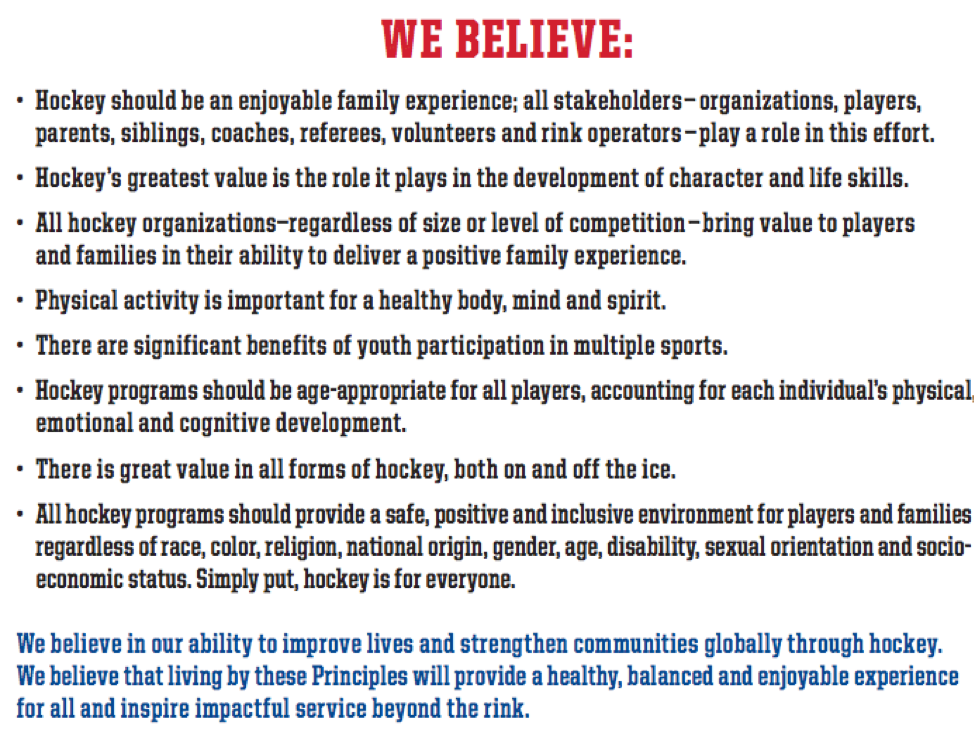
We concur with the declaration of principals, not just for hockey, but sports are for everyone globally.

Sadly as each day passes while all sports are on hold to ensure the safety of all stakeholders as the world comes together to fight the spread of the Corona Virus I would be remiss not ending this post focusing on the importance of respect not acknowledging all the first responders and medical community who have come together as a global team to make the world safe again.

My utmost admiration to all of those that are doing so and let’s all work together to ensure that all those who love the game, whether it be young kids, teens or collegiate, professional athletes, and all the other stakeholders involved can return to the games they love when the medical community deems it safe to do so.
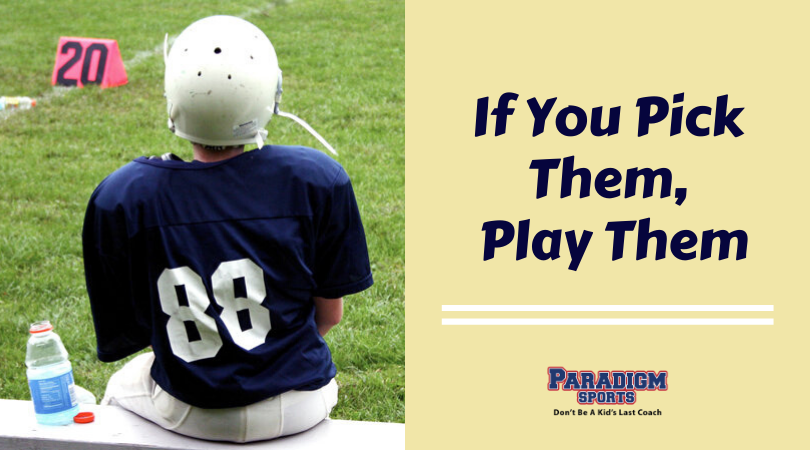


If you pick them, PLAY them

Posted Posted in Athlete, Coach, Organization Executive, Parents

Earlier this week I received a message thru our Facebook page then exchanged a few emails with a parent who reached out as they were concerned that his sons U13 competitive stream (rep) coaches were running short bench game after game including having specialty teams like a power play, penalty kill.

It was not the first reach out I have received nor do I suspect it would be the last but the parent shared with me that he came across the blog that I had written about my son whose coach used the very same short bench tactic time after time, but for me really became personal when he did so a month after my mother passed away and he shared my son had dedicated the game in her memory

The wave of emotions that I experienced then is not as high now as I have really tried to focus on the half-full approach working with coaches and parents in recent years to highlight the good work that is being done by many youth sports organizations to bring the game back to the kids.

I have always been a believer in all the sports I coached to give every player an opportunity to contribute to the outcome, and even went to the extent to ensure that every player had opportunities to play positions that everyone wanted to, in baseball to play pitcher, shortstop or catcher, in hockey all positions including goalie until U13 (even then had to have players suit up when both our goalies got injured).

The reason?


In this day and age where more and more kids are pulling out of youth sports as Project Play highlighted last year where 62% “retire” by the age of 11 after an average 3 year “career,” one would think that youth sports organizations would be doing EVERYTHING possible to reverse these trends and not turning a blind eye to coaches that are missing what youth sports should be, a safe environment to develop not only the skills of the game but skills of life.

What life lesson does a 11-year-old kid learn when he does not get the opportunity to play when it is their time to go out?

Having talked to many kids that were victims of short benches going back to 7-8 years of age, all told me the reason they quit is the coach only played their favorites.

Here’s my take on the coaches that do so.

If you pick them, PLAY them.

The worst culprits in the youth sports space that run short benches to win games at all costs are the ones in the competitive stream or rep level, but even when I have had recreation stream coaches in clinics or workshops they have shared with me they have seen more than their fair share of coaches that run short benches to win games, some as early as the beginning of the game, many in the latter stages of a game when it is close.

In many sports, particularly the recreation level, youth sports organizations do have what is called fair play, equal play policies where coaches must play all players as equally as possible.

But entice those coaches with a tournament trophy, banner for league or playoffs, or just a feather in the cap as their team won against a rival association then it is like offering a bonus to a car sales rep for selling 20 cars in a month … it becomes the end all and be all, do whatever it takes even if you have to take shortcuts to do so.

The big issue I have when coaches do so is they picked the players for their teams either thru the tryout process (which painfully starts earlier and earlier every year) or a draft (usually started U9 age groups in many sports).

This means that they chose the players for their teams yet they think nothing of sitting a player and playing their favorites game after game in lieu of focusing on developing every player on their team so the team as a whole collectively gets better?

They also will have those very same favorite players on specialty teams which further deprives players of playing time and the opportunity to contribute to game outcomes.

Over the last few years, I have highlighted some examples of nations or sports organizations whose participation rates are not declining like many of those are in USA and Canada but are GROWING.

Perhaps youth sports orgs and their coaches (which I recognize many are volunteers) could learn something from those as they also have had many players reach high levels as a result of their development models.


SWEDEN


Hmmm .. maybe Sweden is on to something in terms of the player development model?

What makes the Swedish hockey model different?

#1 – All of their ice rinks are community-owned, unlike Canada and the USA where private multi-sheet facilities are almost on every street corner like a Tim Hortons is in Canada or Dunkin Donuts in the USA. Because they are community rinks and Sweden recognizing the importance of multi-sport participation they melt their ice on April 1st every year.

This means NO SPRING HOCKEY.

A phenomenon that has exploded in Canada in the USA that both Hockey Canada and USA Hockey are not sanctioning as they don’t want kids to play hockey year-round.

#2 – Because of the Spring Hockey model, the youth sports coaches that coach in winter as volunteers may aspire to get a paid position coaching in the spring which means they have to win as many games as possible to apply for those spring hockey coaching gigs.

#3 – Unlike Canada and the USA, Sweden does not COMPETE until the kids are U15 age (13-14), there are no scoresheets, scorekeepers, standings or individual stats being kept

Why?

Because Sweden’s model emphasizes the importance of focusing on the core skills of hockey during the key motor skill acquisition years.

#4 – Practice to Game ratio is minimum 3:1 also, as Sweden recognizes that players develop in practices, not games and in some instances with the explosion of spring and travel teams, kids as young as 6 years old may play over 80 games in one year, equivalent to the NHL?

In terms of the practice to game ratio in Canada, this could be fixed very easily as most rep teams get 2 practices, 2 games a week, convert one of the game slots to a practice slot and alternate home and away weeks with other teams in your tier.

Voila – 3:1 Practice to game ratio.

Based on the fact that parents pushed back because their 6 year old super elite prospects would not be able to play full ice hockey when Hockey Canada rolled out cross-ice hockey a few years back (proven to optimal development) I suspect although a simple fix, the push back will be even worse.

The fixation with playing competitive games in Canada is too much, too early and we could learn from Sweden as well as another country that is setting the bar, Norway


NORWAY

Another country who has set the bar for reaching the highest level of competition is Norway, who won 39 Medals in the 2018 Winter Olympics made them the all-time winningest country since the inception of the Winter Games.

Like Sweden, they don’t promote competition in youth sports until the kids become teenagers (13) and focus on multi-sport athleticism so kids become the best athletes they can become.

They both focus on the importance of playing with their friends, playing for their communities (vs. travel teams) and having FUN.

As a result, both nation’s youth sports participation rates are over 90% vs. those in Canada and the USA seeing the attrition rates we are seeing.

They also DON’T have the issues attracting and retaining officials like we do where our rates are as high as 50% of young officials quit in their first year, 30% every year thereafter due to the abuse they are taking from those winning at all coaches and over the top parents.

Coaches, if you pick them, play them.  Focus on developing all players and winning will be the byproduct in lieu of the focus.

AND

If you do so, they will love the game more at the end of the season than the beginning and come back with big smiles on their faces next season in lieu of many of the players quitting a game they once loved.

Don’t be one of “those” coaches that thinks nothing of sitting a 10 year old kid to win a game when every player on your team should be given the opportunity to contribute to the outcome, win or loss.

In doing so, their confidence will remain intact and like all the players I coached their only questions after the game will be ….

  1. What’s the Snack Coach?
  2. When do we Play again?

If you are still playing a sport in your adulthood as still love the game as you did as a youth player ….

The first question you ask when you get in the dressing room?

Who has, how much is the beer?  THE SNACK

When do we play again?

Take the high road and if you pick them, PLAY them so they keep playing well into their adulthood.


PS Tagline - Dont be a kids last coach


Ode to the Sedins

Posted Posted in Athlete, Coach, Early Sport Specialization, Organization Executive, Parents

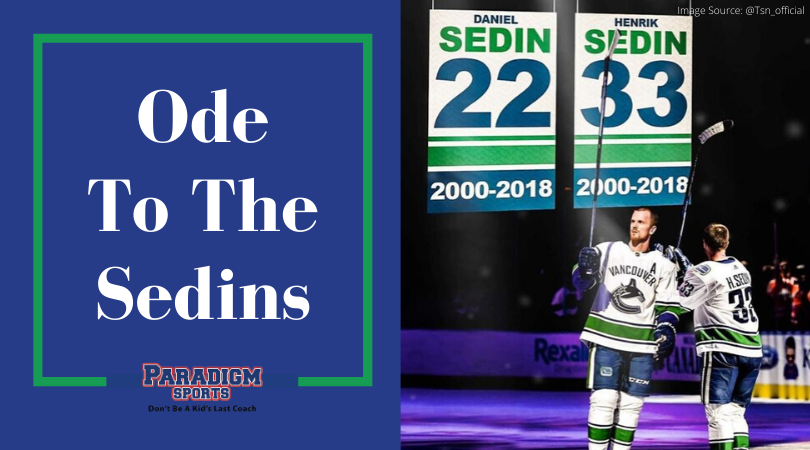
I would like to give Kudo’s to the Vancouver Canucks Organization for the amazing events they hosted this past week to celebrate the amazing careers that Henrik (Hank) and Daniel (Danny) Sedin had playing for the Canucks for their entire careers (a true rarity in this day and age of free agency, salary caps).

I was fortunate, as were many other residents of Vancouver, to see two boys drafted by Brian Burke #2 and #3 in the 1999 draft (coincidentally the birth year of my son) and watch them grow into men over the course of 18 amazing years.

#1 Their work ethic was off the charts and not just amazing hockey players, but ATHLETES. 

Even though they may not have been the greatest skaters early or later in their careers, they worked on becoming better every practice and off seasons for their entire career.  This not only included working on skating but all other core hockey skills AND balance, agility, strength, aerobic capacity.

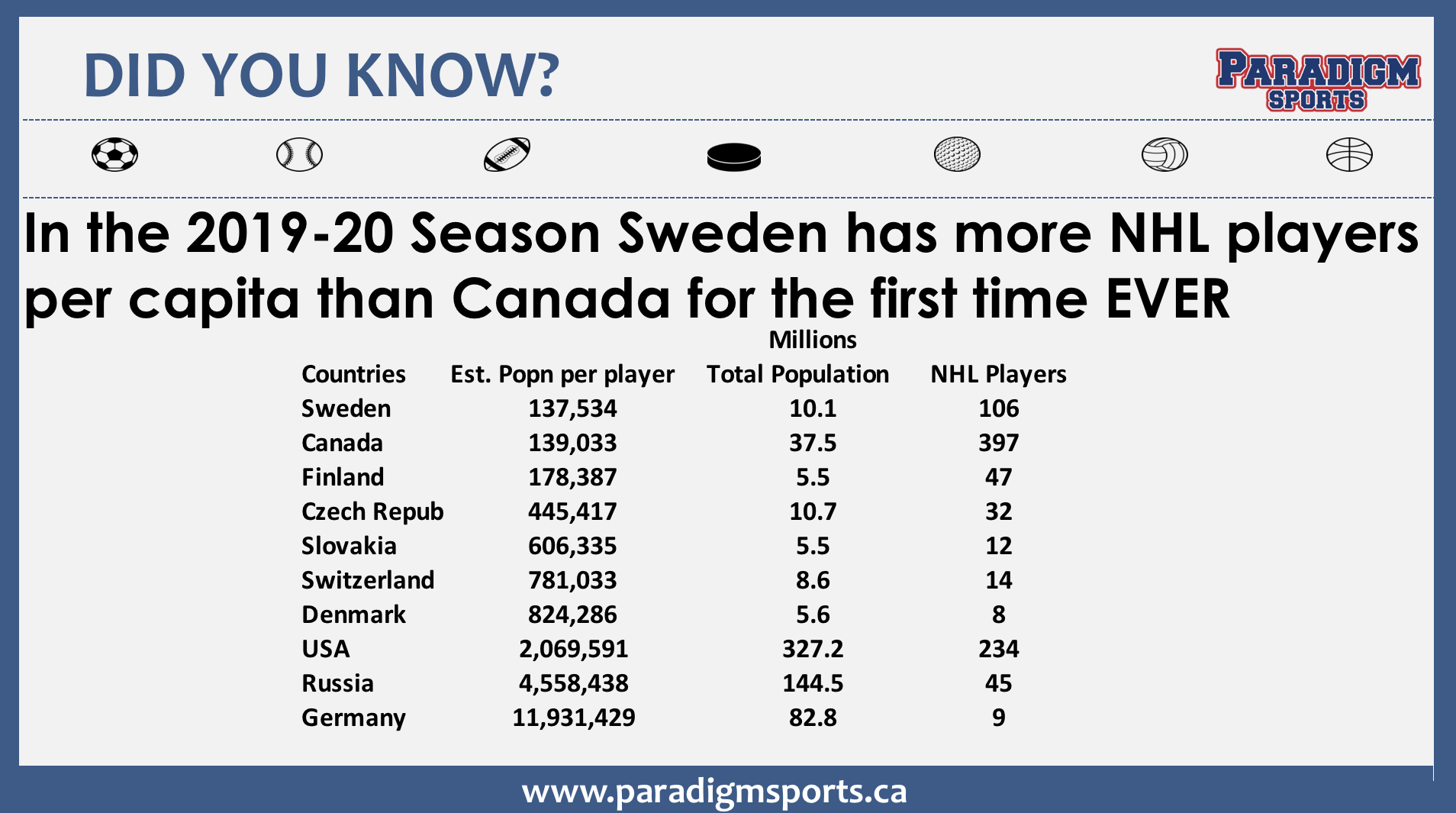
This could be part of the reason why; check out this short video highlighting the differences of the Swedish Hockey Development Model vs. other nations and they now have the highest per capita number of players in the NHL as a result.

#2 They were extremely humble during their careers and still are

For them it was all about the team, including when their contracts came up for renewal, they accepted contracts lower than market value so they could help the team succeed which included the amazing run to the Stanley Cup in 2011 (the Canucks third since entered the league but still looking to win their last game).

#3 Founding the Sedin Family Foundation

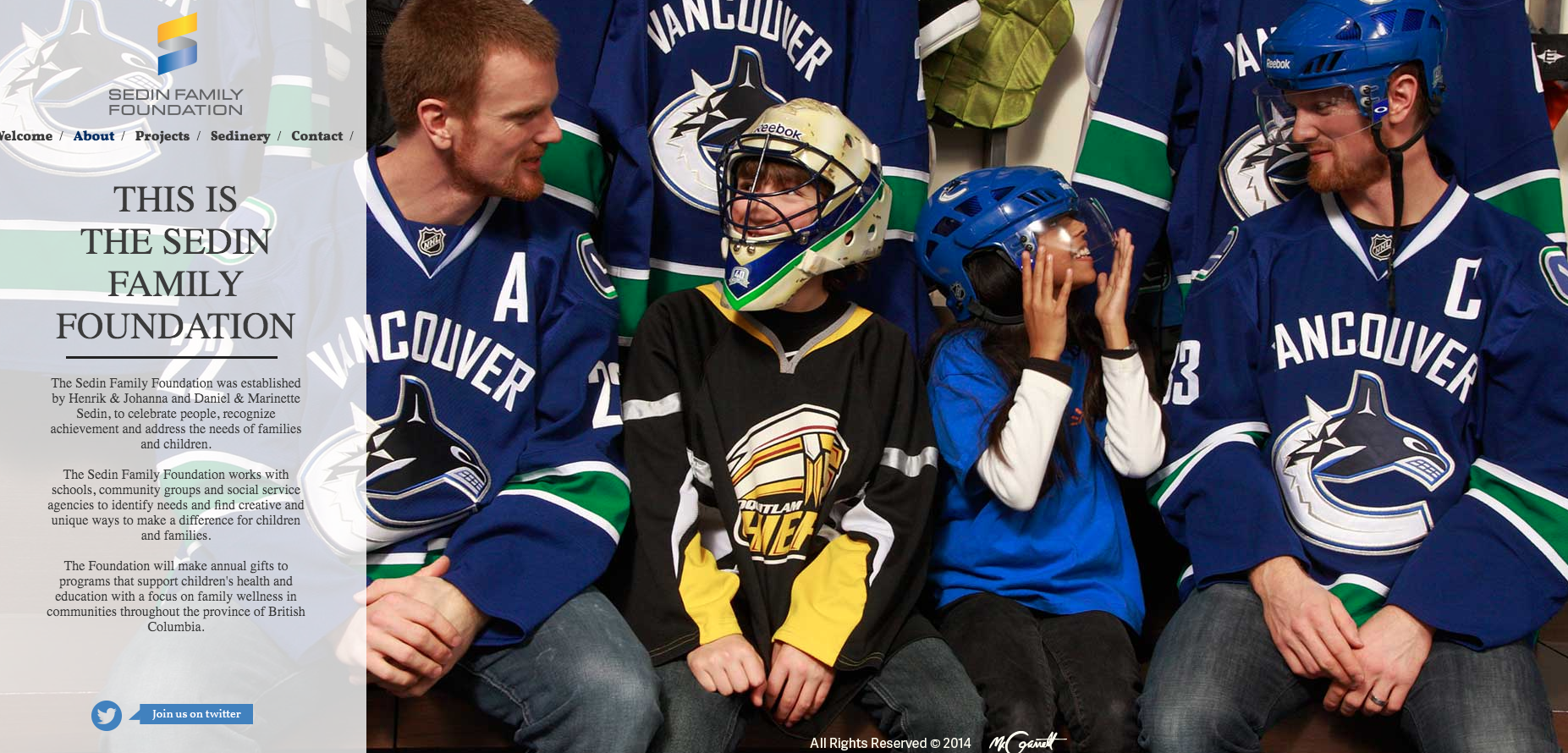
Founded by both Hank and Danny and their wives to celebrate people, recognize achievements and address the needs of family and children and all the philanthropic fundraising to do so.


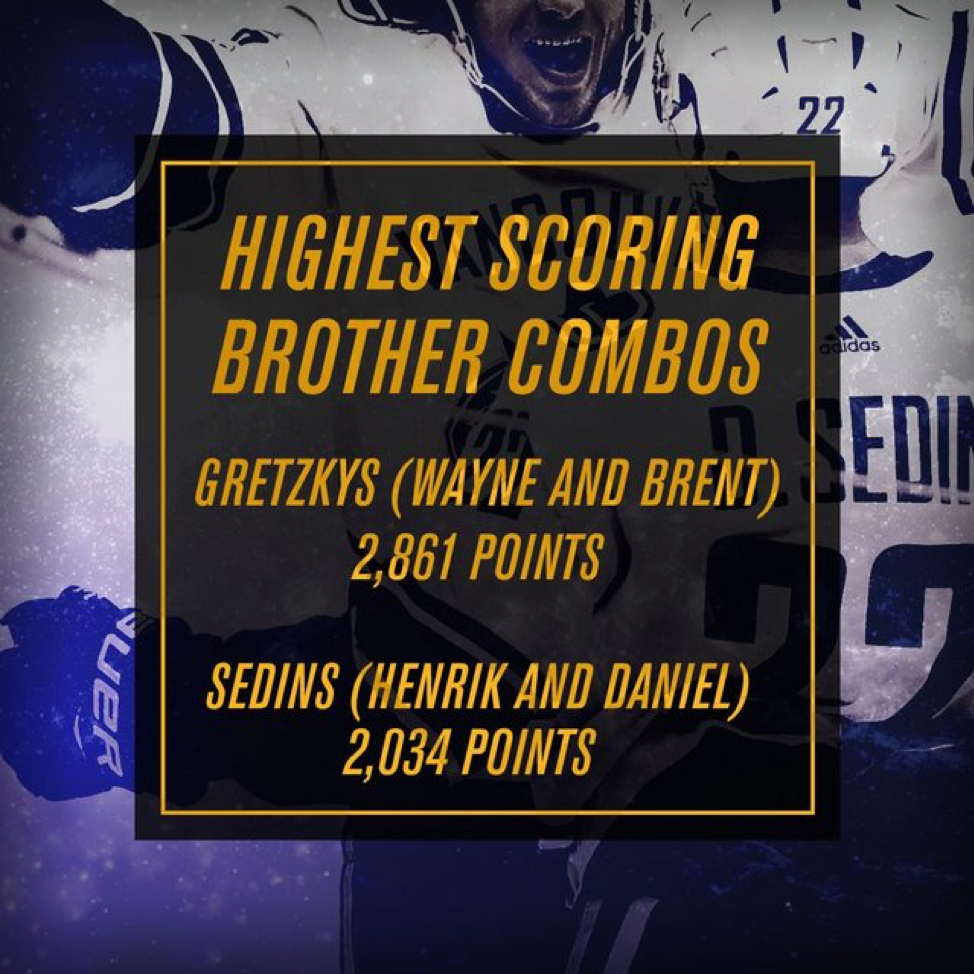
#4 They are the second-highest brother scoring duo in the NHL of ALL TIME

** Based on the fact that the Canucks has one of the Hughes Brothers, Quinn, and his brother Jack (Devils) now in the league both drafted in the first round, perhaps they will be the next duo to chase the Sedins record?

#5 – For all those naysayers that thought they were too soft;

Hank held the ironman streak for consecutive games 679 games! Over 10 Years including several playoff deep playoff runs including 2011 Stanley Cup run.

It ended only because of a vicious cross-check in the back of the ribs although he tried to play in two subsequent games and assistant coach Mike Sullivan shared when could not suit up the following game ending his ironman streak;

“The fact he’s been able to play that many games consecutively is just a testament to his determination and how tough he is,” Sullivan said. “Him and [twin brother] Daniel both play in the hard areas of the rink on a consistent basis because they have the puck so much.”

Danny also was durable as Hank but his longest time out of the lineup was recovering from concussion when he was knocked out (literally) by a vicious hit by Duncan Keith

I have called this type of hit the infamous chicken wing, where players raise their elbows up to a players head and knock them out, a type of hit that has now been deemed intent to injure and players have received multi-game suspensions as a result as the NHL continues to focus on protecting the players from what could be career-ending injuries

Ironically when the Canucks played the Black hawks who Keith has been with since the beginning of his career, every time he touched the puck he was booed for that hit in 2012… deservedly so.

#6 – How they evolved as leaders for the next generation of young prospects

Bo Horvat was named the team captain after one season of having alternate captains only in part to respect Hanks legacy as long time captain who took over the reins from fellow swede from same home town Markus Naslund who jersey number also has been retired and hangs high in Rogers arena adjacent to the Sedins and other Vancouver great players, Trevor Linden, Pavel Bure and Stan Smyl.

When Bo was chosen as captain, Hank handed him his jersey in a public ceremony pre-game but this was after the players had been told by Hank who the next captain was going to be in the team dressing room a few days prior to the game.

# 7 – How good they are as people

In addition to their foundation, all of the community work they did and still continue to do including supporting Canuck Place Hospice I must confess I teared up as I sadly had to move my mother from hospital to hospice as she was losing her fight to cancer.  It’s one thing for a son or daughter to lose their parent, its another thing altogether for a parent to lose their son or daughter to Cancer.

As I shared several years back, in 2013 I lost both my best friend AND my mother.

When I was at my best friend’s house for days after he passed and helped the family plan his service, all we kept saying is NO parent should bury their child.

I remember how much his parents cried that week and probably still do although they are too proud to admit it.

The work that Hank and Danny as well as all other members of the Canucks organization to support Canuck Place to help families was (and still) is amazing


# 8 – They were top in fitness testing on the team their entire career (although Kevin Bieksa’s roast claimed Hank would come to training camp every year overweight)

As a result of their work ethic, in all the fitness tests the team did every year, both Hank and Danny were #1 and 2 (with a competitive fire to be #1) which set the bar for all of their teammates to follow.


#9 – They were grateful

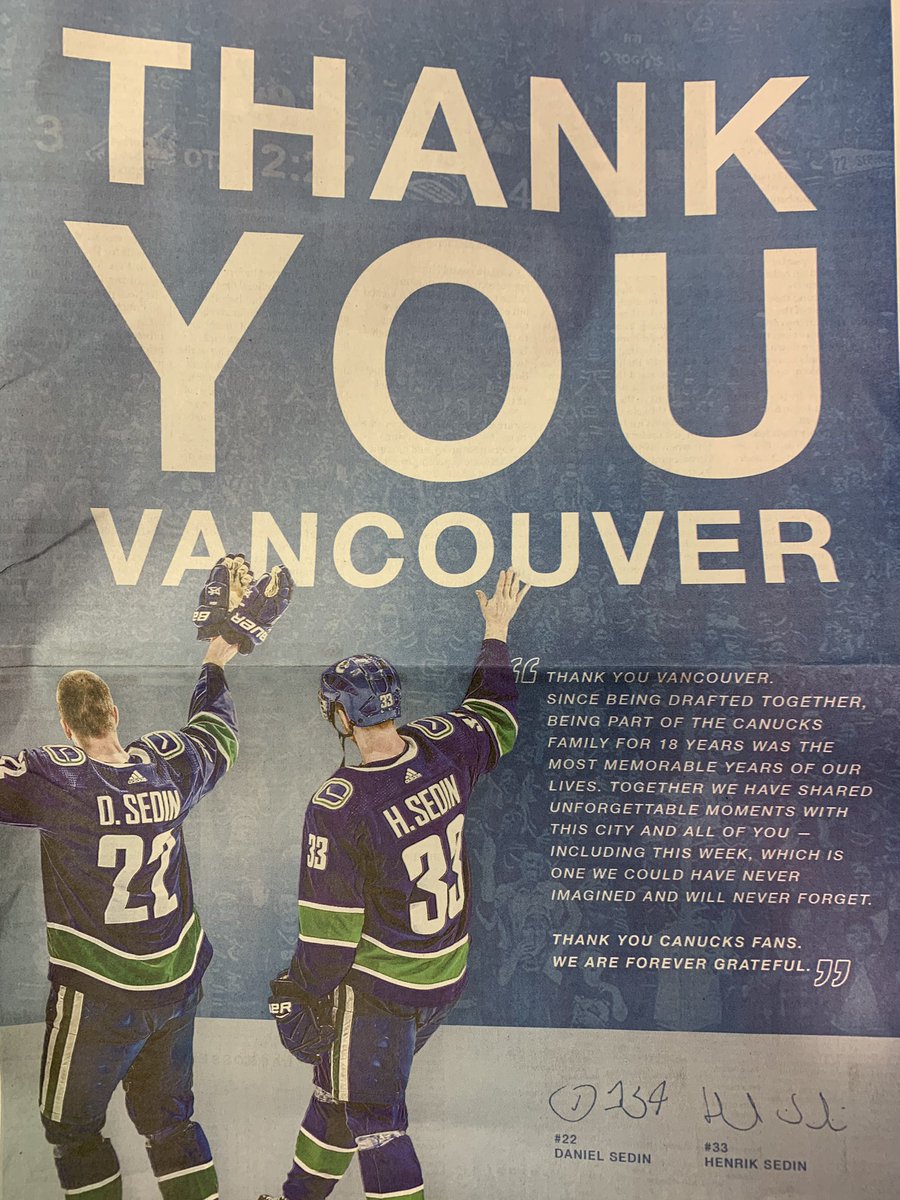
After their jerseys were retired, they took out a full-page ad in the Vancouver Sun and Province to thank the fans for their support over their 18-year career in Vancouver


In all the years that I have followed various professional sports in the Vancouver area, I think the only other professional athlete that took out a full-page ad was one of their teammates, Roberto Luongo after he was traded back to the Florida Panthers after 10 amazing seasons for the Canucks.

I only hope that the Canucks organization show the same class they showed this season in tributes to the Sedins (retiring their jerseys) and Alex Burrows (Ring of Honour) and do the same for Roberto, the way they handled the goalie controversy with emerging Corey Sneider to become the starting goaltender over Roberto only to trade him for Bo Horvat left everyone’s head spinning, including Roberto who was then back to the starter and eventually traded to Florida to make room for current starter Jacob Markstrom to take the reins.

Roberto deserved better, like the Sedins, was one of Vancouver’s top players for a decade and also a great person.

#10 – The fact they continue to call Vancouver their home

Although some professional athletes return back to their birth cities, countries, they continue to reside in Vancouver and are raising their kids and still supporting current players, coaches, and other Canucks Organization members when asked.

I will never forget watching them play live or on TV over the years and just shaking my head in awe of their raw skill and their compete level.

Their short 3-5 foot passes while cycling, behind the back passes, innovators of the slap pass now common in the league or what wowed me the most were the full cross-ice saucer passes on their forehand as well as backhand literally dropping on their brother’s sticks was amazing to see.

Off-Ice, aside from all the great community work they did, I thought this (and still is) one of the funnier things they did, when they appeared in an NHL commercial to help promote the league after the lock-out season to regain their fan base.

Over and over again this past week former teammates, coaches, general managers, and sports journalists shared the top character traits of the Sedins were (and still are):

Goodness – Decency – Selfishness – Humility – Work Ethic – Leadership 

As coaches, please ensure that you focus on reinforcing these character traits with all of your players in lieu of just focusing on the outcome of a game as has become commonplace today with the focus of winning at all costs.

Our calling as coaches is not to make a living.

Our calling is to make a difference by developing youth into adults.

Kudos to the Sedins for their amazing career, becoming not only great players, but great adults before our eyes for 18 amazing seasons.

Kudos also to their original grassroots coaches that helped develop them into the adults they became to set the bar for so many kids as role models.


PS Tagline - Dont be a kids last coach


This is the Future – 2020

Posted Posted in Athlete, Coach, Parents, Uncategorized


About a year and half ago I shared the growth of eSports in This is the Future and this week saw an article in the financial post where the owners of the Canucks Sports and Entertainment, The Aquilini’s, have invested in numerous eSports leagues and teams starting back in August 2018 to build the biggest e-Sports gaming network in North America less that 2 years later.

In 2018 the industry projections of e-Sports were projected to exceed $1 Billion, and now is over $1.5 Billion, a further 50% growth in just over a year with no signs of slowing down, similar to the 400% growth rate of the youth sports sector since 2010 in Canada.

Here are the numbers shared in recent article in the Financial Post;

  • Dota2 Event hosted in Rogers Arena August 2018 had $25 Million in prize money, $11 Million going to the winning team
  • eSports events hosted across the world in the very same arenas that professional sports teams play in (NHL, NBA) are selling out faster than the top musical acts are
  • Ticket prices average $40 for fans of the eSports “athletes” to attend the live events, generating over $600,000 in ticket revenue alone per event
  • According to MarketingHub, a market research firm, 800K people had heard of the growing niche industry in 2015, by 2019 the awareness had grown to 1.57B
  • Revenue has been increasing by more than 30% per annum, in 2016 was $493 M USD, $906 M in 2018 and is projected to exceed $1.6 B USD in 2021
  • eSports is inclusive, regardless of your sex, orientation, nationality etc. if you can play you can play online against any gamers across the globe

What the Aquilinis realized in 2018 like many others in the top 5 professional sports space is eSports is no longer a niche phenomenon but it is growing exponentially and as a means to further grow revenue streams and tap into a new and evolving fan base is to invest in the eSports industry.

Other prominent owners in professional sports have done the same

Jerry Jones – the owner of the Dallas Cowboys, one of the top professional sports franchises in the world, has purchased an esports team, including the purchase of a house in the Dallas area for them to live, eat and to hone their craft who is coached by one of my colleagues, James Leath, founder of Unleash the Athlete.  For insight listen to the podcast of the week HERE when I talked to him.

Prominent athletes and celebs are also investing millions into esports


  • Michael Jordan, arguably one of, if not, the Greatest Basketball Player of all time, invested $26 Million in eSports organization Team Liquid


  • Canadian Rapper Drake who was shown supporting the Toronto Raptors as they made their amazing run to the NBA championship last year has invested in esports organization 100 thieves with teams that compete in games like Call of Duty and Team of Legends


  • Steph Curry and teammate Andre Iquodala invested $37 Million in eSports organization TSM whose teams compete in games League of Legends and Fortnite


  • Hall of Fame Quarterback and now NFL commentator Steve Young also tagged into the investment made by Steph and Andre and part of the funding will be to build a 15-20,000 square foot eSports facility in Los Angeles


  • Rapper Sean “Diddy” Combs along with a group of investors provided just over $30 Million in funding to PlayVS eSports League Based in Los Angeles that allows high school students to represents their schools in eSports competitions and can qualify for the growing number of collegiate scholarships for competitive gamers.


  • Former Golden State Warriors Team Mate Kevin Durant invested $38 Million in Vision ESports and esports investment fund and management company


Professional Sports Leagues have also jumped onto the bandwagon starting in 2017


Since this interview in 2017;


  • NBA formed a joint venture with Take 2 Interactive to form NBA2K League whose inaugural seasons was in 2018 with 21 teams who are owned by NBA Teams and has partnered with the likes of Champion, AT&T, Snickers as key sponsors


  • NHL franchises are also forming leagues, starting with Monumental Sports & Entertainment (MSE) the parent company of the Washington Capitals working closely with EA Sports.


  • Maple Leaf Sports and Entertainment (owners of the Toronto Maple Leafs) also is hosting one on one as well as eSports tournaments based on the same EA Sports iconic video game and several other NHL teams are tipping their toe in the water investing in various eSports tournaments, leagues and teams.


  • Major League Baseball (MLB), Major League Soccer (MLS) and even the largest professional sports in the world, the NFL with over $13 Billion in annual revenues, is jumping on the esports bandwagon starting with the Minnesota owners investing in Activision Blizzard.


It also has gotten the attention of what used to be a focus on amateur sports, the International Olympic Committee, who has shifted their mindset over the years to permit professional athletes from the MLB, FIFA, MLS, NBA, NHL to participate in winter and summer games.

They also entered into discussions with INTEL last summer to continue on the momentum of pre-Olympic showcase event before the Pyeongchang Winter Games for eSports to be an Olympic event in Paris Summer 2024 Olympics.

If you have been coaching youth sports, a former youth or even professional athlete you’re probably shaking your head why the Olympics would even consider why playing video games could even be considered as sport? Some would argue Poker, bowling, darts are games also but do get considerable coverage on ESPN and other sports networks when major sports like NFL,  NHL, NBA, MLB seasons are over.

Here is some insight in terms of the neuroscience what is needed to be a gamer at a high level;


That the video game industry, thanks to PlayStation and Microsoft 360 as well as PC games is now over a $138 Billion USD industry worldwide, has now gotten the attention of celebrities, professional athletes, teams and the Top 5 Professional sports to create a spin-off industry to generate even further revenues via competitive events for one vs. one and team play.

Youth Sports has also grown exponentially in Canada and the US in terms of revenues since 2010 as more and more families go all in supporting their kids chasing the dream of full-ride scholarships or playing professionally, based on the growth of eSports suspect will see that spin-off as well.

Sadly, as more and more specialize earlier and earlier, more and more are quitting because what started out as a fun activity became work as many games are sharing when they retire from competitive game play.

Like overuse injuries in young youth sports athletes as a result of the early specialization phenomenon, a recent science daily article share insight how esport athletes who participated in a study are also at risk for various physical, psychological disorders;

  • 56% reported eye fatigue
  • 42% report neck and back pain
  • 36% wrist pain
  • 32% hand pain
  • Yet only 2% sought medical treatment
  • 40% get no physical activity per day, and average video game playing time is 10-12 hours/day


Although video games have evolved into the competitive eSports industry, youth sports are showing similar trends in terms of physical and physiological health issues including

  • 400% increase in ACL tears
  • Over 60% of current Tommy John Surgeries on 15-18 year old arms
  • Over 200% increase in concussions
  • Increase in mental health issues due to pressure to perform, meet parental expectations for return in investment

Both Multi-Billion Industries are suffering from CHRONIC overuse injuries being sustained by KIDS?

Maybe it’s just me, but Houston, we have a problem … a very big problem as these trends will merely lead to a major impact on the medical system in future that is already pushing its limits due to funding challenges to hire nurses, doctors and other support staff.

More than ever, we have to work together to bring the game back to the kids so kids can play for the sake of playing again, not chasing the almighty dollar at a lifestyle pace that is not sustainable long term.


The Costs of Going ALL IN

Posted Posted in Athlete, Coach, Early Sport Specialization, Organization Executive, Parents

The Costs of Going ALL IN


This week we came across an article and W5 Episode that aired last spring highlighting two families where they have gone all in to support their kids in chasing their dreams of playing NCAA on full-ride scholarships, national teams or professionally.

In the first of three-part series, they focused mainly on young hockey players and ended with an interview with the chief executive officer of a marketing research company based in the US that focused on the costs of youth sport participation not only in the US but internationally.

Their findings had my head spinning and although I have always encouraged players to chase their dream whatever they aspire to (regardless if it is sport, music, drama, academics) but what this 3 part series showed is a reflection how so many families are chasing the dream it has lead to youth sports exploding into multi-billion dollar industries primarily in Canada and the USA with no signs that it will slow down anytime soon.

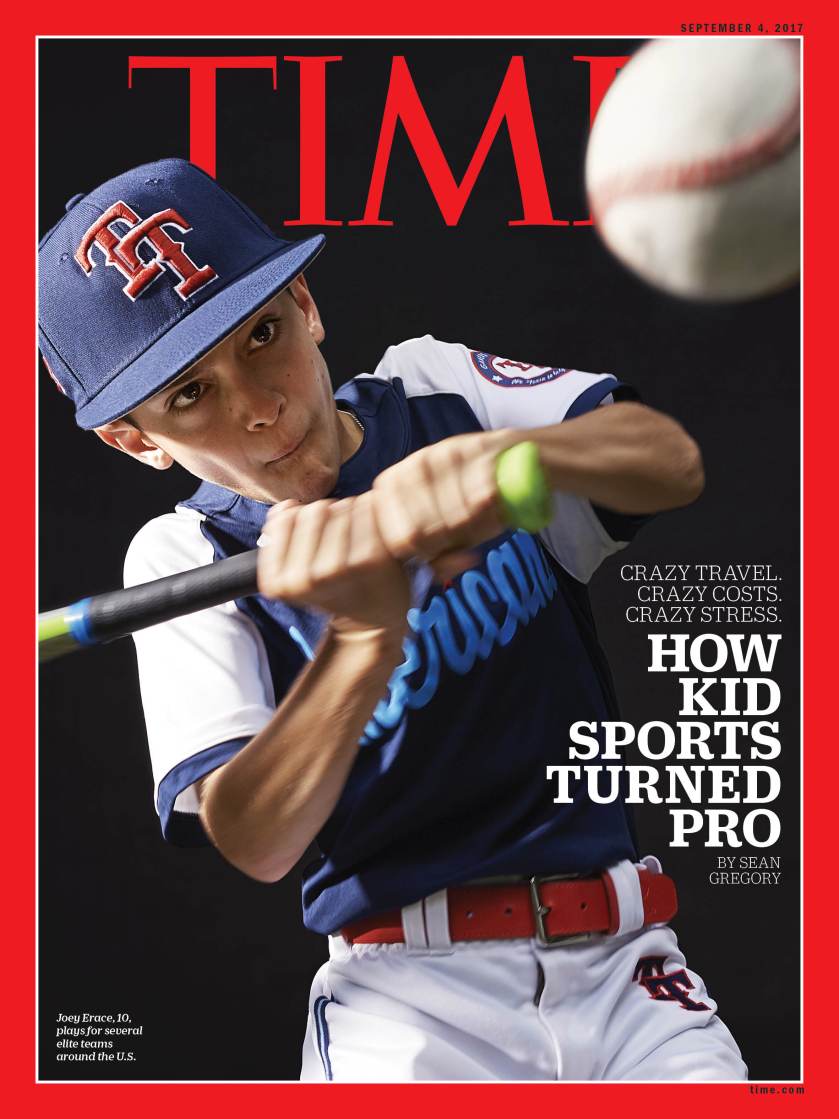
A couple of years back Time Magazine’s front page highlighted that the US Youth Sports industry had then exceeded $15 Billion USD (approx. $20B CDN based on current foreign exchange).  The highlight of the article was a young baseball phenom appropriate nicknamed Joey Baseball

The article and spin-off videos highlighted how Joey Erace, then 10 years old, and his family were chasing the dream for him to play MLB.  He was playing on multiple travel teams, getting private one on one instruction for pitching ($100/hr), one on one fielding sessions ($100.00/Hr), had his own home batting cage, was getting sponsorship offers, over 24K followers on Instagram and even being asked for autographs from fellow aspiring young kids who were following him.

His life had evolved to baseball, baseball, baseball.

All this at 10 Yrs. Old?

Fast forward to 2019 and the US Youth Sports Industry had grown to over $17 Billion as a result of more and more players and their parents continuing to chase the dream to reach those lofty goals of representing their countries on national teams, getting NCAA scholarships, what is now multi-million salaries in various professional sports and possibly the Olympics.

Coming back to the W5 episodes shared last Spring, the marketing research firm WinterGreen whose chief executive Susan Eustis was interviewed at the tail end of episode one shared that the Canadian Youth Sports Industry in 2010 was $1.2 Billion, had grown to 5.2 Billion mid-way point of the 2000’s but in 2017 had climbed to $7.6B and last reported number for 2018 was a staggering ….


$8.7 BILLION DOLLARS!!! 

THAT’S OVER A 400% INCREASE SINCE 2010


Based on the current exchange this is approx. $6.5 B USD.

Compare that to the USA with 9X the population of Canada (327 M vs. 37M) whose last reported number is $17 Billion USD

As a result, Canada’s youth sport participation costs are the HIGHEST cost per capita than any other country in the world.

Highlighted in the episodes were two youth sports players and their families who were all in as either a hockey or soccer family;

Ethan Mcfarland – 14 years old at the time the episodes aired who aspires to get a full-ride Michigan State Scholarship to play NCAA Div 1 hockey and be drafted and play in the NHL.

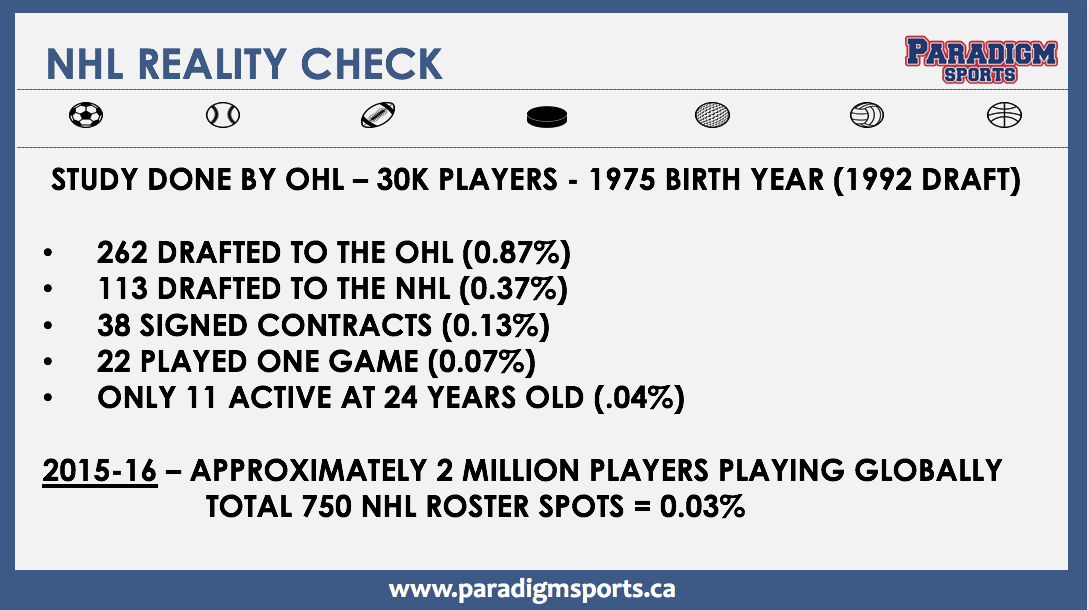
No different than many kids have growing up in prior generations, playing shinny with their buds on frozen lakes, outdoor ice rinks, stick and puck for hours on end BUT the sad reality is 0.3% of those will reach that level as I have shared out in talks across Canada.


The cost for him to reach that goal is he has abandoned what all the powers that be and sports medicine research has shown is multi-sport participation so he becomes the best athlete he can be.

He also has a modified school course load geared specifically for “elite” athletes as a hybrid to homeschooling so he can make it to all of his shooting, skating, puck control sessions both on and off-ice in addition to sessions with Psychologists, nutritionists, custom skate, stick equipment manufacturers

All the while his parents seem to be nonchalant about the fact to support doing all of this is costing them tens of thousands of dollars a year much like thousands of other kids across Canada that are doing the same to chase the dream.

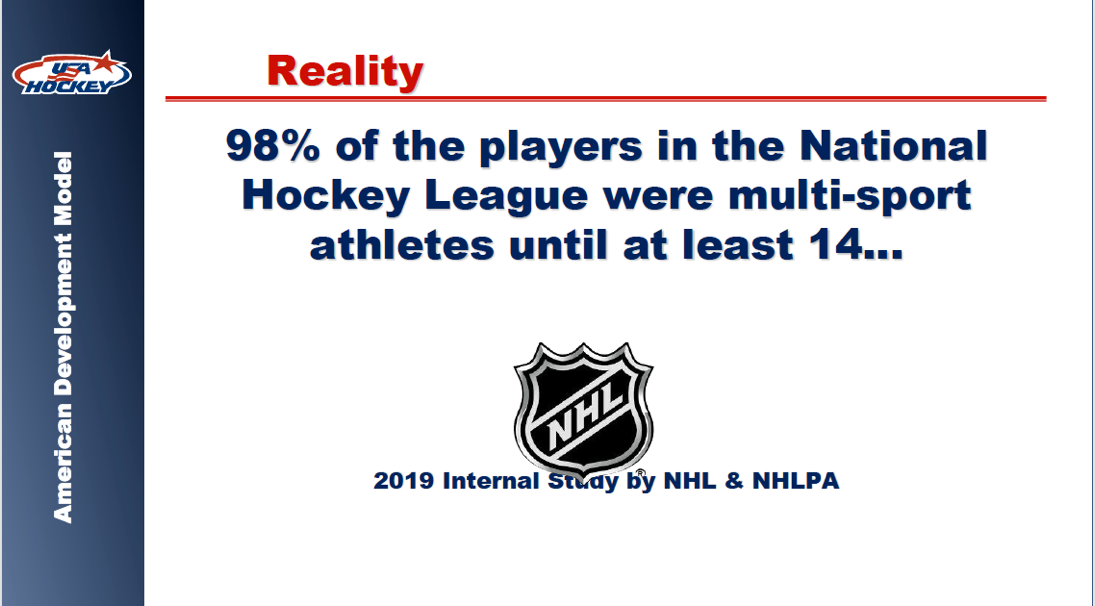
Probably one of the best data sets that I can provide to hockey parents to reinforce the importance for their kids to avoid this excessive time and financial commitment to focus on hockey, hockey, hockey is the NHL players association was surveyed last year and as Ken Martel (technical director for USA Hockey) shared with me and has now shared with other sports orgs, below is a slide from presentation he did for New Zealand Hockey (yes they play hockey in New Zealand)


Another statistic – Since 2010, there has been a 63% decrease in full-ride scholarships offered to Canadian born players to play in the NCAA which is a direct correlation with the ADM model in the USA, more and more US-born players are being recruited for those scholarships vs. past years seeking Canadian born players.

The other family highlighted was the Nicolazzo family whose three children, Xavier (7 at the time), sister Kiarra (10), and older brother Romero (13).  Their Dad Frank coaches both boys teams.

Year-Round Soccer, Soccer, Soccer, every day all year long including indoor session when Canada’s winter kicks in including playing on numerous travel teams costing tens of thousands of dollars every year.

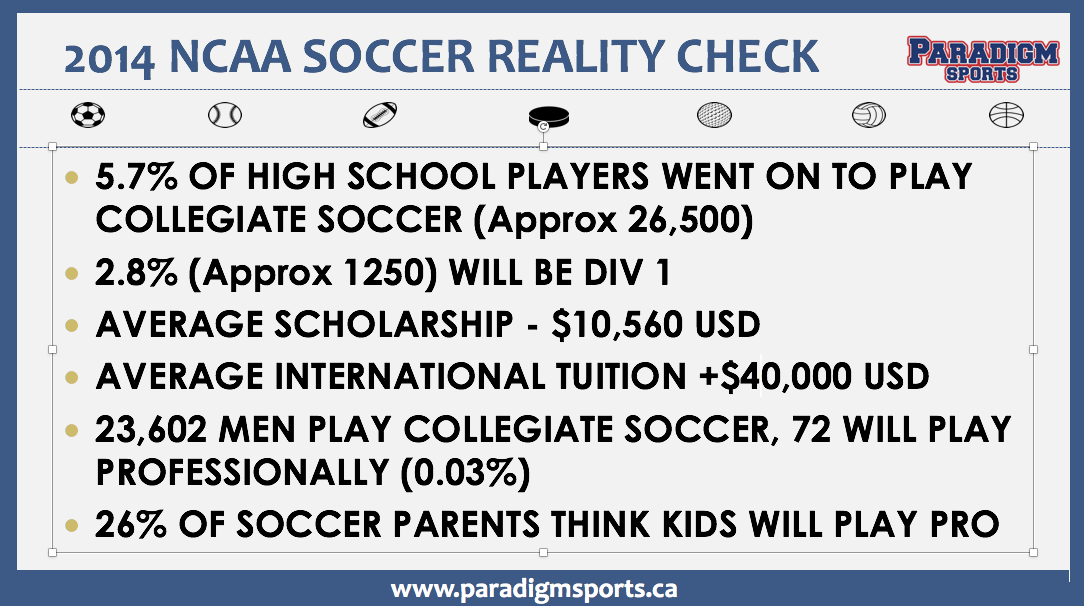
REALITY CHECK – a colleague of mine shared me the soccer statistics which I reciprocated with hockey a few years back regarding NCAA/Professional path of US Soccer Players


As admirable as it is for all three of their children to chase the dream, like Hockey, the reality that they will reach that level is a longshot at best and depends on so many factors for all the stars to align.

The sad reality for both families and their kids who are rolling the dice and going all-in with one sport year-round as early as 7 years old is there is a very strong possibility that one or all of the issues below may happen;

  1. Kids are suffering pressure as early as 9-10 years old W5 highlighted in their episode.

Shouldn’t 9 -10-year-olds be playing a game for the sake of it, not feeling the pressure to reach a lofty goal 10 years or more down the road?


  1. All the research and data shows that these young players may quit (62% in the US are quitting by age 11, 70% by age 13 with similar trends in Canada and many other nations) due to pressure, burnout, not having fun as a result of focusing on winning at all costs chasing the dream because they are not having fun


  1. They may suffer a season-ending, worse yet a potentially career-ending injury like multiple concussions, tears of ulnar, medial, anterior cruciate ligaments


  1. May suffer depression, anxiety IF they make it to the NCAA, pro-level as they were deprived of a normal childhood which has been identified by many NCAA athletic directors is a major issue of new players coming into their programs now vs. a decade ago


  1. Worse case –  may consider, or actually do commit suicide as there has been a 56% increase in the suicide rate the last 10 years from 10-24 years of age. If you don’t think this is a reality, I personally know of 3 kids who committed suicide, the third happened to be the brother of one and cousin of two other players I coached so really hit me hard.  This stat was shared by Corey Hirsch, advocate for mental health and the Hockey Talks program the day that Tyler Motte shared he is dealing with depression and anxiety issues with amazing support by the Vancouver Canucks.  Why?  Because 7 years ago Rick Rypien committed suicide as a result of similar mental health issues stemming from the pressure to perform.

All of the above aside, many of the single-sport players I have interacted with as they got to older levels (15+) stopped smiling, stopped laughing, appeared methodical, robotic when they came to training sessions, games, other activities.

Why?

Because they lost that original love for the game they had which many parents argue with me is the reason when they support their kids to play year long, pay for all kinds of development the grind of playing one sport all year long starting as early as many kids do today became a job.

When they originally started down the path did they ask if they could WORK hockey, soccer etc?

No – they asked if they could PLAY hockey, soccer etc.

Last but not least, in the event that you have not been following business news of late, many countries are looming towards another recessionary period so the tens of thousands of dollars that parents are spending each year, much of which via credit facilities including second mortgages, credit cards, lines of credit will put the entire family in harm’s way if one of the dual incomes is lost to downsizing.

Is it really worth taking that risk going all in with one sport?

In lieu of looking at youth sports as a return on investment, we should be looking at all the other benefits it provides, developing character, valuable life lessons, healthy (both physical and mental) lifestyles, friendships, social skills being part of teams, being well rounded and becoming the best ATHLETE they can be.

If at the end of the day they are one of the select few to reach the level of NCAA, National or professional level then that is just icing on the cake.

Let’s all work together to bring the game back to the kids ….. where it belongs.