
Why we host online events

Posted Posted in Athlete, Coach, Organization Executive, Parents, Uncategorized

It’s hard to believe but I am really excited to announce that we will be hosting our 4th Online event this fall to follow the prior 3 where I have had the opportunity to talk with some of the world’s top experts in youth sports.

Mark your Calendars for our next event – Monday, Nov. 18th to Sunday, Nov. 24th, 2019

Although I have now coached for over 25 years, every person that I have had the opportunity to talk to has shared tons of tips and tricks to help me become better, and I am looking forward to learning from the next group of guest speakers that have accepted our invitation to share their words of wisdom.

If you have not signed up for one of our prior events I encourage you to consider doing so as the one thing that I came to realize in my coaching journey to date is there is so much more to coaching than writing up drills on a whiteboard.

Below is the blog that I wrote prior to our summer 2019 event that highlights why you should consider signing up for our fall 2019 online event.

Based on feedback we received from coaches that signed up for the summer and past events we have made the following tweaks for the upcoming event;

The video interviews that we will share when the event goes live Nov. 18, 2019 will be edited down to 15-20 minutes highlighting the deep dive portion of our conversations focusing on the guest speakers area of expertise, books they wrote, work they are doing to attract/retain and grow their memberships, creating cultures of excellence within their teams or organizations and many other tips to help you become better as a coach.

Our goal is to have 15 guest speakers (5 confirmed thus far) and like past events, we will have a replay of all the speakers from the prior event (total 30).

The best part, we will run it for FREE for the week we go live with cost-effective options for you to have on-demand access after the fact.

If you are currently coaching at the grassroots level of youth sports and just getting started or have coached for 2 decades and are at the high-performance level or anything in between I can’t say enough how much you will benefit from watching any of the interviews so you can add to your tool baskets.

For more insight on the 5 W’s + How, check out below.

Click HERE to go to our event page that we will be updating regularly with new speakers as they are added

As Online events (AKA Virtual Events, Digital Summits) are still a new platform with the evolution of the digital era and we have had people ask us questions the last two events I felt best this week to share insight in terms of the 5 W’s  + H for more insight in terms of our online event so you or your colleagues can consider signing up.

 

The online event consists of a series of interviews with guest speakers that are similar to podcasts, but in lieu of audio only, are recorded in both audio and video so that you can see both the host and guest speakers, majority of which will do so in their offices, homes but some in hotel rooms, on decks, at their cabins, wherever they have access to the internet.

Why do we prefer to share video and audio?

When I talked to John Kessel and Gordon Bloom, they provided me with a virtual tour of their offices by turning or walking with their laptops, both of which highlighted momentos they had from Coach John Wooden that you would not “see” on a podcast.

HOW COOL is that?

The analogy I have shared with speakers who ask for clarification is to think of it as a video podcast where 20+ speakers are released at once vs. audio-only podcasts one per week.

In the case of our online events we hosted last year, we have had various sports and free play leaders from across the globe who are asked a series of general questions then provide insight in terms of their specific work or fields of interest.

All of our mutual goals is to stop talking about the issues revolving around youth sports and focus on those that activate and provide opportunities for kids to have a quality sport experience and opportunities to PLAY For the Love of The Game.

All are asked for top book recommendations for coaches, parents as well as resources, podcasts, social media references and so forth.

The Best Part?

The week we host the online events they are FREE

This summer you will have access to 30 speakers, over 30 hours of digital content for FREE.

If you traveled to a conference where many of our guest speakers speak at, to see perhaps 3-5 keynote speakers your out of pocket expenses would be over $2000.

Even if you sign up to watch ONE speaker to gain more insight, I can tell you first hand it will be well worth it, as each one has shared nuggets that I have added to my tool basket and have now coached for over 25 years.

As coaches are in essence teachers and vice versa, the very reason why we host the online events is to provide grassroots coaches, many of which are volunteers, the simplest and most cost-effective way to add to their tool baskets as coaches.

When I have interacted with coaches across Canada, many have shared with me that they either don’t have the time or they can’t budget to attend live conferences or summits that are hosted by their national, provincial sports organizations.

Two of the largest conferences that are held in Canada hosted by Sport for Life and the Coaches Association of Canada are held in various cities across the country that not only have registration fees of several hundred dollars, but if the conference is not being hosted in your home town, airfare, hotels, meals, rental cars can lead to out of pocket expenses in excess of $2000.

I can relate all too well to how those costs can add up and be too much to bear.

The other excuse that I hear from coaches, as recently as this week when I attended the Cost of Winning screening hosted by my alma mater, UBC Kinesiology, is coaching in itself is a huge time investment to not only plan practices, coach at games but all the planning and other activities needed to be a coach.

This is where I argue all the time with that excuse, in order for you to become the best coach you can be, you have to invest in your own learning by continuing to learn.  Teachers are required to do ongoing professional development each month every year they teach and coaches should be no different, your purpose is to develop youth into adults.

How will do so to the best of your ability if you don’t continue to hone your craft as youth sports leaders?

Per the late Clare Drake, Canada’s GOAT

If you’re done learning, you’re done.

Clare was infamous for being invited to speak at numerous conferences well after he retired and after he spoke would go down in the seats with fellow coaches and start writing pages of notes.

When prompted why he did so as he was no longer coaching or teaching at the U of A

He would reply, like John Wooden who did the same, “Because I may learn something”

The event is virtual, they are accessible from any digital device that you are able to stream from the internet so you can do so when it is convenient for you to do so.  We then share out the audio-only portion via podcast after the fact.

Per one of our upcoming Summer event contributors, John Kessel, when I asked him how coaches can shave 5 years off their learning curves, he said listen to podcasts and I was humbled when he said that ours was one that was “Rock Solid”

Online events traditionally run over the course of one week, starting with a few speakers on the first day then others are added each day thereafter and the links to access arrive in your inbox daily until the event is over.

As we now have people following us from various parts of the globe (truly humbled and appreciate you doing so), we will have the speakers go live at 12 AM PST each day so should be in your inbox when you log on in the AM so can watch at your leisure.

Our Fall 2019 Online Event will run live Monday Nov. 18th to Sunday Nov. 24th, 2019

We plan to release 3 speakers per day over the course of the week across a range of topics and then another 15 will be made available from past events over the weekend

30 Speakers – 4 Countries – 3 Continents – Multiple Topics and Sports 



This is the best part, many of the speakers that we have reached out to are highly sought after keynote speakers who have spoken at conferences and events all over the WORLD and share their insight for youth sports leaders to become the best they can be.

Speakers that have confirmed thus far for Fall 2019 Event are:

Trevor Ragen, Founder of Train Ugly

JP Nerbun, Founder of Thrive on Challenge

Guy Faulker, Producer of Running Free Documentary, UBC School of Kinesiology Professor

Many others to follow, keep checking our event page for updates

Some of the speakers from our summer 2019 event we will reshare are;

John Kessel (Director of Development for USA Volleyball)

Brian Barlow (Founder of Offside Facebook Page and StopRefAbuse.com)

Topher Scott (Founder of The Hockey Think Tank)

Dr. Peter Gray (Professor at Boston U, Ted Speaker on the decline of free play)

Dr. Mariana Brussoni (Professor at UBC, Investigator at Children’s Hospital Research Institute)

Dr. Nick Holt (Associate Dean and Professor, School of Kinesiology, University of Alberta)

John Engh – (COO & Executive Director, National Alliance for Youth Sports)

Luke Earl and fellow co-founders of Top Sports

More to follow plus bonus replays from our winter and summer 2018 events for a total of 30 guest speakers from Canada, USA, UK and Australia

Each one of our speakers shares insight to help youth sports leaders learn how to shave years off their learning curves, learn the characteristics of great coaches, what they can do so kids love the game more at the end of the season than the beginning of a season and other valuable insight.

Click on our online event image below to go to our event page for more info and to sign up FOR FREE

It’s that easy.

As we get closer to the online event latter you will receive more information and on Monday July 15th we will release a link to access 3 speakers right into your inbox, 3 more each day for the remainder of the week then 15 more speakers Saturday morning (Total 30 Speakers).

If you are a grassroots coach just getting started in the recreation stream, coaching in the competitive stream or even high-performance levels, a youth sports parent, board member, official or an athlete I can say with absolute confidence you will learn tips, tricks, and golden nuggets to add to your tool baskets so you can become the best you can be and help others do the same.

Let’s all work together to bring the game back to the kids ….where it belongs

When the NHL dream comes to fruition

Posted Posted in Athlete, Coach, Early Sport Specialization, Organization Executive, Parents

BONUS – Download this Blog in PDF Format HERE

Having been a fan of the NHL since I literally came out of the womb, and for the First 3rd of my life growing up in various suburbs of Montreal, QC and every other city thereafter having a hockey rink it became a dream of mine like any other kid growing up to be like my idol and play in the NHL.

We dreamt of scoring that game-winning goal in double OT to hoist the Cup or making the save to keep the game or series alive, making that blocked shot to prevent the game winning goal, making that pass to set it up, making that big hit to get momentum and the list goes on.

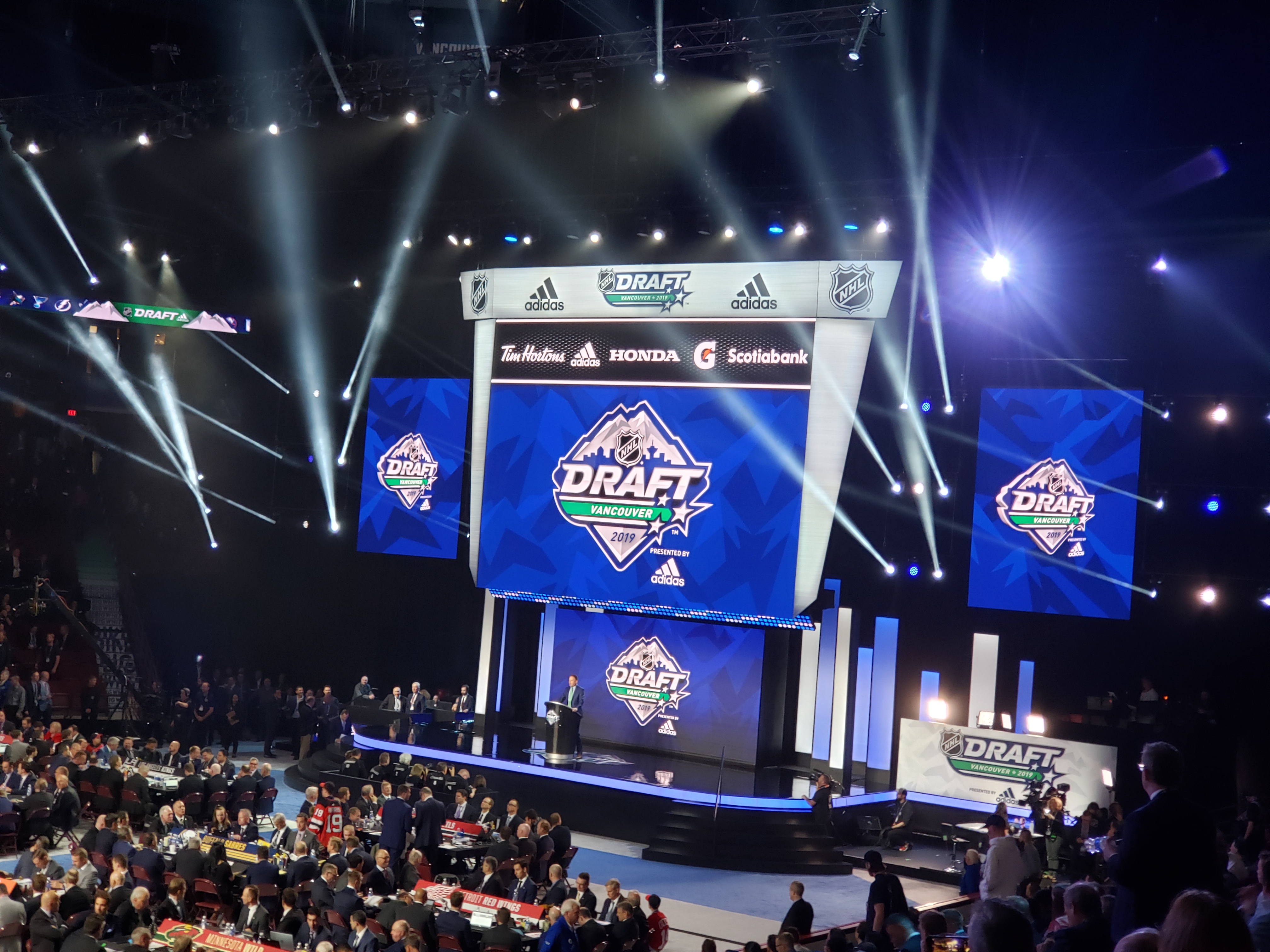
Most of those dreams as was shared in the recent NHL draft that I was fortunate to receive a last minute ticket to attend for the first time, when player videos were played on Rogers Arena big screen of the time the kids being drafted in the first round spent on their backyard rinks, outdoor rinks, ponds or mini- stick competitions in their basements as I did as a kid.

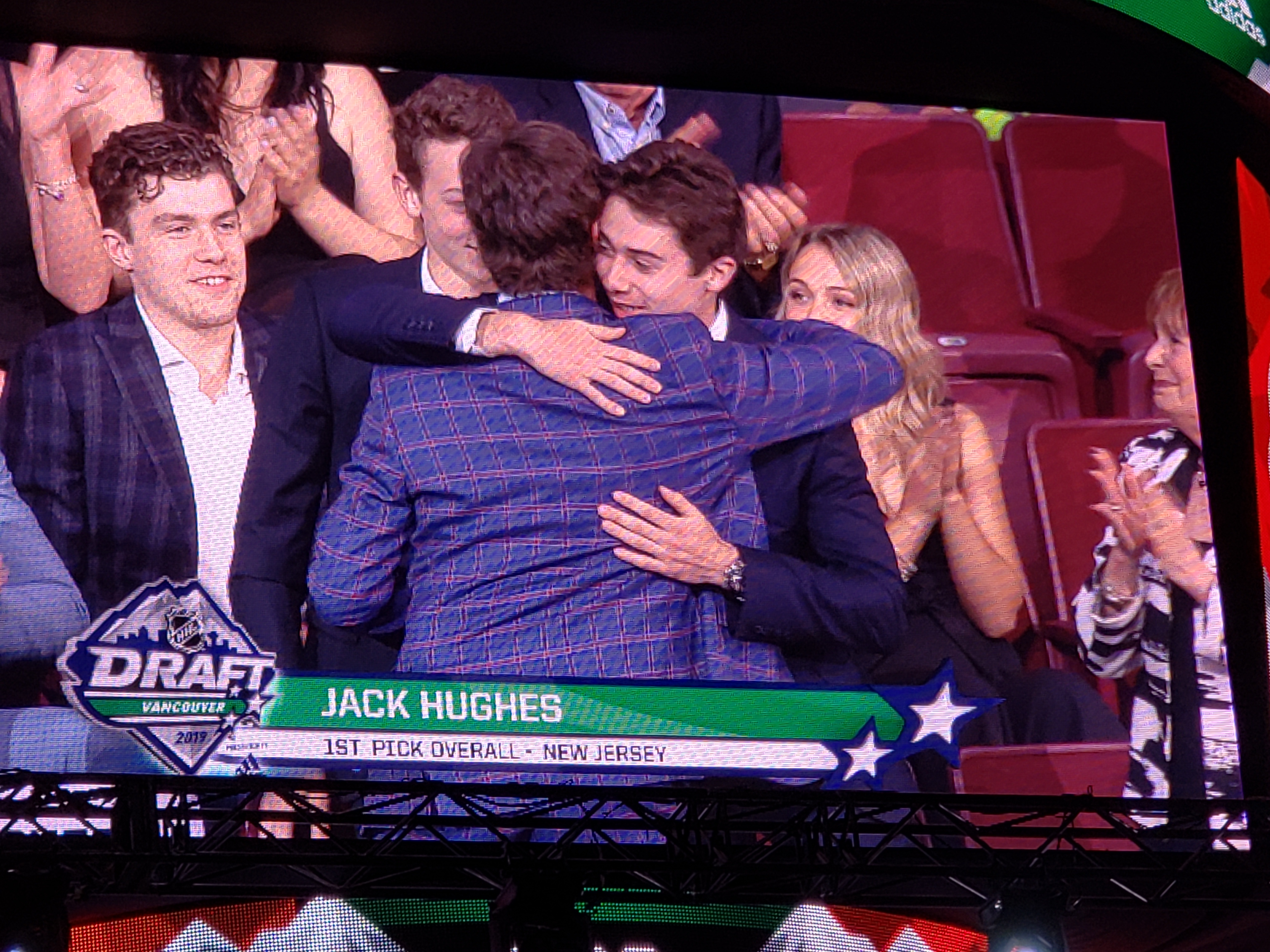
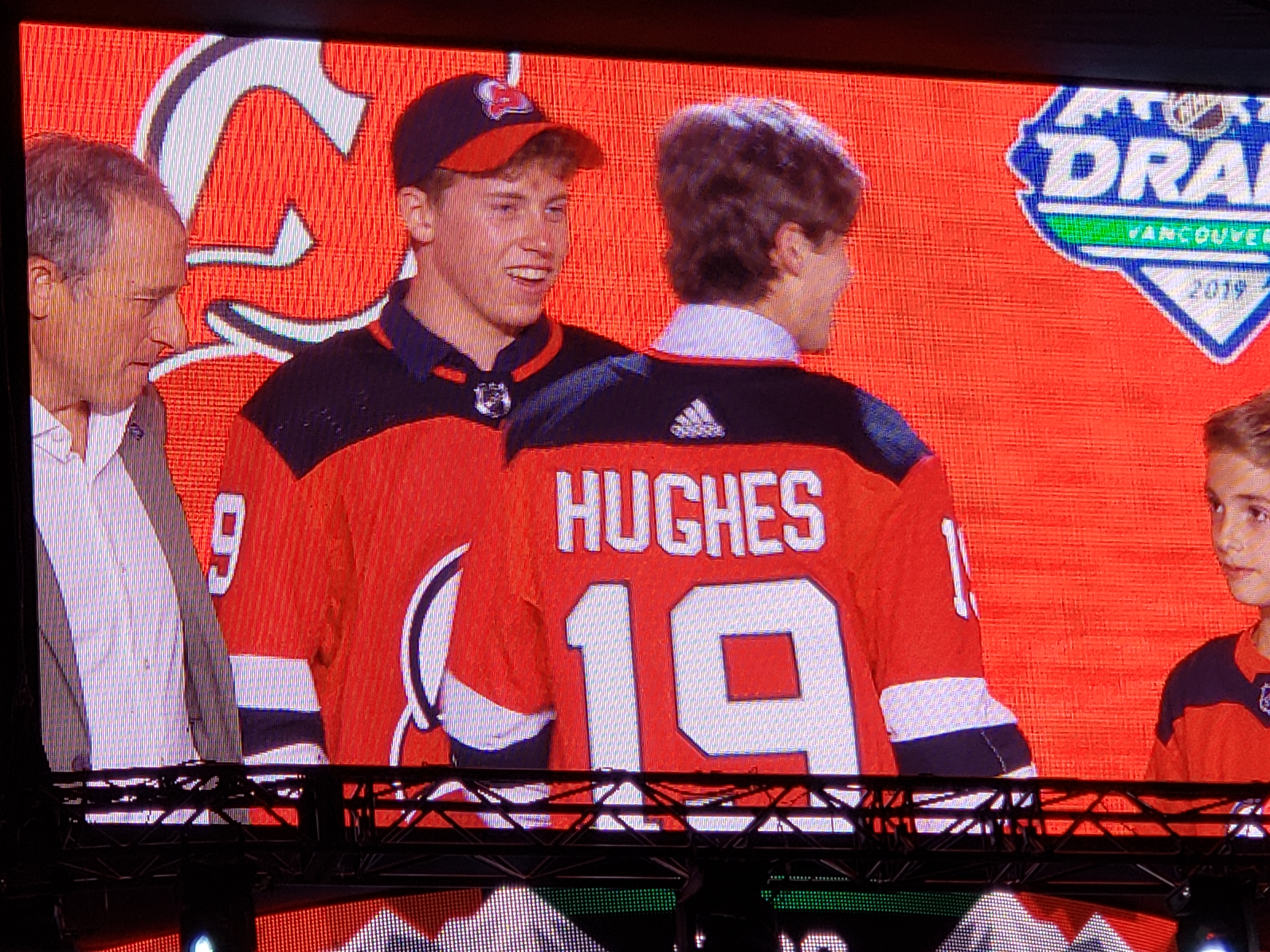
In the case of this year’s NHL draft, another of the Hughes brothers was drafted in the first round to follow his older brother Quinn who was selected as the 7th overall pick in the first round by our home city Vancouver Canucks.

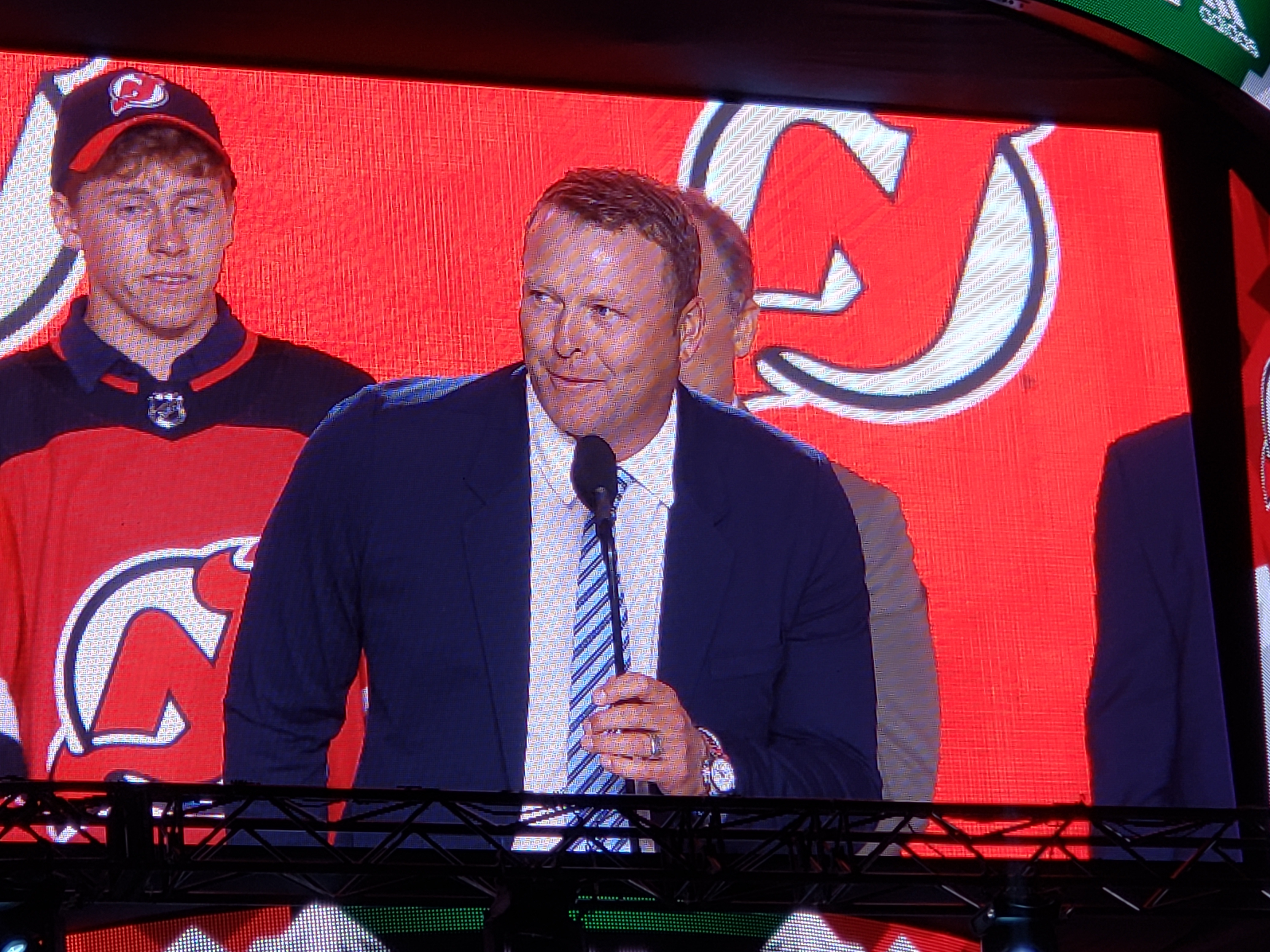
This time, it was Jack, who was pegged for most of this season to be picked 1st overall and the New Jersey Devils, announced by one of the greatest goalies of all time and hall of famer Martin Brodeur.


Back to back years where brothers and parents hugged in the stands where all the players sat with their families waiting for their names to be called by one of the 31 teams with all of their senior management, coaches and other personnel amassed on the floor of Rogers Arena


Although two of the three Hughes brothers drafted in to the NHL thus far (the next projected to come to the NHL is Luke), participated in the US NTDP, until that point they experienced playing on outdoor rinks (the epitome of free play) and their organized minor hockey in Toronto, Canada as their dad worked with the Leaf’s and other Hockey organizations.
The very same coaches that I have worked with facilitating Hockey Canada NCCP Clinics for BC Hockey but their Ontario counterparts are the ones that were instrumental in developing Quinn’s and Jacks passion for the game and initial development of their core skills.

Like the other Canadian players who were drafted, Quinn and Jack had very similar experience playing mini stick, on outdoor rinks or ponds, minor hockey in the GTHL then their junior path was US NTDP vs. Junior A or Major Junior

Listen to the podcast below to get more insight from the US NTDP U18 head coach who shares insight on the various players before they were selected in this year’s draft (including Montreal’s pick Cole Caulfield who they stole at 15)


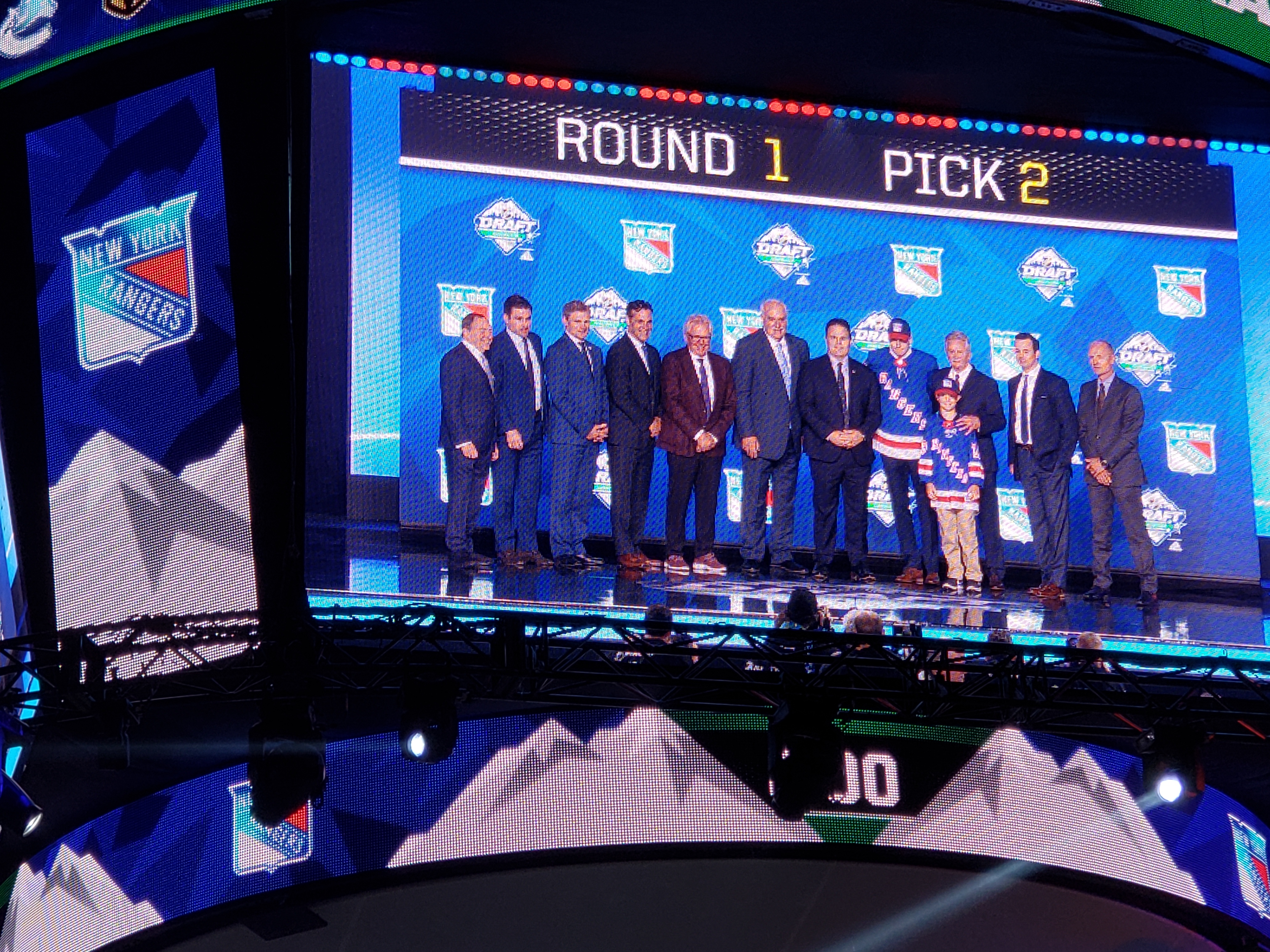
The second pick by the New York Rangers, as suspected, was for Kappo Kakko, the Finnish phenom who played on the Finnish U18, World Junior and World Championship Gold Medal teams this past season.


Similar to 2016 when Auston Matthews (USA) was the #1 pick by Toronto, then Patrick Laine (Finland) the 2nd overall pick by the New York Rangers so game on, as both teams are in the same division, we will see these two young players playing each other for years to come.

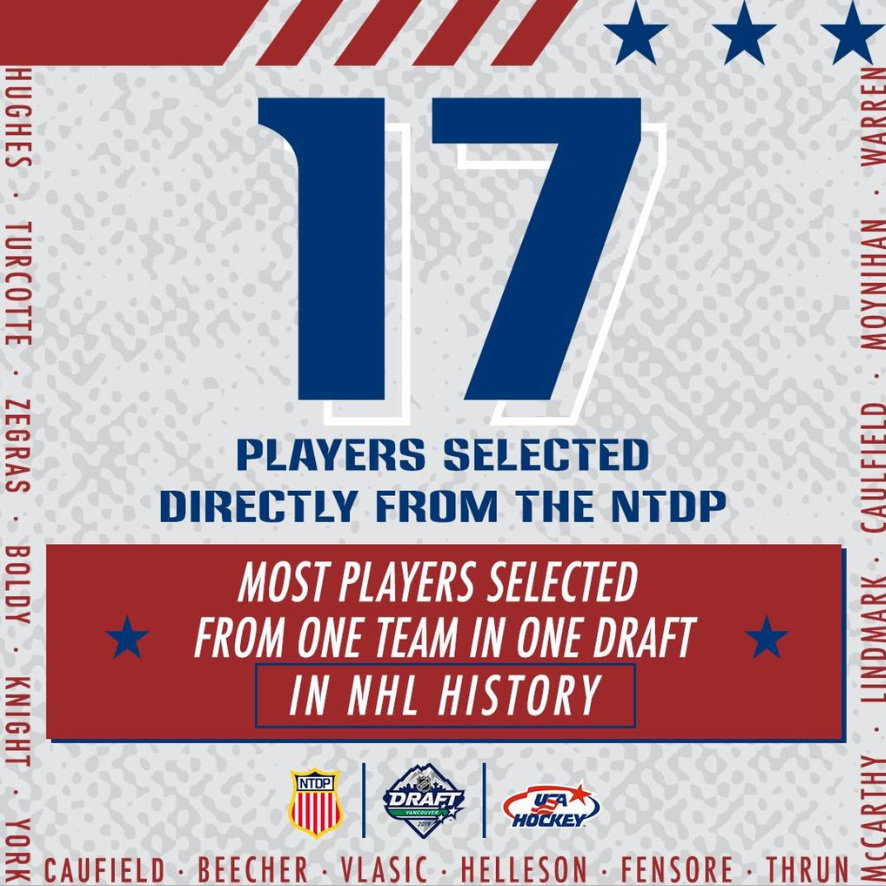
What was different about this draft, however, was the number of other US born players that were selected in the first round, 8 from National Development Team (7 in the first 15 picks), three others were born in the USA that was also chosen the first round, 5 others in additional rounds for a total of 13 (62% of the players from the NTDP U18 team)

Compare that to Canadian players, #3 – Kirby Dach – WHL, #4 – Bowen Byram (WHL) and 11 others for a total of 13

Others chosen not from the NTDP or Canadian (the exception being Thomas Harly with dual citizenship

1 other from the USA – USHL

1 – Dual Citizenship (Canada/USA)

2 more from Finland

4 from Sweden

1 from Russia – think back in the 60-70-80’s when the Red Army Dominated Internationally

1 from Germany

When I talked to Ken Martel for our online summer event, he shared that this year’s U18 US NDTP was a special group of players and they did anticipate several to be drafted in the first round, I think he and rest of USA hockey staff are sitting back and doing the same thing I did…. especially once all rounds completed, 17 were drafted.

WOW with a sense of pride like many of the parents who did the same when their son’s names were called.


So what makes the US National Team Development Program unique and lead to so many players being drafted in the first round from ONE team?

#1 – With the exception of Jack who played all his minor hockey in Canada, this year’s group are all players that went thru the US American Development Model (ADM) which adheres to age-appropriate training, small area games, and cross-ice hockey for the earlier age groups (from 5-8 years of age), endorsing multi-sport participation and FUN.

The ADM was implemented by USA Hockey in 2009 when all of the players from this year’s draft class would have been 7 years old.

#2 – Coaching certification – they all benefited from coaching certification programs in either Canada or the USA.

All of Quinn’s and Jacks Minor Hockey Coaches would have been certified thru the NCCP Hockey Canada program and all the other US players benefited from one of the top coaching certification programs in the USA to coincide with the roll-out of their ADM model in 2009.  The majority of other sports in the USA have less developed or no coaching certification programs at all as they don’t have a centralized coaching certification program as we do in Canada.

#3 – Unlike all the Canadian and International players that come to Canada to play in major junior or Junior leagues playing on multiple teams, the U18 and U16 US NDTP are national teams that train and play in all tournaments and stay together as a group annually so they develop chemistry, competitive spirit vs. Canada’s “all-star” teams that are formed a few weeks prior to participating in international events.

Did Quinn and Jack get the best of both worlds then?  Playing minor hockey in Canada than being selected to the US National Development program where they moved to Plymouth, billeted, went to school and trained with their teams?

The closest equivalent in Canada would be the explosion of academies where kids play on U15, U16 or U18 teams, go to schools together, the billet in same neighborhoods etc.

In BC/Alberta alone, there are 14 academies as members of the CSSHL (Canadian School Sport Hockey League) now with bantam prep, bantam varsity, U16, U18 boys and now girls teams with an annual bill to parents anywhere from $15-40K


A few other things jumped out for me when I was watching the draft in person that you don’t get a true feel for when watching on TV;

# 1 – When each player was interviewed and aired on the big screen to fill the 3 minute time limit that teams have to make their pick, literally EVERY player said that the experience was surreal, it had not sunk in yet, that their dream of playing in the NHL was getting closer and many shared that they wanted to make an impact and help their teams.

Translation – they are Gen Z, and regardless if it is sport, business, school, having mentored many students over the years who work with us as interns, literally every one answers the question, where do you see yourself in 5 Years?

Answer – I want to make a difference and contribute.


#2 – In those interviews, they also would thank their parents, friends, coaches and others who helped them get to this special moment that showed how much it takes a village to raise a child.

At about the ½ way point of the draft (after the Habs picked), I went to get a snack and while walking in the concourse came across a group of those from the village, several Alex Newhook’s (Colorado) friends who flew in from his home town in St. Johns Newfoundland, wearing his various jerseys were screaming at the top of their lungs in celebration.

Another was a group of Moncton WHL Wildcats teammates sitting adjacent to us who also traveled across the country from Moncton, Nova Scotia who jumped from their seats when their fellow teammate Jakob Pelletiers named was called and drafted to Calgary.

Many of the other players shared how many friends and family were there and what the whole experience reminded me of was high school graduation, as each player went up to receive his jersey ( graduation certificate), family and friends sitting in the stands would celebrate.

It was similar to when I attended both of my kids (now adults) high school and university graduation ceremonies and all I could think about was how proud I was of both of them, similar to that of all the parents would be of these potential prospect NHL players.

For a fleeting moment I thought to myself it would have been great to have been one of those parents to have seen all of my sons hard work pay off over the years to be drafted to either the WHL or the NHL, but then I reminded myself he learned a ton, had fun (for the most part) and he is now playing adult rec (AKA beer league) and loving the game more than he did in the crazy days (when winning at costs prevailed for all kids to contribute but that is another story in itself).

The other thing I thought about was all those players I coached (hundreds over the years), only a handful have gone on to play junior, one is finishing his tenure playing major junior whom I thought potentially would be drafted to the NHL and would have been great to see him go up on that stage with others but it was a reality check just how hard it is to make it just to the NHL draft, let alone play.

Then as the draft finished up we walked to a local restaurant to have dinner and truly appreciated the moment when Alex Newhook and his family and friends walked up the restaurant we were at on the outside deck, we all stood up to give him a standing ovation and then quieted down when he approached the hostess and asked if it would be possible to get a table.

Two of the tables on the deck as did we stood up (we were heading out) offered ours so a teenager could celebrate such a special moment with his family as I did with my kids when they hit such special milestones.

I then headed to my car, my cohort headed to his hotel as was attending day 2 of the draft the next day.

Although such a small % of kids that play hockey will reach this milestone, and even if drafted, may or may not even play or have long careers in the NHL my friend shared with the reason why he loves going to the drafts is that is the time we as coaches can see when kids realize their dreams they had as toddlers, as Jack Hughes did and all those other first overall picks before him.

I am looking forward to seeing how the careers of this year’s draft class evolves.

I can then look back when they make team rosters and do all the others things that we dreamed about as kids and say to myself like all the other members of their villages and say to myself, WOW I was there when they got drafted and saw their dream come to fruition.

Don`t be a kids last coach

Bonus – Download this blog in PDF Format HERE