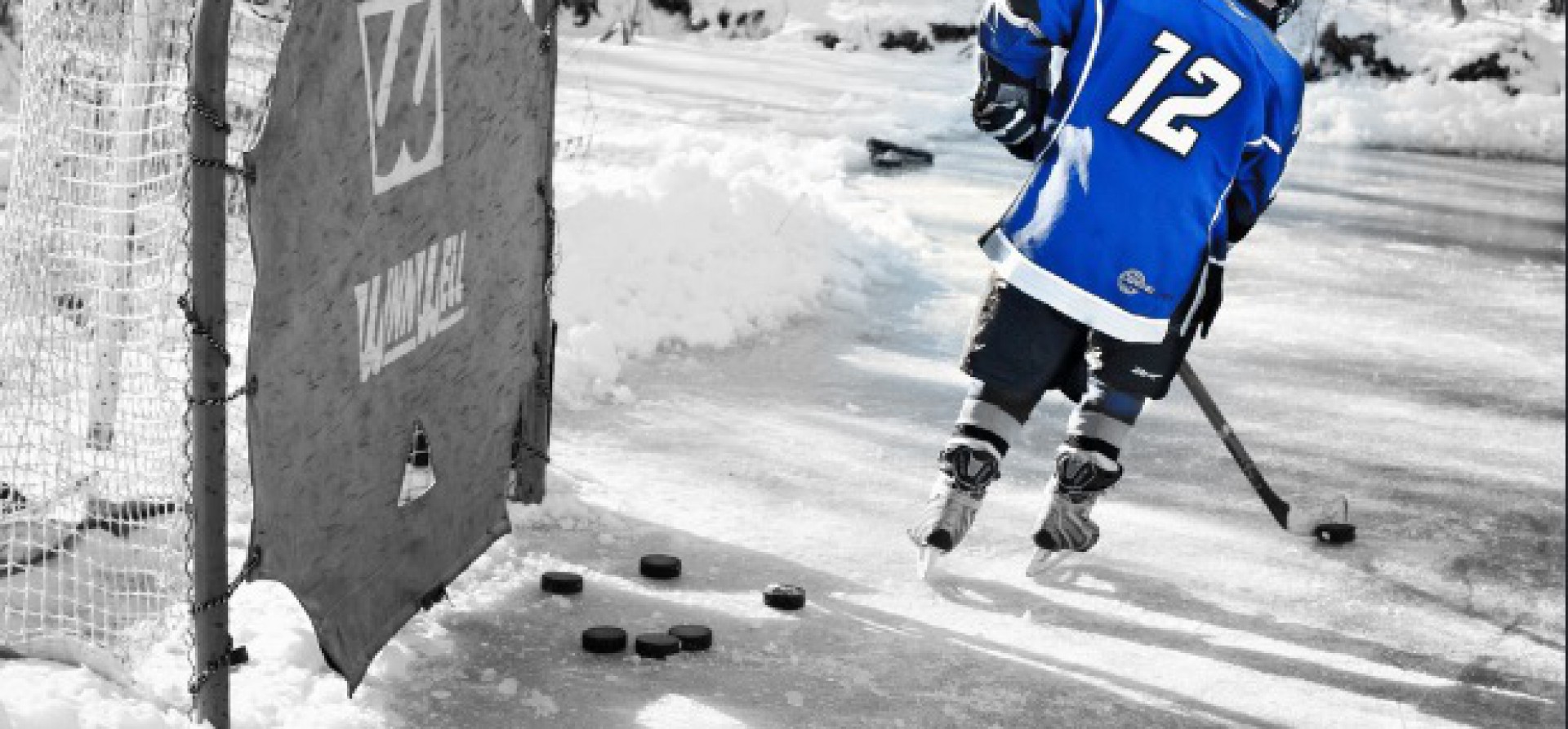

The Life Lessons I learned through Sports – Part I

Posted Posted in Athlete, Coach, Parents

This coming week I will be doing a talk on how sport teaches life lessons.

The majority of kids who play sports when I grew up played multiple sports and many went on to play beyond high school, but unlike the craziness we have seen in the adultification and professionalization of youth sports I am many of my colleagues have highlighted in recent years, we continue to play sports because we loved the game, had met and met great friends, wanted to continue being active and so on.

The first slide that I will be sharing for the talk this week revolves around the various life lessons that I learned both as a player and now as a coach for decades and thought I would share the #1 life lesson I learned early on…Commitment … and will share others in a subsequent post.

Commitment: As a Player

Probably the greatest life lesson I learned from sports was the importance of commitment which was a result of losing my father when I was 8 years old to a tragic accident mid way thru the baseball season that he had stepped up to coach my team.  My father had played baseball all the way up to AA level and I remember how excited I was when he said he was going to coach my team.

Due to the nature of his job, this was the first, and sadly the last time he was able to do so which is one of the driving reasons why I committed to coach as a many of my kids teams as possible, but one of the things he use to share with me over and over again was the importance of honouring your commitment.

When he died it was half way thru our baseball season and at the service I remember telling my mother and Nanny (grandmother) that I was going to quit baseball because I lost Dad and could not finish the season as a result.

To which both said, No, your Dad would not want you to and you will finish the season.

I was able to as one of the assistant coaches took over as the head coach of the team and remember how he pulled me aside when came back for the first practice after my Dad died and he spent what seemed like an eternity with me in the dugout talking to me about how he would do what he could to help me, offered to be a sounding board whenever I wanted to talk and even offered to drive me with his son and wife to all practices and games as my Mother did not drive.

As a result of the support that he provided me I finished the season and continued to play many more years, including the competitive level and then played and then played both hardball and Competitive Slo-pitch as an adult for many years.
 

Commitment: As a Coach

Fast Forward to when I was coaching a minor hockey team of the same age (they would now be U9, then was Major Novice) and my life came around full circle.

Just as the season was starting up, one of my players lost his dad in a very similar tragedy as I did and I am unsure who was more messed up, he and his family or I.  It brought back a flood of memories when I was the same age as well as all the emotions I dealt with over they years and thanks to great coaches they kept me on track to stay the course or I could have gone in a completely different direction.

For the better part of the season I would call his mother, go visit him at home, chat with him when he did come to practices and games (I told him to take whatever time he needed when he was dealing with emotions) but much like I did finishing my baseball season, I made sure that he finished the hockey season including an end of season tournament where one of my favorite memories was him playing game boy on a bench with a huge smile on his face with my son beside him eating a hotdog and another player.

That summer he reached out to me with his Mom and said he needed to take the year off, he missed his Dad so much and the rink just brought to many memories.

I made a deal with him he could take the year off provided that he made a commitment to return the following season as that is what his father would aspire for him to do and he agreed.

I went to his house several times that season and even took him to a Canucks game thank to comp tickets I received from the association, and when registration time period came up in May/June the following year I went to see him and his Mother and he agreed to sign up for the following year.

The only stipulation?

That I had to be his coach.

I said to him … without hesitation although I did not know at the time what I had in fact committed to.

Later that summer my son tried out for and made the AAA team which I was asked to co-coach but I still honoured my promise to coach 80CC (my nickname for the player as he also loved Motor bikes) and reached out to the division manager that I would protect him in the draft as we were able do for our sons.

He said – no brainer, great that you are doing what you’re a doing but are you sure you can handle two teams?

Fortunately at the time I had a lot of flexibility as was self-employed and told him yes and was able to make it work even though there were weeks where I was on the ice 6 times or more plus I was also in the early years of facilitating Hockey Canada NCCP clinics for BC Hockey.

Several times that year the parents on the AAA team would applaud me for stepping up to coach him as well as the rest of the kids and we brought my team on the ice a few times to scrimmage and even affiliated him to come to practices when he was up to it.

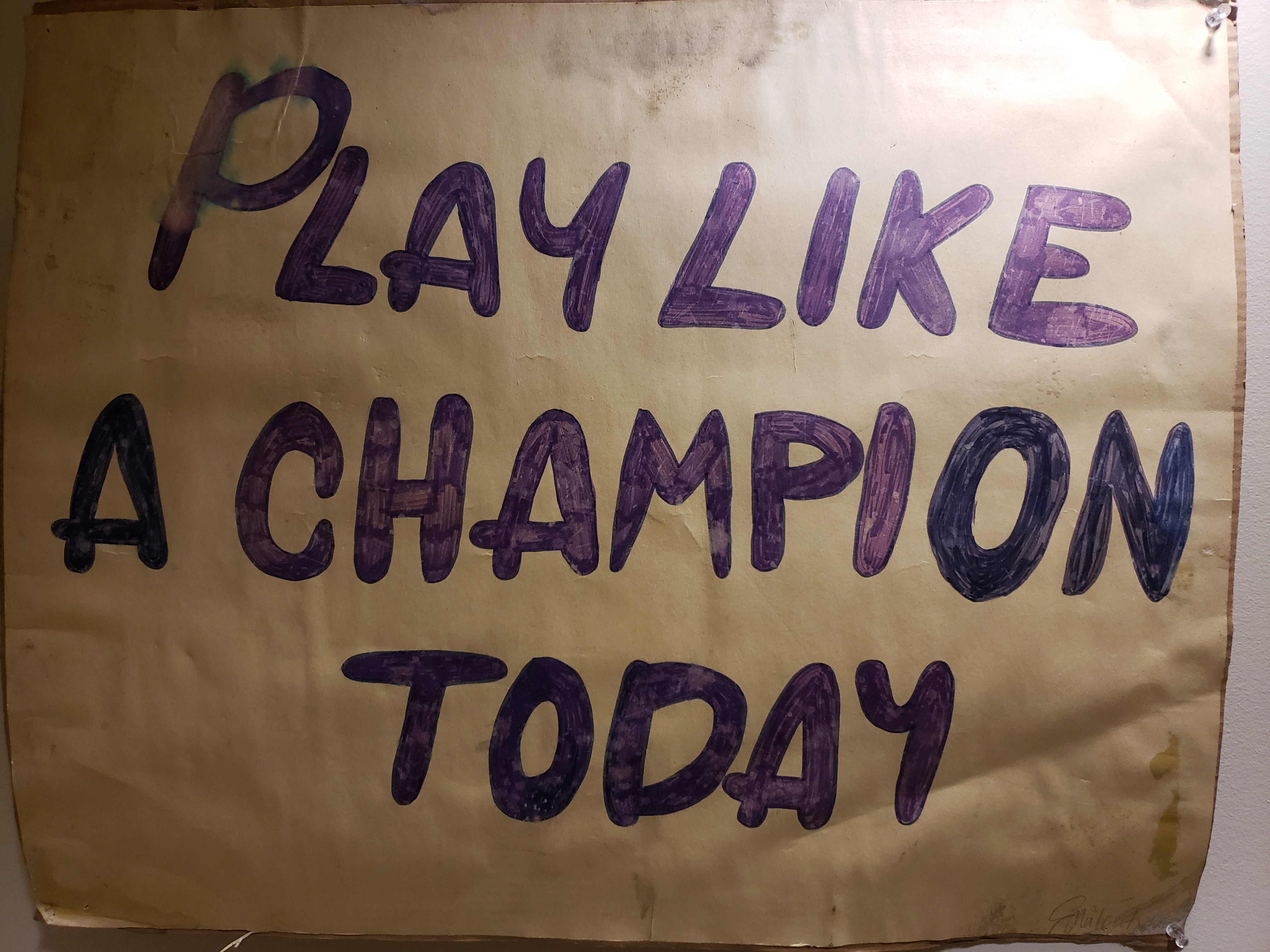
On our other team I asked my daughter to create the sign “Play Like a Champion Today” (which is now at the top of the stairs in my office) that I would bring to every game and before the game in lieu of talking about systems, tactics we would talk about core values like sportsmanship, communication, selflessness and many other life lessons that I wanted to instill in the players as my coaches had done for me.

He made it to literally every practice, game and tournaments we entered that season and at the end he walked up to me and extended his small 10 year old hand and said “Thanks Coach”

There are some memories that you have as a coach, and that was one of them, to be able to help a kid who lost his father much like I had reminded me that everything happens for a reason, and it also reminded me of the biggest life lesson I could have learned, the importance of commitment.

Although my son and my paths went in the AAA path, 80CC continued to play every year at the recreational level and was one of the top players and could have played competitively but opted not so he could snowboard, bike, water ski and various other activities.

His mother would share with me over the years had it not been for my commitment to him to ensure he stayed on track, she really was not sure where he would have ended up.

The same held true for me, had it not been for the great coaches and teachers I had growing up, who knows where I would have ended up.

Fortunately for me, the importance of commitment and numerous other life lessons I learned helped steer me down the right path which is all I have aspired for all the players I coached and now remind coaches to do the same.

Remember, your calling as a coach is not to make a living, it is to make a difference developing youth into adults.

Please ensure that your legacy is a positive one and you are not a kids last coach
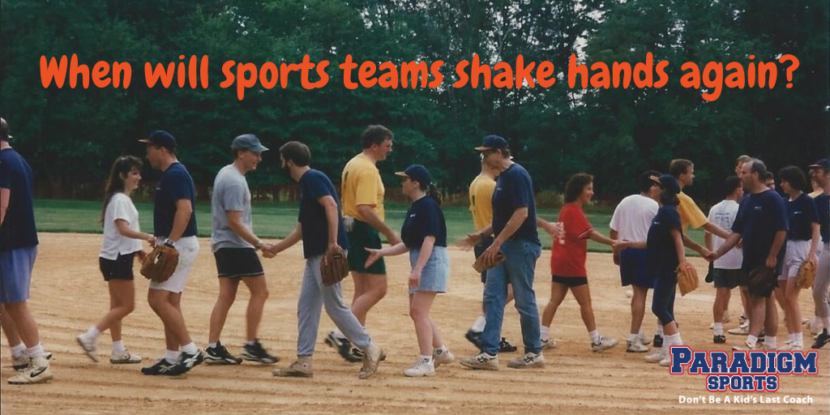
When will sports teams shake hands again?

Posted Posted in Athlete, Coach, Organization Executive, Parents

In the last couple of weeks, I have been thinking about the challenges that student-athletes are having as their spring seasons were put on hold and plans for this coming fall are in limbo due to the novel coronavirus pandemic canceling commencement ceremonies.

Two of which are my niece and nephew and I reflected back on my graduation ceremony from high school with over 600 of us wearing our gowns and gaps and the parties that took place in May and June as we ramped up for our official graduation ceremony.

The one thing that I keep being reminded of is one of the turning points that made me whom I am today, when one of my greatest teachers reminded me of the importance of never giving up in my last year of high school.

In my last year of high school, I played community football in the fall where I team went to the provincial championships (equivalent to state) only to lose in the last game which was a major disappointment but like many of my teammates we all aspired to go on and play collegiately or Junior and during that fall I also worked approximately 30 hours a week as a pizza driver and was in the honours program in my school.

After one of many crazy weekends where I played a game on the Sunday early afternoon then headed to the restaurant for my evening shift and got home around 11AM I woke up at 7 AM the following morning and went to my French 12 honours class and soon after I sat down my French Teacher, Mrs. Statz announced to the class we would be having a surprise quiz to help us prepare the provincial exam we would be taking in the spring.

To which I said … F>>> That, I am not taking a quiz in my groggy state

To which Mrs. Statz said “Mr. Mulcahy, get your ass out of my class”

I groggily picked up my textbook and binder and headed out of the class and heard the door slam behind me and as I turned to head to my locker I was shocked to see her standing in the hallway and she started to go up one side of me then down the other reminding me that I had so much potential and what I had done was not only disrespectful to her, my classmates but I was letting myself down.

It was reminiscent of that talks I had with many of coaches over the years that helped steer me in the right direction, having lost my father at 8 years old, then throwing (literally) my step-father out of our house for abusing my mother at 16 my teen years were full of anger and resentment and I had no aspirations other than getting my dogwood.

After all, I had a job, a car, a place to live and the idea of going to college or university was not even a inkling in my mind, moreso playing football, rugby that was an outlet for my anger issues but at the moment when Mrs. Statz asked reminded me of my potential to do so much more I said silently to myself that she was right … so the first thing I did was apologize to her, then went back in the class and did the same to my classmates and then set the wheels in motion what I would be doing after high school.

My grades were not quite good enough to go to University (as I worked, partied, and played sports) but was able to get into a junior college where I could still play Junior Football and Rugby in the Spring for the collegiate team so my path to higher education began.

I share all of this with you as I can relate all too well to the difficulties that my niece, nephew and all other student-athletes are having right now as they have been distanced from their teammates and classmates, they have had to improvise, adapt and overcome to complete their diplomas but unlike me and hundreds in my school will not be permitted to walk across the stage “live” to receive their diplomas, shake hands with their teachers in acknowledgment of their accomplishments nor having the opportunity to compete for what may be their last spring teams in Rugby, baseball, lacrosse or various other spring sports.


In lieu, their schools are working on creative ways to create a “virtual” graduation, where they still can put on a gown and cap, perhaps go to the stages they would have and being recorded walking across it, with representatives from the school and community than sharing via Zoom their “virtual handshake”

However these commencement ceremonies take place this May/June timeframe I believe there will be many “virtual commencement” speeches shared which cannot be done live, but below is one from Prince EA that I believe should be as regardless of the fact no ceremonies can take place this year, there is no reason why all the high school seniors should not celebrate in their own way and ensure that they do in fact “Live their dreams”

Dr. Anthony Fauci, The US Director of the National Institute of Allergy and Infectious Diseases has shared during the COVID19 quarantine period in April “we’ll never shake hands again” which had my head spinning when I came across the quote.

“WE’LL NEVER SHAKE HANDS AGAIN”

The reason?

Having played and coached sports my entire life, one of the core things that we do after games is do just that, shake hands after a competition in the spirit of sportsmanship and respect towards our opponents.

I did so for decades as I have all others involved in sports.

Can you imagine the Stanley Cup Playoffs and when teams are eliminated in a series not shaking hands after a game as one team moves on and the others head to the links?

The NBA, MLS, MLB, or any other sports when their playoff runs end not shaking hands in the spirit of competition, respect for their opponents for providing the opportunity to do just that, compete?

Any other sports competition at the professional, collegiate, high school, or community level not shaking hands after games, long playoff runs in the spirit of sportsmanship?

It all starts early on at the grassroots level where we as coaches remind our players the importance of respect, of themselves, their teammates, the officials, the opposing team and coaches, and shaking hands with respect.

Is that never going to happen in the New Post COVID19 Era of sports?

I hope not, I hope that when we do get thru this troubling time as entering into Phase I, II, III and beyond where large formal gatherings are permitted that the handshake is part of our tradition just as others like singing Take Me Out to the Ball Game in the 7th inning, singing anthems before games, raising retired jersey numbers to the rafters of great players, community celebrations to celebrate championships and so on have been for decades.

I also can say as a longtime coach, that one of the biggest rewards I have received as a coach over the years is when my players come to me at the end of a practice, a game, or season and extend their hand and say THANKS COACH.

I still remember to this day when a 6-year-old player did so on my hockey team and when he extended his tiny hand to do so made me realize just what coaching is all about, it is not about making a living, it is about making a difference developing youth into adults.

Until we can, in fact, practice the tradition of shaking hands again in the spirit of respect, sportsmanship, winning with humility and losing with dignity … stay the course … stay safe as we transition to phase II and I am crossing my fingers that Dr. Fauci was incorrect and we will be shaking hands sooner than later.


PS Tagline - Dont be a kids last coach


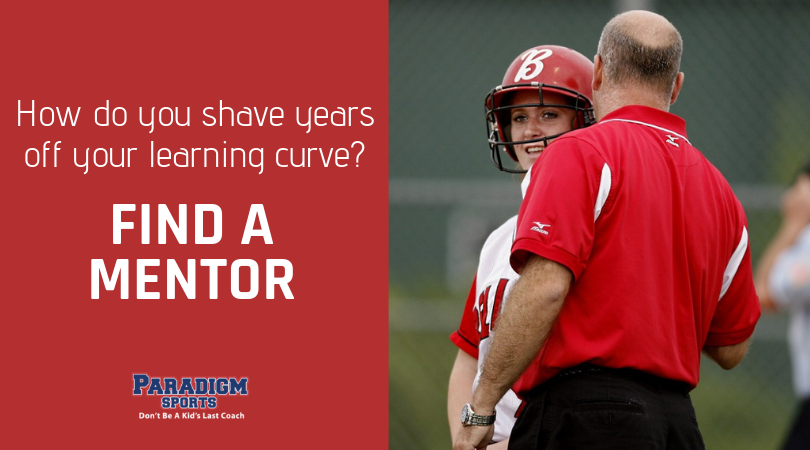
How do you shave years off your learning curve? Find a mentor.

Posted Posted in Athlete, Coach, Organization Executive, Parents


As we head into the upcoming fall season for many sports, I wanted to reinforce the importance for coaches to recognize the importance of lifelong learning.

Mentorship has always been something that I have believed in since I started coaching, initially as the mentee seeking the mentor, then as the years evolved it was I that was asked to provide insight to fellow or younger coaches as the mentor.

Last spring, I wrote about the importance of mentoring in “Coaching Skills in Sport and Skills in Life” that thinking back I should have titled the post “Ode to Glenn Zwick” as it was a tribute to the coach who acted as my mentor for many years who had probably forgotten more about hockey and softball than I will ever know.

Since that point I have had the opportunity to interact with some of the worlds top experts in sport across the globe while hosting our online events hosted thru our digital arm “For the Love of the Game” and one of the questions that I ask all guests is what coaches can do to shave 5 years off their learning curves.

To which many of the top experts I talked to shared what I truly believe in as well …

 Find a Mentor.”

One of which who shared that with me was John Kessel, Director of Sport Development for USA Volleyball, who has been coaching now for over 5 decades and has worked with thousands of players and coaches.

Had it not for Glenn’s mentorship when I first started coaching softball and hockey and then evolving into other sports, I can say I would have made many more mistakes (even though still had a fair share) and I also would not have recognized the importance of lifelong learning.

When I first graduated from my many years of university and college that last thing that I wanted to do was EVER read a book, particularly a textbook, or sit in on a clinic, course, conference or what have you.

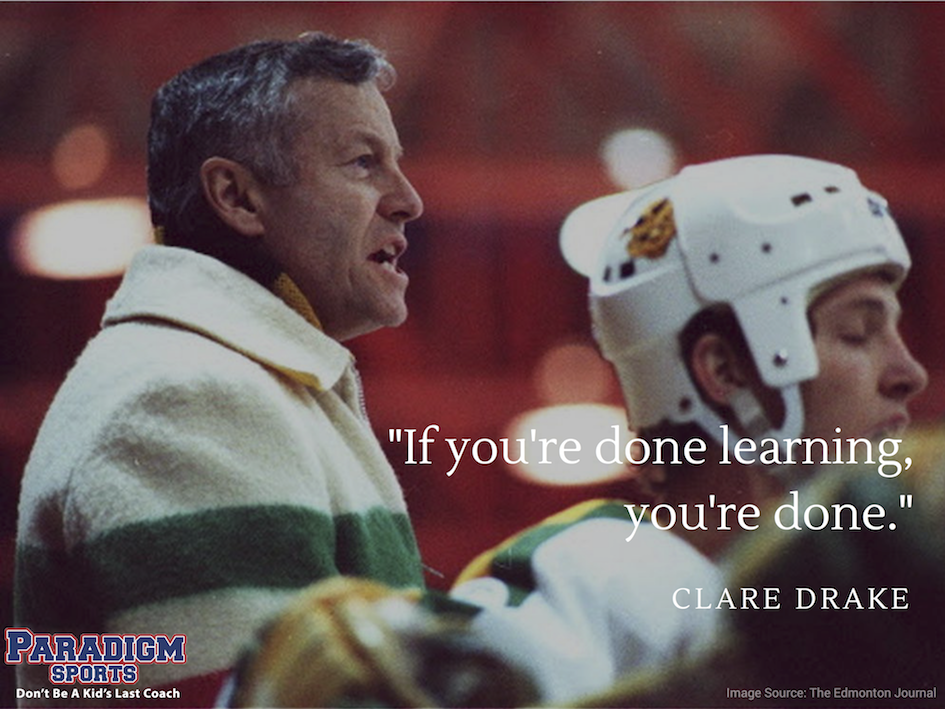
Then I came across this quote by Clare Drake years after I graduated…..

Clare (Canada’s John Wooden) was infamous for speaking at conferences well after they retired and after they did so would go sit with the attendees and take pages of notes.

When prompted why they did so their answers would be … because I may learn something.

Great coaches recognize the importance of lifelong learning.

Having coached now for over 25 years, I can honestly say any time I have the opportunity to either facilitate a clinic or course, deliver a keynote or be one of the attendees I jump at the opportunity.

Why?

Because now I can hardly wait to learn more, add to my toolbox so I can help others do the same.

Every time I run a clinic or workshop it is not only an opportunity for me to present the course materials but to have the opportunity to share insight and also learn from all those in the room.

I also have had the true privilege to mentor the next generation of leaders from my Alma Mater, UBC Kinesiology, as a Mentor but also for various co-op students that have worked with us over the years who have been instrumental in our growth as an organization.

A year ago I highlighted many of those other co-op students who contributed in prior post à bientôt which I shared with the two students as they finished their summer co-op term last week and today our 16th co-op student started.

I am not a fan of saying goodbye, rather the French saying I learned long ago (at one point I was pretty good in French but as they say, if you don’t use it, you lose it) as I have had the opportunity to connect with many of our former co-op students over the years.

One reached out to me a few weeks back and said “let’s go for a beer” which was pretty cool and he shared all the different projects was working on and how happy he was to see our growth since he did the second pass of our PARADIGM Sports Website now 2 years back (hard to believe how fast time has flown).

I have also had students provide testimonials, even recommendations for co-op supervisor awards and the biggest honour I received to date was when I was nominated for an alumni builder award by my Alma Mater, UBC School of Kinesiology, for mentoring, participating in expert panels and career fair.


I truly value mentoring and now jump at the opportunity whenever I get a chance to do so, as without someone to mentor you, how are you going to become better as a coach to help your players do the same?

In the last couple of weeks, I was asked to present at the PCAHA (Pacific Coast Amateur Hockey Association) Coach Coordinator meetings regarding the changes that BC Hockey has made to the practice evaluation process for competitive coaches.

Our goal is to have every coach that attends a clinic complete their certification for all clinic requirements in one season, and the practice evaluation is the opportunity of coach coordinators, technical or athletic directors are various minor hockey associations to provide insight during a practice evaluation.

The whole intent of the practice evaluations is for coaches to be mentored from tenured coaches and receive feedback on what they are doing well as well as what areas they could work on.

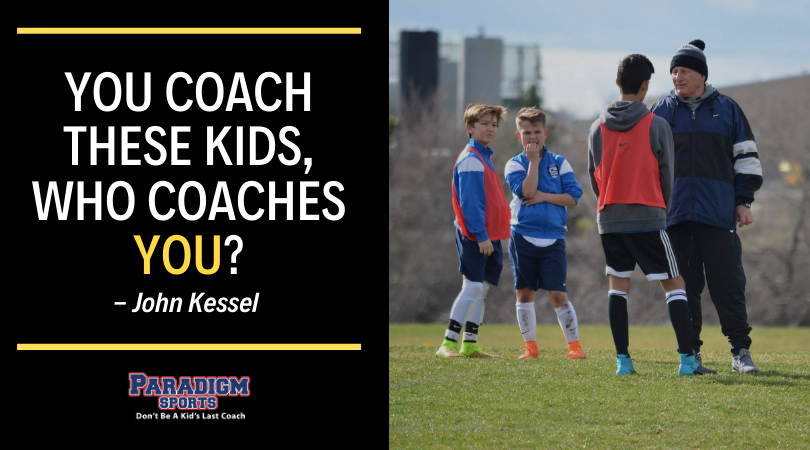
So as John Kessel (Kess) shared when I talked to him this summer, you coach these kids, who coaches you?

Another reason why you want to seek out a mentor is so you have someone to reach out to when you run into situations or issues unsure how to deal with to get advice, many times early on in my youth coaching days I made phones calls to or picked Glenn’s brain on the bench when girls were warming up about various challenges I was having.

In many instances he would merely state ”I really wish the adults would recognize it should be just about the kids and not focus on the results (wins, banners), at the end of the day we should help the kids become great people”

Fast Forward many years after he passed away, I now have been able to share many words of wisdom with coaches across Canada and like all of those that shared with me #1 tip I would share for you is to find a mentor.

Reach out to your coach coordinator for recommendations or go to an older teams practice to see how they run it, ask the coach if has time to share some words of wisdom over a coffee and you would be amazed how many are more than happy to do so.

Why?

Because for the most part (except the vocal minority that the tournaments and banners are the drivers), we are all in it for one reason, the Kids.

If we can help a younger coach hone his or her craft, it is our way of paying it forward so they can help their players do the same.

I also would recommend that you reach out to coaches in other sports, not just the one you are coaching for insight as never know what tips you will get.

Lastly, remember that whatever clinic you took for your coaching level is just the start of your journey, continue to read, attend conferences (our online event is a great way to learn from global experts 8-)), listen to podcasts, read books etc. so you can become the best coach you can be.

Why should you do so?

Because our purpose is not to make a living.

In lieu, our calling or rai·son d’ê·tre (reason for being) is to make a difference by developing youth into adults.

Please ensure that your legacy is a positive one and you are not a kid’s last coach.

Per Kess, I would be remiss in not sharing out his touching acceptance speech when he was inducted into the American Volleyball Coaches Association Hall of Fame where he thanks many of past and current mentors as well as his challenge to all coaches to “Never Be a Child’s Last Coach

We concur.

(In our chat he and I had a good laugh how much our philosophies were similar as I have shared “Don’t be a Kid’s Last Coach for years)

Let’s all work together to bring the game back to the kids … where it belongs.

BONUS – Download a FREE printable PDF version of this blog HERE


Why Coaches Must Teach the importance of FINISHING

Posted Posted in Athlete, Coach, Organization Executive, Parents

Why coaches must teach the importance of FINISHING.

In addition to all the players I have coached over the years, I have also now worked with 15 University and College co-students (our 16th will be starting in a few weeks) who have been instrumental in helping us develop our websites, social media, digital content and hosting of online events and podcasts, I have come to appreciate how today’s generation(s) (Millennials and Gen Z) differs from Gen X (the baby boomers).

Although each one of them has left their own legacy based on projects we started at the beginning of a co-op term that I have looked back in awe at times what they have accomplished, I must confess there one of my pet peeves having worked with the Millennials and now Gen Z is their lack of appreciation of not only starting a task but finishing a task assigned at times.

Generation Z Attention Span is only 8 seconds, LESS than a goldfish


I continue to see instances even of co-op students and many of which share our passion as they  played various sports think nothing of taking on a project or task with vigor but due to their upbringing in the digital era with shortened attention spans with all the time they spend on screens, social media it has been something I have to reinforce with all of them.

Some examples of instances where I had to go to the student’s desks after they thought they were finished to FINISH the task or project;

#1 – We have been a long term sponsor of a charity “Dreams Take Flight” and each year have provided them various samples, promotional items from past and current lives and in back to back summers when I prompted our co-op student to help stage, they would return back to their desks before we were finished. I would then have to ask for them to come back so we could finish what we started.

#2 – Recently I asked one of our students to re: and re: two PC computers from our conference room to another area of the office and although they did a great job with the computer in the conference room, they merely plugged in the other and hooked up to the screen and then returned back to their desk but failed to test the mouse, keyboard, internet, audio where I then had to finish the task assigned.

#3 – Various other students over the years I would assign tasks of projects to and they would take on with vigor and would get to approximately 80% completion and would shift to other projects either as they thought they were finished or suspect their attention waned, particularly with some of the more mundane tasks like manually filing, bookkeeping, that I would have to come to them and highlight they were not finished the first project. It reminded me every time just how short their attention spans could be but is direct cause in effect of their upbringing thru the digital era.

I could cite many other examples but as I run our organization now incorporates the art of coaching over the years including growth mindset, safe to fail environment, connection, developing trust, cultures of excellence etc. in lieu of getting frustrated with every student all too commonplace today with coaches and parents criticizing kids for making mistakes I sit down with them and review why it is important for them to not only commit, but FINISH the task assigned. This is no different that when coaches run drills during practices and remind players not to cheat the drill (rush thru it as fast as possible) which completely defeats the purpose.

Each time I would do so I would use analogies going back to their sports experiences where coaches should reinforce the importance of FINISHING (AKA Go THRU, not TO, the line).

Analogies that I have shared with them with videos (Gen Z is highly visual and if you can’t beat them, join them) top 5 in reverse order;

#5 – Life is a game of inches (Rugby version)

We play as a team or we will die as individuals.


#4 – Don’t celebrate until you FINISH


#3 – Never Give up, it takes a village


Everything about the importance of finishing the race including the epitome of sportsmanship from a 17 year old high school student, reminscient of when Derek Redmond’s father assisted him finish the race in Barcelona 1992 Summer Olympics (video protected by IOC)


#2 – Run THRU, not TO, the goal line

Just one of many examples why players must run thru, not to, the goal line


Many would share that they never had coaches that reinforced the importance of commitment, finishing or sportsmanship.

To which I would shake my head in disbelief as sports should be the medium to develop youth into adults and if coaches are not reinforcing the importance of Commitment and FINISHING is no wonder why today’s generation is rushing thru tasks and not completing 100%.

I just sat down with my current student to review a project that he had taken on, but did not complete the last step as he got distracted with a newer task that was assigned to remind him of the importance and reviewed all of the analogies above to which he responded no coach he had had ever shared with him.

Below is our all-time favorite example of how a player was able to accomplish a lifetime goal and finish with the support of opponents, the epitome of sportsmanship, yet another area that I have had to remind many Gen Z players of various teams I have coached the importance of.

And Our All Time Favorite at #1

Sara Tucholsky First Home Run – Ultimate Sportsmanship to achieve a lifetime goal


If you are a coach of any sport today if you don’t reinforce life skills of commitment, finishing, and sportsmanship you have not prepared them for life beyond sport.

Remember, our role as coaches is not to make a living (as most coaches are volunteers), it is to make a difference by developing youth into adults.

Let’s all work together to bring the game back to the kids.


Don`t be a kids last coach


How to Coach the Alpha’s

Posted Posted in Athlete, Coach, Early Sport Specialization, Organization Executive, Parents


We previously posted “How to Coach Generation Z” based on our experience coaching kids born as of 1995 to 2009 (post-Millenials Gen Y born as of 1984) and gone are the days where a generation was 30+ years, now they are 15 due largely to the exponential growth of the Digital Era.

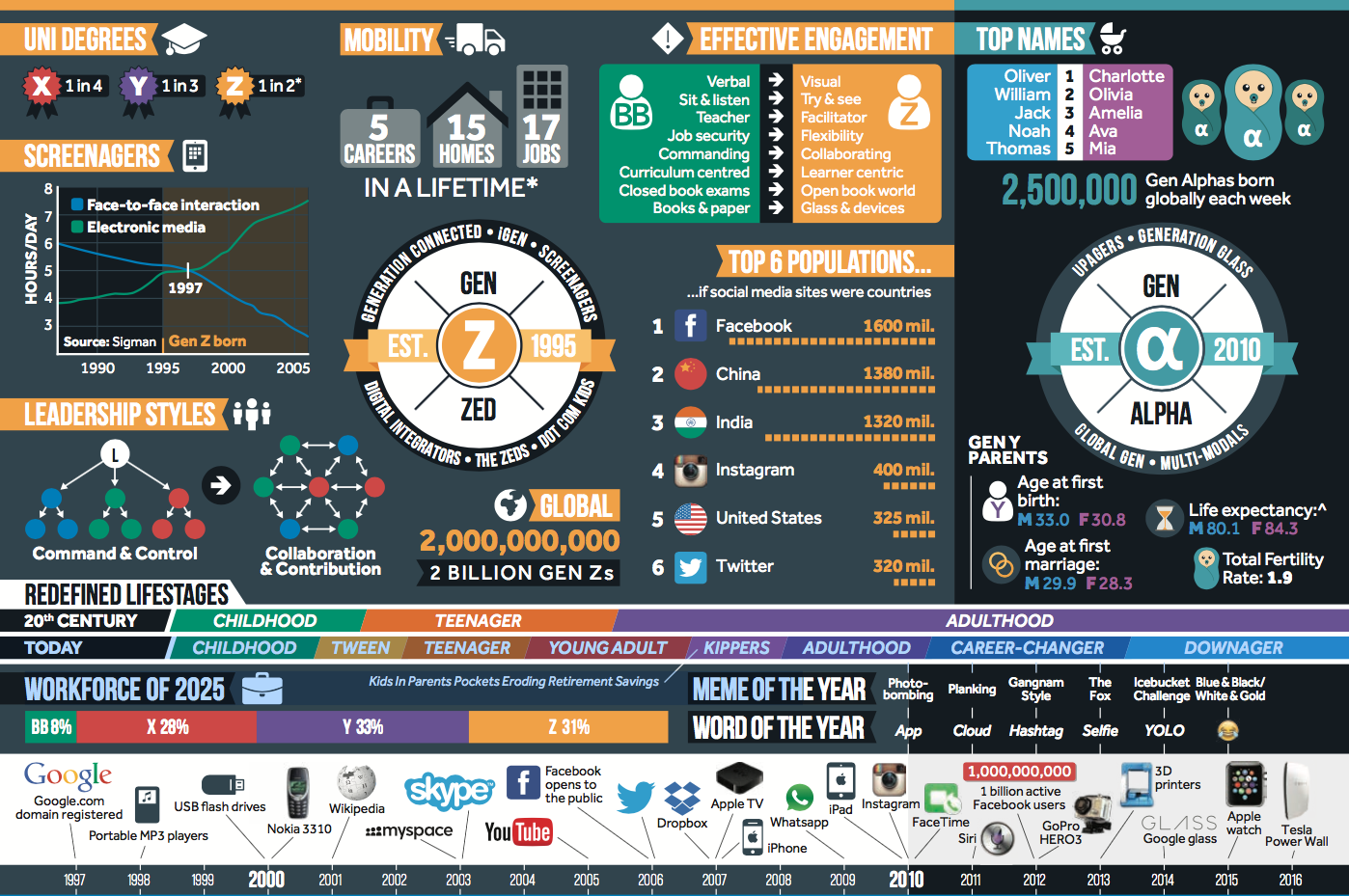
Below is a great infographic produced by McGrindle in Australia that compares Gen Z to the next Gen Alpha’s (will next gen be the Bumble B’s?)

As I highlighted about Gen Z, some of their key differences from the Millenials is they grew up completely in the digital era starting with the introduction of Google in 1997 and the Alpha’s generation born entirely in the 21st century with life expectancy in the 22nd century.

So Who are the Alpha’s ?

The year of Gen A, are ones born as of 2010 to 2025, which coincidentally was year that the iPad (and other tablets since) were introduced and became babysitters of the iGeneration, like Baby Boomers kids who watched Disney VHS Tapes (anyone remember a VHS player?).

It is also the year that Instagram was introduced, Gen Z and now Gen Alpha’s preferred medium for social media networking vs Millenial and Baby Boomers Facebook preference so if you are coaching and using social media for team updates, time to come up to speed with Instagram.

Parents of Gen A are the infamous Millenials that Simon Sinek and many others including yours truly feel we as adults let down that led to their “sense of entitlement”, participation trophies, and dopamine fixation with screens (smartphones, tablets, video games, computer screens)

Having grown up on iPads, accessing Google and Youtube with vigor, they have the ability to absorb information at record paces even beyond their Gen Z counterparts.

What they are lacking, however, due to increase screen time and parents reliance on same (even when they are at dinner by themselves I see couples pulling out their phones only to “chat” with their online counterparts than the very person they are sitting across or beside) are basic social skills prior generations had.

As they spend much more time one on one playing games on their phones, tablets as their “babysitters” vs. stay at home Moms to feed the neighborhood kids after playing outside for hours on end (can’t afford to do so) or being at daycare with others they also have been deprived of unsupervised Free Play.

Unsupervised activity outside where they previously developed the core motor skills we all took for granted, running, biking, swimming, throwing, catching, falling, getting up, jumping, climbing and so on.  It amazes me how often I talk to coaches of the Gen A’s from 5-9 years of age who share how few of them can do all the basic motor skills, but worse yet, how they struggle to overcome adversity, lack problem solving, creativity and ability to make decisions with direct instruction.

Why?

Because they have not played for the sake of playing, all of their activities are structured and their former active play time we had as kids has been replaced by inactive screen time on average 7.5 hours a day.

Here are some things that you need to know about the Alpha’s so that you can connect with and coach/teach them better:

#1 – They are the most diverse cultural generation EVER in North America

As of 2010 census bureau and Stats Can surveys, as a result of aging populations, the growth to both USA and Canada has been via immigration from across the world.  This in itself is leading to challenges with verbal communication if the alpha’s are still speaking their native language at home and English is a second language so more than evet coaches and teachers must rely on non-verbal communication (which represents over 80% regardless of the words coming out of your mouths)

#2 – They are even more digitally literate then they Gen Z predecessors

“Generation Alpha is part of an unintentional global experiment where screens are placed in front of them from the youngest age as pacifiers, entertainers and educational aids.”

Mark McCrindle – Australian Futurist

In my day, pacifiers were call “susses” and they were only given to kids who were going thru really bad teething and a trick used by many parents was to dip the suss in whiskey to ease the pain for babies and permit them and their parents to sleep.

In the case of Gen Z, as a baby boomer parents of two Gen Z “kids”, my wife and I avoided giving either of my susses as I knew how dependent some kids would be on them and remember seeing some kids with them a 5-7 years of age when I started coaching hockey and softball. I also avoided giving both any electronic devices until they were teens, including their first cell phones at 15 years of age and even now we do not permit any electronics at the dinner table for face to face conversations as well as curfews for use and total time.

Did we face scrutiny from other parents as a result?

Yes.

Do you know who also raised their kids tech-free?

The two whose livelihoods and companies they created dominated the digital era, Bill Gates (Microsoft) and Steve Jobs (Apple)

Hmmm ….. both when interviewed stated they limited to ensure that their kids used technology in moderation so perhaps the Millenial parents now could do the same?

#3 – Their parents will be the oldest and most educated of ANY generation

On average mothers will become mothers for their first in their early 30’s (vs. late 20’s for the Baby Boomers) and first-time fathers a few years older into their mid 30’s

What this means for coaches, many of which will be parents starting out coaching their 5-9-year-old kids in various organized sports that have been adapted for age-appropriate programming is coaches will need to understand the importance of engaging parents more than ever.  The parents will also EXPECT the reasoning for seasonal planning to be supported by the science, not old school coaching practices this is the way we have always done it.

They also will seek measurement tools to prove that their kids have DEVELOPED, not rely strictly on results on the scoreboard to ensure that your seasonal planning incorporated baseline, mid and end of season testing.

This includes communicating what is Physical Literacy, Fundamental Movement Skills, the various stages of the development pathways so the Millennial parents understand the reasons for the madness so to speak why we no longer play full ice or full field games, incorporate small area games and skills stations in practices and competition is pushed to later age groups.

This is why coaches and board members of all sports must implement parental support and engagement vs. the current us vs. them or dealing with parents.

#4 – The Alpha’s are the age group that literally coincide with the introduction of LTAD models by the majority of National Sports or National Governing Bodies as of 2010

These have been identified by various LTAD adaptations (as Sport for Life has recently released v. 3.0 and NGB’s have their own variations like Hockey Canada’s LTPD, USA Hockey and many other US NGB’s AGM) as Active Start (0-4 yrs old) and Fundamentals (5-8 yrs. old). The emphasis for these age groups is focusing on Physical literacy and Fundamental Movement skills.

Although LTAD models have been around now for a couple of decades, for whatever reason there are various versions LTAD, LTPD, LTAD, ADM and updates with the latest version now being introduced by Sport for Life called “Long Term Developing in Sport and Physical Activity 3.0” The reason they omitted athlete for v. 3.0 is they did not want it to be a reference only for athletes, but to promote physical literacy for all people to be active for life BUT there are still sports orgs and grassroots coaching catching up to the concept of 1.0.  If Nike changed their swoosh every few years do you think they would have the same powerful brand and consistent messaging they do today?  Just my two bits.

#5 – Like their Gen Z counterparts, they have the attention of a flea (less than 8 seconds which is the attention of a goldfish)

What this means – Cut to the Chase QUICKLY, avoid board time at all costs with Initiation (5-6), and Novice (8-9 yr) age groups, keep your instructions simple and better yet DON’T coach, let them figure it out by providing general guidance for disguised drills

Many national sports orgs now have “an APP for that”, video, audio, drills you can share via email, text or show directly on phones, tablets or better yet, dongle right to TV’s.  Embrace the technology that the Alpha’s know very well to help you coach and connect with them.

Below are just a few examples how National Sports Organizations have adapted their coaching certification programs to guide coaches how to coach of Generation Alpha to coincide with their version of LTAD programs they have recently or are going thru revisions on since 2010:

Baseball Canada Rally Cap Program – Initiation to Baseball (first phase of LTPD)

The main reason kids were quitting T-Ball or early years of baseball (which I did coach) was the kids did not have fun, largely in part to the lack of movement or engagement, standing in lines to take their turn to hit in practices, also due to fact the kids did not have the core skills needed to throw, catch, run, slide, hit.

The focus of the program is to help kids understand the fundamentals of the game while having FUN vs. the old t-Ball program.  Check out the great video Baseball Canada made of a Rally Cap Session in one my many stops growing up a kid in the outskirts of Montreal, Lasalle.


  • 5 More touches
  • 15X more hits
  • 5 More Steps
  • More Dynamic
  • More Movement
  • More engagement
  • 3X more positions played

The Best Part – Kids want to come back after each session as they had FUN.

USA Hockey – ADM Model and Hockey Canada LTPD (Long Term Player Development)

Both now have incorporated that we highlighted in Cross Ice Hockey Benefits (smaller area of ice surface leading to similar results as the Rally Cap program for more puck touches, contact confidence, shots, passes, saves etc.)

Next Season, both USA Hockey and Hockey Canada will be rolling out revamped development programs for the Atom age groups (9-10 years old) which coincidentally coincides with the first Gen Alpha’s entering those pathways who were born in 2010.

Both National Organizations have introduced Digital APPs to help coaches to better connect with the iGeneration of kids they are now coaching also

Soccer Canada LTPD

Soccer Canada now has mandatory age-appropriate coaching certification for all age groups, including the Alpha’s with their first two of four community stream clinics (rec level) and incremental licensing for competitive levels

  • Active Start – U4-U6
  • Fundamentals – U6-9 (boys), U6-8 (girls)
  • Learn to Train – U9-12 (boys) and U8-11 (girls)
  • Soccer For Life – 13+

As John Herdman, Head Coach of Canada’s Men’s National Soccer Team, shares in the LTPD Grassroots highlight video by Canada Soccer, the principals are there, that 5 to 12, is to FALL IN LOVE WITH THE GAME.

Many other sports organizations are implementing similar models so they can ensure that their coaches have the tools to coach the next generation of Alpha’s so they have fun and love the game more at the end of the season than they did at the beginning.

PS Tagline - Dont be a kids last coach

 BONUS – Download a FREE printable PDF of this blog HERE