
The Life Lessons I learned through Sports – Part I

Posted Posted in Athlete, Coach, Parents

This coming week I will be doing a talk on how sport teaches life lessons.

The majority of kids who play sports when I grew up played multiple sports and many went on to play beyond high school, but unlike the craziness we have seen in the adultification and professionalization of youth sports I am many of my colleagues have highlighted in recent years, we continue to play sports because we loved the game, had met and met great friends, wanted to continue being active and so on.

The first slide that I will be sharing for the talk this week revolves around the various life lessons that I learned both as a player and now as a coach for decades and thought I would share the #1 life lesson I learned early on…Commitment … and will share others in a subsequent post.

Commitment: As a Player

Probably the greatest life lesson I learned from sports was the importance of commitment which was a result of losing my father when I was 8 years old to a tragic accident mid way thru the baseball season that he had stepped up to coach my team.  My father had played baseball all the way up to AA level and I remember how excited I was when he said he was going to coach my team.

Due to the nature of his job, this was the first, and sadly the last time he was able to do so which is one of the driving reasons why I committed to coach as a many of my kids teams as possible, but one of the things he use to share with me over and over again was the importance of honouring your commitment.

When he died it was half way thru our baseball season and at the service I remember telling my mother and Nanny (grandmother) that I was going to quit baseball because I lost Dad and could not finish the season as a result.

To which both said, No, your Dad would not want you to and you will finish the season.

I was able to as one of the assistant coaches took over as the head coach of the team and remember how he pulled me aside when came back for the first practice after my Dad died and he spent what seemed like an eternity with me in the dugout talking to me about how he would do what he could to help me, offered to be a sounding board whenever I wanted to talk and even offered to drive me with his son and wife to all practices and games as my Mother did not drive.

As a result of the support that he provided me I finished the season and continued to play many more years, including the competitive level and then played and then played both hardball and Competitive Slo-pitch as an adult for many years.
 

Commitment: As a Coach

Fast Forward to when I was coaching a minor hockey team of the same age (they would now be U9, then was Major Novice) and my life came around full circle.

Just as the season was starting up, one of my players lost his dad in a very similar tragedy as I did and I am unsure who was more messed up, he and his family or I.  It brought back a flood of memories when I was the same age as well as all the emotions I dealt with over they years and thanks to great coaches they kept me on track to stay the course or I could have gone in a completely different direction.

For the better part of the season I would call his mother, go visit him at home, chat with him when he did come to practices and games (I told him to take whatever time he needed when he was dealing with emotions) but much like I did finishing my baseball season, I made sure that he finished the hockey season including an end of season tournament where one of my favorite memories was him playing game boy on a bench with a huge smile on his face with my son beside him eating a hotdog and another player.

That summer he reached out to me with his Mom and said he needed to take the year off, he missed his Dad so much and the rink just brought to many memories.

I made a deal with him he could take the year off provided that he made a commitment to return the following season as that is what his father would aspire for him to do and he agreed.

I went to his house several times that season and even took him to a Canucks game thank to comp tickets I received from the association, and when registration time period came up in May/June the following year I went to see him and his Mother and he agreed to sign up for the following year.

The only stipulation?

That I had to be his coach.

I said to him … without hesitation although I did not know at the time what I had in fact committed to.

Later that summer my son tried out for and made the AAA team which I was asked to co-coach but I still honoured my promise to coach 80CC (my nickname for the player as he also loved Motor bikes) and reached out to the division manager that I would protect him in the draft as we were able do for our sons.

He said – no brainer, great that you are doing what you’re a doing but are you sure you can handle two teams?

Fortunately at the time I had a lot of flexibility as was self-employed and told him yes and was able to make it work even though there were weeks where I was on the ice 6 times or more plus I was also in the early years of facilitating Hockey Canada NCCP clinics for BC Hockey.

Several times that year the parents on the AAA team would applaud me for stepping up to coach him as well as the rest of the kids and we brought my team on the ice a few times to scrimmage and even affiliated him to come to practices when he was up to it.

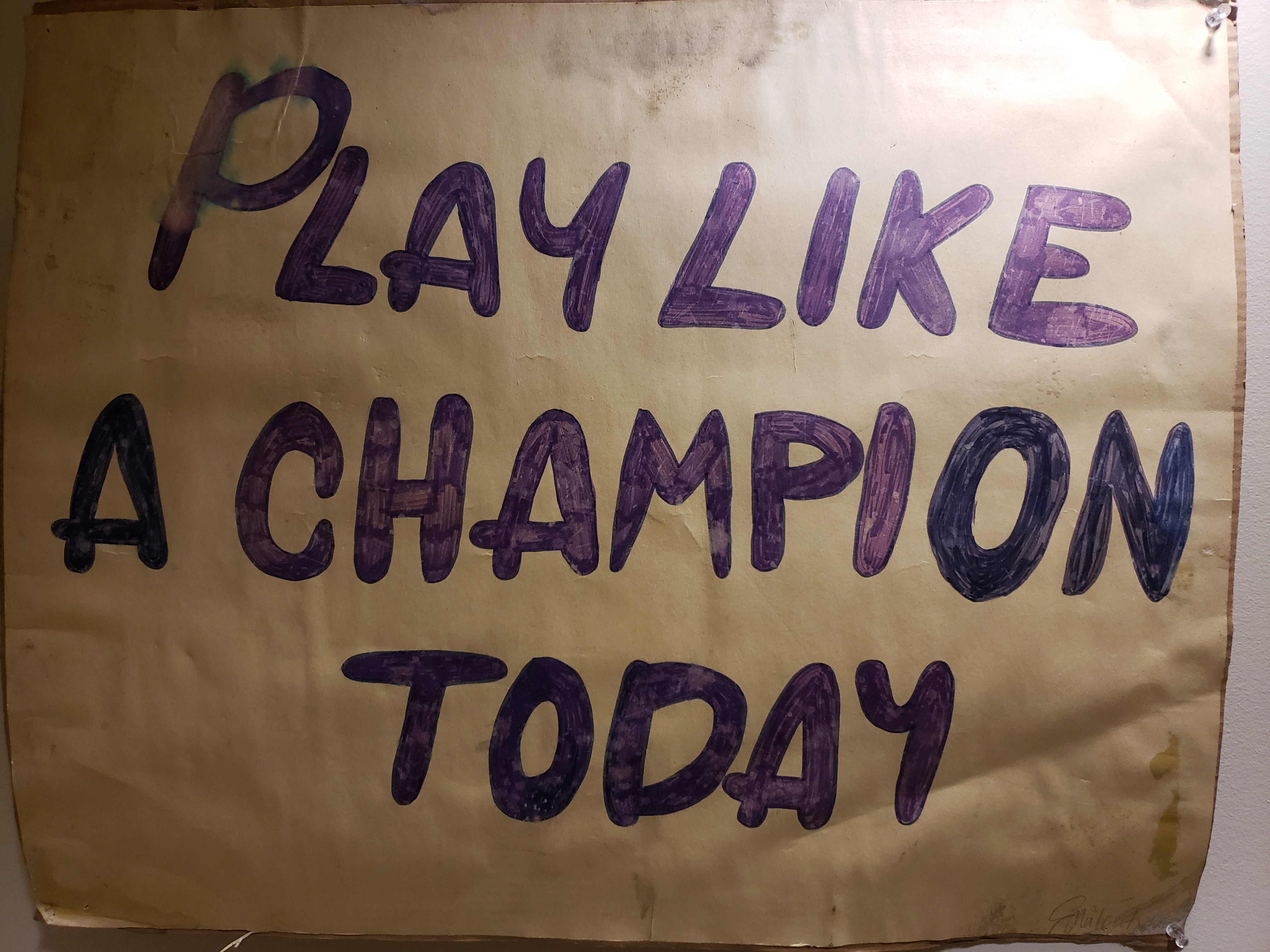
On our other team I asked my daughter to create the sign “Play Like a Champion Today” (which is now at the top of the stairs in my office) that I would bring to every game and before the game in lieu of talking about systems, tactics we would talk about core values like sportsmanship, communication, selflessness and many other life lessons that I wanted to instill in the players as my coaches had done for me.

He made it to literally every practice, game and tournaments we entered that season and at the end he walked up to me and extended his small 10 year old hand and said “Thanks Coach”

There are some memories that you have as a coach, and that was one of them, to be able to help a kid who lost his father much like I had reminded me that everything happens for a reason, and it also reminded me of the biggest life lesson I could have learned, the importance of commitment.

Although my son and my paths went in the AAA path, 80CC continued to play every year at the recreational level and was one of the top players and could have played competitively but opted not so he could snowboard, bike, water ski and various other activities.

His mother would share with me over the years had it not been for my commitment to him to ensure he stayed on track, she really was not sure where he would have ended up.

The same held true for me, had it not been for the great coaches and teachers I had growing up, who knows where I would have ended up.

Fortunately for me, the importance of commitment and numerous other life lessons I learned helped steer me down the right path which is all I have aspired for all the players I coached and now remind coaches to do the same.

Remember, your calling as a coach is not to make a living, it is to make a difference developing youth into adults.

Please ensure that your legacy is a positive one and you are not a kids last coach
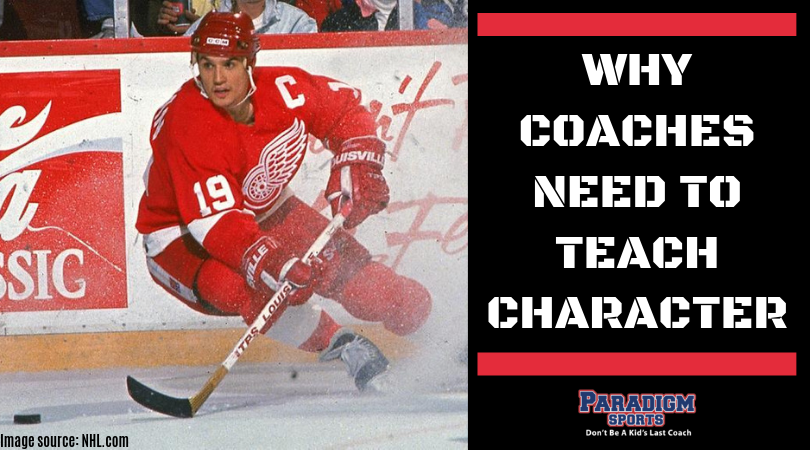
Why Coaches need to teach character

Posted Posted in Athlete, Coach, Organization Executive, Parents

For all the years that I have coached various sports, one of the most stressful times of the year for coaches, parents and players are the tryouts for competitive teams or even skills evaluations of recreational (formerly known as house) teams.

As the upcoming hockey tryout season for rep teams is fast approaching and all associations will be hosting their respective tryouts here are some tips for coaches to look for (and parents to share with their aspiring rep player son or daughter)

Rep player evaluations consist of three areas

#1 Core Skills

This is when evaluators will look at players go thru various ice sessions to evaluate players core hockey skills, skating, passing, shooting, balance, agility, and contact (body checking if applicable bantam age groups and up). Players are scored either out of 5 or 10 then after each skate evaluators (hopefully organizations have independent or ones not involved with the age group for impartiality) to compare notes and then players are ranked.

Many organizations have policies that the top X forwards (5-6) and 2-3 defencemen will receive spots on the rep teams and then the coaches have the discretion to fill the remaining spots on the team based on the holes they are looking to fill.

#2 Game Play

Players will be randomly put on to teams to be evaluated in terms of their performance during gameplay, this is where coaches not only reaffirm their skills but how they play positionally, what they do without the puck (as most of the game they will not have the puck on the stick), whether they backcheck, play on the defensive side of the puck, demonstrate sportsmanship, are unselfish and so forth.

#3 Character

This is the hardest area for coaches to evaluate, this is what I call the “Fire in the Belly Section” and coincidentally in a recent survey, I did for a parent presentation the #1 expectation that parents have for their kid’s youth sports experience is they will develop character.

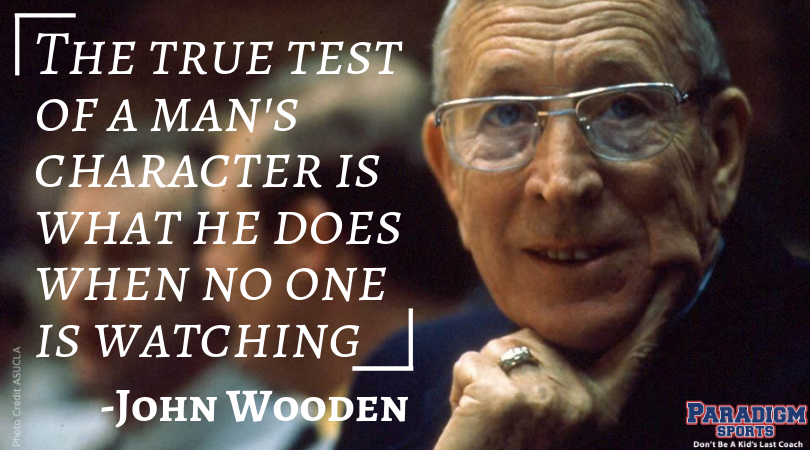
Prior to every tryout of any of the sports I have coached over the years, the only tip that shared with players is the importance that they may be evaluated at any time during a skill session or scrimmage/exhibition games and share one of many great woodenisms below;


Asides from watching body language which everyone in the arena can see, below are some of the key ones that I recommend coaches look for when evaluating players for rep hockey tryouts (same would hold true for any other sports), which is why I have argued for years that sports don’t build character, it’s the coaches in sports that do.

GRIT – The Passion and Perseverance for long-term and meaningful goals.

When it comes to tryouts, it can be a stressful experience for kids, but what can really affect their stress levels is how their parents support them to reach their realistic goals.

COURAGE – The first step of demonstrating courage is to commit to trying out in the first place, I have known many kids over the years that had the skills to play at the competitive level but lacked the confidence in their ability that they would be able to make rep teams in the first place.

The other part of demonstrating courage during the tryouts are things like how hard they battle along the boards for pucks, in front of the net for dirty goals, carrying the puck up the ice, going into the corners as a D man with a forechecker coming fast and so on.  If kids shy away from the puck but have the skills, chances are the more courageous players are going to be selected for the AAA team vs. not.

SELFLESSNESS – Are they a puck mover or a puck hog?

When I surveyed older players (after 13 years old) what they did not like about hockey, one of the top answers I received was when their teammates were selfish.  Hockey is a team sport, so when I have had selfish players on teams at the beginning of the season, I talk to them and say if they won’t pass the puck, then perhaps they should consider playing golf in lieu.

COMMITMENT – Do they show up early for every ice time, are they the last to leave the ice? Are they putting in extra time at home working on their shots, strength, cardio, balance and agility? Have they attended every ice session or have they missed any (the exception being family issues)

One of the things I remind all players, and now various co-op students that have worked with us over the years … if you’re not early you’re late.

LEADERSHIP – Do they talk to other players on the bench, do they communicate on the ice by calling defensive plays, calling for passes, letting players know to get their head up, lead warm-ups before games etc. ?

The ones that I look for are the players that bring their toolbox to every ice time, work hard, play thru adversity (other players chirping, slashing) never complain, are their early and leave the ice last, help the coaches clean up and just set an example of being a great teammate

SPORTSMANSHIP – Do they celebrate goals “they” score excessively or do they humbly circle with their teammates and thank them for making passes to set them up?  Do they have “pissy” fits when they don’t score or have the puck taken away from them, make mistakes that may lead to a goal being scored against their team and so on.

PATIENCE – When they have the puck on their stick, do they methodically up the ice with the puck, make passes at the right time (without telegraphing), wait for teammates to get open, make that first past as a D man to get the puck out of the zone OR do they panic when they get to the puck and throw it right up the strong side of the boards to be intercepted easily by the opposing team?

CREATIVITY – do they try things in the skills sessions as well as evaluation scrimmages as they have the confidence to do so OR do they not take risks as they are scared of making mistakes?

The latter is usually a sign that they lack confidence due to the fact that adults have instructed them not to do things.

Many of the above are the intangibles that we look for as coaches when selecting players for our teams but are probably the hardest things to teach kids which is why coaches have to recognize the importance of not only teaching the skills of the game but the skills of life.

The last tip I would provide for coaches, if it appears that players have the skills but lack various character traits outlined above, more often than not you would be better off opting for a player perhaps with a little less skill but with the character you are looking for who fits your desired culture.


The Reason why the ALL blacks have the winningest record in the last decade of any sports organization is one of their core values is to recruit players with character that will fit their culture (teamwork, hard work, commitment, resilient, selfless, communication) vs. those having more skills and lack character traits to fit in.

This will permit your team to go thru the storming stage much faster than if you had a few players that not buying into the desired culture you aspire for the team, as Peter Drucker made famous;


We can all learn something from the Navy Seals

Posted Leave a commentPosted in Athlete, Coach, Early Sport Specialization, Parents, Uncategorized
Reposted Nov 22, 2021 My wife forwarded me some links to videos for a meeting she was having with her national organization and one I thought was definitely worth highlighting in particular more than merely posting to FB/Twitter. It was the Texas U 2014 Commencement address done by Admiral William H. McRaven, 36 Years as a Navy Seal, that has had close to 7 Million views on Youtube. In his presentation, he shares 10 tidbits how we the graduating class of 2014 can change the world highlighting his experience as a Navy Seal and the training they have to go thru to become the top warriors in the World.

Their training lasts 6 months, including long tortuous runs in the soft sand, midnight swims, obstacle courses, unending calisthenics, days without sleep and always being cold, wet and miserable.

The training is intended to eliminate the weak of mind and body, but also to find those that can lead thru hardship and challenges.

Here are the 10 tips he shared;

Make your bed every morning (the little things matter) 

Reinforcing the point that the little things matter, which every successful coach in the world emphasizes with their teams.  Perfect example, John Wooden at the beginning of every season would walk players thru how to tie their shoes, pull up their socks, wear their shorts, jerseys.  All little things but like the Navy Seals, felt it was important so that the players could do the big things right.

Find someone to help you paddle

Every morning crews of 7 are required to paddle their boats, requiring equal effort, everyone must paddle for the boat to make it to its destination. You can’t do it alone, takes friends, colleagues, goodwill of strangers. One of mine and most coaches pet peeves is selfish players, probably the most infamous “rant” about how a player was not contributing a member of the team is former San Francisco 49’rs head coach Mike Singleterry’s “Can’t Do it” rant post game why he asked Vernon Davis to leave the game. A year removed, Vernon and the 49’rs made it to the Superbowl under new Coach Jim Harbaugh and this is what Vernon shared about the lesson that he learned “Come on, you have all the tools in the world,”

Measure a person by the size of their heart (not their flippers)

He shares the analogy of the munchkin boat crew the smallest members of the aspiring seals, none over 5’ 5” but outpaddled, outran and outswam all the other boat crews even though they had the smallest flippers that all the much larger men would make fun of.  It showed the importance of the willingness to succeed.

Get over being a sugar cookie and keep moving forward

Several times a week the instructors would do uniform inspection and would find something wrong, when failed students had to run fully clothed into the surf zone, then roll in the sand which was dubbed sugar cookie.  Many students did not understand the purpose that you were never going to have a perfect uniform and they did not make it thru training.

Don’t be afraid of the circuses

Every day during training challenged with multiple physical events, every one had standards, if you failed to meet those standards, you were invited to the circus training of additional 2 hours of physical training. No one wanted to be on the circus list, but ironically those that were on the list more often than not, developed resiliency, became stronger.

Sometimes you have to slide down the obstacles head first

He shares an analogy how a student decided to do down the slide for life (200’ rope between a 3 tiered and one tiered tower) on the obstacle course head first instead of upside down, dangerous move and instead of several minutes broke the longtime record that held before doing so.

Don’t back down from the sharks

Students have to do a series of long swims which includes an area of shark invested waters and encourage the students to summon up all your strength and punch them in the snout.

You must be your very best in the darkest moments

Another demanding task of seal training is a 2 mile underwater attack mission using nothing but a depth gauge and compass, during the swim there is some light but as approach the ship it blocks all ambient light and to be successful have to go to the centre keel that is pitch dark. This is the time where you must be calm, composed.

Start singing when you are up to your neck in mud

The 9th week of Seal Training is called Hell Week – 6 days of no sleep, constant physical and mental harassment and one special day at the mud flats, swampy patch where the mud engulfs you, nothing visible but their heads and instructors said could leave if 5 students quit even though had 8 hours left to go. Then one voice raised in song, sung with great enthusiasm, then one became two, two became three, and the singing persisted. The singing raised the hope of all the students, the power of one person, King, Washington, Mandela has the ability to change the world by giving people hope.

 Don’t EVER, EVER ring the bell

All you have to do to quit is ring the bell, never have to wake up at 5, no more cold swims, obstacle course, Physical Training or endure the hardships of training. In order to get thru the demands of the Seal Training, it pushes every student to their absolute limits, physically, mentally and the vast majority that enter each training class do end up ringing that bell.  In Williams class, it started with approximately 150 students and just in the first few weeks 2/3 of the students rang the bell where only 42 remained and completed the 6 months training to become the warriors they aspired to become. The Navy Seals training program is the most challenging of any program in the world in terms of physical and mental preparation. Of the 10 tips that William shared how the students of U of T in 2014 how they could change the world, the one that jumped out at me the most was #3, measure a person by the size of their heart (not their flippers) as a coach of many years, I always look for players that have character, heart, and commitment first and foremost regardless of their stature or current skill set. Using the NHL as an example as we head into the 2018-19 season, each day I read the paper there has been highlight of various Vancouver Canucks prospects and emphasis on how all are bigger, faster, stronger than they were a year ago.  The same holds true I suspect in every major paper in cities across Canada and the USA as teams go thru their respective training camps where many of the prospects are saying they are sore but they are only a few weeks long, followed by a series of exhibition games and daily practices vs. 6 months of Seal Training. Rarely have I seen any references in all of the prospects in terms of the character, spirit, determination to not only get thru their rigors of training camps, ex games and to date no journalist has commented or the size of their heart.
Brendan Gallagher in his infamous spot – Source: The Score
A perfect example is Brendan Gallagher, all 5’7” of him who every year and each level he moved up coaches I know from all the evaluations and scouting have done would say “he is too small” But like the “munchkin crew” of the Navy Seals training class, he has proved all the naysayers wrong as he is entering his 7th season for the Habs, one of the alternate captains on a long term 5.5M cap hit deal as they continue to go thru their rebuild (don’t even get me started about my thoughts on the Max Pacioretty trade) Who would have thought a 5’7” forward would go the front of the net with reckless abandon as Brendan does game in a game out? Apparently, the majority of the coaches, scouts, GM’s in the league had their doubts as Brendan was no selected until the 5th round, 147th overall. RARELY does any player drafted that late every get to see action in the NHL, majority become journeymen AHL or other semi-pro players never to be heard of. All of those that overlooked the likes of Brendan in the NHL, Bantam drafts or Minor Hockey Rep Tryouts could learn a little something from the Navy Seals … as I have said every year during evaluations, it is not the size of the player, it is the size of their heart that matters. That is something we as coaches can’t teach, they either have it or they don’t as Brendan and many other smaller stature players have proved to all the naysayers. Below is the video of the Admirals full Commencement Speech.   Don`t be a kids last coach