
10 Tips to run effective practices

Posted Posted in Coach

That time of the year where I get a break from various hockey hats after a whirlwind season with all the ups and downs of dealing with COVID-19 return to play, pivoting to running virtual coach clinics, coordinating coach evaluations that complied with safety protocols and marking a record number of written assignments due to ease for coaches to take clinics virtually vs. face to face in various parts of the province.

While it was top of mind, I thought this would be a good opportunity to share some tips for running effective practices based on this and past years evaluations for coaches that are generic to carry over to other sports, then late summer will share one specifically for hockey coaches are they ramp up for what hopefully will be a better normal than this past pandemic season.

#1 – Have a Plan

Depending on the level you are coaching, as the cliche goes, if you fail to plan you plan to fail.  The practice plan is probably one of the most important things you need to run an effective practice and it should be based on what you overall season plan is (another blog in itself) but making sure that you are not a game reactive coach (i.e. focusing on errors that were made in a prior game, but staying the course to develop over the course of a season

#2 – Ensure that every player has a full water bottle 

Even during Covid-19 I have talked to several evaluators that observed practices where coaches did not pay attention to the number of water bottles that players had when they came to the practice, and as a result, players ended up sharing with their team mates.  Regardless if cohort or not, but players must have their own FULL water bottle before practicing and given regular hydration breaks

#3 – Consider using computer software or an app

This will permit you to plan and share your practices in advance with coaches and players, ideally using ones that have video demos for drills so it will make your practices much more efficient

The other benefit, is everyone will be able to READ the practice plan, drill and key teaching points.  Having marked hundreds of practice plans over the years, it amazes me how many coaches have the handwriting of physicians and practice plans are very difficult to follow.



#4 – Don’t try to do it on your own

If you are just getting started coaching a sport or have for many years, I can’t emphasize the importance of finding a coach mentor so you can pick their brain for drills, best way to identify errors and correct them connect with players, engage parents and so on.  I have always argued that we should provide as much support for those starting out as they could have a positive or negative impact on kids early one when they are developing their core skills.

#5 – Watch/Listen to webinars/podcasts not only what, but HOW to coach

Too often I have seen coaches short and long term goals focusing on the what (skills/drills/tactics) but not on how to coach (leadership, communication, interpersonal skills).  Having surveyed thousands of coaches over the years, the characteristics they have shared of the greatest coaches they had did not have to do with the what, it had to do with the how … how much they cared about them as people, how they connected to them as individuals, how they taught them valuable life lessons and so forth.

#6 – Ensure that your practice plans adhere to your sports LTPD/LTAD model

Too often I have seen coaches having tons of high level flow drills, strategies, tactics for young age groups when it should be the polar opposite.  In lieu of team tactics/systems, should focus on core skills and individual tactics until kids are in their teen years.  Without the skills, they can’t execute the systems and strategies

# 7 –  P&R = Patience and Repetitions

Terry Crisp, long term hockey coach shared with a colleague of mine who shared with me Terry’s philosophy on practices, as a coach you had to have a lot of patience and also permit players to do numerous repetitions to get it right.  Often I have seen coaches in many sports run practices and when players are making mistakes they scream at them for doing so.  In lieu, what you should be doing is encouraging them to make mistakes and come out of their comfort zone

#8 – Remove the joystick

In lieu of treating your players like mini-me’s or robots to do drills exactly as you drew it up on the whiteboard, what you should provide them the opportunity to do is to figure it out on their own (AKA – FIO per Corey McNabb at Hockey Canada).  One of the biggest issues that all sports face to day is players are too robotic, lack creativity and is a direct result of being over coached

#9 – Make it Safe to Fail

Much like I did coaching all the kids on teams that I coached for a myriad of sports, I have fostered a safe to fail environment for the co-op students we have sponsored over the years who have been instrumental in helping us build out our websites, host summits, webinars, podcasts and so forth.  They all work on terms of 4 months and I know when they start it will take several weeks for them to get up to speed with our various platforms, and provide them a safe place to make mistakes (within reason) while they do so.

#10 – Smile

Last but not least, regardless of what type of day you had before you got to the field, rink, court for the practice, I can’t emphasize enough the importance for you put you coach hat on when you arrive and smile and greet all players when they arrive.  Ask they how their day went, how school was, what they learned and various other queries to get to know them better as people, then when you run the practices and are on the bench/sidelines for games they will know that you have their back and truly care about them as people first, athletes second

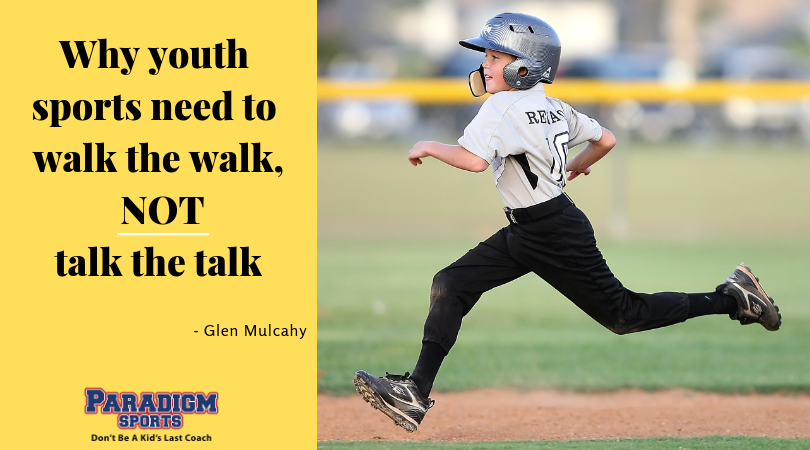


Why Youth Sports need to walk the walk, NOT talk the talk

Posted Leave a commentPosted in Athlete, Coach, Early Sport Specialization, Organization Executive, Parents

In the last few weeks, there have been so many examples of scandals that have to the forefront revolving around youth/collegiate sports it has led to me shaking my head in disbelief.

As I came across each article, video, a podcast I kept saying to myself, am I missing something, how can all these organizations think they would never be called out in today’s age of social media?

How can all those involved in leadership roles with sports organizations, universities think nothing about talking the talk, but are not walking the walk?

They thought nothing of sweeping issues under the rug in lieu of owning up to them and doing the right thing showing honesty and integrity were core values they not just wrote down in policies, best practices, KPI’s, mission statement but they adhered to them EVEN WHEN NO ONE WAS LOOKING, the true test of integrity.

As I was raised by my single parent mother and her mother with Scottish and Irish Heritage, the one thing that I learned from both was the importance of integrity, regardless if someone was watching, always do the right thing even when it may mean you have to deal with repercussions.

Perfect example, while still in Montreal was playing pickup baseball in the street and I got a hold of a pitch and broke a neighbors window.  I immediately went to them and apologized and offered to pay for the damages out of my allowance.  Some of my buddies said to me, what are you doing, run, decades later suspect they may not appreciate the value of integrity.

It is one of the very reasons why I love the game of golf, you play the ball where it is played, and the greatest amateur of all time, Bobby Jones, lost out on the 1925 US Open Major Championship as he called a penalty on himself as the ball moved when was lined up his club although no one else saw it.

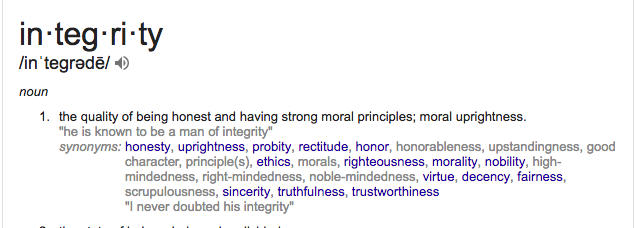
Below is the dictionary definition of Integrity:


Perhaps I am old school, but I still (naively) believe in the concept of a man’s word meaning just that, a man’s word.  Shaking a hand with someone and honouring that commitment.

Early on in my youth coaching tenure I had a 7 year old player tell me that “you did not honour your promise” when we ran out of time during a practice and not have a game to end it and to this day I tell all coaches, if you say something, you better deliver or the trust you have worked on developing with your players will be lost for the remainder of the season and then some.

Unfortunately, I wonder why every day why so many people today think nothing of not adhering to the very same values.

Some of the examples that come to the top of my mind why youth sports need to walk the walk, NOT just talk the talk:

#1 – Operation Varsity Blues:

A number of NCAA DIV I and Ivy league schools have had criminal charges filed by the FBI brought forth for bribes to coaches, administrators for acceptance into their programs from $200,000 to over $6.5 Million Dollars (USD) !  Check out this article for 30 Fast Facts about the college admission scandal

#2 – Sexual Abuse/Harassment:

All of the sexual abuse and harassment scandals that have come to light the last couple of years, in particular, USA Gymnastics who continued to try and hide evidence well after the allegations had come forward leading to the USOC to initiate removing their sanctions as a national governing body.

As a result of the CBC three-part series where 222 coaches were convicted of abusing over 600 victims, Kirsty Duncan, Federal Minister of Sport, the COC/CPC and others committed to not just talking the talk, but walking the walk by coming up with a harmonized code of conduct for all sports organizations that WILL hold them accountable to ensure that no other kids are victims of a system that requires a drastic shift in culture.

Hopefully, this leads to further action in terms of implementing a third party reporting and review organization that is totally impartial so athletes have can report instances of abuse without fear as was tabled by all those present I talked to at one of the Safe Sport Summits held in Vancouver earlier this week.


#3 – Minor Hockey Organizations Harassment

All the recent harassment and abuse allegations brought forth in recent news that they did their own internal investigations and either extended short suspensions or nothing at all as a result of their internal investigation.  Do they then wonder why they have seen such a huge decrease in their membership or just write it off as a bad year (after year, after year)?

#4 – Junior Hockey Clubs – Spring Camp Invites

One of my favorite examples of complete disregard for integrity and transparency.

Junior Hockey Clubs that are infamous for hosting Spring/Summer prospect camps, inviting 60 players, up to 30 goalies (yes one camp one my former goalies went to had 34 goalies vying for 2 spots) which many argue is a cash grab, not a real opportunity for the players invited to earn a spot on those teams.

As my son has been invited to so many camps over the years we both lost track, even now, after he aged out of Junior level I still get the odd invite as we ended up on “a List” of prospect players going back to when he played Bantam A1 at 14 years old.

Ironically even after he quit hockey we still receive invites and the reason why I recommend to any parents that go thru the same is to be selective which camps you go to and ideally confirm that someone at the team saw your child at a game, tournament before you accept the invitation so it is fact legitimate vs. mass mail out to fill the camps.

There is nothing more humorous then getting an email saying “Dear Prospect” from a Junior Team in Ontario or Eastern USA that is “guaranteeing a spot on the team” sight unseen.

There is also nothing more frustrating as a parent when you are sitting beside the coaches and scouting staff when they are supposed to be evaluating ALL the players in the first game at the camp and they are sitting in a bar, drinking, ordering meals, joking and then talking about their roster where they only have 2 spots to fill (of the 60 players invited to the camp)

Translation:  Junior teams lack integrity and merely host the camps to start building their bank account as camps can equate to approx. 15K of revenue of which only 1/3 goes to ice and practice jerseys players/goalies receive for attending.

#5 – Private Non-Sanctioned Sports Organizations

All the private sports organizations that are “selling” early sports specialization to vulnerable parents “guaranteeing” if they spend thousands of dollars for the son or daughter to specialize as early as 6-7 years old they will get an NCAA full ride scholarship or play professionally.

A perfect example is one of many private non-sanctioned hockey organizations that are popping up all over Canada that are recruiting 6-8-year-olds.

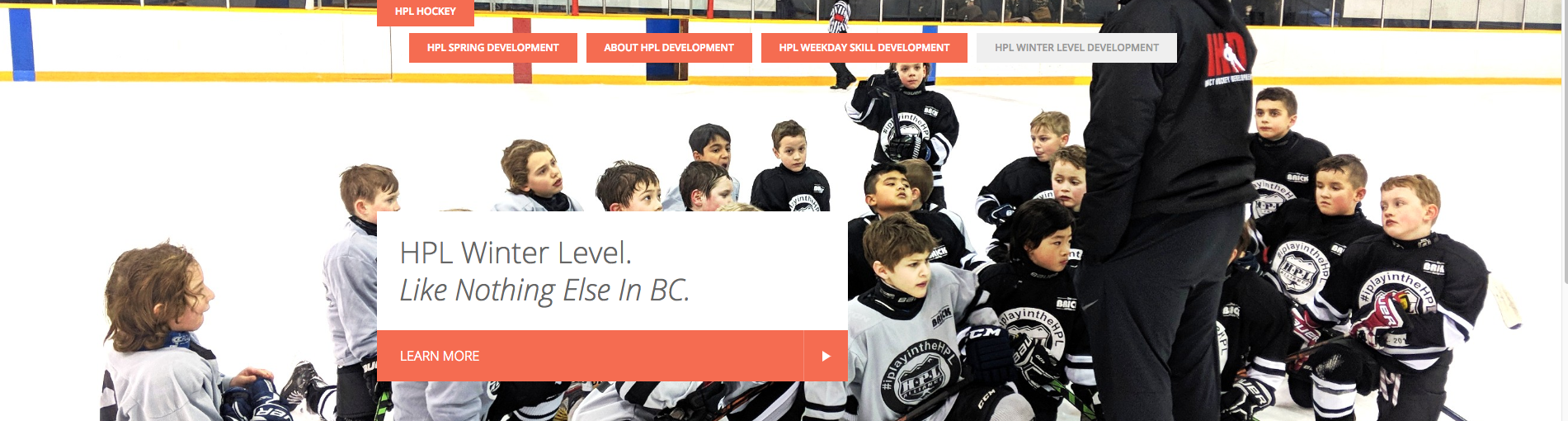
Below is screenshot from the most recent one that I was made aware of that started up in the Lower Mainland of Vancouver, HPL Hockey (for High-performance league) who are recruiting 6-8-year-old kids to participate in winter ice, games to prep them for spring hockey.

The very fact that all these kids had their picture taken on the ice WITHOUT helmets and suspect the non-certified coach also (if pic showed) goes against the Hockey Canada Safety requirements so that in itself should be a major red flag for parents.

Did every one of those parents sign a waiver so their kids could be pictured for the ENTIRE WORLD to see online?

When all the science/data shows that early specialization is NOT the right path to become the best athlete you can be, in lieu long term athletic development as it takes YEARS, every time I see another one of these pop up I shake my head.

It’s a SCAM, they are just in it for the money not having the best interests of the kids at heart and suspect majority in this picture will quit hockey by 13 as a result of “working” hockey vs. “playing” hockey seasonally.  If you truly believe the fact they are doing so for the kids, then I have some great swampland in Florida would be interested in talking to you about to give you a GREAT Deal.

There are so many other examples I can cite, but as I share with all stakeholders I work with, if sports organizations do not have integrity and honesty as the basis for their core values and not only talk the talk (policies, procedures, mission statements) but WALK THE WALK (full transparency, accountability, enforcement, discipline) their memberships will just continue to decline as a result.


Coaches at all sports organizations, the very catalysts for the change that we need to bring the game back to the kids also must follow suit, I can’t tell you how many parents or fellow coaches have shared with me that the coach stated in his initial parent/team meeting that they were going to focus on player development, be positive, fun and the first opportunity they have to show their true colours run short benches to win games at all costs, scream at kids or officials for making mistakes and so on.

Both Board members and coaches of sports organizations need to adhere to core values of integrity and honesty and be transparent and accountable not just talking the talk, but WALK THE WALK.

Let’s all work together to bring the game back to the kids … where it belongs.


PS Tagline - Dont be a kids last coach


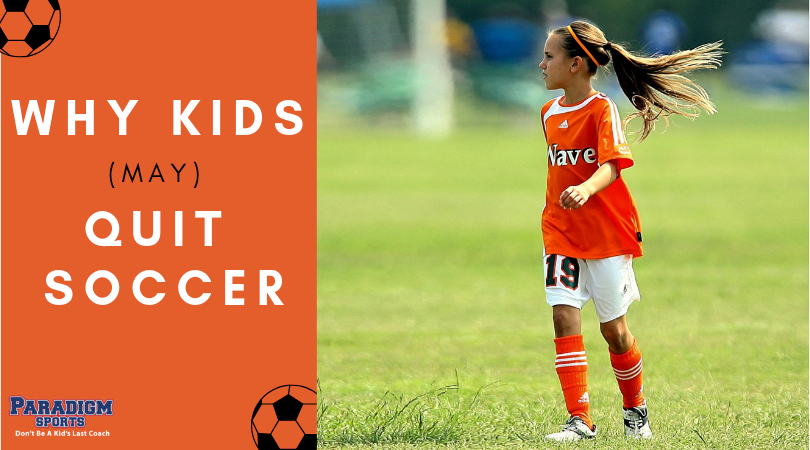
Why Kids (May) Quit Soccer

Posted Leave a commentPosted in Athlete, Coach, Early Sport Specialization, Organization Executive, Parents

Why Kids (May) Quit Soccer

Last post we shared the reasons why Kids play Soccer based on responses from the BC Soccer 2018 Retention Survey, in this post will highlight the responses to the two other areas BC Soccer was looking for insight from their players;

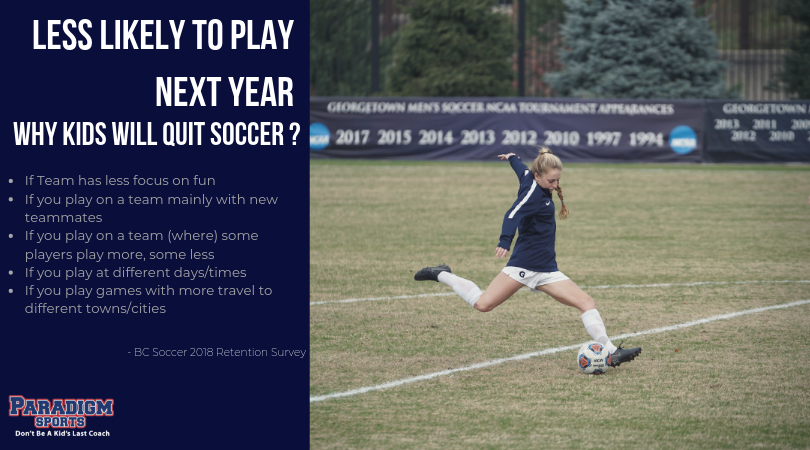
#1 – The Likelihood of playing Next Year (Why Kids (May) Quit Soccer)

And

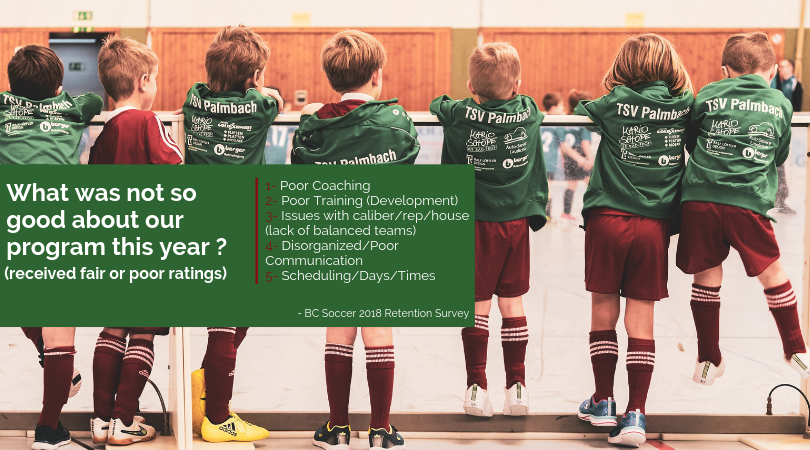
# 2 – What was not so good about their program this year (what areas received fair or poor rankings but the players)


LESS LIKELY TO PLAY NEXT YEAR

When asked “Will you come back next season”.. the top 5 reasons kids would be less likely to do so (high probability they will NOT come back to play soccer) 


SURVEY SAYS…

#1 – If your team has less focus on fun

#2 reason they would return back if their team focused on fun, second only to focusing on skills.

HMMMM … Similar to Amanda Viseks top reasons why sports were fun, #1 reason is when kids had the opportunity to try their best (focus on skills)

#2 – If you play on a team mostly with new teammates (not with their friends)

Two things that kids ask after games (sometimes during the games)

What is the snack? As Steve Simmons shared in an article he wrote many years back he continues to share every year Attention Coaches, parents: Minor Hockey is for the Children where he shares the anecdote of a novice player who stated:

“I Hope they don’t bring apple juice, I don’t like Apple Juice”

And the last question as they leave the field/rink/court…

When do we play again? (emphasis on PLAY not work as is now the case with early sport specialization)

If you loved sports as a kid and continue to play adult rec team sports ….

First question you ask after a game – Who has/how much is the beer? 

AKA – THE SNACK

Last question you ask after a game – When do we play again?

Hmmm … if we love sports in our youth, we love them as adults because they are fun, we get to play with our buddies and we play for the love of the game.

#3 – If you play on a team (where) some players play more, some (play) less.

Translation: Coaches running short benches where their weaker players sit on the bench so they can win at all costs.

90% of kids would rather play on a losing team, in ALL situations, than sit on a bench for a winning team.

As my son shared after he had the misfortune sitting on the bench with some of his teammates for the better part of a game as coach was infamous for playing his favorites and shared how he felt after the game,

“I am pissed because I was deprived of the opportunity to contribute to the outcome”.

He was only 14 at the time, and I will never forget it because it was a month after he lost his Nanny (my mother) to a 2 year battle with cancer prior to that tournament game that the coach shared with me prior to the game he dedicated the game to her in her memory.  Had she still be alive and attended that game, I can tell you she would have had some not so nice words to share with that same coach as she, like I, just loved watching my son and all of his teammate’s PLAY.

As far as I am concerned, the only reason why kids should be sitting on a bench is discipline (they took a bad penalty, acted inappropriately, hit an opposing player that could lead to injury etc.), other than that kids should PLAY.  Coaches that rely on short bench tactics to win games is a short-sighted tactic/strategy that more often than not will backfire. If you focus on the process of developing all players on your teams, care about them, believe in them, connect with them,  and develop their competence and character over time collectively as a team will improve and winning will be a byproduct NOT the focus.

There is a real simple fix to address this, incorporate fair play policies so coaches are only given a get out of jail free card for the last few minutes of a game only IF it is close and it should be the players that have BROUGHT IT that game (even if they are not the coaches “favorites” that get rewarded to be out there in latter part of the game.

This also will address the parental issues we see on social media every day, parents just want their kids to PLAY, coaches that run short benches as a far as I am concerned are a victim of their own demise.

#4 – If you play at different days/times

With every family in the lower mainland of Vancouver and many cities across Canada forced to have dual incomes now to pay mortgages and all other household expense PLUS rising costs for kids to play youth sports, scheduling consistency is critical for sports organizations so families know when/where they have to be over the course of the season, not just 4 weeks at a time.

#5 – If you play games with more travel to different towns/cities.

As soccer is now the #1 team sport in Canada, where provinces have organizations with thousands of players, why would kids even have to travel to begin with?  Community sport should be just that, community sport (the exception being smaller rural communities that do require travel to play)

The evolution of the travel teams and prospect tournaments that are driving the $17 Billion industry in the USA is based on the premise that scouts, coaches will be at these events to see “prospects” for NCAA scholarships or be drafted to Professional sports.

News flash – with the evolution of the digital era, almost any of these prospect tournaments have all of their games streamed, scouts don’t even have to leave their houses to see kids play against others on “elite” teams.  As every scout or high-level/collegiate/professional coach has shared with me, if they are good, they will be found regardless if they attend these prospect tournaments.

Note also in Amanda’s study, of 81 characteristics what is fun about youth sports, traveling to new places to play ranked right near the bottom of least fun reasons, 73rd out of 81.

It is not the kids that want to travel, it is the adultification of youth sports that has forced many families to spend their holiday time at ball fields, ice rinks, soccer pitches when they should be lying on a beach, taking a hike, swimming in a lake, going to amusement park of other TRUE forms of holidays.

What was not so good about our program this year? (received fair or poor rankings)

SURVEY SAYS….

#1 – Poor Coaching

With the roll-out of NCCP program for all levels of coaching in soccer this will help address the what of coaching relative to the age groups to adhere to LTAD, small area games, age-appropriate drills, focusing on skill development vs. tactics and strategy and so forth.

It also will take several years to see the cause and effect as many other nations have experienced like Iceland who made the same commitment to coaching in 2000 and started to see the results once they qualified for the 2016 Euro Cup and 2018 World Cups of Soccer.

It also won’t address HOW to coach, How not be a kid’s last coach, coach beyond the game, how to connect with your players, how to engage parents, how to coach generation Z, LTAD vs. Early Sport Specialization, How to coach girls vs. boys, Grow your Mindset, Make it Safe to fail and from all levels of harassment, How to develop your philosophy and culture of excellent on teams etc.

Hmmm … this is why we have coaching modules to address all of the above, not WHAT to coach, but HOW to coach.

#2 – Poor Training

Goes hand in hand with #1, poor coaches are poor teachers and vice versa

This is not the fault of coaches that have the best of intentions to coach, is due to lack of experience and training at the grassroots level and like players, it takes YEARS to develop all the skills to become a great coach to teach the skills of the game, but also the skills of life.

#3 – Issues with caliber/rep/house/unequal skill on the teams

This comes down to player evaluations to form balanced teams, in lieu of subject measurement (which has led to a lot of politics associated with team selections), organizations should be using quantitative means to evaluate players and have baselines beginning of the season, mid and end of season skill evaluations to track development.

The only one that we recommend to all organizations is the personal sport record  as many sports orgs across the globe are looking at or have already adapted for quantitative measurement including Norway Sport Federation who know “just a tad about being successful at the international level being the all-time winningest country in the winter Olympics in terms of medals”, Sport New Zealand,  US Olympic Committee, BC Rugby, GTHL and many others.

Click on the logo to go the website for more information:


In lieu, the current model used by orgs is how many wins did the teams have?

How many banners did we win?  Who scored all the goals and assists?

Focusing on outcomes, not the process.

For more insight the impact of the shift to winning at all costs has had on youth sports, reach out to us to schedule a FREE screening of The Cost of Winning followed by a Q&A session where sports leaders from across the globe provide their insights on the state of play in youth sports and the importance of bringing the game back to the kids.

#4 Disorganized/Poor Communication

From a coaching standpoint, one of the biggest asks I get all the time is how do I “deal with parents” to which I respond you should engage parents, not deal with them.

Engagement includes ongoing communication starting with a culture of excellence, a well-run parent meeting, team meetings, mid and end of season meetings as well as regular communication to all stakeholders (players, parents, fellow coaches) to ensure the ship (team) moves in the right direction.

#5 – (Poor) Schedule/Days/Times

This should be a focus for all local sports organizations to ensure consistency.

I suspect, like Amanda Visek’s Study, many other sports organizations not only across Canada but globally will be referring to BC Soccer’s Retention Survey for their current and seasons to come IF they truly aspire to buck the trends and attract, retain and grow their membership.

Kudo’s to all the board members at BC Soccer for taking this on, and now that have the answers “out of the mouth of babes” and better understanding of the motivations for their key stakeholders (players and parents) so their regional and local organizations can implement the changes to also buck the trends seen across Canada with declining numbers.

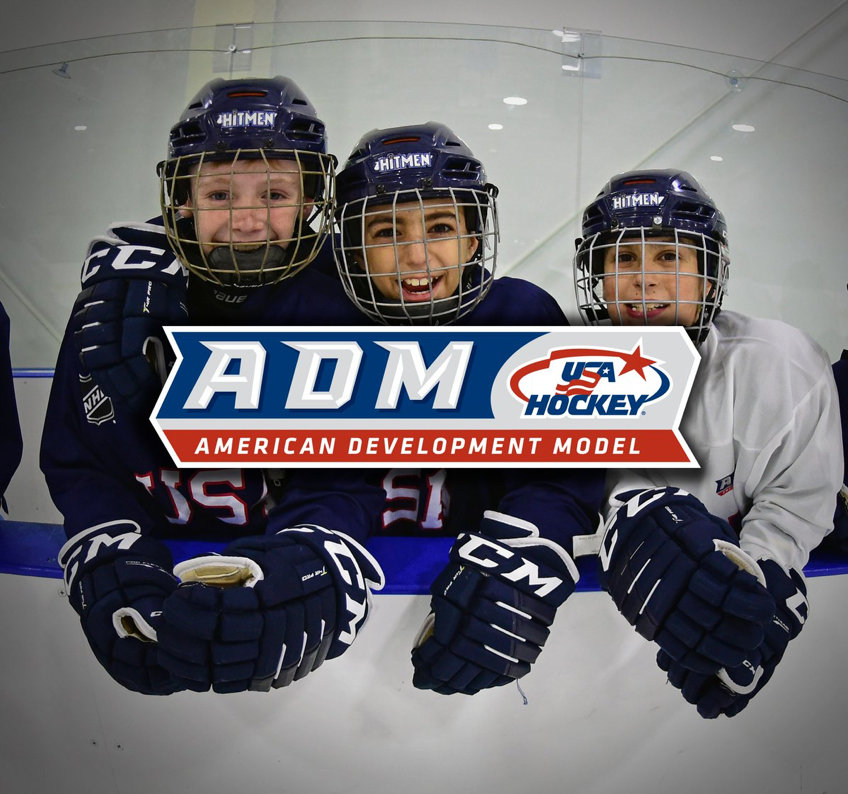
One sports org that did so that has shown it is possible, is USA Hockey who is setting the bar for all other sports organizations globally for all the great work they are doing to grow the game.

Several years back they were losing 60% of their kids by peewee (11-12 yrs. old)

They did three things to reverse the trends


  1. Rolled out their version of LTAD, the American Development Model, ADM, that focused on age appropriate training and coaching certification
  2. Emphasized fun for all age groups (regardless if rec or competitive streams)
  3. Cancelled their U12 national Championship that put too much pressure on parents and players who aspired to play in that championship

The result?

In lieu of 60% attrition, they retained 92% of their kids, only a 8% decrease.

For the naysayers that say it can’t be done or those that keep doing the same things over and over again expecting different results (insanity)…..

….. It CAN be done, as USA Hockey showed it takes a village to raise a child and requires collaboration by all parties concerned to focus on the things that matter most to the kids, Fun, Friends, Quality Coaching and having the opportunity to PLAY and contribute For the Love of the Game.


Don`t be a kids last coach


What is LTAD blog thumbnail

What is LTAD?

Posted Leave a commentPosted in Athlete, Coach, Organization Executive, Parents
It has been a hectic couple of weeks for me as the fall season ramps up for clinics and conferences wearing my various hats in the youth sports space. It started with two presentations I did for Nanaimo Minor Hockey on behalf of Changing the Game Project where they invited several other sports groups in their community to attend including Lacrosse, Baseball, Senior High School and faculty members and students in the Kinesiology program at Vancouver Island University.  I received word while I was en route for talks in Kamloops that they wish to have me back to work further with their kids, parents, coaches and exec members early in 2019 to build on the momentum to bring the game back to the kids. The second event I was presenting on behalf of PARADIGM Sports for Softball’s BC Development conference where I delivered the opening keynote, follow-up presentation and participated on their panel to end the first day along with two other amazing speakers who were at the conference.  The focus of the panel was recruitment and retention so they could continue to reverse the negative trends of attrition they saw happening a few years back which included sharing insight on LTAD/Multi-Sport Participation.
The weekend ended with my other hat as Hockey Canada NCCP facilitator for BC Hockey where I ran a Coach 2 Clinic for Abbotsford Minor Hockey Association for 18 coaches starting what I always aspire will be long coaching journies. One of the exercises that I do in clinics is asking the coaches to share why they coach and what they would like to get out of the clinic and one of the coaches shared that he got into coaching as he had retired from professional hockey that included playing for a few teams in the NHL and then playing pro in Germany until his hometown had a spot open up for their fire department that he had applied for so could move on to the next chapter of his life raising a young family.

He stated that he was still able to compete at the highest level but he had “lost the love for the game” and when his hometown  fire department came calling he felt it was time for him to hang up his skates.

After a couple of years got the itch to still be involved in the game so put his name forward to help coach an atom team (9-10 years old) and as he was leaving when the clinic wrapped up I said it won’t be long before that love and passion he once had comes back working with kids. He responded by saying, he was having a blast and it was coming back slowly but surely. In all three events I asked the coaches, executive members how many were familiar with LTAD (or variations thereof I will explain below) and although almost every NSO (National Sport Organization) in Canada has adapted their versions and some have revamped in recent years only a few hands went up. I then asked if they were familiar with Physical literacy or Fundamental Movement Skills (FMS) and even less hands went up.

Houston … we have a problem.

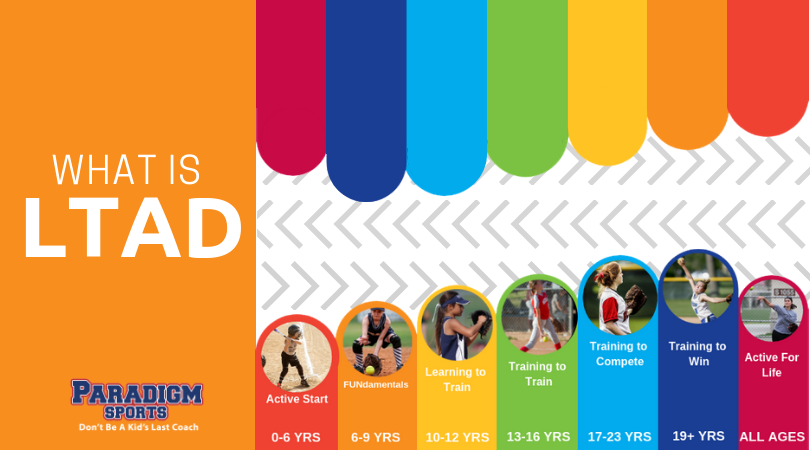
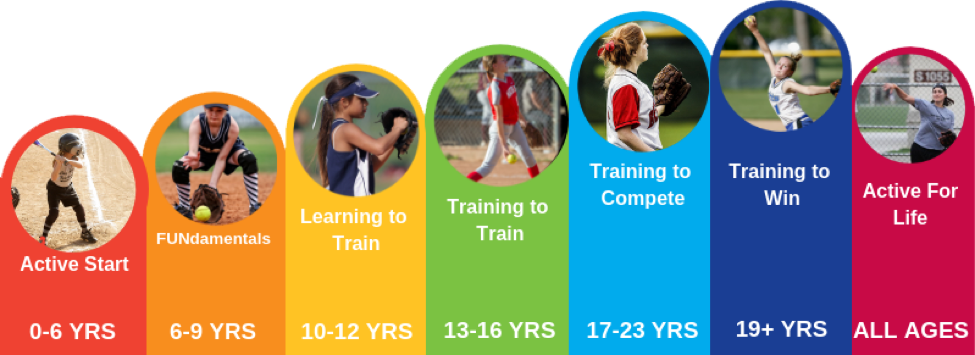
Although LTAD (or variations) have been around for decades, and developed by our very own Sport for Life in Canada, we still face our challenges for our grassroots coaches to have heard of LTAD, let alone implement it in their coaching and development programs. Why? Because in Canada we have so many sports groups, NSO’s (National Sports Organizations), Provincial Governing Bodies (i.e. Via Sport, Alberta Sport Connection), PSO’s (Provincial Sports Organizations), RSO’s (Regional Sports Organizations) and lastly LSO’s (local sports organizations) Compound that with the explosion of private programs thanks to the early sport specializations including academies, travel teams, or “elite” leagues for 8 year olds, many of which are unsanctioned where the coaches do not require to become certified under the NCCP program. The end result, each one of these groups have their own executive members, board members, policies, procedures, bylaws and initiatives each year that is leading to it taking years for it to disseminate to the very people that need it the most … the grassroots coaches.  Many of which are parents that have been recruited to step up to help and before they know are told they have become the head coach of a team even though they merely raised their hand to help on ice or in practices. This puts these parent volunteers in situations where they may or may not be comfortable with. A similar analogy would be if you were a high school student and applied to work as a cook at a fast food restaurant and the following day you were told that you were going to be the manager. Just like the players need time to develop all their core skills, so do coaches, and we truly need to look at our current system to ensure that these new coaches have ALL the tools they need before they are thrown to the wolves so to speak as head coaches. One being to ensure they know what LTAD is and why we should be adhering to so kids develop over time, participate in as many physical activities or sports as possible to avoid burnout, overuse injuries and love the game more at the end of a season than the beginning. It’s one thing for a former professional hockey player to lose the love of the game in his 30’s after playing for decades, it’s another thing altogether when kids start hanging up their skates at 10-11-12 years old because their coaches did not follow LTAD and started introducing systems, tactics, way before they should. In sum, LTAD outlines the various stages that coaches should be focusing on that is age appropriate. Below is a modified image for the Softball BC presentation that outlines the stages of LTAD, but like Hockey Canada, Softball Canada has opted to call theirs LTPD = Long Term Player Development (same guts but tweaks relative to their sport)

Stage 1 – Active Start – 0-6 Years Old

This is when kids should be exposed to as many activities as possible that involves running, falling, getting up, throwing, catching, swimming, biking, skiing, snowboarding, one handed strike (i.e. tennis), two handed strike (softball) and list goes on.  That way kids develop Physical Literacy, they develop the confidence and initial competence in a number of core motor skills so they are ultimately active for life Stage 2 – FUNdamentals – 6 – 9 Years old This is when kids should sample as many sports as possible to build on those core motor skills, softball in spring, soccer in fall, skiing/snowboarding in the winter, playing in the playgrounds year round etc etc. This not only includes organized sports, but free play, unstructured with adult supervision (yes you heard me right, let kids play with a coach, parent, ref present so they make their own teams, form their own rules and more often than not will play for HOURS) Nothing frustrates me more when I see kids at this age group already starting to specialize in ONE sport, they should play EVERYTHING until they find ones they enjoy most Learning to Train 10-12 Kids should continue to play 2-3 organized sports (ultimately not concurrently unless sports orgs provide schedules to permit).  Also encourage them to participate in free, unstructured play like pickup basketball, soccer, street hockey, playing catch, Frisbee etc. to become the best athletes, not sport specific players. I know that many parents that have their kids playing “elite” level at 6-7 years old are going to counter me on this, but I don’t believe that kids should even play competitively until they finish this level of LTAD, I believe every NSO should be looking at not tracking outcomes of games (scores, goals, assists) until kids enter high school. This is also the critical years for motor skill development, so coaches should be focusing on skills stations, free play, creativity that relates to individual tactics NOT jumping to team tactics and strategies as kids can execute until they have the technical skills to do so. WHY? If it worked for Norway, who won 39 medals this past winter Olympic Games and are the all record hold for most medals since the inception of the winter games, who does not permit their kids to compete until 13 and are one of the only nations that are not experiencing the attrition rates many other countries are where kids quit by that age. Train to Train – 13-16 Years This is when coaches should introduce team tactics and systems but continue to focus on core skill development.  Too often I see coaches implementing specialty units like power play, penalty kill and depriving 2/3 of the kids on teams from the opportunity to do in games and it can start as early as Stage 2 – Fundamentals. What happens? Parents complain about playing time, kids are deprived their opportunity to contribute and it leads them to quitting. Training to Compete – 17-23 Years Old IF kids followed the right pathway and did not specialize prior, this is when they should consider focusing on the sport they love the most BUT I still encourage kids to continue playing complementary sports so 2 per year Training to Win – 19+ Years Old Then once they graduate from high school … pick the one they love most and focus on competing at the highest the level they aspire for. Active for Life The GOAL – that all kids are active for life, less than 1% will go on to play professionally or collegiately, if they love being active will ski/snowboard, play adult rec hockey, slo-pitch (or fastball), golf, tennis, biking, running and so on. The other reason why our youth sports coaches are not adhering to LTAD is the pressure they face to win so start implementing tactics, strategies in the earlier stages that should be focused primarily on core motor skill development. Everyone then get frustrated watching kids play in games that they can’t execute systems that they don’t have the skills for, coaches are still learning also as our parents, exec members. We could all learn from the likes of Norway, just let the kids be kids, Play, Have Fun and not worry about outcomes until they reach their latter teens. We have our work to do to ensure that our youth sports coaches are armed with all the tools they need to follow LTAD, and it all starts with the grassroots coaches and parents. Just let kids be kids, encourage them to sample as many sports as possible, and then encourage them to pursue the one they LOVE the most in their late teens. Let’s all work together to bring the game back to the kids … where it belongs.
Don`t be a kids last coach

Cross Ice Hockey Benefits

Posted 59 CommentsPosted in Uncategorized


Source: Getty Images

BONUS – Download a Free Copy of this Blog in PDF Format HERE  

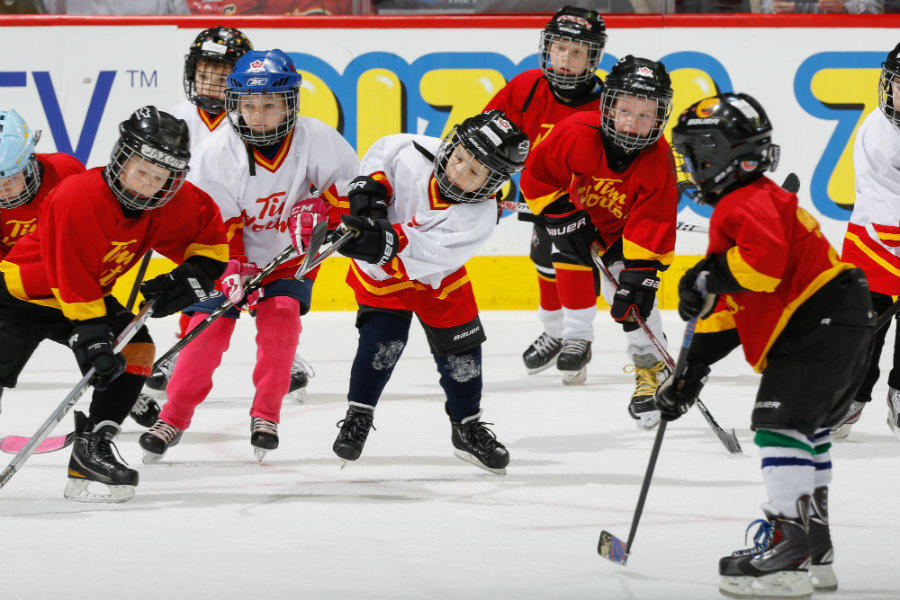
As we are only a few weeks away from kids, coaches and parents returning to ice rinks for the upcoming hockey season I thought it was a good time to discuss the benefits of Cross Ice Hockey.

In many of the clinics I have ran over the years I play clips from a video of Don Lucia when USA Hockey was introducing their ADM Model in 2007.  He touches on several key points, one being his belief that tykes (5-7 years old in the USA) should be playing cross ice games, not full ice.

That was 10 Years ago, right when I was coaching very same age groups and thought the same, as he referenced it was like adults playing on a football field, there would not be much back checking. My analogy for full ice game play for Novice was Beehive, as the lesser skilled players would literally chase the stronger players all around the ice surface, many of which would not touch the puck at all during an entire game.

Below is a short clip that USA hockey did put together several years later showing what it is like for adults to play on a similar playing surface to a football field with nets that are approximately twice the size as traditional hockey nets.


USA Hockey mandated Cross Ice Hockey for their 5-8 year old age group in 2014, then for the 2016-17 season, BC Hockey mandated cross ice for the same age groups (Initiation 5-6, Novice 7-8). Saskatchewan Hockey implemented for initiation (5-6 yrs old) group only last season, and in March of this year Hockey Canada announced they will be mandating cross ice hockey nationally for the Initiation Age Groups.  As far as I am concerned, it should have happened years ago and I applaud all of the governing bodies implementing to adhere to LTAD.

While I was running clinics last fall and interacted with coach coordinators, coaches and parents in those same age groups there were many that were for the implementation of cross ice, but also many against. Literally every clinic when I was going to or leaving benches I would walk past parents that were huddled up expressing concerns that cross ice would not prepare their son or daughter for Atom (9-10 yrs old).  I also would hear concerns about it not preparing them for the rep level of Atom, which is supposed to be development age group but give players of higher skill to play with kids of similar skill.

What I found coaching both Atom Rec (House) teams and Atom Rep teams was the same, as soon as kids entered that age group it became competitive even though we should still be adhering to LTAD and learn to play at that age group.

Why ?

Because players do play full ice, they do keep track of scores, wins, losses so teams can win a league or playoff banner regardless if playing rec or rep streams.

That is also when the insanity starts to escalate in the stands.

For all those naysayer’s that I came across last season, I would pull out my smartphone and play the following USA analytics videos for parents to show them all the benefits of cross ice hockey;

According to the analytics, the benefits of small-surface play vs. traditional full size play are as follows:

  1. 2X the body contact battling for the puck
  2. 6X more shots per player
  3. 2X more puck touches per player
  4. 1.75 shots per minute on goalies vs. 0.45 on full ice
  5. 2X more pass attempts per player
  6. 5X more passes received per player
  7. 2X more changes of direction per player

Advanced players benefited even more

  1. 2X more puck touches
  2. 2X more shot attempts
  3. 2X more pass attempts

These are the reasons why USA Hockey, BC Hockey and now Hockey Canada are implementing cross ice for the youngest players, to give them the opportunity to touch the puck vs. what I referred to as bee hive hockey for the first few years.

For the skilled player it is not much fun and for the lesser skilled players it becomes very frustrating and many will give up on the game well before they should as they never touch the puck.

I also had coaches or hockey executive members complain about the following issues;

  1. BC Hockey only gave them 2 months notice to implement, it was voted on at the annual AGM in June and all MHA’s in BC were expected to implement in Sept.

My reply, if we continue to delay, we will continue to fall behind other nations like USA and Europe.

  1. The costs to purchase the boards used to split into two, or for the creative associations 3, sheets of ice to permit cross ice hockey was in the area of 30K and for many smaller associations would require they raise reg fees to absorb the expense.

My reply – it is a one time expense and the cost savings permitting 2-3 teams on one ice surface (with ice costing approx. 200-300.00 per hour depending on where located) should offset within one or two seasons (depending on how many H1-4 teams associations have).

  1. The logistics of setting up for the younger age groups then taking down for the older age groups to permit full ice play would take up to 30 minutes and would affect the total ice time available for all hockey age groups, but also ringette, figure skating, public skating etc.

My Reply – I have known some AMAZING ice schedulers over the years who can make adjustments on the fly to accommodate and having multiple teams share once ice surface would permit potentially more ice slots for the older age groups.

Cross Ice Hockey for U9 age groups is a long time coming, and if you have followed the world juniors the last 2 decades if we do not go down the same path as other nations that are implementing cross ice play for the younger age groups we will continue to struggle at the international level.

The World Juniors has been a showcase for the worlds top U20 players, many of which have been drafted or draft eligible for the NHL.

In the 2000’s Canada dominated, winning 5 consecutive gold medals.

They then won Silver in 2010 and 2011, Bronze in 2012 and did not medal in 2013 or 2014.  In 2015 thanks to an emerging “pretty good player” Connor McDavid and outstanding play by many of his team mates Canada did return to the podium for Gold only to not medal in 2016 and lose to the USA in 2017.

Brent Sutter, coach of the 2014 team that did not medal stated when interviewed after the tournament that he would like to see more skill and creativity and that is what they got beat by on some nights. This starts at the grass roots level when kids are in the early stages of LTAD, and he further comments on the fact that the current Canadian Youth Hockey Model puts too much emphasis on competitive play (games) vs. skill development in practices.

Click here to read the full Globe and Mail article

Although many parents aspired for the kids to play at the rep level where teams are assured to get 2 practices a week, as a result of our current system it still works out to a 1:1 practice to game ratio.  I believe in atom and peewee ages groups which are the key development years of skill acquisition that we should revisit this model and rep teams should only play one game per week and replace the second game with a practice to ensure optimal skill development.  This would change the practice to game ratio to 3:1.  It would not require any additional ice to do so, merely converting one ice slot that is already assigned for those teams to a practice vs. a game slot.  By doing so, I believe the skill and creativity level of Canadian born players would increase exponentially to ensure that we remain competitive at the international level.


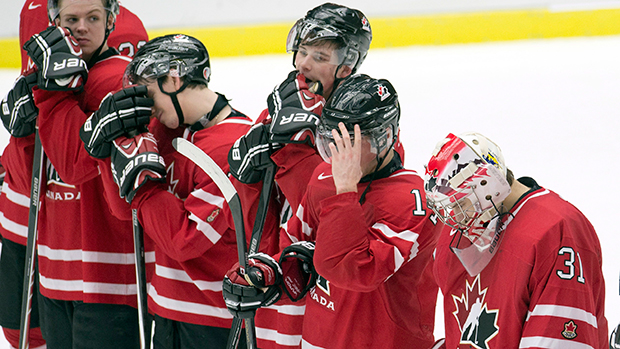
Hockey Canada 2014 World Junior Team after loss to Russia in the Bronze medal game

USA (3), Finland (2), Russia (1) and Sweden (1) have been the other countries to reach Gold since 2010, all of which have invested heavily in LTAD models.

Although Canada once was Canada’s #1 Youth Sport, it no longer is for a myriad for reasons, Soccer is now the #1 youth team sport by over 100,000 registrants.  Jason De Vos, Director of Development and the rest of the Soccer Canada team also are looking at various means to improve skill development in the younger age groups.

Why ? Because Canada National Men’s Soccer (European Football) program is ranked 117th in the world.

In the keynote presentation he did for Ontario Soccer we shared in this weeks newsletter, he referenced the transformation that Iceland did with their National Football Program, in 2000 they were ranked 131st in the world but due to various initiatives they implemented (including focus on LTAD, skill development with the younger players) they not only qualified for Men’s Europ Cup in 2016 they WON against England !!  Iceland is now ranked 23rd in world as a result and are 1/10th the size of Canada or 1/100th the size of USA in terms of population.

Another nation that has developed some pretty good NHL players is Sweden.  They implemented Cross Ice Hockey years ago, and play until they are 10 (atom age group), and then full ice non-competitive games (no scores kept) until they reach the Bantam Age Group (13-14 years old).  They also have a practice to game ratio of 5:1 as it is in practices (when planned well) that players develop.

Every single coach who played his youth hockey in Europe that I have interacted with over the last 10 years, including several who played professionally, state they don’t understand why there is such an emphasis on competitive games vs. skill development.

For me it started in my first year coaching minor hockey in 2004, H1, 5 year old kids and there were no games, just skill development ice slots but we did incorporate small area games in. Only a month into that season several parents asked me and fellow coaches “when are we going to play games”, to this day I still shake my head the question was posed, most of the kids could barely stand on their skates without falling down and parents wanted to see full ice games.

I look forward to seeing the impact cross ice hockey will have in the coming years, and other initiatives as they are rolled out to continue focusing on Hockey as a long term player development model.

Let’s work together to bring the game back to the kids.


PS Tagline - Dont be a kids last coach