
There are NO shortcuts

Posted Posted in Athlete, Coach, Parents

I am currently in the process of onboarding a couple of interns for this coming summer who will be working on our various digital platforms, image creation, video and audio editing and back end support for summits, webinars and live streams.

We have now sponsored over 20 university co-op students over the last few years as we have built out our websites to provide content for all youth sports stakeholders and as we onboard new students each time, one of the key teaching points I share with them is the importance of having a strong work ethic and have used a myriad of sports analogies over the 4 months they work with us to ensure they finish the term strong.

This comes from the many years of playing various sports where coaches would remind me and all of my team mates of the importance of work ethic, something that has been lost in part in recent years where many parents, kids have fallen into the early sport specialization trap but not recognizing the importance of practicing the way they will actually play in games.

What separates those that reach the highest levels they aspire vs. those that do not having coached hundreds of different players in different sports and now having interacted with thousands of coaches that have shared similar stories of players they coaches, is the fact that the ones that excel are the ones that have superior work ethics to do vs. those that have a tendency to not run through the finish line.

There are so many analogies I can share as examples of those that reached the elite level, below are three that come top of mind;

Sidney Crosby

When Sid (The Kid which is no longer the case) was coming up the pipeline many felt that he was the next Wayne Gretzky, much like people feel now of Connor McDavid.  What has separated Sid from the rest of the pack and what has made him the player he has become is not the fact that he focused on hockey from a young age like many kids do today, is his commitment to practice like he is going to play every practice.

He even will ask his team mates not to pass “tape to tape” so that he can retrieve pucks that are too far away or caught up in his feet to kick to his blade and doing so at full speed.

He is so committed to working on his skills even now at the age of 31 years old, that the Pittsburgh Penguins, according to a story shared with one of my colleagues who interviewed Mike Johnston, former head coach, built as second practice rink adjacent to their initial rink so that he and other players would not have to wait for the Zamboni to clean the ice for 15 minutes.

Per his current head coach Mike Sullivan

“The quality that allows Crosby to remain atop the league, coaches and teammates say, is his unique work ethic, an ability to specify subtle areas for improvement and work with meticulous precision until they match the other elite elements of his game. … “He’s a generational talent,”


Micheal Jordan

Many know the story that he was released from the first high school team that he tried out for, was totally distraught, cried as a result for quite some time after the fact but he made a commitment to be the best he could be, and ultimately became arguably one of the best ever to play in the NBA by working tirelessly to do so.

The same work ethic transferred to when he decided to retire from basketball when he lost his Dad, to pursue a career in professional baseball and although never made it to the MLB White Sox, he honed his craft over a few years in the minors by working tirelessly every day with hitting and other specialty coaches to improve his batting %, stealing bases and so forth.


Walter Payton (AKA Sweetness)


Hi workout routines to this day are still used as examples for those in the NFL to mirror and what many don’t know is he mentored a former high school player to work out with him which he did for years.  In the short clip below he shares the 5 years that he did so with Walter where they became good friends as a result and talks about the infamous hill (AKA Hell) they trained on.


There are many other examples that I can cite of professional players whose work ethic got them there like Kobe Bryant (sadly who we lost way too early last year), Tom Brady, Muhammad Ali, Pelé, all of which continued to work on their craft while even when they reached the levels they did professionally.

This is the big takeaway that youth coaches must remind their players regardless of the level to ensure that they don’t cheat themselves, and at the same time their team mates, of the importance of working hard during every game, practice … to reach the highest level possible, there are no shortcuts.  Too often over the many years of coaching I would see kids that had great skills but when push came to shove they did not put in the extra effort to hone their craft and as a result they got passed by many of their less “skilled” counterparts.

Those that reach the tip of the pyramid don’t make shortcuts along the way, they recognize that it take YEARS to reach that the highest level they aspire to and continue to work on their crafts even when they do.


PS Tagline - Dont be a kids last coach


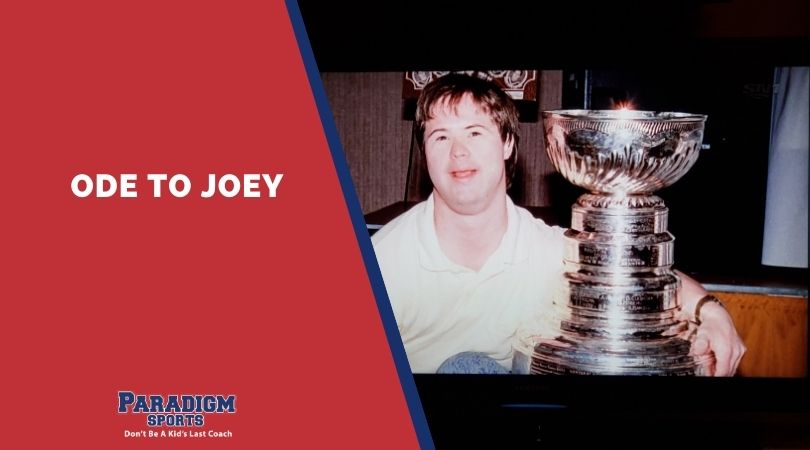
Ode to Joey

Posted Posted in Athlete, Coach, Organization Executive, Parents

As an avid hockey fan due to playing, coaching  and now coaching coaches for many years, one of the things I look forward to is the start of the season, starting with getting back to the ice for minor hockey and then when the NHL ramps up with exhibition games and the first Hockey Night in Canada on Saturday.

As I moved often growing up including a stint living in the Northwest Territories on Baffin Island, it was one of my vivid memories growing up watching games on Saturday’s on CBC with my family.

As a result of the COVID-19 pandemic going back to March 2020, however, the start dates for completion of last season when teams entered the Edmonton Bubble and Tampa won the cup in July, and uncertainty when the next season would start up until recently in January 2021, the passing of one of Canada’s true Icons was not shared until recently.

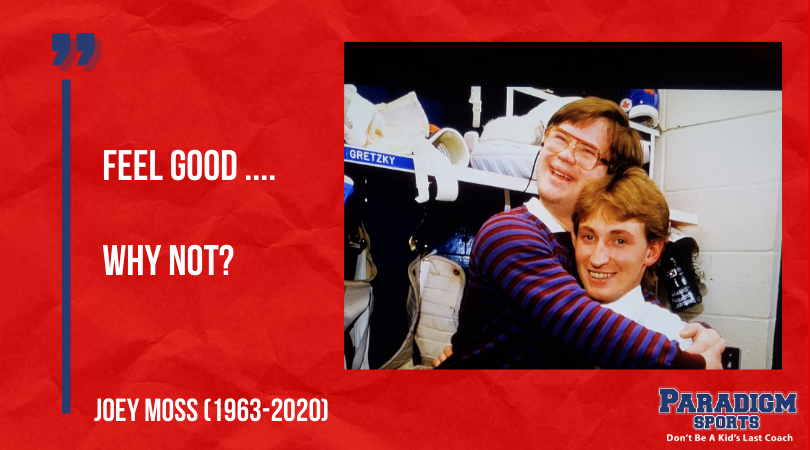
Before the start of the Vancouver Canucks Game vs. Edmonton Oilers, the oilers did an amazing tribute to two they lost during the break of past coach/general manager John Muckler (Jan 4, 2021) and their long term locker room assistant Joey Moss (Oct 26, 2020) who Wayne Gretzky helped get a job with the Oilers and became close friends.

As Wayne eloquently shared at the beginning of the documentary that was shared on Sportsnet the following day (Anything for Joey), he wanted to help Joey as he was an amazing young man who had down’s syndrome but as all of the players and those that evolved to executive ranks shared during the documentaries Joey was the one that taught them core values, not the other way around.

Joey started his role with the Oilers in their glory days, when they went on to win their 4 Stanley Cups and many of their players on those teams shared insight how much of an impact Joey made on them. Then players for subsequent teams also shared nuggets from the 90’s until his passing in Oct 2020.

In addition to Wayne Gretzky, Grant Fuhr, Keven Lowe, Pasani, Kelly Buckberger, Taylor Hall, Raffi Torres, Connor McDavid, Leon Drisital, Sam Gagner, Ryan Smith, Shane Corson and others shared how he made such a positive impact on them during their time playing for the Oilers.

Several of his siblings (he had 12 brothers/sisters) also shared stories about Joey.

Some of my big takeaways …

Always smiling – Love the Game – Loved to Hamm it up – Could give as much he took – Was an ambassador for Edmonton – Loved to Sing (AKA Belt) the Canadian Anthem (I looked forward to seeing Joey sing before Edmonton home games, much like Mark Donnelly for Canucks games) – Taught us patience – Made us better people – Kept Game in Perspective – Was there to cheer us up after a tough loss – Could count on him to get things done

The biggest one for me and sharing it as our quote of the week he would share with everyone around him especially when they were down, had a tough night, team had a tough loss


Having been one who has suffered a lot of adversity myself, I have always tried to have the half-full approach as things can only get better which is whey Joey’s favorite saying really resonates with me.

When Wayne asked Glen Sather if they could find work for Joey he said absolutely and he became their locker room attendant and then Wayne reached out to the Edmonton Eskimo’s Equipment manager where Joey was working a similar role and joined the Oilers in 1984-85 season (coincidentally during their legacy Stanley Cup run).

In the off season he worked in a similar capacity for the CFL Edmonton (Eskimos) Football Team

During his tenure with both organizations;

The Oilers won the Stanley Cup in 1984/1985/1987/1988 and 1990 and lost in 2006 although Joey delayed hernia surgery so he could be with the team during their amazing run in 06.

Wayne was traded to the LA Kings after their 88 Cup victory and the first time that he returned to Edmonton as a King  he went to see was Joey who told him “Sorry Wayne but I can’t talk to you”, but like Wayne, every other player that was traded when they returned Northlands, Rexall Place they too would go see Joey to give him a hug, share a few words and see his infectious smile.

He also worked in a similar role in the hockey off season for the Edmonton (Eskimos) CFL team where they went on to win their 6 of 14 Grey Cups in 1987, 1987. 1993, 2003, 2005 and 2015).

11 CUPS between the two organizations who had numerous hall of fame inductees and various other awards !!!

WHO else in professional sports can say they have been part of so many cup runs?  No one  …. and now due to free agency, salary caps and everything else now, getting to ONE cup final in itself is a big accomplishment, let alone winning the final game or legacies with multiple cups as the Oilers and Eskimos have done in Edmonton.

Joey also was acknowledged by the NHL in 2003 for his contributions with the Seventh Man Award (given to NHL members that make a difference behind the scenes) and inducted in the Alberta Sport Hall of Fame in 2015

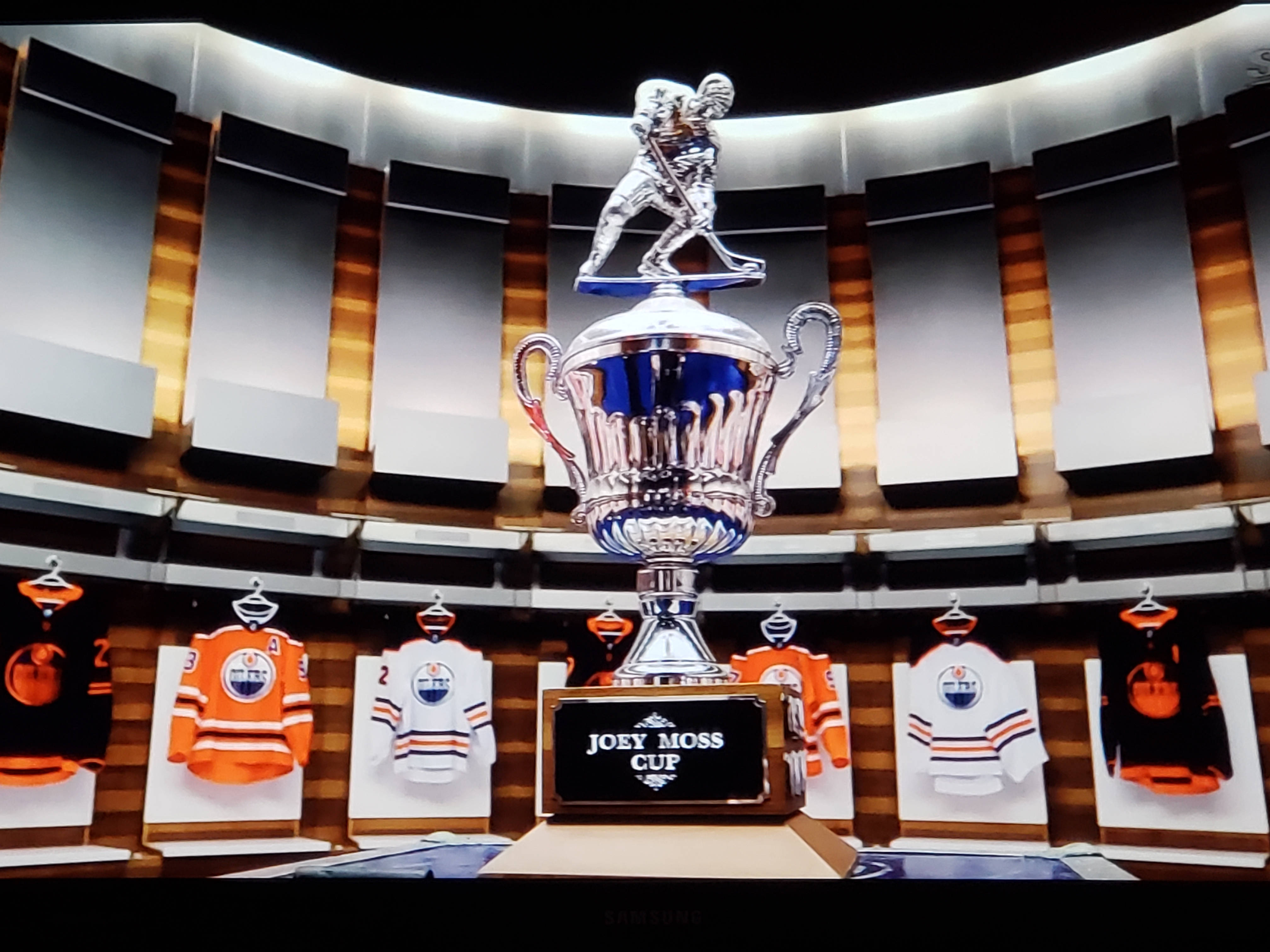
The Oilers also founded “The Joey Moss Cup” inner squad game trophy that award every year and many of former players shared they all wanted to win coveted cup for bragging rights.


Current Player Leon Drisital shared “He’s probably the biggest legend in this town” and in the video below Wayne shares he has more championships than Hugh Campbell (5 Grey Cups) due to his long tenure with both of Edmonton’s professional teams during their Stanley and Grey Cup Runs.

One would hope that the NHL consider Joey being considered for the Hockey Hall of Fame for his amazing contributions to the game, the impact he had on so many players, coaches and the fans.

According to Equipment Manager, training camp would not start until Joey was there, sadly the Oilers camp for this season started without him as will others in future BUT he will forever be with them and all of us in spirit, I suspect with a microphone belting out the Canadian Anthem ….

We could all learn to be better people from the legacy Joey left behind.

Kudos to the Oilers and then Sportsnet for their amazing tributes in his memory and when I or others get down around me as we continue to claw our way back from this crazy pandemic will share “Feel Good – Why not?”

Below is the interview that Wayne Gretzky had where he shares many of the amazing anecdotes about Joey a few days after he passed away in October.


Why the stars are aligning for Dallas

Posted Posted in Athlete, Coach, Early Sport Specialization, Organization Executive, Parents

I never thought in my lifetime that I would be having discussions with people regarding the NHL playoffs in September when all prior years they were finished by May/June timeframe.

Nature of the beast as they say during the COVID-19 era that the NHL and all other professional sports are dealing with to complete or start their seasons with various protocols to ensure the safety for all parties concerned.

Although I am a long time Habs Fan having grown up in Montreal, and was disappointed when they and then the Vancouver Canucks were knocked out of this years Bubble Playoffs, I am happy to see that Rick Bowness and the Dallas Stars will be heading to the final for the first time in 20 years.

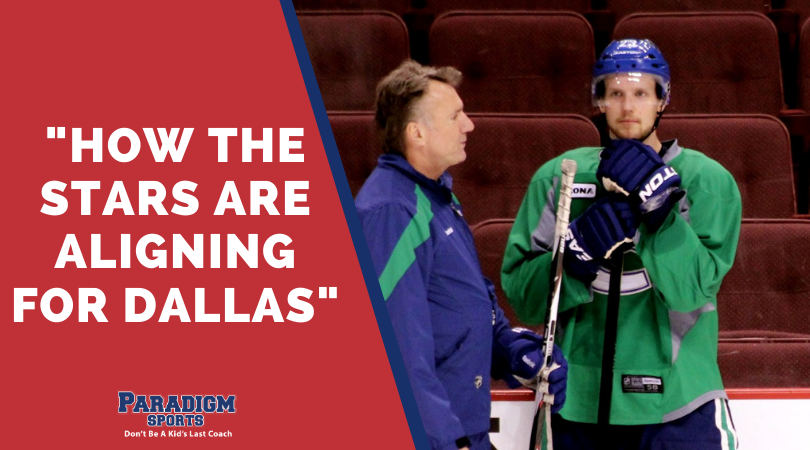
Two reasons why I feel that the “stars” have aligned for them to get there this year, the amazing coaching job that “interim” coach Rick Bowness has done since he took over the reigns after former head coach XXXXX was fired mid season and the later is the leadership from team captain, Jamie Benn, whom I have highlighted in numerous talks and interviews when I been asked to share insight on the benefits of multi-sport participation.

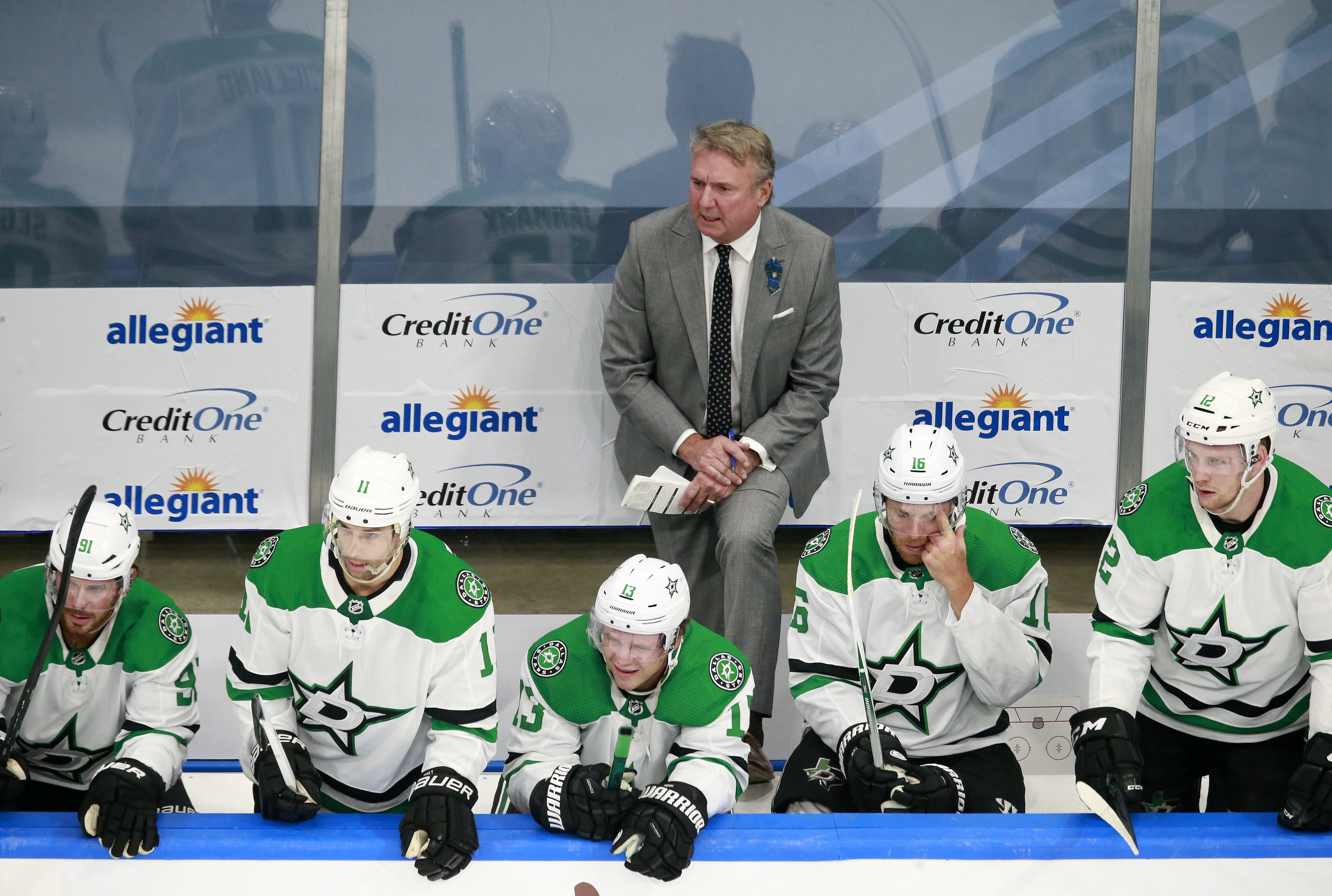
RICK BOWNESS – AKA BONES

(Photo by Jeff Vinnick/Getty Images)

Rick Bowness played in the NHL for a number of teams like many other NHL coaches after he played Major Junior and in the NHL.  He has been a head coach for a number of NHL teams but this is the first time in his career that he has lead a team to the Stanley Cup Final

His coaching career ironically started out in 1982-83 as a player coach (AKA Reggie Dunlop for the Chiefs in Slapshot) for the first Winnipeg Jets minor league affiliate Sherbrooke Jets.

Much like the infamous “Chiefs” in Slapshot, the team really struggled under his watch so he retired as coach and player at the end that season and a year later was recruited by Winnipeg Jets Head coach in 1984 to join his coaching staff as an assistant.

He has gone on to coach a number of teams in the NHL since, many as the head coach and several years as associate or assistant coach, including the Vancouver Canucks where he was Alain Vignault’s right hand man when they had their amazing run in 2011.

He moved on from the Vancouver Canucks in 2013 and was with Tampa when they advanced to the final in 2015 but lost to Vancouver’s long time nemesis, Chicago Blackhawks.

Rick has now been in the NHL as a player and now a coach for 45 years and many are pulling for him to win his first Stanley Cup.

Why are so many pulling for him?

#1. He is a player’s coach – loved by all of his players who will do everything they can to win for him

#2. He truly cares about his players as people, not just as hockey players.

The list of players under his watch for decades have all shared in interviews time and time again how he connects with them as individuals, is approachable and takes the extra time to help them not only become better players, but better people.

“He Cares about his players. You can just see it in his actions. He will never chastise them, he will never embarrass them in front of his peers or in front of other people, if there is a tough conversation to have he does it behind closed doors.”  George Gwozdecky (Tampa Assistant Head coach with Rick 2013-2015)

#3. He has a high level of emotional and social intelligence.

Although this past Hockey Season the NHL saw several coaches fired from their roles due to what many feel are no longer (nor were they ever) appropriate coaching styles, Rick has always set the bar as the players coach

“He’s a coach you just want to do everything for, lay your body on the line for”

Jamie Benn

#4 – He has coached more games than any other coach EVER in the NHL, now over 2,500 games leaving Scotty Bowman’s record of 2,164 3 years ago and he is still going

#5 – He has adapted to being either a head or an assistant coach depending on the team needs, many of his head coaching stints he took over mid season when the head coaches were let go much like this season with the Stars.

#6 – Cody Hodgson played under Rick and Alain while in Vancouver and shared that “you get some coaches that are very talented but not necessarily good people (as the firings in recent year showed).  But Rick ‘s a great coach and a great person …. and will be able to stick around as long as he wants to”

#7 – He is very humble.  Whenever people try to give him credit for his leadership, he defers to the players, much like he did when was interviewed after they advanced the final.

#8 – He’s a great coach.


Ironically he played as a forward, but has spent much of his coaching career working with defence and is acclaimed for helping develop many D-Men over his career, most recently was helping Victor Hedman become one of, if not the best, d-men in the NHL currently.

#9 – He is transformational and focuses on connecting with his players vs. many coaches still focusing on the X’s and O’s.  Per former player he coached, Brad Barry who is now coach of University of North Dakota X’s and O’s are one thing, but if you don’t have the communication skills or the ability to connect, then I don’t think the X’s and O’s matter anymore.”

#10 – He loves the game as much now as he did when he was a kid.

In every talk I do with coaches I end with key takeaways and one is the measurement of a great coach is one that creates a culture on their teams where kids love the game more at the end of the season then they did at the beginning and come back the following year with big smiles on their faces.

JAMIE BENN – AKA Chubbs

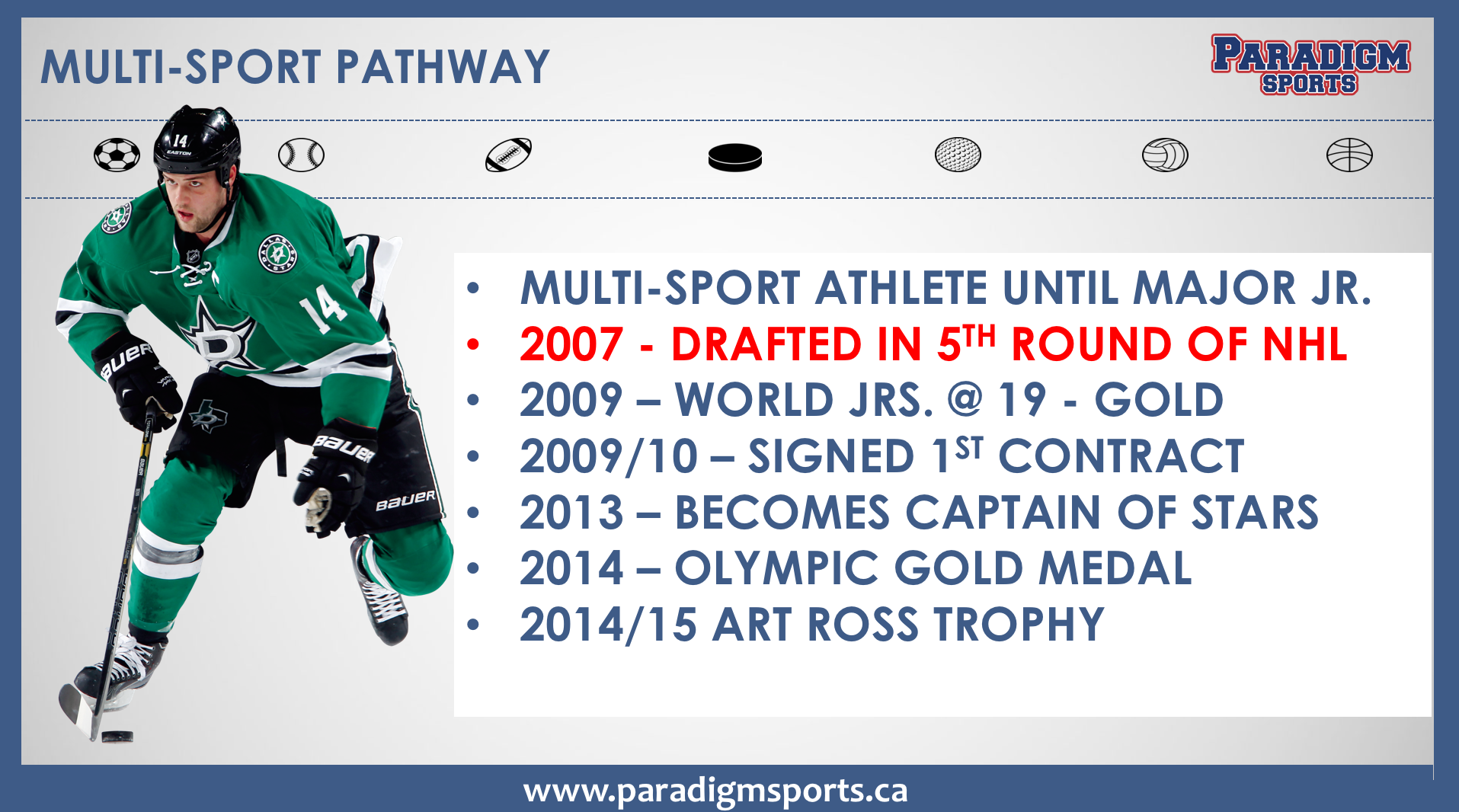
Below is a slide from one of my core talks LTPD vs. Early Sport Specialization where I talk about Jamie Benn’s path to the NHL.


Jamie and his brother Jordie grew up on Vancouver Island and played a number of sports growing up, both played hockey in the winter and baseball in the spring as well as tried several other sports until they both found the one they loved the most – Hockey.

Note on the slide some of Jamie’s accolades – Gold in the World Juniors, Gold in the Olympics, Art Ross Trophy and now he is going to the Stanley Cup Final.

Did you know that he did not decide to focus on hockey until he was 19?

This is why Hockey Canada did not even identify him for any of the U16, U18 or U20 Junior Camps until he was 19 as his path was junior B, then Junior A, then WHL and was drafted in the 5th round to then become the captain of the stars in 2013 when he was 24 years old.

His path the NHL, much like the majority of players, was playing multiple sports until his later teens. When I interviewed Ken Martel for one of our summits last year, he shared with me that over 90% of NHL players were multi-sport athletes until at least 14.

“Just a game boys, there’s always next time” Tyler Sequin

Now at 31 he is considered the old guard with the NHL youth movement, but as much as I would love to see a Canadian team be in and ultimately win the final since the Habs won their last one (and last one for a Canadian team) in 1993 27 years ago, I will be pulling for the stars to align for Rick, Jamie to hoist their first and ultimately drink from the Stanley Cup.


Why Barry Trotz is a Great Coach

Posted Posted in Athlete, Coach

As a result of COVID-19, many of the professional sports schedules have been delayed since the global shutdown mid March 2020 with the exception of the NFL who started their season as they planned, albeit with no exhibition games that many have argued were not meaningful other than to generate gate revenue as starters would not play until the game before the season started.

Although some of the professional sports have had challenges finishing or starting seasons, once the NHL figured out the bubble format and the cities to host them in, since the beginning of the NHL qualifying round and subsequent Stanley Cup Playoffs there have been no positive COVID-19 cases reported so they have set the bar for others as we continue to deal with the pandemic.

One of the annual events that was impacted as a result of no large gatherings (although you would not know it with certain NFL cities have fans in the stands, others not), was the annual NHL awards ceremony, where Barry Trotz, Bruce Cassidy and John Tortorella would have been seated in the auditorium waiting for their names to be called out to receive the Jack Adams Award for the best coach.

John and Barry have both been recipients of the award two times so was their third nomination, and this was Bruce’s first year which he nominated and also the recipient of the coach of the year award for the great job he has done with the Boston Bruins.

Although I feel Bruce deserved the award, it was Barry that I wanted to highlight this week due to the fact that he not only was nominated a third time, but had he been the recipient, it would have been his third, a feat only done by one other coach in the history of the NHL.

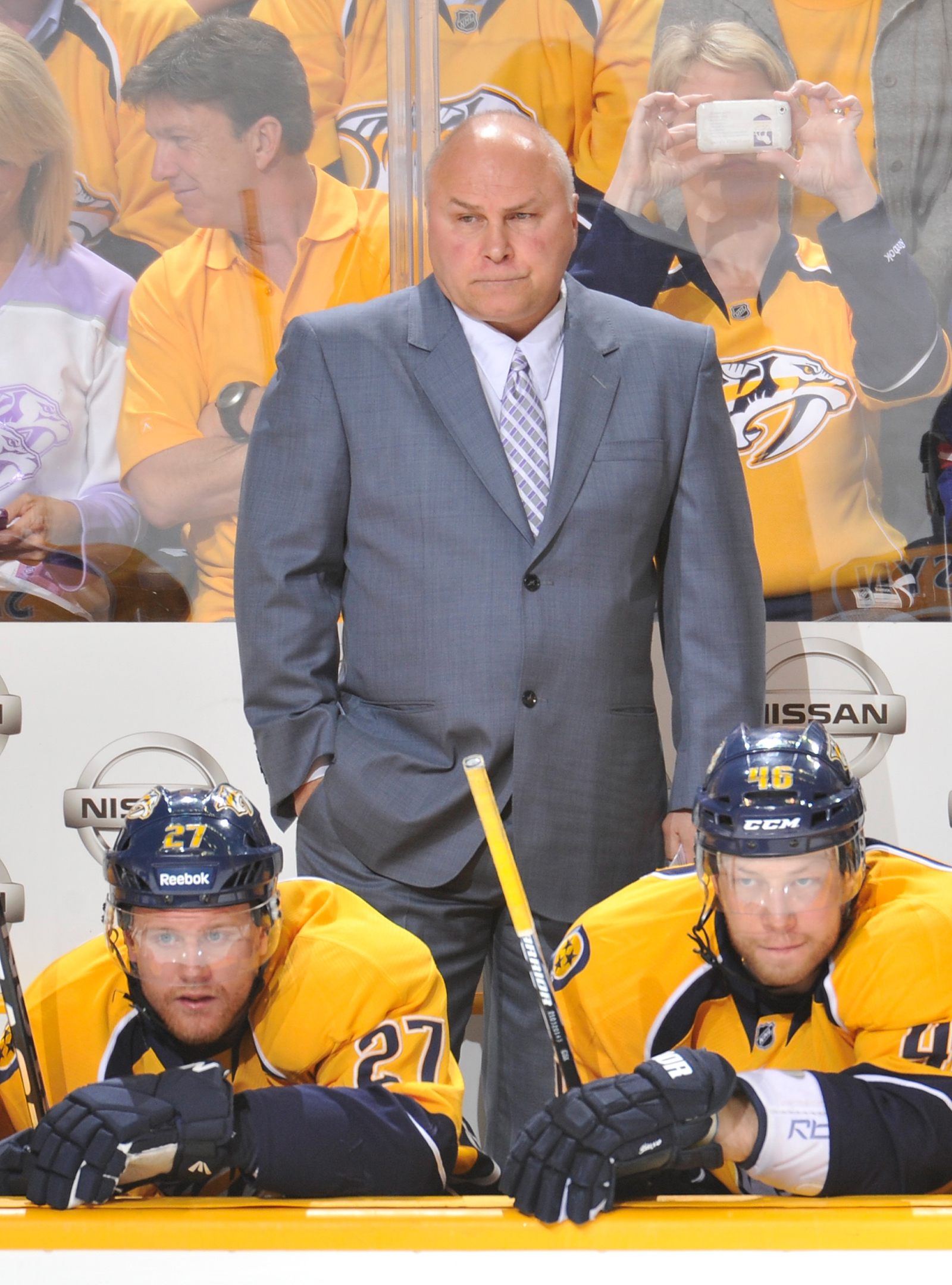
NASHVILLE, TN – APRIL 20: Barry Trotz head coach of the Nashville Predators watches the action against the Detroit Red Wings in Game Five of the Western Conference Quarterfinals during the 2012 NHL Stanley Cup Playoffs at the Bridgestone Arena on April 20, 2012 in Nashville, Tennessee. (Photo by John Russell/NHLI via Getty Images)


The Early Years – AHL and Nashville Predators

Barry’s initial coaching experience that lead him to the NHL was coaching the Baltimore Skipjacks and Portland Pirates of the AHL, and in 1994 he lead Portland to the AHL championship title where he received he first coach of the year award, the Louis A.R. Pieri Memorial Award, the AHL equivalent of the Jack Adams trophy Barry has now won in the NHL

After a few more years in the NHL, when the expansion Nashville Predators were looking for their first head coach, GM David Poile decided to bring Barry along to be their first head coach in 1997 before their first NHL season in 1998-1999

He went on to coach the predators for 15 seasons, the longest tenure for any coach of an expansion franchise and their most successful season was in 2006-7 where they accumulated 110 points, second in the western conference and third overall.

During many of those seasons, the payroll that Nashville allocated for player salaries was significantly lower than all other franchises, yet year after year Barry and his coaching staff were able to lead their teams to the playoffs.

Many would say that Barry was able to get the very most out of his players in order to do so.


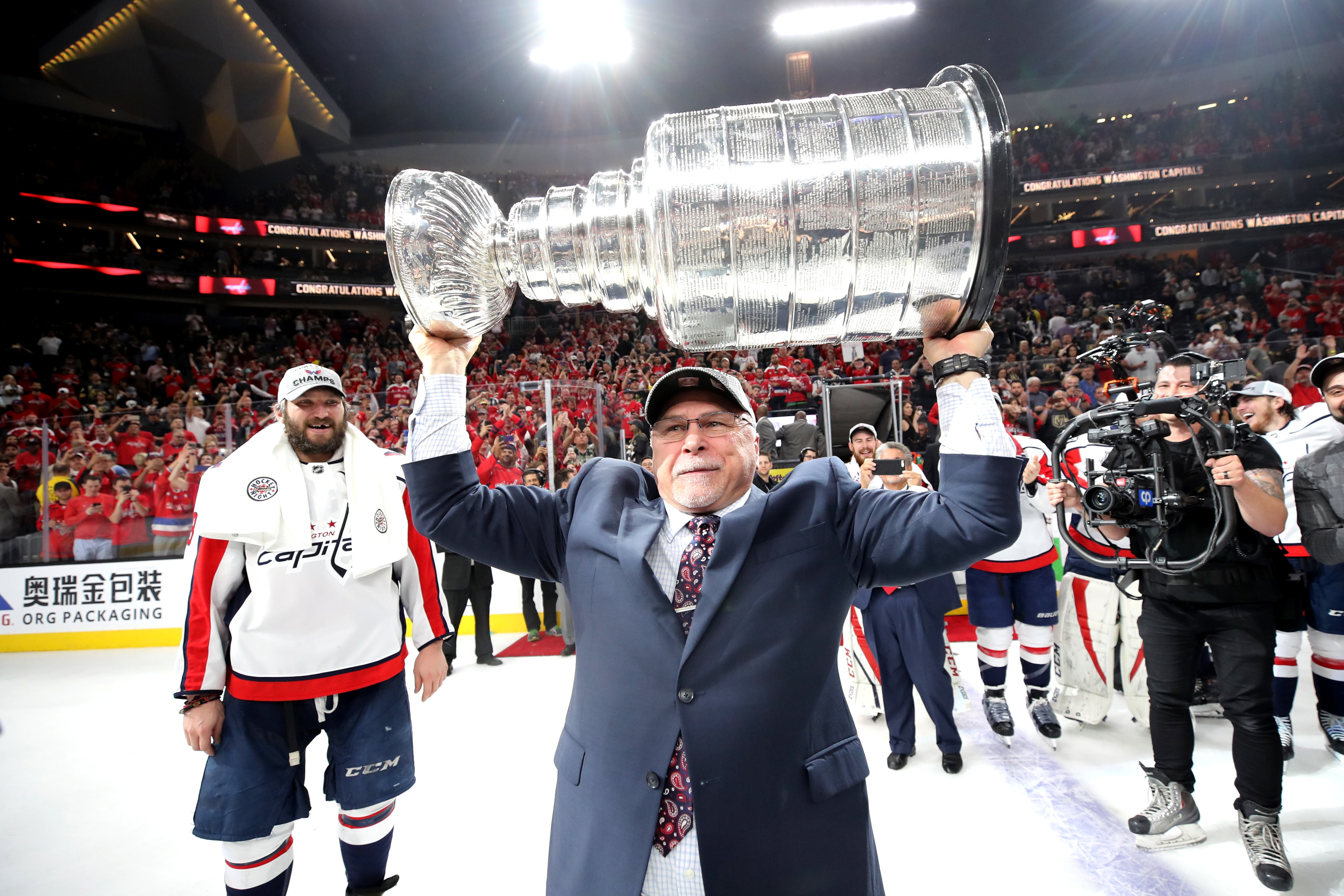
LAS VEGAS, NV – JUNE 07: Head coach Barry Trotz of the Washington Capitals hoists the Stanley Cup after his team defeated the Vegas Golden Knights 4-3 in Game Five of the 2018 NHL Stanley Cup Final at T-Mobile Arena on June 7, 2018 in Las Vegas, Nevada. (Photo by Bruce Bennett/Getty Images)

Washington Capitals

In 2014 Barry was replaced by Peter Laviolette and soon after the Washington Capitals came knocking, who had offered Barry his first opportunity to coach their minor league affiliates in the AHL.

He was offered a 4 year contract, and in his 4th year he lead the Capitals to their first ever Stanley Cup, and also his first Stanley cup after coaching in the NHL for 19 seasons.

Sadly, the Capitals did not opt to extend his contract so Barry resigned and within a few weeks was recruited by the New York Islanders GM Lou Lamarello, former GM for the New Jersey Devils.


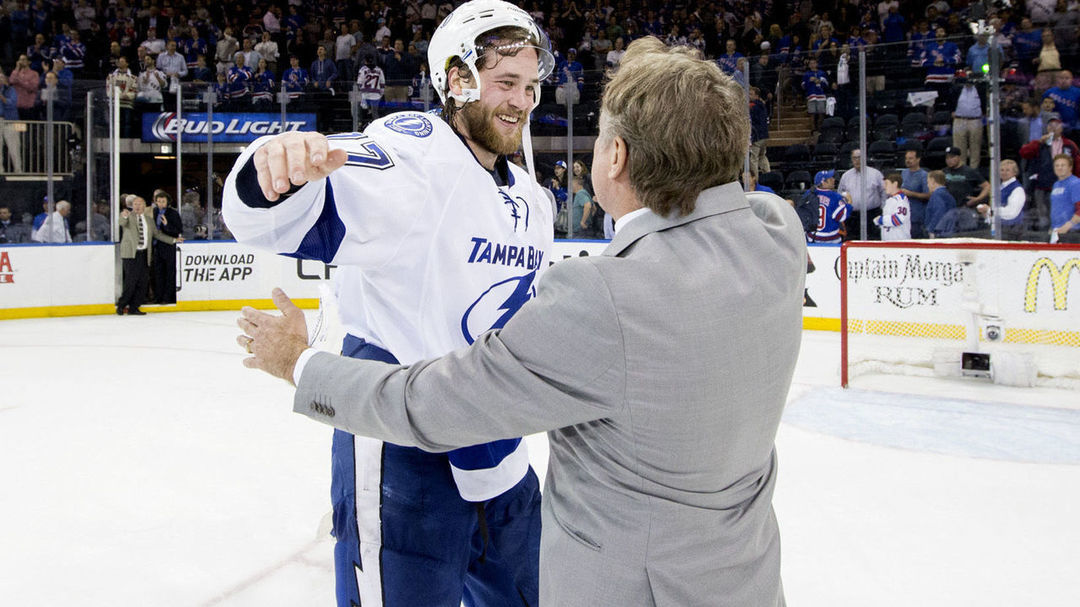
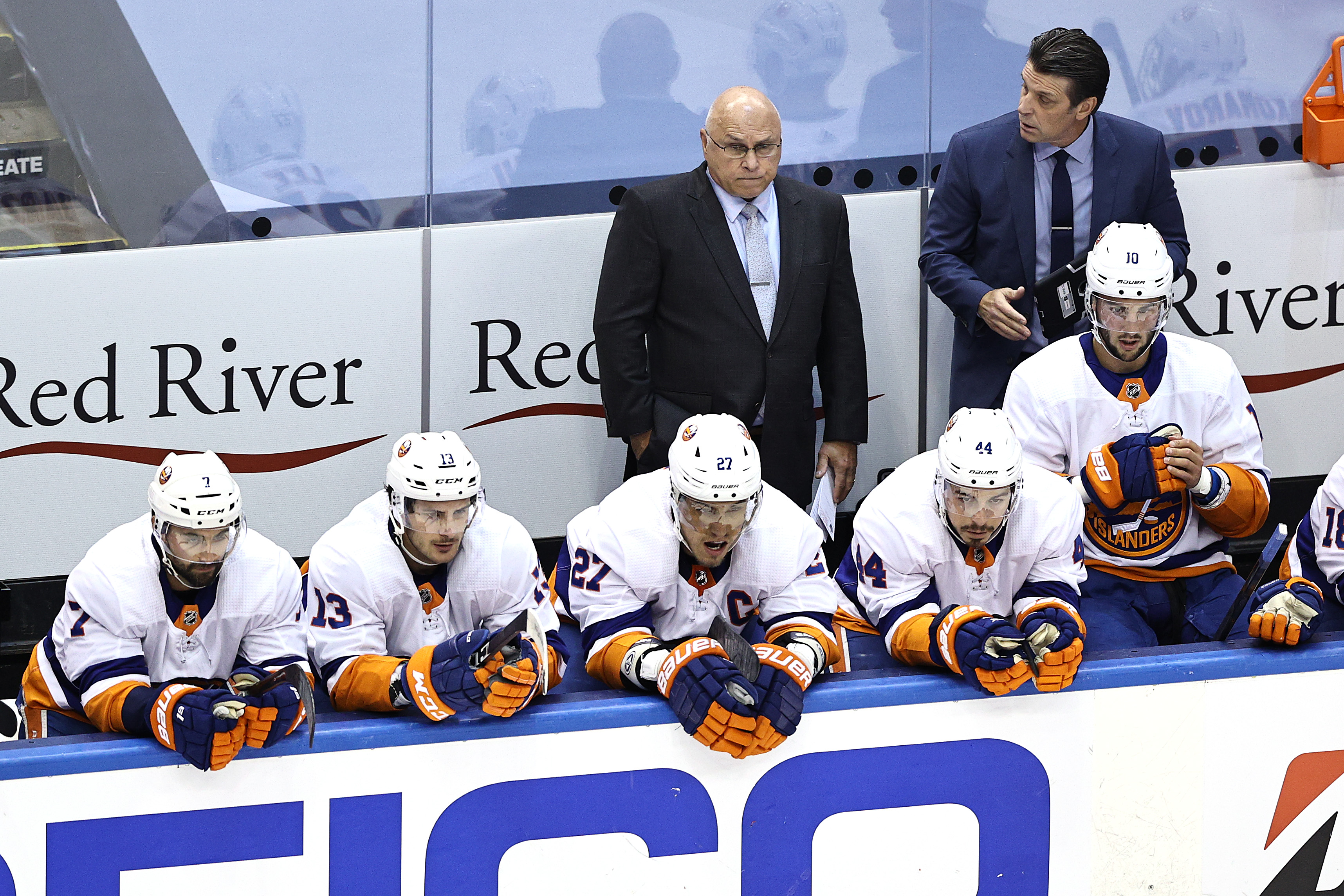
TORONTO, ONTARIO – AUGUST 14: Head coach Barry Trotz of the New York Islanders looks on against the Washington Capitals during the first period in Game Two of the Eastern Conference First Round during the 2020 NHL Stanley Cup Playoffs at Scotiabank Arena on August 14, 2020 in Toronto, Ontario. (Photo by Elsa/Getty Images)


New York Islanders

Barry became the head coach in 2018 and in his first season as head coach swept the Pittsburgh Penguins in 4 games, then lost to Carolina in the second round but was nominated and received his second Jack Adams award.

During the COVID-19 season, he has now lead the Islanders to the eastern conference final, and as the day of this being written are down 2-0 to the Tampa Bay Lightling, although had a much better game in game two than the first and I suspect will come out flying in game 3.

So how has Barry accomplished so much, when many say, with so little (the early years with Nashville, the egos on the capitals,  and the young up and coming roster of the Islanders?

#1 – He truly cares about his players. 

In all of the surveys I have done over the years, the #1 characteristic shared by coaches is the greatest coaches they had cared about them as people first, athletes second.

#2 – His Philosophy

In the video that we shared in our newsletter, Barry shares he core values;

When I stand behind my team it means something.

It means having respect, integrity….

It means responsibility.

Coaching is about caring about people.


Like many high level coaches, Barry is very knowledgeable about the systems, tactics (X’s and O’s) but what separates the good coaches to the great coaches is having core values that recognize the importance of coaching and caring about the person which I have shared with all coaches for years.

#3 –  He makes the players believe

Like he did with Nashville leading them to the playoffs for numerous years, he lead the Washington Capitals to their first ever Stanley Cup after many coaches before him with their high payroll star lineup had not often been knocked out in the first round.

Now with the New York Islanders, a young team that many felt would be bottom dwellers after losing their best player, John Tavares, to free agency before his first season, he lead them to the playoffs with a mix of young up and coming players and veterans and has gone even deeper this year.

Based on how he has guided his teams over the years, developed his players into such great people, and is passionate about his core values, I believe that Barry may just get the nomination a third time and potentially win his third Jack Adams as a result which has only been done by one prior coach, Pat Burns, who won the award coaching three different teams.

I imagine that he, like all the others in the bubble since the qualifying round started, is looking forward to when his family can join him so he can give them all a hug, including Nolan who was there by his side during the Capitals great Stanley Cup run just a few years back.

PS Tagline - Dont be a kids last coach


How BC is returning to Sport – Phase III

Posted Posted in Athlete, Coach, COVID-19, Officials, Organization Executive, Parents

Since we entered the COVID-19 Era, I have had a number of conversations with various youth sports groups regarding the confusion regarding all of the return to play protocols as various provinces go thru their various stages of returning to play.

Our home province, British Columbia, has recently announced that we are now in Phase III thanks to the amazing work that our PHO and Dr. Bonnie Henry have done since COVID-19 lead to shutting down Sports and numerous other sectors.

Although I am excited that we will see sports ramping up this fall, based on recent conversations since I have had with a few user groups I felt best to share what the phase means in terms of returning back to Sport as some are inferring that it literally is GAME ON, meaning, we are good to return back to pre-COVID era and we are still a ways from that being the case.

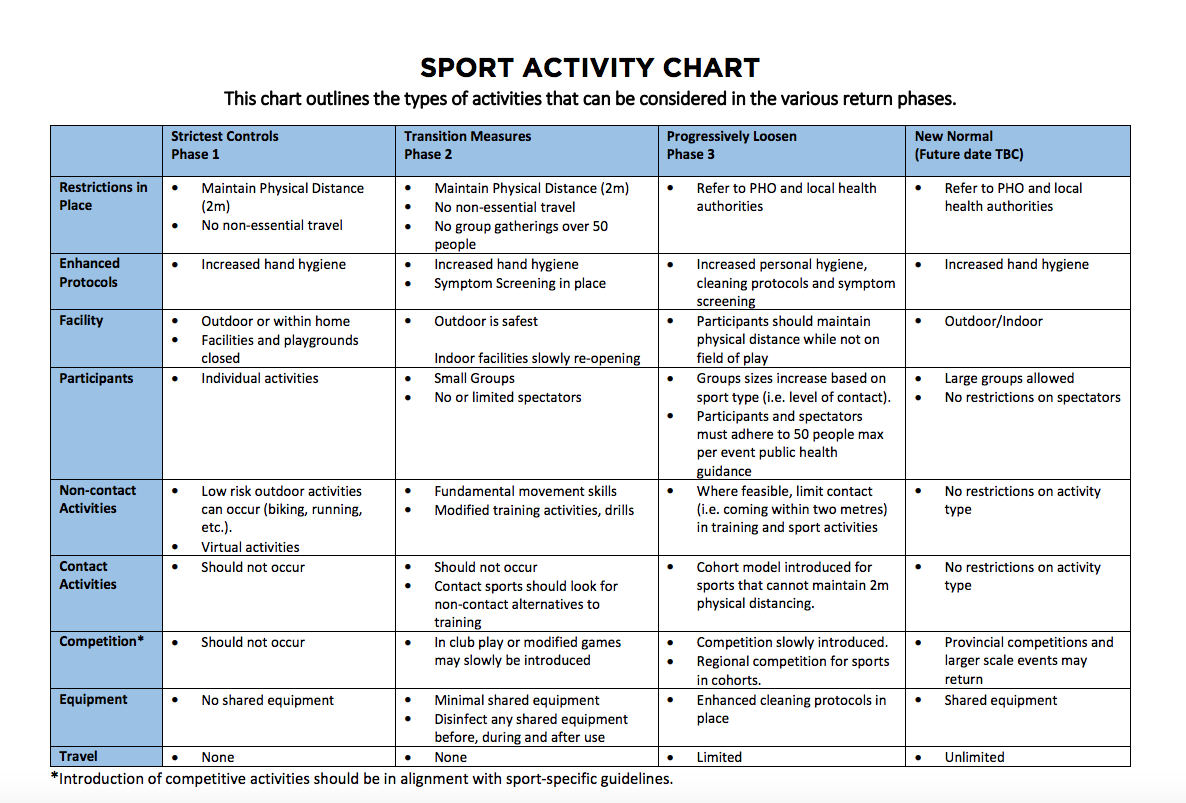
Below is a summary of all phases of the proposed return to sport plan as a summary for user groups to reference;

What has not changed from prior phases is;


  1. Personal Hygiene – washing hands regularly and using disinfectant
  2. Social Distancing required in common areas like benches, dugouts, dressing rooms, lobbies and entrances (masks in those areas is also recommended)
  3. Maximum gatherings of 50 to include spectators
  4. Symptom Screening before every activity
  5. Contact/Participant tracking

What has been eased up in terms of restrictions;

  1. Cohort groups identified by risk of sports can be anywhere from 10-100
  2. Contact within those cohort groups is now permitted
  3. Competition or games can now be played (adhering to revised protocols)
  4. High Performance training with limited travel

In terms of the actual sizes of cohort groups, as this will vary across a myriad of over 70 sports in BC alone, confirm with your PSO and refer to updated return to play quidelines, a recent example included Basketball BC’s HERE


  1. Lowest risk of Contact – i.e. Archery, Tennis, skiing, golf – Up to 100
  2. Higher risk of contact – Baseball, Cricket, Soccer – Up to 50
  3. Frequent/Sustained Contact Sports – Football, Rugby, Hockey – Up to 50
  4. Combative Sports – Martial Arts, Boxing – Max 10 per cohort

NOTE: Cohort groups includes spectators which are immediate family members only to be considered part of the cohort. Coaches and officials can be counted outside the total cohort number IF they are able to maintain physical distancing at all times.

To determine where your sport falls in terms of the size of cohort groups permitted, reach out to your PSO/RSO for confirmation as it is not a one size fits all approach, each sport will have different guidelines based on their evolving return to play plan and facilities being used.

A couple of examples that I can share with you how user groups implemented to limit COVID-19 exposure and reduce risk to participants (players, coaches and others)

My niece recently flew to Montreal for her first year to play for McGill’s Women’s Varsity Hockey Team.  She will be staying in dorm rooms in a converted hotel that McGill purchased and renovated for dorm housing with her own bathroom and common areas for kitchen for cohorts to use only.  Similar to the NHL bubble, they will not interact with others out of their cohorts

Her season will start with skills development sessions only, and will find out this week as Quebec enters into their next phase and she shared the original plan for competitive games is for McGill to play Concordia and Ottawa’s USports teams to be within a short travel distance but no travel will be permitted to USA or other provinces until a later date.

Although she will be able to be part of the team for various activities, all of her courses, like all the other students will be done online until further notice, like most other universities at least for this fall.

The second would be easing of instructions for minor hockey associations, the first of which that re-opened its doors with strict COVID-19 protocols was Burnaby Winter Club BWC) in May which we shared Returning Back to Play – Phase II where they took the biggest risk as the first out of the gate but to date no positive COVID-19 cases have been reported months later.

Now all other minor hockey associations in the lower mainland are slowly but surely returning back to the ice with various camps, skills sessions with limited number of skaters and coaches on the ice and aspire to return back to 5 on 5 hockey this coming season.

Ironically in July I had a coach who attended many of the workshops that I ran last year for one of those associations reached out to me if I felt it would be safe for him and his son to return to play and I shared all the work that was being done to ensure that it would be safe, but it would be different at least in the immediate short term.

When ViaSport and our provincial health authority announced that we would be entering phase III, I was excited but at the same time a little weary due to the fact that I have also connected with colleagues in the US, Europe and Australia who have shared how far out they are from returning to sport.

One recent example was a conversation that I had with one of our speakers for our Summer Summit, Rosemary Morris, the first female official of men’s elite basketball in Australia and she stated that they were in full lock-down due to the explosion of COVID-19 cases in recent weeks.

This included;

  • Curfew where all residents had to be in their homes from 8PM to 7AM the following day
  • Only 1 hour of outside time for physical activity, exercises
  • No retail shopping except essential services (grocery, pharmacy and of course alcohol)
  • Full cancellation of all sports programming until further notice
  • Police and Militia enforcement to ensure people follow the lock-down requirements

This right around the time when the Big 10, Pac12, CFL and various other professional, collegiate, school and youth sports cancelled all fall sports programming in Canada, US and abroad to curve the spread of COVID-19.

This is not to say that I am beyond excited that kids in BC, in particular the Vancouver area where I reside, will have the opportunity to return back to playing the sports they love, being with the coaches, team mates and working up a sweat with huge smiles on their faces while they do so.

I just want to make sure that we don’t go to the other extreme as we have seen in many US states who recognized the importance of kids playing youth sports but did not do so in phases adhering to various return to play protocols.

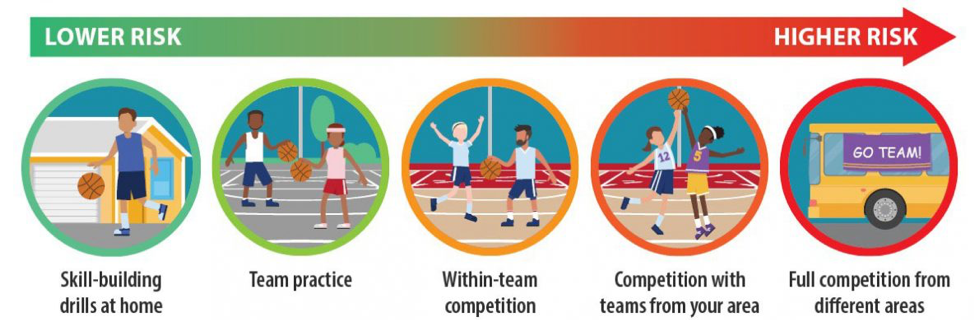
Recently the CDC, like ViaSport has identified various groupings of sport based on risk assessments per the image below


Phase III does permit cohort groups of competition within teams in your area but does not permit tournament play requiring travel to other areas.


Masks, sanitizer, and ultimately participating outdoors are the main recommendations to flatten the curve of COVID-19


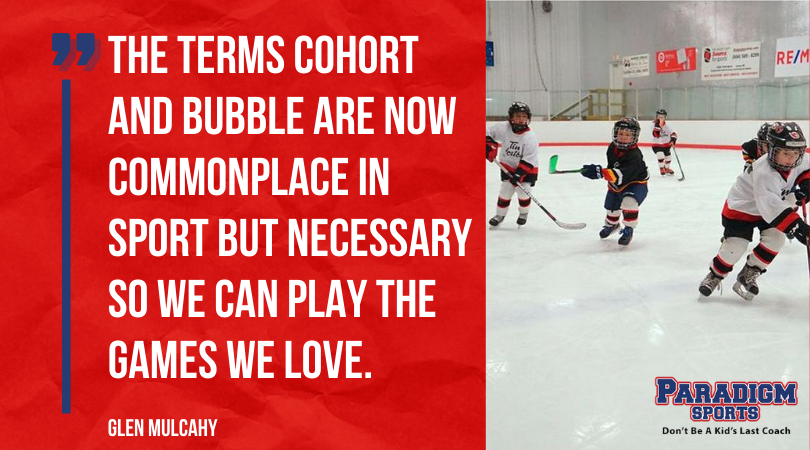
Sadly COVID-19 has forced our hand to go down the path of implementing cohorts or bubble environments to limit the interaction and potentially the spread of COVID-19 but as the NHL has shown, if bubble is maintained, it does permit sports to be played.

According to ViaSport, the term cohort is “a group of participants who primarily interact with each other within the sport environment over an extended period of time.”

Similar to the Bubble concept that has been implemented by professional sports like the NHL, NBA once kids are identified for their cohorts they are not permitted to interact with ones that are in other cohort groups and same holds true for coaches, officials if they become members of a cohort (exception being if they can maintain physical distancing then could coach other sports with other cohorts)

Sadly COVID-19 has forced our hand to go down the path of implementing cohorts or bubble environments to limit the interaction and potentially the spread of COVID-19 but as the NHL has shown, if bubble is maintained, it does permit sports to be played.

However, as the MLB who has not implemented a bubble model like the NHL/NBA/MLS have has shown, the chances of transmission of COVID-19 is much higher even though baseball is one of the sports identified by youth sports groups as being lower risk as by its natures participants are much farther apart then other team sports.

It also does not help when they had a couple of pitchers on one team that went partying in Chicago increasing their exposure, their team mates and potentially others teams they are playing against … but I digress.

The end result is for the foreseeable future, the cohort and or bubble model is necessary for us until such time that there is a vaccine or other treatment protocols for COVID-19 but by doing so, it will permit kids to play what they love, coaches do what they love to do and all other stakeholders return back to the fields, courts, fields and other playing surfaces so we can “Play for the love of the game”

In addition to the new Phase III guidelines, please ensure that you continue to follow health authority, organization and league safety protocols until such time that we do enter phase IV when large gatherings can take place as they had pre-Covid.

PS Tagline - Dont be a kids last coach