
Playing For the Love of the Game

Posted Leave a commentPosted in Athlete, Coach, Organization Executive, Parents


This coming Monday I will be returning back to Nanaimo to speak on behalf of Changing the Game Project hosted by Nanaimo Minor Hockey who is working with various other sports groups to develop an amazing sports experience for the kids in their community.

As I was when I made the ferry trip in October, I am truly honored to be invited to share nuggets but also interact with so many amazing people who are passionate about quality sport.

I came across some great nuggets the last few weeks that I will be sharing in the presentation that thought would be great to share on this week’s newsletter as well.

Why do Kids play Sports?

Simple, they play because they’re fun, they quit when they’re not.  It’s NOT Rocket science.

This is the quote that I have shared for years and it really comes down to just that.   What our role as parents, coaches should be, however, is not just making sure that youth sports are fun, but they should also ensure that kids love the sports they are playing more at the end of a SEASON than they did at the beginning.

Due to the growth of early sports specialization, however, there are no more seasons to youth sports, and in lieu of PLAYING sports, kids WORK sports for over 10 months of the year

As Wade Gilbert, the Coaches Doc, shares in many of his talks … do kids ask you Mom, Dad can I WORK Hockey? WORK Soccer?  No, they ask you if they can PLAY baseball, PLAY football and so on.

The more I thought about the reason why kids played a sport for more than one season is this held true, I Loved the Sport more at the end of a season that I could hardly wait to return to play again.  This was because when the season ended in March, I hung up my skates to play baseball, golf, go to the beach, ride bikes, hike, swim, tennis and so many other activities so when the season started again in Sept I missed the rink, my buddies, coaches and was eager to start another season.

Thank you for being a sport that helps me with other sports.


Why then do Officials (refs, umpires) start or continue to officiate?

According to the largest survey I have come across today over 17,000 officials were asked why and the #1 Answer was “For the Love of the Game”.

See below for the other top 10 reasons why they started and continue to be officials.
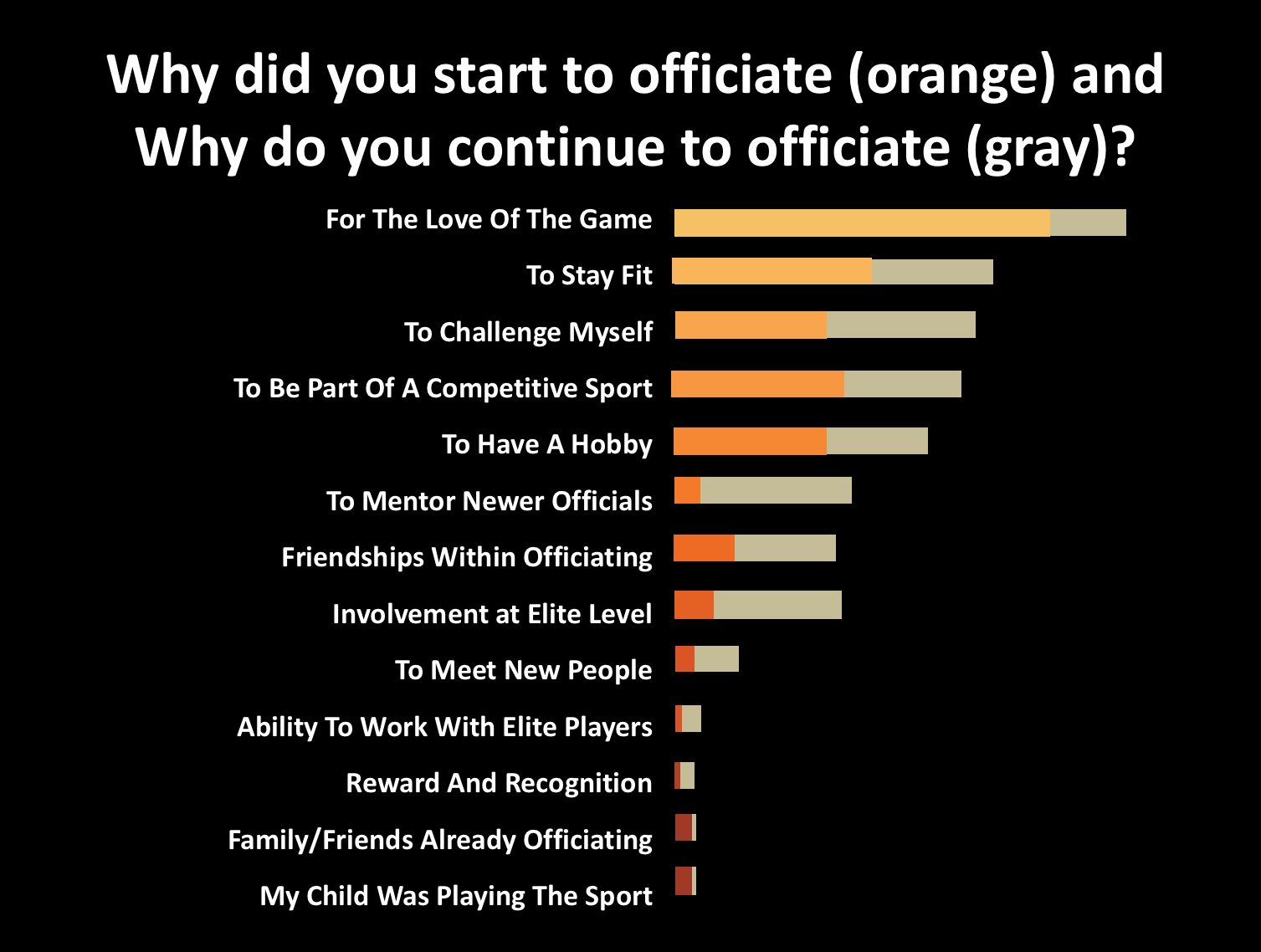
 

Other reasons included staying fit, challenge self, be part of the competitive sport, have a hobby and near the bottom was reward/recognition and lowest motivator was the fact that they had a child playing the sport.  This is probably due to the fact that a lot of officials start before they are parents, and ironically one of the motivators that organizations do is provide stipends for refs to do so so if get enough games, they can have a decent part-time income of the course of those seasons.

Why do Coaches Coach?

Ironically, when I have surveyed grassroots coaches over the years in clinics or talks and asked them why they coached, the #1 answer is because they had skin in the game, they stepped up to coach because their kids were playing and either asked them to coach OR a board member runs around the field, rinks at the beginning of the season asking for help.

I was one of those “suckers” initially putting my hand up to help on ice when board members came calling when my son was 5 starting hockey or my 7-year-old daughter in softball and 15 years and hundreds of kids later, I still put my hand up, now is to mentor the coaches of kids so they can help them become the best people they can become.

See below for the other reasons why Coaches Coach that I hear over and over again when I prompt coaches why they are coaching;
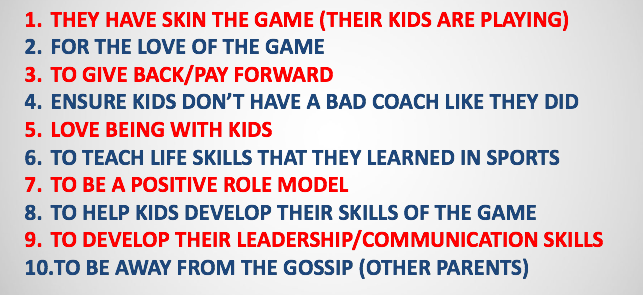
The second reason, whether they are a parent or not, is coaches step up to coach For the Love of the Game, they love the game and everything that it did for them, that they want to give back/pay it forward to help others reap the same benefits.

Many of which shared they are coaching so kids don’t have a BAD coach like they did when they grew up (which sadly there are still coaches even with all the certification coaches have today that coach the way they had been coached)

One reason that parents may not be aware of, coaches have also shared with me and I can relate, they are at the games anyway, drive to the practices and no point going home, so they put their hand up to help coach.  They also do so, as I did, to be away from the gossip that parents at times will share amongst themselves or worse yet those would be too vocal and scream coaching instructions at their kids or critique them/coaches or officials.

Another interesting stat came out of official vs. coach surveys, although officials receive fees and some coaches get honorariums for coaching now, neither officials or coaches stated when surveyed they started or continued to do so for the $$ in their top 10 reasons for doing so.

They do so not only because they love the game, and a few weeks into a season realize they also love being with kids as they have adopted large families when they start coaching.

Now let’s talk about why these three key stakeholders QUIT the Sports they once loved

Why do kids Quit Sports?

They not only quit because they are no longer fun, but they quit because the lost the passion, love for the game they once had and for various reasons lost their way in a sense.

More often than not, they no longer love for the game as they have been deprived of the opportunity to play in all key situations in games, have had adults screaming at them when made mistakes or have been on teams where harassment has taken place to some extent.

They quit because the games are no longer about what snacks they get after the games and being with their buds in the dressing room, hanging out in dugouts or sidelines it is about the results of the game that takes the focus due to winning at all costs.

They also quit because they can’t afford it any longer due to travel, equipment, spiraling fees and all the other costs now associated with youth sports unlike the “good old days” where you community sports were just that, played in the community or at high schools with low, no fees and even could use the same pair of cleats for 3 different sports as I did (baseball, rugby and football)

Why Do Officials Quit?

#1 Reason Poor Sportsmanship

As I shared in a prior post “Why do officials officiate” the #1 reason why officials quit is due to poor sportsmanship.

In the NASO study of over 17,000 officials, almost 40% of the respondents stated that parents caused the most problems with sportsmanship, followed by just shy of 30% of coaches.

When asked who is responsible for improving sportsmanship, over half stated coaches were.

Why?

Because they are the catalysts for change.

They interact with their players, assistant coaches, officials, board members and parents but also coaches and players of other teams, perhaps even their parent groups.

If coaches do not talk the talk but also walk the walk and demonstrate and expect good sportsmanship then whom is going to improve it?

They also quit because they are concerned about their safety, over 40% of male and female officials are due to administrator, parent, coach or player behavior

Even worse, they are intimidated by their fellow officials who will criticize them during games?

I just came across this extreme video where one parent kept telling the refs after a call he did not agree with “would see them after the game” (meaning we will duke it out in the parking lot – really?), but the entire group of parents and fans were ejected from a youth soccer game due to their behavior and threats towards young officials (about the same age of the players they were officiating)

This after each day I came across similar parental behavior, coach abuse towards players or officials, series of articles about sexual abuse, or various issues at minor hockey associations I shared in last week’s post “When will the culture of Youth Sports change for the better?”

Why do Coaches Quit?

Coaches, like players and officials, are either not putting their hand up, to begin with due to lack of willingness to “deal with” parents OR are quitting due to frustrations of the problems they had “dealt” with over their coaching careers.  This is why the most common ask I receive is “who do I deal with parents” to which I counter, it is not about dealing with parents, it is all about how you engage them as allies.

Over 80% of coaches surveyed by Syracuse.com stated that parent issues had gotten worse over their careers, the #1 problem they dealt with by over 80% of the respondents was parents complaining about their kids playing time.

IF a coach is playing everyone equally so they all have an opportunity to contribute to the outcome of the game in ALL situations this would be a non-issue (the exception being when kids need to be disciplined for behavioral issues).

I argue that coaches in a sense are a victim of their own demise, due to our winning at all costs culture, many coaches who may have had the best of intentions when they started coaching fall into the trap of running short benches starting from the beginning of the game and parents are merely venting their frustration as they ALL PAY THE SAME $ so expect all kids to PLAY THE SAME amount of time.

Again it comes down to pointing fingers at one of the key stakeholders that impacts what should be a quality and positive sports experience and the majority of the issues could be avoided from the GET GO.

In lieu, the officials blame the parents, the coaches blame the officials, players or parents, the parents blame the coaches, officials or board members blame the parents and goes round and round in circles like the merry go round at schools I loved when I was a kid (which kids can’t ride anymore as they may get hurt?)

When then are we going to stop pointing fingers at each other and understand the motivation for the players, officials, coaches to begin with?

They started because wanted to try a sport For the Love of the Game, they continue to do so for the same reason, and they quit because they lost that Love and passion they had to start with due the various issues that have taken the Play out of Play Ball.

In lieu of pointing fingers, what I suggest to all parties concerned is bury the axe, work on collaborating so it is a quality sports experience for ALL stakeholders so they all can do so For the Love of the Game.

Let’s all work together to bring the game back to the kids ….. where it belongs.



How clare drake's legacy lives on

How Clare Drake’s Legacy Lives On

Posted Leave a commentPosted in Athlete, Coach, Uncategorized

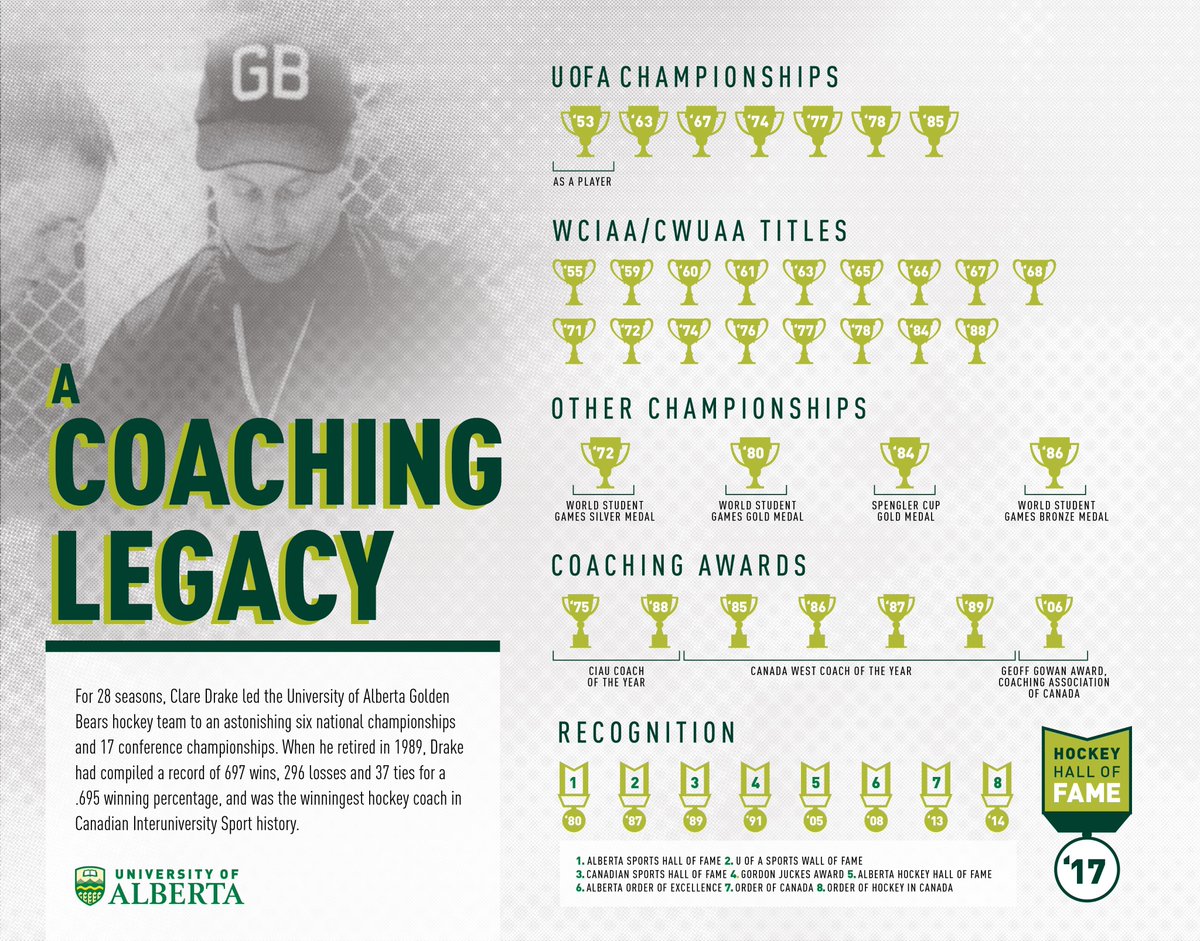
There are so many things that I could write about this week as two of the top 5 professional sports concluded their seasons but I would be remiss in not talking about the legacy of Clare Drake, former coach of the University of Alberta Golden Bears for 28 seasons and the impact he had on Washington Capitals Head Coach, Barry Trotz.

Check out prior post It’s amazing what you can accomplish for more insight on Clare

Barry was one of Canadian top coaches that pushed for Clare to be inducted in the hall of fame, along with the $50 Million Man, Mike Babcock, and Ken Hitchcock, who have cumulatively have amassed over 2200 NHL wins in their coaching careers.

Barry, however, just achieved the milestone that eluded the Caps since their francize inception over 40 years ago with only one trip to the Stanley Cup in 1998 losing out to the Detroit Red Wings coached by Scotty Bowman, whom Ken Dryden compared to Clare Drake “I can think of only one other Canadian hockey coach at a high level how had such a record of long term success – Scotty Bowman” in this Edmonton Journal Article.

Barry started out his coaching career in university at the university of Manitoba and would fear any time his teams would meet Clare’s University of Alberta Golden Bears.

“Clare was one of those iconic coaches when I was growing up that won at every level, but to me, he was a teacher of the game….If you were an opponent or you were a young kid, he was a guy that would try to teach and show he didn’t care if you were the opponent.” Trotz said in this oilers nation article.

Ken Hitchcock shared with the National Post “The last time we attended clinics ..together, he was still in the front of the front row taking notes at the age of 78.”. This is why Clare was called Canada’s John Wooden of Hockey, passionate about his craft and was still learning well after he retired.

After 3 years coaching in Manitoba, where he also served as a part-time scout for the very same Washington Capitals, he became the head coach of the Capitals minor league team, the Baltimore Skipjacks in 1992 then the franchise moved to Portland, Maine where he lead the team to two Calder Cup Finals, winning the cup in their inaugural season.

The Capitals ties continued, when former Caps GM David Poile was hired as GM for the Nashville Predators and he reached out to Barry to become the expansion franchise first head coach and struggled in their initial seasons as they built their team thru the draft with a very frugal budget for player salaries even before the salary cap to ensure that all teams are on a even playing field.

Unlike the Vegas Golden Knights, who benefitted from a restructured expansion draft format to choose unprotected players to be competitive out of the gate, where former Capitals GM George McPhee strategically put together a team that made it to the final in their first season only to fall short to the Caps coached by Trotz.

For 15 seasons, Barry coached the Predators, leading them to the playoffs almost every year, although they had one of the lowest budgets compared to all their affiliate NHL clubs.  He was credited by many in the NHL as doing the most with the least and then when the Caps came calling again, he became their head coach and lead the team to their first Stanley cup in their 40+ year history (est. 1974) and his first in his 19-year coaching career.

Although almost all the media attention is on how Ovie FINALLY won his Stanley cup after 13 seasons,  had 165 teammates over that time period, winning every other trophy possible like his counterpart Sidney and was able to get the monkey off his back and leading his Caps to knock their longtime rival, Pittsburgh, lead by Sid out of the playoffs for a potential three-peat.

Each of the subsequent series they came back from behind, also falling 2-0 to Columbus, then 1-0 to the Knights.

How did Barry help the Caps get the monkey not only off Ovie’s back but the franchise that he had been involved with on one way or another over going back to the beginning of his professional coaching career?

He did so by believing in his players.

Believing in the Great 8 (Ovechkin) – who not only scored from his wheelhouse on the power play but even strength, was physically dominant in every game, relentless on backchecks and even blocked shots.

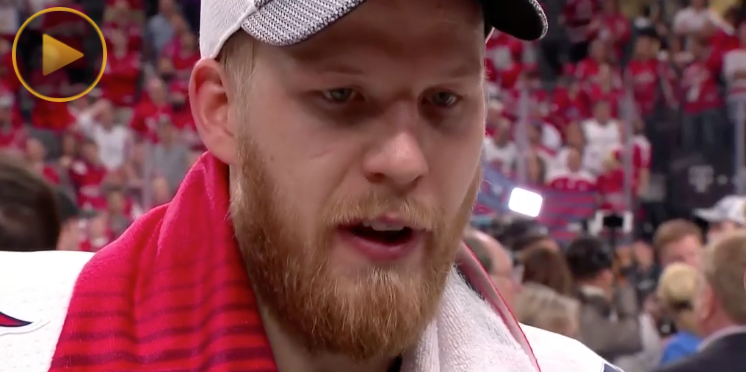
Believing in Lars Eller, who under Trotz’s leadership, flourished after he was traded from the Montreal Canadiens to the Caps.  Eller had his best season EVER since being drafted in the first round by St Louis and traded to Montreal, scoring 18 goals and 20 assists in the regular season but it was the playoffs where he truly excelled, scoring 7 goals, 11 assists, including the game-winning goal in game 5 to win the Stanley Cup, the first player from Denmark to do so.

When asked by the media about his contributions to the Stanley Cup Run, he stated “ he was feeling at home since the day he got there, organization and coaching staff believed in me”

NOTE: Click on volume icon to hear when video pops up

Believing in Devante Smith Kelly (yet another former HAB) who scored as many goals in the playoffs in 24 games, as he had in the regular season (75 games), 7, including the tying goal in game 5.

Believing in Evgeny Kutznetsov, Ovies Russian counterpart who EXPLODED under Trotz’s Watch, who many felt was a candidate for the Conn Smythe (MVP of the playoffs), with 32 points (12 goals and 20 assists).

Believing in Nicklas Backstrom, the player that Ovie handed the Cup to after he celebrated, who had been with Ovie all but one year when he went to the KHL, who contributed 23 points in the playoff run although he missed a few games due to a hand injury.

In the 3 years under Barry, Braden Holtby, starting goaltender, also backstopped the team to over 40 wins each season vs. two prior seasons of 23.

He also believed in all of his other players and demonstrated as many of the top experts, coaches, Olympians have shared with me that I have talked to for our inaugural For the Love of the Game Digital Summit what the characteristics of great coaches, one being coaches believing in their players.

Now the big question facing the Capitals is whether they will renew his contract that has expired, where he not only won the Stanley Cup but lead the team to the NHL’s best record in 2016 and 2017 seasons (Presidents Trophy winners).

General Manager, Brian MacLellan, has already stated publicly if Barry wants to continue in his role as head coach, he will be offered a contract (which all indications are will be a WEE bit of a raise on his current 1.5M/Yr salary).

Ironically, this is just a year after he stated he was doing a thorough evaluation of the team, including Barry’s future, after they lost in the second round of the playoffs for the third consecutive year last season (two of which after they won the Presidents Trophy).

If Brian, the owner Ted Leonsis, and the rest of the organization don’t sign Barry, he could potentially become the next highest paid free agent coach along with his other Clare Drake mentee and Stanley Cup winning coach, Mike Babcock.

This all took place in the same season after Clare was FINALLY inducted in the NHL hall of fame when he was 89 years old (suspect was still taking notes) and then a few months later sadly passed away.

Remember youth sports coaches, just as Clare, all the players and coaches that he taught the game to, our calling as coaches is to make a difference by developing youth into adults.

Please ensure your legacy is a positive one like Clares and you are not a Kids Last Coach.

Let’s all work together to bring the game back to the kids … where it belongs.


Don`t be a kids last coach


play fast blog thumbnail

Play Fast

Posted Leave a commentPosted in Uncategorized

There has been a myriad of coverage from traditional and social media in recent weeks as the Las Vegas Golden Knights have continued their amazing journey from forming stage as an expansion team in the NHL to make it to the Stanley Cup Final in their inaugural season.

Many of the top minds in hockey and in sport are shaking their heads in disbelief and if they accomplish the unthinkable, many Las Vegas Bookies who accepted bets before the season started with odds of 300:1 will be paying out BIG time to those that rolled the dice as their pick to win it all this year.

They have dominated the first 3 teams en route to the final winning 12 games, losing only 3, and many of those wins were by high margins.

As hockey has been one of the many sports I played, have coached, and for almost a decade have mentored coaches in the sport, I too must confess watching this play out since the summer of 2017 has been surreal.

Initially, when Gary Bettman announced that Las Vegas was awarded the next expansion franchise I should my head in disbelief.  Why would they put another franchise in the southern US sunbelt city when Phoenix (home of Austin Matthews) has struggled to attract fans, developing a season ticket base and losing money year over year.  I shared with many of my hockey counterparts that Vegas could not sustain an NHL team, and not only would they have difficulty filling the stands, they would not be competitive for years IF they managed to sustain the losses.

Fast forward 9 months later and they amassed 109 points as one of the top teams in the NHL in league play, have had an extended layoff after they defeated the Jets, the top team in the West this season, and will face Ovie and the Caps in the final.  Hollywood could not have written this script and I suspect like the story about Herb Brooks who tool his group of college players in 1980 to defeat the Russian Red Army, if Gerard Gallant does the same with his team of players who were not protected to win it all, there will be screenplay written and Hollywood production soon after.

The irony to all of this is that everyone is trying to figure out what the secret sauce has been, how have they done it, how did they get to the final in their first year?

This is how … they developed a culture of excellence starting off with great leadership, George McPhee, General Manager, who ironically will be facing his former team in the very same Stanley Cup Final.

They hired an amazing group of coaches, lead by Gerard Gallant, head coach.

They also have incorporated a motto, PLAY FAST.

Below is a TV screenshot I took when I was watching one of the Knights games vs. the Jets and commentators showed this sign in the Golden Knights Dressing Room (hence the low resolution)


Who would have thought that an NHL franchise would use the word “Play” in their motto?  This is their mantra, their core belief and everything revolves around the importance of playing a game that all the players love and as a result of the expansion draft where NHL teams could not protect all of their players, all of the players on the knights were ones that their former teams did not feel would be top players short or long term on their teams.

Play Fast for those not familar with Hockey term time and space, means that the Knights focus on taking away the other teams time (pressuring them to make mistakes) and space (not giving them room to make plays, taking away passing lanes, fighting hard for the puck along the boards).

The list of accolades that players have achieved under the direction of Gerard have been well documented, Will Karlson, scoring 43 goals this season vs. 6 last year, and 9 the prior season under John Tortorella who was the NHL Coach of the year 2 seasons back.  His other first-line teammates, Jonathan Marchessault and Reilly Smith also unprotected by their former clubs to have career years.

Marc Andre Fleury, who backstopped the Penguins to Stanley Cup wins in 2009 and due to injury sustained early in 2016 then backup Matt Murray took his spot literally, he was no longer the starting goalie and left unprotected during the expansion draft although he played many games for the Penguins during their back to back Stanley Cup runs in 2016 and 2017.

Other reasons why the Knights have accomplished what they have in their inaugural season;

  1. Focus on Fun (the number one reason why kids and even those getting paid millions of dollars to PLAY a game)
  2. Supporting them if they make mistakes to learn from it and not putting intense pressure so it develops their confidence


Have Fun?  Really? Isn’t the NHL like any other professional sport a multi-billion dollar business?

Shouldn’t all the employees be under the gun if they make mistakes?

This is the biggest reason why I believe the Knights have accomplished what they have.

Gerard Gallant and the rest of the Knights Coaching Staff have developed a culture where it is safe for the players to fail (if they make mistakes they won’t be screamed at or benched), which in turn has developed their confidence leading to every player and Fleury having breakout seasons.

The other reason why the Knights are where they are at, when they were choosing players for their team, the not only looked for players with the core skills they would looking for but as, if not, more importantly, they looked for players that would accept their roles on their team and had great character.  Another “pretty good” organization known for doing so, the New Zealand All Blacks who believe that “Better People Make Better All Blacks”.

Those that did so, have flourished.

Those that did not, did not.

Jason Garrison is one of those that did not, he did not buy into the culture the Knights developed, did not PLAY FAST and as a result was back and forth between the big club and their minor club and big unknown is if he will be picked up by another team when he becomes a UFA in July.

The Knights have had numerous injuries to their goalies, at one point they had more goalies on injured reserve then they actually had signed to contracts.

Each one that filled the net, played with confidence because their coaches did not put intense pressure on them.

The other thing that Gerard has done that I give him huge kudos for is recognizing the importance of rolling all of your lines to be successful in today’s NHL.

This is one of my biggest pet peeve when I see minor hockey coaches running short benches to win games, tournaments etc.  This does not develop the confidence that ALL your players need to perform at the highest level they can in regular season or have long playoff runs.  It puts too much pressure on the top lines to perform each night and it also leads to injuries, fatigue as was the case a few years back when John Tortorella rode his top lines when coaching the Vancouver Canucks only for them to sustain many injuries and have their worst years EVER.

All youth sports organizations and coaches could learn from what the Knights did to get to the final

  1. Develop a Culture of Excellence
  2. Focus on the Process
  3. Encourage players to make mistakes (growth mindset)
  4. Develop Confidence

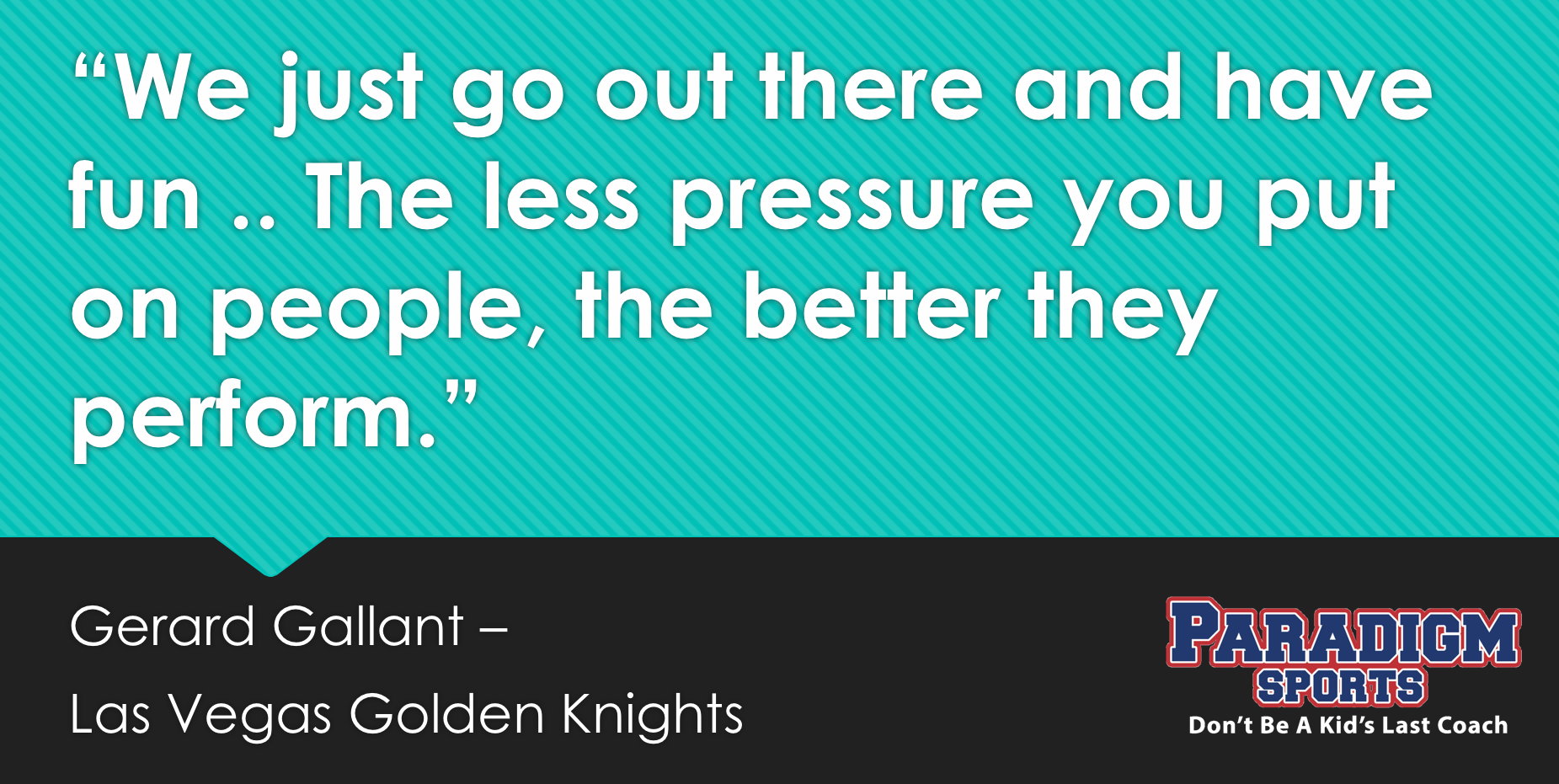
AND similar to Gerard sharing “we just go out there and have fun” another great quote I have shared with my son for years now after reading in Bobby Orrs Book My Story what his dad told him before every ice time

“Just Go Out there, have fun, and see what happens.” – Doug Orr

I for one will be anxious to do just that, to see what happens when the Knights face the Capitals in the Final, and suspect all those bookies that took that longshot bet last summer will be doing the same.

Let’s all work together to bring the game back to the kids … where it belongs

Don`t be a kids last coach


Cross Ice Hockey Benefits

Posted 59 CommentsPosted in Uncategorized


Source: Getty Images

BONUS – Download a Free Copy of this Blog in PDF Format HERE  

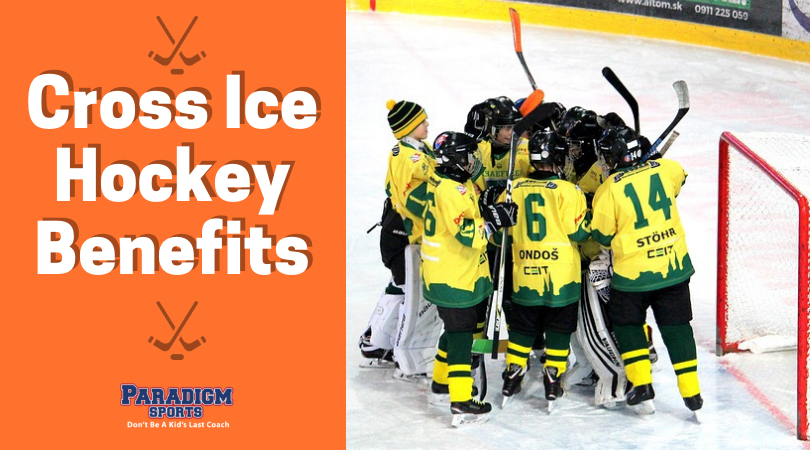
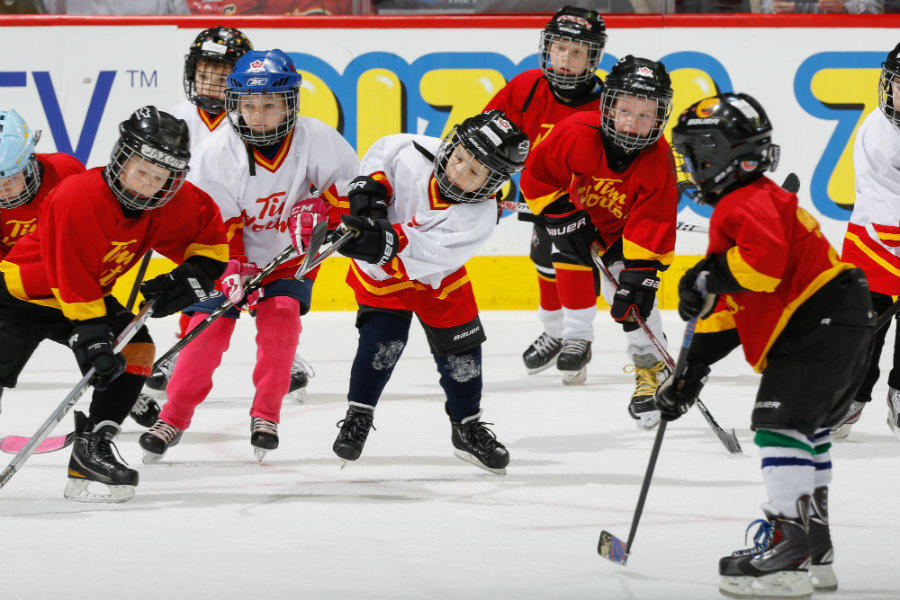
As we are only a few weeks away from kids, coaches and parents returning to ice rinks for the upcoming hockey season I thought it was a good time to discuss the benefits of Cross Ice Hockey.

In many of the clinics I have ran over the years I play clips from a video of Don Lucia when USA Hockey was introducing their ADM Model in 2007.  He touches on several key points, one being his belief that tykes (5-7 years old in the USA) should be playing cross ice games, not full ice.

That was 10 Years ago, right when I was coaching very same age groups and thought the same, as he referenced it was like adults playing on a football field, there would not be much back checking. My analogy for full ice game play for Novice was Beehive, as the lesser skilled players would literally chase the stronger players all around the ice surface, many of which would not touch the puck at all during an entire game.

Below is a short clip that USA hockey did put together several years later showing what it is like for adults to play on a similar playing surface to a football field with nets that are approximately twice the size as traditional hockey nets.


USA Hockey mandated Cross Ice Hockey for their 5-8 year old age group in 2014, then for the 2016-17 season, BC Hockey mandated cross ice for the same age groups (Initiation 5-6, Novice 7-8). Saskatchewan Hockey implemented for initiation (5-6 yrs old) group only last season, and in March of this year Hockey Canada announced they will be mandating cross ice hockey nationally for the Initiation Age Groups.  As far as I am concerned, it should have happened years ago and I applaud all of the governing bodies implementing to adhere to LTAD.

While I was running clinics last fall and interacted with coach coordinators, coaches and parents in those same age groups there were many that were for the implementation of cross ice, but also many against. Literally every clinic when I was going to or leaving benches I would walk past parents that were huddled up expressing concerns that cross ice would not prepare their son or daughter for Atom (9-10 yrs old).  I also would hear concerns about it not preparing them for the rep level of Atom, which is supposed to be development age group but give players of higher skill to play with kids of similar skill.

What I found coaching both Atom Rec (House) teams and Atom Rep teams was the same, as soon as kids entered that age group it became competitive even though we should still be adhering to LTAD and learn to play at that age group.

Why ?

Because players do play full ice, they do keep track of scores, wins, losses so teams can win a league or playoff banner regardless if playing rec or rep streams.

That is also when the insanity starts to escalate in the stands.

For all those naysayer’s that I came across last season, I would pull out my smartphone and play the following USA analytics videos for parents to show them all the benefits of cross ice hockey;

According to the analytics, the benefits of small-surface play vs. traditional full size play are as follows:

  1. 2X the body contact battling for the puck
  2. 6X more shots per player
  3. 2X more puck touches per player
  4. 1.75 shots per minute on goalies vs. 0.45 on full ice
  5. 2X more pass attempts per player
  6. 5X more passes received per player
  7. 2X more changes of direction per player

Advanced players benefited even more

  1. 2X more puck touches
  2. 2X more shot attempts
  3. 2X more pass attempts

These are the reasons why USA Hockey, BC Hockey and now Hockey Canada are implementing cross ice for the youngest players, to give them the opportunity to touch the puck vs. what I referred to as bee hive hockey for the first few years.

For the skilled player it is not much fun and for the lesser skilled players it becomes very frustrating and many will give up on the game well before they should as they never touch the puck.

I also had coaches or hockey executive members complain about the following issues;

  1. BC Hockey only gave them 2 months notice to implement, it was voted on at the annual AGM in June and all MHA’s in BC were expected to implement in Sept.

My reply, if we continue to delay, we will continue to fall behind other nations like USA and Europe.

  1. The costs to purchase the boards used to split into two, or for the creative associations 3, sheets of ice to permit cross ice hockey was in the area of 30K and for many smaller associations would require they raise reg fees to absorb the expense.

My reply – it is a one time expense and the cost savings permitting 2-3 teams on one ice surface (with ice costing approx. 200-300.00 per hour depending on where located) should offset within one or two seasons (depending on how many H1-4 teams associations have).

  1. The logistics of setting up for the younger age groups then taking down for the older age groups to permit full ice play would take up to 30 minutes and would affect the total ice time available for all hockey age groups, but also ringette, figure skating, public skating etc.

My Reply – I have known some AMAZING ice schedulers over the years who can make adjustments on the fly to accommodate and having multiple teams share once ice surface would permit potentially more ice slots for the older age groups.

Cross Ice Hockey for U9 age groups is a long time coming, and if you have followed the world juniors the last 2 decades if we do not go down the same path as other nations that are implementing cross ice play for the younger age groups we will continue to struggle at the international level.

The World Juniors has been a showcase for the worlds top U20 players, many of which have been drafted or draft eligible for the NHL.

In the 2000’s Canada dominated, winning 5 consecutive gold medals.

They then won Silver in 2010 and 2011, Bronze in 2012 and did not medal in 2013 or 2014.  In 2015 thanks to an emerging “pretty good player” Connor McDavid and outstanding play by many of his team mates Canada did return to the podium for Gold only to not medal in 2016 and lose to the USA in 2017.

Brent Sutter, coach of the 2014 team that did not medal stated when interviewed after the tournament that he would like to see more skill and creativity and that is what they got beat by on some nights. This starts at the grass roots level when kids are in the early stages of LTAD, and he further comments on the fact that the current Canadian Youth Hockey Model puts too much emphasis on competitive play (games) vs. skill development in practices.

Click here to read the full Globe and Mail article

Although many parents aspired for the kids to play at the rep level where teams are assured to get 2 practices a week, as a result of our current system it still works out to a 1:1 practice to game ratio.  I believe in atom and peewee ages groups which are the key development years of skill acquisition that we should revisit this model and rep teams should only play one game per week and replace the second game with a practice to ensure optimal skill development.  This would change the practice to game ratio to 3:1.  It would not require any additional ice to do so, merely converting one ice slot that is already assigned for those teams to a practice vs. a game slot.  By doing so, I believe the skill and creativity level of Canadian born players would increase exponentially to ensure that we remain competitive at the international level.


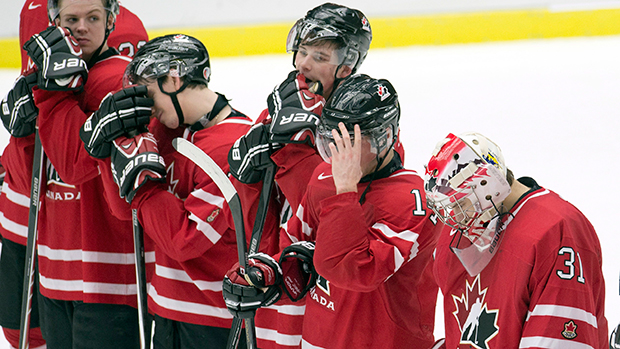
Hockey Canada 2014 World Junior Team after loss to Russia in the Bronze medal game

USA (3), Finland (2), Russia (1) and Sweden (1) have been the other countries to reach Gold since 2010, all of which have invested heavily in LTAD models.

Although Canada once was Canada’s #1 Youth Sport, it no longer is for a myriad for reasons, Soccer is now the #1 youth team sport by over 100,000 registrants.  Jason De Vos, Director of Development and the rest of the Soccer Canada team also are looking at various means to improve skill development in the younger age groups.

Why ? Because Canada National Men’s Soccer (European Football) program is ranked 117th in the world.

In the keynote presentation he did for Ontario Soccer we shared in this weeks newsletter, he referenced the transformation that Iceland did with their National Football Program, in 2000 they were ranked 131st in the world but due to various initiatives they implemented (including focus on LTAD, skill development with the younger players) they not only qualified for Men’s Europ Cup in 2016 they WON against England !!  Iceland is now ranked 23rd in world as a result and are 1/10th the size of Canada or 1/100th the size of USA in terms of population.

Another nation that has developed some pretty good NHL players is Sweden.  They implemented Cross Ice Hockey years ago, and play until they are 10 (atom age group), and then full ice non-competitive games (no scores kept) until they reach the Bantam Age Group (13-14 years old).  They also have a practice to game ratio of 5:1 as it is in practices (when planned well) that players develop.

Every single coach who played his youth hockey in Europe that I have interacted with over the last 10 years, including several who played professionally, state they don’t understand why there is such an emphasis on competitive games vs. skill development.

For me it started in my first year coaching minor hockey in 2004, H1, 5 year old kids and there were no games, just skill development ice slots but we did incorporate small area games in. Only a month into that season several parents asked me and fellow coaches “when are we going to play games”, to this day I still shake my head the question was posed, most of the kids could barely stand on their skates without falling down and parents wanted to see full ice games.

I look forward to seeing the impact cross ice hockey will have in the coming years, and other initiatives as they are rolled out to continue focusing on Hockey as a long term player development model.

Let’s work together to bring the game back to the kids.


PS Tagline - Dont be a kids last coach


Lack of Fair Play – The Other Reasons Why Kids Quit Sports

Posted 2 CommentsPosted in Coach

Lack of Fair Play –  The Other Reasons Why Kids Quit Sports


Playing just your starting lineup isn’t only hurting your kids, but your team as a whole!

Part II


Glen Mulcahy

May 18, 2017

BONUS – Download a Free Copy of this Blog in PDF Format HERE  

This blog post is a continuation of last week’s Part I post Poor Sportsmanship – The Other Reasons Why Kids Are Quitting Sports


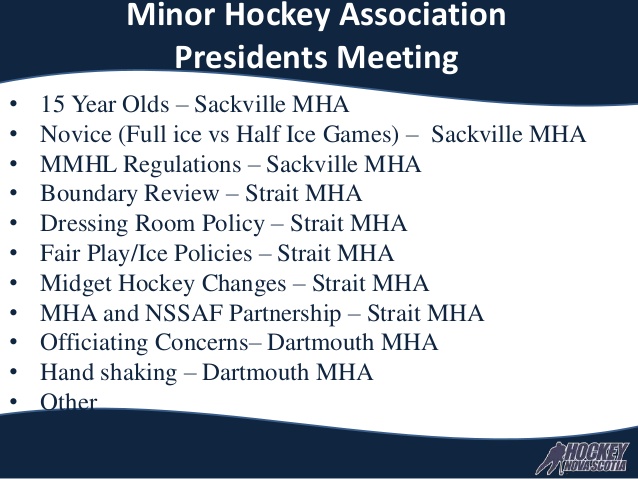
When I first began researching fair ice policies a few years back, there were only a couple that came up when I used my good friend Google. One I found was Hockey Nova Scotia which had fair play in addition to their policies for all levels including house, female and even competitive rep.


Nova Scotia Hockey AGM Agenda


Above is an image from last year’s Hockey Nova Scotia AGM. If you happen to follow the NHL at all, there are a couple of pretty good players that came from there. One happens to be the captain of the defending Stanley Cup Champions, Sidney Crosby; the other is Nathan McKinnon who many feel is the fastest player in the NHL with the puck.

I just did the same search I did four years ago in 2013 and the good news is, there is change coming. Currently the entire first page of Google outlines the fair ice policies that various hockey and ringette associations have adapted. As far as I am concerned as a coach and educator, the sooner that all major Hockey and Ringette associations implement these policies the better.

One of the top 5 reasons why players quit any sport is due to the fact that coaches play their favorites more than they do other players. In doing so, they are sending the message to those that sit that they are not good enough. As my son so eloquently shared with me after he sat on the bench for the better part of a game for non-disciplined reasons as a result of coaches’ strategy backfiring on him, he was “deprived of the opportunity to contribute to the outcome of the game.”

90% of kids would rather play on a losing team – emphasis on the word “play” in all situations – than sit on a bench for a winning team.

The only reason why players should be sitting on the bench when it comes to their turn to get out on the court, field or ice is for discipline. This could be anything from not being penalized when they should’ve been, to using bad language, to demonstrating poor sportsmanship and more. Aside from behaviour correcting actions, coaches need to take on their inherent responsibility of developing ALL of the players they’ve chosen to be part of their club, and not to rely on who they feel are their top players.

When I reached out to Cory McNabb (senior manager of player development for Hockey Canada) if he agreed with the short bench tactics that coaches in minor hockey are using, his reply was simply “Nope, if you pick ’em, you play them.”

Translation – regardless if the team in question is a house (rec) or competitive (rep) level, coaches choose the players for their team whether through tryouts, evaluations or drafts. To rely on a few players who in their subjective view are the cream of the crop,  coaches are not investing in developing all their players; something that should unquestionably be a priority above a win in the short term.

Just for a second, think back to the last 5 or more Stanley Cup Championships where commentators and coaches alike are saying they need to have all 4 lines contributing in order to win the Cup. This principle is not one that remains at the elite of the elite level. It is relevant all the way back to when kids are just beginning to develop their athletic careers at six or seven years old.

This year during my experience coaching high school rugby, the athletic director shared with me that there is no fair play code in high school sports other than grade 8 (13 year olds). The remainder of coaches for teams grade 9 and up are both allowed and encouraged to only play their top players in every game.

I had to deal with this experience first hand with my developing Rugby team this past year, which struggled to get a full field (15 players) out to any game on a good day. One match that’s been unfortunately etched into mine and my players brains was against a highly competitive school who brought out almost 30 players. Before the first half was over the ref came to me and asked what I wanted to do as we were already down 48-0.  We spoke to the athletic director of the other team and asked if they could sub in their second line players and, unfortunately, it went on deaf ears… the head coach continued to run the score up as he was focused on winning the provincials.

This I know now is the reason my son was deeply discouraged about playing different sports. A couple years ago he quit playing hockey, in large part to experience other sports and teams. When he signed up for grade 10 high school volleyball, just a few practices in, he was told point blank by the parent coach that he was only going to play his top players in games (one of whom was, of course, the coaches son).

Until the NSO/PSO/RSO and secondary school sporting bodies recognize that one of the top 5 reasons why kids are quitting any sport (just as in the case that ALA found in their survey) is because of a lack of fair play policies, attrition rates in youth sports are going to continue to grow!

Even if they implement fair play policies alone, I truly believe it will lessen that insanity in the stands which every parent knows all too well when it is time for their son or daughter to play. When the kids sit on the bench for non-disciplined reasons they get frustrated and after a season of it, it is no wonder why both player and parent opt to go down a different path (not that it is any greener on the other side of the fence).

It also will bring the love of the game back to the kids vs. the adults competing against each other through their kids.

Just because many kids may not have reached their potential at a young age doesn’t mean that they won’t be able to with future opportunities. If they are deprived of the chance to contribute it’s likely that they will quit.

Imagine if these “pretty good athletes” that went on to have insanely successful careers like Sydney Crosby and Nathan McKinnon were not given the opportunity to “play” early on in their development and were one of the 70% that quit by the age of 13 as a result.

Let’s work together to bring the game back to the Kids … where it belongs.


Glen Mulcahy


PS Tagline - Dont be a kids last coach