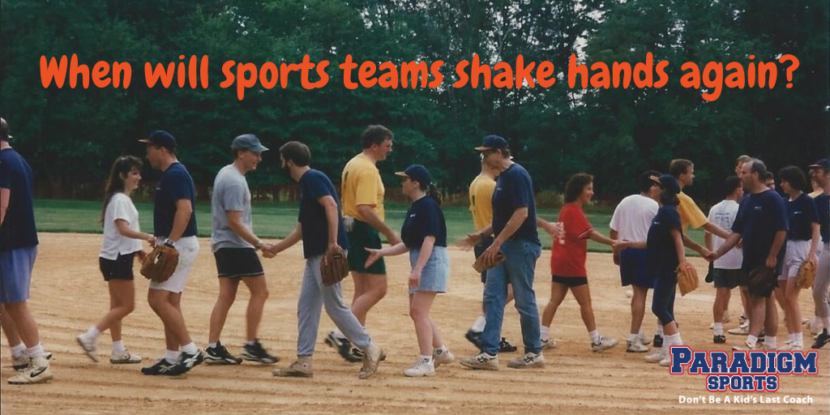
When will sports teams shake hands again?

Posted Posted in Athlete, Coach, Organization Executive, Parents

In the last couple of weeks, I have been thinking about the challenges that student-athletes are having as their spring seasons were put on hold and plans for this coming fall are in limbo due to the novel coronavirus pandemic canceling commencement ceremonies.

Two of which are my niece and nephew and I reflected back on my graduation ceremony from high school with over 600 of us wearing our gowns and gaps and the parties that took place in May and June as we ramped up for our official graduation ceremony.

The one thing that I keep being reminded of is one of the turning points that made me whom I am today, when one of my greatest teachers reminded me of the importance of never giving up in my last year of high school.

In my last year of high school, I played community football in the fall where I team went to the provincial championships (equivalent to state) only to lose in the last game which was a major disappointment but like many of my teammates we all aspired to go on and play collegiately or Junior and during that fall I also worked approximately 30 hours a week as a pizza driver and was in the honours program in my school.

After one of many crazy weekends where I played a game on the Sunday early afternoon then headed to the restaurant for my evening shift and got home around 11AM I woke up at 7 AM the following morning and went to my French 12 honours class and soon after I sat down my French Teacher, Mrs. Statz announced to the class we would be having a surprise quiz to help us prepare the provincial exam we would be taking in the spring.

To which I said … F>>> That, I am not taking a quiz in my groggy state

To which Mrs. Statz said “Mr. Mulcahy, get your ass out of my class”

I groggily picked up my textbook and binder and headed out of the class and heard the door slam behind me and as I turned to head to my locker I was shocked to see her standing in the hallway and she started to go up one side of me then down the other reminding me that I had so much potential and what I had done was not only disrespectful to her, my classmates but I was letting myself down.

It was reminiscent of that talks I had with many of coaches over the years that helped steer me in the right direction, having lost my father at 8 years old, then throwing (literally) my step-father out of our house for abusing my mother at 16 my teen years were full of anger and resentment and I had no aspirations other than getting my dogwood.

After all, I had a job, a car, a place to live and the idea of going to college or university was not even a inkling in my mind, moreso playing football, rugby that was an outlet for my anger issues but at the moment when Mrs. Statz asked reminded me of my potential to do so much more I said silently to myself that she was right … so the first thing I did was apologize to her, then went back in the class and did the same to my classmates and then set the wheels in motion what I would be doing after high school.

My grades were not quite good enough to go to University (as I worked, partied, and played sports) but was able to get into a junior college where I could still play Junior Football and Rugby in the Spring for the collegiate team so my path to higher education began.

I share all of this with you as I can relate all too well to the difficulties that my niece, nephew and all other student-athletes are having right now as they have been distanced from their teammates and classmates, they have had to improvise, adapt and overcome to complete their diplomas but unlike me and hundreds in my school will not be permitted to walk across the stage “live” to receive their diplomas, shake hands with their teachers in acknowledgment of their accomplishments nor having the opportunity to compete for what may be their last spring teams in Rugby, baseball, lacrosse or various other spring sports.


In lieu, their schools are working on creative ways to create a “virtual” graduation, where they still can put on a gown and cap, perhaps go to the stages they would have and being recorded walking across it, with representatives from the school and community than sharing via Zoom their “virtual handshake”

However these commencement ceremonies take place this May/June timeframe I believe there will be many “virtual commencement” speeches shared which cannot be done live, but below is one from Prince EA that I believe should be as regardless of the fact no ceremonies can take place this year, there is no reason why all the high school seniors should not celebrate in their own way and ensure that they do in fact “Live their dreams”

Dr. Anthony Fauci, The US Director of the National Institute of Allergy and Infectious Diseases has shared during the COVID19 quarantine period in April “we’ll never shake hands again” which had my head spinning when I came across the quote.

“WE’LL NEVER SHAKE HANDS AGAIN”

The reason?

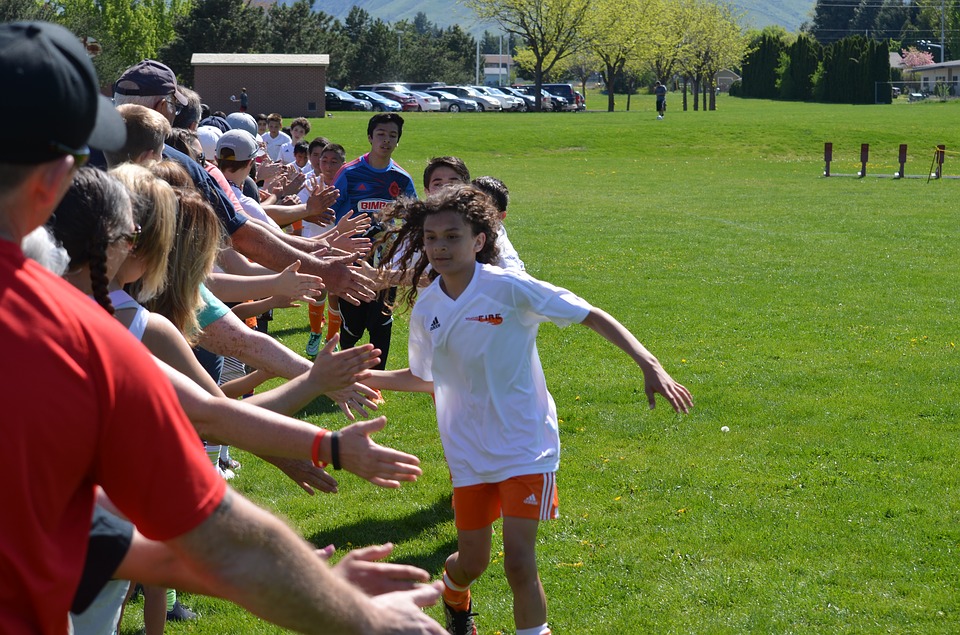
Having played and coached sports my entire life, one of the core things that we do after games is do just that, shake hands after a competition in the spirit of sportsmanship and respect towards our opponents.

I did so for decades as I have all others involved in sports.

Can you imagine the Stanley Cup Playoffs and when teams are eliminated in a series not shaking hands after a game as one team moves on and the others head to the links?

The NBA, MLS, MLB, or any other sports when their playoff runs end not shaking hands in the spirit of competition, respect for their opponents for providing the opportunity to do just that, compete?

Any other sports competition at the professional, collegiate, high school, or community level not shaking hands after games, long playoff runs in the spirit of sportsmanship?

It all starts early on at the grassroots level where we as coaches remind our players the importance of respect, of themselves, their teammates, the officials, the opposing team and coaches, and shaking hands with respect.

Is that never going to happen in the New Post COVID19 Era of sports?

I hope not, I hope that when we do get thru this troubling time as entering into Phase I, II, III and beyond where large formal gatherings are permitted that the handshake is part of our tradition just as others like singing Take Me Out to the Ball Game in the 7th inning, singing anthems before games, raising retired jersey numbers to the rafters of great players, community celebrations to celebrate championships and so on have been for decades.

I also can say as a longtime coach, that one of the biggest rewards I have received as a coach over the years is when my players come to me at the end of a practice, a game, or season and extend their hand and say THANKS COACH.

I still remember to this day when a 6-year-old player did so on my hockey team and when he extended his tiny hand to do so made me realize just what coaching is all about, it is not about making a living, it is about making a difference developing youth into adults.

Until we can, in fact, practice the tradition of shaking hands again in the spirit of respect, sportsmanship, winning with humility and losing with dignity … stay the course … stay safe as we transition to phase II and I am crossing my fingers that Dr. Fauci was incorrect and we will be shaking hands sooner than later.


 

PS Tagline - Dont be a kids last coach


Why Coaches Must Teach the importance of FINISHING

Posted Posted in Athlete, Coach, Organization Executive, Parents

Why coaches must teach the importance of FINISHING.

In addition to all the players I have coached over the years, I have also now worked with 15 University and College co-students (our 16th will be starting in a few weeks) who have been instrumental in helping us develop our websites, social media, digital content and hosting of online events and podcasts, I have come to appreciate how today’s generation(s) (Millennials and Gen Z) differs from Gen X (the baby boomers).

Although each one of them has left their own legacy based on projects we started at the beginning of a co-op term that I have looked back in awe at times what they have accomplished, I must confess there one of my pet peeves having worked with the Millennials and now Gen Z is their lack of appreciation of not only starting a task but finishing a task assigned at times.

Generation Z Attention Span is only 8 seconds, LESS than a goldfish


I continue to see instances even of co-op students and many of which share our passion as they  played various sports think nothing of taking on a project or task with vigor but due to their upbringing in the digital era with shortened attention spans with all the time they spend on screens, social media it has been something I have to reinforce with all of them.

Some examples of instances where I had to go to the student’s desks after they thought they were finished to FINISH the task or project;

#1 – We have been a long term sponsor of a charity “Dreams Take Flight” and each year have provided them various samples, promotional items from past and current lives and in back to back summers when I prompted our co-op student to help stage, they would return back to their desks before we were finished. I would then have to ask for them to come back so we could finish what we started.

#2 – Recently I asked one of our students to re: and re: two PC computers from our conference room to another area of the office and although they did a great job with the computer in the conference room, they merely plugged in the other and hooked up to the screen and then returned back to their desk but failed to test the mouse, keyboard, internet, audio where I then had to finish the task assigned.

#3 – Various other students over the years I would assign tasks of projects to and they would take on with vigor and would get to approximately 80% completion and would shift to other projects either as they thought they were finished or suspect their attention waned, particularly with some of the more mundane tasks like manually filing, bookkeeping, that I would have to come to them and highlight they were not finished the first project. It reminded me every time just how short their attention spans could be but is direct cause in effect of their upbringing thru the digital era.

I could cite many other examples but as I run our organization now incorporates the art of coaching over the years including growth mindset, safe to fail environment, connection, developing trust, cultures of excellence etc. in lieu of getting frustrated with every student all too commonplace today with coaches and parents criticizing kids for making mistakes I sit down with them and review why it is important for them to not only commit, but FINISH the task assigned. This is no different that when coaches run drills during practices and remind players not to cheat the drill (rush thru it as fast as possible) which completely defeats the purpose.

Each time I would do so I would use analogies going back to their sports experiences where coaches should reinforce the importance of FINISHING (AKA Go THRU, not TO, the line).

Analogies that I have shared with them with videos (Gen Z is highly visual and if you can’t beat them, join them) top 5 in reverse order;

#5 – Life is a game of inches (Rugby version)

We play as a team or we will die as individuals.


#4 – Don’t celebrate until you FINISH


#3 – Never Give up, it takes a village


Everything about the importance of finishing the race including the epitome of sportsmanship from a 17 year old high school student, reminscient of when Derek Redmond’s father assisted him finish the race in Barcelona 1992 Summer Olympics (video protected by IOC)


#2 – Run THRU, not TO, the goal line

Just one of many examples why players must run thru, not to, the goal line


Many would share that they never had coaches that reinforced the importance of commitment, finishing or sportsmanship.

To which I would shake my head in disbelief as sports should be the medium to develop youth into adults and if coaches are not reinforcing the importance of Commitment and FINISHING is no wonder why today’s generation is rushing thru tasks and not completing 100%.

I just sat down with my current student to review a project that he had taken on, but did not complete the last step as he got distracted with a newer task that was assigned to remind him of the importance and reviewed all of the analogies above to which he responded no coach he had had ever shared with him.

Below is our all-time favorite example of how a player was able to accomplish a lifetime goal and finish with the support of opponents, the epitome of sportsmanship, yet another area that I have had to remind many Gen Z players of various teams I have coached the importance of.

And Our All Time Favorite at #1

Sara Tucholsky First Home Run – Ultimate Sportsmanship to achieve a lifetime goal


If you are a coach of any sport today if you don’t reinforce life skills of commitment, finishing, and sportsmanship you have not prepared them for life beyond sport.

Remember, our role as coaches is not to make a living (as most coaches are volunteers), it is to make a difference by developing youth into adults.

Let’s all work together to bring the game back to the kids.


Don`t be a kids last coach


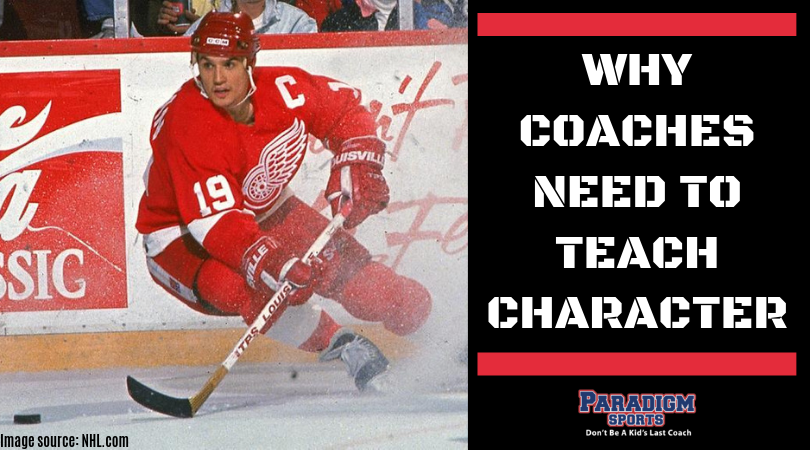
Why Coaches need to teach character

Posted Posted in Athlete, Coach, Organization Executive, Parents

For all the years that I have coached various sports, one of the most stressful times of the year for coaches, parents and players are the tryouts for competitive teams or even skills evaluations of recreational (formerly known as house) teams.

As the upcoming hockey tryout season for rep teams is fast approaching and all associations will be hosting their respective tryouts here are some tips for coaches to look for (and parents to share with their aspiring rep player son or daughter)

Rep player evaluations consist of three areas

#1 Core Skills

This is when evaluators will look at players go thru various ice sessions to evaluate players core hockey skills, skating, passing, shooting, balance, agility, and contact (body checking if applicable bantam age groups and up). Players are scored either out of 5 or 10 then after each skate evaluators (hopefully organizations have independent or ones not involved with the age group for impartiality) to compare notes and then players are ranked.

Many organizations have policies that the top X forwards (5-6) and 2-3 defencemen will receive spots on the rep teams and then the coaches have the discretion to fill the remaining spots on the team based on the holes they are looking to fill.

#2 Game Play

Players will be randomly put on to teams to be evaluated in terms of their performance during gameplay, this is where coaches not only reaffirm their skills but how they play positionally, what they do without the puck (as most of the game they will not have the puck on the stick), whether they backcheck, play on the defensive side of the puck, demonstrate sportsmanship, are unselfish and so forth.

#3 Character

This is the hardest area for coaches to evaluate, this is what I call the “Fire in the Belly Section” and coincidentally in a recent survey, I did for a parent presentation the #1 expectation that parents have for their kid’s youth sports experience is they will develop character.

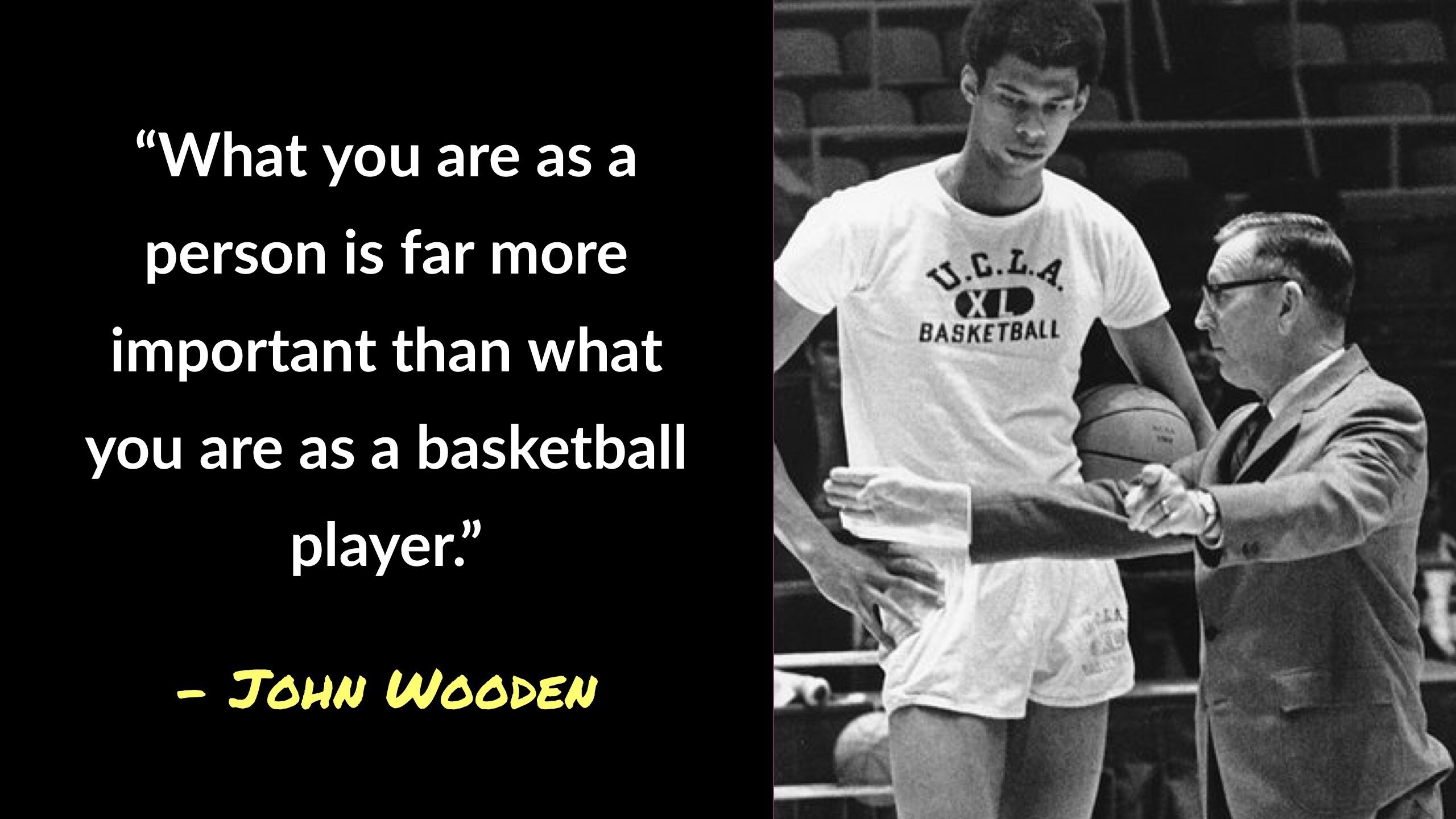
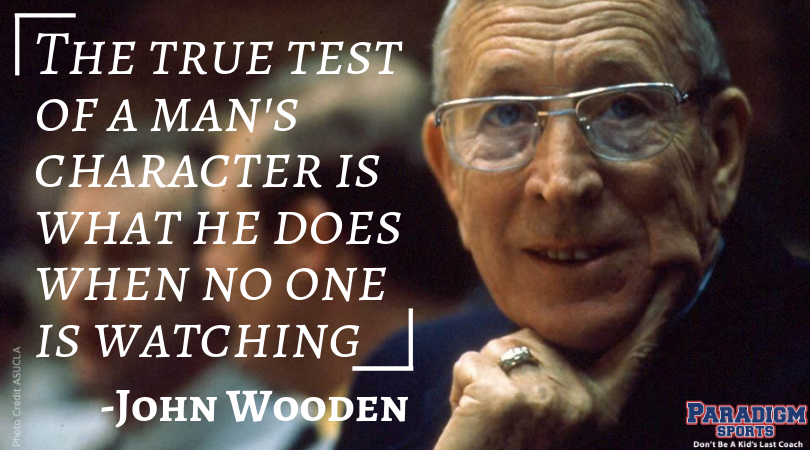
Prior to every tryout of any of the sports I have coached over the years, the only tip that shared with players is the importance that they may be evaluated at any time during a skill session or scrimmage/exhibition games and share one of many great woodenisms below;


Asides from watching body language which everyone in the arena can see, below are some of the key ones that I recommend coaches look for when evaluating players for rep hockey tryouts (same would hold true for any other sports), which is why I have argued for years that sports don’t build character, it’s the coaches in sports that do.

GRIT – The Passion and Perseverance for long-term and meaningful goals.

When it comes to tryouts, it can be a stressful experience for kids, but what can really affect their stress levels is how their parents support them to reach their realistic goals.

COURAGE – The first step of demonstrating courage is to commit to trying out in the first place, I have known many kids over the years that had the skills to play at the competitive level but lacked the confidence in their ability that they would be able to make rep teams in the first place.

The other part of demonstrating courage during the tryouts are things like how hard they battle along the boards for pucks, in front of the net for dirty goals, carrying the puck up the ice, going into the corners as a D man with a forechecker coming fast and so on.  If kids shy away from the puck but have the skills, chances are the more courageous players are going to be selected for the AAA team vs. not.

SELFLESSNESS – Are they a puck mover or a puck hog?

When I surveyed older players (after 13 years old) what they did not like about hockey, one of the top answers I received was when their teammates were selfish.  Hockey is a team sport, so when I have had selfish players on teams at the beginning of the season, I talk to them and say if they won’t pass the puck, then perhaps they should consider playing golf in lieu.

COMMITMENT – Do they show up early for every ice time, are they the last to leave the ice? Are they putting in extra time at home working on their shots, strength, cardio, balance and agility? Have they attended every ice session or have they missed any (the exception being family issues)

One of the things I remind all players, and now various co-op students that have worked with us over the years … if you’re not early you’re late.

LEADERSHIP – Do they talk to other players on the bench, do they communicate on the ice by calling defensive plays, calling for passes, letting players know to get their head up, lead warm-ups before games etc. ?

The ones that I look for are the players that bring their toolbox to every ice time, work hard, play thru adversity (other players chirping, slashing) never complain, are their early and leave the ice last, help the coaches clean up and just set an example of being a great teammate

SPORTSMANSHIP – Do they celebrate goals “they” score excessively or do they humbly circle with their teammates and thank them for making passes to set them up?  Do they have “pissy” fits when they don’t score or have the puck taken away from them, make mistakes that may lead to a goal being scored against their team and so on.

PATIENCE – When they have the puck on their stick, do they methodically up the ice with the puck, make passes at the right time (without telegraphing), wait for teammates to get open, make that first past as a D man to get the puck out of the zone OR do they panic when they get to the puck and throw it right up the strong side of the boards to be intercepted easily by the opposing team?

CREATIVITY – do they try things in the skills sessions as well as evaluation scrimmages as they have the confidence to do so OR do they not take risks as they are scared of making mistakes?

The latter is usually a sign that they lack confidence due to the fact that adults have instructed them not to do things.

Many of the above are the intangibles that we look for as coaches when selecting players for our teams but are probably the hardest things to teach kids which is why coaches have to recognize the importance of not only teaching the skills of the game but the skills of life.

The last tip I would provide for coaches, if it appears that players have the skills but lack various character traits outlined above, more often than not you would be better off opting for a player perhaps with a little less skill but with the character you are looking for who fits your desired culture.


The Reason why the ALL blacks have the winningest record in the last decade of any sports organization is one of their core values is to recruit players with character that will fit their culture (teamwork, hard work, commitment, resilient, selfless, communication) vs. those having more skills and lack character traits to fit in.

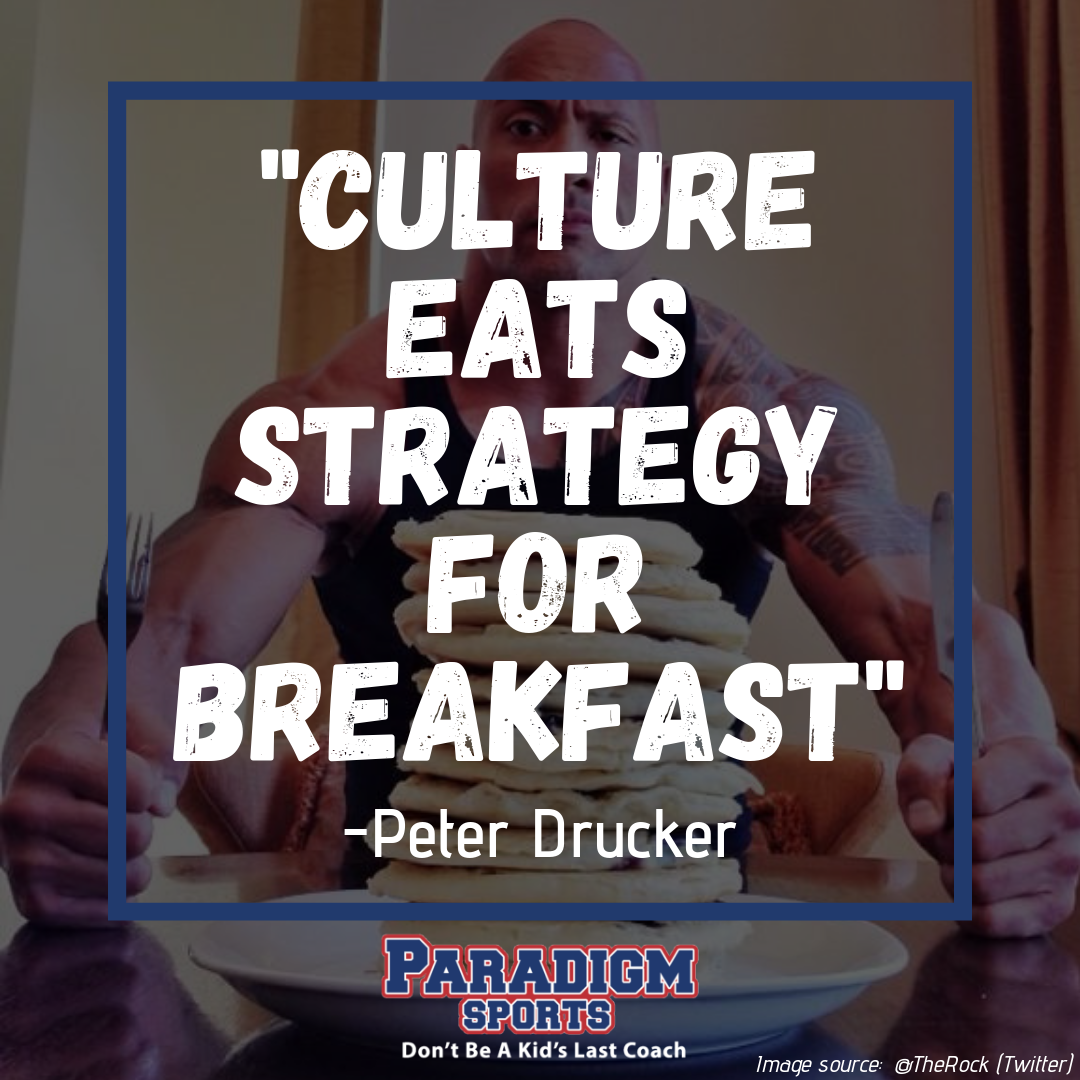
This will permit your team to go thru the storming stage much faster than if you had a few players that not buying into the desired culture you aspire for the team, as Peter Drucker made famous;


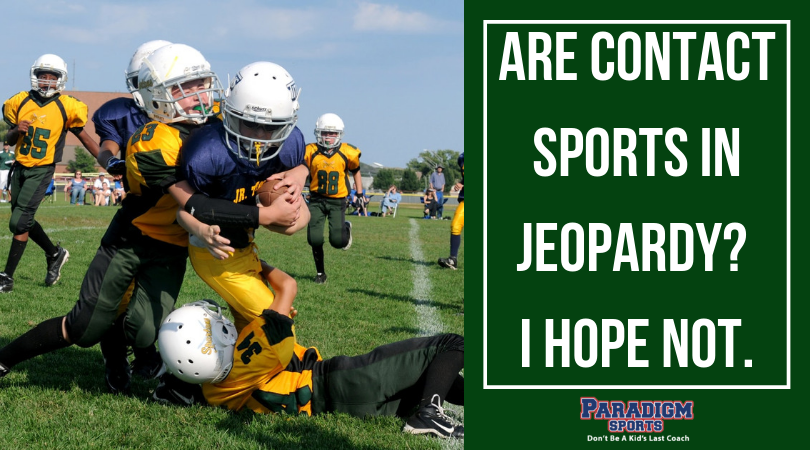
Are contact sports in jeopardy ? I hope not.

Posted Leave a commentPosted in Uncategorized
In the last couple of week’s I have read articles on the dangers of full contact sports and felt were worth sharing and commenting on.
 
One touching on recent data pertaining to CTE Findings by Boston University and supporting arguments that “Football is still worth risk.
 
Steve Simmons comments on how his two boys (who are now grown men) played several contact sports in their youth and neither suffered a concussion. They played many seasons of contact hockey and football, one even played university football.
 
Reason why I start this week’s post referencing his article is he puts forth the argument that tackling in football is still worth the risk and also believe it is but we MUST make changes immediately to how the game is being coached at the grass roots level.  First, we must eliminate the intentional head to head contact as players are using their helmets meant for their protection as weapons.  Second, we must limit full contact or tackling to later ages to allow for full development of brains to mirror what USA Hockey and Hockey Canada have done removing until Bantam and considering deferring until Midget to ensure players brains are fully developed.  Third, we must reinforce the importance of respecting our opponents and playing for the spirit of the game.
 
To review the article Steve is commenting on and short CNN Video click here
 
To support his argument, Steve shares his youth sports experience of various sports he played including baseball, hockey, football, lacrosse and basketball, all of which I played except lacrosse. My alternate was Rugby. He further shares how many life lessons he learned in football particularly including;
 
  •  Teamwork
 
  • Commitment to stay in school
 
  • Confidence
 
  • Friendships
 
  • Maturation
 
Two that I would add – Respect and Sportsmanship, two values that are missing in youth sports today that are leading to the increasing concussion and injury rates.
 
This list could be endless for me, youth sport teaches us much more than just the skills of the game, but valuable life lessons that we carry forward in non sport activities. That is the role of youth sport coaches, to make a difference by developing youth into adults.
 
For me, contact sports was my way of dealing with the challenges of losing my father when I was really young (he died tragically when I was 8 years old), a means to be aggressive, physical and keep my Irish temper in check. It also provided me surrogate fathers in a sense, as each sport the coaches would take me under their wing and would be not only teach me the skills of the game, but the skills of life. If it had not been all the GREAT coaches I had when I played all those sports, I would not be the man I am today.
 
Another contact sport that has received a lot of press in terms of head trauma’s and concussions is Hockey, recently the “Campaign to ban bodychecking in bantam hockey divides parents”
 
In 2013 Hockey Canada banned body checking until competitive hockey in Bantam, removing it from Peewee and all levels of non-competitive hockey. The reason? Studies found that the brains of peewee aged players (11-12 years old) were still developing and the research found it led to a threefold increase in body and head injuries.
 
I happened to be coaching the peewee age group at the time and witnessed first hand how body checking en masse was leading to concussions. I believe on of the biggest contributors to players getting a concussion was not body checking per se, it was what I call “The Chicken Wing”, players intentionally making head contact with their elbows or hitting players from behind.  Only a small % were due to clean bodychecking done correctly. The other, was players raising arms or sticks to protect themselves in self defence, like all other core skills of hockey, contact confidence takes years to develop.
 
I had the misfortune of watching numerous “chicken wings” by opposing teams on my players and one was such an outright intent to injure I can’t even speak of it at length. While coaching Bantam, I witnessed a 14 year old player elbow one of my players with such intensity it reminded me of the Todd Bertuzzi/Steve Moore Incident as he fell to the ice with opposing player on top of him. My player suffered a major concussion, then when followed return to play protocols suffered another due to a hit from behind.
 
One of the saddest things for me was when his parents sent an email to the team that he would not be returning to play as doctors advised him he could no longer play hockey.
 
He truly loved the game and was only 13!  Unlike 70% of kids today that are quitting youth sports for various reasons, he had to stop playing a game he truly loved because he hit in the head intentionally with an elbow. 
 
After the game as I was walking by the opposing player and his parents were joking with the coach that they would be saving money on travel for a few weeks as he received the maximum penalty possible, a 5 game suspension. It took EVERYTHING I had in me to keep walking, I could not believe a fell coach disrespected the game to that extent and condoned the incident.  In lieu, he should have had a serious conversation with the player and reached out to his association to enforce a longer suspension.  The whole point of having penalties in hockey is not to give the other team a man advantage, it is to deter the behaviour from happening.  
 
As far as I am concerned, both the player and coach should have been suspended for the season, perhaps more, then the message would have been sent.
 
This to me, is the #1 reason why concussions are now rampant in hockey, and you can defer body checking until Senior leagues (Over 30, Over 40) and even though brains are fully developed, players will still get concussed if players initiate contact to the head or hit the players from behind out of the danger zone.
 
Although many were against banning body checking when Hockey Canada did so in 2013, one of the professors that did the initial research to support bodychecking be pushed to Bantam age group confirmed it did have the desired impact
 
  • 64% decrease in concussions
 
  • 50% decrease in overall injuries
 
  • The overall number of concussions across Canada has dropped more than 4,800

See article here

Further research has shown that players brains are still developing beyond the Bantam age group (13-14 years old) so  is the reason for new campaign to defer body checking until Midget age groups but if we do so we are opening Pandora’s Box. Bodychecking, much like any other hockey core skill takes YEARS to development so in order to prepare players for older age groups we must look at a graduated system to prepare them. As the boys become closer to becoming young men, their testosterone levels increase as well as physical size. At some point we have to TEACH proper body checking techniques and the reason we have in hockey to begin with. It is not to separate the player’s head from their body, it is to separate the player from the puck. 
 
The same holds true for football, I played contact football for 9 years all the way to Junior (University age group) and although I got “my bell rung” at times I never was diagnosed with a concussion, nor did I get concussed in contact hockey, rugby, british bulldog (which has now been banned from school playgrounds) or the game we loved the most in high school “tackle basketball”. As far as my friends and I were concerned, it was not a “sport” unless it involved contact, body checking or tackling.   The difference for our age group vs. what I have seen the last 10 years is our coaches reinforced the importance of proper tackling techniques EVERY practice as well the importance of respecting our opponents in game play.
 
The difference in my generation vs. today’s generation and like the chicken wing in hockey, helmets today are not being used for protection as they are intended, in many instances they give players are false sense of security and many will lead with their helmet when tackling or going to be tackled.  
 
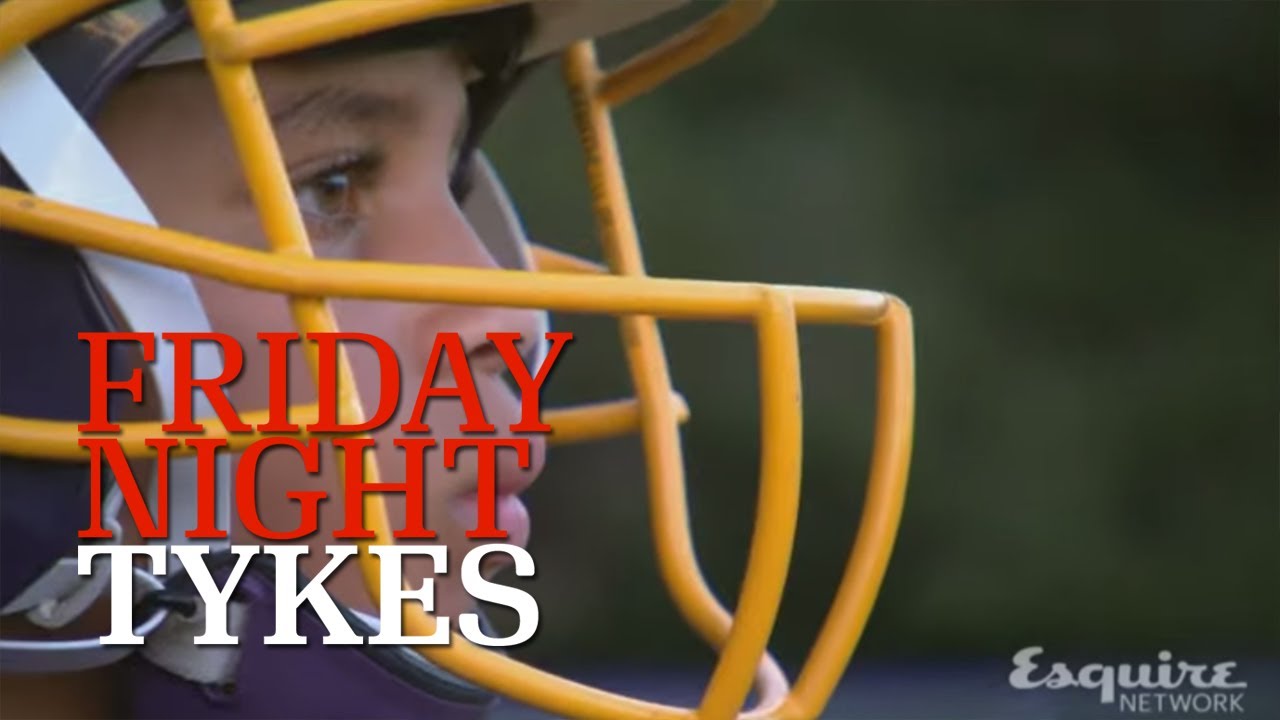
Here is a video about an elite 8-9 year old program in Texas, it is a series based on a REAL football program in Texas. Click on the link below for the original trailer for Esquire program Friday Night Tykes.
 
It is no wonder why CTE has been such an issue for the NFL as it all starts at the grassroots, if youth football coaches are not going to teach the safe and proper tackling techniques adhering to the LTAD model then it merely will continue to escalate.  
 
I have talked to several youth football coaches who are but we need ALL youth sport coaches of contact sports to do so, otherwise in addition to Hockey and American Football, other contact sports also may be in jeopardy.
 
So there is no disconnect, I am a big advocate for concussion  and CTE awareness. I am not saying that they are not serious issues, they are, and we should continue doing what is the best interests of kids to ensure they are SAFE.
 
Why am I so passionate about it? Because I suffered 3 major concussions, the third ended my competitive sports career for lack of better word in my 20’s. Ironically though, all 3 were not in a game or practice, one was a result of horsing around with one of my rugby team mates, the latter two were when I came to friends aids in bar brawls.
 
My last concussion I can only tell you what people told me as I have no recollection of the 2 weeks that lead up to the event. One of my friends was hit over the head by a beer mug, I jumped in to grab from his assailant and then one of his friends did the same to me. I was knocked down, and he and his two friends literally kicked and punched me to the point where I was so disfigured after the fact when I looked a pictures taken for police shots I did not even recognize myself.
 
I ended up in an ICU at nearby hospital and awoke groggily 2 days later and had NO IDEA where I was, how I got there and all I could remember is the migraine. Doctors told me that it would take time for me to recover, get lots of bed rest, limited reading, TV etc etc. I missed 2 months of my first college term as a result of the time it took to get back to being symptom free.
 
Needless to say, I can relate to the challenges Sid, Paul Kariya, Eric Lindros and numerous other players have had dealing with to recover from concussions
 
I believe that contact sports are getting a bad rap in a sense that it is the contact itself that is leading to CTE, Concussions. In lieu, many of injuries sustained is due to the the equipment meant to protect but used by players initiate contact leading to same … the hard plastic on elbow pads, the “concussion proof” helmets,  disregard using sticks to slash wrists, helmets or cross checking from behind.
 
Hockey (NHL) and Football (NFL) are getting a lot of press making it a hot topic for last few years but if tackling and contact was such an issue, why are we not looking at taking contact out of other sports ?
 
If contact alone was the driver for CTE, concussions and other injuries, Rugby should be the #1 sport for all but are not even in the top 5, according to Neurotracker, these are the number of high school concussions per 100,000 athletic exposures;
 
  • American Football – 70.4
 
  • Men’s Ice Hockey – 54
 
  • Men’s Lacrosse – 43.3
 
  • Women’s Soccer – 33
 
  • Women’s Lacrosse – 33
 
Honourable Mentions
 
  • Women’s field hockey – 23.5
 
  • Men’s Wrestling – 23
 
  • Women’s Basketball – 19.8
 
  • Men’s Soccer – 19.1
 
Hmmm .. Rugby still not in top 9.
 
Why ? Because it is a hooligan’s game played by gentlemen.
 
The only protective equipment are cleats, mouth guards and perhaps ear wraps (for forwards) and that’s it. Concussions are low or non-existent because players don’t have helmets, elbow pads, sticks that can make contact with players heads, wrists (slashing has become the norm, not the exception in hockey).
 
It is a sport that players still call the ref SIR and when you get older after you go to war with the other team, you socialize with them afterwards.
 
Here is another example of how 8 year olds are being taught to hit others recently posted in Instagram 
 
 
Helmet to Helmet contact starting at 7-8 years old? Coach makes no correction ?
Player attempting to tackle not protecting himself by getting down to drive shoulder into other players core, wrap arms which would avoid any head contact whatsoever.
 
Really?
 
If the NFL, NHL and others want to have players come up thru grass roots they MUST get on board with grass roots programs to bring back respect, proper checking, tackling techniques.
 
Eliminating body checking, tackling from contact sports is not the answer.
 
Reinforcing the importance of Respect, Sportsmanship and other core values is.
 
Let’s work together to bring the game back to the kids.
 PS Tagline - Dont be a kids last coach

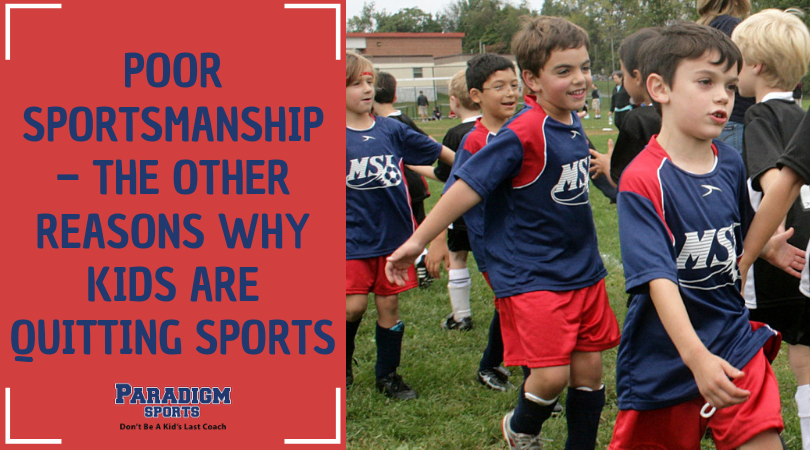
Poor Sportsmanship – The Other Reasons Why Kids Are Quitting Sports

Posted 2 CommentsPosted in Athlete, Coach

Poor Sportsmanship – The Other Reasons Why Kids Quit Sports

Lack of respect in youth sports today is killing our athlete’s motivation!
Part I

Glen Mulcahy

May 10, 2017


other reasons kids quit part 1


BONUS – Download a Free Copy of this Blog in PDF Format HERE  

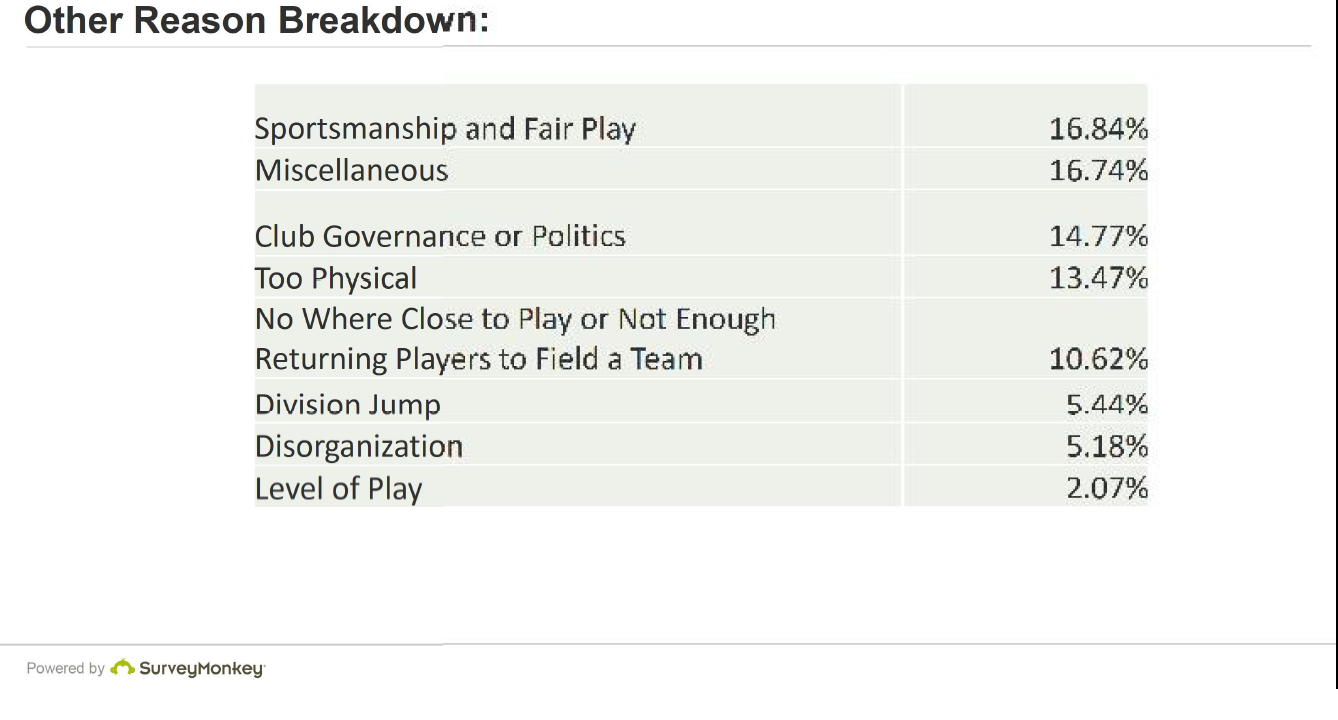
Lack of sportsmanship is a large part of the reasons our young athlete’s are becoming discouraged so early in their athletic careers. Although the second reason kids are leaving lacrosse is to specialize in other sports as I outlined in prior article Why Kids Quit Lacrosse, the primary reason why kids are leaving lacrosse are a myriad of combined problems within the sport (20.6% of the responses of the 1100 families surveyed by Alberta Lacrosse Association) that are outlined in the table below:


poor sportsmanship reason breakdown

Source: 2014-16 Retention Report – Alberta Lacrosse Association


Of these, the most significant reason was (poor) Sportsmanship and (lack of) Fair Play, the later of which we will talk about in Part II later this week.

Although the retention report was specific to lacrosse, I would argue based on my involvement in various other youth teams with coaches, parents, officials and athletes that the same would hold true in almost all other youth sports today.


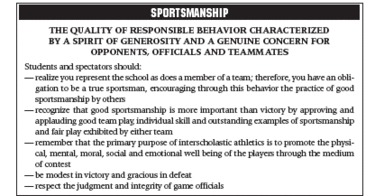
Poor Sportsmanship

Have you come across a sign like this at your local arena, soccer field, lacrosse box etc? 


poor sportsmanship signboard


How many times have you been to a youth sports game in recent years and seen either players or coaches demonstrating poor sportsmanship? This could include any of the following, all of which that I’ve experienced firsthand;

  • Throwing or breaking their sticks because they missed a shot on goal
  • Screaming at a young official as they missed a call
  • Playing with the intent to injure – knee on knees, elbows to the head, helmet to helmet contact, cross checks or hitting players in the numbers (in the back)
  • Disrespectful when shaking hands after a game, or worst case coaches slew footing (tripping) a player or vice versa. (At one of the games I coached a player on opposing team tried to trip me as a prank while shaking hands and was suspended for 5 games as a result!)
  • Entering the penalty box throwing helmets, gloves, sticks and using language that is not appropriate even for adults in ANY environment
  • Players excessively celebrating goals even when their team is up on the other team by a significant margin (AKA rubbing salt into the wound)

The list goes on and on for the escalating lack of sportsmanship I have seen over the years. I strongly believe this is due largely in part to the fact that many coaches and parents have not been reinforcing the importance of respect; whether for themselves, team mates, coaches, other teams, officials, parents, or others in their community. This includes the apparent lack of understanding that you should win with humility and lose with dignity.

I am coaching High School Rugby this year and our number one agreed upon core value is respect. Even when the going gets tough (which believe me, it has) I’ve taught my athletes to still call the ref sir, and that even though some feel it is a Hooligan’s game … it is played by gentlemen.

Our rugby team’s first game of the season we got, for lack of a better word, thumped. But as I knew going into this season we would be in for some tough games I did two things to kick off the season;

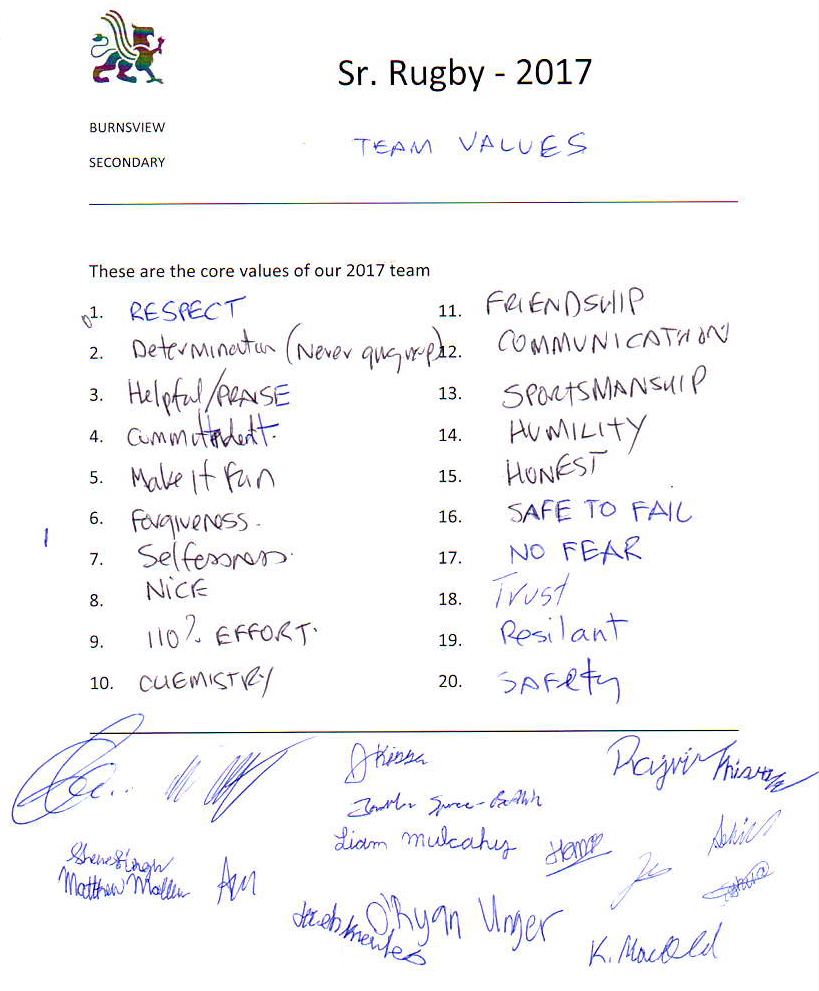
First – I asked every player to write down the top 3 characteristics they wanted to see from their team mates.

Below is the team values summary in no particular order where every player contributed. As you can see, one of our team values is sportsmanship, along with other core values like effort, chemistry, resilience and so on.


Team Values


Second – We have a circle of trust where the players form a circle, lock arms, and at each practice or game a different player leads the circle strongly stating the following:

“I have your back”

“I will respect you”

“I will be fearless”

“I will not criticize you”

“We will win with humility and lose with dignity”


The sayings for our circle of trust came from the subsequent question in which I asked all of my players what they did not like about youth sports. The top three answers were:

  1. When their team mates were not committed
  2. When the coach or team mates do not respect me
  3. When coaches played their favourites


The repetition of “We will win with humility and lose with dignity” is to reinforce the importance of good sportsmanship, regardless of the outcome of a game. When players leave the dressing room or field those that see them should not know whether they won or lost and as the old cliché goes, how you played the game is what matters. Having a focus on this is what breeds a healthy and positive relationship with the sport they love and is what will encourage young athletes to continue to love it long after they’ve stopped playing youth sports.

Probably the one of the greatest examples of sportsmanship I have ever come across was W. Oregon’s Sara Tucholsky who hit her first ever home run and the other team showed what playing for the love of the game truly means.


Let’s work together to bring the game back to the Kids … where it belongs.


Glen Mulcahy


Don`t be a kids last coach