Posted Posted in Athlete, Coach, Officials, Organization Executive, Parents

One of the 5 takeaways I share in every talk, workshop or clinic is the importance for coaches to make the environment for their players safe, as the hockey world has recently coming to terms with the Kyle Beech tragedy and the dominoes that are falling, it is just another painful and emotional reminder why we need to make it safe from all forms of harassment that I wrote on in 2017.

The other area that I have been advocating for years is the importance for coaches to make it safe to fail, unlike the coaches and parents that are highlighted time and time again in social media for their outbursts towards kids as players, officials, I have always been a believe thanks to the coaches that I had growing up to encourage to make mistakes in practices and even in games and have fun when they do so.

WHAT ?

Recommend they make mistakes, the uglier the better … what if they coughed up the puck that lead to a goal, fumbled the ball that lead to a touchdown by opposing teams, missed that free throw or field goal that could have won the game and son on.

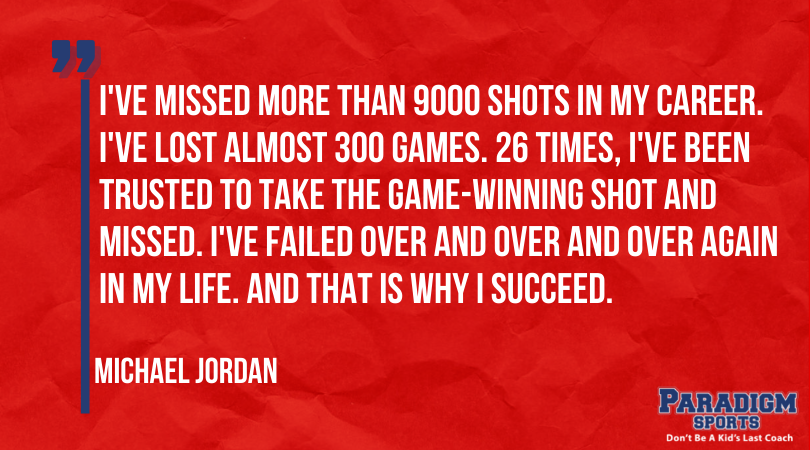
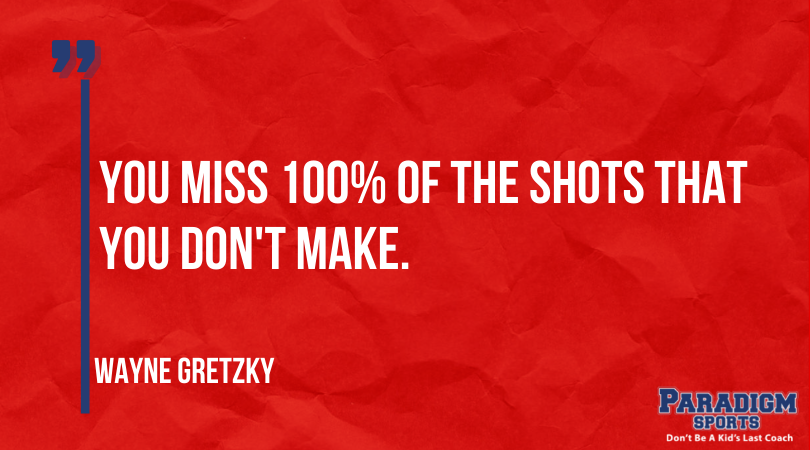
Hmmm … there have been just a few players that were pretty good that made a ton of mistakes, but had they not done so, never would have achieved their milestones and become some of the best ever to play their respective sports.
 

Reggie Jackson/Babe Ruth

Reggie Jackson holds the record to this day of the most strikeouts of any player in MLB history (2597) but was touted year over year in his Hall of Fame Career as Mr. October where his bat would hit many out of the park, much like Babe Ruth who did the same decades back.


Another recent example is Mason Crosby missing 3 field goals in regulation but made the 4th to win the game in overtime for the Cheeseheads (Green Bay Packers) against the Cincinatti Bengals (whose kicker also missed 2 field goal attempts in the same game)

This was a complete surprise for all those that watched as Mason had only missed 2 field goals in the last 2 seasons combined !

Why was he to make the 4th field goal?  Because he had the support of their teammates, coaches, managers who recognized that mistakes would happen and once they did, were history, was time to move on to the next play.  This is in a league that is focused on winning, the top sport in the world in terms of revenue with millions of dollars in player salaries, billions of dollars in TV and merchandising revenue NOT community youth sports.

Sadly in today’s era of youth sports where it has become adultified, where adults are competing with other adults thru their kids, gone are the days where kids play without fear of failure which was prevalent in free play (i.e. pond hockey, pickup basketball, sandlot baseball) where there were no adults present (no coaches, parents or officials), it has lead to increasing attrition rates as a result.

In lieu of focusing on the results, wins/losses, goals/assists, focus on the process of development, ensure that kids are having fun and winning will be the byproduct vs. the focus.

Growth Mindset

One of my top recommendations for books for coaches, parents and youth sports leaders I the book Mindset by Carol Dweck who shares the differences between the fixed and growth mindset.

Those with a fixed mindset believe that their skills are fixed due to DNA, they don’t believe in working to improve, and fear failure so would focus on simpler tasks.  Those with the growth mindset however, believe they are not that good YET, and will put in the effort to improve and recognize making mistakes is part of the process.

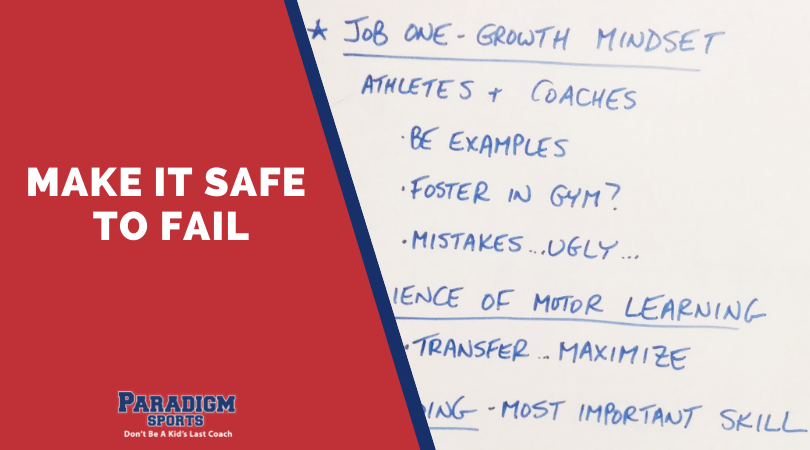
A perfect example of a coach that has incorporated the growth mindset with their team is Karch Karaly, voted best men’s volleyball player in sand and courts of all time, in 2012 he became the head coach of the US Women’s Volleyball team soon after he read Carol’s book and as I have shared in past their team white board encourages the players to make UGLY mistakes so they develop.
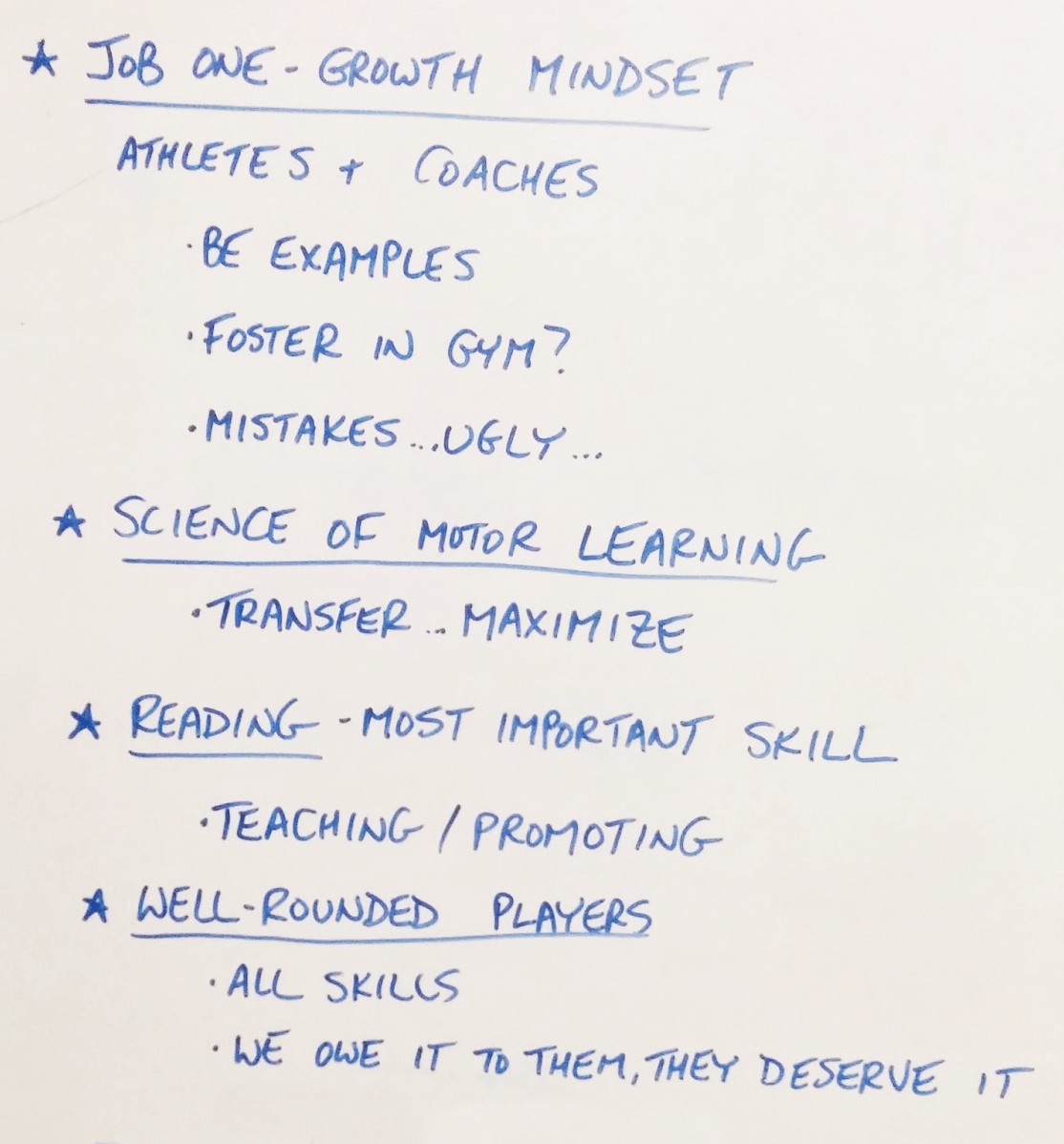
He has lead the team to their first gold medal at an international event in 2013, and medaled at the three Olympic games under his watch, including Gold at this years summer games in Korea.

In order for us to reverse the negative trends we have seen in youth sports for over a decade, we need to create an environment for not only for our players where it is safe for them to fail, but also for the young officials.

Sadly, we lose 50% of young officials in many sports (especially what I refer to as the money sports, Hockey, Baseball, Football, Basketball and Soccer) in their FIRST YEAR.

Why?

The #1 reason is due to the abuse they are taking from the adults in the stands or along the sidelines.

We subsequently lose 30% on average every year so we are literally are constantly recruiting and not allowing time to mentor and train these young officials so they can hone their craft which just creates this vicious circle.

To give you some numbers, in Canada, we have approximately 30,000 officials registered across Canada to ref minor hockey games, and every year we lose over 10,000!!!

This is not a recent trend, this has been the case since I started running Hockey Clinics over a decade ago.

It is the reason why Hockey Canada and USA Hockey came up with the campaign “Relax it’s just a game” in 2007 … 14 years ago


The focus was more on parents who are coaching or critiquing their kids, but I have also seen my share of coaches do the same towards players and officials.

Ironically, during a recent clinic that I was running, at the lunch break just before we all shut down out audio/video a coach shared with me and those that were still in the room (we have shifted to online virtual clinics in part due to COVID, in part due to efficiencies) and he shared that two parents were fighting in the stands at a U11 minor hockey game and the Police had been called in.

This was not a the zone or academy level where parental expectations are even higher (due largely due to the costs financially and time).

Time after time each time I run a clinic coaches share similar analogies how other coaches are running short benches to win games, parents are screaming from the stands or in parking lots,  the ride home (or to) games/practices.

The saddest analogy and driving reason for me to continue running clinics to shift the needle is when a coach stood up to introduce himself in a in person clinic and said the reason he started to coach is his 8 year old daughter shared with him why she wanted to quit Hockey at the end of the season.

He said, with emotion in voice and tears in his eyes which made the rest of us in the room do the same (including yours truly)….

“My daughter told me that she was going to quit because she was scared of making mistakes.”

Until we make youth sports safe to fail again like it was in prior generations, we will continue to experience high rates of attrition, so if you are an adult involved in youth sports (parent, coach, administrator) please provide the players under your watch that opportunity to do so.

PS Tagline - Dont be a kids last coach

Kudos to Great Sports Parents

Posted Posted in Coach, Early Sport Specialization, Parents, Uncategorized

Having lost my father at a very young age, and being fortunate to have such an amazing mother who raised me and my brother as a single parent, as well as all the amazing coaches and teachers who took me under their wing who were parents themselves, is one of the driving reasons why I have worked tirelessly in recent years to support all those parents in the youth sports space.

As I have traveled across Canada doing workshops, talks over the years, and over the last 12 month virtually, by far the #1 question I get asked is “how do I deal with parents” and the first thing that I have shared is they need to revisit “dealing with” and in lieu engage parents as integral part of your team.  Regardless of what level you are coaching, whether it be recreational sports for kids U13 or competitive levels U18 and everything in between, if coaching youth sports the athletes you coach will parents or guardians.

The sooner that you recognize that they can help you taking on volunteer roles like manager, treasurer, fundraising coordinators, assistant coaches and so on vs. alienating them, the sooner that you will be able to lead your teams to have amazing seasons in lieu of ones that are cluttered with issues that coaches come to me over and over again.

Due to the evolution of the internet and social media over the last couple of decades literally daily there are posts highlighting parents who are screaming at kids during various sports events, criticizing officials, players and even coaches but they represent only a small % of youth sports parents, the majority that I have hand the privilege to interact with in my 20+ years of coaching have been amazingly supportive who truly love their kids and LOVE to watch them play.

My mother was one of those parents, she was at the majority of the games that I am my brother played in the various sports the played and then did the same for our kids as the proud grandmother (Nanny) and after each time she came to see them in sports, drama, band or any other activities they pursued would come to them as she did for me an my brother and say just how much she loved to watch us play.

With the recent passing of the greatest Hockey Dad of all time, Walter Gretzky, my thoughts and prayers for the family in this difficult time, as it brought back a flood of memories for me, both of my mother who I sadly lost in 2013 to he long fight with cancer, but the passing of my father tragically when I was 8 Years old 1/2 way through the baseball season that he had committed to coach me for the first time.


Although I shared with my mother and Nanny during the days that followed that I was going to quit baseball as a result, they said I had to finish the season as that is what my father would have wanted.  Fortunately I did and learned one of the many life lessons I did from sport about the importance of commitment.

I share this with you because I also made a commitment before I had kids to ensure that I supported them to the best of my ability, which included thousands of hours coaching them and their team mates (my extended adopted family) on various teams and sports over the years.

One of the hardest conversations that I ever had was when my son shared with me that he was going to quit hockey when he was 15, 2 years beyond the global trend where kids are quitting by the age of 13, but for all of the reasons that I have shared in talks where I learned that I neglected to ask him at the beginning of every season if he wanted to keep playing hockey, in lieu assumed much like had since he was 5 years old and started playing organized hockey.

The reasons that he shared he was quitting had to do a lot with the winning at all costs coach that he had the prior season who thought nothing of running short benches including the game that was the straw that broke the camel’s back for me when he sat my son and two team mates for better part of last game in a tournament but he had dedicated to his Nanny (my mother) prior to the game who he lost just a month prior and was there for her last breath by her bedside.

He also shared that he was not having fun anymore, that he wanted to explore other sports and activities like band, drama, robotics and list goes on.

It was an eye opener for me which is why I encourage every youth sports parent to ensure that you support them try as many sports as possible as you never know what they will fall in love with.

Like me, he tried volleyball and Rugby that school year (Grade 10) and fell in love with Rugby and played until he graduated high school and aspired to play club rugby after he graduated from college but then COVID hit so will have to wait until next year to do so.

Although he took the season off as a first year U18, he did ask if could play again the following year and he tried out and made the AAA team even though he missed a full year of “development” (in the minor hockey system as people have been sharing with me over the years too many kids are playing too many games and not practicing enough)

In essence, he got his love for the game back as he had a break, a break that I should have clued into he needed as his parent, but like many parents, I “assumed” that he wanted to keep playing year after year, so from that point going forward I asked both him and my daughter if they wanted to keep playing or try other sports.

I can’t emphasize enough for you to do so with your kids, and also the importance of recognizing that their journey will be over before you know it.

Now that both my kids have aged out of youth sports, although the craziness of driving the to all their practices, games, and other activities were insane at times (especially when they overlapped and had to decide how to juggle), the one thing that my son and I did after he took that season off was read “Bobby’s Orr’s – My Story”

One of the biggest takeaways in thet book he and my son had was the fact that Bobby’s Dad, Doug, unlike Wayne’s Dad Walter, never coached Bobby.  What he did do, however, like all the other amazing youth sports parents that rarely get acknowledge for being so supportive like all those we call the silent majority (over 90% of sports parents are supportive, positive) vs. the vocal minority (the 5-10% of parents who are the ones screaming at kids, officials, coaches) in the stands.

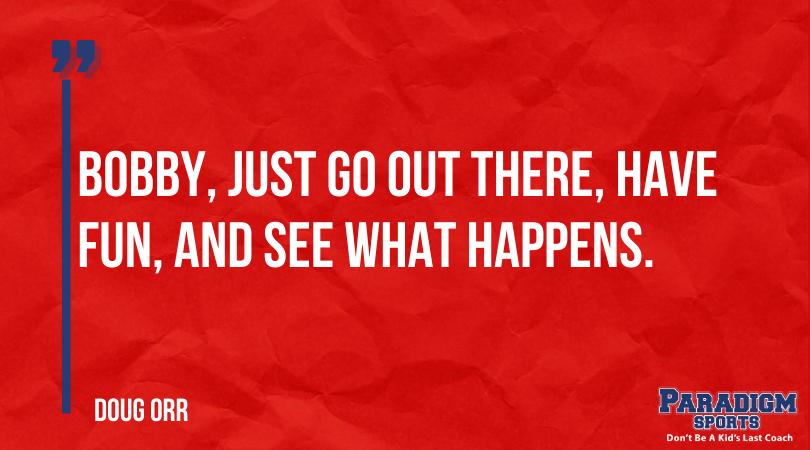
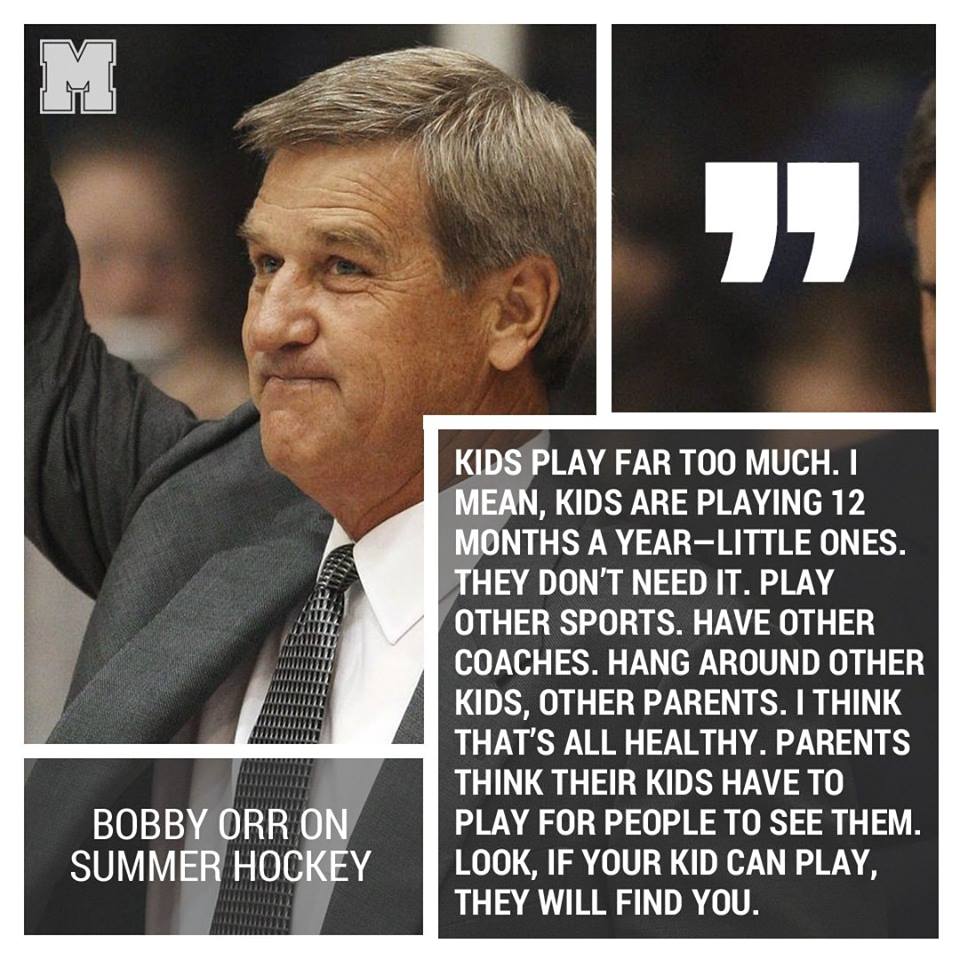
Doug would be that parent like many that drove Bobby to all of his practices, games and share with him the following quote below;


When my son did return back to junior camps, his junior spring hockey team, and other teams when I was dropping him off for practices, games or other activities I would ask him … Hey Bud .. .what are you going to do today?

His answer every time was …

Dad, I am just going to go out there, have fun, and see what happens with a HUGE smile on his face.

He would still be playing adult recreational hockey this season had we not been dealing with COVID, but for me, and for every parent, coach I interact with, our greatest reward is to ensure that our kids or players love the game more at the end of the season and play well into their adulthood with those same huge smiles so we can continue to Love Watching Them Play.

PS Tagline - Dont be a kids last coach


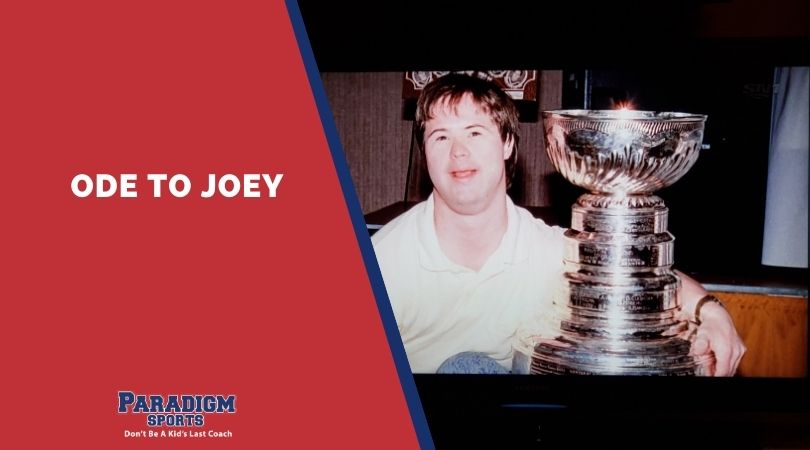
Ode to Joey

Posted Posted in Athlete, Coach, Organization Executive, Parents

As an avid hockey fan due to playing, coaching  and now coaching coaches for many years, one of the things I look forward to is the start of the season, starting with getting back to the ice for minor hockey and then when the NHL ramps up with exhibition games and the first Hockey Night in Canada on Saturday.

As I moved often growing up including a stint living in the Northwest Territories on Baffin Island, it was one of my vivid memories growing up watching games on Saturday’s on CBC with my family.

As a result of the COVID-19 pandemic going back to March 2020, however, the start dates for completion of last season when teams entered the Edmonton Bubble and Tampa won the cup in July, and uncertainty when the next season would start up until recently in January 2021, the passing of one of Canada’s true Icons was not shared until recently.

Before the start of the Vancouver Canucks Game vs. Edmonton Oilers, the oilers did an amazing tribute to two they lost during the break of past coach/general manager John Muckler (Jan 4, 2021) and their long term locker room assistant Joey Moss (Oct 26, 2020) who Wayne Gretzky helped get a job with the Oilers and became close friends.

As Wayne eloquently shared at the beginning of the documentary that was shared on Sportsnet the following day (Anything for Joey), he wanted to help Joey as he was an amazing young man who had down’s syndrome but as all of the players and those that evolved to executive ranks shared during the documentaries Joey was the one that taught them core values, not the other way around.

Joey started his role with the Oilers in their glory days, when they went on to win their 4 Stanley Cups and many of their players on those teams shared insight how much of an impact Joey made on them. Then players for subsequent teams also shared nuggets from the 90’s until his passing in Oct 2020.

In addition to Wayne Gretzky, Grant Fuhr, Keven Lowe, Pasani, Kelly Buckberger, Taylor Hall, Raffi Torres, Connor McDavid, Leon Drisital, Sam Gagner, Ryan Smith, Shane Corson and others shared how he made such a positive impact on them during their time playing for the Oilers.

Several of his siblings (he had 12 brothers/sisters) also shared stories about Joey.

Some of my big takeaways …

Always smiling – Love the Game – Loved to Hamm it up – Could give as much he took – Was an ambassador for Edmonton – Loved to Sing (AKA Belt) the Canadian Anthem (I looked forward to seeing Joey sing before Edmonton home games, much like Mark Donnelly for Canucks games) – Taught us patience – Made us better people – Kept Game in Perspective – Was there to cheer us up after a tough loss – Could count on him to get things done

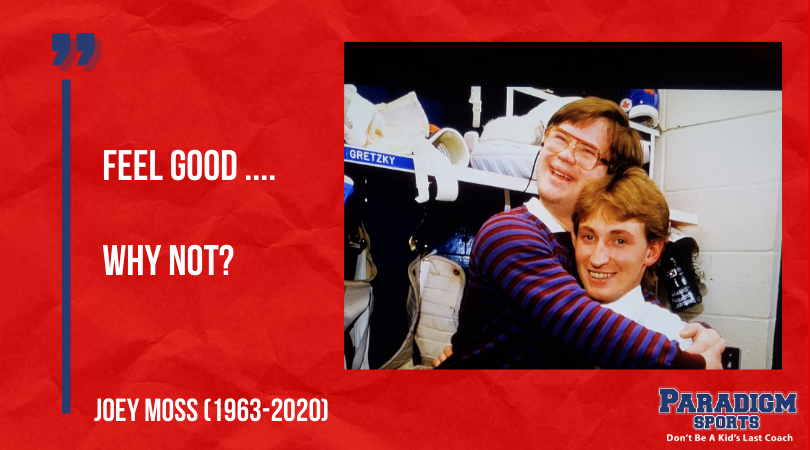
The biggest one for me and sharing it as our quote of the week he would share with everyone around him especially when they were down, had a tough night, team had a tough loss


Having been one who has suffered a lot of adversity myself, I have always tried to have the half-full approach as things can only get better which is whey Joey’s favorite saying really resonates with me.

When Wayne asked Glen Sather if they could find work for Joey he said absolutely and he became their locker room attendant and then Wayne reached out to the Edmonton Eskimo’s Equipment manager where Joey was working a similar role and joined the Oilers in 1984-85 season (coincidentally during their legacy Stanley Cup run).

In the off season he worked in a similar capacity for the CFL Edmonton (Eskimos) Football Team

During his tenure with both organizations;

The Oilers won the Stanley Cup in 1984/1985/1987/1988 and 1990 and lost in 2006 although Joey delayed hernia surgery so he could be with the team during their amazing run in 06.

Wayne was traded to the LA Kings after their 88 Cup victory and the first time that he returned to Edmonton as a King  he went to see was Joey who told him “Sorry Wayne but I can’t talk to you”, but like Wayne, every other player that was traded when they returned Northlands, Rexall Place they too would go see Joey to give him a hug, share a few words and see his infectious smile.

He also worked in a similar role in the hockey off season for the Edmonton (Eskimos) CFL team where they went on to win their 6 of 14 Grey Cups in 1987, 1987. 1993, 2003, 2005 and 2015).

11 CUPS between the two organizations who had numerous hall of fame inductees and various other awards !!!

WHO else in professional sports can say they have been part of so many cup runs?  No one  …. and now due to free agency, salary caps and everything else now, getting to ONE cup final in itself is a big accomplishment, let alone winning the final game or legacies with multiple cups as the Oilers and Eskimos have done in Edmonton.

Joey also was acknowledged by the NHL in 2003 for his contributions with the Seventh Man Award (given to NHL members that make a difference behind the scenes) and inducted in the Alberta Sport Hall of Fame in 2015

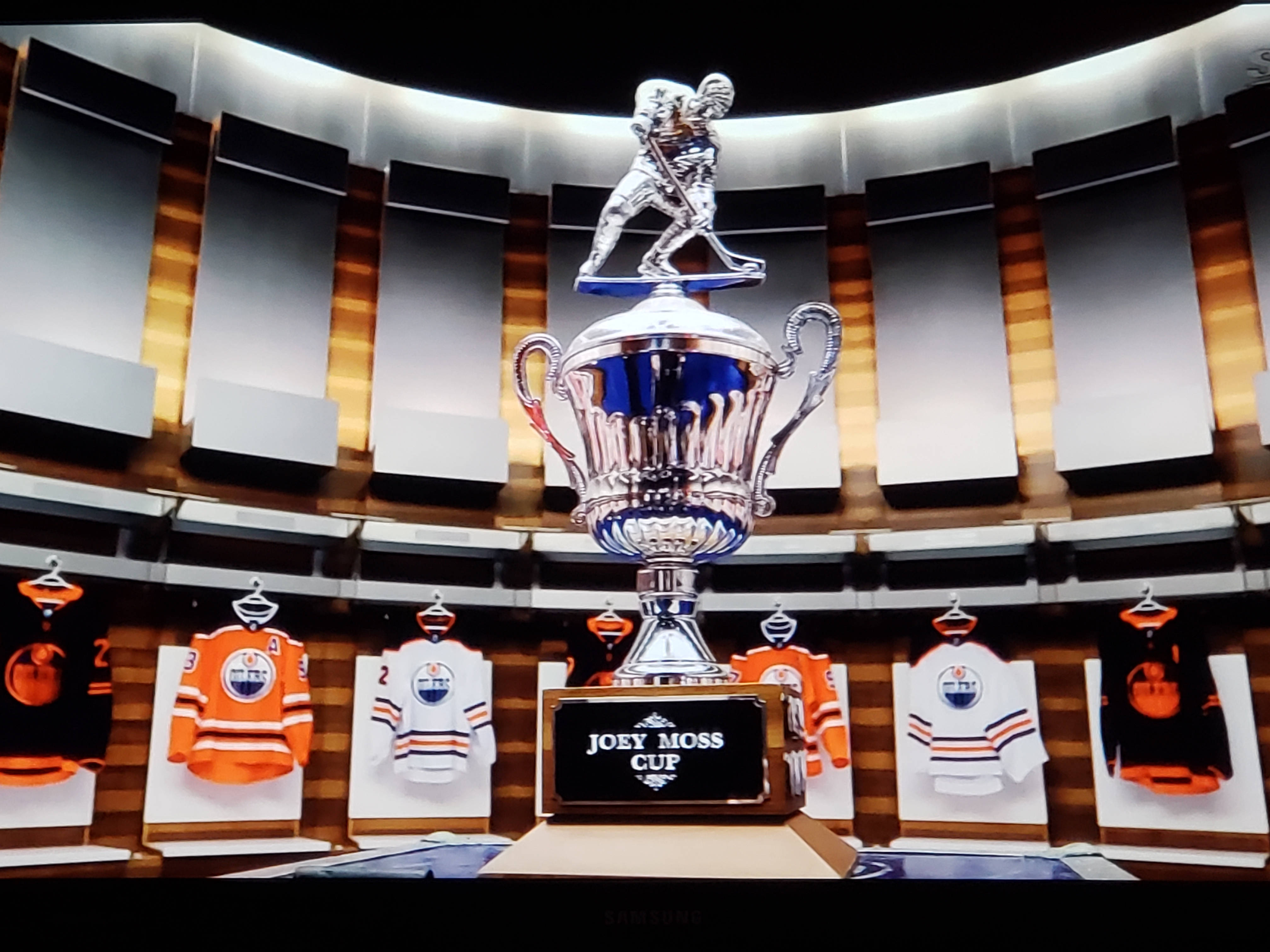
The Oilers also founded “The Joey Moss Cup” inner squad game trophy that award every year and many of former players shared they all wanted to win coveted cup for bragging rights.


Current Player Leon Drisital shared “He’s probably the biggest legend in this town” and in the video below Wayne shares he has more championships than Hugh Campbell (5 Grey Cups) due to his long tenure with both of Edmonton’s professional teams during their Stanley and Grey Cup Runs.

One would hope that the NHL consider Joey being considered for the Hockey Hall of Fame for his amazing contributions to the game, the impact he had on so many players, coaches and the fans.

According to Equipment Manager, training camp would not start until Joey was there, sadly the Oilers camp for this season started without him as will others in future BUT he will forever be with them and all of us in spirit, I suspect with a microphone belting out the Canadian Anthem ….

We could all learn to be better people from the legacy Joey left behind.

Kudos to the Oilers and then Sportsnet for their amazing tributes in his memory and when I or others get down around me as we continue to claw our way back from this crazy pandemic will share “Feel Good – Why not?”

Below is the interview that Wayne Gretzky had where he shares many of the amazing anecdotes about Joey a few days after he passed away in October.


9 Lessons (I Wish) I learned from my father

Posted Leave a commentPosted in Athlete, Coach, Organization Executive

One of my favorite parts of the holiday season is taking downtime to catch up on reading books that have piled up in my office based on recommendations from various people I have talked to.

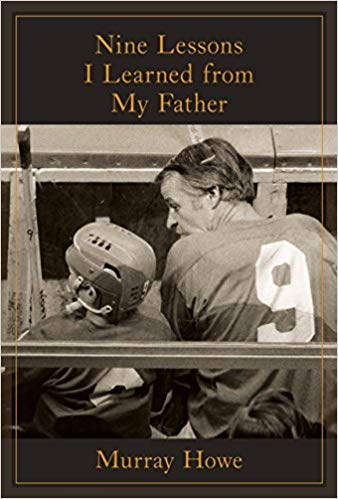
One of the books I recently finished, however, was one that was not recommended to me but was given to me by my son, “Nine Lessons I Learned From My Father, brilliantly written by Dr. Murray Howe, the youngest son of the late great Mr. Hockey, Gordie Howe.  The book is an accumulation of the various anecdotes that he wrote down for the eulogy that he was asked to do for his father’s service when he passed away.

Sadly as I lost my father at a young age, I did not learn many of the life lessons from him that I aspire that my son and daughter to learn from me, but as the old cliché goes, everything happens for a reason. Some of which I learned from my mother, grandparents, uncles and many others I learned from all the amazing coaches that I had along the way of my youth sports journey playing multiple sports.

Below are the nine lessons with quotes of Mr. Hockey that he cited in the book;

  1. Live Honorably

“People depend on you to do the right thing”


  All of my coaches talk me this valuable lesson, particularly the importance of walking the talk vs. those that talk the talk.  Probably the biggest issues I come across with “some” youth sports coaches today is they say all the right things in the parent meetings like they plan to develop all players, teach valuable life lessons, ensure all the kids have fun and so forth only to show their true colours in games and practices screaming at kids who make mistakes.

As a result they lose parents and players trust early in the season and more often than not the players don’t return the following season as they did not have the positive experience that youth sports should provide

  1. Live Generously

“What good is money except to do something good for someone”

 One of the co-coaches that I coached with on my daughters softball team for many years, Patchie as he was affectionately called by all of us, thought nothing of buying all the girls helmets, bats, snacks and more than one round of bevies when the adults would get together.


Several of the coaches I had over the years did the same, they thought nothing of spending their own money for equipment, meals, gas, hotels and all the other costs to be a coach so they could develop us into adults.

The trend today in the competitive stream in minor hockey is most associations in the lower mainland have gone to paid non-parent coaches to promote impartial player selection and eliminate other politics associated with rep hockey.  The coaches are paid from team budgets, so are “professional coaches /employees” of those very same parents that expect quality coaching, and the honorariums these coaches are receiving can be as high as $10,000 per season.

I don’t agree with the model, as it is putting a lot of pressure on these coaches (many of which are just getting started out after they finished their junior hockey careers) to win at all costs, and many of the players are quitting as a result way before their “hockey careers” are over.

  1. Play Hard, but Have Fun

“If it’s not fun, do something else.”

Hmmmm … Mr. Hockey who played professional hockey for over 3 decades believed in FUN?  One of the quotes I came across that Murray shared in the book was “you can’t score from the bench” when Gordie was at the end of his career and the coaches were opting to go with the younger players and he sat on the bench.  Murray also did the same even though he did play one season with Wayne Gretzky in Junior when Wayne was 15 but had the misfortune of sitting on the bench in Junior and like his Dad, opted to hang up his skates from competitive hockey as a result.

The only reason that a kid should be sitting on a bench in minor hockey is for discipline, kids deserve to PLAY the game so they can contribute to the outcome.

  1. Patience, Patience, Patience


“Take your time and do it right”


Every talk do I tell the coaches the importance of error correction during practices and don’t let the players cheat the drills by rushing thru them.  I would rather they do it SLOW and right, that fast and wrong.  The latter just leads to players developing bad habits that coaches at the older age groups get frustrated having to correct.

Another analogy I share is from Terry Crisp, who coached in the NHL and international level for many years, he believed in P & R – Patience and repetitions.  Hockey, like majority of sports other than gymnastics, is a long term development sport where coaches should be adhering to LTAD/LTPD or ADM (depending on the sport) and ensure that coaching skills relative to the age group.

Too many coaches just starting out implement team tactics, strategies way too early, then scream at their players because they make mistakes in practices and games.  The reason they are making mistakes is they don’t have the SKILL to do the strategies and when they are screamed at too much, the become scared to a point where many kids quit as a result.

  1. Live Selflessly

“If you want a good workout, grab the shovel over there”

Gordie was infamous for shoveling not only his driveway, but his neighbors, as well as one that did not believe in celebrating his own goals but that of the players that he setup to score.

Selfish players hurt team chemistry to a point where you may never get out of the storm period (forming, storming, norming and performing) so it is essential that you have ALL players buy-in to team and remind them that the play for the crest on the front of the jersey, not the nameplate on the back.

  1. Be Humble

“Don’t read your own press clippings. You’ll start to believe them.”

One of the greatest lessons I learned from my Peewee Hockey Coach who lead our team to win the Ontario Provincials and as a result we were invited to the Quebec Peewee Tournament well before it became the international event it is today.

He always said before games, Boys … today we will win with humility or lose with dignity.  No one should know if you won or lost when you leave the dressing room.

I have had the misfortune coaching against many teams in various sports where the coaches would have benefited from learning that core value as they not only permitted, but promoted excessive celebrations by their players when they were way up on us or their players were demonstrating poor sportsmanship when scored upon or they would lose it on their players.

This has been one of the biggest contributors when I have talked to players why they have quit the sports they once loved.

One of my favorite videos how much a fan idolized Gordie Howe is the one below …


  1. Be Tough

“There’s no such thing as cold weather. Only cold clothing.”

The numerous anecdotes that Murray shared about Gordies grit which goes back to his childhood as he was bullied due to having a learning disability and struggled reading and writing until it was identified and became proficient later on.

This is what lead him to pursue hockey as it was his outlet, much like it was for me when I was growing up.  Although my mother did an amazing job raising me and my brother, as a result of have strawberry red hair and living in various suburbs of the separatism era of Quebec, the Northwest Territories as a token child of white man’s burden and even when we moved to BC the first and second times, I was a victim of bullying as well.

Like Gordie, sports for me was the outlet to deal with the bullying I experienced, and I channeled my focus, frustration on the field but in a clean way thanks to the encouragement that I received from all the amazing coaches I had.

  1. Stay Positive

“I never keep track of my shots that miss.”

 Having played many organized sports with so many coaches, the one constant with all of them was reinforcing the importance to stay positive and it is not over until it is over.  Even in games were way down in, they would remind us of the valuable lessons we learned after the fact like being resilient, sportsmanship, respect, losing with dignity, resiliency, getting up when were down.


  1. Friends and Family Are Like Gold – Treasure Them

“Never forget where you came from, or who got your there”


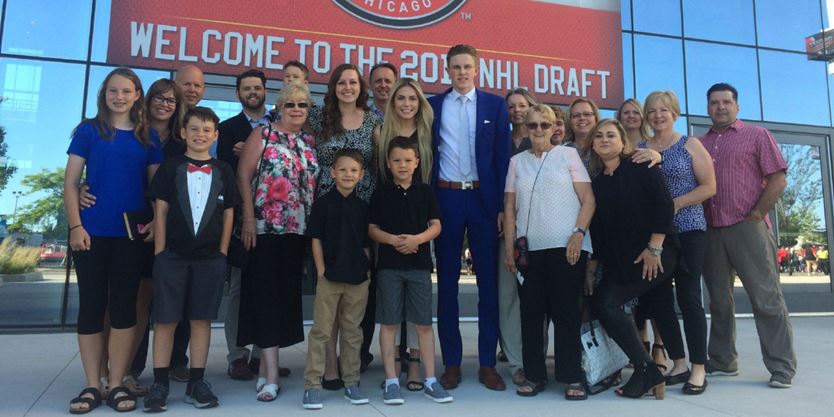
 The World Juniors is a perfect example of the importance of remembering how players got there, I had the opportunity to see Team Canada play in a game and MacKenzie Entwistle’s Mother was sitting right beside us.  She watched the game very quietly, cheered when Canada made great plays but jumped literally to the roof when MacKenzie scored his 2nd of now three goals thus far in the tournament (tonight is the final round robin game against Russia).

He started out this years tournament as the teams 13th forward but has now been dubbed the teams Swiss Army knife for his contributions and would never have reached that level if it had not been for the support from his parents and family, many of which were there to support him when he was drafted to the NHL.


JPEG Pro


I tell players on all my teams, and ask coaches to do the same, to remind them that their biggest fans are their parents and family always comes first. Although “some parents (AKA the vocal minority) take their support too far by putting pressure on their kids, coaches, the silent majority of parents are amazing as their kids “biggest fans”

Don`t be a kids last coach


When things change in minor hockey blog thumbnail

When things change in minor hockey

Posted Leave a commentPosted in Athlete, Coach, Organization Executive


…… Not Necessarily for the Better

I am in the midst of a move from my former warehouse with office buildout out to a full office layout to permit us to continue growing as an organization and host on-site workshops and parent education sessions starting this fall for groups from 20 to 100+ (more to follow on that front once we are settled in the new space).

My son and daughter gave me a hand this past Friday tearing down one of the workstations so we could move it to the other space where the first thing they said was WOW this is huge and is such a better layout than your old “office”. Then my daughter commented why I was bringing all my OLD stuff there in lieu of nicer/newer to which I said because there is nothing wrong with it.

I believe we could all learn a little from that type of old-school thinking when it comes to youth sports ( I believe kids should play with wood sticks until they are strong enough to benefit from the flex also), too many people are trying to keep up with the Jones on gear, teams without cluing in when it is all over it were all worth it.

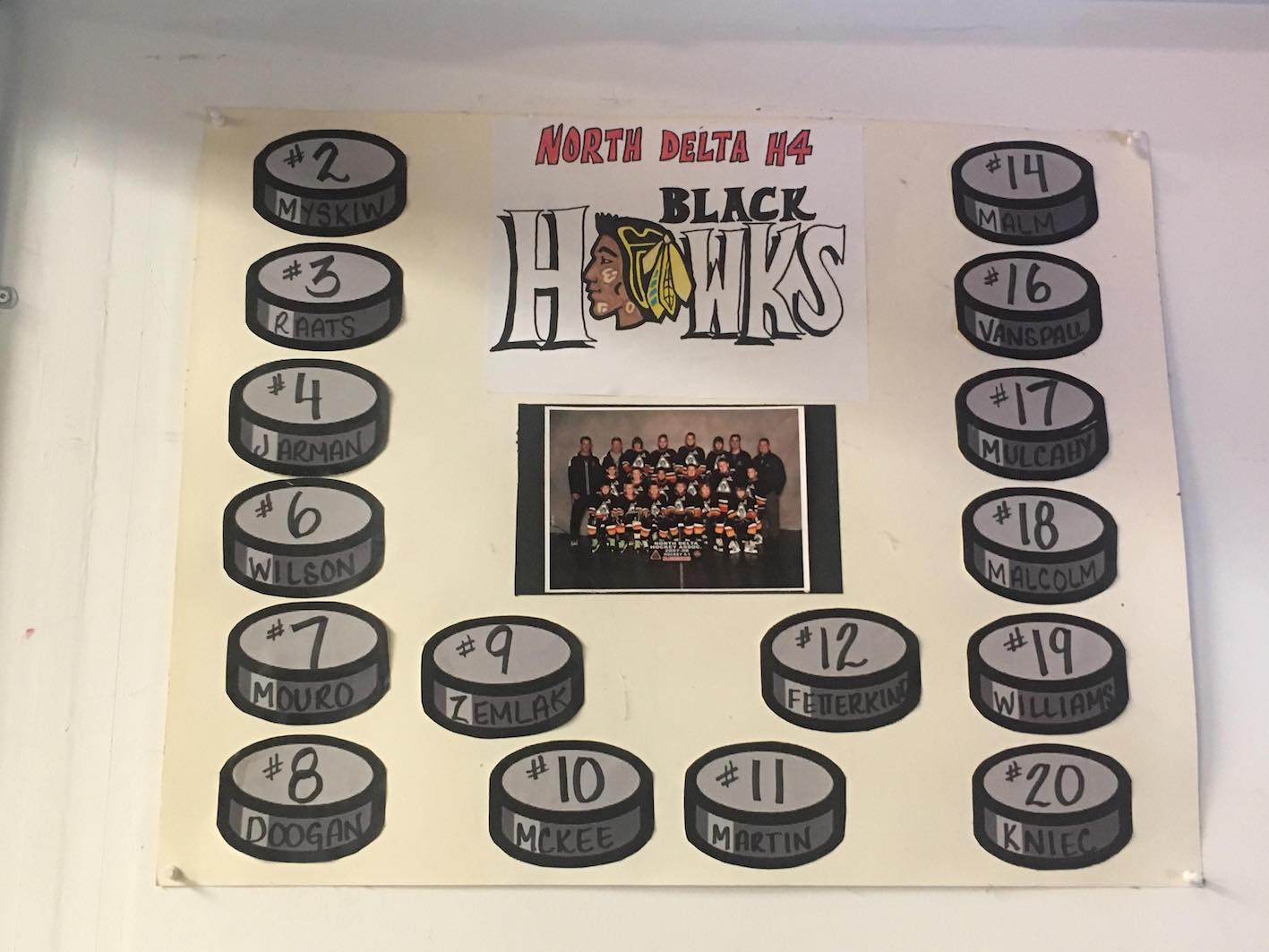
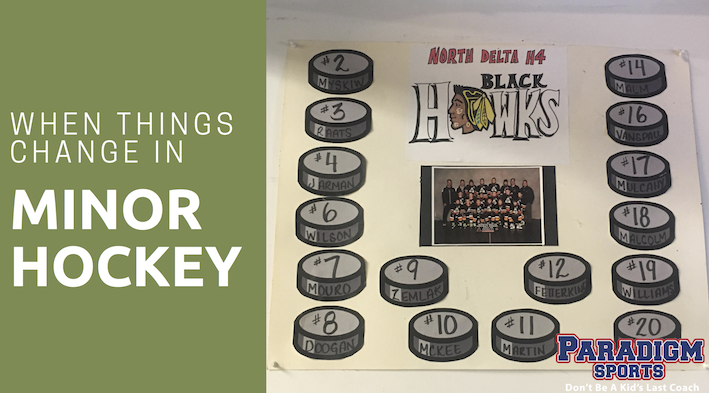
In the course of the back and forth my son commented when he was looking at many of the team photos I have along the wall that was our impromptu boardroom (pictured below) when he was looking at the team poster I still had from a tournament our association hosted and he said “That was the best team I had in Hockey”.


I turned to him and said “Why? You played on so many teams over the years including all your AAA rep and Spring teams afterward”

His response?

“Because it was the best group of guys and coaches I had, and it was the most fun I ever had playing hockey.”

He was 8 years old that season, it was our H4 Novice Team thinking back I had to agree it was one of the best teams I had coached over the years also.

It was not due to the winning record we had, far from it, we only won a handful of games.

It was not due to any tournament wins (we lost all but one game in the three tournaments we played in)

That particular team was a mix of 5 new players, 5 who played a couple of years and 5 who were going into their 4th season.

The top player on our team, “Switch” (I nicknamed as he always prompted me to switch to play forward when his turn was to play D) whom I had not coached previously, was one that I identified even then could play at a high level, and he is now playing his third season of major journey hockey 11 years later. Another that I had coached the year prior also was drafted and has played 2 years of major junior.

Being that he was so far ahead of the rest of the group and could score at will, I knew the only way that those starting out would enjoy the seasons as we were still playing full ice games (which took a decade to change to cross ice) is I would have to promote team play.

I knew in tournaments that there was a rule called the Gretzky rule, where a player could only score 3 goals in a game and any goals after that would not count. The reason for the rule was to ensure that an early bloomer would not dominate a game, would focus on team play by not only scoring but assisting goals and all players would contribute.

To ensure that we played as a team in all games, I talked to him and his parents to see if they would buy-in to the Gretzky rule for all games, not just tournaments. One of his close friends was on our team who was one of our first year players and I used that as a selling point that I would like him and all the other new players to touch the puck, make and receive passes, get shots and ultimately every player on the team to score a goal before the season ended.

Both he and his parents said they were on board, so for every game, we played that season, he would score his 3 goals, in some games soon into the first period.

At times, when he would get the puck after, as he was so proficient on his core skills he would carry the puck into the zone, and as he and his parents were big fans of the game, although Gretz was way before his time, it did not take him long to figure out where his office was, behind the opposition net.

I will never forget one of the plays he made to set up his friend for his first goal, he waited patiently behind the net for his friend to get in position with his stick on the ice in front and in lieu of skating to either side to pass to him, he flipped the puck over the net and it landed right in front of his friends stick and he buried it while the goalies head was spinning.

He was 8 when he did that and the skills he demonstrated over the years I had the opportunity to coach him never ceased to amaze me.

The celebration that followed afterward was like we had won the Stanley Cup, all the coaches jumped up, the team skated on the ice, gloves, and sticks were flying everywhere and “Switch” was probably the one celebrating the most.

As the season went on, each time a player got his first goal, especially when Switch would get the assist, our team would celebrate.

Opposing teams and coaches thought we were nuts, in most instances we were down by 5 or more goals.

One of the other activities that made the season fun for players and parents alike was “Game On”, where one of the parents would host a street hockey day for the players and Sunday NFL football party for the parents. It started out initially as a one hour game, then turned into what it was like for many of us parents, a full day of playing on the street, almost every player would take turns putting the goalie gear on.

It was that season that I also started to see the whispers in the corners amongst parents, and it was then when I started to see the beginning for what is commonplace today, the recruiting process of Spring Hockey. Switch had been playing Spring hockey literally since he put skates on, others each year started to be recruited as well and the process started earlier and earlier.  I used to say parents were more concerned about what spring team their kids were on than winter so they could brag to others.

During that season I was pulled aside by Spring “Scouts” asking about Switch after many games and each time I would either talk to or send an email to his parents to which they would say, thanks but no thanks, he is happy where he is.

Each year thereafter I would get asked by parents what spring programs to try out for, I even was asked to coach for a few programs but I did not sway from my focus on Fun and skill development focus in Spring but found the majority of programs were pushing the envelope in terms of focusing on winning tournaments for bragging rights and costs were excessive as well.

As we only a few short weeks away from kids hitting the ice for their rep tryouts and recreational evaluations after what has now been a prolonged heat wave in Vancouver, I can’t help but think back when was it that we got caught up (as in me and my son) in the insanity of Spring Hockey and it was after that season when a coach recommended to me that my son could benefit from offseason skills development.

Fast forward 10+ years, only a handful of kids that I know that went down the competitive spring hockey path played beyond minor hockey, only 2 of the hundreds of kids I coached over the years reached the Major Junior Level and although both are very strong players, they were not drafted to the NHL.

Switches parents also came to me on many occasions that year saying he was having the best year ever on any team, a ton of fun and really loved how I coached. This was a kid that played on top level teams for several years so I was always humbled when they did so.

Although my son did play with him at the AAA level on a few teams after that Novice season, he was right, that was the best year, best team, the best group of parents of any of the teams we had. Once we entered the Rep Stream followed by Spring Hockey each year the level of competition ramped up to a point where it just did was not fun anymore and kids started quitting.

A colleague of mine said his son in Midget, was the last player in his age group to still be playing, just as when my son played he was one of last 3 from his original Atom Team (9-10)

We had a ton of fun even though we did not win many games, all the kids improved significantly, every kid on the team scored at least one goal that season and most of all, all returned to play the following year.

The last thing my son shared with me when we were talking about that team was how many times he got to play D with the other strong forward on our team, whom he hung out with frequently at the house playing in our driveway playing for hours on end.

That has always been my goal, to ensure that kids love the game more at the end of a season than they did at the beginning, and for that team, I can say they all did.

Sadly 10 years later, many of those kids from that team quit for various reasons, including my son after his Bantam AAA teams season where I was just a “Hockey Dad” watching his winning at all costs coach from the stands as he shared when he quit

“it’s just not fun anymore, there is too much BS”

Fortunately, he did not lose the love for the game completely, did play one more season of Midget AAA and is looking forward to playing beer league this fall with many of his cronies.

That is where 99.96% of the kids are headed IF we do our job right as coaches, unfortunately as parents with all the pressure of spiraling costs, dreams to play collegiately, junior or long shot playing professionally, we get caught up in the madness that is supposed to be a game played by kids.

In lieu, it has become more about the adults competing with other adults thru kids.

Let’s all work together to bring the game back to the kids … where it belongs.

PS Tagline - Dont be a kids last coach