

The Costs of Going ALL IN

Posted Posted in Athlete, Coach, Early Sport Specialization, Organization Executive, Parents

The Costs of Going ALL IN


This week we came across an article and W5 Episode that aired last spring highlighting two families where they have gone all in to support their kids in chasing their dreams of playing NCAA on full-ride scholarships, national teams or professionally.

In the first of three-part series, they focused mainly on young hockey players and ended with an interview with the chief executive officer of a marketing research company based in the US that focused on the costs of youth sport participation not only in the US but internationally.

Their findings had my head spinning and although I have always encouraged players to chase their dream whatever they aspire to (regardless if it is sport, music, drama, academics) but what this 3 part series showed is a reflection how so many families are chasing the dream it has lead to youth sports exploding into multi-billion dollar industries primarily in Canada and the USA with no signs that it will slow down anytime soon.

A couple of years back Time Magazine’s front page highlighted that the US Youth Sports industry had then exceeded $15 Billion USD (approx. $20B CDN based on current foreign exchange).  The highlight of the article was a young baseball phenom appropriate nicknamed Joey Baseball

The article and spin-off videos highlighted how Joey Erace, then 10 years old, and his family were chasing the dream for him to play MLB.  He was playing on multiple travel teams, getting private one on one instruction for pitching ($100/hr), one on one fielding sessions ($100.00/Hr), had his own home batting cage, was getting sponsorship offers, over 24K followers on Instagram and even being asked for autographs from fellow aspiring young kids who were following him.

His life had evolved to baseball, baseball, baseball.

All this at 10 Yrs. Old?

Fast forward to 2019 and the US Youth Sports Industry had grown to over $17 Billion as a result of more and more players and their parents continuing to chase the dream to reach those lofty goals of representing their countries on national teams, getting NCAA scholarships, what is now multi-million salaries in various professional sports and possibly the Olympics.

Coming back to the W5 episodes shared last Spring, the marketing research firm WinterGreen whose chief executive Susan Eustis was interviewed at the tail end of episode one shared that the Canadian Youth Sports Industry in 2010 was $1.2 Billion, had grown to 5.2 Billion mid-way point of the 2000’s but in 2017 had climbed to $7.6B and last reported number for 2018 was a staggering ….


$8.7 BILLION DOLLARS!!! 

THAT’S OVER A 400% INCREASE SINCE 2010


Based on the current exchange this is approx. $6.5 B USD.

Compare that to the USA with 9X the population of Canada (327 M vs. 37M) whose last reported number is $17 Billion USD

As a result, Canada’s youth sport participation costs are the HIGHEST cost per capita than any other country in the world.

Highlighted in the episodes were two youth sports players and their families who were all in as either a hockey or soccer family;

Ethan Mcfarland – 14 years old at the time the episodes aired who aspires to get a full-ride Michigan State Scholarship to play NCAA Div 1 hockey and be drafted and play in the NHL.

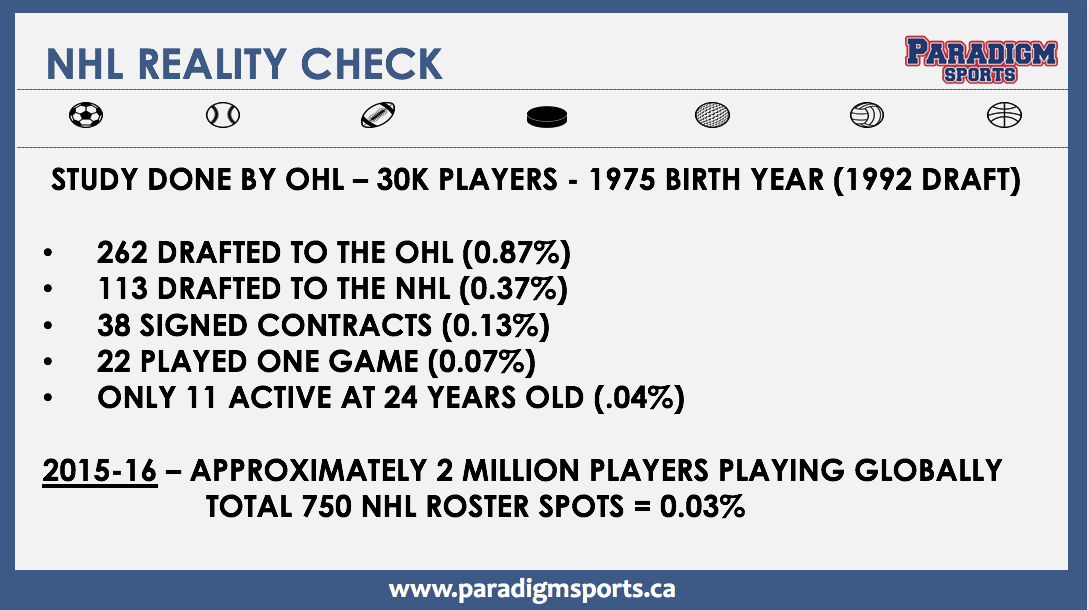
No different than many kids have growing up in prior generations, playing shinny with their buds on frozen lakes, outdoor ice rinks, stick and puck for hours on end BUT the sad reality is 0.3% of those will reach that level as I have shared out in talks across Canada.
 

The cost for him to reach that goal is he has abandoned what all the powers that be and sports medicine research has shown is multi-sport participation so he becomes the best athlete he can be.

He also has a modified school course load geared specifically for “elite” athletes as a hybrid to homeschooling so he can make it to all of his shooting, skating, puck control sessions both on and off-ice in addition to sessions with Psychologists, nutritionists, custom skate, stick equipment manufacturers

All the while his parents seem to be nonchalant about the fact to support doing all of this is costing them tens of thousands of dollars a year much like thousands of other kids across Canada that are doing the same to chase the dream.

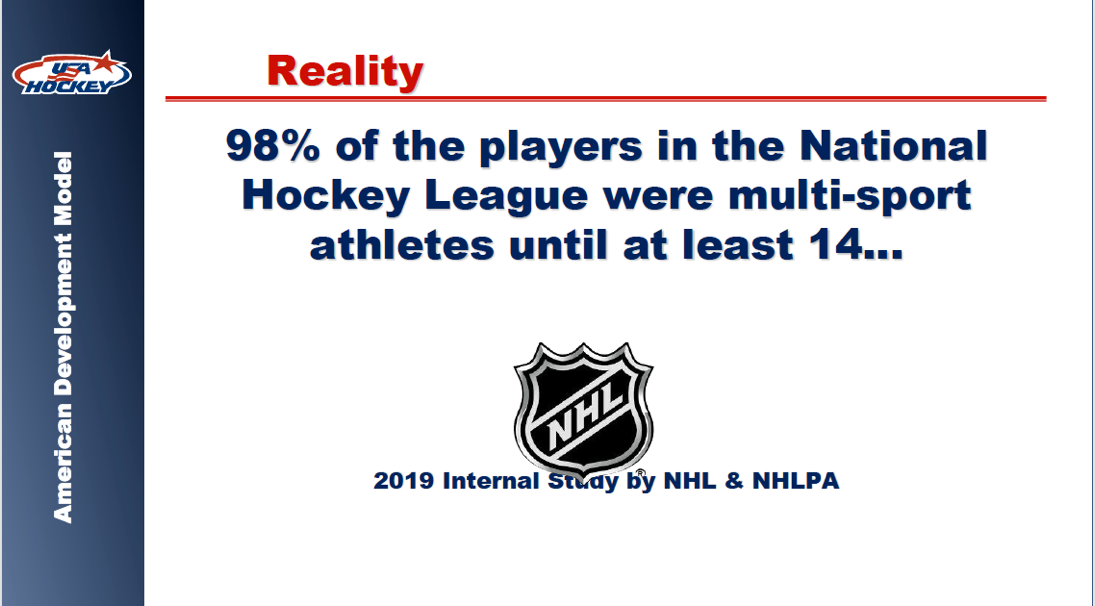
Probably one of the best data sets that I can provide to hockey parents to reinforce the importance for their kids to avoid this excessive time and financial commitment to focus on hockey, hockey, hockey is the NHL players association was surveyed last year and as Ken Martel (technical director for USA Hockey) shared with me and has now shared with other sports orgs, below is a slide from presentation he did for New Zealand Hockey (yes they play hockey in New Zealand)


Another statistic – Since 2010, there has been a 63% decrease in full-ride scholarships offered to Canadian born players to play in the NCAA which is a direct correlation with the ADM model in the USA, more and more US-born players are being recruited for those scholarships vs. past years seeking Canadian born players.

The other family highlighted was the Nicolazzo family whose three children, Xavier (7 at the time), sister Kiarra (10), and older brother Romero (13).  Their Dad Frank coaches both boys teams.

Year-Round Soccer, Soccer, Soccer, every day all year long including indoor session when Canada’s winter kicks in including playing on numerous travel teams costing tens of thousands of dollars every year.

REALITY CHECK – a colleague of mine shared me the soccer statistics which I reciprocated with hockey a few years back regarding NCAA/Professional path of US Soccer Players
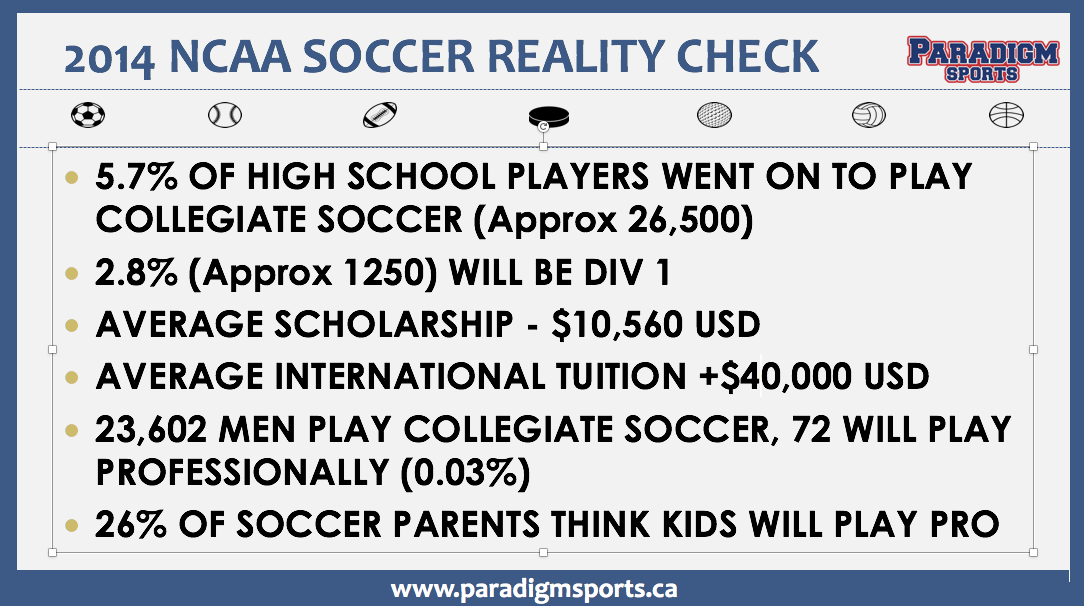


As admirable as it is for all three of their children to chase the dream, like Hockey, the reality that they will reach that level is a longshot at best and depends on so many factors for all the stars to align.

The sad reality for both families and their kids who are rolling the dice and going all-in with one sport year-round as early as 7 years old is there is a very strong possibility that one or all of the issues below may happen;

  1. Kids are suffering pressure as early as 9-10 years old W5 highlighted in their episode.

Shouldn’t 9 -10-year-olds be playing a game for the sake of it, not feeling the pressure to reach a lofty goal 10 years or more down the road?


  1. All the research and data shows that these young players may quit (62% in the US are quitting by age 11, 70% by age 13 with similar trends in Canada and many other nations) due to pressure, burnout, not having fun as a result of focusing on winning at all costs chasing the dream because they are not having fun


  1. They may suffer a season-ending, worse yet a potentially career-ending injury like multiple concussions, tears of ulnar, medial, anterior cruciate ligaments


  1. May suffer depression, anxiety IF they make it to the NCAA, pro-level as they were deprived of a normal childhood which has been identified by many NCAA athletic directors is a major issue of new players coming into their programs now vs. a decade ago


  1. Worse case –  may consider, or actually do commit suicide as there has been a 56% increase in the suicide rate the last 10 years from 10-24 years of age. If you don’t think this is a reality, I personally know of 3 kids who committed suicide, the third happened to be the brother of one and cousin of two other players I coached so really hit me hard.  This stat was shared by Corey Hirsch, advocate for mental health and the Hockey Talks program the day that Tyler Motte shared he is dealing with depression and anxiety issues with amazing support by the Vancouver Canucks.  Why?  Because 7 years ago Rick Rypien committed suicide as a result of similar mental health issues stemming from the pressure to perform.

All of the above aside, many of the single-sport players I have interacted with as they got to older levels (15+) stopped smiling, stopped laughing, appeared methodical, robotic when they came to training sessions, games, other activities.

Why?

Because they lost that original love for the game they had which many parents argue with me is the reason when they support their kids to play year long, pay for all kinds of development the grind of playing one sport all year long starting as early as many kids do today became a job.

When they originally started down the path did they ask if they could WORK hockey, soccer etc?

No – they asked if they could PLAY hockey, soccer etc.

Last but not least, in the event that you have not been following business news of late, many countries are looming towards another recessionary period so the tens of thousands of dollars that parents are spending each year, much of which via credit facilities including second mortgages, credit cards, lines of credit will put the entire family in harm’s way if one of the dual incomes is lost to downsizing.

Is it really worth taking that risk going all in with one sport?

In lieu of looking at youth sports as a return on investment, we should be looking at all the other benefits it provides, developing character, valuable life lessons, healthy (both physical and mental) lifestyles, friendships, social skills being part of teams, being well rounded and becoming the best ATHLETE they can be.

If at the end of the day they are one of the select few to reach the level of NCAA, National or professional level then that is just icing on the cake.

Let’s all work together to bring the game back to the kids ….. where it belongs.



It’s All About The Kids

Posted Posted in Athlete, Coach, Organization Executive, Parents

I have had a crazy couple of months interacting with numerous grassroots hockey coaches in clinics and workshops and have had some great interactions with some really amazing people who have either put their hands up to coach or are looking for more development in workshops.

As the requirements for coaching certification have increased over the years, so has the number of coaches that complain about the amount of time that it takes to become certified, on average I have 2-3 coaches per clinic that will complain, but the past couple of weekends there were two coaches, in particular, that did so literally from the beginning to the end of the clinic.

This past weekend one was a coach that was now entering the competitive stream (rep hockey) which entails a 2 day (16 hour clinic) to become certified in addition to all the other requirements coaches of all levels have to do including concussion / return to play protocols, respect in sport, criminal record checks and interviews by board members.

Ironically, in the very same clinic I had 4 coaches from Washington State who are required to complete both the Hockey Canada certification AND USA Hockey’s and as a result of the work that USA Hockey has done with their coaching certification programs, when I ask coaches if they are familiar with terms like LTAD/LTPD/ADM, Physical Literacy, Fundamental Skills only those from the USA put their hands up.

I asked one of them to provide insight what they needed to do for USA Hockey in addition to what we were doing to remind the coach who was complaining that it was a requirement for all levels of coaching so that you could help your kids become the best they could be.

Two weeks back I had another coach do the same who had previously stepped up to be a manager of many teams but as their association was short of coaches (like many are) he put his hand up to be an assistant coach and on both the Saturday and Sunday came to me complaining about all the work he had to do to merely open the gate during games and “chase pucks” (set up drills) during practices.

My answer to that coach was he was not merely opening the gate during games, he probably had one of the most important roles as a coach in today’s winning at all costs era, he controlled all the players playing time as he opened and closed that gate during line changes.  Fair playing time is one of the top 3 issues that parents and players have in organized sports, so for that reason alone coaches need to complete the certification.


We also cover other important modules like communication, team meetings, LTPD (Long Term Player Development), Incorporating technology in their practices, skill analysis, skill development, drill and practice design.

A few years back Hockey Canada added practice evaluations as a requirement of certification for the competitive stream coaches (rep hockey U13 age group or later) so that more tenured coaches can come out and observe a new coach run a practice and provide tips how they can improve going forward.

The reasoning behind the practice evals is so that we can ensure that new coaches recognize the importance not only of planning practices, but all the key requirements to ensure that it is effective in teaching kids.

Having coached now for over 25 years, majority of that time various youth sports, time after time when I have observed new coaches running practices they miss out on some key requirements to ensure that each practice offers key teaching moments

The three that evaluators look for to ensure coaches are doing from the onset

  1. Are the providing the WHY of the drills in terms of how the skills they are teaching relate to game play
  2. Are the able to breakdown the various skills to the fundamental techniques and most importantly
  3. Do they correct errors when the players are not doing the skill correctly?

It is this last point that newer coaches omit time after time and in many instances will get frustrated with players as they not executing the drills the way they were drawn up.

There are many reasons why this is the case, but as I tell all coaches, encouraging kids to make mistakes in practices will only translate to more confidence, competence in games and better yet, creativity.

Too often coaches will focus too much on structure in practices and not allow time for unstructured free play where kids have the opportunity to be creative so it will translate to game play.

The last part of running effective practices and becoming a great coach is the importance of connecting with all your players as individuals, getting to know them as people.

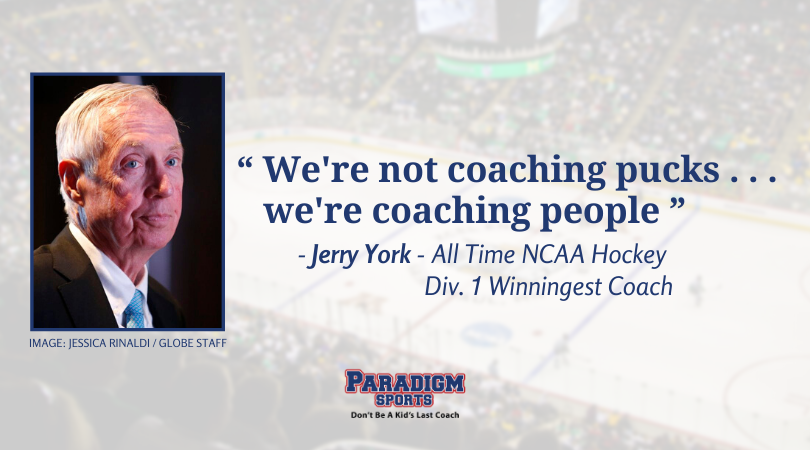
As Jerry York shared in his recent Hockey Hall of Fame Induction Speech


When James Duthie was introducing him before he received his plaque he stated that Jerry’s style of coaching involved patience, being positive and being a great teacher”

Jerry is now the most winningest NCAA Div 1 coach of all time and tied for most national championships and has developed more players at Boston College that went on to the NHL than any other collegiate program.

I shared that quote and analogy last week in our newsletter and have hence shared it several workshops/weekend clinic ran this past weekend.

Jerry, like all of the great coaches over the years, works tirelessly putting in hundreds, if not thousands of hours coaching to not only help their teams but to develop their players into better people.

This is the reminder that I also shared with both recent coaches that challenged me about the time commitment that is required to become certified to become with, but to be a coach ultimately for years to come.

It is all about the kids, and as I remind all of them play playing sports is a privilege, not a right, so is coaching.

Yes, it can be a big-time commitment and at times may be a thankless gig, maybe you get a Starbucks or Tim Horton’s gift prepaid card, better yet a personalized card with same from a player but the best reward you can receive as a coach is when that player comes to you at the end of the season or years down the road and says THANKS COACH.

Then all those hours that you commit up front to get certified and during the seasons make you realize the main reason we have to do so.

It’s all about the kids.

As coaches, it is not about making a living, particularly as majority of coaches in all sports are volunteers.

Our purpose, as those who may be frustrated with the time commitments up front in clinics all the time including the two I referred to at the beginning of this post  may not realize when they first start out, is our purpose as coaches is to make a difference developing youth into adults.

When you are given that opportunity to be a coach and make that difference, yes the certification requirements and time to do so can be a lot but please remember what it is all about.

It’s all about the kids.

Just as I remind players all the time that playing a youth sport is a privilege, not a right as many kids can’t afford to play, so is coaching.

It truly is a privilege to be a coach and as the years go by, and kids share with you how happy they are to be able to do a skill they are working on, did well on tests at school, made friends on their teams, learned values like respect, sportsmanship, communication or leadership skills and so on the time we invest as coaches is worth it.

Even more so when you see how the players you started coaching at 5 years old develop into great young men and women.

Better yet when they see you years later and they still call you Coach.


PS Tagline - Dont be a kids last coach


BONUS – Download a FREE printable PDF version of this blog HERE

Why Coaches Must Teach the importance of FINISHING

Posted Posted in Athlete, Coach, Organization Executive, Parents

Why coaches must teach the importance of FINISHING.

In addition to all the players I have coached over the years, I have also now worked with 15 University and College co-students (our 16th will be starting in a few weeks) who have been instrumental in helping us develop our websites, social media, digital content and hosting of online events and podcasts, I have come to appreciate how today’s generation(s) (Millennials and Gen Z) differs from Gen X (the baby boomers).

Although each one of them has left their own legacy based on projects we started at the beginning of a co-op term that I have looked back in awe at times what they have accomplished, I must confess there one of my pet peeves having worked with the Millennials and now Gen Z is their lack of appreciation of not only starting a task but finishing a task assigned at times.

Generation Z Attention Span is only 8 seconds, LESS than a goldfish


I continue to see instances even of co-op students and many of which share our passion as they  played various sports think nothing of taking on a project or task with vigor but due to their upbringing in the digital era with shortened attention spans with all the time they spend on screens, social media it has been something I have to reinforce with all of them.

Some examples of instances where I had to go to the student’s desks after they thought they were finished to FINISH the task or project;

#1 – We have been a long term sponsor of a charity “Dreams Take Flight” and each year have provided them various samples, promotional items from past and current lives and in back to back summers when I prompted our co-op student to help stage, they would return back to their desks before we were finished. I would then have to ask for them to come back so we could finish what we started.

#2 – Recently I asked one of our students to re: and re: two PC computers from our conference room to another area of the office and although they did a great job with the computer in the conference room, they merely plugged in the other and hooked up to the screen and then returned back to their desk but failed to test the mouse, keyboard, internet, audio where I then had to finish the task assigned.

#3 – Various other students over the years I would assign tasks of projects to and they would take on with vigor and would get to approximately 80% completion and would shift to other projects either as they thought they were finished or suspect their attention waned, particularly with some of the more mundane tasks like manually filing, bookkeeping, that I would have to come to them and highlight they were not finished the first project. It reminded me every time just how short their attention spans could be but is direct cause in effect of their upbringing thru the digital era.

I could cite many other examples but as I run our organization now incorporates the art of coaching over the years including growth mindset, safe to fail environment, connection, developing trust, cultures of excellence etc. in lieu of getting frustrated with every student all too commonplace today with coaches and parents criticizing kids for making mistakes I sit down with them and review why it is important for them to not only commit, but FINISH the task assigned. This is no different that when coaches run drills during practices and remind players not to cheat the drill (rush thru it as fast as possible) which completely defeats the purpose.

Each time I would do so I would use analogies going back to their sports experiences where coaches should reinforce the importance of FINISHING (AKA Go THRU, not TO, the line).

Analogies that I have shared with them with videos (Gen Z is highly visual and if you can’t beat them, join them) top 5 in reverse order;

#5 – Life is a game of inches (Rugby version)

We play as a team or we will die as individuals.


#4 – Don’t celebrate until you FINISH


#3 – Never Give up, it takes a village


Everything about the importance of finishing the race including the epitome of sportsmanship from a 17 year old high school student, reminscient of when Derek Redmond’s father assisted him finish the race in Barcelona 1992 Summer Olympics (video protected by IOC)


#2 – Run THRU, not TO, the goal line

Just one of many examples why players must run thru, not to, the goal line


Many would share that they never had coaches that reinforced the importance of commitment, finishing or sportsmanship.

To which I would shake my head in disbelief as sports should be the medium to develop youth into adults and if coaches are not reinforcing the importance of Commitment and FINISHING is no wonder why today’s generation is rushing thru tasks and not completing 100%.

I just sat down with my current student to review a project that he had taken on, but did not complete the last step as he got distracted with a newer task that was assigned to remind him of the importance and reviewed all of the analogies above to which he responded no coach he had had ever shared with him.

Below is our all-time favorite example of how a player was able to accomplish a lifetime goal and finish with the support of opponents, the epitome of sportsmanship, yet another area that I have had to remind many Gen Z players of various teams I have coached the importance of.

And Our All Time Favorite at #1

Sara Tucholsky First Home Run – Ultimate Sportsmanship to achieve a lifetime goal


If you are a coach of any sport today if you don’t reinforce life skills of commitment, finishing, and sportsmanship you have not prepared them for life beyond sport.

Remember, our role as coaches is not to make a living (as most coaches are volunteers), it is to make a difference by developing youth into adults.

Let’s all work together to bring the game back to the kids.


Don`t be a kids last coach


How to Coach the Alpha’s

Posted Posted in Athlete, Coach, Early Sport Specialization, Organization Executive, Parents


We previously posted “How to Coach Generation Z” based on our experience coaching kids born as of 1995 to 2009 (post-Millenials Gen Y born as of 1984) and gone are the days where a generation was 30+ years, now they are 15 due largely to the exponential growth of the Digital Era.

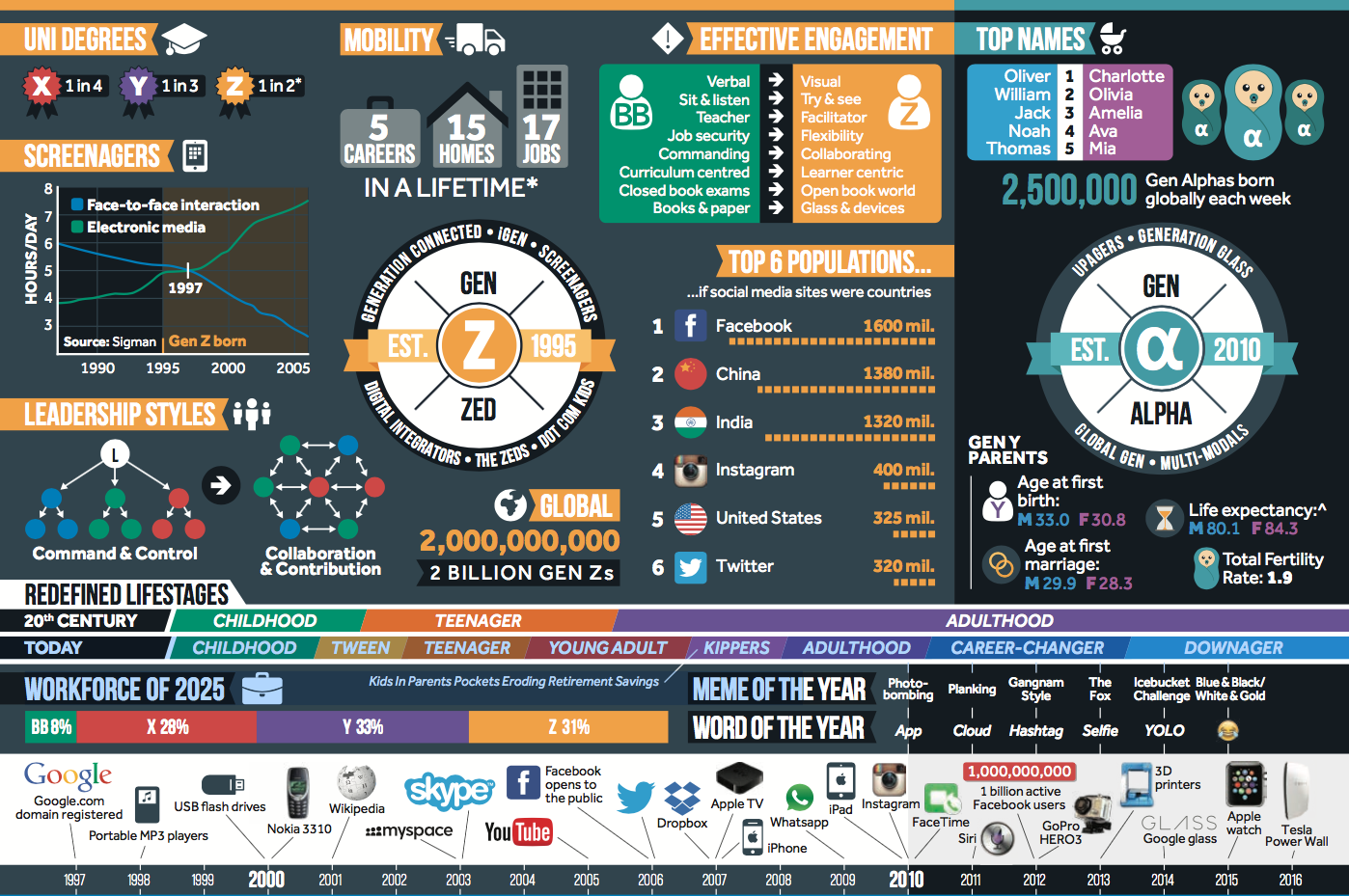
Below is a great infographic produced by McGrindle in Australia that compares Gen Z to the next Gen Alpha’s (will next gen be the Bumble B’s?)

As I highlighted about Gen Z, some of their key differences from the Millenials is they grew up completely in the digital era starting with the introduction of Google in 1997 and the Alpha’s generation born entirely in the 21st century with life expectancy in the 22nd century.

So Who are the Alpha’s ?

The year of Gen A, are ones born as of 2010 to 2025, which coincidentally was year that the iPad (and other tablets since) were introduced and became babysitters of the iGeneration, like Baby Boomers kids who watched Disney VHS Tapes (anyone remember a VHS player?).

It is also the year that Instagram was introduced, Gen Z and now Gen Alpha’s preferred medium for social media networking vs Millenial and Baby Boomers Facebook preference so if you are coaching and using social media for team updates, time to come up to speed with Instagram.

Parents of Gen A are the infamous Millenials that Simon Sinek and many others including yours truly feel we as adults let down that led to their “sense of entitlement”, participation trophies, and dopamine fixation with screens (smartphones, tablets, video games, computer screens)

Having grown up on iPads, accessing Google and Youtube with vigor, they have the ability to absorb information at record paces even beyond their Gen Z counterparts.

What they are lacking, however, due to increase screen time and parents reliance on same (even when they are at dinner by themselves I see couples pulling out their phones only to “chat” with their online counterparts than the very person they are sitting across or beside) are basic social skills prior generations had.

As they spend much more time one on one playing games on their phones, tablets as their “babysitters” vs. stay at home Moms to feed the neighborhood kids after playing outside for hours on end (can’t afford to do so) or being at daycare with others they also have been deprived of unsupervised Free Play.

Unsupervised activity outside where they previously developed the core motor skills we all took for granted, running, biking, swimming, throwing, catching, falling, getting up, jumping, climbing and so on.  It amazes me how often I talk to coaches of the Gen A’s from 5-9 years of age who share how few of them can do all the basic motor skills, but worse yet, how they struggle to overcome adversity, lack problem solving, creativity and ability to make decisions with direct instruction.

Why?

Because they have not played for the sake of playing, all of their activities are structured and their former active play time we had as kids has been replaced by inactive screen time on average 7.5 hours a day.

Here are some things that you need to know about the Alpha’s so that you can connect with and coach/teach them better:

#1 – They are the most diverse cultural generation EVER in North America

As of 2010 census bureau and Stats Can surveys, as a result of aging populations, the growth to both USA and Canada has been via immigration from across the world.  This in itself is leading to challenges with verbal communication if the alpha’s are still speaking their native language at home and English is a second language so more than evet coaches and teachers must rely on non-verbal communication (which represents over 80% regardless of the words coming out of your mouths)

#2 – They are even more digitally literate then they Gen Z predecessors

“Generation Alpha is part of an unintentional global experiment where screens are placed in front of them from the youngest age as pacifiers, entertainers and educational aids.”

Mark McCrindle – Australian Futurist

In my day, pacifiers were call “susses” and they were only given to kids who were going thru really bad teething and a trick used by many parents was to dip the suss in whiskey to ease the pain for babies and permit them and their parents to sleep.

In the case of Gen Z, as a baby boomer parents of two Gen Z “kids”, my wife and I avoided giving either of my susses as I knew how dependent some kids would be on them and remember seeing some kids with them a 5-7 years of age when I started coaching hockey and softball. I also avoided giving both any electronic devices until they were teens, including their first cell phones at 15 years of age and even now we do not permit any electronics at the dinner table for face to face conversations as well as curfews for use and total time.

Did we face scrutiny from other parents as a result?

Yes.

Do you know who also raised their kids tech-free?

The two whose livelihoods and companies they created dominated the digital era, Bill Gates (Microsoft) and Steve Jobs (Apple)

Hmmm ….. both when interviewed stated they limited to ensure that their kids used technology in moderation so perhaps the Millenial parents now could do the same?

#3 – Their parents will be the oldest and most educated of ANY generation

On average mothers will become mothers for their first in their early 30’s (vs. late 20’s for the Baby Boomers) and first-time fathers a few years older into their mid 30’s

What this means for coaches, many of which will be parents starting out coaching their 5-9-year-old kids in various organized sports that have been adapted for age-appropriate programming is coaches will need to understand the importance of engaging parents more than ever.  The parents will also EXPECT the reasoning for seasonal planning to be supported by the science, not old school coaching practices this is the way we have always done it.

They also will seek measurement tools to prove that their kids have DEVELOPED, not rely strictly on results on the scoreboard to ensure that your seasonal planning incorporated baseline, mid and end of season testing.

This includes communicating what is Physical Literacy, Fundamental Movement Skills, the various stages of the development pathways so the Millennial parents understand the reasons for the madness so to speak why we no longer play full ice or full field games, incorporate small area games and skills stations in practices and competition is pushed to later age groups.

This is why coaches and board members of all sports must implement parental support and engagement vs. the current us vs. them or dealing with parents.

#4 – The Alpha’s are the age group that literally coincide with the introduction of LTAD models by the majority of National Sports or National Governing Bodies as of 2010

These have been identified by various LTAD adaptations (as Sport for Life has recently released v. 3.0 and NGB’s have their own variations like Hockey Canada’s LTPD, USA Hockey and many other US NGB’s AGM) as Active Start (0-4 yrs old) and Fundamentals (5-8 yrs. old). The emphasis for these age groups is focusing on Physical literacy and Fundamental Movement skills.

Although LTAD models have been around now for a couple of decades, for whatever reason there are various versions LTAD, LTPD, LTAD, ADM and updates with the latest version now being introduced by Sport for Life called “Long Term Developing in Sport and Physical Activity 3.0” The reason they omitted athlete for v. 3.0 is they did not want it to be a reference only for athletes, but to promote physical literacy for all people to be active for life BUT there are still sports orgs and grassroots coaching catching up to the concept of 1.0.  If Nike changed their swoosh every few years do you think they would have the same powerful brand and consistent messaging they do today?  Just my two bits.
#5 – Like their Gen Z counterparts, they have the attention of a flea (less than 8 seconds which is the attention of a goldfish)

What this means – Cut to the Chase QUICKLY, avoid board time at all costs with Initiation (5-6), and Novice (8-9 yr) age groups, keep your instructions simple and better yet DON’T coach, let them figure it out by providing general guidance for disguised drills

Many national sports orgs now have “an APP for that”, video, audio, drills you can share via email, text or show directly on phones, tablets or better yet, dongle right to TV’s.  Embrace the technology that the Alpha’s know very well to help you coach and connect with them.

Below are just a few examples how National Sports Organizations have adapted their coaching certification programs to guide coaches how to coach of Generation Alpha to coincide with their version of LTAD programs they have recently or are going thru revisions on since 2010:

Baseball Canada Rally Cap Program – Initiation to Baseball (first phase of LTPD)

The main reason kids were quitting T-Ball or early years of baseball (which I did coach) was the kids did not have fun, largely in part to the lack of movement or engagement, standing in lines to take their turn to hit in practices, also due to fact the kids did not have the core skills needed to throw, catch, run, slide, hit.

The focus of the program is to help kids understand the fundamentals of the game while having FUN vs. the old t-Ball program.  Check out the great video Baseball Canada made of a Rally Cap Session in one my many stops growing up a kid in the outskirts of Montreal, Lasalle.


  • 5 More touches
  • 15X more hits
  • 5 More Steps
  • More Dynamic
  • More Movement
  • More engagement
  • 3X more positions played

The Best Part – Kids want to come back after each session as they had FUN.

USA Hockey – ADM Model and Hockey Canada LTPD (Long Term Player Development)

Both now have incorporated that we highlighted in Cross Ice Hockey Benefits (smaller area of ice surface leading to similar results as the Rally Cap program for more puck touches, contact confidence, shots, passes, saves etc.)

Next Season, both USA Hockey and Hockey Canada will be rolling out revamped development programs for the Atom age groups (9-10 years old) which coincidentally coincides with the first Gen Alpha’s entering those pathways who were born in 2010.

Both National Organizations have introduced Digital APPs to help coaches to better connect with the iGeneration of kids they are now coaching also

Soccer Canada LTPD

Soccer Canada now has mandatory age-appropriate coaching certification for all age groups, including the Alpha’s with their first two of four community stream clinics (rec level) and incremental licensing for competitive levels

  • Active Start – U4-U6
  • Fundamentals – U6-9 (boys), U6-8 (girls)
  • Learn to Train – U9-12 (boys) and U8-11 (girls)
  • Soccer For Life – 13+

As John Herdman, Head Coach of Canada’s Men’s National Soccer Team, shares in the LTPD Grassroots highlight video by Canada Soccer, the principals are there, that 5 to 12, is to FALL IN LOVE WITH THE GAME.

Many other sports organizations are implementing similar models so they can ensure that their coaches have the tools to coach the next generation of Alpha’s so they have fun and love the game more at the end of the season than they did at the beginning.

PS Tagline - Dont be a kids last coach

 BONUS – Download a FREE printable PDF of this blog HERE

What Youth and Professional Sports can learn from the gaming industry

Posted Posted in Athlete, Coach, Organization Executive, Parents


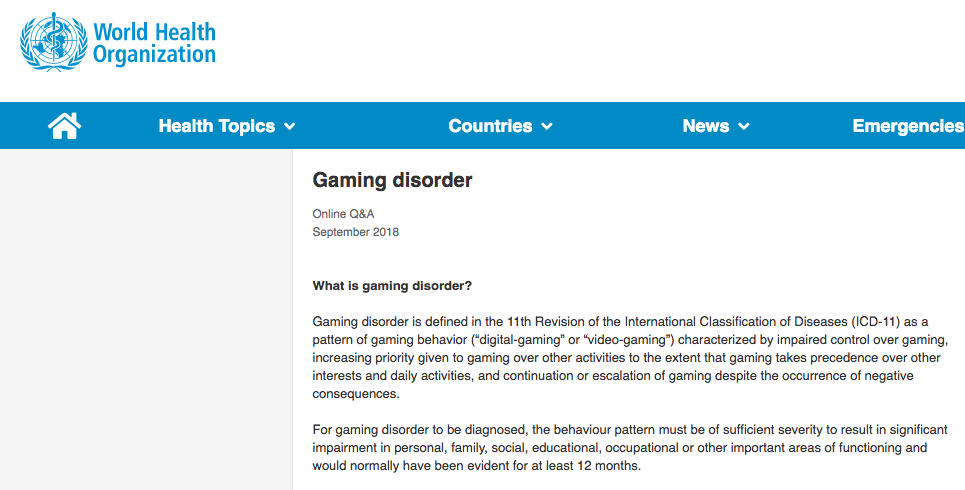
Last Fall the World Health Organization (WHO) added a section to their International Classification of Diseases (ICD) called “Gaming Disorder” which will officially go into effect in 2022.

The section focuses on the patter of gaming behavior (“digital-gaming” or “video-gaming”) that has an increasing priority over other activities that takes precedence over their personal, social, family or educational life.

No reference to the fact that excessive gaming has been identified by all of the professional sports with the next generation of athletes and one of the questions that is asked at draft combines?

As we have shared for years, as a result of the digital era, many kids today have replaced their former active free time with inactive screen time which not only includes video and mobile device games, but binge-watching Netflix, spending hours on end on social media platforms, watching YouTube so shouldn’t the (WHO) look at either amending the ICD or adding one called “Digital Disorder”?

In a prior post we shared “Why Do Kids Play Video Games” we shared several of the reasons why kids today play video games and some ending up suffering from “gaming disorders” where it does impact their lives on so many fronts in terms of their mental and physical well being.

Last week Jim Benning, GM of the Vancouver Canucks, was interviewed by the Vancouver Sun if it was a concern for the upcoming draft as they continue to go thru their rebuild (5 years in the making to get back to the playoffs and counting) and he commented that is not an issue with NHL prospects as they don’t have the time to play video games excessively due to training on and off-ice, nutrition, and recovery needed for them to make the cut so to speak in the NHL.

This in response to rumours regarding one of their top prospects, Olli Juolevi, having a gaming addiction which his agent has denied and was also one of the reasons why their leadership group on the team (players) banned video game play while they were on the road to promote team chemistry and ensure they adhered to routines for proper rest and recovery and nutrition to play the rigourous 82 game schedule we highlighted in “This is The Future” at the beginning of this season nearing its end with a few games remaining the Stanley Cup Final.


Tweet Reply by Jeff Marek in response to an interview he had with a Junior Coach regarding an NHL first-round draft pick who was affected by the “gaming disorder”.

The Junior Coach shared with Jeff in that interview as a result that the player “will never play in the NHL because of a video game addiction”

All that talent, all the time he committed to making it to the NHL, getting drafted in the first round and blowing it all way due to playing video games into the wee hours of the morning night after night?

Imagine how the parents would feel after investing 10’s of thousands (if not 100’s of thousands if their kids were in academies) of dollars chasing the dream of having their son play in the NHL and missing out due to an addiction to video games,  makes you wonder if gaming addiction is added to the list of banned substances for all the professional leagues that lead to suspensions?

Although Jim Benning argued that it was not an issue with the current draft class, I would argue that it has to be on every general manager and scouts radar screen.

We recently shared out another article on our social media that shared further insight on the evolving gaming evolution posted in FORBES

Three Facts the writer shared:

#1 Professional Gamers are making REAL salaries

The highest paid eSports athlete is Kuro Takhasomi from Japan who earned $3.6 Million in one year, the average gamer is making about 60K


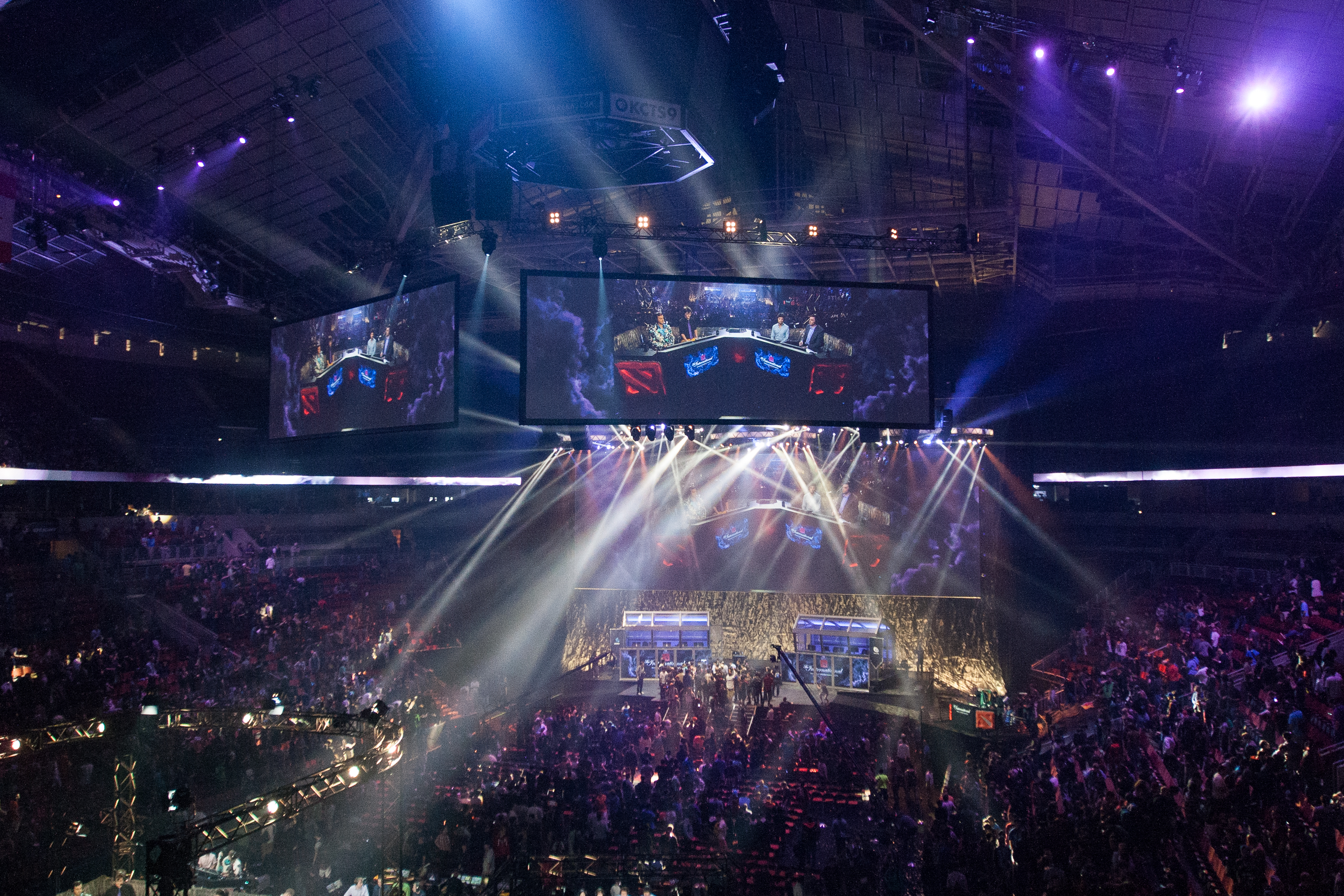
#2 Spectators for Video Game events is now more than for traditional spectator sports

The average time that young gamers are watching eSport events is approx. 3.5 hours a week, an hour more than they watch traditional sports.

The numbers are probably skewed right now with the millions of Canadians that are glued to their TV’s each night that the Raptors battle with the Golden State Warriors in their quest to win their first ever (and the first ever for a Canadian Franchise) NBA championship to dethrone the Golden State Warriors in their 5 year legacy.

#3 Only 0.1% will have a chance to become a professional gamer

There are currently only 500 professional gamers worldwide vs. millions who play games, see below for number of kids in the US alone that play digital games (PC and mobile)

Other facts

#4 – The Average age of professional gamers is 35 years old AND almost ½ of which are female.

Think about that … unlike traditional sports where the top 5 pro sports in terms of revenue and gate attendance are played by men with a huge disparity for their female counterparts in female only leagues in terms of media attention, spectators and salaries and eSports is all inclusive in terms of gender, race, sexual orientation.

Hmmm .. lack of inclusion that is affecting youth and professional sports is not a barrier to entry

With gamers developing via online (anyone in the world can play across the globe with access to the internet) before they become professional, the only thing that is required for you to be accepted in the gaming community is that you have the ability to PLAY.

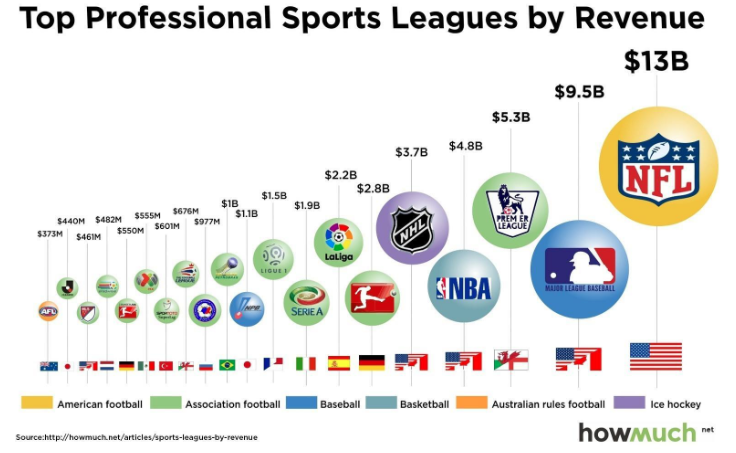
#5 – 2019 revenues in eSports events is projected to exceed 1 Billion (USD) and is expected to exceed over $3 Billion by 2022

Compare that to the top 5 Traditional Professional Sports Annual Revenues ($ USD) in 2018

Hmmmm … NHL … pretty soon annual revenues will be trumped by eSports so if I was a general manager, coach, scout in the NHL it would be on my radar screen that prospects may have a gaming disorder and a focal point in the interview process pre-drafts or even when considering trade for prospects.

It is all about balance if they play a few hours a week is one thing, but if they play 20+ hours a week is another thing altogether as it will impact their rest, recovery and ability to adapt to playing at the level they aspired for.

#6 – The numbers

According to NPD Group, 91 % of children between the ages of 2-17 in the US alone play digital games, approximately 61 Million Kids,  up 9% from 2009, attributed to 17% increase in digital game play in the 2-5 year old age group.

REALLY ??

Shouldn’t the preK age group of kids be outside playing, in parks, at beaches, learning how their bodies move in lieu of playing digital games on smartphones, tablets or computer screens?

It’s no wonder that there has been a drastic decline in free play as kids have replaced their former active play time with inactive screen time.

In 2018 (the most recent stat we could find) approximately 2.2 Billion people globally play digital games (29% of the world’s population), 1.2 Billion of those play games on PC’s!

In 2018, the gaming industry was just shy of $140 Billion in revenue, half of which is played on mobile devices (think back a few years ago how Pokemon Go went viral for all age groups, not just kids)

Compare that to the Professional Sports Industry where the annual revenue for the top 5 professional sports last year was $36.3 B and they youth sports segment in the US now exceeding $17B, sports equates to approx. 1/3 that of current gaming revenues worldwide.

As the saying goes, if you can’t beat them, join them.

If traditional youth recreational, competitive and even professional sports organizations have a fighting chance to attract, retain and grow their memberships to curb the momentum of eSports that is growing exponentially before it is too late, STOP doing the same thing over and over again and expecting different results.

Look at the gaming Industry best practices by doing your research to understand your avatars (all stakeholders involved) and provide the best quality experience possible so kids love the game more the end of the season than they did at the start.

Encourage them to sample as many games (multiple sports and physical activities) as possible

vs. Working at Pong (one sport) year round

Make it safe to fail for all stakeholders (i.e. kids, coaches, officials)

vs. Adults competing with other adults thru kids.

Let everyone PLAY regardless of their ability so all kids develop

vs. Running short benches focusing on winning at all costs

Develop your coaches to learn how to coach beyond the game

vs. Old school coaching practices focusing on X’s and O’s 

AND

Most importantly ……

Make it Fun.


Let’s all work together to bring the game back to the kids… where it belongs.


Don`t be a kids last coach


BONUS – Download a Free Copy of this Blog in PDF Format HERE