As we are heading into a new fall season for various fall
sports, ice hockey, soccer, volleyball, basketball and others, coaches will be
meeting with parents, players and various other team meetings as they start
their seasons.
I am putting the finishing touches on two presentations I
will be doing on Wednesday on behalf of Changing the Game Project for Nanaimo
Minor Hockey and plan to share insight with coaches how they can engage, not
deal with, parents and players on their teams.
Reason?
Because over the years running clinics, doing workshops,
breakout sessions and keynote presentations, the #1 question that coaches ask
me during or post talks is “Can you provide me some advice how to deal with
problem parents and parents?”
The first thing I say to them is that you need to shift your
focus from dealing with, to engaging.
These are a few tips on how you can do so as you start your upcoming seasons:
Run an effective parent meeting
If you have not done so already, regardless of what level
you are coaching from Novice to Midget, recreation or competitive, if you want
to avoid potential issues you may run into during the season, starting with a
well planned parent meeting will address many of those potential issues up
front.
Be prepared to answer the first question that
parents have, “Why should my child play for you?” AKA – What is your coaching philosophy?
Many coaches that are just getting starting
in their journeys as coaches don’t have a written philosophy, which outlines
their core values and expectations for their teams.
My written philosophy used to be several
paragraphs but as I continued to gain experience, learn more as a coach, I
tweaked it to a simple phrase;
FUNdamentals, not winning, at all costs.
If you have followed various contributions that I have made to various media, a key takeaway that I share with coaches and parents is the importance of making it fun.
Many people say if you just want to have
fun then play recreational sports as the expectation of competitive sports is
to win.
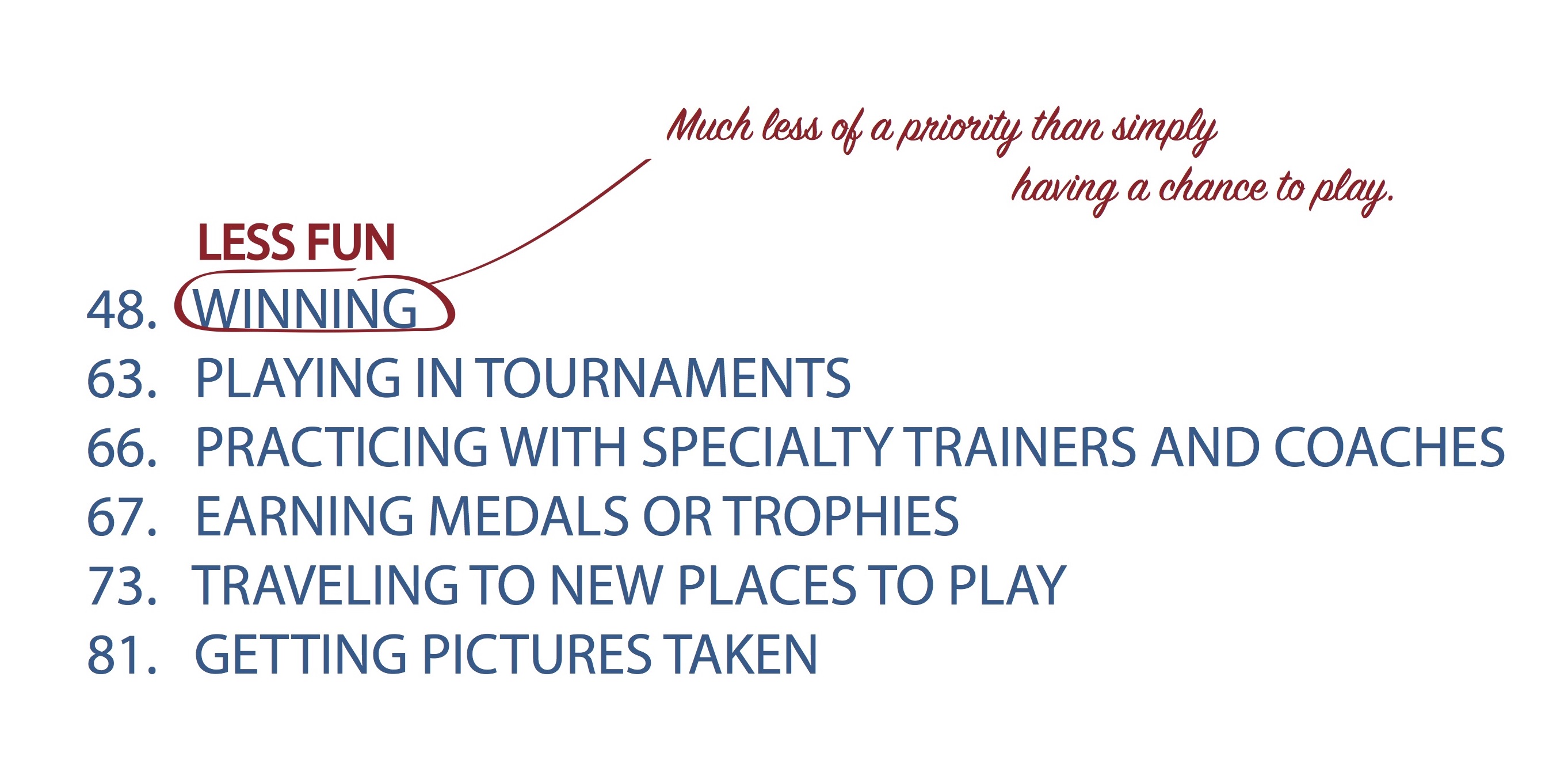
Yes, kids like to win, but the current win at all costs environment in sports is due to the adults focusing on the bottom 1/3 of what is fun in sports as Amanda Visek research findings found when she asked kid why they played sports.
In all the years that I asked kids why they played none said winning and although it was identified in Amanda’s study, was bottom 1/2. Others in the bottom 1/3 were all adult driven as well (tournaments, specialty trainers for specialization, trophies (AKA participation trophies), travel and getting pictures taken (the thing I hated the most as a kid but did so to make my grandparents happy).
Having played numerous competitive sports in my youth, including captaining provincial winning teams in 3 different sports (hockey, football and rugby), I can tell you first hand if the coaches focused on fun even when competing at the highest level, winning is the byproduct.
Just ask any professional athlete or Olympian if you don’t believe me why they play as I have found out in my interaction with many high level athletes over the years. Although seems like a distant memory, remember last Stanley Cup when the Golden Knights made it to the final in their inaugural season … how many of them stated in post game interviews they were have a ton of fun and keeping it light….
Have a detailed agenda foryour meeting and be proactive by sharing the agenda in advance via email to all the parents
Key points to cover
Introductions of all the coaching team (each to share their philosophies, background and team goals for season)
Finance (Budget)
Season Plan (time for practices, games, development focus)
Discipline / Zero Tolerance for any form of harassment
Expectations (Don’t just talk the Talk, but Walk the Walk)
It is this area where coaches set themselves for failure in
the season, whenever I did not coach my kids on teams and I was just a dad, in addition
to the coaches philosophies, they were the top things I wanted to know as do
all parents.
Ensure that all members of the coaching staff have the opportunity to introduce themselves, don’t assume that parents know who they are or what their philosophies are (they should be aligned with yours)
If you say something in your meeting, ensure that you follow
thru and “walk the walk” to ensure that you maintain trust with parents.
Doing so will prevent them questioning you why you did
things in practices, will alleviate issues like playing time, disciplining
players for inappropriate behavior, violation of team standards, as well as one
of the most sensitive issues, the $$$$.
All youth sports have become very costly, hockey being the most expensive,
and for every line item on your budget ensure that you justify the expense.
Communicate regularly and consistently
Discuss how you (as in the head coach) and your assistants
will communicate with the team, deal with any issues that arise and ensure that
you enforce the 24 hour rule to ensure emotions are in check.
My rule of thumb – NO EMAIL/TEXTS for issues, setup a
meeting with the parents as emails can be taken out of context and can go viral
Face to face communication is best or a phone call if
setting up a meeting is not doable short term.
It is more personal and will nip majority of issues in the bud but my
experience if you run an effective parent and follow-up meeting early in the
season majority of potential issues you will run into will be avoided
I also recommend that you share resources to parents on
consistent basis including websites, blogs, videos that reinforce the key
agenda items and your philosophy.
On our website home page we have a list of our various
allies who share insight for coaches, parents, sport executive members as well
as regular posts to various social media sites.
Team meetings – something I encourage you to do in the first team meeting is asking your players the following;
Why are you playing X (the sport you are
coaching)
What is fun about it (as that will the answer
from 95% of the players)
What is not fun about it (this will help you ID
red flags like the ride home, criticism, abuse, coaches playing favorites)
What are the top 3 qualities that you would like
to see from your team mates
This will help you define the team core values as every team
you coach will have different players, coaches
Then meet with each player individually and go
over their goals for the season, ones they believe the team should have
Lastly – have a follow-up meeting with the
players AND parents to review their goals as well as education regarding the
various forms of harassment that will not be tolerated including bullying,
cyberbullying, hazing and ANY forms of abuse.
Other meetings in the season can be team building activities
for both players and parents, finance updates, fundraising, tournament votes,
planning.
In sum, the more you talk the talk, walk the walk and
communicate with your players, parents reduces ambiguity and will create an
environment of trust.
Too often, when I am asked to speak at events and I talk to
executive members about their pain points that they would like me to address it
comes down to issues they have with parents, players or the coaches themselves.
Much of it is merely due to (a) lack of experience and (b)
lack of clear, consistent and FAIR communication.
Don’t be that coach that says one thing at the beginning the
season and then reveal your true colours by screaming at kids, ignoring or
avoiding parents, abusing officials, mandating expenses that were not approved
or various other concerns that parents and exec members share with me.
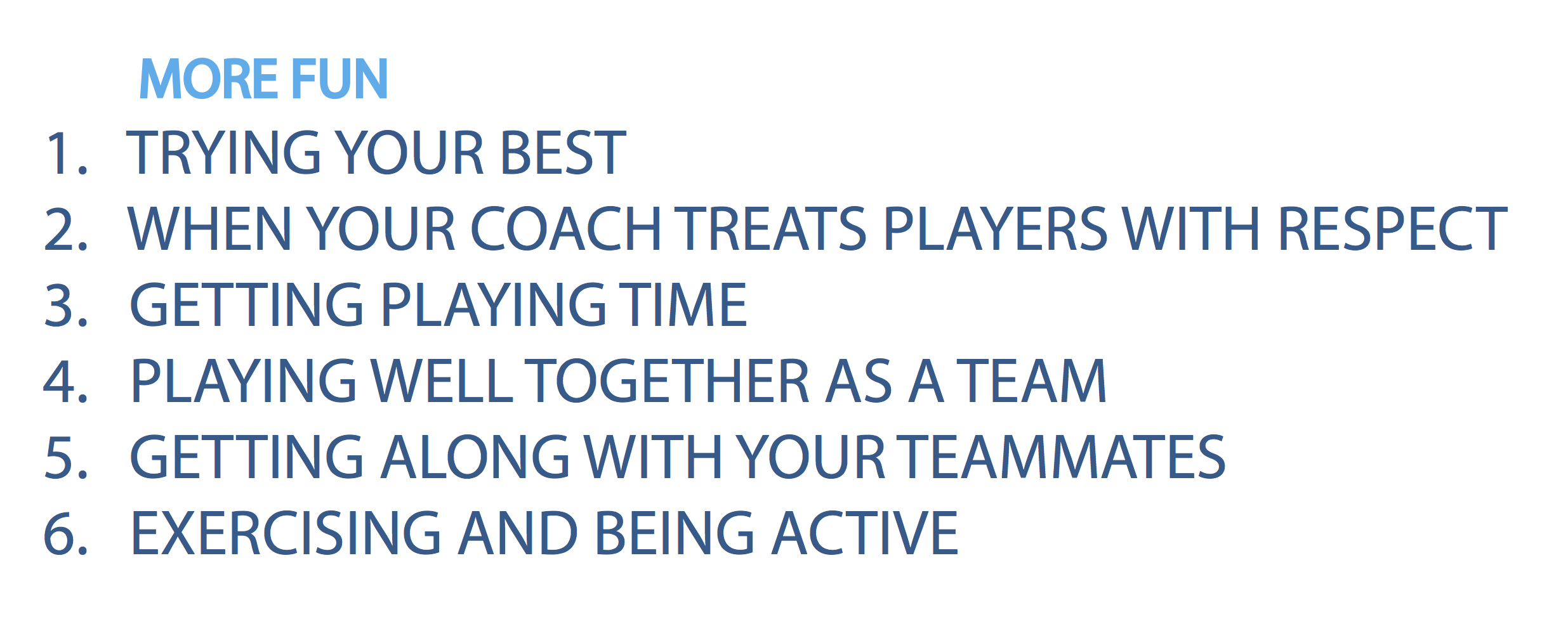
In lieu of focusing on the bottom 1/3 of what kids
identified in Amanda’s research, focus on the top 6
Give kids an opportunity “to try their best”
Treat all your kids with respect
Give them ALL playing playing time (exception being discipline)
Provide them the opportunity to play well as a team by running efficient practices and praising effort (growth mindset) for making mistakes with positive error correction
Ensure that you have team building activities early in the season and zero tolerance for all forms of harassment so all the players get along with each other (and ensure none are singled out by players or coaches)
Ensure that a minimum 75% are active during all practices (avoid lines) and encourage all players to work on skills and be active 60+ minutes a day to ensure their conditioning levels are up for your season
If you do so, I can guarantee that you will have a tough
season, but if you keep it in perspective and remember that it is all about the
kids, keep it fun, make it safe, teach skills (of the game and life) and most
importantly care passionately (the #1 characteristics of great coaches) you
will not be a kid’s last coach.
In lieu, they will love the game more at the end of the
season than they did at the beginning.
Let’s all work together to bring the game back to the kids …
where it belongs.