The Reality vs. the Dream of NCAA Scholarships and Going to the Show
Posted 21 CommentsPosted in Athlete, Coach, Organization Executive, Parents

Every day I come across another study, article, or blog post about the dangers of early sport specialization and the driver for same is parents aspiring for their son or daughter to receive a NCAA scholarship for their chosen team sport to ultimately be drafted to play professionally.

Translation – Get a full ride to get an education and save Mom and Dad over $200K USD, get drafted and then you can take care of us with your Multi-Million Dollar Salary playing professional sports (ROI = Return on investment)

As I have shared with every coach, parent over the years, if that truly is your goal for your son or daughter, start a RESP (registered education savings plan in Canada) or the whatever the equivalent is in your nation when your son or daughter are born.

By the time they are ready to apply for post-secondary education, you will have their scholarship.

IF, you roll the dice and encourage them to specialize as early as 7 years old, these are the real statistics that you need to be aware of before you do so;

  1. Specialization will lead to burnout, even though they may love the sport you encouraged them to specialize in early, the trend where 70% of kids quitting that sport and all sports in general before they enter high school still continues in many developed nations across the globe.

Translation – the 10’s of thousands of dollars, thousands of hours you and your child invested chasing the scholarship or ultimately playing professionally will be for not

  1. They will potentially suffer one or more major injuries that could end their season, worst case, career ending due to overuse

Translation – Again the 10’s of thousands of dollars, thousands of hours you and your child invested chasing the scholarship and ultimately playing professionally will be for not

  1. Full Ride scholarships also are few and far between, most are partials, approx 8.7K – 10.6K USD. Majority of those are for Div 1 schools only (the most expensive tuition and hardest to get into), some in Div II and none in Div III schools.

Translation – Even IF your child gets thru 1 and 2 and is offered a scholarship, it will only partially offset the  actual out of pocket costs.  Compound that with tuition fees alone for international students to the very same schools that offer scholarships can exceed $40K per year it will still leave the family with huge financial outlays each year.

See below for the NCAA facts from March 2018
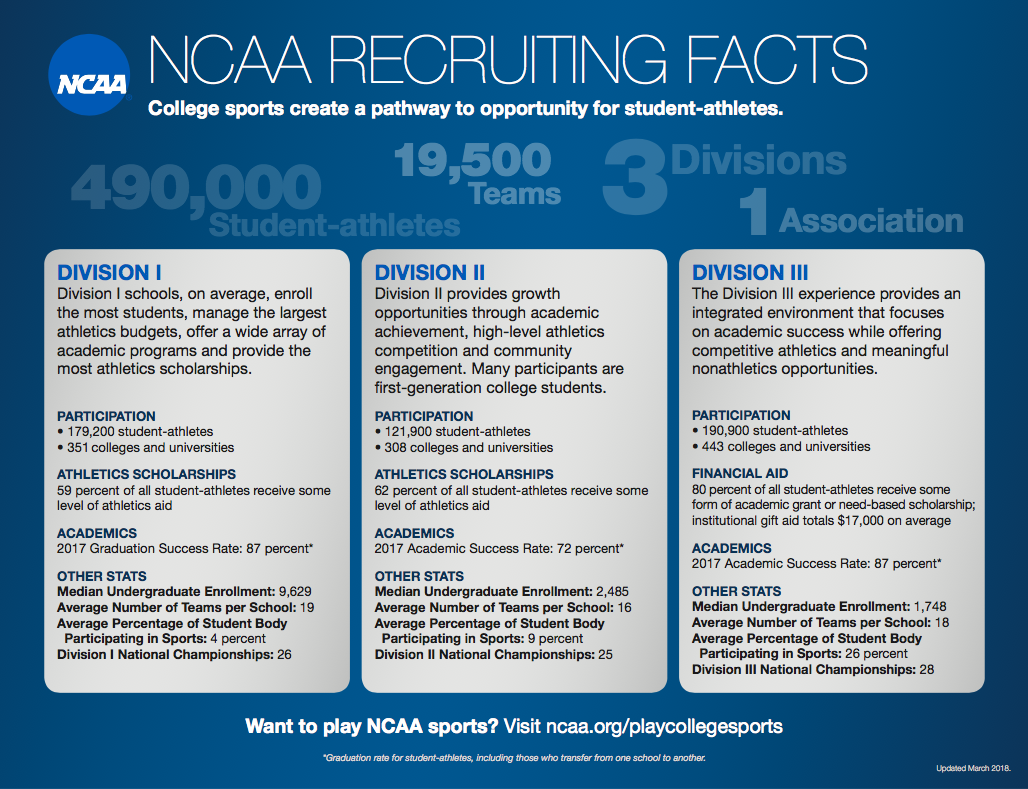
 

FACT – Only 2% of the NCAA athletes will be drafted to their major professional team sports but there is no guarantee they will actually PLAY even one game.

The two main NCAA team sports that are driving specialization are Baseball and Men’s Ice Hockey that have much higher % of players being drafted to their major professional levels (9.1%) and (5.6%) respectively vs. other team sports.  Being drafted is one thing, but being drafted, signing a contract, playing a game or a having a long career is another thing altogether.  One of the downsides of specialization is even those that do get to play if specialized starting in high school they will have shorter playing careers than those that continued to play multiple sports until or even in college/university as we shared in our January post

Early Sport Specialization does more harm than good

In the early 90’s, the OHL did a study based on the 1975 birth year of players, approx. 30,000 registered at the time in Ontario,  when they were eligible for the NHL draft and this is what they found;

  • 262 were drafted to the OHL (0.87%)
  • 113 drafted to the NHL (0.37%)
  • 38 Signed an actual contract (0.13%)
  • 22 Played only one game (0.07%)
  • Only 11 were active at 24 years old (0.04%)

I have yet to come across a similar study for MLB players drafted vs. those that will play for the major-league clubs they signed with, but like NHL, the majority come from the first round and after that will potentially have long careers for their minor-league affiliates.

Here is the math based on current trends of kids specializing at 7 years old and entering clubs/academies for 10 years before they even reach the collegiate level.
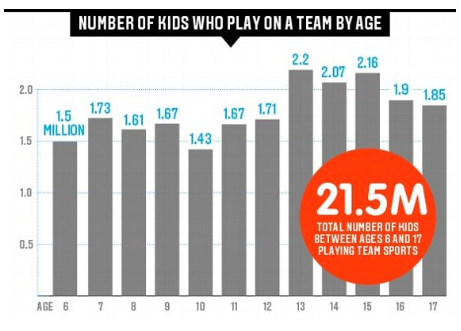
Most Current Data Set Available from 2013 for team sport participation

21.5M kids playing youth team sports in the USA;

  • Of those 7.3M will play team sports in high school (football being number one with over 1M) = 34%

Per March 2018 NCAA Facts (of those that played team sports in high school that went on to play in the NCAA)

  • 492K went on to play at the NCAA level = Only 2.3%
  • 59% of athletes at Div I schools offer a handful of full ride scholarships, majority are partials
  • 62% of athletes at Div II schools receive some level of financial aid/smaller scholarships
  • 80% of athletes of Div III school athletes receive some form of financial aid only, no scholarships

Student-athletes in Div II and III schools aid is more in student loans than actual bursaries or scholarships, subject to being repaid back (which puts further stress on the family to do so) vs. scholarships for Div I schools do not require repayment.

  • According to Mark Emmet, President of the NCAA, when players on NCAA men’s basketball teams were surveyed, 75% of Div I, 50% of Div II and 25% of Div III athletes believed they would play professionally when just over 1% were drafted to the NBA in 2017
  • Assuming 2% of NCAA Athletes go on to major professional levels, that is 9840 of the 492K student-athletes
  • Going back to the total 21.5M that played team sports from 6-17 years of age as the feeder group to those that went on to play at the NCAA level, those that were drafted to major professional sports (9840) only equates to  0.04% 

This is the same % that I have shared from numbers shared at the Hockey World Cup Summit in Toronto in 2016;

  • Approximately 2M kids playing hockey globally, Canada and USA accounting for 1.2M, the rest for other nations in Europe and did not even include the sleeping monster China
  • 700’sh roster spots in the NHL = 0.04%
  • The number of NCAA scholarships offered to Ontario born players has dropped 63% the last 10 years. Why? Because the USA has developed their ADM (American Development Model) over the same time period and is developing their own vs. those born elsewhere

Similar Stats in terms of soccer (MLS) based on registration numbers in the US in 2014;

  • Approx 5.7% of the 414K boys played soccer in high school
  • 7% (23,602) will go on to play soccer in college
  • About ½ of those (2.8% or 11.6K) will play Div 1 level (where athletic scholarships are available)
  • Average scholarship = $8.7 – 10.6K USD (gone are the days of full rides, now the average is approx 8.7K for all sports other than football and basketball that the average is 10.6K USD falling well short of that the actual annual costs will be)
  • Only 72 of those playing in college will go on to PLAY professionally = 0.02%
  • BUT 26% of parents think their kids will play professional soccer

I suspect the same % would hold true for English Premier League (European Football), NFL or other professional sports programs where players salaries have increased to the millions of dollars (not including the lucrative endorsement deals)

TD Ameritrade did a study with their clients in 2015 as they were concerned they were not investing enough for their retirement.

  • Many of those that replied stated a large portion of their disposable* income was being spent on youth sports.


  • 43% of those stated that youth sports were too expensive.


  • 67% aspired for their child to get an NCAA scholarship (only 2% potentially will)


  • 47% think their kids will play professionally ( reality = less than 0.5%)


  • 34% think their kids will become an Olympian (reality = less than 0.1% will)

* How many of us actually have disposable income anymore, with rising costs of housing, gas alone, more and more families are living paycheque to paycheque

Two Years Later – Time Magazine shared that youth sports in the USA had evolved to a $15 Billion Industry due largely to specialization and the growth of private for-profit clubs and academies.  The industry has literally doubled in revenue in less than a decade!
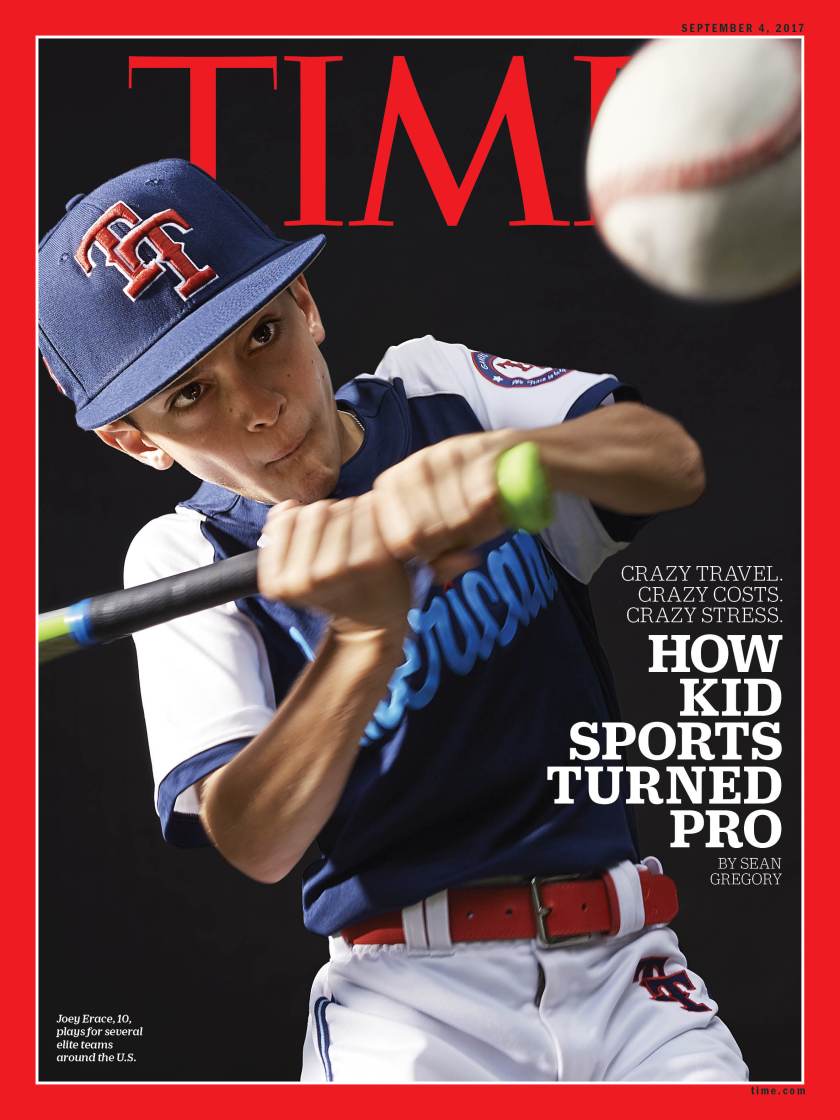
 

These private programs are now costing anywhere from $15 to 50K per year (some include travel costs, some do not) so using an average of $25K per year (for travel, programs, gear, specialty trainers etc), and you signed up your “talented” child to year-round program starting at 7 will exceed $250K even before they get to college (AKA – NCAA PREP)

This does not include the opportunity loss of taking personal days, weeks off from your job to chauffeur or fly your child to all the prospect tournaments, games so a scout may “potentially” see them play (if they are good enough, they will be seen TRUST ME, you don’t need to spend all that extra money and time and if you truly aspire for that level, majority of college and professional coaches are recruiting multi-sport ATHLETES)

This is roughly the equivalent what it would work out to for a Div I school tuition for an international student which “may” only be offset by partial scholarships (literally covering meals) of 8K per year (full rides are about as rare as the Giant Panda).

This also does not include the equipment, apparel or other costs that I call “the fluff”

Drum roll …….

NET out of pocket for NCAA PREP (academies) and NCAA education WITH partial scholarship support can still cost …

ALMOST HALF A MILLION DOLLARS invested chasing the dream of playing professionally when the average is only 2% of NCAA athletes will get drafted and even if they do the majority will never play other than for their minor club affiliates and the actual number that may play in the Show works out to 0.02-0.04% in all the data referenced above).

Sadly, many parents are chasing THEIR dream, not their child’s dream, and when I have talked to parent’s almost all share they have not kept track of the math as either too scared to do so or they merely were trying to provide their child the same opportunity as others (AKA keeping up with the Jones).  Thanks to the traditional less costly community and high school sports programs competing with private clubs and academies they all get caught up in the same race only to find out at the end, the costs far outweigh the rewards.

One of the hardest things that I had to tell my son in his last year of minor hockey (when he was 17 years old) was I could not justify paying for AAA hockey thanks in part to mandatory travel tournaments that would push our out of pocket costs over $10,000 for the winter season.  This was MINOR HOCKEY, not an academy where the costs can push 20-50K.

Ironically it was the same conversation I had with my mother she shared that she could no longer support me playing hockey as my father’s life insurance ran out (well before specialization, spring, summer camps, $300 sticks, $1000 skates, Mandatory Travel tournaments)

What did I say to her?

It’s Ok Mom, I love hockey, but I would like to keep trying other sports, so I signed up for football in the fall ($125 reg fees that included all the equipment but cleats), rugby in the Spring (No reg fees, just $200 for jersey and cleats) and taught myself to play golf in the summer (junior fees were free or very low and I bought a used golf set for $100.00).  I had already won provincials (equivalent to a state title) in Hockey, and then went on to play for teams that won provincials in Football and Rugby.

What did my son say?

He understood and said he would rather play High School Volleyball ($125 athletic fees plus a pair court shoes) and Rugby  ($125 athletic fees plus a pair of cleats) and golf in the summertime so he could just go out there, work up a sweat, have fun and be with his friends.

At the end of the day, that truly is the reason why kids PLAY sports.

Sometimes we have to hear from the mouth of babes to bring us back to reality.

Let’s all work together to bring the game back to the kids … where it belongs

 

PS Tagline - Dont be a kids last coach


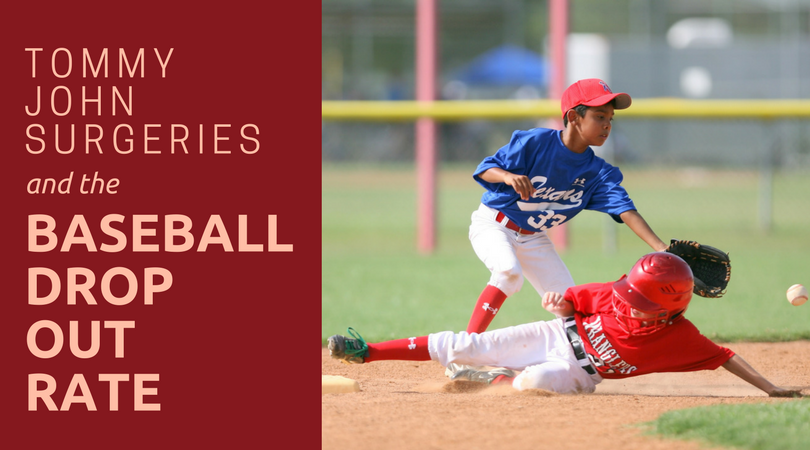
Tommy John Surgeries on the Rise While Baseball Registration Continues to Decline

Posted Leave a commentPosted in Athlete, Coach, Early Sport Specialization, Organization Executive, Parents

With all the talk about overuse injuries due to early specialization of late, my wife picked up a book at the Library that is one I am reading now called “That’s Gotta Hurt”, written by Dr. David Geier regarding the various sports injuries and their remedies that have impacted sports.

One chapter is dedicated to Tommy John Surgery and I thought would be a great to share some of the nuggets.

I believe everyone knows the reason the repair of the Ulnar Collateral Ligament (UCL) in the pitcher’s arm is called Tommy John as the first ever one done was on MLB pitcher Tommy John after he suffered the tear to his UCL pitching for the LA Dodgers against my former favorite team, the Montreal Expos (who were on track to win the World Series in the lock-out year then only to be moved to Washington a decade later but that is another story in itself).

The date of that game was July 17, 1974 and it revolutionized how the UCL tear was repaired, when Dr. Jobe conducted the first ever “Tommy John” surgery by taking a tendon from the forearm of the non-throwing side to replace the torn UCL.

It is a major reconstruction, takes over a year of rehab to get back to the mound, but the upside is statistically the % is quite high that pitchers will be able to return back to competitive level they were prior but the big unknown is for how long and if they have one as early as Roberto Osuna did @ 18 years old (pitcher for the Toronto Blue Jays), if they will require a subsequent Tommy John Surgery down the road.

Thus far, the only pitcher to enter the MLB Hall of Fame ever to have had Tommy John Surgery is John Smoltz, and this was his classic “rant” when he was being inducted in the hall of fame in 2015 as the number of Tommy John Surgeries being done on teenage boys was continue to escalate when it previously was only MLB pitchers to prolong their careers in their 30’s (Tommy John was 31 when he had the surgery, John Smoltz was 32).


Fast forward to current times, now over 60% of the Tommy John Surgeries being done are on 15-18 year old boys.  Over 60%!!!

Compare that to the last 2 decades

In 2010 – 33%, In 2000 – 18% so the number has increased over 300% !!

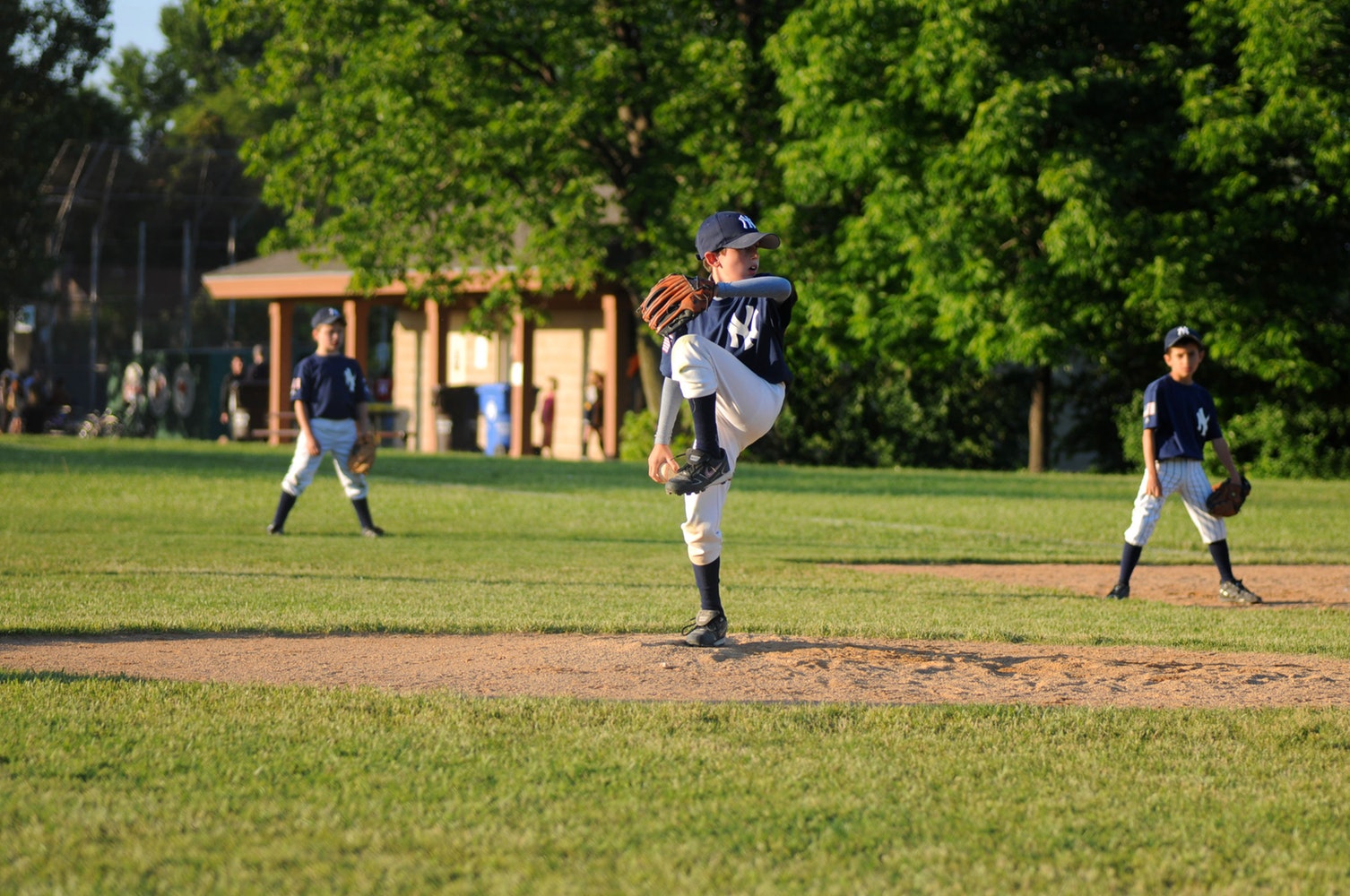
Part of the reason is due to overuse, but the other reason is due to poor mechanics that should be corrected by minor baseball coaches.  As the current winning at all costs environment makes them focus more on the outcome of winning games vs. prolonging the pitching careers of their young pitchers, providing technical expertise for the correct mechanics and discouraging specialty pitches until their teen years (curve ball, sliders, knuckle ball) it is leading to the ever escalating increase of Tommy John Surgeries with no signs of it reversing any time in the immediate future.

One of the experts that contributed to the chapter,  Dr. Glenn Fleisig, research director at the American Sports Medicine Institute (ASMI) as well as others shared the insight that the UCL injury is PREVENTABLE if pitchers focused on the right mechanics as well as limited their number of pitches in youth baseball year over year.

Why then has the number of surgeries tripled on teenage boys the last 2 decades?

  1. Specialization – overuse where pitchers are throwing in Spring, summer, fall and even winter ball.

and

2. Lack of proper instruction in terms of the proper mechanics for various pitches

There was even a head coach of a team that has a very successful record who had pitchers throw over 200 in games (when the MLB pulls pitchers when they get over 100) and used the analogy that kids from the Dominican Republic do so all the time so did not think it was big deal.

The other sad statistic that has evolved is a study done by Christopher Ahmed found that …..

  • 30% of coaches
  • 37% of parents
  • 51% of high school athletes
  • 26% of college athletes

…..believed that Tommy John Surgery should be performed on players with NO INJURY to improve pitching performance.

Say again?  Performing a major reconstructive surgery on someone that is NOT INJURED?

Would be different if we used medical advances to repair serious injuries but another altogther aspiring for that robotic arm no?

Surely everyone knows that the TV series Six Million Dollar Man in the 70’s and the upcoming movie 6 Billion Dollar Man based on the same series is fictional?

Talking to some parents as I have travelled the country, they have heard that the surgery will increase their son’s pitching velocity by up to 5 MPH and with multi-million contracts for pitchers they “claim” their son is willing to undergo the surgery  to chase the dream.

Reality Check – there is no anecdotal evidence that the surgery done on an uninjured UCL will increase pitching speed, nor is there any longitudinal studies showing how long their professional careers may be if they have the surgery in their teen years as is the majority now.

When the son of a mother reached out to me regarding her sad story that her 15 year old son was quitting competitive baseball and the reasons he was doing so was so he could also play other sports (basketball) so would play (recreational baseball in Spring only).

In a subsequent follow-up email she shared with me her 15 year old son made the decision to quite due to the intense pressure playing competitively, sports evolving to year-round work, more and more kids are quitting the game than ever.

He also told his Mom “he doesn’t want to injure his arm (pitching) too young so, he can play longer etc…I think sometimes our children are OUR biggest teachers and sometimes we need to sit back and be taught!”

If a 15 year old GETS it, why don’t the adults?

The youth baseball coaches when kids start to pitch at 9 years old should have best interests of the child in mind, not the outcomes of games to ensure that they teach them the proper mechanics, avoid competitive pitches until later (breaking balls, curve balls, sliders) as John Smoltz touched on in his Hall of Fame Induction Speech.0


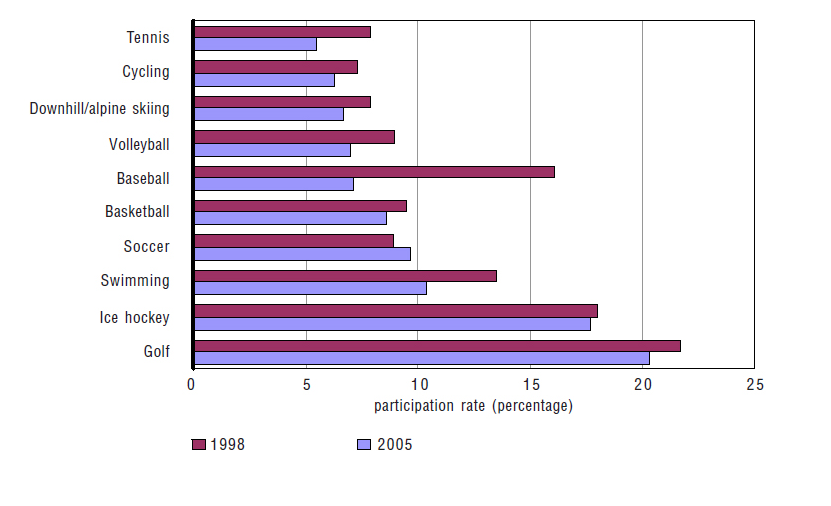
It is even more critical now as baseball is the sport that has been affected most by attrition, in Canadian study done by Statistics Canada from 1998 to 2005 baseball saw overall participation rates drop by over 50% (youth and adult).  Like many other sports baseball is in jeopardy also in terms of fans, the Toronto Blue Jays lost over 7,000 season ticket holders this year.

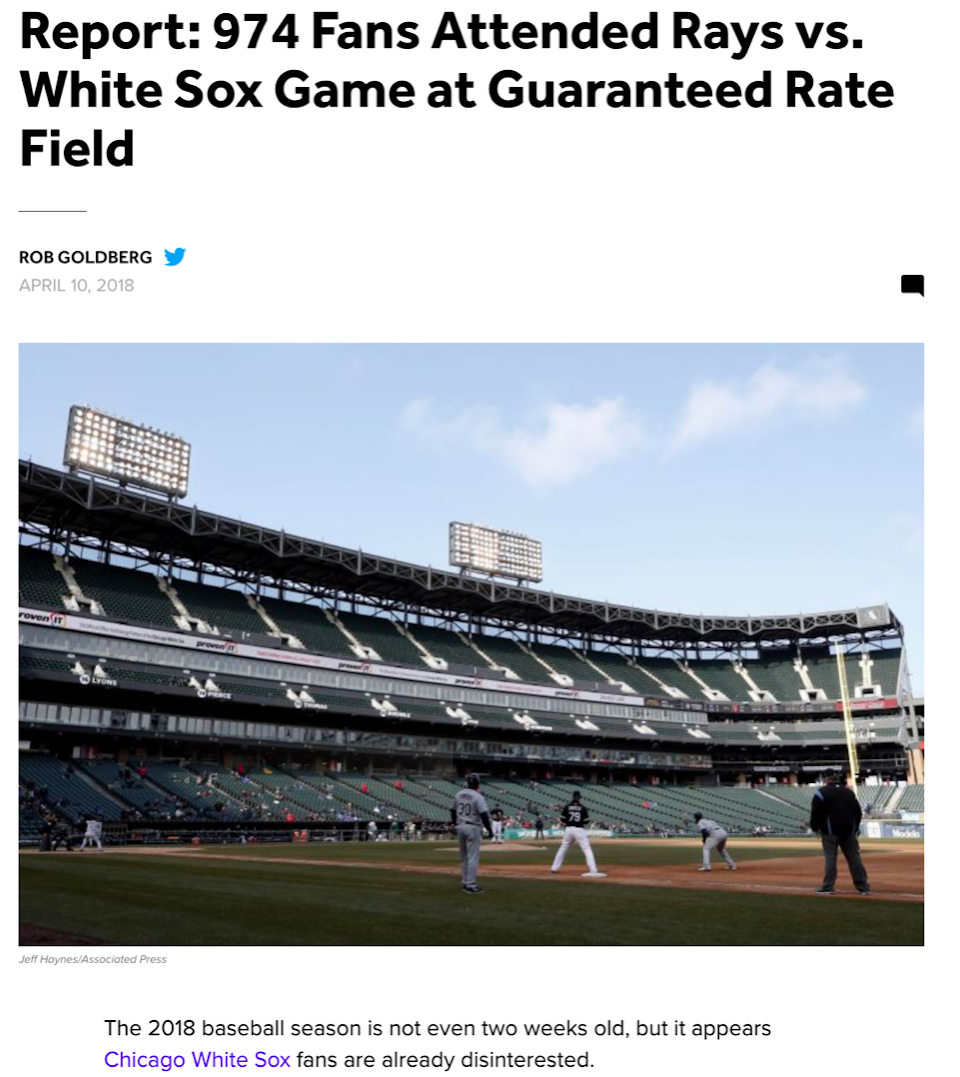
Many MLB stadiums are having the worst attendance they have had to start their spring seasons in decades including image below from recent Chicago White Sox game.


The seats are empty because less are playing to begin with or those that do, are quitting because they are burnt out or are suffering career ending injuries in their teens from overuse coaches not keeping track of pitch counts.

Simple Math – You play the game, then you watch the game because your LOVE IT.

If less play the game, less will watch the game later in life as fans.

Now, more than ever, we must work together to bring the game back to the kids … where it belongs.

PS Tagline - Dont be a kids last coach


The Dangers of Early Sport Specialization

Posted Leave a commentPosted in Athlete, Coach, Early Sport Specialization, Organization Executive, Parents

It has now been a few weeks since the article I contributed to was front page news regarding the downfalls of early sport specialization and the winning at all costs focus of youth sports.

Since that time, I have spoken at two different events, been interviewed on radio, TV, have had a college professor reach out to me to collaborate on a project and even one of the oldest youth sports org in the US reach out to me as well as daily reach outs via email, text and social media.

Needless to say, it has been a whirlwind few weeks, and it has made me realize more than ever how much work we have ahead of us to stop the madness to reverse the negative trends of early sport specialization.

Simply put, it is the WRONG pathway for any child that aspires to reach the highest level of their respective sport other than a few like figure skating, gymnastics, or artistic “sports” like ballet, highland dancing.

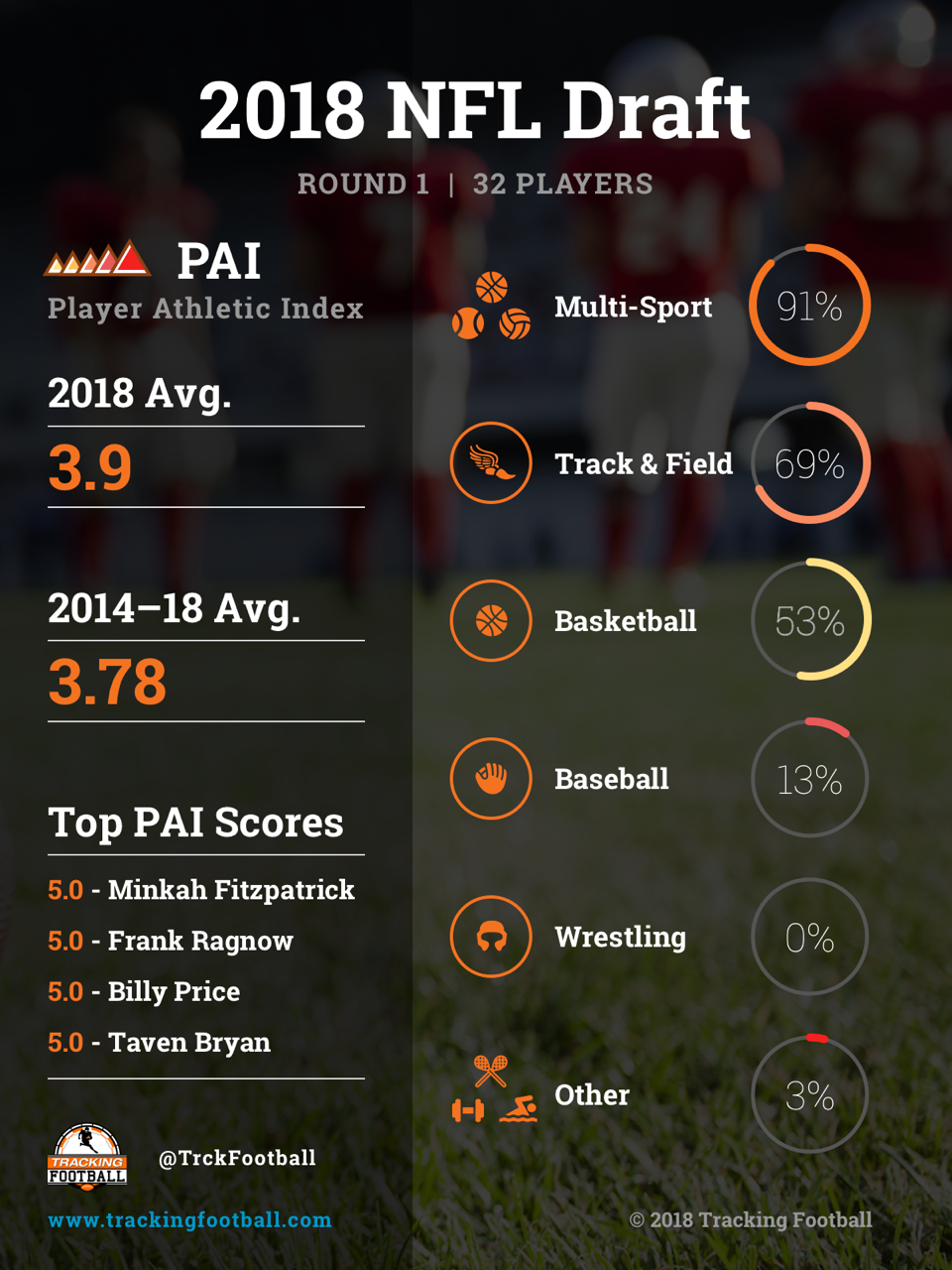
Hot off the presses is the recent NFL draft, 91% of those drafted in the first round (29/32) were multi-sport athletes.


Also to note, that players athletic index (PAI) has also increased year over year, now 3.9 (very close to being ranked outstanding 4-5.0) vs. 3.78 2014-2018 average

It is very apparent since the digital edition in the Vancouver Sun continues to go viral worldwide, the writer shared with me that it is still one of the top 3 articles in April viewed by readers.

Why?

Because even those that have been arguing against specialization have gotten caught up in the madness as we all aspire for our son or daughter to become the best THEY can be (not THE BEST.)

The sad reality is even though we believe as parents that our sons who are playing AAA hockey (like my son did), Rep Softball (like my daughter did) are amongst 100’s of thousands that do so every year.  Some may be early bloomers who are “selected or recruited” by the sports entrepreneurs (private clubs, academies) and “sell” parents that they have the potential to play collegiately, professionally as early as 7 years old.

Less than 2% of those playing youth sports will play varsity (college), less than 1% will play professionally and the % of those that go the Olympics is almost unmeasurable.

We (as in the parents) also get pressured by fellow parents of our son or daughter’s friends who are playing at their competitive level and do whatever we can to help them reach there.

We sign them up for extra development, off-season camps, even one on one sessions at a great expense to help them develop their core skills.  We do so because many organizations that “claim” they are focusing on development show their ugly face when it comes to game play and run short benches to win tournaments, games even though at the end of the day many are meaningless in the overall scheme of things.

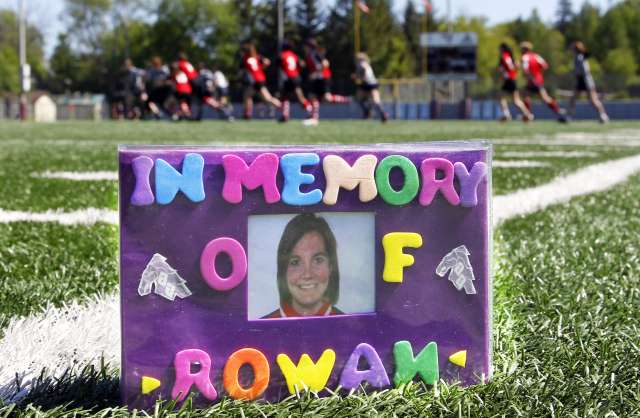
We (as in parents and coaches) also put unrealistic pressure on the athletes who may not report they sustained injuries as they may lose their starting spot on competitive teams that lead to Rowan Stringer not sharing with her coach or parents but only texting her friend “nothing can stop me .. unless I am dead” and played in a subsequent game, that proved to be her last, less than a week later of suffering a concussion.


The latter was fatal and as a result, Ontario is now going thru the process of passing “Rowan’s Law” which coincidentally goes hand in hand with one of the overuse injuries that kids are suffering from early sport specialization in Hockey, Football and Rugby; Concussions.

It calls for:

  • Medical clearance of all concussed athletes before they return to play
  • Mandatory concussion education for all athletes, parents and coaches
  • The immediate removal of a young athlete from play if a concussion is suspected
  • Strict adherence to return-to-learn and return-to-play protocols for all youth athletes with concussions.

While we were going thru the new Rowan’s Law in the breakout session at the 2018 Ontario Coaches Conference, one of the coaches shared how she had a player come to the bench complaining of being woozy as they had hit their head against another player’s in a basketball game.  She then had the players Dad come to the player’s bench when she was going thru concussion protocol with the player and he insisted at the top of his lungs with language not appropriate for many that his son get back into the game.  The coach, also male, did the same, putting the female assistant coach/teacher in a very difficult situation as felt bullied by the two men.

WHAT?  REALLY?

Not only are players, official’s victims of verbal abuse, but at times, so are coaches due to the unrealistic expectations that parents have regarding their child’s potential of playing collegiately or professionally.  This should not even be an issue, parents should trust that the coaches have their children’s best interests at heart and will adhere to do not harm principle but thanks to our winning at all costs culture even those that do are being bullied.

Every time I hear one of these sad stories, just as I did when I was in the breakout session, I say to myself .. WHEN ARE WE GOING TO STOP THE MADNESS?

The behavior that we see almost daily in social and traditional media with emotional parents, coaches being verbally abusive and even threatening physical abuse towards players, officials, co-coaches or other parents MUST COME TO AN END.

I also have questioned why all the governing bodies continue to focus on new initiatives like increasing female participation and leadership, the inclusion of indigenous, LGBTQ communities as it does not appear that NO ONE is taking the firm stance to STOP THE MADNESS.

All we are doing by promoting participation for other potential user groups that have not have the same opportunities is for them to come into a broken system only to get a sour taste in their mouths as well that will lead to further attrition.

The female coach/teacher I referenced above is one who shared that she is thinking twice about being a coach next year as a result of the abuse she took from a parent and a fellow coach.  SHE is just one of the small % of female coaches we have in all sports,  approx. only 15% of coaches are female.  This is not to say I am not advocating female participation, leadership, far from it. I believe we have a long ways to go to remove the gender inequality but to have those that aspire or willing to put their hands up to coach is just going to scare more away.

We are at the crossroad where we first must FIX the problems that exist in youth sports so that it will be a positive experience for ALL.  We don’t need any more campaigns, initiatives, PDF documents to then move on to the next campaign a year later, we need to stop turning a blind eye, sweeping it under the rug and ACT NOW like the governing bodies in Ontario bringing in legislation to STOP THE MADNESS.

Let’s all work together to bring the game back to the kids…. Where it belongs

Don`t be a kids last coach


Why Kid’s Play Sports

Posted 1 CommentPosted in Athlete, Coach, Organization Executive, Parents, Uncategorized

Why Kids Play Sports2

BONUS – Download a Free Copy of this Blog in PDF Format HERE  


Quote for our upcoming newsletter is one that I share in every clinic or talk I do, “Kid’s play sports because it’s fun and quit when it no longer is … it’s not rocket science.”

It amazes me how few answers when I pose that question either in workshops or keynotes, of 30 people, a few say “fun” but then I hear a myriad of other answers including winning.  This week I will share why kids play sports to piggyback on recent back to back appreciation weeks, the first coaches week to thank all the volunteer youth sports coaches in Canada for everything they do, the second week for all the youth sports parents.

Too often traditional and social media have focused on the doom and gloom in youth sports, yes SOME coaches are abrasive focusing on winning above all else and SOME parents take it over the top on the sidelines, stands at youth sports games but the reality is many are GREAT and without their support kids would not have an opportunity to PLAY a game they love.

Early on in my youth sport coaching “career” as a volunteer, I started asking three questions of the players on my teams and I recommend all youth sports coaches do the same at the beginning of each season they coach

Question 1: Why are you playing X?

Answer? All of the players I asked would say Fun … from 7 year old recreational to 17-year-old AAA players and everything in between.

Question 2: What is fun about X?

Answers?

They varied from early on when the kids were Novice age groups focusing on things like the snacks, pool parties, windups then as kids got older things like working on their skills, making friends, staying in shape to learning life lessons like learning respect from coaches, leadership, communication, work ethic and so forth.  Older age groups I also asked them what was not fun and over and over again was the adult criticism (from parents and coaches) when coaches played their favorites (ran short benches) and ride home which I will defer to further post why kids quit sports.

I joke with coaches in clinics, workshops that the first question kids ask when they get in the dressing room is?

What is the snack?

The last question they ask when they leave is?

When do we play again?

Fast forward 25 years and think about the sports you play as adults like slo-pitch, adult rec hockey and what is the first question you ask as the game is over and go to bench or dressing room?

Coach — Who has and how much is the beer? (AKA Snack)

The last question you ask when you are leaving?

When do we play again?

IT DOESN’T CHANGE if we instill the love of the game when kids are young so they love a sport to play and be active for a very long time.

Sadly that love or passion for sport and activity is not there like it was in past due to all the issues that have evolved that has affected today’s generation of kids but we can change it if we let kids PLAY again without criticism, reduce the structure and bring back more free play.

If you don’t believe me and have not had a chance to listen to Amanda Viseks podcast with WOC then I will give you the anecdotal studies of thousands of kids based on her research at George Washington University.

Like I, Amanda asked kids why they played sports, and over 95% stated because it was fun.

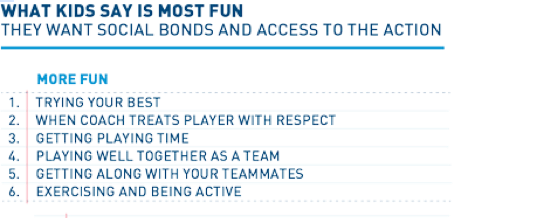
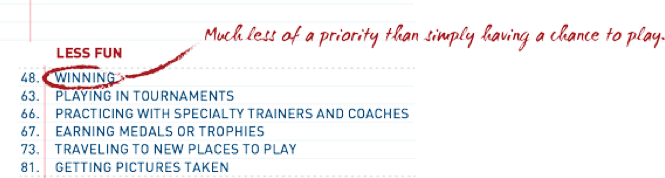
She then asked them to define what was fun, and she got many of the same answers I did as well as many others.  In fact, she identified 81 characteristics why sports was fun, below are the top 6 reasons;


Trying their best, respect from coaches, get playing time, exercise and being active were all answers I received every time I asked my teams and various of 4 and 5 were getting to meet new friends and having fun as a team so none of these answers surprised me.

At NO point in all the years and all the teams I asked the question what was fun, NO player answered winning.

I know that is the adult’s motivation more than kids but Amanda confirmed it, below are the latter half of the 81 characteristics why sports were fun;

In the bottom ½ of the list (48 of 81) winning was mentioned, but there were 47 other reasons why sports were fun to play.

Few other ones Amanda highlighted also, earning medals/trophies ranked 67th on the list!

July 3rd, 2018 Update – I wrote this in October 2017 where we originally shared the quote why kids play sports.  In addition to trophies, note that other least fun activities are playing in tournaments, travel and working with specialty trainers which continues to feed the $15 Billion business model that youth sports have become vs. focusing on the top 5 reasons why sports are fun.  The reason I said it’s not rocket science, is one only has to ask kids why they play to get the answers, something I have been doing for many years as a means to connect with my players and also share with parents so all of our goals align vs. adults competing with other adults thru their kids.

Coincidentally, in my interview with Dr. Wade Gilbert (AKA the Coaches Doc) for our inaugural digital summit, his #1 tip what coaches can do so kids love the game at the end of the season is #3 of the reason why kids play sports, is let them PLAY.  Due to the winning at all costs focus of travel teams, even when you make the travel team, many kids are victims of a short bench and don’t get the opportunity to do so, no wonder why they are putting up the white flag and 70% are quitting before they enter high school. 

AGAIN, IT’S NOT ROCKET SCIENCE.

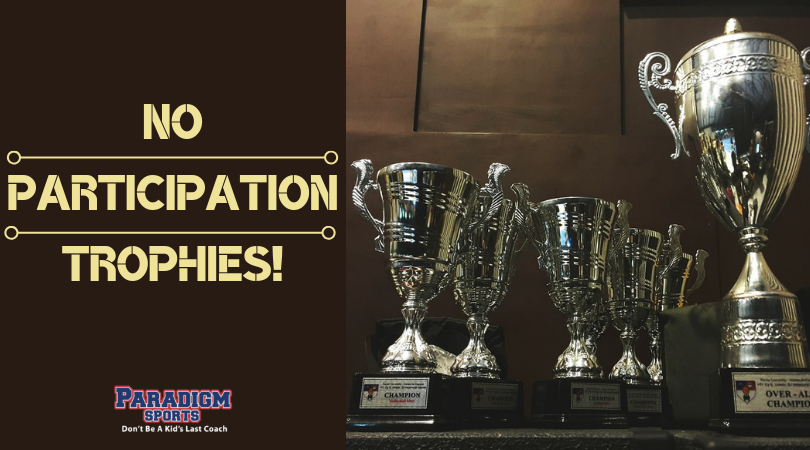
Please NO MORE participation trophies, if players on competitive sports teams are ranking trophies at the bottom 1/3 of why sports are fun, for recreational or participation only they have no value whatsoever and like my son’s participation trophy from t-ball merely get put in the Toy Story box to be recycled down the road.

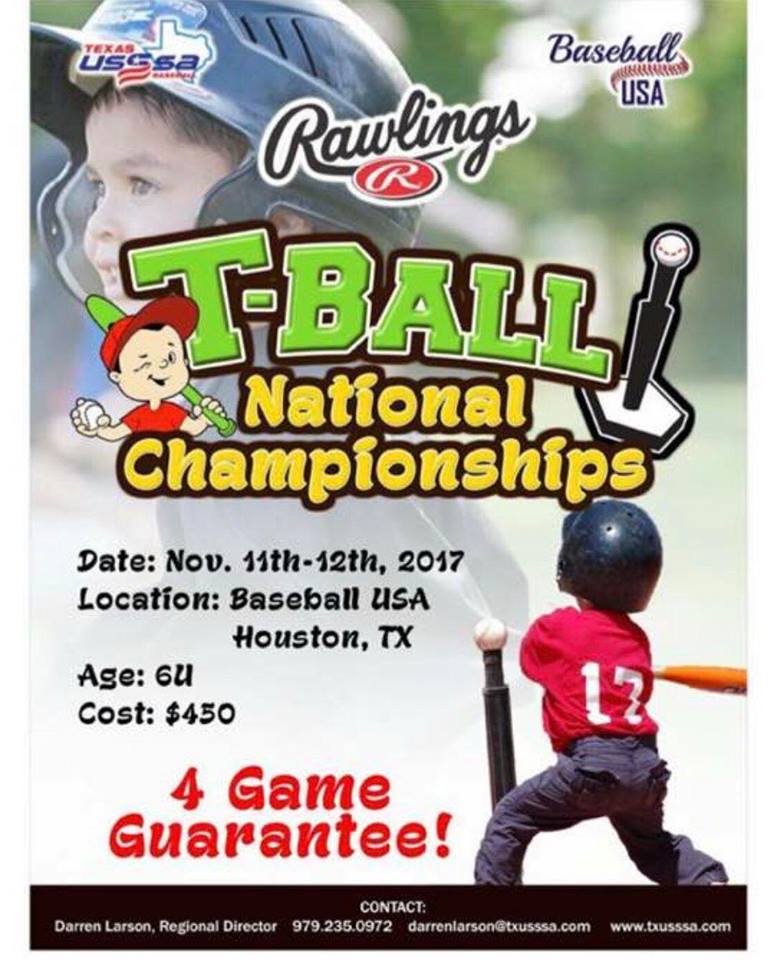
The same is going to hold true for the other extreme I came across recently, Rawlings is sponsoring the National Championships of U6 T-Ball.


Has Rawlings lost their minds? Sponsoring a National Championship guaranteeing 4 competitive games for 4-5-year-old kids?  Worse yet, in November AFTER even the professional MLB players are DONE for several months.  Will coaches commit to becoming the FIRST ever (and hopefully last) World Champions of T-Ball be flying in ringers? Didn’t USA Baseball just roll-out their LTAD model and are they not supporters of Multi-Sport Participation when kids should be sampling as many sports as possible until they reach adolescence?

This only a few weeks after Aspen Institutes Project Play had their 2017 summit and talked about the importance of sampling, free play activities before kids became teenagers?  How are programs developing where kids organize their own sandlot games without any adults present? In my new post will share insight from their recent summit.

This has gone viral via social media (thankfully there are other sane adults thinking the same as I am).

4-5-year-old kids should merely be playing, focusing on developing all their fundamental movement skills throwing, catching, two and one handed striking, kicking, falling and getting up and so on NOT traveling to Houston to play 4 competitive games costing their families thousands of dollars.  That is one of the reasons why youth sports now a $15 Billion industry in the USA!

Baseball in the US has seen increases in total participation in recent years thanks to MLB’s Play Ball program, and although this may be argued is a means to plant the seed to get in the game early, but there is such a thing as too early and too much and this is over the top.

So if you don’t believe me, you don’t believe Amanda’s research, maybe you will believe the kids.  Below is a panel was done at the Aspen Institute Project Play – So when do kid’s get a vote?


Youth sport and free play will never get back to what it was for our generation due to the digital evolution but we MUST find a way to bring the game back to the kids … where it belongs.

Otherwise, the current trends where 70% of kids are quitting all sports by the age of 13 will just continue to get worse.

PS Tagline - Dont be a kids last coach


No Participation Trophies!

Posted 3 CommentsPosted in Athlete, Coach, Organization Executive, Parents

No Participation Trophies. Period.


By Glen Mulcahy

BONUS – Download a Free Copy of this Blog in PDF Format HERE  

This week I was made aware of Bryce Harper’s recent tweet “NO PARTICIPATION TROPHIES” and was asked to comment on.
His tweet and short video have gone viral, filling the entire first page of Google since it was posted this weekend.


This is now the third instance the last couple of years that a professional athlete has shared via social media that they are against participation trophies. James Harrison in 2015 and then DeAngelo Williams in 2016, the latter two of whom are not just professional athletes but also parents.


James Harrison’s instagram below received almost 20K likes and over 3000 comments.
See article and short video from ESPN talking about here


Last year, DeAngelo Williams also shared that he did not want his daughter to get participation ribbons and took them away from her. He told her she could keep them only if she finished 1st, second or third. She then finished 1st, 3rd and 3rd in her next three events.

See article and short video here


There seem to be only two trains of thought on the subject:

  1. Give everyone a participation trophy, medal or ribbon with the thought that it will provide the incentive for kids to become active with the ultimate goal that they will stay active. These efforts are due to the fact that kids today have replaced their former active play time with inactive screen time leading to all of the documented health issues (obesity, type II diabetes etc).


VS.


  1. Only if you win should you be rewarded, per Bryce’s “only if you finish first” in his short video tweet.


Although I do not believe in participation trophies, I have to disagree with Bryce that only first place matters. It is the spirit of the competition that does.


I do believe in healthy competition and that to receive an award, you must earn it. This is what James Harrison and DeAngelo Williams argued was the reason they returned or took away their kids trophies/awards.
Unfortunately competition in youth sports has evolved to a winning at all costs focus which has created a vicious circle for those aspiring to get kids into or stay in sport or physical activities.


I would like to propose a third train of thought for all to consider:


Let’s create the environment where kids play “FOR the love of the game” again.


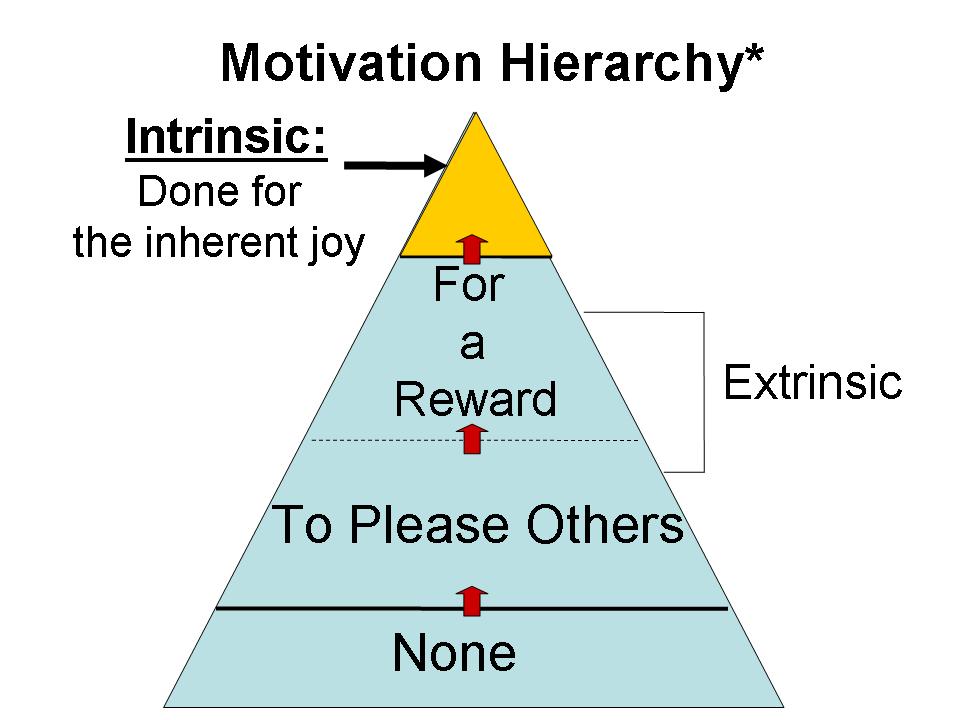
As I learned in my psych classes at university, there are two primary types of motivators, intrinsic and extrinsic.


Extrinsic is pleasing others (in youth sports this would mean pleasing the adults; coaches and parents) and the infamous participation award. Both of these are short lived forms of motivation.


Why?


Because neither are internal. The fire in the belly / playing with heart / the inherent joy of the game as outlined in the pyramid.


In order for motivation to be long term, it must come from within; not from outside influences which are not long term fixes. Participation awards may motivate kids to be active in various activities in the short term, but since they are relatively meaningless these awards are quickly forgotten.


Recently my son asked me why he received a trophy for playing t-ball when he was 7, as it was not competitive and they did not “win” anything.  I told him that he received that award because he participated and his response “that does not make any sense.”  Translation – the trophy which was 5X bigger than the one I’d earned winning the provincials in football did not mean anything to him.  Like many of his toys he was cleaning up (he is now 18), it went into the Toy Story Recycling Box with others that he no longer cherished.


My generation did not need participation awards of any kind because we loved the game. We loved trying different sports and activities and would do so for hours on end. When we competed, we did so with vigor, knowing that it would not only take skill, but effort, commitment, overcoming adversity and other intangibles to win.


Bobby Orr did not become one of the greatest hockey players of all time because he received an award every time he went out on the pond and played for hours on end.


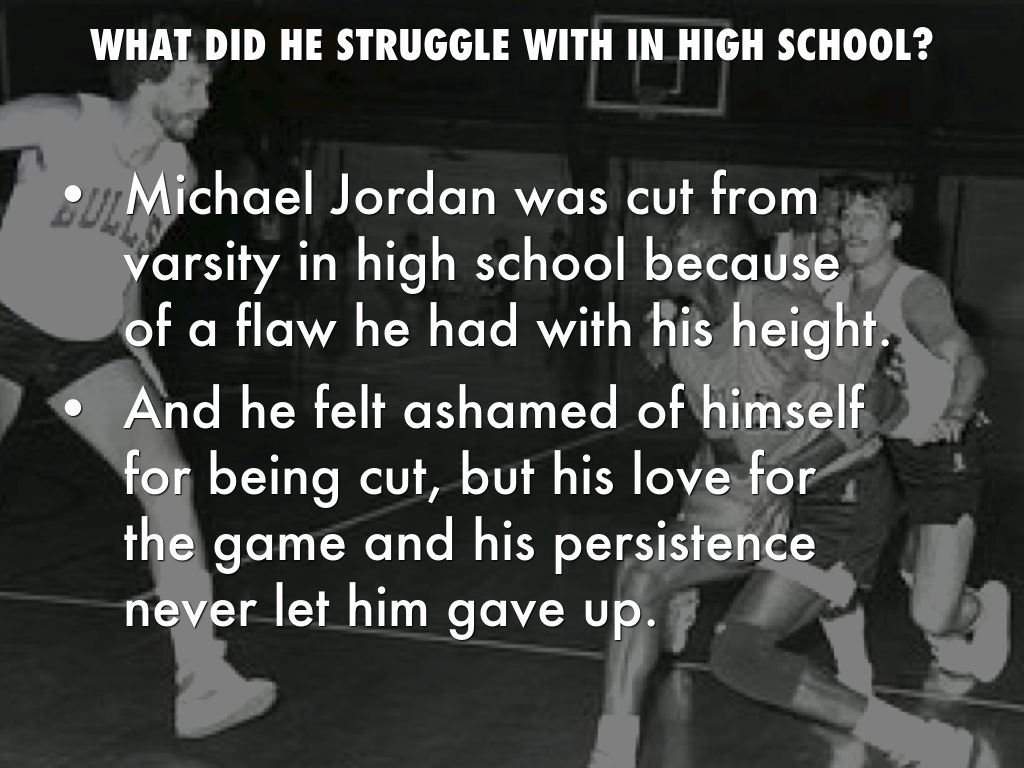
Michael Jordan did not become one of the greatest basketball players ever because he received a participation trophy when he tried out but did not make his high school basketball team.


Both athletes loved their respective sports so much that they played for hours on end. Michael even had a ‘love of the game’ clause in his contract so he could play anywhere, anytime and still be insured for his multi-million dollar salary.


The reason that Bryce’s recent tweet has gone viral is because it touches on both issues that have evolved: participation trophies and the focus on winning at all costs.


Although I too don’t believe in participation trophies, I don’t believe that one must finish first in order win a trophy as Bryce states is his twitter video.


I do have the same belief as James Harrison that trophies and medals must be earned to mean anything.


I also believe that kids should aspire to finish in the top 3 in any competition like in the sports days that DeAngelo Williams’ daughter was participating in and receive a ribbon for the same.


I remember when I competed in sports days, as do both of my kids, how hard we tried to win one of those ribbons. When we did not one year, the following year we tried even harder.


This is the very reason why the Olympics, track meets and tournaments have a Gold, Silver and Bronze medal in the spirit of competition.


The kids want to play, and like to be first, but that is not the primary motivator. They should play like the great athletes before them Michael Jordan and Bobby Orr: For The Love Of The Game.


The main role of youth sports coaches is to instill that passion, the joy at the tip of the pyramid in kids so that they not only become active, but stay active well beyond the current trends where 70% of kids are quitting all organized sports by 13.


We can do so by praising effort, encouraging kids to make mistakes (yes mistakes, even in games so it is a safe to fail environment!) and providing necessary free play opportunities (without parents, coaches or refs) for them to develop their skills. It should not be what has evolved today in youth sports where the focus is merely on the results, the bragging rights for adults that youth sports teams won trophies or medals.


The following are three of the ways that I have encouraged players to participate. The reward they earned was a result of hard work, not merely showing up.


  1. Team Hardhat: This is awarded to the player as voted by his/her team mates for working hard in a practice or game, never giving up, blocking shots, unselfish play, getting up when they are knocked down, and never missing practices or games.


I introduced the team hard hat to teams as early as Atom (9-10 yrs old) and the player that was nominated had a big smile on their face, proudly wore the hard hat out of the dressing room and was still wearing it when they came back for the next game.


  1. Team Toolbox: This is something that I did with my Bantam Rep Team (13-14 yrs old) where the players would vote on same examples of effort and hard work as the hardhat and I also tied in that they would start the next game and be an alternate captain to develop leadership and communication skills.


The last player that received this award that season happened to be our most skilled, but also most selfish player, whom I told to keep the toolbox after the season as a reminder what it meant to be a true team player, a reminder to work hard and also be unselfish.


  1. Team Kudos: This was introduced by one of my players who had done so on a prior team where each player would turn to each side and give his team mates for a great thing they did in practices or games but my one rule was it could not be an outcome (goal or assist), it had to be what lead to that outcome. Things like great puck battles, blocking a shot, sportsmanship, respect, fearlessness, team play and so on.


There are many other examples of how you can award your players to reinforce positive behaviors so that they develop the true joy, passion and love for the game.


That is our role as youth sport coaches. If we do that one thing only, I suspect we will make a huge impact in reducing the number of kids that are dropping out.


If we continue to give participation trophies as an incentive, does that mean we are going to have to do so when these very kids enter the workplace? Post Secondary Education? Relationships?

I hope not.


Let’s work together to bring the game back to the kids … where it belongs.


-Glen


Don`t be a kids last coach